Connect with us
DAPA Banner

NewsBeat

the strong emotions and memories around these meals reflect their social, economical and cultural importance

Published

on

the strong emotions and memories around these meals reflect their social, economical and cultural importance

The UK government has launched its first review of school food standards in over a decade, alongside plans to extend free school meals to an additional 500,000 children in families receiving universal credit.

Much of the coverage has focused on specific menu changes, including the possible removal of sugary desserts such as steamed sponge. The focus on such changes might be reflective of how school food has never been only about nutrition for those who have experienced it. It is also about welfare, discipline, pleasure, stigma and care.

The School Meals Service: Past, Present – and Future? is a project I worked on that brings together archival research, oral histories and ethnographic work in schools across the UK. We were also the principal academic partner for the Food Museum’s ongoing School Dinners exhibition near Ipswich, which explores the changing history of school meals through objects, menus, memories and tastes – from semolina and sponge pudding to Turkey Twizzlers.

Since school meals were first introduced in legislation in 1906, they have changed repeatedly. Early provision was patchy and often associated with charity. After the 1944 Education Act, school meals became part of the postwar welfare settlement, intended to provide children with a nutritious meal during the school day.

Advertisement

For decades, the classic image of the school dinner was “meat and two veg”, followed by puddings such as sponge, semolina, rice pudding, jam roly-poly or custard.

From the 1980s, the provision of school meals became more fragmented. Nutritional standards were removed, local authorities had more freedom, and commercial catering reshaped menus. Later debates around Turkey Twizzlers and processed food, driven by people like celebrity chef Jamie Oliver, were part of this longer story. Today’s government review of school food standards is another chapter in that history.

What children remember

When people recall school dinners, they rarely talk about calories or guidelines. They remember texture, smell and noise.

Advertisement

Joanne, who attended school in Surrey and East Yorkshire from the late 1960s to 1980, described being served vegetables she could not eat: “Mush. Cold … you can’t have that unless you eat your beans … it put me off for life.”

The dining hall mattered as much as the food. Ella, who went to school in Rotherham from 1996 to 2010, remembered the anxiety of a space where “someone would puke and I would freak out … I can’t be in here”. Lauren, who attended schools in Northumbria and Merseyside from 1998 to 2012, recalled mashed potato that “you could pick up with a fork and it would just stick”.

Where you ate school dinners is just as memorable as what you ate.
Janine Weidel/Alamy

Stigma, inequality and school food

School meals could also expose inequality. Free school meals have long been a vital safety net, but they have also carried stigma.

Joyce, who went to school in Glasgow in the 1960s, remembered the teacher calling children forward with the phrase “come out the frees”. She described it as “the walk of shame”.

Advertisement

Naomi, who attended school in Birmingham in the 1980s, showed how this could intersect with racism. Her mother paid for school meals despite financial strain because she worried Naomi might be singled out: “there weren’t many Black kids in my school”.

Yet school dinners were also remembered with affection. For many people, puddings such as sponge and custard were the best part of the day. For others they evoke control, compulsion or, like for Joyce and Naomi, embarrassment. That is why the removal of steamed sponge resonates. It is not just dessert. It is part of a shared national memory.

Beyond the menu

The Food Museum exhibition captures this complexity. Visitors encounter the familiar foods, but also the people behind them: pupils, parents, cooks, dinner staff, teachers and policymakers.

The exhibition, which has been shortlisted for a 2026 Museums and Heritage Award, draws directly on our research into how school meals changed over time and why those changes mattered socially, economically and culturally.

Advertisement

Today’s reforms emphasise healthier ingredients, more fruit and vegetables, fewer fried foods and less sugar. These aims matter. History and our research suggests what is served matters. So do the dining hall, the queue, the noise, the payment system, the stigma, the pleasure and the memories children carry into adulthood.

School dinners are one of the most widely shared experiences of British childhood. As they continue to evolve it is worth considering not just what is on the plate, but how it feels to eat it.

The School Dinners Exhibition is on at the Food Museum in Suffolk until February 21 2027

Advertisement

Source link

Continue Reading
Click to comment

You must be logged in to post a comment Login

Leave a Reply

NewsBeat

Indie’s Attic Westhoughton is one of Bolton’s best independent firms

Published

on

Indie's Attic Westhoughton is one of Bolton's best independent firms

Indie’s Attic, on Market Street in Westhoughton, has been shortlisted for The Bolton News’ Best Independent Retail Business Award 2026.

This is a moment the team describes as both “lovely” and “incredibly grateful.”

Most clothes are separated into colours. (Image: NQ)

Owners Claire Devlin and Kim Griffiths say the recognition feels like a meaningful reward for years of hard work and community support.

Claire said: “We’re very community‑focused. People say you shouldn’t become friends with your customers, but we absolutely have.

Advertisement

“We love being based here; there are still people discovering us for the first time, so we just want to keep spreading the word.”

The boutique, known for its warm atmosphere and stylish European brands, has grown significantly since Claire first launched it nearly ten years ago as a pop‑up from her home.

Claire and Kim outside of their shop. (Image: NQ)

A single parent at the time, she began selling at artisan markets before opening the Market Street shop in 2019.

Poster (Image: NQ)

What started as a small front‑room operation with around 50 products has now expanded into a thriving two‑floor boutique with hundreds of weekly orders.

Advertisement

Indie Attic has built a loyal customer base both in‑store and online.

The shop prides itself as tidy. (Image: NQ)

Every Wednesday, the boutique releases its weekly “drop”, a curated selection of new clothing from independent brands in Denmark, Spain and the Netherlands.

Customers often rush to order online before popping into the shop to collect their pieces and catch up with the team.

Claire added: “We focus on the brands that we sell that are a little bit different from the High Street. They’re really good quality, but they’re reasonably priced.”

Advertisement

Clothes at the shop. (Image: NQ)

The business continues to grow, with online sales rising, international orders increasing, and a rise in their customer return rate in the first quarter of this year.

Despite their success, Claire and her team remain committed to Westhoughton.

If they win, the team already has plans. A celebratory in‑store event to thank the community that helped them thrive.

To vote pick up a copy of the paper.

Advertisement

Source link

Continue Reading

NewsBeat

Man charged in US with stealing $450 million from Mexican billionaire in loan scheme

Published

on

Man charged in US with stealing $450 million from Mexican billionaire in loan scheme

A man with multiple aliases used the name of the famed Astor family to dupe a Mexican billionaire out of around $450 million in a bogus stock-backed loan scheme, according to a newly unsealed U.S. indictment and other court records.

Vladimir Sklarov, 63, also known as Gregory Mitchell and Mark Simon Bentley, set up a sham company, Astor Asset Group, that purported to be a legitimate and experienced loan provider that was connected to the Astors, federal prosecutors said. The storied New York family included John Jacob Astor, one of the wealthiest men in America in the mid-19th century.

Although the indictment unsealed on Monday does not name the victim, court records in litigation in England show it was Ricardo Salinas Pliego, the Mexican TV, retail and banking magnate. Salinas also confirmed he was ripped off by Astor Asset Group in an interview with The Wall Street Journal last year.

“I feel like an absolute idiot. How could I fall for this?” Salinas Pliego told the newspaper.

Advertisement

Sklarov was arrested in Chicago on Saturday on the indictment by a federal grand jury in New York City, prosecutors said. A detention hearing is scheduled for Friday in federal court in Chicago, according to court records.

A public defender representing Sklarov in Chicago did not immediately return phone and email messages Tuesday.

“As alleged, Vladimir Sklarov represented his company to be affiliated with, and have the financial backing of the famed New York Astor family in order to burnish his brand,” Jay Clayton, U.S. attorney for the Southern District of New York, said in a statement. “That was a complete lie. Sklarov used false prestige to gain control of hundreds of millions of dollars in stock and then liquidated those shares for his own benefit.”

In 2021, Salinas was seeking a $100 million loan that he intended to secure with shares of a company he owned, according to the indictment. Sklarov — using the name Gregory Mitchell and claiming he was “managing director” of Astor — and other, unnamed co-conspirators convinced Salinas that Astor was willing and able to provide the loan, prosecutors said. The other conspirators included a man who also used an alias, Thomas Mellon, whose last name is also that of a prominent and wealthy American family.

Advertisement

Sklarov and other conspirators told Salinas that Astor was originally established from the wealth of John Jacob Astor and that the company had high-profile clients including universities and investment funds, prosecutors said.

Under a deal signed around July 2021, Sklarov agreed to lend Salinas at least $115 million, claiming the money would come from the Astor family, the indictment says. Salinas secured the loan with company shares worth at least $450 million that were supposed to be held but not sold.

Sklarov then sold the company shares, used some of the proceeds to fund the loan to Salinas and kept the remaining hundreds of millions of dollars for himself and other conspirators, federal prosecutors said.

It wasn’t until July 2024 that Salinas learned the company shares had been liquidated, the indictment says. A day later, Salinas received a letter from Astor falsely claiming that Salinas had defaulted on the loan, according to the document. A month earlier, Astor wrongly informed Salinas that it had the right to sell the shares, prosecutors said.

Advertisement

Authorities listed Sklarov’s hometown as Athens, Greece. The Wall Street Journal reported that Sklarov is a Ukrainian-born American who had been convicted of fraud in the past.

Source link

Continue Reading

NewsBeat

First project tracking hedgehogs in Northern Ireland to help protect their future

Published

on

Belfast Live

Conservation charity Ulster Wildlife is behind the GPS tracking scheme

A new project using GPS to track hedgehogs in Northern Ireland has been launched, with the aim of protecting the species.

Advertisement

The spiky garden visitors are becoming an increasingly rare sight in the region, and are now classified as near threatened across Europe.

Conservation charity Ulster Wildlife is behind the GPS tracking scheme, designed to understand hedgehogs’ nocturnal activities to help safeguard their future.

They have said tidier gardens, fewer wild areas, the replacing of hedgerows with fencing, a lack of insect prey, use of pesticides, and road accidents have all had an impact on hedgehog numbers.

Ulster Wildlife said recent research emerging from across the UK and Ireland suggests hedgehogs are retreating to towns and cities, and that urban gardens may be their last refuge.

Advertisement

However, almost nothing is known about how hedgehogs navigate urban environments locally and what obstacles they face.

Selected hedgehogs have been located and fitted with a small, lightweight GPS tag, under licence from the Northern Ireland Environment Agency.

It is temporarily attached to the hedgehog’s spine, like a backpack, and remains in place for a few days before being safely removed, causing it no harm.

The charity said only male hedgehogs are chosen, to avoid disturbing nesting females.

Advertisement

To support the project, the first hedgehog detection dog for Ireland is also being trained by Conservation Detection Dogs NI, to help staff locate hedgehogs more efficiently.

The dogs will also be trained to track down the tags if they fall off.

The technology allows the charity to map exactly where the hedgehogs travel each night, including how many gardens they pass through, the roads they navigate, where they find food, and where they rest.

Advertisement

Katy Bell, senior conservation officer with Ulster Wildlife, said initial results have been fascinating.

“After long nights patiently staking out gardens and waiting for hedgehogs to appear, the initial results have been absolutely fascinating,” she said.

“We’re seeing hedgehogs travel through multiple gardens in a single night and cross busy roads – a heart-in-the-mouth moment that shows the reality of the challenges these at-risk mammals face.

“We know from studies elsewhere in the UK that hedgehogs can travel up to three kilometres a night. That means they rely on whole neighbourhoods, not just one garden, to survive.

Advertisement

“What we don’t yet know is how that plays out in Northern Ireland but, even at this early stage, we are seeing just how important connected green spaces are. We are really excited to see what the rest of the project reveals.”

The project is supported by Power NI, Northern Ireland’s leading electricity supplier, and the Department of Agriculture, Environment and Rural Affairs (Daera) through the carrier bag levy.

Lucy McCullough of Power NI said: “We are delighted to support this pioneering project, which will provide vital insights into the lives of hedgehogs in Northern Ireland and help protect a species that is increasingly at risk.

“At Power NI, we believe it is important to invest in initiatives that deliver genuine benefits for nature and local communities, and we’re proud to partner with Ulster Wildlife to help with positive conservation action.”

Advertisement

Ulster Wildlife is aiming to tag several hedgehogs before they hibernate again in the autumn, as part of a survey protocol designed in consultation with researchers from Nottingham Trent University.

As more animals are tracked over the coming months, the project will build a better understanding of their hidden lives, helping to inform conservation action and wildlife-friendly urban planning.

Maureen Carvill, wildlife gardening officer with Ulster Wildlife, added: “For the first time, we’ll be able to work directly with households and housing associations using real, Northern Ireland-specific hedgehog data.

“This will help people make simple but powerful changes – like creating wildlife corridors or ‘hedgehog highways’ to connect gardens, reducing the use of harmful substances such as slug pellets, and supporting calls for traffic calming measures in known hedgehog hotspots.

Advertisement

“We’ve already had great engagement, and it has been wonderful to see people taking action for hedgehogs in their gardens.

“Ultimately, it’s about making neighbourhoods more welcoming and better connected for hedgehogs, using evidence we’ve never had before in Northern Ireland.”

Ulster Wildlife has asked for those who have hedgehog visitors to please report their sightings at ulsterwildlife.org/report-sightings.

For all the latest news, visit the Belfast Live homepage here and sign up to our daily newsletter here.

Advertisement

Source link

Continue Reading

NewsBeat

Arsene Wenger responds to Arsenal celebrations after Atletico Madrid win | Football

Published

on

Arsene Wenger responds to Arsenal celebrations after Atletico Madrid win | Football
Arsene Wenger after Arsenal’s win over Atletico Madrid (Picture: beIN SPORTS)

Arsene Wenger defended Arsenal’s ‘absolutely normal’ celebrations after their Champions League semi-final win over Atletico Madrid but urged the players to quickly ‘focus’ on tasks ahead.

Arsenal beat Atletico 2-1 on aggregate to reach their first Champions League final since 2006.

The first leg in Madrid finished 1-1 and Bukayo Saka scored the decisive goal at the Emirates Stadium to send Arsenal into the final, which will be held on May 30 in Budapest.

The full-time whistle sparked jubilant scenes inside the Emirates, with the Arsenal squad continuing to celebrate for some time in front of their delighted supporters.

Advertisement

Some rival fans were quick to question the celebrations and Manchester United legend Wayne Rooney even suggested they were slightly over the top.

Reacting to the scenes at the Emirates Stadium, Rooney – a Champions League winner with United in 2008 – told Prime Video: ‘They haven’t won it yet.

‘I think the celebrations are a little bit too heavy. Celebrate when you win…but no, they deserve it.’

FBL-EUR-C1-ARSENAL-ATLETICO
Jubilant scenes inside the Emirates Stadium (Picture: Getty)

But legendary Arsenal manager Wenger described the celebrations as ‘absolutely normal’ and was pleased to see the players and fans express their delight.

However, he reminded the squad that ‘the next step’ for them is to win their first Champions League ahead of a final against either PSG or Bayern Munich.

Advertisement

‘I think Arsenal wanted wanted it a bit more than Atleti and they were more decisive in the duals,’ Wenger said on beIN SPORTS.

Arsenal FC v Atletico de Madrid - UEFA Champions League 2025/26 Semi Final Second Leg
Mikel Arteta after Arsenal’s semi-final win (Picture: Getty)

‘We said before the game that to go to the final they needed to be strong defensively and they didn’t concede a goal tonight.

‘They played a team who for 45 minutes absolutely needed to score a goal and they didn’t give them a chance.

‘I believe it shows how strong Arsenal are defensively and how disciplined they are, as well a bit the limitations of Atletico, who were not good enough in the final third.

‘In the end it’s a well-deserved win for Arsenal, there’s no doubt they were the better team over the two legs.

Advertisement

‘They celebrate well tonight which is normal but you want to focus already on the final and the next games.

‘The celebration is deserved and happiness is normal – absolutely normal – but the next step is to go to the final and win in.’

Arsenal FC v Atletico de Madrid - UEFA Champions League 2025/26 Semi Final Second Leg
Diego Simeone’s Atletico Madrid fell short (Picture: Getty)

After becoming the first Arsenal manager since Wenger to reach a Champions League final, Mikel Arteta said: ‘It’s an amazing night to live this kind of moment with the players and everyone at the club, it’s an incredible feeling.

‘It makes sense with all of the things we do and we go through and I see so many happy faces and proud of what we’re doing.

‘It was unbelievable right from the beginning – the supporters waiting for us outside the stadium, the energy and passion that they put in so it was just great to win this.

Advertisement

‘They set the standards and we’ve tried to catch up with them. We struggled so many years to give that joy back and the pride in their eyes was beautiful to watch.’

Before focussing on the Champions League final Arsenal will look to clinch their first Premier League title in 22 years.

The Gunners boast a five-point lead over second-placed Manchester City ahead of their next game, a trip to London rivals West Ham on Sunday.

Man City failed to close the gap to just three points on Monday night as they were held to a thrilling 3-3 draw by Everton.

Advertisement

For more stories like this, check our sport page.

Follow Metro Sport for the latest news on
FacebookTwitter and Instagram
.

Advertisement

Source link

Advertisement
Continue Reading

NewsBeat

Thierry Henry reveals private conversation with Arsenal star before Atletico Madrid win | Football

Published

on

Thierry Henry reveals private conversation with Arsenal star before Atletico Madrid win | Football
Former Arsenal forward Thierry Henry (Picture: Getty)

Thierry Henry praised Bukayo Saka’s efforts to battle back from injury after his goal helped fire Arsenal to their first Champions League final in 20 years.

Saka has had his minutes carefully managed over the past week after returning from an Achilles injury, which ruled him out for the previous five matches.

The Arsenal winger was devastating against Fulham on the weekend when back in the starting lineup, and produced the goods again on Tuesday night against Atletico Madrid.

Saka made way just before the hour mark, having scored before half-time, with the Gunners holding on to secure a 2-1 aggregate win and place in the final later this month.

Advertisement

And Henry was quick to praise Saka post-match, revealing that the winger has spoken about his determination to get back to full fitness when the pair spoke over the last week.

Speaking on CBS, Henry said: ‘I would love to see if we can speak to Bukayo because I want him to explain to people that being a footballer is not so much always about the glamorous time.

‘He’s been questioned all season. Can he be the guy? Is he not the guy? Is he the star boy? Is he not the star boy? Is he better than him or not better than him? Today he had to play with barely training. I know he’s suffering with his Achilles tendon.

Arsenal FC v Atletico de Madrid - UEFA Champions League 2025/26 Semi Final Second Leg
Bukayo Saka scored the winning goal for Arsenal (Picture: Getty)

‘He came back, I spoke to him and he came back and was like: ‘I’ve got to be on the pitch. I’ve got to be on the pitch against Fulham. I have to be. It’s do or die’.

‘So you have to give those guys a lot of credit. Sometimes we take it for granted. We all played through injuries. We all played with moments where you’re not 100 per cent and he had to do it, deliver it for Arsenal.’

Advertisement

Henry was also keen to praise the performance of Viktor Gyokeres, who missed his golden opportunity in the second half but otherwise ran Atletico’s defence ragged at the Emirates.

Arsenal FC v Atletico de Madrid - UEFA Champions League 2025/26 Semi Final Second Leg
Henry was full of praise for Viktor Gyokeres (Picture: Getty)

‘If I take the example of Gyokeres, the jury was out on him,’ he added. ‘It’s not a bad thing. Embrace it. Try to prove people wrong. Tonight he did.

‘Not only tonight, in the last month, I will give him his credit. He’s running, he looks solid and a bit more like a number nine that you can be scared of.

‘What I like also is the way they look for him early – play to the strength of the guy because if not, I’m going to see his weaknesses instead of seeing his strong points.

‘Now, because of the way they utilise him, I can see what he’s good at and what he’s not good at. It’s a difference. The guy feels more comfortable to make the run where he’s going to excel and not going to see his weakness.’

Advertisement

A jubilant Mikel Arteta was equally impressed with the performances of Gyokeres in the second leg, telling Amazon Prime: ‘He [Gyokeres] was immense. You can see the reaction from the crowd every time he has the ball, his work rate and what he’s giving the team is just incredible.’

On Saka’s winning goal, the Spanish coach added: ‘It had to be someone very special and certainly he is very special with me and the boys and everyone attached with this club. If it had to be someone scoring that goal, it probably had to be him.’

For more stories like this, check our sport page.

Follow Metro Sport for the latest news on
FacebookTwitter and Instagram
.

Advertisement
Advertisement

Source link

Continue Reading

NewsBeat

Trump-backed challengers oust incumbents in Indiana Senate after president’s threats of retribution

Published

on

Trump-backed challengers oust incumbents in Indiana Senate after president’s threats of retribution

Donald Trump secured significant victories in a deeply conservative state on Tuesday, as a majority of Republican state senators who opposed his redistricting plan lost their primary races to challengers he endorsed.

This outcome, just four months after the state’s lawmakers rejected his proposed redistricting, saw at least four of the seven Trump-backed challengers emerge victorious.

Twenty-one Republican senators had voted against redistricting in December, with eight running for reelection. Trump endorsed primary opponents against seven of these, and his allies spent millions on these typically low-profile contests.

The costly and unprecedented intraparty battle has exacerbated tensions among Republicans ahead of the November midterm elections, which will determine control of Congress.

Advertisement
The costly and unprecedented intraparty battle has exacerbated tensions among Republicans ahead of the November midterm elections
The costly and unprecedented intraparty battle has exacerbated tensions among Republicans ahead of the November midterm elections (AP Photo/Obed Lamy)

Indiana Lt. Gov. Micah Beckwith said the state Senate primary races are pitting “the Republicans who tend to want to avoid the fight and the Republicans who feel like we need to fight.”

“So the only question is, ‘Will you fight or will you get trampled by the other side?’” Beckwith said.

Indiana rejected Trump on redistricting

Trump began leaning on Republican-led states last year to redraw their congressional maps to make it easier for his party to hold its thin majority in the U.S. House. Although redistricting is normally done once a decade, after a new census, Trump wanted to abandon tradition to gain a political edge.

Texas was the first to follow through, and the White House pressured Indiana to go along too. Vice President JD Vance met with state politicians in Washington and Indianapolis, and Trump weighed in by conference call.

Advertisement

However, Indiana senators rebuffed the effort, one of the president’s first significant political defeats of his second term.

The redistricting fight divided Republicans in Indiana, a state Trump won three times by no less than 16 points. Republican Gov. Mike Braun, U.S. Sen. Jim Banks and organizations such as Turning Point Action have worked alongside Trump to unseat the incumbents.

“Big night for MAGA in Indiana,” Banks posted on social media.

Jim Bopp, a prominent Indiana attorney who leads a political action committee aligned with Braun, predicted that Trump’s support will carry the day for the challengers.

Advertisement

“Republican voters overwhelmingly support Trump and when they find out Trump has endorsed a particular Senate candidate, they swing their support behind them,” he said.

Indiana opposition came from constituents, former governor

Opposition to the effort came from anti-Trump Republicans and those wary of the president reaching so deeply into state decision-making. Former Republican Gov. Mitch Daniels, who had stepped away from politics after leaving the governorship in 2015, reemerged to help raise money for targeted incumbents.

The senators who broke with Trump said they were listening to their constituents who were overwhelmingly against his redistricting plan. Some said they didn’t like Trump’s aggressive tone in pushing the plan.

Advertisement

“We hate to be told what to do,” said Mike Murphy, a former Republican state representative. “We’re very independent thinking people. So when Donald Trump and his goons come in and try to tell us that we need to redistrict to help his political future, that’s the worst thing you can do.”

He said Trump and those spending big money to take out the incumbents don’t understand Indiana politics.

“There’s just so many misjudgments on people’s part because they tend to fly at the 50,000 foot level and they don’t go to the barbecues and the church fish fries and the things that make Indiana politics,” Murphy said.

Bopp, who supports the Trump-backed challengers, said the primary is a chance for Indiana Republicans to express how important it is to redraw the congressional lines there.

Advertisement

“It’s not a matter of Trump’s power,” Bopp said. “It’s about Republican primary voters who support his agenda and don’t want a Democratic House that will be hugely destructive to the Trump presidency and the country.”

Source link

Continue Reading

NewsBeat

Michael Dawson and Jesse Marsch visit Ashville College

Published

on

Michael Dawson and Jesse Marsch visit Ashville College

Former England World Cup defender Michael Dawson joined ex-Leeds United manager Jesse Marsch at Ashville College in Harrogate.

The pair shared their accounts of the sacrifices, setbacks and resilience required to succeed at the elite levels of the sport.


Recommended reading:

Advertisement

Michael, now a Sky Sports pundit and commentator, drew on his 20-year career as he spoke to pupils at Ashville Prep and Senior School.

He spoke of the relentless work ethic to make it as a professional player and pressed the importance of teamwork and mental strength to overcome injuries and disappointments.

It came as Jesse recalled his journey, from his early days playing college football in the US to his rise managing one of England’s most-esteemed clubs.

Ashville head Rhiannon Wilkinson said pupils were “thoroughly absorbed” by the sessions.

Advertisement

She added: “As the nation looks ahead to the 60th anniversary of England’s legendary 1966 World Cup victory this summer, we were thrilled to welcome both Michael and Jesse.

“Pupils were thoroughly absorbed as they highlighted the importance of resilience, teamwork and commitment in achieving success in becoming young leaders.

“Their engaging sessions took place as football goes from strength-to-strength in both its success and popularity for boys and girls across all Ashville year groups.

“A number of our pupils have been selected to represent both national and regional teams this year, with one recently signing youth terms for Bradford City.”

Advertisement

Growing up in North Yorkshire, some of Michael’s earliest football memories were of kicking a ball against garage doors and playing in the streets.

He began his career with Northallerton Town and went on to make 469 league appearances for Nottingham Forrest, Tottenham Hotspur and Hull City.

Michael was selected for the 2010 England World Cup team – playing alongside football heroes Wayne Rooney, Frank Lampard, Peter Crouch and then captain Steven Gerrard.

He took questions from the pupils on this, showing them football shirts and prized England caps.

Advertisement

Jesse Marsch – now head coach of the Canada men’s national soccer team -enjoyed a 14-season career in Major League Soccer (MLS), winning three MLS Cups and four United States Open Cups, as well as earning two caps for the US men’s national side.

Known for his energetic, attacking style, he played alongside the likes of Marco Etcheverry, Jaime Moreno, Eddie Pope and Jeff Agoos in the squad which won the first ever MLS cup in 1996.

He reflected on the defining moments, challenges and turning points that have shaped his journey from player to elite coach.

For more on this, please visit the website linked here.

Advertisement

Source link

Continue Reading

NewsBeat

US military strike on alleged drug boat kills 3 in the eastern Pacific

Published

on

The U.S. military launched another strike Tuesday on a vessel suspected of transporting drugs in the eastern Pacific Ocean, killing three men.

The attack came a day after U.S. forces struck an alleged drug boat in the Caribbean Sea, killing two people.

The Trump administration’s campaign of blowing up alleged drug-trafficking vessels in Latin American waters has persisted since early September and killed at least 191 people in total.

Despite the Iran war, the strikes have ramped up again in recent weeks, showing that the administration’s aggressive measures to stop what it calls “narcoterrorism” in the Western Hemisphere are not letting up. The military has not provided evidence that any of the vessels were carrying drugs.

Advertisement

The attacks began as the U.S. built up its largest military presence in the region in generations and came months ahead of the raid in January that captured then-Venezuelan President Nicolás Maduro. He was brought to New York to face drug trafficking charges and has pleaded not guilty.

In the attack Tuesday, U.S. Southern Command once again said it had targeted the alleged drug traffickers along known smuggling routes. It posted a video on X showing a boat cruising along the water before a huge explosion left the vessel in flames.

President Donald Trump has said the U.S. is in “armed conflict” with cartels in Latin America and has justified the attacks as a necessary escalation to stem the flow of drugs into the United States and fatal overdoses claiming American lives. But his administration has offered little evidence to support its claims of killing “narcoterrorists.”

Critics, meanwhile, have questioned the overall legality of the boat strikes.

Advertisement

Source link

Continue Reading

NewsBeat

Thinking of joining a co-working space? Here are four ways to make the most of it

Published

on

Thinking of joining a co-working space? Here are four ways to make the most of it

Co-working spaces have become a familiar part of the working landscape. A convenient alternative to working from home or an employer’s office, they have become the favoured option of millions of the world’s freelancers, entrepreneurs and remote workers.

In the UK, there are over 4,000 co-working venues to choose from. Prices vary, depending on location and facilities, but with a dedicated desk costing around £200 per month, it’s worth knowing how to make the most of what these spaces offer.

So how do you choose the right co-working space for you? And how do you get the maximum benefit? Here are four practical tips to consider:

1. Identify your needs

Not all co-working spaces serve the same purpose. Some people are simply looking for a quiet desk outside the home, while others want a social environment where they can meet people, exchange ideas and build connections.

Advertisement

Being clear about what you want, whether it’s productivity, networking opportunities or skill development, is the first step.

Smaller, independently run spaces often place greater emphasis on community building, with managers who organise regular informal events such as “lunch and learn” sessions or workshops. These environments can create more opportunities for social interaction and learning.

By contrast, larger corporate-style spaces may offer more polished facilities and business services, but with fewer opportunities for facilitated interaction. Choosing the right co-working environment means considering the type of space and how you plan to use it.

2. Give it a try

Co-working spaces are often advertised as being open and inclusive. But research I worked on with colleagues shows that experiences can vary depending on factors such as age, gender or professional background.

Advertisement

Some spaces will probably feel more welcoming than others, particularly ones where equality, diversity and inclusion are a deliberate part of their design and ethos.

Many spaces are now also set up with specific groups in mind. For example, some cater to female entrepreneurs, while others offer tailored support for neurodivergent workers.

Before committing, it’s worth visiting a space, attending an event, or trying a short term pass (for a couple of days or a week) to see whether it feels like a good fit.

3. It’s more than a desk

It’s easy to treat co-working spaces as simply a place to work. But research suggests much of its value lies in the connections, community and everyday interactions it makes possible.

Advertisement

Casual conversations in the kitchen or spontaneous exchanges over lunch can help build communication skills, expand professional networks, and spark new collaborations. Evidence suggests that these benefits tend to be particularly strong for those who are newer to a city, earlier in their careers, or working independently. They may have have less established local networks or fewer everyday opportunities for office-based interaction, making them more likely to seek out social connections within co-working spaces.

If you only show up, put your headphones while you work and then leave, you may miss out on some of the main advantages of co-working – the opportunity to connect with others and become part of a community. Making the most of these spaces often means being willing to take that first step, engage with others and gradually find your own circle.

4. Take advantage

If your work involves specialised tools, digital technology or continuous skill development, you may need more than just wifi and coffee from a co-working space.

Many now offer access to specialist software and cutting edge equipment such as 3D printers or virtual reality devices, which can be costly or difficult to access by yourself.

Advertisement

Some go a step further and organise workshops and training sessions, or even events that reflect the latest developments in a particular field. These resources can be particularly valuable for independent workers including freelancers and the self-employed, who may not have access to structured on-the-job training through an employer.

Networking opportunities.
Golden Dayz/Shutterstock

Using them can help you build practical, up-to-date technical and digital skills, especially as new technologies and AI continue to reshape the skills demanded in many industries. So don’t overlook what’s on offer, whether it’s a workshop, a new tool, or a piece of equipment. Making use of these opportunities can help you stay adaptable, keep learning and be better prepared for what comes next.

Overall then, co-working spaces can offer valuable opportunities to learn new skills, build networks and adapt to changing ways of working. But these benefits are not automatic and they are not the same for everyone.

Getting the most out of co-working often depends on how you use the space and whether it matches your needs. At its best, co-working is not just about renting a desk, but about finding an environment where you can connect, learn and grow.

Advertisement

Source link

Continue Reading

NewsBeat

The best towns and villages to visit in the Lake District

Published

on

The best towns and villages to visit in the Lake District

The Lake District is home to many lively market towns and quaint villages dotted between rugged fells and dramatic tarns.

Although there are plenty of well-known spots with great accommodation options for visiting the region’s beautiful landscapes, bases away from the most popular – and often crowded – areas are well worth exploring.

Along pretty streets that boast artisanal shops and traditional pubs, visitors will find gastronomic wonders in the Lake’s 13 Michelin-starred restaurants and can discover where the Lake District’s many renowned artists and writers have lived and worked. With cobbled streets, slate houses and trickling streams, it doesn’t take long to understand the unrivalled artistic inspiration.

Each town and village offers a different window to the glorious national park; we’ve rounded up a few favourites to help you pick the best to suit your trip.

Advertisement

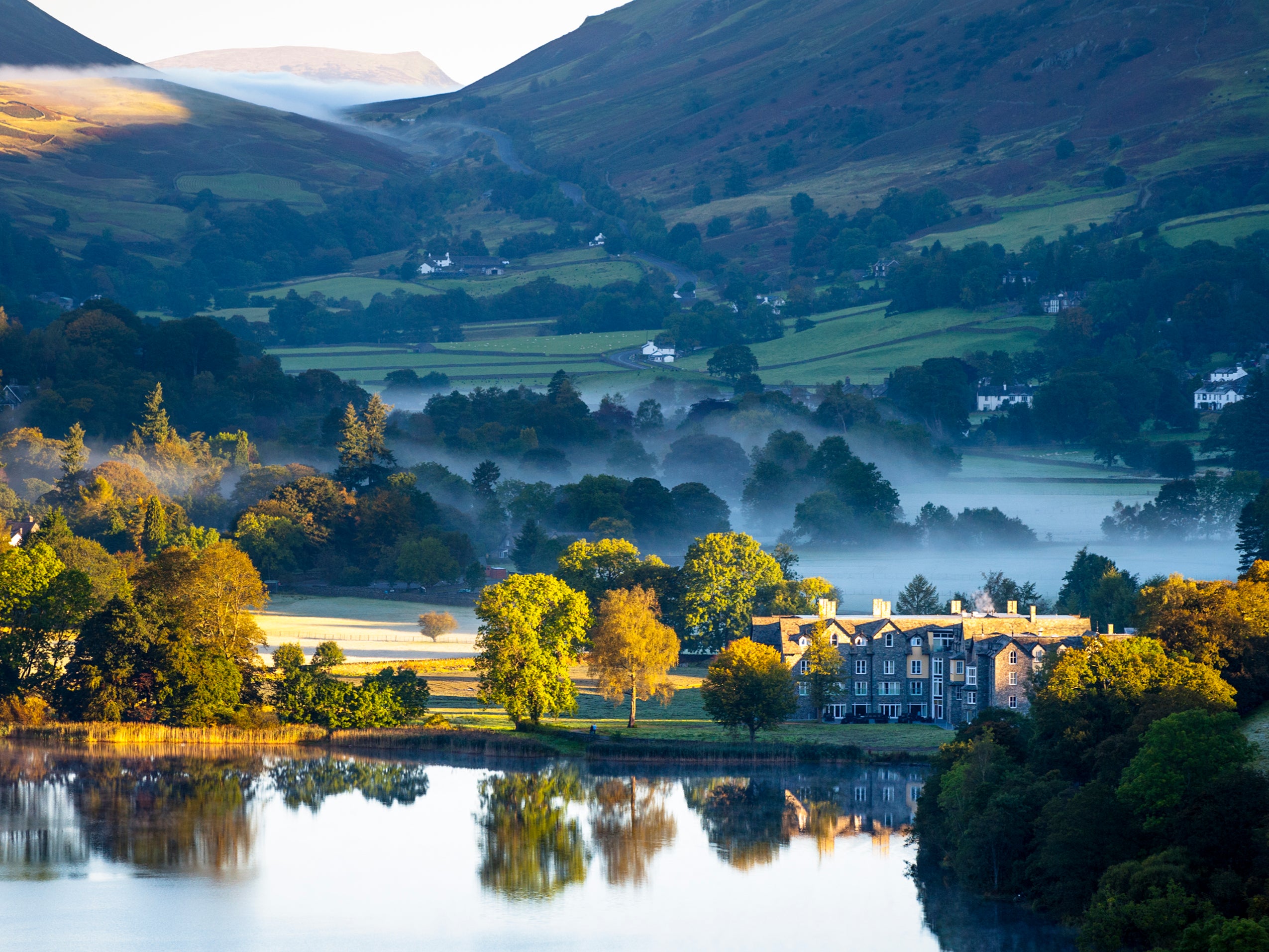
1. Grasmere

Picturesque Grasmere has a rich artistic and literary heritage
Picturesque Grasmere has a rich artistic and literary heritage (Getty Images)

Nestled among magnificent fells and a tranquil lake, Grasmere village is perfect for a relaxing stay with gentle walks and helpings of culture. It was a favoured spot for William Wordsworth and home to his Dove Cottage, where the poet wrote most of his major works. You can currently visit the cottage, along with a museum and gardens. Further artistic depictions of the area’s beauty can be found at the Heaton Cooper Studio. Established by landscape artist Alfred Heaton Cooper in 1938, the gallery now runs three exhibitions showcasing the work of the Heaton Cooper family – artists who have cherished the Lake District.

If the sun is shining, hire a pretty pastel-coloured rowing boat at Faeryland Grasmere, before admiring the lake views with a speciality tea and scones at the tea room. Don’t head home without some spicy-sweet gingerbread from the Grasmere Gingerbread shop.

Read more: Best cheap hotels in the Lake District

Where to stay

Advertisement

Victorian House is a boutique hotel that’s perfectly placed in the charming village. Choose from a handful of smart rooms finished with period quirks, or opt for the shepherd’s hut to wake up surrounded by nature. In the morning, enjoy breakfast with peaceful views of the garden.

Read more: Best things to do in the Lake District on a rainy day

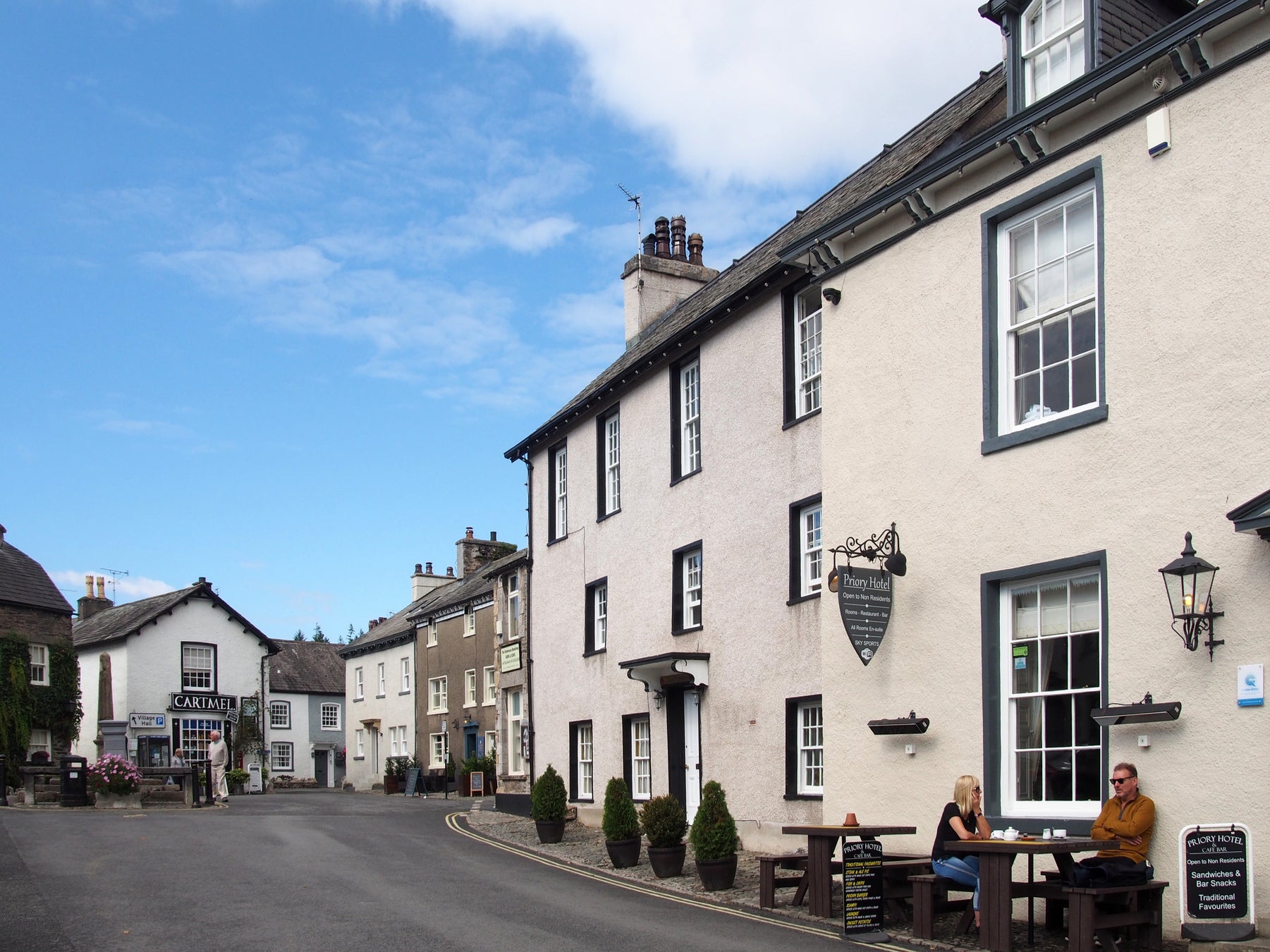
2. Cartmel

Between the late May bank holiday and the August bank holiday, visitors flock to the village to watch the horse jumping at Cartmel Racecourse
Between the late May bank holiday and the August bank holiday, visitors flock to the village to watch the horse jumping at Cartmel Racecourse (Getty Images)

Admittedly, Cartmel sits outside the Lake District National Park, but it is a great choice for excellent food, drinking spots, and shops selling local products – and ideal as a base from which to venture out to the Lakes. In the warmer months, the village square buzzes with outdoor eating and drinking. As well as a scattering of gastro pubs serving hearty British fare, the small village is home to two Michelin-starred restaurants, Rogan & Co and L’Enclume, both the work of Simon Rogan. Cartmel is also famous for sticky toffee pudding, which can be bought from the village shop, along with other puddings and deli foods.

Walk off the indulgence by exploring Cartmel’s medieval origins. A highlight is the 12th-century Cartmel Priory, which has eight centuries of history.

Advertisement

Where to stay

L’Enclume is a three-Michelin-star restaurant with bedrooms and suites scattered around the village. Each room elegantly displays local craftsmanship and references to the village’s history. All stays include breakfast at the Michelin-starred neighbourhood restaurant Rogan & Co, and guarantee a table reservation at L’Enclume.

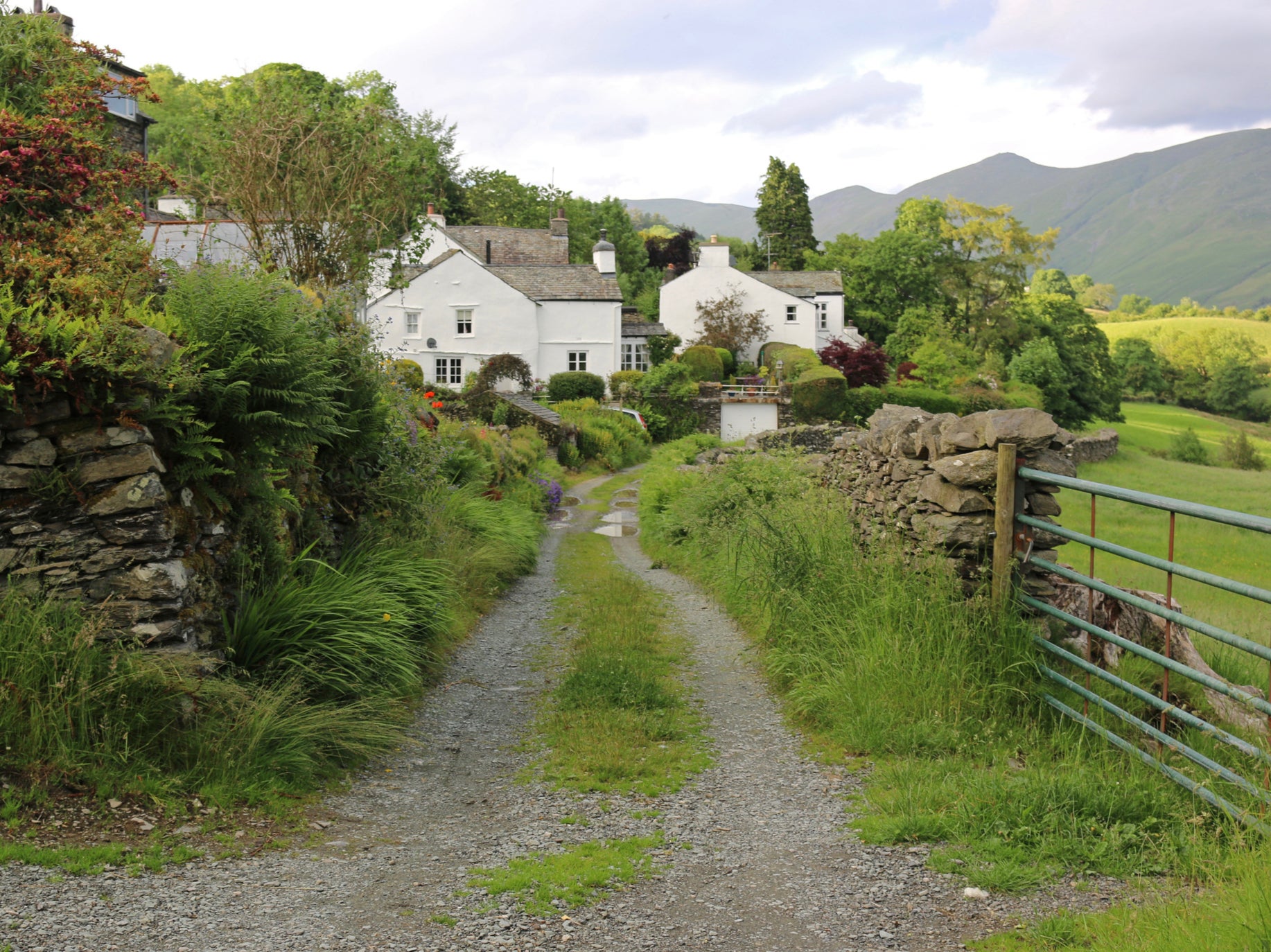
3. Troutbeck

Troutbeck was the favourite walking spot of Beatrix Potter
Troutbeck was the favourite walking spot of Beatrix Potter (Getty Images/iStockphoto)

Troutbeck is a cluster of hamlets that cling to the hilly road from Windermere to Penrith. A stay here is ideal for anyone who wants to enjoy the fells, but you could also take a gentle stroll around the village, stopping at Jesus Church, which is home to stained-glass windows by Edward Burne-Jones and William Morris. Afterwards, the Queens Head offers a cosy spot for a drink or a meal.

Alternatively, tackle the heights of Wansfell Pike – a climb rewarded by brilliant views of Windermere’s namesake lake. Walking boots are recommended for the strenuous fell walk up to High Street, which reaches 828 metres, via the Ill Bell ridge.

Advertisement

Back in the village, the Old Post Office Tea Room is a popular stop for walkers wishing to enjoy the views with homemade soups and cakes.

Where to stay

Family-run inn, the Mortal Man is a great value option. With traditional 17th-century low-beamed rooms, open fires and horse brasses, it makes an atmospheric stay with characterful bedrooms. The hotel also boasts a large beer garden, which is a great place to relax after a walk.

Read more: Best hotels in the Lake District

Advertisement

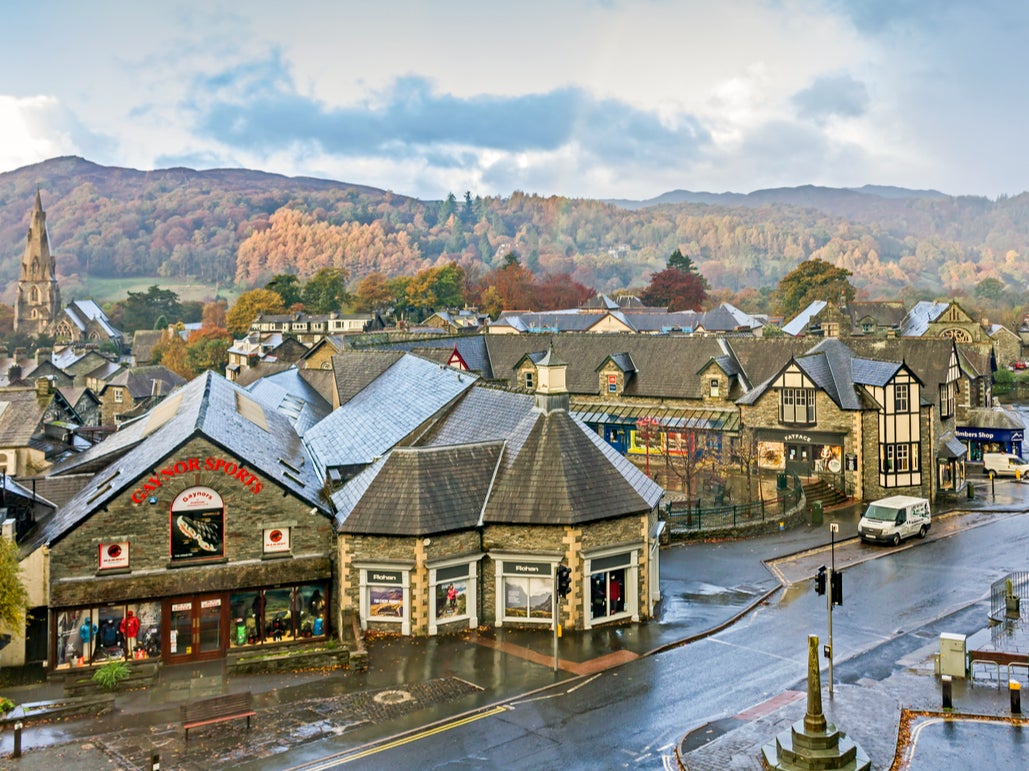
4. Ambleside

The historic market town of Ambleside hosts many independent shops and excellent restaurants
The historic market town of Ambleside hosts many independent shops and excellent restaurants (Getty Images)

Ambleside is a lively town, notable for its shopping. Deli Rattle Ghyll is a wonderful spot to pick up takeaway sandwiches and freshly baked pies, as well as local cheese and Winter Tarn Butter. A gorgeous selection of perfumes and natural skincare fills the shelves in The Bath House, while Fred’s Bookshop is the place to find your holiday reading. Sample some local craft ales straight from their copper tanks at Tap Yard or taste the creative delights at Michelin-starred Lake Road Kitchen. The exquisite offerings include local produce with creative twists like Ōra king salmon, karebushi, tomato and maple dashi.

A relaxed stroll can be enjoyed at Rothay Park, while the climb up to Wansfell Pike unveils the best views. On the way up, stop at Stockghyll Waterfall – its cascading water is wonderfully dramatic.

Where to stay

The Drunken Duck is a country inn that’s elegant yet down-to-earth, featuring cottage-style bedrooms finished with inviting furnishings. The property is a 10-minute drive from Ambleside, but it’s worth the journey. Downstairs, you’ll find a characterful, cosy pub with its own microbrewery, but the inn’s sleek restaurant, with its adventurous and flavoursome menu, is the main draw for guests.

Advertisement

Read more: UK walks with a pub at the end

5. Keswick

Easily reachable from Keswick, the Castlerigg Stone Circle dates back to the Neolithic period
Easily reachable from Keswick, the Castlerigg Stone Circle dates back to the Neolithic period (Getty Images)

Keswick is a jolly market town with a broad range of activities on your doorstep, making it an ideal place to entertain the whole family. On a bright day, visit Castlerigg Stone Circle, one of the most dramatic and earliest stone circles in the UK, dating to about 3000BC. It’s surrounded by glorious fells, including Helvellyn and High Seat. In May, Keswick hosts one of the biggest mountain festivals. This family-friendly weekend is packed full of sporting events from trail runs to yoga, as well as live music and a programme of talks.

On a rainy day, discover the history of the pencil at the Derwent Pencil Museum. Alternatively, catch a show at Keswick’s Theatre by the Lake.

Where to stay

Advertisement

Right in the centre of town, the Inn on The Square is a smart townhouse with slick Scandinavian design paired with charming Cumbrian features. There’s a cocktail bar, a family-friendly pub and a steakhouse restaurant with an open kitchen.

Read more: The most spectacular UK lakes for walks, kayaking, wildlife and more

6. Coniston

Coniston Water is a great place to get out on the water
Coniston Water is a great place to get out on the water (Getty Images)

Coniston village is an ideal base for watersports and outdoor family activities. It sits on Coniston Water, which is a quieter lake than touristy Windermere, so your boating ventures will be less disturbed by tours. Choose from rowing boats, kayaks, and canoes at Coniston Boating Centre, or take a relaxing cruise with Coniston Launch Co.

Visit the Ruskin Museum to learn the story of Donald Campbell, who broke seven world water speed records, four of them on Coniston Water. His iconic hydroplane Bluebird K7 is now featured in the museum.

Advertisement

Where to stay

Book the Coniston Inn for a classic Lakes hotel with good-value rooms and a family-friendly atmosphere. For hearty pub food and full Cumbrian breakfasts, grab a seat amongst electric memorabilia in the open-plan restaurant. It’s ideal for access to the lake since it has its own jetty.

Read more: Best family-friendly hotels in the Lake District for water sports and outdoor trails

Source link

Advertisement
Continue Reading

Trending

Copyright © 2025