Connect with us

NewsBeat

Train cancellations in Cardiff and south east Wales after Birmingham power cut

Published

on

Wales Online

There is significant disruption on the rail network following a power cut

Rail passengers travelling on Sunday face major disruption after a power cut in Birmingham knocked out systems used by CrossCountry’s control centre.

Advertisement

The train operator has warned that almost all of its services will be withdrawn or severely reduced on Sunday, with passengers urged to check before travelling.

The power cut, which began on Saturday, affected the building in Birmingham city centre where CrossCountry’s control centre is based. The company said many of the systems used by its control teams to manage services are currently unavailable.

CrossCountry operates services connecting parts of Wales with destinations across England and Scotland, meaning the disruption could affect passengers making longer-distance journeys.

The operator said it would run as many trains as possible using alternative procedures, but passengers should expect widespread cancellations throughout the day.

Advertisement

The only part of the CrossCountry network expected to operate close to normal is the service between Peterborough, Cambridge and Stansted Airport. Stay in the know by making sure you’re receiving our daily newsletter

The key routes affected for rail passengers in Wales are:

  • Cardiff Central to Nottingham – this runs via Newport, Severn Tunnel Junction, Caldicot, Chepstow, Lydney, Gloucester, Cheltenham Spa, Birmingham New Street and Derby before reaching Nottingham.
  • Cardiff to Cheltenham Spa – thus runs through the Severn Tunnel and Gloucestershire.

A CrossCountry spokesperson said: “A power cut in Birmingham city centre has affected the building where our control centre is located. As a result, many of the systems our control teams use to manage the railway are currently unavailable.

“Although colleagues are working hard to safely operate services using alternative processes, CrossCountry services will be significantly disrupted on Sunday, August 23.

“While we will run as many trains as possible, passengers should expect significant reductions to services and cancellations across almost all CrossCountry routes throughout the day. We are sorry to passengers affected by this significant and unforeseen disruption.

Advertisement

“Ticket acceptance is in place with other train operators, and customers will be entitled to Delay Repay compensation. Customers who choose not to travel can claim a refund from their original point of purchase. We are working closely with relevant partners and will provide further updates as soon as possible.”

CrossCountry is urging passengers to check their journey before leaving home, with the latest information available through the operator and National Rail.

Get daily breaking news updates on your phone by joining our WhatsApp community here. We occasionally treat members to special offers, promotions and ads from us and our partners. See our Privacy Notice

Source link

Advertisement
Continue Reading
Click to comment

You must be logged in to post a comment Login

Leave a Reply

NewsBeat

Australia thrash Bangladesh in second Test as Starc takes 10 wickets

Published

on

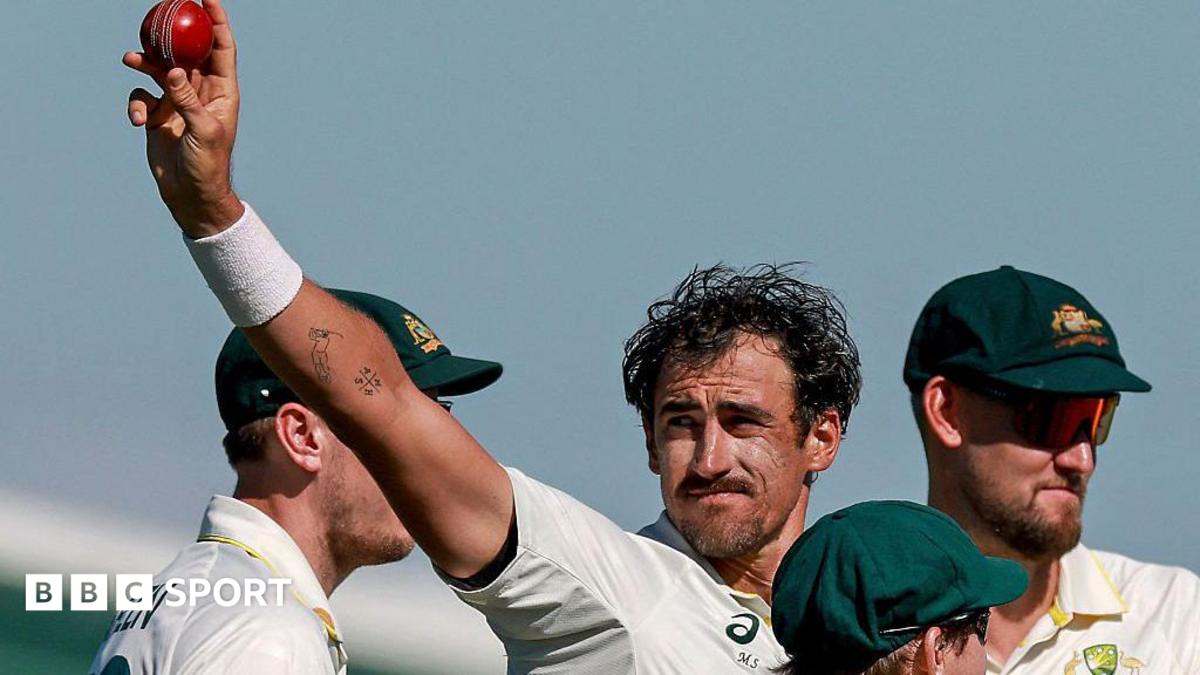
Australia cricketer Mitchell Starc celebrates his 10th wicket in the match by holding the ball up

Second Test, Mackay (day two of five)

Bangladesh 64: Starc 6-12 & 95: Shanto 31; Starc 4-39, Cummins 3-10, Lyon 3-25

Australia 210: Green 62; Shoriful 7-48

Australia win by an innings and 51 runs

Advertisement

Mitchell Starc took 10 wickets in the match as Australia bounced back from last week’s shock defeat by Bangladesh to win the second Test by an innings and 51 runs and draw the series 1-1.

The visitors were skittled for 95 in 38.3 overs with Starc taking four wickets and Nathan Lyons and captain Pat Cummins three each, as Australia wrapped up victory just after tea on the second day at the Great Barrier Reef Arena in Mackay.

Starc finished with match figures of 10-51, following his 6-12 in the first innings as Bangladesh struggled to 64 all out.

Last Sunday’s nine-wicket defeat for the world’s top-ranked side in Darwin was widely seen as one of Test cricket’s greatest upsets.

Advertisement

“A lot of things went right these couple days and a lot of things went wrong last week,” said Cummins, 33, who took 3-10 in the second innings.

“We needed to bounce back, and it was a great couple of days from the lads. I thought everyone was sharp. It was a great start and we didn’t really let up after that.”

Earlier in the day, Australia added 45 runs to their overnight total as they were bowled out for 210 with Cameron Green top scoring with 67 and Lyon adding an unbeaten 32 to give them a first-innings lead of 146.

Left-arm paceman Shoriful Islam was the pick of the bowlers with 7-48.

Advertisement

The visitors’ second innings got off to a poor start, losing both openers inside eight overs as they slumped to 24-3.

They then collapsed in the middle session, struggling to 95-8 by tea before Lyon wrapped up victory by taking the final two wickets in three balls.

“Much better week. We knew we weren’t at our best, or what we expect of ourselves, in Darwin,” said 36-year-old Starc, who was named Player of the Match and Series after taking 12 wickets at an average of 12.08.

“What we expect of ourselves this week is what we got, particularly with the ball and the wicket that aided us with the ball.”

Advertisement

Starc has now moved to 10th on the all-time Test wicket list with 445, 126 shy of Lyon’s haul in sixth place.

Australia next Test series is a three-match tour of world Test champions South Africa in October.

Source link

Advertisement
Continue Reading

NewsBeat

‘A winter run left me dead on a mountainside’

Published

on

'A winter run left me dead on a mountainside'
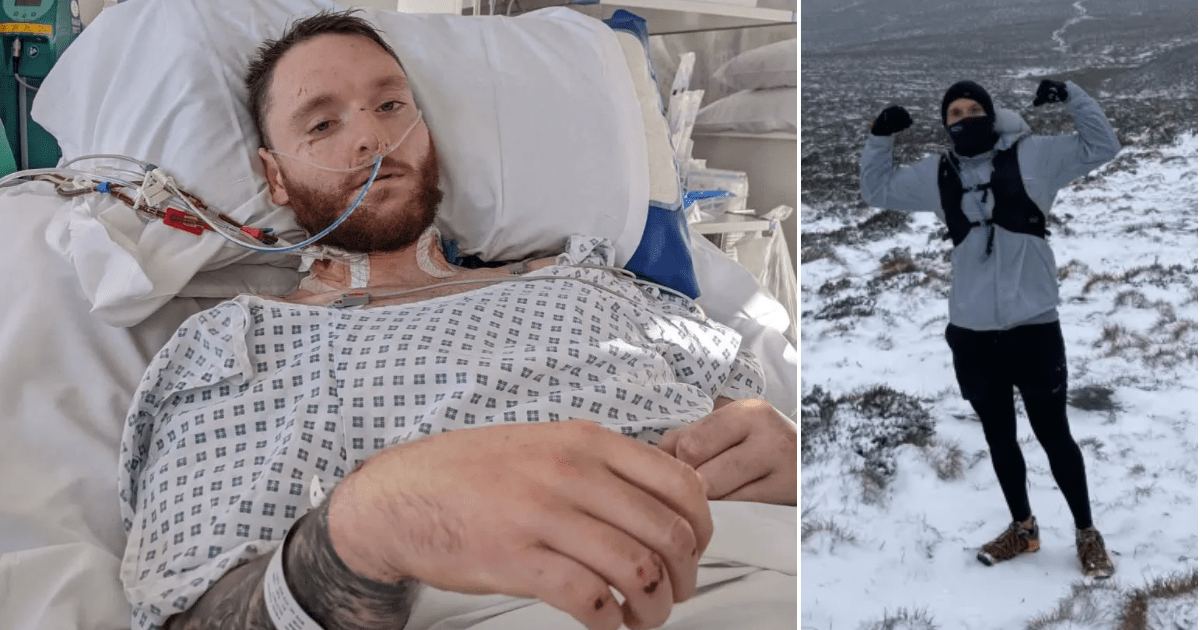
Tommy was fit, healthy and 26 when he started out on his 30-mile run (Picture: Supplied)

Tommy Price remembers nothing of the day he was found face down in the snow on a mountain with no heartbeat.

He doesn’t remember getting dressed in his leggings, jacket, snood and beanie that morning, or running 28 miles of a 30-mile route over Skiddaw and Great Calva in the Lake District.

He doesn’t remember his legs freezing up or trying to skid down a rocky path until his backside bled in 2022.

Tommy was fit, healthy and 26 when he and his friend Max set out to run the legendary fell-running trail the Bob Graham Round in Cumbria on a grey, snowy January morning. A former basketball player and bodybuilder, he was in excellent physical condition and had plenty of mountain running experience when they set off.

Advertisement

‘I can’t remember anything of the run. The mountain rescue doctor said it was like a Word document that doesn’t have autosave when there is a power cut.

‘He thinks I will never remember the day of the accident,’ says Tommy, now 31. His last memory is of parking up in Keswick.

It was 0°C in Cumbria that day, but between minus 15°C and minus 20°C higher up with the wind chill. Tommy and Max had also run through a river, making them much colder, he tells Metro from his home in Huddersfield.

‘Max later told me that as I was running up Blencathra I started dropping to my knees and saying I couldn’t carry on. He kept picking me up and I kept saying I wanted to turn around. That’s when the hypothermia set in. I was delirious.’

Advertisement

As Max ran back and forth trying to keep himself warm while helping his friend, Tommy’s legs stopped working and he started sliding down the mountain, ‘ripping my bum open’. Later, doctors told him he was lucky not to need skin grafts.

Ask Metro


Use AI to go deeper into the stories you care about – powered by Metro and trusted publications.

Advertisement

With their mobile phones out of battery, they were about a mile from a farm when Tommy’s legs seized up and he could go no further. Max wrapped him in an emergency survival bag before running downhill to call 999 and Mountain Rescue.

Tommy on the day he did his run (Picture: Supplied)

‘When they got to me, my survival bag was empty and I was 100 metres up the mountain, face down in the snow. They rolled me over and started doing CPR. Then another responder came and gave me the defibrillator.

‘They gave me three electric shocks and I was in ventricular fibrillation, so I had no heartbeat. My heart wouldn’t work because I was too cold.

‘It was a bit of a shock for them to find a dead person on the mountain. I think they thought they would give me a Snickers and walk me back down.’

With Max kept safe and warm in a rescue van below, Keswick Mountain Rescue Team volunteers Donald Ferguson and Jonny Hume did everything they could to save Tommy.

Advertisement

Team doctor John Ferris later said that becoming so cold before his heart stopped probably helped save Tommy’s life, as the freezing temperatures protected his brain and other organs from permanent damage.

Rescuers carried out manual CPR for an hour and a half before paramedics were able to use a LUCAS machine, which provides mechanical chest compressions, as Tommy was flown by helicopter to the Royal Victoria Infirmary in Newcastle, where life support had been prepared.

As they arrived, the machine ran out of battery and Dr Ferris had to resume manual CPR.

‘I think everybody thought I wasn’t going to make it,’ says Tommy. ‘John Ferris said that in the taxi home from the hospital, after he left me there, he rang Dr Les Gordon, consultant anaesthetist at University Hospitals of Morecambe Bay and team doctor for Langdale and Ambleside Mountain Rescue Team, who said there was a slim chance that I would survive – because nobody survives profound hypothermia.’

Advertisement
everybody thought I wasn’t going to make it,’ says Tommy, who was in an induced coma for five days and spent three weeks in hospital (Picture: Supplied)

Profound hypothermia is a life-threatening medical emergency in which the body’s core temperature falls below around 28°C, causing the body’s vital functions to begin shutting down.

At hospital, Tommy was placed on an ECMO machine, a form of advanced life support that temporarily takes over the function of the heart and lungs by pumping blood outside the body, adding oxygen, removing carbon dioxide and returning the blood to the patient, allowing the organs time to rest and recover.

Meanwhile, Max contacted his friend’s family, who were told he had suffered a cardiac arrest and had been taken to hospital. By the time a police officer arrived at his parents’ home to deliver the news, they were already preparing to travel to Newcastle. They gathered at Tommy’s bedside alongside his brothers, David and Gareth.

‘The doctors told them the risks of ECMO. They said, “It will save his life, but it could also kill him.” It was torture for my family because if I survived, they didn’t know if I would have brain damage,’ explains Tommy.

‘They did a CT scan on the third day to see if I had any blood clots in my brain and there was nothing. The doctor said that was a good sign, but the only way to find out was when I woke up. It was a waiting game.’

Advertisement

He regained consciousness after five days in an induced coma. He doesn’t remember waking up – his earliest memory was of a male nurse feeding him water using a sponge.

A keen runner, Tommy admits he was scared he would never walk again (Picture: Supplied)

‘I had a tube down my throat so my swallow reflex was weird. It was very sore. And I remember my brother David feeding me a grape, but I was sick straight away.’

At first, Tommy assumed he had been in a car crash until his family and Max explained what had happened. There was no brain damage.

‘I was scared that I would never walk again, but I was relieved I had survived. Doctors suggested I might need mobility aids around the house.

’I had nerve damage in my hands and feet so I couldn’t grip or pinch anything.

Advertisement

‘I could just about brush my teeth, but I had no strength in my hands. I couldn’t tie my shoelaces, open a can of pop, turn on the shower or drive. I could use my phone, but it took me a long time to write a text message.

‘It was like being a baby again. I needed a lot of help. My parents didn’t know if I would ever recover.’

The nerve damage, which felt like constant pins and needles, is permanent, although the symptoms have disappeared and he has regained full mobility. The only lasting effect is that his hands become cold much more quickly than before.

After three weeks, Tommy left hospital. Remarkably, just nine months after his heart stopped on the mountainside, he completed the London Marathon in three hours and 10 minutes, raising £10,000 for Keswick Mountain Rescue.

Advertisement

Psychologically, Tommy says he has been left unscarred.

‘I just don’t let it get me down,’ he says matter-of-factly.

Tommy holding his dog Pluto, after he had just finished the London Marathon, nine months after the accident (Picture: Supplied)

‘I look at life positively. It has changed my outlook a little bit. I’m not scared of death. It happens. People don’t believe me when I tell them I’ve died before.’

He’s since returned to fell running with gusto, although he avoids doing it in bad weather. A year after his accident, Tommy completed a 120km race in the Brecon Beacons and has entered other ultra-endurance events.

‘I think my fitness kept me alive. The month before my accident we did a 56-mile run and I completed an Ironman that summer, so I was at peak fitness. I’m the fittest I’ve ever been now,’ he adds.

Advertisement

Tommy has since set up his own dog-walking business, which sees him cover around 100km every week.

‘I can’t thank John Ferris, Jonny and Donald enough. They saved my life – and they are all volunteers. If it weren’t for them, I wouldn’t be here today.’

Source link

Advertisement
Continue Reading

NewsBeat

Paul Merson makes feelings clear on Harry Wilson and James Trafford’s Leeds United debuts

Published

on

Wales Online

Wales international Harry Wilson made his full debut for new club Leeds United at Nottingham Forest

Paul Merson says Harry Wilson is a good signing for Leeds United but says his debut left plenty of room for improvement.

Advertisement

The Whites began their season with a 1-0 win over Nottingham Forest on the road, with Anton Stach’s late goal the difference at the City Ground. It gave Daniel Farke’s men the perfect start to the campaign, one in which they’ll hope to kick on from.

Merson, though, believes supporters should remain calm, pointing out the performance left plenty to be desired, while offering as assessment of two of their new signings.

“Great result for Leeds but don’t get carried away, it wasn’t great,” he said.

On Wilson, who penned a free-transfer deal with the Elland Road club after a successful stint with Fulham, Merson feels his set-play prowess could help his new club this season. He felt his bow for his new employers wasn’t anything to write home about, however.

Advertisement

“He did all right, he wasn’t great,” Merson added.

“A couple of good balls in, he scored a goal that was offside. He did all right for his debut. First real game. I think he’s a good signing for them, anybody on a free is a good signing. Because I don’t see them opening up teams every week, and I think you need that set play.”

One player he was particularly impressed with was James Trafford.

Trafford kept his first clean sheet for the club after a big-money move from Manchester City in the summer. Merson believes the stopper has a confidence about him that will hold Leeds in good stead.

Advertisement

Merson said: “I think Trafford, big fan of Trafford, though he had that composure, he’s got confidence about him, comes out for balls at the right time, didn’t look panicky.

“What a bonus for Leeds, you always need a good goalkeeper, he’ll save you points, made a couple of good saves today, just when the pressure was on he’d come out, collect the ball, no dramas. Just done what it said on the tin.”

Farke was happy with all his debutants against Forest, including Tarik Muharemovic, who also made his bow.

“I am very happy because they have big boots to fill,” Farke said.

Advertisement

“Trafford is a good player but he hasn’t played that many Premier League games, Tarik too. So they both shined and showed why we agreed to sign them, but the whole group was excellent today.

“Wilson too was excellent. The vibe and mood is good around the place.”

Source link

Advertisement
Continue Reading

NewsBeat

The desperate race to contain Ebola in DR Congo as deadly outbreak reaches 100 days

Published

on

The desperate race to contain Ebola in DR Congo as deadly outbreak reaches 100 days

One hundred days into the Ebola outbreak in the Democratic Republic of Congo (DRC), the response is still struggling to keep pace as the virus overwhelms the systems trying to contain it.

The death toll has accelerated sharply in recent weeks, with roughly half of the more than 2,500 deaths recorded in the past 20 days. It is the deadliest ever outbreak in the DRC, as well as the fastest growing anywhere, with more than 5,000 confirmed infections in just over three months.

Ebola has now been detected in an area bigger than France, while more than half of deaths happen outside treatment centres. It suggests many are dying in their communities without receiving care, aid agencies have warned, allowing the virus to continue to spread before cases are detected.

Around four in five new infections are also being detected outside known chains of transmission, meaning the epidemic continues to shift beyond the reach of existing surveillance. “This epidemic continues to spread, moving faster than the response can keep up,” Dr Javid Abdelmoneim, international president of Médecins Sans Frontières (MSF), says.

Advertisement

This Ebola outbreak, caused by the rare Bundibugyo strain for which there is little recognised treatment and no cure, has surpassed the total number of cases recorded during the DRC’s previous worst outbreak, which lasted two years from 2018 to 2020. It is also spreading significantly quicker than the worst Ebola crisis ever, the West African Ebola outbreak of 2014 to 2016, which killed more than 11,000 people. That outbreak took a year to reach 2,000 deaths.

It is leaving almost two children a day orphaned, with at least 180 children who have lost both parents or primary caregivers, according to Save the Children. They face increased risks of trafficking, exploitation, violence, forced recruitment by armed groups and severe psychological distress.

Video Player Placeholder

As it grows “exponentially”, the response is only “covered for the next weeks, and very soon funding will run out,” the United Nations’s Senior Ebola Coordinator Julien Harneis adds at a press briefing into the weekend.

International pledges to help the response have exceeded the amount requested, he said, but less than half of the money has actually been disbursed. Response efforts have been hampered by conflict, displacement, weak health infrastructure and abrupt cuts to global aid, such as the decimation of the United States Agency for International Development (USAID) last year.

Dr Manenji Mangundu, Oxfam’s country director in DRC, says: “This is a disaster unfolding right before our eyes, and it is the result of political choices. We urgently need proper funding to be restored. Without it, the virus will continue to spread, and more lives will be lost.”

Advertisement

Rory Stewart, who previously served as the UK’s Africa minister, has said of the widespread aid cuts: “Pandemic preparedness – in other words, dealing with an Ebola outbreak or even a new version of a Covid outbreak – requires lots of people on the ground in places like DRC or Uganda who are able to detect cases, respond to them, quarantine and prepare responses.”

“It’s all the infrastructure behind that which is being undermined at the moment. And that’s a real threat, of course, to the world,” he told BBC Radio 4 earlier in the summer.

Mr Harneis is clear that extra support is needed now. “Every delay in funding and implementation makes this epidemic more deadly, more difficult to stop and more expensive. So, we need that international support immediately,” he says.

Case numbers are now rising rapidly beyond the epicentre of Ituri province, with North Kivu province experiencing particularly high levels of mortality and mistrust in the response, according to MSF.

Advertisement
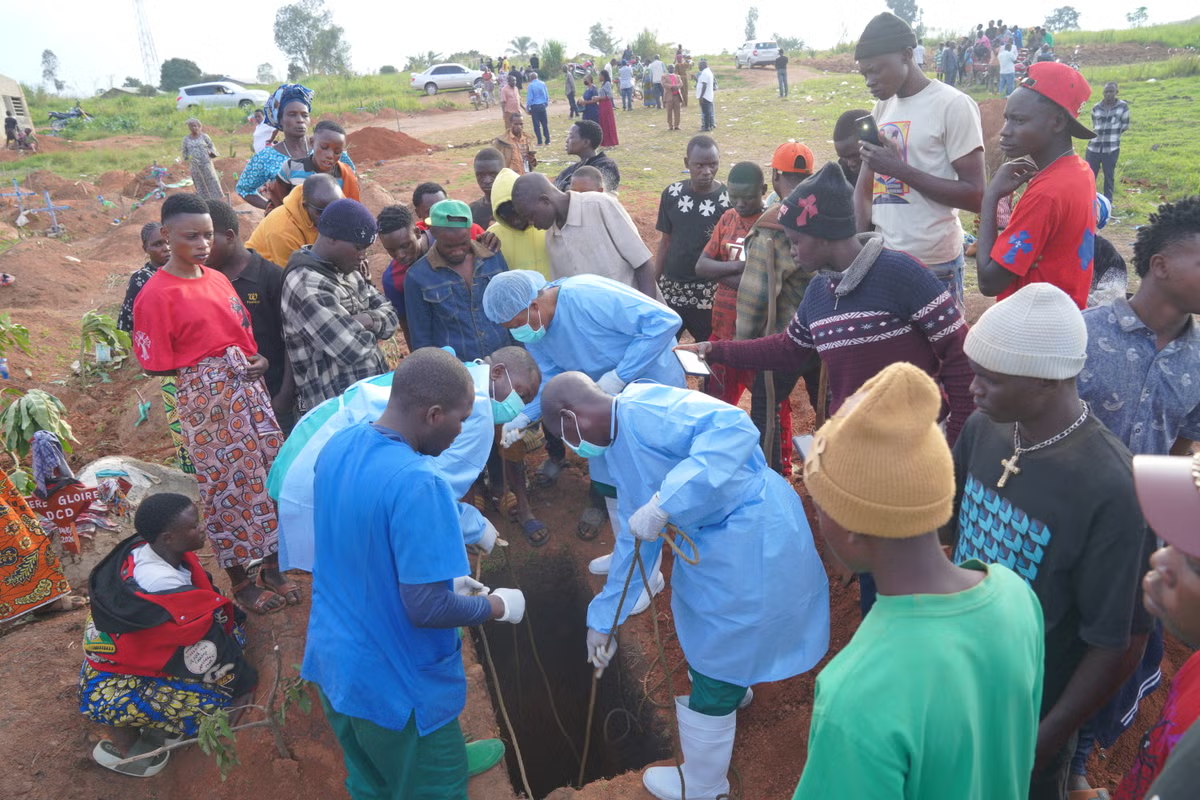
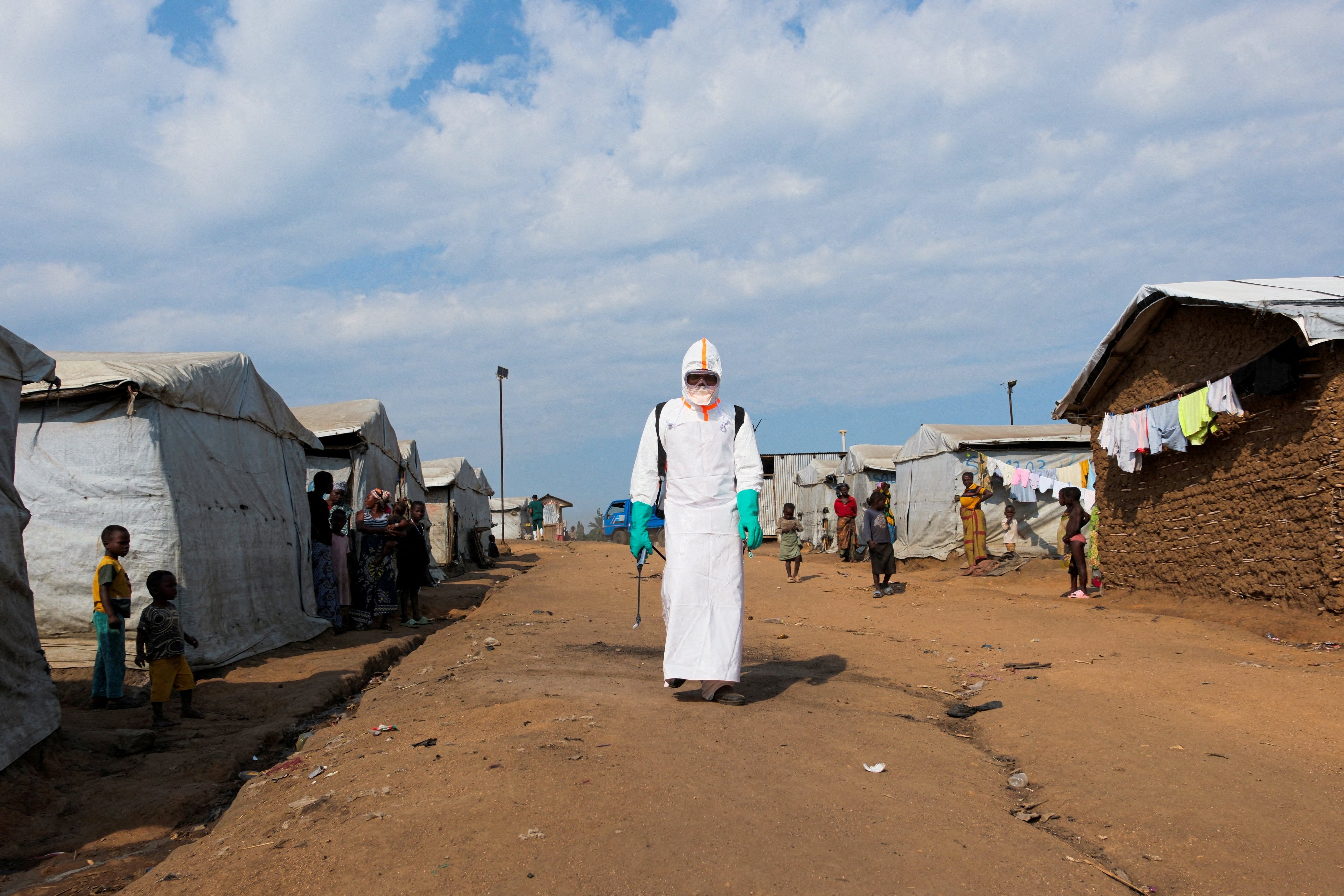
Displaced people watch a health worker in full personal protective equipment (PPE) preparing to disinfect the area during the burial of suspected Ebola victims at the Kigonze displaced persons camp in Bunia, eastern Democratic Republic of Congo
Displaced people watch a health worker in full personal protective equipment (PPE) preparing to disinfect the area during the burial of suspected Ebola victims at the Kigonze displaced persons camp in Bunia, eastern Democratic Republic of Congo (Reuters)

Although the outbreak was officially declared on 15 May, the World Health Organisation (WHO) believes the virus may have been spreading undetected for weeks before, since as far back as February.

The “brutal” operating conditions also continue to impede the progress of frontline workers, Mr Harneis warns. More than 160 healthcare workers have also contracted Ebola, killing 43, in a country whose health system was already struggling.

Isolation centres and other health facilities have also increasingly become targets amid widespread misinformation, with more than 260 attacks on health workers reported in the past six months, and eight killed.

Although the outbreak initially affected more men, largely because it originated in a mining area, the demographic profile of the epidemic has since shifted. Women now account for 53% of all reported cases, with the greatest burden falling on women from 18 to 49 years old. Oxfam says this disproportionate impact is driven by women’s roles as primary caregivers for sick family members, their involvement in traditional burial preparations, and their representation among frontline healthcare workers, particularly nurses and midwives.

Women and girls in the DRC already faced significant maternal health risks before Ebola emerged, and now these risks have intensified. The outbreak threatens the estimated 63,700 pregnant women living in affected areas.

Advertisement

Already compounded by conflict and displacement in the DRC, the consequences of the outbreak are now also spreading to food and livelihoods, according to the International Committee of the Red Cross (ICRC). Delayed payments have left some frontline workers unpaid and caused widespread strikes.

“Violence and armed conflict have forced many families to abandon fields further from their homes and farm closer to where they live, reducing food production and limiting the availability of food on the market,” says Abdoule-Karim Diomande, ICRC Head of Programmes in DRC. “In Ituri, restrictions on cross-border trade introduced as part of preventive measures for Ebola have added to these pressures.”

The restrictions are part of efforts to contain the outbreak to the DRC, with preparedness activities in neighbouring countries like South Sudan, the Central African Republic, Burundi and Uganda, which has declared itself Ebola-free after discovering a small number of cases in June.

While there have been trials for a vaccine that could help the severity of the disease, the WHO warns that it is “not the solution to everything” and that “community outreach was the main tool”.

Advertisement

With active conflict ongoing, armed groups active and one million people displaced in Ituri alone, the outbreak cannot be treated as a standalone medical emergency, according to the Danish Refugee Council .

“In active conflict zones, traditional health measures simply fall apart,” says Sarah Chieh-Wen Chiang, acting DRC director for the Danish Refugee Council. “Conflict forced these people from their homes. Violence followed them into the camps. Now, an untreatable virus is spreading through overcrowded sites. The world must not look away”.

This article has been produced as part of The Independent’s Rethinking Global Aid project

Source link

Advertisement
Continue Reading

NewsBeat

Simple guide to building the ultimate investment portfolio you won’t have to change for a decade

Published

on

Simple guide to building the ultimate investment portfolio you won't have to change for a decade

Over the past 40 years, I’ve learnt a lot about investing effectively. Some of the lessons have been financially painful ones – for example, selling at a loss investments I should never have bought in the first place.

However, I believe they have made me a better, shrewder investor. You learn from your mistakes.

Despite hitting my ‘senior’ years and having less time on my side (if you know what I mean), I’m now a more patient investor than I have ever been – and less inclined to be ‘greedy’: that is, seek quick profits or jump on the back of investment fads just as they are about to implode.

Back in the early 1990s, I won a journalism award and was given a prize that had to be invested in a Barclays investment fund.

Advertisement

Being young and brash – and annoyingly arrogant – I put the money in a high-risk Japanese warrants fund. I lost the lot – a salutary lesson.

Some may now accuse me of being a boring investor, but I’m happy to wear that badge.

I’m a ‘Steady Eddie’, content to accumulate investment gains from long-term investments (funds, not shares) that in the main deliver me a tidy mix of dividend income (dividend growth if I can find it) and capital return.

I’m not interested in buying individual shares such as the Nvidias and Metas of this world (easily bought through an investing platform) although I’m happy to have exposure to them via a diversified investment fund.

Advertisement

Provided the returns I earn from my investments are in excess of those that I can earn from cash, I’m a happy bunny – although I do have cash Isas that I use either for financial emergencies or to fund the stream of holidays booked by my travel-mad partner, Leonie.

Not being a trader, I like to hold at the core of my investment portfolio investment funds and stock market-listed investment trusts that I don’t have to micro-manage.

Advertisement

In other words, I can leave them alone to grow in value rather than constantly chop and change them. It’s a marriage made in heaven.

Nearly all of these investments are held in a tax-friendly wrapper such as a stocks and shares Isa or a self-invested personal pension.

And while I could take the income from them to help fund my day-to-day living, I prefer to reinvest the divis in yet more shares.

In my eyes, the compounding of dividend income is one of the wonders of the investment world. I urge you to embrace it.

Advertisement

So which funds out there are the ones you can trust to be robust enough to form the core of your investment wealth strategy for the next decade and beyond?

There are plenty, and you can find them by looking at the best fund lists provided by investing platforms such as AJ Bell, Hargreaves Lansdown and Interactive Investor.

You can also use some splendid comparative fund tools provided by the likes of the Association of Investment Companies and Trustnet to dig them out.

Key to identifying them is to look out for certain characteristics.

Advertisement

These include: a steady investment record, especially over the past five and ten years; low ongoing annual charges (ideally closer to 0.5 per cent than 1 per cent); a fund that is in growth mode in terms of assets under its wing (usually a reflection of good performance and strong investor demand); an income bent; and an investment team with a clear strategy as to how to extract returns from stock markets.

Here are my suggestions: my acclaimed portfolio ‘Steady Eddies’.

They are funds that I think are ideal bolthole investments that could act as the engine room of your investment portfolio for the foreseeable future.

Note that I say ‘could’ as opposed to ‘will’ because sometimes the very best looking funds do go off the rails (remember Woodford Equity Income, which imploded in spectacular fashion?).

Advertisement

It is up to you whether you want to complement some of these investment heavyweights with supporting ‘satellite’ investment funds that give you exposure to specific markets or investment themes you particularly like.

A core and satellite approach to investing makes great sense.

I¿m a ¿Steady Eddie¿, content to accumulate investment gains from long-term investments that in the main deliver me a tidy mix of dividend income and capital returns, says Jeff

I’m a ‘Steady Eddie’, content to accumulate investment gains from long-term investments that in the main deliver me a tidy mix of dividend income and capital returns, says Jeff

I have split my Steady Eddies into two camps: global and UK.

Advertisement

Given my liking for investment funds run by managers rather than robots, you may be somewhat surprised by a couple of my choices.

My top pick of global funds

Global investment funds should lie at the heart of any investment portfolio.

Although UK investors should always have a bias to the home stock market, especially given its assortment of dividend-friendly companies (the banks, energy companies and tobacco stocks), the London Stock Exchange is increasingly overshadowed by rival markets in the US and across the length and breadth of Asia.

Geographic diversification is one of the foundation stones of good portfolio management and you can get this via a global investment fund or investment trust.

Advertisement

I’ve gone for seven – although there are plenty of rival funds that have great merit.

The first choice is HSBC FTSE ALL-WORLD INDEX, which, by tracking the performance of the FTSE All-World Index, is a proxy for the performance of global stock markets.

This £7.3 billion fund ticks all the boxes: low annual charges (0.13 per cent), geographic diversification with the biggest slug of assets in the US (60 per cent), and exposure to all of the world’s biggest listed stocks (the likes of magnificent seven stocks Alphabet, Amazon, Apple, Meta, Microsoft, Nvidia and Tesla).

Over the past five discrete one-year investment periods, it has registered respective returns (rounded to the nearest 1 per cent) of 22 (year to August 20 this year), 12, 23, -3 and 7 per cent. Pretty respectable, equating to an overall five-year return of 74 per cent, according to Trustnet.Although its focus on big US technology stocks means the dividend is low at 1.3 per cent, it will ensure you don’t miss out on the tech story – buoyed by the boom in artificial intelligence (AI).

Advertisement

Of course, it doesn’t provide you with protection from any stiff correction in global stock markets that could result from the bursting of the AI bubble (some commentators have been predicting the pricking of this bubble for the past year). But then no equity fund will do that for you. Corrections are part and parcel of investing and you have to have the conviction (and courage) to keep investing when share prices are falling. Building investment wealth is a long-term project and rewards the patient investor.

Invest regularly if you’re worried about market timing. But I’d be surprised if over the next decade, this fund hadn’t enhanced your wealth.

To complement this index tracker, I would hold a number of long-established global funds run by respected investment teams.

I’ve chosen six, which fall into two categories.

Advertisement

The first category includes global investment trust titans ALLIANCE WITAN, BANKERS and F&C.

All three are big funds – ranging from £1.4 billion (Bankers) to £6.5 billion (F&C) – and have annual dividend growth records going back at least 55 years.

The three of them pay quarterly dividends.

Ongoing annual charges are also competitive with the highest (Bankers) still representing good investment value for money at 0.51 per cent.

Advertisement

The funds have solid five-year and ten-year investment records: key to qualifying as a ‘core’ investment. Over five years, the respective total returns for Alliance Witan, Bankers and F&C are 53, 44 and 67 per cent. Over the past decade, the equivalent figures are 189, 188 and 216 per cent.

All are managed slightly differently. Alliance Witan uses a collection of top fund managers from across the world to manage parcels of the trust’s assets.

The result is a fund that in terms of geographic exposure is wildly different to that of HSBC FTSE All-World Index (in other words, complementary rather than a duplicate).

In the case of Bankers, part of investment house Janus Henderson (JH), the managers parcel out the fund’s assets to investment teams at JH to run.

Advertisement

At F&C, part of global investment house Columbia Threadneedle, a similar strategy is adopted. F&C is the oldest investment trust in the country.

One of its defining characteristics is an 11 per cent exposure to private equity, which is both risky and potentially rewarding (in other words, hold on to your hat).

In my second category are investment funds ARTEMIS GLOBAL INCOME, M&G GLOBAL DIVIDEND and TEMPLETON EMERGING MARKETS.

The Artemis and M&G funds have an income bent – especially the M&G fund – and have exceptional fund managers at the helm (respectively Jacob de Tusch-Lec and Stuart Rhodes).

Advertisement

Over the past ten years, the funds have generated total returns of 263 and 183 per cent respectively. To put these numbers into perspective, the average global equity income fund has returned 141 per cent.

Both portfolios provide exposure to global stocks outside the magnificent seven (only Microsoft appears in the top ten holdings of the M&G fund). Respective total annual charges are 0.83 and 0.66 per cent (higher than our four previously mentioned global Steady Eddies). Income, hovering just above 2 per cent a year, is paid quarterly by M&G Global Dividend and semi-annually in the case of Artemis Global Income.

Templeton Emerging Markets is my slightly off-beam final global fund choice.

I see it as a complement to my other Steady Eddies as a result of a portfolio skewed towards Asian markets (South Korea, Taiwan and China) and some of the world’s most successful and relevant companies: the likes of computer chip maker TSMC and consumer electronics giant Samsung Electronics (maker of the Galaxy smartphone).

Advertisement

Over the past ten years, it has delivered total returns of 246 per cent. Total annual charges sneak under the 1 per cent bar (any higher and I would have excluded it) and its last annual dividend was worth 3.25p a share to investors. Its current share price is just under £3.20.

My top pick of UK funds

My final three Steady Eddies are funds that trawl the UK stock market for a mix of income and capital return.

As with my global picks, I’ve included an index-tracking fund – HSBC FTSE 100 INDEX – which tracks the performance of the FTSE 100: a great source of dividend income for investors and overall investment return.

Total annual charges are 0.1 per cent and, over the past ten years, the HSBC fund has generated total returns of 122 per cent.

Advertisement

My two other UK funds are actively managed: investment trust ABERDEEN EQUITY INCOME and JO HAMBRO UK EQUITY INCOME.

The Aberdeen fund, listed on the UK stock market, has 25 years of annual dividend growth under its belt. It recently absorbed the assets of Aberdeen trust Shires and is in growth mode. Its stand-out characteristic is a healthy dividend (close to 5 per cent) with payments made quarterly. It also gives investors exposure to stocks outside the FTSE 100. Total annual charges are 0.84 per cent.

JO Hambro UK Equity Income is a cracking fund run by a triumvirate of managers: Clive Beagles, James Lowen and Josh Herson.

Over the past ten years, it has generated an overall return of 146 per cent (against a peer group average of 95 per cent).

Advertisement

Dividends are paid quarterly – providing an annual income to investors of about 4.7 per cent – and total annual charges are reasonable at 0.73 per cent.

The £2 billion fund is one of the best UK equity income funds around – and Beagles is one of the most enthusiastic and passionate UK investors I have ever interviewed. I hope my Steady Eddies pique your interest. If you have some of your own Steady Eddies, do let me know: Jeff.prestridge@mailonsunday.co.uk

DIY INVESTING PLATFORMS

Easy investing and ready-made portfolios

AJ Bell

Easy investing and ready-made portfolios

AJ Bell

Easy investing and ready-made portfolios

Advertisement
Free fund dealing and investment ideas

Hargreaves Lansdown

Free fund dealing and investment ideas

Hargreaves Lansdown

Free fund dealing and investment ideas

Flat-fee investing from £4.99 per month

interactive investor

Flat-fee investing from £4.99 per month

interactive investor

Flat-fee investing from £4.99 per month

Investing Isa now free on basic plan

Freetrade

Investing Isa now free on basic plan

Freetrade

Investing Isa now free on basic plan

Free share dealing and no account fee

Trading 212

Free share dealing and no account fee

Trading 212

Free share dealing and no account fee

Advertisement

Affiliate links: If you take out a product This is Money may earn a commission. These deals are chosen by our editorial team, as we think they are worth highlighting. This does not affect our editorial independence.

Compare the best investing account for you

Source link

Continue Reading

NewsBeat

The late Queen ‘gave Kate rare photography privilege’ at Balmoral summer break

Published

on

Daily Mirror

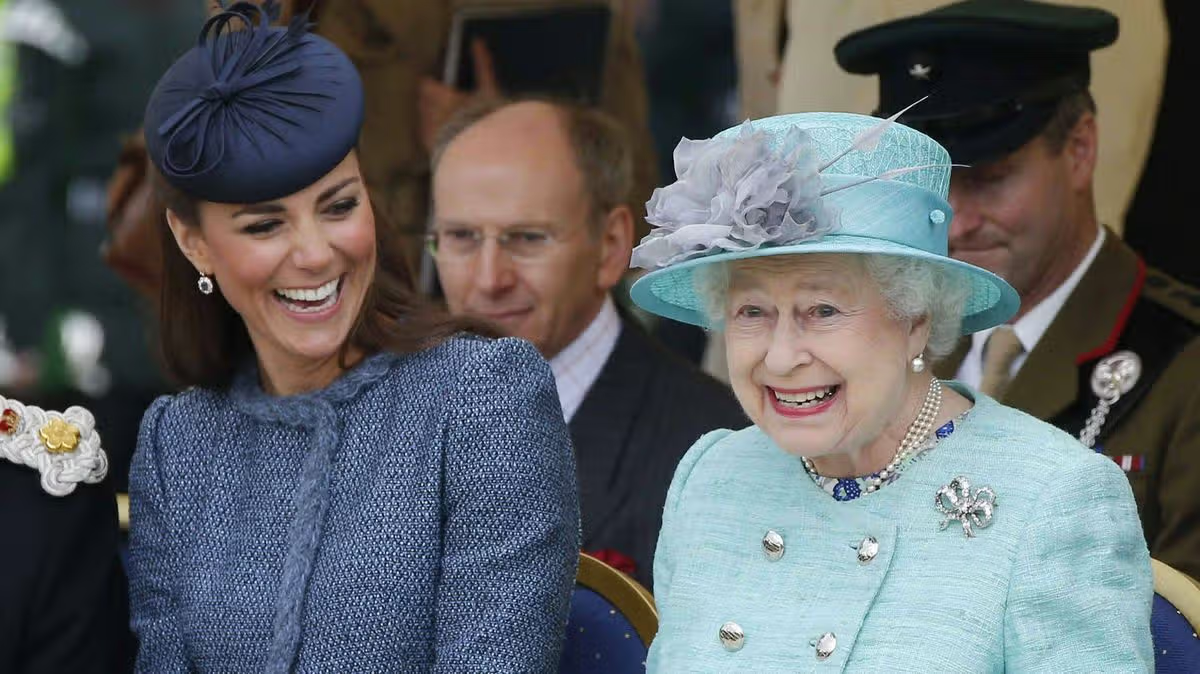
Queen Elizabeth II reportedly gave the Princess of Wales exclusive photography privileges during the Royal Family’s summers at Balmoral Castle, which was considered Kate’s acceptance into the family’s most private traditions

It has become a cherished family tradition for the Prince and Princess of Wales to make their way to Scotland every summer. Together with their children Prince George, Princess Charlotte and Prince Louis, the family spend quality time with the King and Queen during their annual retreat at her Balmoral estate. Prince William, of course, has been visiting the beloved Scottish Highlands getaway since he was a young boy alongside his royal relatives.

Advertisement

For his wife Kate, however, her invitation to Balmoral came during the early days of her romance with her future husband. There’s little doubt Kate would have felt apprehensive ahead of her first visits to the estate – yet it appears the late Queen Elizabeth was determined to put her at ease – reportedly extending to her a rather special privilege.

According to royal author Katie Nicholl, Her Majesty granted Kate permission to bring her camera and photograph Balmoral and its breath-taking surrounding landscape, fully aware of her passion for photography. While this may seem unremarkable to most, Katie explains this was simply not something that was ordinarily permitted.

In her book, Kate: The Future Queen, she writes: “Until now the Queen had met Kate only fleetingly at the wedding of Peter and Autumn Phillips, but she went out of her way to make her feel welcome, giving her permission to take pictures at Balmoral.”

Advertisement

According to the royal expert, both this and receiving an invitation to Balmoral demonstrated that the Queen was prepared to welcome Kate into the inner royal circle.

She added: “As a woman who has lived her entire life in the public eye, the Queen rarely lets her guard down, and very few apart from her family and closest friends get to see the real Elizabeth.”

One particularly iconic photograph taken by Kate at Balmoral was released in 2021 following the deeply sad passing of the late Queen’s husband, Prince Philip.

Advertisement

It captures the Queen and the late Duke of Edinburgh in 2018, surrounded by seven of their great-grandchildren during one of their cherished family holidays in Scotland. In keeping with a royal tradition established by the Queen, King Charles traditionally spends August and into September at Balmoral.

Throughout his stay, the King extends invitations to various family members to join him, with the royals taking part in a variety of outdoor activities together. The royals are said to have a particular fondness for strolling across the estate’s vast 50,000 acres, as well as enjoying al fresco picnics and barbecues.

The late Queen’s granddaughter Princess Eugenie has previously spoken warmly about her grandparents’ deep affection for the retreat and what makes it so special to them. She told the programme Our Queen at 90: “It’s the most beautiful place on earth. I think Granny is the most happy there, I think she really, really loves the Highlands…walks, picnics, dogs, a lot of dogs, there’s always dogs, and people coming in and out all the time.

Advertisement

“Family-wise we’re all there, so it’s a lovely base for Granny and Grandpa to be – for us to come and see them up there where you just have room to breathe and run.”

Source link

Continue Reading

NewsBeat

Rory McIlroy: Masters champion improves to go second at BMW Championship

Published

on

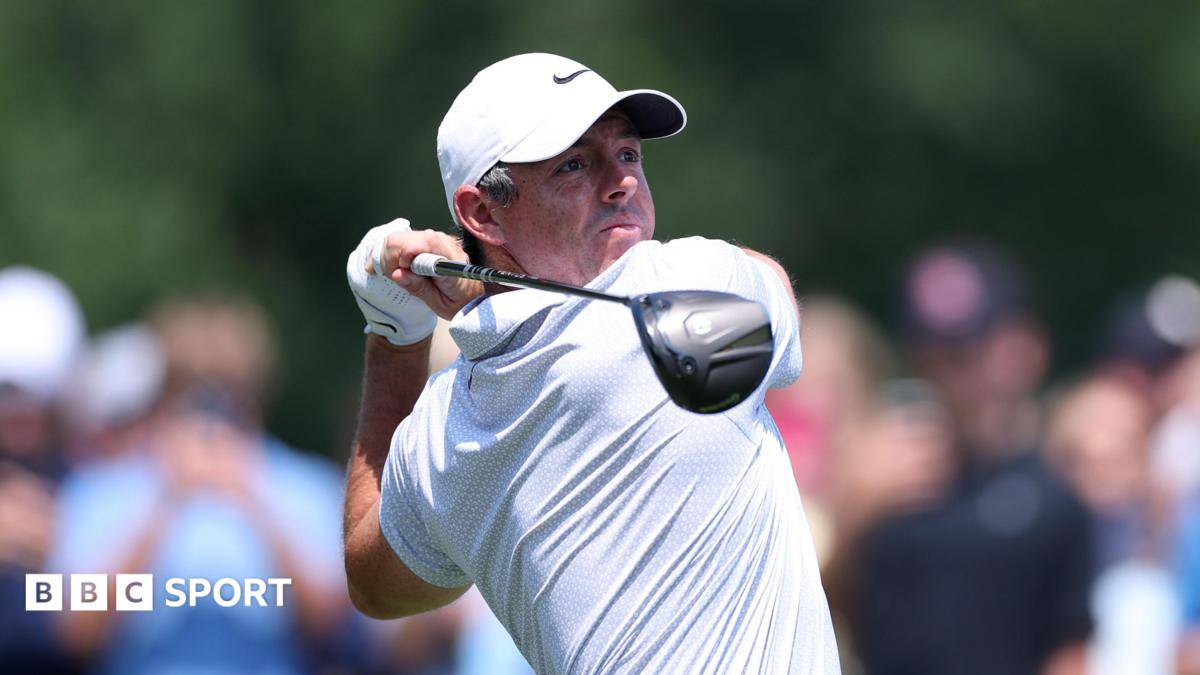
Rory McIlroy at the end of his swing

BMW Championship – third-round leaderboard

-17 W Clark (US); -12 R McIlroy (NI), P Cantlay (US); -11 C Gotterup (US), G Woodland (US); -10 C Morikawa (US); -9 S J Im (Kor); -8 M McNealy (US), R Hisatsune (Jpn), E Cole (US), JJ Spaun (US)

Selected others: -5 R MacIntyre (Sco); -4 A Rai (Eng), M Fitzpatrick (Eng); -1 J Rose (Eng), A Fitzpatrick (Eng); +2 T Fleetwood (Eng)

Full leaderboard

Advertisement

Rory McIlroy struck a five-under 65 to move to joint-second on day three at the BMW Championship.

The Northern Irishman improved from a day two round of 69 that cost him his first-day lead, birdieing four of the last six holes to move up to second spot on 12 under.

American Patrick Cantlay of the United States is level with McIlroy, having shot a 66 on Saturday, while his compatriot Wyndham Clark extended his lead at Bellerive Country Club to five shots with a 65.

Clark double-bogeyed the opening hole but was superb thereafter, birdieing twice and then hitting an eagle on the eighth to go into the turn on two under.

Advertisement

He then birdied four of the next five holes before bogeying the last, returning to the clubhouse on -17 overall.

The home duo of Chris Gotterup and Gary Woodland sit on -11 overnight with compatriot Collin Morikawa on -10 and South Korea’s Im Sung-Jae on -9.

Scotland’s Robert MacIntyre and American world number one Scottie Scheffler struck 68s to finish in a group of eight on -15, with England’s Aaron Rai and Matthew Fitzpatrick a shot behind.

The experienced English pair of Justin Rose and Tommy Fleetwood both slipped down the field after over-par rounds. Rose shot 73, to leave him on -1 going into the final day, while Fleetwood’s 74 put him on +2.

Advertisement

Source link

Continue Reading

NewsBeat

Red Hot Chili Peppers frontman Anthony Kiedis, 63, surfaces with age gap girlfriend, 31, after being slammed for dating much younger women

Published

on

Anthony Kiedis was spotted on a dinner date with his much-younger girlfriend in Beverly Hills on Friday evening

Anthony Kiedis was spotted enjoying a night out on the town with his much-younger girlfriend on Friday evening. 

The Red Hot Chili Peppers frontman, 63, was seen kissing the 31-year-old girlfriend on the street after their dinner date at the celebrity-frequented hotspot E. Baldi in Beverly Hills.

He and his girlfriend Eileen Kelly, a sex educator and author, were spotted walking hand-in-hand as they strolled out of the eatery and toward his motorcycle.

The couple, who share a 33-year age gap, put on their helmets and jackets then enjoyed a lip-lock before hopping on the bike and jetting off together. 

Advertisement

For their date night, Kiedis wore dark denim jacket over his white, graphic T-shirt, which he paired with black jeans and sneakers.

His girlfriend wore a black, graphic tank top paired with fitted jeans and kitten heels. 

She later put on a pale green hoodie before their thrilling motorcycle ride home. 

Advertisement

Anthony Kiedis was spotted on a dinner date with his much-younger girlfriend in Beverly Hills on Friday evening

The couple, who share a 33-year age gap, put on their helmets and jackets then enjoyed a quick lip-lock before hopping on the bike and jetting off together

The couple, who share a 33-year age gap, put on their helmets and jackets then enjoyed a quick lip-lock before hopping on the bike and jetting off together

The Daily Mail has reached out to a representative for Kiedis for comment. 

Their outing comes just a little over a week after Irish media personality Vogue Williams called out Kiedis for his age-gap relationships. 

Advertisement

Earlier this year, the rock star’s girlfriend also dished on their age-gap romance and defended their relationship. 

On Thursday, August 13, Williams joined the latest to publicly scrutinize Kiedis for dating a 19-year-old model when he was in his early 50s back in 2013. 

She called him out for his long-documented history of dating significantly younger woman on her podcast and said ‘just because you can doesn’t mean you should.’ 

Williams shared her disappointment at his dating history and pointed out his past relationship with Australian model Helena Vestergaard when she was still a teenager. 

Advertisement

On a recent episode of her podcast My Therapist Ghosted Me, told co-host Joanne McNally: ‘Do you know who else I find really disappointing and hasn’t broken the law — but really disappointing because I really like the Red Hot Chili Peppers — Anthony Kiedis, and he is like 54 or something and he is going out with a 19-year-old. And it is like, “Dude, what are you talking about?”‘ 

She questioned what conversations people have with their partners of a significantly younger age. 

Join the discussion

What do you think draws people to relationships with such massive age gaps, and is it ever justified?

Advertisement
The rockstar has been romantically linked to 31-year-old Eileen Kelly, a sex educator and author, since earlier this year; pictured in March

The rockstar has been romantically linked to 31-year-old Eileen Kelly, a sex educator and author, since earlier this year; pictured in March

Their outing comes amid public scrutiny over his long history of age-gap relationships and after his girlfriend penned an essay in Vogue defending their romance; pictured in March

Their outing comes amid public scrutiny over his long history of age-gap relationships and after his girlfriend penned an essay in Vogue defending their romance; pictured in March

However, she noted that ‘rockstars like him can get away with it’ because some women ‘want to be going out with a millionaire rockstar who is going to treat them like a princess and they’re going to have a gorgeous life.’ 

When Kiedis is not touring with the Red Hot Chili Peppers, he is a devoted dad to his 18-year-old son Everly Bear Kiedis. 

Advertisement

He shares his son with his model ex-girlfriend Heather Christie, 40. Kiedis previously said he cherishes the experiences fatherhood has given him. 

In a 2012 interview with Fuse, he gushed: ‘I love the [daddy] club. Good God, it’s a beautiful club. Who knew? You can’t know until you go. It’s wild.’ 

He also said, at the time, that he has no plans of slowing down. 

‘I think people that have fear that, “Oh, if I have a kid, I won’t be able to do this and I won’t be able to do that.” It’s kind of the opposite. It really gives you energy. It makes people better.’

Advertisement
A little over a week ago, Irish media personality Vogue Williams called out Kiedis for dating a 19-year-old model when he was in his early 50s back in 2013; pictured in July 2023

A little over a week ago, Irish media personality Vogue Williams called out Kiedis for dating a 19-year-old model when he was in his early 50s back in 2013; pictured in July 2023

Williams shared her disappointment at his dating history and pointed out his past relationship with Australian model Helena Vestergaard when she was still age 19 and he was in his 50s; pictured in February 2015

Williams shared her disappointment at his dating history and pointed out his past relationship with Australian model Helena Vestergaard when she was still age 19 and he was in his 50s; pictured in February 2015

In late April, Kiedis’ girlfriend addressed their 33-year age gap and opened up about dating the much-older, rock star, whom she noted is ‘more than twice [her] age’ in an essay published in Vogue. 

Though she did not specifically name Kiedis in the essay, she had been spotted with him on multiple occasions since earlier this year. 

Advertisement

The pair were rumored to be dating since they were spotted together at Charli XCX’s post-Grammys party in February.

She revealed that her romance with Kieidis is her ‘first time dating someone significantly older’ and jokingly added that she has been ‘missing out my whole life.’

 In her essay, she also opened up about receiving ‘unsolicited commentary in public’ including people mistaking him for her dad, which she noted is ‘incredibly awkward every time.’

Source link

Advertisement
Continue Reading

NewsBeat

Arsenal send new message to Julian Alvarez after transfer talks | Football

Published

on

Arsenal send new message to Julian Alvarez after transfer talks | Football
Julian Alvarez’s future will be decided over the course of the next 10 days (Credits: Shutterstock)

Arsenal are prepared to wait until the final days of the transfer window to conclude a deal to sign Julian Alvarez from Atletico Madrid.

The Gunners began the defence of the Premier League title in commanding fashion on Friday evening, sweeping Coventry City aside and cantering to an impressive 3-0 win.

Mikel Arteta has already spent over £150million this summer, reinforcing his squad with the additions of Christos Tzolis, Bruno Guimaraes and Ezri Konsa.

Greece international winger Tzolis proved an instant hit on Friday evening, producing an electrifying display that drew comparisons with Leandro Trossard, the player who he has effectively replaced.

Advertisement

Exclusive Premier League previews

Get ahead of the start of the season with our weekly football newsletter. Sign up now for free.

Despite the multitude of options available to him, Mikel Arteta remains keen to make a headline attacking purchase in what remains of the summer transfer window.

Advertisement

The Gunners have already seen deals for Morgan Rogers and Vinicius Junior fail to materialise over the course of the last few months.

Juventus, meanwhile, remain adament that Kenan Yildiz will remain at the club and interest in Bournemouth’s Eli Junior Kroupi will have to wait until January after the forward suffered an injury during pre-season training.

Julian Alvarez of Atletico de Madrid (R) trains with his teammates during a session ahead of their opening LaLiga EA Sports match against Malaga CF at Estadio Riyadh Air Metropolitano in Madrid, Spain, on August 18, 2026.
Julian Alvarez is set to play for Atletico Madrid on Sunday (Picture: Getty)

The prospect of Alvarez joining from Atletico has appeared to be a remote one all summer long, until the last week.

Talks were held between the two clubs on Friday to ascertain the possibility of a deal, but Alvarez is still minded to join Barcelona.

Ask Metro


Advertisement

Use AI to go deeper into the stories you care about – powered by Metro and trusted publications.

Atletico, however, have maintained they will not sanction Alvarez’s dream move to their Spanish rivals, but would be prepared to let him return to England should they receive a suitable offer.

Alvarez is back in the Atletico matchday squad for this afternoon’s game against Villarreal, having been absent from Wednesday’s win over Malaga, and is expected to receive a hot reception from the home fans given his public admission that he wants to join Barcelona.

Advertisement
Julian Alvarez spent two years at Manchester City (Picture: Getty)

With a transfer to the Spanish champions out of the question, according to Fabrizio Romano, Arsenal have requested to be informed should the former Manchester City attacker have a late change of heart and be open to a return to England.

Alvarez, meanwhile, has faced abuse from Atletico supporters as a section of fans chanted against him during the 2-0 win at home to Malaga on Wednesday, while signs saying ‘Julian OUT’ were seen outside of the club’s training ground on Friday.

Speaking to EFE on Friday, Gil Marin insists that Atletico remain fully behind Alvarez and accused rival clubs of being disrespectful in their pursuit of the Argentina international.

To view this video please enable JavaScript, and consider upgrading to a web
browser that
supports HTML5
video

Advertisement

‘Atletico Madrid, like all great clubs, is built with great players, and I’m certain that Julian is one, as well as a great professional,’ Gil Marin said.

‘We must compete based on our values, with homegrown talent and the best players from outside that we can bring in.

‘We are going to help Julian and continue to take care of him so that he can give us his full potential, because we need him to continue competing among the greats of Europe.

Advertisement

‘We must understand that Julian has not had the best advisors around him regarding his professional career in recent months.

‘We cannot allow other clubs and their affiliated media to dictate what we have to do, dictate our sporting strategy, and disrespect us.

‘That’s precisely what they’re trying to do – divide us. It’s clear we’re not as powerful as they are but we have values. We Atletico fans won’t let them corrupt us. Atleti is strong when we’re all together.’

Advertisement

Source link

Advertisement
Continue Reading

NewsBeat

The world’s biggest trees could hold the secret to coping with drought

Published

on

The world’s biggest trees could hold the secret to coping with drought

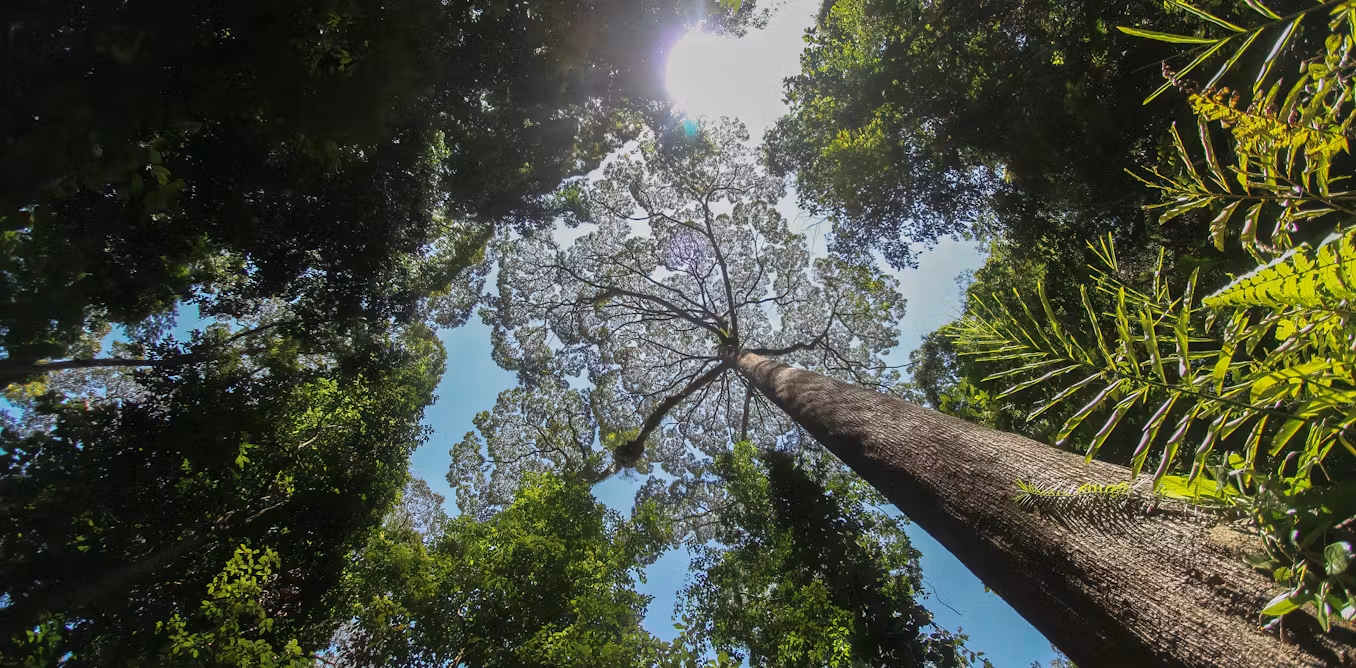
Rising more than 70 metres above the rainforest canopy, a giant skyscraper of a tropical tree can seem almost invincible. Some have survived centuries of storms, droughts and competition.

Large trees face a formidable engineering challenge, lifting water tens of metres from the soil to leaves high above the forest floor. A challenge which intensifies during drought.

But are giant trees uniquely vulnerable to drought or could they help forests remain resilient as temperatures rise?

Research in this area over the last decade shows there is no single way tropical forests respond to drought. In some forests large trees die disproportionately; in others they appear surprisingly resilient.

Advertisement

In 2015, my colleagues and I analysed how drought affected forests around the world. We found that, during drought, larger trees were more likely to die or have stunted growth than smaller trees.

Measuring a tree high above buttress roots using a ladder during fieldwork in Sepilok, Malaysia.
Amy Bennett

It seemed logical to us. Larger trees must transport water over greater vertical distances. They are more exposed to sunlight and atmospheric demands. Their crowns sit above the canopy where temperatures are higher and conditions are harsher.

Hydraulic theory pointed in the same direction. Trees move water from roots to leaves through a continuous column under tension, like drinking through a straw. During severe drought that column can break, causing hydraulic failure and potentially tree death. In 2012, researchers showed that many tree species operate very close to the limits of their water transport systems during drought.

Advertisement

So, large trees look to be particularly vulnerable.

Drought in the Amazon during the warm phase of the very strong El Niño event in 2015-16 appeared to confirm the pattern. Working with colleagues across tropical South America, we measured more than half a million trees to try to understand forest responses to drought. The region’s forest has acted as a net carbon sink, by absorbing more carbon than it emits. But the sink effectively disappeared and more trees of all sizes died, with the increase greatest for the largest trees.

Interestingly, the forests most affected were not necessarily those in the wettest environments. Instead, the strongest consequences occurred in forests already growing in relatively dry conditions, particularly around the edges of the Amazon.

These forests contain tree species that routinely cope with seasonal drought. Yet they still proved highly vulnerable to extreme heat and water stress. Adaptation to regular drought doesn’t necessarily protect forests from unusually intense heat and water stress.

Advertisement

Trees with less dense wood were also more vulnerable, a result that matched expectations from hydraulic theory. A 2023 study demonstrated that hydraulic traits can directly predict drought mortality risk in Amazon forests.

Together these findings appeared to strengthen the case that drought vulnerability is tightly linked to the hydraulic challenges faced by large trees.

But the impacts of drought in African tropical forests told a different story during the same El Niño.

Rather than large trees suffering the most, growth declines were strongest among smaller trees. The largest trees appeared comparatively buffered from drought stress.

Advertisement

The contrasting responses demonstrate that not all trees or forests respond to drought in the same way. There may not be a universal link between drought and tree mortality. The major cause of death may differ among forests, in some hydraulic failure may dominate, while in others competition, carbon limitation or disturbance may be more important.

We’re no longer asking whether large trees are vulnerable, but under what conditions do they become vulnerable?

A recent study published in Nature across a rainfall gradient in Puerto Rico adds another layer. Researchers found that drought-resistance traits varied, even within species, with trees in drier forests having greater resistance to hydraulic failure.

Forest resilience may depend not only on which species are present, but also on the capacity of species to adapt to local drought conditions.

Advertisement

Dipterocarps are the giants of the forest. Trees in this family grow to massive sizes, have high wood density and therefore store large amounts of carbon. They often emerge high above the canopy like skyscrapers. Dipterocarps dominate many Southeast Asian forests and include some of the tallest tropical trees on Earth. Measuring them is extraordinarily difficult.

Having worked in these forests in Borneo, I know how hard these trees are to study. The terrain is steep, the trees enormous and often buttressed. Making physiological measurements throughout trees so tall is an extraordinary achievement.

A recent study found that these giant trees appear able to compensate for the hydraulic challenge of height through anatomical and physiological adjustments, maintaining hydraulic function despite their great size.

Size might not be everything

The findings suggest that, in these forests, size alone does not necessarily increase drought vulnerability.

Advertisement

One implication is that size itself may not drive vulnerability. Instead, size may simply be a proxy for exposure to brighter, hotter and drier canopy conditions.

In many studies, large trees are more vulnerable because they experience these harsher conditions. But if a species or individual tree can compensate physiologically, as dipterocarps on the island of Borneo appear able to, the relationship between size and vulnerability becomes more complicated.

Truly giant trees are rare. Surprisingly little is still known about them.

In most long-term forest inventory plots, the largest trees are only a handful of stems. The so-called large trees in many datasets are often much smaller than the skyscraper trees found in places such as Borneo.

Advertisement

Are dipterocarps exceptional? Or have we simply under-sampled resilience among giant trees globally? At the moment, scientists don’t know.

What is becoming clearer is that there is no single rule to predict the drought responses of forests.

Source link

Advertisement
Continue Reading

Trending

Copyright © 2025