“Donald Trump’s actions in Iran will be considered one of the greatest policy blunders in the history of our country, failing to articulate objectives, alienating allies, and ignoring the kitchen table problems Americans are facing,” Schumer wrote on X. “He is completely unfit to be Commander-in-Chief and the whole world knows it.”
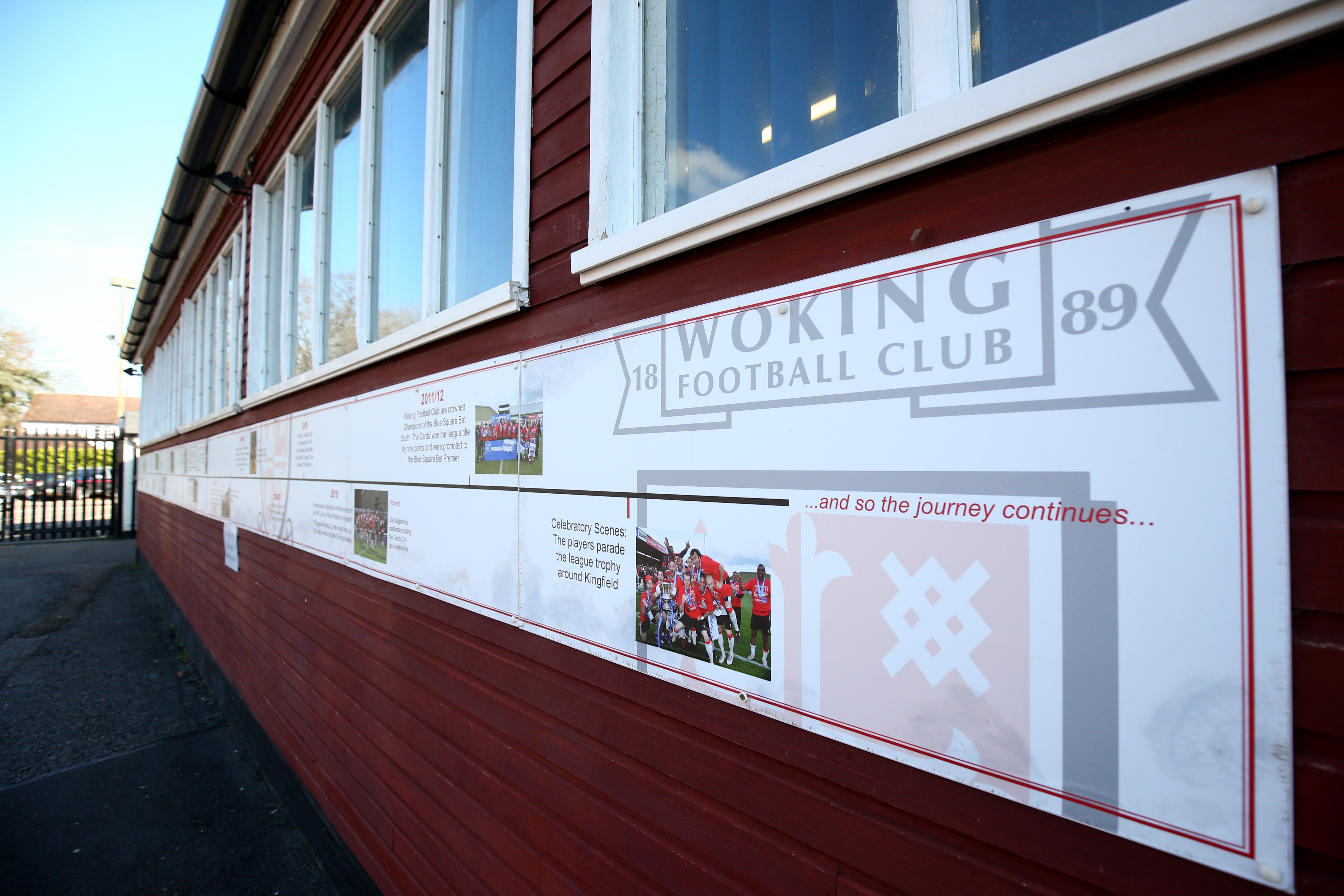
Towards the back of the Laithwaite Community Stadium’s tin-roofed Directors’ Stand sits a long-disused telephone block terminal, once required to connect the football ground to the outside world. It is a relic almost as old as the stand itself, which has changed little in more than a century.
While Defoe name-checked Wayne Rooney, Harry Redknapp, Gareth Southgate and Sam Allardyce during his unveiling as the Surrey team’s unlikely new manager, a smattering of volunteers who often form the core of fifth-tier clubs busied themselves around the ground, forking the pitch and tidying the terraces following a disappointing 1-1 National League draw at home to fellow mid-table outfit Altrincham the previous evening.
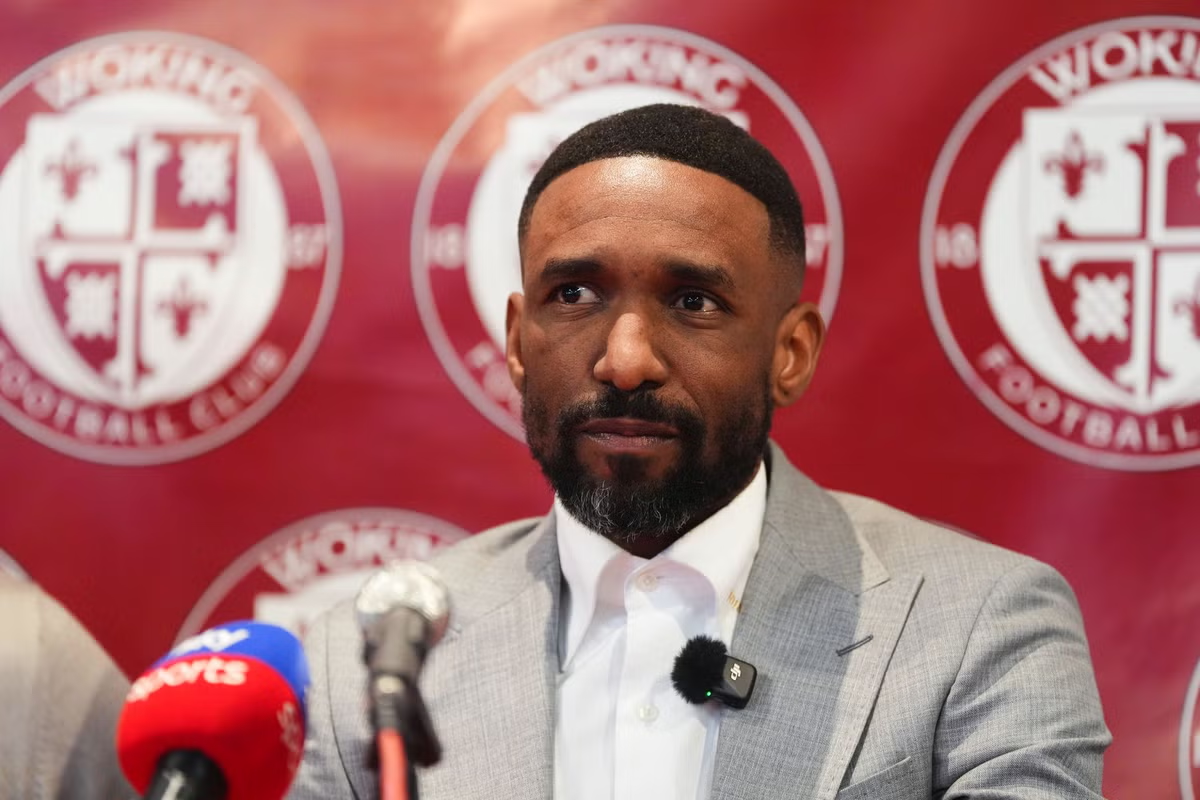
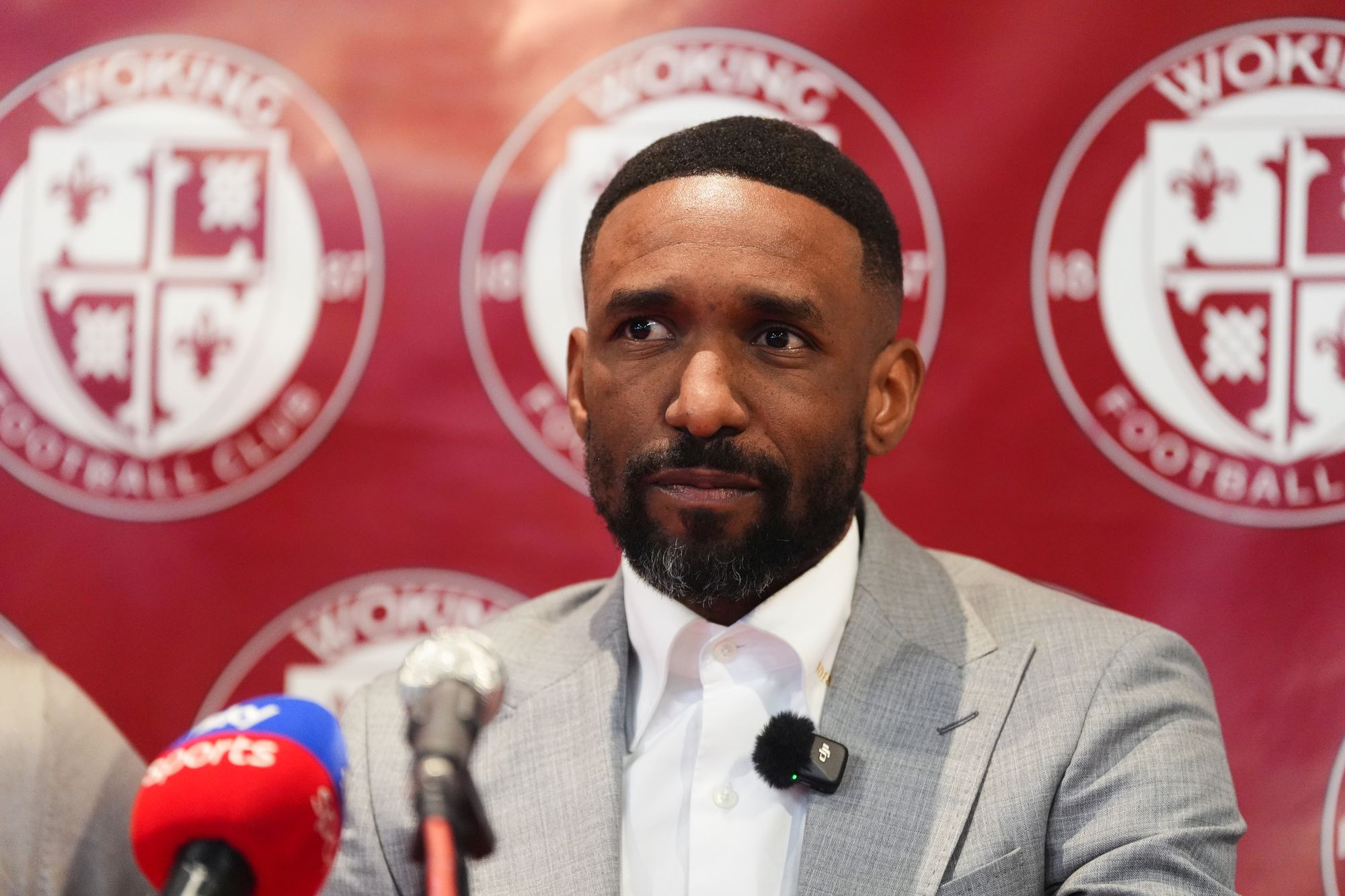
Jermain Defoe is the new manager of National League side Woking (Adam Davy/PA Wire)
Defoe had watched from the stands as his new side toiled against their nine-man opposition, before he formally takes the reins for the visit of relegation-threatened Eastleigh on Good Friday in what will be the first match of his solo managerial career. It is an improbable turn of events for a figure who made 496 Premier League appearances and scored 20 international goals, but will now concern himself with the lower reaches of the English football pyramid usually only of interest to those in the immediate locality.
It has, suggested Defoe, “always been the plan”, with the former West Ham United, Tottenham Hotspur and Sunderland striker explaining how “towards the back end of my career I knew I wanted to go into coaching”.
Advertisement
He fulfilled a player-coach role during his final season at Rangers – where he also formed part of an interim coaching unit that took charge for a brief period in 2021 – and then returned to Spurs as an academy coach upon his playing retirement in 2022. Nonetheless, turning up at a club beneath the English Football League was a move few had anticipated.
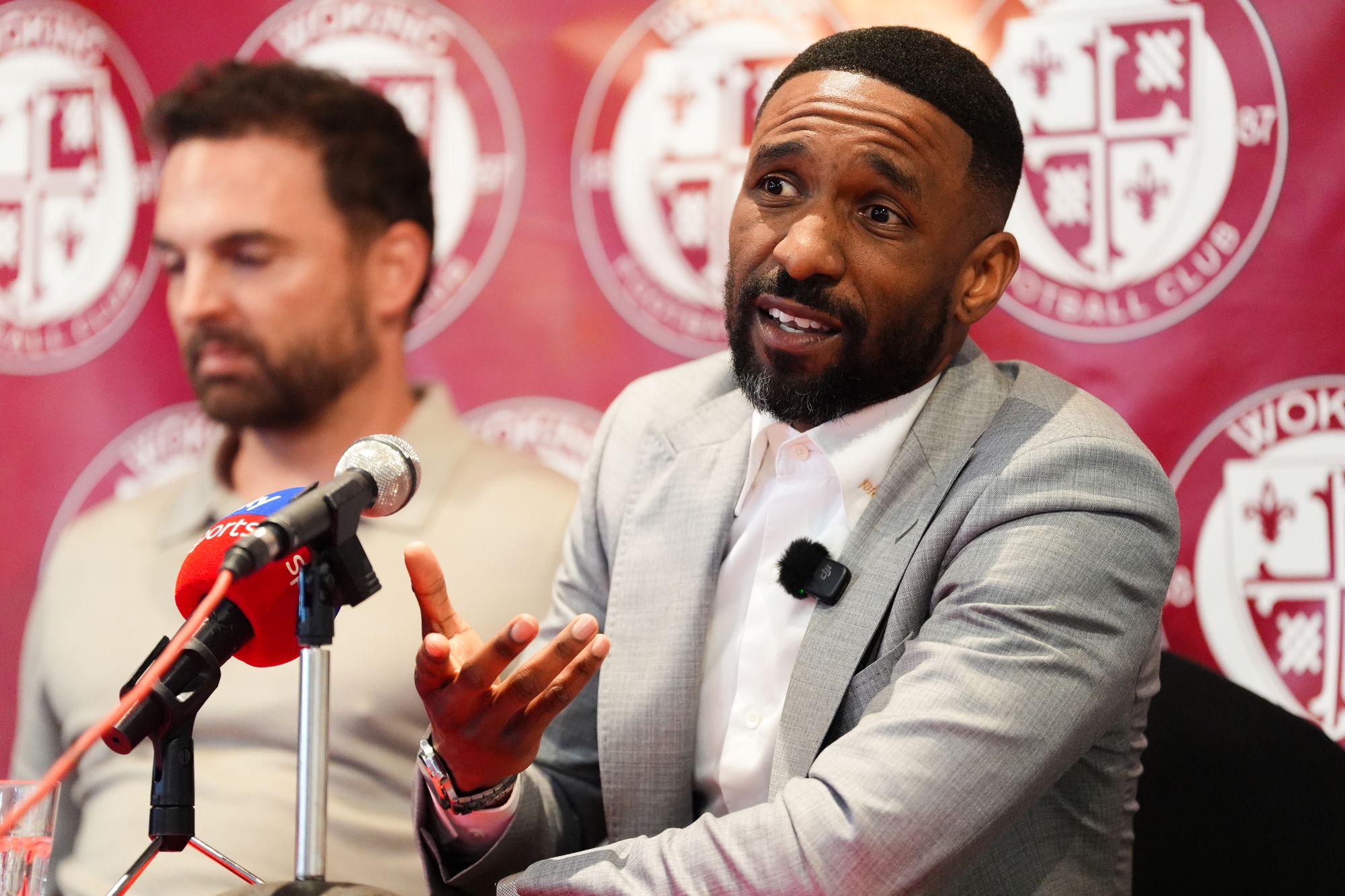
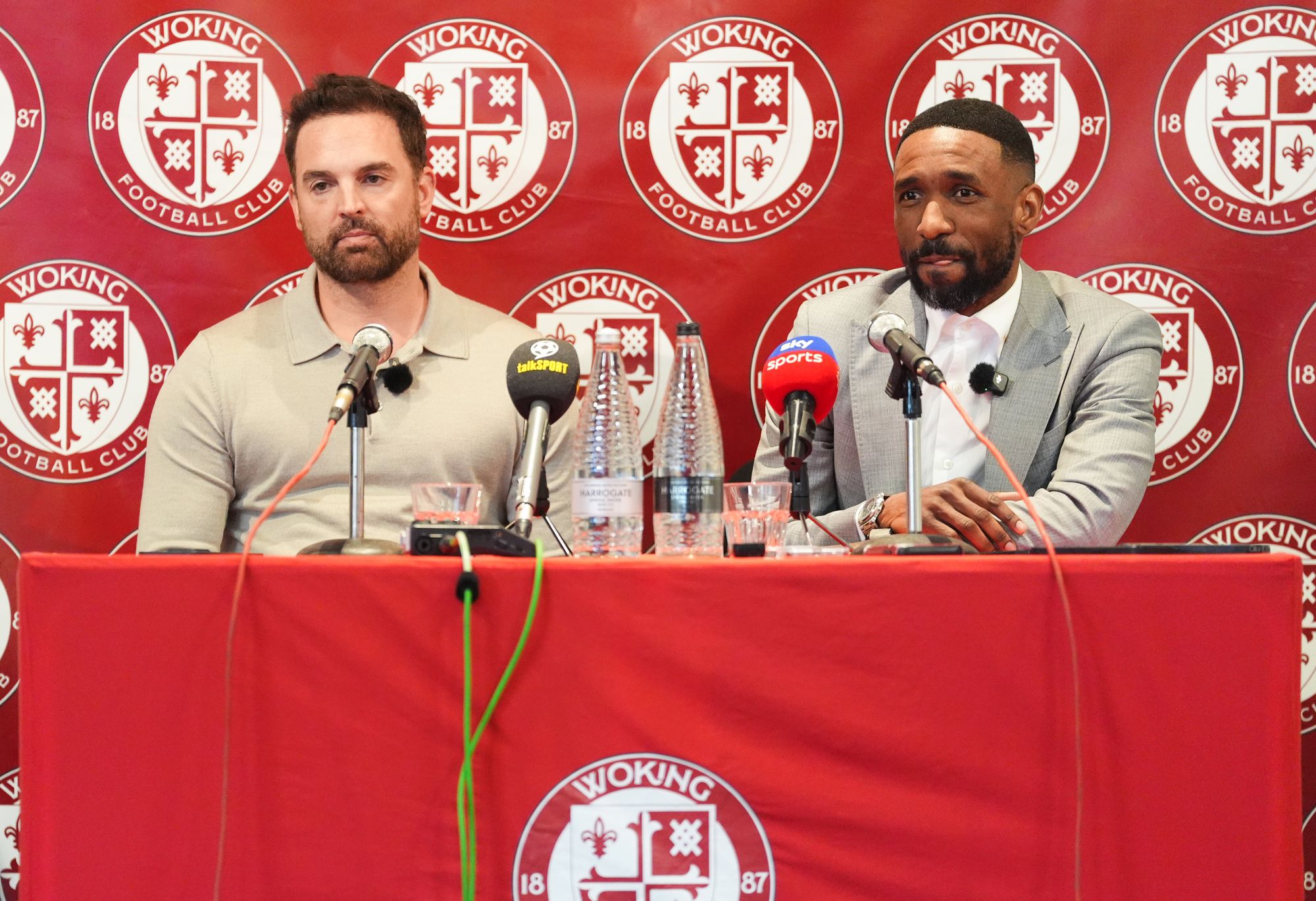
Defoe gave an introductory press conference to lay out his vision for the Cards (Adam Davy/PA Wire)
The Laithwaite Community Stadium is very different to the grounds Defoe played at in the Premier League (Getty Images)
“My mum has always said to me in life you’ve got to be grateful for every opportunity you get,” said Defoe, who explained that he was smartly dressed in a buttoned-up white shirt and slick grey suit because his mum would be watching.
“It’s no different to when you’re a player. When I was a 16-year-old in the West Ham youth team, you had to earn your stripes and do your apprenticeship. Just because I’ve had a good career, I can’t just expect to get that big job.”
In the absence of personal experience, he has sought out the advice of others who have ploughed the non-league furrow to find out what it entails. More illustrious names he has also confided in include Allardyce, Redknapp and Robbie Keane. Ultimately, he insisted, playing in front of an average Laithwaite Community Stadium attendance of little over 2,500 should be no different to the Old Firm or north London derbies.
“At the end of the day, it’s a pitch with two goals, 11 v 11, and you have to win,” he said. “There can’t be any excuses. You prepare to win and it’s as simple as that.”
Advertisement
Defoe has something of a free hit until the end of the season, with Woking out of promotion contention (Adam Davy/PA Wire)
Woking get an average attendance of a little over 2,500 (Getty Images)
Following Liam Rosenior’s appointment at Chelsea earlier this year, he now adds his name to a woefully under-represented cohort of Black managers in the top five tiers of English football.
“It’s something that has been spoken about for many years,” he said, when asked about the paucity of Black coaches. “I remember, as a player, all the campaigns, and speaking to the likes of Les Ferdinand, Ian Wright, Andy Cole, that sort of generation before me who did their coaching badges and had a lack of opportunity.
“I’m just grateful for the opportunity. I would like to think, going forward, other Black managers will get opportunities, and players still playing will get the opportunities in the future.”
Defoe joins Chelsea boss Liam Rosenior in the woefully under-represented cohort of Black managers in English football (PA Wire)
The remainder of the season gives him something of a free hit. Woking sacked his predecessor Neal Ardley at the start of March after a poor run had all but extinguished promotion hopes. A first step up to the Football League in the club’s 139-year history remains the target by which Defoe will be judged, although he declined to divulge what his managerial playing style will be to achieve such a goal.
“You’ll have to wait and see,” said Defoe, who laughed off previous links with the Tottenham managerial job and offered his support to Roberto De Zerbi. “I’d want to be hard to play against first. I know it sounds boring, but you need to be hard to play against. I want a team that is exciting, creating a lot of chances and scoring goals. You have to give these fans something to cheer about when they come to the stadium.”
It may yet be the start of something big for Defoe as a manager; conversely, it could be a blunder destined for pub quiz obscurity.
Advertisement
“It’s always going to be a gamble,” he said. “It’s part and parcel. You can’t think like that. You have to be positive, back yourself and believe you are good enough.”
The president and his advisers have offered shifting explanations and timelines for the conflict, as well as what they will require from Iran for it to end. While portraying Iran as militarily neutered, Trump also said on Wednesday night the US would hit the nation hard for another two or three weeks.
The following article contains spoilers from the episode of Emmerdale dated April 2. It hasn’t aired on ITV1 yet, but can be viewed on ITVX and YouTube.
Graham Foster (Andrew Scarborough) is enjoying every single second of his revenge plan against Kim Tate (Claire King) in Emmerdale as right now, she has no idea what he’s up to.
Earlier this week, Kim was sent to hospital with suspected mushroom poisoning. Doctor Todd (Caroline Harker), Jacob Gallagher’s (Joe-Warren Plant) boss, then confirmed to her that she had painkillers in her system, meaning she had actually collapsed as a result of overdosing.
Away from the shock that Jacob had misdiagnosed her, Kim couldn’t believe she had made a mistake with her medication, which she takes due to still suffering leg pain after falling off her horse at Christmas.
Advertisement
As no one else is around when she takes her pills, Kim was hit with the realisation that she had given herself an overdose. Surprised by her mistake, she remained unaware that someone had snuck into her bathroom and tampered with her meds.
Advertisement
Kim believes her own actions put her in hospital (Picture: ITV)
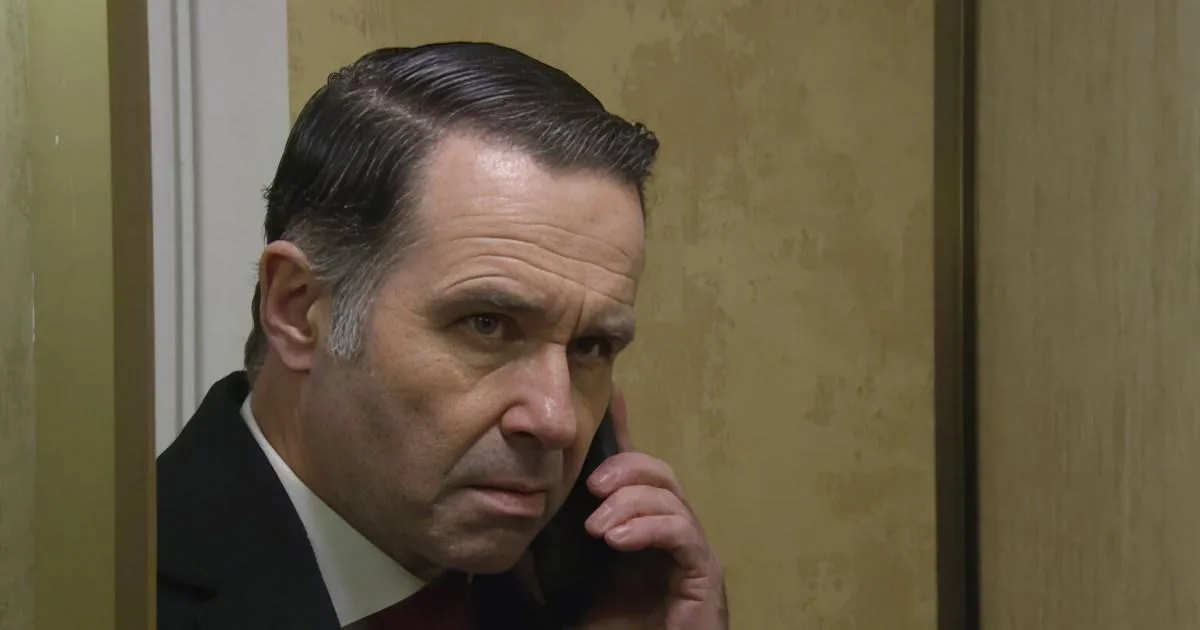
Graham was confirmed to be the culprit, and shared with someone on the phone that he had swapped Kim’s normal tablets for a double dose. He also said that he’d try a different approach in his revenge next, believing he’d find another way to get rid of his ‘pain in the neck’.
Kim returned to Home Farm in today’s episode, and happily followed orders to rest and recover. While she laid on the sofa reading a magazine, Graham approached young Clemmie, who was busy with a school project.
She explained to Graham that she was building a Roman fort and needed to write about a General, but with her brother Lucas writing about Julius Caesar, Clemmie wasn’t sure who to focus on.
Graham sat opposite her and told Clemmie to write about a man called Quintus Fabius Maximus (no, I didn’t think I’d be given you a History lesson in this either), who proved everyone wrong and became one of the most successful Generals in Rome.
The long game (Picture: ITV
As Graham spoke about how Quintus was incredibly clever, and focused on cutting the food supply of his enemies over fighting big battles, it became more and more apparent this was an elaborate way for him to talk about what he’d like to do to Kim, without directly confirming it.
‘Sometimes, it pays to play the long game’, Graham said as he sipped his tea.
Advertisement
Don’t miss a Soaps scoop! Add us as a Preferred Source
As a loyal Metro Soaps reader, we want to make sure you never miss our articles when searching for stories. We have all the latest soaps news, spoilers, videos, and interviews, with a vibrant community of highly engaged readers.
Click the button below and tick Metro.co.uk to ensure you see stories from us first in Google Search.
Playing the long game and keeping his enemy close is working – but how long for?
‘Graham is clearly still incredibly angry that Kim tried to kill him six years ago. This resulted in him faking his own death to escape the hit she put out on him’, star Andrew Scarborough said.
‘He lost Rhona in this process, so he still hasn’t forgiven Kim for that. She took six years of his life away. That is why he just tried to kill her – for revenge. I am not convinced his whole heart was in it because their relationship is complicated. I think if his whole heart were in it, he would have actually made it happen.’
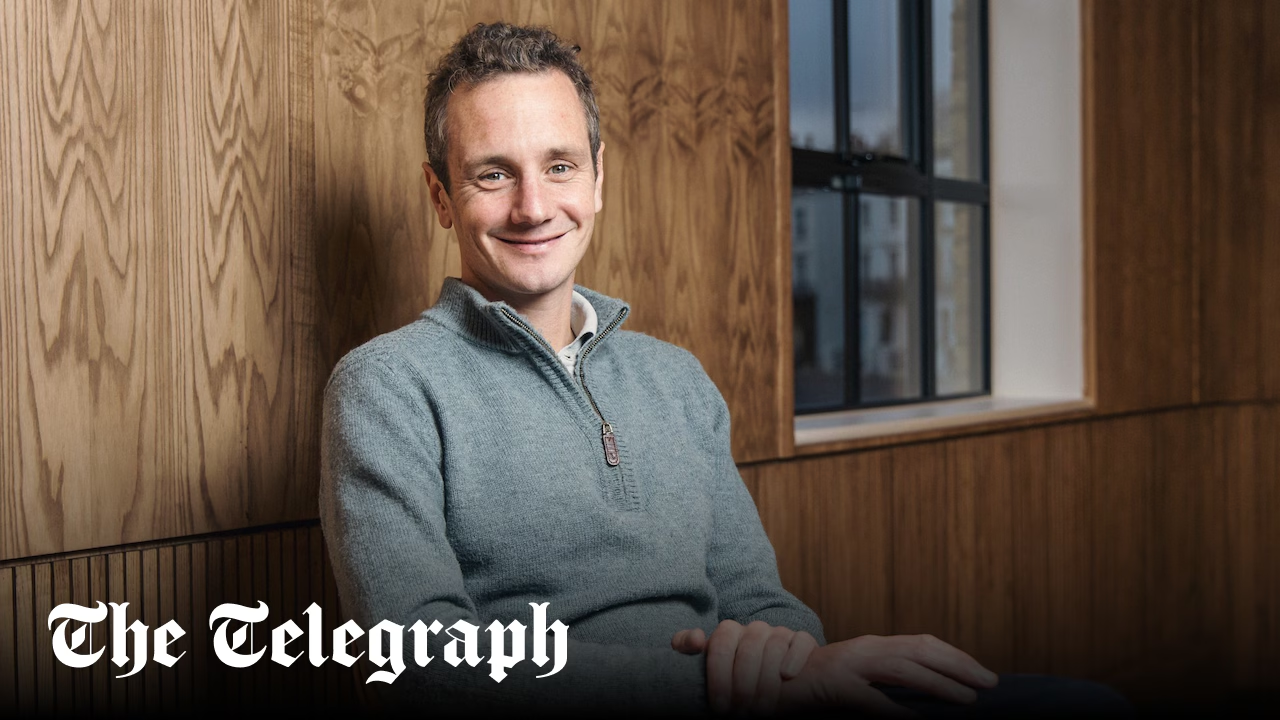
Alistair Brownlee was the first athlete ever to defend the Olympic triathlete title.
Over an 18-year career, he claimed gold at both the London 2012 and Rio 2016 Games, as well as 22 World Series events, two World Championships, a Commonwealth title and four European Championships, to name only a few.
Two years into retirement, Brownlee shows little sign of slowing down. When he’s not working with his brother Jonny on the Brownlee Foundation – their charity encouraging young people into sport – he’s focused on his own business, Truefuels, which sells energy gels and electrolytes.
Advertisement
It’s hard to reconcile all this with the unassuming man who strolls into our office alone on a Thursday in March. It’s not the first time the point has been made. In 2021, he told The Telegraph that he was once told that he’s“an inspiration because he looks so normal it makes everyone think that if he can do it, they could too”.
I caught up with him for our Readers Ask series, where industry specialists answer questions from our Telegraph Recommended Reader Panel.
How old were you when you started to compete professionally? Mary-Grace, East of England
I did my first triathlon when I was eight, but didn’t compete professionally until I was 18.
Advertisement
I won the World Junior Championships, and I did some serious races the year after I was 19. I went to the Beijing Olympics as a 20-year-old the year after.
What advice do you wish you would have received when you considered a career in sports? Ekaterina, London
My parents, my dad in particular, recommended that I studied alongside sport when I was young.
I also had some brilliant advice from my coach Malcolm, who told me to believe that I could win the Olympic games – but only by one stride, which was a great way of saying have faith but not too much, and train really hard.
Advertisement
Endurance sport, although it sounds a bit cliché, is a long game. Don’t rush things, look after your body, focus on the small things: nutrition, sleep, recovery, all of that, and that will pay dividends over a long period of time.
What was it like competing so hard against your brother and could you put the result to one side after the race was over? Caroline, East of England
I didn’t know any different. I’ve competed against my brother since I was really young – six-years-old or probably even younger in the garden at home so it’s very natural to me.
Even at the top level of the sport I think we took it for granted. We would be training side by side at home in Yorkshire one day and competing in the top races in the world the day after.
Advertisement
We basically knew that we were each other’s best training asset and we also knew that we could help each other in racing as well as the training.
We pretty much always put it aside straight after the race, and that was partly about our relationship and partly because we both had that kind of mentality, we were always thinking about the next thing.
Who was your biggest competitor and why? Nicolle, South East
Obviously my brother Jonny was a big competitor throughout the main part of my career.
Advertisement
I also had a very talented, ferocious Spanish competitor called Javier Gómez. I raced him probably 100 times during the same period. He came second at the London Olympics and beat me to the world title quite a few times.
We were very close in physical ability, and well matched in terms of where we were in the race. Quite a few of our races came down to sprint finishes.
Thanks to the fast-acting officers, the man survived and was discharged from hospital a few days later
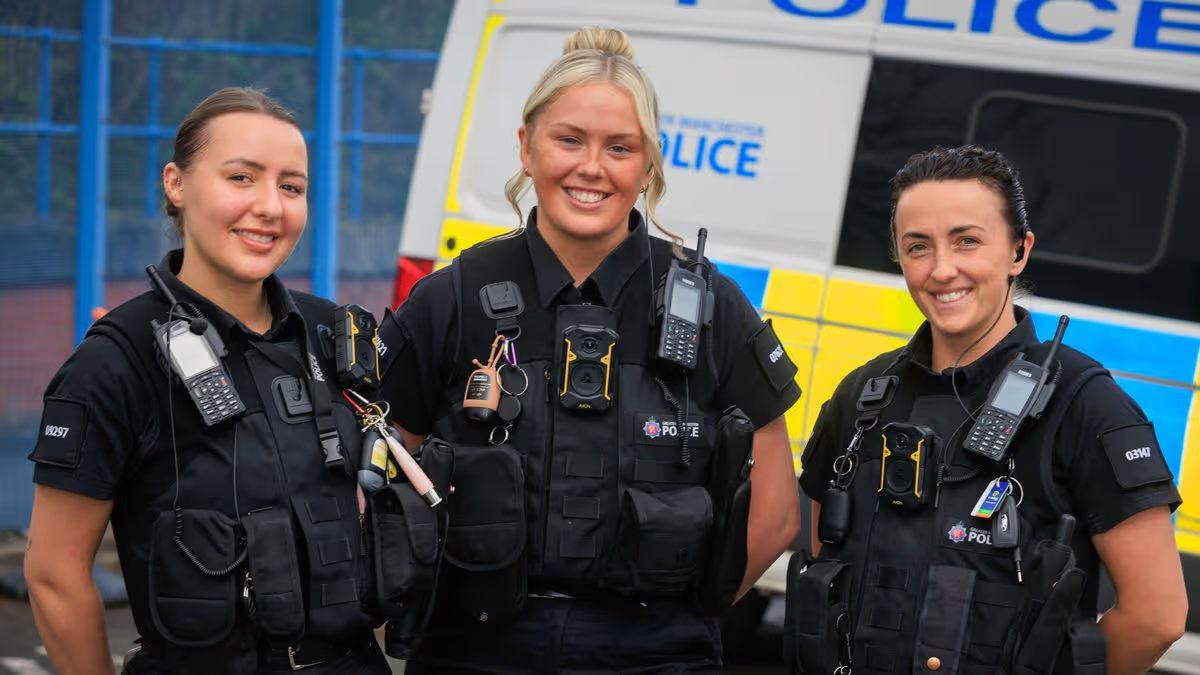
Three police officers have been praised after their fast actions helped to save the life of a man who had a sudden heart attack in Salford. Response officers, PC Abbie Ellison and PC Sophie North, were flagged down by a member of the public while they were on patrol on February 26.
Advertisement
At around 8.30am, PC Ellison and PC North, who work on Response in the Salford district, were on their usual mobile patrol in the area when they were flagged down by a member of the public who was in distress.
A man riding a mobility scooter appeared to have had a medical episode and collided with a parked vehicle on Hankinson Way, Salford Precinct.
Get MEN Premium now for just £1 HERE – or get involved in our WhatsApp group by clicking HERE. And don’t miss out on our brilliant selection of newsletters HERE.
PC Ellison and PC North immediately stopped their vehicle and rushed to the scene where the man, in his 50s, was unconscious and in cardiac arrest. The officers immediately began conducting CPR on the man and set-up the defibrillator ready to assist with resuscitation.
Advertisement
PC North shouted over the radio to alert other patrols and make North West Ambulance Service (NWAS) aware they were attending a medical emergency.
PC Ellison said: “You go to all different types of jobs being on response, however, this incident was an incident where the treatment we gave could potentially save someone’s life. And thankfully this happened in this circumstance.
“To know this male is still alive and able to continue with his day-to-day life due to the lifesaving support he was given is exactly the reason I became a police officer; to be able to make a difference and help people in critical times.”
A third officer, PC Siergiejew, was responding to an alternate job but stopped at the location to help her two colleagues until paramedics arrived.
Advertisement
PC Siergiejew said: “When I heard my colleagues shout for assistance I could hear from their voice that the incident was serious. I was already attending an alternate immediate response incident; however, I was passing them to go to the job.
“I stopped immediately to help my colleagues. Asking members of the public to stand back to give us some space to give lifesaving first aid. I noticed that the officer conducting CPR had been doing this for some time, so I swapped with her and continued to conduct CPR.
“I felt so much relief when the paramedic advised us that there was a pulse again for this male. Within the four years of being a police officer I have never given CPR to someone that has recovered, and that made me proud of my colleagues and myself.”
The three officers provided lifesaving medical assistance to the man while trying to contain a clear area and get members of the public to stand back. Once the first rapid response vehicle had arrived, they were advised that the patient had regained a pulse, and he was taken to hospital for further treatment.
Advertisement
PC North said: “I have been a response officer for three years, and this incident marked the first time I had ever been flagged down to assist someone requiring CPR. Despite a crowd quickly gathering around PC Ellison and me, we remained entirely focused on delivering life-saving care.
“A few weeks later, the man attended Pendleton Police Station with his carer to collect his mobility scooter. During that visit, he shook my hand and thanked me for saving his life. It was a truly full-circle moment. That sense of gratitude is exactly why I chose to become a police officer – to make a difference and help people in their most critical moments.”
LONDON (AP) — Almost three dozen countries will meet Thursday in an effort to exert diplomatic and political pressure to reopen the Strait of Hormuz, a vital shipping route that has been choked off by the U.S.-Israeli war against Iran.
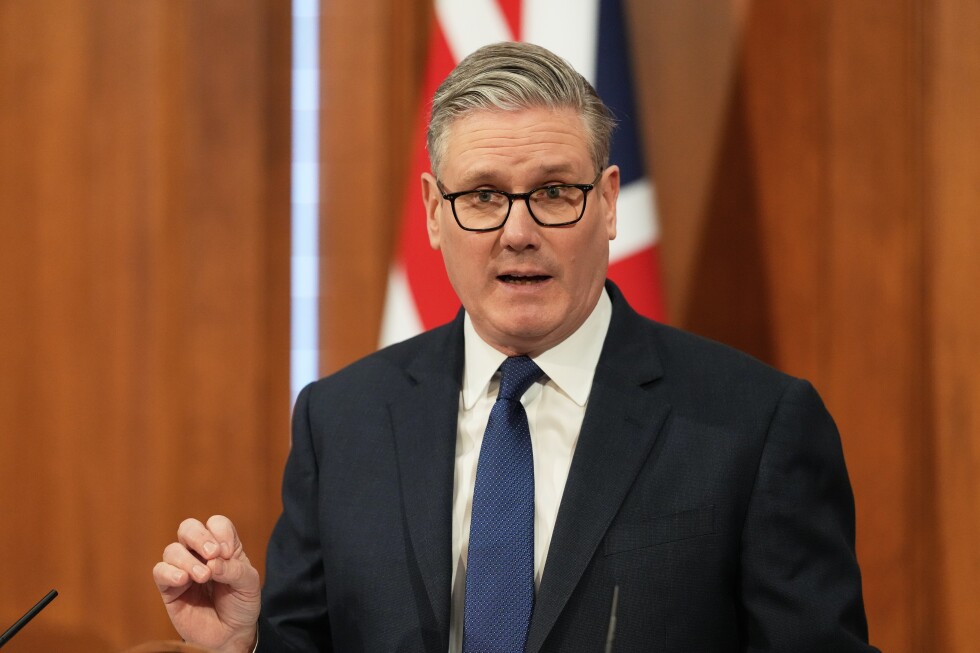
British Prime Minister Keir Starmer said the virtual meeting chaired by Foreign Secretary Yvette Cooper “will assess all viable diplomatic and political measures we can take to restore freedom of navigation, guarantee the safety of trapped ships and seafarers and to resume the movement of vital commodities.”
Iranian attacks on commercial ships, and the threat of more, have halted nearly all traffic in the waterway that connects the Persian Gulf to the rest of the globe’s oceans, shutting a critical path for the world’s flow of oil and sending petroleum prices soaring.
The U.S. is not among the countries attending Thursday’s meeting. Trump has said securing the waterway is not America’s job, and told U.S. allies to “go get your own oil.”
Advertisement
No country appears willing to try and open the strait by force while fighting rages and Iran can target vessels with anti-ship missiles, drones, attack craft and mines. But Starmer said Wednesday that military planners from an unspecified number of countries will meet soon to work on how to ensure security for shipping “after the fighting has stopped.”
In the meantime, 35 countries including the U.K., France, Germany, Italy, Canada, Japan and the United Arab Emirates have signed a statement demanding Iran stop its attempts to block the strait and pledging to “contribute to appropriate efforts to ensure safe passage” through the waterway.
Thursday’s meeting is considered a first step, to be followed by “working-level meetings” of officials to hammer out details.
Starmer said resuming shipping “will not be easy,” and will require “a united front of military strength and diplomatic activity” alongside partnership with the maritime industry.
Advertisement
The international effort idea has echoes of the international “coalition of the willing” that has been assembled, led by the U.K. and France, to underpin Ukraine’s security after a future ceasefire in that war. The coalition is, in part, an attempt to demonstrate to the Trump administration that Europe is stepping up to do more for its own security.
The urgency of stronger continental defenses has been reinforced by Trump’s renewed suggestion that the U.S. could pull out of NATO.
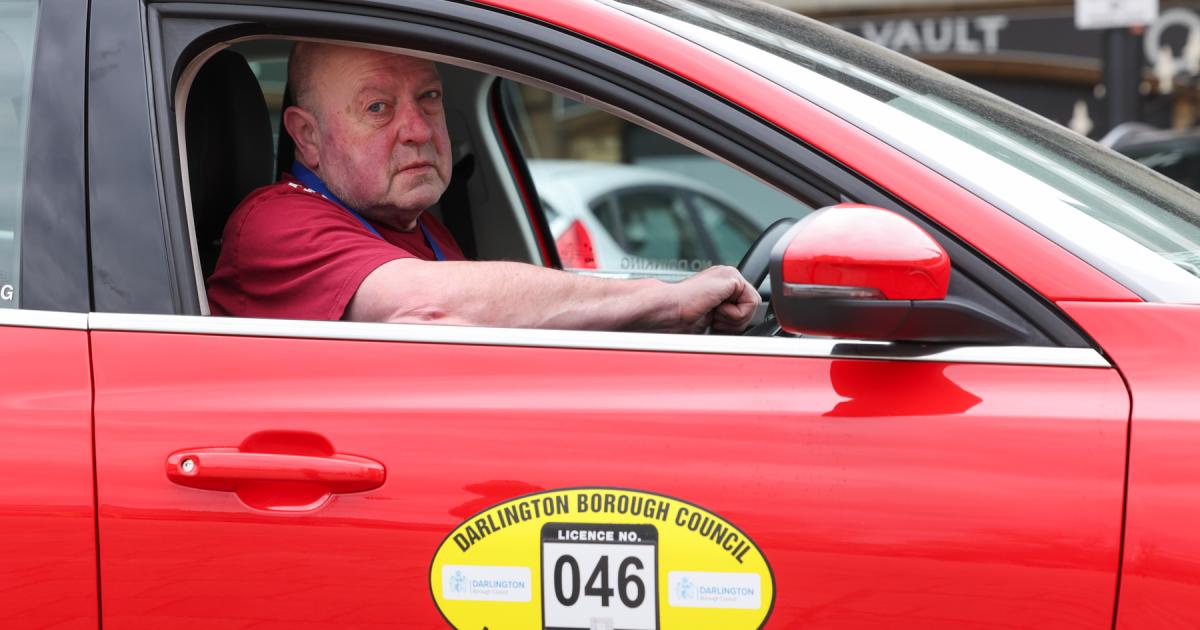
Gavin Ellis praised the impact of the scheme on Darlington’s Grange Road, which was introduced in 2021 to manage queues, support vulnerable people and help keep town centre customers safe.
Yet Mr Ellis fears incidents among passengers and drivers will now rise, and said the marshals proved their worth on their final night.
Taxi driver Gavin Ellis in Darlington market place. (Image: Chris BOOTH)
He said: “Ironically, on their last night, they split at least three potential fights up.
Advertisement
“I also had a customer who told me he had been a victim of violence on that rank, ending up in A&E because someone decided to headbutt him because he didn’t realise he was standing in the wrong place.
“Last year, one of them actually saved a man’s life, and this is how they’re rewarded.
“I sincerely hope somebody’s son or daughter does not become a victim of this short-sighted decision.
“Those marshals have been a godsend to the taxi trade, helping us with unscrupulous customers, stopping queue jumping and breaking up fights.”
Advertisement
The scheme was originally established in response to a post-Covid shortage of taxis and drivers, and an increase in demand as residents returned to pubs, bars, and restaurants following the easing of restrictions.
This imbalance led to long queues at taxi ranks, increasing the risk of disorder, queue jumping, and some taking the risk of seeking lifts from unlicensed drivers or strangers.
The 65–year-old said he tried to organise a petition to keep the marshals but didn’t receive the required amount of signatures for it to be considered by council leaders.
Speaking in February ahead of the scheme ending, Councillor Jim Garner, cabinet member for stronger communities, said: “We are grateful for their efforts, but with the change in habits, less demand at taxi ranks, alongside reduced funding, we felt now was the time to bring the initiative to a close.”
Advertisement
Durham Police said it will continue to patrol the town centre to ensure people can return home safely.
A council spokesperson added: “Darlington continues to be recognised as a safe and welcoming place for a night out and we recently retained the prestigious Purple Flag accreditation.
“Safety measures remain in place, including qualified door staff, police patrols and the help button at the junction of Skinnergate and Houndgate, which links to our CCTV control room.
“We urge people to plan ahead of a night out to ensure they can get home safely and there are tips on the Enjoy Darlington website.”
The government’s new social cohesion action plan, Protecting What Matters, is frank about its urgency: “Social cohesion is … not just a good in and of itself. It is also a vital front in the resilience of our national security.”
The 2024 Southport attacks and subsequent disorder, rising religious hate crime, unrest over migration policy and domestic extremism have all forced the issue of community division. Yet the government’s answer, built around integration, interfaith dialogue and civic ceremonies, mistakes the symptom for the disease.
“Cohesion” is vague, unmeasurable and elastic enough to mean whatever the government of the day needs it to mean. People describe the places they love as close-knit and safe, not “cohesive”.
A better framework would be community resilience: the measurable capacity of neighbourhoods to absorb shocks, resist divisive narratives and recover from crises. You cannot integrate people who are isolated, impoverished and without the infrastructure to bring them together. COVID laid bare what the evidence already showed: communities with stronger social infrastructure and higher levels of social capital demonstrated greater resilience to the pandemic’s social and economic shocks.
Advertisement
The government strategy does contain a chapter on “resilient communities”. However, it frames resilience narrowly, as emergency management of religious and political extremism, rather than as the everyday and routine fabric that makes any form of solidarity possible at all.
The missing piece
There is an extraordinary gap in Protecting What Matters. While there is acknowledgement of the effects of “visible deterioration of public services”, the word “poverty” does not appear once. The plan frames division through religion, identity and Islamophobia, which are outcomes and proxies, not root causes.
A study of over 15,000 residents across 839 English and Welsh neighbourhoods, validated by a 2024 analysis of the Understanding Society dataset, shows that deprivation, not diversity, erodes trust, participation and neighbourliness. Once you control for poverty, diversity is associated with higher volunteering and charitable giving. The crisis of solidarity is a crisis of resources, not cultural difference.
There is an undertone of nostalgia in the government’s plea for communities to “integrate”, a wistfulness for tight-knit mining towns where everyone knew their neighbour. But those communities were built on something material: secure jobs, union membership, working men’s clubs and shared economic fate.
Advertisement
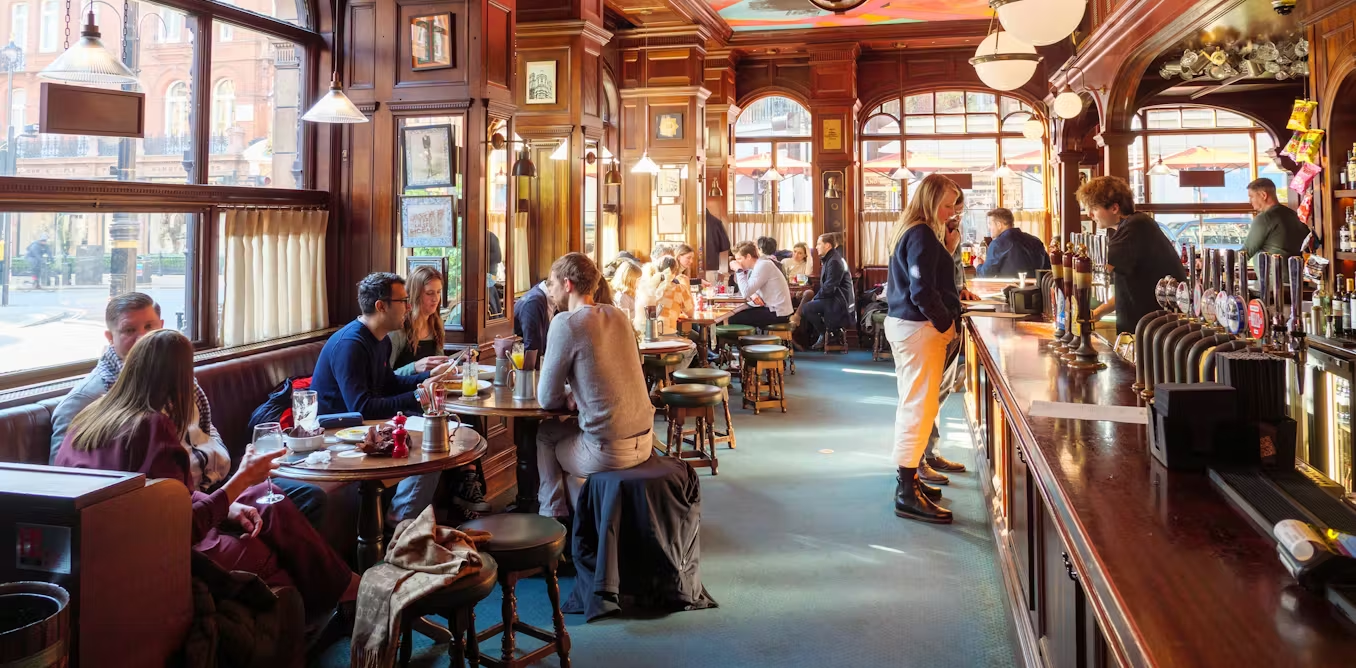
More in Common’s 2025 polling finds that 44% of Britons sometimes feel like strangers in their own country – a figure that could be read as evidence of cultural division. But More in Common’s own analysis shows this alienation is concentrated in economically left-behind areas, not diverse ones. People do not feel like strangers because their neighbours look different. They feel like strangers because the institutions that once made them feel they belonged – clubs, pubs, unions and jobs – have gone.
The loss of social infrastructure has been devastating to communities across Britain. chrisdorney/Shutterstock
The argument that more homogenous communities are more cohesive is seductive, but weak. Britain’s most ethnically diverse neighbourhoods are not its least cohesive – they are, as Manchester researchers found, its healthiest. Mining towns were cohesive despite being male-dominated, often racially exclusive and economically coercive. The lesson is to replicate not their demographics, but the material conditions: jobs, institutions and shared infrastructure that give people a reason to show up.
A recent randomised controlled trial by the Department for Work and Pensions found that structured group job-search workshops improved both mental health and employment outcomes among benefit claimants, precisely because they restored the social support, routine and shared purpose that work normally provides. Community resilience cannot be separated from economic development. Departments such as DWP and Jobcentre Plus have a direct stake in the social capital agenda.
New housing developments need parks and primary schools from day one: accessible spaces that create early encounters and establish trust between newcomers. Established but deprived communities need to restore what has been stripped away, whether the pub, the library or the community centre. Sports facilities build bridging connections across difference, faith buildings deepen bonds within communities and civic spaces create the linking ties between residents and institutions. The task is to match the infrastructure to the social capital gap, not apply a single template everywhere.
The real test, which my colleagues and I call the “Wet Wednesday Night Test”, is whether your investment in social infrastructure gets 14 people to turn up for football (or cub scouts, or a book group) on a wet Wednesday in February. Nobody comes to “build social capital”. They come because the pitch is free, the lights work and there are hot showers. The pint afterwards does more for integration and social capital than any strategy document ever will.
ICON’s research, drawing on over 100 peer-reviewed studies, shows that social infrastructure generates £3.50 for every £1 invested. Every £10,000 invested prevents an estimated £105,000 in riot damages.
During the 2011 riots, 71% of incidents occurred in areas ranked among the most deprived 10% of England – the same year in which 287 community centres had closed. The government described this as a “social cohesion” problem; it was a social infrastructure problem.
Advertisement
The government’s £5 billion Pride in Place programme makes a start at investing in communities. But more investment is needed to address the challenges in our most deprived neighbourhoods, where people face life expectancy four years below the national average.
A serious approach would use existing schools, job centres and childcare settings as social hubs, and make public transport free for under-18s so that young people can move around their own towns. And, it would tackle the poverty, insecure work and collapse of institutions that once gave people a reason and the means to show up for each other.
Build those foundations and what politicians call “cohesion” will follow. Nobody will use that word to describe what they feel when they step outside of their front door. They will just say it is a good place to live. That is enough.
“It hits you, and it doesn’t really hit you until days after I was told that I thought, God almighty.”
06:30, 02 Apr 2026
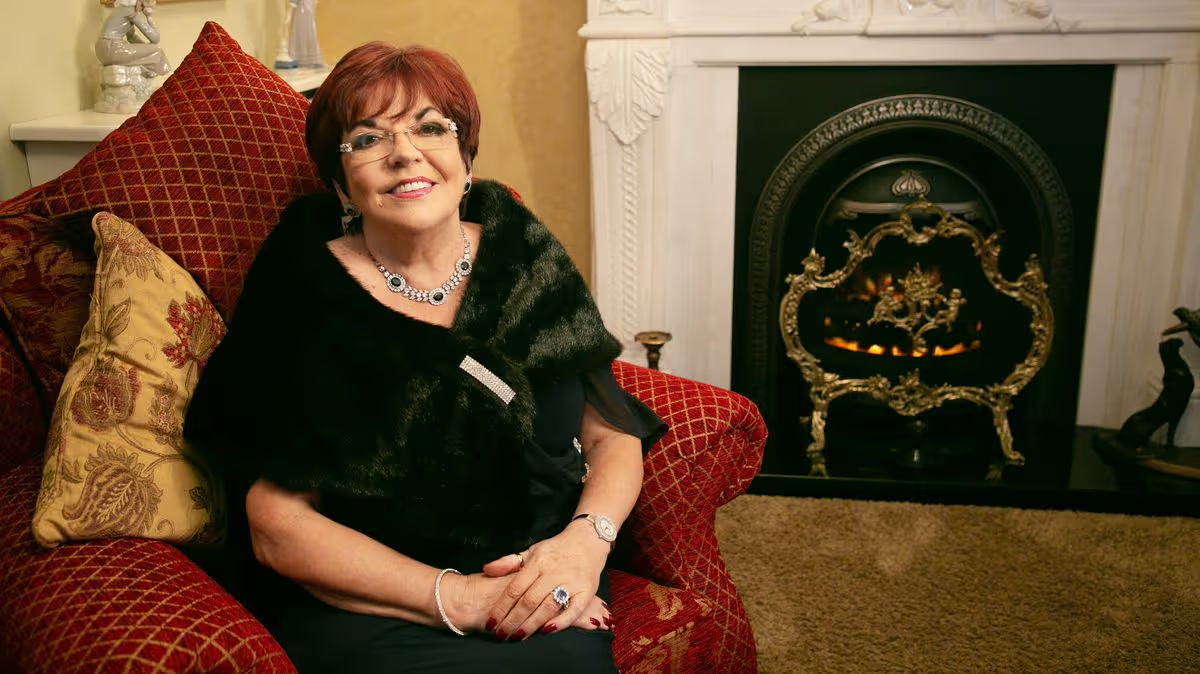
Susan McCann chats to Belfast Live
For all the bright lights and packed venues that have defined Susan McCann’s career, the foundations of her life remain firmly rooted in something much quieter. Long before the tours, television appearances, and international stages, there was a small, isolated home on the border where music was shared rather than performed.
It was there, in a two-room house without electricity, that Susan’s understanding of life and of people first took shape. Her upbringing was modest, even by the standards of the time, but what their family home lacked in comfort it made up for in warmth and a constant sense of togetherness.
Advertisement
Those early years continue to inform how she sees the world, even now. The values formed in that environment would go on to underpin not just her career, but how she navigated its pressures.
“Well, see, we got you said, we grew up in a townland called Carrickasticken, which is midway between Dundalk and Forkhill, and when I was growing up, we didn’t have any electricity.
“We had gas light and tilly light. In fact, I was married, and my son was two and a half before Mum and Dad got electricity in where we lived. It was very isolated, but there was always loads of craic.
“The neighbours all came in, I don’t even hardly know my neighbours now, but then everybody knew one another and, they used to gather on a Saturday night in our house. Mum and Dad would have a bit of a sing song and all they would have sang.”
Advertisement
That sense of community extended beyond the immediate family, but it was within the household itself that Susan McCann first found her voice and her confidence.
“I was the only one that had a hard neck to go out and do it for a living but Mummy and Daddy, were good singers. In fact, they used to argue who I took the singing after, you know, it used to be a standing joke in there.
“And we had great fun. My brothers Joe, Arthur, Vincent and John all went over to England for work because there was none here for them. John was two and a half years older than me, and he would come home on holidays, and he’d teach me how to jive because he used to go dancing at all the Irish clubs in England. So we used to be dancing and singing, that’s the way our house was.
Advertisement
“And then the boys would bring home people with them. There were many a night there were boys lying on the sofa, you wouldn’t know who they were. That’s the truth.”
If her upbringing provided the foundation, her marriage provided the stability that allowed her career to flourish. For more than 50 years, Susan and her husband Dennis have navigated an industry not known for preserving relationships and have done so by staying firmly side by side.
“The honest-to-God answer is I don’t know. We have a lot in common; he loves the music. He was the bandleader all my life,” she said when I asked how their relationship stood the test of time.
“And Dennis is a very easy man to get on with. He’s very quiet, and we’re two opposites really. My father used to say to me that I had a tongue for 10 rows of teeth because I was that gobby, but that’s the way we are.”
Advertisement
“But was there ever a point where it came between us? No, sure, he was always with me. We were always together when we’d be away, which, in fairness, we probably never would have lasted if it hadn’t been that way.”
That partnership would prove essential not only during the busiest periods of her career but also in more difficult times. In recent years, Susan McCann has faced a serious health challenge, one that reshaped her perspective in a way that decades on the road never did.
“You know, the fans are great. I just love singing. I just went through a very hard two years there, and I’m just so glad to be able to sing again.
“And I mean this, you hear people say, thank God. If you haven’t your health, you have nothing, and you know what, a truer a word was never spoken.
“Because, when I was told I had cancer, people talk about a shock, and it hits you, and it doesn’t really hit you until days after I was told that I thought, God almighty. You know, the word cancer is so frightening.
“But it’s amazing what they can do now. I’m totally free of cancer at the minute, but they’re keeping a very close eye on me. They can say what they like about the NHS, but the NHS really looked after me.”
If that experience reinforced anything, it was the central role her family continues to play in her life. Even as she marks 50 years in music, the next chapter is already being shaped by those closest to her.
Advertisement
“I was out for dinner in my daughter Linda’s house one Sunday and my son-in-law Brian said to me, Susan, I’ve written a song for you. I never knew he would even be thinking about writing a song.
“And he had it written for like 6 months before he even let me see it and then he gave it to me, and of course I got really emotional. He wrote it from his heart. It’s just lovely. The song is lovely.”
The song was one of the last on her setlist at her celebratory show in Belfast’s Grand Opera House, where she was joined on stage by her daughter Linda on piano, and her grandchildren.
That sense of continuity is already visible in the next generation, with her granddaughters beginning to find their own paths in music.
Advertisement
“Sinead wants to make a career of singing. She went to university and dropped out to sing. She is a very good singer, but I don’t know if it is as easy as it was when I started. There is a whole lot of young girls coming up, and now we have the likes of Cliona Hagan, Claudia Buckley and Lisa McHugh and I love to see them.
“But Sinead is a good hard worker and she would do two gigs in the one night if she got the.”
“Laura, she’s a really beautiful singer. She is a different type of singer and she sings songs from the shows. She’s a classy, classy singer, but she’s going to London to do art.”
When asked what advice she would give them, she said: “I made a good living and I made a nice career for myself and I met lots of nice people, lots of not so nice people too. You have to work hard. If you don’t work at what you want to do, well then your chances of making it wouldn’t be great.
Advertisement
“So as long as they have respect for themselves and respect for their parents, that’s very important too, and respect for the people that come out to see them or the people that they work for. I think it’s important that young people learn that because if you don’t have a bit of manners and a bit of respect for older people, well then you’re no friend of mine.
For all the milestones in her career, it is a quieter moment, far from any major stage, that remains one of her most treasured memories. It came not from an award or a headline performance, but from her father, watching from the sidelines at her first show after winning the European Gold Star Award.
“I took Mummy and Daddy and my sister Marie to the show in Ardee, which wasn’t far from Forkhill. Marie and Mummy went down to get seats at the front beside the stage, and I was getting changed upstairs. The hall held about 300 people, and there were that many people turned up, they had to put speakers outside so they could hear.
Advertisement
“Daddy was a very humble man. He was a country man and never took his cap off. He was sitting looking out the window, and I can see him to this day. He looked out, and he said Susan, look at that crowd out there. I went to the window and right enough there was a crowd. He looked at me and he said, and they are all here to see you. I could cry thinking about it.”
A 29-year-old Massachusetts man has been charged with murder and assault after being accused of killing his 90-year-old grandmother using a skateboard and attacking other family members.
Hudson police arrested Devin Dube, 29, Tuesday afternoon after getting multiple calls he was being violent in a residence he shared with family members, including his grandmother Elaine Dube, the Middlesex County District Attorney’s Office said.
“This is a senseless tragedy, and our thoughts are with everyone impacted during this incredibly difficult time,” Hudson Police Chief Richard DiPersio said during a press conference on Wednesday. “I want to reassure our community that there is no ongoing threat to the public.”
The Independent has contacted Dube’s attorney for comment.
Advertisement
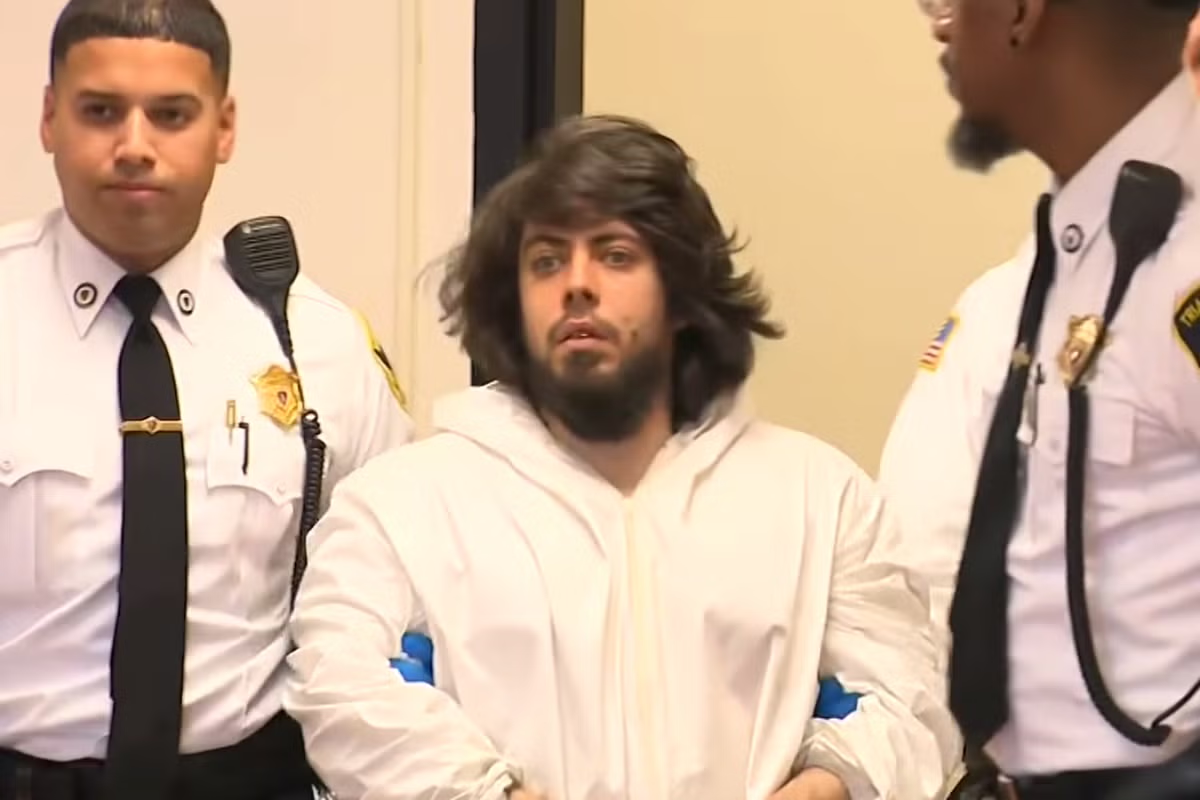
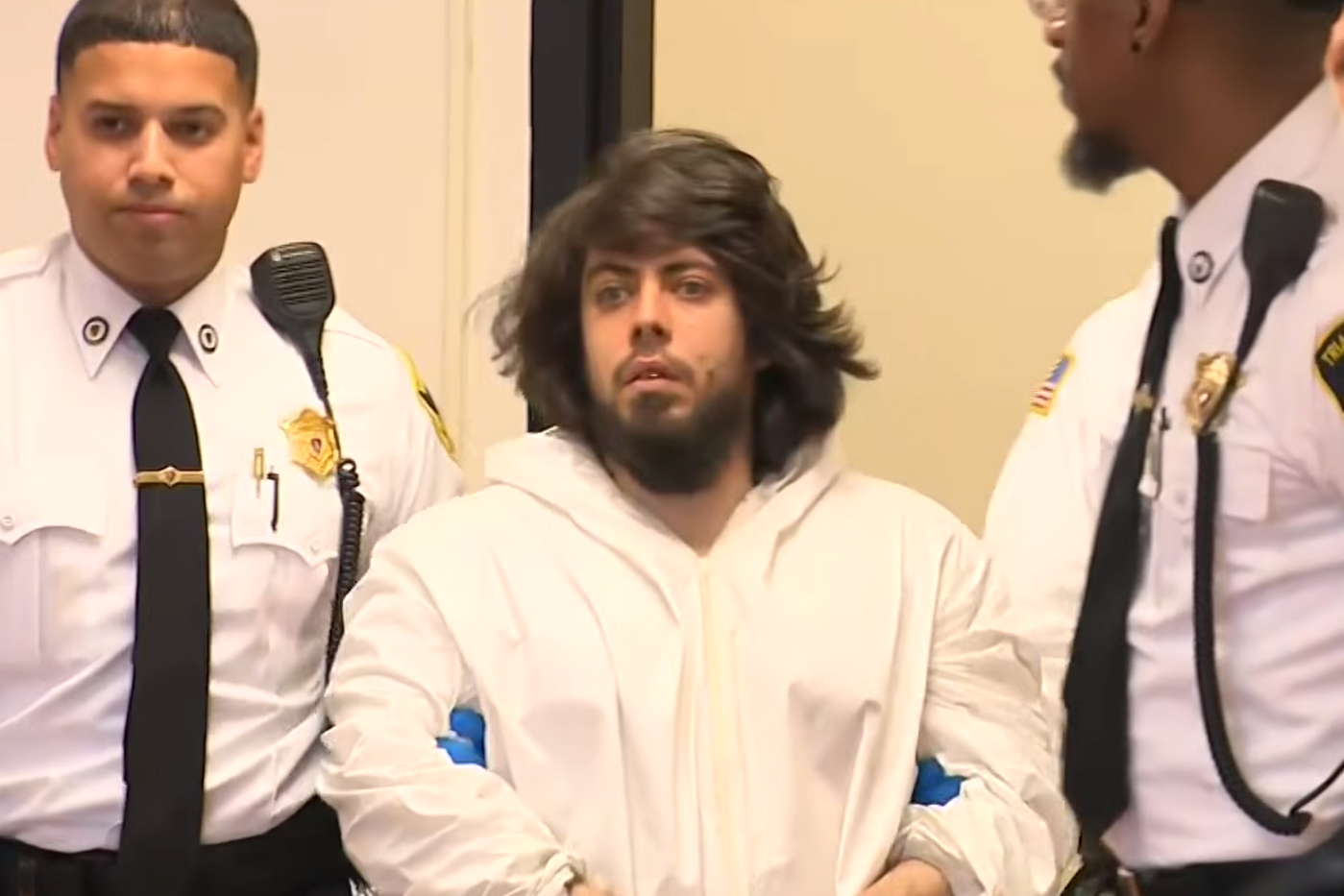
The 29-year-old was arraigned Wednesday in Marlborough District Court, where a judge entered a not guilty plea on his behalf.
Devin Dube, 29, of Hudson, Massachusetts, is accused of murdering his grandmother using a skateboard (WBZ News)
Forensic psychologist Hillary Novak performed an initial examination of the suspect.
She reportedly told the court she had previously evaluated Dube in 2023, and that the 29-year-old had a history of schizophrenia and not taking his medications. The suspect told her he was having auditory hallucinations on the day of the alleged murder, she said.
“With everything I’ve seen, it leaves me to question his competency to stand trial,” Novak reportedly told the court.
Dube, who is being held without bail, has been sent to Bridgewater State Hospital for a mental health evaluation.
Advertisement
He is due back in court for a probable cause hearing on April 17.
Police were called to Dube’s home on Munson Street around 3:10 p.m. on Tuesday. A woman called 911 to say she was being attacked with a skateboard, the local DA’s office said in a statement.
Officers located Devin Dube allegedly hiding in a van at a nearby property after the attacks, according to Hudson Police Chief Richard DiPersio (Middlesex County District Attorney’s Office)
A male resident then called the police to report the continuing altercation inside the home, including the alleged attack on Elaine Dube, who lived in a basement apartment on the property.
When police arrived, Devin Dube had allegedly fled the scene.
About 45 minutes later, police got a third call, from an address on nearby Tower Street, about an individual running around on the property, officials said.
Advertisement
Police found Devin Dube hiding in a van and arrested him without incident, the DA’s Office said.
Elaine Dube, along with Devin Dube’s brother and sister, were treated for injuries at UMass Memorial Medical Center in Worcester.
Elaine Dube later died, while Devin Dube’s siblings were released from hospital Tuesday night, after getting care for non-life-threatening facial and upper body injuries.
Middlesex District Attorney Marian Ryan said at the Wednesday press conference that police had prior contacts with Devin Dube, but “never behavior of this level.”
















































You must be logged in to post a comment Login