


Connect with us

NewsBeat

Trump-Iran live: Tehran says it is ready for negotiations with US but not under ‘shadow of threats’

Published

on

Trump-Iran live: Tehran says it is ready for negotiations with US but not under ‘shadow of threats’

Turkey ready to mediate between Iran and the US, says presidency

Turkish president Tayyip Erdogan told his Iranian counterpart Masoud Pezeshkian in a call on Friday that Turkey was ready to play a facilitator role between Iran and the United States to ease the tensions between the two sides.

“President Erdogan emphasised that Turkey was ready to take up a facilitator role between Iran and the United States to ease tensions and resolve issues,” the presidency said in a statement on X.

It added that Erdogan would also receive Iran’s foreign minister, who is visiting Turkey for talks with his Turkish counterpart.

Advertisement

Alex Croft30 January 2026 23:32

Starmer: ‘We need to deal with Iran’

The Independent’s political correspondent Athena Stavrou reports:

Sir Keir Starmer has said the UK and its allies need to “deal with” Iran amid its ongoing deadly crackdown on protesters.

Advertisement

On his visit to China, Sir Keir said the repression of demonstrators was “grotesque” and “that is where our focus is”.

US President Donald Trump has ramped up pressure on the country in recent days, warning that time is running out to agree a deal on its nuclear programme and called for an end to the “senseless killing”.

The UK prime minister also said the UK supports “the goal” of preventing Iran from developing a nuclear weapon, but stopped short of explicitly backing US military action in the region.

“The goal or the aim here is that Iran shouldn’t be able to develop nuclear weapons and that is hugely important and, of course, we need to deal with the fact they are repressing protesters, killing protesters,” he told the BBC.

Advertisement

“It is grotesque what is happening so that is where our focus is and we are working with allies to that end.”

Pressed on whether Britain would support another US strike on the country, he said: “I am saying we support the goal and we are talking to allies about how we get to that goal.”

Prime Minister Sir Keir Starmer spoke during a visit to China (PA Wire)

Alex Croft30 January 2026 22:30

Advertisement

Iran open for talks with US but they must be ‘fair and equitable’, says foreign minister

Earlier, we heard from Iranian foreign minister Abbas Araghchi and his Turkish counterpart, Hakan Fidan, in a joint press conference.

Iran is prepared for the resumption of talks with the United States, but negotiations should be “fair and equitable”, Mr Araghchi said.

Araghchi, who described his talks with Hakan Fidan in Istanbul as “good and useful”, also said that Tehran was ready to engage with regional countries to promote stability and peace.

Mr Fidan, meanwhile, said he had spoken with US special envoy Steve Witkoff on Thursday and that he will continue speaking to US officials on Iran.

Advertisement

He said he hoped a solution could be found to avoid conflict and the isolation of Iran.

Alex Croft30 January 2026 21:28

‘I told them two things’: Trump reveals what he told Iran

‘I told them two things’: Trump reveals what he told Iran

Alex Croft30 January 2026 20:31

Advertisement

Oil slips, but set for biggest monthly gain in years

Oil prices slipped more than 1 per cent this morning from multi-month highs, though they are set for their most substantial gains in years, as the risk premium surged due to a potential US attack on Iran that could disrupt supplies.

Brent crude futures fell 91 cents to $69.80 a barrel after rising 3.4 per cent to close at its highest point since 31 July yesterday.

The March contract expires later today. The more active April contract slid $1.07 to $68.52.

Advertisement

US West Texas Intermediate crude dropped $1.06 to $64.36 a barrel after gaining 3.4 per cent to settle at its highest level since 26 September in the previous session.

Alex Croft30 January 2026 19:29

US imposes further sanctions on Iranian figures

The US on Friday imposed sanctions on Iranian interior minister Eskandar Momeni and a businessman it said helped launder money for Tehran, as Donald Trump’s administration ramps up pressure on the Islamic Republic.

Advertisement

The Department of the Treasury said Momeni was responsible for a brutal security crackdown in Iran this month as he oversees law enforcement forces it said were responsible for the deaths of thousands of peaceful protesters.

The financial sanctions on Friday also targeted five other Iranian security officials involved in “violently repressing the Iranian people”, the Treasury said in a statement.

Sanctions were also issued against investor Babak Zanjani and two digital asset exchanges registered in Britain that the Treasury said had processed funds linked to Iran’s Islamic Revolutionary Guard Corps.

Treasury secretary Scott Bessent said: “Like rats on a sinking ship, the regime is frantically wiring funds stolen from Iranian families to banks and financial institutions around the world. Rest assured, Treasury will act.”

Advertisement

Alex Croft30 January 2026 18:30

Analysis- Why Iran is the wrong war for Trump to back

Trump may be very proud of his ‘armada’ off the coast of Iran but the US president could look good, back a winner, and support his allies by leaving Tehran alone and helping Ukraine win instead, writes world affairs editor Sam Kiley.

Why Iran is the wrong war for Trump to back

Trump may be very proud of his ‘armada’ off the coast of Iran but the US president could look good, back a winner, and support his allies by leaving Tehran alone and helping Ukraine win instead, writes world affairs editor Sam Kiley

Rebecca Whittaker30 January 2026 18:15

Advertisement

Houthi seizure of telecom gear threatens Yemen aid, says UN

Yemen’s Iran‑aligned Houthi paramilitary has removed critical telecommunications equipment belonging to the UN, the global body said on Friday, warning that further restrictions on its work would fuel a worsening humanitarian crisis

The Houthis, who control areas in north Yemen, entered at least six unstaffed UN offices in the capital Sanaa and took telecommunications equipment and several vehicles to an unknown location, the UN’s Resident and Humanitarian Coordinator for Yemen, Julien Harneis, said in a statement.

“This equipment is part of the minimum infrastructure needed by the United Nations to be present and to implement programmes,” said Harneis.

Advertisement

The UN has warned of a worsening humanitarian crisis in Yemen with some 21 million people needing aid.

Alex Croft30 January 2026 17:45

Iran has no plans to ‘meet with the Americans’ but it ready for ‘negotiations’

Iran’s foreign minister announced that his country is ready to resolve tensions but that there are no concrete plans for talks with the US.

Advertisement

Abbas Araghchi spoke in Istanbul on Friday for talks with Turkish officials. Ankara has been working to reduce tensions in the wider region following threats of a possible US military strike against Iran.

Mr Araghchi told reporters during a joint news conference with Turkish Foreign Minister Hakan Fidan that Iran has no plans to “meet with the Americans”.

“We are ready for fair and equitable negotiations,” he said. “For such negotiations, arrangements must first be made, both regarding the form of the talks and the location of the talks, and about the topic of the talks.”

“The Islamic Republic of Iran, just as it is ready for negotiations, it is also ready for war,” Mr Araghchi added.

Advertisement

Turkey opposes a military intervention against Iran, warning such an action would lead to regional instability.

“We are against resorting to military options to solve problems, and we do not believe that this will be very effective,” Mr Fidan said. “We advocate for negotiation and diplomacy.”

Rebecca Whittaker30 January 2026 17:30

Advertisement

Iran’s retaliation will not be limited, military warns

Iran’s reaction to any US action will not be limited, an Iranian military spokesperson has warned.

A decisive response, he said, would be “delivered instantly”.

Speaking to Iranian state television, brigadier general Mohammad Akraminia said US aircraft carriers have “serious vulnerabilities”.

Several US bases in the Gulf region are “within the range of our medium-range missiles”, he added according to Le Monde.

Advertisement

“If such a miscalculation is made by the Americans, it will certainly not unfold the way Trump imagines – carrying out a quick operation and then, two hours later, tweeting that the operation is over.”

Alex Croft30 January 2026 17:13

Source link

Advertisement
Continue Reading
Click to comment

Leave a Reply

Your email address will not be published. Required fields are marked *

NewsBeat

4 Science-Backed Signs You’re Headed For Divorce

Published

on

4 Science-Backed Signs You're Headed For Divorce

Curveball divorces,” or those which blindside one member of a splitting couple, are apparently on the rise.

But according to research conducted by Dr John Gottman and Dr Julie Schwartz Gottman of the Gottman Institute (GI), there are four “horsemen” which pretty consistently spell relationship disaster.

The researchers, who studied couples and relationships for five decades, use the horsemen metaphor (in the Bible the four horsemen – Conquest, War, Hunger, and Death – herald the apocalypse) as a way to describe the collapse of a relationship.

Their terms, meanwhile, describe “communication styles that, according to our research, can predict the end of a relationship”.

Advertisement

What are the “four horsemen” of separation?

1) Criticism

This, the experts say, is different to offering your partner critiques or bringing up the odd complaint with them.

Instead, it’s about acting as if an issue with your partner says something fundamental about that person: “an ad hominem attack”.

Advertisement

So, rather than saying “I feel unappreciated when the bin bag is allowed to get too full. We agreed that was a task you would undertake,” you might say, “You’re lazy, messy, and selfish”.

This doesn’t mean your relationship is doomed, said the GI. But, “It makes the victim feel assaulted, rejected, and hurt, and often causes the perpetrator and victim to fall into an escalating pattern.”

Try using “I” statements (“I feel scared when…”) and suggesting a positive change if you want to make corrections, rather than being critical.

2) Contempt

Advertisement

“While criticism attacks your partner’s character, contempt assumes a position of moral superiority over them,” the GI shared.

It means you approach your partner with sarcasm, ridicule, and/or mockery: you might roll your eyes, make fun of them, repeat what they said in a silly voice, or call them names.

For instance, a contemptuous member of a couple might say, “Boo-hoo, I’m SO sorry that working a desk job is making you so ‘tired’. Try spending one day at my job, you’d never survive, you’re being such a baby.”

This is so corrosive to a relationship that it can lower a couple’s physical immune system. It is, the GI said, the “single greatest predictor of divorce”.

Advertisement

Building a “culture of appreciation” can help to remedy contempt; learning to notice and be grateful for the small things may be transformative.

3) Defensiveness

This is common among rocky relationships and can arise when criticism is high.

A defensive partner may feel that criticisms of them are unjust, so instead of addressing them head-on, they may reverse the “blame” on their partner, and/or try to seem innocent.

Advertisement

For instance, if your partner had made the complaint about not taking the bin bag out we mentioned earlier, a defensive person might say, “I’ve been busy making money to finance the holiday you wanted. Why did you look at an overflowing bin and not simply take it out?”

It can be a natural enough response to criticism, the GI said, and “will only escalate the conflict if the critical spouse does not back down or apologise.”

Taking responsibility and apologising can go a long way to reducing the harm here.

4) Stonewalling

Advertisement

Often a response to contempt, “stonewalling” involves one partner simply withdrawing from their partner and refusing to talk to them.

They might act busy, turn away, or tune out. It can happen because the other three “horsemen” are overwhelming, and can become a hard habit to break once it’s been formed.

If you want to break the habit, try taking a short, soothing break, like reading for 20 minutes, before returning for a fully present discussion.

Advertisement

Source link

Continue Reading

NewsBeat

Dad-of-two told to ‘calm down and go home’ by GP before shock cancer diagnosis

Published

on

Daily Record

Craig Spiers had been attending appointments at the GP surgery for five years before he learned he had cancer.

A dad-of-two was told by his GP to “go home and calm down” before being diagnosed with cancer.

Advertisement

Craig Spiers, 46, from Glasgow, said it took five years of doctor’s appointments before he was diagnosed with neuroendocrine cancer of the small bowel in 2013. It has since spread to his liver and has also caused heart problems.

He said: “These visits didn’t get me anywhere and I was even told there was nothing wrong with me and that I had to go home and calm down as it was a result of stress from work.

“My cancer was invisible to the doctor.”

The dad is one of many patients whose stories have sparked a warning from a charity that those with an “invisible” cancer are being turned away by doctors and waiting years for a diagnosis.

Advertisement

There is an urgent need to ramp up the time it takes for people to be diagnosed with neuroendocrine cancer – which impacts more than 6,000 people a year in England, Neuroendocrine Cancer UK (NCUK) said.

Neuroendocrine refers to a group of cancers that start in the nerve and gland cells that make and release hormones.

Analysis by NCUK suggests rates of the disease rose by 371 per cent between 1995 and 2018, compared to 116 per cent for other cancers in the same period – apart from non-melanoma skin cancer.

Diagnosis takes four-and-a-half years on average, the charity said, with almost half of patients not diagnosed at the first referral and 16 per cent of people returning more than 10 times before getting answers.

Advertisement

More than half of cases are diagnosed at an advanced stage.

There are two main types of neuroendocrine cancer: neuroendocrine tumours (NETs) and neuroendocrine carcinomas (NECs), which are fast growing.

The disease can develop in different parts of the body, such as the stomach, bowel, pancreas and lungs.

Symptoms include unexplained weight loss, tiredness, pain, diarrhoea, bloating, wind, heartburn, asthma-like symptoms, a flushing rash and a persistent cough.

Common misdiagnoses include irritable bowel syndrome, asthma, or menopause, experts said.

Gordon Brown, 62, is a GP from Ashby De-La-Zouch who “missed” his own cancer.

“I had been experiencing many seemingly benign symptoms but I never thought they were a result of neuroendocrine cancer,” he said.

Advertisement

“I did go to the hospital a couple of times complaining about the abdominal pain/diarrhoea but no one did a scan. I’d ask my GP colleagues for advice but everyone, including myself, felt that the symptoms were not significant enough.”

Lisa Walker, chief executive of NCUK, said: “A key part of the challenge of neuroendocrine cancer is that it doesn’t align with the common cancer narrative many expect.

“It doesn’t act or look like more known cancers and unlike others, it isn’t always about recovery or decline, it often requires people to live with it for many years. That is why we need a conversation that reflects the reality of the condition.

“Delays to diagnosis and inconsistent care cause serious and lasting harm. Precious time is lost, allowing the cancer to progress before people receive the treatment they need.

Advertisement

“Patients and families describe these experiences as isolating and frightening, leaving them without support when they need it most.

“This is unacceptable and requires urgent attention.”

Professor Raj Srirajaskanthan, a consultant gastroenterologist at King’s College Hospital, said: “In my years as a NET clinician, I have sat across from thousands of patients, and while every story is unique, they often share a hauntingly similar prologue.

“A large number have undergone a long and circuitous journey to their diagnosis, commonly being misdiagnosed with irritable bowel syndrome, asthma, or menopause.

Advertisement

“This period of ‘not knowing’ is often marked by a sense of being unheard, as patients struggle to reconcile their debilitating symptoms with ‘normal’ test results.”

Prof Srirajaskanthan said managing NETs is “often a marathon, not a sprint”.

“Many of my patients have been undergoing treatment for over a decade,” he added.

Martyn Caplin, a professor of gastroenterology and neuroendocrine cancer at the Royal Free Hospital, said faster diagnosis can lead to more treatment options for patients, even if the disease cannot be removed surgically.

Advertisement

“Smaller volumes of neuroendocrine cancer are generally easier to manage than a more advanced disease, and larger tumours are more likely to cause significant symptoms, regardless of where they are in the body,” he added.

“Delays increase both the physical and emotional toll on patients and limit clinical options.”

Source link

Advertisement
Continue Reading

NewsBeat

why not knowing how to dance could ruin your reputation in Regency Britain

Published

on

why not knowing how to dance could ruin your reputation in Regency Britain

When a silver-clad stranger admits she cannot dance at a masquerade ball in the first episode of Bridgerton’s new season, Benedict Bridgerton (Luke Thompson) is both entertained and mystified.

“A lady who cannot dance? Is this a part of the character you are playing tonight? A silver ingenue?” he asks Sophie Baek (Yerin Ha). A lady of the Ton who is unequipped with the vital accomplishments for the “season”? Unthinkable. Today, we are no longer defined by our ability to dance, but in the world of Bridgerton, dance is central to identity and a signifier of social status.

In Regency Britain (1795-1837), dance was a vital accomplishment for elite society. The skill was regularly deployed in assembly rooms and the London townhouses of the beau monde – the pinnacle of metropolitan fashionable society.

From an early age, boys and girls in polite society were trained in deportment (posture and bodily carriage), etiquette and dancing by dancing masters – a role assumed by Benedict at the Bridgerton masquerade.

Advertisement

Dancing in Regency Britain

The real Prince Regent of the time (the future George IV) started to learn from his dancing master at the age of six, becoming so renowned for his prowess that he was celebrated as “the life of the dance”. Dancing masters were crucial to transforming girls and boys into ladies and gentlemen, equipping them with the skills necessary to perform when they made their entrance into society around the age of 18.

At a dance lesson in fashionable Queen’s Square, the German traveller, diarist and novelist Sophie von la Roche observed that the six-year-old girls “are eager to learn, as they are already quite advanced and promise to make good dancers”.

Le Bon Genre, La Walse by unknown artist (1812).
Courtesy of the Lewis Walpole Library, Yale University

However, not everyone in elite society was an accomplished dancer. Writing about the Duke of Devonshire, the press diplomatically observed that dancing was “not his forte”. Meanwhile, the real Queen Charlotte’s eldest daughter struggled with her dance lessons as a teenager. The Princess Royal pleaded in a letter to her governess: “I have behaved well in every occasion except last Wednesday, that I danced ill … However, I hope that you will not give me quite up, since I have done everything else well, and that I dance[d] better last Friday.”

A lack of skill would only lead to ridicule and disgrace, as Lord Mansfield observed of the 19-year-old Lord Titchfield in a letter: “To set out in London raw as he is seems to be Ruin.”

Advertisement

Dance was a prized accomplishment for building reputation and staking a claim to inclusion in elite society, especially since “narrow examination[s]” and “thoro’ inspection[s]” were integral to the ballroom. Learning to dance was so ubiquitous in polite society that those who did not – or could not – dance stood out from the crowd.

The societal waltz

In Bridgerton, as the illegitimate daughter of an earl, Sophie is disadvantaged, but has not have been entirely excluded from society. We’re told that she was allowed to watch lessons with her stepsisters, but was not directly included and taught.

Unaware of Sophie’s background, Benedict is perplexed by her “puzzling” inability to dance, assuming that she was raised like the other young ladies of the Ton. And it is precisely this inability to dance that becomes a defining characteristic in his search for her in the following episodes. Indeed, Benedict’s hopes are raised when he hears of Mrs Mondrich’s (Emma Naomi) neighbour, who had not been taught to dance – certain she must be his mysterious lady in silver.

Advertisement
The trailer for Bridgerton season four.

As Sophie’s dancing master, Benedict teaches her the waltz – a scandalous dance newly introduced to the British ballroom from France and Germany.

Unlike the lively and communal country dance and graceful minuet, which revolved around distance, the waltz featured a couple in a close embrace whirling around the ballroom. While quite a tame dance form today, the Regency waltz’s close physical contact shocked society. “Mad, bad, and dangerous to know” poet, Lord Byron even wrote a poem about it in 1812:

Hot from the hands promiscuously applied,

Round the slight waist, or down the glowing side;

Where were the rapture then to clasp the form,

Advertisement

From this lewd grasp, and lawless contact warm?

Benedict teaches Sophie the waltz box step (which actually emerged in the late 19th century), but the Regency waltz was even more daring, with the dancers stepping between their partner’s legs. With a new, fashionable dance to master, diarist Thomas Raikes observed: “Old and young returned to school, and the mornings were now absorbed at home … whirling a chair round the room to learn the step and measure of the German waltz.” He continued: “The anti-waltzing party took the alarm, cried it down; mothers forbad it, and every ballroom became a scene of feud and contention” – a marked contrast to the ball scenes we see in Bridgerton.

Despite being raised as a social outcast, Sophie learns the waltz with ease like the other ladies in elite society, showing her compatibility with this season’s hero, and, perhaps, hinting at her true belonging in the Ton.


Looking for something good? Cut through the noise with a carefully curated selection of the latest releases, live events and exhibitions, straight to your inbox every fortnight, on Fridays. Sign up here.

Advertisement

Source link

Continue Reading

NewsBeat

We tried to buy nothing new all January. Here’s how we got on

Published

on

We tried to buy nothing new all January. Here’s how we got on

January now has a plethora of ‘new year, new you’ campaigns. We asked some of the Positive News team to try out Buy Nothing New Month, and others, to see how they get on

January was Buy Nothing New Month – a new activity to add to the long, dark first month of the year. Established by Keep Britain Tidy, its aims are simple enough: save money, embrace a new hobby (that isn’t shopping) and, of course, live more sustainably, creating less waste.

Although the thinking behind Buy Nothing New Month is commendable, it does have a knock-on effect for small independent businesses that rely on year-round cash flow.

Advertisement

“While a no-spend mindset can really help the household finances by stopping meaningless spending with large corporations, we should be embracing a ‘think where you spend’ culture,” says Gemma Crawley-Roberts, owner of The Arc, an independent shop in Bedford.

Advertisement

“Local indies like us hire local people and offer a real sense of community on the high street. We are instantly reactive to customer needs and work tirelessly all year round to make sure we offer an experience you’ll love. Every penny spent with us goes straight back into your local economy. Supporting local has far reaching benefits that can be instantly felt.” she says.

Buy Nothing New Month (BNNM?) might need a snappier name if it’s really going to lodge itself in the public consciousness, but we asked three Positive News staffers to give it a go. Here is how they got on.

Tom Pattinson

Advertisement

January is already depressing enough, but I decided to fully lean in. I took on the triple challenge of Dry January, Buy Nothing New Month and Birchall’s Green Tea Challenge.

Dry January, surprisingly, was the easiest of the lot. With very little actually happening in January – few events, a near-empty social calendar and a busy work schedule – meant I barely left the house. Temptation was minimal. 

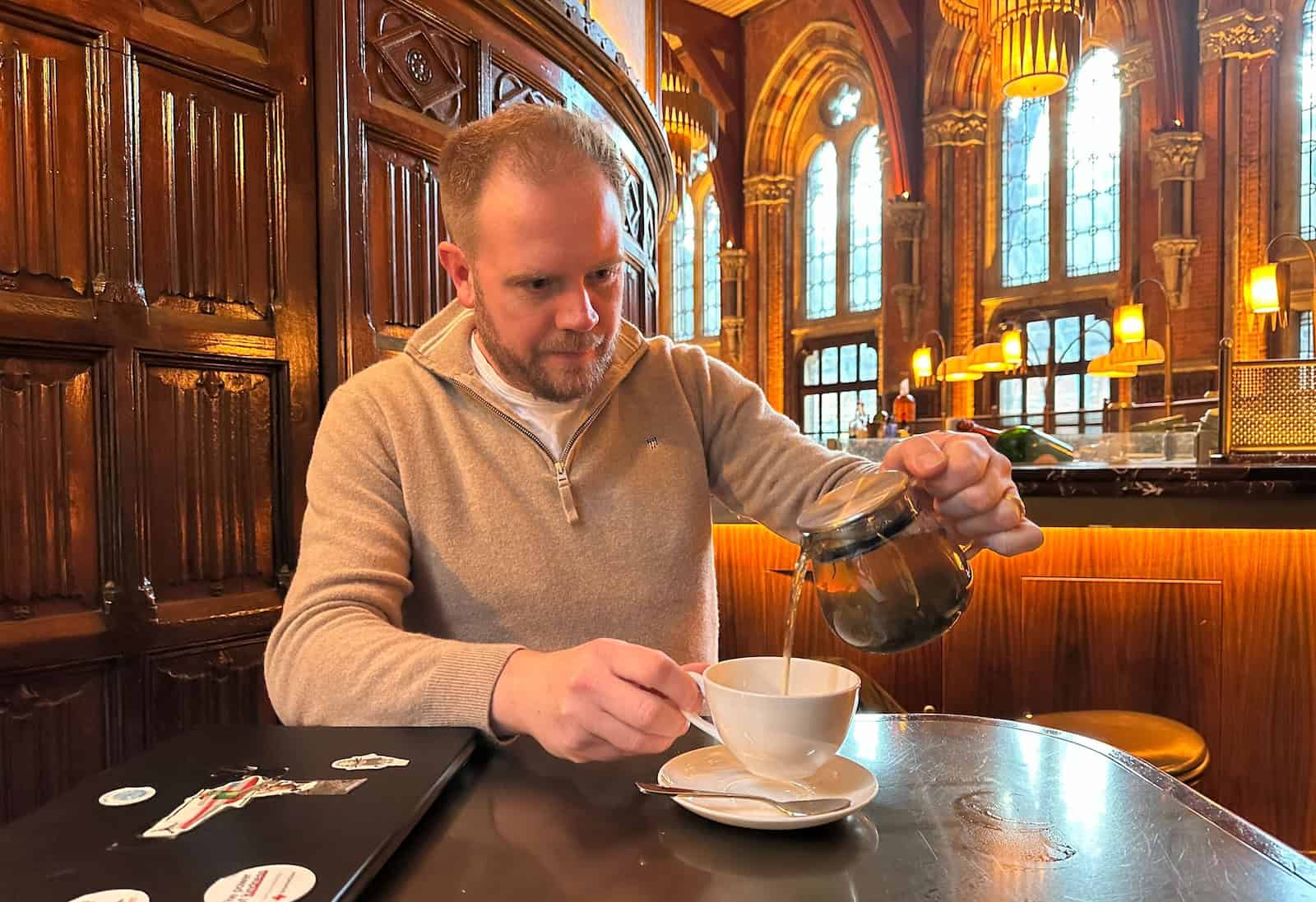
While I did have the odd coffee, I made green tea my default drink as part of Birchall’s Green Tea Challenge, replacing my standard builder’s tea with something I enjoy anyway. The combined effect of no booze and detoxifying green tea left me feeling unexpectedly sprightly, and I’m fairly sure my liver noticed too. I also think I shed a few pounds, even though the gym and I still need re-aquainting. 

After the usual Christmas splurge – kids’ toys, new socks and a surprising variety of soap – I didn’t feel a huge urge to shop much in January. Aside from the permitted food shop, I did pretty well for Buy Nothing New Month. I did have to buy a carbon monoxide monitor after strong suggestions from the man who surveyed the boiler, and there was also a lunch with a colleague but that’s still food right?  

Advertisement

I now carry a refillable coffee (or green tea) cup and a water bottle everywhere, which has become part of my leaving-the-house checklist – keys, phone, bottle. Takeaway coffees were replaced with bring-your-own teas, and I noticed my monthly credit card bill was also nicely slimmer than it is on a usual month.

My only real crack came just before the end of the month, when I was strong-armed by my four-year-old into buying a kids’ magazine, sadly loaded with plastic tat, following a particularly uncomfortable visit to the opticians. I blame the emotional vulnerability but overall found it all surprisingly less painful than I anticipated. 

Editor Tom Pattinson did Dry January, Buy Nothing New Month and the Green Tea Challenge

Advertisement

Angela Garwood 

Full disclosure: I failed at Buy Nothing New Month. Quite abysmally, actually.

From the outset, a no-buy January was always going to be a tall order. I agreed to take part thinking it might be quite fun – I like a challenge – before putting a mental pin in it and forgetting all about said pin. For most of January, it rather slipped my mind. I’d failed before I’d even begun, largely due to forgetfulness, or possibly quiet subconscious self-sabotage. I write everything down, meticulously, so part of me wonders whether I avoided doing so on this occasion because, on some level, I knew I didn’t truly want to take part.

Advertisement

No unnecessary purchases? Nothing new? In January? Could we have picked a less appropriate time to deny a woman of her right to… joy? “No-joy January,” I muttered quietly to myself as the idea was first discussed. Buying things is fun; January is depressing. The former serves as an antidote to the latter. 

That said, I was curious. Could I do my bit for the environment? Perhaps I could seek joy elsewhere? Go on more walks, delve into the books I’d already accumulated… and how many cleansers does one person really need? (Four.) These thoughts proved fleeting. 

Soon enough, there was the gorgeous bedding I “desperately needed” (a bobbled duvet and mis-matched pillow situation; a sad state of affairs that needed rectifying), the skincare that I’d argue was practically medicinal; dry skin is an ailment after all, and the beautiful cardigan that was (supposedly) essential, all in the sale, of course. Then there were the lattés I could have skipped… but didn’t.

Advertisement

‘Campaigns like this get people thinking; and that can only be a good thing,’ says Angela Garwood

Contrary to my declaration of complete failure, I did have many successful days where I didn’t buy anything at all, though largely by default as opposed to restraint. While I’m disappointed in my efforts, I’ve decided that if I’m going to do this properly, I need accountability; a like-minded friend to go through it with, someone who understands the allure of a giant SALE sign. 

It is, of course, an endeavour I’d encourage, an important campaign that fosters mindfulness, challenges our purchasing habits, and asks us to consider the environmental impact of what we buy and how we buy it. It prompts many questions. 

Advertisement

What might change if more of us embraced second-hand clothing or simply bought less, more thoughtfully? Campaigns like this get people thinking; and that can only be a good thing.

I just ask that perhaps we try “no-buy July” next time. It’s a far more forgiving month, season/weather-wise, for those up for the challenge. And it rhymes. 

Gavin Haines

Advertisement

Look, I failed spectacularly. To be honest, something about Buy Nothing New Month didn’t sit quite right with me, despite its good intentions. Collective acts of abstinence – not least Dry Jan – foment a rebellion within. So it was apt that I flunked on New Year’s Day with a pint of Guinness and packet of crisps in my local pub, which, frankly, needed the custom through January. 

Pub visits aside, I did commendably for the rest of the month without really trying. My looming tax bill and empty bank account were motivating factors for my miserliness. But to be honest, Buy Nothing New Month felt like most months. I realised that I don’t generally buy much stuff, and what I do buy is usually secondhand. Vintage shops, charity shops and reclamation yards are my stomping grounds. That’s partly out of concern for the planet and my finances, but also because scouring these treasure troves is more fun than stomping around identikit high street shops.

Associate editor Gavin Haines failed the challenge in the pub on day one, and with a new book

Advertisement

The one brand new thing that I did buy was worth breaking the law for. Having left my book on a bus in Amsterdam, I needed a replacement for a long train journey, so I bought a copy of Until August – Gabriel Garcia Marquez’s final novel – in Centraal Station. It was so good that I read it again on the way back. 

The other non-essentials that I purchased were a pre-loved t-shirt (sourced from a kilo shop in Groningen), a Van Gogh calendar (heavily discounted in my local charity shop), and a Victorian fireplace (sourced on eBay for a bargain price). 

Buy Nothing New Month has a worthy mission in challenging rampant consumerism, albeit one that could impact small businesses at a time when they need support. The real challenge, however, is finding contentment with less for the rest of the year, and ensuring that the money we do spend goes to businesses that align with our values.

Advertisement

Support solutions in 2026

At Positive News, we’re not chasing clicks or profits for media moguls – we’re here to serve you and have a positive social impact. We can’t do this unless enough people like you choose to support our journalism.

Give once from just £1, or join 1,800+ others who contribute an average of £3 or more per month. Together, we can build a healthier form of media – one that focuses on solutions, progress and possibilities, and empowers people to create positive change.

Support Positive News

Advertisement

Source link

Continue Reading

NewsBeat

Why did Andrew Mountbatten-Windsor leave Royal Lodge in such a hurry?

Published

on

Why did Andrew Mountbatten-Windsor leave Royal Lodge in such a hurry?

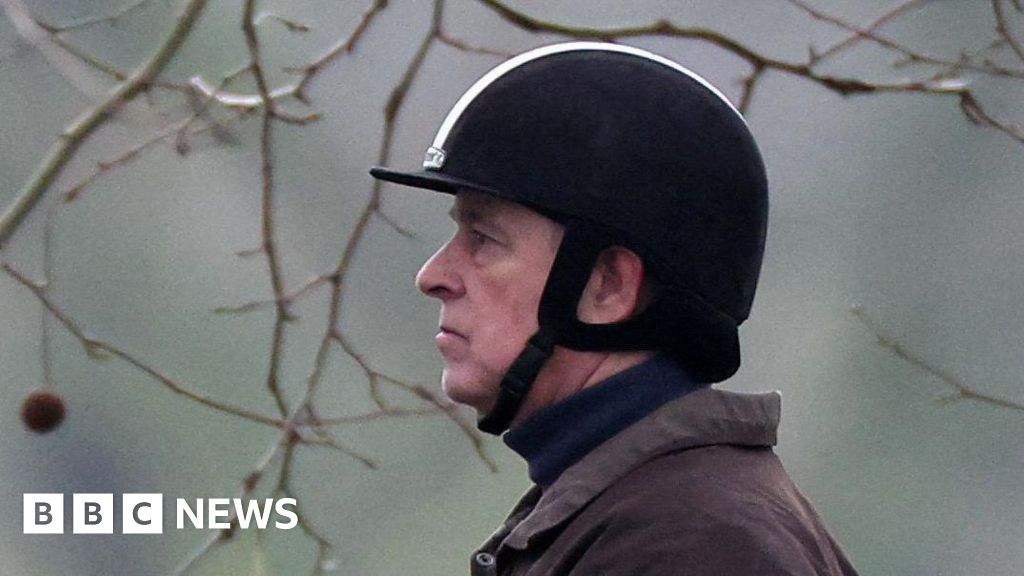
Now a line has been drawn under such provocative appearances, he’s going to be tucked away in Sandringham, first of all in a temporary home on the estate, at Wood Farm, before his planned permanent new address. This will be at the expense of the King, rather than any public money.

Source link

Continue Reading

NewsBeat

superfood or superfad? Here’s what our study actually said

Published

on

superfood or superfad? Here’s what our study actually said

According to the New York Post, our research team has discovered a much-overlooked “superfood”: bamboo shoots. Before you rush out to harvest the ornamental bamboo growing in your garden, there are a few things you should know.

We systematically reviewed all the available evidence on bamboo as a food and its effect on human health. The research base turned out to be surprisingly thin – just 16 studies met our criteria, including four trials in people and four that used cells in a dish. The final eight focused on bamboo characteristics with potential application to nutrition. This is what they showed us.

There is evidence of some positive health effects from eating bamboo. One study showed that eating bamboo shoots in cookies better controlled blood sugar levels, and that more bamboo consumption translated to further lowered levels.

Other studies documented the beneficial effects of the fibre they contain. This isn’t limited to the inevitable bowel movements but also includes the delightfully termed “faecal volume”, both of which were shown to improve.

Advertisement

Also, compared to a fibre-free diet, bamboo shoots lowered overall cholesterol and LDL cholesterol (so-called “bad cholesterol”) that can build up in blood vessels and cause heart disease.

One unusual benefit of bamboo is that it contains flavonoids – plant compounds that can protect against acrylamide, a potentially harmful chemical that forms when starchy foods are cooked at high temperatures. These compounds can increase the risk of some cancers and have been the subject of the Food Standards Agency campaign in 2017 to avoid any burning and “go for gold” when cooking.

Eating bamboo may also help calm inflammation and protect cells from damage. In lab tests, it reduced immune cell activity by 63% and halved the release of substances that trigger inflammation in the body. Bamboo also acts as an antioxidant – lab tests showed it cut by nearly half the production of harmful chemicals like hydrogen peroxide that can damage cells.

Although these findings were in cells in a dish, it gives some insight into the action of bamboo extracts on the human body.

Advertisement

The grass isn’t all green, though

However, if bamboo isn’t properly prepared, it can lead to problems. One study linked it to an increased risk of a condition called goitre. Goitre is an enlargement of the thyroid, a gland in the neck that is important for growth and setting the metabolic rate. It is visible as a swelling in the front of the neck and is most typically associated with low iodine consumption.

Poorly prepared bamboo contains chemicals called cyanogenic glycosides, which the body converts into another chemical called thiocyanate. These block the thyroid from using iodine effectively. People on low-iodine diets, or with existing thyroid issues, are particularly at risk. But the risk of goitre from bamboo shoot consumption may be reduced by properly preparing the shoot to eat, which can be achieved by boiling the shoot in water.

Some of the bamboo samples analysed contained heavy metals, like arsenic, cadmium and lead. These show up in most foods in trace amounts, and have safety levels specified, for example, by the Food Standards Agency.

Some bamboo shoots contained heavy metals.
aomas/Shutterstock.com

While most were measured well within permitted limits, lead was found in amounts up to 4.6 times the permitted levels in 21 of the samples assessed. While caution is important, these concentrations were not shown to affect the health of the cells in the lab, which might suggest how easily such chemicals are used by tissues (their so-called “bio-availability”).

Advertisement

There are some other things to bear in mind too. The evidence base in this area isn’t as strong as it could be. The few relevant studies we did find on this topic had some methodological issues and they didn’t offer the most compelling evidence for their findings.

We could only formally assess the four trials on people, which scored in a range indicating “overall satisfactory quality”. As ever, though, they do show the value of research in this area, and the attention our study has garnered shows the public’s clear interest in the topic.

Still, the research shows that bamboo shoots have potential as a sustainable, healthy food. And like the shoots themselves, interest in this area is only likely to grow – rapidly.

Advertisement

Source link

Continue Reading

NewsBeat

When is it, odds and how to watch opening match

Published

on

When is it, odds and how to watch

The 2026 Six Nations campaign starts this week with the defending champions, France, taking on the side who finished third last year, Ireland.

Ireland welcome back their head coach Andy Farrell after his sabbatical from the 2025 tournament to prepare for the Lions tour of Australia.

Both Ireland and France, like England, won four and lost one match in the 2025 championship, France winning in Dublin and losing at Twickenham. Reflecting their finishes last year and their form throughout the autumn, France are favourites for the title and Ireland third, tucked behind England.

Advertisement

When is the opening match of the 2026 Six Nations?

France host Ireland on Thursday, February 5. The match will kick-off at 8.10pm GMT.

The French public love a Friday night fixture but their ardour is untested on Thursdays. They are treated to the opening match for the third championship in succession with contrasting results: France thumped Wales 43-0 last year but went down 17-38 at Ireland’s hands in Marseille in 2024, the visitors having overcome their World Cup hangover more quickly than the hosts.

Why is France v Ireland on Thursday?

The Thursday evening fixture is a controversial choice, but France’s broadcasters felt they had no choice because the opening ceremony of the 2026 Winter Olympics is taking place on Friday evening.

Where is France v Ireland taking place?

At Stade de France, the national stadium at Saint-Denis, 8km north of central Paris. The stadium has a capacity of 81,338 and hosted both the 2007 and 2023 Rugby World Cup finals, as well as the athletics at the 2024 Olympic Games and the football World Cup final of 1998.

Advertisement

France also host Italy this year and round off the tournament with another home night match against England on March 14 when Le Crunch is sure to crackle.

Source link

Continue Reading

NewsBeat

Fiend admits drugging his wife so she would not wake while he sexually abused children in summer camp poisoning

Published

on

Fiend admits drugging his wife so she would not wake while he sexually abused children in summer camp poisoning

A PENSIONER who sexually abused children at a summer camp after giving them sedative-laced sweets has admitted also drugging his wife.

Jon Ruben, 76, preyed on two boys, aged nine and ten, at Stathern Lodge in Leicestershire after knocking them out.

Eight children – all boys aged between eight and 11 – and one adult were taken to hospital following the horror.

Ruben appeared at Leicester Crown Court today where he pleaded guilty to drugging his wife.

He admitted the offence of unlawfully and maliciously administered a noxious substance with intent to injure, aggrieve, or annoy, after giving a voluntary interview.

Advertisement

The court heard he drugged his wife over three days between 26 and 29 July.

It comes after he previously admitted a total of 17 charges – including drugging and sexually assaulting the two boys.

He also admitted child cruelty towards six other victims and three counts of possessing a controlled drug of class C – flubromazolam, diazepam, and temazepam – and three counts of making indecent photos of children.

But he denied one of the sexual offences he was charged with against a nine-year-old boy.

Advertisement

More to follow… For the latest news on this story keep checking back at The Sun Online

Thesun.co.uk is your go-to destination for the best celebrity news, real-life stories, jaw-dropping pictures and must-see video.

Like us on Facebook at www.facebook.com/thesun and follow us from our main Twitter account at @TheSun.

Advertisement

Source link

Continue Reading

NewsBeat

Police release man arrested after Barnard Castle A66 crash

Published

on

Police release man arrested after Barnard Castle A66 crash

The woman, in her 50s, was pronounced dead after the crash near Boldron, close to Barnard Castle at 7.15am on Monday (February 2).

Durham Police say she was driving a BMW heading westbound when she her car collided with a Renault truck.

The 29-year-old driver of the truck was taken into custody

Advertisement

A force spokesperson said: “He has now been released under investigation while further enquiries are carried out.”

The woman who died has not yet been named.

The road was closed while crash investigators probed the scene but has since re-opened.


Durham Police previously said: “Police would like to thank several members of the public who stopped at the scene and tried to help – their efforts were much appreciated by all those involved in the response,” the spokesperson added.

Advertisement

 “Officers are keen to speak to anyone who witnessed the incident, or who may have dashcam footage of the vehicles prior to the collision.”

Anyone who can help is asked to contact the Durham Police crash investigation unit on 0191 375 2996 or by emailing SCIU@durham.police.uk quoting incident number 54 of February 2.”

Source link

Advertisement
Continue Reading

NewsBeat

Development corporation could ‘unlock’ Cambridge homes and jobs, minister says

Published

on

Cambridgeshire Live

The government has previously committed £400 million of funding to speed up development in the area

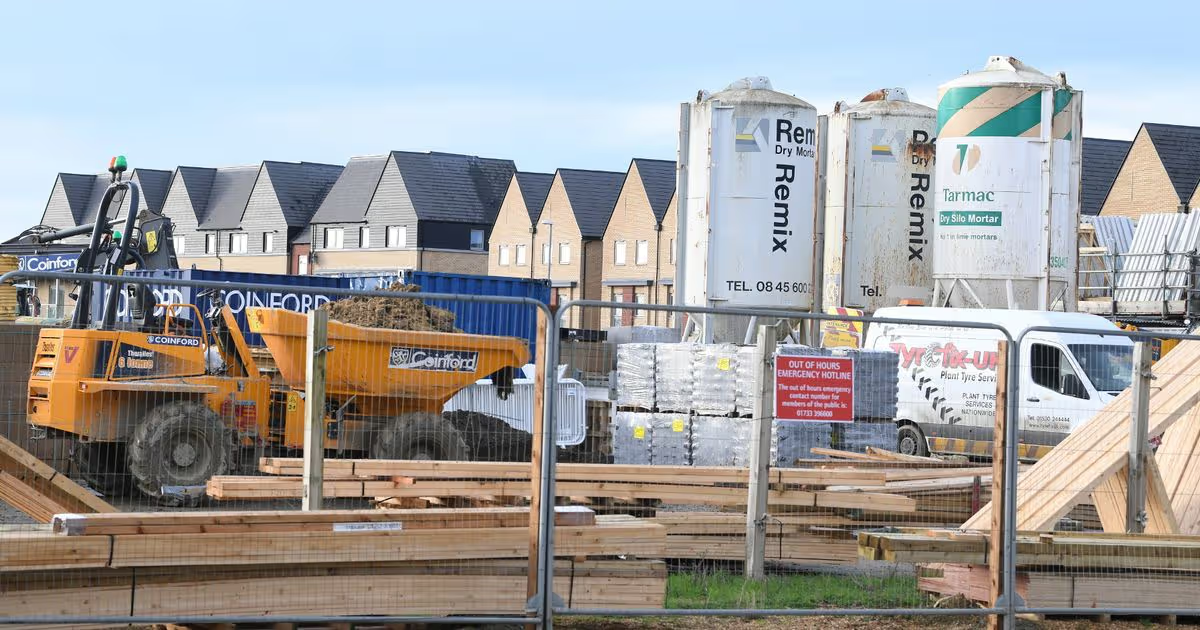
Plans to set up a government-established development corporation have been unveiled by the Housing Minister on Wednesday (February 4). The government said this could ‘unlock’ thousands of homes and jobs for people across Greater Cambridge.

Advertisement

The proposed body would focus on creating thousands of jobs in construction, bioscience, education, and hospitality, the government said. A development corporation was formed to regenerate Stratford after the 2012 Olympic and Paralympic Games.

Housing and Planning Minister, Matthew Pennycook, said: “This government is determined to realise the full potential of Greater Cambridge to the benefit of its existing communities and the country as a whole.

“The centrally-led development corporation we are proposing would provide us with the necessary powers, authority and access to finance to unleash ambitious and high-quality sustainable growth in Cambridge and its environs in the years ahead.

“I encourage all those with an interest in the future of Greater Cambridge to respond to our consultation and share their expertise, insights and knowledge.”

Advertisement

Residents, local leaders, and businesses have been asked to have their say on whether a development corporation should be established and what area it would cover. They will also be able to comment on the planning powers it could have to approve new homes, workplaces, and other infrastructure.

Chief Secretary to the Treasury, James Murray, added: “We have huge ambitions for the Oxford–Cambridge corridor. This is an important step that will accelerate development in Cambridge and drive investment and growth for the whole country.

“A new development corporation will help us build more homes, create more quality jobs close to home, and raise living standards for working people across the area.”

It comes after the government committed £400 million of funding to ‘accelerate’ development locally. Part of the funding has been provided to tackle water scarcity while infrastructure is developed.

Advertisement

Chair of the Cambridge Growth Company, Peter Freeman said: “We all recognise that Greater Cambridge has an incredible track record for delivering good quality and sustainable growth and, has even greater ambition to see its innovation economy power inclusive jobs and prosperity for all.

“But we also all know that there are significant problems to address which are increasingly holding the area back. We must make sure that we make Cambridge and all the towns and villages around it more liveable than they are today. I strongly believe that a development corporation will give Greater Cambridge the tools, certainty and investment ability needed to deliver an infrastructure-first approach to sustainable growth.

“The role of a development corporation is to stay true to a shared vision, through economic cycles, and deliver it. When we look back, there will be better transport; no shortage of, and better quality, water; there will be more open public spaces and more protected space for nature; there will be more jobs and more genuinely affordable homes.”

The consultation will run for eight weeks.

Advertisement

Source link

Continue Reading

Trending

Copyright © 2025