President Donald Trump is set to arrive in France on Monday for a G7 summit, where he will meet with a diverse group of world leaders who share at least one common experience: all have either been the target of his ire or have navigated profoundly awkward diplomatic encounters with the U.S. leader.
Several G7 leaders have faced Trump’s wrath for questioning his chosen war with Iran.
Others have clashed with him over tariffs. The leaders of Japan and Germany, in particular, have endured clumsy asides from Trump regarding dark moments in their countries’ histories.
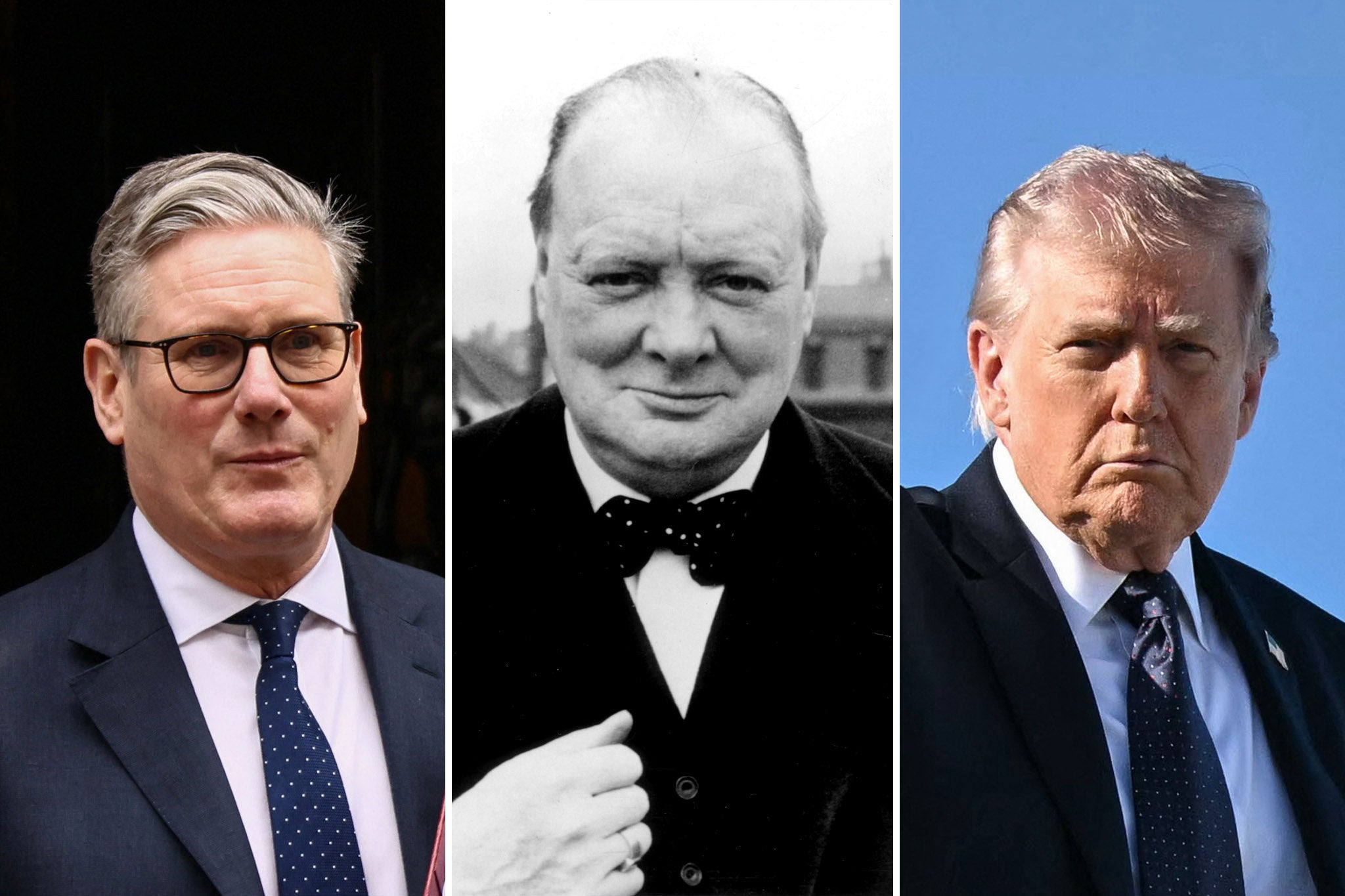
Trump’s criticism of British Prime Minister Keir Starmer has centered on the United Kingdom’s reluctance to assist U.S. military strikes on Iran, British immigration policies, and the country’s renewable energy strategies (PA Archive)
During three days of talks in the picturesque French Alps, the leaders are expected to discuss the newly forged agreement aimed at ending the Iran war, Chinese trade policy, and Russia’s ongoing war in Ukraine.
The summit also presents an opportunity for these leaders to reassess their relationships with Trump at a time when he appears more determined than ever to pursue a unilateral path on matters of global consequence.
Advertisement
The dynamics of the summit have been likened to a family holiday gathering where “there’s an uncle you don’t quite like,” according to Max Bergmann, an analyst at the Center for Strategic and International Studies.
“And no one wants to have a confrontation, even if things get quite passive-aggressive at times,” Bergmann added. “But, you know, there’s always the possibility that things might snap, and it might get rather dramatic.”
Below is a look at notable moments of public friction and uncomfortable exchanges between Trump and his fellow G7 leaders.
Starmer is no Churchill in Trump’s eyes
Advertisement
Trump’s criticism of British Prime Minister Keir Starmer has centered on the United Kingdom’s reluctance to assist U.S. military strikes on Iran, British immigration policies, and the country’s renewable energy strategies.
His most cutting jab came after the Labour Party leader initially declined to allow U.S. military jets to use a British base in the Indian Ocean for the bombardment of Iran.
“This is not Winston Churchill that we’re dealing with,” Trump said of Starmer, unfavorably comparing him to Britain’s revered World War II-era prime minister (AFP/Getty)
“This is not Winston Churchill that we’re dealing with,” Trump said of Starmer, unfavorably comparing him to Britain’s revered World War II-era prime minister.
In the early days of the Iran war, Trump tore into the prime minister after the U.K. placed the aircraft carrier HMS Prince of Wales on advanced readiness status for potential deployment to the Middle East.
“We don’t need people that join Wars after we’ve already won!” Trump posted on social media.
Advertisement
The prime minister Trump likes to call governor
Trump has frequently fumed about trade imbalances with Canada, often opining about annexing the country and making it the “51st state.”
He has also taken to referring to Prime Minister Mark Carney as “governor.”
Trump speaks to reporters alongside Canadian Prime Minister Mark Carney in the Oval Office of the White House on October 07, 2025, in Washington, DC (Getty Images)
His sharpest rhetoric toward the leader of America’s northern neighbor came after Carney, at the World Economic Forum in Davos, Switzerland, condemned coercion by great powers on smaller countries without explicitly naming Trump.
“Canada lives because of the United States,” Trump declared in his own remarks at Davos. “Remember that, Mark, the next time you make your statements.”
Advertisement
Carney has attempted to remain even-keeled in response to Trump’s jabs, telling reporters earlier this month that Trump was an “exceptionally active user of social media” and that he would not respond to every post.
Trump mocks Macron’s marriage and questions France’s reliability
During an Easter lunch at the White House in April, Trump criticized France and other NATO countries’ resistance to assisting the U.S.-Israel war against Iran.
During an Easter lunch at the White House in April, Trump criticized France and other NATO countries’ resistance to assisting the U.S.-Israel war against Iran (AFP/Getty)
Amid the aside, Trump referenced viral footage from the previous year showing Macron’s wife, Brigitte, appearing to push the French president’s face away as they disembarked a plane during a visit to Vietnam.
Trump told the audience that Brigitte treats Macron “extremely badly” and claimed the French president was “still recovering from the right to the jaw.”
Advertisement
Macron later told reporters that the couple had simply been joking and described Trump’s comments as “neither elegant nor appropriate.”
Trump regularly regales audiences with his prowess as a dealmaker by recounting conversations he has had with Macron about trade irritants, mimicking Macron’s responses in an exaggerated accent. In Trump’s retelling, Macron always quickly capitulates.
The conservative premier Trump suggests lacks courage
The pasta tariffs proved awkward for Prime Minister Giorgia Meloni, who trusted her strong alliance with President Donald Trump would protect Italian companies from steep levies, according to Reuters (Getty Images)
Until recently, Italian Prime Minister Giorgia Meloni had been held in high regard by Trump.
In October, Trump was effusive in his praise of the conservative premier when world leaders gathered in Egypt for a summit to discuss post-war Gaza, calling her “a very successful, very successful politician” and “beautiful.”
Advertisement
However, Trump has since changed his tune as Italy declined to assist the United States in the war against Iran and after the premier chastised Trump for feuding with Pope Leo XIV about the conflict.
“Do people like her? I can’t believe it,” Trump said of Meloni to Milan newspaper Corriere della Sera. He added: “I thought she had courage. I was wrong.”
An awkward historical reference in the Oval Office
Trump has not offered any direct criticism of Japan’s Sanae Takaichi since she took office in October. However, some of his commentary during Takaichi’s first White House visit left the prime minister in an awkward position (Getty)
Trump has not offered any direct criticism of Japan’s Sanae Takaichi since she took office in October. However, some of his commentary during Takaichi’s first White House visit left the prime minister in an awkward position.
When asked by a Japanese reporter why he didn’t inform allies in Europe and Asia before the U.S. attacked Iran, Trump casually invoked Pearl Harbor to defend his decision.
Advertisement
“Who knows better about surprise than Japan?” Trump said with Takaichi by his side. “Why didn’t you tell me about Pearl Harbor, OK?”
When asked by a Japanese reporter why he didn’t inform allies in Europe and Asia before the U.S. attacked Iran, Trump casually invoked Pearl Harbor to defend his decision (Getty)
Trump’s remark surprised many in Japan, who had grown accustomed to American presidents avoiding harsh discussion of Japan’s surprise strike on the U.S. Pacific Fleet in Hawaii that drew the U.S. into World War II.
His predecessors have instead focused on deepening ties with Japan, which became an ally after the war.
Takaichi, a hard-line conservative, received a mix of praise and criticism at home for not reacting to Trump’s comments, letting them pass with a glance at her ministers seated nearby.
Chancellor’s Iran war criticism infuriated Trump
Advertisement
German Chancellor Friedrich Merz set off Trump in April when he posited the U.S. was “being humiliated” by Iran and criticized the U.S. for entering the war without any strategy, arguing that this also made it harder to end the conflict (Reuters)
German Chancellor Friedrich Merz set off Trump in April when he posited the U.S. was “being humiliated” by Iran and criticized the U.S. for entering the war without any strategy, arguing that this also made it harder to end the conflict.
Trump hit back on social media the following day, stating Merz “should spend more time on ending the war with Russia/Ukraine” and “fixing his broken Country, especially Immigration and Energy.”
Days later, the Pentagon announced it would pull some 5,000 U.S. troops out of Germany, and Trump hinted he would look to cut the U.S. military presence “a lot further.”
Trump also had an awkward exchange with Merz when the chancellor visited the White House last year on the eve of the solemn anniversary of D-Day, the start of Allied operations that led to the liberation of Western Europe, the defeat of Nazi Germany, and the end of World War II.
Merz noted the anniversary while arguing that the U.S. was once again in a position to help end a conflict with enormous stakes for Europe — Russia’s war against Ukraine — when Trump interjected that D-Day was “not a pleasant day for you.”
Advertisement
The chancellor reminded Trump that the day also marked the beginning of “the liberation of my country from Nazi dictatorship.” Trump acknowledged that Merz had a point.
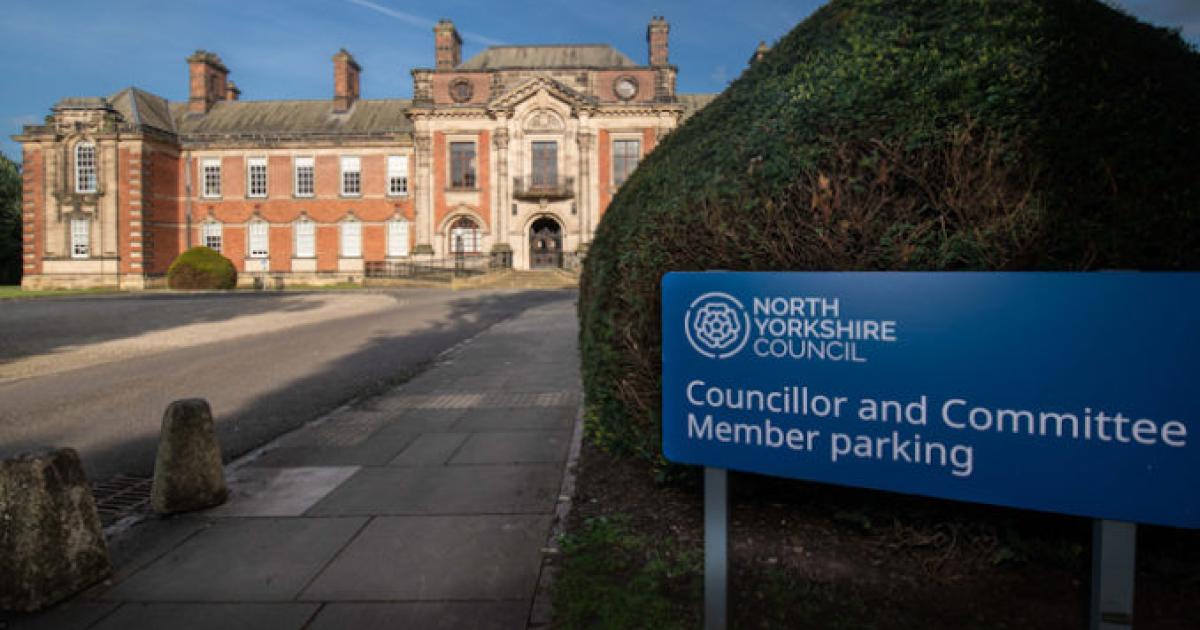
Under new laws set to come into force later this month, North Yorkshire Council will remove councillors’ usual residential addresses from its website by default.
The changes follow the recent passing of new laws, which scrap the decades-old requirement for politicians to publish where they live.
The move comes amid mounting national concerns over councillor safety.
Advertisement
Previously, members had to apply on a case-by-case basis to have their addresses redacted as a “sensitive interest” if they feared intimidation.
In North Yorkshire alone, 19 councillors have already withheld their home addresses under these safety rules.
Now, the authority’s standards and governance committee is set to meet on June 19 to rubber-stamp changes to its code of conduct to reflect the law.
Under the new rules, a councillor’s address will only be made public if they explicitly request it.
Advertisement
Without that permission, the online register will simply state that the information is “withheld from publication”.
However, politicians must still register their addresses confidentially with the council’s monitoring officer to maintain transparency.
Barry Khan, the council’s monitoring officer, said in a report prepared ahead of the meeting: “The legal change aims to improve councillor safety, reduce risks of harassment, modernise transparency rules and ensure that personal data is handled proportionately.”
Parish and town councils in North Yorkshire are also being encouraged to review their codes of conduct regarding addresses.
Advertisement
Officials say the change represents a modern, proportionate approach to personal data that prioritises the safety of elected officials without compromising local democracy.
The Government is working on new energy-efficiency rules that would ban new sales of or restrict more than a third of ‘space heating systems’ – including many towel rails, gas fires and under-floor heating systems
12:00, 15 Jun 2026Updated 12:05, 15 Jun 2026
The Government is drawing up plans that would prohibit devices such as underfloor heating and towel rails. Proposed new energy-efficiency regulations would also outlaw or place restrictions on half of all gas fires and storage heaters.
According to the Telegraph, the rules would render more than a third of ‘space heating systems’ illegal to sell. Devices would be required to feature heating controls and timing controls, meaning they could only operate for a specified number of hours and under conditions in which they function efficiently.
The EU has already implemented comparable restrictions. The change will follow a similar ban on tumble dryers.
Advertisement
From January 19, 2027, the sale of new air-vented, condenser, and gas-fired tumble dryers will be prohibited in Great Britain. The regulations, introduced by the Department for Energy Security and Net Zero, set minimum energy performance standards so stringent that only highly efficient heat pump tumble dryers will be permitted for sale as new models.
Claire Coutinho, shadow energy secretary, told The Telegraph: “Ed Miliband wants to tell you how long your towel rail can be switched on. He’s already decided how you are allowed to dry your pyjamas and now he wants to make it harder to have underfloor heating in your home.”
The new regulations would prohibit approximately half of all current underfloor heating and towel rail systems, along with between 17 per cent and 27 per cent of gas heaters, reports the Mirror. The Government clarified that the ban applies solely to new sales, leaving existing systems and heaters already in use unaffected.
Under the new regulations, towel rails will be restricted to operating for no more than six hours daily, while fires and electric storage heaters will be required to feature temperature controls and power-saving modes.
Advertisement
A Department for Energy Security and Net Zero spokesman said: “Our reforms will save households money by improving the energy efficiency of underfloor heating, towel rails and storage heaters.”
GP Dr Dawn Harper previously told HuffPost UK that she’s sceptical of “superfoods” – “there is no one single silver bullet that will enhance your chances of living a long and healthy life,” she said.
You might think that Dr Jennifer Di Noia, an Associate Professor of Sociology at William Paterson University, whose 2014 paper sought to find the best fruits and veg to reduce our disease risk, was more fond of terms like these.
But she had her own concerns. “Efforts to define… powerhouse fruits and vegetables (PFV), foods most strongly associated with reduced chronic disease risk… are lacking,” she wrote at the time.
So, the researcher set out research-backed terms.
Advertisement
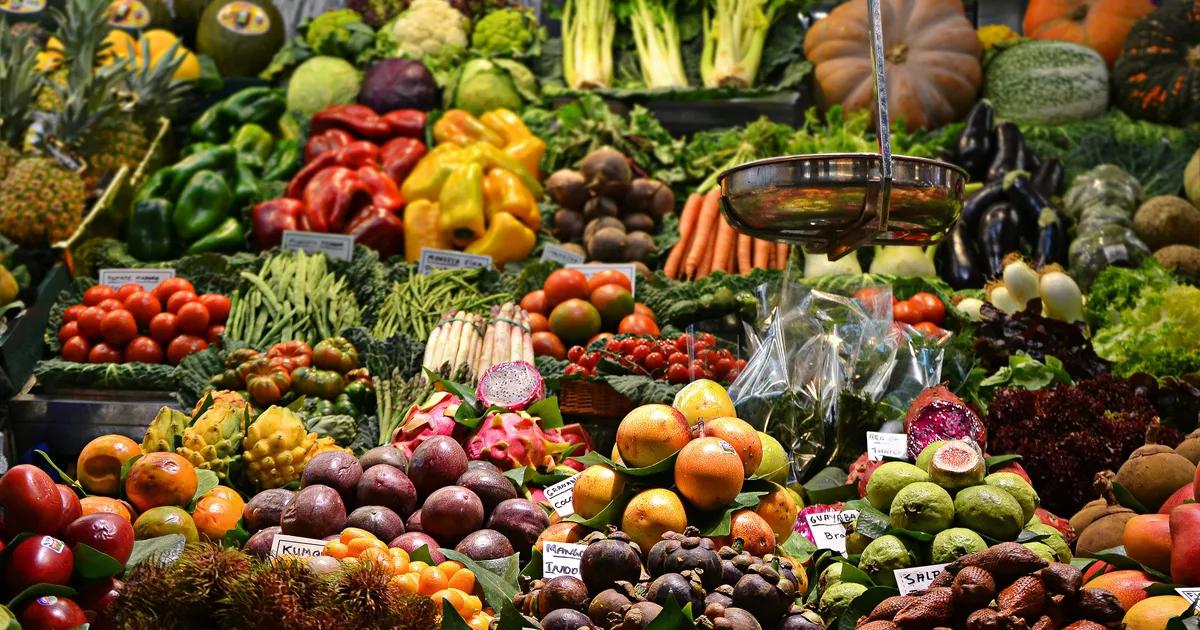
What counts as “powerhouse fruits and vegetables” or PFVs?
In her study, “powerhouse” fruits and vegetables had to offer at least 10% more of 17 nutrients per 100 calories than other foods.
These nutrients the study looked at were:
potassium,
fibre,
protein,
calcium,
iron,
thiamin,
riboflavin,
niacin,
folate,
zinc,
vitamin A,
vitamin B,
vitamin B,
vitamin C,
vitamin D,
vitamin E, and
vitamin K.
These nutrients had been deemed of public health importance by the Food and Agriculture Organisation of the United Nations and Institute of Medicine, the paper read.
The more of these a plant packed per calorie, the higher the PFV’s nutrient density score was.
Advertisement
However, the paper stressed that these aren’t the only potentially health-boosting components of food; therefore, these metrics could miss some produce that’s great for us.
41 fruits and vegetables, ranked by disease-fighting potential
Of the 47 foods the study author looked at, 41 met her criteria for “PFV”. (The six that missed the mark were raspberries, tangerines, cranberries, garlic, onion, and blueberries).
In order, their nutrient density scores were:
Advertisement
Watercress – 100.00
Napa cabbage – 91.99
Chard – 89.27
Beetroot greens – 87.08
Spinach – 86.43
Chicory – 73.36
Leaf lettuce – 70.73
Parsley – 65.59
Romaine lettuce – 63.48
Collard greens – 62.49
Turnip greens – 62.12
Mustard leaves – 61.39
Endive – 60.44
Chive – 54.80
Kale – 49.07
Dandelion leaves – 46.34
Red pepper – 41.26
Rocket – 37.65
Broccoli – 34.89
Pumpkin – 33.82
Brussels sprouts – 32.23
Spring onion – 27.35
Kohlrabi – 25.92
Cauliflower – 25.13
Cabbage – 24.51
Carrot – 22.60
Tomato – 20.37
Lemon – 18.72
Iceberg lettuce – 18.28
Strawberry – 17.59
Radish – 16.91
Winter squash (all varieties) – 13.89
Orange – 12.91
Lime – 12.23
Grapefruit (pink and red) – 11.64
Swede – 11.58
Turnip – 11.43
Blackberries – 11.39
Leeks – 10.69
Sweet potato – 10.51
Grapefruit (white) – 10.47.
With that said, the best approach for a healthy diet is eating a balance of healthy foods. Diets rich in fruits and vegetables of all different kinds is liked to better heart health, the British Heart Foundation has said.
Controversy over Reform UK candidate Robert Kenyon’s past comments about women has damaged his campaign in the tightly fought Makerfield by-election, according to new polling that suggests the contest could be too close to call.
Research conducted by Opinium for Forward Democracy, found that reports about Mr Kenyon’s comments, which have previously been described as ‘misogynistic’, are now widely known among voters and are having a significant impact on his candidacy.
Mr Kenyon’s previous posts included him responding to insulting comments directed at television presenter Carol Vorderman. As a result of the unearthed social media, Vorderman described Mr Kenyon as a ‘little coward’ and sent a letter to 6,000 female voters across the constituency.
Advertisement
The Opinium survey of 543 voters, conducted between 3 and 11 June using a mixed online and face-to-face methodology, puts Burnham on 46 per cent and Kenyon on 41 per cent. However, the five-point gap is within the poll’s margin of error of just under five percentage points, meaning the race remains highly competitive.
The data also shows Mr Kenyon’s past comments appear to have cut through in the constituency.
When voters were asked whether things candidates had said or done during the campaign made them more or less likely to support them, Kenyon recorded a net score of minus eight points, with 30 per cent saying that they were less likely to vote for him compared with 22 per cent who said they were more likely to do so. By contrast, Labour candidateAndy Burnham recorded a small positive net score of plus two points.
The polling found that 73 per cent of voters had heard reports about Kenyon’s comments, including around 80 per cent of both Labour and Reform supporters. Among voters aware of the controversy, 45 per cent said it made them less likely to vote for him, compared with just 11 per cent who said it made them more likely to support him.
Advertisement
The effect was particularly pronounced among younger voters and among those backing Burnham, while women were more likely than men to say the reports made them “much less likely” to support the Reform candidate.
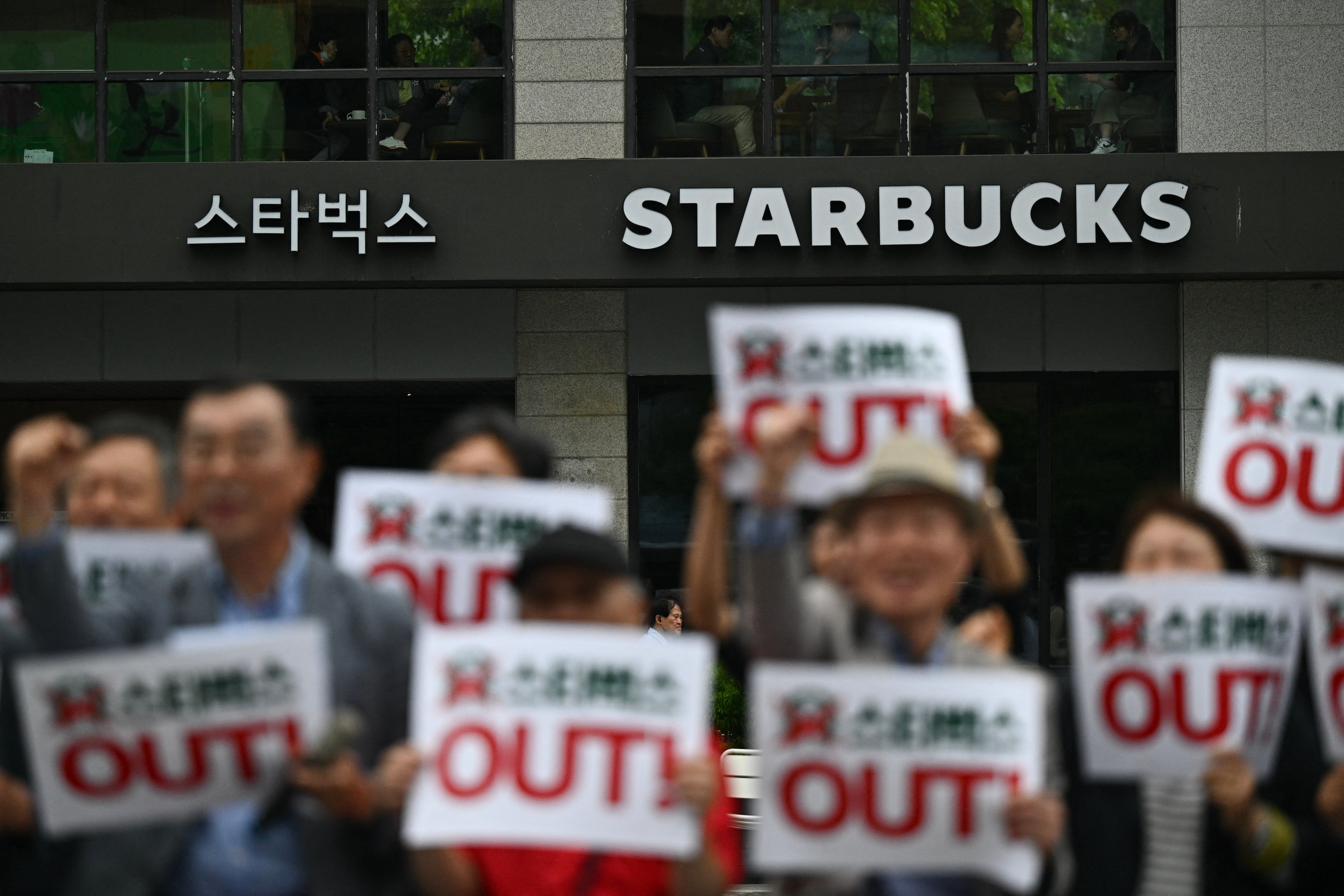
Starbucks’ South Korean operation has announced it will close all its stores nationwide early on June 22 for mandatory history and social sensitivity training. The initiative comes after the coffee chain faced backlash for a marketing campaign widely perceived as mocking victims of a brutal military crackdown on pro-democracy protesters in 1980.
Shinsegae Group, which owns a 67.5 per cent stake in Starbucks Korea, confirmed that group executives and employees at Starbucks Korea’s headquarters will attend training led by history and sociology professors this Wednesday. All Starbucks stores across the country will close at 3pm next Monday, enabling staff to watch a recording of the session, according to a statement from Shinsegae.
The coffee chain triggered an uproar when it attempted to promote a series of stainless-steel tumblers it called “SS Tank” by declaring May 18 to be “Tank Day.” The date marks the anniversary of the 1980 pro-democracy uprising in the southern city of Gwangju. It was violently suppressed by Seoul’s military government at the time, which deployed troops, tanks and helicopters, leaving hundreds dead or injured.
The campaign further fueled outrage by using the slogan “Thwack it on the table!” which many read as a reference to a notorious 1987 police statement that attempted to cover up the torture death of student activist Park Jong-chol. Authorities had falsely said Park died after investigators “hit the desk with a thwack.”
Advertisement
The campaign further fueled outrage by using the slogan “Thwack it on the table!” (AFP/Getty)
With the promotion sparking immediate backlash, Shinsegae canceled it within hours and fired the chief executive of Starbucks Korea. Shinsegae Chairman Chung Yong-jin later issued a nationally televised apology as police opened an investigation following complaints from relatives of the victims of the Gwangju crackdown. Chung will undergo separate training with the chief executives of Shinsegae affiliates on June 24.
Shinsegae said the decision to close all Starbucks stores early for the first time since the chain’s 1999 launch in South Korea and require companywide training shows “how seriously it views the marketing controversy and its determination to prevent a recurrence.”
The crackdown in Gwangju came months after General Chun Doo-hwan seized power in a coup in late 1979. Government records show about 200 people died in Gwangju, but activists say the true death toll was much higher. Chun’s government also imprisoned tens of thousands, saying it was rooting out social evils.
Public anger over Chun’s dictatorship led to massive nationwide protests in 1987, forcing him to accept a constitutional revision introducing direct presidential elections, which is widely seen as the start of South Korea’s transition to democracy.
Michelle shared new snaps of herself out and about with her little girl
Michelle Keegan has seemingly revealed an exciting milestone for her daughter, Palma, as her return to the small screen was also teased.
Advertisement
While the actress and her husband, Mark Wright, largely keep their daughter out of the spotlight, over the weekend, Michelle did share new snaps of herself out and about with their little girl.
It was in March that the couple celebrated a year since they welcomed their daughter, Palma Elizabeth Wright, into the world. Fans may recall that the couple revealed to the world that they were expecting their first child together in a sweet pregnancy announcement just after Christmas 2024, which featured Michelle debuting her blossoming baby bump on a Spanish beach.
Michelle and Mark, both 39, then later announced they’d welcomed their daughter into the world on March 12, almost a week after she was born, as they confirmed their unique name for the first child.
And it seems Palma may soon be giving her parents the runaround, as in a number of photos posted to her Instagram Story on Sunday (June 14), Michelle could be seen holding her daughter’s hand as she toddled along next to her, hinting she has reached a special walking milestone.
Advertisement
Meanwhile, Michelle has been seen for the first time in her ‘gripping’ new drama. The Stockport-born actress will be starring as DI Emma Crane in the new ITV crime drama, The Blame. Her character will investigate the death of a teenage figure skater, starring alongside Douglas Booth as DI Tom Radley.
According to ITV: “Set to air this autumn, The Blame is a gripping new series set to have audiences on the edge of their seats. Produced by acclaimed Quay Street Productions (part of ITV Studios), written, developed for television and executive produced by Megan Gallagher (All Her Fault, Wolf), the drama dives into secrets, suspicion, and systemic corruption – all under the surface of the seemingly quiet town, Wakestead.”
The six-part series is centred around DI Emma Crane and DI Tom Radley investigating a tragic murder in the fictional town of Wakestead. They quickly identify their main suspect, but as the case progresses, an unexpected lead comes to light. As Emma and Tom dig deeper, they uncover a web of lies, institutional cover-ups and moral compromise, which forces Emma to question the people closest to her.”
But now that the Easter eggs have been unwrapped and April Fool’s Day has passed, is it time to put the supplements down?
Not always, said Kyle Crowley, a chief product officer and nutritionist at Protein Works.
Who may still need vitamin D supplements in spring?
Advertisement
“It’s suggested that optimal exposure to sunlight is between five and 30 minutes a day. Therefore, if you don’t hit these requirements each day, you may need to consider supplementing,” said Crowley.
“In fact, studies show that nearly half of UK adults have below-optimal levels of vitamin D. Most surprisingly, adults aged 18–29 have the lowest average. So, if you’re a student studying indoors or working all day indoors, this lifestyle will limit your daily exposure and taking vitamin D would be recommended.”
The NHS said that “People at high risk of not getting enough vitamin D, all children aged 1 to 4, and all babies (unless they’re having more than 500ml of infant formula a day) should take a daily supplement throughout the year.”
Advertisement
They include people who are not often outdoors (e.g. those in care homes or who are housebound), those who wear clothes that cover most or all of their skin while outdoors, and those with darker skin in that “at-risk” category.
Crowley advised taking vitamin D3 supplements if you choose to, instead of vitamin D2 kinds, as vitamin D3 seems better for our immune systems.
What if I’m not sure whether I need vitamin D?
“It is important to note that there is a difference between having a vitamin D deficiency and being below optimal levels. A deficiency, which is usually a vitamin D level below 25 nmol/L, should be addressed by a medical professional,” Crowley stated.
Advertisement
“The best way to find out about your vitamin D levels is to get a blood test. This is definitely worth it if you tend to get ill often, or generally feel like your health is not at its best.”
Neil and Katya Jones took to social media to detail the loss of their beloved dog, Crumble
Two Strictly Come Dancing stars have revealed that they have suffered a heartbreaking joint loss, years after their marriage came to an end.
Advertisement
Fans of the BBC One dance show will already be aware that Neil and Katya Jones were once in a relationship. The two professional dancers married in August 2013, but after six years of marriage, in August 2019, they announced their separation.
The statement at the time read: “As our fans and loyal supporters, you are really important to us, and so we wanted to let you know some news. After 11 years, we have made the mutual decision to separate. We will always love each other, just in a different way as friends. This will never change what a great team we make and we are really proud of everything we have achieved together.
“Our shared love of dance means we will keep working and dancing together as well as exploring individual projects. No matter what we do we will always support and respect each other. We wish one another every happiness and we will remain the best of friends. We are really looking forward to getting back to the ballroom and can’t wait to keep on dancing. Lots of love from us both.”
The former couple have remained on good terms, continuing to work and perform together on Strictly, and they have also continued to share owner of their pet dogs, Chorizo and Crumble. An Instagram page for the pups reads: “Crumble -Chi x shit x poo SHE/HER, Chorizo (adopted) Chihuahua mix HE/HIS, parents @mr_njonesofficial and @katyajones.”
Advertisement
But it was over the weekend that Neil confirmed the devastating death of Crumble. Alongside pictures of the adorable pooch, he shared: “Today we said goodbye to Crumble. She may have been small, but she had the biggest personality and brought so much joy to everyone who knew her.
Content cannot be displayed without consent
“She loved cuddles, belly rubs, and being close to the people she loved.” He added: “She will be missed more than words can say, but we find comfort in knowing she is finally at peace and no longer in pain. Sleep tight, Crumble.”
The post was quickly flooded with messages of love and support. Fellow dancer Karen Hauer said: “Oh Neil. I’m so sorry .. so sad .. she was a beautiful little girl. Sending all the love,” while Joanne Clifton replied: “It’s SO sad .. Sending love.” Former Strictly contestant Gemma Atkinson commented: “I’m so sorry Neil.”
Katya, meanwhile, shared a video to her Instagram Story of Crumble, and told her followers: “I know you are the sassiest girl up there [heart emoji].” She then shared pictures of her and her 2025 Strictly partner Lewis Cope back dancing together and commented: “Danced my way through this heartbreaking weekend [dog emoji].”
In a recent video, surgeon, author, and medical myth debunker Dr Karan Rajan said that the portfolio diet could “reduce your [low-density lipoprotein] LDL cholesterol as much as a statin”.
Statins are medications designed to lower a person’s LDL, or “bad”, cholesterol levels, thus reducing their risk of heart disease and stroke.
A 2003 study found that the portfolio reduced LDL cholesterol by almost 29%. In other words, it seemed about as good as low-dose statins (those which reduce LDL cholesterol by 30% or less) at lowering “bad” cholesterol.
The British Heart Foundation cautioned that statins may carry unique benefits and better-proven outcomes outside of just lowering LDL cholesterol. If you’ve been prescribed statins, keep taking them as long as your doctor advises.
Advertisement
But if you’re trying to keep your LDL levels healthy in general, some research suggests the portfolio diet can reduce “bad” cholesterol by as much as 30%.
What is the portfolio diet?
The diet, which was invented in the early 2000s by Dr. David J.A. Jenkin, is designed to combine several LDL cholesterol-reducing foods into a single plan.
Speaking to Harvard Health, dietitian Andrea Glen – who was involved in 2023 research that showed sticking strictly to the Portfolio diet was linked to a 14% lower risk of heart disease – said: “A lot of different foods can lower LDL cholesterol, but only by a little bit – about 5% to 10%.
Advertisement
“The idea behind the portfolio diet was to combine many of these foods together to get a larger reduction.”
How can I follow a portfolio diet?
The portfolio diet focuses on four main components:
Plant protein, especially soy protein, found in tofu, edamame beans, lentils, and tempeh. Consuming these has been linked to a 4-6% LDL cholesterol reduction, and the portfolio diet asks you to aim for least 35g a day.
Plant sterols, like those found in minimally processed olive, sunflower, and rapeseed oils and fortified products e.g. some margarines, milks, and yoghurts which say they help to lower cholesterol. A 2014 review of studies found that eating up to 3.3g a day of plant sterols a day lowered participants’ LDL cholesterol levels by 6-12% after four weeks, though consuming more did not lead to better results. The portfolio diet suggests 2g of plant sterols a day, which the British Heart Foundation says you probably won’t get from oils, fruits, veg, and grain alone: reach fof fortified foods for the most effective does.
Tree nuts, like almonds, Brazil nuts, hazelnuts, cashews, macadamia nuts, walnuts, and pistachios. These could help to reduce LDL cholesterol by anywhere from 3-19%. The portfolio diet asks you to eat a handful, or 42g, of tree nuts a day.
Soluble fiber, which you can get from fruits, vegetables, whole grains, and legumes (e.g. black beans, oats, Brussels sprouts, barely, sweet potatoes, carrots, avocado, and soft fruit, like apples and pears). Getting enough soluble fibre has been linked to 5-11 lower LDL cholesterol level points. The portfolio diet recommends 18g a day.
Taking psyllium husk can help if you’re struggling to reach your soluble fibre goals, while (as we mentioned) plant sterol-fortified yoghurts, spreads, and milk products are probably the best way to help you meet that target.
With the Makerfield byelection approaching, polling suggests that Andy Burnham has a lead over Reform UK’s candidate Robert Kenyon. That lead, it appears, is stronger among women than men. Among women, Burnham’s lead stretches to 17 points, while among men is just two points.
One factor behind this may be the social media campaign being run by Reform. Analysis suggests that the party’s posts are targeted at (and seen more often by) men. And among voters aged 25 to 65, Kenyon’s campaign adverts have been seen far more often by men.
This is not surprising – research shows that men consume more political news and media than women, partially due to a “child penalty”, which can reduce the amount of news that mothers consume. As such, Reform’s campaign may be cutting through to more men.
However, the women of Makerfield do seem to have noticed one key claim about Kenyon – and it’s not something they view favourably. His old social media posts included a number of sexually explicit comments, as well as sexist language. This included a post in which he described women who had an abortion as “cowardly”.
Advertisement
On a special edition of the BBC’s Question Time programme recorded in Makerfield, one female audience member stated: “I’d rather have a career politician than a plumber who’s a sexist.”
Previous research shows that holding sexist attitudes and voting for a rightwing party in the UK are associated. This is relevant to understanding not just women’s choices when it comes to the byelection, but also men’s. Men who do not hold sexist attitudes will also be unlikely to lend their support to Reform.
But it’s important not to give too much weight to Reform’s choice of candidate or social media campaign as the causes of the gender differences seen in this recent polling. It is well understood that women are now less likely to vote for rightwing parties than men. This is especially the case when it comes to populist or far-right parties.
Women are more likely to vote for leftwing parties than men, a pattern that played out in the UK’s 2024 general election. The polling in Makerfield is consistent with this trend.
Advertisement
Yet the women of Makerfield, the choice of candidates by both parties, and Kenyon’s controversial comments are likely to play an important role in support for Labour at the byelection. Labour and Burnham, currently mayor of Greater Manchester, must consolidate the left vote in the constituency, and make sure their voters turn out on the day. Reform’s choice of Kenyon as its candidate may just help them to do this.
A candidate who has displayed controversial attitudes about women and issues around gender may make women who favour a third party, such as the Green party, more likely to prioritise keeping Reform out. They may see a vote for Labour as the best way to do this.
How might anger affect the vote?
One problem for Labour nationally is that the left vote has fragmented even further since 2024, with support increasing for the Green party. Support for the Greens among younger, educated women is now particularly strong.
While the Greens won only 4% of the vote in Makerfield at the last general election, if this were to increase it could be a real issue for Labour. This is not because the Greens are a threat to win the constituency, but because they could take support away from Burnham.
Advertisement
In the last byelection in Greater Manchester – Gorton and Denton – there were competing claims from Labour and the Greens about who was best placed to keep Reform out. Then, Reform had fielded a different candidate with controversial attitudes to gender issues. This may have contributed to a Green win, with late-deciding women potentially playing a role in the result.
In Makerfield, unlike in Gorton and Denton, it is much more obvious that women should consolidate behind Labour if they want to keep out a controversial Reform candidate. This may help Labour and bring back women who have voted (or have considered voting) Green.
On top of this, Reform’s decision to stick with a candidate with attitudes that seemed to make women in the Question Time audience visibly angry may motivate women to turn out and vote.
This could also spill over into households. It’s well established that when one person in a household votes, others in that household are more likely to do so. This goes alongside any influence Labour-voting women might have on the voting choices of those around them.
Advertisement
Of course, this influence could also work against Labour. My own research has shown that, in the UK, people who discussed politics with a Labour or a Liberal Democrat supporter were less likely to go on to vote Remain. And those who discussed politics with a Ukip backer were more likely to vote Leave.
The contest in Makerfield may be decided in part by how well Labour can persuade leftwing voters, who are disproportionately women, to vote for Burnham to keep out a controversial Reform candidate. Then the question will be whether these women can also mobilise those around them to do the same.





-speaks-to-reporters-alongside-Canadian-Prime-Minister-Mark-Carney-in.jpeg)

















































You must be logged in to post a comment Login