President Donald Trump is set to arrive in France on Monday for a G7 summit, where he will meet with a diverse group of world leaders who share at least one common experience: all have either been the target of his ire or have navigated profoundly awkward diplomatic encounters with the U.S. leader.
Several G7 leaders have faced Trump’s wrath for questioning his chosen war with Iran.
Others have clashed with him over tariffs. The leaders of Japan and Germany, in particular, have endured clumsy asides from Trump regarding dark moments in their countries’ histories.
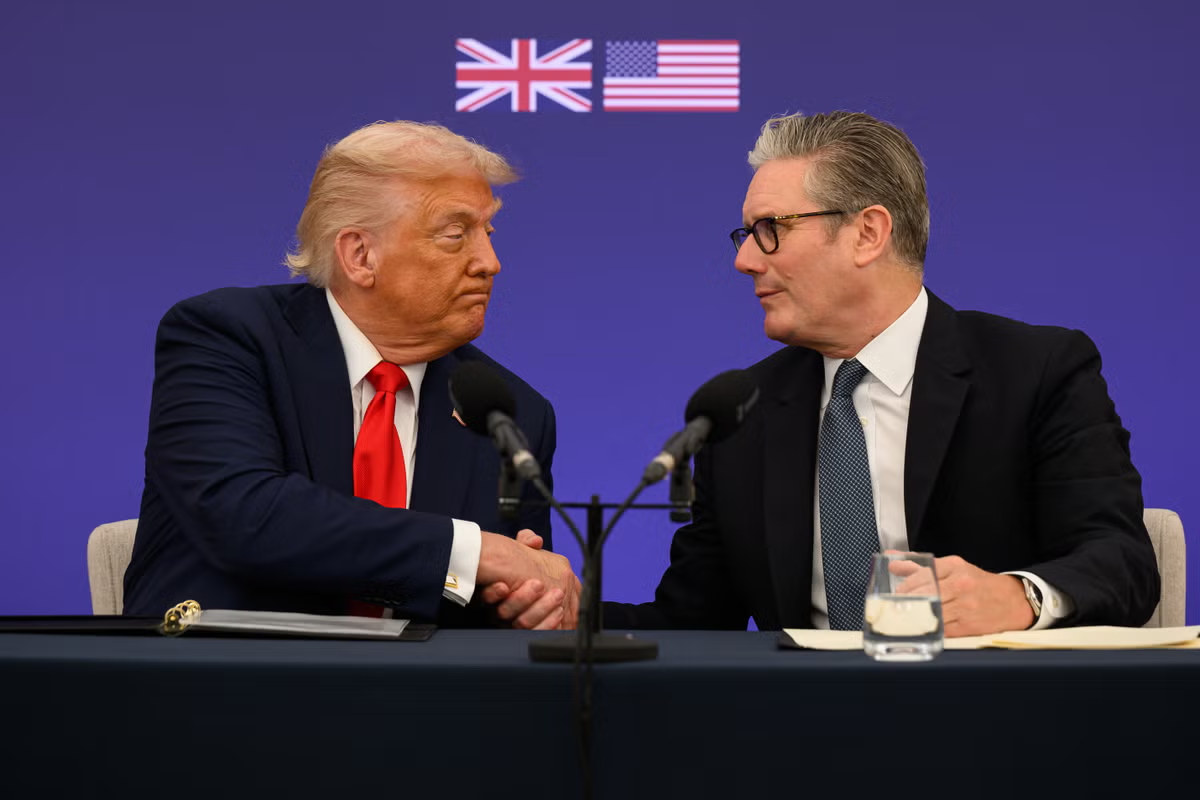
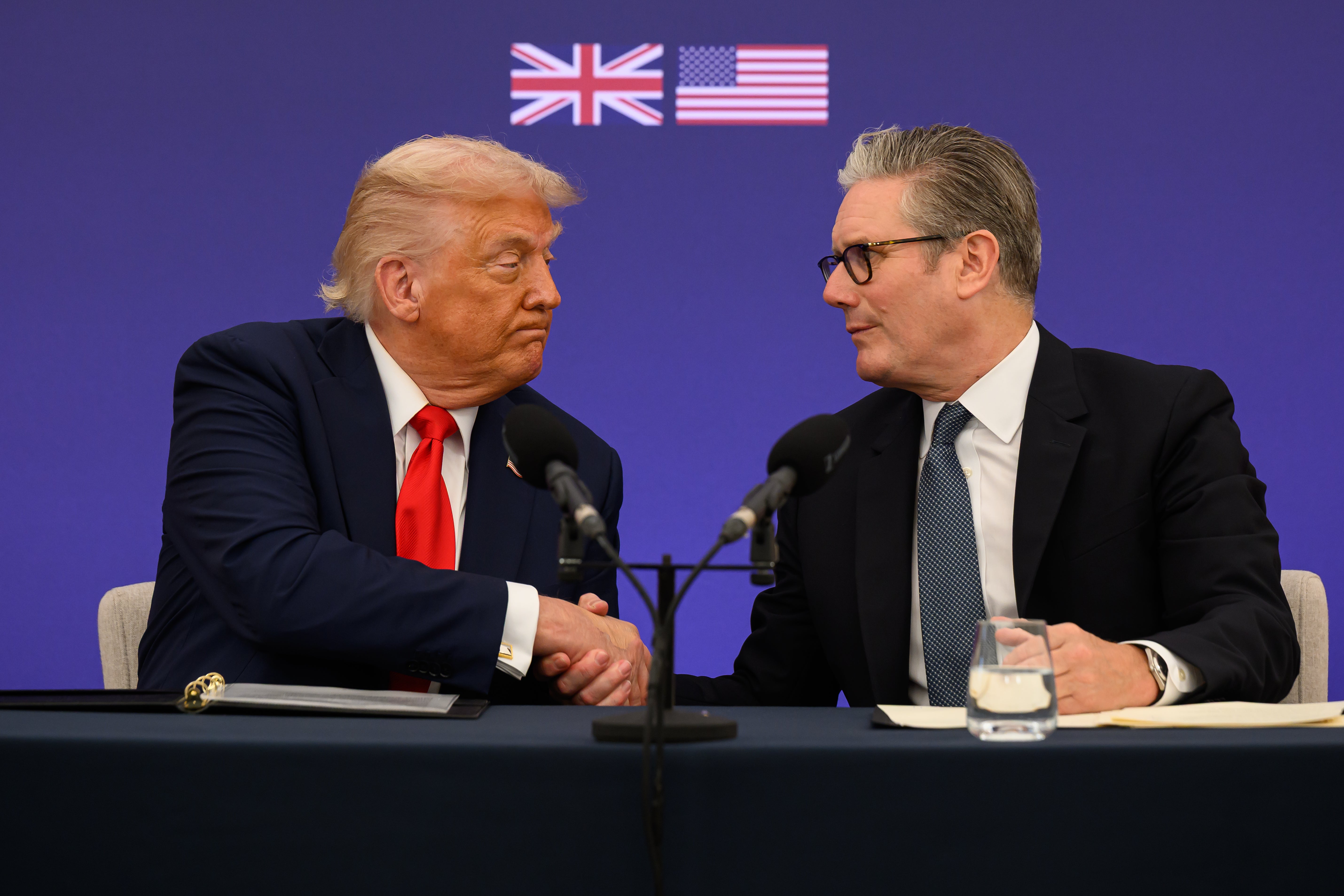
Trump’s criticism of British Prime Minister Keir Starmer has centered on the United Kingdom’s reluctance to assist U.S. military strikes on Iran, British immigration policies, and the country’s renewable energy strategies (PA Archive)
During three days of talks in the picturesque French Alps, the leaders are expected to discuss the newly forged agreement aimed at ending the Iran war, Chinese trade policy, and Russia’s ongoing war in Ukraine.
The summit also presents an opportunity for these leaders to reassess their relationships with Trump at a time when he appears more determined than ever to pursue a unilateral path on matters of global consequence.
Advertisement
The dynamics of the summit have been likened to a family holiday gathering where “there’s an uncle you don’t quite like,” according to Max Bergmann, an analyst at the Center for Strategic and International Studies.
“And no one wants to have a confrontation, even if things get quite passive-aggressive at times,” Bergmann added. “But, you know, there’s always the possibility that things might snap, and it might get rather dramatic.”
Below is a look at notable moments of public friction and uncomfortable exchanges between Trump and his fellow G7 leaders.
Starmer is no Churchill in Trump’s eyes
Advertisement
Trump’s criticism of British Prime Minister Keir Starmer has centered on the United Kingdom’s reluctance to assist U.S. military strikes on Iran, British immigration policies, and the country’s renewable energy strategies.
His most cutting jab came after the Labour Party leader initially declined to allow U.S. military jets to use a British base in the Indian Ocean for the bombardment of Iran.
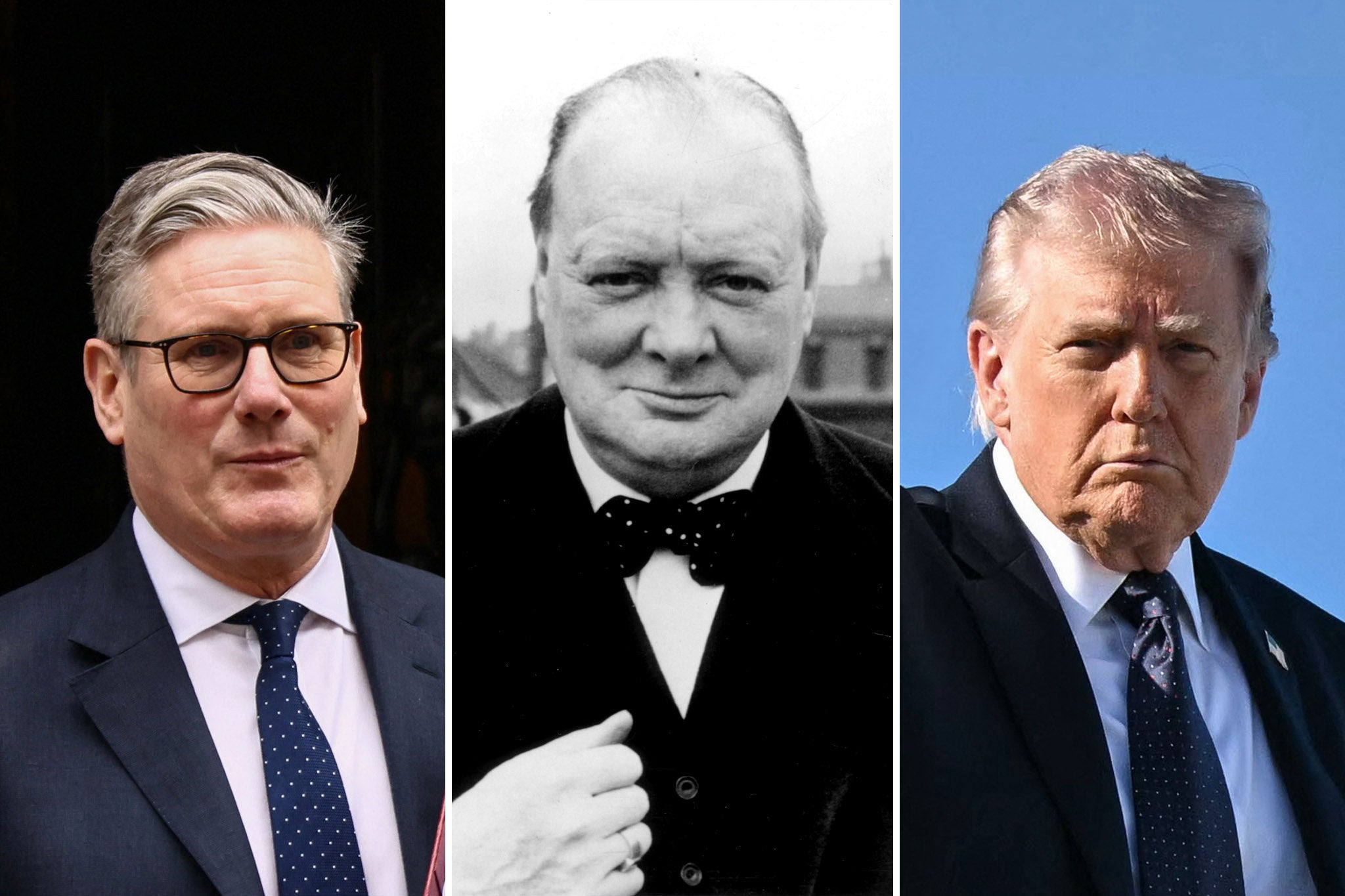
“This is not Winston Churchill that we’re dealing with,” Trump said of Starmer, unfavorably comparing him to Britain’s revered World War II-era prime minister (AFP/Getty)
“This is not Winston Churchill that we’re dealing with,” Trump said of Starmer, unfavorably comparing him to Britain’s revered World War II-era prime minister.
In the early days of the Iran war, Trump tore into the prime minister after the U.K. placed the aircraft carrier HMS Prince of Wales on advanced readiness status for potential deployment to the Middle East.
“We don’t need people that join Wars after we’ve already won!” Trump posted on social media.
Advertisement
The prime minister Trump likes to call governor
Trump has frequently fumed about trade imbalances with Canada, often opining about annexing the country and making it the “51st state.”
He has also taken to referring to Prime Minister Mark Carney as “governor.”
Trump speaks to reporters alongside Canadian Prime Minister Mark Carney in the Oval Office of the White House on October 07, 2025, in Washington, DC (Getty Images)
His sharpest rhetoric toward the leader of America’s northern neighbor came after Carney, at the World Economic Forum in Davos, Switzerland, condemned coercion by great powers on smaller countries without explicitly naming Trump.
“Canada lives because of the United States,” Trump declared in his own remarks at Davos. “Remember that, Mark, the next time you make your statements.”
Advertisement
Carney has attempted to remain even-keeled in response to Trump’s jabs, telling reporters earlier this month that Trump was an “exceptionally active user of social media” and that he would not respond to every post.
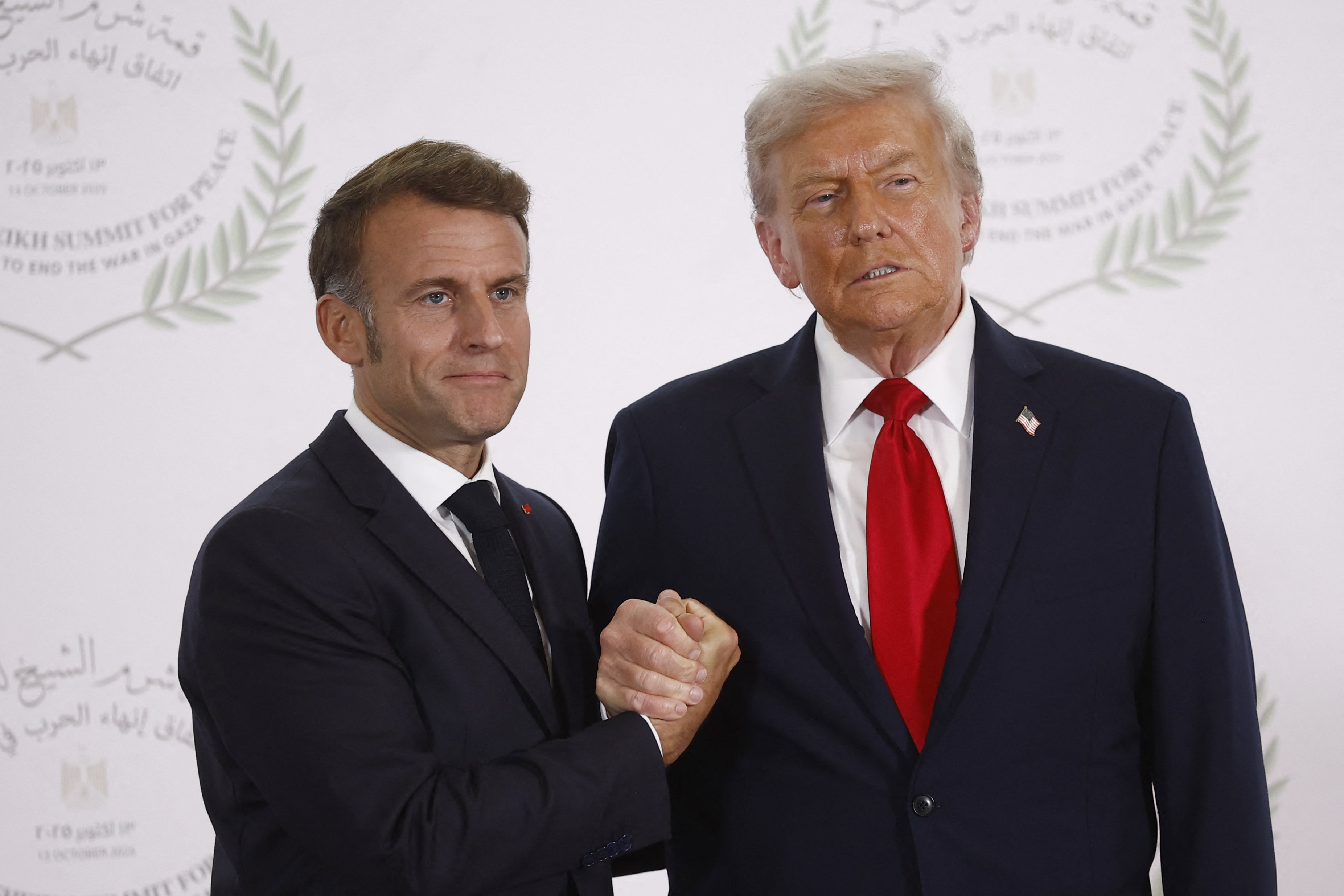
Trump mocks Macron’s marriage and questions France’s reliability
During an Easter lunch at the White House in April, Trump criticized France and other NATO countries’ resistance to assisting the U.S.-Israel war against Iran.
During an Easter lunch at the White House in April, Trump criticized France and other NATO countries’ resistance to assisting the U.S.-Israel war against Iran (AFP/Getty)
Amid the aside, Trump referenced viral footage from the previous year showing Macron’s wife, Brigitte, appearing to push the French president’s face away as they disembarked a plane during a visit to Vietnam.
Trump told the audience that Brigitte treats Macron “extremely badly” and claimed the French president was “still recovering from the right to the jaw.”
Advertisement
Macron later told reporters that the couple had simply been joking and described Trump’s comments as “neither elegant nor appropriate.”
Trump regularly regales audiences with his prowess as a dealmaker by recounting conversations he has had with Macron about trade irritants, mimicking Macron’s responses in an exaggerated accent. In Trump’s retelling, Macron always quickly capitulates.
The conservative premier Trump suggests lacks courage
The pasta tariffs proved awkward for Prime Minister Giorgia Meloni, who trusted her strong alliance with President Donald Trump would protect Italian companies from steep levies, according to Reuters (Getty Images)
Until recently, Italian Prime Minister Giorgia Meloni had been held in high regard by Trump.
In October, Trump was effusive in his praise of the conservative premier when world leaders gathered in Egypt for a summit to discuss post-war Gaza, calling her “a very successful, very successful politician” and “beautiful.”
Advertisement
However, Trump has since changed his tune as Italy declined to assist the United States in the war against Iran and after the premier chastised Trump for feuding with Pope Leo XIV about the conflict.
“Do people like her? I can’t believe it,” Trump said of Meloni to Milan newspaper Corriere della Sera. He added: “I thought she had courage. I was wrong.”
An awkward historical reference in the Oval Office
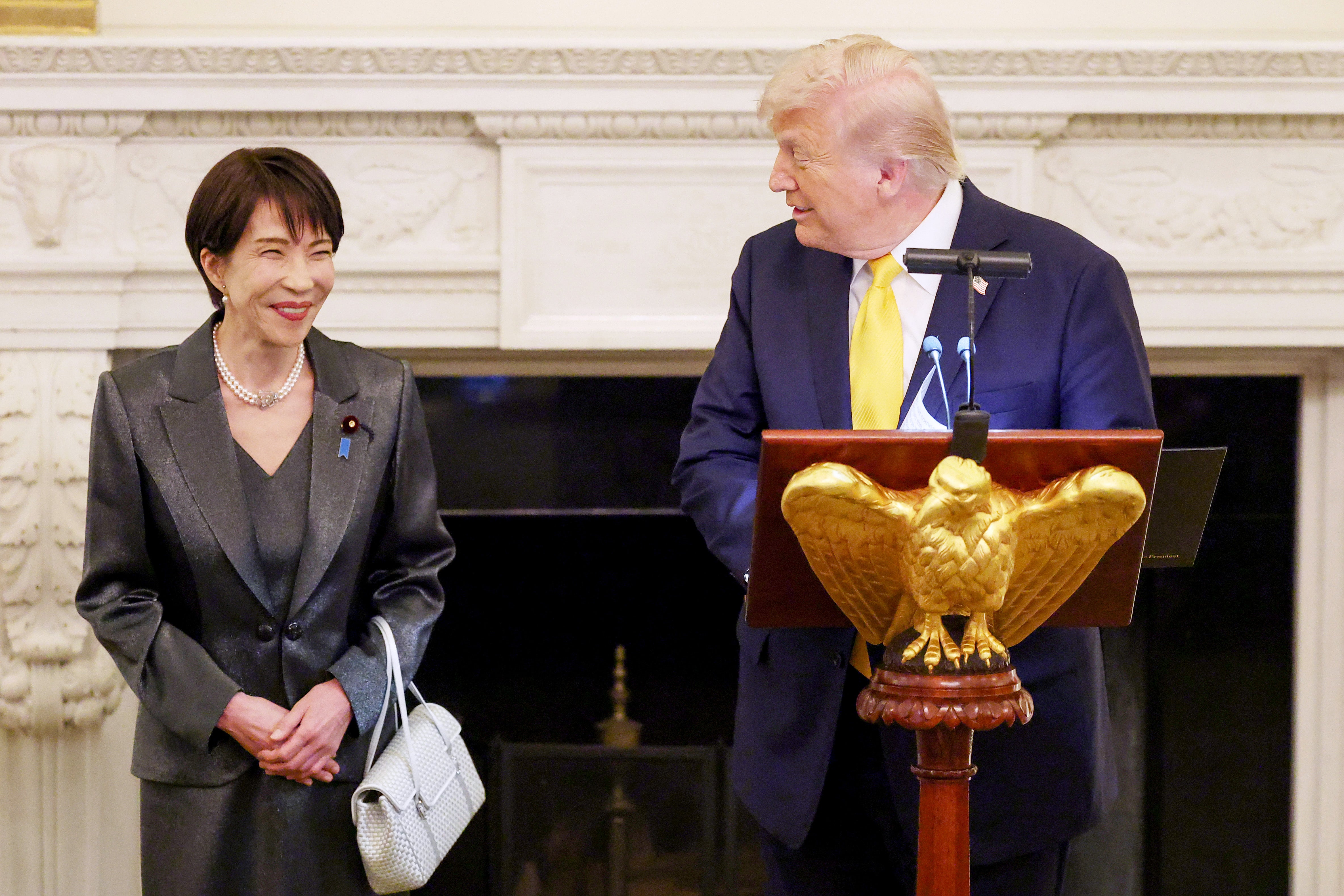
Trump has not offered any direct criticism of Japan’s Sanae Takaichi since she took office in October. However, some of his commentary during Takaichi’s first White House visit left the prime minister in an awkward position (Getty)
Trump has not offered any direct criticism of Japan’s Sanae Takaichi since she took office in October. However, some of his commentary during Takaichi’s first White House visit left the prime minister in an awkward position.
When asked by a Japanese reporter why he didn’t inform allies in Europe and Asia before the U.S. attacked Iran, Trump casually invoked Pearl Harbor to defend his decision.
Advertisement
“Who knows better about surprise than Japan?” Trump said with Takaichi by his side. “Why didn’t you tell me about Pearl Harbor, OK?”
When asked by a Japanese reporter why he didn’t inform allies in Europe and Asia before the U.S. attacked Iran, Trump casually invoked Pearl Harbor to defend his decision (Getty)
Trump’s remark surprised many in Japan, who had grown accustomed to American presidents avoiding harsh discussion of Japan’s surprise strike on the U.S. Pacific Fleet in Hawaii that drew the U.S. into World War II.
His predecessors have instead focused on deepening ties with Japan, which became an ally after the war.
Takaichi, a hard-line conservative, received a mix of praise and criticism at home for not reacting to Trump’s comments, letting them pass with a glance at her ministers seated nearby.
Chancellor’s Iran war criticism infuriated Trump
Advertisement
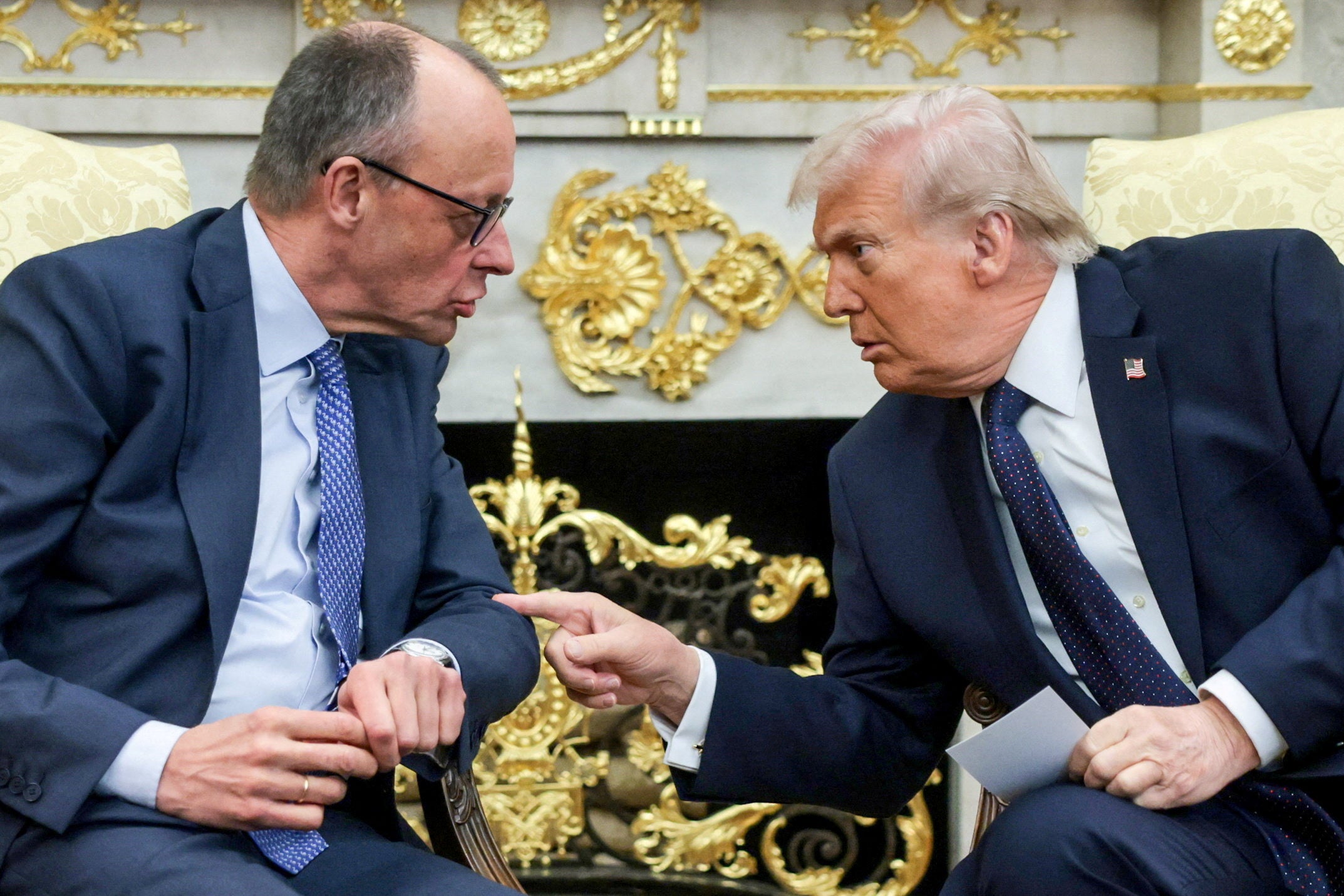
German Chancellor Friedrich Merz set off Trump in April when he posited the U.S. was “being humiliated” by Iran and criticized the U.S. for entering the war without any strategy, arguing that this also made it harder to end the conflict (Reuters)
German Chancellor Friedrich Merz set off Trump in April when he posited the U.S. was “being humiliated” by Iran and criticized the U.S. for entering the war without any strategy, arguing that this also made it harder to end the conflict.
Trump hit back on social media the following day, stating Merz “should spend more time on ending the war with Russia/Ukraine” and “fixing his broken Country, especially Immigration and Energy.”
Days later, the Pentagon announced it would pull some 5,000 U.S. troops out of Germany, and Trump hinted he would look to cut the U.S. military presence “a lot further.”
Trump also had an awkward exchange with Merz when the chancellor visited the White House last year on the eve of the solemn anniversary of D-Day, the start of Allied operations that led to the liberation of Western Europe, the defeat of Nazi Germany, and the end of World War II.
Merz noted the anniversary while arguing that the U.S. was once again in a position to help end a conflict with enormous stakes for Europe — Russia’s war against Ukraine — when Trump interjected that D-Day was “not a pleasant day for you.”
Advertisement
The chancellor reminded Trump that the day also marked the beginning of “the liberation of my country from Nazi dictatorship.” Trump acknowledged that Merz had a point.
Belgium and Egypt played out an entertaining 1-1 draw to get Group G underway at the World Cup. It was an end-to-end affair for much of the evening in Seattle, with Egypt’s stubborn back line and composed midfield giving them a firm platform from which to build. No surprise, then, that the box-to-box Al Ahly midfielder Emam Ashour would open the scoring, firing beyond Thibaut Courtois from the edge of the area to put the Pharaohs in front. It might have been the winner, had Mohamed Hany not put the ball in his own net 24 minutes from time.
ALPHARETTA, Ga. (AP) — The final days of Georgia’s Republican primary campaigns have exposed internal party fault lines, produced unusual alliances and will test the party’s ability to consolidate quickly to match Democrats’ head start on the general election campaign.
The melee, including last-minute endorsements from President Donald Trump and outgoing Gov. Brian Kemp, was on full display Monday ahead of Tuesday’s runoff. Rep. Mike Collins and former football coach Derek Dooley are competing for the party’s nomination for U.S. Senate, while Lt. Gov. Burt Jones and billionaire businessman Rick Jackson are running for governor.
Trump and Kemp are aligned behind Jones but split in the Senate race. Top grassroots organizers are divided too. Even Texas Sen. Ted Cruz, a former rival to Trump, stepped into the mix on Jackson’s behalf, putting him at odds with the president and governor.
“There’s a lot of division in the MAGA world and across the Republican Party,” said Debbie Dooley, an original national tea party organizer who is backing Jones for governor but Dooley for Senate. (She’s not related to the candidate.) “We better get it together after Tuesday.”
Advertisement
Kemp insisted there is a common denominator.
“Everything I’m doing is to win in November,” he said Monday after campaigning for Jones and Derek Dooley at separate events in metro Atlanta.
Kemp has backed Derek Dooley for months in the Senate race, arguing it will take an outsider to defeat Democratic Sen. Jon Ossoff in November. Yet Kemp campaigned for the first time Monday with Jones, a day after he endorsed the lieutenant governor despite Jackson’s outsider campaign. In the governor’s race, Kemp reasoned that Jones is the right man to defeat Democratic nominee and former Atlanta Mayor Keisha Lance Bottoms.
Trump, meanwhile, has backed Jones since last August, rewarding him for his loyalty as part of Trump’s alternate Electoral College slate in the 2020 scheme to overturn Democrat Joe Biden’s presidential victory. But the president waited until the final weekend to choose Collins over Dooley, with a social media post that noted Dooley has backed Trump’s falsehoods about his loss to Biden.
Advertisement
Kemp’s and Trump’s differing courses highlight their complicated relationship — Kemp certified Biden’s electors in 2020 over Trump’s objections — and the results Tuesday will tests both men’s internal party influence as their final terms play out.
“I’m not worried about any political equations or keeping score,” Kemp said Monday after campaigning alongside Jones and Dooley at separate morning events. “It’s making sure we have the right people at the top of the ticket.”
He also rejected any notion that he was being inconsistent by pushing the Washington outsider in one race and the Georgia statehouse insider in another. The reason, he said, was that Georgia has been controlled by Republicans for more than two decades and, in Kemp’s estimation, is doing well enough that Jones would be “really building off the great legacy” of multiple state administrations. Congress, meanwhile, is a mess of “inaction” with abysmal approval ratings, he said.
Dooley, for his part, embraced Kemp’s influence and downplayed Trump’s.
Advertisement
“It’s very simple,” he said. “A vote for Mike Collins is a vote for Jon Ossoff. A vote for me is a vote for the people of Georgia.”
Jackson likewise downplayed Kemp’s last-minute nod for Jones.
“I respect Gov. Kemp very much, and I think people are ready for an outsider,” he said.
Cruz was more animated, with an implicit comparison of Jackson to Trump.
Advertisement
“He’s rich,” Cruz told Jackson supporters with a smile. And he’s a first-time candidate, the senator continued. “I don’t know anybody like that in politics,” Cruz deadpanned.
Debbie Dooley, the conservative activist, noted that erstwhile tea party leaders in the state aren’t on the same page anymore either. While she’s campaigning with Derek Dooley, the founder of Tea Party Patriots, Jenny Beth Martin, has appeared with Collins.
“It’s just not as simple as blindly following Trump anymore,” Debbie Dooley said. “I don’t want the most conservative candidate. I want the most conservative candidate who can win.”
That dual personality makes it interesting to live with day to day.
Slip inside and the first impression is of an upmarket cabin with an edgy vibe.
The graphite suede upholstery with synthetic leather trim and Nismo red stitching immediately set a sportier tone, yet the seats are generously padded and electrically adjustable for both driver and passenger, so you can sink into a relaxed driving position on longer trips.
The side profile of Nissan’s Ariya Nismo
The minimalist dash with its 12.3‑inch screen and head‑up display keeps key information clear without feeling cluttered, while the Intelligent Rear View Mirror and 360‑degree around‑view monitor make the car easy to place in town despite its size. Practicality is strong, with decent rear space and a 408‑litre boot, so it still feels like a family SUV first and a performance model second.
Advertisement
Press the starter and select Eco or Normal mode and the Ariya Nismo majors on calm refinement. The 87 kWh battery and dual‑motor e‑4ORCE all‑wheel‑drive system deliver power in a smooth, measured way, and on light throttle it feels no more demanding than any other electric crossover. The car retains the standard Ariya’s relaxed gait at a cruise, with impressive grip and a supple ride that shrugs off poorer surfaces despite the 20‑inch wheels. Noise levels are low, the heat pump keeps the cabin warm without hammering range, and the advanced driver assistance – from ProPILOT with Navi‑Link to intelligent cruise and lane keep assist – makes longer motorway slogs straightforward.
The interior of the vehicle
Range is officially quoted at 261 miles on the WLTP cycle, a figure borne out reasonably well in mixed driving conditions, which saw around 230 miles.
While the 130 kW DC rapid capability isn’t class‑leading, it’s sufficient to add a meaningful chunk of range in a coffee stop. As an efficient, relaxed EV, the Ariya Nismo is therefore more about easy progress than chasing every last mile per kWh.
Twist the drive‑mode selector round to its dedicated Nismo setting, however, and the character changes markedly. Power from the twin motors climbs to a stout 320 kW (435 PS) and 600 Nm of torque, good for 0–62 mph in 5.0 seconds, and the sharpened throttle response makes the car feel considerably more eager than the figures alone suggest.
Advertisement
In this mode the car feels genuinely agile, with the e‑4ORCE system shuffling torque between the axles to give strong traction out of bends and a more rear‑biased, playful balance than the standard car.
Nissan’s Ariya Nismo
Add in the firmer steering tune and the synthesised performance sound and the car feels to have transformed into a sharp, sporty animal when provoked.
What stands out is that Nissan hasn’t pursued headline‑grabbing numbers at the expense of liveability. It isn’t as explosive as something like a Tesla Model Y Performance, but it benefits from composure, grip and overall polish instead of outright brutality.
The suspension’s MacPherson‑strut front and multi‑link rear layout has been tuned to keep body control tidy without the brittle edge some fast EVs suffer from, and combined with strong, vented discs all round, the car feels secure and confidence‑inspiring when you press on.
Advertisement
In town you can dial things back, rely on the smooth single‑pedal effect from the regenerative braking, and you’re back in relaxed, quietly competent SUV mode.
The Nismo has no shortage of horsepower
Overlay all of this with a generous kit list – heated front seats and steering wheel, dual‑zone climate control, ambient Nismo lighting and a full suite of active safety systems – and the £56,620 on‑the‑road price looks competitive against other premium electric crossovers with similar pace. It is not the longest‑range or the quickest EV you can buy, but as a practical five‑seat family car that can switch from calm, economical cruiser to genuinely entertaining B‑road companion at the twist of a dial, the Ariya Nismo hits a sweet spot that few rivals currently match.
Nissan Ariya Nismo
PRICE: £56,620 on the road
Advertisement
POWER: 320 kW / 429 hp / 435 PS
ACCELERATION: 0-62 mph in 5 seconds
RANGE 261 miles WLTP combined
CHARGING SPEED: 22 kW AC onboard charger; 130 kW DC rapid charging
Does it seem as though more people are coming out as neurodivergent these days?
Perhaps you’ve heard complaints that social media – particularly TikTok – is driving a trend. Or maybe you’ve encountered the suggestion that neurodivergence has somehow become fashionable, a label people adopt for attention, status or belonging.
For neurodivergent people, these claims can be deeply dismissive. They reduce complex experiences and real struggles to a passing cultural craze.
My research suggests something quite different. Far from being a modern phenomenon, neurodivergence has a long history. In other words, people whose ways of thinking, sensing or behaving differed from social expectations have always existed. Members of my research project have described discovering these historical figures as like finding neurodivergent ancestors.
Advertisement
Of course, this is not about diagnosing people who lived centuries ago with autism, ADHD or other conditions. Diagnostic categories have their own history. They change over time, and can be shaped by specific cultural and geographical contexts. Moreover, I am not a doctor nor a psychologist, and I am not interested in retrospectively diagnosing historical people.
What interests me is something broader: the many people in the past who were understood – by others or by themselves – as different.
One example is Hannah Allen. She was an English widow who published an account of her experiences in 1683. She wrote about periods of profound melancholy and hearing voices, drawing on journal entries she kept during those difficult years. Stories like Allen’s remind us that people have long searched for language to describe minds and experiences that did not fit comfortably within accepted norms.
Advertisement
People have always adapted and reshaped the language available to them. Today, clinical terms regularly spill into everyday conversation. People talk about being “anxious” about an exam or “depressed” by bad weather, without necessarily claiming a diagnosis. Literature has always transformed and enriched our understanding of medical and psychological concepts.
In my work, I define neurodivergence as ways of thinking, sensing or behaving that diverge from social expectations. What’s also important is that those expectations vary across time and place. Behaviour regarded as unusual in one context may be entirely acceptable in another.
A nun from the Hospital of Santo Spirito, Rome holding rosary beads. C. Duflos le père/Wellcome Collection
Take repetitive movement, for example. Today, many neurodivergent people describe using “stims” or fidgeting to regulate attention, emotions or sensory experiences. In early modern Catholic worship, rosary beads could serve a similar function. Repetitive hand movements were not only accepted, but encouraged as part of religious practice. But context also matters.
In the 18th century, the Scottish laird Hugh Blair was criticised for struggling to sit still during family prayers. Instead, he occupied himself by knitting a sock. The habit was considered so strange that it was cited in a court case as evidence that he lacked the rational capacity to marry.
Advertisement
Examples like this show how ideas about acceptable behaviour are socially constructed. They also reveal how people whose behaviour diverged from expectations could face suspicion, exclusion or stigma. A broad definition of neurodivergence allows us to explore a wide range of historical experiences that do not fit neatly into modern diagnostic categories.
It opens up questions about phenomena such as religious melancholy, compulsive behaviours or unusual sensory experiences without forcing them into contemporary medical frameworks.
It also encourages us to think differently about the present. If neurodivergence is understood as a spectrum of human difference rather than a fixed set of diagnoses, it may help reduce stigma around experiences that are often heavily moralised, including addiction.
Reading for resonance
Neurodivergent readers often have a kind of instinct for recognising experiences that feel familiar in historical texts. This does not mean that people in the past were exactly like us. Nor does it mean we can know precisely what they thought or felt. Instead, it means acknowledging moments of connection.
Advertisement
Take Morose, the central character in Ben Jonson’s play Epicœne. Morose is intensely sensitive to noise. He seals up his house, insists that servants wear soft-soled shoes and relies on a kind of silent communication.
For many autistic readers, particularly those with sensory sensitivities, aspects of this portrayal may feel strikingly familiar, and that familiarity matters.
Too often, expertise about neurodivergence is assumed to reside exclusively with doctors and researchers. Reading for resonance recognises that experience is also a form of knowledge. Neurodivergent people can bring valuable perspectives to historical interpretation precisely because of how they experience the world.
Advertisement
This matters at a time when public conversations about neurodivergence are becoming louder and more polarised.
At the 2026 Wales Neurodiversity Show, our research team asked visitors a question: who knows more about neurodivergence – people today, or people living between 1550 and 1750? Only one person out of 15 chose the early modern period.
Our poll was just for fun, of course. But it reflects a common assumption that neurodivergence is something modern people have discovered and understood. This is something that I hope my research might change.
Certainly, we now have concepts such as neurodiversity, along with a rich vocabulary developed within neurodivergent communities themselves. Terms like “AuDHD” (autistic and ADHD) and “neurospicy” (neurodivergent) would have been absent centuries ago.
Advertisement
But new language does not necessarily mean entirely new experiences. For neurodivergent people who feel isolated or historically invisible, discovering a longer history can be profoundly validating. It reminds us that difference has always been part of human society.
Our neurodivergent ancestors may sometimes feel surprisingly familiar. At other times, they may seem so distant that we can never fully understand them. Both aspects are important.
The next time someone dismisses neurodivergence as a fad or a trend, it may be worth remembering that people have been debating, describing and living neurodivergent lives for centuries. So, if it is a trend, it is one that has lasted an extraordinarily long time.
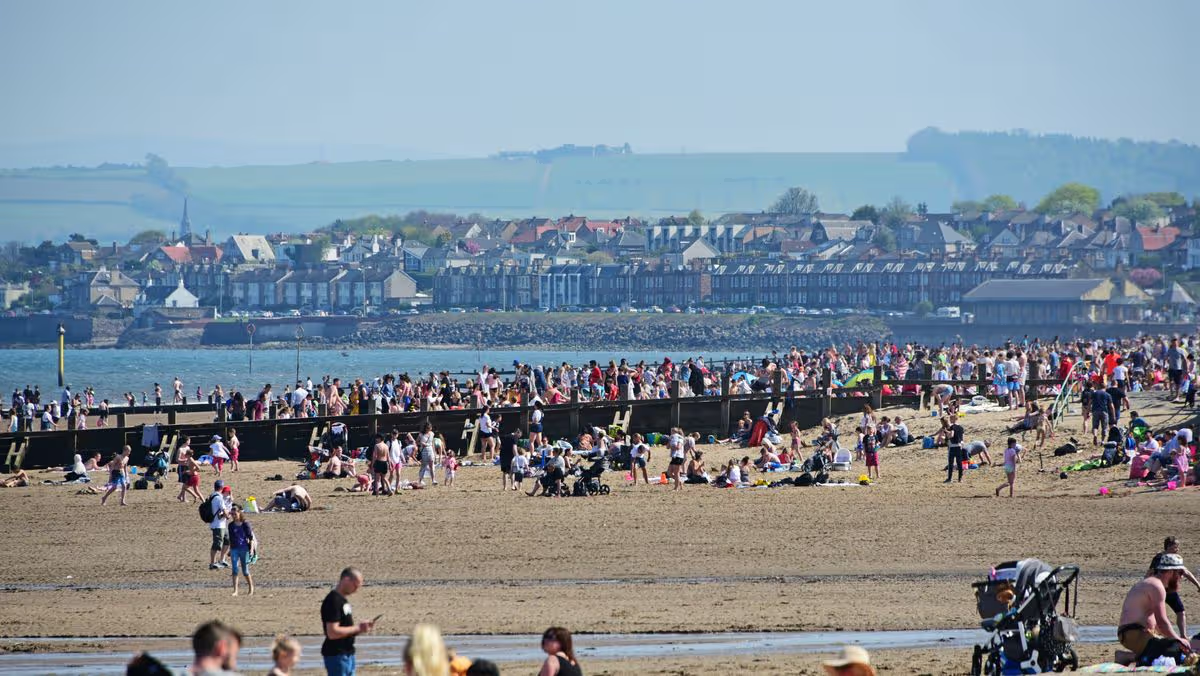
SEPA has advised against bathing and paddling at Portobello Central after routine testing found elevated bacteria levels.
Beachgoers have been warned to stay out of the water at Portobello after elevated levels of bacteria were detected during routine testing.
Advertisement
The Scottish Environment Protection Agency (SEPA) carried out sampling at Portobello Central on Thursday, June 11, with results showing a high bacteria count.
SEPA monitors Scotland’s designated bathing waters between May 15 and September 15 each year to help the public make informed decisions about entering the water.
Updating its website on Friday, June 12, the agency advised against bathing and paddling at the beach, reports EdinburghLive.
It said: “At Portobello Central, there has been a high result on a routine sample taken on 11/06/2026.
Advertisement
“We are currently advising against bathing or paddling.”
Porty Surf Lifesaving Club criticised the continued warning, saying it was “not good enough” that the beach remained effectively closed three days after the initial sample was taken.
In a post on Instagram, the volunteer-run water safety charity said: “It is just not good enough that three days after a SEPA test the beach is still closed and volunteer-led water safety charity Porty SLSC cannot deliver work with local communities at Porty beach.”
The club urged members of the public to raise the issue with their local MSPs, MPs and Edinburgh Council.
It is not the first time Portobello has been affected by poor water quality.
Advertisement
In July 2024, SEPA issued similar advice after unusually high levels of bacteria were detected in samples testing for E. coli and intestinal enterococci.
At the time, the agency said sewage had been ruled out as the cause of the pollution incident, while further analysis was unable to identify the source of the elevated bacteria levels.
The warning was lifted two days later, on July 12, after testing showed water quality had returned to normal levels.
SEPA has been approached for comment.
Advertisement
Get Daily Record Premium for just £1 per month in exclusive offer to celebrate the world cup. Click HERE.
A 10,000-strong army of England fans is heading to Dallas to see our World Cup opener against Croatia. Superfan Robert Didd has attended every single England home game since 1986, setting a record of 222 consecutive games from 1987 to 2007. He has spent around £500,000 following his country but does not regret a penny.
My first game was in October 1986, and I have been to every single home game in 40 years. In the 90s, I calculated that I had spent around £100,000 following England, but it must be about £500,000 now. I would have a bigger house and a few extra bedrooms. But I have been to 76 countries. It is like being an explorer, travelling the world you see on TV or read about in a book.
He was pictured at an early game, aged 16, with his Mitcham/Chelsea England flag. He has kept match tickets and memorabilia from a lifetime of following the national side. His ‘fear’ is of missing out if England win the World Cup.
Civil servant Garford, 64, of London, is at his 10th World Cup, spending around £12,000 on the trip. Garford is heading to Dallas and from there will take a Greyhound bus to Boston, a journey of 40 hours.
Advertisement
It is £135 with three changes, but it will be a real experience and give me time to think and see parts of America that I would never have seen otherwise. You leave at 3.15am, which may not be very comfortable, but I am going to Nashville and New York before Boston, and through Memphis, Jackson, Knoxville, and Charlottesville. That is what you will remember, the places and the people.”
England Supporters’ Association leads the Fans’ Embassy service in the US and did a four-day road trip from Florida to Dallas via Tallahassee, Florida, Mobile, Alabama, and Natchez, Mississippi. A Newcastle United fan, he told of a ‘church every half mile’ in Louisiana and rolling countryside reminiscent of his native Northumberland.
The country roads were like the A1 when it goes into single file in North Northumberland. It was old school America. The only thing missing was the Johnny Cash soundtrack. It is worth it when you get here, as the Dallas stadium is absolutely magnificent. I think the number of England supporters here, when you consider the financial challenges, is just incredible and a real credit to them.”
He stressed the need to carry water because of the extreme heat forecast for the 3pm kick-off time, with temperatures expected to reach 32-33 °C, around 90F. The match is set to be played under the roof at the stadium to make it cooler for players and fans.
Chris Thomas, 40, originally from Leeds, is leaving at 3am tomorrow (Wednesday) from Kansas City to get to the game in time for kick-off. Chris, who sells traditional British pies with a street food firm called ‘Brit Boy’, now living in Kansas City, is with his best friend, Sam Bannister, also from Leeds, and Kye Marty, another ex-pat, and his American wife, Sundy.
The stadium is about 45 minutes outside the city, so we will be driving and using taxis and public transport when we get there. Otherwise, the costs can be horrific. It is a mixture of excitement and trepidation now. I just hope England give it a good go.”
Exeter City fan George Smith, a finance worker who now lives in San Diego, California, is travelling to the England group games with Three Lions supporters based in Spain, Scandinavia and Australia. George, 42, is taking his son Charlie, 11, to the England games with him. He also plans to take his Mexican-born wife, Monica, to the famous Azteca stadium if England face her native country in the Round of 16.
Advertisement
In total, George has spent around $7,000 dollars (£5,178) on tickets for himself and his family. But the bill may rise to £12,000 depending on how far England progress.
The victim was taken to hospital for treatment to his injuries which are none life-threatening
22:32, 15 Jun 2026Updated 22:38, 15 Jun 2026
Three men are being questioned tonight following an alleged attack on a man in his 20s.
The trio, aged 61, 31, and 33, were taken into custody by PSNI detectives after the report of a serious assault on the Lecky Road in Derry earlier on Monday, June 15.
The victim was taken to hospital for treatment to his injuries which are none life-threatening.
Advertisement
Detective Inspector Hanbidge said: “Following a reported assault in the Leckey Road area at around 11am, a man aged in his 20s was taken to hospital.
“A short time later, three men were arrested in the Bishop Street area – two men aged 61 and 31 were arrested on suspicion of grievous bodily harm with intent, while the third, aged 33, was arrested on suspicion of assisting offenders. All three men remain in custody at this time.
“We are aware of videos circulating on social media in relation to this incident, and would appeal to the public not to share further. This is causing distress to the victim, and could potentially impact on the criminal justice process.
“Anyone with information which could assist with our ongoing investigation should instead contact our team on 101, quoting reference 549 15/06/26.”
Neighbours described the family as being “discreet”
Carrington Walker Live News Journalist, Maria Ortega Foreign Content Specialist and Matt Davies Trendswatch Reporter
22:37, 15 Jun 2026
A starving four-year-old girl has been rescued after being found lying next to her mother’s dead body, having been trapped in their flat for days.
The 40‑year‑old mum, who reportedly had epilepsy, was discovered around noon on June 4 in Montagnac, near Pézenas in southern France. The terrified child was suffering from malnutrition, dehydration and shock, but doctors say she is now doing well in hospital and is being looked after by family, the Mirror US reports.
Authorities believe the mum may have suffocated following an epileptic seizure, though an autopsy is yet to be carried out. The girl was reportedly too young to unlock the door to get help, and the key was said to be left in the lock.
Officers were alerted to the situation when the child’s kindergarten teacher contacted police following her absence from school and having heard no response from the mother.
French news platform Actu.fr also reports that an alert was raised after the mother failed to reply to family and neighbours since May 31. Philippe Audoui, first deputy mayor of Montagnac, told Le Parisien: “She wouldn’t have lasted another day.”
Advertisement
Only the pair lived in the home, described by locals as being “discreet”, and the mum wasn’t known to have a partner.
A psychological support unit was established to help those who attended and were left shaken by what 7sur7 described as an “indescribable scene of horror”. An investigation will be led by the Pézenas gendarmerie, alongside the public prosecutor’s office in Béziers.
Want to see more of the stories you love from Belfast Live? Making us your preferred source on Google means you’ll get more of our exclusives… To add Belfast Live as a preferred source, simply click here.
“It was a horrific scene that really upset me. We often see dead bodies, but this… As soon as the door was opened, we realised: there was a foul stench,” described an officer who attended the scene, speaking with Le Parisien.
Advertisement
Speaking about the child, the officer added: “She screamed when she saw all those people around her.”
Four officers reportedly arrived at the home, situated in a small social housing estate in a town of about 4,880 residents. They later notified local gendarmes and fire crews to gain entry to the property after no one answered their knocks at the door.
Mexico’s World Cup-opening victory over South Africa saw goals from Julián Quiñones and Raúl Jiménez, but it was an unexpected feathered friend who truly stole the show.
Merlin, a two-year-old duck, swiftly became an internet sensation and the tournament’s inaugural unofficial mascot.
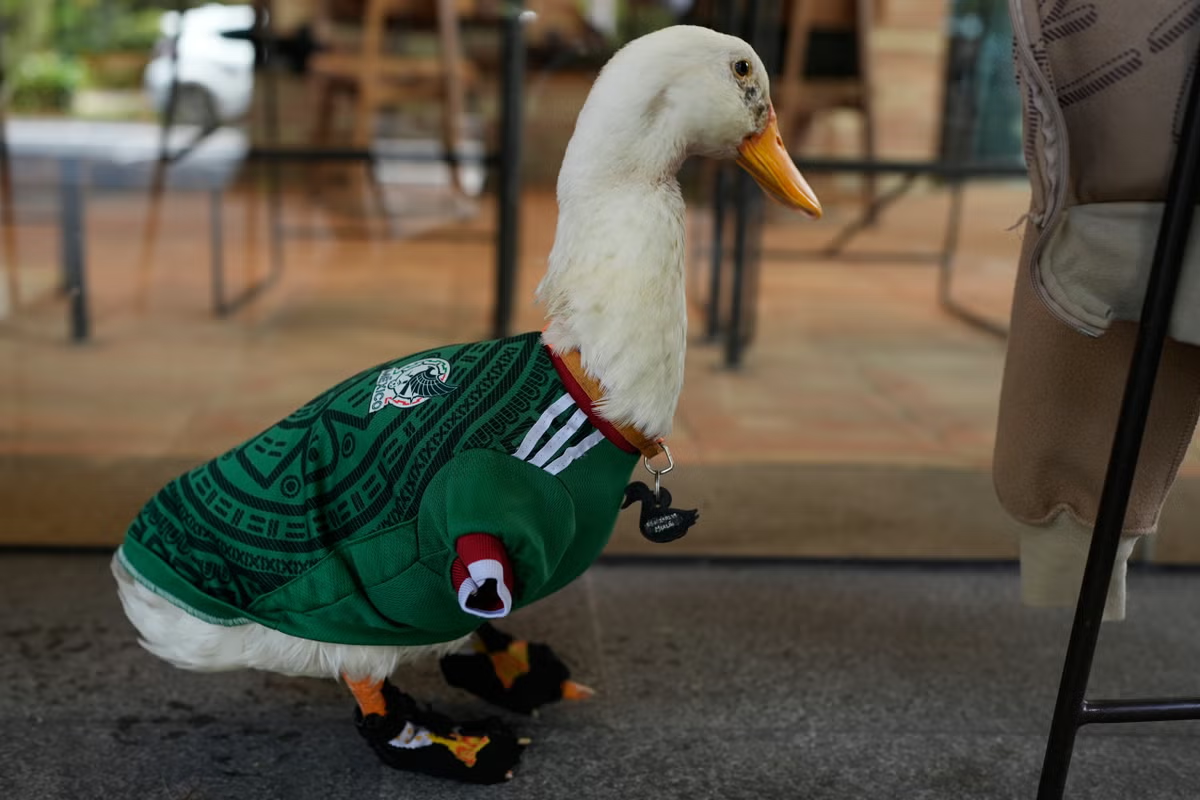
Dressed in the national team’s colours, complete with a miniature jersey and socks, Merlin paraded through Mexico City amidst thousands of jubilant fans.
Images of the sartorially splendid duck quickly went viral, racking up millions of views across social media platforms. Overnight, and seemingly by the magic of the famous wizard who inspired his name, Merlin captivated the internet.
Advertisement
“We want to see Merlin in the stadium,” one user wrote. “This duck is already a national treasure,” said another. “The best thing about the World Cup so far,” declared a third.
In Mexico City, however, Merlin was already something of a local celebrity.
Images of Merlin parading through Mexico City, wearing a Mexican national team jersey as thousands of fans celebrated, racked up millions of views across social media. (AP)
A familiar sight at fairs and events in the historic city center, the duck regularly accompanies his owner, Carla Gómez, who sells water and soft drinks from a little cart each weekend. Along the way, the animal attracts plenty of delighted squeals, affectionate greetings and eager requests from passersby for a photo together.
“We don’t like to leave him alone at home; we like him to be with us. He’s our baby,” Gómez said. “He’s the baby, the sole heir to all my possessions and now an idol.”
Rain or shine, Merlin follows Gómez and her young son Cristian through some of the capital’s best-known landmarks, including Alameda Central, the Palace of Fine Arts and the Zócalo square. The duck shares a particularly close bond with Cristian, for whom he was originally a gift, becoming what Gómez describes as the boy’s inseparable companion.
Advertisement
“Merlin had already become famous for selling bottled water,” Gómez said, recalling her surprise at her pet’s sudden rise to fame.
“He is always with us; we never imagined he’d become such a sensation,” she added. “We weren’t expecting it.”
Now, the family hopes Mexico’s famous feathered supporter can continue bringing luck to the host nation, which is staging the World Cup for the third time after hosting the tournament in 1970 and 1986 — this time a co-host alongside Canada and the United States.
“Mexico, we are with you,” Gómez said. “And Merlin is your No. 1 fan.”



-speaks-to-reporters-alongside-Canadian-Prime-Minister-Mark-Carney-in.jpeg)


















































You must be logged in to post a comment Login