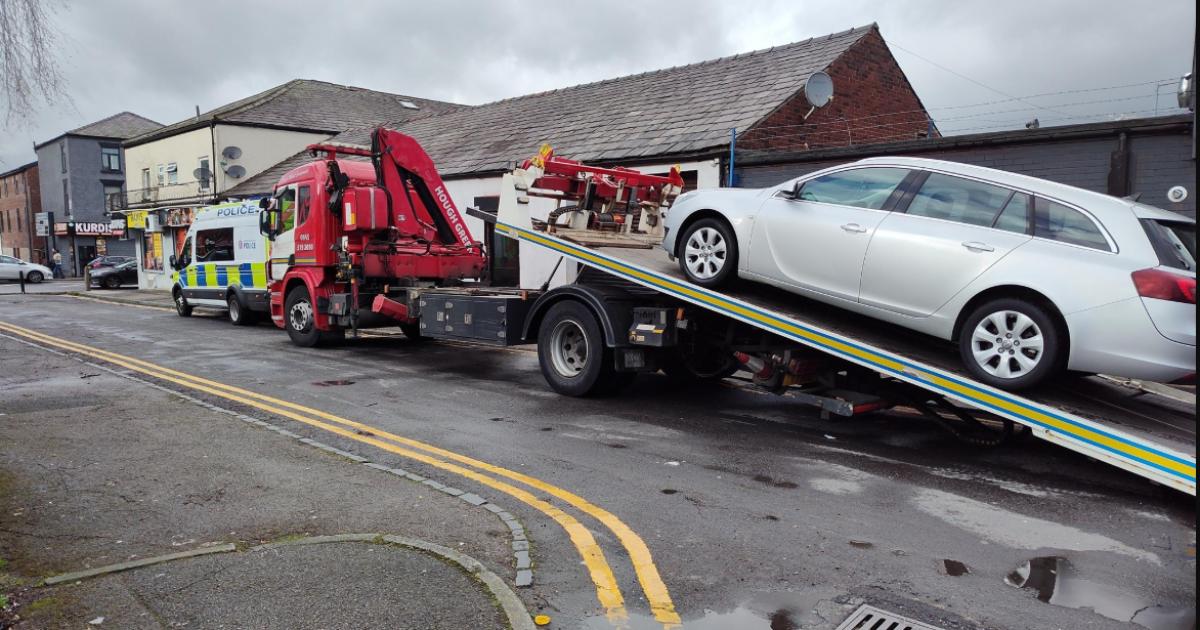
PC Shezad, PC Owen, PC Richardson and PCSO Wales carried out the stop, during which both occupants of the vehicle were searched under Section 23 of the Misuse of Drugs Act.
During the search, officers recovered and seized a quantity of drugs along with weapons.
The driver of the vehicle tested positive for cannabis at the roadside and was also found to be driving without insurance.
Advertisement
The vehicle was subsequently seized under Section 165 of the Road Traffic Act.
The driver was arrested on suspicion of possession with intent to supply Class B drugs, possession of an offensive weapon, drug driving, and driving without insurance.
The passenger was arrested on suspicion of possession with intent to supply Class B drugs and possession of an offensive weapon.
Greater Manchester Police said they “remain committed to tackling serious criminality and keeping communities safe.”
Advertisement
Anyone with information about crime in their area is encouraged to report it.
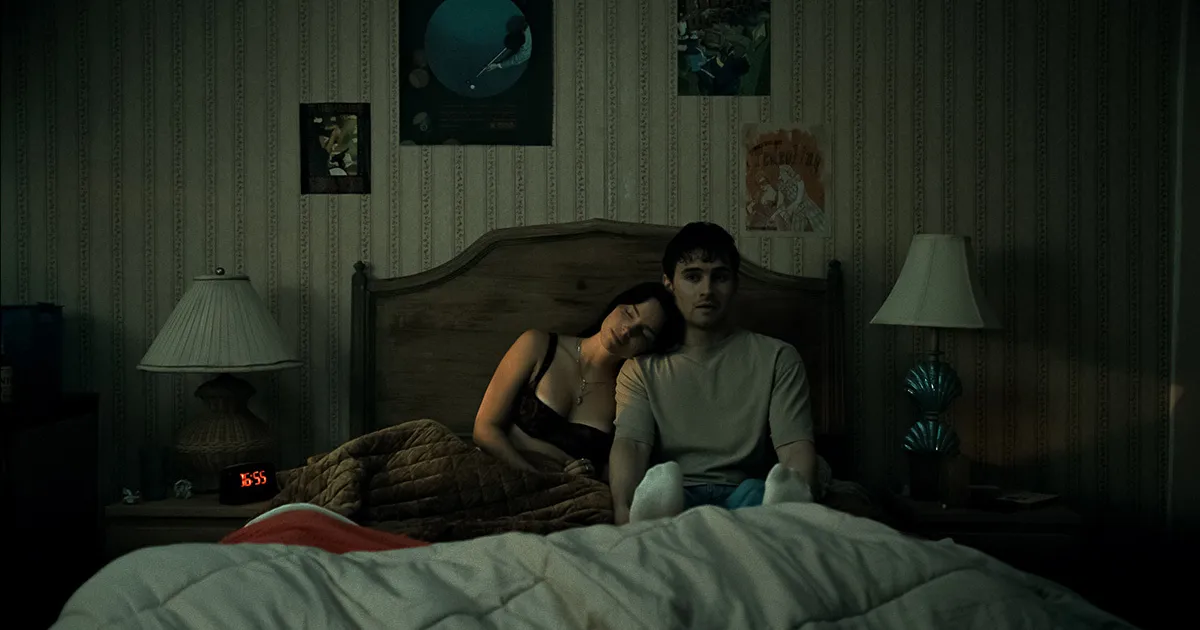
Obsession has very quickly become the horror movie the whole world is talking about.
The second feature-length offering from YouTuber-turned-filmmaker Curry Barker, Obsession centres around two friends who enter a nightmare scenario when one of them makes a life-changing wish for the other to fall in love with him “more than anyone in the fucking world”.
A modern-day “be careful what you wish for” cautionary tale, the film has received rave reviews, including an enviable 96% critical score on Rotten Tomatoes and 4.2 stars on Letterboxd, with particular praise for its break-out star Inde Navarrette.
But despite dominating the pop culture conversation right now, how much do we really know about what went into Obsession’s creation?
Advertisement
Here are 17 behind-the-scenes secrets you’d probably never heard about how the film of the moment came together (and be warned – there are plenty of spoilers ahead)…
Interestingly enough, the idea for Obsession was inspired by a classic episode of The Simpsons
The story goes that Curry Barker first had the idea for Obsession after inviting his friends over to watch an episode of It’s Always Sunny In Philadelphia that he had a small role in.
“Before the episode [aired] there was a Simpsons episode where [Bart] has a monkey paw, and he’s making wishes and stuff,” he recalled to Triple J, referring to The Simpsons’ second Halloween special Treehouse Of Horror II.
Advertisement
In the episode – based on WW Jacobs’ short story The Monkey’s Paw – the family travels to Morocco and buys a cursed monkey’s paw at a market, which grants their wishes with sinister consequences.
Curry admitted: “I was just excited to see my Always Sunny episode, but it hit me right then and there on the couch that Obsession idea that I had would be perfect if it was a wish movie.
“And so I actually remember the moment, I remember being on the couch, and being like, ‘oh my god’ and writing. It down. And after that, I just kept developing and developing that idea.”
The Simpsons’ brush with a monkey’s paw was an unexpected inspiration for Obsession
He also told Variety: “I was thinking that I’ve never seen a straight crazy horror [based on that idea]. We’ve seen ‘be careful what you wish for’ tons of times. But we’ve never seen my version of it. I instantly started thinking about what I could do with that…”
Advertisement
Once he had the idea that Obsession would be about a ‘wish come true’ gone awry, Curry Barker had to decide what form the wish would actually take
“I didn’t want to use the Monkeypaw because it was too recognisable,” he told IndieWire. “And so then I went down this rabbit hole of trying to find things that you could make a wish off of.
“You’ve got the wishing well, you have shooting stars, a wishbone you break in half, but nothing really worked well for the movie.”
In the end, he reasoned: “Screw it. I’m going to make something up.”
Advertisement
And so, the One Wish Willow came to be – with Curry Barker’s designer mum helping him bring it to life
He told Moveable Fest: “My mum actually helped me design that. She’s a graphic art designer, and I told her I wanted it to look kind of timeless, like it’s from the ’50s or the ’80s, and I wanted it to have this very retro feel, like it’s been around forever and you can’t really pinpoint when it was made.
“I also wanted it to look inviting, and almost creepy in the way that it looks so friendly, like it couldn’t hurt anything.”
The One Wish Willow as seen in Curry Barker’s Obsession
That’s not the only way that Obsession was a family affair for director Curry Barker, though
Remember that cringe-worthy party scene where Nikki makes everyone uncomfortable by, among other things, reading out an excerpt of an incestuous love story based on Hansel And Gretel?
Advertisement
Well, it turns out, it was written by Curry’s dad.
The director told Polygon: “My dad had just started his screenwriting journey and I was like, ‘Yeah, if you want to give it a stab’. So I let him write it and he did some really creepy stuff.”
“My dad’s been a writer for a while,” he added. “My dad writes novels and stuff, and now he’s a full-time screenwriter. And my dad has a mind that lends itself well to that type of creepy stuff. So I guess like father, like son.”
And speaking of that sinister Hansel And Gretel story, what was that actually all about?
Advertisement
Well, Curry said he wanted that to be a manifestation of Nikki’s mind warping different kinds of love, having previously considered Bear to be a brother figure to her before his wish for her to fall in love with him.
“I knew I wanted it to be about Hansel And Gretel,” he said during his Polygon interview. “I knew that I wanted it to be about brother and sister because the kind of thing I was doing there is that if you remember Nikki tells Bear in the beginning of the movie that she kind of sees him as a brother.
“And so that’s kind of that, like brother and sister being together. It’s not right and it’s not supposed to happen, but it is. And that’s kind of the movie.”
Nikki’s impromptu reading gave Obsession one of its most memorable scenes
There was no formal choreography when it came to Nikki’s creepy way of moving
“Nikki’s movement was something that Curry and I built from scratch,” Inde told The Hollywood Reporter. “Not because we didn’t want to take any inspiration. It was just as soon as we got attached to the project, we just really spearheaded. It was a fast track.
Advertisement
“We filmed it in 26 days, and it was an indie-budget film, so we didn’t have a lot of things at our disposal. But that created this organic movement for me.”
She continued: “I’m not a movement person. I’ve never really done that before. I used to dance, but Curry would be on the opposite side of me, mimicking something with his body, and then I would do it in a way, and be like, ‘No, no, like this’. And so we would mirror each other.”
“Technically, the choreographer would be Curry Barker,” she added with a laugh.
No CGI was used to make Inde Navarrette’s facial expressions in Obsession so scary, either
Advertisement
In fact, the team relied on good old-fashioned makeup contouring to achieve Nikki’s unsettling look.
“I think they call it contour in the makeup world, but you can kind of just accentuate things,” he recalled to Polygon.
“The goal was never to make her look too demon, because if you go demon, then you’re just making her eyes really dark and her mouth really dark, and then you’re in that uncanny valley. We wanted her to still look human but not quite human. But also, it was 90% her.”
Inde Navarette’s Nikki goes to some terrifying depths in Obsession
Obsession’s duct-taped door was a practical effect, too
“I was so impressed with the art department to see what they did with that,” Curry beamed. “What’s funny is we were shooting so out of order that sometimes we had to take that duct tape down to shoot one scene and then put the duct tape back up to shoot another scene.
Advertisement
“So, what the art department did to make it really easy is, 90% of that duct tape is not taped to the door. It’s like a big sheet. So there’s a big sheet and then tons of tape. And so the only tape that’s attached to the wall is on the outskirts. Once you remove that, you can kind of remove this big piece that they had designed. It was really smart.”
Curry Barker has lifted the lid on how Obsession achieved the duct-taped door effect
One especially grisly Obsession scene had to be tweaked to appease the censors
In the original cut, the scene where Nikki smashes in Sarah’s head with a brick was much more graphic, but to ensure the film got a wider release, Curry had to make some tough decisions.
“That was definitely a scary moment for me as a director,” he admitted to The Guardian. “Especially as I had just watched the movie in Toronto with a crowd that really reacted to that scene.
“Hearing the news that I might have to cut it down was quite devastating at first. But we cut it down and I feel like the integrity of the scene is still there … I’m actually surprised at how much they let us keep in.”
Advertisement
Similarly, Inde insisted to The Hollywood Reporter that version of Obsession shown at TIFF was “not that different” to what we all saw in cinemas.
“[When] I kill Sarah, we reduced the amount of head smashes because it was too long,” she claimed.
“I really loved the response at TIFF, because people really liked how long it is and how aggressive Nikki is. It shows how obsessed she is, what she’s willing to do for Bear and how far she’s willing to take it. It’s just really intense.
“Also, what was cut was the aftermath. Curry wanted to play with the idea of what does a human body do after that sort of smashes, like there’s gurgles come out, so there was gurgles, there was like human sounds that might have been too gruesome for an R rating, so they kind of downsized it.”
Advertisement
She added: “TIFF definitely got a really gruesome, gruesome version, but it sounded like they liked it.”
The opening scene was added in at the last minute
“The original opening of this movie was actually at Bear’s house [when he found] the dead cat, and you’re just thrown in and you don’t really know what’s going on,” Curry told Movable Fest.
During the editing process, he “decided to open” up the story, bringing back actors Michael Johnston and Cooper Tomlinson to shoot the new opening set at a diner.
Advertisement
Obsession had a few alternative endings, too
In the version of Obsession that made it into cinemas, Bear’s hold over Nikki comes to an end when he dies, at which point she screams in terror when she realises what she’s done.
Before Nikki became horror’s new “final girl”, though, Curry had planned for the character to die alongside the rest of her friendship group.
“I was really obsessed with this Romeo And Juliet ending, actually,” he told Entertainment Weekly, revealing that it was his dad who told him to have Nikki live, instead.
Advertisement
“We shot both,” he noted. “We shot this ending that you see in the movie, and we shot the ending where she ends it all.”
Nikki and Bear pictured in the final moments of Obsession
He added: “We had shot a ton of different versions of the official ending, the one that’s in the script, the one that I was excited about, and I was like, ‘Okay, we’ll do one ending where [Nikki] survives, but we’ll just do one take of it, and then we’ll move on’.”
In fact, Obsession’s shocking ending was shot in only one take
Because of the complicated technique used to capture it – and the fact that Curry was still set on Nikki dying – he recorded the ending that made it into the finished film in one take.
“It was a very technical shot, and so we only gave her one where she survives,” he told Entertainment Weekly, revealing that Inde’s “performance was so good” he had to include the scene in his movie.
Advertisement
He revealed: “I just remember my dad and multiple people around me being like, ‘Dude, I think it’s way more disturbing if she just survives this thing’. I was like, ‘Ah, you’re right’. And so we switched it.”
Inde told The Hollywood Reporter: “The original ending was that I was going to choose that I didn’t want to live that way anymore, after all of the trauma and pain. [At the] last second, they were like, ‘Let’s just try this one thing’, and from other people’s perspective, which is high praise for me, and I really, really appreciate it, they did one take, they felt like it was magical and electric, and they knew that that was the ending.
“At the end of all of this, it was such a release to get all of what I felt like Nikki was experiencing out of my body. I’m really glad that she didn’t die. I’m really glad that she’s considered a horror final girl, that I think is the sickest title ever.”
Inde Navarette’s performance as Nikki in Obsession is one you’re going to be hearing a lot about in the next few weeks and months
One other scene that went through ‘so many different versions’ was Sarah and Bear’s private conversation in the car
“There was a version where Sarah tells Bear that Nikki admitted to her that Nikki actually had feelings for Bear,” Curry recalled to Polygon. “I thought that was really heartwrenching if it turns out that Nikki liked Bear along and then this happened, but that obviously didn’t make it in.”
Advertisement
He also pointed out: “No one ever has picked up on this, but there’s this line in the beginning that says Nikki was crying in the break room. You can hear it at the trivia bar. They talk about, ‘Why was Nikki crying in the break room?’ And Ian’s like, “I don’t know, maybe she…” But really it’s because Ian had told her that he wanted to [end their casual hook-ups].”
Curry Barker had a very specific intention while making everything in Obsession so centre-focussed (and no, it wasn’t to do with vertical video)
“I wanted to shoot this centre-composed and have extra head space because I wanted it to feel uncomfortable in its loneliness,” he told Variety.
“There’s something about centre-composed that forces you to look and pulls you in in a way that traditional composition may not. I’ve seen a lot of horror filmmakers I look up to recently shooting in that way.”
Advertisement
When putting together Obsession, Curry Barker never envisaged the ‘incel’ label that many have thrown at his protagonist, Bear
Michael Johnston as Bear in Obsession
“He just makes some bad decisions but I think it starts from a really innocent place,” the director told The Guardian. “It’s what he chooses to do after that that’s bad.”
He also noted: “Embarrassingly, I wasn’t even familiar with the term incel until someone brought it up to me.”
Curry Barker actually makes a cameo in Obsession you might have totally missed
You know that part where Bear calls up an operator for the One Wish Willow helpline?
Advertisement
“It was me,” Curry admitted to Polygon. “I recorded that dialogue in my room, way after we shot the movie. I was editing in my room so I was able to just do whatever I wanted with it. I just got my phone out and I was just like, ‘Hey, what’s up?’.”
And finally, is there any chance of an Obsession sequel? Kiiiind of…
Curry has claimed he’d “definitely” be up for another film set in the Obsession world, but introducing a different set of characters and, crucially, another wish.
“It wouldn’t have these characters, but it would have the One Wish Willow,” he teased to Polygon. “It would be [about] that same selfishness of a person who wants something that’ll only benefit them and not really thinking about other people.
Advertisement
“The horror would come out of what happens when you wish for something that you think is going to be good, but it’s not. That’s the theme, and so there’s so many different stories.”
During her Hollywood Reporter interview, Inde also revealed that she’d “absolutely” be up for playing Nikki again, even though she “really” loves the idea that the story is “kind of left there”.
“It’s like a memory, whenever you look back to yourself at like 24, 23, 22 those are all chunks, and they begin and end at a certain point. I think that’s kind of like this story. It begins and it ends, and then it’s new Nikki, if you will,” she added with a laugh.
The little boy watched the assailant wash his hands in a nearby stream before leaving, then clung to his 23-year-old mother’s body until they were found.
Advertisement
Officers who arrived at the scene had to prise him away.
‘It was an incredibly high-profile case. A mother and her young child walking on Wimbledon Common in the middle of the day – you don’t expect that sort of thing to happen. There was huge public sympathy,’ forensic scientist Angela Gallop tells Metro.
Police quickly sealed off Wimbledon Common and began one of the largest murder investigations the Metropolitan Police had ever seen. Three incident rooms were set up, while helicopters, mounted officers and forensic teams combed the area.
Witness appeals went out almost immediately through television bulletins and newspapers, triggering a media frenzy. The nation was shocked by the brutality of the broad daylight attack.
Advertisement
André Hanscombe took his son Alex back to Wimbledon Common with detectives as part of their investigation (Picture: Courtesy of Netflix)
Appeals for witnesses went out almost instantly and André spoke to the media as police desperately tried to find clues of who killed Rachel (Picture: Courtesy of Netflix)
In a race against time to find the killer, detectives and psychologists worked with Alex for months, trying to glean information as his anxious father André Hanscombe watched on, fearful of the long-term effects of repeated questioning.
Behind the scenes, the heartbroken dad was desperately trying to keep life as ‘normal’ as possible for his traumatised son.
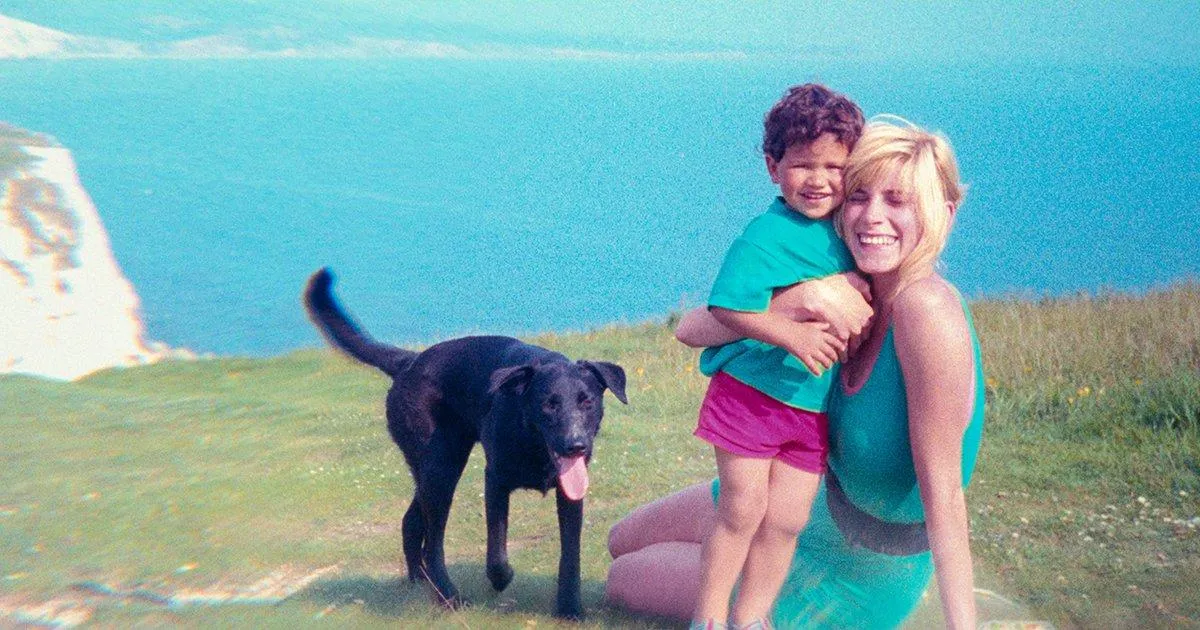
‘Literally hours after the event, I kept as close to the routine Rachel and Alex shared together as I could,’ André explains, as he shares never-before-seen pictures of Rachel and Alex.
‘I was blessed to have two incredibly loving parents who cared deeply about me,’ says Alex (Picture: Courtesy of Netflix)
André says that keeping life for Alex as normal as possible would have been very important to Rachel (Picture: Courtesy of Netflix)
Rachel and André had dreams about moving to France and having more children together (Picture: Courtesy of Netflix)
Rachel was a real nature lover, says André (Picture: Courtesy of Netflix)
‘That would have been important to her and was important to me. My aim was building a routine he could rely on, from having the same bowl of cereal for breakfast, having a walk, and doing ordinary things – even going back to parks that looked almost identical to the place where the attack took place.’
Now 36, Alex adds: ‘But at the same time, in many ways that was impossible, we couldn’t return to our home, which was surrounded by reporters and because there was a killer on the loose.
‘We were staying temporarily with family and friends, until ultimately we were tracked down and moved to another country, where we lived in rented accommodation, ready to pack up and move on in a moment’s notice.’
Advertisement
With DNA testing at the time fruitless, police struggled to find concrete leads.
Colin Stagg spent 13 months in prison on remand awaiting trial for the murder of Rachel (Picture: PA)
In September 1992, Colin Stagg was arrested after viewers of Crimewatch said he resembled the photofit of the killer. He was released but arrested again in 1993 and later charged with Rachel’s murder. After spending over a year in custody, the case collapsed at the Old Bailey in 1994.
Years passed with no answers. Meanwhile, there was more violence.
Police were investigating a series of sexual attacks that became known as the Green Chain rapes, carried out across parks and open spaces in south-east London between 1989 and 1993.
Then, in November 1993, Samantha Bissett, 27, and her four-year-old daughter Jazmine were found murdered at their home in Plumstead, south London.
Advertisement
Samantha Bissett and her four-year-old daughter Jazmine whose bodies were discovered at their flat in Plumstead, south London in November 1993 (Picture: PA)
It was one of the most shocking cases detectives had ever encountered.
Retired Detective Sergeant Roger Boydell-Smith, the exhibits officer at the time, remembers the moment he entered the flat.
‘My detective superintendent put his arm around me and said, “Roge, brace yourself, son, because this is the worst one I’ve ever seen”.’
Recalling what he saw for Netflix documentary The Murder of Rachel Nickell, Roger says: ‘When we walked in, it became apparent that Samantha had been possibly stabbed to death in the hallway, dragged through to the living room and placed on a large cushion in a star formation, and she’d been mutilated.’
The detectives then found four-year-old Jazmine dead in her bed beneath a duvet, suffocated and sexually assaulted.
Advertisement
‘I’ve dealt with lots of murders in my career. This one was horrific. It does affect you emotionally,’ Roger tells Metro.
The police took hundreds of fingerprints but were unable to find any that could not be eliminated as belonging to family or visitors. There was no DNA or other clues.
Moving to France with his son was a ‘turning point from the heart,’ says André (Picture: Courtesy of Netflix)
‘Alex always had a huge appetite for life, and I want people to know that, and to know that he’s doing well.’ (Picture: Courtesy of Netflix)
They soon drew potential links with Rachel Nickell’s murder 16 months earlier – young mothers, extreme violence, multiple stab wounds while children present – but the Nickell investigation team rejected the idea, says Roger.
‘It’s extremely rare that strangers attack members of the public. Children being present is even rarer. He’s probably done something similar before.
‘We couldn’t fathom out how, within a gap of 16 months between the Wimbledon common murder and the Plumstead murder, two different people could carry out such ferocious, audacious crimes. So was it possible that the same person committed both?’
Advertisement
At the time, Colin Stagg was still awaiting trial and the investigation team were convinced they had man who killed Rachel.
Angela Gallop and Roger Boydell Smith both worked on the case (Picture: Netflix)
‘For us to suggest that they might have got the wrong man didn’t go down very well,’ remembers Roger.
Prior to the murders of Samantha and Jazmine, an artist’s impression of the Green Chain rapist was distributed widely across Southeast London’s public places and police stations.
A member of the public reported a man called Robert Napper and the police went to visit him at his Plumstead bedsit.
He was cooperative and gave his details, but failed to attend a later appointment to provide samples. Napper was eventually ruled out, partly because he was thought to be taller than the assailant.
Advertisement
‘That was a catastrophic decision because he went on then to murder the Bissetts,’ says Roger. ‘He could have been caught quite easily. The officers involved will have to live with that for the rest of their lives.’
Robert Napper was responsible for a series or rapes across South London as well as the three murders (Picture: PA)
When evidence from Samantha’s flat was later re-examined it revealed a shocking discovery – one of the prints inside was Napper’s.
He was arrested and inside his tiny bedsit, detectives found a padlocked red toolbox containing knives, a book about methods of strangulation and an map of London what was covered in markings and doodles – one of which was very near the spot where Rachel was killed.
Napper was later convicted of the killings of Samantha and Jazmine on the grounds of diminished responsibility and detained indefinitely at Broadmoor Hospital in 1995.
Tragically, one woman who never saw justice served was Samantha Bissett’s mother.
Advertisement
Maggie Morrison, 53, collapsed at her home in Stonehaven, Aberdeenshire, 48 hours before Napper was convicted. Her husband Jack said she’d died of a broken heart.
‘Samantha was an only child, and her mother, Margaret, never recovered from the loss of her only grandchild and her only daughter,’ says Roger.
‘It’s just very, very sad case. So many lives were ruined.’
Following Napper’s conviction, the independent police watchdog found a “catalogue of errors” in the investigations, concluding missed opportunities that allowed the killer to remain free.
Meanwhile, Rachel’s murder remained unsolved and Alex and André – now living in France to keep Alex safe while the killer remained loose – started to accept that they would never get answers.
Advertisement
‘I had some familiarity with France but moving there meant losing our home, leaving behind family and friends – in short, everything that was our life. It was a turning point decision made from the heart,’ remembers André.
‘Rachel and I had dreams about moving to France and having more children together. She was a real nature lover, so [for me and Alex] to be out there enjoying the changing seasons, being able to walk in bare feet and pick the fruit from the trees – she would have loved to share those moments with us.
‘It was idyllic – or, it would have been idyllic in any other circumstances, which was unbearably bittersweet.’
In 2002, forensic scientist Angela Gallop, who worked on high profile cases including James Bulger, Princess Diana and George Harrison, was asked to review the evidence in Rachel’s case.
Advertisement
It took police more than15 years to solve Rachel’s murder (Picture: Courtesy of Netflix)
It was painstaking work. Evidence had to be re-analysed in conditions that eliminated any risk of contamination.
‘We thought – right, we’ve got to make our technique more sensitive. We need to do something slightly different,’ she tells Metro. It took two years, but they ended up with a DNA profile that they could feed it into the database – and matched with Robert Napper.
‘We went back to the crime scene, looked at all the samples and items that were collected, and noticed that there was a cast of a footwear mark on the muddy ground,’ recalls Angela. ‘And we thought – that’s interesting.’
The cast mark was smaller than Napper’s shoe that had been kept in evidence. So the team analysed the boggy ground in the glade where Rachel’s body had been found.
‘We discovered that if you press foot down on the on the ground, and then lift the shoe, the mud closes around it. So when you then cast the mark, it will be smaller than the shoe that made it.’
Advertisement
They also found paint flakes in Alex’s hair that matched paint from a toolbox containing knives and other weapons that had been found in Napper’s flat.
It was enough to see the killer finally brought to justice for Rachel’s murder.
In January 2016, Robert Napper, then 42, pleaded guilty at the Old Bailey to the manslaughter Rachel Nickell. He remains in the high-security psychiatric facility Broadmoor Hospital today.
34 years on from Rachel’s murder, Netflix are releasing two titles based on her story – the three-part drama series The Witness, starring Kerry Godliman and Claire Rushbrook, and a documentary, The Murder of Rachel Nickell.
Advertisement
Alex and André have been involved in both, with the dramatisation being based on Alex’s memoir, Letting Go.
Alex wrote a memoir about his life following his mother’s murder, called Letting Go (Picture: Courtesy of Netflix)
André contributed to the documentary and worked as a consultant on the dramatisation, alongside Alex (Picture: Courtesy of Netflix)
Talking about his early childhood, Alex says: ‘I have memories of both my parents together, some very early memories. I was blessed to have two incredibly loving parents who cared deeply about me, went the extra mile for me and were willing to suffer for me.
‘My mother suffered to protect me in her last moments, and my father suffered to protect me from there. Our relationship hasn’t always been easy, but nothing has ever been able to take away the love I have for my father, and I believe nothing ever will.’
André adds: ‘ People saw those headlines about a tragedy, a small nearly-three-year-old child, what he saw that day, and headlines saying he may never talk again from the trauma he suffered.
‘I know that the most important thing to Rachel would be his recovery, and of course it was the most important thing to me as well, having suffered abuse as a small child.
Advertisement
‘Alex always had a huge appetite for life, and I want people to know that, and to know that he’s doing well.’
A scene from The Witness, starring (L to R) Jahsaiah Williams as Alex, Eleanor Williams as Rachell , and Jordan Bolger as André Hanscombe (Picture: Courtesy of Netflix)
However, Alex believes his mum never got the justice she deserved.
‘For 33 years, the police have washed their hands of their responsibility and their failure to do their job to serve and protect,’ he says. ‘They failed to take the killer off the street years before the attack on my mother and me.’
A Met Police spokesperson told Metro:
‘We are deeply sorry for the failings in the investigation into Rachel Nickell’s death.
Advertisement
‘We accept that we should have done more to identify Robert Napper as a suspect, which could have prevented a number of serious attacks by him.
‘Since Rachel’s murder, the Met has overhauled how it investigates homicides, including better training of detectives, new forensics techniques and closer work with the Crown Prosecution Service.’
Both the drama series The Witness and documentary The Murder of Rachel Nickell will be available to watch on Netflix from Thursday, June 4.
A former Roman villa was also found in the village
Railways used to be the most popular form of travel before cars became more common. Across Cambridgeshire, there were many more railway stations than there are today.
Advertisement
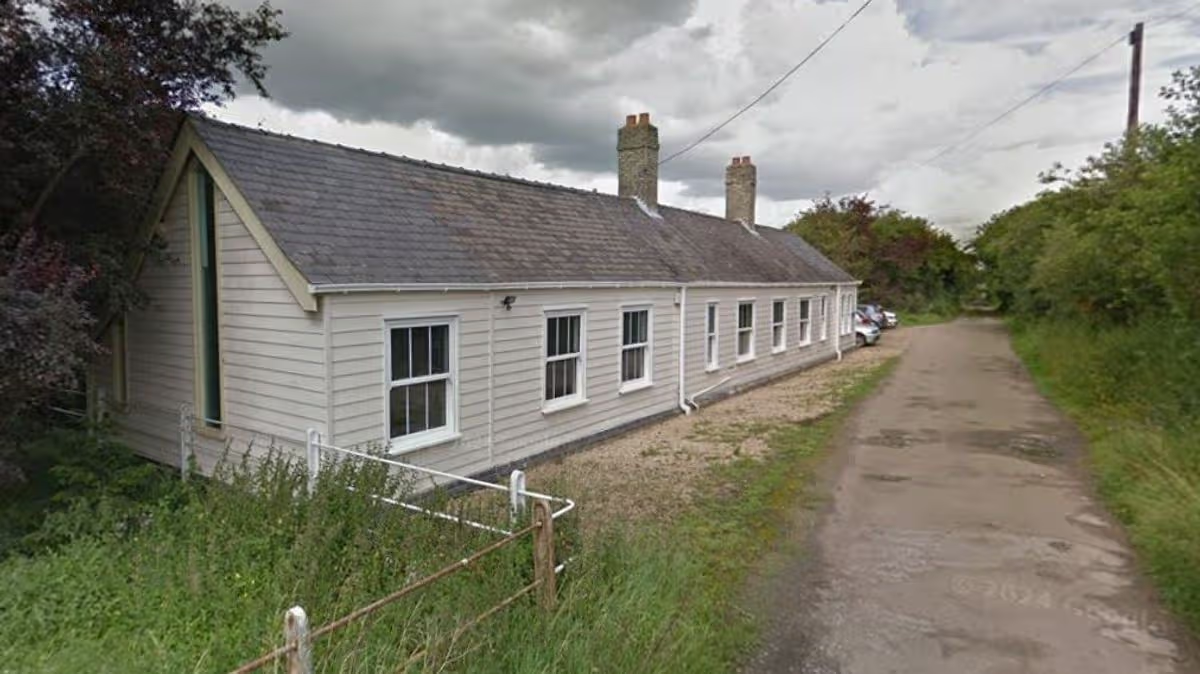
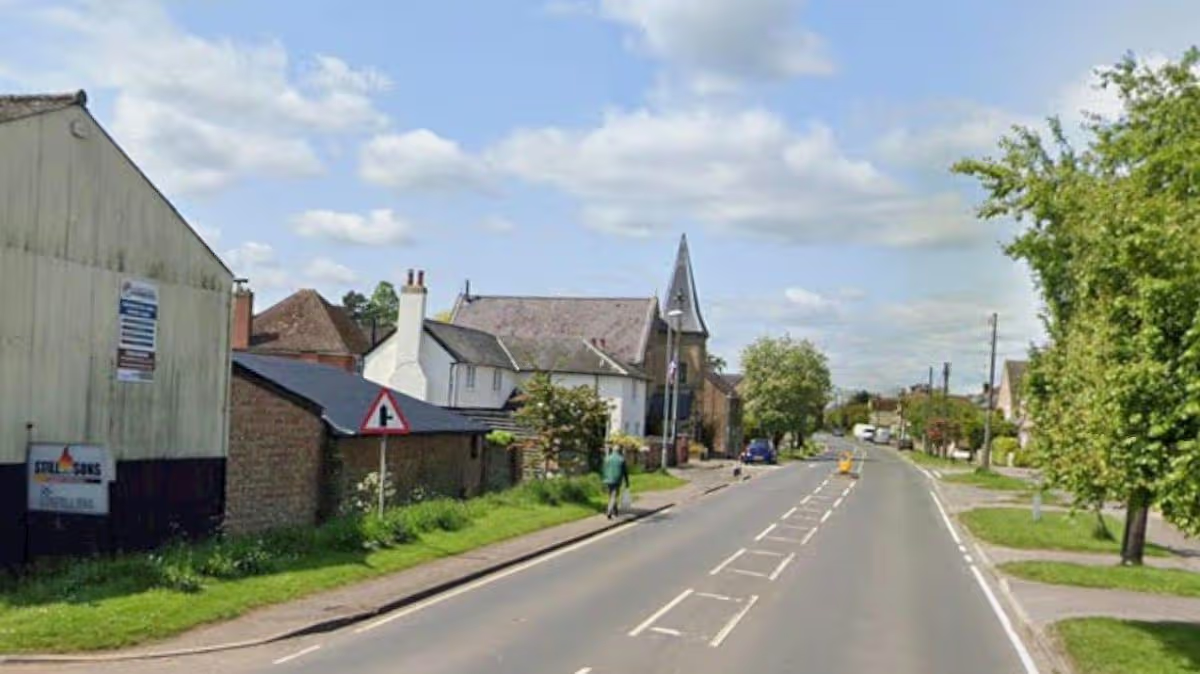
However, over time, these stations disappeared and became something else. One old railway station that has totally disappeared was in Stow-cum-Quy. The former station opened in June 1884 and was first run by Great Eastern Railway. It was located around four and a half miles from Cambridge and two miles outside the city boundary.
Quy was never the busiest station, as it lay in a small village that had a population of only around 360 people in 1884. This population dropped down to 307 in 1931. Passenger numbers were never recorded to be high at the station. Quy was the least used station on the Mildenhall branch and it held this title for the whole time it was open.
From 1894, the station didn’t have a station master due to it being so quiet. It was then unstaffed in June 1935 and tickets were only able to be bought from a conductor on the train.
The station managed to survive the economies of the 1930s, however it finally closed to passengers in 1962, and fully closed in 1964. If you visited the village today, you wouldn’t even know there was a former station – it’s almost like it disappeared. Like many former railway stations, Quy station was turned into private homes. The old station house still stands, however it has undergone a face lift in recent years.
Advertisement
As well as a lost railway station, Stow-cum-Quy also has a name that is hard to pronounce. Some may think it’s pronounced like ‘stow-come-kai’, however it’s pronounced like ‘stow-come-kwai’.
Another important part of the village’s history is its link to Roman times. It was once where a Roman villa was situated. The villa was found just to the west of Quy Hall, a Grade II listed country house.
There have also been remains from the Bronze Age and Saxon Times found, showing how Stom-cum-Quy has stood the test of time.
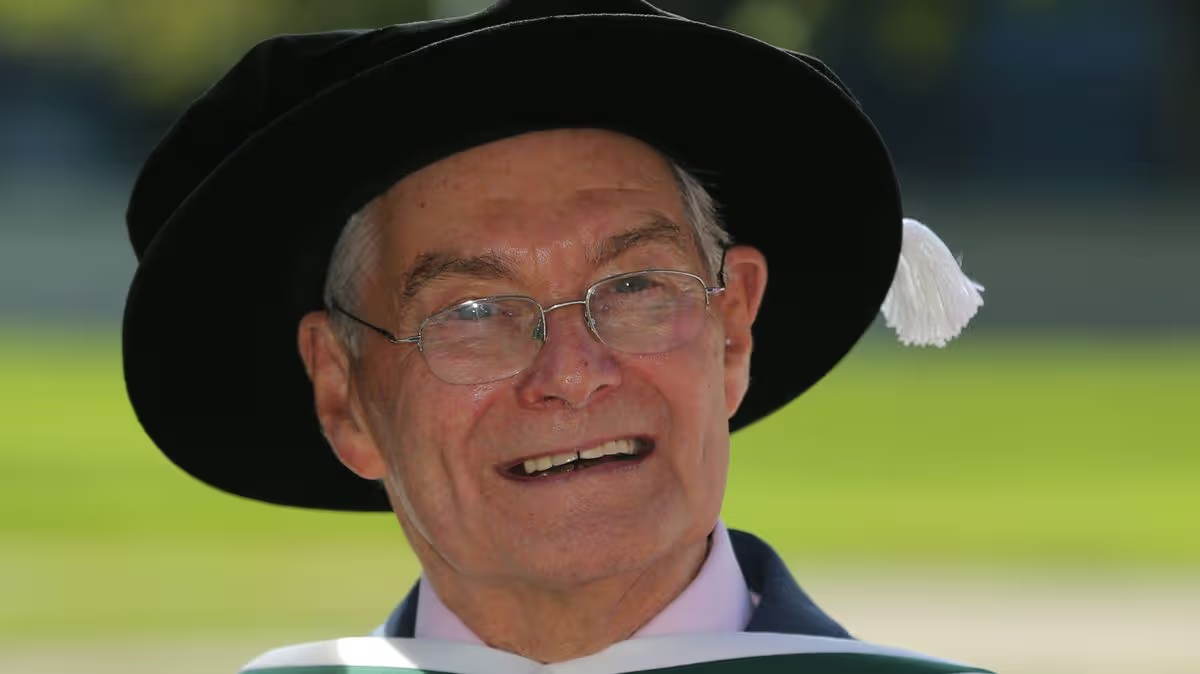
Mr Reichental was deported from his home in Slovakia to the Bergen-Belsen Nazi concentration camp at the age of nine, where he survived until the site was liberated in 1945.
21:21, 31 May 2026Updated 21:30, 31 May 2026
Irish President Catherine Connolly has led tributes to Holocaust survivor Tomi Reichental, who has died at the age of 90.
Mr Reichental was deported from his home in Slovakia to the Bergen-Belsen Nazi concentration camp at the age of nine, where he survived until the site was liberated in 1945.
Thirty-five members of his family were murdered in the Holocaust.
Advertisement
Mr Reichental moved to Ireland in 1959 and went on to become an educator on the horrors of the Holocaust.
Ms Connolly expressed her “deepest condolences” to Mr Reichental’s family and friends.
“Tomi made an exceptional contribution to Irish society, bringing his personal experience of Bergen-Belsen and of his family’s suffering in the Holocaust to public attention and, through his experiences, made a very significant contribution to the causes of peace and understanding,” she said.
“He will be deeply missed by all those who had the privilege of learning from him.”
Advertisement
In a statement on social media, Taoiseach Micheal Martin wrote: “Deeply saddened to learn of the passing of Tomi Reichental, someone who dedicated his life to teaching new generations about the evil of the Holocaust.”
Oliver Sears, founder of Holocaust Awareness Ireland, said in a statement on social media: “Everyone who met Tomi remarked on his ability to tell his story with honesty, dignity, and humanity.
“Through his testimony, he demonstrated how easily people can be othered and how entire communities can be demonised.
“His unwavering contribution to Holocaust education and interfaith relations will never be forgotten.
Advertisement
“The Jewish community has lost a beloved son. Ireland has lost a cherished citizen.”
Founder of the Irish Muslim Council, Shaykh Dr Umar Al-Qadri, described Mr Reichental as “a remarkable human being, whose life journey embodied both the tragedy of humanity’s darkest moments and the hope that can emerge from resilience, forgiveness, and compassion”.
He posted on social media: “He consistently spoke out against hate, division, and the dehumanisation that paves the way for violence and atrocity.
“He was also a passionate supporter of Syrian refugees in Ireland. Having experienced persecution and displacement in his own life, he showed immense empathy towards those fleeing war and oppression.
Advertisement
“His compassion for refugees was a testament to his belief in our shared humanity and our collective responsibility to care for the vulnerable.”
He said: “Today, I join people of all faiths and backgrounds in mourning his loss. I am heartbroken by his passing.”
The garden, in Harrogate, which has launched a new on-site charging facility, is offering free charging from June 2 to June 4.
The scheme is part of a partnership with RAW Charging, and the offer is available through the RAW Rewards programme.
Malcolm Anderson, head of sustainability at RHS, said: “RHS Garden Harlow Carr is a vital part of our garden network, and this major new charging facility exemplifies our ambitions to make sustainable travel easier and more accessible for our visitors in the north and across the UK.
Advertisement
“By enabling EV charging on-site, we are not only supporting lower carbon travel but also enhancing the experience for our environmentally conscious guests who want to enjoy the gardens with peace of mind.”
The site features 16 charging bays, including four rapid chargers (up to 50kW) and 12 fast chargers (up to 22kW).
The project supports the RHS’ wider plan to install 90 charging bays across its five UK gardens.
Standard contactless payment will be available for future use, but the launch-week offer requires visitors to register for RAW Rewards.
The proposals include new homes as well as a café and healthcare facility
New homes, a café, public cark park, and an NHS healthcare facility could be built in a Cambridgeshire village. Ceres Property has submitted a planning application on behalf of landowners Mr & Mrs Duberly for the development of land at Brook Farm in Great Staughton.
Advertisement
Great Staughton is a small village around eight miles south-west of Huntingdon. The applicant has submitted full planning permission to Huntingdonshire District Council for the demolition of an existing building and the construction of up to 10 new homes, a café, a flexible commercial unit, public car park, and upgraded site access. They have also submitted outline planning permission for a new healthcare facility.
The GP surgery in Great Staughton is currently on the Highway, but has outgrown its current location, and the new location would allow the surgery to expand. It would be in the centre of the site, opposite the café. All patient services would be provided on the ground floor, with office and staff spaces on the first floor.
A planning statement says: “The size and layout of this has been developed in conjunction with Great Staughton Surgery to provide the functionally they need to improve and develop their services. The size and amount has been driven by the number patients the surgery needs to serve and the spaces and facilities required to deliver this level of care.”
The plans say the café would be a modest building which could potentially accommodate approximately 40 covers internally, with more outside dependent on the weather.
Advertisement
The 10 new homes will be a mixture of apartments, two storeyhouses , and single storey houses. Existing silos on part of the site could be converted into a four-bedroom home.
On another part of the site, a two storey agricultural style building is proposed to contain four homes. These would be accessible single level apartments with a mix of one or two bedrooms. Attached to this would be a single storey two bedroom unit.
The new homes will also include two semi detached homes, each with three bedrooms, and two detached four bedroom homes.
All the residential plots have access to private amenity space and aim to be provided with parking in a courtyard arrangement around the buildings. A footpath links the courtyard with the public car parking area which the applicant says would be “convenient for visitors”.
Advertisement
A surface level public car park is shown within the site to accommodate approximately 46 vehicles including some disabled bays. The planning statement says: “This would be available for community use, the occupiers and visitors to the commercial building, visitors to the café and also visitors to the new medical facility.
“This would help to alleviate parking problems and congestion in The Highway, providing an alternative safe location for local people to park when visiting the new facilities provided by the development and elsewhere in the village.”
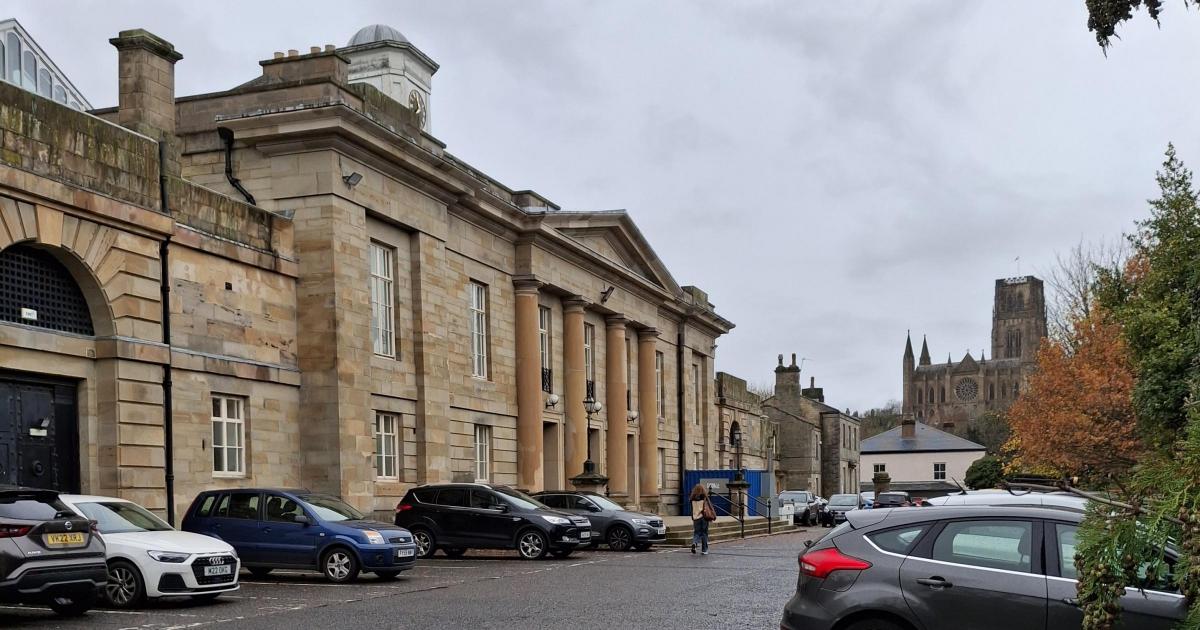
Lewis Firth, 26, and 25-year-old Nathan Bowen each denied a charge of robbery at a plea hearing at Durham Crown Court.
The alleged offence took place in Darlington, on Sunday, April 26.
Firth also denied having an article with a blade or point, a knife, in a public place, in Jedburgh Drive, on the same day.
Two men are to stand trial at Durham Crown Court later in the year accused of robbery in Darlington in April (Image: The Northern Echo)
He also denies further charges of damaging property, a house and tree, belonging to a woman, plus assaulting a man, both also in Darlington, on Tuesday, April 7.
Advertisement
A trial date was agreed for all four charges to be heard at the court in October.
Recorder Mark McKone set a timetable for the presentation of evidence in the case by the prosecution, on June 17 with a signed defence statement by both defendants to be submitted by July 15.
The Recorder remanded Firth, of Whitby Way, Darlington, who appeared by video link from Holme House Prison, Stockton, to remain in custody until the start of the trial, on Monday October 19.
Advertisement
Bowen, of Ringway Grove, Middleton St George, near Darlington, was granted extended bail until the start of the trial.
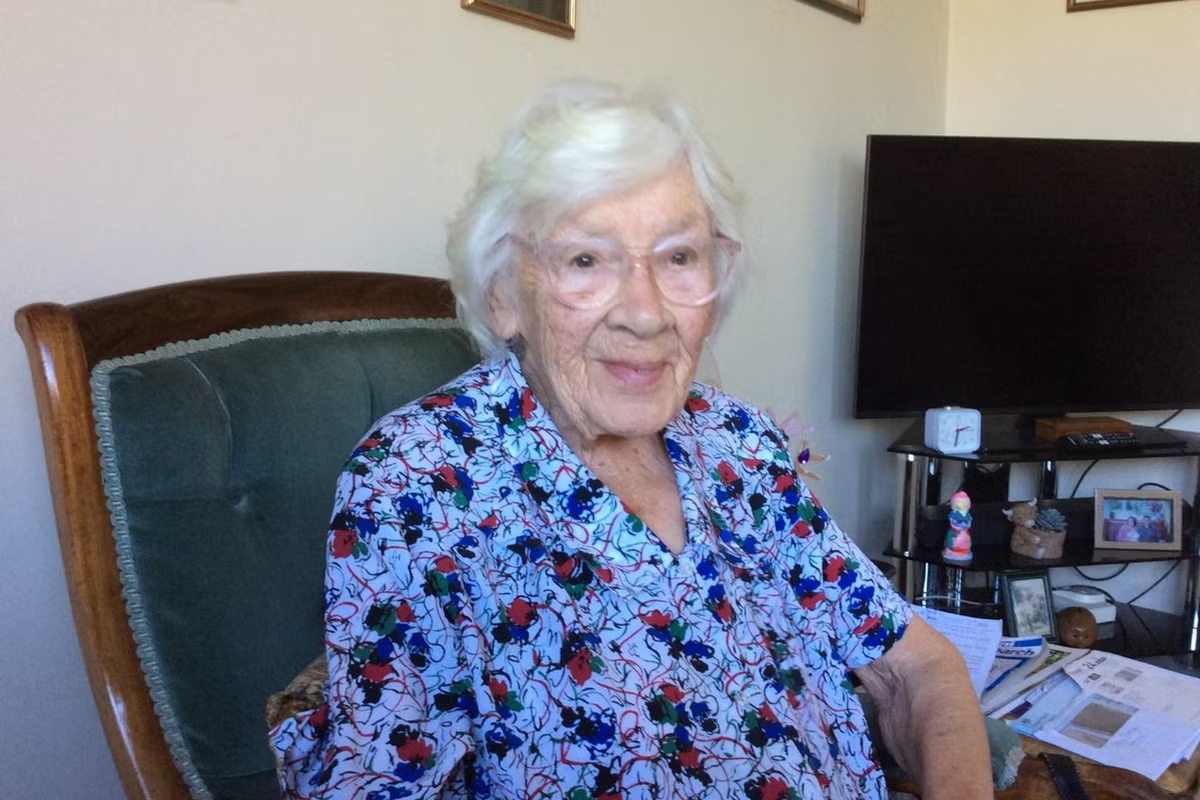
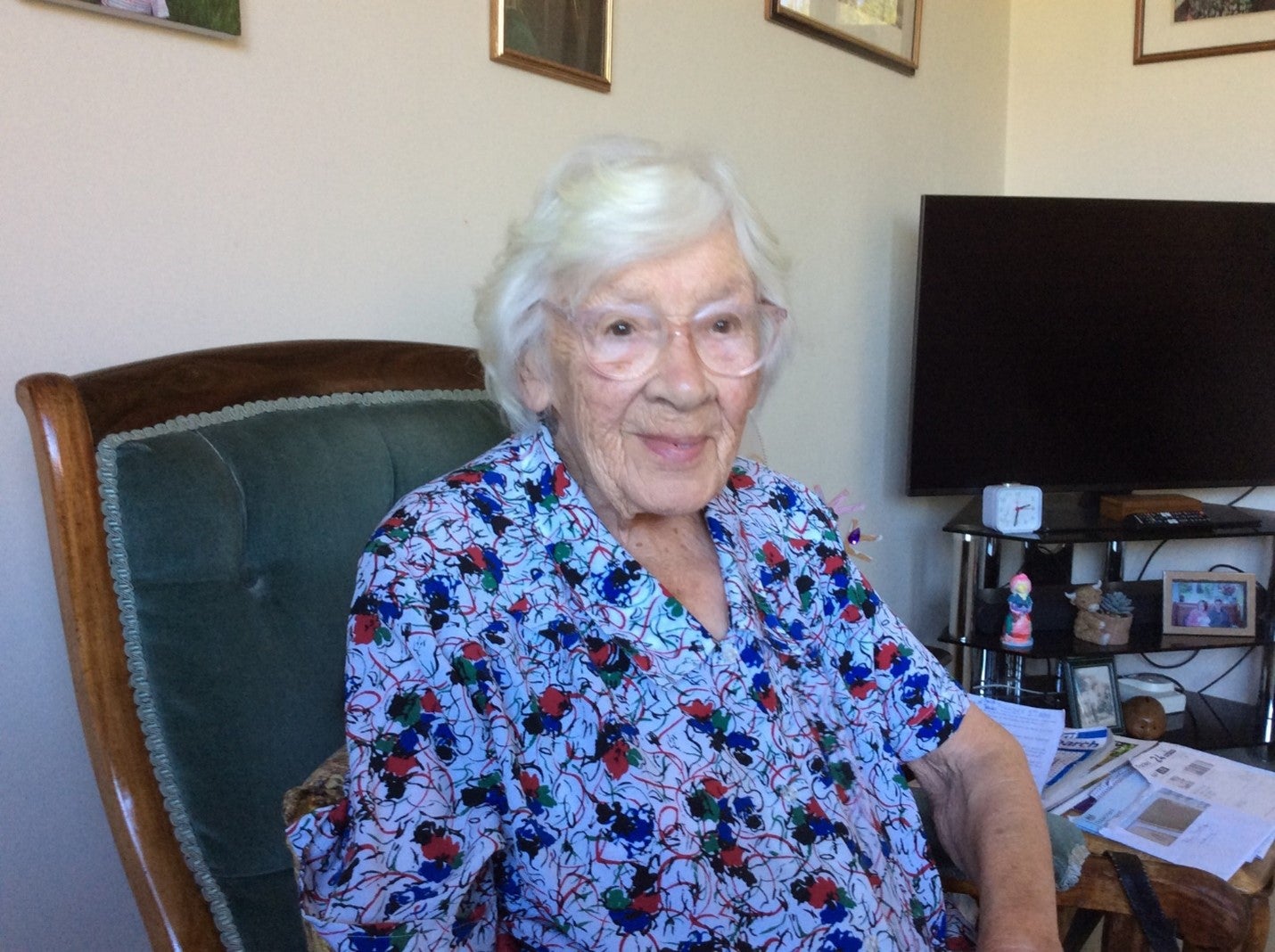
A 92-year-old great-grandmother has become the first person in the UK to receive a pioneering cancer treatment after being told her liver tumour was inoperable.
Brenda Iveson, from Harrogate in North Yorkshire, was initially told conventional cancer therapies, including surgery, chemotherapy and radiotherapy, would be ineffective against the six-centimetre tumour in her liver.
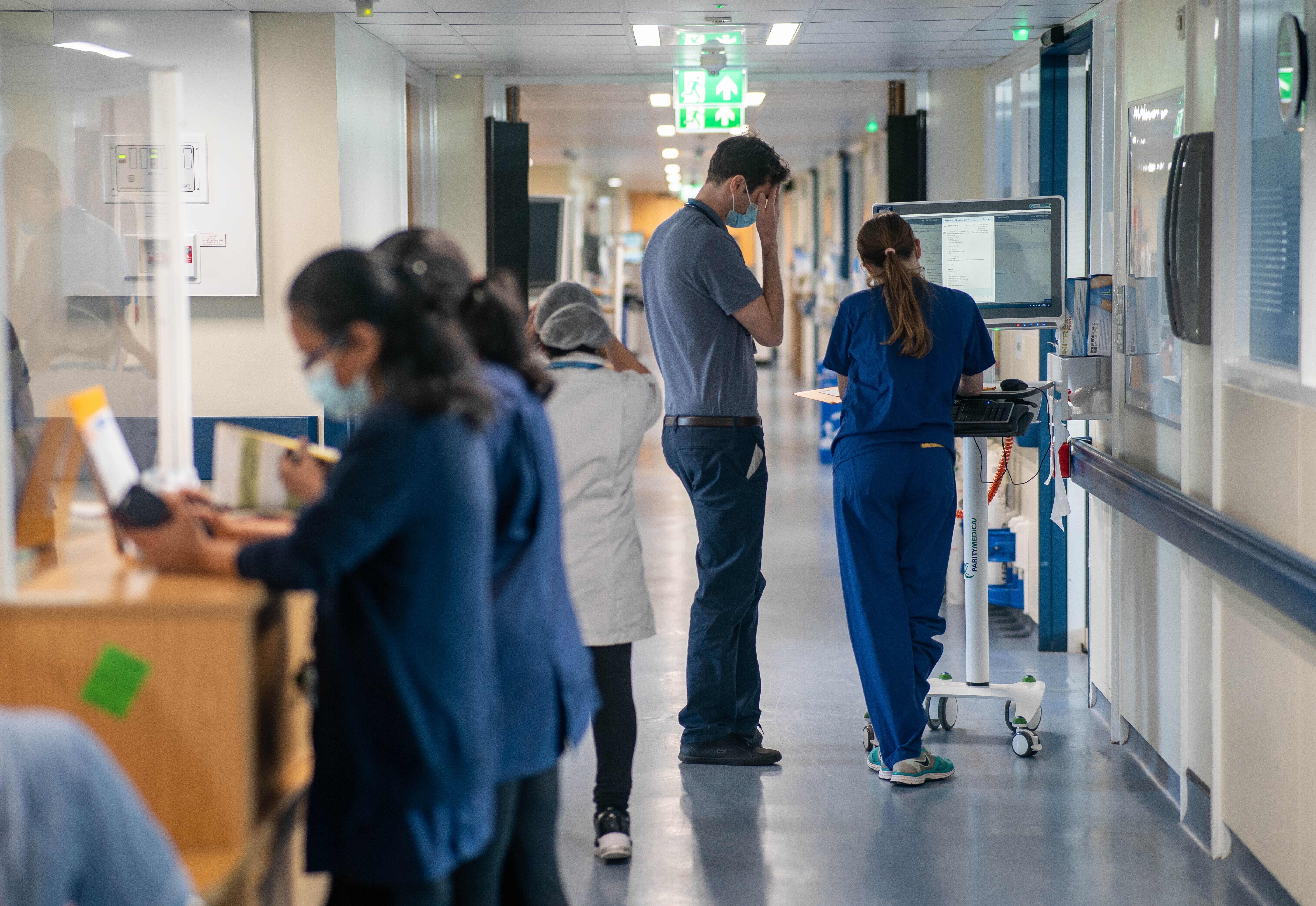
However, medics at Leeds Teaching Hospitals NHS Trust offered her a minimally invasive alternative, robotic-guided electrochemotherapy – a treatment that combines a small dose of chemotherapy with targeted electrical pulses.
Surgeons used robotic needle guidance to precisely position needles around the tumour, directing the treatment in a method never before performed in the UK.
Advertisement
Now Mrs Iveson’s tumour has shrunk by around 80 per cent.
Due to the tumour’s location and her frailty, Mrs Iveson had been told “nothing could be done” following her diagnosis in late 2025.
Brenda Iveson (PA)
But when Professor Tze Min Wah, research and innovation lead for the interventional oncology programme at Leeds Teaching Hospitals NHS Trust and professor of interventional radiology at the University of Leeds, saw Mrs Iveson’s case, she realised that the pioneering treatment could offer hope to Mrs Iveson and her family.
Clinicians used robotic needle guidance to precisely place needles around the tumour.
The technology helps improve the accuracy of the electrochemotherapy, particularly for tumours in complex or hard-to-reach areas.
Advertisement
The treatment was carried out under general anaesthetic and does not use heat, which means it can safely treat tumours located close to vital structures such as blood vessels and bile ducts.
It is the first time this treatment has been delivered alongside the robotic guidance in a liver in the UK, Leeds Teaching Hospitals said.
Mrs Iveson said: “I had been told there was nothing that could be done.
“So to be offered this treatment gave me real hope. I’m so glad I went ahead — it wasn’t painful or debilitating, and I feel very well.”
Advertisement
Medics at Leeds Teaching Hospitals NHS Trust offered Mrs Iveson a minimally invasive alternative, robotic-guided electrochemotherapy (PA)
Professor Wah said: “This treatment allowed us to offer an option where there would otherwise have been none.
“The addition of robotic guidance improves precision and opens up new possibilities, particularly for patients with tumours in difficult locations or who are not suitable for other treatments.”
She said: “Introducing robotic guidance really helped with this particular case, the needles provided more accurate placement and made the treatment times shorter – she is the UK first for the robotic guidance to insert the electrode chemotherapy needles into the tumour for treatment.
“She is doing well and she is very grateful that she has had this treatment because otherwise she did not have any other options.”
Main symptoms of liver cancer
NHS
Symptoms of liver cancer can include:
Advertisement
the whites of your eyes turning yellow or your skin turning yellow, which may be less obvious on brown or black skin (jaundice) – you may also have itchy skin, darker pee and paler poo than usual
loss of appetite or losing weight without trying to
feeling tired or having no energy
feeling generally unwell or having symptoms like flu
a lump in the right side of your tummy
Other symptoms can affect your digestion, such as:
feeling or being sick
pain at the top right side of your tummy or in your right shoulder
symptoms of indigestion, such as feeling full very quickly when eating
a very swollen tummy that is not related to when you eat
Leeds Teaching Hospitals NHS Trust is currently the only hospital in the UK delivering liver cancer electrochemotherapy as part of a European research study.
The study is assessing the safety and efficacy of the treatment for patients with liver cancer. It is also examining the impact of survival, quality of life and pain.
Mrs Iveson, who has been happily married for 70 years, said: “Research may offer real results when there are no other options.
“You’re looked after so well, and it’s how medicine moves forward. If it helps me and future patients, then it’s worth it.”
Current scans show that Mrs Iveson’s tumour is in a stable condition and she is being monitored closely by experts at the hospital trust.
Advertisement
“We are all happy that something could be done that might prolong my life and which was not painful or debilitating in any way,” Mrs Iveson added.
“It seems to be a very effective treatment and particularly useful in older patients who are frail.”
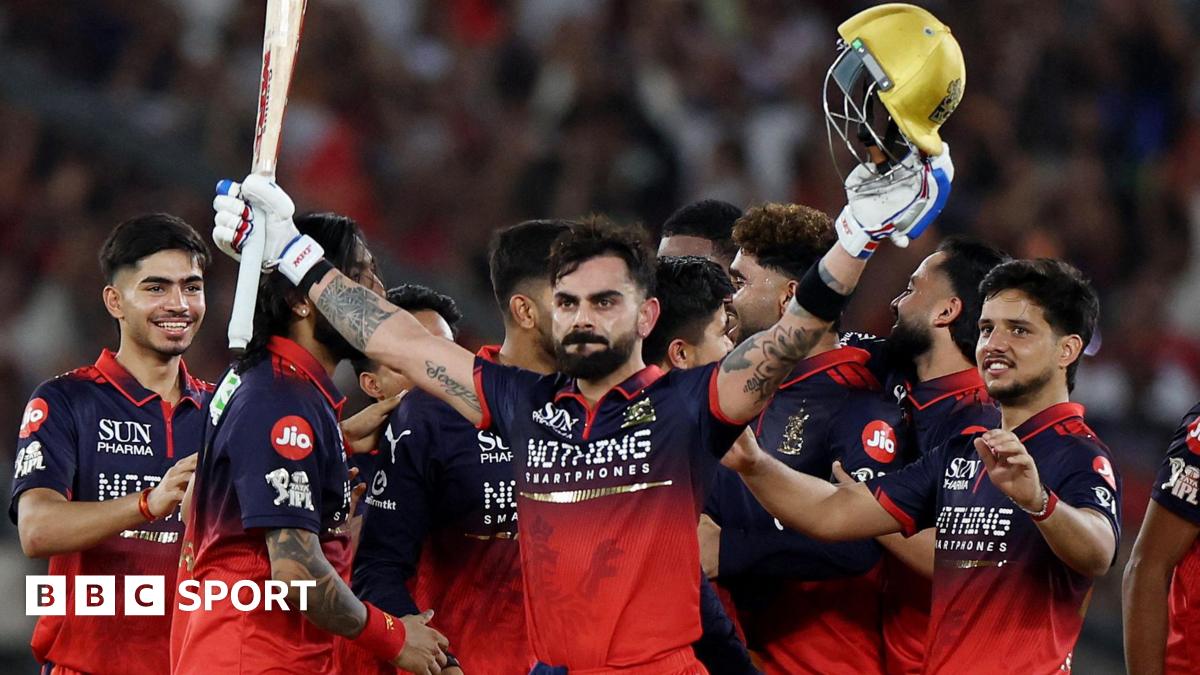
With the stadium awash with shirts bearing Kohli’s name and iconic number 18, the former India captain delivered once again on the biggest stage.
He may turn 38 later this year but a player famed for his ability to master a chase shows there is plenty left in the tank as he chalked up his fastest IPL half-century.
Kohli and fellow opener Venkatesh Iyer, who struck 32 from 16 balls, gave RCB the perfect start with a rapid 62-run opening stand.
Mohammed Siraj made the breakthrough by dismissing Iyer, before Kagiso Rabada removed Devdutt Padikkal to give Gujarat with an opening.
Advertisement
Rashid Khan then swung momentum further in the Titans’ favour, claiming two wickets in an over as captain Rajat Patidar fell for 15 and Krunal Pandya followed soon after.
But Kohli, who retired from T20 internationals after the 2024 World Cup, remained stoic, as he shared a crucial 41-run partnership with Tim David to steady the chase.
David made 24 before departing, which left Kohli to guide RCB home alongside Jitesh Sharma.
Kohli even provided the iconic ending the majority of those inside the stadium craved as he crashed Arshad Khan over long-on for six to seal the victory.
Advertisement
“Such is the demand of the sport today. You have these super young players pushing you all the time and asking you to change your game and up the ante,” said Kohli after winning the player-of-the-match award.
“It’s an exciting situation because it gives you something to improve on, something to work towards. And I just take a lot of pride in getting better and just trying to figure out areas where I can improve.”
The free community event, backed by Darlington Borough Council, took over the Market Hall on Sunday (May 31) from midday until 4pm, with stalls, food and activities.
Eid al-Adha, known as the “Festival of Sacrifice”, is one of the most important dates in the Islamic calendar, marking Prophet Ibrahim’s obedience to God and falling on the 10th day of Dhu al-Hijjah.
Pictures show visitors at the market sampling a range of food and drink, with Rumi’s Kitchen, Deli-cious and Ambi Ambi Mocktails among those serving up dishes and alcohol-free cocktails.
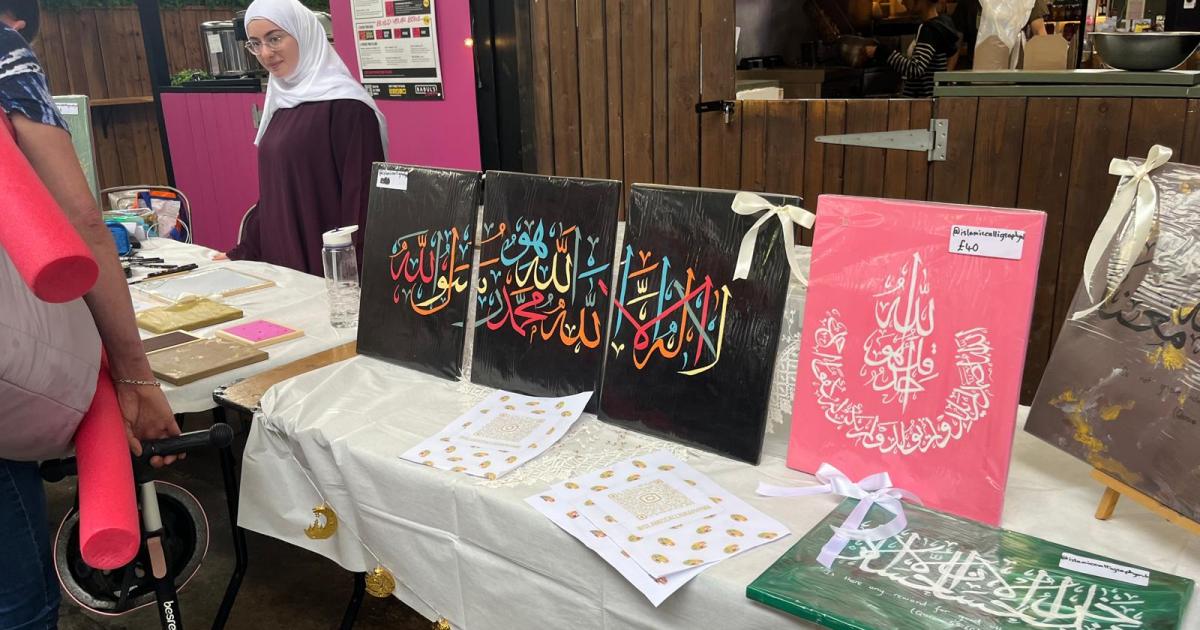
Families headed to Darlington Market today as the town came together to celebrate Eid al-Adha (Image: THE NORTHERN ECHO)
Families headed to Darlington Market today as the town came together to celebrate Eid al-Adha (Image: THE NORTHERN ECHO)
Families headed to Darlington Market today as the town came together to celebrate Eid al-Adha (Image: THE NORTHERN ECHO)
Families headed to Darlington Market today as the town came together to celebrate Eid al-Adha (Image: THE NORTHERN ECHO)
Stalls also offered sweets and savoury treats, adding to the festive atmosphere.
Advertisement
There was a variety of arts and crafts, with Islamiccalligraphymb creating personalised Arabic calligraphy and canvases, and Khurshada showcasing handmade arts, crafts and henna.
Families headed to Darlington Market today as the town came together to celebrate Eid al-Adha (Image: THE NORTHERN ECHO)
Families headed to Darlington Market today as the town came together to celebrate Eid al-Adha (Image: THE NORTHERN ECHO)
Families headed to Darlington Market today as the town came together to celebrate Eid al-Adha (Image: THE NORTHERN ECHO)
Meedhi Mehendi Henna Artist was also there offering traditional henna designs.
Shoppers browsed clothes, jewellery, accessories, knitwear and other items from a variety of traders.
The event formed part of a series of council-supported activities aimed at bringing communities together in the town centre.








































You must be logged in to post a comment Login