Two young people have tragically died and others been hospitalised from meningitis.
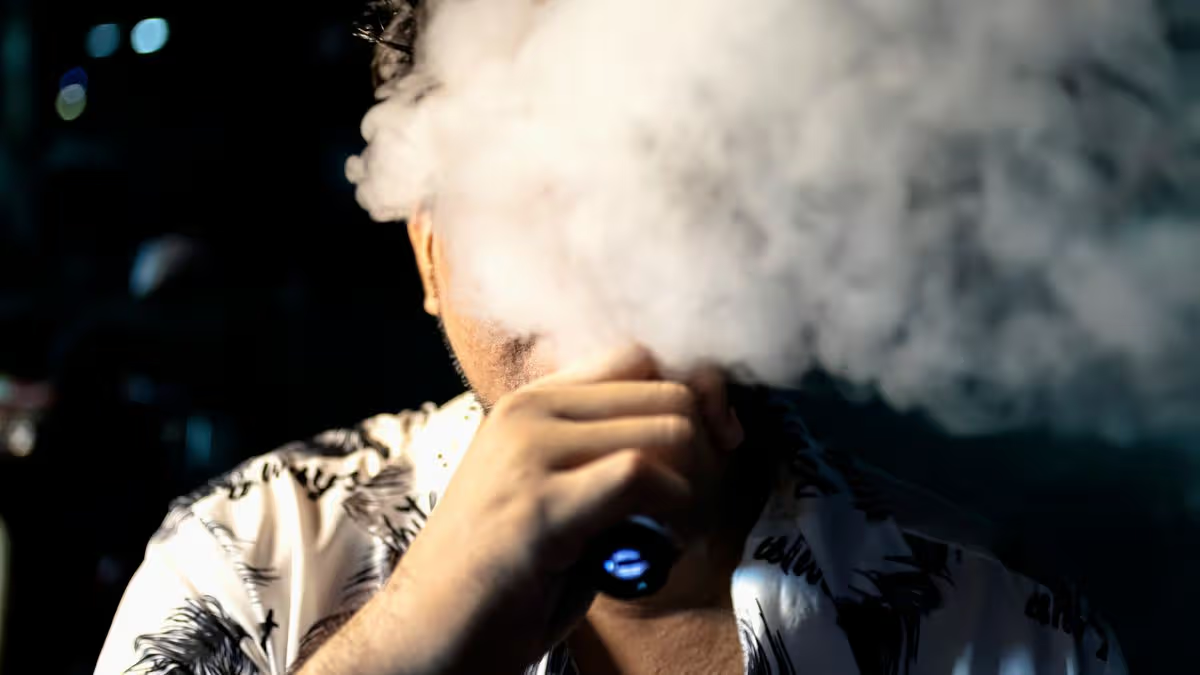
People are being urged not to share vaping devices amid the ongoing meningitis outbreak, with experts warning the habit could significantly increase the risk of spreading infections.
An 18-year-old high school pupil and a student from the University of Kent are among those who have lost their lives. Infections have been reported across the county, with the UK Health Security Agency confirming that at least 11 people are currently receiving hospital treatment.
The warning is particularly aimed at young people, as vaping is most prevalent among this group. Research suggests around 27 per cent of those aged 16 to 24 in the UK use e-cigarettes and vapes, making them the highest-usage age bracket.
Meningitis can be transmitted through close personal contact, including coughing, kissing and sharing drinks. Health experts say that sharing a vape poses a similar risk, as it can easily transfer saliva between users.
Advertisement
Shane Margereson, a vaping industry expert and owner of Ecigone, has stressed the importance of avoiding the habit altogether. And he warned that the risks are even greater during an outbreak of infectious disease.
Shane stated: “Just like smoking, many people will pass a vape to a friend without thinking about it, but this is something you should never do. Vaping devices come into direct contact with the mouth and can transfer saliva from one person to another.
“During outbreaks of infectious illnesses, sharing anything that involves saliva, including vaping, will increase your risk of spreading bacteria and viruses.”
Advertisement
Shane continued: “This can expose you to common viral infections like colds and flu, and also more serious illnesses such as meningitis, which can spread through close contact with respiratory droplets and saliva.”
Due to this, experts say vaping devices should be treated in the same way as other personal hygiene items, such as toothbrushes, drink bottles and eating utensils, all of which are personal items that shouldn’t be shared with others.
“Even if someone is healthy, they may be carrying bacteria or viruses without realising it. Passing vapes around in social settings can increase the risk of spreading infections,” Shane added.
The current strain of meningitis which is affecting Kent is meningitis group B. It predominantly affects babies, young children, and young adults, and can prove extremely serious without quick treatment.
Warning signs include high temperatures, headaches, rashes, fits, being sick, lethargy and neck stiffness. These symptoms can appear in any order.
Additionally, it is important to note that you do not always get all the symptoms if you have meningitis. The NHS recommends that people call 999 for an ambulance or go to their nearest A&E, if they have any symptoms or suspect they have the disease.
People are advised to trust their instincts, as someone with meningitis or sepsis can get a lot worse very quickly.
Advertisement
Additionally the NHS recommend calling 111 for advice if you are unsure about your symptoms or you think you have been in contact with someone with meningitis.
Husna Anjum, Kelly Williams and Husna Anjum Senior Live News Reporter
21:23, 06 Apr 2026
A mum died four years after being told she “had nothing to worry about” when she had a mole removed from her back. Now Josie Thompson’s family are urging people to wear sunscreen frequently to prevent the risk of metastatic malignant melanoma.
The mum-of-two sadly passed away at age 37 on March 28 this year, DailyStar reports. In the summer of 2022, Josie’s husband, Laith, 39, noticed a slight change in a mole on her back – it had become darker and irregular in shape.
Advertisement
After visiting the doctors, she was referred to a local dermatology department where the mole was removed. Josie was reassured that there was nothing to worry about – but shortly after its removal, the mole began to regrow through the scar tissue.
Despite a second removal with a wider excision, she was again told the mole was not cancerous and was never referred for CT or PET scans – even though she requested them. By March 2023, the mole had regrown, and a CT scan and a lymph node biopsy eight months later revealed melanoma in her lymph nodes, and stage three cancer.
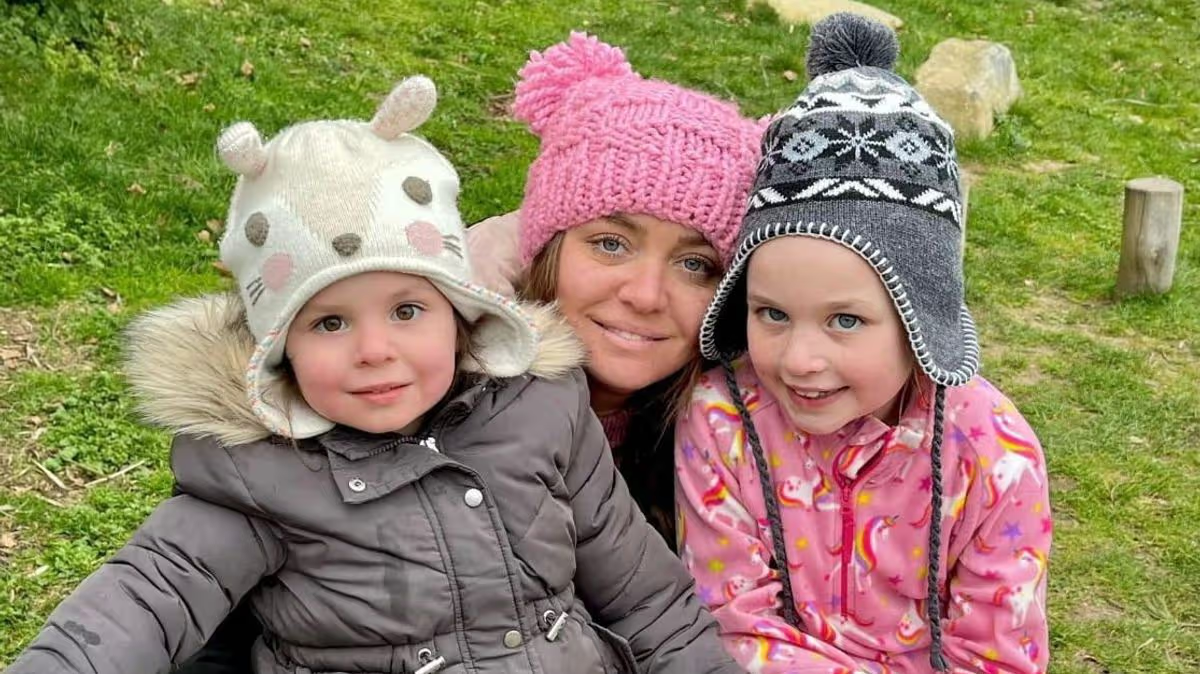
Josie received the devastating news over the phone while at the aquarium with her two daughters, Rebecca, 10 and Sophie, 6. Tragically, despite “fighting everyday for her girls,” she passed away at the age of 37, reports the Manchester Evening News.
Her grieving family are now hoping to share Josie’s inspiring story to encourage people to be aware of their skin, get checked if any changes are noticed, and hopefully save lives.
They are campaigning for heightened awareness regarding skin protection – including avoiding sunbeds, getting any unusual marks examined promptly, and wearing SPF50 – even during winter.
Jade Thompson, 40, described her sister as an “incredible fighter” who was always cautious and careful with her fair skin. Jade, from Plymouth, Devon, said: “They told her the mole was nothing to worry about.
“It was the biggest shock ever to learn, after eight long months, that she had stage three melanoma and it had spread to her lymphatic system. We were told for so long everything was OK. I carry so much anger – she did everything right.”
Advertisement
Specialists referred Josie for immunotherapy in March but unfortunately the second round made her very poorly and induced Myasthenia gravis – a chronic autoimmune neuromuscular condition.
Jade said: “She started noticing neurological changes – her breathing became difficult, her eyes started drooping, and her movements started to change. It was so serious that she ended up in ICU because her lungs just weren’t working.”
Specialists determined that it was too dangerous to continue with immunotherapy – with the Myasthenia Gravis now posing more risk than the cancer, said Josie.
With no treatment for the cancer itself, the disease soon spread to her liver, lungs and eventually her spine. The family said they exhausted every avenue to try and help her. Jade revealed: “We reached out to doctors all over the world and no one could help. Josie even radically changed her diet and adopted such a positive mindset.
“We really did try every avenue, spiritually, emotionally and physically – she so desperately did not want to die. She kept fighting everyday for her girls – they are the most important thing.
“I have never known true strength until I saw what my sister went through, she lost everything with this disease – but it didn’t change her spirit.”
The family managed to celebrate Josie’s 37th birthday together at Disneyland Paris last year – which Josie described to her family as a “dream come true”.
Her final months were spent being cared for at St Luke’s Hospice in Plymouth. Jade said the care her sister received there was “nothing short of incredible”.
During her treatment, Josie established an online community named ‘Josie’s Journey’ – which gathered over 3,500 followers on Facebook.
She utilised her platform to raise awareness and encourage others to get checked – and she received numerous messages informing her she had helped people detect their skin cancer early.
Advertisement
Jade stated: “Josie created a real community of people and the support they gave her over the years really kept her going. It makes me so so proud, knowing that she has saved lives means everything and was so important to her. She used to say, ‘if this can save one life it’s worth it’. That is her legacy.”
The family are now spreading the word about the risks of skin cancer and how individuals can take precautions to safeguard themselves.
Jade stated: “People think you can just cut skin cancer out and are quite blasé about it – but melanoma is one of the most deadly cancers.
“I had never really heard of melanoma before this, but the amount of people that have reached out to Josie on her Facebook page to say they are going through similar things is crazy.
Advertisement
“We’re clearly warned that smoking causes lung cancer, with messages printed on cigarette packets, but we don’t feel the same level of awareness exists when it comes to skin cancer.
“When you’re in your teens or twenties, having a tan often feels like such an important thing – we’ve all been guilty of it. But it’s vital that people take a moment to think about the risks. The use of sunbeds is a major contributing factor to skin cancer cases worldwide.
“In a lot of countries sunbeds are banned – but not in the UK. We need to raise awareness about the dangers: protecting your skin doesn’t mean avoiding the sun completely, it means being sensible.
“Wear SPF30–50 every day (even in the UK) and reapply regularly, especially if you’re sweating or swimming, cover up with hats, sunglasses and light clothing, and avoid the strongest sun between 11am and 3pm where possible.
Advertisement
“Skip sunbeds altogether as they increase the risk of melanoma, and keep an eye on your skin – if you notice any changes, get them checked. Melanoma doesn’t always start from an existing mole.”
Jade has initiated a fundraiser to assist Josie’s family – her two young daughters and her husband, Laith, whom she had been with since she was 14. The funds will help cover Josie’s funeral expenses and contribute towards the care of the young girls.
Jade further stated: “Laith had to become a full-time carer due to Josie being so unwell and spending long periods in hospital over the past three years.
“The life insurance will not come through as expected – they accepted a small percentage payout after her diagnosis to provide short-term support, unaware that this would cancel the policy entirely.
Advertisement
“They sought advice from a solicitor, and unfortunately, this decision still stands. It is just an impossible situation for the family – people who have worked hard all their lives to be let down in their time of need.
“We just want to say that we have received so much kindness and support. This meant everything to Josie and it made such a difference while she was still here – and we have to keep her message going. She means the absolute world to us and we will miss her every single day.”
Want to see more of the stories you love from Belfast Live? Making us your preferred source on Google means you’ll get more of our exclusives… To add Belfast Live as a preferred source, simply click here.
Autostructures UK, which is based in Telford, appointed administrators towards the end of March.
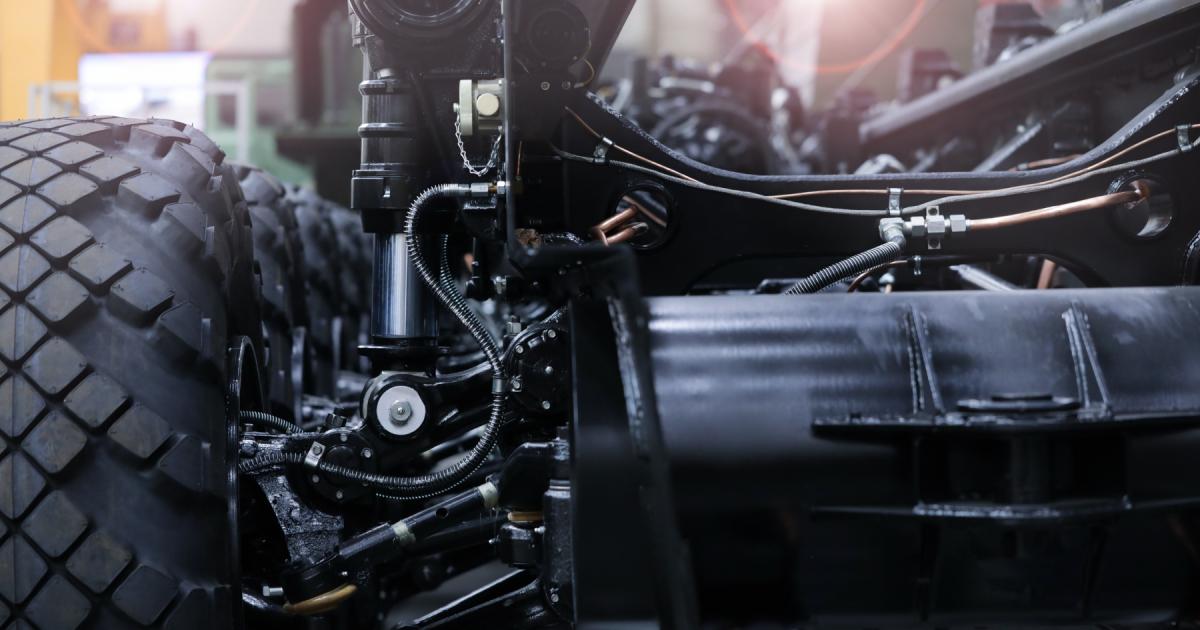
It worked as a supplier for JCB for 30 years, providing over 22,000 chassis frames and helping the company make the world’s fastest tractor.
They helped design and manufacture specialised wheel components for its Fastrac model, which can reach a peak speed of 153.771mph.
Autostructures UK worked as a supplier for JCB (Image: Getty Images)
Companies House states it was incorporated on March 10, 1958, initially being known as Alexander Socket Screws Limited.
Advertisement
A notice on Autostructures UK’s website states: “Christopher Pole, Ryan Grant and Sam Birchall were appointed Joint Administrators of Moveero Ltd – in Administration (the ‘Company’) on 25 March 2026.
“The affairs, business and property of the Companies are being managed by the Joint Administrators.
“Christopher Pole, Ryan Grant and Sam Birchall are authorised to act as insolvency practitioners by the Institute of Chartered Accountants in England & Wales.”
Why has Autostructures UK gone into administration?
Moveero Ltd is the parent company of Autostructures UK, which manufactures construction vehicles, as well as wheels, rims and hubs for farming.
Advertisement
Administrators Interpath shared that the Moveero group continues to operate profitably, with the rest of the group’s businesses in the US and Denmark not affected by the administration in the UK.
It explained that the business based in the UK had faced major operational challenges due to a weakened off‑highway market, downward pricing pressure and competition from rivals.
In a statement, Interpath said: “As a result of these ongoing challenges, the directors of the businesses have taken steps to protect the interests of creditors by appointing administrators.
Recommended reading:
Advertisement
“This will allow the UK businesses to continue trading while buyers for the businesses and their assets are pursued, with all staff retained during this period.”
David Geraghty, CEO of Moveero, said: “Against a difficult economic backdrop, we have worked tirelessly over the past 12 months to improve the financial performance of the UK business.
“We are incredibly grateful for the support of our brilliant team and also the support of our customers who have provided us with funding in recent days which has given us the additional time we need to continue to explore the options available.”
Have you noticed an increased number of businesses closing or going into administration in your area this year? Let us know in the comments.
Whether you’ve followed the Oscar-winning British actor for years, have recently discovered his work or are a casual fan who dips in and out of his acclaimed repertoire, there’s one show many agree is up there as one of his very best.
Almost 10 years after it first hit the air, his HBO thriller from 2016, The Night Of, is resurfacing once more as the top recommendation for those wanting to consume all things Riz.
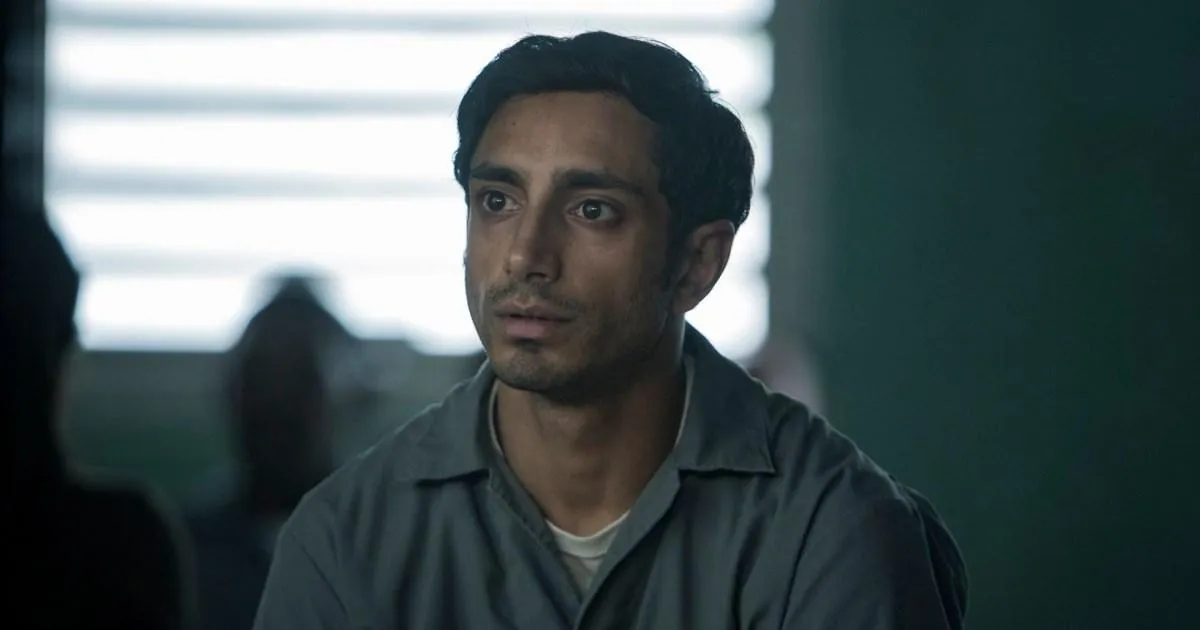
A US remake of the 2008 British series Criminal Justice starring Ben Whishaw, The Night Of follows Riz’s character, Pakistani-American college student Nasir ‘Naz’ Khan, who is taken into custody after he is accused of the murder of a young woman.
Advertisement
As the synopsis for the eight-part limited series reads: ‘Nasir Kahn gives a lift to a mysterious woman and takes her to a party hosted by his friend.
‘However, he is charged with murder when she is found dead and must prove his innocence.’
His stellar portrayal of Naz landed him the Emmy Award for outstanding lead actor, as well as the show securing a 94% critics and 93% audience score on Rotten Tomatoes.
Advertisement
‘Magnificent. The actors are absolutely incredible in this,’ RT user Rob W wrote.
‘I don’t know how this slipped past me, but it’s one of the best things I’ve watched,’ Simon B shared.
‘A gripping, all-too-real crime thriller, The Night Of is peak HBO programming, with stellar performances, gorgeous cinematography and brilliant writing,’ Korra N praised.
The Emmy winner’s co-stars have also been widely praised, including John Turturro (Picture: Home Box Office, Inc. All)
Over on X, ‘Even if the only thing you’ve ever seen Riz Ahmed in is ‘The Night of…’ you’d know the range this bloke has. So glad he’s getting his flowers and hopefully more projects with it. Top-tier actor, one of our very best British actors,’ Jared Chammach declared.
‘Riz Ahmed and John Turturro, both outstanding,’ El_mauz shared.
Advertisement
Critics are in consensus about the Steve Zaillian and Richard Price co-created show.
‘The storytelling is suspenseful and cinematic; the characters complex and layered, with plot twists and turns that will keep viewers guessing throughout each of the eight episodes,’ People Magazine shared.
‘From start to finish, The Night Of thrived on the strength of its actors, particularly Ahmed and Turturro,’ IGN Movies reflected.
Riz Ahmed did lots of deep preparation ahead of portraying Nas (Picture: HBO)
‘That’s the brilliance of The Night Of; not that it invites us inside a jail cell, but that it dares us to lock the door,’ The Observer posed.
In an interview at the time, the Hamlet star spoke about how he prepared for the role, which included visiting Rikers Island and interviewing ex-inmates.
Advertisement
‘What I tried to do was to use the writing as a series of clues, and do my detective work. Go out and interview lots of people.
‘The main thing I wanted to try and get across was that prison experience, in an authentic way. I just felt a great sense of responsibility to the people who were kind enough to share their stories with me,’ he told Vanity Fair.
The Night Of is available to stream on HBO Max and NOW.
Got a story?
Advertisement
If you’ve got a celebrity story, video or pictures get in touch with the Metro.co.uk entertainment team by emailing us celebtips@metro.co.uk, calling 020 3615 2145 or by visiting our Submit Stuff page – we’d love to hear from you.
The Artemis II astronauts are now the farthest humans from Earth that there have ever been.
Advertisement
The record-breaking crew chose the poignant moment to propose naming two craters on the dark side of the moon after their ship Integrity and commander Reid Weisman’s wife Carroll, who sadly passed away before the mission.
Jeremy Hanson said in a tearful communication as they floated 248,655 miles from Earth: ‘We lost a loved one.’
Pointing out the never-before-seen crater, he said: ‘There is a feature on the near side boundary of the moon and so in certain times we will be able to see it from Earth.
The Orion capsule will now whip around the Moon, setting the crew up to travel farther from our home planet than any human before.(Picture: AFP)
‘We lost a loved one, her name was Carroll she was a mother of Katie and Ellie. It’s a bright spot on the moon. We would like to call it Carroll.’
Advertisement
NASA astronaut Reid Wiseman choked up as he dedicated a crater to his dead wife (Picture via REUTERS)
‘Integrity and Carroll crater. Loud and clear’, comes the message back from NASA.
The six-hour flyby is the highlight of NASA’s first return to the moon since the Apollo era.
Less than an hour before kicking off the fly-around and intense lunar observations, the four astronauts surpassed the distance record of 248,655 miles (400,171 km) set by Apollo 13 in April 1970.
They kept going, hurtling ever farther from Earth. Before it was all over, Mission Control expected Artemis II to beat the old record by more than 4,100 miles (6,600 km).
Advertisement
The astronauts woke up to the voice of Apollo 13 commander Jim Lovell, who recorded the message just two months before his death last August. ‘Welcome to my old neighborhood,’ said Lovell, who also flew on Apollo 8, humanity’s first lunar visit. ‘It’s a historic day and I know how busy you’ll be, but don’t forget to enjoy the view.’
NASA astronaut and Artemis II Commander Reid Wiseman peers out of one of the Orion spacecraft’s main cabin windows, looking back at Earth (Picture via REUTERS)
They took up with them the Apollo 8 silk patch that accompanied Lovell to the moon, and showed it off as the crucial flyby approached. ‘It’s just a real honor to have that on board with us,’ said commander Wiseman. ‘Let’s go have a great day.’
Artemis II is using the same manoeuvre that Apollo 13 did after its ‘Houston, we’ve had a problem’ oxygen tank explosion wiped out any hope of a moon landing.
Known as a free-return lunar trajectory, this no-stopping-to-land route takes advantage of Earth and the moon’s gravity, reducing the need for fuel. It’s a celestial figure-eight that will put the astronauts on course for home, once they emerge from behind the moon Monday evening.
NASA Artemis II mission specialist and CSA (Canadian Space Agency) astronaut Jeremy Hansen enjoys a shave inside the Orion spacecraft during Flight Day 5 (Picture: via REUTERS)
Wiseman, pilot Victor Glover, Christina Koch and Canada’s Jeremy Hansen were on track to pass as close as 4,070 miles (6,550 kilometers) to the moon, as their Orion capsule whips past it, hangs a U-turn and then heads back toward Earth. It will take them four days to get back, with a splashdown in the Pacific concluding their test flight on Friday.
Their expected speed at closest approach to the moon: 3,139 mph (5,052 kph).
Advertisement
Wiseman and his crew spent years studying lunar geography to prepare for the big event, adding solar eclipses to their repertoire during the past few weeks.
Advertisement
By launching last Wednesday, they ensured themselves of a total solar eclipse from their vantage point behind the moon, courtesy of the cosmos.
Topping their science target list: Orientale Basin, a sprawling impact basin with three concentric rings, the outermost of which stretches nearly 600 miles across.
Other sightseeing goals: the Apollo 12 and 14 landing sites from 1969 and 1971, respectively, as well as fringes of the south polar region, the preferred locale for future touchdowns. Farther afield, Mercury, Venus, Mars and Saturn — not to mention Earth — will be visible.
Artemis II is NASA’s first astronaut moonshot since Apollo 17 in 1972. It sets the stage for next year’s Artemis III, which will see another Orion crew practice docking with lunar landers in orbit around Earth. The culminating moon landing by two astronauts near the moon’s south pole will follow on Artemis IV in 2028.
Advertisement
While Artemis II may be taking Apollo 13’s path, it’s most reminiscent of Apollo 8 and humanity’s first lunar visitors who orbited the moon on Christmas Eve 1968 and read from the Book of Genesis.
Glover said flying to the moon during Christianity’s Holy Week brought home for him ‘the beauty of creation.’ Earth is an oasis amid ‘a whole bunch of nothing, this thing we call the universe’ where humanity exists as one, he observed over the weekend.
‘This is an opportunity for us to remember where we are, who we are, and that we are the same thing and that we’ve got to get through this together,’ Glover said, clasping hands with his crewmates.
SNL star Chloe Fineman is facing growing criticism for a story about pulling down a child’s pants (Picture: Getty)
Saturday Night Live star Chloe Fineman is facing backlash after the resurfacing of a tale where she discussed ‘pantsing’ a six-year-old during summer camp.
The 37-year-old US comedian, who joined the SNL cast in 2019, recently took part in a Vanity Fair ‘How Well Do You Know Each Other’ interview alongside co-stars Mikey Day, Sarah Sherman, Ashley Padilla, Jane Wickline, and James Austin Johnson.
In a since-edited out clip from the 22-minute video, which has now resurfaced on social media, Chloe asked her fellow NBC comics if they knew which job she was once fired from (and later rehired) with a ‘bonus point’ if they could reveal why.
This led to her sharing the story of how she lost her job as a summer camp counsellor when she was 16.
Advertisement
I was fired as a camp counsellor. I pantsed a boy. He would lift my shirt all the time. It was a different time.
‘He would be like: “Hey, could I have a hug?” And then I’d go to hug him and he’d lift my shirt, like a d**k.
‘And then I was like: “I’m going to get back at you.” And so we were on a hike, and I was like: “Hey, Ollie, go look over there. It’s a hawk.” He looked and then I yanked his pants down, and then I was fired.’
She joked that the six-year-old boy’s ‘little ding-a-ling was out’ as he wasn’t ‘wearing underpants’ with Padilla responding: ‘Oh, honey, I think you’re on a list somewhere.’
Advertisement
Her other co-stars gasped in shock at the tale, with many covering their faces, with Fineman claiming it was ‘a different time’.
The original clip is now circulating on social media, with fans also sharing their horror at Fineman attempting to share the anecdote humorously.
She is best known for being part of the SNL cast but has also featured in several movies and TV shows (Picture: NBCUniversal Media, LLC)
‘This is such a disturbing thing to admit in an interview and omg the uncomfortable laughter among the cast mates, I feel so bad for them,’ X user Kylie wrote.
‘Can’t comprehend how any public figure in 2026 would share this story proudly and publicly, regardless of whether or not they personally think it’s an issue,’ sarahlovesnimbus added.
‘This is so much worse than I thought,’ cellularsodacan added.
Advertisement
‘I am actually stunned she pulled the “it was a different time” line here,’ Jessi reflected.
This is not the first time the screenstar has shared this story. She also recounted it on the Jake Shame podcast, Therapuss, last May, which is still on YouTube in full.
She also told the same story on the Jake Shane podcast last May (Picture: 2026 NBCUniversal Media, LLC)
The tale is told in much the same way, with similar details.
Beyond SNL, Fineman has also starred in several major movies and TV shows, including Freakier Friday, Big Mouth, Despicable Me 4, Babylon and Dickinson.
She is set to star in the upcoming Amazon Prime sequel, Red, White and Royal Wedding.
Advertisement
Metro has reached out to Chloe Fineman’s representatives and Vanity Fair for comment.
Got a story?
If you’ve got a celebrity story, video or pictures get in touch with the Metro.co.uk entertainment team by emailing us celebtips@metro.co.uk, calling 020 3615 2145 or by visiting our Submit Stuff page – we’d love to hear from you.
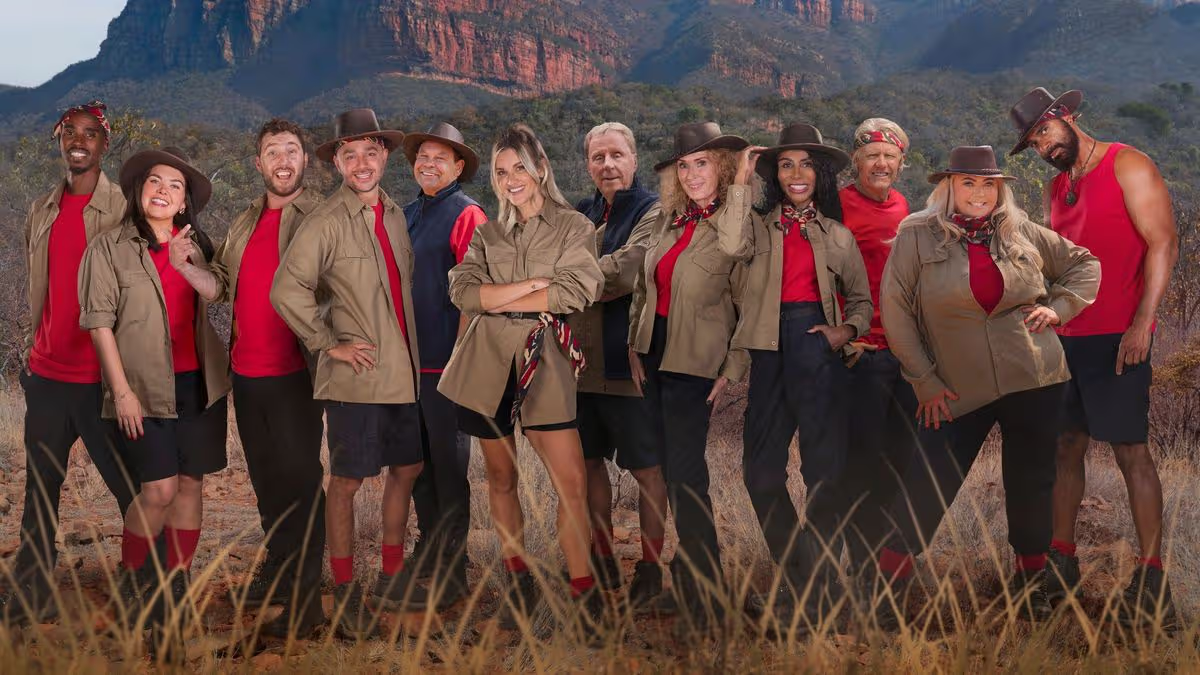
Fans of I’m A Celebrity believe one cast member will quit the South Africa spin-off series just days in, after their debut during the launch on ITV on Monday night
22:53, 06 Apr 2026Updated 22:54, 06 Apr 2026
Viewers of I’m A Celebrity South Africa believe that one campmate will quit very soon after the launch episode.
Proceedings kicked off on Monday night on ITV1, as hosts Ant and Dec greeted the brand new cast of the spin-off series. Of course every single one of them have been here before, sort of.
They are all former stars of the original series in Australia, while some filmed in Wales during the Covid pandemic. They have all faced the trials, camp dramas and the rest before now.
Advertisement
With that, one of the stars of the show made their return having quit their original series very early on. Gemma Collins made a brief debut on Monday but the last time she did the series, she left after just 72 hours.
Now, fans are predicting yet another early exit very soon on the series as it continues. Gemma is tipped “not to last” by viewers, while many are excited to see her take part.
Advertisement
A fan said: “Let’s take bets on how long Gemma Collins will last!! I’ll be surprised if she makes it till the end of tomorrow nights episode.” Another agreed: “First boot hopefully, maybe 3 days again.”
A third viewer said: “I do think she may quit again, but maybe after a few days this time.” Others were just thrilled to see a glimpse of her appearance after having to wait the entire first episode, which she did not feature in much at all.
Gemma was only in the preview for the next episode. One fan said: “We watched an hour and a half to see 3 seconds of Gemma,” as another wrote: “I’m only here for Gemma and Scarlett.” A further post said: “Gemma Collins is going to save this series!”
This year’s cast includes Adam Thomas, Ashley Roberts, Scarlett Moffatt, David Haye, Beverley Callard, Seann Walsh, Sinitta and Sir Mo Farah all taking part.
Advertisement
Gemma Collins, Craig Charles, Jimmy Bullard and Harry Redknapp complete the line-up. Coronation Street star Beverley jumped at the chance to say yes after appearing in the Welsh version during the pandemic.
She confessed: “I was really flattered when I got the call. In fact, I was gobsmacked! But I said ‘yes’ because Wales was so different. We didn’t get to experience the Australian jungle and the bedroom was minus one. To be part of the South Africa jungle is going to be a very different experience.”
This year, bosses have changed the format after fan complaints about the lack of viewer involvement, with everything pre-recorded in the last version. This time there will be a live final filmed in London.
Advertisement
The final will take place on Friday April 24th, three weeks after the show begins for a live final – with plenty of drama and twists. The public will get to choose who wins in a live episode, while the first series saw Myleene Klass crowned as the champion, and show Legend.
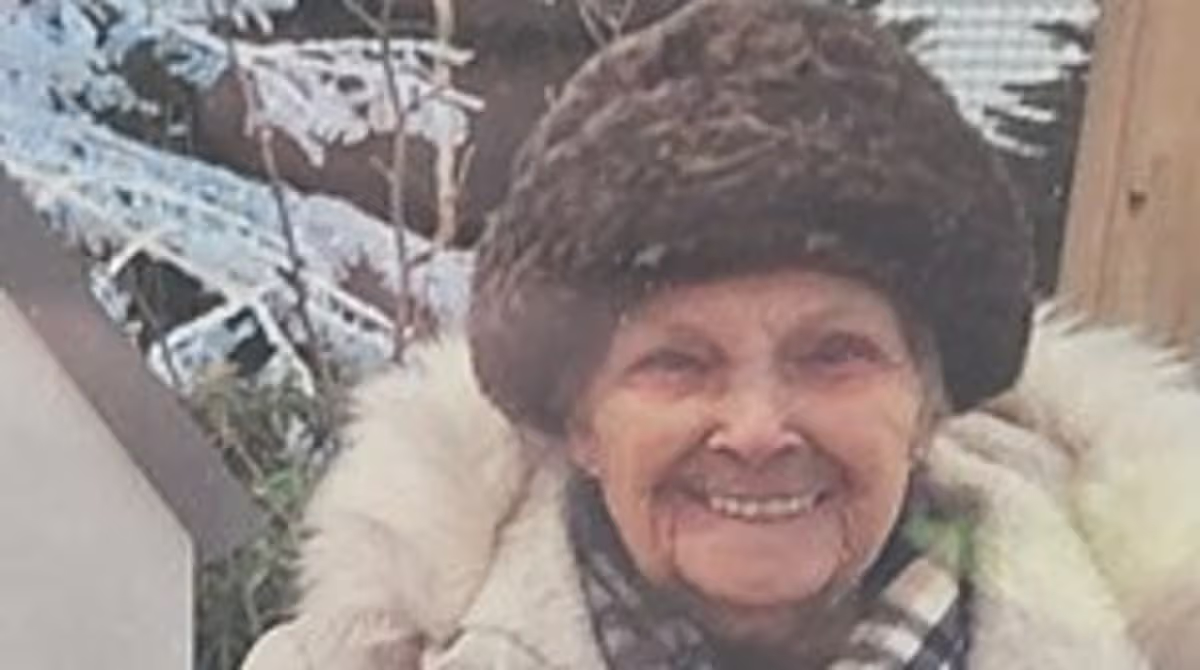
Elizabeth Deakin, 92, has been reported missing from Aberdeen.
There are growing concerns for the welfare of a pensioner who suffers from dementia after she vanished this afternoon. Elizabeth Deakin has been reported missing from Aberdeen.
Advertisement
The 92-year-old was last seen on King Street in the city at around 12.30pm on Monday, April 6. Officers are concerned for her welfare and they are appealing for information. Elizabeth is described as 4ft 2in, of medium build, with grey hair.
When last seen she was wearing a cream coat, black trousers, and a brown hat. She was also carrying a black handbag and using a black and dark green walking frame.
Inspector Kim Wilkie said: “Extensive enquiries are ongoing to trace Elizabeth. She is vulnerable and has dementia, so may appear confused or disorientated.
Advertisement
“I’m asking for the public’s help. Have you seen Elizabeth, or someone matching her description, since around lunchtime this afternoon? Do you have private CCTV or dash-cam footage from the area which may have captured her movements and could help us trace her movements? If you have any information, please come forward.”
Anyone who can help is urged to call Police Scotland on 101 quoting reference 1907 of April 6.
Get more Daily Record exclusives by signing up for free to Google’s preferred sources. Click HERE.
The Cheesecake Guy founded by Matt Kaplan, who is originally from The Big Apple, is situated on the Shambles, and is known for (you guessed it), “authentic” New York cheesecakes that are a “heavenly”.
Visitors said they have “never tasted a cheesecake as good as this” when stopping by the sweet treat paradise.
On The Cheesecake Guy website, Matt reveals: “I moved to York in 2014 from West Palm Beach, Florida.
Advertisement
“My wife grew up in Yorkshire and I loved it when I first visited, so much we decided to live here.
“In less than a year we had packed everything up, and were moving here, dogs and all!
“I was born in New York so living in ‘Olde’ York seems fitting!”
He adds: “Baking is in my blood, my grandfather owned his own bakery, Sherry’s, on 110th and Broadway in New York in the 1960s and 1970s, so it might not be a surprise to my grandmother that this is what I love to do.
Advertisement
“I can always remember him bringing home baker’s boxes at the end of each day!
“All my cheesecakes are baked – in my opinion the only way to make a cheesecake!”
Just some of the current cheesecake flavours available include vanilla, Biscoff, chocolate orange, Galaxy caramel, lemon, Kinder Bueno, peanut butter, banana, and so many more.
Advertisement
The Cheesecake Guy offers ‘a taste of New York in Old York’
On social media, Yorkshire-List praised The Cheesecake Guy for offering “authentic New York treats”.
In a video, the local food and travel expert commented: “Fancy a taste of New York in Old York? You’ll find The Cheesecake Guy on York’s famous Shambles and they’re whipping up authentic New York treats day in, day out.
“The owner was born and bred in New York and his family ran a popular New York bakery in the 60s, so you’re getting a truly authentic experience.
“Their baked cheesecakes are the star of the show with plenty of delicious flavours, from Biscoff to cookies and cream, and strawberry.
Advertisement
“The pistachio had to be our favourite.”
It continued: “As for the décor, it’s giving New York coffee shop and we loved all the quirky little wall stickers.
“If you’re in York, The Cheesecake Guy is definitely worth a visit.”
Matt shares that he loves to make new flavours on request and can make many of the flavours gluten-free, lactose-free or vegan – just email to find out more.
Other customers seem to agree with the Yorkshire-List as over on Tripadvisor, The Cheesecake Guy has a “very good” 4.7/5 rating.
Advertisement
This customer commented: “Met the cheesecake guy himself today Matt.
“Incredibly nice man and the cheesecake was first class best I’ve had.
Have you ever had a New York cheesecake? (Image: Tripadvisor)
“Didn’t even get chance to snap it before I’d eaten half of it. Recommend the pistachio. Will be back.”
Another recent guest posted: “A little taste of heaven! We ordered a selection of the moni cheesecakes and they were the perfect little treat!
Advertisement
“Each one was packed with mouthwatering sweetness and full of flavour bit not too much going on. Perfectly enjoyable.”
Someone else put: “Just the best cheesecake ever in the quirkiest street in York. Amazing flavours, and wonderful staff. Definitely worth a visit if you’re in York.”
Meanwhile, this profile commented: “Had the baklava cheesecake. Never tasted a cheesecake as good as this.
“This place must be visited if you want something exceptional whilst in York.”
Advertisement
Have you been to The Cheesecake Guy in York? Let us know what your favourite cheesecake flavours are.
Britain’s Katie Boulter suffered a first-round defeat to Romania’s Elena-Gabriela Ruse at the Upper Austria Ladies Linz Open.
Boulter, 29, went down 7-6 7-6 on clay to world number 87 Ruse, who will now face Ukraine’s Dayana Yastremska or American Ann Li in the last 16.
Boulter lost her first two service games in the opening set but twice broke before she was edged out in a tie-break.
The British number three broke Ruse’s serve for a third time to take an early advantage in the second set but her opponent immediately responded in a see-saw encounter.
Advertisement
Boulter staved off match point at 6-5 down to force another tie-break, but Ruse claimed two mini breaks to move 5-2 ahead before serving out to seal her win.
World number 62 Boulter won the fourth WTA Tour title of her career at the Ostrava Open in February and reached the last eight at the Merida Open in Mexico.
However, she did not make it past the second and third rounds respectively at Indian Wells and the Miami Open prior to this loss.
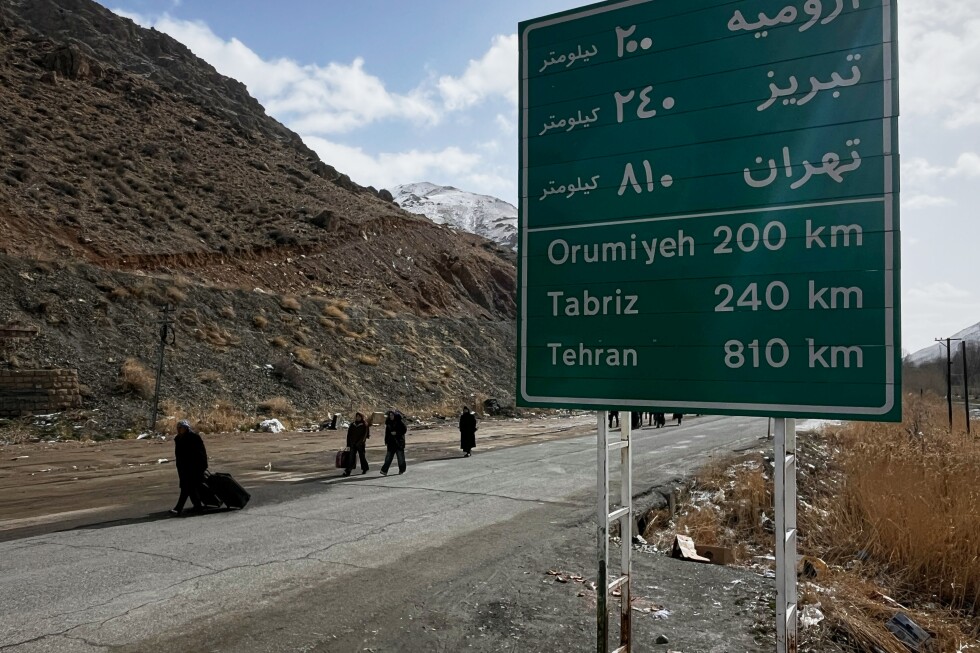
ZANJAN, Iran (AP) — A black banner hangs over the border crossing and portraits of Iran’s slain Supreme Leader Ayatollah Ali Khamenei stare down, promising vengeance against the United States and Israel.
But on the 12-hour drive south to the capital, Tehran, daily life continued, with only occasional signs of the ongoing war, including a Shiite religious center that officials say was damaged by a recent airstrike.
Associated Press reporters made the journey on Saturday after crossing into Iran from Turkey. They gained a glimpse of the country at the center of a regional war that has jolted the world economy and shows no sign of ending five weeks after Khamenei was killed in the opening U.S. and Israeli salvo.
The Associated Press has been granted permission by the Iranian government to send an additional team into the country for a brief reporting trip. AP already operates in Iran. The visiting team must be accompanied by a media assistant from a government-affiliated company. AP retains full editorial control of its content.
Advertisement
Pedestrians walk by a destroyed building within the Grand Hosseiniyeh, with the mosque visible in the background, which officials at the site say was hit by U.S.-Israeli airstrikes Tuesday, in Zanjan, Iran, Saturday, April 4, 2026. (AP Photo/Francisco Seco)
Advertisement
Pedestrians walk by a destroyed building within the Grand Hosseiniyeh, with the mosque visible in the background, which officials at the site say was hit by U.S.-Israeli airstrikes Tuesday, in Zanjan, Iran, Saturday, April 4, 2026. (AP Photo/Francisco Seco)
Advertisement
Advertisement
Advertisement
Advertisement
A religious center damaged by an airstrike
The first major sign of the war’s destruction came in the northwestern city of Zanjan, about six hours’ drive from the border.
Iranian officials say an airstrike hit a religious community center, known as a husseiniyah, killing two people and destroying a clinic and a library. Other parts of the compound, some of which is centuries old, suffered damage, including its golden dome.
When asked about the strike, the Israeli military said it had hit “a military headquarters,” and that it tries to avoid harming civilian facilities, without elaborating.
“It has hurt me a lot and distressed me a lot,” said Somayeh Shojaei, a local resident who has attended religious and cultural events at the center. “With these airstrikes, (the U.S. and Israel) are showing their malicious intent to the whole world,” she said.
Advertisement
The strike killed the library’s caretaker and a volunteer with the Iranian Red Crescent first responders, according to Jaafar Mohammadi, the provincial director of cultural and Islamic guidance.
He said poor people had received free treatment at the clinic and students had made use of the library that housed more than 35,000 books, including antique manuscripts.
He said he did not know why the complex was targeted.
“Iran wanted to negotiate for peace with (U.S. President Donald) Trump, but Trump responded with war,” Mohammadi said. “He started the war, but we will definitely be the victorious side.”
Advertisement
A picture of the late Iranian Supreme Leader Ayatollah Ali Khamenei hangs on the side of the road in the outskirts of Tehran, Iran, early Sunday, April 5, 2026. (AP Photo/Francisco Seco)
Advertisement
A picture of the late Iranian Supreme Leader Ayatollah Ali Khamenei hangs on the side of the road in the outskirts of Tehran, Iran, early Sunday, April 5, 2026. (AP Photo/Francisco Seco)
Advertisement
Advertisement
Advertisement
Advertisement
Sign up for Morning Wire:
Our flagship newsletter breaks down the biggest headlines of the day.
Advertisement
Life goes on in much of Iran despite fear and uncertainty
The U.S. and Israel have carried out thousands of strikes across the country, and Trump has threatened to bomb Iran “ back to the Stone Ages, where they belong.” Over the weekend, he reiterated a Monday deadline for Iran to reopen the Strait of Hormuz, a vital waterway for oil and gas.
Iran’s surviving leaders have remained defiant and in control, rejecting what they say are unreasonable U.S. peace proposals. Israel has given no indication it plans to let up on its strikes, and has called on Iranians to overthrow their leaders.
Even as the war generates global turmoil — and fear and anxiety within Iran — daily life goes on.
Advertisement
In city after city on the road to Tehran, AP reporters saw normal traffic, businesses open and people walking the streets. A restaurant served Iranian delicacies like grilled lamb and rice, barley soup and saffron drinks as R.E.M.’s “Losing my religion” played on loudspeakers.
Many women could be seen going about their day without wearing the theocracy’s mandatory head covering, the enforcement of which has eased in recent years.
The team passed through two checkpoints on the approach to Tehran without being stopped.
Destroyed government buildings and police stations in Tehran
The city was eerily quiet after midnight. There had been heavy airstrikes on the mountains overlooking the capital the previous night.
Advertisement
Tehran is on the front lines, having seen wave after wave of strikes that the U.S. and Israel say are aimed at the military and internal security forces. Authorities in Iran say over 1,900 people have been killed. It’s unclear how many were soldiers or civilians.
The AP reporters saw several government buildings and police stations that had been destroyed. They passed a number of checkpoints operated by plainclothes Basij, an internal security force, and uniformed members of the paramilitary Revolutionary Guard.
They were stopped once and asked to open the car and show press cards before being waved onward.
Fuel is heavily subsidized, such that a gallon (4 liters) of gasoline costs around 15 U.S. cents. But people are only allowed to purchase around 5 gallons (20 liters) at a time. There were no signs of gas lines.
Advertisement
Back in Zanjan, Mohamoud Maasoumi, a retired soldier, said the conflict with the U.S. — “the world’s arrogance” — goes back to a 1953 CIA-backed coup that is seared into the minds of many Iranians. He expressed hope that Iran’s leaders would defend the country.
“The enemy sees that we are not ever succumbing,” he said.
___
Associated Press writer Sam Metz in Ramallah, West Bank, contributed.





















































You must be logged in to post a comment Login