



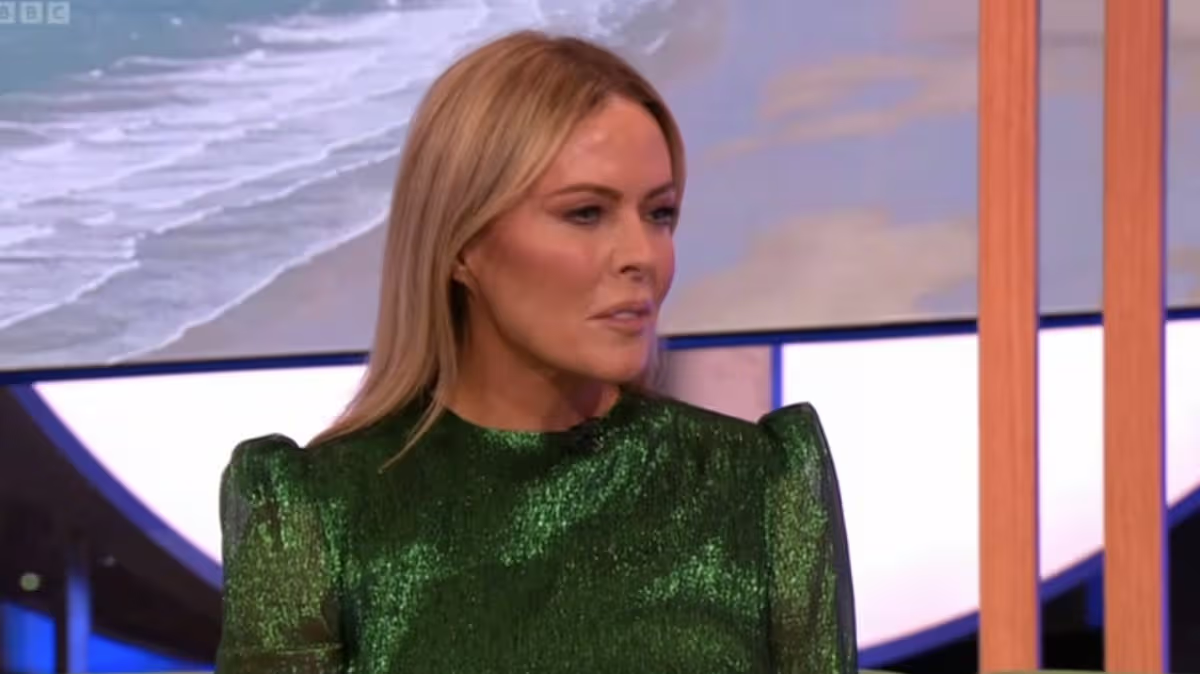
The soap star is set to join some famous faces including former Love Island star Tasha Ghouri on BBC Two’s Pilgrimage: The Road to Holy Island
Patsy Kensit “cried a lot” as emotions ran high during the filming of BBC’s Pilgrimage: The Road to Holy Island.
The 58-year-old actress is among the celebrities participating in the eighth series of the BBC reality programme.
She will be accompanied by six other well-known television personalities of varying faiths and beliefs, as they tackle a 390km network of trails through the heart of North East England, celebrating early Celtic Christian saints while exploring their own spirituality and discovering more about one another along the way.
The celebrities will take in notable landmarks including Whitby Abbey and the UNESCO World Heritage site of Durham Cathedral, before reaching their ultimate destination: the Holy Island of Lindisfarne.
It is evident that the journey proved challenging for Patsy, who openly admitted that she “got emotional a few times.”
When questioned about her favourite landmarks and landscapes, she began by saying:“I loved Runswick Bay on the Way of St Hild.
READ MORE: Wednesday star admits ‘anxiety’ as she moves onto HBO dark comedy dramaREAD MORE: Who left The Apprentice? Five final revealed as two forced to leave BBC competition
“I loved being there and then going down to the beach and finding all the rocks. The ammonites. That was really good. It was so dramatic and cinematic being on this beach, and the weather was beautiful.”
She continued: “And I was quite happy there, hammering away, trying to find these rocks with the ammonites in them, which looked like snakes. The story is that St Hilda cast a spell on the area and all the snakes turned to stone. That to me was great. Durham Cathedral, again, amazing.”
The star added: “Every day I got something good out of it. I cried a lot as well. Yeah, I got emotional a few times.”
Patsy, who was thrust into the public eye at just four years old when she featured in a Birds Eye peas advertisement, shared the experience alongside Diversity star Ashley Banjo, former Love Islander Tasha Ghouri and Cold Feet actress Hermione Norris.
Yet being part of a large group isn’t something she feels entirely at ease with, revealing that “people have hurt me in the past.”
Reflecting on what she gained from her fellow cast members, she began by saying: “I think it’s fascinating, people’s beliefs. We see sometimes how devoted people are to their beliefs, and suddenly this power would come through. It was just interesting to see people being protective over their beliefs and sharing them so openly and just having a great sense of humour about it.
“These are troubled times and it’s just wonderful. My happiest day on the shoot was one day in the middle, where we all stopped for lunch after this mammoth climb.
“We all sat around just eating sandwiches, and the sun was shining, and we were at the side of this beautiful cliff. It was one of the happiest days of my life. It was so, so great.”
She added: “And Banjo said to me that when he first met me, he felt I had a lot of walls up, that there was something there. And he said it was really nice to see them come down.
“And I said, you’re absolutely right. I’ve been hurt by people in the past, and so I might tend to find my way a bit awkwardly into a group activity. It was so good for me. I was reborn on the other side of it.”
Pilgrimage: The Road To Holy Island starts on Sunday, April 5 at 9pm on BBC Two and iPlayer










































You must be logged in to post a comment Login