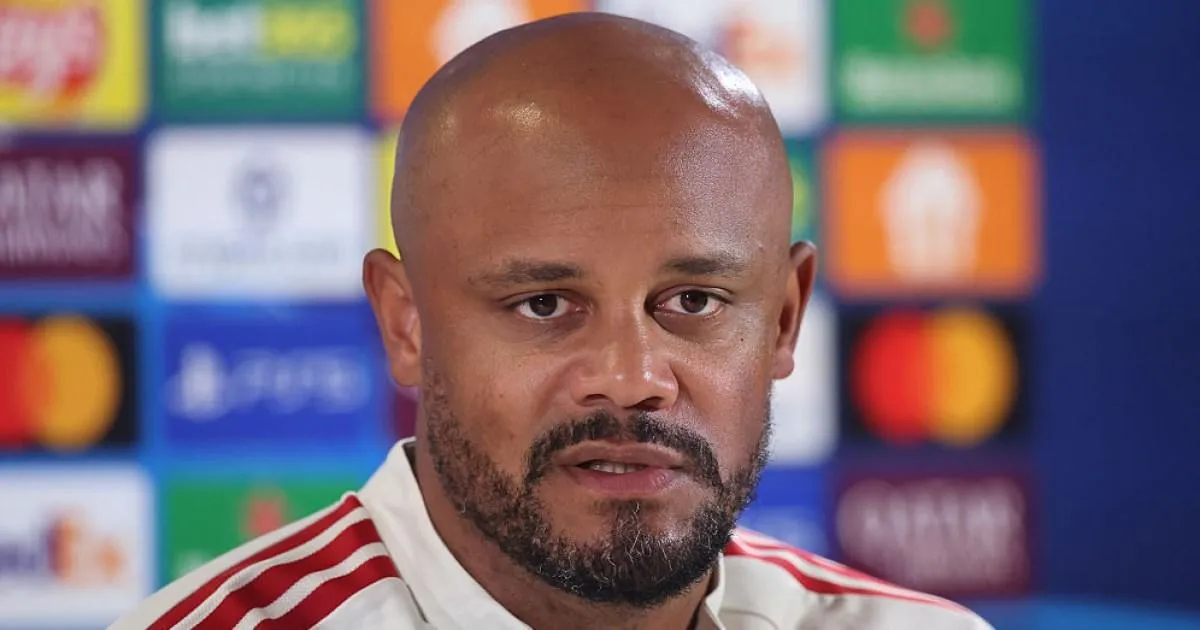
Bayern boss Vincent Kompany prepares to take on PSG again (Picture: Getty Images)
Vincent Kompany is sympathetic to Mikel Arteta’s ‘different worlds’ comment on the quality produced by Bayern Munich and Paris Saint-Germain, due to the intense schedule in England.
The Arsenal manager said the first leg of PSG vs Bayern in the Champions League semi-finals is ‘probably the best game’ he has ever seen.
‘Bayern v PSG is probably the best game I have ever witnessed on the quality of two teams, and especially the individual quality that the players deliver,’ Arteta said last week.
‘I’ve never seen something like this. But when I look at the amount of minutes and the freshness of those players, then I’m not surprised. To deliver those moments of quality, you have to be very fresh and the difference in the leagues and the way they compete is night and day, and you just have to see a lot of stats that have been recently around it.
The first leg of PSG vs Bayern was sensational viewing (Picture: Getty Images)
‘We are competing in two different worlds, so you cannot compare one part of that without giving any context to that. I don’t think it’s fair.’
Bayern boss Kompany had no intention of causing a row, understanding where Arteta was coming from with his point.
Advertisement
The Belgian spent 11 years at Manchester City and knows very well the demands placed on the players in England and the unsympathetic nature of pundits and fans.
‘I don’t want to comment too much, but obviously having been in the Premier League for many years, if I read between the lines, it’s basically a calendar discussion,’ Kompany said.
Mikel Arteta celebrated a first Champions League final as Arsenal boss (Picture: Getty Images)
‘I don’t think it’s a criticism on PSG or Bayern Munich or anything like this. It’s that fact that you have 38 games to play, plus the League Cup, plus the FA Cup, you don’t really have a winter break.
‘Then every time someone has a bad game, you go, “well how come they have a bad game?” I think that’s the conversation these guys are having.
‘It’s not for me to jump in, but it’s legitimate. Obviously Jurgen Klopp, being German, how many times has he spoken about this? At that time I was in the league so I understand it. But it’s not my problem to solve at the moment.’
‘An incredible night,’ said Arteta. ‘We made history again together and I cannot be more proud for everyone. The way that we were welcomed outside the stadium was special and unique. The atmosphere, our support has created the energy, the way they managed every ball with us, they made it special and unique, I never felt that in the stadium.
‘We knew how much it meant to everybody. The boys did an incredible job and after 20 years and a second time in our history, we are back in the Champions League final.’
HM Passport Office has urged applicants to ensure digital passport photographs comply with stringent requirements – or risk applications being delayed
Brits have been warned that simple mistakes with passport photos could delay applications being processed – potentially leaving travellers without the vital documents they need ahead of summer holidays.
Advertisement
His Majesty’s Passport Office has released an official checklist for digital passport photos as the annual rush of renewals picks up pace before the peak holiday season. Officials cautioned that applications can be held back if images fail to meet strict requirements.
In a social media post, HM Passport Office said: “A quick checklist for your digital passport photo: Taken in the last month, plain background, no objects or other people, no red eye or shadows.”
The Government’s passport guidance states: “Your application will be delayed if your photos do not meet the rules.”
This could prove a costly headache for travellers who leave renewals until the last minute before their departure dates, especially families gearing up for summer breaks. Under the rules, digital passport photos must be sharp, in colour and unedited by any computer software.
Advertisement
Applicants are required to face forwards, look directly at the camera and keep a neutral expression with their mouth firmly closed. The guidance also warns against shadows appearing on the face or background, hair falling across the eyes and the wearing of tinted glasses. Photographs must be taken in front of a plain, light-coloured background with no other individuals or objects visible.
Content cannot be displayed without consent
HM Passport Office advises that pictures taken in booths or dedicated shops are more likely to meet requirements than those snapped at home on mobile phones or tablets. Officials have also reminded applicants that digital passport photos must have been taken within the last month – regardless of whether their appearance has changed since their previous passport was issued.
Parents have also been warned about strict regulations surrounding children’s photographs. Children must appear alone in the picture, while babies are not permitted to hold toys or use dummies.
Children under the age of six are not required to look directly at the camera or maintain a neutral expression, while babies under one year old need not have their eyes open. Travellers are also being urged to check their passport expiry dates well ahead of any planned trips, as numerous European nations require passports to have a minimum of three months remaining before expiry on the date of return.
Advertisement
Brits travelling to the EU must also confirm that their passport was issued no more than 10 years prior to the date of entry.
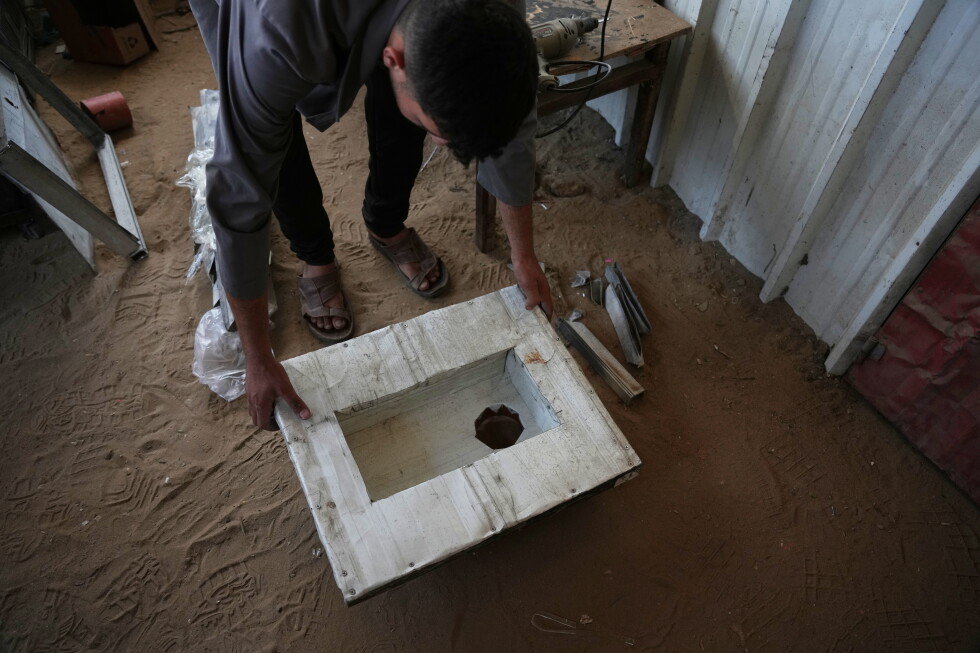
Khan Younis, Gaza Strip (AP) — In their bare-bones tent in southern Gaza, Mostafa Shaaban built his family’s makeshift toilet behind a curtain in a corner. He dug a shallow pit in the sandy soil, poured a concrete slab around it, fixed a bottomless bucket over the hole, then topped it off with a battered, plastic toilet seat.
It reeks with a foul odor and buzzes with flies and mosquitoes only a few feet from where they sleep and prepare meals. Every week, Shaaban has to dig the sewage sludge out of the pit. But at least it’s more private than the fetid communal latrines used by hundreds of other people in their sprawling tent camp.
“I did not want the kids and my wife to use any public toilet. It is humiliating,” said the 38-year-old Shaaban, who was driven from his home city of Rafah by Israeli forces two years ago and eventually settled in a tent camp in Khan Younis.
“The situation is revolting,” he said of having the toilet inside the tent, “but at least it has more dignity.”
Advertisement
There is not a single proper toilet across the vast tent cities housing most of Gaza’s 1.7 million Palestinians left homeless by the war. Displaced families have largely been left on their own to dig their own latrines, some shared by extended families.
At communal camp toilets, men, women and children wait in long lines then do their business behind a thin cloth or sheet of metal separating them from the crowd of strangers outside. Women fear walking to the communal toilets at night.
The result is a hygienic nightmare as horrible smells drift among the tightly packed tents and pools of sewage collect from leaking cesspits or from people dumping the contents of their latrines. More than 80% of the sewage pumping stations in Gaza have collapsed under Israel’s bombardment and offensives over the past 2 ½ years, rights groups say.
Advertisement
Some aid groups have carried out projects to improve family toilets, but they have been small scale and supplies are limited. It remains far from certain when reconstruction of Gaza will begin.
The U.S.-backed official overseeing the ceasefire in place since October has blamed Hamas for holding up the process by failing to reach an agreement on disarmament. The ceasefire deal calls for the entry of major construction and repair equipment into Gaza even before disarmament, and so far little has entered.
Advertisement
Sign up for Morning Wire:
Our flagship newsletter breaks down the biggest headlines of the day.
Advertisement
“It’s the most basic right. Making a toilet is more important than food and water, because you see the insects everywhere, the smell covers everyone,” said Shaaban’s wife, Iman Mansour, who is pregnant with their third child. “We want something clean.”
Building a latrine is not cheap. Shaaban said it took him a long time to set up his toilet because he had to buy the pipe for the latrine hole and the concrete to seal around it. The concrete often crumbles, so he has to buy more when he can afford it.
A porcelain toilet seat runs from 1,700 to 2,000 shekels ($500 to $680), out of reach for most families. In any case, a seat in a tent latrine would simply be set over the hole to provide a more comfortable seat, unable to flush. So people improvise, using chairs or buckets with the bottom knocked out. Or they just squat over the hole.
One vendor working out of a tent in Khan Younis makes metal sheets to fit around a latrine hole that at least are easier to clean, selling them for 100 shekels ($34).
Advertisement
In one of the camps around Khan Younis, Khaled Kollab laboriously cleared the sewage drain and pools of untreated wastewater next to his tent. His tent latrine is a simple squat toilet with no seat, which he said was made of ramshackle supplies because he couldn’t afford anything better. His 3-year-old daughter, Sila, stood nearby, her body covered in lesions.
“You go into this toilet and feel humiliation and shame,” Kollab said.
It was the sort of friendly that could easily have slipped from memory.
Played early in the season against Kazakhstan, who had only recently joined Uefa, the fixture took place in front of a sold-out crowd of just 8,000 fans and on a pitch so shabby that the grass had to be painted to improve its appearance.
And yet, that narrow 1-0 win in Chaves in northern Portugal has never really faded away.
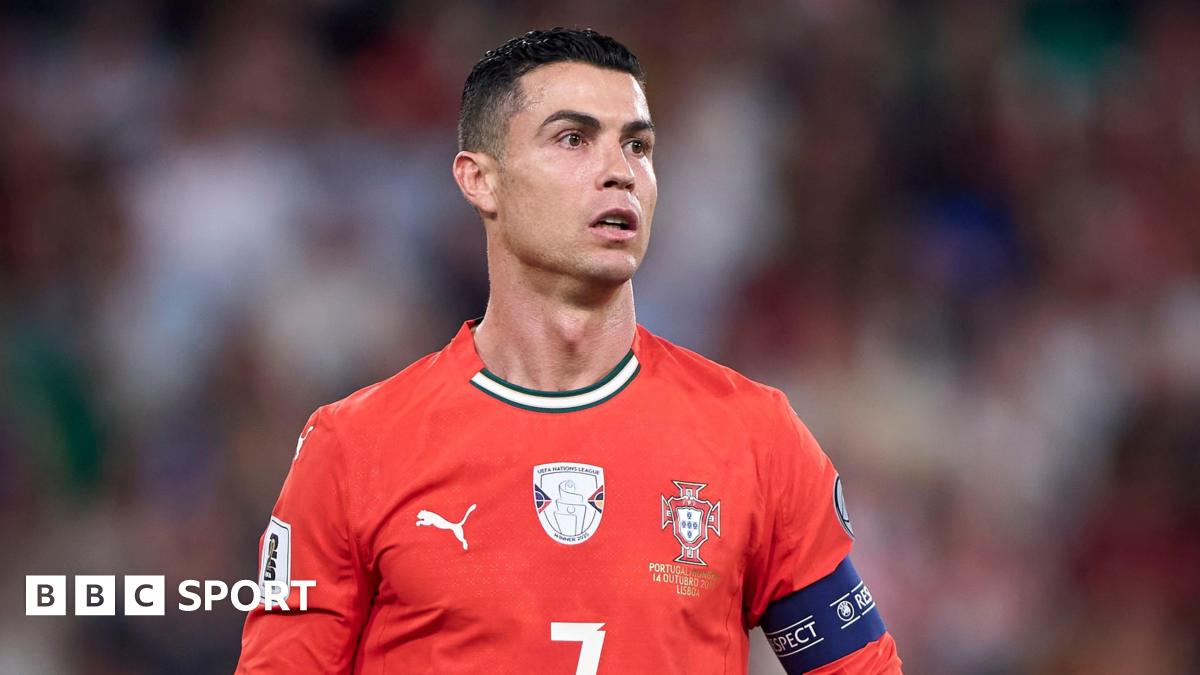
That is because 20 August 2003 is the day Cristiano Ronaldo’s story with the senior Portugal national team began.
Advertisement
It would have been a stretch at the time to anticipate the boy from Madeira making his World Cup debut three years later, and entirely unrealistic to predict that he would go on to feature at a record sixth World Cup in 2026 – along with Argentina’s Lionel Messi and Mexico’s Guillermo Ochoa, both fellow six-timers.
But Ronaldo – the all-time leading scorer in international football with 143 goals – has reinvented Portuguese football, transforming its mentality like no player before him and, most importantly, redefining what an entire nation believed was possible.
“We are a small country that rarely has global impact outside football,” Joao Aroso, who worked with the forward both at Sporting and at the national team, told BBC Sport.
“Cristiano allows our small country to be known worldwide for something great – because of all the positive things he stands for.”
Advertisement
In his previous five World Cups, the superstar, now 41, always arrived with an untouchable status. It won’t be different this summer, even if the scrutiny back home around his role has only intensified since Qatar 2022.
For a long time, openly questioning Ronaldo’s place in the team almost felt like treason. Not any more.
“He doesn’t play to win, he plays to be the main figure,” argued Antonio Simoes, a member of the Portugal side that finished third at the 1966 World Cup.
“Do you understand that it’s the opposite of Eusebio? Let’s call things by their name. I have nothing against him. I can still see, I can still hear and I can still think. But I can’t run away from the reality of the facts.”
Advertisement
Portugal coach Roberto Martinez has dismissed the debate around Ronaldo as “lift talk”.
Whenever Martinez is asked questions about the five-time Ballon d’Or winner, he has pointed to the same statistic in all his recent interviews – 25 goals in his past 31 games for the Selecao.
“We are talking about the greatest player of all time. He is here because he is still performing at a very high level, not because of what he achieved in the past,” Martinez explained.
Having scored at each of his five World Cups, Ronaldo will have another chance to answer critics on the pitch.
Advertisement
The Al-Nassr man has eight World Cup goals to his name, one short of Eusebio’s Portuguese record, but the ultimate prize is obvious: helping Portugal lift the trophy for the first time.
When the former England and Newcastle manager Kevin Keegan recently revealed that he had stage 4 cancer, the footballing world responded with an overwhelming show of support. But hidden within his story is a surprising lesson about how cancer is often discovered – not through symptoms, but by chance.
Keegan was in a car crash just weeks before his diagnosis. Studies have found that people who suffer car crash injuries are more likely to be diagnosed with cancer than similar people who haven’t.
Most experts agree that car crash injuries don’t actually cause cancer. So what explains the link?
One possibility is a shared underlying cause. People who drive a lot, simply by spending more time on the road, are more likely to have accidents. They may also lead more sedentary lives, a factor linked to higher cancer rates. Frequent drivers may be more likely to be overweight or to spend long hours in the sun (exposed to harmful UV radiation), both of which raise cancer risk. Sleep deprivation is another candidate: it raises the risk of both crashes and cancer.
Advertisement
To resolve the conundrum, we have to consider how we detect cancer. Typically, we diagnose cancer in people who undergo some type of medical examination – either because their cancer has caused them to feel unwell or for some other reason.
When people are involved in car crashes, they often end up in hospital, where CT scans and MRIs are routinely used to check for internal injuries. In the process, doctors may stumble across a tumour that would otherwise have gone unnoticed. The crash hasn’t made them more likely to have cancer – it has just made them more likely to have it found.
Keegan described it himself: “I was in a car accident and, through that, I had to have an operation. Whilst having the scan for the operation, they found out I had cancer.” People who have been in car crashes are no more likely to have cancer than anyone else – they’re just more likely to have it discovered, because the accident brings them into contact with the medical system.
Car-crash victims aren’t the only ones affected. Anyone who ends up in accident and emergency – for whatever reason – faces the same increased medical scrutiny, and is therefore more likely to have an unrelated cancer picked up in the process.
Advertisement
Detection bias
As I outline in my new book, You Don’t Know What You’re Missing, this is a classic example of a detection bias – the idea that increased monitoring of one situation compared with another can make a phenomenon appear more common than it really is. Take sharks. Despite, on average, 80 attacks and only a handful of deaths worldwide each year, people are disproportionately afraid of them.
In large part, this is probably due to an availability bias. Shark attacks are so graphic and feature so prominently in popular culture – including in films like Jaws, The Reef and The Shallows – that they occupy a disproportionate amount of space in our imaginations. However, in part, this may also be due to the misconception that sharks are attracted to crowded beaches.
Most sharks aren’t really attracted to more crowded beaches. Vaclav Sebek/Shutterstock.com
While there is evidence that some species of sharks might be attracted by splashing, because it sounds like struggling prey, other species are put off by it. There is no strong evidence to suggest that more people in the water will lead to a higher probability of attracting a shark.
It is true, however, that there are more shark attacks in places where lots of people swim, but this isn’t primarily because sharks are disproportionately attracted to these popular areas. Popular beaches may see more attacks simply because there are more people in the water, not because sharks have a preference for popular beaches.
Advertisement
It’s also true that busy beaches are disproportionately more likely to report shark sightings. But again, this is purely a function of the fact that more people are around to spot their telltale fins poking out of the water – another detection bias.
Indeed, well-frequented beaches are more likely to have lifeguards who may be on the lookout for sharks or even to employ drones to help reassure beach users that it’s safe to go in the water.
Detection bias turns up in all sorts of unexpected places. When policing is increased in an area, you might expect recorded crime to fall. Often it rises – not because the area has become more dangerous, but because more officers means more crimes are spotted and logged. The underlying crime rate may not have changed at all.
The same thing happens in workplaces. Organisations with rigorous safety protocols can appear to have more safety breaches than those without, simply because they’re better at catching and recording them.
Advertisement
And medicine is no different. Many cancers are first spotted incidentally in A&E in patients who have attended for completely unrelated reasons. This doesn’t mean that being ill or injured causes cancer. If anything, there is evidence that people who end up requiring urgent medical care sometimes live longer as a result because conditions like cancer get caught earlier than they otherwise would have.
This article features references to books that have been included for editorial reasons, and may contain links to bookshop.org. If you click on one of the links and go on to buy something from bookshop.org The Conversation UK may earn a commission.
Hollywood star Liam Neeson has noticed a pattern when it comes to chatting to American during an appearance on Conan O’Brien’s podcast
Danny Gutmann and Chloe Dobinson Digital Production Editor
10:00, 07 Jun 2026
Taken star Liam Neeson has revealed that, no matter where he travels in the US, Americans consistently want to share the same piece of information with him as he reflects on his early visits across the pond.
Marking his 74th birthday today, the Ballymena native has become one of Northern Ireland’s most celebrated actors over the decades.
Advertisement
His impressive body of work includes numerous beloved films, including Schindler’s List, Star Wars: Episode I – The Phantom Menace and the action-thriller franchise Taken.
Beyond his achievements on the big screen, Liam recently reflected on his experiences in America during an appearance on the Conan O’Brien Needs A Friend podcast.
Recalling one of his earliest visits to the United States in 1988, he spoke warmly of the welcome he invariably received, saying: “When I came to the States in 1988, I’m an American citizen, a very proud one too, and an Irish citizen.
“But everybody I’d meet wanted to tell me they had a connection with either Ireland or Scotland,” reports Belfast Live.
Advertisement
Finding it amusing how rarely he met someone who simply identified as American, Liam joked: “I was dying for someone to say, I’m an American. Do you know what I mean? They always wanted to make a connection.”
As he tried to understand the strong Irish links across the US, he began to appreciate the historical reasons behind them, explaining: “It made me think, okay, there was a million and a half during the potato famine in Ireland in 1845 and 1852 (who) came out here on coffin boats and coffin ships, you know.
“I was like, oh, of course. 1845, that was a nanosecond ago, you know.”
Advertisement
The Irish famine of the 1840s triggered a mass exodus, with around two million people leaving Ireland, many travelling to America in search of survival.
According to figures released this year, an estimated 31.5 million Americans claim Irish ancestry.
Having captivated audiences around the world throughout his career, Liam returned to the big screen in The Naked Gun last year.
The father of two played Lt. Frank Drebin Jr, while Pamela Anderson also starred in the film, which was directed by Seth MacFarlane, creator of Family Guy.
Advertisement
However, one iconic role fans should not expect him to revisit is Taken, with the actor jokingly telling Stephen Colbert: “There’s only so many times your daughter can be taken.”
Robert Lewandowski is a man in the market for a new club after his Barcelona contract expired and Manchester United have been urged to go after the Polish striker
Manchester United have been urged to go after Robert Lewandowski after his Barcelona exit with a move described as a “no-brainer”.
Advertisement
The Pole has seen his contract expire at the Nou Camp with the Catalans opting against keeping the striker, who is now 37. Despite that Lewandowski has continued to find the net with regularity and will be an asset to whatever club he ends up at.
Lewandowski is no stranger to playing for major clubs given he has a CV that boasts Borussia Dortmund, Bayern Munich and Barcelona. He scored 120 times in his four seasons in Spain and former United star Gusieppe Rossi believes he would be an ideal addition.
United have Benjamin Sesko as their main man in attack but Rossi sees Lewandowski as the ideal man for him to learn off. The Italian told Ozoon: “Robert Lewandowski to Man Utd? Yeah, why not?
“Of course, Lewandowski would be an incredible asset for the young players, providing his experience and big-game knowledge. With Benjamin Sesko being a young, growing player, having someone like Lewandowski on the team would only benefit him. It’s a no-brainer. He has a huge resume and on a short-term deal, it’s a win-win.”
Advertisement
Content cannot be displayed without consent
United spent big on their frontline last summer, adding Sesko, Bryan Mbeumo and Matheus Cunha. All three players proved to be hits at the club, scoring 34 times between them, as they secured a return to the Champions League, which will aid their recruitment this summer.
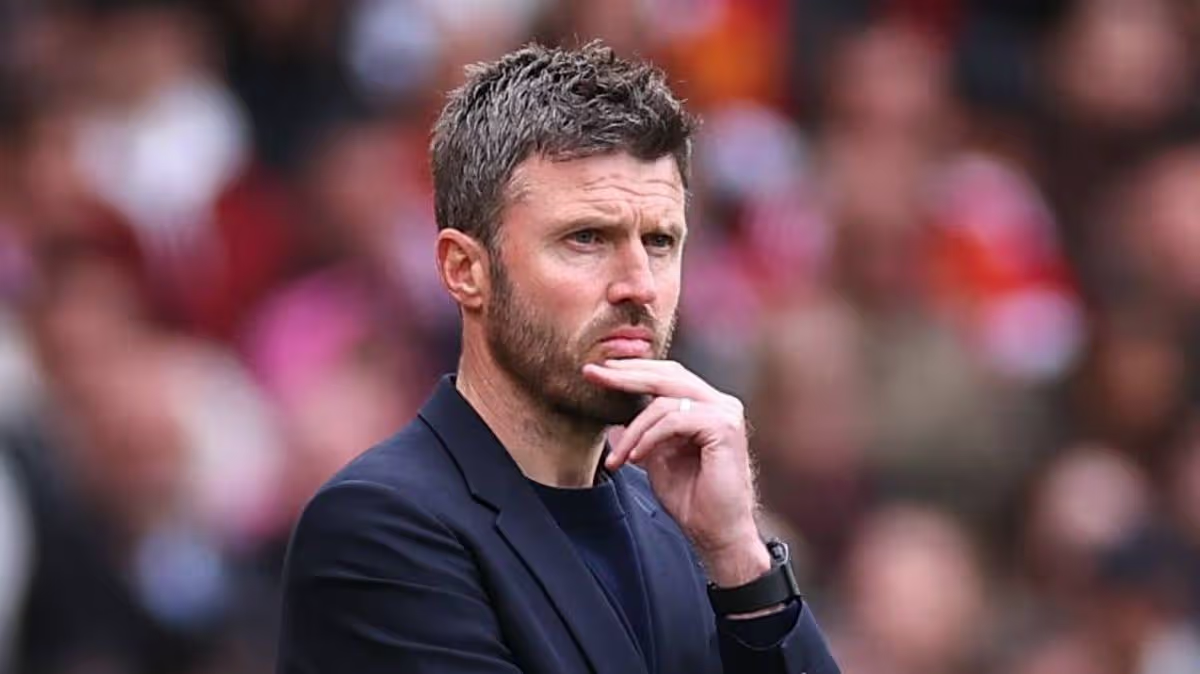
Michael Carrick and the club’s priority is on adding a midfielder over the coming months and they’re close to finalising a deal for Ederson from Atalanta. They will still look to add another player in the middle of the pitch if they can identify one and land him for the right price with several Premier League stars linked.
United have seen Rasmus Hojlund join Napoli on a permanent deal after his loan stint in Italy, leaving the club light in attack. Lewandowski would present a cut-price option should they want to bolster their ranks in the final third.
Advertisement
The Red Devils have previously landed an elite veteran striker, signing Edinson Cavani in 2020. The Uruguayan had been prolific at PSG, becoming their all-time top scorer for a period, and moved to Manchester on a free transfer. He scored 17 times in his first year at the club.
Join our new WhatsApp communityand receive your daily dose of MirrorFootballcontent. We also treat our community members to special offers, promotions, and adverts from us and our partners. If you don’t like our community, you can check out any time you like. If you’re curious, you can read our Privacy Notice.
Upgrade your World Cup TV setup with the Sky Glass ‘designed for football’
This article contains affiliate links, we will receive a commission on any sales we generate from it. Learn more
Sky is knocking 20% off its entire range of Glass TVs to mark the start of the 2026 FIFA World Cup. Until June 17, shoppers can upgrade to the Sky smart TV that’s ‘designed for football’ from £4.50 per month when taken alongside a Sky TV and Netflix package.
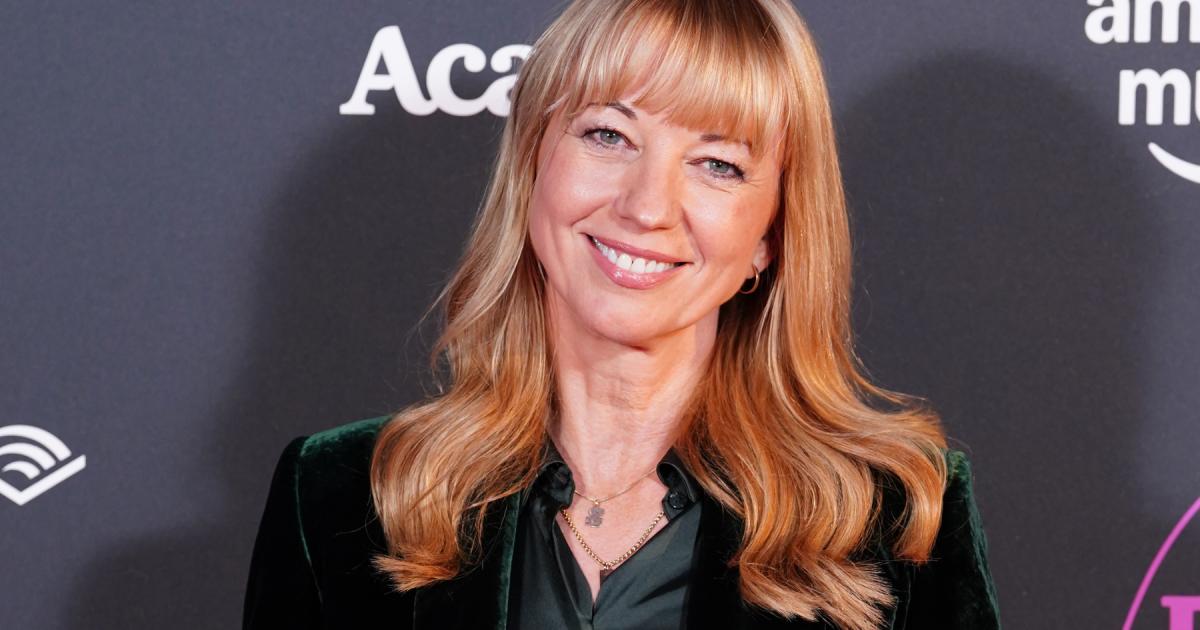
In April, it was confirmed that Cox would be replacing former Breakfast show host Scott Mills after the BBC fired him.
Cox hosts the weekday Teatime show from 4pm to 7pm and will launch her first Breakfast show this summer.
Currently, the BBC has not confirmed Cox’s start date for the new show.
Advertisement
Sara Cox confirms final date for Radio 2 Teatime show
Speaking to listeners, Cox announced that Monday, June 8, will mark the start of her final week on Teatime.
Sharing, “Monday is the start of Teatime’s final-ever week.
“New Breakfast Show incoming guys. Incoming, brace, brace, brace!
“Next week’s our final week of Teatime with you’s lot.
“I love each and every one of you.”
Advertisement
Adding, “So yeah, final week, bosh, is next week and then the brand-new Sara Cox Breakfast Show will be starting at some point, but I can’t tell you when.”
Previously, Cox said that hosting the Breakfast show was a “dream” following the announcement.
The DJ commented: “There are not enough adjectives to really sum up how I’m feeling about being trusted with such an iconic show but let’s start with ecstatic, honoured and incredibly chuffed.
“It’s been a dream to host the Breakfast Show since I joined Radio 2, and it feels like a bit of a full circle for me.
Advertisement
“I’ve had the most glorious seven years of my career on Teatime so thank you to my brilliant Teatime listeners who hopefully will join me at Breakfast for excellent music and all my usual nonsense plus some superstar guests.
“I honestly can’t wait to wake the nation up with the biggest, most fun breakfast show ever.”
Are you pleased that Sara Cox is the new host for Radio 2’s Breakfast Show? Let us know in the comments below.
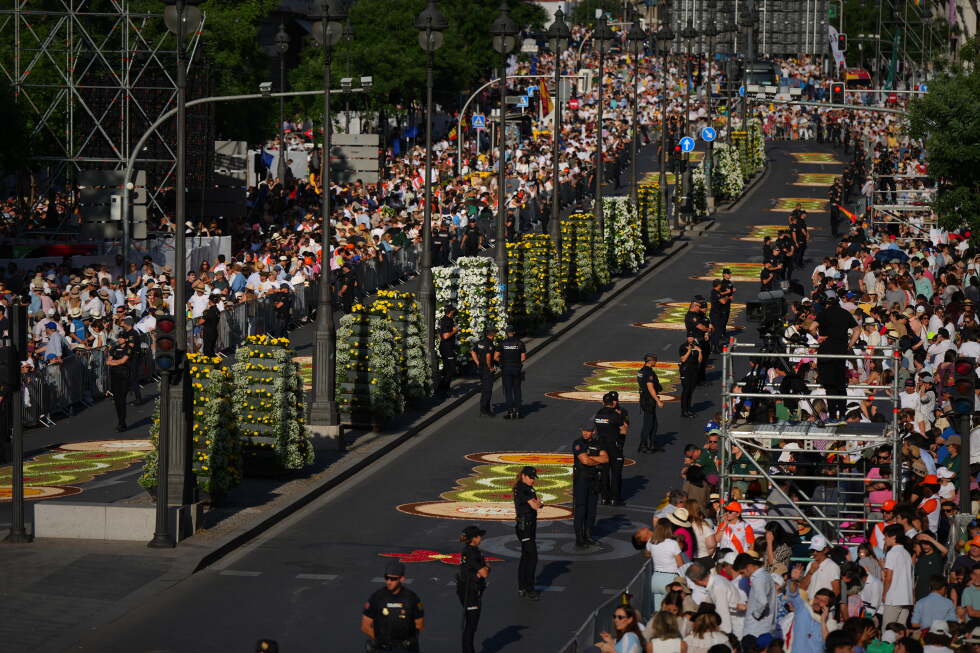
MADRID (AP) — More than a million people poured into a central Madrid plaza on Sunday for Pope Leo XIV ’s main Mass and a procession highlighting one of the most iconic expressions of Spanish popular piety: flower carpets.
They cheered and shouted “This is the youth of the pope!” as Leo arrived for the Mass, looping around the plaza and surrounding streets in his popemobile to a crowd packed several rows deep behind barricades.
Sunday’s Mass falls on the Catholic Corpus Domini feast day, which often features processions of faithful through towns and cities led by a priest carrying the Eucharist. In Spain as in other predominantly Catholic countries, the processions often feature elaborate floral carpets arranged along the route.
Leo, who arrived in Spain on Saturday at the start of his weeklong visit, has been keen to highlight the long tradition of Catholic devotion here to encourage especially young generations to find their faith.
Advertisement
At a vigil service Saturday night, an estimated 600,000 young Spaniards knelt for several minutes in silent prayer alongside Leo, suggesting that there is indeed interest among young people despite Spain’s heavily secularized society.
“Let me take the opportunity to tell all of you: Don’t ever be afraid of thinking about a vocation to the priesthood or religious life, or other services in the church!” Leo told the crowd.
Irati Valda and Javier Hormazal, a young couple, held up a cardboard sign announcing they are going to get married on June 13 and were ushered up close to receive Leo’s blessing during the vigil.
“To see so many young people together, it’s incredible. Half a million people in silence, this is something you will only live once,” Valda said.
Advertisement
A form of popular piety dating back centuries
For Sunday’s Mass and procession, local organizers said 1.2 million people had turned out on a brilliant spring morning at the central Plaza Cibeles and surrounding streets, with more trying to get in.
The tradition of laying flower carpets — and destroying them when the procession tramples them — dates back two centuries and is popular also in Latin America, where elaborate sand designs are also made. The painstaking displays are considered an offering to the Eucharist.
Poland has already had its tradition of Corpus Domini flower carpets recognized by UNESCO, and Spain’s Galicia region is trying to have its tradition listed along with other countries as part of the world’s intangible cultural heritage.
According to Spanish organizers, the 16 flower carpets decorating the half-kilometer (mile) procession route were prepared by a Spanish florists association from Galicia. Florists used more than 30,000 flowers, most the yellow and white colors of the Holy See flag, for the carpets that feature decorations such as the Holy See keys.
Advertisement
Wildly popular religious processions, pilgrimages and feasts continue to be held in most Spanish regions. The most recognizable are Holy Week processions during the final week of Lent where brotherhoods and robed penitents parade ornate statues of Christ and the Virgin Mary through cities, towns and villages alongside marching bands. Such processions draw the faithful as well as droves of non-believers and tourists.
Spanish towns and cities also regularly honor local patron saints with fiestas. Religious pilgrimages to local shrines mix piety with communal festivities and music. In Andalusia, the El Rocío pilgrimage fetches a million people that make a long, dusty journey over the Pentecost weekend on horseback and decorated covered wagons to venerate an icon of the Virgin Mary.
Leo arrived in Spain on Saturday and urged its people to put an end to polarization and work for unity. Later Sunday he is to meet privately with members of his Augustinian religious order and address cultural leaders.
___
Advertisement
AP visual journalist Helena Alves contributed.
___
Associated Press religion coverage receives support through the AP’s collaboration with The Conversation US, with funding from Lilly Endowment Inc. The AP is solely responsible for this content.
Imagine if the only musical artists from the 1980s you had access to were Madonna, Prince and Michael Jackson. Others, such as David Bowie, Whitney Houston or George Michael are not available because, we’re told, these artists fail to exhibit the same type of creativity as the other three “geniuses”.
It’s clearly madness, yet this in a nutshell is the gatekeeping situation that exists in classical music today.
Zoom back to the 1780s and the musical landscape was astonishingly diverse, with composers across the globe writing bucketloads of music not only for the church, but for theatres, salons, concerts and performance at home. And, contrary to what we seem meant to believe, none of this music was auditioned by a panel of experts with the “best of the best” selected for our moral betterment.
But what we have access to today from the classical era is the tiniest fraction of what was composed then. And of that fraction, we hear a still smaller subset, dominated by just three composers: Mozart, Haydn and Beethoven – as classical music website Bachtrack’s 2025 statistics attest.
Advertisement
Many significant composers haven’t survived as part of the modern classical canon. Take Marianna Martines (1744–1812), for example. She was an extremely popular Viennese composer, singer and keyboardist whose prolific compositional output was so highly rated in her own time that she was the first woman to be inducted into the Accademia Filarmonica di Bologna as a “master” composer.
Performing regularly for Austria’s empress Maria Theresa and sharing the keyboard with Mozart for four-hand duets at her own popular musical salons, she was at the heart of a booming Viennese musical culture.
Where is her music today?
Talent flourishes with investment, and Martines had it all: money, time, geography, social networks and an elite education. In fact, court poet and famed opera librettist Pietro Metastasio personally oversaw her education from childhood.
Advertisement
Martines’ compositional catalogue is substantial, including – strikingly – several large-scale choral-orchestral works such as the impressive Dixit Dominus (1774), 12 keyboard concerti (four of which survive), and 31 keyboard sonatas (three of which survive). Her music isn’t just fine – it is exceptionally good. Just listen for yourself. So why do we not hear her music today?
It wasn’t that she lacked contemporary advocates, and it wasn’t even that she was immediately forgotten after her death. Indeed, she was significant enough to have active detractors who worked to discredit her authority, as music scholar Judith Valerie Engel details in her research.
The problem, then, was not absence of talent, nor even absence of recognition, but the failure of later institutions to keep investing in the conditions that ensure music like Martines’ is heard.
Ensemble music – particularly larger forms such as choral and orchestral music – requires a rather different type of investment. We’re not able to access it without the complex and expensive assembly of notated scores, instruments, large spaces and dozens of people with specialist skills who know how to transform those dots on the page into musical sounds.
Advertisement
At the root of this are repetition and publication, both in text and in sound. Text, for the obvious reason that without access to printed materials – and I mean well-edited printed materials – the music cannot be played and therefore endure.
Music publishers have long been gatekeepers of musical taste, providing editorial credibility and a supply of materials to the market. This curatorial role was usurped by record producers, who determine what gets recorded and circulated – the new modern legitimising “text” of a musical work, as it were.
Repetition is absolutely essential. This crazy process of putting dots of ink on paper to communicate complex sonic and emotional ideas means that musical works rarely reveal their secrets the first time they are played.
Advertisement
In re-performance and re-recording, musical problems are solved and the infinite dimensions of the possible sound worlds are explored. This dialogue between performers does two crucial things in the establishment of a work within the canon. First, it refines the quality of performance and, with that, enhances the evaluation of the work itself. Second, the frequency of performance or recording generates familiarity – a significant driver of musical preference.
My heart genuinely aches when I think about how different my own life would have been had I grown up listening to Marianna Martines’ music alongside that of her contemporaries. So many limiting myths about women’s inherent musical – and therefore artistic and intellectual – abilities might never have taken root in my subconscious.
While in general the ability to produce knowledge and exert influence is increasingly moving away from historical centres of power, public reclamation of received music history still lags far behind, despite the herculean efforts of numerous musicians, musicologists and advocates.
Advertisement
The good news is that listeners have more ability than ever to discover the music that moves them. The intellectual shackles imposed by commercial and academic institutions when it comes to deciding what constitutes “good” music are slowly losing their potency. There is no doubt though, we are now facing a new era of curatorial power in the form of AI algorithms that shape the discovery of music and much else besides.
However, restorative projects such as this first recording of Marianna Martines’s complete surviving keyboard works provide that essential first step of the music’s modern publication.
It is now possible for listeners to discover this music, and for musicians to begin the long, necessary dialogue with it. Only then are we able to reclaim our rightful musical heritage.
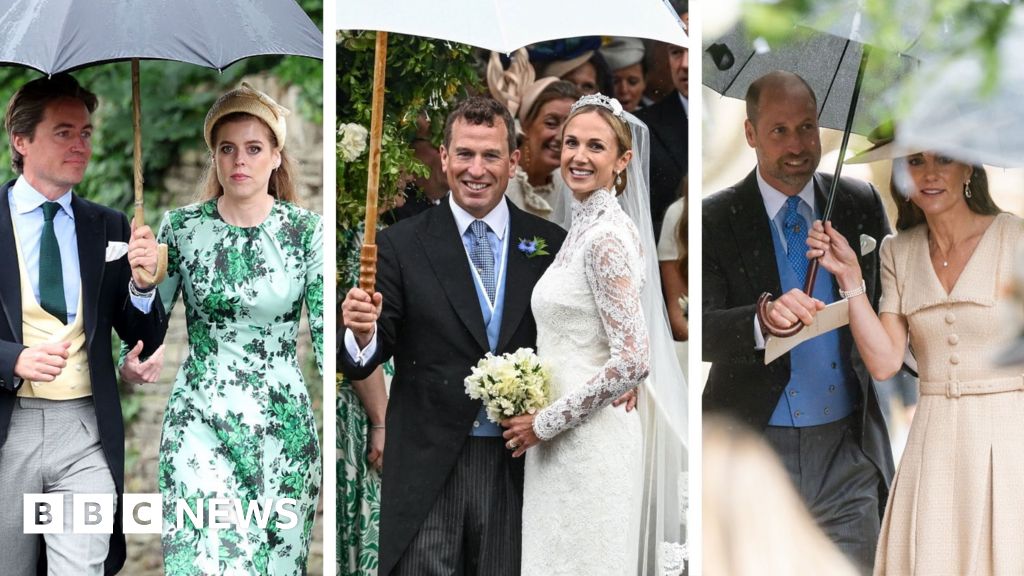
The King’s nephew, Peter Phillips, married NHS nurse Harriet Sperling during a private ceremony in Gloucestershire on Saturday, which was attended by King Charles III and Queen Camilla.
The King and Queen joined members of the royal family, including the Prince and Princess of Wales, Princess Beatrice and Princess Eugenie and Princess Anne.
The venue, All Saints Church in Kemble, was chosen because Sperling lived in the village when the couple met.












































You must be logged in to post a comment Login