

Connect with us

NewsBeat

Where has Nigel Farage’s frantic fortnight left Reform? | News Politics

Published

on

Where has Nigel Farage's frantic fortnight left Reform? | News Politics
It’s been a long two weeks since Reform’s party conference (Picture: Lewis/SOPA Images/Shutterstock)

What a fortnight it’s been for Nigel Farage. There have been crushing lows and giddy highs; joy crumbling into heartache; eye-popping success followed by stomach-churning disaster.  

He’s been on a journey worthy of Odysseus since the beginning of September. So where has it left him?  

Let’s start with a recap. September 3 was the first day of Reform UK’s conference in Birmingham, which was billed as the moment the party would set out its plans for the first 100 days in power.

It was also the day Channel 4 decided to air that astonishing sting by undercover journalists posing as dodgy donors wanting to help the party out. Farage and co lost two top officials as a result, then spent the next two days firefighting and denying any wrongdoing.

Advertisement

By the time everyone was on the train home from the National Exhibition Centre, it looked like Reform was deep in crisis with no clear way out.  

Then, less than a week later, there was a reversal in fortune of historic proportions: two £36 million donations from Ben Delo and Christopher Harborne, a pair of crypto billionaires and frequent Reform backers.

Ben Delo and Christopher Harborne (Picture: Wikipedia/London News Pictures)

Get this story before anyone else

Hi, I’m Craig Munro – Metro‘s Senior Politics Reporter. Every week I break down the biggest political stories in my newsletter Alright, Gov?

Between Sir Keir Starmer’s resignation and Andy Burnham’s rise to power, a lot has happened in the past couple of months.

Sign up here to get my take on the week in politics, direct to your inbox every Wednesday. I’d love to have you on board.

Advertisement
Craig Munro meeting Andy Burnham
I interviewed Andy Burnham – and noticed a crucial difference with Keir Starmer (Picture: No 10 Downing Street)

Cue days of discourse around political donations, and hints from the government that at least some of the money may need to be handed back when new rules targeting overseas donors come into effect.

Amid all that speculation, the news dropped yesterday afternoon that Reform’s leader in Wales, Dan Thomas, had stepped down after being arrested on suspicion of assault and coercive or controlling behaviour. (He’s since been bailed pending further enquiries.)

That revelation conjured up unwelcome reminders of Nathan Gill, the party’s previous Welsh leader who’s currently in prison for pro-Russia bribery.

Advertisement

Simultaneously, it was announced that Senedd member Sarah Cooper-Lesadd had defected from Reform to Plaid Cymru. And three Reform councillors in Durham also subsequently quit the party.

Meanwhile, they released a really terrible phone game.

Nigel Farage with a screenshot from the Small Boat Scramble game.
Banker-turned-politician-turned-gaming developer? (Picture: Getty/SmallBoatWatch)

So yes – it’s been quite a fortnight for Nigel Farage. With all that in mind, you might have expected some sort of impact on his party’s polling figures.

But that hasn’t happened. Most of the main pollsters still put Reform within touching distance of Labour, even after the so-called Burnham bounce. According to YouGov, for example, the two parties have been neck-and-neck on 23% for three weeks.

More in Common chief Luke Tryl told Metro that we should ‘expect Reform’s floor to remain high’, because the ‘fundamental drivers’ of its vote – such as the sense the system is rigged – haven’t gone away.

Advertisement

As the polling boss points out, though, parties don’t get into government on the strength of their base. They must reach out to others – in Reform’s case, that includes some who may be more risk averse.

That was the intention behind the ‘100 days’ theme of the conference: projecting a sense of sober control and careful planning.

The ups and downs of this month so far may have caused a fair bit of damage to that effort. But then again, who knows where we’ll be in in another fortnight?

Get in touch with our news team by emailing us at webnews@metro.co.uk.

Advertisement

For more stories like this, check our news page.

Advertisement
Advertisement

Source link

Continue Reading
Click to comment

You must be logged in to post a comment Login

Leave a Reply

NewsBeat

Mum of stabbing victim Kory McCrimmon insists he may have lived if bleed kits were available

Published

on

Daily Record

Kory McCrimmon was killed in a stabbing two years ago in Glasgow’s east end.

The mother of Kory McCrimmon who was stabbed to death has spoken says her son might still be alive if bleed kits were available.

Advertisement

The 16-year-old was stabbed through the heart in Glasgow’s east end on May 31, 2024, following a row with another teen over a £50 debt. His killer, who was 13 at the time, later admitted the fatal attack and was jailed for five years at the High Court in Glasgow in May last year.

Kory’s mum, Elizabeth, has now spoken out about the need for bleed kits to be rolled out across the country. Bleed kits contain heavy-duty trauma supplies which are designed to control life-threatening blood loss before professional medical help arrives.

Elizabeth is fundraising for the medical packs with the ‘Parents Against Knives’ initiative. Campaigners have already secured eight in Glasgow with one installed at the Barrowfield community centre near Kory’s home.

She told STV News: “There’s been more and more out there about children getting caught with knives in school, from 12 years of age.

“I want to make sure there’s a bleed kit in every high school in Glasgow and to raise money for bleed boxes in parks and community centres because there’s practically none in Glasgow.

“I’ll always think what if one of those kits were nearby when that happened to Kory? Maybe my boy would still be sitting here today.

“That is what is pushing me. I don’t want any mother to be sitting the way I have for the last two and a bit years because you’re never the same.”

Advertisement

Kory is one of four young males who lost their lives due to senseless knife violence on Scotland’s streets in the last two years.

Amen Teklay, 15, died from a stab wound after he was found injured in Glasgow’s Maryhill in March, 2025. Two teenage boys, aged 16 and 17, were cleared of his murder following a trial at the High Court in Glasgow.

Weeks later, 16-year-old Kayden Moy was stabbed to death at Irvine Beach in Ayrshire in May. His three teen killers were jailed for life.

John McNab, 22, was chased down and stabbed with a ‘Rambo knife’ by a teenager in Leith on September 2, 2025. The 17-year-old, who cannot be named for legal reasons, was on bail for a separate knife attack on Portobello Beach months earlier.

Advertisement

Lisa Petrie, John McNab’s mum has campaigned tirelessly for the roll out of life-saving bleed kits across Scotland and tighter security around the sale of knives in shops since her son’s death.

She met with John Swinney and Justice Secretary Neil Gray earlier this month over her campaign to tackle rising deadly youth knife crime in memory of her son.

The 45-year-old spoke to the Record about how the Scottish Government were “dragging its heels” on plans to tackle a “knife crime emergency”.

It came after Swinney had backed the rollout of bleed kits in community settings across Scotland during his Programme for Government announcement, which promised to continue working with organisations tackling youth violence.

Advertisement

Lisa, who visited the 27-foot-tall ‘Knife Angel’ sculpture in Leith made from 100,000 surrendered and seized blades, told the Record: “Victims of violent crime are being failed.

“There was no real commitment or timeframe for the roll out of bleed kits or tighter security measures around the sale of knives.

“The Scottish Government is dragging its heels. More young people will die while we wait for decisions on potentially life-saving measures to be implemented.

Advertisement

“We are frustrated and we need action. I am determined John’s not going to be a statistic.”

Get more Daily Record exclusives by signing up for free to Google’s preferred sources. Click HERE.
Source link

Continue Reading

NewsBeat

How firelight may have shaped the origins of spoken language

Published

on

How firelight may have shaped the origins of spoken language

When asked about the greatest innovation of humans, people will often say language or fire. A new paper suggests that these innovations may be more interlinked than we previously assumed.

Understanding how human language evolved is one of the hardest problems in science to unpick, since writing is a relatively recent innovation. Also, the vocal tracts and brains of our ancestors did not fossilise as they were made of soft tissue. We are left, then, with indirect evidence about how humans and other apes communicate today.

One of the most prominent theories about the origins of human language is that our ancestors started to communicate using gestural language. This theory is based on our understanding of the abilities of apes, as evidence suggest both chimpanzees and gorillas have gestural communication systems.

We also know that one of the best strategies for communicating when you don’t have a shared language is gesture. We often do this when communicating on holiday with someone who doesn’t speak our language; we point, mime and emote to get our message across.

Advertisement

Some of my previous research has shown that we do this because gestures or sign languages are often more iconic than words in spoken languages. This means their meaning is easier to guess for someone without any previous knowledge of the gesture or language being spoken; perfect for creating a new language from scratch.

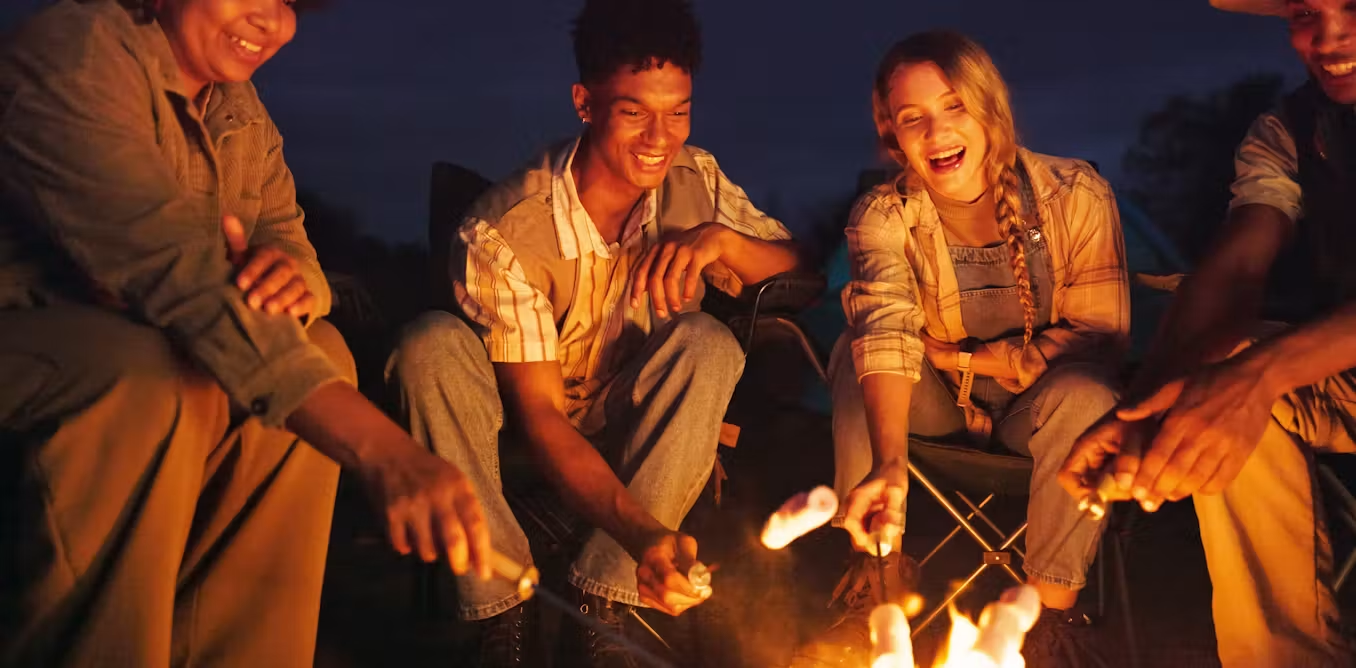
Did fireside storytelling aid the evolution of human language?

If human language started with gestures, then why are the vast majority of languages today spoken? One reason for this shift might lie in the limits of gestural language. You need a light source to see a gesture, and communication would have been necessary for our ancestors after dark.

An article by researchers at the University of St Andrews argues that by the dim light of a campfire, we might find an explanation for why we moved from gesture to spoken language. While a light source, firelight is potentially too dim for us to rely on it for the meaningful bits of early gestural language. For fully expressive stories in the dark, we would need spoken language but still keep gestural elements to emphasise and emote our speech.

The study highlights how storytelling links to some of the features of human language that make it unique. Stories have complex structures and are often displaced in time and space, meaning they talk about things not immediately present, in the past, or sometimes not even real.

Advertisement
Going back to where the story of human language started.
Gorgev/Shutterstock

The article suggests that social storytelling is what enabled us to surpass the communicative abilities of other living apes, into the rich, expressive tapestry of human language. Storytelling aids our social bonds and helps us understand the world and how to behave. It can help us develop our imagination, identities and cultural belief systems.

The idea that language emerged for social bonding is not new; however, the authors of the new article highlight that fireside context might have been crucial. They argue that the colour spectrum of fire is well suited for human vision without suppressing the melatonin that helps us sleep, like modern screen light can.

The study also highlights that human neurons synchronise to the frequency of flickering firelight, which the authors argue can improve shared social experience and bonding through connected rhythmic activities that can promote empathy.

How about storytelling today?

Other research, reviewed in my own work, has shown that stories from our early oral traditions share similar traits to one another. This is thought to happen because the social transmission of stories acts like evolution. Instead of survival of the fittest, we get survival of the most memorable aspects of stories as they are shared. Stories survive when they have more social, human-oriented content, counterintuitive elements, create negative emotions and have elements of survival.

Advertisement
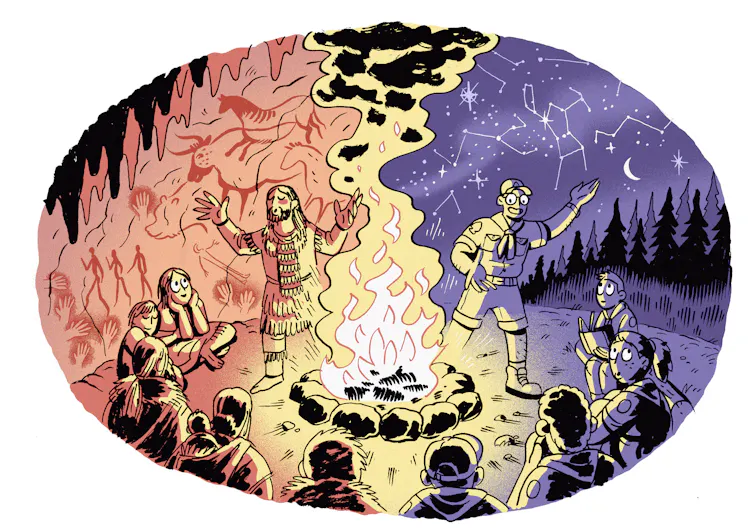
Illustration showing ancient storyteller on left half and scouts round a campfire on right half
Could we benefit from a return to the fireside?
Jordan Collver, Author provided (no reuse)

Researchers think this happens because swapping stories about social bonds, unexpected dangers and survival are advantageous for our evolution.

Storytelling is still one of the primary ways we understand the world even now, through the news and social media. This content is full of human interest, negative emotions and surprise.

Storytelling in the modern world is now often about getting the most clicks and attention. It is often about keeping people up past their bedtime looking at the melatonin suppressing blue light of our screens.

I’m left wondering, after reading about the potential fireside origins of our language, that we might feel more connection and trust by going back to sharing stories around a fire.

Advertisement

Source link

Continue Reading

NewsBeat

Patrick Clancy nervously gulps in teaser for first television interview on 60 Minutes after ex-wife’s murder mistrial

Published

on

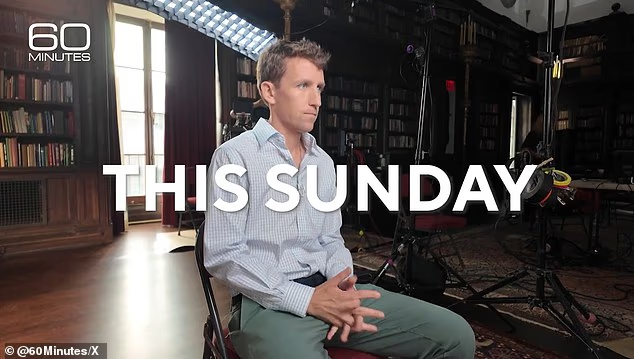
60 Minutes announced its next episode will feature Patrick Clancy, the former husband of Lindsay Clancy. Showrunners touted the spot with a clip of the 36-year-old looking tense during interview prep

60 Minutes has announced that its second episode this season will feature Patrick Clancy, the ex-husband of Lindsay Clancy.

Showrunners touted the spot with a clip of the 38-year-old getting ready to sit for the Sunday interview.

He appeared to nervously swallow as he did. 

The tease lasted just 13 seconds, but received a rush of views on X within minutes.

Advertisement

His ex-wife’s trial for their three children’s murders earlier this year captured the attention of the entire country. 

It ended in a sensational 11-1 jury deadlock and mistrial earlier this month.

The sit-down will be Clancy’s first television interview since the ruling and airs on CBS at 7pm, according to the network. It will also stream on Paramount+.

‘Only on 60 Minutes,’ a graphic read.

Advertisement

60 Minutes announced its next episode will feature Patrick Clancy, the former husband of Lindsay Clancy. Showrunners touted the spot with a clip of the 36-year-old looking tense during interview prep

His ex-wife, Lindsay Clancy, killed their three children in 2023 while suffering from postpartum depression. The case captured the attention of the nation before ending in a mistrial this month

His ex-wife, Lindsay Clancy, killed their three children in 2023 while suffering from postpartum depression. The case captured the attention of the nation before ending in a mistrial this month

The newsmagazine’s 59th season premiered last week to positive reviews. The episode included an interview with an Air Force colonel shot down over Iran in April and a hidden camera probe from longtime correspondent Lesley Stahl. 

Advertisement

Clancy filed for divorce from his wife in February 2024 – a full year after his wife killed their five-year-old daughter, three-year-old son, and eight-month-old at the family’s home in Massachusetts. 

He testified about his then-wife’s mindset before the January 2023 murders for two days.

His lawyer, Howard Cooper, issued a statement after the mistrial ruling last week. promising ‘consequences’ for True Crime creators who have included Clancy in their conspiracy theories.

His wife, meanwhile, faces being retried. A lone holdout juror refused to find her not guilty by lack of criminal responsibility. Her lawyers used what many refer to as the ‘insanity defense.’

Advertisement

The former labor and delivery nurse admitted to fatally strangling the children before attempting suicide at what used to be her and her husband’s Massachusetts home. Her legal team said she was in the throes of postpartum psychosis.

Prosecutors have yet to announce plans to put Lindsay on trial again.

Clancy framed Lindsay as a ‘very dedicated’ mother who’d do anything for their kids while on the stand.

Cora, 5; Dawson, 3; and eight-month-old Callan were strangled at the family home in January 2023

Cora, 5; Dawson, 3; and eight-month-old Callan were strangled at the family home in January 2023

Advertisement
A press release featured a still from the bombshell TV interview - Clancy's first since the ruling

A press release featured a still from the bombshell TV interview – Clancy’s first since the ruling 

‘She just had a really hard time being separated from them,’ he said of her attempt to return to work after the birth of their youngest child in May 2022.

He recalled how a series of medication prescribed by multiple doctors failed to stop his wife’s ‘big spiral.’

Clancy claimed his wife began to tell him about ‘intrusive thoughts’ she was having about harming the children around early December 2022.

Advertisement

‘She described thoughts of hurting the kids or them having some sort of ailment,’ he said on the stand.

Clancy testified that he did not feel concerned for his kids’ safety because his wife did not express ‘any intention’ to act on those thoughts.

A multi-day stay in the psychiatric ward of a local hospital the following month left him thinking his wife’s mental health was set to improve.

‘I was hopeful,’ Clancy said. ‘She seemed much better.’

Advertisement

However, later that month, on January 24, 2023, Lindsay strangled their three children to death.

‘She was playing with the kids, and she seemed in a good mood,’ Clancy said of his wife’s behavior earlier that day.

She carried out the killings after Clancy left the house to pick up medicine for their eldest and takeout order she herself placed.

Clancy testified that he kissed his daughter on the head, rocked his infant son, and told his family he’d ‘be right back.’

Advertisement

When he returned home, he testified, ‘The door was locked;

 ‘And that’s when I knew something was wrong.’

He walked in to a bloody crime scene and a window open after Lindsay attempted to take her life.

After rushing outside to her aid, Clancy asked his wife what happened, he testified.

Advertisement

She responded, ‘I tried to kill myself,’ before telling Clancy their kids were in the basement.

The three-bedroom home in the suburb of Duxbury, where the Clancy family lived before the murders

The three-bedroom home in the suburb of Duxbury, where the Clancy family lived before the murders

Under the impression they were still alive, Clancy frantically dialed 911 and waited for first-responders.

When they arrived, he rushed into the house to find all of his children lying still with exercise resistance bands wrapped around their necks.

Advertisement

‘He looked up and he screamed, “She killed the f**king kids!”‘ Duxbury police officer Brian Josephine testified. Duxbury is the Boston suburb where the family lived.

The interview is being billed as ‘Patrick Clancy in his own words, only on 60 Minutes.’

The interview will be carried out by new 60 Minutes correspondent Ross Douthat, CBS said.

Douthat – a former conservative columnist for the New York Times – was brought on by CBS News Editor-in-Chief Bari Weiss back in July, as part of a wider overhaul of the long running program. 

Advertisement

Weiss is the founder of the center-right Free Press, and was brought on herself by then-new Paramount CEO David Ellison back in October.

Within months as chief, Weiss saw 60 Minutes ‘as calcified and resistant to change,’ sources told CNN in late May.

Bari Weiss - the founder of the center-right Free Press - took the reins in October. Within months as chief, Weiss saw 60 Minutes 'as calcified and resistant to change,' sources told CNN in May

Bari Weiss – the founder of the center-right Free Press – took the reins in October. Within months as chief, Weiss saw 60 Minutes ‘as calcified and resistant to change,’ sources told CNN in May

Days later, Weiss handpicked former Times tech columnist Bilton to replace longtime producer Tanya Simon. An array of firings were carried out as well.

Advertisement

Scott Pelley, one of the show’s longest-serving journalists, was fired the following week after speaking out about those changes. 

He accused Weiss of ‘murdering’ 60 Minutes. The show has long enjoyed a high degree of autonomy.

A recording of the June 1 meeting was leaked to the press.  

Ellison, 43, is the son of conservative billionaire Larry Ellison, a known Donald Trump acquaintance.

Advertisement

He on-boarded Weiss just weeks after Paramount completed a merger with his former company, Skydance Media. The merger did not receive federal approval for more than a year beforehand, but was approved shortly after CBS settled a $16 million lawsuit filed against the network by Trump.  

Anderson Cooper left the show after more than two decades last May as well, fueling concerns the show would look and feel different in its 59th season.  

‘The verdict is in: it’s still “60 Minutes!”‘ New York Times media reporter Ben Mullin celebrated on X. 

A piece in the Times framed it as the beginnings of ‘The Bari Weiss Era.’

Advertisement

The next stage will see Clancy discuss ‘his grief, his memories of his children, and the baseless conspiracy theories that flooded social media since his ex-wife’s murder trial,’ according to CBS.

Source link

Continue Reading

NewsBeat

The Brain Seems To Shift Between Ages 50 And 75

Published

on

The Brain Seems To Shift Between Ages 50 And 75

A previous study has suggested that our brains are technically in their adolescent phase until about 32, with the adulthood section running ’til about 66.

But a new paper published in Science found that the brain seems to undergo sweeping changes in how its genome is regulated, starting in midlife.

Study author Nathan Zemke, Director of Single-cell Genomics at the Centre for Epigenomics at UC San Diego, described the finding as “a major step forward in understanding how aging reshapes the human genome in brain cells”.

What happens to the brain between 50 and 75?

Advertisement

In this research, scientists used single-cell analyses involving samples from participants’ hippocampi (the parts of the brain linked to learning and memory) to look at their gene regulation and genome organisation.

They chose people of different ages.

Genome regulation refers to how the genes already in your body are expressed. Changes in gene expression can lead to changes, including diseases and altered tissue and organs.

In this study, researchers noticed a sharp decline in microglia – immune cells that can help to protect the brain – between about 50 and 75. These cells seemed to be replaced by something similar to the immune cells typically seen in our blood.

Advertisement

The replacements seemed to have stronger inflammatory signals than our original microglia – and researchers think this might be linked to chronic inflammation in older brains.

Dr Bing Ren, the study’s corresponding author, said: “Microglia are critical for maintaining brain homeostasis.

“When these cells fail to perform their housekeeping duties, toxic materials accumulate that can trigger inflammatory processes that may contribute to neurodegenerative diseases”.

Immune cells weren’t the only thing to change

Advertisement

Additionally, older brains seemed to have fewer cells that protect the blood-brain barrier. That might mean ageing minds are more susceptible to exposure to potentially harmful substances in our blood.

And the physical structure of the three-dimensional genome seemed to erode, too, potentially leaving people more liable to develop unwanted changes.

Zemke said this was a good reason to study gene regulation in order to help us better understand the mechanisms behind ageing.

And co-corresponding author of the study, Dr Xiangmin Xu, shared: “Importantly, this study reveals that aging is not simply a gradual decline, but involves coordinated and dynamic remodeling of immune, vascular, and neuronal systems.

Advertisement

“These findings open the door to identifying new therapeutic targets aimed at preserving circuit integrity and brain function across the lifespan”.

Source link

Advertisement
Continue Reading

NewsBeat

Nigel Farages Popularity Drops After Channel 4 Donations Sting

Published

on

Nigel Farages Popularity Drops After Channel 4 Donations Sting

Nigel Farage’s popularity has plummeted as a result of a Channel 4 investigation into Reform UK’s finances, HuffPost UK can reveal.

A poll by Survation also found that more than half of voters say they are aware of the undercover sting, which led to senior Reform officials Dan Jukes and James Orr quitting the party.

The Metropolitan Police have have also launched a criminal investigation into allegations the party broke electoral law by trying to solicit money from a foreign donor.

The Channel 4 documentary appeared to show them discussing with a fake American donor how he could give money to the party via his British-based son.

Advertisement

In one scene, Farage himself is seen thanking both men, although he later told the BBC he “wasn’t even listening” when the meeting took place.

According to the poll, which was commissioned by millionaire climate campaigner Dale Vince’s Bablefish, 55% of voters had heard about the Channel 4 investigation, compared to 39% who had not.

Asked if it had affected their view of Farage, 54% said they had a less favourable opinion, compared to just 13% who said it was now more favourable.

Dale Vince said: “Our poll found half the people in our country have heard of the Channel 4 investigation and half of those took a dim view of Nigel Farage as a result.

Advertisement

“While Farage can deny wrongdoing, he can deny even listening to the plotting of his closest aides – the public aren’t buying it.

“While he tries smoke and mirrors to evade responsibility the public sees smoke and assumes there’s fire.”

A YouGov poll earlier this week showed Farage’s popularity has plummeted to an all-time low.

A separate survey by the same pollster last week showed more than half the country now sees the Reform leader as “very sleazy”.

Advertisement

Listen to Commons People, the podcast that makes politics easy. Every week, Kevin Schofield and Kate Nicholson unpack the week’s biggest stories to keep you informed. Join us for straightforward analysis of what’s going on at Westminster.

Source link

Advertisement
Continue Reading

NewsBeat

Body found in search for missing Noah Woods in Brantham

Published

on

Body found in search for missing three-year-old Noah Woods

Noah Woods went missing from Merriam Close Playground in Brantham at 2.37pm on Tuesday, September 15.

He was separated from a relative and reported to have run off down the alleyway beside the playground towards a nearby new-build housing estate.

You can follow our live blog here.

Advertisement

A large scale search was launched in response involving numerous emergency services.

Thousands of volunteers from the local area and further afield joined the search overnight and into Wednesday.

However, Suffolk police confirmed a body has been found in Decoy Pond.

Formal identification is yet to take place but the family has been informed.

Advertisement

Superintendent Tom Pearse said: “These five teams this afternoon have sadly found a body of a child in Decoy Pond in Brantham.

“Formal identification is yet to take place. The family of Noah Woods has been informed of these developments.

“The discovery of the body is currently being treated as not suspicious but unexplained. The coroner will be informed of this development.”

This is breaking news with more information to follow.

Advertisement

Source link

Continue Reading

NewsBeat

What the Bayeux tapestry reveals about medieval buildings on both sides of the Channel

Published

on

What the Bayeux tapestry reveals about medieval buildings on both sides of the Channel

For many, the Bayeux tapestry conjures up images of clinker-built ships, prancing horses, the Normans feasting on chicken on the eve of the battle of Hastings, and the arrow in King Harold’s eye that ended centuries of Anglo-Saxon rule.

But for the architectural historian, it is the 33 buildings represented on the Bayeux embroidery that catch the eye. These buildings range from palaces and religious buildings to two-storeyed houses and simple dwellings. They give the beholder some idea of what the 11th-century built environment looked like on either side of the Channel, even though the representations are formulaic, general impressions – as was the normal way to depict buildings in the era.

This suggests that the designer of the tapestry was familiar with the work done in certain monastic scriptoria (writing rooms), each one of which had its own distinct style. The same holds true for many of the design elements, such as birds and animals, shown in the borders of the tapestry that reveal parallels with the Romanesque sculpture of Ely cathedral.

This familiarity with the scriptorium and the stonemason’s yard implies that the Bayeux tapestry’s designs were created by a trained artist and then used by the embroiderers, though what we know about them is pure speculation. Some scholars believe the tapestry may have been created in England by nuns from Barking Abbey in Canterbury as the skilful needlework bears similarities to other works of English embroidery from the 11th century.

Advertisement

Abstraction over naturalism

The sequence of scenes starts with Edward the Confessor sending his brother-in-law Harold on a mission to Normandy. The king is enthroned in a large hall with turrets on the corners. To show the interior, the outer wall has been removed. What is more, to the left of the hall, the exterior of the impressive entrance porch is rotated a quarter-turn for the viewer to be able to see it.

Mont-Saint-Michel depicted in the tapestry.
Wikipedia, CC BY

To tell the story and indicate a palatial setting, it sufficed to show a grand entrance and great hall. In much the same way, the abbey of Mont-Saint-Michel is shown as a building on top of a rock. Although this typified the monastery’s setting, the vignette can in no way be used for reconstructing the 11th-century abbey. The conventions of the time clearly preferred abstraction over naturalism.

Most buildings on the tapestry, as in reality, were made of timber. Stone architecture was still mainly used for ecclesiastical buildings such as Westminster Abbey, by far the largest building shown on the tapestry. Building started under Edward the Confessor in the grand Norman style and had not yet been completed in the early days of 1066, despite the consecration having taken place on 28 December 1065.

An embroidered image of Westminster Abbey on the Bayeux tapestry.
Westminster Abbey depicted on the Bayeux tapestry.
Wikipedia, CC BY

On the tapestry we see Edward’s funeral procession approaching the church from the right. The church has three distinct parts. First there is a section of the nave showing an arcade of five arches with eight windows above (inside) and then the tiled roof (outside).

Next comes a huge tower with square angle turrets and lower stair turrets. To the left is the choir. With its small, high windows, the walls look massive, possibly suggesting stone vaulting. To the left is a freestanding tower. A ladder has been placed from here to the choir roof to enable a workman to position a weathercock on the church, which may relate to the abbey’s consecration in 1065.

Advertisement
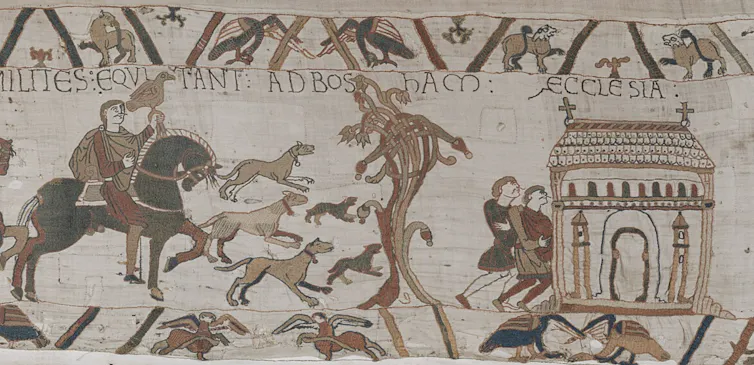
A scene from the Bayeux tapestry showing Bosham Church where Harold prayed before he left for France.
Part of the church of Bosham, where Harold prayed, still stands today.
Wikipedia

In general terms this is what a great church would have appeared like to the public – a stone building with high towers, a two-storeyed elevation and tiled roofs. The difference in scale is evident when one compares the Westminster Abbey image to that of the church of Bosham, where Harold prayed before setting sail to France.

Even though this was an important Anglo-Saxon church, the building’s scale is moderate when compared to Westminster Abbey, which was true of most of the surviving Anglo-Saxon buildings. Of the church at Bosham only the tower remains. This again shows that the building shown on the tapestry is not an architecturally correct image as no tower is depicted.

Although it is sometimes claimed that the formulas used for the buildings were taken from older manuscripts, the castle representations were up to date, and no recourse was taken to existing formulaic images. Stone castles were up-and-coming at the time to consolidate land that had already been conquered.

An embroidered image of the 11th century motte and bailey castle at Dinan in France on the Bayeux tapestry.
The motte and bailey castle at Dinan.
Wikipedia, CC BY

For the process of war, the motte and bailey castle (a man-made mound with a tower and palisade on top surrounded by a moat) that could be built speedily was preferred. The Roman de Rou by Wace – a 12th-century history of the Normans in verse – even mentions that William the Conqueror’s army brought the wooden parts of such castles with them ready made.

The tapestry shows five motte-and-bailey castles: Dol, Rennes, Dinan and Bayeux in France and Hastings in England. The latter castle is still in the process of being built on the tapestry. A Norman knight holding a banner is giving directions to a group of figures, probably Anglo-Saxon peasants forced to dig the moat and raise the motte.

The buildings on the Bayeux tapestry cannot be used for reconstruction purposes. They look as much like the buildings of the time as the figures of Harold and William the Conqueror are true-to-life portraits of these men.

Advertisement

However, these renderings do give the onlooker an idea of how the 11th-century audience of the tapestry would use elements of existing architecture to picture a great church, a great hall, a motte-and-bailey castle, or even the humble dwelling of an Anglo-Saxon farmer.

Source link

Advertisement
Continue Reading

NewsBeat

Echo Comment on Darlington closure of TG Jones and the post office

Published

on

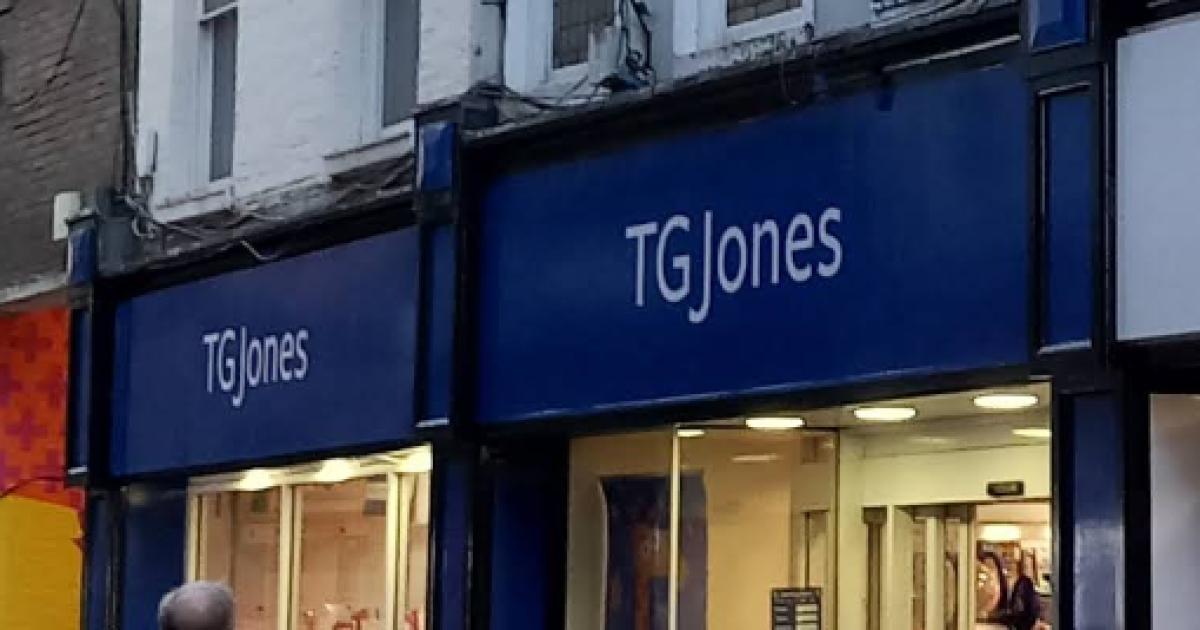
North East TG Jones stores at risk of closing as 150 to be axed

The closure of TG Jones is perhaps no surprise.

It seems to have a lot of this and that in it, largely stationery, books and magazines, but then it surprisingly flirted with M&S high quality food.

Finally, it changed its name from WH Smith, a well known and understood brand, and completely confused its customers.

Advertisement

The post office was one of the frustrations of using the shop.

It has self-service machines that seem to baffle most people forcing them to join the long queue of customers trying to be served by a human – but the human assistants kept being distracted by people who were complaining that they had been baffled by the machines.

It was not a happy experience.

While we have great sympathy with so many town centre businesses which are being squeezed by online shopping, high historic rates and car parking charges, there are some businesses which have not helped themselves.

Advertisement

It is exactly seven years ago that the huge Crown Street central post office shut and its counters were shoehorned into the back of WH Smith.

Not having a post office is another reason not to come into the town centre – wouldn’t it be great if a corner for a counter could be found in the worryingly underused covered market?

Still, as one door closes another opens…

There are still six or seven satellite post offices dotted around the town, from Skerne Park to Haughton to Cockerton to Blackwell to Yarm Road to Mowden, based in community stores that try their best to serve their local people.

Advertisement

If we care about such things, we have to go out of our way to use them to ensure they survive rather than sitting at home and complaining while doing our shopping online.

Source link

Advertisement
Continue Reading

NewsBeat

First picture of dad killed in lorry crash as family left with ‘unimaginable emptiness’

Published

on

Daily Record

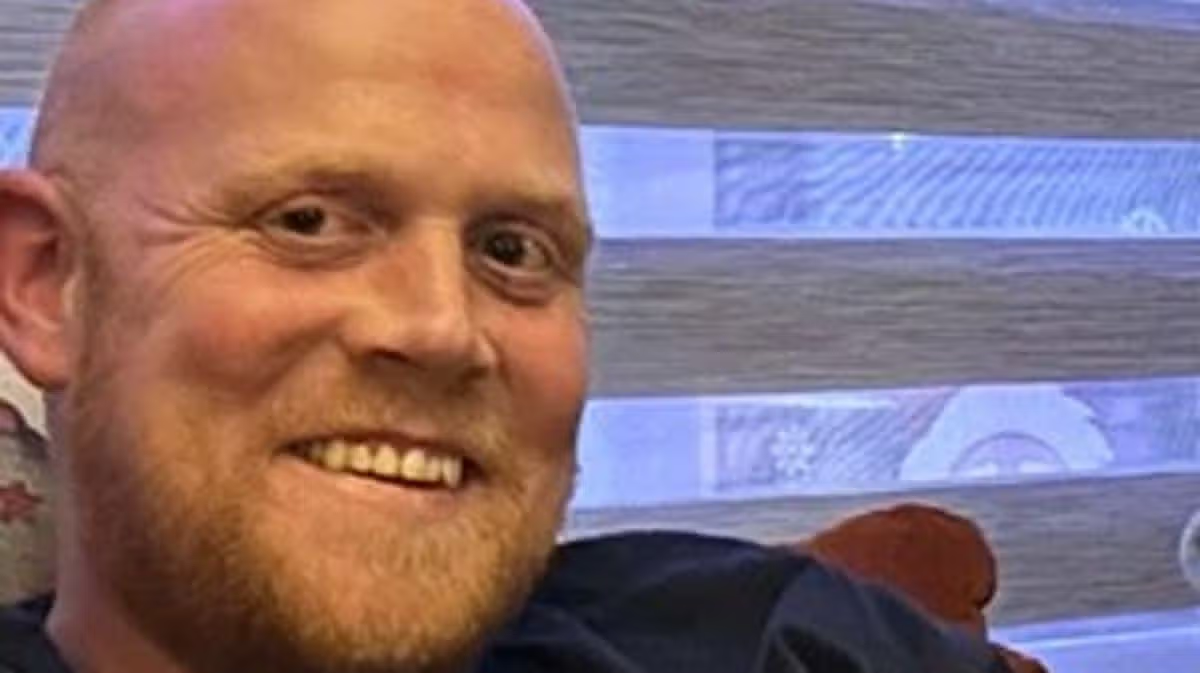
Marc McGregor died after his van collided with a skip loader lorry on the A947 on Thursday, September 10.

A van driver who died in a crash with a skip loader lorry has been pictured for the first time as his devastated family pay tribute to a “loving” dad whose death has left them with “unimaginable emptiness”.

Advertisement

Emergency crews rushed to the A947, Aberdeen to Banff Road at Inverythan near Fyvie, around 1.25pm on Thursday, September 10, after police received a report of a collision involving a white Vauxhall Combo van and a blue Volvo Skip Loader lorry.

Marc McGregor, the 36-year-old van driver, died at the scene. The 33-year-old lorry driver was rushed to hospital to be treated for injuries, which are not known at this time.

Marc’s heartbroken family have paid a touching tribute to him as they thank mourners for the “thoughtful gestures” made in his memory.

A statement released on their behalf, via Police Scotland. read: “The family of Marc would like to express their heartfelt thanks to everyone for the kindness, love and support shown to them following the tragic loss of their beloved Marc.

“The messages, cards, flowers, calls and thoughtful gestures have meant more than words can express during this incredibly difficult time.

“For Marc, his greatest purpose in life was being a dad. He devoted his heart to being the very best dad he could be to his beloved son, Rhudi, and a loving and devoted step-dad to Ellie and Georgie. They were his world, and the love he had for them was immeasurable. His greatest wish was to see them happy, support them through life and always be there for them.

“Marc was also a loving partner, cherished son, brother, grandson, cousin, nephew and uncle, as well as a treasured friend to so many. He touched the lives of countless people with his love, kindness, humour and the memories he created with those around him. He will be deeply missed in each and every one of these roles.

Advertisement

“We are deeply grateful to everyone who has shared their memories of Marc, offered their condolences and stood beside us as we try to come to terms with such a devastating loss.

“Marc was loved by so many, and his loss has left an unimaginable emptiness in the lives of everyone who knew him. Although his life was tragically taken far too soon, the love he gave and the memories he created will remain with us forever.

“His greatest legacy will always be the love he had for his children and the lasting mark he has left on all those fortunate enough to have known him.

“The family would also like to extend their heartfelt thanks to the members of the public and all of the emergency services who attended the scene and did everything they could to help. Their kindness, courage and efforts will never be forgotten.

Advertisement

“Our thoughts are also with everyone else involved in the accident and with all those affected by this tragedy. We hope they are surrounded by love and support during this incredibly difficult time.

“Thank you all for your continued support, kindness and understanding during this heartbreaking time.”

Officers cordoned off the road to allow for a collision investigation to take place. At around 7am on Friday, nearly 18 hours later, police confirmed the road reopened.

The force have asked for witnesses to come forward. Sergeant Chris Bain said: “Our thoughts remain with Marc’s family at this extremely difficult time.

Advertisement

“Enquiries continue to establish the full circumstances and we are continuing to appeal to anyone who witnessed the crash to come forward.

“If you were driving in the area at the time, please check any dash-cam footage to see if it has captured anything which could assist our investigation.”

Anyone with information is asked to contact Police Scotland on 101 quoting incident number 1543 of Thursday, 10 September, 2026.

Get more Daily Record exclusives by signing up for free to Google’s preferred sources. Click HERE.
Source link

Advertisement
Continue Reading

NewsBeat

Fresh boost for Nissan’s Sunderland factory: New Kicks model to be built at UK plant and secure thousands of jobs

Published

on

Nissan kicks life into Sunderland plant: This is the new Kicks crossover, which is going into production at the brand's UK factory. The compact SUV will also be sold in the UK

Nissan will secure the future of its Sunderland factory and thousands of British jobs by building a fourth car at its UK car plant.

The Nissan Kicks Hybrid is a new model for Europe that brings £170million of investment to the Japanese carmaker’s production home in the North East.

The compact crossover, which is already on sale overseas, is the tenth Nissan model to be built at Sunderland in its history, and will be manufactured alongside the Qashqai, Juke, new Leaf EV – and the new electric Juke from next summer.

Kicks is the second model Nissan Europe has confirmed this month, following the announcement of a new small EV reviving the Pixo nameplate from the late noughties. That car is due to be unveiled next week.

Advertisement

While the announcement will be dubbed a major vote in confidence for the UK’s automotive industry, Nissan bosses have caveated that the decision will only be rubberstamped if minsters agree to slash electric car sales targets between now and 2030. 

The announcement comes as Nissan marks 40 years of car manufacturing in the UK as it looks to turn the tide after a difficult period for the company. 

In May, thousands of jobs were put at risk when Nissan combined two production lines at Sunderland following its projected 650billion yen (£4.2billion) net loss for the fiscal year ending March 2026.

It later confirmed it had signed a Memorandum of Understanding (MoU) agreement with Chery Group to allow the Chinese car giant to utilise unused capacity at the UK plant and assemble its own cars on site.

Advertisement

Nissan kicks life into Sunderland plant: This is the new Kicks crossover, which is going into production at the brand’s UK factory. The compact SUV will also be sold in the UK

Massimiliano Messina, chairman for Nissan’s AMIEO (Africa, Middle East, India, Europe and Oceania) region, said: ‘This is fantastic news for our European region and demonstrates the agility and speed with which we can bring new models to new markets.

‘Kicks is a compact crossover with the unique e-Power hybrid drivetrain, exciting design and innovative technology.

Advertisement

‘Electrification with choice is what European customers want, and the introduction of Kicks will further demonstrate that Nissan has options for all.’

However, he warned that the move might only go ahead if ministers heeds the motor industry’s calls to water down electric car sales targets via its Zero Emission Vehicle (ZEV) mandate.

The Government is currently consulting on relaxing the 80 per cent requirement for all new cars sales to be EVs in 2030. It could be dropped as low as 50 per cent. 

According to The Guardian, Messina said after the statement was released: ‘Of course we’re going to keep discussing with the UK government because large part of this is subject to the ZEV mandate amendment.’

Advertisement

When asked if the decision to build the Kicks in Sunderland and the £170million investment will go ahead if the EV sales targets were not adjusted, Messina said: ‘We try to assess always if this is more likely than unlikely.’

When probed about how likely the electric car targets would be reduced to a 50 per cent share of sales, he added: ‘For me, yes, it’s going to happen.’

Join the discussion

Should the UK keep investing in car manufacturing or focus on greener industries for the future?

Advertisement

On Wednesday morning, Business Secretary Jonathan Reynolds welcomed the announcement from one of the UK’s biggest car producers.

‘Nissan has been at the heart of British manufacturing for four decades, with Sunderland producing millions of vehicles, supporting thousands of skilled jobs and helping establish the North East as a global automotive powerhouse,’ he said.

Mike Hawes, chief executive of the Society of Motor Manufacturers and Traders, described the announcement as a ‘major boost for Nissan Sunderland, the thousands of highly skilled jobs it supports and the wider local supply chain’. 

He also dubbed it ‘another vote of confidence in UK automotive manufacturing with its world-class workforce, innovation and engineering excellence’.

Advertisement

Hawes said: ‘The UK sector has the fundamental strengths to secure growth. But to unlock that potential, we must continue to strengthen our competitiveness – supporting a healthy market, tackling the high cost of business, especially energy and additional employment costs – and ensuring trade works for manufacturers. 

‘Do this and yet more companies will choose to build the next generation of vehicles here in Britain.’

At 4.3m long, 1.8m wide and 1.6m tall, the Kicks is almost identical in dimensions to the current Juke and the electric version arriving next year

At 4.3m long, 1.8m wide and 1.6m tall, the Kicks is almost identical in dimensions to the current Juke and the electric version arriving next year

The second-generation car was unveiled in Japan in June. It will produced in Sunderland alongside the Qashqai, Leaf EV, Juke and - from summer 2027 - Juke EV

The second-generation car was unveiled in Japan in June. It will produced in Sunderland alongside the Qashqai, Leaf EV, Juke and – from summer 2027 – Juke EV

Advertisement

Sunderland could get a real kick from this new car

The Kicks was originally launched as a concept car at the Sao Paulo Motor Show in 2014.

It went into production two years later for Latin American markets and, in 2018, was drafted in to replace the Juke in US and Canadian showrooms.

Kicks has also been sold in Nissan’s native Japan since 2020. However, it has not been offered to customers in Europe or the UK until now.

In America, it currently starts from $22,790 (£16,900). 

Advertisement

While Nissan is yet to confirm a starting price in the UK, it will likely be around the same as the current Juke Hybrid, ringing in somewhere around £25,000. 

Since going on sale in 2016, it has become one of Nissan’s most popular global products, recording more than 1.8 million sales across 70 countries in a decade.

The Kicks first went on sale in Latin America in 2016, followed by the US and Canada in 2018. In 2020, it was introduced to its native Japanese market. Nissan has sold more than 1.8m in total

The Kicks first went on sale in Latin America in 2016, followed by the US and Canada in 2018. In 2020, it was introduced to its native Japanese market. Nissan has sold more than 1.8m in total

The five-door shrunken-down SUV has five seats and around 450 litres of boot space, making it an ideal option for small families

The five-door shrunken-down SUV has five seats and around 450 litres of boot space, making it an ideal option for small families

Advertisement
The car features a dual digital screen and lots of physical buttons to control the cabin temperature and other main settings. This is likely to be attractive to UK customers

The car features a dual digital screen and lots of physical buttons to control the cabin temperature and other main settings. This is likely to be attractive to UK customers

The second-generation car being manufactured in Sunderland will be sold in the UK with the brand’s latest e-Power hybrid drivetrain.

Other markets will be able to get the Kicks with 1.0-litre and 2.0-litre petrol engines. These versions will also be built in Sunderland.

The five-door shrunken-down SUV has five seats and around 450 litres of boot space, making it an ideal option for small families. 

Advertisement

The crossover will be assembled alongside the new Juke EV from summer 2027 and is likely to be offered as its combustion-engined alternative within the same segment.

At 4.3m long, 1.8m wide and 1.6m tall, the Kicks is almost identical in dimensions to the current Juke and the electric version arriving next year.

The announcement is a fresh boost to Nissan Sunderland and should secure the plant's future despite the Japanese brands' ongoing financial difficulties

The announcement is a fresh boost to Nissan Sunderland and should secure the plant’s future despite the Japanese brands’ ongoing financial difficulties

The new model announcement comes as Nissan confirmed it has now surpassed 12 million vehicles produced at the Sunderland factory since it first opened in 1986.

Advertisement

On average, the plant has rolled out a new car every one minute and 45 seconds.

The first model produced at the factory was the Bluebird. The Primera, Micra, Almera, Note, Juke, Qashqai and Leaf have followed over the last four decades, along with production of sister brand Infiniti’s Q30 between 2015 and 2019.

Adam Pennick, vice president of manufacturing at the plant, said: ‘I’m proud to welcome this new model allocation for Sunderland.

‘It’s the perfect way to celebrate our 40th year as a world-class manufacturing site. We look forward to seeing the Kicks e-Power Hybrid roll down the production line alongside our electrified line-up of Qashqai, Juke and Leaf.’ 

Advertisement

The deal was seen as a lifeline for Nissan Sunderland, which is Britain’s biggest car factory, employing 6,000 people and producing 273,322 vehicles last year.

Last year, Nissan announced it would cull seven of its factories worldwide as part of a major cost-saving effort that also slashed 20,000 jobs globally.

Source link

Advertisement
Continue Reading

Trending

Copyright © 2025