Connect with us
DAPA Banner
DAPA Coin
DAPA
COIN PAYMENT ASSET
PRIVACY · BLOCKDAG · HOMOMORPHIC ENCRYPTION · RUST
ElGamal Encrypted MINE DAPA
🚫 GENESIS SOLD OUT
DAPAPAY COMING

NewsBeat

Keir Starmer accused of misleading MPs after Peter Mandelson ‘failed vetting’

Published

on

Daily Record

The Prime Minister is facing renewed calls for his resignation over the scandal.

Sir Keir Starmer has been accused of misleading MPs over the appointment of Lord Peter Mandelson as ambassador to the US, after it was reported the peer failed his security vetting but was still handed the Washington job.

Security officials initially denied Lord Mandelson clearance, but the Prime Minister had already named him as Britain’s top diplomat in the US, and the Foreign Office took the rare step of overruling the recommendation, according to The Guardian.

Sir Keir has previously insisted due process was followed in the appointment, and that Lord Mandelson had lied about the extent of his links with paedophile financier Jeffrey Epstein.

Advertisement

The Labour leader has also said the vetting carried out independently by the security services “gave him clearance for the role”.

But the peer was not granted approval following the secretive process by the Cabinet Office’s UK Security Vetting (UKSV) last January, the newspaper reported.

Conservative leader Kemi Badenoch said on X: “Last September, Keir Starmer told Parliament three times that ‘full due process’ was followed over the appointment of Lord Mandelson.

“We now know the Prime Minister misled the House.

Advertisement

“The Prime Minister must take responsibility.”

Author avatarPaul Hutcheon

Author avatarPaul Hutcheon

Liberal Democrat leader Sir Ed Davey said: “Keir Starmer had already made a catastrophic error of judgment. Now it looks as though he has also misled Parliament and lied to the British public. If that is the case, he must go.

“Labour came into government on a promise to clean up politics. Instead we’re seeing the same old sleaze, scandal and cover-ups as we did under the Conservatives.”

The Green Party also called for Sir Keir to resign.

Lord Mandelson, a political appointment rather than a career diplomat, was sacked from his Washington role last September when more details emerged about his relationship with Epstein, who died in 2019.

Advertisement

Sir Keir has been under fire over the decision to give Lord Mandelson the job despite it being known that his dealings with Epstein continued after the financier’s conviction for child sex offences.

Questions over his judgment intensified after the first batch of documents showed he was warned before announcing Lord Mandelson’s ambassadorship of a “general reputational risk” over the Epstein ties.

That warning stemmed from the first part of the checks, carried out by the Cabinet Office, which was based on information in the public domain at the time.

The second was the highly confidential background vetting by security officials, which followed the announcement but before Lord Mandelson took up his role in February 2025.

Advertisement

Information unearthed in this process – including any concerns – is never shared with ministers, and the result is binary, either clearing the candidate or barring them.

Foreign Office officials deployed a rarely used authority to override the decision to deny Lord Mandelson clearance, and he was told days later that he had passed, according to The Guardian.

More documents are yet to be released at the behest of MPs.

Advertisement

The Guardian reported that senior Government officials have been weighing whether to withhold documents from Parliament that would show Lord Mandelson failed the security vetting.

Some material is expected not to be published either because it relates to a police investigation into Lord Mandelson, or because Parliament’s Intelligence and Security Committee believes it could jeopardise national security or diplomatic relations.

But keeping documents from the committee could amount to a breach of the Conservative motion to release “all papers relating to Lord Mandelson’s appointment”.

Sir Keir said in February that Lord Mandelson was cleared by security vetting, which he criticised for failing to disprove the former Labour grandee’s lies.

Advertisement

He said: “There was a due diligence exercise that culminated in questions being asked because I wanted to know the answer to certain issues.

“That’s why those questions were asked. The answers to those questions were not truthful.

“There was then, I should add, security vetting carried out independently by the security services, which is an intensive exercise that gave him clearance for the role, and you have to go through that before you take up the post.

“Clearly, both the due diligence and the security vetting need to be looked at again.

Advertisement

“I’ve already strengthened the due process. I think we need to look at the security vetting because it now transpires that what was being said was not true. And had I known then what I know now, I’d never have appointed him in the first place.”


Source link

Continue Reading
Click to comment

You must be logged in to post a comment Login

Leave a Reply

NewsBeat

Education bosses ‘focused on improvement’ over Whitby School concerns

Published

on

Ripon Grammar School to reopen tomorrow after gas leak

​Parents in Whitby have been told that “sustained improvement and positive outcomes” are the focus for Whitby School after its application to convert to academy status with the Wonder Learning Partnership was not supported.

​At a recent meeting in Whitby, attended by more than 60 parents, students, and local leaders, many said they were “immensely disappointed” and felt “back at square one” over the decision.

​​It follows the controversial amalgamation of Eskdale School and Caedmon College Whitby – despite intense campaigning against the plan by many parents – which was approved by North Yorkshire Council and saw the creation of Whitby School in 2024.

Advertisement

​Speaking at a full meeting of NYC, Cllr Neil Swannick said: “The chair of the board of governors of Whitby School has recently written to parents, carers, and students to inform them that the application for Whitby School to convert to academy status with the Wonder Learning Partnership has not been supported by the Department for Education.

​“Bearing in mind that this unexpected decision follows a difficult period of amalgamation of two secondary schools in Whitby, would the executive member please inform me as the Whitby Streonshalh division councillor, and the many people in Whitby and the surrounding areas who are likely to be affected, what is the ‘plan B’?

​“In particular, what additional support and resources will be made available to the school governors and leadership?”

Cllr Annabel Wilkinson, executive member for education, said: “As you noted, the DfE did not support the academy conversion to the Wonder Learning Trust Partnership due to reasons of geographical coherence.

Advertisement

​“As a maintained school, Whitby School benefits from a comprehensive programme of school improvement support, including monitoring and challenge provided by the local authority team, in addition to support through partnership organisations.”

​At the full meeting of the council on Wednesday, May 20, she added: “The school improvement team is working closely with the governors and school leaders to ensure that the school improvement support is closely aligned to the school’s current priorities.

​“Our shared focus remains on securing sustained improvement and positive outcomes for pupils through arrangements that are coherent, proportionate, and sustainable.

​“I have spoken to the head teacher and the governors of the school, and I would really like to thank them and the staff for the sterling work they are doing as champions for Whitby and for the pupils of the school. Because, as some of you know, being governors yourselves, it’s a very demanding role, especially in today’s world.

Advertisement

​“So, I’d like to thank them, and we will continue to work closely with them, and I am going to visit the school as well to reassure them.”

Source link

Advertisement
Continue Reading

NewsBeat

How London, Paris and New York coped in the heatwaves of the past

Published

on

How London, Paris and New York coped in the heatwaves of the past

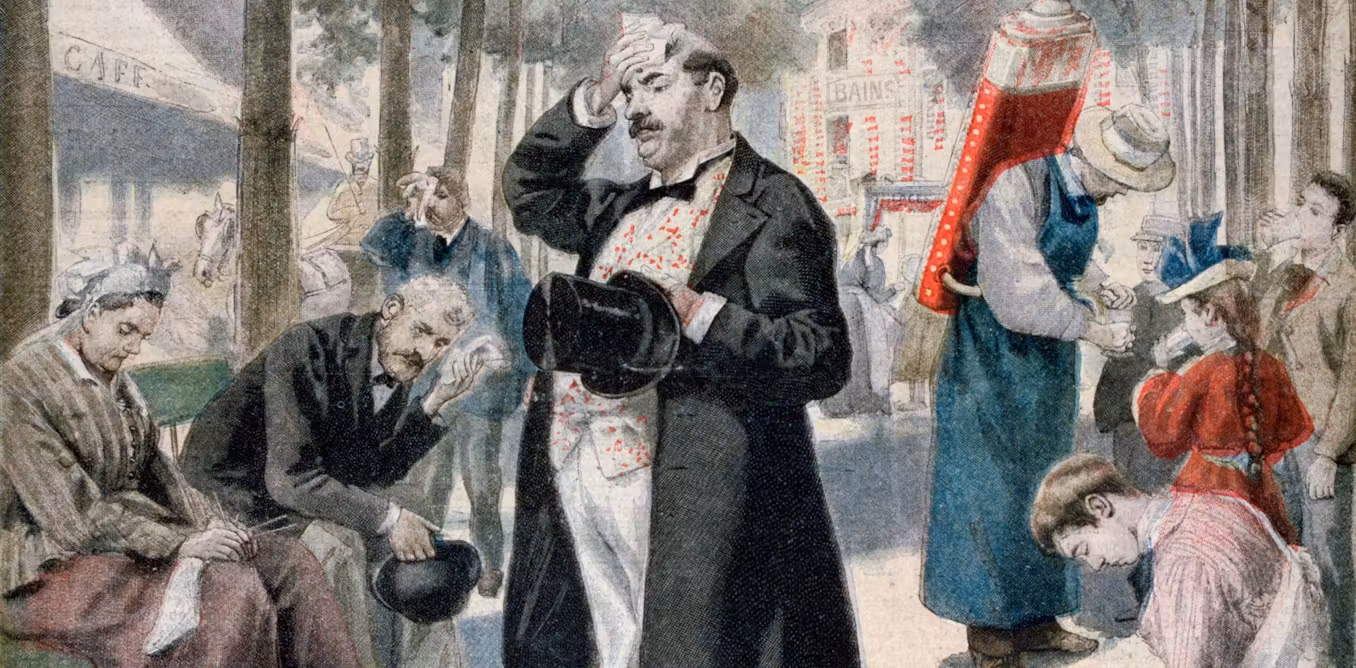
Paris, London and New York are more often associated with culture, finance and history than with dangerous heat. Yet each summer all three are increasingly exposed to extreme temperatures they were never designed to withstand.

Like many dense urban areas, they amplify heat through what is known as the “urban heat island effect”. This reflects the way that warmth is trapped in concrete, asphalt and glass, turning hot days into hazardous ones.

With skyscrapers made of glass and steel, roadways encased in cement and blocks of residential apartments, New York traps heat like few other metropolitan centres. In fact, the city has one of the highest urban heat island effects in the United States, a measurement of thermal difference between urban and rural areas. Heat kills more than 500 New Yorkers every year, a grim statistic that exacerbates inequalities along the lines of race and class.

Cricket fans struggle in the heat at Lord’s in London.
PA Images

While many people escape to the seaside or countryside to find relief, others remain in cities where the heat can be harder to avoid and more difficult to endure. Yet these uneven experiences of urban heat are not new. In cities such as London, Paris and New York, coping with hot summers has long been shaped by inequality.

Advertisement

Across the 19th and 20th centuries, urban residents developed a range of strategies to manage extreme heat in densely built environments. Our research for the Melting Metropolis project examines everyday experiences of heat. Here are some of the ways people have coped with these conditions in the past and what they reveal about living with heat in the city.

London

For most historic urbanites, escaping the confines of their home provided the greatest relief from the heat. In the mid-20th century, some Londoners escaped to the roof of their apartment building to catch the cooling breezes that swirled above the city’s streets.

For many others, since the 19th century, public spaces have provided the greatest respite from heat in their homes. Londoners turned to the shade provided by trees in nearby parks, paddled in water fountains or went for cooling dips in lidos and ponds.


À lire aussi :
A brief history of British lidos – and new hope for their return to glory

Advertisement

Historic urbanites have also tried to cope with the heat at home. In contrast to those who sought relief from the heat in public spaces, wealthier Londoners used money and technology to keep cool. In the 19th century they purchased imported ice from Norway or employed servants to operate fans.

Paris

In the heatwaves of the 19th century, Parisians also headed out in search of relief. Like Londoners, they made extensive use of the parks that urban planners embedded into the fabric of the city during the late 19th-century Haussmann-era redesign. But it was not only dense greenery that provided respite from the heat: the trees planted along the avenues of the city offered shelter from the rays of the sun on hot summer days.

A young girl in Paris leaning on a public water fountain in 1921 while a bottle fills under the spout.
Edward Roth

Although the Seine held great potential for cooling down, bathing in its waters was banned in the middle of the 19th century. Despite the official ban, photographic records show that some Parisians in search of freshness broke the law and took the plunge.


À lire aussi :
For a century, it’s been illegal to swim in the Seine. Will Paris’s clean-up make the river safe for Olympic swimmers?


To keep cool indoors, the more privileged 19th-century Parisians used ice imported from northern regions or collected locally during the winter and stored in ice houses until temperatures rose. Ice remained a luxury item until the late 1870s, when technological developments allowing ice to be made artificially lowered its cost and widened its accessibility.

Advertisement

Daily life in Paris – including in the summer – had undergone thorough transformations by the middle of the 20th century. Air conditioning began to gain momentum but some traditional ways to cool down have remained at the core of summer life: crowds continue to swarm café terraces, the banks of the Seine stay packed with people, 19th-century water fountains are still used to refill water bottles.

Children cool down with a giant block of ice in New York
Children cool down with a giant block of ice in New York circa 1910.
Niday Picture Library

New York

In the 19th century, the tenements of New York City were filled with people sleeping on roofs, sweating on fire escapes, and avoiding the sweltering indoors. The wealthy simply fled the city for countryside estates. Newspapers called these seasonal migrants “heat refugees”.

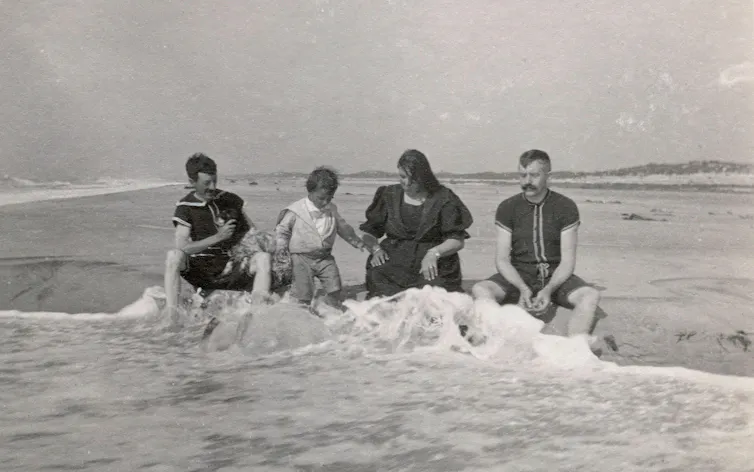
When seeking outdoor relief, most 19th-century New Yorkers headed to the beach – the city is an island, after all. But by the 20th century, they were also planing block parties with plenty of ice from corner store bodegas. On occasion, they also cracked open fire hydrants – a relief strategy that has become a classic trope of New York City summers.

A family in old fashioned long bathing suits sit in the sea
A family in bathing suits at the edge of the water at Long Beach, New York in 1898.
Old Paper Studios

Future heat waves

For as long as episodes of extreme heat in cities have affected urban life, urbanites have developed ways to cope. Today, cities are taking heat more seriously when they look to the future and working towards adaptation strategies. The disastrous heatwave of 2003 served as a wake-up call in Paris, which implemented a heat plan the following year and continues to work on ways to make the city more liveable in the summer.

Central to New York’s climate resilience plans, air conditioning has become a political battleground in activists’ fight for a “right to cooling” (a bundle of legislation championed by local environmental justice organisations).

Though it can compound the problem of climate change, technologically aided cooling keeps people alive as we all find ways to weather the intensifying heat. In May 2026, the UK’s Climate Change Committee declared that the British way of life is under threat from heat.

Advertisement

In June, London will launch its heat plan for the capital, a first step in supporting the city and its residents to live better with extreme heat.

The climate crisis has a communications problem. How do we tell stories that move people – not just to fear the future, but to imagine and build a better one? This article is part of Climate Storytelling, a series exploring how arts and science can join forces to spark understanding, hope and action.

Source link

Advertisement
Continue Reading

NewsBeat

Scot missing in Turkey after travelling for surgery ‘found safe and well’

Published

on

Daily Record

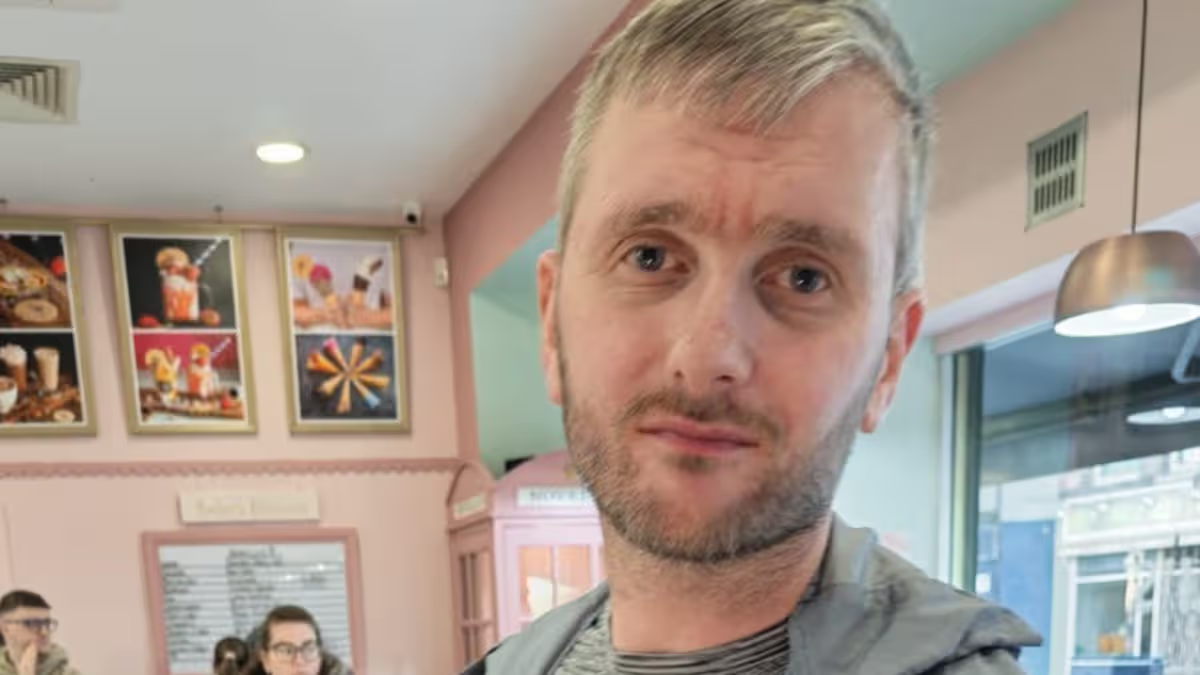
Damian Carroll, 36, from Rosyth in Fife, has reportedly been found safe and well.

A missing Scot who vanished in Turkey after travelling to the country for surgery has reportedly been found safe and well.

Advertisement

Damian Carroll, 36, from Rosyth in Fife, vanished on Saturday, May 16.

His phone had remained off, however, STV News reports that Damian was traced on Friday, May 22.

Damian vanished after disappearing from a hospital in Izmir.

At the time, he did not make his flight home to Scotland.

Advertisement

It’s understood he has since flown back to the UK.

His partner Chyvonne Petch previously said: “I’m very concerned. I’m crying all the time. I just don’t know where he is. He hasn’t been online or anything. I’ve been constantly checking but there is nothing. He is a very vulnerable man. I’m worried that he might be hurt, I just can’t stop crying.”

An FCDO spokesperson said: “We are supporting the family of a British man in Turkey.”

Get more Daily Record exclusives by signing up for free to Google’s preferred sources. Click HERE.

Advertisement

Source link

Continue Reading

NewsBeat

Barry teens racist murder sentences to be referred to Court of Appeal

Published

on

Barry teens racist murder sentences to be referred to Court of Appeal

Mr Justice Griffiths called Staniforth a “very dangerous young person indeed” and told the 16-year-old he “instigated a deliberate, unprovoked, sustained, violent racist attack”, adding he was “old enough to know that to cause serious injury on a stranger because of his race was wrong”.

Source link

Continue Reading

NewsBeat

Front Street, Acomb, business’ sign in York council ruling

Published

on

Front Street, Acomb, business' sign in York council ruling

City of York Council planning officers partially refused a retrospective application to install an illuminated sign across the window and stallriser of Countoak House, in Front Street, Acomb.

The application stated all the work was carried out under building regulations and to appropriate standards.

But an objector claimed the sign had been sneaked up at 2am, was overbearing and did not fit in with the area.


RECOMMENDED READING:

Advertisement

Council planning officers stated the sign had been crudely installed and caused harm to the building and the surrounding street scene.

They approved a facie sign installed at the rear of the building saying: Mr Mobile Mr Vape but ruled all signs must not be lit up.

The business applied for planning permission for the facia sign and a signage board, both on the York Road side of the building.

The facia sign they applied to get planning permission for measures 2.78m-long, with the signage board measuring 4.55m by 5.25m.

Advertisement

Elevations for signs installed at the rear of Mr Mobile Mr Vape, in Front Street, Acomb, York (Image: City of York Council planning portal)

A sign installed on the Front Street side of the building was not included in the plans but officers stated it would have been refused planning permission if it had been.

The sole objector to the plans stated the signs had been installed on the building which borders the Acomb Conservation Area.

They claimed: “The signage was sneaked up at 2am, it’s over bearing and does not fit in with the area.”

Council planning officers stated the sign was poorly-fixed and its design was out-of-place.

Advertisement

They added its size meant it could have a distracting effect on road users, creating a public safety risk.

Officers said: “The larger signage board is crudely fixed and poorly placed across the shop window and stall riser, resting just above ground level, extending up to the underside of the fascia.”

Source link

Advertisement
Continue Reading

NewsBeat

Moors Murders: Eerie picture of Myra Hindley could be key to discovery of more bodies

Published

on

Daily Record

Author Michael Attwell has spent nearly 50 years studying serial killers Myra Hindley and Ian Brady

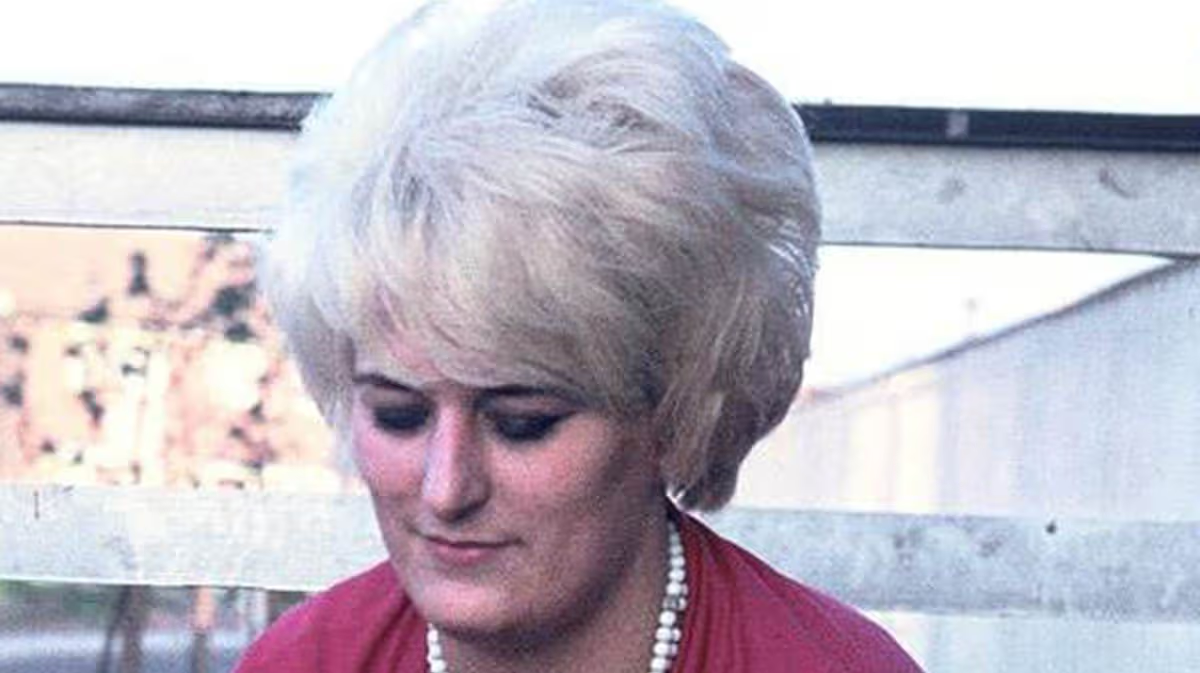
Pictures of sick killer Myra Hindley posing alone at Staffordshire’s Ramshaw Rocks could be a key clue to further murders. Dubbed the ‘tartan’ photographs, author Michael Attwell has spent nearly 50 years studying serial killers Hindley and Ian Brady.

He says there are striking similarities in the style of these and the notorious images taken on Saddleworth Moor – where remains of three of their child victims were found. Michael, a TV producer, director and author, whose new book The Moors Murders, is out this week, tells The Mirror: “The famous ‘tartan’ photographs show her and Brady at the Ramshaw Rocks in Staffordshire, doing exactly the same sort of thing that we see in the photographs on Saddleworth Moor.

Advertisement

“They look like markers of some description.”

While there has been no evidence of children being abducted in the area at this time, he believes the photos – which along with those at Saddleworth were taken between August 1964 and October 1965 – could still be hiding a grim secret.

He says of Hindley’s eerie poses: “Those photographs are weird. It would not surprise me if one day it turned out there was something in that.” Sixty years ago this month Brady and Hindley were jailed for the Moors Murders, in which they abducted and killed five children between1963 and 1965.

The bodies of Pauline Reade, 16, John Kilbride, 12, and Lesley Ann Downey, 10, were found buried in shallow graves on Saddleworth Moor. Edward Evans, 17, was found murdered and trussed up in their house, while 12-year-old Keith Bennett’s body has never been recovered.

Hindley was serving a life sentence at Highpoint Prison in 2002 when she died, aged 60, at nearby West Suffolk Hospital in Bury St Edmunds from respiratory failure and bronchial pneumonia. Brady died from terminal lung disease, aged 79, in 2017, at Ashworth High Secure Hospital in Merseyside, where he was also serving life.

While many people believe Brady took Keith’s whereabouts to his grave as a final act of control, Michael disputes this. He thinks Keith’s remains could still be found at a location both killers gave.

He says: “Both Brady and Hindley, who weren’t in contact in prison, gave a location which the police searched, but found nothing. I believe they both thought the information was correct. At that point, Hindley was shopping Brady for everything – she was no longer protecting him. For them to share the same location makes me think it was the truth.”

Advertisement

Searches of the area yielded nothing and bones found in 2022 by someone researching Keith’s murder turned out to be from an animal. But Michael believes advances in technology and detection methods may, in the future, show traces of Keith’s body at the site.

He says: “Radar imaging has improved to the point that it is now very good at finding physical remnants like rocks that leave impressions in the soil. Finding bodies is much harder because they’re organic and they decay. But I do believe the tech will get there and he may well be found. Either that or there will be an accidental discovery, after a time of erosion. Those are the two best hopes.”

Michael, who commissioned The Moors Murders docuseries in 1999 and produced Myra: The Making of a Monster in 2003, is deeply saddened that Keith’s mother, Winnie Johnson, died, aged 78, in 2012, without finding her son. Michael, who met her, says: “She was the sweetest, loveliest, perfectly ordinary woman in every way. You could just tell her whole life had been ruined.

Advertisement

“She talked about how she’d started going up onto the Moors, taking flowers for his birthday, Easter and Christmas. She liked going up there and found a certain peace. She said, ‘I feel he is up there somewhere’. She just wanted him to come home and it’s terribly unfair, because in four of the five cases, the bodies were found. She never got that resolution.”

And, in 2025, a lawyer for Keith’s family hoped to gain access to two briefcases belonging to Brady. Held by his solicitor, they were rumoured to contain personal papers providing clues about Keith’s grave.

But Michael believes the subsequent silence means this was bogus. He says: “My strong suspicion is if there was anything in them that was of any use to anybody, no self-respecting solicitor would not have made that stuff available. I suspect the truth is there’s nothing there.

“I think it’s one of those myths that has been built up, like the idea that Brady went to his grave knowing where the body was and not revealing it. I think it’s highly improbable.” Michael’s extensive research of the serial killers has given him a unique insight into their warped minds.

Describing the male-female murder duo as “unheard of” at the time, he says: “It was worst nightmare territory. They photographed the victims, they tape recorded the whole thing, they killed them on the moors in the dead of night and buried them in secret.

“Brady was a psychopath, impervious to other people’s pain and suffering. If you look into serial killers, almost all of them come from highly abnormal, dysfunctional backgrounds. There may be a genetic predisposition but the environment is critical.” Before he met Hindley in 1961, Brady’s childhood had cultivated his dysfunction.

Michael says: “Brady was born in the middle of the depression at a time of extreme poverty to an unmarried waitress. She puts an advert in a shop window, when he’s a few months old, and a family in the Gorbals, Glasgow, takes him in. The environment is violent. He doesn’t know who his parents are. He knows that he doesn’t belong in this family.

“So he becomes this angry little boy, throwing tantrums, banging his head against the wall, screaming and shouting. From about 10, he’s carrying a knife. He starts breaking into people’s houses and becoming a thief. At a very early age he’s living beyond the law and justifies it by saying he’s getting his own back on the world. He starts showing sadistic behaviour towards other children. When he’s 13 he rapes another boy.”

Advertisement

Infatuated by him, Hindley helps Brady to live out his sadistic fantasies in one of history’s depraved murder sprees. Michael says: “However much she was under his sway and influence, the truth is she must have enjoyed it. It was their little secret.” For now, the location of Keith Bennett’s and whether there were, indeed, further murders, remain unknown.

Only time will tell if the bespectacled boy with the big smile will ever be laid to rest or if the Ramshaw Rocks beauty spot is, indeed, hiding a very ugly secret. Michael says: “You could be searching for five years. It’s like finding a needle in a haystack. “So the mystery of the Moors Murders murders continues and we’ll be talking about it for years to come.”

*The Moors Murders by Michael Attwell will be published on 4th June by HarperCollins (HarperElement, £10.99).

Ensure our latest stories always appear at the top of your Google Search by making us a Preferred Source. Click here to activate or add us as your Preferred Source in your Google search settings.

Advertisement

Source link

Continue Reading

NewsBeat

Fire appliance damaged as crew comes under attack from stone throwing thugs

Published

on

Belfast Live

‘We are there to help the public’

Youths who pelted firefighters with stones after they were called out caused so much damage a fire appliance was temporarily withdrawn from frontline duty.

The incident took place on Friday evening, May 22, in the Colin Glen Forest Park area of West Belfast.

NIFRS said they received the call-out at 7.32pm this evening and personnel responded to assist.

Advertisement

A statement from the Northern Ireland Fire Service said: “Fire crews were called out to rubbish on fire at Colin Glen Forest Park where they came under attack from youths throwing rocks. A fire appliance from Cadogan fire station was damaged during the incident and unable to respond to other calls for assistance until it was repaired.”

READ MORE: Parents and pupils urged to be vigilant after student social media hackedREAD MORE: £300,000 in cocaine transported across border using Dublin-based crime gang

A spokesman from the NIFRS said: “There was damage to the appliance which resulted in the front windscreen being broken. This meant that the appliance was unable to respond to further incidents until it was repaired.

“We want to highlight that firefighters are there to assist the public and we wish to appeal to the community to please provide assistance to crews as that we are there to help them.”

Advertisement

For all the latest news, visit the Belfast Live homepage here and sign up to our daily newsletter here.

Source link

Continue Reading

NewsBeat

X Factor’s Joe McElderry to headline Bishop Auckland Pride

Published

on

X Factor's Joe McElderry to headline Bishop Auckland Pride

The event will take place at Bishop Auckland College on Saturday, June 13.

Mr McElderry will be joined on stage by renowned drag artist Tess Tickle and The Dragettes, with entry to the event costing just £1.

Thomas Wales, managing director at Baccanalia, said: “Getting somebody like Joe McElderry to Bishop Auckland is a huge moment for the event and honestly, a massive deal for the town.

Advertisement

“He’s a genuine North East success story and somebody people across the region have grown up watching over the years.

“To bring Joe together with regional favourites like Tess Tickle and The Dragettes, while still keeping the event accessible, is exactly what we want Bishop Auckland Pride to be about.

“We want it to feel exciting, welcoming and genuinely open to everybody.”

Since winning The X Factor in 2009, Mr McElderry has built an impressive career across music, television and musical theatre.

Advertisement

Tess Tickle said: “The Dragettes and I are absolutely over the moon to be part of the Bishop Pride line-up for 2026.

“We’ve watched this incredible event grow over the years, and we’re so excited that our dates have finally aligned so we can bring Bishop Auckland a taste of Tess Tickle and The Dragettes.

“In uncertain times, now more than ever, it’s important that we stand together in solidarity and celebrate being loud, proud, and unapologetically ourselves in our hometown of Bishop Auckland.

“We can’t wait to see you there.”

Advertisement

Produced by Baccanalia for Culture CIC in association with Bishop Auckland College and supported by Bishop Auckland Town Council, the event has rapidly grown into one of the town’s largest public cultural events.

Organisers expect a record crowd as the event continues to grow year after year following the success of the previous two years.

The event also has the backing of Hiyed CIC, a community organisation creating opportunities that remove barriers to employment for adults with learning difficulties, autism, mental health difficulties and other health conditions that may impact working life.

In addition to live performances, attendees can look forward to street food, bars, stalls, family-friendly activities and entertainment throughout the site.

Advertisement

Organisers are encouraging people to settle in for the afternoon and make a day of it.

Organisers have also praised the continued support of Bishop Auckland Town Council and Bishop Auckland College, whose backing has played a major role in the event’s growth over recent years.

The college once again plays host to the event and works closely with the production team to deliver the programme on site, creating opportunities for both students and the wider community to be involved in one of the town’s largest public celebrations.

Further announcements and programme details will be released over the coming weeks via Bishop Auckland Pride and Baccanalia social media channels.

Advertisement

Bishop Auckland Pride will take place from 2pm to 7pm on June 13 at Bishop Auckland College.

Source link

Advertisement
Continue Reading

NewsBeat

How Is Labour Trying To Ease The Rising Cost Of Living?

Published

on

How Is Labour Trying To Ease The Rising Cost Of Living?

Labour has announced a raft of measures to help alleviate the soaring cost of living for Brits this week.

It comes as Donald Trump’s war against Iran, and the subsequent blockade of the Strait of Hormuz, continues to impact the global economy.

The waterway usually transports around 20% of the world’s oil and 25% of its liquefied national gas supplies, meaning its effective closure has hit energy-dependent countries everywhere.

A food security crisis is looming as a result, and the UK’s household energy price cap is expected to rise by £209 a year from July.

Advertisement

Here’s a look at the measures chancellor Rachel Reeves unveiled this week as part of her £300 million “Great British Summer Savings” scheme.

5p Cut On Fuel Duty

The government announced on Wednesday that it will keep the current 5p cut on fuel duty until the end of the year.

The reduced tax rate for petrol and diesel was meant to be phased out in September.

Advertisement

The policy was announced by the previous Conservative government to help ease the impact of the Russia’s invasion of Ukraine in 2022.

Now, with a fresh energy crisis emerging from the Middle East conflict, the government has decided to extend the scheme.

Red diesel duty will also be cut by one-third and road hauliers will receive a year’s grace on road tax to help the farming community.

A 12-month road tax holiday for HGVs and a 10p per mile in tax-free mileage rates, backdated to April 2026, is also set to be rolled out.

Advertisement

Free August Travel For 5-15 Year-Olds

Children will travel for free on participating local buses in England for one month over the summer, Reeves announced on Wednesday.

The £100 million fare-free scheme will save a family with two children who make a weekly return trip at £1.50 per fare approximately £27, according to the government.

Those eligible can take an unlimited number of trips and do not need to register to enjoy the perk.

Advertisement

Similar schemes were successfully trialled in the West of England throughout the summer, Easter and Christmas holidays.

VAT On Ticket Prices Cut

The chancellor announced a temporary cut to VAT on some attractions from 20% to 5% over the summer holidays.

“This will apply to ticket prices for both adults and children, covering attractions such as fairs, theme parks, zoos and museums,” Reeves told the Commons on Thursday.

Advertisement

“It will include children’s tickets for cinemas, concerts, soft play and the theatre, and it will cut the cost of children’s meals in restaurants and cafes from 20% VAT to 5% as well.

“These changes will apply across the UK from the start of the Scottish school holidays on 25th June, and run until the end of school holidays in England, Wales and Northern Ireland on the 1st of September.”

Tariff Suspension On Supermarket Goods

The chancellor announced plans to suspend tariffs on certain supermarket goods on Thursday.

Advertisement

Tariffs – import taxes on goods paid by companies in the supply chain – will be lifted on more than 100 types of products, including biscuits, chocolate, dried fruit and nuts.

Supermarkets will then have to pass that saving onto product prices so shoppers can enjoy a price cut.

The full list of products will be published next week but the scheme is expected to save consumers more than £150 million a year.

What About Supermarket Price Caps?

Advertisement

There were reports the government was going to force price caps to supermarkets to try to keep the price of essential products – like eggs, bread and milk – down.

However, even the idea of a voluntary scheme was dismissed by the supermarket sector.

Marks & Spencer’s chief executive, Stuart Machin, said the idea was “completely preposterous”.

There were fears that could lead to shortages on shelves and trigger pressure throughout the supply chain.

Advertisement

Is This Enough?

These measures might improve summer, but there is more pain around the corner.

While inflation did fall this week, it is expected to rise as the conflict in the Middle East triggered sky-high fuel prices.

The Office for National Statistics announced that Consumer Prices Index inflation fell to 2.8% in April, down from 3.3% in March, which is the lowest rate since March 2025.

Advertisement

However, that was driven by regulator Ofgem reducing the energy price cap from the start of April by £10 a month.

The energy price cap is expected to increase significantly from July, too, from the current rate of £1,641 per year to £1,850 for a typical dual fuel household, according to predictions.

But the chancellor will wait until September before finalising any package of targeted support for households in winter when energy use increases.

Ministers are also trying to avoid offering a universal bailout for all households so as not to drive up an increase in government borrowing costs and inflation, leading to the kind of economic disaster seen under Liz Truss.

Advertisement

The government insists it is offering “practical steps that help right now”.

Prime minister Keir Starmer said: “We know many hard‑working families are still feeling the squeeze and too often think they have to hold back.

“By giving every child free bus travel throughout August and cutting tariffs on everyday food items, we’re putting money back into people’s pockets and making life that bit easier.

“This government is focused on practical steps that help right now — easing pressure on household budgets, supporting parents during the school holidays, and backing British businesses.”

Advertisement

Subscribe to Commons People, the podcast that makes politics easy. Every week, Kevin Schofield and Kate Nicholson unpack the week’s biggest stories to keep you informed. Join us for straightforward analysis of what’s going on at Westminster.

Source link

Advertisement
Continue Reading

NewsBeat

Wigan fire LIVE as emergency services scrambled and residents told to keep doors and windows closed

Published

on

Manchester Evening News

A spokesperson for Greater Manchester Fire and Rescue Service (GMFRS) said:“Shortly after 5:53pm this afternoon (Friday 22 May), fire crews were called to reports of a fire at a commercial building on Leopold Steet in Pemberton, Wigan.”

“Five fire engines from GMFRS, one fire engine from Lancashire Fire Service and one fire engine from Cheshire Fire Service arrived quickly at the scene. Firefighters are using hose reels and specialist firefighting equipment to extinguish the fire.

“Firefighters have been in attendance for around one hour and 15 minutes and are working with colleagues from Greater Manchester Police and North West Ambulance Service to make the area safe.”

Advertisement

“Due to large amounts of smoke, residents are advised to keep doors and windows shut and avoid the area.

Source link

Continue Reading

Trending

Copyright © 2025