
Politics
Autism And Menopause: Why Researchers Call For Urgent Study Into Neurodivergent Health


We’ve written before at HuffPost UK about how menopause is increasingly driving women with suspected ADHD to get a formal diagnosis. The life stage can “amplify ADHD-related challenges,” Eve Lepage, a reproductive health specialist at Clue, shared with us previously. Scientists have long suspected that hormones like oestrogen can affect how ADHD presents.
But researchers only began formally tracking ADHD symptoms across women’s menstrual cycles recently, with scientists calling the much-reported issue scientifically “overlooked”.
And in an article published in Frontiers in Reproductive Health, study authors wrote that “Autistic women navigating the menopause transition face a constellation of challenges that remain critically understudied”.
Issues with body awareness, sensory overstimulation, and systemic barriers can make the experience uniquely challenging for autistic women, they added.
Here, HuffPost UK spoke to Dr Claire Agathou, a GP with a specialist interest in women’s health and the co-founder of A-Z General Practice at HCA’s The Wellington Hospital, about the topic.
How might autism affect menopause and vice versa?
Dr Agathou told us that menopause “can affect virtually every aspect of a woman’s wellbeing from sleep and mood to concentration, memory and temperature regulation – and for autistic women there may be an additional layer of complexity”.
Emerging research suggests that autistic women might experience an intensification of autistic traits during the transition – “In particular, sensory
sensitivities may become more pronounced, emotional regulation can become more difficult, and changes in sleep, concentration and executive function may have a disproportionately disruptive effect on everyday life”.
Take, for instance, a hot flush, the GP said. “For someone who already experiences heightened sensitivity to temperature, clothing or touch, it may become intensely uncomfortable or overwhelming.
“Similarly, sleep disruption and the cognitive symptoms commonly described as ‘brain fog’ may compound existing difficulties with executive function, planning or managing competing demands”.
As with women who have ADHD, Dr Agathou continued, autistic women might find it harder to “mask” their neurodivergence during menopause.
Strategies they may have spent years adopting in order to hide struggles or navigate their professional or social sphere could be harder to maintain, which may be distressing, “particularly for women who have spent much of their adult lives functioning at a very high level, some without recognising that they may have autism”.
However, the doctor stressed that not every autistic person going through menopause will necessarily have a more intense experience.
“Menopause itself varies enormously between individuals. At present,
the evidence base is relatively small, so we need to listen to women’s individual
experiences rather than make assumptions based simply on a diagnosis,” she said.
Both autism and menopause are “historically neglected” in scientific research
When asked how we can support autistic women through menopause, Dr Agathou said it’s important to recognise the experience isn’t uniform.
“Healthcare professionals should actively ask about sensory symptoms, sleep, emotional regulation, executive functioning and the impact symptoms are having on day-to-day life, rather than focusing solely on hot flushes or changes to periods,” she said, adding that clear, written explanations and avoiding info-dumping on patients might also help some women.
“We should also recognise that autistic women may describe or experience internal bodily sensations differently, which can sometimes make identifying and communicating symptoms more difficult”.
But unfortunately, she continued, the intersection of menopause and autism simply isn’t all that well-studied.
“There are two historically neglected areas intersecting here. Women have traditionally been under-recognised in autism research because our understanding of autism was largely developed from studies of boys and men.
“Many autistic women… therefore reached adulthood without a diagnosis, often becoming very skilled at masking their difficulties. At the same time, menopause itself has historically been under-researched, and, for many years, women’s symptoms were too readily normalised or dismissed,” the GP explained.
“When those two gaps overlap, it isn’t surprising that autistic women going through menopause have received relatively little attention.”
This, despite some early evidence suggesting that menopause can be especially difficult and/or have unique side effects for some autistic women.
“The key message is that we shouldn’t assume menopause looks the same for every woman,” Dr Agathou ended.
“If somebody tells us that this transition has fundamentally changed how they are able to function, we need to listen, explore why, and provide care that reflects their individual needs.”
Meanwhile, the Frontiers In Reproductive Health study argued: “As the autistic population ages, and as researchers continue to learn more about the presentation of autism in the female population, it will be imperative to support autistic females in their experience of menopause”.

!function(n){if(!window.cnx){window.cnx={},window.cnx.cmd=[];var t=n.createElement(‘iframe’);t.display=’none’,t.onload=function(){var n=t.contentWindow.document,c=n.createElement(‘script’);c.src=”//cd.connatix.com/connatix.player.js”,c.setAttribute(‘async’,’1′),c.setAttribute(‘type’,’text/javascript’),n.body.appendChild(c)},n.head.appendChild(t)}}(document);(new Image()).src=”https://capi.connatix.com/tr/si?token=8b034f64-513c-4987-b16f-42d6008f7feb”;cnx.cmd.push(function(){cnx({“playerId”:”8b034f64-513c-4987-b16f-42d6008f7feb”,”mediaId”:”86761a72-20e6-45af-9470-824a865a6020″}).render(“6a9167e2e4b0569612de81c3”);});
Who’ll play the next James Bond? That question has plagued fans in the five years since the franchise’s bosses confirmed “the search for the next James Bond” had begun.
Favourites so far have included Aaron Taylor-Johnson, Callum Turner, Jacob Elordi, and more recently, Heartstopper actor Jack Barton.
Meanwhile, Sir Idris Elba, who’s long been touted as a great 007 option, said speculation about his casting was “just a rumour”.
But what about the actors who really were offered the part and turned it down?
Here are 11 performers who allegedly said “no” the iconic role:
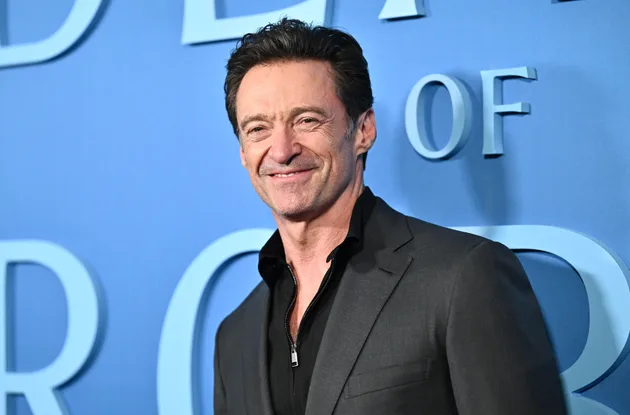
Hugh Jackman
In an interview with IndieWire, Les Mis star Hugh Jackman said he rejected a part in 2006’s Casino Royale due to other engagements.
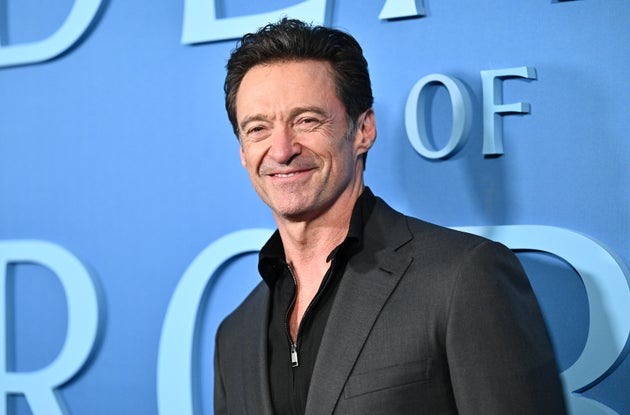 Hugh Jackman
He said of the offer: “I had a look at it… I was like, ‘If I’m doing that and Wolverine, I’ll have no time to do anything else.’”
He’s also shared: “I was about to do X-Men 2 and a call came from my agent asking if I’d be interested in Bond. I just felt at the time that the scripts had become so unbelievable and crazy, and I felt like they needed to become grittier and real…
“People wanted me to play that kind of hero part exclusively. It felt a little bit claustrophobic.”
Richard Burton
Cleopatra actor Richard Burton was reportedly one of the first people that the author of the Bond books, Ian Fleming, looked to cast for the first film, Dr No.
According to the actor’s great-nephew, Guy Masterson, “My uncle told me that Ian Fleming had approached him, asking him to play Bond.
“But, back then, in 1959, Bond was a new concept, and nobody had any idea it would be as big as it became. My uncle told me that he thought it was going to be just another movie.
“No matter how big Bond became, he never said he regretted missing out on the role. Had Burton played Bond, I think he would have been absolutely fantastic.”
Clint Eastwood
Speaking to the Los Angeles Times in 2010, the four-time Academy Award winner said he was “offered pretty good money to do James Bond if I would take on the role. This was after Sean Connery left.
“My lawyer represented [then-007 producers] the Broccolis, and he came and said, ‘They would love to have you.’ But to me, well, that was somebody else’s gig. That’s Sean’s deal. It didn’t feel right for me to be doing it”.
 Clint Eastwood
 There was another reason, too: in 2021, he told The Express, “I thought James Bond should be British.
“I am of British descent, but by that same token, I thought that it should be more of the culture there. It was not my thing.”
Michael Gambon
Sir Michael Gambon, who played Albus Dumbledore in six of the Harry Potter films, claimed: “I didn’t want the part because I’m not like [Bond]. I haven’t got nice hair, and I’m a bit fat.
“And [the producer Sir Michael was speaking to] said, ‘Well, the present James Bond doesn’t have any hair. It’s a wig.’”
Burt Reynolds
Deliverance star Burt Reynolds apparently regretted his choice to reject the part. In 2015, he told USA Today that he didn’t think fans would be on board with an American Bond – “the public won’t accept it”.
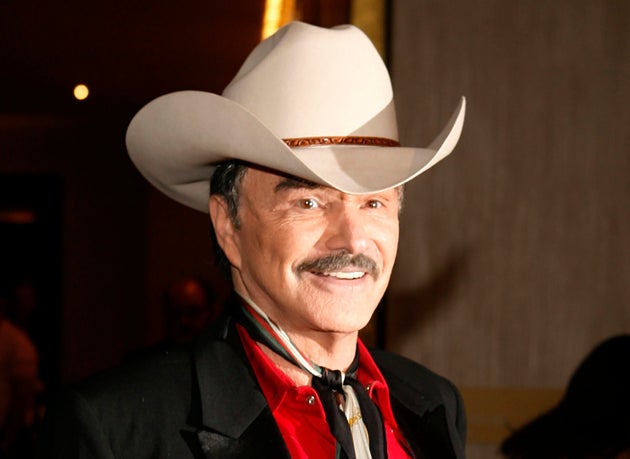 Burt Reynolds
He added, “It was a stupid thing to say. I could’ve done it and I could’ve done it well.”
Adam West
Actor Adam West’s Batman co-star, Burt Ward, who played Robin in the superhero films, told the Express: “Yes, he actually turned the role [of Bond] down, and the reason why [is] he thought from a technical standpoint that it should be a Brit that plays the role.
He added, “I think he would have been great, he would have been fabulous. He would have been closer, in my opinion, to Sean Connery, even than Roger Moore. Sean has even more of that satirical twinkle in the eye”.
Ewan McGregor
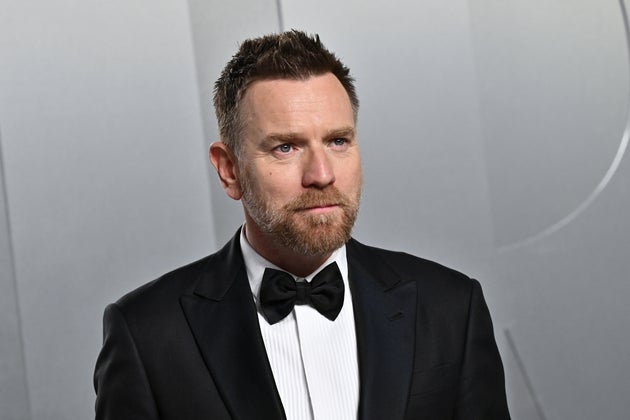 Ewan McGregor
According to Martin Campbell, who directed Casino Royale, Daniel Craig only landed his on-screen licence to kill after the Star Wars actor turned the part down: “I think [Ewan] got another job or decided he didn’t want to do it”, he said.
Campbell suspected Ewan McGregor was worried about being typecast after his role as Obi-Wan Kenobi.
Liam Neeson
Irish actor Liam Neeson has claimed his late wife, Natasha Richardson, wouldn’t have married him if he played Bond.
“I was heavily courted, let’s put it that way, and I’m sure some other actors were too,” Liam told the Hull Daily Mail.
 Liam Neeson
 “It was about 18 or 19 years ago, and my wife-to-be said, ‘If you play James Bond, we’re not getting married’. And I had to take that on board because I did want to marry her.”
Rod Taylor
The Aussie celeb was reportedly sought out for the first on-screen role in the late ’50s. He later confessed: “Producer Cubby Broccoli wanted me to screen test for James Bond when he was preparing Dr No in 1961.
“I refused because I thought it was beneath me,” he continued.
“I didn’t think Bond would be successful in the movies. That was one of the greatest mistakes of my career! Every time a new Bond picture became a smash hit, I tore out my hair. Cubby and I have laughed about it ever since”.
Cary Grant
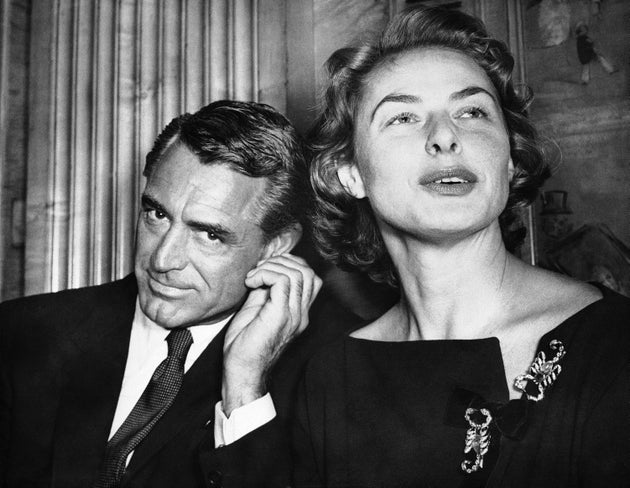 Ingrid Berman, Cary Grant
The two-time Academy Award nominee was allegedly Ian Fleming’s first choice for the initial movie (he was also the first man at then-Bond bigwig Cubby Broccoli’s wedding).
But Grant, who was in his 50s at the time, was reportedly only interested in a one-film deal, while the studio wanted him on the hook for five. As a result, the deal fell through, and Sean Connery landed the gig.
Christian Bale
The American Psycho actor explained his reasoning in his biography, Christian Bale: The Inside Story of the Darkest Batman.
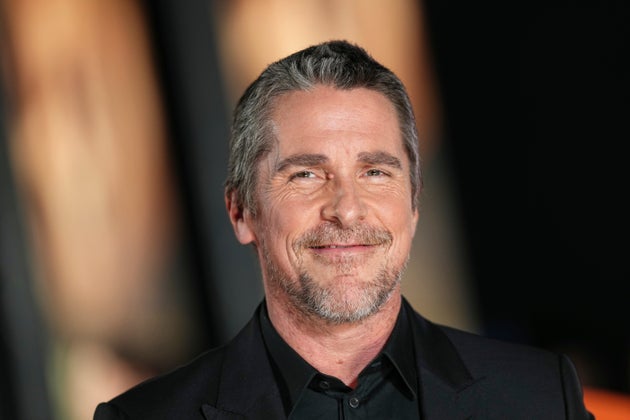 Christian Bale
 In the book, Christian said James Bond represented “every despicable stereotype about England and British actors”, adding he had “already played a serial killer”.
Related…


If you want to improve your health and don’t already exercise, starting to do so may be one of the biggest ways to ensure you age well.
Strength training, for instance, can help us live longer, may reduce our risk of dementia, and makes us less likely to fall.
Meanwhile, aerobic training, like jogging, walking, and swimming, is linked to better heart health in older age and might benefit our brains too.
In cases like these, could an injection do some of the work for us?
Maybe, one day, a recent mouse study has suggested.
How might an exercise “patch” via injection work?
They found something unexpected during this experiment, though. Speaking to New Scientist, study author Ng Shyh-Chang said: “This thing was contracting under the skin continuously, and we thought, ‘This thing is like non-stop exercise.’”
The scientists then took samples of muscle stem cells from the mice and developed them into contracting muscle cells called myocytes. When they injected those into the animals (dubbed a “myograft”), a patch of tissue with its own blood networks formed near the injection site.
This area stayed pulsing, even when the mice slept.
And that action seemed linked to some of the benefits you’d expect from a heat-pumping workout.
For instance, mice given the graft developed more muscle across their whole bodies, saw better immune function, and appeared to have stronger bones and greater strength in their older age.
What’s more, the “patch” still seemed to be doing its job six months after first injection.
The idea still needs more research
Still, the researchers write, their method offers a “different approach toward [cell and gene-based therapy] CGT for ageing-related chronic diseases”.

!function(n){if(!window.cnx){window.cnx={},window.cnx.cmd=[];var t=n.createElement(‘iframe’);t.display=’none’,t.onload=function(){var n=t.contentWindow.document,c=n.createElement(‘script’);c.src=”//cd.connatix.com/connatix.player.js”,c.setAttribute(‘async’,’1′),c.setAttribute(‘type’,’text/javascript’),n.body.appendChild(c)},n.head.appendChild(t)}}(document);(new Image()).src=”https://capi.connatix.com/tr/si?token=19654b65-409c-4b38-90db-80cbdea02cf4″;cnx.cmd.push(function(){cnx({“playerId”:”19654b65-409c-4b38-90db-80cbdea02cf4″,”mediaId”:”001da49b-6ad7-4df9-9a7c-d5b1713c8f27″}).render(“6a96f902e4b0f5af040f59a6”);});

We don’t need to tell you this: tech is expensive. Keeping up to date with the latest gadgets can put a serious dent in your wallet, but the price tag doesn’t do much to quell our desires for a new phone.
Especially when one as enticing as the Google Pixel 11 Pro drops.

Available for pre-order now, and to buy from 20 August, the Pixel 11 Pro comes in four shades (Canyon pink, Olive green, Fog blue and Obsidian black).
The phone retails at £1,079, which is up nearly £500 from the Pixel 10. But, good news Google heads: you can get it for less when you trade in an old device.
Eligible devices include phones from Google, Samsung, and Apple, among tons of other brands, so if you’ve been thinking about switching to Google, this is as good a chance as any.
Depending on the phone you’re trading, you could save up to £850, which in case you need a little help with the maths, means your new phone could cost as little as £229. Woah.
When you consider the array of upgrades Google has made from its predecessor, the Pixel 10, that’s an insane steal.
The first Google phone to use its Tensor G6 chip, it’s considerably speedier than the Pixel 10, with Google claiming you’ll see 25% speedier browsing and 3.5 times faster Gemini processing.
Speaking of, the Pixel 11 Pro is loaded with Gemini Intelligence, which can help you with everything from brainstorming to finding information.
The camera is often the most important aspect of a phone (for us, at least) and this one delivers big time. Pixel 11 boasts Google’s longest zoom yet (up to a whopping 120x) and 30% better light sensitivity so your photos always come out looking crisp and sharp.
One of our favourite elements is Magic Capture mode, which means you can simply press a single button to let your phone take over the heavy lifting of taking photos and videos, so you don’t have to think about the best mode to capture the moment.
The offer runs until 1 September, so run, don’t walk – because you could miss out on £850 in savings on the Pixel 11 Pro as well as up to £260 when you trade in a smart watch for the new Google Pixel Watch 5.
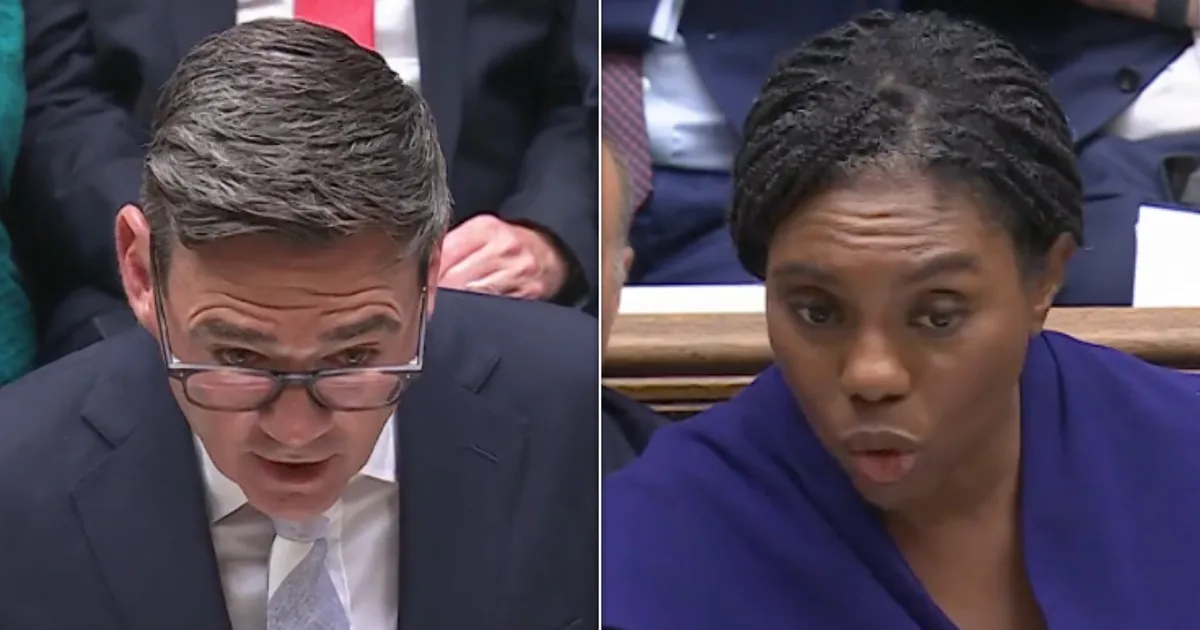
Andy Burnham hit back at Kemi Badenoch’s criticism over his delayed appearance in front of fellow MPs with a quick reminder of Liz Truss.
The prime minister succeeded Keir Starmer on July 20, just days after Westminster’s scheduled summer recess began.
He therefore did not have to answer any direct questions from his opponents in the House of Commons for the first six weeks for his premiership.
So the Conservatives’ leader Badenoch used her first opportunity on Tuesday to remind MPs how Burnham enjoyed the summer without much scrutiny.
Burnham replied: “The Honorable Lady said the fact that I had been in my position for 43 days.
“Can I turn that round and say that means in six days, this government will have outlived the Truss government? And will be here for a lot, lot longer.”
Truss was forced out of office in October 2022, after just 49 days in Downing Street.
Her own MPs kicked her out following the economic turmoil caused by her disastrous mini-Budget, which contained £45 billion of unfunded tax cuts, sending interest rates and inflation up while the value of the pound went into decline.
Truss’s name is now regularly used as a stick to beat the Conservatives by its opponents.
Burnham also used his time at the despatch box to remind the Leader of the Opposition just how many of her own front bench had been tightly tied to the Truss government.
“I noticed yesterday she appointed a new shadow cabinet,” the prime minister said. “The new shadow chancellor, I welcome him to his position too – I believe the author of the mini-Budget?”
This jibe sparked uproar from across the House, as Burnham added: “I think at least half of the shadow cabinet supported the Liz Truss government.”
Badenoch removed Mel Stride and promoted Andrew Griffith to the top job over the bank holiday.
Griffith robustly defended the mini-Budget during the dying days of Truss’s premiership when he was financial secretary to the Treasury.
He said: “We think they’re the right plans because those plans make our economy competitive.
“What we politicians are responsible for is making the economic decisions that will drive continued growth.”
Truss also welcomed news of Griffith’s promotion on Monday, writing on X: “Congratulations to Andrew Griffith on becoming Shadow Chancellor.
“The economic establishment of the last three decades has failed Britain. They must be taken on.”
Listen to Commons People, the podcast that makes politics easy. Every week, Kevin Schofield and Kate Nicholson unpack the week’s biggest stories to keep you informed. Join us for straightforward analysis of what’s going on at Westminster.


3 min read
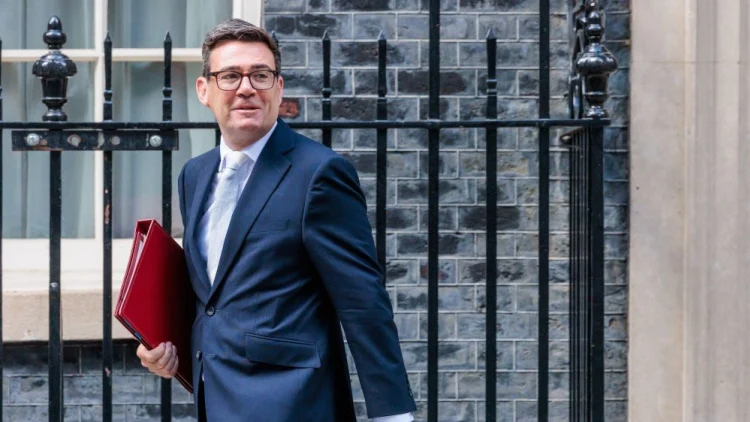
Andy Burnham has offered devolution deals to all parts of the UK in his first House of Commons statement as Prime Minister.
Speaking on Tuesday afternoon, Burnham said he wanted to avoid a “two-tier England” where some regions benefit from devolution arrangements while others don’t.
Outlining his “decade of personal experience” as Greater Manchester mayor, he said he spent it “turning around one of the UK’s former industrial heartlands and turning it into the fastest-growing city region in the country”.
The PM said he wanted “every single place across our regions and nations to be able to do the same” as Manchester, and said he met the Liberal Democrat leader of Cornwall Council on a recent visit to the south west region.
Burnham said he has asked No 10 North, which he set up shortly after entering office, to begin work with Cornwall Council and its six cross-party MPs on a devolution deal for the region, which could be with or without an elected mayor.
MPs in the region had expressed concern that Burnham’s focus on the North and ‘Mancheristism’ risked neglecting other parts of the country facing important challenges.
Burnham added that he would extend the same offer to all parts of England currently without devolved power. He said he would also offer further forms of local devolution in Scotland, Wales, and Northern Ireland, which will be discussed at a special meeting of the National Economic Council next month.
“Britain needs a circuit breaker after a decade of turbulence, negativity, point scoring, and divisive politics,” Burnham said.
“This is what I have outlined today: a clear, coherent, and credible approach to growth that can unlock a feeling of positivity and possibility in every postcode in Britain.
“Our job in here is to make it real by taking a place-first rather than party-first approach. It starts with reasserting basic standards for Britain: that this is a country where no one sleeps rough and no community is blighted by an illegal waste tip.
“And from there, working together to build a new sense of optimism around the country, we can make this next decade better than the last. We can lift the prospects of all our people and places. We can put more power into every postcode. We can let Britain believe again. We can bring back hope.”
Burnham also highlighted education and training reform as essential to support more young people into work, and said that prioritising more accessible community-based mental health services will be a major part of the government’s response to the forthcoming Alan Milburn report into rising unemployment.
He confirmed that prisoners convicted of manslaughter, death by dangerous driving, or indecent assault will not now see any change to their prison term, and that the government would find additional prison places by deporting more foreign national offenders and ending indefinite IPP sentences.
“I believe the public will support me in recognising the clear difference between those who have served their time and more and those who have not,” he said.
“We will bring forward legislation soon, but we can find a solution to end this injustice, which balances public safety and basic fairness. And I urge colleagues on all sides of the House to help us do that. This is politics done differently, problem solving over point scoring.”
Burnham told the Commons that the number of asylum-seekers arriving in the UK by crossing the Channel has halved on last year, making this year to date the lowest for crossings since 2021.
He also offered his sympathies to those affected by the floods in Nepal and Tibet, adding that this was “what the climate crisis looks like”. Burnham confirmed that he will attend COP31 in Turkey in November.

Donald Trump has been mocked after posting an AI meme of Canada Geese with his hairstyle defending “Lake America”.
The so-called “Donald Ducks” are shown firing machine guns in the clip, which the US president posted on Truth Social.
It follows Trump’s controversial bid to re-name Lake Ontario over his ongoing trade war with Canada.
He signed an executive order last week changing its name to Lake America – triggering an angry backlash from Canadian politicians.
Lake Ontario is one of the five “Great Lakes” which straddle the two countries.
Trump said the name change was “official, effective immediately”.
Responding on X, Canadian prime minister Mark Carney blew Trump’s claims out of the water by pointing out it has been known as Lake Ontario for centuries and will remain so “now and always”.
Undeterred, Trump posted the Donald Ducks meme on Saturday – sparking ridicule online.
One X user said: “It’s confirmed. The president is insane.”
A separate AI video also posted by Trump shows him replacing the Lake Ontario sign with a Lake America one before doing his signature dance.
Listen to Commons People, the podcast that makes politics easy. Every week, Kevin Schofield and Kate Nicholson unpack the week’s biggest stories to keep you informed. Join us for straightforward analysis of what’s going on at Westminster.

About half an hour after my childhood dog fell asleep, the following routine would kick in.
First, his snoring would break up into periods of excited snorting. Then, his hind leg would start to twitch.
Minutes later, he’d be cycling his limbs frantically, an expression of intense concentration on his snoozing visage. We were convinced he was chasing animals in his dreams (friends have described similar experiences with their own dogs).
But do dogs even have what we’d recognise as dreams? And if so, what goes on in their canine minds?
Do dogs dream?
It looks like they probably do.
One study that tracked the animals’ sleep patterns found that, like humans, dogs seem to experience the rapid eye movement (REM) stage of sleep associated with dreaming.
And we know that mammals like rats appear to dream similarly to people (their minds tend to replay what happened during their days).
Some researchers have applied that finding to all mammals, including cats and dogs, based on how similar their brain structures are.
So what do dogs dream about?
That’s less researched – but again, experts have their theories.
For instance, David Peña-Guzmán, author of the book When Animals Dream, told Scientific American that dogs might dream in scents (they rely on their nose a lot more than people do).
As with the rats in the aforementioned study, dream researcher Deirdre Barrett, who wrote The Committee of Sleep, told the publication that dogs might replay the events of the day in their dreams.
“Whatever you can observe dogs being interested in by day is what you would expect to show up in their dreams… That’s so much how it works for us that it would be surprising if they somehow did the compensation pattern,” she stated.
If your dog loves food, running around the garden, or simply being with their beloved owners, then those events probably feature heavily in their dreams.
Studies seem to back this theory.
Scientists have previously tracked what happened when scientists disabled the part of dogs’ brains that stopped them from moving to their fullest extent while they slept.
That meant the usual muscle-locking mechanisms that keep mammals (mostly) still during vivid physical dreams were temporarily out of order, so dogs acted out their dreams.
Stanley Coren, a professor emeritus of psychology at the University of British Columbia and the author of Do Dogs Dream? Nearly Everything Your Dog Wants You to Know, told Live Science: “What we’ve basically found is that dogs dream doggy things.
“So, pointers will point at dream birds, and Dobermans will chase dream burglars. The dream pattern in dogs seems to be very similar to the dream pattern in humans.”
One last fact – the professor said that smaller dogs seemed to have smaller dreams, while bigger species had more long-lasting ones.
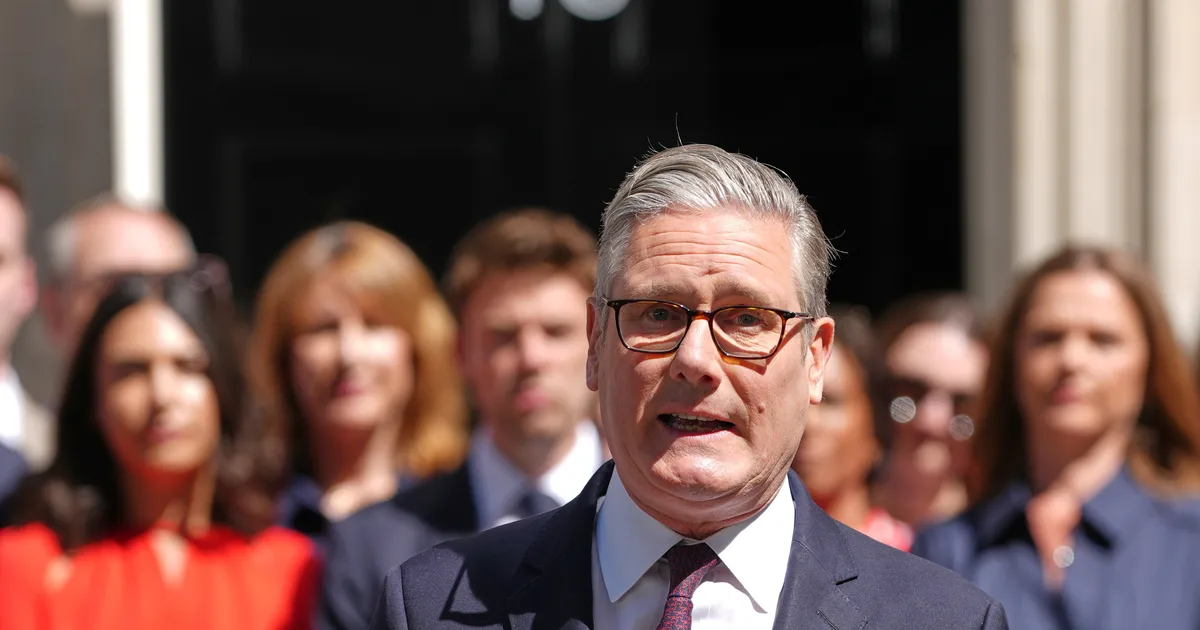
Keir Starmer is having to find a new house because of a firebomb attack on the one he lived in before becoming prime minister, it has emerged.
The former PM’s biographer, Tom Baldwin, said he had been advised not to return to the property “for security reasons”.
Two men were jailed in June following a trial at the Old Bailey over arson attacks on property connected to Starmer.
The jury heard Roman Lavrynovych and Stanislav Carpiuc had been recruited by an anonymous Russian-speaking figure called “El Money” on the messaging service Telegram.
In the early hours of May 12, 2025, a fire broke out at Starmer’s former home in Kentish Town, north London, where his sister-in-law and her family were then living.
Lavrynovych and Carpiuc were also convicted of setting fire to a car once owned by Starmer, and the front door of a property in north London that Starmer had previously managed, earlier the same month.
Speaking in the House of Commons at the time, the then PM said it was “an attack on all of us, on democracy and the values that we stand for”.
Starmer and his family divided their time between Downing Street and the country grace-and-favour residence Chequers when he was prime minister.
But he left No.10 last month after being replaced as PM by Andy Burnham.
On Sky News on Sunday, Baldwin was asked how Starmer is coping with life out of power.
He said: “He’s had a holiday, which is something he didn’t get in his first summer. He is looking for a place to live, because he can’t go back to his old house for security reasons.”
HuffPost UK has contacted Starmer’s representatives for comment.
Listen to Commons People, the podcast that makes politics easy. Every week, Kevin Schofield and Kate Nicholson unpack the week’s biggest stories to keep you informed. Join us for straightforward analysis of what’s going on at Westminster.

In the UK, an estimated eight million people are living with anxiety at any given time. But not all types of the condition are equally common.
According to the Cleveland Clinic, for instance, about 7% of the US population experiences social anxiety. Selective mutism, meanwhile, is “the least common anxiety disorder”, affecting somewhere between 0.47% and 0.76%.
HuffPost UK spoke to BACP-accredited therapist and anxiety expert, Kamalyn Kaur, about the phenomenon.
What is selective mutism?
This “is an anxiety disorder whereby someone is unable to speak in certain situations, despite being able to speak comfortably in others,” the therapist said.
“For example, a child may talk freely at home but be unable to speak at school, or an adult may struggle to speak in particular social or professional settings but be absolutely fine when with close friends.”
Kaur stressed that even though people with selective mutism can speak freely in some situations, that doesn’t mean they’re choosing to stay silent in others. They might desperately want to talk, but their ability to do so is hampered by anxiety.
What are the symptoms of selective mutism?
- Not being able to talk in situations that make the person with selective mutism feel anxious, vulnerable, and exposed,
- Freezing or becoming very still,
- Avoiding eye contact,
- Difficulty responding, even non-verbally,
- Appearing withdrawn or expressionless,
- Intense fear of being judged or drawing attention to themselves.
Selective mutism is “often” misunderstood
When we asked Kaur whether she thinks the condition is misunderstood, she replied: “Yes, I think it often is.
“Selective mutism is less widely understood than conditions such as generalised anxiety or panic disorder, and it can be mistaken for shyness, defiance, rudeness, or simply a lack of confidence,” she added.
“One of the biggest misconceptions is [due to] the word selective, which can make it sound as though the person is consciously choosing when not to speak. In reality, the inability to speak is often… outside their control”.
What should I do if I suspect I have selective mutism?
Accepting you have the condition and trying to remove the pressure to “just speak more” is a great start, the anxiety expert said.
“In fact, telling someone to ‘just speak more’ can be some of the worst advice, as it minimises the condition and can make the person feel inadequate… For someone experiencing selective mutism, it isn’t that simple; their inability to speak in certain situations is driven by anxiety, not a lack of willingness or effort.”
Treating selective mutism can begin with professional therapy, which could be useful in identifying the anxiety behind the behaviour.
Other helpful tools might include understanding your triggers and anxiety patterns, trying manageable, gradual, expert-led exposure therapy, cognitive behavioural approaches, and confidence-building.
“The key and important thing to remember is not to pressure, shame or punish someone for being unable to speak, as this can increase anxiety. Creating a sense of safety, a non-judgemental space, and gradually expanding communication is generally much more helpful,” Kaur ended.
In general, “Greater awareness is important because when selective mutism is recognised early and responded to with understanding rather than pressure, people can receive the right support and avoid years of misunderstanding (and labelling).”

Lindsay Clancy jury tells judge it can’t reach verdict after four days of deliberations: Live updates

(VIDEO) Where and When to Watch the Lindsay Clancy Trial Livestream as Its Jury Deliberations Continue Today

Ethena Expands USDe into Global Payments with New App




![Everyone Wants a Bitcoin Pullback. History Says They Don't Get One [Kalshi Live Trading]](https://wordupnews.com/wp-content/uploads/2026/09/1788281404_maxresdefault-80x80.jpg)

-

 Crypto World7 days ago
SpaceX stock could rise 75% to $240, JPMorgan says
-

 Fashion4 days ago
Weekend Open Thread: Maeve – Corporette.com
-

 Crypto World5 days ago
Bitcoin’s 22% rally now needs real demand to outlast Treasury liquidity boost
-

 Crypto World6 days ago
Warsh Jackson Hole keynote puts financial innovation first
-

 Business5 days ago
Salesforce Stock Soars 19% as Blowout Earnings and Agentforce AI Growth Silence Software Skeptics
-

 Crypto World6 days ago
Elon Musk Grok Bot Promise: We Will Make You Whole if AI Loses Your Money
-

 Business5 days ago
Apple Confirms September 9 Keynote and Reveals Its Full Pre-Order Schedule
-

 Crypto World7 days ago
Did Trump Just Move SpaceX Stock With One Truth Social Post?
-

 Business4 days ago
Onto Innovation Stock: AI’s Next Bottleneck Is Yield (NYSE:ONTO)
-
 NewsBeat6 days ago
Lindsay Clancy jury braces for closing arguments as judge tells court: ‘You’ve heard all the evidence’ – Live updates
-

 Business6 days ago
Walmart takes aim at younger shoppers with new fashion brand
-

 Crypto World4 days ago
Bitcoin price tests $82K resistance as Brandt stays long
-

 Crypto World6 days ago
NVIDIA revenue hits $96.2B as AI demand doubles
-

 Business7 days ago
Thailand’s Eastern Economic Corridor Capital City (EECiti): Key Developments and Investment Opportunities
-

 Business4 days ago
iPhone 18 Pro Pre-Orders Could Shift to Saturday as Apple Reportedly Avoids September 11 Anniversary
-

 NewsBeat7 days ago
Trump’s trade truce with China faces test with Iran effort
-
 Crypto World6 days ago
Nvidia Q2 Earnings Reveal $96.2 Billion Beat, So Why Is NVDA Falling?
-
 Tech3 days ago
Hugging Face built a $4.5 billion empire on free AI models. Now Nvidia is buying it for $12.9 billion
-
 Tech6 days ago
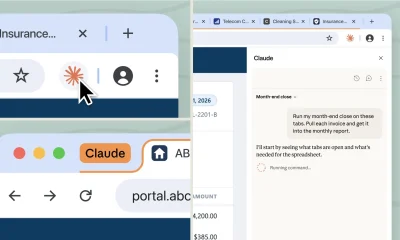
Claude Cowork gets its own browser that doesn’t touch your tabs, bookmarks, or saved passwords
-

 Crypto World5 days ago
Truflation calls for Fed rate cut after PCE forecast
You must be logged in to post a comment Login