

Politics
Belfast, broken borders and the evasions of our elites

At around half past 10 on Monday night, 8 June, on a residential street in north Belfast, a man in his thirties allegedly pinned another man to the ground and began stabbing him. He was stopped by three members of the public, one of them carrying a hurling stick, who dragged him clear. The victim, a man in his forties, lost his left eye. His right eye sustained serious damage. He has deep lacerations to his face and back. He remains in serious condition in hospital. A kitchen knife was recovered.
The man now charged on suspicion of attempted murder is Hadi Alodid, 30 years old, of Duncairn Avenue, Belfast. He is also charged with possession of a blade in a public place and with threatening to kill a female NHS radiographer while he was being treated for a hand injury following his arrest. The court heard that while receiving that treatment, he told police: ‘I killed someone, I don’t know if they’re dead.’ Judge Steven Keown refused bail on Wednesday, finding that ‘the risks were far too great and unmanageable with any bail conditions’.
Alodid’s route to Belfast is on the public record. He flew from Sudan to Paris and from there to Dublin. On 10 February 2023, he boarded a bus from Dublin to Belfast, applied for asylum, and was granted leave to remain until 2028. He had no (known) criminal record and appeared on no police database. When Jon Boutcher, Police Service of Northern Ireland (PSNI) chief constable, contacted his counterpart in counter-terrorism, nothing came back. The attack is not, at present, being treated as terrorism. The motive is yet to be established. The investigation continues.
So too does the journey from Paris to Dublin to Belfast, for anyone minded to take it. It is worth understanding why this journey was taken, because understanding is exactly what the governing class is hoping the public will not acquire.
When the UK left the European Union, it lost participation in the Dublin III Regulation, the mechanism that had previously allowed it to return asylum seekers to whichever EU member state through which they had first passed. After Brexit, the UK introduced replacement inadmissibility rules under the Nationality and Borders Act 2022, which allow the state to refuse a claimant’s asylum request if he or she has a connection to a safe third country or passed through one before arriving in the UK. But these rules apply to Great Britain and not to Northern Ireland, where a Belfast High Court ruling in 2024 barred key provisions of the UK’s post-Brexit immigration laws. The Common Travel Area, the arrangement between the UK and the Republic of Ireland that predates both states and was preserved through Brexit as a structural requirement of the Good Friday Agreement, means that a person crossing from the Republic into Northern Ireland faces no passport check, no border control and no immigration officer.
This is not an oversight. It is the consciously constructed legal architecture, known to every government in the chain. And none has dared address the problems it poses, on the grounds that doing so might complicate the arrangements around the peace process.
Democratic Unionist Party MP Carla Lockhart asked in the Commons on Tuesday what action the UK government is taking to prevent abuse of the immigration system via the land border with the Republic. Hilary Benn, the secretary of state for Northern Ireland, confirmed what was already known: that any foreign national who abuses the hospitality of this country to commit crimes should be in no doubt of the government’s determination to deport them, and that net migration is down 82 per cent from its peak under the previous government. That, of course, is an answer to a different question.
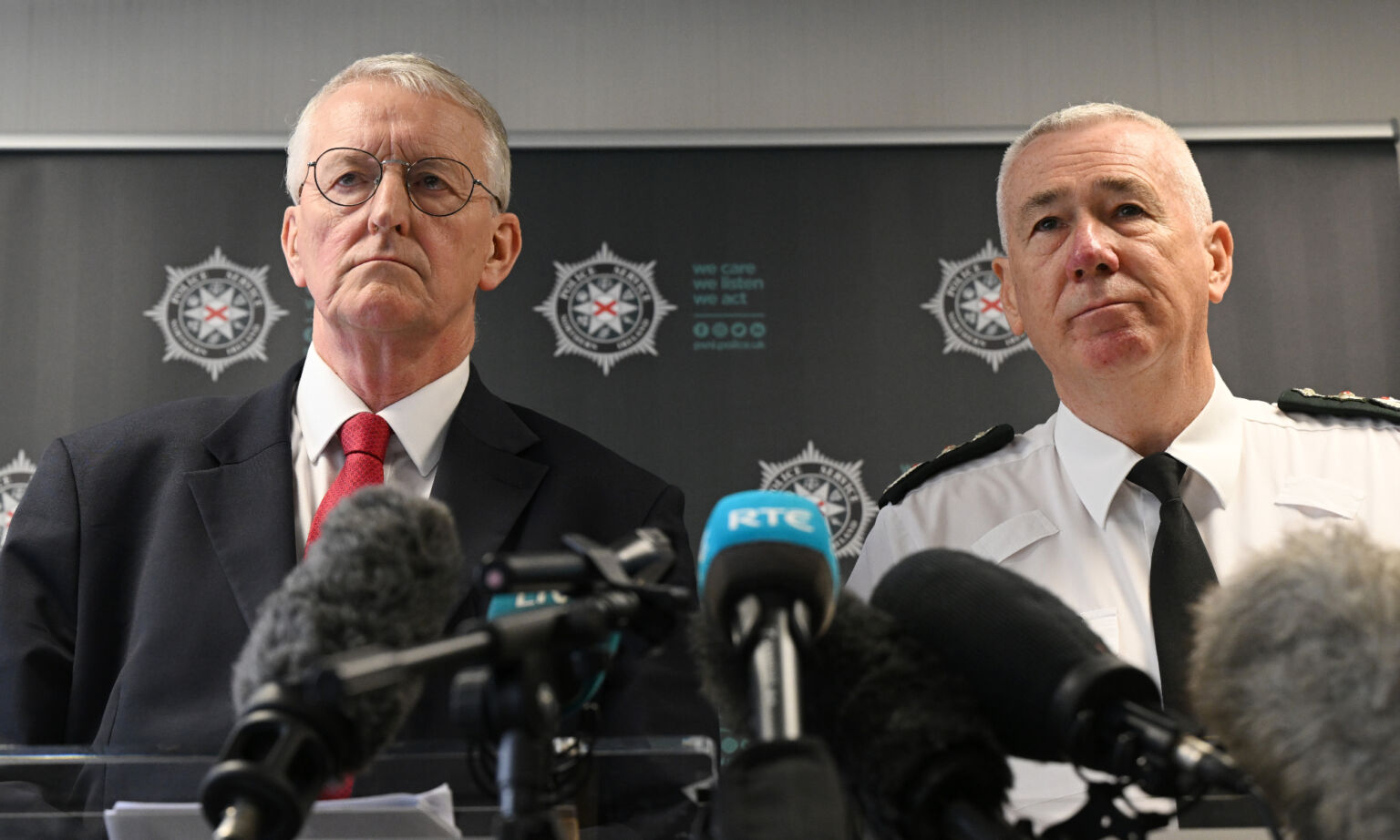
Northern Ireland secretary Hilary Benn, and PSNI chief constable Jon Boutcher attend a press conference in Belfast, 10 June 2026.
Benn subsequently offered, in good faith and apparently without embarrassment, a comment about the prospect of using someone’s history and background to assess future risk:
‘Questioning the suspect, seeking to find out more about him and the circumstances, it doesn’t necessarily follow that someone’s previous history is going to enable you to know if they are going to do something in the future. And therefore it is very hard to operate a system in those circumstances which attempts to anticipate what someone might do.’
This prompts one to reach for an argument of Thomas Sowell. There are no migrants in the abstract, Sowell observed. There are only specific people from specific places with specific histories, specific beliefs and specific characteristics. The generalisation ‘migrants’ is not a policy instrument. It is a rhetorical convenience for avoiding the actual policies that would have to be designed if you were dealing with real people. Benn is not refusing to generalise – he is refusing to particularise. He is arguing that because you cannot know in advance what a specific individual will do, the only defensible conclusion is that prior history, background, ideology and behaviour offer no useful information whatsoever. The system, he implies, simply cannot anticipate anything of note. We are, apparently, operating national border control much like a roulette wheel.
This is not merely wrong. It is the precise negation of what every risk assessment, every parole-board hearing, every terrorism analyst, every child-protection social worker and every insurance actuary does for a living. Risk assessment is the applied science of inferring future probability from prior evidence. The counter-extremism Prevent programme, which the government funds to the tune of tens of millions of pounds annually, is predicated entirely on the premise that prior indicators – ideology, association, behaviour, radicalisation pathway – are meaningful predictors of future violence. Following Benn’s logic, Prevent should be abolished immediately, because its entire operational rationale is the thing he just said is impossible.
The government funds a counter-extremism programme built on the premise that prior behaviour predicts future violence. And yet it sends its secretary of state for Northern Ireland to argue on television that prior behaviour cannot meaningfully predict future violence as a reason for declining to scrutinise how a specific individual came to be in Belfast before allegedly attempting to decapitate someone. One of these positions is true. The Prevent position is closer to the truth, which is why Benn’s broadcast remarks are not a serious argument. They’re a holding measure, a way of filling the airtime between the event and the moment when the news cycle obliges by moving on.
Now consider what happened simultaneously at Wednesday’s press conference. PSNI chief Boutcher, appealing for calm and promising law enforcement against the rioters, said that those involved in the disorder would have their images plastered everywhere. It is a legitimate deterrence instrument, and images of rioters do result in identification and prosecution. The observation that the institution declining to characterise the perpetrator of the original attack is energetically committed to naming and imaging the people who responded badly to it will not, however, have escaped the notice of the people being told to go home and be calm. The asymmetry is visible. And visible things tend to be noticed.
This is not an argument for outing defendants before trial. Sub judice rules are sensible and the presumption of innocence is not negotiable. It is an observation about where the state deploys its energy and its language. The prosecutorial machinery has historically moved with speed and purpose against such rioters, just as it did in 2024 after the Southport attack unrest. Yet it tends to be much more cautious when it comes to the events that have prompted the riots. That’s when the authorities throw out the usual lines: the motive is yet to be established, the investigation continues, please be mindful of what you share online. This pattern, swift action against one form of disorder and studied caution around the other.
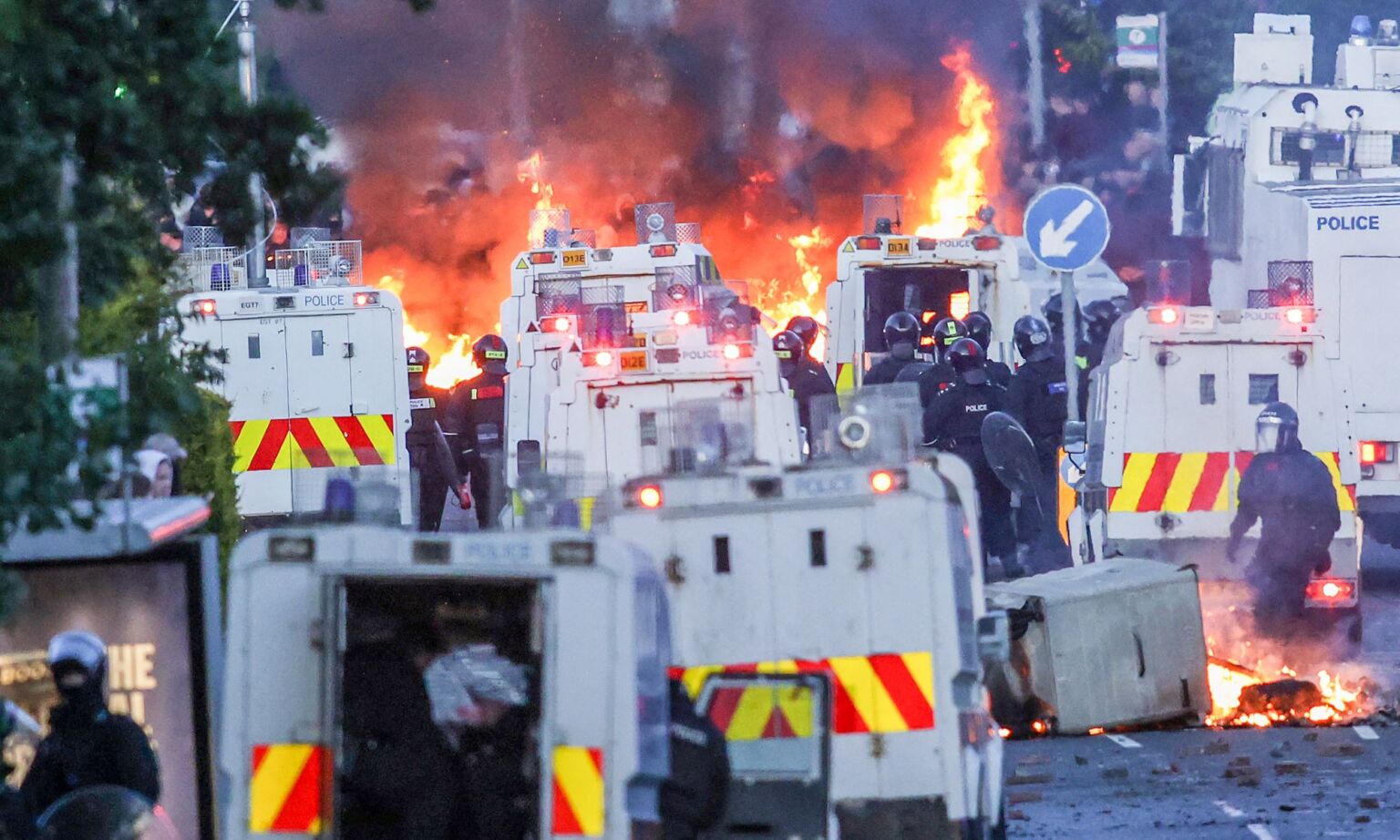
Protesters in stand-off with police in Glengormley, north of Belfast, Northern Ireland, 10 June 2026.
The Prevent dimension deserves attention. Prevent is the British government’s programme for identifying and supporting individuals considered vulnerable to radicalisation. William Shawcross’s 2023 Independent Review of Prevent found multiple issues: that it had drifted from adequately confronting Islamist extremism; that it was characterised by institutional timidity on the subject; and that Islamist terrorism remained the primary domestic terrorist threat. Indeed, Islamist terrorism accounted for approximately two-thirds of attacks since 2018, three-quarters of MI5’s caseload and 64 per cent of those in custody for terrorism-connected offences. The review recommended reorientation toward the primary threat.
The government accepted several of these recommendations. The acceptance was followed, as usual, by a considerable number of further discussions about how the acceptance might be implemented without causing too much disruption to existing arrangements.
Alodid was not, the PSNI chief Boutcher confirmed, known to Prevent. He was not known to any national-security database. He was, in other words, exactly the type of individual that Prevent’s acknowledged gap in non-networked, non-referred coverage is designed to miss. This was a man who had arrived from Sudan, a nation in the grip of an active civil war in which Islamist militias – designated as terrorist organisations by the US State Department as recently as March of this year – were being absorbed into the Sudanese Armed Forces’ fighting ranks. It is entirely reasonable to ask whether he should have been given leave to remain and why he was not properly vetted. Benn’s answer, that previous history doesn’t tell you what someone will do, is rejected daily by his own government’s counter-terrorism strategy.
Then there is the question of what the word ‘refugee’ is being required to carry in this discussion, and it is carrying considerably more than it can bear.
Refugee status is a legal designation, not a moral quality. It is a determination made by a caseworker, on the basis of evidence available at the time of claim, that a person faces a well-founded fear of persecution in their country of origin. It says nothing about ideology. It says nothing about mental health. It says nothing about criminal propensity or the individual’s relationship to political violence. These are orthogonal categories. A person can be a genuine refugee, genuinely fleeing genuine persecution and also pose a serious risk to British citizens. When determining whether someone is a refugee, caseworkers assess the persecution claim. The security and public-protection assessment is a separate exercise, conducted separately, resourced separately, and in the case of an individual arriving via an unmonitored land border under the Common Travel Area, conducted with whatever information the Home Office happens to have – which, in this case, was apparently nothing.
The governing class and its media interlocutors have fused refugee status and individual safety assessment into a single category. To define someone as a refugee is to declare they pose no threat. This is not an honest synthesis. It is a category error with a political function. The function is to ensure that the concrete question – whether this individual was adequately assessed before being granted leave to remain and whether the route through which he arrived constitutes a structural gap in public protection – cannot be posed without triggering the response that you are calling for the abolition of the asylum system. Nobody serious is calling for that. The question is whether the asylum system, as it currently exists, is doing the full job that protection of the public requires. Benn’s claim, that prior history doesn’t tell you what someone will do, is not an answer to that question. It is a device for making the question sound unanswerable so that it need not be answered.
As Sowell taught us, there are no migrants in the abstract. There is no refugee in the abstract. The abstract refugee is a politically useful figure. He is stateless and suffering, the exemplar of everything the liberal conscience requires one to defend. The abstract refugee cannot be scrutinised without implicating the liberal conscience. The concrete individual here, suspect Hadi Alodid, is a specific man, from a specific country, with a specific recent history. He arrived via a specific route that specific legal decisions have left unmonitored. He was granted leave to remain in September 2023 on the basis of a specific assessment by a specific caseworker. His particular case desperately needs to be scrutinised. Scrutiny is not an attack on the abstract refugee. It is how you protect the next person. The governing class prefers the abstract refugee, because the abstract refugee requires only sentiment. The concrete individual requires accountability.
‘Progressive’ journalist Mehdi Hasan’s appearance on BBC’s Newsnight on Tuesday evening deserves credit for its internal consistency. He argued that this is a story of far-right actors exploiting a hideous crime, amplified by Elon Musk and Tommy Robinson. The danger, he continued, is to minority communities, and that anyone drawing wider conclusions from the attack is doing the demagogues’ work.
This is a partial argument presented as a total one. The partial truth is real. On Tuesday evening, homes burned, families were forced to flee and a Turkish barber’s shop in Ballyclare was attacked. These are genuine harms visited on innocent people. All of that is true. But none of it is an argument about whether the system that produced the conditions for the original attack is functioning adequately.
The existence of disreputable or thuggish people who exploit a failure does not determine whether the failure is real. If it did, institutional failure could never be examined, because there is always, in any charged situation, someone willing to exploit the examination for bad purposes. The governing class has understood this and used it consistently in response to incidents similar to the one in Belfast this week. Produce a Musk. Point at the mob. Claim that anyone not pointing at the mob is in league with it. The examination of the actual problem at hand is indefinitely deferred, which is the point.
The history that makes Hasan’s position untenable is not a history he disputes. It is a history he declines to address. The grooming-gangs scandal in Rotherham illustrates the point. The 2015 Jay Report documented over 1,400 victims of organised sexual exploitation in Rotherham between 1997 and 2013. The Casey Review of 2015 found Rotherham council ‘in denial’. Casey’s Rapid Audit of June 2025 found that institutions had, across two decades, avoided discussing perpetrator ethnicity ‘for fear of appearing racist, raising community tensions or causing community cohesion problems’. It found that one local authority had replaced a plan targeting specific perpetrators with a ‘broad commitment’ to tackling exploitation ‘in its varied manifestations across the district’s communities’, and that police were told by councils to avoid publicising convictions ‘due to fear of raising tensions’.
This was a deliberate institutional choice, made in the face of known evidence, to prioritise what officials called ‘community cohesion’ over the protection of children. ‘Community cohesion’ here means the management of political embarrassment at the expense of the people being harmed. It is a bureaucratic alibi, not a social good.
The language around Belfast – that the motive is yet to be established, that prior history doesn’t necessarily tell you what someone will do, that the investigation must be allowed to proceed – is not identical to the Rotherham mechanism. But it runs on the same fuel and it serves the same interest. Hasan is running the same machine under a different brand, and the machine is running fine.
The same PSNI chief constable who will plaster rioters’ images everywhere is the head of a service whose intelligence operations, as disclosed in recent Investigatory Powers Tribunal proceedings, included routine six-monthly trawls of journalists’ phone data. The same secretary of state who told the Commons that those abusing the hospitality of this country will be deported is the minister responsible for an immigration architecture with a functioning open door in it. The same prime minister who found the attack sickening took the knee in 2020 and is now managing a premiership whose departure timetable is a matter of active parliamentary negotiation. The people moving quickly are moving quickly against the people who reacted badly to the failure. The people responsible for the failure are explaining, at measured length, why the failure was in the nature of things. Why previous history cannot tell you what someone will do, and why it is very hard to operate a system in these circumstances.
Many of us, for different reasons, find this less than fully satisfying. The religion of calm has its sacraments and its clergy. Its central liturgy is the substitution of the emotional register for the analytical one. Their emotivist lexicon consists of sickening, harrowing, deeply shocking, deeply concerning. Its founding doctrine is that concern about the immigration system is contamination, that the person asking the structural question stands in proximity to the mob and must prove they are not by not asking it. Its clerisy are the Benns and the Hasans and the Boutchers and the Starmers. All mostly reasonable people, managing unreasonable circumstances they helped to construct. All gesturing toward the next calm that will precede the next event on the next street.
Three brave people with a hurling stick ran toward such an event this week. Yet the governing class continues to look the other way.
Owen Shapell is a PhD researcher in social sciences.


In 2026′s Tokyo marathon, runner and teacher Annie Tran said the secret to her speedy finish was a disposable toothbrush.
“Every runner knows that mile 20 is where we have to dig deep and find what little energy we have left. After brushing my teeth, I felt revived and refreshed,” she said on Instagram.
That’s one way of getting past “the wall”. But whether you’re running a marathon or not, runner Katy Laser pointed out an issue dentists say could be common among distance joggers – and might even be mitigated by a post-run brush.
How might running affect your teeth?
Despite not eating much sugar or drinking many fizzy beverages, Katy said in a viral TikTok that her dentist called her out on some issues, which she later attributed to gel packs.
“In addition to [gels] being little packs of sugar… that are very sticky… your mouth gets drier when you run,” she explained. “It is just sticking to your teeth in a ‘desert mouth’… running gels are essentially the perfect storm of cavities”.
Ultra-runner and dentist Arden Young agreed.
“The amount and frequency of carbohydrate that an endurance athlete ingests during competition and training can wreak havoc in your mouth, increasing risk of enamel erosion, dental cavities, and inflammatory periodontal disease,” she shared on Instagram.
She added that most sports drinks are acidic. And while saliva helps to wash away both sugar and acids, as Katy explained, this is diminished during a run. This may be exacerbated by heavy breathing.
One paper found “high levels of poor oral health” among London 2012 Olympians; 76% had gingivitis, and 55% had caries (tooth decay).
How can I look after my teeth if I run long distances?
Young advised drinking water after taking running gels. Pond Square Dental added that staying hydrated is the “first and most important step” when you’re on a long run.
If your dentist thinks you need higher-fluoride toothpaste, they can prescribe them. Good basic oral hygiene and fluoride rinses can go a long way, too.
Reducing the number of sugary snacks and gels you consume may also help.
And if those don’t work for very long runs, Dr Douglas Elliott at Elliott Orthodontics said “brushing your teeth before and after workouts” is worth a try too.
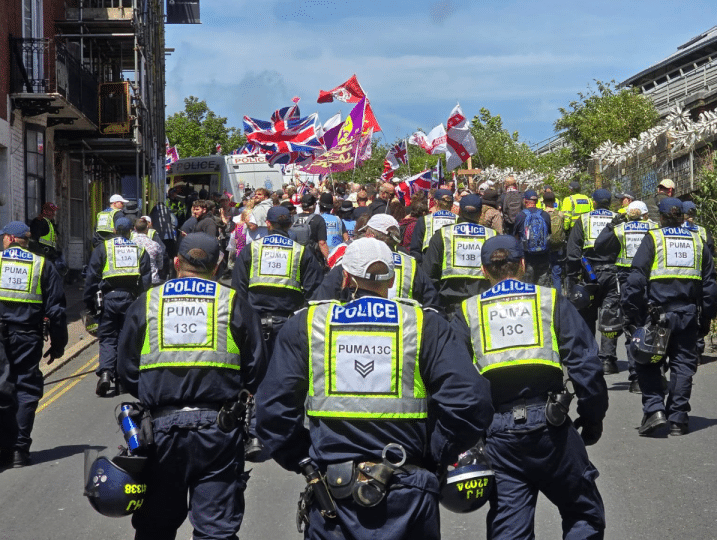
Ryan Bridge, the co-founder of Operation Raise the Colours, has been arested and bailed on suspicion of assault.
Bridge, alongside hundreds of others, attended a ‘Stop the Boats’ protest in Brighton on Saturday 14 June where there were counter-protestors supporting Carnival Against Fascism.
Birmingham Live shared a statement from Sussex Police confirming:
A 44-year-old man from Worcestershire was arrested on suspicion of common assault. He has been conditionally bailed until 14 July.
The newspaper also published that Ryan Bridge had shared he was arrested in a video circulating online. In it, he’s wearing a t-shirt with blood on it.
Speaking on the event last weekend, chief superintendent, Adam Hays, said:
Over 4,000 people gathered today to protest in Brighton City Centre.
We understand that there was some disruption because of this, however, we had a large policing presence because of this and worked with partners to keep everyone safe.
Public order policing is complex, and while we understand this can be frustrating, we balance the rights of all protest groups and the wider community.
We have made a number of arrests today ranging from public order offences to assaults on emergency workers.
Featured image via Sussex Police
By Willem Moore
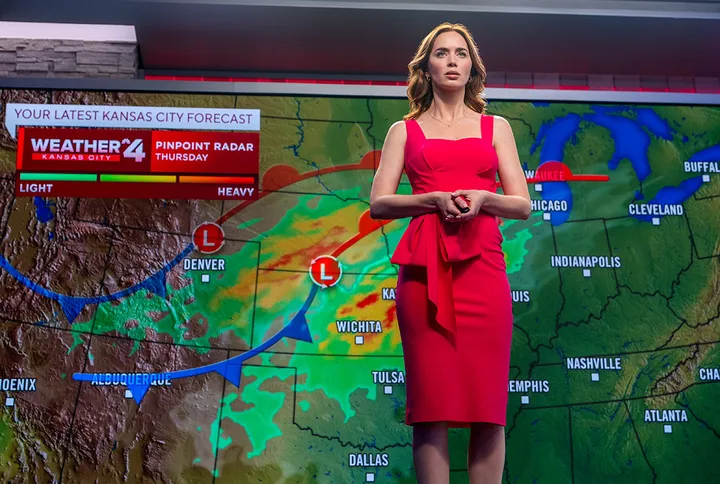
Steven Spielberg has clarified his stance on AI in cinema after Emily Blunt′ recent comments about their new film, Disclosure Day.
In Spielberg’s new sci-fi blockbuster, Emily plays a local weatherwoman who begins speaking in an unusual, clicking alien language mid-broadcast, for reasons that become apparent over the course of the film.
During a recent interview with Entertainment Weekly, the British star opened up about the origins of these noises, claiming that Spielberg had told her: “You know, we could do it with AI, or you could do it.”
“I was like, ‘I feel confident I can make some weird noises’,” she then quipped.
Meanwhile, she also revealed to Hot Ones host Sean Evans that AI was something she was “a bit terrified of” when it was apparently presented to her as an option for her Disclosure Day character’s alien language.

Since then, Spielberg sat down with ITV News to discuss the film, during which Emily’s comments about him supposedly offering to create these sounds with generative AI were brought up.
“I would never have used AI,” he insisted. “I would have gone the old-fashioned way, you get a dolphin, an elephant, you slow it down, you speed it up, you play it backwards.”
He added that his Oscar-winning sound designer, Gary Rydstrom, would have found an organic way to make the sounds had Emily not been able to do them herself.
Spielberg has put his foot down on using generative AI during the filmmaking process in the past.
“I’m not willing to substitute, because I don’t really believe in sentience,” he said on the IMO podcast in March. “I don’t believe there is any substitute for the soul. I don’t think that is an algorithm that is inventible.”
He claimed: “Use AI as a tool, but do not use AI as the final word on anything creative. That’s where I draw the line.”
Explaining how she settled on the sounds that eventually made it into Disclosure Day, she told Entertainment Weekly that she had sent the iconic filmmaker voice notes of herself “clicking, humming, doing weird Barry White low singing mixed with clicking mixed with Morse code sounds”.
“I just tried everything,” she added. “We sort of threw the kitchen sink at it, and I think he wanted it to sound mathematical and not too terrifying.”
The Devil Wears Prada actor shared that the final version audiences hear in Disclosure Day is a mix of layered noises she recorded in a sound booth.
Emily also expanded on Hot Ones about how she and the sound team for Disclosure Day ultimately created the chilling sounds that get broadcast across America in the film without AI.
She explained that the sound engineer had one microphone by her mouth and another by her throat to “capture it in a really weird way”.
“And then the sound designer went away and created that weird sound,” she continued. “Even kind of leading up to that moment where she starts speaking in this non-human language, it’s a four-minute oner that we shot that leads up to that moment where she’s gradually sort of disintegrating.”
Disclosure Day is out now in cinemas.
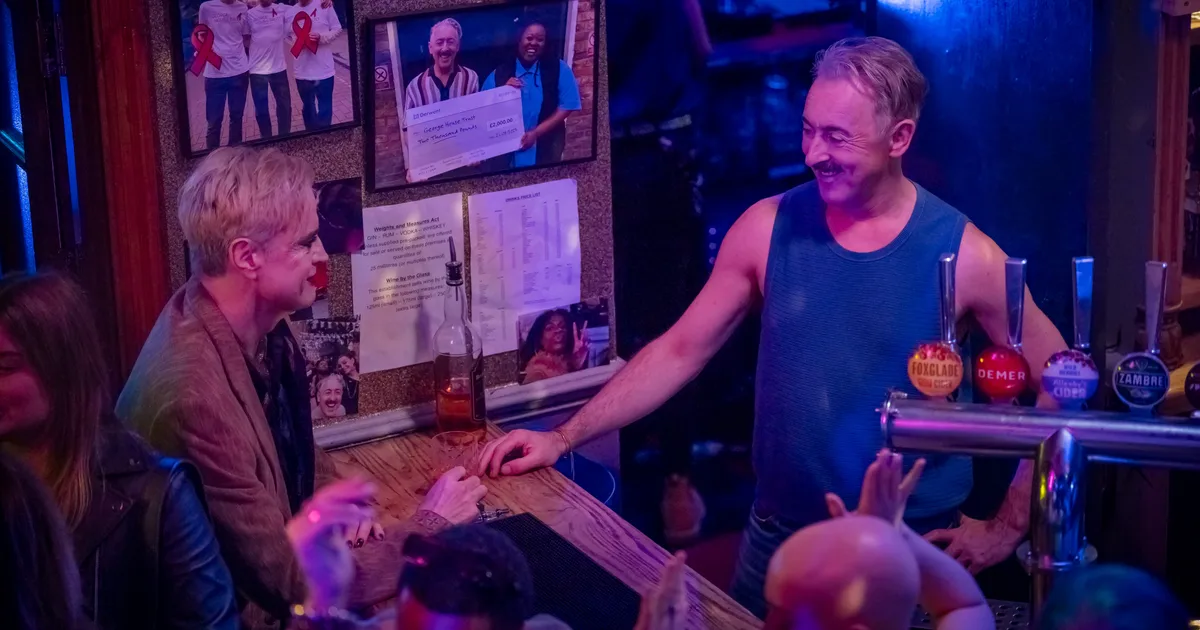
Alan Cumming has thrown his support behind a new charity campaign inspired by his character in the Russell T Davies drama Tip Toe.
In the Channel 4 series, the Emmy winner plays Leo Struthers, who runs the fictitious queer venue Spit & Polish on Manchester’s iconic Canal Street.
Since the show began airing, the HIV charity The Terrence Higgins Trust has begun selling a t-shirt inspired by Spit & Polish, which Alan was seen wearing in a video posted on Instagram over the weekend.
“If you’ve watched Tip Toe, you’ll know that I play Leo Struthers, who has been living with HIV since 1994,” Alan told his followers.
“As he says in the show, back when Leo was diagnosed, it was a death sentence, but since then, thankfully, successful treatments have been found. Now, people like Leo just take one pill a day, which keeps their HIV in check and means they cannot pass HIV onto anyone else.”
He explained that, in Tip Toe, Spit & Polish is “a sanctuary where everyone feels safe, celebrated and free”.
“Now, you can buy your own Spit & Polish t-shirt to support people like Leo, living with HIV,” he continued. “Because, while treatments have improved beyond our wildest dreams, the stigma around HIV still remains, with too many people still met with judgement, ignorance and isolation. And we see that, of course, in Tip Toe.
“So please, please do something positive today, and order your Spit & Polish t-shirt from the Terrence Higgins Trust website. All the money raised is being split between HIV charities The Terrence Higgins Trust and the George House Trust.”
He added: “By wearing your t-shirt, you’re helping to build a lasting legacy for Tip Toe and making sure that no one faces HIV alone. Thank you and wear your Spit & Polish t-shirt with pride.”
Earlier this month, Russell explained that the depiction of Leo’s HIV status is a part of Tip Toe which he feels especially proud of, as it’s the “one thing” he “could never show” in his hit 2021 Channel 4 drama, It’s A Sin.
He explained: “[The story of It’s A Sin] ended in 1991, which is before the medications, before there was any treatment, before people started surviving properly.
“So [in Tip Toe], I’ve got the chance to show off a man living for 30+ years with HIV. He takes one pill a day, he’s completely fine, it’s undetectable, it’s untransmittable in him. And that’s a nice pay-off – that I never got to do [in It’s A Sin].”
He added separately that this “feels like the natural legacy of It’s A Sin”, claiming (via Scene magazine): “There wasn’t the time in that show to tell the long‑term story – that medications were found which saved so many lives – so this feels like a right and proper continuation.”
A similar t-shirt inspired by It’s A Sin previously raised £20,000 for the Terrence Higgins Trust in just 24 hours.
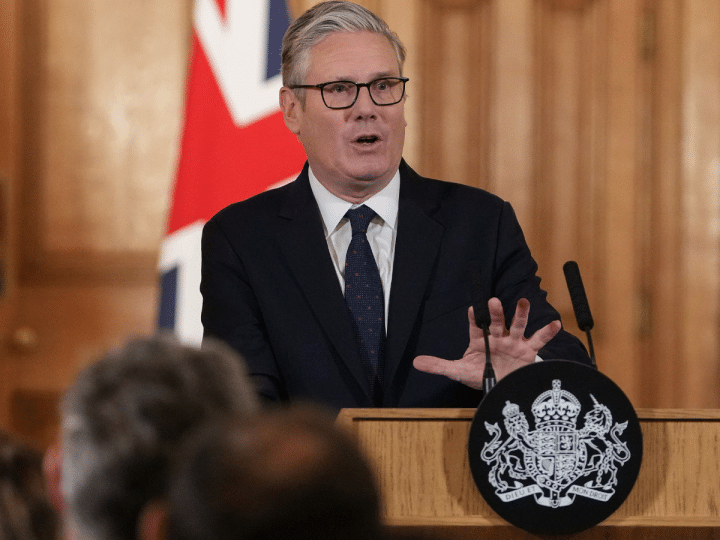
PM Keir Starmer has announced a social media ban for under-16s which will prevent access to apps like Snapchat, TikTok, YouTube, Instagram, Facebook, and X.
Taking inspiration from Australia, the UK will introduce a similar ban to take effect from Spring 2027. However, the government will go further by restricting livestream and ‘stranger communication’ for children including on gaming sites.
In his address, Starmer stated:
All I’ve ever wanted for my own children, hand on heart, is for them to be happy and for them to be safe, I think that’s what any parent wants.
BREAKING: Prime Minister Sir Keir Starmer has announced a social media ban for under-16s.
Live updates: https://t.co/Jxi67uC5Qk pic.twitter.com/VnIFMyjAhs
— Sky News (@SkyNews) June 15, 2026
However, this follows a pretty clear refusal from tech giants to make platforms safe and age appropriate. Instead, Starmer is simply kicking a dangerous can up the hill that will then hit young people further down the line.
After all, the problem is unregulated, unyielding tech companies and unfettered capitalism – and the government appears to have chosen to go after an easier target in young people instead of holding billionaires accountable.
Starmer: ‘social media is making children unhappy’
Starmer has insisted the ban is essential as the use of social media is making children miserable. As the PM says, it has increased access for bullies and intimidating behaviour, whilst also making it easier for strangers to contact young people through gaming platforms and other social media.
Therefore, some parents have welcomed the ban, with the bereaved mother of Esther Ghey stating:
I’m so glad now that this announcement has been made.
Adding:
Another thing that I’m really happy about it the government is investing in after-school clubs, because we can’t just take things away from children.
At a time when many children have too few opportunities to build friendships and develop social skills, increased funding for after-school clubs is a welcome development. Giving young people more places to connect, learn and belong can only be a good thing.
Nonetheless, this policy wouldn’t be necessary if we didn’t have capitalistic, self-interested tech bros profiting from the misery which social media fosters and breeds.
Isaac, a young boy from Wythenshaw who will be affected by the ban, seems to get it far more than the corrupted politicians in Westminster, telling the BBC:
Annoyed and disappointed in this decision, because they’re not trying to make it better or safer – instead they are gonna wipe it out completely.
I think there should be more restriction and parental guidance on the accounts, but not a ban.
Risky strategy
Meanwhile, Jim Gamble, founding chief exec of the Child Exploitation and Online Protection Center, believes the policy won’t even work and will just push children to “darker corners” of the internet:
Many (Australians) bypassed restrictions using virtual private networks. They circumvented them by submitting fake IDs or altering their appearance to trick AI (artificial intelligence) age estimation.
.. If you actually look at the statistics, it’s a double-edged sword because the internet does as much good.
For isolated, alienated children, for children with neurodiversity, with children exploring different aspects of their young lives, it’s a space and place where they can build positive networks.
But this ban is merely addressing a symptom of a far greater threat facing our society and going further, it may even provide a backdoor for pushing through digital IDs on the general public.
So, what appears to be a protection measure for young people could in practice increase the access to private data for tech companies through age verification checks which are reported to include bank checks and email surveillance.
Fourth, other age checks cited like bank checks and email surveillance are literally insane Far from “reining in Big Tech”, this is a gift to them – a huge transfer of power and data from the public to the tech companies, wrapped in child safety branding.
— Silkie Carlo (@silkiecarlo) June 14, 2026

Labour chooses to ban the children, not the business model
Don’t get me wrong: stronger restrictions on social media use by young people have become increasingly necessary given how toxic, abusive, and harmful many platforms have proven to be. But the repeated failure of tech companies to address these problems meaningfully means the dangers will not simply disappear because a ban is introduced.
Harmful content, disinformation, and online radicalisation will continue to exist, and young people will often find ways around restrictions. It is important to note, this policy has not been successful in Australia – a whopping 70% of parents in Australia have reported that their children are still on banned platforms – which hardly suggests this will have any impact on children’s safety.
More importantly, we have already seen how algorithms amplify division, anger, and extremism across the UK, influencing adults as well as children. The challenge is therefore not just who uses social media, but how these platforms are designed, regulated, and incentivised. If we fail to address the business models that reward outrage and hate, we risk treating the symptoms while leaving the underlying causes untouched.
After all, we’ve seen these platforms profit from some of the most harmful and abusive content imaginable, and when every click is a source of revenue, even material that exploits children can become part of the business model.
That isn’t just a moderation failure. It’s the predictable and futile result of putting obscene profit ahead of public safety.
Even more concerning is the fact that this ban will drive users ‘underground’ which will work to reduce transparency for adults. If children respond to social media bans with VPN workarounds, the result may be the worst of both worlds: the risks remain, while parental oversight and awareness vanish.
Rather than treating children as the problem, we should be forcing tech giants to make their platforms safer. If we change the business model, introduce real safeguards, the internet becomes safer for everyone – not just young people.
What are they really after?
There is every chance this amounts to little more than virtue-signalling: a tokenistic gesture to “protect children” while changing sweet naff all about the very systems causing great harm in the first place.
After all, this crisis should really be a watershed moment to finally confront the cynical, corrosive influence that social media platforms and their billionaire owners exert over society. Tackling the business models, algorithms, and incentives that drive abuse would create a safer environment not just for children, but for adults too.
Nevertheless, that is not what the government is pursuing. Instead, critics have argued that this is a manipulative way of pushing through digital ID across the country, ramping up digital surveillance of British citizens and reducing our right to privacy.
In practice, horrifyingly, this could actually wind up handing the already immensely powerful tech giants more access and control over our data, creating an even more oppressive environment for adults – whilst leaving young people unprepared for the fallout when they ‘regain access’.
Featured image via Getty/Carlos Jasso

Germany’s opening match at the 2026 World Cup was not merely a resounding 7-1 victory over Curaçao; it turned into a historic night that rewrote a number of major records in World Cup history.
Thanks to the seven goals the ‘Mannschaft’ rained down on their opponents, Germany has taken the top spot as the highest-scoring team in World Cup history. It overtakes Brazil, who had held that record for many years.
According to FIFA’s latest statistics, before the start of the current tournament, Brazil topped the all-time list with 237 goals, compared to Germany’s 232.
However, Brazil’s 1-1 draw with Morocco added just one more goal to the Samba team’s tally, bringing their total to 238. However, Germany jumped from 232 to 239 goals following their win against Curaçao.
Germany is now the highest-scoring team in World Cup history.
Germany’s Bayern Munich scoop the lead
Germany’s successes did not stop at the national team.
According to Opta, Bayern Munich took sole possession of the top spot among clubs with the most goals scored at the World Cup by their players, taking its tally to 80 goals.
Real Madrid came second with 79 goals, after the two clubs had been trading the top spot in recent years.
Bayern’s goals in the first World Cup round gave the Bavarian giants a one-goal lead.
Not the biggest but the most symbolic
Aside from the goal tally, the 7-1 result brought to the fore, Germany’s 7-1 victory over Brazil at the 2014 World Cup.
Despite the hype of its 2026 match, that was not Germany’s biggest World Cup win.
That record is still held by its the 8-0 thrashing of Saudi Arabia at the 2002 World Cup, which remains Germany’s biggest win in the tournament’s history.
However, what makes the victory against Curaçao so special is that it achieved more than one historic feat in a single night.
- It became the highest-scoring national team in World Cup history
- Saw Bayern Munich overtake Real Madrid in the club rankings
- Re-enacted the 7-1 scoreline associated with one of the most famous World Cup matches
Germany looks set to add to its historic record, whilst Brazil will aim to reclaim the title it lost by a single goal. I hope this showdown continues until the final stages of the tournament.
Featured image via Alexander Hassenstein/Getty Images
By Alaa Shamali
Politics
The House | The new Single Patient Record will be a game-changer for clinicians and patients


4 min read
If we get these reforms right, the impact could be transformational.
The NHS is at its best when you don’t notice the gaps. When you have no sense of delay, no concerns you’ve been misunderstood, misdirected or forgotten.
When a clinician already knows your history, when you don’t have to repeat the same story over and over again, and when test results, medications and treatment plans are available, whenever and wherever you receive care, that’s when you know the health system is working.
Yet for too many patients, that still isn’t the reality.
Despite huge advances in technology over recent decades, records sit in different systems, medical teams do not always have access to the information they need, and patients are left carrying the unreasonable burden of joining the dots themselves.
I know personally how important joined-up care can be.
Eighteen years ago, the NHS came to my rescue when I was diagnosed with a serious and rare neurological condition that threatened my ability to run, write and speak. Thanks to the extraordinary care I received from my consultant and his team at the National Hospital for Neurology and Neurosurgery in Queen Square, I am now symptom-free.
My experiences of multi-disciplinary care and support left me with immense gratitude for our health service. It also reinforced a simple truth: the best care depends on clinicians having the fullest possible understanding of the person in front of them.
That is why the Health Bill, recently introduced to Parliament, provides for a Single Patient Record. All your medical records in one place.
At its heart, the Single Patient Record is not about technology. It is about patients and the power of clinicians to collaborate and deliver seamless care.
It will facilitate health and care information being brought together so that authorised professionals involved in a person’s care have access to all the information they need, when they need it. Rather than replacing existing GP or hospital records, it will connect them, helping create a clearer and more complete picture of a patient’s needs.
The benefits for patients are enormous.
For a pregnant woman attending appointments across different services, it could mean midwives and clinicians having immediate access to relevant medical history, reducing duplication, and supporting safer decisions.
For a frail older person living with long-term conditions, it could mean GPs, hospitals, community teams and social care services working from the same information, spotting problems earlier and intervening before a crisis develops.
The benefits for clinicians are just as significant.
Today, doctors, nurses and other healthcare professionals often have to waste considerable, precious time locating information that already exists elsewhere.
By bringing this information together, the Single Patient Record is expected to save around 500,000 hours of doctors’ time each year. Estimates suggest the programme could also help prevent up to 20,000 A&E attendances and 6,000 hospital admissions annually by supporting earlier intervention and better coordinated care.
Of course, none of this can happen without public confidence. People are right to expect their medical information to be protected.
That is why strong safeguards, rigorous cybersecurity and strict controls over access to patient information are fundamental to the design of the Single Patient Record.
The Single Patient Record will be delivered through contracts with multiple suppliers, with no single supplier dominating. Joining up data across the system. Patients will also have greater visibility of their own information through the NHS App, helping them play a more active role in managing their health.
If we get this right, patients will spend less time repeating their stories, clinicians will spend less time chasing information, and the NHS will be better equipped to provide the joined-up care people deserve.
This is not simply a technological upgrade; this is patient care reform for the generations.
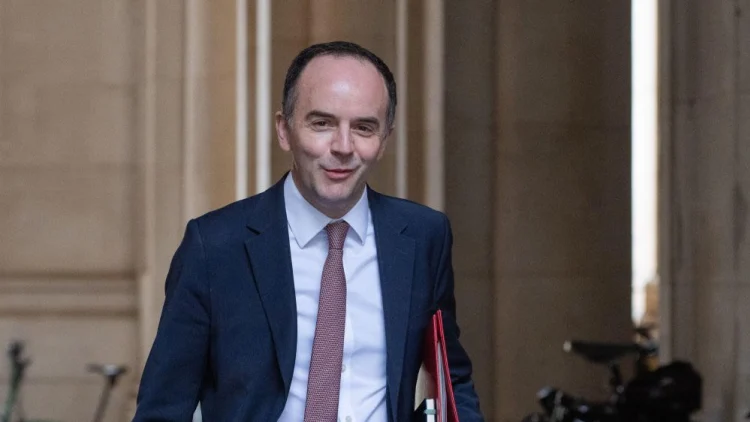
James Murray is the Secretary of State for Health and Social Care

On Monday morning, Sara announced that her first Radio 2 breakfast show broadcast would be airing on Monday 6 July – as well as unveiling the A-lister of all A-listers as her inaugural guest.
For her first show, the presenter will be joined in the studio by two-time Oscar winner Tom Hanks, where he’ll be discussing the latest addition in the Toy Story franchise.
“Roll on the 6 July!” she enthused. “For generations to come people will (probably) say ‘where were YOU when the Sara Cox Breakfast Show was launched on Radio 2 featuring the legendary Tom Hanks?’ (and hopefully they’ll reply ‘listening and laughing along with a nice brew’).”
Back in April, it was announced that Sara would be taking over at the helm of the Radio 2 breakfast show, following the abrupt firing of its previous host Scott Mills.
At the time, Sara said she was “ecstatic, honoured and incredibly chuffed” to be taking on the role, which she said had been her “dream” since joining Radio 2.
“It feels like a bit of a full circle for me,” she admitted.
Sara previously hosted the Radio 1 breakfast show between 2000 and 2003, and had been Radio 2′s teatime host since 2019 before her latest appointment.
“I’ve had the most glorious seven years of my career on teatime so thank you to my brilliant teatime listeners who hopefully will join me at breakfast for excellent music and all my usual nonsense plus some superstar guests,” she added, noting that she “can’t wait to wake the nation up with the biggest most fun breakfast show ever”.
Since Scott Mills’ sudden exit, Gary Davies has been filling in on the Radio 2 breakfast show.

Harry Styles took a moment to share a powerful tribute to the late artist David Hockney on the first night of his 12-show Wembley residency.
Before Harry performed his single Aperture to a packed Wembley Stadium on Friday night, a quote from Hockney appeared on the screens.
“What an artist is trying to do for people is bring them closer to something, because of course art is about sharing,” read the quote, which was met with rapturous applause from the audience.
“You wouldn’t be an artist unless you wanted to share an experience, a thought.”
The pioneering British painter and photographer David Hockney died last week, at the age of 88.
Over the course of his career, he had become known as one of the most prolific and beloved artists of his generation.
In May 2022, the former One Direction star sat for Hockney, travelling to his Normandy studio to be painted by the legendary artist.
The resulting artwork was one of more than 30 new portraits displayed for the first time in the National Portrait Gallery’s exhibit David Hockney: Drawing From Life in 2023.

In the portrait, the Watermelon Sugar singer is depicted wearing an orange and red cardigan, with a pearl necklace and blue jeans.
Harry was a big fan of the Yorkshire-born artist, telling Vogue in 2023: “David Hockney has been reinventing the way we look at the world for decades. It was a complete privilege to be painted by him.”
David was less of a fan of Harry – in fact he had no idea who the Grammy winner was before he arrived for his portrait session.
“I wasn’t really aware of his celebrity then,” Hockney admitted. “He was just another person who came to the studio.”

ANDY RAIN/EPA-EFE/Shutterstock
Friday saw Harry open the first night of his record-breaking residency at Wembley Stadium.
The chart-topper will play the London stadium for 12 nights – breaking records previously held by Coldplay and Taylor Swift.
During the show, he also paid tribute to his X Factor days, recalling how his sister took him to Wembley Arena for his first audition.
“My sister is here tonight,” he said to the adoring crowd. “I want to thank her. I love you and I appreciate you.”

The animals of Ealing’s Paradise Fields have some unexpected new neighbours.
For the last couple of years, beavers have been making an enclosed 10-hectare site their watery home – and since more or less their 2023 arrival, a London Underground ticket office that used to be plagued by flooding has remained dry.
The city’s mayor, Sadiq Khan, has praised Ealing’s beavers for putting an end to soggy conditions in parts of nearby Greenford Tube station on Instagram.
“Beavers are nature’s engineers – we just didn’t realise how efficient they could be,” Khan said in his post, adding, “These incredible creatures have already stepped up to stop flooding at a Tube station and restore local habitats”.
We spoke to Elliot Newton, the director of rewilding at Citizen Zoo, which worked with the Ealing Beaver Project to reintroduce the animals, about why they were brought back to the West London site and how they might help us humans.
Where have beavers been reintroduced to the UK?
It’s not just London. In recent years, beavers have been released across the UK, including other parts of England like Somerset and Cornwall. Scotland has kept the wild beavers spotted as early as the 2000s, the Natural History Museum said, with planned releases in the Glen Affric Nature Reserve and River Beauty set for 2026.
Wales seems keen on bringing beavers back, too. Northern Ireland hasn’t expressed interest yet, but the animals were probably never native there, unlike the rest of the UK.
“The Eurasian beaver is a native British species that was hunted to extinction around 400 years ago (and likely disappeared from London much earlier),” Newton told us.
“Over the past two decades, there has been a growing movement to restore beavers across Great Britain.”
And while the expert argued there’s a strong case for bringing all kinds of native species back to boost our ecosystem – including those we might not love the idea of, like the rat-sized, fish-eating fen raft spider – “beavers also deliver significant practical benefits”.
He continued, “As ecosystem engineers, they create and maintain wetlands that can reduce flood risk, improve water quality, increase drought resilience, and support a huge range of wildlife”.
Why might beavers help to prevent flooding in the UK?
Newton said that flood mitigation was one of the main reasons they secured funding for this project.
That’s because beavers (famously) build dams which stop the rapid flow of water down rivers during, e.g., periods of extreme rainfall. They also form ponds and mini “canals” that can create absorbent wetlands.
“Through building dams and creating wetland habitat, the beavers have increased the site’s capacity to store water and slow flows during heavy rainfall events, helping reduce downstream flood pressure. Interestingly, since the beavers arrived, the local train station ticket hall, which had previously experienced flooding, has not flooded,” Newton said.
“While more research is needed, this is an encouraging example of the potential for nature-based solutions to support climate resilience in urban areas.”
Other benefits people involved in the Ealing Beaver Project have noted include increased biodiversity, better community engagement (leading to a reduction in antisocial behaviour), and a more climate-change-resistant environment.

Japanese Crypto Exchange Bitbank Issues Alert on Polymarket Account Suspensions

Heidi Montag’s Statement After Spencer Pratt’s Mayoral Loss

The Crucial Step You’re Leaving Out Of Your Post-Run Recovery


-

 Business20 hours ago
No Jackpot Winner as $257 Million Prize Rolls Over to $269 Million Monday Draw
-

 Crypto World4 days ago
Oppenheimer backs SpaceX as $70 billion retail frenzy builds
-

 Crypto World4 days ago
Markets Rally as SpaceX IPO Looms Amid Iran Tensions and Inflation Surge
-

 Fashion3 days ago
Weekend Open Thread: Tuckernuck – Corporette.com
-

 Sports7 days ago
FIFA WC 2026 Group C: Morocco, Scotland challenge Brazil’s hunt for glory | FIFA World Cup 2022
-
Crypto World12 hours ago
Zimbabwe Requires Crypto Businesses to Register Annually Under New FIU Regulations
-
 Entertainment6 days ago
The Ryan Gosling True Crime Thriller On Netflix That Gets Even Stranger, Stream It Now
-
 Sports6 days ago
Bangladesh beat Australia after 20 years in ODIs, register only their second win over six-time world champions | Cricket News
-

 Tech3 days ago
This Week In Security: Microsoft On Microsoft, Register Your Domains, Linux On ARM, And FreeBSD Joins The File Cache Club
-

 Tech2 days ago
NanoClaw integrates JFrog registries to secure AI agent downloads
-

 Crypto World2 days ago
Bitget enters Argentina’s regulated crypto market through PSAV registration
-

 Politics4 days ago
Politics Home | Healey Resignation Is “Colossal Failure Of Government”, Says Former Labour Defence Secretary
-

 Tech5 days ago
‘This is Seattle’s position on AI’: City Council votes unanimously to pause big new data centers
-
 Tech4 days ago
Dutton Ranch star claims they ‘didn’t see any disruption’ on set following Chad Feehan’s exit from Yellowstone spinoff fueled by Taylor Sheridan clash rumors
-

 NewsBeat4 days ago
El Nino has formed in the Pacific and could set records, forecasters say
-
 Entertainment4 days ago
Donnie Wahlberg & More Heat Up Las Vegas at Circa’s Barry’s Downtown Prime
-

 Sports4 days ago
First Time Since 1971: Australia Register Historic Low In ODI Cricket
-
 Tech4 days ago
Opendoor Ends India Operations, Fueling a Bigger Conversation About AI and Outsourcing
-

 Tech7 days ago
Nvidia and Hyundai deepen their robotics push around Atlas
-

 Politics4 days ago
Belfast burns, while Met chief points finger at Iran and Russia
You must be logged in to post a comment Login