
Politics
Burnham To Lead Emergency Meeting As UK Temperatures Rise

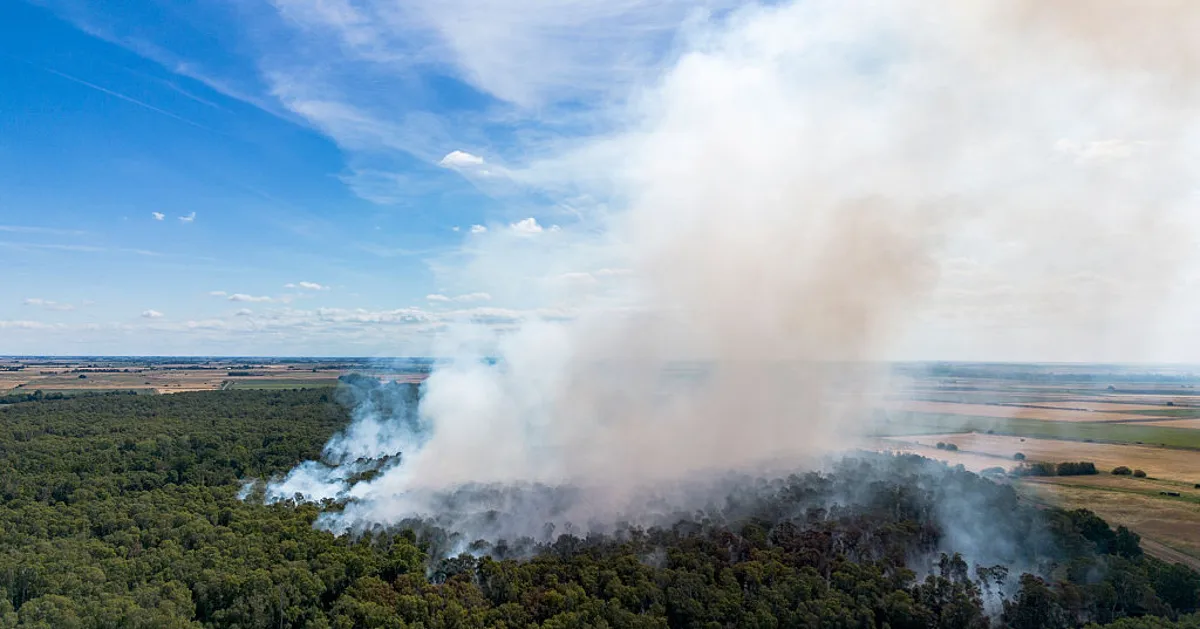
Andy Burnham will chair a meeting of the government’s emergency Cobra committee as the UK braces itself for another day of soaring temperatures which have led to widespread wildfires and plunged much of the country into drought.
The prime minister will meet with ministers, officials and agencies on Wednesday afternoon, with temperatures of 33 degrees celsius forecast in parts of England in the fifth heatwave of the summer.
It comes as a firefighter union chief warned the country faces a “national emergency” amid ongoing wildfires.
A No.10 spokesperson said: “The prime minister will chair a meeting of COBR – the government emergency committee – this afternoon on the UK’s ongoing response to extreme heat, wildfires and drought.
“We know how challenging this summer is proving, particularly for firefighters tackling wildfires, farmers working in drought conditions, and NHS staff in busy A&E units.
“We will continue to take the action needed to keep communities safe, protect water supplies and safeguard the environment.”
The Met Office said the UK is on course for its hottest summer on record, as parts of the country face their fifth heatwave this summer.
Rare amber “extreme heat” warnings have been issued by the forecaster for London and parts of the South East, East Midlands, East of England, West Midlands and South Yorkshire from 9am to midnight on Thursday.
The government urged the public to pay attention to UK Health Security Agency heat health alerts, and advised people should drink plenty of fluids and check in on family, friends and neighbours who may be at high risk.
Firefighters have responded to 966 wildfires across England and Wales this year, including 185 in the first 10 days of August alone, while July was the busiest month on record for wildfires with 458 incidents.
Steve Wright, general secretary of the Fire Brigades Union, said: “In many parts of the country, firefighters do not have the new modern equipment to deal with these.
“They do not have the new modern personal protective equipment, the lightweight fire kit that we wear, the right helmets, lightweight helmets, breathable uniforms to make sure they’re better protected, their health is protected when they’re out dealing with these incidents for hours and hours on end.”
Listen to Commons People, the podcast that makes politics easy. Every week, Kevin Schofield and Kate Nicholson unpack the week’s biggest stories to keep you informed. Join us for straightforward analysis of what’s going on at Westminster.

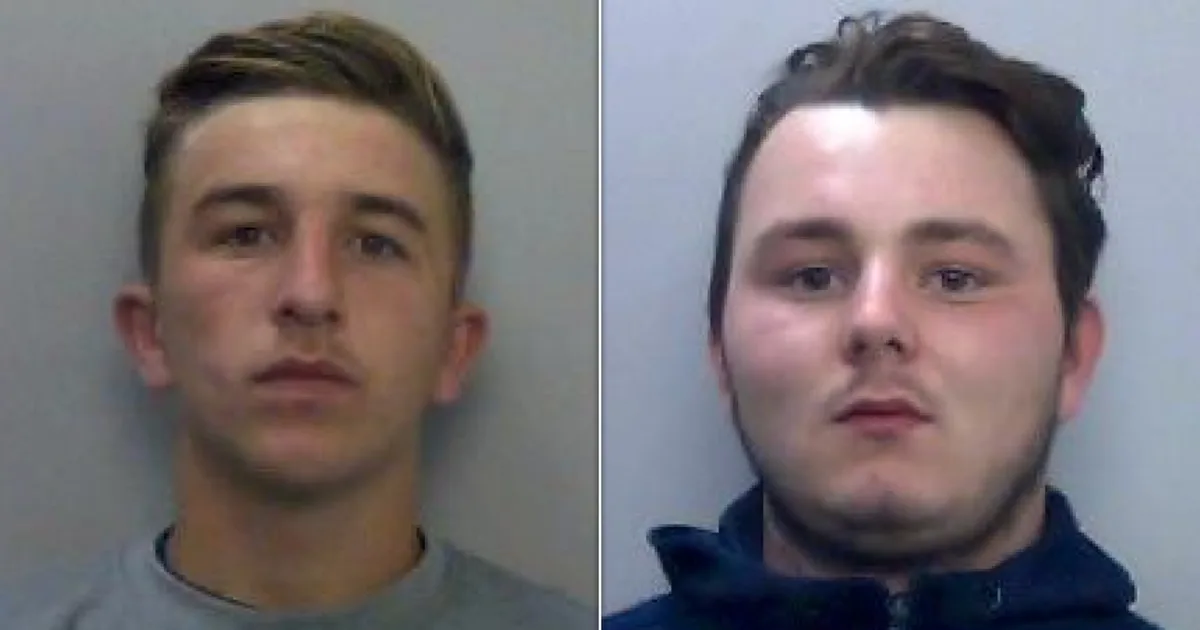
Policing chiefs from across the UK have piled pressure on Andy Burnham to use “every lawful option” to stop the early release of PC Andrew Harper’s killers.
A letter from 50 senior officers and other law enforcement leaders called on the prime minister to “establish an additional public protection safeguard” for the most serious offenders, when future early release schemes are floated.
Met Commissioner Sir Mark Rowley, Greater Manchester chief constable Stephen Watson and National Crime Agency director general Graeme Biggar are among those who have signed the letter.
They said families and victims “must be properly considered whenever significant changes are made to sentencing or release arrangements”.
Their intervention came after Burnham ordered justice secretary Alex Norris to find a way to keep Jessie Cole and Albert Bower behind bars.
They were sentenced to 13 years for the manslaughter of PC Harper in 2020, but are due to be freed in January under controversial measures to stop prisons running out of spaces.
PC Harper was fatally injured when he got caught in a strap attached to the back of a car and was dragged down a country road as the killers fled the scene of a quad bike theft in Sulhamstead, Berkshire, in 2019.
Burnham announced he was pausing the early release scheme two weeks ago following public anger.
It was then announced that those convicted of rape, serious child sex offences and grooming offences would not be included in the scheme – but that meant that Cole and Bower would still be released.
The letter to Burnham says: “When the state asks people to run towards danger on behalf of the public, they should be able to trust that the justice system will stand behind them when the worst happens.
“PC Andrew Harper’s case also raises a wider question.
“When someone is sentenced for an exceptionally serious offence, how much confidence can victims, bereaved families and the public place in that sentence if subsequent changes to release arrangements result in an offender being released significantly earlier than originally anticipated?”
The letter went on: “Officers and staff understand that the law must be applied as it stands. But they will question what message this sends about the value placed on their service and sacrifice when they put themselves in harm’s way to protect others.
“Police officers and staff see first-hand the impact serious crime has on victims and their families. They support people through some of the most difficult moments of their lives and ask them to place their trust in the justice system.
“That trust is vital and should not be weakened. We are also collectively concerned that an approach to early release which does not sufficiently distinguish the most serious offending risks undermining public safety, victim confidence and wider confidence in the criminal justice system.”
Speaking on Tuesday, the PM said he is “increasingly confident” PC Harper’s killers will not be released early.
He said Norris had been asked to fast-track proposals to create “more headroom” in the prison system, including through deporting more foreign offenders, finding a solution for people on indeterminate sentences and using cells previously holding female inmates to accommodate male offenders.
Burnham previously said he had “pushed the very limits” in the changes he had made to the early release scheme, but has now said he can go further.
Listen to Commons People, the podcast that makes politics easy. Every week, Kevin Schofield and Kate Nicholson unpack the week’s biggest stories to keep you informed. Join us for straightforward analysis of what’s going on at Westminster.
Today I will be attending Ann Widdecombe’s funeral in south Devon.
My last event in Edinburgh finished at 9.30pm last night so the only way to get to Totnes in time was to be driven, given I don’t get my driving licence back until the weekend. My best friend Dan Bryce drove up from Kent yesterday and has driven me through the night so I can be there. He’s an absolute hero. And then there’s the matter of another four hours or so back to Kent afterwards.
In the days after Ann died, I did countless TV interviews trying to explain who she really was, and countering some of the lies and insults that were being thrown her way by people who should know better. The wife of a friend of mine was watching one of these interviews and apparently remarked: “There’s a man who hasn’t had time to grieve.” She was right. I hadn’t computed the awfulness of what had happened and had to go into commentor mode, otherwise I’d have been too emotional. I don’t normally cry at funerals, but I am fully expecting to be in floods of tears at this one, staring at the coffin which will contain poor Ann’s battered body. I think that’s when it will really hit me.
I first met Ann 29 years ago, when I opened Politico’s Bookshop. On her first visit she we had made some badges saying ‘Doris Karloff for Tory Leader’. She found this hilarious and bought several dozen of them.
One day she came in and she almost collapsed in a heap when we gave her a pair of lacy, black, knickers, emblazoned with “Something of the Night”, the slogan she had invented to derail Michael Howard’s leadership campaign. “But they they’re too small. They won’t fit,” she cried. A vision was forming in my mind… She was just leaving the shop when I noticed she had left the knickers on the counter. So I yelled after her “Ann, you’ve forgotten your knickers!” And there can’t be many men that have said that to Ann Widdecombe.
Ann’s first novel, The Clematis Tree, was a huge success, but I do sometimes wonder why. She certainly had a unique way of selling it.
At the Tory Party Conference in 2000, I was rather alarmed at her marketing technique. Like a market trader she would brandish the book and shout out: “No sex, no violence, no swearing! Get your clean novels here!” Ann, I thought, “you’re at a Tory Party Conference!”, which let’s face it usually has its fair share of all three. But she proved me wrong – and we sold all 400 copies. The next year, she was back and was reprising her market trader act. As she was screeching and signing, a delivery of Edwina Currie’s explosive new diaries arrived. All 200 of them. Edwina had captured the headlines with the revelation that she and John Major had had an affair. I quietly displayed a dozen of the Currie diaries next to Ann and waited for her to notice. She did not have a high opinion of Edwina. Sure enough, she clocked them and changed her sales patter and pointed to Edwina’s tomes, shouting, “Very dirty diaries, get your clean novels here!”, pointing to her new book ‘An Act of Treachery’. I used to take her to task for this as I had found a passage on page 158 where it was quite clear that she main character had had sex with her Nazi lover. Ann denied this and described it as ‘wooing’. ‘Not in my house, it isn’t’, I’d reply.
Ann and I did a theatre tour of around 50 provincial theatres with our show ‘A Night with Ann Widdecombe’. I’d interview her for the first half and then I’d host a Q&A. We didn’t have a script as such, but I knew the prompts to give so she could regale with audience with various stories and anecdotes.
The theatre shows produced some hilarious moments, including one in Chelmsford when a militantly gay member of the audience got up and walked out shouting at us to eff off because we were bigots. It was that same evening when two of my favourite moments occurred.
ID: So when ITV ask you to do these programmes, how do you judge whether to do them?
AW: Well, when they asked me to do prostitution, I readily agreed… [cue audience collapsing with laughter]
The theatre was sold out, with more than 500 people packed in. The repartee worked a treat, to the extent that one man said to me afterwards: “You are so easy together. Are you an item?” Miss W was a bit too quick to reply: “We most certainly are not!” He didn’t look convinced…
The only time I saw her stumped was when a member of the audience asked: “Miss Widdecombe, can you please explain why any member of the female sex would ever want to have an affair with John Prescott?” She gulped like a goldfish.
I’d usually drive her to the venues and we’d chew over the issues of the day on the journey. On the rare occasions she was awake we gossiped and sometimes bared our souls to each other.
On Celebrity Big Brother Ann admitted she snored, and wondered how other housemates would react to it. Seeing as Ann mentioned it herself, I think I can reveal I have personal experience of Ann’s snoring. [Stop it at the back!]. When we’d drive to theatres all around the country she’d inevitably fall asleep in the passenger seat. Gradually her head would loll, back, her mouth would open and out would come some startling snoring noises. I could turn the music up as loud as I liked, but it had no effect. Even a dose of Meat Loaf had no effect. The eruptions would continue. The only think that quelled them was a quick poke to her side. It did make me laugh, though! When she eventually woke up, she’d always say: “I hope I didn’t snore”… “Absolutely not,” I replied…
I remember once driving to Malvern on the night of the Commons vote to allow gay people to adopt children. Conservative MPs had been whipped by Iain Duncan Smith to vote against.
I was fulminating about what a ridiculous decision that had been, and that it should have been a free vote. If memory serves me correctly, she agreed, although you can imagine that’s where the agreement ended.
At one point I remember saying: “I don’t know why I am talking about this seeing as I have never, ever wanted children.” Ann was very shocked by this and said I couldn’t be serious. Just as she didn’t believe I never wanted children, I never quite believed her protestations that she was quite happy being single and childless. She addressed this issue in her autobiography, STRICTLY ANN, and it is clear, to me at any rate, that family was, and had been, the most important thing in her life. The way she looked after her mother after her father died in 2007, was a lesson to many. Ann joked that she relishes the single lifestyle. When she got home, she could kick off her shoes, pour herself a whisky and watch whatever she liked on TV without caring a jot about demands likely to made on her by a husband, but even so, I still reckoned the lady did protest too much. I can think of few things which would have given her friends more happiness than if she had met someone at that stage in her life and fell head over heels. It would have been a brave man who took her on, but one thing I have learnt is that there is someone out there for everyone. They just have to find each other. I can imagine her reading and spluttering ‘yuck’ or ‘stuff and nonsense’.
Anyway, on that journey I told her why I thought it was right to allow gay people to adopt. I said that surely it was better for a child to be in a safe home with loving parents, whatever their sex, than stay in a children’s home for the rest of their childhood. She maintained that stability for a child was very important, and then came out with this corker. “It’s a well-known fact that gay relationships only last an average of two years!” I shot back: “That’s rubbish. In my experience it’s more like 20 minutes.” I could see the cogs whirring in her brain and when she finally computed what I was implying she had the good grace to roar with laughter.
Ann rarely enjoyed my driving. She’s a very good backseat driver, if you get my drift. I remember one time, we had been to Porthcawl in South Wales and we’d had nothing to eat all day. After the show we stopped to get some petrol and stocked up on a bit of junk food – right in the middle of her diet.
I got onto the M4 and started opening the sandwich and packet of crisps and can of lilt. Ann nearly had a fit – OK I was driving with my knees but it was perfectly safe! “Do you not think you ought to have at least one hand on the steering wheel!” she screamed. So I got my own back. I made her listen to the Pet Shop Boys and Erasure for the rest of the three hour journey back. She never forgave me.
I asked her one day if people reacted differently to her now that she had dyed her hair blond. She said “people speak to me now, much m o r e s l o w w w w l l l y y y”.
When STRICTLY ANN was published, Christopher Howse wrote a disgusting review of it for the Telegraph in which he reckoned the whole book was about a failed life. He had a very warped view of what constitutes success. That’s the trouble with Widdecombe book reviews. They tended to be dominated by the critic’s pre-existing opinion of Ann, rather than concentrate on the book’s literary merits. Her novel AN ACT OF TREACHERY, a story of love in second world war Paris, was a brilliant tale, expertly researched and told. But most reviews concentrated on the absence of sex in it.
The thing is, Ann could write. And she could tell a story. This was not a book about a failed life. It was a book about a woman of definite opinions, who made her way in the world with little help from anyone and became one of the best- known women in the country. She neared the peak of the political mountain, stuck to her guns, was seen as the most honest politician in the country and respected even by her foes. She made some excellent (but also, it has to be said, one or two truly terrible) TV programmes, was a best-selling author and one of the best orators of her generation. You know, most people would settle for that as a record of accomplishment. Clearly not Christopher Howse, but you can’t win ‘em all.
Her memoir was a very detailed book, sometimes a little too detailed for the average reader, and in setting out to write her memoirs, Ann must have wondered which audience she was writing for – a political audience or her celebrity fans. If anything she went for the former, but she sometimes had to explain things to her second audience which would sometimes leave the political audience feeling a little irritated. I remember discussing the possibility of her writing her memoirs with her in one of our theatre evenings and she seemed adamant she wouldn’t do it. “I don’t want a friendless old age,” was her get out clause. “Well, I said, you should do it if only to put it on the record for posterity, or do you want Michael Howard to do that for you?” A clinching argument!
It is often said that autobiography is a work of fiction about yourself. Not this one. Yes, it was at times a little self-serving, but I have never read an autobiography that isn’t. Including my own! When reading back her speech proposing herself for the Speakership she wrote:
“Re-Reading that speech again for the purposes of this book, I could not fault it.”
Maybe not, but if I had been her editor, that sentence wouldn’t have made the final cut. But that is to carp. All the political episodes she wrote about that I had first-hand knowledge of were described with total honesty and candour. She wasn’t afraid to admit her own failings or misjudgements, and she was also not afraid to dole out criticism to fellow MPs where they merited it – and even sometimes when they possibly didn’t. This was not a bitchy book, but it was not without its knifings. Michael Howard copped much of Ann’s ire, although she is not afraid to praise him at times too. But perhaps my favourite comment in the whole book is when she says she would happily fight in the trenches alongside Michael Howard…
“…knowing that he would never be cowardly in the face of the enemy or desert his fellow soldiers. The difficulty is that if the battle went wrong, he would immediately be looking for someone to court martial and shoot. Or perhaps just shoot.”
Straight between the shoulder blades!
In 2003, Ann sponsored my Conservative candidate application and also endorsed me on my North Norfolk application form, knowing full well I was gay. It mattered not a jot to her.
The first question I was asked in the North Norfolk candidate selection was on fox hunting. I didn’t exactly lie, but I didn’t tell the whole truth either. It ran something like this: “You are a close friend of Ann Widdecombe, do you share her views on fox hunting.” I replied to the effect of: “Just because I am friends with someone doesn’t mean I necessarily share their view on anything, and there are rather a lot of things Miss Widdecombe and I disagree about.” A classic politician’s answer. It was totally true but on the other hand didn’t tell the whole truth. I felt slightly grubby, but needs must and all that. Anyway, my non-answer didn’t hold me back and I topped the first round vote against 19 candidates.
In eighteen months I managed to restrict my attendance of the local hunt to a single occasion.
In May 2004, Ann Widdecombe came to north Norfolk, although she somehow came via the A1, having taken a wrong turning off the M25. I decided to take her to the Catholic shrine at Walsingham. I mean what else would you do with Ann Widdecombe? We then went back to the cottage for an hour before she was due at a fundraiser in North Walsham with local party members. John, being polite, asked her if there was anything he could get her. Ann rather astonished him by saying how she wouldn’t mind a plate of egg and chips prior to leaving for the dinner. I thought she was joking, but she wasn’t! Bear in mind this was about 6.45pm and the dinner started at 7.30! Bear in mind also that she had just appeared on Celebrity Fit Club, or as I called it, Fat Club. Being a true gentleman, I wouldn’t have mentioned it but Ann proceeded to tell every person she met about it. The dinner went well, and was a sellout. The only slightly awkward moment was when a woman asked Ann what she thought of gays. I think I ended up answering it for her.
I also remember incurring her wrath around this time. We’d been to one of our theatre evenings and I stayed at her south London flat as I had to appear on LBC the next morning with Sandi Toksvig. I recall telling Sandi about Ann’s very floral curtains and the colour of the duvet I had slept under. As I was speaking I thought maybe I should have kept these details to myself. When she found out, she was understandably furious and let me know it.
In 2006, having lost disastrously in North Norfolk I applied for Ann Widdecombe’s seat of Maidstone, only a few miles from where I live in Tunbridge Wells. I was surprised when Ann told me she was standing down as she was a mere 62 at the time. She had already embarked on a media career and I told her I was worried that it would come to a grinding halt if she didn’t have the letters M and P after her name. I was wrong. What I also didn’t foresee was her political metamophormosis from ardent Ken Clarke supporter to diehard Nigel Farage supporter and Brexit Party MEP. Stranger and stranger, said Alice.
Although I was hopeful in Maidstone I feared that my friendship with Ann might count against me, as they would fear her being a backseat driver. There was little I could do about that. I was on the round one shortlist and despite doing my best ever selection speech and despite answering questions well, I wasn’t put through to the next round. However, Ann’s good friend Conor Burns did come second to the eventual winner, Helen Grant, so maybe that blows my theory out of the water.
A couple of years later, Ann told me she was buying a house on Dartmoor. I told her she was mad. It was literally in the middle of nowhere. I thought she would hate it, but she told me she wanted a peaceful retirement writing books with cats and dogs as company. She was perfectly happy in her own company and wanted a quiet life. It didn’t really turn out like that and the political bug still bit, as proved by her return to politics with the Brexit Party in 2019, when she stood for and won a seat in the European Parliament.
It was also in 2008 that John and I had our Civil Partnership. I wasn’t sure whether to invite Ann, given I knew her strong belief that marriage was between a man and a woman. I went ahead anyway, as she was a friend. Sure enough she declined on the basis that was going to be in Spain that weekend. Fair enough. However, her then secretary mistakenly copied me in on a reply to Ann in which she had told said secretary to let me down gently, as she didn’t want to upset me, but she couldn’t be seen at such an event. I was amused, if anything, and certainly not offended. When I told her a few years later I had seen the email, she was absolutely mortified.
Ann loved the cut and thrust of the political interview and I interviewed her many times over the years and we had some memorable exchanges. After one of the more robust interviews she phoned me and said why had I been so aggressive with her, I was supposed to be her friend. “I was only doing my job,” I replied. “Don’t take it personally!”. “I know,” she said.
Ann always said her favourite interviews were on Jonathan Dimbleby’s Sunday lunchtime show, in which he would interview her for an hour in front of a live audience.
I wonder what she would have made of a dream I once had in which I dreamt that Bill Cash had introduced a bill into the House of Commons to make Ann Widdecombe a princess. Make of that what you will.
I have completed this collection of memories at midnight on the night before Ann’s funeral at Buckfast Abbey in Devon. I started it on the day after she died. But I just couldn’t finish it. This seems the right time to publish it.
I do hope Ann’s views on heaven and the afterlife have turned out to be true. I hope I meet her there one day.
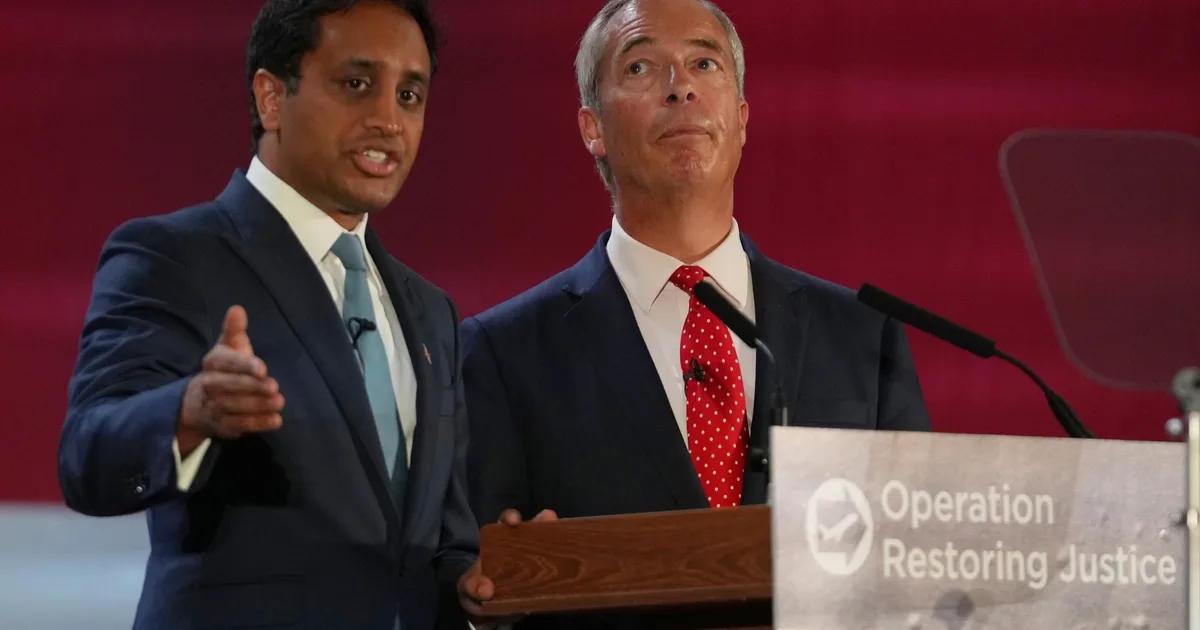
Zia Yusuf has snubbed Nigel Farage by refusing to delete a post on X calling former Tory defence secretary Ben Wallace “a traitor to Britain”.
The Reform UK leader slapped down his home affairs spokesman for the comment, which sparked an angry backlash, and said he would give him “a ticking off”.
But more than 12 hours later, Yusuf’s offending tweet – as well as a poll he posted asking whether Wallace should be “prosecuted for treason”.
As well as being a former cabinet minister, Wallace also served in the Scots Guards in Northern Ireland during the Troubles.
However, Yusuf said he had betrayed his country by allowing thousands of Afghans who had served the UK during the war in their country into the UK.
That was in response to Wallace criticising Reform’s plan to send foreign criminals in British jails to serve out their sentences in El Salvador.
“Incredible that this moron was defence secretary,” Yusuf said in his post on Monday.
“Our policy today is in direct response to your government’s failures.
“If their home countries won’t take back, their citizens that are languishing in our jails, we are renting spaces in countries like El Salvador to put them.
“They will serve their full jail terms there, and will be banned from ever coming back to Britain.
“You know, the ones you took a super injunction out to keep secret from the British people? That’s why I call you a traitor to Britain. You fit the dictionary definition.”
Asked about the row on Tuesday, Farage told The Sun: “That is too strong a language. I shall give him a ticking off, don’t worry.
“I’ll speak to him today, but it’s over the top.”
It is not known what Farage actually said to Yusuf, or whether he told him to take down his tweets.
Tim Montgomerie – a leading political commentator who quit the Tories to join Reform – also said Yusuf’s language “isn’t acceptable”.
Listen to Commons People, the podcast that makes politics easy. Every week, Kevin Schofield and Kate Nicholson unpack the week’s biggest stories to keep you informed. Join us for straightforward analysis of what’s going on at Westminster.
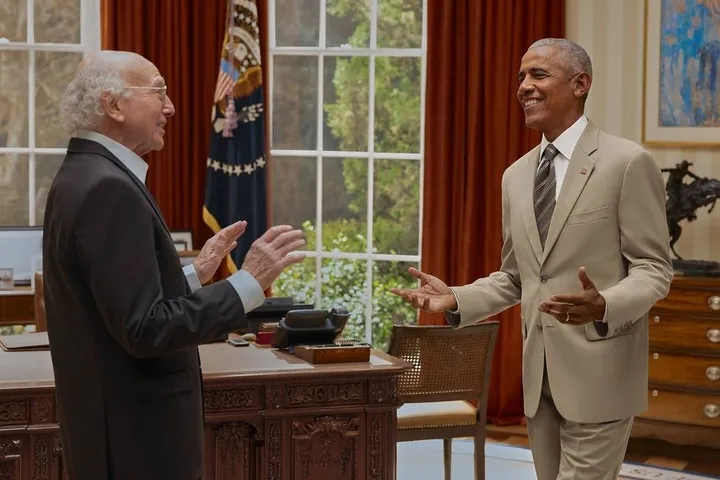
President Barack Obama couldn’t resist taking a quick swipe at President Donald Trump and his gaudy decorating taste as he clowned around with comic Larry David in a true-to-life replica of the Oval Office from back in his White House era.
In a teaser of the 44th president’s cameo on HBO’s “Life, Larry and the Pursuit of Unhappiness” released on Monday, Obama gave the TV set his seal of approval while joking about how much has changed since he left office in 2017.
“Nice job on the recreation,” he told the production team, which nailed every detail down to the bowl of apples Obama used to keep in the sitting area in front of the Resolute Desk.

As he continued to survey the scene, the Democratic bigwig teased, “I do want to point out there’s no gold sign on the outside that says ‘Oval Office.’”
“I can’t believe I didn’t think of that,” Obama added in a whiff of sarcasm.
Though most presidents add a few personal touches to the White House while they’re resident-in-chief, Trump has really made himself at home during his second term.

Kevin Dietsch via Getty Images
As well as slapping a shiny, scripted label outside of the Oval, he’s added gilded accents from floor to ceiling and sandwiched an array of ostentatious gold ornaments into almost every slot of empty wall space he could find.
Several of Trump’s other redesigns at 1600 Pennsylvania Avenue have caused genuine controversy, like his decision to pave over the Rose Garden and plan to replace the East Wing with a lavish $400 million ballroom.
While the president went ahead and demolished the historic East Wing last October, this past Friday a federal appeals court panel ordered a halt to any more above-ground construction.
Undeterred, Trump has said he intends to take the renovation dispute all the way to the Supreme Court.
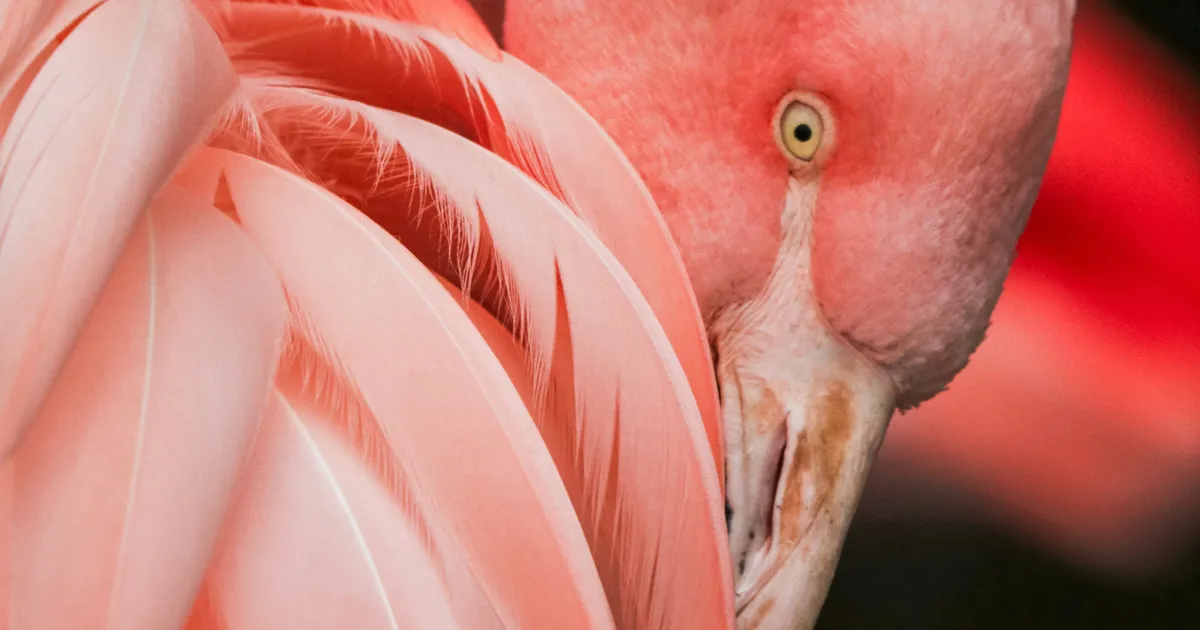
When I was a kid, you couldn’t go online without seeing jokes about how tough Chuck Norris was. Think: “the flu gets a Chuck Norris shot every year”, “Chuck Norris is the reason Waldo’s in hiding,” etc.
But maybe those memes should have been made about flamingos instead.
I recently learned (to my surprise) that the pretty pink creatures are so hardcore, they’re sometimes considered the “extremophile” of the bird world.
HuffPost UK spoke to Dr Paul Rose – author of The Behavioural Biology of Zoo Animals and member of the IUCN Flamingo Specialist Group – about the unbelievably metal birds.
What is an “extremophile”?
These are organisms “evolved to live in very harsh conditions whereby the environment is unsuitable for multiple other life forms,” Dr Rose, who is based in the Centre for Research in Animal Behaviour at the University of Exeter, told us.
Examples include bacteria which live in extremely alkaline or acidic conditions or some species of midges, which can live through drought, freezing temperatures, and even the vacuum of space.
“Although often linked to microorganisms that can live, for example, around sulphurous undersea vents, there are elements of ‘extremophile’ adaptations in vertebrate animals,” the lecturer added.
Right. And what’s so extreme about a flamingo?
What isn’t? To start with, Dr Rose said, “flamingos can wade around in water that is so alkaline it will strip skin and flesh from human limbs (Lake Natron can reach pH 12, for example), and they can drink water that runs from underground volcanic springs and is over 60°C”.
For reference, oven cleaners and caustic soda solutions have a pH of about 11-14.
Then, there’s their diet to consider. Flamingos “can also consume cyanobacteria (‘blue green algae’) that is toxic to many other species,” Dr Rose said.
Direct consumption of this bacteria has been known to kill people.
So… how are they alive?
Flamingos “have thick scales on their legs to protect their skin and they can preen the soda crystals from their feathers to ensure plumage integrity,” Dr Rose told us.
They also have a gland which helps remove salt from water they drink. The expert continued: “The specialised filter feeding apparatus in a flamingo’s bill (the same as how baleen whales have baleen plates for filtering) enables the birds to collect their food particles and eject out the high saline, high pH water.”
There are some significant advantages to living where nobody else can, too.
“Given the specialised niche they have evolved to live in, they have to be adapted to extreme environmental conditions,” said Dr Rose. “And they reap the benefits from this because they do not have to share resources with species that are not extreme-adapted.”
Er, anything else?
One last thing! When I asked Dr Rose which of flamingos’ qualities he found most remarkable, he replied: “I find their longevity fascinating. The oldest recorded wild bird was 52 upon recovery.
“And the oldest bird managed in a zoo [was in] his 83rd year. This longevity has evolved to enable them to breed viably, as they have a long generation time.”
I don’t think eating toxins, swimming in oven cleaner, and preening away corrosive crystals from your feathers is usually considered good longevity advice.
But these are not ordinary beings. These are flamingos – and biology, I presume, does what they tell it to.
To understand the making of the emperor’s new clothes, count the tailors.
The University of Cambridge maintains an Office of External Affairs and Communications with nearly 40 named staff. Six of them are press officers in the narrow sense, and there’s a head of media and five communications managers. Another seven sit in research communications. Around them cluster a five-strong directorate, four public-affairs operatives, seven people doing social media and video, four on web and email, three on internal communications, three designers and a three-person brand and trademark team, which exists, presumably, to protect the brand.
Then count the moral tailors. The central equality, diversity and inclusion section, nested within human resources at the Old Schools (the university’s central office), has a section head, three EDI consultants, a co-ordinator and an administrator. That is before the separate race-equality team, before the disability service, before the EDI officers salted through every faculty, before the college-level apparatus.
None of this comes cheap. These posts sit on the university’s single-salary spine. A communications manager or an EDI consultant occupies roughly the £43,000 to £56,500 band, heads of section run towards £67,000, the deputy directors to £76,000 and the executive director of communications sits somewhere north of £83,000 on a spine that climbs, for the most exalted, past £213,000. Cambridge employs more people and on better salaries to manage its reputation than most national newspapers employ to report the news.
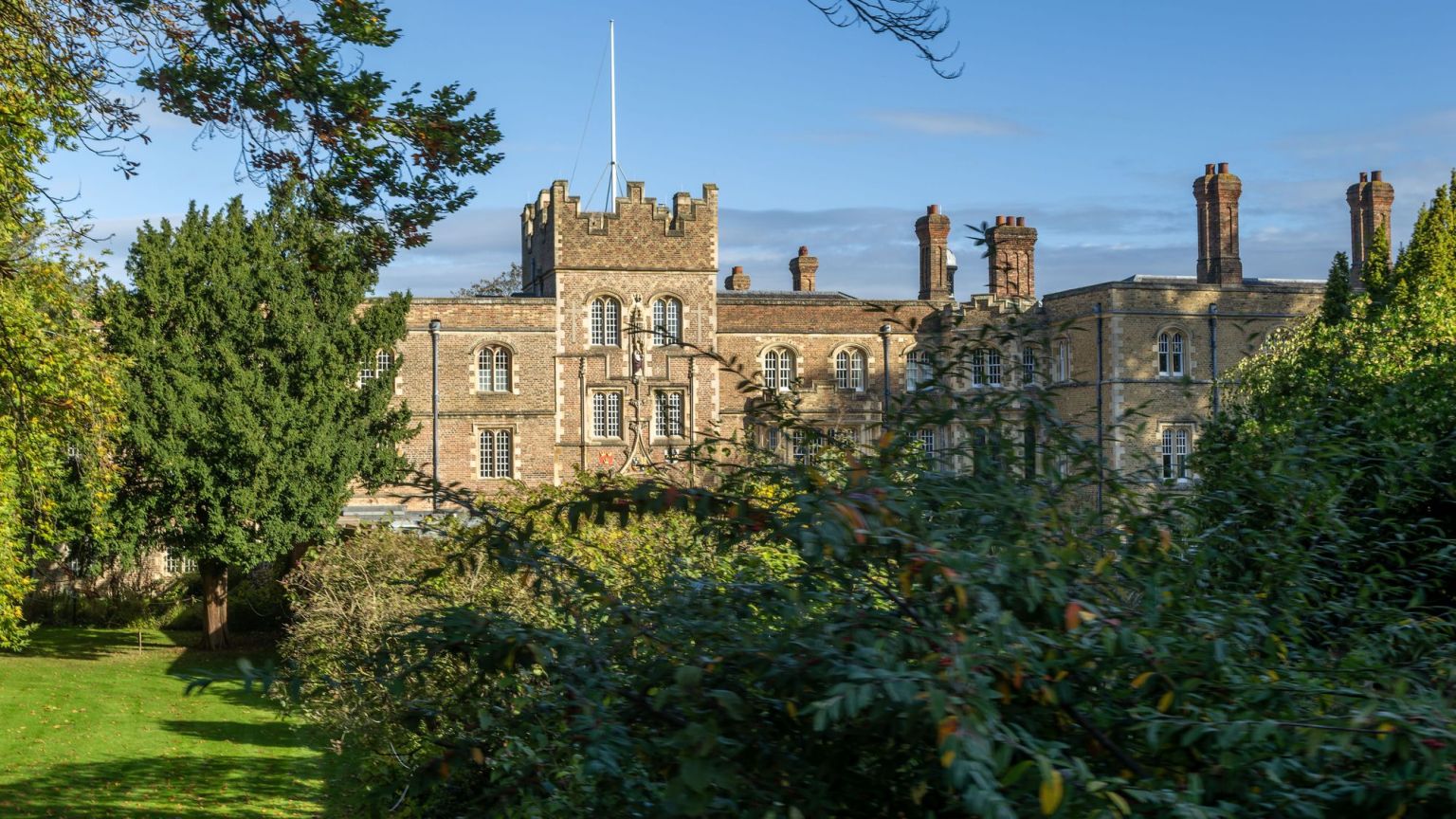
And what has all this machinery delivered? In March 2023, it delivered Jason Arday, appointed professor of sociology of education at 37, celebrated everywhere as the youngest black professor in Cambridge’s history, a man whose account of himself – nonverbal until 11, barely literate until 18, doctorate by 2015 – was promoted by the press office and the newspapers with the credulity of a parish magazine reviewing the vicar’s marrows. He was made a fellow of Jesus College. He was garlanded with honorary degrees. He was, in the ugly phrase of the trade, a comms asset.
Then a researcher named Nathan Cofnas started reading. He alleged that substantial passages of the 2015 thesis were lifted from an earlier dissertation, copy-editing errors and all, and raised questions about the biography, the honorary posts, the whole glittering edifice. Liverpool John Moores University, which awarded the doctorate, investigated and found no misconduct, attributing the problems to ‘honest and reasonable error’.
Arday has denied all wrongdoing throughout, and the Good Law Project (of course) published an open letter / fund-raising campaign / petition on his behalf. He is entitled to a defence, and the courts of academic inquiry have not yet concluded.
But what did all those tailors do? In June, Cambridge’s official response to the questions was to denounce a ‘vile campaign’ to undermine his credibility. Not to examine the claims. Not to say nothing, which is what a competent press office says while it checks the facts. It decided instead to smear the questioner.
Eight weeks later, Cambridge announced a fresh investigation into Arday’s qualifications and honorary appointments, and within days, on 5 August, he resigned with immediate effect from his chair and from his Jesus College fellowship, citing the toll of relentless accusation. Whatever the investigation eventually finds, the institution managed, in a single summer, to be both attack dog and prosecutor, to vouch and to recant, and to do it in front of every newspaper in the English-speaking world.
Fox News covered it. Al Jazeera covered it. The Free Press covered it. The damage at home is serious. The damage abroad, where Cambridge’s name is the product, is very serious indeed.
The Good Law Project’s open letter pronounced the allegations entirely false, the work of a right-wing smear campaign, and gathered some 14,000 signatures. Archived versions show the text was then quietly rewritten under the signatories’ feet. The claim that two universities had conducted thorough investigations disappeared. Cambridge names were trimmed or shorn of their affiliations. No note disclosed the changes. And now, after Arday’s resignation, the Good Law Project’s founder, Jolyon Maugham, explains that it merely chose ‘to carry’ the letter, ‘a deliberately neutral verb’. Fourteen thousand people signed that letter after the Good Law Project urged them to. They are now left holding a courier’s receipt.
And what of the master of Jesus College? Sonita Alleyne made her career running a media-production company before she came to preside over Arday’s college, so she of all people knew what an open letter is for and what a signature on one does. She signed anyway, and she signed as master, lending not merely her name but her office to a text declaring the allegations entirely false. The master of a college is not a fan with a lanyard. She holds a position of trust over her college’s fellowship. Had any question of a fellow’s integrity come before the college, its master had already published her verdict. Then the letter started to slough its Cambridge names, affiliations melting from the page. Within the week, Arday had resigned and the Good Law Project’s founder was recasting the whole exercise as neutral carriage.
Thirteen press officers, six diversity professionals and not one of them, apparently, empowered to ask the only question that mattered: Is the story true?
Pity the fundraisers. Cambridge’s Development and Alumni Relations Office employs more than 140 people, bleeding 310,000 alumni, fresh from a campaign that raised over £2.2 billion for the university and its colleges. Jesus College runs its own small Development and Alumni Relations Office and was lately recruiting a major-gifts officer to persuade donors that Jesus College is, in the words of the advertisement, a place where ‘academic values’ are a ‘core concern’ and ‘freedom of thought and expression is paramount’. Somewhere this week, a development officer is preparing for a call with a hard-headed benefactor in Houston or Hong Kong who has read the coverage and wants to know why his money endowed a pedestal rather than a scholarship. That officer did nothing wrong. The comms directorate and the EDI section built the pedestal, wrote the press releases, commissioned the photography, and the fundraisers will spend the next decade dealing with the aftermath. My sympathy stops only at the door of anyone who knew the clothes were imaginary and kept stitching.
Because that is the real scandal, and it survives whatever verdict the investigation returns on the man himself. Hans Christian Andersen’s tailors did not merely sell the emperor an invisible suit. They created a court in which no one dared say so, because to see nothing was to confess oneself unfit for office.
Cambridge (among countless others) has built exactly that court, staffed it generously at £43,000 to £83,000 a head, and when Cofnas finally shouted from the crowd, the university’s first instinct was to accuse him of lèse majesté. The tailors are still on the payroll. The emperor has resigned. The procession, one gathers, will continue.
So the question asks itself, and the donors, the alumni and the taxpayers who underwrite this establishment are entitled to an answer. All those salaries, all that machinery, all that curated virtue. What are they for?
Gawain Towler is a commentator and an elected board member of Reform UK.
It is virtually impossible to imagine what Metropolitan Police sergeant Martyn Blake and his loved ones have been through over the past four years.
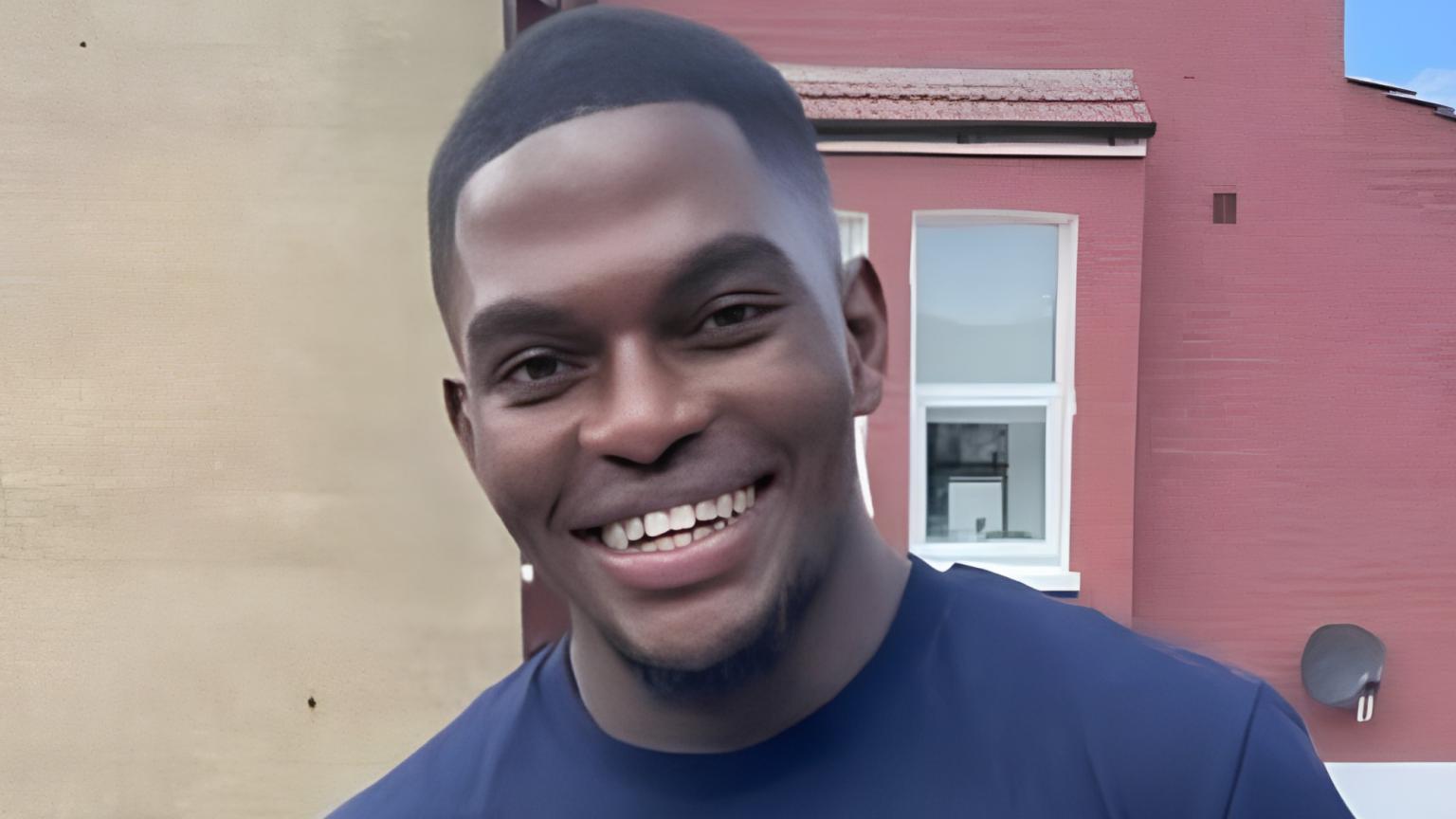
On 5 September 2022, Blake, a firearms officer, shot dead 24-year-old Chris Kaba in Streatham, south London, after Kaba tried to ram past assembled police cars. The Independent Office for Police Conduct (IOPC), the body which oversees the police complaints system in England and Wales, launched an investigation, before referring the case to the Crown Prosecution Service in March 2023. In 2024, Blake was cleared of murder by an Old Bailey jury. During the trial, he had initially been known by the codename NX121, but the judge decided to lift the anonymity order after pressure was exerted by some media organisations. This would, no doubt, only have exacerbated Blake’s feeling that he’d been thrown to the wolves.
Any relief Blake might have felt after being acquitted of criminal charges was short-lived. In April 2025, the IOPC decided that it would also investigate Blake under police misconduct proceedings. If found guilty, he would have faced the ignominy of dismissal. Last week, the IOPC, having paused its investigation in January, finally decided to drop it entirely, citing changes to the law on police use of force. These changes did not apply retrospectively, but the IOPC decided to use its discretionary powers to finally clear Blake of wrongdoing.
This is a long-overdue admission that the system responded inadequately to a highly trained firearms officer’s split-second decision – a decision made while doing an unimaginably difficult job.
The facts around the Kaba case are important here. Kaba was certainly unarmed when he was shot, hence the understandable grief and anger felt by his family and supporters. But he was also a hardened, career criminal with a string of convictions for serious offences and a core member of a notorious south London gang. The jury during the criminal trial didn’t know this, yet it still acquitted Blake.
The reason Kaba’s car was stopped in the first place was that a vehicle with that number plate had been connected to recent violent offences. Couple that with the fact that Kaba was, effectively, trying to ram his way out of a police arrest and could have gone on to hit members of the public, and it’s easy to understand why a highly trained police firearms officer decided that potentially lethal force was necessary. Kaba may not have had a gun, but he was using a car as a weapon.
These details and context don’t make Kaba’s death less tragic, nor remove the need for scrutiny when lethal force is used. But they do make it morally wrong to treat Blake as a criminal first and an officer responding to danger second. Armed policing exists because some threats cannot be safely contained by ‘ordinary’ policing. Officers in those moments have seconds, sometimes less, to decide whether their inaction might cost lives.
One of the most troubling features of this and similar cases is the extent to which the prosecuting bodies appear to be taking decisions in response to ‘community reaction’ to an incident. The CPS states in its Code for Crown Prosecutors that there is an increased likelihood of a charge if ‘the prevalence of an offence in a community may cause particular harm to that community, increasing the seriousness of the offending’. The IOPC itself states that ‘significant media attention, community interest and / or tension’ can be the basis for an investigation.
Accountability is essential, especially when a life has been taken. But here an individual was punished by the accountability process itself. Once a jury has acquitted an officer of murder after hearing the evidence, the IOPC had no need to prolong the officer’s agony, regardless of ‘community tensions’. Prosecutors and watchdogs shouldn’t be reacting to activist pressure or anger. They are there to apply the law with detachment.
That didn’t seem to happen in the Kaba case. The CPS described the prosecution as ‘complex and sensitive’ and said it was right that the case be put before a jury. And after finally clearing Blake, the IOPC said the investigation had been of ‘significant public interest’, particularly within black communities.
None of that proves either body pursued Blake in response to community tension. But the language matters. When institutions repeatedly emphasise public interest and the sensitivity of a case, they look as if they’re engaged in reputation management. The legal question should have remained narrow: what did Blake honestly believe in the moment and was his use of force lawful?
The contrast between the enormous length of time Blake has been on de facto trial and the speed with which the jury acquitted him in 2024 is stark. After hearing the evidence, jurors took just three hours to find him not guilty. Yet the institutions involved in the case took nearly four years in total to exonerate him. They plunged him into purgatory, turning his life into what must have seemed like an interminable trial. They turned the process into a punishment.
There is a legitimate place for investigation after a fatal police shooting. The public must know that evidence has been examined. But an investigation should be a route to truth, not a public-relations exercise. Once the evidence has been tested in court and an officer has been acquitted, the threshold for any further action should be extremely high.
The treatment of Blake sends a chilling signal to firearms officers. They are asked to confront violent danger, put themselves between armed criminals and ordinary citizens and make rapid decisions under pressure. Yet if they act lawfully, they may still face years of criminal, disciplinary, civil and inquest processes.
None of this means we should be indifferent to Kaba’s death or to his family’s grief. The human consequences undeniably deserve recognition. But grief can’t be allowed to turn lawful policing into moral wrongdoing.
Bodies like the IOPC, charged with holding the police to account, must protect the public from abuses of power. But in doing so, they must avoid punishing lawful acts of bravery. In Sergeant Blake’s case, a line was crossed.
A jury made up of Blake’s fellow citizens found clarity in hours. The criminal-justice system and the IOPC should not have taken years to accept what the evidence had always shown.
Paul Birch is a former police officer and counter-terrorism specialist. You can read his Substack here.
The post The migrant mega dinghy is a national humiliation appeared first on spiked.
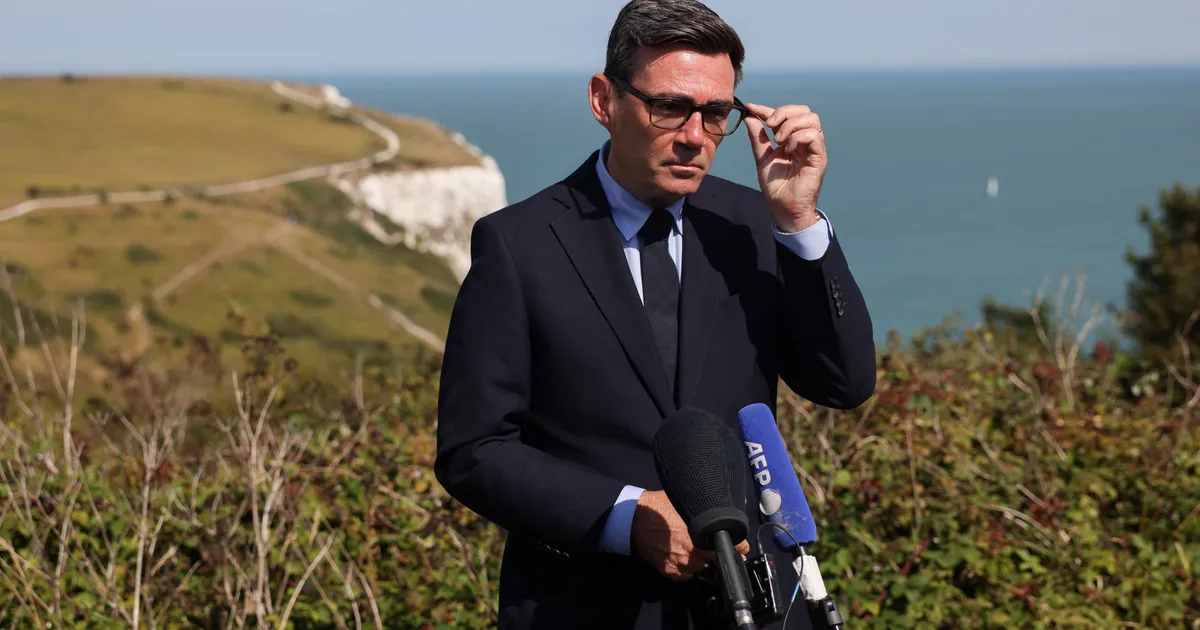
Andy Burnham has vowed to “eradicate” small boats crossings in the English Channel – but refused to say it when it will be done.
The prime minister said the government “will keep going at this issue” until it is solved.
However, he stopped short of saying it will have stopped by the next election, which may not take place until 2029.
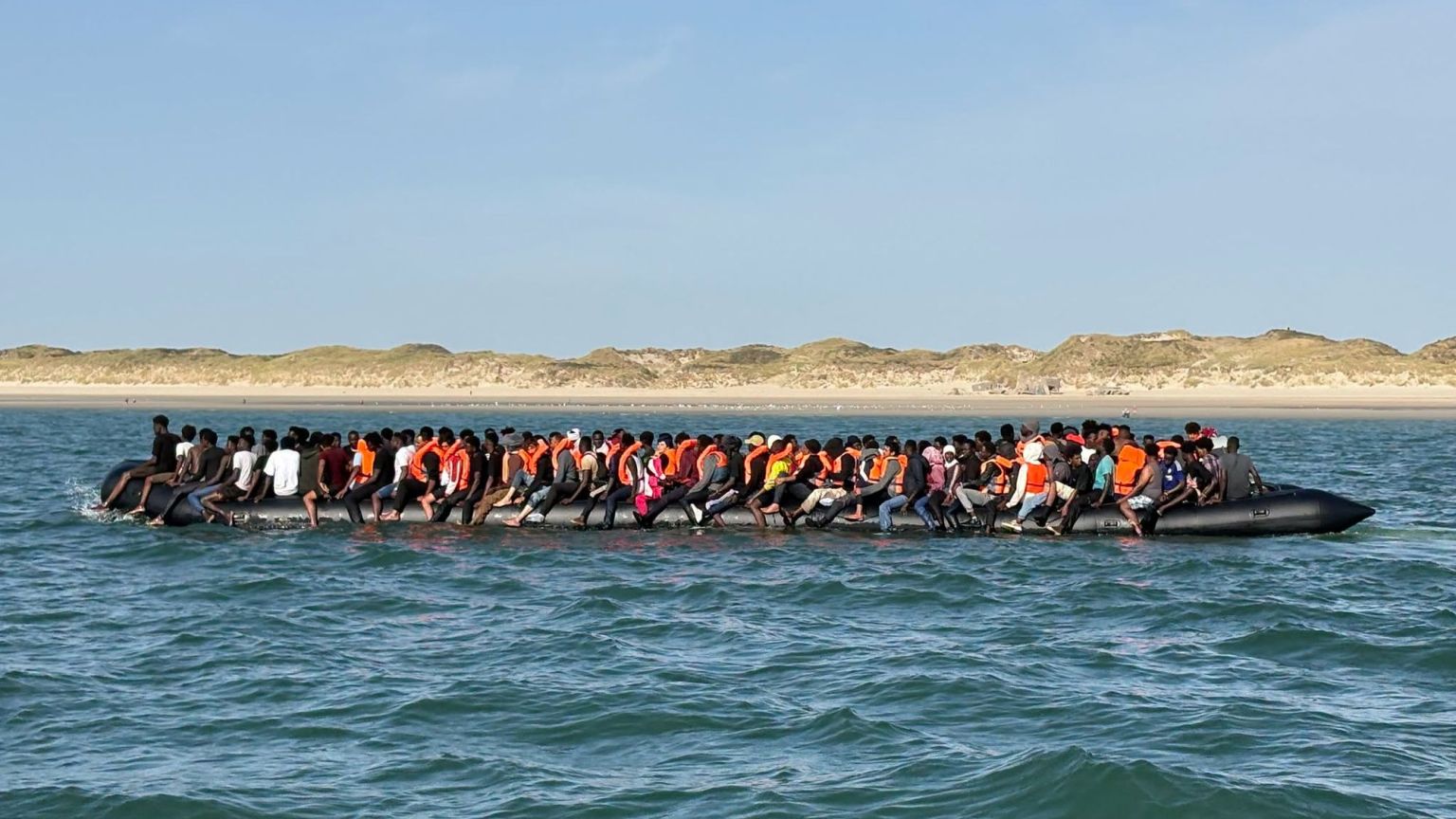
Burnham was speaking the day after a boat carrying 230 asylum seekers – the most ever on a single vessel – crossed the Channel from France.
He said the government would “change our tactics” to deal with the fact that more migrants could start arriving on larger boats.
“I know people will have been worried to see that image yesterday,” the PM told GB News.
“It shows that the gangs are changing their tactics but so will we – we will now change our tactics and we will be relentless in chasing them down.”
Burnham said the deal Keir Starmer struck with France when he was PM meant there was “more law enforcement on the other side of the Channel” this summer, which has led to a reduction in the number of boats making the journey.
“But that’s not good enough,” he said. “People will say to me, ‘we don’t want any crossings’. I understand that concern.
“There are further things that we are doing and we will keep going at this issue until we deliver that eradication that people are looking for.”
Asked whether he could promise “no more small boats crossings by the election”, Burnham replied: “It would be wrong, I think, for me to make a prediction now based on a timeline.”
The PM added: “I’d rather promise to people what I know I can do and what I know I can deliver, and that is a relentless focus on this issue to deal with the public concern.
“I heard it on doorstep, on doorstep after doorstep in Makerfield, and I said to the people there, and I say it to the country, ‘I hear what you say, I will be completely focused on the issue’.
“There are more measures that we’re bringing through but crossings are down, immigration is down – there is real progress to report.”
Listen to Commons People, the podcast that makes politics easy. Every week, Kevin Schofield and Kate Nicholson unpack the week’s biggest stories to keep you informed. Join us for straightforward analysis of what’s going on at Westminster.

You can breathe a big sigh of relief: we’re half way through the summer holidays (unless you’re in Scotland, sorry Scotland!).
While you might have set strict no-screen rules at the beginning of the summer holidays, we’re sure you’re getting to the point of easing up.
And no one would blame you – it’s a long time to have the whole family under one roof.
All you have to do is get through the next few weeks – and if that means plonking them down to play games or talk to their friends as a distraction, so be it.
At the same time, though, there is plenty to think about when giving your child access to the internet. I don’t need to recount the potential horrors, because over 90% of parents on Mumsnet say current smartphones aren’t safe enough for children.
Plus, 77% of parents say keeping their child safe online feels like an impossible task, and that only gets harder in summer when they don’t have the school routine to keep them busy.
If you’re just about wondering when someone’s going to do something about this mess, enter: the OtherPhone.

Responding to readers’ concerns, the team at Mumsnet teamed up with two London-based tech companies – Nothing and SafetyMode – to create a phone catered to keeping kids safe online.
It might look like a regular phone, but it’s actually a cool phone – that is, the 3(a) phone from cult brand Nothing – that your kid will love (all you need to know is that Charli XCX is the ambassador).
The phone is super lightweight, coated in tempered glass, and is dust and water-resistant, so it can handle the muck and clutter of being a kid.
Loaded with all the regular functions of a smart phone, this particular phone also comes with SafetyMode, a software that uses AI to monitor, filter and block harmful content (like bullying, nudity, and explicit language) across every app your child uses.
While safety tools track a list of basic keywords, or block specific websites, SafetyMode has been trained to read content, which means it can distinguish between a normal conversation and a concerning one.
It can track their locations, and the filters are fully customisable, so you get to decide what you want your child accessing, based on their changing needs.
When troubling content is detected, SafetyMode will send an alert straight to your phone, so that you can rest assured you’ll know what your child is up to online, even when you’re not in the same room (or home!).
Even better, your child’s data won’t ever leave their phone, as all of the processing happens on the phone itself, for added privacy.
If you don’t want to buy a whole new phone, you don’t have to. SafetyMode is also available via the Google Play store to be compatible with any Android device.
The app itself is free, but if you want to manage permissions and filters without even having to pick up their phone, you can upgrade and pay £5.99 per month for SafetyMode Plus.
That means online safety for the rest of the summer, whether they’re at summer camp, the grandparents’, or simply curled up in their rooms.

Bitwise CIO Says Bitcoin May Be Near Crypto Winter’s Bottom

Trump Intervened in Max Miller Ohio Race Amid DV Allegations

Ripple XRP BRICS NATIONS CONFIRMED NEW FINANCIAL SYSTEM WE WERE RIGHT!!!


-

 Fashion5 days ago
Weekend Open Thread: Mattifying Sunscreen
-

 Fashion5 days ago
Frugal Friday’s Workwear Report: Cap-Sleeve Pointelle Crewneck Sweater
-

 Sports6 days ago
Jordan Coyle & Cordiamo take Laya Arena Stakes at RDS
-

 News Videos4 days ago
Can Astrology Help Find Gold and Silver Trends? A Financial Astrology Guide
-
 Business6 days ago
US stocks: Dow closes at record on Mideast optimism; SpaceX, AMD drag Nasdaq
-

 Politics6 days ago
Reform UK And Greens Sink To Lowest Favourability Ratings To Date
-

 Business6 days ago
Supply chain issues impact Ingredion
-

 Tech4 days ago
Rinn Pharma & Biopharma to join NordicPharmaTrain network
-

 Business3 days ago
How to Start a Cleaning Business: A Step-by-Step Guide
-

 Business3 days ago
Datadog: Best Of Breed For Multiple Reasons
-

 Business3 days ago
BDC Weekly Review: Private BDC Q2 Numbers Are Strong
-
 NewsBeat7 hours ago
Communication cards help banking customers access services or report scams
-

 Fashion7 days ago
Suit of the Week: Me + Em
-
Sports6 days ago
Spider-Man: Brand New Day ending explained: Is Peter Parker alive?
-

 Crypto World7 days ago
Robinhood files $200M second venture fund focused on YC startups
-

 Tech5 days ago
Price Hikes May Be Coming for PC Motherboards Next
-
 Fashion7 days ago
Birthstone pendant necklaces for women by ottomanhands – 18ct gold plated
-
 Crypto World6 days ago
Galaxy Digital Stock Slides 14% as Crypto Prices Hit Earnings
-
 Business5 days ago
Brightwater secures funding for WA-first dementia projects
-
 Politics6 days ago
Comedian Jimmy Cricket Has Died, Aged 80
You must be logged in to post a comment Login