
Politics
Chaka Khan Loves The Chase And Tipping Point And… Sorry, What?!


The I’m Every Woman singer was chatting to Jessie and Lennie Ware on their Table Manners podcast when Lennie asked her if she watched any British telly.
Lennie then pressed Chaka on what she was watching at the moment, to which she revealed: “You know what I love here is Chase, The Chase. I love something like that. I love to learn.”
But it’s not just Bradley Walsh’s quiz that Chaka is partial to.
It turns out the funk icon is also a fan of ITV’s arcade-inspired gameshow Tipping Point, hosted by Ben Shephard.
When Lennie jogged her memory on another of British TV’s quiz shows, she responded: “Oh I love that too! The thing that comes out… the thing… they slide down the end? Yeah, right, I like that too.”
The petition to get Chaka on Celebrity Gogglebox starts now.
Chaka isn’t the first American celebrity to fall in love with British TV, though.


Dean Lewis has lost a Dutch court case against a former partner who claimed that the relationship was abusive on social media. Lewis demanded that ex-partner Sanne van Ooijen retract several statements she made about the nature of their two-and-a-half-year relationship.
At the heart of the case was the fact that Sanne van Ooijen had been in a relationship with Dean Lewis – the world-famous pop star and singer she had been a devoted fan of. She experienced this relationship as a victim, as she felt it had been abusive. She then shared her account of that relationship on her social media channels and in personal conversations with others.
This prompted the now disgraced singer to send multiple demand letters from his Australian lawyer. This was followed by a demand letter from his Dutch lawyer. On 25 February 2026, Dean Lewis then filed summary proceedings against Sanne van Ooijen before the Dutch court.
Ultimately, this culminated in summary proceedings on Friday, 27 March 2026.
Dean Lewis loses case
It was only after the relationship ended that Van Ooijen was able to reflect on it from a distance and with greater objectivity. During the hearing, she stated the following:
I came across so many different stories from other girls on social media sharing their experiences with Dean. And that’s when it really hit me — I wasn’t crazy, it wasn’t my fault. What he did to me is not okay, and I’m allowed to feel that way and talk about it, because that is how I experienced it. And it appears to be a pattern that repeats itself with him, based on what I’ve seen and heard.
The Dutch court case brought by Lewis was to:
1. To prohibit Van Ooijen from, regardless of the manner and via which medium, making statements public, and/or disseminating false accusations about Lewis via personal or group messages, or suggesting these, including in any case the accusations of having a narcissistic personality disorder, rape, the (sexual or psychological) abuse of women, or that Lewis has otherwise (rb: presumably meant otherwise) committed sexually transgressive behavior, or qualifications and/or terms of similar purport:
IE. To order Van Ooijen to, within 48 hours after service of this judgment,
a. remove all messages about or referring to Lewis and keep them removed from all social media pages of Van Ooijen, including TikTok, Instagram and YouTube (and subsidiaries)
However, the Dutch court ruled that what Sanne van Ooijen expressed falls well within the bounds of freedom of expression under Article 10 of the European Convention on Human Rights.
Therefore, the court dismissed all seven claims brought by Dean Lewis in their entirety. Sanne van Ooijen is also not required to issue any retraction. Additionally, Lewis is required to pay her legal costs in full.
The court considered:
The use of the word ‘abusive’ does not therefore (automatically) constitute an accusation of criminal conduct. The fact that Van Ooijen retrospectively described her relationship in those terms, as that is how she felt, is not unlawful.
A pattern
But Sanne van Ooijen was not the only one to speak out about her experience with Dean Lewis.
As the Canary has previously reported, many other young female fans have reported similar experiences with Lewis.
Hundreds more women and girls have come forward on social media with a wide range of abuse allegations against Lewis. From domestic abuse and sexual assault, to messaging underage girls with extreme content – it has become clear that Lewis has an ever-growing raft of allegations against him.
The Canary also previously reported on an alleged cover-up of Lewis’ behaviour by Island Records Australia.
Lewis then blocked journalists and refused to refund fans who no longer wanted to attend his shows. He even threatened the Canary.
Since then, the Canary has heard from many women about Lewis’ tirade of cease-and-desist letters and threats to sue unless they issue apologies. Of course, many of these young girls lack access to lawyers and have no choice but to comply.
Dean Lewis thinks he can throw his money, power, and weight around to get what he wants. From threatening young girls with legal action (because yes, Dean, 19-year-olds are still girls!) to sending journalists threatening emails, it has become clear that when the truth fails, powerful men believe that attempting to intimidate and scare people will get them what they want.
Merel Teunissen (Liaise Advocaten), Sanne van Ooijen’s lawyer, commented on the case:
I find it enormously courageous that Sanne refused to be intimidated by a world-famous pop star with deep pockets, who first instructed an Australian lawyer and later a Dutch lawyer to make far-reaching legal demands. A pattern he is now repeating with other women — women who, unfortunately, do not have access to legal assistance and therefore yield to those sweeping legal demands. Sanne chose not to be silenced and fought back through legal means. With success!
Featured image via Dean Lewis/YouTube

The International Olympics Committee (IOC) has announced its new ‘Policy on the Protection of the Female (Women’s) Category in Olympic Sport‘. It amounts to a total ban on trans women/transfeminine athletes, and a near-total ban on intersex athletes, competing in the women’s category.
Normally, we might argue with the science that the IOC used to make its decision. However, nobody has been allowed to see the science – though we’re assured it exists.
What we do know is that this latest ruling completely contradicts the IOC’s science from just five years ago, which stated that trans people “should not be deemed to have an unfair or disproportionate competitive advantage”.
We also know that this decision is not a reaction to an explosion of trans women winning in the female category at the Olympics. That’s because exactly one trans woman has competed at the Olympics, and she didn’t medal.
We’re not going to argue that this is a horrific roll-back of intersex and trans rights, or the basic concept of inclusion. (It is). Likewise, we’re not going to argue that this decision was politically motivated (although the science suddenly said the opposite of what it used to immediately after a leadership change at the IOC).
What we are going to argue is that this is that sex-testing in women’s sport is a disaster for privacy and women’s rights. That means cis women, trans women and intersex women, and whatever combination thereof – all women.
We know this because we’ve fucking been here before.
Olympics: IOC document
The IOC plans to introduce universal sex screening for the women’s category. It will achieve this through a one-time SRY (Sex-Determining Region) test. The SRY gene is usually present on the Y chromosome, and causes the development of testes during foetal development.
The IOC’s new document states that:
All Biological Female athletes screened will be negative and eligible, and virtually all athletes who screen positive will have testes/testicles that naturally produce testosterone at adult Male levels.
This is a deception. The document writers know that it’s a deception, because they include a carve-out:
Because a positive SRY Gene screen does not establish a specific DSD diagnosis, further evaluation should be made available to the athlete to determine whether they have CAIS or another rare XY DSD that precludes testosterone’s anabolic and/or performance-enhancing effects.
The DSD there stands for “differences/disorders of sexual development”. We will be using the term ‘intersex’. The number of intersex people among the general population varies according to the definition used, but it may be as high as 1.7%.
CAIS stands for Complete Androgen Insensitivity Syndrome. This means that the body doesn’t have the receptors to make use of the circulating testosterone.
However, beyond CAIS, levels of testosterone sensitivity can vary massively, i.e. Partial Androgen Insensitivity Syndrome. As such, that “testosterone at adult Male levels” tells us very little.
The document also states that:
XY Transgender athletes and athletes with certain XY differences/disorders in sex development (DSD) (as defined in Schedule 1) have anatomical and physiological advantages in line with being Male even as their legal sex, the manner in which they were raised, and/or their gender identity may vary.
The bit about legal sex and the “manner in which they were raised” is also significant. This is because many intersex people go their whole lives without learning that they’re intersex.
As such, some intersex athletes can find that they’re intersex for the first time due to a sporting test. This has happened before – and it’s a massive problem.
‘Scientifically and ethically unjustifiable’
The IOC previously instated universal sex testing back in 1968. At first, the tests consisted of having the women appear naked in front of a panel of judges. Later, the IOC moved on to more elaborate tests, such as the Barr body test.
The last universal sex testing at the Olympics took place in 1996, in Atlanta. At the time, eight women came up positive on the DNA-based test. As explained by rights organisation the International Commission of Jurists:
After the 1996 Olympic Games, the IOC voted to discontinue universal sex testing for being scientifically and ethically unjustifiable, since it was an inaccurate test of both sex and athletic advantage and was resulting in considerable harm to affected athletes. The United Nations High Commissioner for Human Rights, UN Women, the World Medical Association, American Medical Association and, most recently, a group of independent UN experts have long condemned sex testing and medically unnecessary interventions as discriminatory, unethical, and harmful.
Since then, decisions on sex testing were left with individual sporting bodies. Often, testing was weaponised against individual – often brown or Black – women like Imane Khelif and Caster Semenya.
The consequences of mandatory sex tests are often severe. Whilst being intersex is simply another variation of human existence, sex is given such a primacy by our society that learning one’s assumptions were wrong can be a severe shock.
Beyond the exclusion from an elite sport than the woman has worked her life towards, other harms can include severe sex and gender identity crisis, social isolation, demeaning reactions from the public, depression, and suicide.
Klobukowska, Patiño, Soundarajan
Competing in the Tokyo Olympics in 1964, Poland’s Ewa Klobukowska of Poland helped set a new 100m-relay world record. However, she submitted to sex testing after the media mocked her for her ‘masculine’ appearance:
The test results were never made public, but the IAAF ruled that Klobukowska had a chromosomal anomaly that disqualified her from competing in the female category. The organization publicly criticized Klobukowska for being a male imposter, and stripped her of her medals. After being disqualified from competing at the age of 21, she said, “It’s a dirty and stupid thing to do to me. I know what I am and how I feel.”
She had a son in 1968. Thirty-one years later, the IOC returned her medals.
Klobukowska never re-entered professional sport, and her records are remain largely unknown.
Another case in point is Maria José Martínez Patiño, a CAIS intersex woman and former Spanish hurdler. She fell victim to a sex chromatin test at the 1985 World University Games in Kobe, Japan. She was told to fake an injury and retire quietly, as was common practice.
However, she then went on to compete in the 1986 National Championships. Whilst she was told again to withdraw quietly, she refused. After winning her race, she was attacked in the Spanish press. She was expelled from her residence, and lost her scholarship, her records, and her fiance.
Another example is Santhi Soundarajan, who won silver in the women’s 800m race at the 2006 Asian Games. Soundarajan also has AIS, causing her to fall victim to a genetic screening test.
After being told she could no longer compete, and being stripped of her medal, Santhi fell into a deep depression and later attempted suicide.
‘Human dignity’
The IOC stated in its announcement that its related organisations should work to:
Ensure that the athlete’s human dignity, physical and psychological well-being, health and safety, and
right to privacy and confidentiality are respected.
It is also insisting that we perform these potentially life-upending tests “early in the athletic career”, with “age appropriate explanations” for minors.
However, this respect for their athletes’ human dignity and psychological well-being apparently doesn’t extend to the IOC restraining itself from calling these women “biological males” throughout the document, and insisting that “biological sex does not and cannot change”.
We have watched, over the last few years, our media, politicians and public figures hound and mock athletes they suspect of being intersex or trans. This cruelty is a direct consequence of the primacy we place on sex – and our rhetoric around that primacy is only becoming more extreme by the day.
The IOC insists that we need a hard border to “protect” women’s sport. Any border creates an ‘other’, and requires police to protect that border from the ‘other’. And policing, as we have seen time and again, begets violence. In this case, that violence is directed towards women – intersex, cis, and trans women.
Many are celebrating today, and many athletes among them – but this is no victory for women’s rights.
Featured image via the Canary

!function(n){if(!window.cnx){window.cnx={},window.cnx.cmd=[];var t=n.createElement(‘iframe’);t.display=’none’,t.onload=function(){var n=t.contentWindow.document,c=n.createElement(‘script’);c.src=”//cd.connatix.com/connatix.player.js”,c.setAttribute(‘async’,’1′),c.setAttribute(‘type’,’text/javascript’),n.body.appendChild(c)},n.head.appendChild(t)}}(document);(new Image()).src=”https://capi.connatix.com/tr/si?token=19654b65-409c-4b38-90db-80cbdea02cf4″;cnx.cmd.push(function(){cnx({“playerId”:”19654b65-409c-4b38-90db-80cbdea02cf4″,”mediaId”:”5421d25b-b70b-4170-8802-e39ea8a06346″}).render(“69c690ffe4b0a6ee60c464de”);});

Andrew Garfield made his feelings about Harry Potter author JK Rowling clear during a recent conversation about the Wizarding World franchise.
The Oscar nominee recently took part in a video interview with Hits Radio where he praised the work of Daniel Radcliffe, who, of course, got his start playing the titular character in the Harry Potter movies.
“Daniel is so goddamn good,” he enthused of his fellow actor. “Honestly, I hadn’t watched the Harry Potter movies until recently. He’s really good in those movies.”
Andrew continued: “Those Harry Potter movies are really good. I know it’s controversial and we shouldn’t be putting money in the pocket of inhumane legislation right now through she that shall remain nameless.
“But the soul and spirit… the essence of the themes of those films and the kids and the artisans and the craft people.”
“You can’t throw the baby out of the bathwater,” he claimed. “There are so many beautiful artists that worked on those films.
“I have a newfound appreciation for all of the artists, and Daniel is great.”
It’s fair to assume that Andrew was referring to JK Rowling with his “she who shall remain nameless” remark, with the author having become a divisive figure in recent history due to repeated comments about the transgender community.
Notably, she also donated tens of thousands of pounds to the campaign group which raised the initial legal challenge that led to the UK Supreme Court’s ruling last year that the legal definition of a woman should include only those who were assigned female at birth, and shared a celebratory role when the decision was made.
Debate around the Harry Potter franchise has continued over the last few years as a result, with cast members from the upcoming TV adaptation, as well as a new Audible audiobook series, facing backlash due to their involvement in the projects.
Andrew has shown his support for the transgender community in the past numerous times in the past.
Back in 2017, he told BBC Newsbeat: “My only longing is to serve and to keep the world spinning forward for the LGBTQ community in whatever way I’m meant to. It’s important to a community that I feel so welcomed by.”
Watch Andrew Garfield’s full interview with Hits Radio here.
Help and support:
- The Gender Trust supports anyone affected by gender identity | 01527 894 838
- Mermaids offers information, support, friendship and shared experiences for young people with gender identity issues | 0208 1234819
- LGBT Youth Scotland is the largest youth and community-based organisation for LGBT people in Scotland. Text 07786 202 370
- Gires provides information for trans people, their families and professionals who care for them | 01372 801554
- Depend provides support, advice and information for anyone who knows, or is related to, a transsexual person in the UK

Italian Prime Minister Giorgia Meloni is lurching so far to the right that her friendship with Donald Trump and allied tech-bros may have cost her a key referendum.
Trump as “repellent”
In a referendum she called on judicial reforms, Italians vote 54% for the “No” campaign, while 46% supported the “Yes” vote Meloni backed.
The Conversation recently reported that any association with Trump now acts as a “repellent” for Italy’s political class. This doesn’t exclude the political right and is precisely the pathway that led to Meloni’s referendum defeat. The outlet also noted that Peter Thiel’s recent Rome visit sparked Catholic outcry, with Italians labelling Palantir CEO a heretic and an opponent of the Church doctrine. That didn’t go down well.
References to Trump now act as a repellent for the entire Italian political class, including the right. This factor played a role in the vote against the referendum, which is a major blow for Meloni. It is also worth noting that the visit of Palantir CEO Peter Thiel to Rome in March 2026 sparked both calculated political indifference and an outcry among Catholic circles: Thiel was labelled a heretic and an opponent of the social doctrine of a religious institution that remains steadfast in its defence of democracy.
This marks a sharp contrast with the warm welcome Meloni reserved for Elon Musk until 2024.
The FT reported that while Meloni’s friends include MAGA ideologue Steve Bannon and Thiel’s PayPal co-founder and longtime friend Elon Musk, Pope Leo XIV has warned of the dangers of AI.
According to MSNBC, Thiel sold out Rome to preach that Western civilisation is crumbling. He piled the blame on “people who strive for peace, work for justice, and want to embrace diversity.”
Starmer needs to pay attention

Dr Igor Merheim-Eyre is a political strategist and advisor who has worked with conservatives across the transatlantic space.
Having returned back to Blighty last year after ten years in Brussels, I’m increasingly shocked by the failures of Brexiteers to develop a positive vision for Britain as well as their readiness to avoid accountability by finding scapegoats.
Do not get me wrong, even in Brussels, I always sought to defend the democratic will of the British people, irrespective of how unpopular that opinion may have been or however many people it alienated. I wished nothing but a bright future for Britain as it was able to chart a new course outside the European Union. But it’s time to face an uncomfortable truth.
Attending a recent event with the Bruges Group, and reading posts, letters and columns of leading Brexiteers, I’m increasingly shocked by their failure to develop a positive vision of Britain.
Even worse, after winning an unexpected referendum victory in 2016, solidified with a historical General Elections win in 2019, they blew their chance at transforming Britain for the better, leaving it even more socially divided and economically weaker.
Lord Frost in a recent letter to the FT wrote that the current government’s efforts, instead of realigning with the EU, should be expended ‘on using the benefits of British national independence, while we still have it, to deregulate and improve the business environment here in the UK’. There’s little point at finger-pointing, but I had expected such government agenda from the Brexiteers, not from Labour. At least, to Lord Frost’s credit, he has been consistently critical of the Johnson Government’s delivery of post-Brexit ‘benefits’ such as net zero, overregulation, crippling taxation or the replacement of skilled nurses with Uber drivers.
The trouble is that Brexiteers had thirty years to develop a vision of Britain ‘the day after’ and they failed spectacularly. Moreover, where they spent thirty years blaming Britain’s ills on eurocrats in Brussels, they now found new scapegoats in the Whitehall bureaucracy. There is no self-reflection nor a long-term vision for Britain. There is only scapegoating and endless calls for an illusory ‘proper Brexit’ that would solve the country’s problems.
Ironically, in this, they are increasingly behaving like the euro-federalists they hate.
For euro-federalists, Europe’s problems can only be solved by a more Federal Europe: migration? More Europe; deindustrialisation? More Europe; housing crisis? More Europe. They never consider that some issues might be better solved at a national or regional level, let alone that they should be left up to individuals, civil society or markets. For euro-federalists, the failures lie with those who simply refuse to transfer an ever-growing list of competencies to Brussels and refuse the paradise of an ‘ever closer Union’; they engage in scapegoating on one hand, and conceptual day-dreaming on the other rather than securing borders or addressing economic woes.
I have studied European politics, taught European politics, worked with and in European institutions, which is why I find it curious to see that Brexiteers are, after all, increasingly behaving like euro-federalists. Perhaps, they even go further. Calling for a ‘proper Brexit’ after all those that have been tried and failed over the past decade, is reminiscent of those Marxists arguing that their ideology was never properly tried in practice and next time will be different.
I have bad news: it won’t.
The globalisation era of trade is over while the EU remains the UK’s largest trading partner by the very fact of geography. It’s also a fact that a bloc of 27 sets its own rules for trading with others, irrespective of whether we like it or not.
Lord Frost criticises the Labour government’s ‘reset’ with the EU as constituting ‘the partial re-entry to the EU’s single market…applying EU laws without any say in them, and paying for the privilege too.’ Well, yes. It should hardly come as a surprise to a man like Lord Frost who has spent considerable time in Brussels that, having left the EU, the UK is no longer able to influence key decisions.
Lord Cameron, for all his faults, already tried to explain in 2016 that the UK is too much of a large economy to be a norm-taker within a Customs Union. However, it is also not large enough to dictate to a simply larger bloc without being a full member.
Unfortunately, the Labour government is either naïve or disingenuous about this too. They cannot claim to be pursuing a membership of the EU’s single market while avoiding the freedom of movement. The EU’s four freedoms (of goods, services, capital and people) always go together, and the EU will insist on some form of free movement.
So, where does that leave Britain ten years after the Brexit referendum?
The UK now essentially has three choices: the status quo, joining the single market as a norm-taker and accepting the EU’s four freedoms, or return to full membership. This decision has to be made in a world that is once again moving towards protectionism and geopolitical blocs.
Brexiteers have proved that the status quo does not work, while a ‘proper Brexit’ is simply an illusion. They’ve had the chance to prove otherwise and they cannot hide behind Brussels or Whitehall. That leaves two other options, and I find it hard to believe that Britain, even under a Labour government lacking all ambition, would want to remain a simple norm-taker.
As for the third option, the conservative leaders of Germany and Italy are energetically pushing a new agenda that is reshaping the harmful net zero policies, cutting red tape and regaining control of external borders. Every step of the way they are proving the continued relevance of sovereign and confident states within the European Union. This will please neither Brexiteers nor euro-federalists.
Brexiteers have become like the euro-federalists they hate so much: dreaming of a fictional future without a vision for solving real-life problems, and quick to shift blame to avoid accountability. Perhaps, this should come as no surprise. Frost, Farage and Johnson are, after all, Brussels men.

Testimony given to the Undercover Policing Inquiry this week has provided further details of systematic targeting against anti-arms trade campaigners, including Campaign Against Arms Trade (CAAT).
On 23 March, the inquiry heard from CAAT’s media coordinator, Emily Apple. She testified to the impact of undercover police spying on CAAT and other anti-arms trade and environmentalist groups.
HN3, an undercover Met police officer operating under pseudonym ‘Jason Bishop’, had been “authorised” to target CAAT as an organisation, the inquiry heard. Among other groups Bishop targeted were Disarm DSEI and protests at the RAF Fairford base.
Bishop had even managed to become a signatory to the Disarm DSEI bank account, managed its PO Box, and had access to the organisation’s email address.
An internal police report on Bishop’s undercover activities dating to 2003 shows that the Met police’s motivation to target DSEI protesters was borne out of concern that the protests:
could influence the financial wellbeing of the State.
139 undercover officers under examination
The inquiry is examining how 139 undercover police officers working for the Met police’s Special Demonstration Squad / Special Duties Squad (SDS) spied on over a thousand anti-war and environmentalist groups between 1968 and at least 2010.
The inquiry twice refused core participant status to CAAT, despite SDS targeting it. When the inquiry initially began in 2015, it argued there was no substantive proof that the SDS had spied on CAAT.
The inquiry rejected CAAT’s second application in 2024 on the grounds that reports on CAAT were due to ‘collateral intrusion’ – meaning consequential invasion of a third party’s privacy – arising from spying on Apple.
However, in her testimony, Apple pointed to a report by SDS manager, HN49, who confirmed that HN3 (Bishop) had been:
authorised to target CAAT because the group was known to hold protests and demonstrations, which had the potential to result in serious public disorder.
CAAT was also the victim of systematic corporate spying by Martin Hogbin, who infiltrated the organisation from 1997-2003 and provided information to BAE Systems.
CAAT has asked the inquiry to investigate the relationship between its undercover officers and corporate spies, and whether any of the information reported by Hogbin to BAE Systems ended up with the Met / SDS, since Hogbin and Bishop (HN3) knew one another.
A spokesperson from CAAT said:
The latest revelations from the Undercover Policing Inquiry provide yet more sordid details of the Met’s systematic, invasive and manipulative spying on anti-arms trade and environmentalist campaigners.
It is now abundantly clear that Met police undercover officers were explicitly authorised to target CAAT, in brazen contempt for our right to protest and campaign against a corrupt and destructive arms trade. This revelation further calls into question the inquiry’s refusal to include CAAT as a core participant.
Given the established links between corporate spies like Hogbin, and police spies like Bishop (HN3), it is high time the inquiry corrected course and examined the links between corporate spies and undercover police.
At a time when the British state is at its most authoritarian and repressive towards anti-war and anti-genocide campaigners, a full accounting of all skeletons in the Met’s closet is a must.
Featured image via the Canary
We hope you love the products we recommend! All of them were independently selected by our editors. Just so you know, HuffPost UK may collect a share of sales or other compensation from the links on this page if you decide to shop from them. Oh, and FYI — prices are accurate and items in stock as of time of publication.
In case you haven’t been to a supermarket – or, like, any shop – lately, there are a million new types of Easter eggs in the world.
We might have gotten used to the Creme Eggs and Lindt bunnies of our youths, but you can now buy a chocolate treat in basically any shape you like. Dinosaur? You got it. Poodle? No probs.
And while I’m not one to turn my nose up at any kind of post-roast (or just middle of the day) sweet treat, I have to confess that the thrill of eggs at Easter starts to wear off more with each year that goes by.
Honestly, I think that’s because spending so much time around family of a long weekend often calls for something stronger.
As one of the youngest of my extended family, it feels like I’m constantly calling for a cocktail or alcoholic beverage (pronounced ‘bever-ahj’, FYI) to get me through an evening of political pondering.
The best part of this particular penchant is that sweet treats and alcohol are not necessarily mutually exclusive, so I’ve taken plenty of pleasure in indulging in an espresso martini or spiced fruit G&T with my Fun Aunt™️.
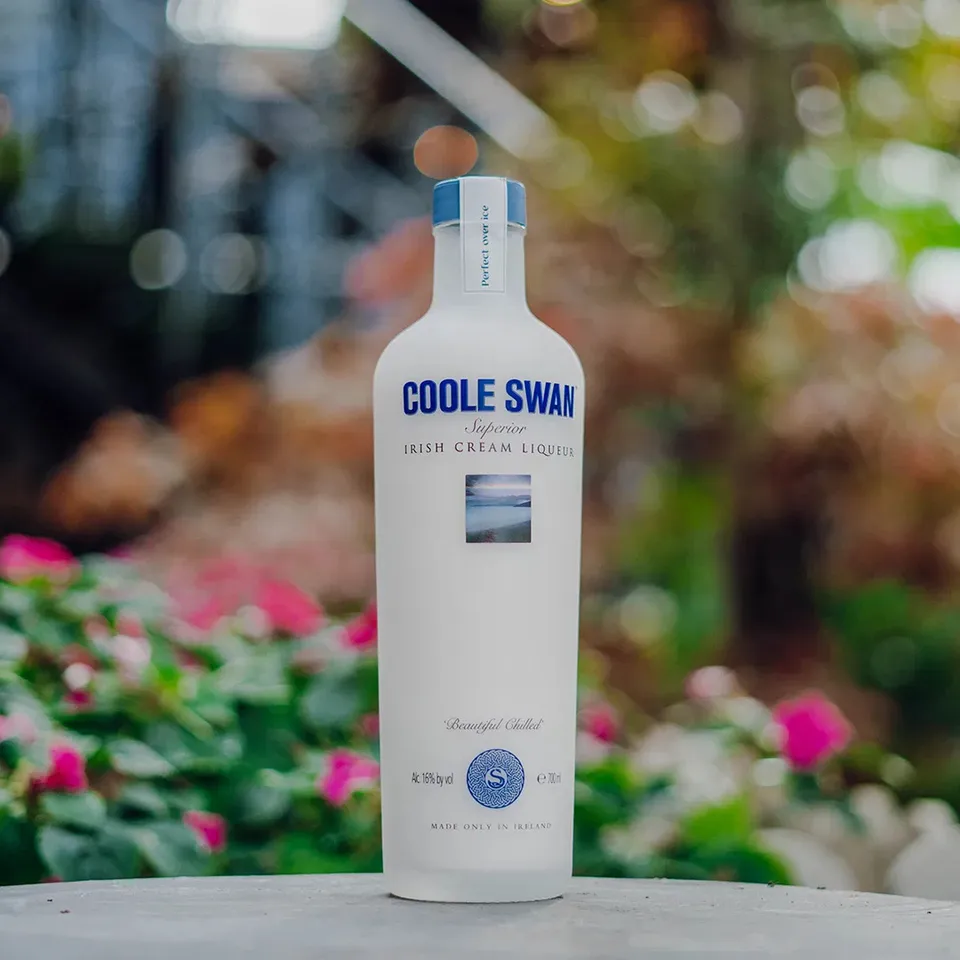
But I’ve long been looking for a way to scratch my Easter chocolate itch while getting my bev on, so imagine my surprise when I found out an Irish Cream Liqueur could be the solution to all my problems – truly.

Coole Swan Irish Cream Liqueur
Until now, I foolishly thought ICLs were restricted to a glass of Baileys on Christmas day. And let me ask you this: is anyone actually fussed about a thick glass of glorified alcoholic milk after gobbling down every kind of carb under the sun at Christmas lunch?
So imagine my surprise when I decided to give the latest ICL, Coole Swan, a go in an inspired moment of attempting to make a hot chocolate martini.
If there’s one thing I learned from my bartending days, it’s that you have to give you liquor a taste au naturale before adding it to a cocktail. Even if it gets you fucked.
Not to sound dramatic, but that cool glass of Coole Swan on the rocks really rocked my world.
Now, another thing you need to know about me is I’m a white chocolate apologist. Sorry, sue me! One review of the liqueur hit the nail on the head when they described the experience as “like pouring white chocolate ice cream into a glass”.
It was vanillary, smooth and, best of all, not too sweet. And, thanks to being made with real Belgian white chocolate, it tasted exactly like a white chocolate ice cream – all while managing to be lighter than Baileys.
It’s no wonder, then, that Tasting Table rated Coole Swan as its No.1 Irish Cream Liqueur and another review claimed: “This is in a different league.”
Coole Swan Irish Cream Liqueur
Still not convinced? Coole Swan also boasts the title of the ‘World’s Best Liqueur’ alongside over 90 international awards.
Personally, it’s won the award of being the Most Surprising Liqueur on my bar cart. After my years of ICL avoidance, I now reach for this regularly to concoct a white chocolate martini, or when I feel like a pick me up after dinner.
I’ve even stocked up on a fresh bottle for my Easter weekend cocktails – and Tesco has £6.50 off online and in select stores when you swipe your clubcard until 4 April to mark the occasion.

For almost a year now, I’ve been taking creatine to get stronger and age better.
The supplement, traditionally associated with gym bunnies hoping to bulk up, is increasingly becoming known for effects like a better mood, an easier menopause, and better cognitive ability, too.
Some research suggests it could help to extend your attention span, too.
What is creatine?
It is not a steroid-style supplement. Creatine is a naturally occurring compound produced in our bodies by our liver, kidneys, and pancreas.
We also get about half of our creatine intake from our diet through foods like red meat, milk, and seafood.
Creatine is an energy source that helps your muscles to contract. It contributes to adenosine triphosphate (ATP) production, which helps to power our bodies, especially during exercise.
That’s partly why it’s associated with greater strength and better muscle growth. It can make running that extra kilometre, or pushing that added rep, a bit easier.
How might creatine help with attention span, memory, and mood?
OK, that explains why athletes sometimes take creatine.
But scientists are researching creatine’s effect on our brains, too.
It might, for instance, help your brain to use energy more efficiently, potentially boosting your cognitive ability.
Speaking to the University of Missouri Health, neurologist Dr Kamal Ashraf said: “The brain is a huge consumer of energy in the body. Creatine helps replenish those energy sources to help us think better and keep our mental health strong”.
A systematic review of studies from 1993-2024 concluded that creatine may have “beneficial effects on cognitive function in adults, particularly in the domains of memory, attention, time, and information processing speed”.
And a narrative review found that creatine might help to manage the symptoms of depression, too.
How much creatine should I take?
Speaking to HuffPost UK previously, GP and medical director of Midland Health, Dr Rupa Parmar, warned that creatine has “limitations” and isn’t ideal for everyone.
“If you have kidney disease or bipolar disorder, creatine may make symptoms worse,” she said. “It’s always a good idea to talk to a GP before introducing any new supplement into your diet.”
However, if you can safely take it, about 3-5g a day seems to be well-tolerated and effective (overdoing it can lead to “gastrointestinal issues like diarrhoea and bloating,” Dr Parmar told us).
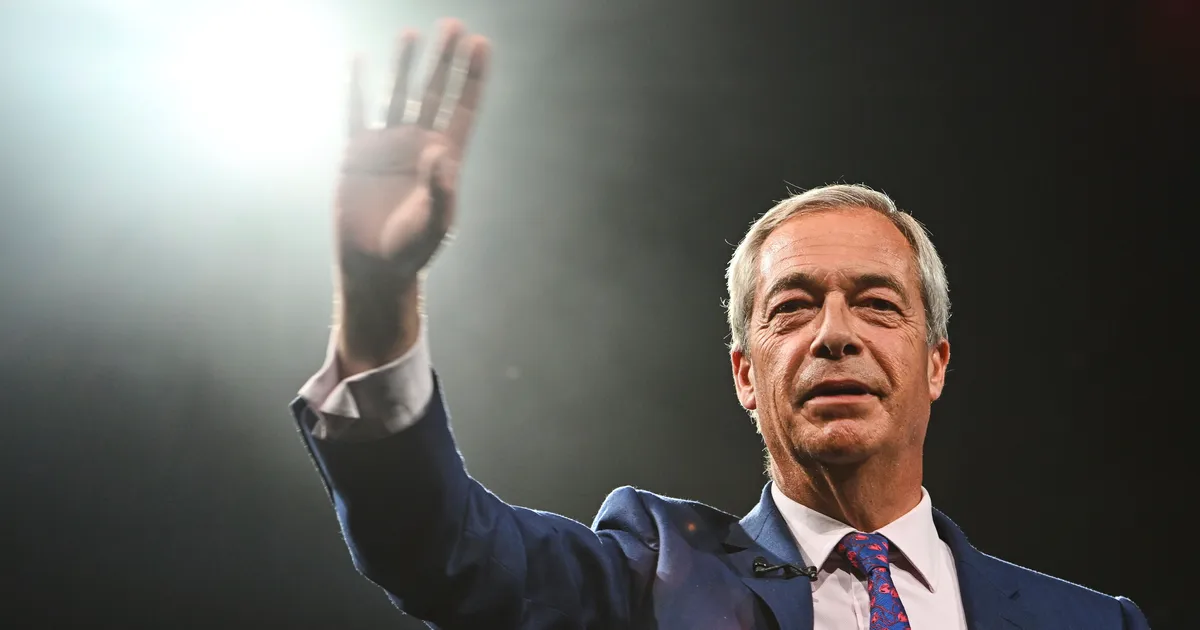
BBC Question Time has defended the decision not to include Nigel Farage in this week’s episode after an attack from a Labour minister.
But when the Clacton MP did not appear on the guest panel, Home Office minister Mike Tapp wrote on X: “I seem to remember being on Question Time, a few months ago, in Dover…my constituency.
“You were too scared to even put a Reform MP up for tonight it seems. Weak.”
As the minister’s post began to go viral, BBC Question Time used its official social media account to hit back.
It wrote: “There is a longstanding policy on Question Time not to invite MPs on in their local constituencies unless it’s for a single-issue special programme.
“This is why Mike Tapp MP appeared on the panel in his constituency for the immigration special in Dover.”
Tapp’s post came in response to an explanation from Farage on social media, as he claimed that he had not been permitted to be part of the show.
The Reform MP wrote: “I wasn’t able to take part in #BBCQT from Clacton tonight, as we were told MPs are not allowed to appear on the show in their own constituencies. I’m sure I’ll be back on before too long!”
This week’s panel did include a guest who supports Reform UK – TV personality, Tom Skinner.
Question Time has previously been criticised for often platforming Zia Yusuf, who is not an elected politician but does work as Reform’s spokesperson for Home Affairs.
Farage has also been accused of rarely visiting his Essex constituency since winning the seat in July 2024.
TaylorMade’s Flamingo golf balls will put you in a summer state of mind

Water-Cooled MacBook Neo Equals Double the Frames from a Fanless Budget Laptop

How Python forms the foundation for advanced Computer Vision use cases


-
 Crypto World7 days ago
NIO (NIO) Stock Plunges 6.5% as Shelf Registration Sparks Dilution Worries
-
 NewsBeat2 days ago
Manchester United reach agreement with Casemiro over contract clause amid transfer speculation
-

 Fashion7 days ago
Weekend Open Thread: Adidas – Corporette.com
-

 Politics7 days ago
Jenni Murray, Long-Serving Woman’s Hour Presenter, Dies Aged 75
-

 Crypto World6 days ago
Best Crypto to Buy Now: Strategy Just Spent $1.57 Billion on Bitcoin During Fear While Early Investors Quietly Enter Pepeto for 150x Potential
-

 Crypto World6 days ago
Bitcoin Price News: Bhutan Sells $72 Million in BTC Under Fiscal Pressure, but the Smart Money Entering Pepeto Sees What the Market Does Not
-

 News Videos2 days ago
Parliament publishes latest register of MPs’ financial interests
-

 Sports4 days ago
Remo Stars and Kano Pillars Strengthen Survival Hopes in NPFL
-

 Sports4 days ago
Gary Kirsten Accuses Pakistan Cricket Board Of ‘Interference’, Mohsin Naqvi Responds
-

 Business5 days ago
No Winner in March 21 Drawing as Prize Rolls to $133 Million for Next
-

 Tech5 days ago
Give Your Phone a Huge (and Free) Upgrade by Switching to Another Keyboard
-

 Sports7 days ago
2026 Kentucky Derby horses, odds, futures, preview, date: Expert who nailed 12 Derby-Oaks Doubles enters picks
-

 Tech5 days ago
AI enters the chat: New Seattle dating app relies on tech to facilitate meaningful human connections
-

 News Videos4 days ago
Ch 9 Financial Management Part 1 | Detailed One Shot | Class 12 Business Studies Boards 2026
-
Business7 days ago
Columbia Sportswear enters $500 million credit agreement with JPMorgan Chase
-

 Tech6 days ago
Today’s NYT Connections Hints, Answers for March 22 #1015
-

 Business20 hours ago
Instagram, YouTube Found Responsible for Teen’s Mental Health Struggle in Historic Ruling
-
 Crypto World7 days ago
Small-cap Russell 2000 enters correction territory
-

 Business5 days ago
Will Duke Basketball Win It All? Duke Basketball Enters Second Round as Third Favorite to Claim NCAA Title
-

 Sports4 days ago
2026 Kentucky Derby horses, odds, futures, preview, date: Expert who hit 12 Derby-Oaks Doubles enters picks
You must be logged in to post a comment Login