

Politics
Closing the border to police immigration is a futile and unnecessary demand -a deviation from explaining why race riots are passively tolerated


Predictably enough, the Westminster right wing and the DUP did have to turn it into a row about the border. It was quickly revealed that the Somali (whoops correction) the Sudanese suspect entered NI illegally from the south and was granted leave to remain three years ago. Cue firestorm over immigration policy and in particular -wouldn’t you know it? – the open border and how to police it .
The UK has returned only one asylum seeker to Ireland since a post-Brexit deal was signed in 2020 and the government is now preparing to crack down on the border route being used as a “back door” for illegal immigration after the Belfast attack.
Home Office insiders said the common travel area (CTA) with Ireland was “a massive Achilles’ heel” as concerns rose over illegal migrants taking advantage of the lack of routine immigration checks to enter the UK.
There are 2,370 asylum seekers in supported accommodation in Northern Ireland, 2.5 per cent of all asylum seekers across the UK.
Jonathan Hall, the independent reviewer of terrorism legislation, said the human rights of asylum seekers were often being prioritised over national security.
The UK Home Office revealed overnight that in the past year it had apprehended more than 900 “immigration offenders” abusing the open land border.
The Dublin government had a prompt reply
Data from the Department of Foreign Affairs and Trade (DFAT) in Dublin, however, showed 18,500 people had sought asylum in 2024, of which 90% were thought to have travelled from Great Britain to Ireland via a flight or ferry to Belfast.
Before 2019, the number of people seeking asylum in Ireland was relatively small, about 5,000, commensurate with the experience of a small country on the farthest outreaches of Europe.
That number grew significantly between 2022 and 2024, when it peaked at 18,500. Just 10% of people applied for asylum at an airport or port, while 90% made a first-time application in person at the International Protection Office in Dublin. This figure includes some who may have entered the country legally and days, weeks or months later sought asylum.
In 2025 and 2026 to date, the proportion of asylum seekers applying at the office in person were 88% and 90% respectively.
Without physical checks on the Irish border, neither the UK nor Irish governments can verify the precise numbers of people crossing the border illegally, but in 2024 Ireland’s then justice minister, Helen McEntee, said publicly that 80% were coming over the land border.
Where does that leave us? In NI there are 65,000 “ people of colour”. 124,000 mainly white born outside the UK, mainly from the EU. Irish travellers 2610, Roma 1259.
In the Republic 23.5% foreign born including UK, Asian 3.3%, Black Irish 1.5%. The Republic’s population has expanded dramatically in line with growing prosperity from 2.8 mn in 1961, to 5.4 mn last year, and projected to rise to 6.7 mn by 2060.
All manageable, surely – although the new EU-Irish immigration rules llook very complicated and slow
This population rise in the Republic since the WW2 has not yet kept pace with the rise in Northern Ireland’s population which began with the introduction of the Welfare State in 1948, as my namesake Prof Brian Mercer Walker points out slightly mischieviously in the Irish Times today.
David Mc Williams described graphically the mass emigration which afflicted the new Irish state in its first 50 years (“Britain was a saviour for Irish migrants. One of those sons will captain England next week,” June 6th). By 1961, an estimated 45 per cent of all those born in Ireland between 1926 and 1936 had left.
It is interesting to note that Northern Ireland in the same period did not face this problem. The government of Northern Ireland can be rightly criticised for not creating an inclusive society or ensuring full civil rights for all.
At the same time, this government pursued policies which brought benefits for every citizen, unionist and nationalist. In their social policies, unionist ministers, especially John M Andrews, insisted with the London treasury that as part of the UK its people were entitled to parity in social services and equal standards with elsewhere in the UK.
Following the Butler Act in Britain, the Education Act (Northern Ireland) 1947, gave free secondary education for all, which was not available in the South until the 1960s. The National Health Service, established in 1949, benefited everyone….
The failings of Northern Ireland in its first 50 years are well known. Its benefits and successes, due to these effective government policies, deserve attention.
Today, the situation is very different. With new Irish government social and economic policies, the southern population has grown remarkably. Still, viewed over the last 100 years, the rate of population growth in the South has yet to catch up with the North.
One violent attack by an immigrant or anybody else is one too many. Close coordination between the two governments over policing and data sharing is plainly the right approach. The open border survived Brexit and will survive race riots. Despite the disaster of Brexit my ideal remains interchangeability of government arrangements and citizenship in these islands. On the present situation, this comment by James Nancy in the Bele Tel deserves an extended extract.
Violent crimes in Northern Ireland elicit responses so well rehearsed as to have become ritualised: clichéd language running deep and deadening grooves into our collective consciousness.
Every time a woman is murdered in her home — almost always by a white Northern Irish man she knows well — we can set our watches by the expressions of concern that flow from political leaders who then seem to forget about institutionalised misogyny within days.
And so too have racist riots become an annual occurrence in the North, a predictable consequence any time someone of a minority background is accused of a serious crime.
Last year, there were the nights of rioting in Ballymena, which were themselves a sort of horrific reprise of the year before, when minority citizens of Belfast were burned out of their homes and businesses by mobs.
Because of this history, there was a sickening sense of inevitability building through Tuesday as people waited for the calls to go out on social media for protests, for the injunction by politicians to behave “responsibly”, and for the very real safety fears of minority communities to get only a passing mention in a tokenistic, rhetorical gesture towards the notions of basic decency and human empathy.
The political rhetoric surrounding these incidents has become utterly bizarre and full of a confused grammar than betrays both personal and moral cowardice…..
There are reports of “fires targeting homes”, with the sentence structure making it seem as if flames are a sentient body capable of attacking families in their residences. (Perhaps the PPS can launch a case against the tendency of carbon-based substances to burn, or charge the chemical process of change with attempted murder?)
There has too been another round of “legitimate concerns” about immigration raised, which are based on views so comically untrue that no satire of Facebook bigotry could best them.
How many rounds of arson and violence do the minority citizens of Belfast have to live through before the leaders of political unionism learn some reasonable hesitancy and become more concerned with safety than with the prospect of offending far-right activists on social media?
… The key issue is that racist mobs keep trying to murder minorities in our city. The problem is that pogroms have become functionally permitted by our political culture, treated as a seemingly tolerable annual tradition or seasonal occurrence: a sort of perverted Morris dance that leaders are ready to jig along to if it means they can keep making false statements about immigration.
There is much to be done to tackle racism and intercommunal tension in Belfast, but the first and easiest course of action is a change in our leaders’ rhetoric about minorities.
The cost of creating a safer and more tolerant city is no higher than politicians learning to speak responsibly and for them to start treating the safety of minorities with the same care they currently take to avoid offending internet racists.

Former BBC journalist and manager in Belfast, Manchester and London, Editor Spolight; Political Editor BBC NI; Current Affairs Commissioning editor BBC Radio 4; Editor Political and Parliamentary Programmes, BBC Westminster; former London Editor Belfast Telegraph. Hon Senior Research Fellow, The Constitution Unit, Univ Coll. London
Discover more from Slugger O’Toole
Subscribe to get the latest posts sent to your email.


Defence secretary John Healey has resigned following a bust-up with Keir Starmer and Rachel Reeves over spending on Britain’s armed forces.
In a blistering letter to the prime minister, he said he had been left with “no other option” after disagreement over the government’s long-delayed Defence Investment Plan (DIP).
As well as Starmer, he also accused the chancellor of blocking his pleas for more money for the Ministry of Defence.
He revealed that No.10 and the Treasury wanted to increase defence spending from 2.6% of gross domestic product (GDP) next year to just 2.68% in 2030 – well short of the 3% Healey wanted.
It is understood that worked out at an extra £13.5 billion – less than half of the £28bn Healey had been asking for.
Healey said: “This new era for defence required further investment through the Defence Investment Plan.
“The excellent and extensive cross-government work that completed in January – overseen by you, me and the chancellor – confirmed the scale of the challenge and the rising demands on defence.
“Since then, you have been unable, and the Treasury has been unwilling, to commit the resources that the nation needs to defend the country at this time of rising threats.”
He said that “demands on defence have increased still further”, pointing to the Iran war, threats from Russia and escalation in the Ukraine conflict.
Healey said his resignation letter was one “I never expected to write, and I do so now with great regret and reluctance”.
He said the proposed DIP, which he was shown on Monday afternoon, “falls well sort of what is required for defence and the country at this dangerous time”.
“You know what defence needs,” Healey said. “You made the argument for this powerfully in your speech at the Munich Security Conference back in February.
“Without a DIP that meets the moment in this way, I am being forced to make decisions that would reduce the readiness of our Forces and increase the risk to personnel on operations, and could make the country less safe.
“After explaining to you that I would not be able to accept a DIP settlement that does not give our Forces the resources they need, I am now left with no other option than to submit my resignation as your defence secretary.”
A government source rejected Healey’s claims and insisted the UK is “safer because of the decisions Keir Starmer has made and we will continue to act in our national interest”.
“The Defence Investment Plan will deliver the capability our armed forces need,” the source said. “We will always do what is right, and needed, to keep the country safe.”
A Treasury source said: “The chancellor will always do what is right and needed to keep this country safe, you can see that from her actions – a record uplift in defence spending at the spending review, and then working alongside the PM to deliver billions more to fund the Defence Investment Plan in full.”
Tory leader Kemi Badenoch said his resignation showed Starmer’s “premiership is falling apart”.
She said: “His health secretary resigned two weeks ago. His defence secretary has resigned at a critical time when we are facing global threats, and he is doing so because the prime minister is trying to please his backbenchers by putting money into welfare instead of defence.
“We need to start funding defence. We need to get to 3% of GDP by the end of this parliament.
“Keir Starmer has no plan whatsoever. I don’t see how he can stay in this job. He can’t run the country. He is paralysed because his backbenchers only want to spend money on welfare.”
Lib Dem leader Ed Davey said it was “a wake up call” for Starmer and Andy Burnham, who is favourite to be the next PM if he wins next week’s Makerfield by-election.
Stop repeating the mistakes of the Conservatives and get serious about funding our armed forces properly,” he said.
“We cannot afford years more political chaos while our national security is put at risk.”
Green Party leader Zack Polanksi said: “This is a government in chaos, unable to govern, with no leadership, under a caretaker Prime Minister who’s expected to be replaced within weeks.”
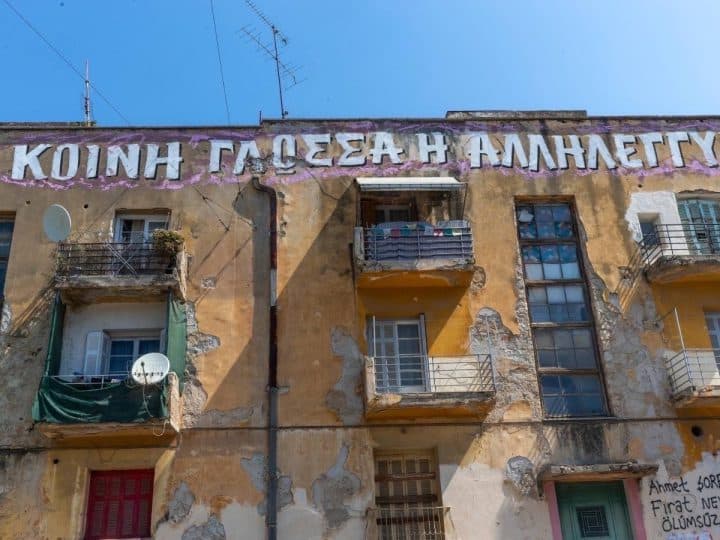
Aristotelis Chantzis has entered the 130th day of a hunger strike in defence of the Community of Squatted Prosfygika in central Athens, as concerns continue to grow over plans to evict residents and redevelop the historic neighbourhood.
The second hunger striker, Suzon Doppagne, who joined the protest in solidarity on 1 May, is approaching 50 days of her hunger strike. More members of the community, some of them with serious health problems, have also announced plans to join the hunger strike.
The protest comes in response to a redevelopment plan approved by the regional government of Attica in June 2025 that would lead to the eviction of the approximately 400 residents of the Prosfygika neighbourhood. Residents include families with children, refugees, older people, oncology patients and their relatives, and people participating in rehabilitation programs.
The word “prosfygika” means “refugee settlement” and the community lives in a set of apartment blocks dating from the 1930s, when they provided housing for refugees from Asia Minor.
Supporters of the Community say they’ve seen no concrete rehousing guarantees. The case has increasingly drawn international attention from human rights organisations, legal experts, academics, and housing advocates.
Prosfygika delegation seeks international support
Recently, a delegation of the community went to Brussels, where they had meetings with over 20 members of the European Parliament. In a press conference on 4 June, Nikos Kolokotronis, a lawyer and member of the Committee for the Promotion and Defence of the Community and its Collective Memory, said that all MEPs committed to supporting the community and its struggle for justice.
This includes the submission of questions to the European Parliament, a joint announcement of their support for the Community and the prioritisation of this struggle, due to the urgency of the Hunger Strike.
They will emphasize that the EU-funded contract to evict the community relies on severe irregularities, such as a violation of the partnership principles.
On 27 April, Amnesty International called for the suspension of forced eviction plans and raised concerns regarding possible violations of fundamental and constitutionally protected human rights. Amnesty urged authorities to review the demands raised by the hunger strikers and residents in line with international human rights standards.
Additionally an official complaint has also been submitted to the UN Special Rapporteur on the right to adequate housing, who has reportedly taken up the case following concerns regarding potential human rights implications connected to the planned eviction process.
The Community of Squatted Prosfygika calls for participation in a demonstration in Syntagma Square, Athens at 12pm on 14 June and for national and international actions in solidarity with the struggle. In its statement the community declares:
We declare once again that this fight will continue to the end. From the first moment, we knew it was a struggle for life or death, dignity or submission, resistance or destruction.
The collective decision of the Community of Squatted Prosfygika and our two comrades who have decided to go beyond their limits, to fight until the end, with an understanding of the cost and unwavering faith in our victory.
Featured image via Save Prosfygika
By The Canary
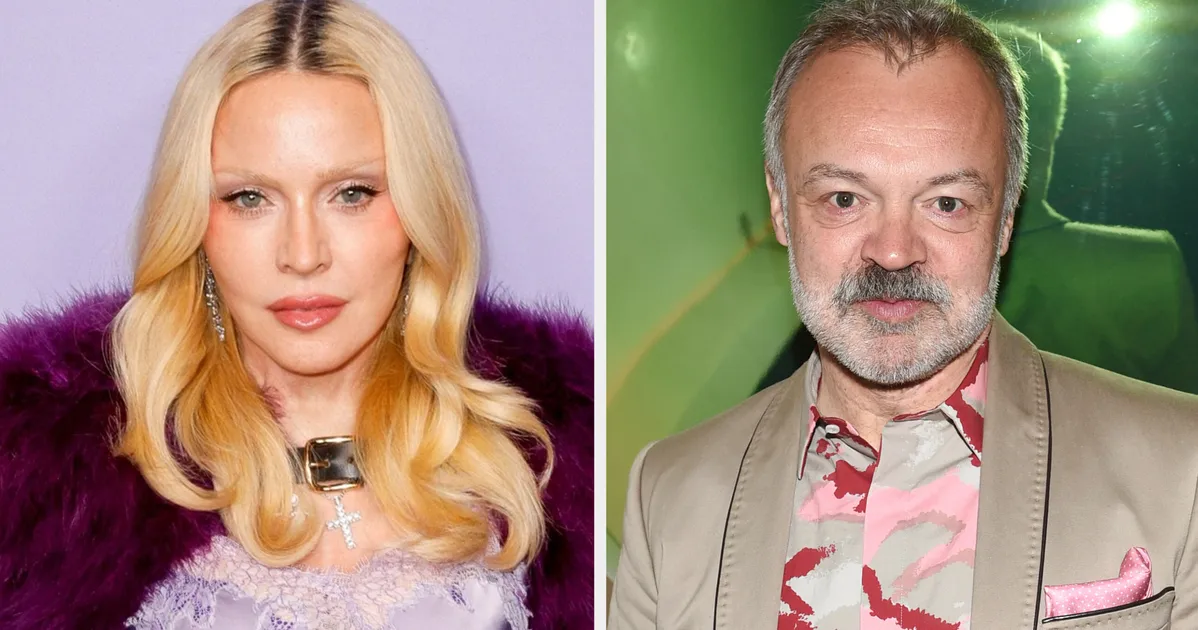
Graham Norton is devoting a whole episode of his talk show just to Madonna as she gears up for the release of her new album.
On Wednesday, several outlets spotted a special sit-down with the talk show host titled simply Madonna & Graham in the BBC’s scheduling listings.
The special is due to air on Friday 26 June at 10.40pm, just one week before the Queen of Pop unveils her long-awaited 15th album, Confessions II, and is billed as an “in-depth discussion” about Madonna’s “incredible life and career”.
HuffPost UK has contacted the BBC for comment.
Graham has interviewed Madonna on his talk show on several occasions in the past, including on the promo trails for her film W.E. and her most recent album, Madame X.
Asked about his past interviews with Madonna in 2024, the Bafta winner recalled: “She’s done [my show]. And then, I think, she fell out with me, and then the next one she did was Jonathan [Ross, in 2015]. And then she came back to me [in 2019].”
“I like Madonna, but she doesn’t make it easy,” he then admitted. “I always thought that I might become her friend.
“[When I see] her Instagram posts, I like to look behind her at the house, and say, ‘I wonder which house she’s in? Is she in London?’. Sometimes I cycle past it and think, ‘I wonder if she’s in there now?’. But rest assured, I’m not her friend, so don’t be too jealous.”
Back in 2015, Graham was a surprise guest when Madonna brought her Rebel Heart tour to London’s O2 Arena.
Madonna’s Confessions II will be released on Friday 3 July.
The release was preceded by album cuts I Feel So Free and Love Sensation, as well as lead single Bring Your Love, featuring fellow chart-topper Sabrina Carpenter.
Earlier this week, she also unveiled a new short film to promote the album, featuring a host of impressive celebrity cameos.
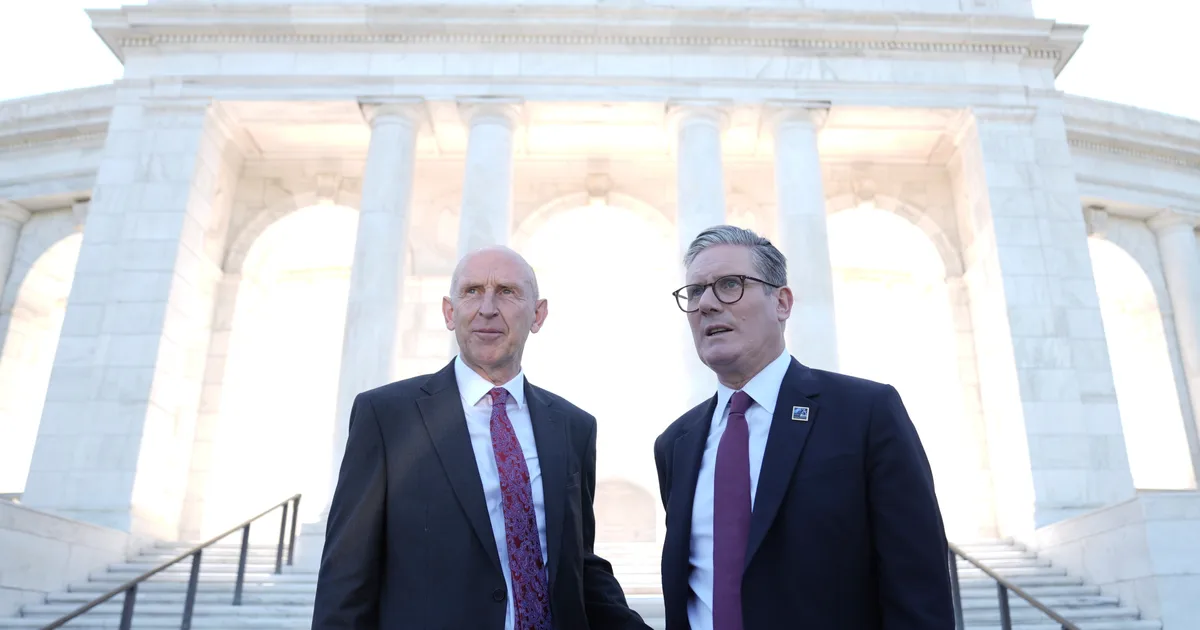
If there were any lingering doubts that Keir Starmer is in the final throes of his time in No.10, they were extinguished this morning.
John Healey’s devastating resignation as defence secretary, and his central charge that Starmer is failing to keep the country safe, means the end is near for the prime minister.
With opinion polls showing that Andy Burnham is on course to be elected the MP for Makerfield in a week’s time, there is a not-inconsiderable chance that it could all be over before MPs leave Westminster for the summer recess.
Starmer has let it be known that he intends to fight any attempt to unseat him. Healey’s resignation means there is now no chance of that.
There have been far too many ministerial resignations in British politics over the past decade, but none have been as catastrophic for a sitting PM than Healey’s.
Healey, one of the most respected figures at Westminster, calmly and methodically set out how both the prime minister and chancellor Rachel Reeves were failing to come up with the money Britain’s armed forces needs at a time of growing global unrest.
The final straw for the now-former defence secretary came on Monday afternoon, when he was shown the full Defence Investment Plan (DIP), a document which has been delayed for months because of wrangling between No.10, the Ministry of Defence and the Treasury.
It set out how defence spending would increase from 2.6% of gross domestic product (GDP) next year to just 2.68% in 2030 – well short of the 3% Healey said was the minimum requirement.
If he accepted that settlement, Healey said, it would see him “being forced to make decisions that would reduce the readiness of our Forces and increase the risk to personnel on operations, and could make the country less safe”.
Nor did his resignation letter spare Reeves from criticism.
“The excellent and extensive cross-government work that completed in January – overseen by you, me and the chancellor – confirmed the scale of the challenge and the rising demands on defence,” he wrote.
“Since then, you have been unable, and the Treasury has been unwilling, to commit the resources that the nation needs to defend the country at this time of rising threats.”
Starmer, like every prime minister before him, has regularly trotted out the line that keeping the country safe is his number one duty.
It is simply impossible for him to repeat that claim when it has been so comprehensively debunked by his own defence secretary.
There are many reasons why Starmer is clearly not cut out for the job of prime minister.
But his failure, with a massive Commons majority behind him, to make and win the case for a huge increase in defence spending is surely the most damning.
It remains to be seen whether Burnham, or whoever else comes next, is able to meet the moment.
Subscribe to Commons People, the podcast that makes politics easy. Every week, Kevin Schofield and Kate Nicholson unpack the week’s biggest stories to keep you informed. Join us for straightforward analysis of what’s going on at Westminster.
Politics
ICJP issues Serious Crime Prevention Order letter to Met over Great Israeli Real Estate event

The International Centre of Justice for Palestinians (ICJP), in collaboration with the European Legal Support Center (ELSC) and Public Interest Law Centre (PILC), has written to the Metropolitan police asking them to assess the legal issues in relation to a London edition of the Great Israeli Real Estate event under the Serious Crime Act and if appropriate apply for a Serious Crime Prevention Order on 14 June.
ICJP previously issued a letter to the Met calling for an immediate investigation into the legality of the event and those associated with the event under UK domestic law, providing the Met with an overview of the event’s illegality.
The Great Israeli Real Estate event is one of a number of events aimed at marketing and facilitating the purchase of property in both illegal Israeli settlements located in the Occupied Palestinian Territories and cities within Israel.
According to promotional material, the event will feature consultants offering advice on property acquisitions, advertising properties as “your dream home” and providing support for:
important life planning needs in Israel, including burial services.
The Serious Crime Prevention Order letter serves as an urgent escalation in light of the imminence of the event and ICJP has stressed the time-sensitive nature of the situation.
This is yet another attempt to ensure the police uphold their obligations to investigate events of this nature without bias and take available legal measures accordingly.
Israeli property event demands urgent attention
The matters raised in the letter require immediate consideration of investigative steps, preservation of evidence, and assessment of whether preventative or enforcement action may be appropriate within the jurisdiction of England and Wales.
ICJP has raised grounds for concern of the event’s potential illegality under the Proceeds of Crime Act 2022 (ss. 327–329), the Fraud Act 2006 (s. 1), and the Serious Crime Act 2007.
As ICJP has previously noted, the UK government maintains that Israeli settlements in the Occupied Palestinian Territories are unlawful under international law.
The International Court of Justice’s July 2024 Advisory Opinion reinforced this position. It concluded that Israel’s continued presence in the territory is unlawful and that third states are under obligations not to recognise or assist in maintaining the resulting situation.
Órlaith Roe, ICJP’s public affairs and communications officer, said:
This order sets out further evidence of the serious concerns surrounding the illegality of this event, concerns we have already raised with the Metropolitan police.
Palestinian land is not for sale, and occupation is not a real estate opportunity.
This event seeks to profit from a settlement enterprise that the UK itself recognises as illegal under international law. We have provided the Met with the evidence. The responsibility now lies with the authorities to act and prevent this event from going ahead.
Featured image via Getty Images
By The Canary
Politics
Judge who served security services imposes draconian ‘terror’ sentences on Filton peace activists

Judge Jeremy Johnson has imposed draconian sentences on four ‘Filton 25’ anti-genocide activists. Johnson had earlier refused to recuse himself from the case over his connections to the security services, Johnson also announced that he would impose ‘terrorism connection’ sentences despite none of the four ever being charged with terror offences, let alone convicted.
Palestine Action had not been proscribed as a terrorist group at the time when these activists were arrested.
Johnson first protected himself against appeals and censure by claiming he was allowing mitigating factors. He then also claimed that “aggravating factors” included upsetting employees of the Elbit death factory — and the fact that the activists wore red jumpsuits and used the word “intifada”.
The sentences imposed are:
- Two thirds of custodial sentences to be served in prison, then remainder term on parole.
- The four will be subject to terrorist notification requirements for fifteen years after release. These include having to report relationships, register phones and obtain permission to travel.
- Forty-five days’ reduction for being on curfew, except for Samuel Corner.
- All to be disqualified from driving, on release, for one year plus two thirds of the custodial terms imposed.
Filton 25 — Sentence terms
The defendants were not ordered to pay compensation unless police and Israel weapons firm Elbit bring private prosecutions.
Charlotte (Lottie) Head: 6 years (4 years + 320 days custodial)
Eleona (Ellie) Kamio: 6 years (4 years + 320 days custodial)
Fatema Zainab Rajwani: 5 years 8 months (4 years + 200 days custodial)
Samuel Corner: 8 years and 8 days
Corner was also convicted of grievous bodily harm as well as criminal damage, after intervening to protect one of the female actionists. All four have already been in prison for almost two years.
The UK justice system is subordinated to the interests of Israel and its enablers.
Featured image via FiltonActionists
By Skwawkbox
Life is full of so many little mysteries, like what those little buttons on suit jacket sleeves are really for and why there’s sometimes a little “v” under your sweater’s collar.
And after reading a recent post shared to Reddit’s r/london, I realised I’d been carrying one such puzzle in my pocket for years.
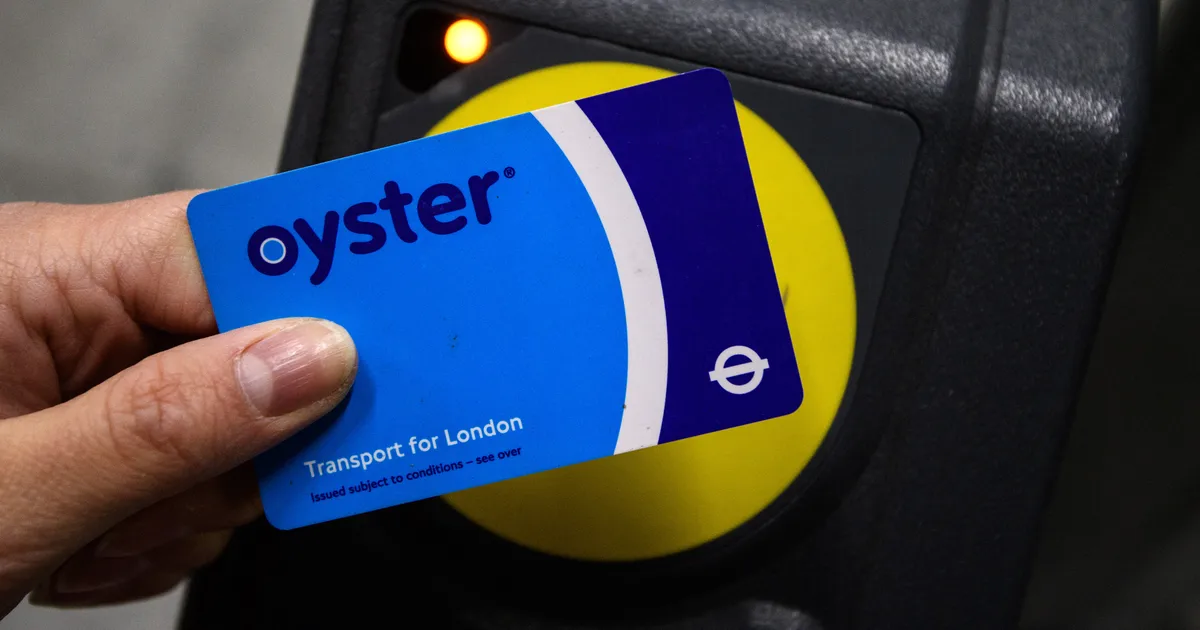
“When I first came to the UK to study, I was always very curious about why the UK’s subway card has the nickname ‘Oyster Card,’” u/Deep-Ad-3363 wrote.
Here’s the history behind the marine-themed name:
Why are they called “Oyster cards”?
Per TfL, the commuter staple could have been named “Pulse” or “Gem” cards. But of the three shortlisted options, “Oyster” won out.
Launched in 2003, the card was created with TranSys, which contracted Saatchi and Saatchi Design to help work on the branding.
Saatchi, in turn, worked with Andrew McCrum, then of Blue Sky Enterprise at the time and now of Appella name consultants.
An archived page on Appella’s site reads: “OYSTER was conceived, mainly, because of the metaphorical implications of security and value in the hard bivalve shell and the concealed pearl.
“Its associations with London through Thames estuary oyster beds and the major relevance of the popular idiom ‘the world is your oyster’ were also significant factors in its selection.”
The company added that the unique sound of the word, and its “sophistication” – as well as the marine theme of Hong Kong’s Octopus card – were added bonuses.
And the name made the design easier and more playful, too.
People were pretty surprised by the connection
“Assumed it was because they came in a clamshell-like wallet,” u/Mattdabes replied to the original Reddit post.
“I’ll never forget our first time in London aged 18 and my friend asked for ‘a mussel card’ by mistake,” u/kaiaemeli added.
And u/Annual-Load3869 wrote, “I always assumed it was ‘world’s your oyster’ but that’s pretty interesting”.
Politics
Infantino sees with one eye: he called for a French journalist’s release but ignored Palestinian journalists denied the 2026 World Cup
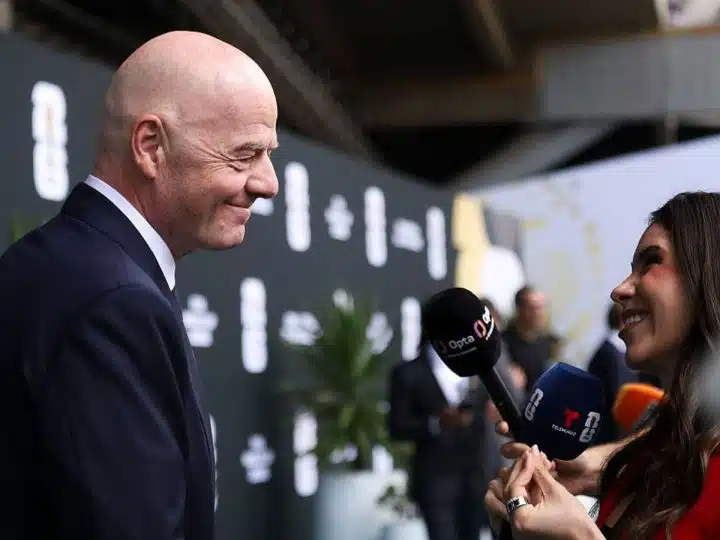
When Gianni Infantino reserved an empty seat for French journalist Christophe Gleizes and called for his release so he could attend the 2026 World Cup, the FIFA president wanted to send a message of solidarity with a reporter who had been prevented from covering the world’s biggest football tournament.
But there are many more empty seats that FIFA’s president has chosen not to acknowledge.
There are Palestinian journalists who covered previous international tournaments, some of whom attended the 2022 World Cup in Qatar, but who will never make it to the 2026 tournament. Not because they are behind bars, but because they were killed during the war. There are also dozens of journalists in Gaza who have been deprived of the opportunity to cover the World Cup because of the realities imposed by war, siege, and border closures — circumstances that have found no place in Infantino’s speeches or press conferences.
Infantino defends French journalist
If Infantino believes that preventing a single journalist from attending the World Cup is an issue worthy of international attention, then surely the plight of journalists who have been prevented from practising their profession altogether — or who lost their lives while carrying a camera or a notebook — deserves at least the same concern.
This is not about ranking one journalist’s suffering above another’s. It is about consistency.
Over recent months, Infantino has repeatedly argued that FIFA cannot intervene in sovereign decisions made by states. He has said that visa restrictions and the exclusion of journalists, officials, and athletes from entering the United States fall outside FIFA’s remit and are matters for American authorities.
If that principle is valid in those cases, then it should apply consistently across all cases. It cannot be invoked when convenient and discarded when it is not.
He could have stood for principles
The FIFA president could have spoken up for the French journalist while also acknowledging the dozens of Palestinian journalists who will never have the chance to reach a World Cup stadium — or even return to their work. He could also have spoken out for the Somali referee who was denied entry to the United States to participate in the tournament, as well as journalists and sporting delegations who have encountered visa obstacles despite receiving official accreditation.
Instead, by highlighting one case while remaining silent on others that are arguably broader and more severe, FIFA leaves itself open to legitimate questions about double standards and the limits of the responsibility it chooses to exercise.
If football is, as Infantino often says, a force for bringing people together rather than dividing them, then fairness and solidarity should be applied universally. They should extend to every journalist denied the opportunity to cover the World Cup, regardless of their nationality or the circumstances that prevented them from being there.
Featured image via Angel Delgado/Getty Images
By Alaa Shamali
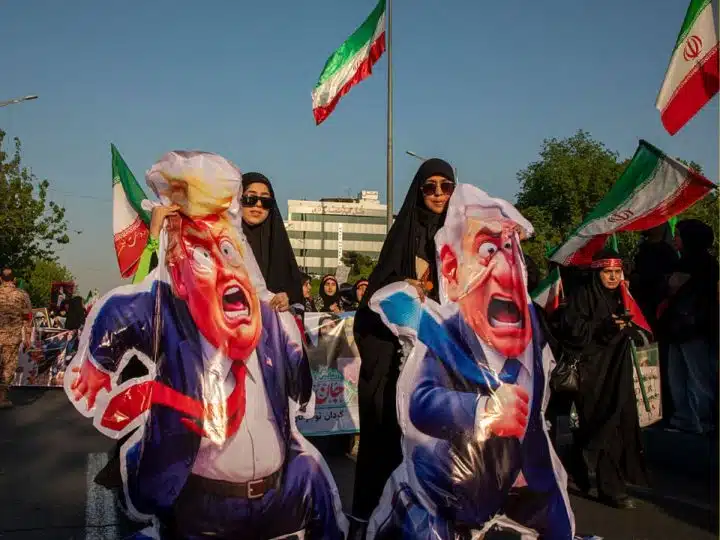
US president Donald Trump is erratic at the best of times. But his current tendency to threaten Iran with annihilation and then claim peace is at hand five minutes later comes from an awareness that he has lost the Iran war. In truth, we have known this is an American humiliation for a long time.
Iranian politics professor Hassan Ahmadian told Drop Site News on 12 June:
The United States has hit the hard rock of a formidable force that stopped its aggression and they have to deal with it.
President Trump realized that he cannot change the failure, the military failure of the war into a diplomatic win.
You can listen to the full interview below:
Drop Site is one of the few media outlets which has made a point of interviewing people within Iran, including state officials. Most of the legacy media have failed on this front, leaving the war poorly reported from the Iranian perspective.
Drop Site’s Jeremy Scahill wrote:
Throughout the U.S.-Israeli war with Iran, President Donald Trump has constantly flailed in his campaign to portray it as a historic success. The blunt reality is that what Trump announced as a quick and easy war of regime change rapidly transformed into a quagmire.
For the past two months, Trump has struggled to find a way to declare victory, alternating between claims that Iran is begging him for a deal and threats to destroy Iranian civilization.
The jig is up, Trump and America are humiliated
US-Israel attacked Iran first on 28 February without provocation. Iran was offering unprecedented concessions in negotiations at the time. The Pentagon has since stated there was no imminent threat from Iran. And the UN’s atomic watchdog, the IAEA, has said there is no evidence Iran was developing a nuclear weapon.
The US has achieved none of its original war aims. Iran predictably closed the Straits of Hormuz, a vital oil channel, once attacked — creating a global energy crisis. Iran has said the war will continue until “the enemy’s inevitable and permanent humiliation, disgrace, regret, and surrender”. Trump came to power on an anti-war ‘America First’ ticket. He now faces worldwide humiliation.
In fact, the jig has been up for a long time.
US journalist Spencer Ackerman was saying as long ago as 1 April that America and Trump have been humiliated. And that they need to be made to feel it.
Ackerman argued that the warmongers can’t be allowed to get away with their ridiculous assertion that the US, which has achieved none of its goals, has in any way won:
A narrative that the 2026 War was a success will hasten both that return [to warfare] and to the deeper catastrophes it will unlock.
He warned that we must tell the truth of the US defeat or:
We will be right back here if the architects, the profiteers, the propagandists and the forerunners of this war get away with their evasions once again.
Trump has bitten off more than he can chew, to put it in simple terms. His desperation to exit the war looks increasingly obvious. Hubris dictates that the US president needs to appear to have won in some sense. But that ship — unlike the estimated 1600 vessels stuck in the Persian Gulf — has sailed.
Featured image via Majid Saeedi/Getty Images
By Joe Glenton
Politics
Polanski question leads Khan to reveal he told police to investigate Great Israeli Real Estate event
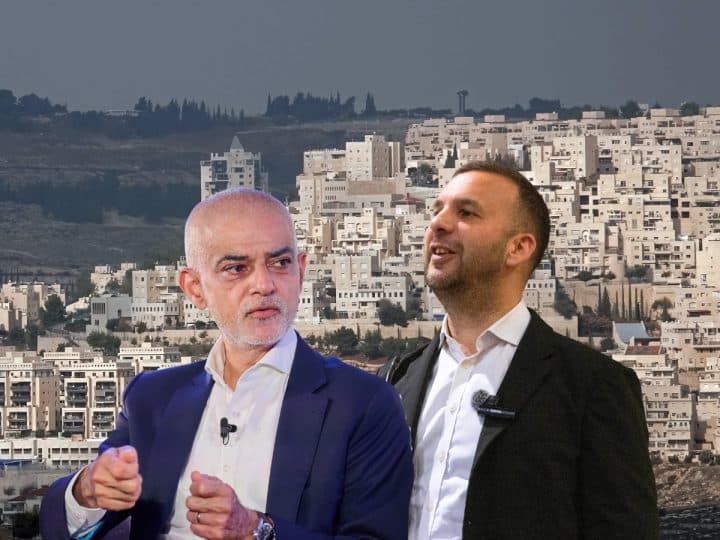
London mayor Sadiq Khan has condemned the Great Israeli Real Estate event, scheduled for Sunday 14 June in London. This came in response to a question from Green Party leader and London Assembly member Zack Polanski at Mayor’s Question Time.
The event promotes the sale of land in illegal settlements in the occupied West Bank. The Israeli property sector is trying to make inroads in the western market. Actress and questionable ‘wellness’ advocate Gwyneth Paltrow has recently sold her face to developers.
Polanski said:
It is morally incomprehensible and unconscionable that this event is scheduled to take place in our city and I welcome the mayor’s strong condemnation of Sunday’s event and its breaches of international law.
The key question now is what comes out of his talks with the Metropolitan police and the Home Office.
In practical terms, the Met should shut down the event on the grounds that it is unlawful. London risks becoming complicit in settlement expansion if people in our capital are profiting from the theft of Palestinian land.
The mayor should call on the government to cancel this event outright. There is real fear that London is being used as a platform for an event associated with the confiscation of land and the destruction of homes.
The cancellation of this event would demonstrate that London will not tolerate complicity in the dispossession and subjugation of the Palestinian people.
Featured image via Jordan Peck – Getty Images for SXSW London / Jon Rowley – Getty Images / Getty Images
By The Canary

Ethan Slater Shrugs Off Ariana Grande Split In First Outing

Northumberland mining to be commemorated at Woodhorn Museum

Bitcoin Peaks Near $64K Amid SpaceX IPO; Traders Watch Key Support


-
 Entertainment6 days ago
The Best Mystery Series of All Time Is Surging on Streaming 30 Years After It Ended
-

 NewsBeat5 days ago
Alexander Zverev wins the French Open to finally earn a 1st Grand Slam title
-

 Crypto World5 days ago
Anatomy of the June crypto crash: Fed, Iran, Saylor
-

 Crypto World1 day ago
Oppenheimer backs SpaceX as $70 billion retail frenzy builds
-

 Tech7 days ago
Suspicious Polyfill login prompts pop up on Toshiba, Muji websites
-

 Crypto World1 day ago
Markets Rally as SpaceX IPO Looms Amid Iran Tensions and Inflation Surge
-
 Crypto World6 days ago
Senator Cynthia Lummis Calls CLARITY Act the Most Consequential Financial Legislation of This Generation
-

 Tech5 days ago
Microsoft unveils seven homegrown AI models in new bid for ‘long term self-sufficiency’
-
 NewsBeat5 days ago
Alexander Zverev conquers demons and outlasts Flavio Cobolli to win French Open for first major title
-

 Tech7 days ago
Von der Leyen’s AI envoy pick draws conflict-of-interest fire
-

 Business5 days ago
High Stakes for Wembanyama as New York Pushes for 3-0 Lead
-

 Tech7 days ago
Hackers now exploit SolarWinds Serv-U flaw to crash servers
-
 Business6 days ago
The Pain Points Taking a Fragile Tech Rally Down a Notch
-
 Crypto World4 days ago
Eli Lilly (LLY) Stock Surges 4% Following Breakthrough Sleep Apnea Trial Results
-

 Tech5 days ago
Notion restores access to Anthropic after service disruption
-

 Crypto World5 days ago
Trump’s AI Ownership Plan Could Benefit Anthropic at OpenAI’s Expense
-
 Business6 days ago
The investment to transform historic St Helen’s ground in Swansea
-
 Sports3 days ago
Bangladesh beat Australia after 20 years in ODIs, register only their second win over six-time world champions | Cricket News
-

 Business6 days ago
Forensic Expert Floats Handyman Theory in Disappearance of Savannah Guthrie’s Mother
-

 Tech5 hours ago
This Week In Security: Microsoft On Microsoft, Register Your Domains, Linux On ARM, And FreeBSD Joins The File Cache Club
You must be logged in to post a comment Login