
Politics
DJ Marco Rubio Pumps Up The Jam As Iran War Marches On


Secretary of State Marco Rubio played make-believe behind DJ equipment on Saturday as he tried to hype up a wedding crowd while President Donald Trump signaled his apparent distaste for Iranian efforts to end his unpopular war.
Rubio, per a video posted by White House deputy chief of staff Dan Scavino, got behind the deck and held up headphones to his ear as the event’s DJ appeared to walk him through the process.
The clip shows the DJ clapping along to the song “Shiver” by John Summit & Hayla before he eventually shuffles offstage, leaving Rubio alone behind the tech as a group of men could be seen dancing to the music.
“Can you feel it now?” asked the song as Rubio, who seemingly didn’t touch the equipment whatsoever in the video, pumped his right hand in the air along to the beat.
“Let’s goooooo!!!🎶🎼🎵,” wrote Scavino alongside the clip.
Additional footage circulating social media shows Rubio clicking buttons on a laptop and mouthing along to the lyrics of “Feel So Close” by Calvin Harris as the track plays from nearby speakers, leading wedding guests to jump up and down in excitement, some with drinks in hand.
The videos arrive just hours after Rubio’s boss wrote on his Truth Social platform that he was reviewing Iran’s new proposal to bring the war to a close before noting he “can’t imagine that it would be acceptable.”
Rubio described Tehran’s negotiating team as “very good” and “very experienced” in an interview with Fox News’ Trey Yingst last week.
The president’s estimated $25 billion war — now over two months long — has cratered to historic disapproval levels similar to figures seen during the Iraq and Vietnam wars, noted The Washington Post of results from a new Post-ABC News-Ipsos poll.
With gas prices at an estimated national average of $4.44 a gallon, Diane Swonk, the chief economist at KPMG, predicted on ABC’s This Week that prices will go higher and could “easily break” records set back in 2022.
Social media users ripped the Rubio clip on X, with one critic particularly finding issue with Fox News’ presentation of the footage and another calling the video a “mind-bending sign of the times.”
Subscribe to Commons People, the podcast that makes politics easy. Every week, Kevin Schofield and Kate Nicholson unpack the week’s biggest stories to keep you informed. Join us for straightforward analysis of what’s going on at Westminster.

Politics
Stop Rewarding Drama: Why Being ‘Polite But Uninvested’ Is The New Way To Handle Toxic People

Therapist comment provided by BACP-certified therapists Matt Wotton and Clare Patterson.
You might already be familiar with “grey rocking,” or responding to a narcissistic or high-conflict person with a wall of boring, impersonal responses that provide a sort of armour.
But recently, I read about “yellow rocking,” a more polite version of the practice. Some say it can also help those handling inconsiderate and high-conflict people; others even recommend it in acrimonious custody cases.
So, we spoke to therapists Matt Wotton and Clare Patterson about the benefits of “yellow rocking” and how to use it.
What is “yellow rocking”?
It involves responding cordially, but not in an emotionally invested way, to someone who typically upsets you.
You can speak to them lightheartedly, without sharing any information you want to share or getting trapped in lines of thought or discussion you don’t want to.
The therapists said it’s about boundaries. Some techniques like CBT help people to “notice triggers, regulate their reactions, and respond deliberately rather than reactively”, like “yellow rocking,” said Wotton.
“The BIFF method used in divorce mediation – brief, informative, friendly and firm – follows the same principle. Keep responses short, factual and calm.”
Staying present and remembering you’re in control of the conversation is key.
Both experts agree that the method is grounded in existing techniques
“Yellow rocking basically repackages existing therapeutic ideas that have been around for decades – it’s broadly sensible stuff,” said Wotton.
“Both grey and yellow rocking are built on the idea that behaviour fades when it stops being rewarded.”
He added that while going no-contact is often the best solution, “yellow-rocking” can help in scenarios, like co-parenting, that make that impossible.
Patterson said, “I think when we feel confident and have good boundaries in ourselves, ‘yellow rocking’ comes naturally. It’s a place where the so-called ’narcissist’s behaviour simply cannot affect us in the same way it might if we experienced self-doubt or insecurity.
“By ‘not affect’, of course I don’t mean we won’t feel hurt, irritated or saddened by the behaviour at times. But when we no longer take it personally, we can respond with humour and lightness, rather than a place of defensiveness or an attempt to change or fix them.”
She ended, “Essentially, it’s about bringing power back to ourselves. It can be easy to want to fix the world ‘out there’ to feel safe and content, but perhaps in starting with feeling safe and content within ourselves, we may be surprised at what our external reality starts to reflect back.”
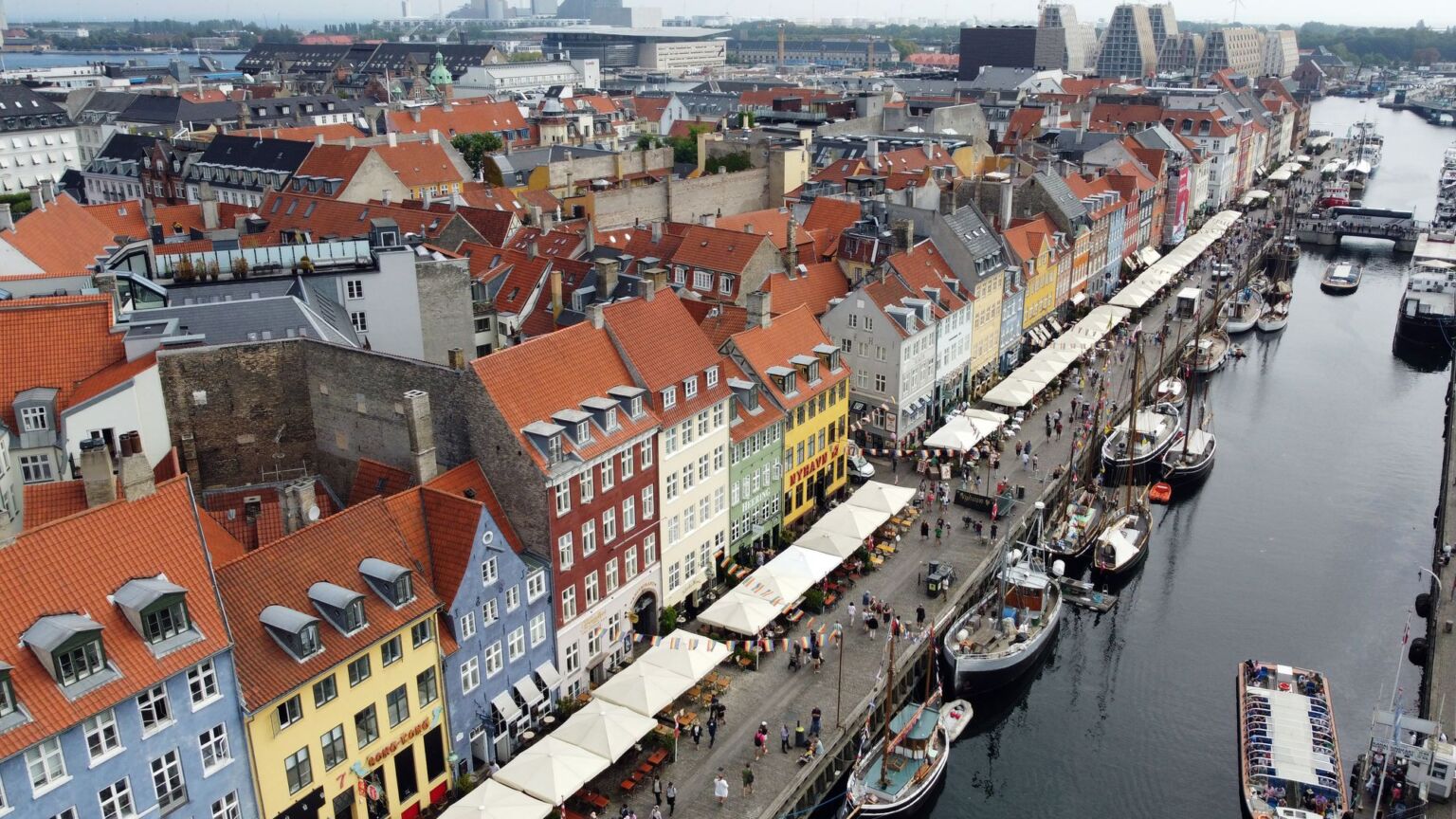
I spent a good while living in Denmark last year, and something struck me pretty much straight away. I would see it in cafés, in museums, in swing parks with my daughter, on the trains, even queuing at a supermarket checkout… everywhere. They carry themselves differently, the Danes. They seem to glide about, elf-like, tall and composed and utterly at ease with themselves. They speak plainly, and if they laugh, it is without checking themselves. They didn’t seem to be performing a version of who they thought they should be. They simply were, and it was beautiful to see.
Obviously, this is a generalisation. But it’s one that holds up. I spent ages looking for exceptions and didn’t find much at all to dissuade me from my thesis.
The contrast was sharp when we came back to the UK. Danes dress better, keep themselves trim and fit, and all seem to glow with good health. But there’s more to it than aesthetics. Here in the UK, we lack confidence. We suffer from a habit of apology that goes beyond politeness into something deeper – a cringing self-abasement. People hedge their statements. They second-guess their right to speak. Identity – whether national, cultural or even personal – is often handled as though it were something faintly embarrassing.
We have a cultural reflex towards self-abnegation. It’s not humility in the classical sense, which can be virtuous. Rather, it’s an ingrained reluctance to stand squarely as oneself. We are wary of appearing too certain, too rooted, too at ease in our own skin. And that wariness, repeated across millions of small interactions, becomes a national mood. We are collectively ashamed of ourselves.
There is a moral framework underpinning all of this. I like to speak of it in terms of original sin – a moral stain passed down irrespective of individual action. Today, our tendency towards taking on original sin persists in a different form, unwittingly peddled by (predominantly) atheistic, humanistic leftists. As a humanistic lefty type, I’ve often suffered with it myself.
Original sin, these days, appears in the language of white guilt, of masculine guilt, of colonial guilt, of middle-class embarrassment – categories of responsibility that are pretty much entirely inherited.
History is far from irrelevant and I’m not arguing that past injustices should be ignored. It’s just that the burden has shifted into the realm of identity. We are embarrassed to be ourselves because we are made to be ashamed of our culture. And now this shame, this guilt, has become a part of us. The result is a culture in which people feel obliged to justify themselves (or, worse, apologise for themselves) above and before anything else.
Denmark, by contrast, seems largely free of this kind of collective shame. It’s far from a flawless society, of course, and the Vikings weren’t exactly progressive. It has its own tensions and its own historical dark points. But there is a noticeable absence of this constant moral self-interrogation at the level of the individual. Self-abnegation as a form of penance is entirely lacking.
A couple of things rise out of this. Firstly (and no doubt fuelled by a relatively homogenous culture), there is a great sense of community in Denmark. There, you can belong to a culture without needing to apologise for it.
Secondly, you have the self-possession I fell in love with almost instantly. They do not anxiously scan their own words for hidden transgressions; nor do they cringe away from anything. They are rarely preoccupied with how they might be seen. As a result, they are happier (Copenhagen, where I was staying, was voted the happiest city in the world while I was out there), more stable, and more at ease in the world.
Material conditions matter, of course. Denmark has high taxation but good public provision; things are expensive, but people are well paid. They have a good work-life balance and a healthy approach to things like leisure activities, diet and exercise. However, the psychological atmosphere in which people live is also important.
In the UK, the whiter, more middle class, more male, more straight and cisgendered and all of that you are, the weightier the pressure of inherited moral debt. In progressive intellectual parlance, it’s sort of the inverse of intersectionality: the fewer things that make you appear disadvantaged, the more you must cringe and apologise for just existing. Public discourse is often paralysed by fear of saying the wrong thing. Identity fractures along lines of suspicion and defensiveness. Even once-ordinary and historically and geographically normal expressions of belonging – pride in place, in culture and shared history – are often fraught and frowned upon. We are always somehow compromised and must all live under a cloud of shame.
None of this is an argument for amnesia. History matters and moral seriousness certainly matters. If they didn’t, I wouldn’t have bothered writing this piece. But there is a difference between understanding the past and internalising it as a permanent condition of guilt. There is a difference between seeing distant forebears’ crimes and being punished for them yourself. The former can lead to wisdom, while the latter tends only to erode confidence and distort relationships between people.
Danes, in their unassuming, self-confident way, show that a society does not need to organise itself around inherited guilt in order to be decent, fair or humane. Self-possession is not arrogance. It isn’t denial or the elevation of oneself over ones’ neighbours. It is simply the necessary condition of being able to live among others, to do so standing as yourself – and for your group to do so standing as itself – without apology.
James Dixon is a Glasgow-based novelist, poet and playwright.

Labour’s deputy leader Lucy Powell has refused to say if she thinks Keir Starmer should continue as prime minister.
The party are expected to endure heavy losses in England’s local elections on Thursday after a gruelling two years in office.
Labour are also likely to lose control of the devolved Welsh government for the first time since devolution was introduced 30 years ago, and unlikely to beat the SNP in Scotland.
Pressure is mounting on Starmer to take the fall for the anticipated bloodbath, though the PM has insisted he will not be stepping down any time soon.
Even so, reports continue to suggest that his rivals – former deputy PM Angela Rayner, health secretary Wes Streeting and Greater Manchester mayor Andy Burnham – are preparing to challenge him for No.10.
Powell, who was sacked as the Commons leader by Starmer last year, refused to give the PM clear backing in an interview on Sunday.
While sending a message to unhappy Labour MPs that “no one change” would help the party get back on the right track, she said: “I strongly believe that we’ve got the right agenda to start turning that around. To give people hope, an opportunity and see the change in their communities.”
Asked if Starmer was the correct person to deliver on those promises, the MP for Manchester Central said: “I’m not going to get into that.
“I think there’s no one change that [will affect] all of these situations. We’ve still got to tackle these big issues, and we’ve got to do it in the right way with the right values. Having some side order conversation about personnel and people, I think misses the point.”
She said: “If we get that wrong, then Nigel Farage is walking into Downing Street. We can all pretend that one switch over here would magically transform that. I just don’t believe that.”
Powell also told the Guardian there is “huge anger and despondency” within the party over the scandal surrounding Peter Mandelson.
Starmer’s decision to appoint the ex-Labour peer as the UK’s ambassador to the US, despite his links to convicted paedophile Jeffrey Epstein, caused fury within the party.
Mandelson has since been sacked but new details – including questions about his failed vetting status – continue to haunt the PM.
Powell is known to be a close friend to Burnham, who tried to run for the Gorton and Denton by-election but was blocked by Labour’s executive body.
Subscribe to Commons People, the podcast that makes politics easy. Every week, Kevin Schofield and Kate Nicholson unpack the week’s biggest stories to keep you informed. Join us for straightforward analysis of what’s going on at Westminster.
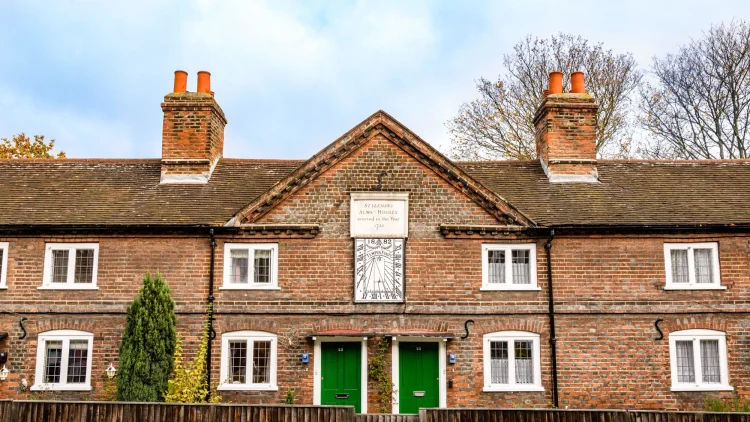

Stylemans Almshouses, Bexley, Kent (Mark Summerfield/Alamy)

4 min read
Charity housing adds so much to society – in many cases providing a life-changing environment for residents – yet charity housing remains heavily influenced by the whims of government. And not just by the decisions made in SW1 but also by those in different branches of local government across the country.
In the case of charity housing, it’s often local councils who are the powerbrokers for the sector, as they decide local budgets and funding priorities. This power is most significantly used through Selective Licensing, a regulatory tool impacting the private rented sector by requiring landlords to meet specific conditions and pay significant levies.
This legislation is vital as councils use these schemes to address issues such as poor living conditions, anti-social behaviour and housing inequality, which often disproportionately affect vulnerable populations.
As CEO of The Almshouse Association, the body representing 1,600 independent almshouse charities across the UK, I know that there is tension between the charity housing sector and government when it comes to this legislation.
Almshouses have been offering affordable housing to the community for over a thousand years but are often overlooked or misunderstood by local councils. Almshouses are often mistakenly classified as part of the private rented sector and included in the Selective Licensing programme – overlooking a crucial distinction: unlike private landlords, almshouse charities are already subject to robust oversight by the Charity Commission and supply a beneficial service to the community.
Almshouses operate under a clear set of Standards of Almshouse Management, which ensure that properties are properly maintained, responsibly managed, and used in line with the charity’s purpose.
In addition, our member charities already operate on extremely tight financial margins. The cost of additional charges, such as selective licensing, is not merely a minor administrative burden but a significant financial strain – amounting to tens of thousands of pounds, in some cases.
This is money that could otherwise be used to maintain or expand properties for those in most need, but is instead diverted into these regulatory costs.
But in certain areas, councils have chosen to waive licensing fees for charitable providers – acknowledging their social value and limited resources.
However more still needs to be done. The underlying legislation does not allow for a straightforward exemption, meaning that charity housing still faces these additional fees, even if – as in a few cases – the cost is absorbed by the council rather than the charity. This creates administrative complexity without addressing the root issue.
Therefore, it’s now paramount for local government across the country to exempt non-profit housing charities – recognising their distinct role and alleviating the unnecessary financial pressure. The number of such properties is relatively small, meaning the impact on licensing revenues would be minimal. At the same time, councils would retain the ability to intervene where necessary. Existing powers already allow local authorities to inspect properties and address substandard conditions, ensuring exemptions do not come at the expense of tenant safety.
I’ve heard arguments that any exemptions would risk creating blind spots, particularly for those local authorities facing a significant housing crisis. However this underestimates both the accountability mechanisms already in place and the practical realities of selective licensing.
Treating charitable housing providers as indistinguishable from private landlords is counterproductive
Designation areas are typically drawn based on broad geographic data, making it difficult to carve out exceptions at the level of individual properties. Moreover, councils themselves often lack comprehensive information about all housing providers within their boundaries, further complicating enforcement.
Treating charitable housing providers as indistinguishable from private landlords is counterproductive. Almshouse charities are part of the solution – not the problem that selective licensing is designed to solve. Burdening our members with disproportionate costs risks weakening a sector that plays a vital role in supporting vulnerable communities.
If policymakers are serious about improving housing outcomes, regulation must be targeted, proportionate, and informed by the realities on the ground. Charity housing deserves a framework that reflects its unique contribution and is one that supports local authorities and councils’ ability to serve those who need it most.
Nick Phillips is CEO of The Almshouse Association

“I’ve written a list,” my mother said as our session began in her therapist’s San Francisco office. “It’s called ‘the 40 most unforgivable things I’ve ever done to my daughters.’”
Fog flowed above the skylights as she fidgeted in her seat, twirling her blue chiffon scarf. I cringed. I hated the idea of therapy, but Mom loved it. She’d convinced me to go, even though I protested, telling her, “I don’t need any apologies.”
At 30, I was still frozen in fright as if I were 7 years old and hiding under my bed because I feared my next beating.
I sat opposite my mom while she smoothed her light powder pink matching skirt and jacket so no wrinkles would show, as if that would somehow help in ironing out our own.
My parents, who were Russian Jewish second cousins, met at a bar mitzvah and married at 19. Mom was 20 when I was born. She got addicted to speed trying to lose the baby weight and used barbiturates to sleep. When I was 7, my parents divorced. My father moved to Mexico while my mom, sister and I remained in New York City.
Mom had been seeing her psychoanalyst weekly for decades to process her pain of having been an abuser for the first 13 years of my life. Focused only on becoming a college professor and starting my own family, I’d spent those same decades pretending I wasn’t damaged in any way. Denial protected me and I had never seen a mental health specialist.
Twenty years after she got sober, she set up this time to formally ask for forgiveness. Until then, we’d often gotten together and had perfectly pleasant times by never talking about the past.
My lower back ached as I settled into the stiff beige leather chair, wishing I wasn’t there.

Courtesy of Leslie Mancillas
“Today’s session is for your mom,” the therapist, Terry, said. “She wants to tell you how sorry she is about the abuse that took place when you were young. She’s been plagued with guilt.”
I looked over at my 50-year-old mother, whose hazel green eyes I had inherited along with her petite frame and dimples. I also have the same thick wavy brown hair, and perhaps the propensity to fidget, since I couldn’t stop nervously twisting a strand as she spoke that day. In every other way, though, I felt nothing like her.
“The fact that your mom is about to apologise for specific acts of violence and neglect in no way excuses her past behaviour,” Terry said.
I sat motionless and muted, staring at Mom. I knew what she was going to say and I didn’t want to hear it.
“When Leslie was 5, I repeatedly closed her in the garbage room and told her I didn’t want her anymore,” Mom read aloud. “Each time she tried to come out, I slammed the door shut and told her she was being thrown away.”
I quivered as if she were still locking me in that rubbish room in our swanky Manhattan apartment building. I shrank back to being tiny and helpless.
Mom continued, “I know I can’t undo the past. I feel so much pain, I don’t want to die without saying how sorry I am for everything on my list.”
She read aloud from her categorised maltreatments, among them: strangling me, pulling my sisters and I around the apartment by our hair, hitting us at midnight when her speed kicked in, forcing us to clean at 2 a.m., telling us repeatedly she wished we were dead and had never had been born, regretting the drug dealers she brought home, and holding primal scream groups at the house where we had to hear adults yell obscenities several nights a week.
Mom made it only partially through her list before I could barely stand it. My mouth was ajar and my breathing jagged, as if gasping for air in a room that had been lit on fire.
Ribbons of red streaked across the skyline as the sun set. The session ended with an eerie silence. Still pulled by a primal force to please her, I finally spoke.
“Mom, I forgive you.”
I had not gotten over any of it —I’d just gotten good at saying I had. Mom’s description of each act she regretted reminded me of everything I tried to ignore. It was both re-traumatising and validating to hear her voice these truths in the presence of her analyst. Though I remembered it all, hearing her recount the details woke me up to my deep and unprocessed pain.
Mom’s face went pale and her limbs went limp. Perspiration surrounded her hairline as she tilted her head down and said softly, “I can’t believe how mercilessly I hurt my own babies.”

Courtesy of Leslie Mancillas
A late lunch at the Thai restaurant directly below her therapist’s office had always been the plan, but after the session I had no appetite. The scent of lemongrass and garlic wafted around the room, but did nothing to return me to my senses.
Mom must have known. Before I scanned the menu, she said, “I don’t know how you can sit near me after hearing all that. You must think I’m a monster. How can you even stand to look at me?”
I tried again to casually dismiss her anxiety.
“Oh, of course I can look at you and have lunch with you because I love you,” I said. “That was all so long ago. We can move on now.”
There were multicoloured Christmas lights and twinkling mini-Buddhas surrounding our booth, but I felt anything but festive. As a child who was abused, I always craved my mother’s love and professed my own for her often in hopes of getting more. Over the years that followed, I learned my behavior was typical for kids who went through what I did.
The menu blurred as I blinked back tears. I knew I was lying to myself and I wasn’t ready to move on. I still harboured unresolved resentment and anger toward my mom. Faking feelings was my jam, though, so I blurted out, “What great flavors!” after my first bite of pad Thai, even though I didn’t taste anything except bitterness.
Though I was upset, I realised that Mom’s bravery to say how sorry she was for each of her specific offences enabled me to understand that I would need to begin my own therapy at some point, but I wasn’t ready yet. My fierce focus on forgetting my past continued for years.
No one close to me could understand why I still had a relationship with my mom after the abuse ended.
Therapy, which I finally did begin 10 years after that session, and Buddhism helped to create loving emotional connections for us. We began practicing Buddhism when I was in the seventh grade. My mother had planned to kill herself, but instead tried an ancient meditation chant, Nam Myoho Renge Kyo, based on Mahayana Buddhist teachings. She dared me to try it with her for 100 days as one last attempt at happiness. I tried it, initially to prove her wrong, but as we chanted day after day, I felt hope and noticed mom becoming kinder.
Within that year, she stopped using drugs and hitting us. This motivated me to stay connected to her. The Sanskrit word myo means to revive. Through the visceral vibration of chanting with her daily, I started sensing maternal love from Mom. Her actions to transform our destiny started with our shared spiritual journey when I was a teenager, enabling me to enjoy time with her even though the trauma of the unspeakable things she did was still locked in my cells. Before I finished that school year, she began seeing her therapist.
I was 32 when I received her formal apology. It became a positive pivot in our relationship, but I still couldn’t entirely move forward. Eight years later, I became so sick, I ended up on the floor in a faetal position unable to walk my kids to school. I was diagnosed with severe, chronic, ulcerative colitis — an autoimmune disease.
A Reiki practitioner I started seeing at the time asked me, “Did you ever experience any trauma?” I laughed nervously and said, “My mom used to smack, hit, and yell at me most days for over a decade, but that was so long ago, that can’t be why I’m sick.”
She looked at me and said, “That’s exactly why you’re sick.”
That’s when I finally started therapy and began to understand why it had been so life-changing for my mom.

Courtesy of Leslie Mancillas
Our braided spiritual journey and her atonement initiated the reconciliation of our family, but I had a lot of work to do if I truly wanted to heal. While we never had a second therapeutic hour together, I continued the work Mom set in motion on my own.
My mother passed away from diabetes 10 years after I began processing my terrifying childhood. She was only 69.
I find comfort in having been able to experience joy with her during her lifetime, which is something I once never thought would be possible.
On her deathbed, she looked up at me and said, “How can you truly love me?”
Unlike the lie I’d told in the Thai restaurant years earlier, this time I meant it when I told her, “Mom, I do love you. You can let go and go to your next life. I will be OK.”
After her death, I found nine of her diaries while clearing out her office. She recounted the abusive years in each journal. I learned she was consumed by self-hatred for her entire life — that’s why she thought suicide was her only way out when I was in middle school.
I also found the original atonement list in one of her notebooks. It spanned 10 pages. I discovered that her therapist had encouraged her to create that formal session to make amends.
Reading her words line by line, I was overwhelmed not only by her regret for hurting me, but also by how she desperately wanted my happiness.
Mom halted generational trauma in its tracks by changing her behavior, which led to my ability to break the cycle. She continues to propel my healing even after her death. My daughters marvel at the transformation from one generation to another, and on more than one occasion, they have told me they’re proud of me for changing our family patterns.
I continue practicing the Buddhism my mother and I began when I was 13. I still go to therapy to process my painful past. But now, instead of only her wrath, I feel my mother’s courage to transform her life and repent. Remembering the words she said to me so long ago helps me heal as I continue to hear her apology in my head. I forgive her again and again. She showed me how darkness can turn into light. What greater love is there than that?
Leslie Mancillas is a writing professor in California working on her memoir about surviving childhood abuse, My Bipolar Mom Almost Killed Me: How A 100-Day Bet Saved Us. Follow her on Instagram @lesliemancillas.author. You can learn more about her at www.lesliemancillas.com.
This piece was previously published on HuffPost and is being shared again now as part of HuffPost Personal’s “Best Of” series.
Do you have a compelling personal story you’d like to see published on HuffPost? Find out what we’re looking for here and send us a pitch at pitch@huffpost.com.
Help and support:
- Mind, open Monday to Friday, 9am-6pm on 0300 123 3393.
- Samaritans offers a listening service which is open 24 hours a day, on 116 123 (UK and ROI – this number is FREE to call and will not appear on your phone bill).
- CALM (the Campaign Against Living Miserably) offer a helpline open 5pm-midnight, 365 days a year, on 0800 58 58 58, and a webchat service.
- The Mix is a free support service for people under 25. Call 0808 808 4994 or email help@themix.org.uk
- Rethink Mental Illness offers practical help through its advice line which can be reached on 0808 801 0525 (Monday to Friday 10am-4pm). More info can be found on rethink.org.

Some forecasts predict that the Labour Party could lose as many as 1,800 councillors in this week’s English local elections. It is also on the verge of suffering its worst result in London for decades.
According to a poll published in April by YouGov, Labour stands to lose control of six councils across the capital. Four of these – Hackney, Waltham Forest, Lambeth and Lewisham – are likely to be lost to the Greens. Labour is also predicted to lose Barking and Dagenham to Reform UK and Barnet to the Conservatives.
While polling is never conclusive, there is one thing we can say for certain: London politics is about to become more fragmented at the Labour Party’s expense. Having held the capital in an iron grip after the last council elections in 2022, Labour will count itself fortunate if it has 15 of the city’s 32 boroughs under its control after 7 May. London’s image of being a ‘Labour city’ is on course to be blown to smithereens.
Labour has all but given up on retrieving the ‘red wall’ region in the Midlands and the north that it lost to the Conservatives in 2019. That support has now shifted once again to Reform, as evidenced last year when Nigel Farage’s party pried Doncaster council out of Labour’s hands. Reform is widely predicted to do the same in Sunderland on Sunday. But of far more concern for Labour will be its collapsing support in south London.
The 2024 General Election reinforced Labour’s dominance here. In Lewisham East, Labour’s Janet Daby was re-elected with 58 per cent of the vote and a majority of over 18,000 votes. In Erith and Thamesmead, Daby’s colleague, Abena Oppong-Asare, was re-elected with 55 per cent of the vote and a majority of over 16,000. This pattern was reflected in other seats such as Vauxhall and Camberwell Green, as well as in Peckham.
Now, Zack Polanski’s Green Party is expected to win the highest share of the vote across south London – including, quite remarkably, Lewisham and Lambeth. Currently, 49 out of 54 of Lewisham’s councillors belong to Labour, with the remaining four being Greens. For the Greens to potentially gain control of the council would be a truly historic result – and a disastrous one for Labour. Similar can be said of Lambeth, where Labour has 54 of the 63 council seats (with the Green Party and Liberal Democrats having four each, and the only other councillor being an independent).
While what could broadly be described as the ‘left’ may hold the majority of London councils after the local elections, these elections ought to remind us that London is anything but a ‘progressive’ city. As well as being predicted to gain well over 1,000 new councillors across England (with some estimates being as high as 1,600), Reform UK is on course to park its teal tanks in parts of the capital as well. The party is projected to make its highest vote-share gains in outer-east London boroughs such as Havering, Bexley and Bromley. To gain a number of London councils would be a major feather in Farage’s cap – demonstrating that the party can well and truly broaden its reach by finding success in the major cities.
Labour is also facing the threat of independent candidates in the east London borough of Newham – especially in areas such as Manor Park, where, according to the 2021 Census, nearly three in five residents identified as Muslim, and one in three are of Bangladeshi heritage. The Newham Independents, a self-described socialist outfit in the borough, could enjoy considerable electoral success at Labour’s expense in one of London’s most deprived boroughs.
The Green Party, Reform UK and a batch of left-wing independent candidates are on course to fundamentally reshape the political map of London. It could prove to be the final nail in Sir Keir Starmer’s premiership.
Rakib Ehsan is the author of Beyond Grievance: What the Left Gets Wrong about Ethnic Minorities, which is available to order on Amazon.

Every year, on the first Monday in May, the world’s most famous people gather under one roof, dressed in their finest, for the Met Gala.
This means that on the first Tuesday in May, those of us here in the UK spend our mornings scrolling through social media, judging the A-list guests’ red carpet looks (usually while still in our pyjamas).
Well, folks, that fateful day is almost upon us.
So, to prepare for this year’s event – co-chaired by Beyoncé, Nicole Kidman and Venus Williams, with the dress code “costume art” (in honour of the Met’s upcoming exhibit Fashion Is Art) – we’ve rounded up some of the best, most glamorous or, indeed, most outrageous looks in Met Gala history.
Expect repeat appearances from Met Gala staples like Rihanna, Zendaya, Jennifer Lopez, Sarah Jessica Parker, Kim Kardashian, Madonna and Doja Cat (many of whom we’re expecting big things from at Monday’s gathering.
Rihanna (2015 – China: Through The Looking Glass)


Doja Cat (2023 – Karl Lagerfeld: A Line Of Beauty)

Blake Lively (2022 – In America: An Anthology Of Fashion)


Rihanna (2025 – Superfine: Tailoring Black Style)

Jared Leto (2019 – Camp: Notes On Fashion)

Zendaya (2018 – Heavenly Bodies: Fashion And The Catholic Imagination)

Kim Kardashian (2021 – In America: A Lexicon Of Fashion)

Naomi Campbell (2019 – Camp: Notes On Fashion)

Janelle Monáe (2025 – Superfine: Tailoring Black Style)

Rihanna (2023 – Karl Lagerfeld: A Line Of Beauty)


Madonna (2013 – Punk: Chaos To Couture)

Chadwick Boseman (2018 – Heavenly Bodies: Fashion And The Catholic Imagination)

Cher (1974 – Romantic And Glamorous Hollywood Design)

Ron Galella Collection via Getty
Lupita Nyong’o (2019 – Camp: Notes On Fashion)

Madonna (2025 – Superfine: Tailoring Black Style)

Sarah Jessica Parker (2018 – Heavenly Bodies: Fashion And The Catholic Imagination)

Zendaya (2019 – Camp: Notes On Fashion)


Gigi Hadid (2022 – In America: An Anthology Of Fashion)


Rihanna (2017 – Comme Des Garçons: Art Of The In-Between)


Kim Kardashian (2022 – In America: An Anthology Of Fashion)

Beyoncé (2016 – Manus x Machina: Fashion In An Age Of Technology)

Lana Del Rey (2018 – Heavenly Bodies: Fashion And The Catholic Imagination)


Jennifer Lopez (2021 – In America: A Lexicon Of Fashion)

Zayn (2016 – Manus x Machina: Fashion In An Age Of Technology)

Naomi Campbell (1995 – Haute Couture)

Ron Galella, Ltd. via Ron Galella Collection via Getty
Billie Eilish (2021 – In America: A Lexicon Of Fashion)


Billy Porter (2019 – Camp: Notes On Fashion)


Zendaya (2025 – Superfine: Tailoring Black Style)

Kim Kardashian (2024 – Sleeping Beauties: Reawakening Fashion/The Garden Of Time)

Ariana Grande (2018 – Heavenly Bodies: Fashion And The Catholic Imagination)


Bad Bunny (2023 – Karl Lagerfeld: A Line Of Beauty)


Sarah Jessica Parker (2006 – AngloMania: Tradition And Transgression In British Fashion)

Fairchild Archive via Penske Media via Getty Images
Zendaya (2024 – Sleeping Beauties: Reawakening Fashion/The Garden Of Time)


Céline Dion (2019 – Camp: Notes On Fashion)

Miley Cyrus (2013 – Punk: Chaos To Couture)

Demi Moore (2024 – Sleeping Beauties: Reawakening Fashion/The Garden Of Time)

Beyoncé (2015 – China: Through the Looking Glass)


Nicole Kidman (2023 – Karl Lagerfeld: A Line Of Beauty)

Helen Lasichanh (2017 – Comme Des Garçons: Art Of The In-Between)

Lil Nas X (2023 – Karl Lagerfeld: A Line Of Beauty)


Hailey Bieber (2019 – Camp: Notes On Fashion)

Kim Kardashian (2013 – Punk: Chaos To Couture)

Princess Diana (1996 – Christian Dior)

Patrick McMullan via Patrick McMullan via Getty Image
Cardi B (2019 – Camp: Notes On Fashion)


Diana Ross (2025 – Superfine: Tailoring Black Style)


Jaden Smith (2017 – Comme Des Garçons: Art Of The In-Between)


Jared Leto (2023 – Karl Lagerfeld: A Line Of Beauty)


Janelle Monáe (2019 – Camp: Notes On Fashion)

Taylor Swift (2016 – Manus x Machina: Fashion In An Age Of Technology)

Lil Nas X (2021 – In America: A Lexicon Of Fashion)


Madonna (2018 – Heavenly Bodies: Fashion And The Catholic Imagination)


Tyla (2024 – Sleeping Beauties: Reawakening Fashion/The Garden Of Time)

Timothée Chalamet (2021 – In America: A Lexicon Of Fashion)

Jennifer Lopez (2019 – Camp: Notes On Fashion)


Rihanna (2018 – Heavenly Bodies: Fashion And The Catholic Imagination)


Doja Cat (2024 – Sleeping Beauties: Reawakening Fashion/The Garden Of Time)


Lady Gaga (2019 – Camp: Notes On Fashion)


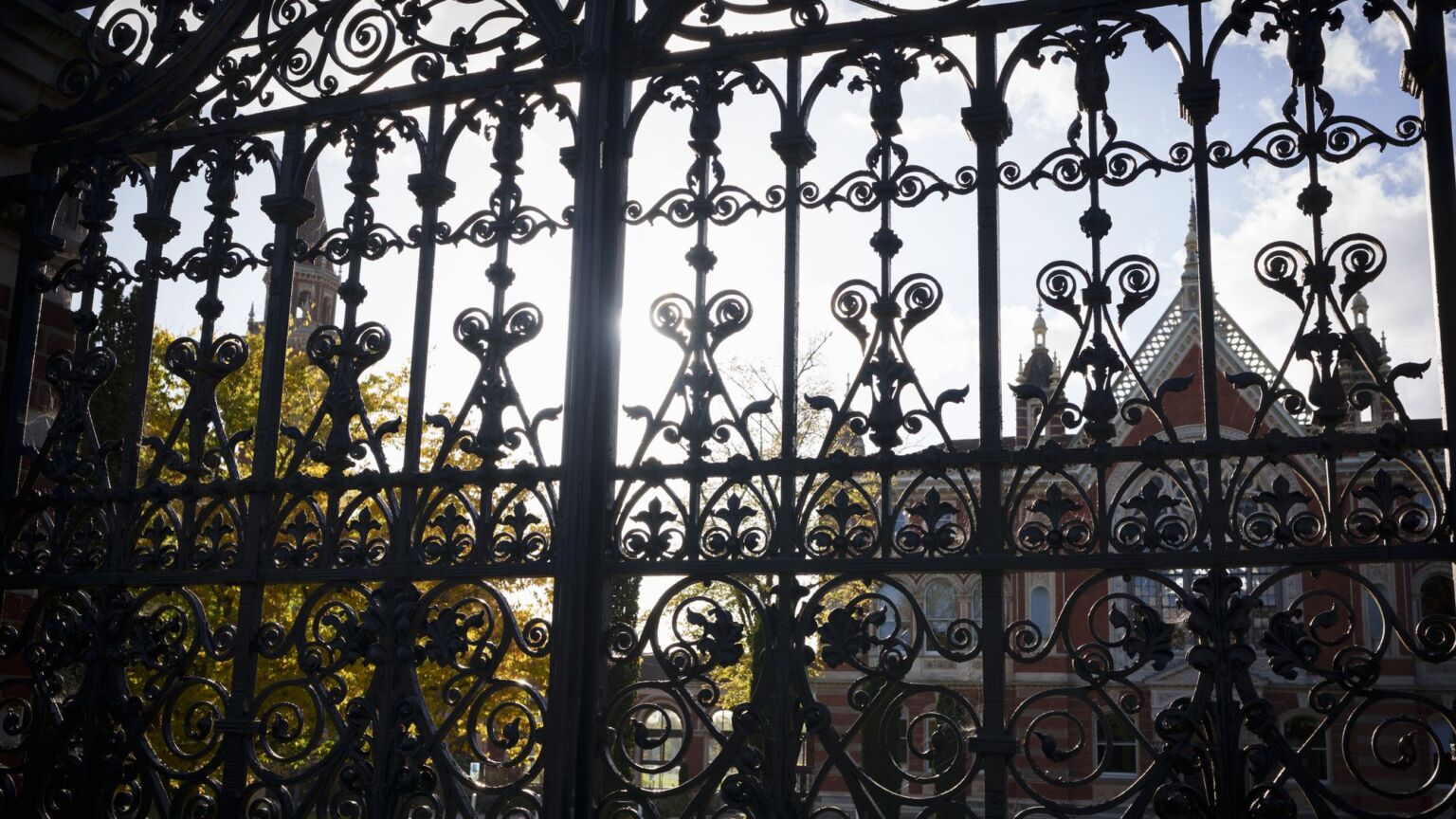
All across Britain, private schools are closing. Many are small institutions with long, proud histories that have successfully educated children for centuries. As they shut their doors, pupils suffer disruption to their learning and parents struggle to find new school places. Teachers lose their livelihoods, and towns lose not just an employer but, often, an establishment that has been at the heart of a community for many generations, too. Bastions of quality education and sporting, cultural and artistic achievement are disappearing. Yet this is happening with little national outcry.
Since Labour was elected in 2024, more than 100 private schools, educating some 25,000 children, have announced plans to close. Last week, it was the turn of Thetford Grammar School in Norfolk. Thetford claims to have been founded by Sigbert, King of the East Angles, in AD 631. The earliest historical document relating to the school dates from 1114, and it was re-founded in 1610 by an act of parliament. Thomas Paine, an Enlightenment revolutionary and author of Rights of Man, was a former pupil. In April, Malvern St James, a private school in Worcestershire, founded in 1919 by pioneering feminists and the alma mater of Dame Barbara Cartland, shut up shop.
In April, we also saw the closure of St Lawrence College in Ramsgate. Founded in 1879, the college was forced to cut ties with most of its 500 pupils with immediate effect. In February, Moorlands School in Luton, founded in 1891, gave shocked parents and teachers just 30 minutes’ notice that it would be permanently closing. In January, Exeter Cathedral School, the oldest school in Devon, announced plans to close its ‘prep’ provision for pupils aged three to eight. From September, the cathedral’s choristers, educated at the school since 1179, will be taught elsewhere. The closure of specialist choir schools makes it more difficult to use scholarships and bursaries to recruit choristers from poorer backgrounds.
Schools that are closing cite falling pupil numbers and financial pressures. The type of middle-class parents who, a generation ago, could just about cover school fees, began to find this impossible even before UK chancellor Rachel Reeves made them stump up for 20 per cent VAT on top. Added to this, private schools have had to contend with the removal of business-rates tax relief, an increase in the minimum wage, a hike in employers’ national-insurance contributions, and a sharp uptick in costs such as energy bills and pensions.
Adding VAT to private school fees was a flagship Labour policy. It was supposed to raise extra money for state schools, which could be used to employ an additional 6,500 teachers. But this seems unlikely to materialise. It was reported in April that, rather than raising money, the VAT increase had actually cost the Scottish economy £60million as the number of fee-paying pupils fell by nine per cent. Not only did these children need to be provided for in state schools, but 900 private sector jobs also disappeared.
It is not economics but politics that drives Labour’s attack on private schools. Party higher-ups drip with contempt for what they perceive to be sharp-elbowed parents with bulging wallets – who probably vote Conservative anyway – and try to buy advantages for their children. And it is true that in Britain today, elite sport, art and culture, as well as the professions, are indeed dominated by the expensively educated.
But there is another story, too. The schools that are facing closure are not the top public schools – Eton, Harrow, Rugby or Winchester – which charge more in annual fees than most people earn in a year. These schools, handsomely supported by generous alumni and with a plentiful supply of wealthy foreign pupils, will survive. It is, for the most part, smaller, cheaper private schools that are closing. These are schools chosen by aspirational parents who just about scrape together sufficient money to cover fees from one year to the next. Thetford has just 179 pupils, nearly half of whom are reported as having special educational needs or disabilities.
By closing these schools, education becomes more elitist, not less. Privilege becomes more concentrated, not less. Labour’s decision to scrap funding for Latin tuition in state schools similarly puts this subject out of reach of all but the uber-wealthy. Only those determined to wage an infantile class war fail to see this.
If the government wants to strike a blow for educational equality, it should ensure that state schools offer children the chance to learn Latin, take part in foreign trips and museum visits, and have world-class facilities, teachers and coaches. With its VAT increase on private schools, Labour is not just blighting the life chances of some individuals – it is attacking educational standards, aspiration and opportunity. It is destroying institutions that have long been integral to Britain’s heritage.
For centuries, schools that offer quality education have been valued by parents, communities and the nation. Now they are jettisoned for a few extra tax receipts.
Joanna Williams is a spiked columnist and author of How Woke Won. Follow her on Substack: cieo.substack.com.

Reform UK has been slammed after it revealed a new policy to put migrant detention facilities in constituencies and councils not controlled by its own representatives.
Days out from the local elections in England, and devolved elections in Wales and Scotland, Reform’s home affairs spokesperson Zia Yusuf declared that a Reform government would “deport all illegal migrants in Britain”.
While waiting to be deported, the migrants would be housed in detention centres for a “couple of weeks”.
Yusuf claimed: “A Reform government will not put any migrant detention facilities in any constituency with a Reform MP.
“Nor will we put them where Reform controls the council.
“And of the remaining areas, we will prioritise Green controlled parliamentary constituencies and Green controlled councils to locate the detention centres.”
Yusuf said this meant if Reform representatives were voted in, they would “guarantee you won’t have a detention centre near you” – but, “if you vote Green, there’s a good chance you will.”
Reform called this “an important exercise in democratic consent”.
The senior Reform figure added: “Given Zack Polanski openly advocates for open borders, we look forward to their warm embrace of this policy.”
Deputy Green leader Mothin Ali said: “Reform keep making abhorrent announcements to distract voters from they fact they want to privatise the NHS.”
A Green Party source told HuffPost UK: “The shine is coming off Nigel Farage, his own voters are starting to see him for the establishment stooge he is.”
Green leader Zack Polanski wrote on X: “Reform took a £5m donation and they’re trying to distract you.”
Reform’s announcement comes after party leader Nigel Farage was heavily criticised for pulling out the BBC’s Sunday with Laura Kuenssberg last minute.
The party claimed Farage was campaigning in his constituency in Clacton.
However, his critics suggested he was evading scrutiny after the Guardian reported that he had received a £5 million donation from a crypto billionaire shortly before he decided to run to be an MP in 2024.
The Conservatives also criticised the new migrant policy, as leader Kemi Badenoch retweeted a post from former cabinet minister Simon Clarke which called the policy an “appalling waste of public money”.
Clarke noted that these detention centres would likely be set up in other areas where the public have not voted for Reform – including Conservative seats.
He said: “Zia is proposing the siting of detention centres expressly as a form of political punishment for people and places that don’t vote Reform – not just Green, but presumably Conservative, Liberal and Labour too. (And what about Reform voters in those constituencies?)
“It would almost certainly be deemed an abuse of ministerial power for political purposes, and as such would likely be stuck down in court before ever being implemented, wasting millions for the taxpayer without detaining anyone.
“If it were to go ahead, it would still represent an appalling waste of public money as these sites might well not be in any way suitable for the proposed centres, or near the other infrastructure required.
“What’s worse is that he is doing all this to provoke outrage and draw attention to Reform a few days out from the local elections.
“Reform know what they are doing.
“But this goes beyond a pre-election stunt. It’s declared as a major policy commitment, and should be treated as such.”
Subscribe to Commons People, the podcast that makes politics easy. Every week, Kevin Schofield and Kate Nicholson unpack the week’s biggest stories to keep you informed. Join us for straightforward analysis of what’s going on at Westminster.

spiked is funded by readers like you. Only 0.1% of regular readers currently support us. If just 1% did, we could grow our team and step up the fight for free speech and democracy.
Become a spiked supporter and enjoy unlimited, ad-free access, bonus content and exclusive events – while helping to keep independent journalism alive.

Austal inks $150m contract extension for two more Border Force boats

North Korea Calls Cyber Threat Allegations “Absurd Slander” as DPRK Hack Losses Mount

Robert Irwin Pushes Mom Terri Toward DWTS Spotlight

Manchester United reach agreement with Casemiro over contract clause amid transfer speculation

US brings back mandatory military draft registration

Steven Gerrard disagrees with Gary Neville over ‘shock’ Chelsea and Arsenal claim | Football


-

 Tech7 days ago
Register Renaming | Hackaday
-

 Politics7 days ago
Drax board avoid their own AGM, accused of greenwashing & environmental racism
-

 Fashion5 days ago
Kylie Jenner’s KHY Enters a New Era with ‘Born in LA’
-

 Tech7 days ago
Images of Samsung’s rumored smart glasses have leaked
-

 NewsBeat16 hours ago
Channel 5 – All Creatures Great and Small series 7 new post
-
 Tech3 days ago
Trump’s 25% EU auto tariff breaches Turnberry Agreement that also covers semiconductors and digital trade
-

 Business6 days ago
Most Commercial Energy Audits Miss the Real Losses
-

 Business7 days ago
(VIDEO) Charlize Theron Climbs Times Square Billboard to Promote New Netflix Thriller ‘Apex’
-

 Crypto World6 days ago
CFTC’s AI will review U.S. crypto registration applications, chairman tells CoinDesk
-
 Sports3 days ago
Paul Scholes issues Marcus Rashford reality check as agreement emerges over Man United star
-
 Entertainment7 days ago
Alicia Keys Calls Out Music Industry ‘Boys Club’
-

 Business5 days ago
Barclay Brothers Avoid Bankruptcy: HSBC Drops High Court Petitions After IVA Deal
-
 Business5 days ago
Tesla Officially Registers Elon Musk’s Stock: What Investors Need to Know
-

 Tech6 days ago
Get Ready for More Brain-Scanning Consumer Gadgets
-
 Crypto World6 days ago
Robinhood Phishing Scam Exploits Gmail Dot Feature to Bypass Security
-

 Entertainment7 days ago
Sister Wives: Janelle Posts New Scary Warning
-

 Crypto World6 days ago
Gmail Dot Trick Underpins Robinhood Phishing, Sending Real-Looking Emails
-

 Entertainment6 days ago
Michael Jackson’s Biopic Excluded Abuse Allegations For $25M
-

 Business3 days ago
Two Powerball Tickets Split $143 Million Jackpot in Indiana and Kansas
-

 Business6 days ago
Superdry co-founder accused of raping woman
You must be logged in to post a comment Login