

Politics
Ex-Minister Calls On Cabinet To Speak Out Against Keir Starmer

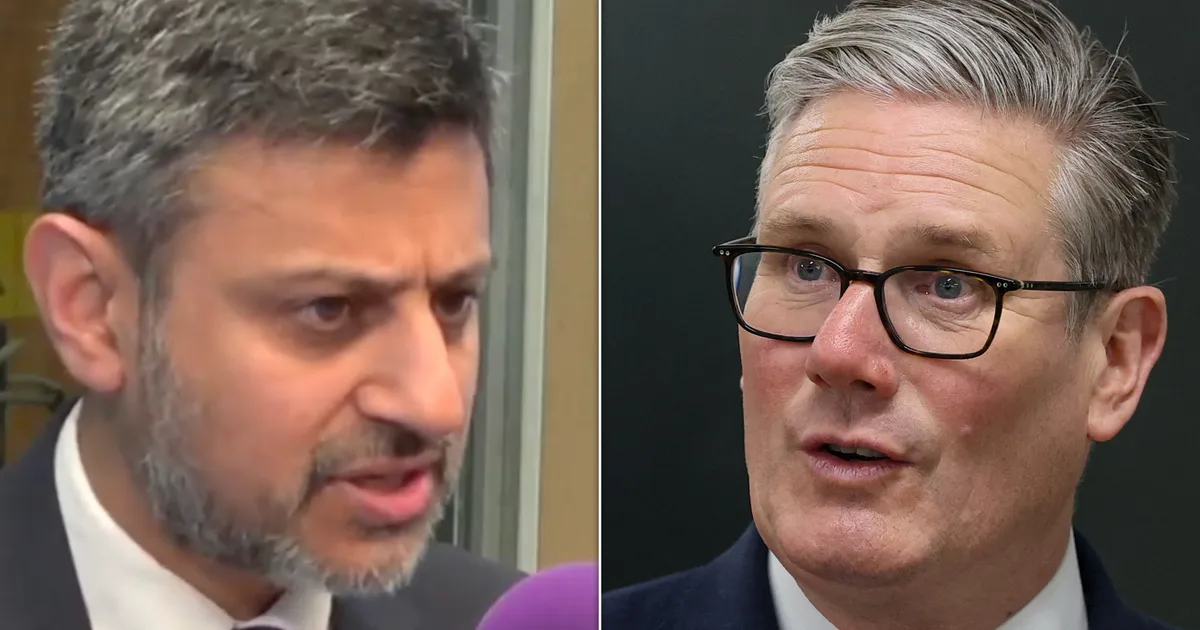
A minister who resigned over Keir Starmer’s leadership has called on cabinet members to speak out against the prime minister.
Zubir Ahmed left his government role on Tuesday, saying Starmer’s “continuation in office is wholly untenable.”
He urged him to set a timetable for “an expedient and orderly transition to new leadership that commands the confidence of our country.”
He was the fourth minister to resign on Tuesday, after Miatta Fahnbulleh, Jess Phillips and Alex Davies-Jones.
Four ministerial aides also quit on Monday and more than 80 Labour MPs have publicly urged the prime minister to step down following the party’s drubbing in last week’s elections in England, Wales and Scotland.
However, no one in the cabinet has joined the dissenting voices just yet.
Speaking to BBC Radio 4′s Today programme on Wednesday, Ahmed called on the senior members of Starmer’s government to “articulate their dissatisfaction” with the prime minister.
He said: “I think it’s very telling – just as ministers in the junior ministerial ranks have stepped forward to articulate their dissatisfaction, some of us publicly but more of us privately – that the whole of the cabinet has not, on this occasion, been able to articulate support for the prime minister in the full-throated way that would have perhaps had happen in the past.
“I think there is a responsibility on all of us in parliament and ministerial office to be honest with ourselves and the prime minister at this time.”
He added: “We have been put in these positions by the public, to govern the country and to lead, and I think this is a moment for leadership and everyone, to articulate, with honesty, their opinion on the prime minister.”
Ahmed is a known ally to health secretary Wes Streeting, who is a potential rival to the prime minister.
He had a private coffee with the prime minister on Wednesday morning, allegedly to ask Starmer how he was going to turn his party’s fortunes around.
The health secretary left after less than 20 minutes.
Subscribe to Commons People, the podcast that makes politics easy. Every week, Kevin Schofield and Kate Nicholson unpack the week’s biggest stories to keep you informed. Join us for straightforward analysis of what’s going on at Westminster.

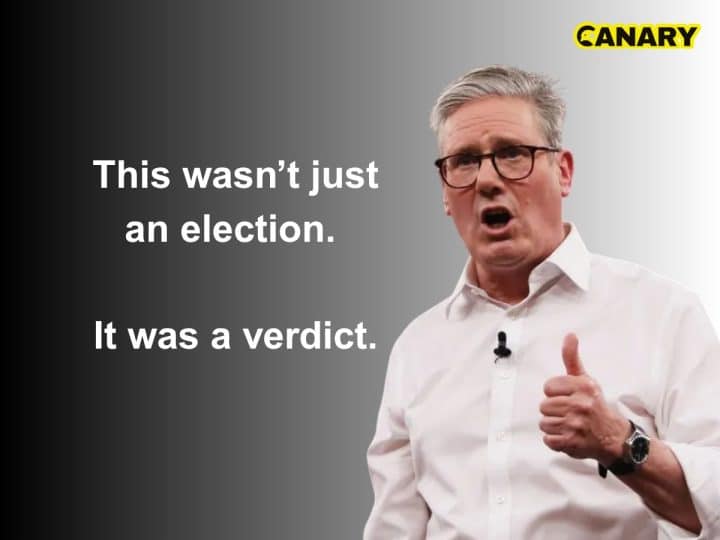

This wasn’t just an election. It was a verdict.
The dust has perfectly settled on last week’s local elections, and what a glorious, blood-soaked carnival of neoliberal failure it was.
Labour eviscerated
The Labour Party, under the watchful, slightly constipated gaze of Keir Starmer, has been eviscerated.
More than 1,400 councillors are gone and control of dozens of councils evaporated like the morning mist over a fracked countryside.
In the north, heartlands that once beat with the red pulse of organised labour turned to Nigel Farage’s Reform UK in numbers that should terrify every suit in Westminster.
The Greens picked up hundreds of seats too, because when your government offers nothing but warm words and cold cuts to the working class, people will grasp at any alternative.
I won’t pretend the Greens are the pure saviours of the left, though their gains are a bright spot. But at least they are offering something closer to genuine alternatives in places like Lewisham and Hackney.
All branding, no kick
So, let’s start with the man at the top. Keir Starmer, the once-great socialist hope who turned out to be the political equivalent of decaffeinated coffee – all of the branding but none of the kick.
The red wall was supposed to be rebuilt, brick by brick, with hope and public investment. Instead, we’ve had two years of Starmerism, which is no more than a beige ideology that blends Tory austerity with a smug human rights lawyer’s lecture on fiscal responsibility.
Labour were hammered because NHS waiting lists are still a national disgrace. The housing crisis is worsening and wages stagnate while fat cat energy bosses laugh all the way to their offshore accounts.
And don’t get me started on the deeply flawed migration policy that somehow manages to be both inhumane enough to alienate the left and ineffective enough to hand Reform UK a stick to poke them with.
And what of Keir Starmer’s response to the epic battering?
He “took responsibility” in that trademarked way of his – the one where he sounds like a headmaster explaining why the school trip was cancelled due to fiscal restraints.
More managerial piffle
There has been no resignation. No leadership contest, yet. Just more of the same managerial piffle about delivering change, as if the electorate didn’t notice that his idea of change is rebranding the same old capitulation to markets, donors, and focus groups.
The man ran on a platform of not being the Tories, and then governed like their ever-so-slightly more competent cousin who still sends Christmas cards to the CBI.
Here was a party that purged its left-wing with the ruthless efficiency of a Stalinist show trial, only to discover that, without actual socialism, they had nothing to offer the people who clean their offices, drive their Ubers, and staff their hospitals.
The purge of the Corbynites was supposed to make Labour electable. Turns out it made them forgettable. Working-class voters didn’t abandon Labour because it was too left-wing; they abandoned Labour because it abandoned them.
Peacocking Farage
Meanwhile, in comes Nigel Farage’s Reform UK, strutting like a peacock that’s just discovered TikTok.
Farage’s merry band of racist populists gained over 1,400 seats themselves, snatching councils from Labour in places like Barnsley, Bradford, and Sunderland.
Be in no doubt, Reform is not the answer. They’re the question, asked in the most obnoxious accent possible. Their politics is a toxic cocktail of anti-immigrant scapegoating, culture-war drivel, and promises to cut taxes for the rich while magically fixing public services.
Farage offers the political version of those miracle weight-loss pills. Swallow this, blame the foreigners and the tofu-eating wokesters, and everything will be fine.
It won’t work. It never does.
Rage channelled into nativism
Not all Reform voters in these elections were secret fascists cackling over a pint. Many were angry, decent people watching their communities crumble under decades of neglect – first New Labour’s warmongering and PFI scams, then Tory austerity, then Starmer’s continuation of the same failed ideological vandalism.
Reform channels that rage into nativism because it’s easier than admitting the real enemy is a capitalist system. Isn’t it funny how they continuously rail against “elites” while their financial backers include the same hedge-fund types and offshore interests who’ve been hoovering up wealth for generations? Perhaps you’re not supposed to notice?
To Reform voters, just in case you stumble upon this. Your anger is entirely valid, but your diagnosis is absolutely wrong. Blaming the brown person down the road won’t nationalise the railways, build council houses or bring down energy bills.
The new Reform councillors will now have to do the unglamorous work of fixing potholes and arguing over bin collections – tasks that don’t lend themselves to viral rants about “the blob”.
Seriously, I cannot wait for the first Reform-run council to discover that stopping the boats doesn’t magically repair the roof of the local leisure centre.
A brutal mirror
The local election results are a brutal mirror. Starmer’s Labour looked into it and saw a party that had become indistinguishable from the establishment it once opposed.
Reform looked and saw an opportunity to surf the wave of discontent without offering structural change.
Both are symptoms of the same disease – a broken economic system that concentrates power and wealth while preaching meritocracy and resilience to those left behind.
Featured image via the Canary

Recently, the condition formerly known as polycystic ovary syndrome – PCOS for short – was renamed to polyendocrine metabolic ovarian syndrome, or PMOS.
Researchers say they made the change to more accurately address how the condition affects people, calling the old name “inaccurate”.
Here, we asked Eve Lepage, a reproductive health specialist at period cycle tracker Clue, for her thoughts on why the change was needed, whether she thinks it’s a good idea, and the signs of PMOS.
Why was PCOS changed to PMOS?
The change, Lepage explained, took place to more precisely describe how the condition works.
PCOS implies that the main issue involves cysts in people’s ovaries. But, Lepage said, decades of research have taught us it’s more complicated than that: PMOS can affect a variety of other systems,” including metabolism, cardiovascular health, and mental health”.
Additionally, the expert explained, “One of the biggest misconceptions about PCOS is built into the name itself: the ‘cysts’ aren’t actually cysts at all. What clinicians see on ultrasound are usually immature ovarian follicles, which are small sacs containing eggs that haven’t fully developed or been released during ovulation. True ovarian cysts are completely different structures”.
And you don’t even need to have these not-quite-“cysts” to be diagnosed with PMOS, she continued.
“Under the current diagnostic criteria, someone can still receive a diagnosis based on symptoms like irregular ovulation and elevated androgens (hormones like testosterone that can contribute to symptoms such as acne or excess facial hair), even if their ovaries appear completely normal on ultrasound.
“At the same time, many people without PCOS can have ovaries that look ‘polycystic’ on ultrasound. It’s no surprise this terminology has created confusion among patients, clinicians, policymakers, and the public for decades.”
Is the name change a good idea?
In short, yes, said LePage.
“Broadly speaking, many experts support the change because they believe the old name contributed to misunderstandings, stigma, and delayed diagnosis. Research and international surveys found strong support among both healthcare professionals and people living with the condition for a new name that better reflects the underlying physiology.”
It also helps to remove the focus from PMOS as a primarily reproductive issue, highlighting “the metabolic and endocrine aspects of the condition, including insulin resistance and increased risk of diabetes and cardiovascular disease”.
And it could help patients who didn’t feel represented by the traditional definition of the disease to realise they have it.
That’s not to say there are no possible drawbacks. The term might be confusing at first to patients and healthcare providers who have gotten used to the same term over the years.
But in general, Lepage said, “many experts, myself included, strongly believe the benefits outweigh the drawbacks if the new terminology leads to earlier diagnosis, better understanding, and more comprehensive care.”
What are the signs of PMOS?
Firstly, the pro told us, “PMOS can look very different from person to person, which is one reason diagnosis is often delayed.”
Still, she said, symptoms can include:
-
Irregular or absent periods,
-
Difficulty getting pregnant due to irregular ovulation or no ovulation,
-
Excess facial or body hair,
-
Acne or oily skin,
-
Hair thinning on the scalp,
-
Weight gain or difficulty managing weight,
-
Fatigue,
-
Insulin resistance or difficulty regulating blood sugar,
-
Mood changes, anxiety, or depression,
-
Multiple small follicles visible on the ovaries during ultrasound.
In the long-term, she said, “PMOS is also associated with increased risk of type 2 diabetes, cardiovascular disease, depression, sleep apnea, infertility, and endometrial cancer.
“Importantly, not everyone experiences the same symptoms, and not everyone will have visible ovarian follicles on ultrasound. That variability is part of why many experts felt the old name no longer reflected the full reality of the condition.”


The Premier League’s ongoing battle with players grappling at set pieces took centre stage again after West Ham’s 95th minute equaliser against Arsenal was ruled out following a lengthy VAR review.
The referee association, Professional Game Match Officials (PGMOL), has since doubled down on its stance, with chief refereeing officer Howard Webb insisting officials will “be vigilant” after what was described as a “clear and obvious” foul on Arsenal goalkeeper David Raya.
Callum Wilson thought he had rescued a point for West Ham, only for referee Chris Kavanagh to overturn the goal after being sent to the pitchside monitor.
The process took four minutes and 17 seconds, a delay that left West Ham frustrated and preparing to contact the PGMOL for clarification.
Sky Sports pundit Gary Neville even labelled the controversy one of the biggest calls in VAR history in the Premier League.
West Ham: why the goal was disallowed
VAR looked through multiple potential fouls. And, the audio released on Match Officials Mic’d Up revealed how many incidents VAR Darren England and assistant VAR Akil Howson had to assess.
They examined: Pablo’s contact on Raya, Leandro Trossard’s actions, and Declan Rices’s grappling with Konstantinos Mavropanos
The decisive moment came early. When Kavanagh reached the monitor, he immediately identified the key offence, saying:
I can see the clear holding on him (Raya) across.
On Trossard’s involvement he added:
I don’t think there’s much in that at all, I’m happy with that. That’s nothing.
VAR England agreed that the foul on Raya occurred first and was most significant:
The foul happens on the goalkeeper before.
Webb’s assessment
Webb himself said:
Is it a foul on the goalkeeper? Categorically, yes.
He continued:
We’ve said all season, including in pre-season briefings with the players, that if a goalkeeper is impeded by an opponent grabbing or holding their arms and therefore they can’t do their job, they’ll be penalised.
We’re not just talking about contact with goalkeepers, we’re talking about a specific type of contact when the goalkeeper’s arms or hands are being interfered with, stopping them from doing their job.
Webb also said that the footage clearly showed Pablo’s arm across Raya’s neck and arm:
It stops him from doing something pretty routine of catching the ball as he can’t put his arms up and we’ve said all season we’ll penalise that.
Webb reiterated that it has been a season long crackdown and defended the time it took to get to the decision:
We have to get it right. In this really important situation, we did.
The decision to disallow the goal scored by West Ham, denying them a vital point in their current relegation battle against Tottenham. Yet it also handed Arsenal a vital victory in the title race against Manchester City.
While Webb insists the officials reached the correct conclusion, the length of the review and the number of incidents involved mean the debate will continue.
What is clear is that the PGMOL intends to stay firm. Goalkeeper interference of this kind will continue to be punished and the officials, Webb says will “be vigilant”. However, these comments are unlikely to quash growing ire over the role of VAR in modern football, to say nothing of West Ham’s intent to complain over the incident.
Featured image via the Canary
By Faz Ali
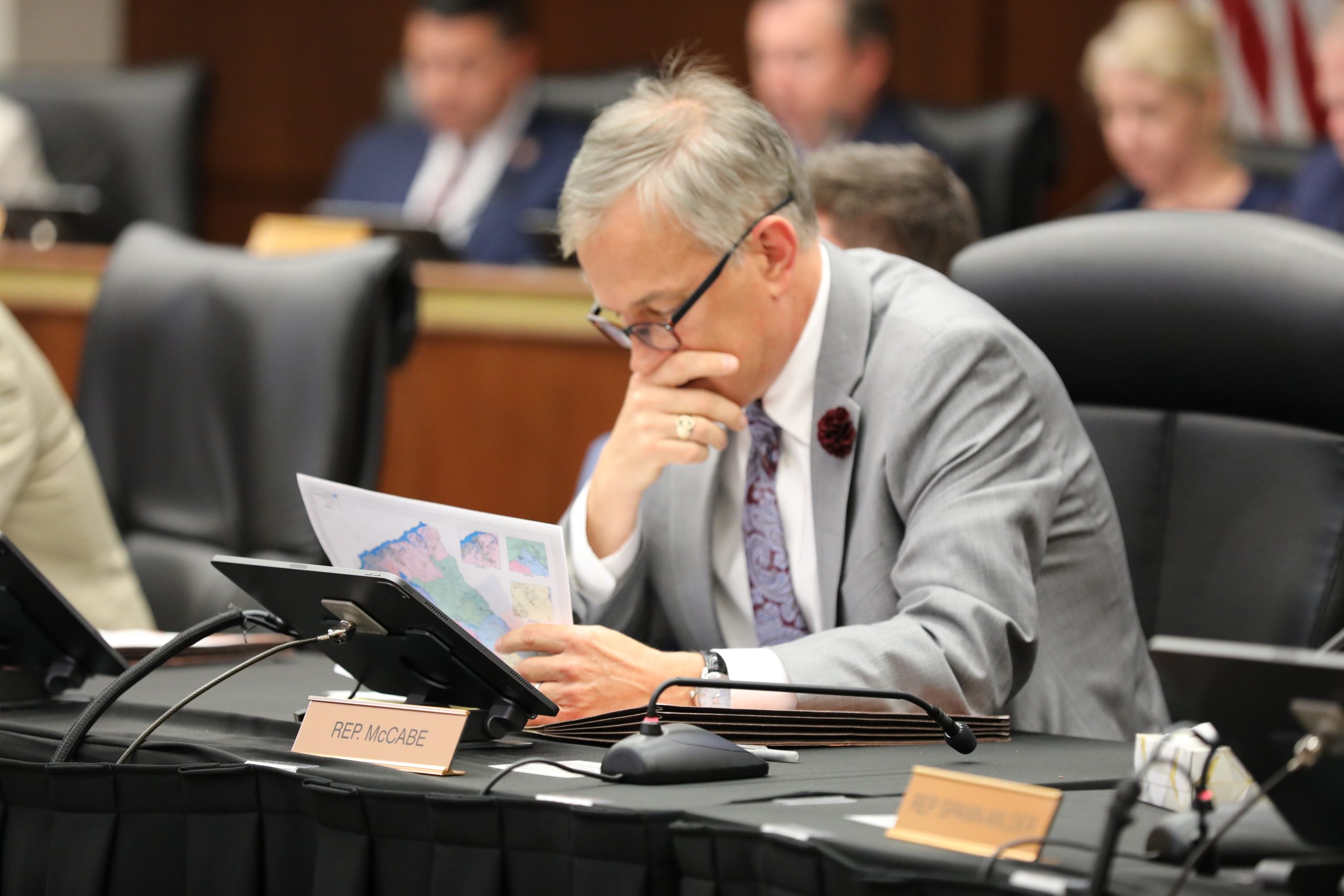

The South Carolina Senate just made it harder for the state to redraw its congressional map, resisting pressure from President Donald Trump.
Lawmakers on Tuesday failed to reach the two-thirds majority needed to approve a measure that would have allowed them to take up a vote on redistricting even after the legislative session ends later this week. Five Republicans joined all Democrats in voting against the proposal.
Republican Gov. Henry McMaster could still call a special session, though his office has so far dismissed that idea.
The Tuesday vote doesn’t mark a definitive end for redistricting efforts in the Palmetto State. But it does make it less likely that Trump will get his wish of eliminating the state’s sole Democratic district — represented by the powerful Rep. Jim Clyburn — by this year’s midterm elections.
“The South Carolina State Senate has a big vote tomorrow on Redistricting. I’m watching closely,” Trump wrote on social media Monday evening.
Republican Senate Majority Leader Shane Massey told reporters in Columbia last week that he would oppose any effort to redraw the state’s congressional maps. His resistance drew the attention of Republicans in Washington, including Trump who called the senator at least twice to encourage him to take up the redistricting effort.
Massey still voted against the measure. In an impassioned speech prior to Tuesday’s vote, he acknowledged that his decision will likely draw the ire of national Republicans: “I understand that there are likely consequences for me personally standing here right now and taking the position that I’m in. … My conscience is clear on this one, y’all.”
He took a swipe at national Republicans for failing to deliver much with the majority they currently have. And he warned that if Republicans were to draw out Democrats entirely from the state’s congressional delegation, South Carolina risks losing influence the next time a Democrat occupies the White House.
Given Tuesday’s vote, any further attempts to change the map will likely be met with similar resistance. Under sustained pressure from national Republicans, McMaster could still change tack and choose to call a special session to move forward with a redraw.
It’s not the first time Trump has been met with resistance from within the GOP on redistricting. Republicans in Indiana, Kansas, Nebraska, Kentucky and New Hampshire resisted calls from Trump and his political team to redraw House lines last year — though several state lawmakers in the Hoosier State paid for that decision in this month’s primaries.
Still, other southern states seemed poised to take up redraws after several court rulings gave Republicans an overall edge in the redistricting fight. The Supreme Court gave Alabama the go-ahead on Monday to erase a Black district, and Mississippi Gov. Tate Reeves said in an interview last week that he has the authority to call a special session on redistricting.


(Dorota Szymczyk/Alamy)
4 min read
AI has the potential to enrich children’s lives, helping them learn in new ways, express their creativity and connect with others across the world.
But on the other side of the ledger, it is already exposing them to dangerous risks and serious harms that are evolving faster than our ability to fully understand them.
That’s why the new measures in the Crime and Policing Act that passed in Parliament last month are so significant – both for what they do and don’t deliver for young people. Making it illegal to possess, create or distribute AI tools designed to generate child sexual abuse material is a vital step forward. Likewise, it’s positive to see government tackling AI ‘manuals’, which instruct offenders on how to use this technology to exploit and abuse children.
This is progress. But it is nowhere near enough. Because AI is not only dangerous when it crosses into criminality – it is also reshaping children’s everyday online lives in ways that are less visible but equally harmful.
We are seeing AI amplify damaging content, distort self image and trap young people in echo chambers. And online abuse has become more scalable and more personal, with AI-generated harassment, impersonation and manipulated images making harm feel more intense and harder to escape.
We hear about this directly when children reach out to our Childline service. One 17-year-old girl said she uses AI to count her calories, to ensure she “stays in a certain bracket”.
And sometimes the harm comes from AI chatbots that simply don’t understand the reality of a child’s life. One boy, aged 16, told Childline: “You have to walk on eggshells around my dad or he’ll snap. Usually, it’s shouting and kicking me. I’m actually scared when I know he’s picking me up from school. I asked AI for advice, and it said, don’t provoke him, ignore it, don’t react – if I stay calm, dad will stay calm. I don’t think I provoke him, sometimes it’s just because he’s got me alone and knows no one else will find out.”
This response is dangerous and wrong. No child should ever be told to manage or minimise an adult’s abusive behaviour. An AI chatbot should be directing a child in distress towards safe, confidential support, to services like Childline, not telling them to stay calm so their abuser stays calm.
I asked AI for advice, and it said, don’t provoke him, ignore it, don’t react – if I stay calm, dad will stay calm
The government deserves credit for tackling the most extreme abuses. But if we want the UK to be the safest place in the world to grow up online, we cannot regulate AI only at the point where it becomes criminal.
For years, the tech giants driving this revolution have behaved as though children’s safety is someone else’s problem. They push out powerful AI systems at breakneck speed, fully aware of the risks, and then hide behind disclaimers when those risks materialise.
These companies have the resources, the expertise and the foresight to build safeguards in from the start, yet time and again they choose not to. It is indefensible that some of the wealthiest corporations on the planet continue to treat children as acceptable collateral in their race to dominate the AI market. That negligence should no longer be tolerated.
Last month, Liz Kendall, the Secretary of State for Science, Innovation and Technology, met with our Voice of Online Youth at Wilton Park. They spoke candidly about what AI means for their friendships, mental health and overall safety. AI is already influencing their lives, and they want a say in how it is governed.
The Crime and Policing Act is an important start. Now the government must match that ambition with a regulatory framework that protects children from the full spectrum of AI-driven harm and makes sure that these services are appropriate.
Because AI will define the next generation’s childhood, and it is our responsibility to ensure it does not also become a tool to exploit their vulnerabilities.
Chris Sherwood is the CEO of NSPCC


The Starmer regime will sentence four anti-genocide activists as terrorists, despite a rigged court convicting them only of criminal damage.
A jury refused to convict the Filton 24 members in February, but the government — determined to pursue Starmer’s Israel-driven war on UK rights — pushed for a retrial.
At the second trial, the judge banned lawyers from informing the jury of their legal right to acquit according to conscience.
Two of the six accused were acquitted anyway, but four were convicted of criminal damage.
The judge also ordered that jurors could not be informed of his plan to sentence them as terrorists.
Now, with the trial over, that restriction has ended and the Canary is free to report on it.
View this post on Instagram
Supporters are being asked to attend Woolwich Crown Court on 12 June.
The judge also tried to prosecute Rajiv Menon, one of the lawyers representing the activists, for telling jurors about their legal right:
BREAKING — The Court of Appeal has ruled that Mr Justice Johnson had no jurisdiction to refer Palestine Action barrister Rajiv Menon KC for contempt of court proceedings.
These proceedings were brought against Menon after he reminded a jury earlier this year of its absolute… pic.twitter.com/TlwnOEzYFV
— Declassified UK (@declassifiedUK) May 12, 2026
He also ordered a reporting ban so that the media were forbidden even to mention the contempt charge until now.
However, the Appeals Court has rejected the attempt to prosecute Menon, ruling that the judge had no jurisdiction to refer him for contempt of court for lawful speech.
Several people were also arrested for holding signs outside the court that informed jurors about the right to acquit, known as ‘jury equity’.
The Met Police and the government ignored a judge’s ruling from 2024 regarding prosecuting trial protesters. It concluded that informing jurors of their lawful entitlement could not possibly be perverting the course of justice.
The Starmer regime’s voraciousness for unjust prosecutions to cover his own and Israel’s crimes knows no bounds.
Featured image via Filtonactivists.com
By Skwawkbox


Italy is an old owl. And this owl, once queen of the night, finds it increasingly difficult to spread its wings. Its skeleton stiffens, its joints creak, and the gaze that once swept across the horizon now looks ever more downwards, towards the water’s surface. For many Italians, this metaphor speaks directly to the country’s present reality: a nation increasingly defined by declining birth rates and an ever-ageing population.
In 2025, Italy recorded 355,000 births compared with 652,000 deaths. This is not a balanced figure, but a net loss of almost 300,000 people in a year. In fact, it represents the lowest figure on record since 1861… An era predating Italian unification in much of its modern form.
At the same time, Prime Minister Giorgia Meloni has made the birth rate an obsession. She has repeatedly promised to place families and natality at the centre of public policy, yet existing measures remain fragmented and insufficient to address the structural causes behind Italy’s demographic decline, from precarious employment and stagnant wages to soaring housing costs, limited childcare services, and restrictive immigration policies.
A snapshot of decline
The region of Molise is a snapshot of what Italy will look like in the coming years. Here, there are 123,000 pensioners, whilst the number of people in employment stands at just 103,000.
The town of Sant’Elena Sannita, in Upper Molise, represents the most extreme case: over the past 80 years, its population has collapsed from 3,000 inhabitants to fewer than 300.
In 2024, fourteen municipalities recorded not a single birth; there were nine in the province of Campobasso and five in the province of Isernia. Small villages with only a few hundred residents are now facing administrative extinction.
At the same time, Molise possesses a unique historical identity, shaped by longstanding ties with the Balkans and the presence of a Croatian minority. This cultural and economic bridge remains largely underused, despite immigration continuing to dominate political debate and challenge Giorgia Meloni’s government. Yet these opportunities remain untapped. This situation is not limited to the South of the country: similar trends are already being observed in Liguria and Umbria.
Don’t blame the young
Young men and women cannot be blamed if they prefer to emigrate and not have children in Italy. Daniele Vignoli notes that, in 2008, the fertility rate had reached 1.5 children per woman – the highest level since the 1980s. This marked what was described as “a new spring of fertility in Italy” – something that, today, many Italians can hardly even imagine.
One only needs to look at the data to understand how striking it is that, less than two decades ago, the figures were moving in a completely different direction. The fertility rate has plummeted to 1.14 children per woman. To put this into context: the figure of 2.1 is considered the ‘replacement rate’ necessary to maintain a stable population without immigration. Italy is not merely below this threshold; it is dramatically far from it.
Anti-immigration + low birthrate = crisis
Germany, Spain, Portugal, and other European countries are following similar trajectories. Italy, however, reached the crisis point first. Every year, the numbers drop another notch. Giorgia Meloni speaks of immigration as a threat to Italian families, claiming it is a catalyst for their dissolution. But immigration could be the revitalising force that this society is unable to generate on its own.
Every year, the numbers drop another notch, and then another, towards the abyss. Reopening and providing structural funding for schools, making serious investments in the healthcare system, and creating decent living conditions, including affordable housing, fair wages, and genuine residence permits for immigrant residents, should be seen as essential countermeasures to avoid ending up with an increasingly ageing population.
The government frames immigration as a threat to social cohesion. But this is where the cognitive disconnect lies: a society that fails to produce its own citizens cannot afford the luxury of rejecting those who could revitalise it. Fewer births yesterday mean fewer parents today, fewer births tomorrow, and even fewer the day after. A United Nations report predicts that Italy will lose five million inhabitants over the next 25 years, down from 59 million.
The owl may yet awaken. Concrete actions are needed: real infrastructure in small towns, open schools, functioning healthcare, affordable housing. Italy needs policies that treat immigration not as an invasion, but as a transfusion of new blood.
Featured image via Lonely Planet


Pete Buttigieg is picking sides in a heated Senate Democratic primary in the state that cemented his national political profile.
Buttigieg, who won the Iowa Democratic caucuses in 2020, is backing state Rep. Josh Turek — a move that shows his willingness to wade into contested primaries ahead of another possible presidential campaign.
The endorsement comes shortly after Buttigieg’s former 2020 rival, Massachusetts Sen. Elizabeth Warren, visited earlier this week to campaign for Turek’s opponent, state Sen. Zach Wahls.
“We made history in Iowa in 2020 because our campaign went everywhere,” Buttigieg said in a statement shared first with POLITICO. “We connected with people in rural towns and the largest cities, focused on the issues that affect everyday life, and brought Democrats, Independents, and even Republicans into the fold. Josh Turek has taken that same proven approach to his campaign, and that’s why I know he will be successful. I believe Iowa can make history again in 2026 by sending Josh to the U.S. Senate.”
Buttigieg’s decision to pick sides in the once-early nominating state is a reversal for him. In March, he told POLITICO it was “not in my plans” when asked whether he would endorse in sharply contested primaries in his adopted home state of Michigan or in Iowa. And while it could help elevate Turek — and potentially give Buttigieg a valuable ally if he runs in 2028 — it carries some risk of alienating Wahls’ supporters in the hard-fought contest.
It’s not a shock, however. Turek’s campaign in Iowa marks something of a reunion for Buttigieg’s 2020 campaign operation: his former national press secretary Chris Meagher is a Turek adviser, while Buttigieg’s former senior adviser Lis Smith and former aide Matt Corridoni are both advisers to The Bench, a new political group that’s been choosing sides in other Democratic primaries.
It’s not clear whether Iowa will have anywhere near the outsized role it historically held in the Democratic nomination process next time around. A calamitous caucus-night vote count and app breakdown played a role in Democrats bumping Iowa from the front of the primary line in 2024. Iowa Democrats are trying to get back in the first four states, along with a bevy of other states. Democrats are expected to choose their nominating order later this year.
Buttigieg joins Sens. Tammy Duckworth of Illinois, Catherine Cortez Masto of Nevada, and Maggie Hassan of New Hampshire in Turek’s corner — as well as former Sen. Tom Harkin (D-Iowa), the last Democrat to represent the state in the Senate.
“I am deeply honored to have Pete’s support in this race,” Turek said in a statement. “His unique ability to connect with Iowans who feel forgotten and left behind is exactly why he won the caucuses in 2020, and it’s that same approach that will help us win Senator Harkin’s seat back.”



Louie French, Shadow Gambling Minister and Conservative MP for Old Bexley and Sidcup, argues that proposed gambling affordability checks risk becoming intrusive and counterproductive, warning that unless they are truly frictionless, they could push consumers towards the unsafe black market
There’s a simple principle that should guide any new regulation: does it actually work, and does it make people’s lives better? Right now, serious questions are being asked about whether the Gambling Commission’s proposed Financial Risk Assessments (FRAs) meet that test.
Let me be clear from the outset. Protecting vulnerable people and ensuring strong consumer safeguards are vital. Where there is clear evidence of problem gambling, intervention is justified and necessary. But effective regulation must also be practical, proportionate and grounded in reality, balancing protections with the need to keep millions of customers safely within the regulated market.
We should also recognise how much has already changed in recent years. Since frictionless checks were first proposed, the regulated sector has introduced a wide range of tougher safeguards, from vulnerability checks and stricter online stake limits to improved monitoring, earlier interventions and better protections for young adults. These measures are already making a huge difference.
That is why serious questions must now be asked about whether an additional layer of financial checks is still necessary or proportionate.
Most people who enjoy a bet do so safely and responsibly. They deserve protection where problems arise, but they also deserve to be treated fairly and proportionately.
That is why the row over gambling checks matters. When the Government promised new financial risk checks, the deal with the public was clear: they would be frictionless. No hassle. No ordinary punter being asked to hand over private documents just to enjoy a bet.
I support sensible measures to protect people from gambling harm. Where someone is clearly in trouble, operators should act. But that is different from letting a regulator press ahead with wide-ranging checks without clear evidence or transparency.
The Gambling White Paper promised frictionless checks, and Ministers have repeated that commitment. My colleague Stuart Andrew MP, then Gambling Minister, was clear the system should only be rolled out once it had genuinely met that test.
The current Minister has also backed “frictionless, near-instantaneous checks” that would work for customers, the betting industry and racing.
The Gambling Commission consulted on these checks in 2024 and began a pilot afterwards. Yet we still have not seen a full public explanation of what that pilot has shown.
Ministers have quoted headline figures in Parliament, including the claim that 97% of checks would be frictionless. But that framing risks understating the real impact. In practice, the proportion of active customers affected is likely to be significantly higher and across millions of accounts, that means a substantial number of customers being interrupted or asked to provide personal financial information. That’s why the current direction of travel on FRAs is so concerning.
Of course, where there are clear signs that someone is suffering harm, operators should step in and support must be available. But that does not justify creating a system where large numbers of law-abiding adults risk being subjected to intrusive financial scrutiny simply for taking part in a legal activity.
We were told these checks would be “frictionless”, but in reality a customer placing a bet may suddenly be flagged by an automated system, asked for more information, or even told to hand over private financial documents such as bank statements, payslips or proof of income before they can carry on. That is not a light-touch safeguard it is intrusive, confusing and completely out of proportion to having a legal flutter.
This is not just about inconvenience. It is about trust. If people feel they are being excessively monitored for engaging in a legal activity, confidence in the system begins to erode.
There is also a more serious unintended consequence that cannot be ignored.
If regulated betting becomes too complicated or intrusive, some customers will inevitably look elsewhere. The illegal gambling market is already growing, and it thrives on exactly this kind of frustration. Unlike licensed operators, black market sites offer no consumer protections, no safeguards, and no accountability.
That is a lose lose situation. The very people these measures are designed to protect could end up in far riskier environments, beyond the reach of UK law.
So the question must be asked: what is the evidence that an additional layer of checks will deliver better outcomes?
So far, that case has not been made.
Ministers have been clear that any new system must be proven to work before it is rolled out. It must be genuinely frictionless in practice, and it must strike the right balance between protecting those at risk and respecting the freedoms of the wider public.
On all three counts, the current proposals fall short.
This is not an argument for doing nothing. It is an argument for getting it right.


The Good Law Project is leading a campaign following a recently leaked briefing document that reveals NHS contractor Palantir already has full access to patients’ data.
Moreover, despite prior promises from the NHS that it would protect our identifiable data from this kind of abuse, officials exploited a loophole to grant Palantir staff in “admin roles” unlimited access.
Patients’ data could also be available to Palantir contractors.
Palantir awarded NHS contract in 2020
CEO of the spy-tech firm, Peter Thiel, recently delivered his sinister ‘manifesto’ detailing AI state surveillance and ‘population control’, on the backs of its complicity in the genocide in Gaza. It should surely follow that this highly concerning access to NHS health data in the UK could prove disastrous, or even fatal.
As a result, the Good Law Project is urging people to make it clear that British people do not consent to this huge overreach by billionaires into the NHS.
A leaked document reveals Palantir staff are being granted “unlimited access” to identifiable patient data.
Join us demanding this spy-tech firm gets out of our NHS — Good Law Project (@GoodLawProject) May 11, 2026
 https://t.co/JGcobrFyzb pic.twitter.com/j1Rh2ij5ox
Good Law Project: ‘This isn’t just for Palantir’
The Financial Times broke the story this month, prompting widespread concern.
This video from the Good Law Project aims to draw wider attention from the public to the risks that this huge scale of corporate access poses to people’s health prospects.
Sounding the alarm, they stated on X:
Everything that we fear when it comes to Palantir and our health data is coming true.
The Financial Times recently got hold of an internal leaked briefing document that revealed that Palantir staff already have unlimited access to identifiable patient data, so that could be your private medical history attached to your name.
When the NHS signed this deal, they insisted that they would keep the keys, that all data would be staying underneath NHS control and only used for direct care.
But they have managed to find a loophole: the NHS have created admin roles which are designed to see patient data and identifiable patient details fully attached.
This isn’t just for Palantir — this is for them and any contractors they choose to hire. We want to tear up this contract between Palantir and the NHS, and you can join our movement at the link in our bio, but let me know what you think down below. Did you predict this was this on the cards? What’s your thoughts?
A defence company has no business in the NHS
Al Jazeera also reported on this potential security risk, saying how the trust that was implied through the COVID-19 contract awarded to Palantir has been eroded.
The spy-tech firm won the NHS contract for £1 in 2020 which is now worth a lucrative £400 million for Thiel and co.
It is worth noting that this kind of wealth appreciation has become pretty commonplace for the world’s richest whilst ordinary people increasingly suffer.
As a result, calls are being made to rip up this contract to prevent the inevitable exploitation of data for the financial gain of billionaires.
Considering Palantir’s proven involvement in the genocide on Gaza, this really should not be a hard fight to win.
Speaking to Al Jazeera this month, Duncan McCann, who leads on technology and data at the Good Law Project, said:
Palantir is perceived as a defence contractor.
If they had just stayed in that lane, I think people might accept that. But a defence company has inherently different values than [a healthcare organisation like] the NHS, and that’s where I think this [concern] was created.
People warned us this was coming — it’s time to listen
Despite intimidation tactics, NHS doctors and human rights groups have been sounding the alarm since the beginning. They have been demanding the NHS stop using this patient data management platform pushed by ‘murder tech’ firm Palantir.
It seems the only authorities who are for its use is our government, which happens to receive huge sums in donations from pro-Israel donors and corporates. However, with the political will, this sinister overreach can be resisted.
Sadiq Khan has reportedly been considering blocking the purchase of Palantir’s AI tool as he believes the firm acts “contrary to London’s values”.
Therefore, it should naturally follow that a firm profiting from mass murder and the surveillance of ordinary people is contrary to NHS values and we’d hope, our values as a country. After all, it is in the state’s interests to efficiently and effectively manage the nation’s health. A profit incentive goes directly against that mission.
The Canary is urging people to support the Good Law Project’s campaign and send a clear message to the British government, and Wes Streeting. Our health data is not a source of profit for the richest and most murderous, billionaires.
It is time for the British people to say “hands off” to the greedy, morally bankrupt super-rich.
Featured image via the Canary

Vietnam eyes Q3 launch for regulated crypto asset market

This wasn’t just an election. It was a verdict.

LeBron James suffers another Playoff Sweep

Manchester United reach agreement with Casemiro over contract clause amid transfer speculation

US brings back mandatory military draft registration

Steven Gerrard disagrees with Gary Neville over ‘shock’ Chelsea and Arsenal claim | Football


-
 Crypto World5 days ago
HarrisX Poll Found 52% of Registered Voters Support the CLARITY Act
-

 Fashion5 days ago
Weekend Open Thread: Marianne Dress
-

 Crypto World6 days ago
Upbit adds B3 Korean won pair as Base token gains Korea access
-
 NewsBeat6 days ago
NCP car park operator enters administration putting 340 UK sites at risk of closure
-

 Fashion2 days ago
Coffee Break: Travel Steam Iron
-

 Fashion2 days ago
What to Know Before Buying a Curling Wand or Curling Iron
-

 Tech3 days ago
Auto Enthusiast Carves Functional Two-Stroke Engine from Solid Metal
-

 Politics2 days ago
What to expect when you’re expecting a budget
-
 Business4 days ago
Ignore market noise, India’s long-term story intact, say D-Street bulls Ramesh Damani and Sunil Singhania
-

 Politics4 days ago
Politics Home Article | Starmer Enters The Danger Zone
-

 Crypto World7 days ago
BlackRock CEO Larry Fink Discusses a New Asset Class
-

 Tech2 days ago
GM Agrees To Pay $12.75 Million To Settle California Lawsuit Over Misuse Of Customers’ Driving Data
-

 Entertainment6 days ago
Sarah Paulson Called Out For Met Gala ‘Hypocrisy’
-

 Entertainment6 days ago
General Hospital: Ric & Ava Bombshell – Ric’s Massive Secret Exposed!
-

 Politics6 days ago
Simon Cowell Says He Was ‘Horrible’ To Susan Boyle During BGT Audition
-

 Crypto World6 days ago
Robinhood says Wall Street is building onchain
-

 Sports6 days ago
UEFA Champions League final schedule, teams, venue, live time and streaming | Football News
-

 Entertainment7 days ago
Bold and Beautiful Early Spoilers May 11-15: Steffy Revolted & Liam Overjoyed!
-

 Entertainment6 days ago
Why David Letterman Called CBS ‘Lying Weasels’
-

 Entertainment7 days ago
Sister Wives: Tony Flings Shade at Robyn in New Post
You must be logged in to post a comment Login