
Politics
EXCLUSIVE: Shady property firm urges landlords to evict ‘liability’ tenants before Renters’ Rights Act


A shady short-term property letting agency is urging Manchester landlords to issue profitable Section 21 notices ahead of the upcoming Renters’ Rights Act to evict people.
The letter, shared exclusively with the Canary by Greater Manchester Tenants’ Union (GMTU), labels ordinary renters “a potential liability”.
Chorlton-based residents received the letter from London-headquartered firm Aparthotel Manchester, which encouraged landlords to evict current tenants “before it’s too late”.
The notorious S21 repossession orders — dubbed ‘no-fault’ evictions — are deployed by landlords to turf out renters but will be outlawed from 1st May 2026.
That’s right: in the eyes of opportunistic property portfolio managers, renters are not humans deserving of homes, but rather little more than an impediment to profits.
What does the letter say?
The letter was intended to be read and acted upon by rattled, put-upon landlords, but was sent — presumably by mistake — to an owner-occupier allied with GMTU.
It read:
Act now and we can issue a section 21 notice (requiring 2 months’ notice) on your behalf, before it’s too late to remove that sitting tenant who could be costing you a fortune in unpaid rent, repair and legal fees, with no easy way to evict them.
It cites changes to legislation including “rent increases and pet requests [which] will apply to all private tenancies” when the Renters’ Rights Act comes into force soon.
The agency promises landlords “over 50%” expenses-free net returns on investment:
…with no agency fees whatsoever, no repair or maintenance bills and a premium monthly guaranteed rental.
It offers to “maximise your income from your property investment” by giving up on being a regular landlord and, instead, becoming an Airbnb-style short-term stay letter.
Thus the company aims to leverage landlords against a long-overdue and substantial — by Labour’s low standards — piece of relatively progressive legislation, while it openly acknowledges that “the clock is ticking” for unscrupulous property owners.
Make no mistake: this is the solicitation of for-profit evictions by a company happy to instrumentalise Manchester’s precarious housing market at a time of well-documented crisis — and to frame renters, essentially, as mere nuisances.
What do tenant organisers say?
This letter’s revelation comes less than a week after London saw the largest cross-organisation demonstration around housing justice for over a decade.
The National Housing Demonstration marched through central London to demand more council housing, rent controls and an end to exploitative landlordism squeezing the working class.
The demo saw thousands take to the streets representing dozens of groups like trade unions, GMTU and their London equivalent LRU, and the Greens and Your Party.
One GMTU spokesperson told the Canary:
This letter is a horrifying but blatant example of how landlords view tenants: as nothing more than a source of profits, and proves how overdue and critical the Renters Reform Act is.
Homelessness and housing precarity is worsening in Manchester because landlords and investors seek to squeeze out every possible penny from working people across the city.
There’s still a long way to go before UK law considers housing as a human right, rather than part of someone’s investment portfolio — the abolition of Section 21 is only the first step.
Renters’ Rights Act: What does it mean for renters?
In 2022, a leading report by academics and researchers at GMTU and Greater Manchester Housing Action documented the detrimental impacts of Airbnb and similar short-term lets (STLs) in the city.
Airbnb and STL properties quadrupled across Greater Manchester between 2016 and 2020, especially in the city centre, eating into the private sector rental housing stock.
The report stated:
By the end of the decade, the transfer of long-term rental properties into the short-term sector might shut out over 4,000 households or 9,400 residents. With more than 13,000 households on the social housing waiting list home sharing platforms such as Airbnb will massively exacerbate the housing crisis.
Alongside exacerbating remaining housing inaccessibility, they also recorded an uptick in social disruption caused by STLs which cause “problems of anti-social behaviour and disruption to neighbours exist in increasing numbers outside of the city centre and are leading to the loss of family homes”.
The report notes the increasing domination of Airbnb by professional landlords and agencies which manage properties on behalf of landlords, rather than ‘hosts’ renting out spare rooms. Twelve such ‘management services’ exist in the city.
Tenant organisers at GMTU emphasise that, while housing inaccessibility is repeatedly framed as a ‘crisis’, they view it as an inevitability of a system designed by developers and for profit.
Rather than exist solely to provide housing, the property market exists as an exchange of assets. Consequently, it functions as such — especially after decades of government-led structural deregulation, privatisation, and rampant rentierism.
This is the market that Aparthotel Manchester seeks to flippantly cast renters into.
The Canary contacted the Aparthotel Manchester for comment but haven’t yet received a response.
Featured image via the Canary



With advancements in technology, some of which were established to a large extent in the 1990s, capitalism is long outdated. The thing is, people can be addicted to anything.
Some consumers are addicted to what David Graeber called “bullshit jobs” — labour that’s not necessary or fun, but exists for the sake of it. And on the other hand, people are, in a way, forced into such employment because of the system treating housing and essentials as assets for the rich to rent out. Meanwhile, capitalists are attached to money and power.
Capitalism vs autonomous vehicles
The technology has long been established to liberate people from bullshit jobs and build a society that is truly modern.
In the 1980s, scientist Ernst Dickmanns led a group of German engineers to develop the first autonomous vehicle that could navigate traffic on public roads. This was delivered in France in 1994, where a self-driving car took people from Charles de Gaulle airport to travel on a nearby motorway.
The thing is, the car could only navigate roads and environments that were predictable like a motorway. But the fact this happened over 30 years ago shows that capitalism may be lagging behind in technological development, given autonomous vehicles are still not widely available.
The current societal system could well not be optimal partly because patents prevent people from building upon established technology. German companies hold over half the patents for autonomous vehicles. And if you want to build an autonomous vehicle you cannot use any of those patented processes without a license. It’s true that there may be some benefits to this. For instance, new processes may be more efficient and bring new ground to the science. But if a process is established and works, it might make sense for more people to use it.
In the years after, developments in Simultaneous Localization and Mapping (SLAM) technology have enabled self-driving cars to operate in increasingly chaotic environments. Such developments have also enabled autonomous hoovers, which have been around for decades, while robots can now use SLAM technology to fix your boiler.
When it comes to autonomous vehicles that are active for public use, the ParkShuttle has been used in Rotterdam in the Netherlands since 1999. It is a self-driving bus that operates between Kralingse Zoom metro station in to Capelle aan den IJssel.
Autonomous farming
Farming could also be automated, providing us with food at zero labour cost. The first driverless tractor was demonstrated at Reading University in 1958, using a cable-guided system. Yet fast forward nearly 70 years later and only 5% of farms globally use self-driving tractors, according to research by McKinsey. In the 1990s, the first autonomous tractor without using underground cables was developed in the UK. It’s clear we could have used these advancements to progress in a more equitable manner.
Vertical and automated farming systems could deliver the infrastructure capable of producing enough food for everyone in the UK without anyone labouring away. This could also reduce the amount of food the UK imports (currently at 46%).
The appeal of vertical farming is that it creates the conditions to grow almost anything, anywhere. A University of Surrey study found that vertical farms offer 20 times the yield of traditional farms. It also found that changing the materials used could drop vertical farming emissions by 95%.
Elsewhere, people are already delivering automated farming. In China, there are unmanned farms with smart management systems, along with aerial and ground robots.
It’s obvious that an automated system that liberates people from labour that is unnecessary or not fun is available. But will we just continue with capitalism for the sake of it?
Featured image via the Canary
By James Wright


As many as 8 UK typhoon fighter jets, stationed in Qatar, could patrol the skies over the Straits of Hormuz as part of maritime operations — a stark reminder of the Royal Air Force’s (RAF) continuing role as colonial air police.
UK military headquarters in Northwood, north-west London, is hosting a 30-country summit to plan for the aftermath of Trump’s unlawful war against Iran.
The summit was organised by the UK and France, another former imperial power. The plan would see typhoon jets involved in “defensive” patrols, with the UK pledging to keep the strait open after the war has ended and mine-clearance support.
Legacy media reported that:
Eight of the fast jets are currently based in Qatar and a number were active in shooting down Shahed drones in defence of allied countries in the Gulf during the 38-day war in the Middle East that followed the US-Israel attack on Iran.
US-Israel attacked Iran first on 28 February without provocation. Iran was offering concessions in negotiations at the time. The Pentagon has since stated there was no imminent threat from Iran. And the UN’s atomic watchdog, the IAEA, has said there is no evidence Iran was developing a nuclear weapon.
The US has achieved none of its original war aims. Iran predictably closed the Straits of Hormuz, a vital oil channel, once attacked — creating a global energy crisis. Far from being defeated, Iran has said the war will continue until:
… the enemy’s inevitable and permanent humiliation, disgrace, regret, and surrender.
Trump came to power on an anti-war ‘America First’ ticket and now faces worldwide humiliation.
US doesn’t seem to care
Defence Secretary John Healey reportedly ‘dropped into’ the summit on 23 April. A joint statement with French defence minister Catherin Vautrin published that day said:
We are confident that real progress can be made. By building on our common purpose, strengthening multinational coordination and setting the conditions for effective collective action, we can help reopen the Strait, stabilize the global economy and protect our people.
It does not appear that the Trump administration is very interested in the summit. US defence secretary Pete Hegseth disparaged the meeting in a press conference in the US on 24 April, saying European leaders needed:
less fancy conferences… and get in a boat.
He added that “this is more their fight than ours.” An odd statement given the US-Israel unilaterally started the war amid negotiations with Iran which were progressing.
Colonial policing for the RAF, again
Once of the RAF’s key roles after WWI was as a colonial police force. As the RAF’s own museum states the post war era saw the RAF reduced in size.
The RAF was quickly reduced from its wartime strength of 204 squadrons to a mere 29 in March 1920. Seven existed as cadres and the remaining twenty two were under strength.
The locations of the surviving squadrons tell a story with remarkable resonance today:
Eight were in the United Kingdom, eight in India, six in Egypt, two in Ireland, two in Iraq, one in Malta, one in Palestine and one in Germany.
One of the reasons the force survived, the museum says, was that RAF leaders — like the father of modern air warfare, Hugh Trenchard — were smart political operators who quickly latched onto a new role for the service:
and, perhaps most importantly, it was able to demonstrate the advantages of the aeroplane in providing a cheaper solution to the ever present task of pacifying rebellions in the more remote areas of the Empire.
And that is exactly what the RAF did. The RAF Museum, however, leaves out a few details. The RAF bombed Kabul in 1919, what is now Somalia in 1920, and reportedly only supply shortages stopped it using mustard gas bombs in Iraq in 1924.
During a 1925 operation in Waziristan the RAF attacked civilian settlements. They used strafing, bombing and dropped propaganda leaflets — tactics recognisable in Lebanon, Gaza and elsewhere today.
The UK plans assumes peace will be achieved, and on terms favourable to the west. That is a very optimistic outlook, with Iran showing no sign of capitulation.
Nevertheless, Typhoons have been pledged to control some of the same airspace the RAF started policing over a century ago. And the reasons aren’t too different — ensuring colonialist dominance over a region western powers are desperate to hold onto.
Featured image via the Canary
By Joe Glenton
Politics
Are the Greens eating into the Reform vote? New poll puts the far-right party just 4 points ahead


Party leader Zack Polanski has posted to social media that it’s “now clear” his Greens are “directly challenging” Reform. With multiple pollsters showing a narrowing lead between the two front-running parties, the seemingly bizarre prospect of voters crossing from the far right to the left has become a hot topic.
Polanski’s comments were prompted by an article published by the i on 23 April. It speculated on the slow decline of Reform’s popularity to its current 4-point-lead over the Greens. The i ran with the headline:
Has Reform peaked? Trump and Greens halt Farage’s march
At this point, we at the Canary would just like to say… good God we hope so.
‘Reform plateau?’
Just last week, a More in Common poll predicted a vote share of 25%. Though this later rose to 27%, the damage was already done. The 25% represented the far-right party’s lowest poll rating of the year, and More in Common asked if we had seen a “Reform plateau?”:
Reform UK are projected to win 324 seats, 57 fewer than in More in Common’s January model – and one MP short of a majority in the House of Commons, after a plateau in the polls.
Similarly, a 23 April poll from Find Out Now put Reform at 25%. This was just 4 points ahead of the Greens in second place. Interestingly, the numbers represented a 1-point loss for Farage’s coterie of racist gobshites, and a 1-point gain for Polanski’s party.
On the same day, Politico also pegged Reform at a 24% average, according to its “poll of polls”. This was the far-right party’s lowest predicted result since April 2025, and a long way from its 31% high last autumn.
Farage’s Trump problem
The i also highlighted that the popularity of Farage himself had also followed a similar downturn. YouGov, for instance, recently gave the wannabe-authoritarian leader a popularity rating of -38. Again, this represented his lowest score of the year.
For comparison, Polanski is currently the second most popular leader of any of the ‘Big 5′ parties, at -9. Meanwhile, Starmer comes dead last at -45, and the Lib Dems’ Ed Davey is out in front at -3. We guess being terminally inoffensive has its advantages after all.
More in Common senior executive Louis O’Geran speculated on the sudden downturn for both Reform and Farage:
The top reason people give for not voting for Reform is Nigel Farage’s connection to Trump. It’s just become more and more toxic.
Skawkbox also gave a similar analysis of a YouGov poll back on 10 March, writing:
interestingly, even among Reform’s voters, Reform’s closeness to Trump is hurting the limited-company-as-party.
While ‘pro-Trump’ is the largest self-identification among Reform supporters, it’s not an outright majority. Almost a quarter of them consider themselves to be ‘anti-Trump’ as well.
Farage has long maintained a close relationship with his fascist counterpart in the US. However, following Trump’s illegal war on Iran and the ensuing spike in the cost of living for the UK, that association has taken on a distinctly damaging air.
Pity that any of Trump’s other atrocities didn’t do the same, but what the hey.
Greens are directly challenging Reform
However, the i also mused that Trump wasn’t the only reason for Reform’s poor performance of late:
The Green Party of England and Wales may itself be partly responsible for Reform’s downturn. Zack Polanski’s party has risen inversely to Reform’s decline. In August 2025 – at Reform’s peak – the Greens were polling 9 per cent. Today they are on 16 per cent and contending with the Tories and Labour for second place.
Party leader Zack Polanski actually retweeted the above tidbit, along with a remark that:
It is now clear the Greens are directly challenging Reform.
People are fed up with the status quo and want change but Farage is offering them old Tory solutions and scapegoats the vulnerable.
The Greens have a real plan to lower bills, protect the NHS & cap extortionate rents.
The article went on to speculate that whilst the Greens and Reform are ideologically opposed, many voters tend towards being non-ideological. Along these lines, political research director Chris Hopkins mused on the potential Reform-Green bleed:
Both parties represent an ‘anti-Establishment, none of the above’ vote, right? They are two sides of the ‘not the Labour and the Tories’ coin. Neither Zack Polanski nor Nigel Farage would probably agree with this, but they represent the same thing on a really macro level, which is ‘the current system isn’t working – we have the alternative’.
So at that point for a voter, it’s just like, what flavour do you want your alternative to be? Voters are not as left or right driven as we think they are.
As always, any political analysis needs to be taken with a large pinch of salt — but this certainly chimes with a lot of what we’ve seen of late. People crave an alternative to the current system, and Farage — in spite of all evidence to the contrary — has styled himself as the anti-establishment choice.
However, the reverse can also be true — if Polanski can continue to show that he has viable answers and actual convictions, who knows how far he might go?
Featured image via the Canary


Three of the ‘Teledyne 4‘ group of anti-genocide activists have each been sentenced to 20 months in prison for causing around £570,000 of damage to US arms-maker Teledyne‘s factory in Shipley, which supplies the Israeli military with components for missiles.
Second trial for Teledyne 4
Laura Gao, Ruby Hamill, Daniel Jones and Najam Shah were originally tried in September 2024.
The judge at that trial falsely told the jury it could not acquit them for trying to prevent a greater crime – the Gaza genocide. This is untrue – jurors have an absolute right to acquit according to conscience under English law.
The jurors then failed to agree on a verdict at all, but the Starmer regime decided to put them on trial again. They were tried again in February 2026 and convicted.
‘Resistance cannot be locked away’
Gao, Jones and Shah were sentenced today, 24 April 2026. Skwawkbox understands that Hamill will now be sentenced at a later date.
The Defend and Mobilise Support group said of the convictions that:
The attempt by the state to repress our movement and imprison solidarity will only backfire. The resistance for a liberated Palestine cannot be locked away. We will share updates on how to provide support to them.
Several ‘Filton 24’ anti-genocide activists have also faced retrial this week after the jury in their first trial refused to convict them. The Starmer regime is determined to criminalise resistance to Israel’s crimes – even the families of those who resist – legal precedent and the rights and verdicts of juries’ verdicts be damned.
By Skwawkbox


Egham — In just two weeks’ time, the local elections will see thousands of councillors elected across the country. In what is likely to be a tough defeat for incumbent Labour councillors, the battle truly is between independents, Greens and far-right Reform UK.
Nevertheless, community-focused candidates have rolled their sleeves up, determined to change the way that local politics is done in their hometowns.
One such Independent is Damien Biggs who is standing for Egham in Surrey. Telling us that he recognises how the political system is broken, Biggs explained that he intends to change things for his local community.

‘They’ve really latched on to what I’ve been saying’
Firstly, we asked Biggs how he has been finding it in such a polarised election race:
It’s been pretty good to be fair. For my own sort of peace of mind, I wanted to be an alternative on [the] ballot paper, and then gradually got a bit more involved and that’s all been spurred on a lot by speaking to neighbours down the street and they have been bringing up issues like the HMOs, that have been trying to be set up down the road, and then the next thing I knew, I had a lot of information to campaign on.
And then it’s listening to that. There’s a massive, not quite hatred, but, yeah, no one’s really a big fan of the HMOs across the whole of Egham. That definitely seems to have been something that’s worked really well in my favour. That was the first thing that I started researching. That’s definitely been helpful, especially within Facebook groups of people who don’t even know me personally. They’ve really latched on to what I’ve been saying about them.
Biggs informed this isn’t his first foray into local politics, telling us:
No, I’ve stood quite a few times. I previously stood for the Socialist Labour Party. My big focus now is on being an Independent. I’ve stood in Brentwood Council elections in 2014. I was a Parish councillor in 2015. I stood in Pontypridd in South Wales for the Socialist Labour Party (SLP).
I was in the SLP for a good couple of years. And then, yeah, the 2015 election, that was then when I realised the whole system just doesn’t work because we had this was at the height of UKIP in 2015 and we had hustings pretty much every week right the way through the whole time.
Being a family man, we asked whether this factored into his desire to stand up for his community?
Other people want to then try and drag the area down and say how it’s not as great as it actually is. It’s not a ‘terrible’ area. We have certain issues that the council neglect and that’s the main thing that I’m sort of campaigning on, those areas of neglect or issues that the council has just spent too long dealing with. They’ve also got landlords in their pockets so it’s those more minor issues that then get latched onto. I mean, the area is great for kids in general. We’ve got decent schools. We’ve got amazing after-school stuff. My two girls, they do dance. There’s loads of great stuff for kids.
We asked if door knocking has been an option without a party machine and wealth of resources behind him, with Biggs stating:
No, my main campaign has been purely online, through Instagram and then the local community Facebook group. I’ve spoken to a few people who’ve stopped me on the school runs and stuff. But in terms of actually going and knocking on doors, I’ve hardly had the time to do that.
Also, I don’t have leaflets or anything like that to go hand to people. It’s very difficult to knock on a door and go, ‘oh, These are my policies, let me just tell you all of them now, I hope you remember in a couple of weeks’.
‘I’m not a face of a party. I’m just your neighbour.’
Curious as to the feeling in more rural communities, we asked if local voters have been receptive to an independent candidate on the ballot:
We’ve been here since 2020, so it’s mostly just been about me personally, like ‘oh, I know you, good for you’, ‘oh, yeah, you’ve got my vote,’ because so many people have felt so disconnected. Ask them to name who their local councillor is and they rarely know. Instead, I’m hearing ‘good for you giving it a go, you’ve got my vote’, without me even saying what I’m proposing, because they’ve seen me – we’ve been here since 2020.
And so, they prefer me because they’ve seen me for years up and down the road and the school run. They know me as a neighbour. And again, that’s something I then latch onto online, definitely.
I’m not a politician. I’m not a face of a party. I’m just your neighbour, and I want to give my community a voice.
Asked about the competition he is facing, Biggs told us:
Every party has listed two people except for the Greens. The Greens have only got one candidate on the ballot. I did hear that they were struggling across Surrey, in general, to get candidates together. And that was another reason why I looked to stand in myself.
Prior local elections had literally just been Labour, Tory and Reform. Sometimes the Lib Dems don’t even stand. If it does become a toss-up of just those three parties, well then I’m just gonna scribble across the ballot like I’ve done before, none of the above.
The Greens did get one candidate so that leaves most people with two votes and an option for their other vote.
Most people across the board would have a party preference. So, I tell people to use their first vote for the party and then use their second vote for their area. And that’s been my strapline through it all.
Biggs then told us about how far-right parties have typically performed in his area, which raises concerns about Reform UK’s potential to whip up protest votes:
The UKIP candidate didn’t attend a single event, he never knocked on doors, never put leaflets through the door anything and they then came second. I had to ask myself, how is this working?
They were supposed to be voting for their representative, but then they just voted blindly for someone who nobody saw until he turned up at the count.
It was just ridiculous.
View this post on Instagram
‘we’re left in fight for egos.’
We then asked whether Biggs felt Labour had a fighting chance on polling day:
I don’t think this area has ever really been pro-Labour anyway, it’s just been made worse. Egham is a small middle-class Surrey village. We’ve got Windsor five minutes down the road, so any kind of Labour, whether that’s Starmer, Corbyn or Miliband, I don’t think this area was ever going to be receptive to. And I think Starmer’s just made it worse because he’s just not all there at all.
At least with someone like Corbyn, there was someone who they could hate. Whereas with Starmer, they just don’t like him. Not necessarily his policies or anything like that, because he hasn’t got any, they just don’t like him. And that completely then throws people into that whole personality thing. And it just becomes personality over policies.
And we’re left in fight for egos. That’s why I think independence really, really breaks through.
Subsequently, Biggs then told us what he intends to focus on first, if elected:
The HMOs are the biggest first task. You get an Article 4 directive to cover the whole of it straight away. And funnily enough, I had a semi-public debate in one of the groups with the current councillor who was saying,
‘Oh no, you can’t do it straight away, the plans currently going through its five-year review. You can’t implement anything new while the review is in place.’
Then I did a bit of digging, because I wanted to give people an alternative so I’m going through council records at midnight looking for what could be done.
I found a little loophole in the current plan; there’s a legislation saying that you can’t do an Article 4 because it requires planning permission and there’s nothing in the current plan for planning permission for HMOs. Then I went through it further and in the current plan, there is planning permission for HMOs, but it’s specifically for student HMO accommodation.
So, then can do a supplementary planning document to enlarge that current policy to encompass all of HMOs, not just the student accommodation, and that can be enacted now while the review is taking place because the legislation is already there, we just have to expand it with a supplementary planning document.
She didn’t reply to any of that. So, getting that Article 4 put in will be number one on my agenda.

‘We have major issues with the train lines’ in Egham
When asked about any major issues in the area that he wished to address, Biggs highlighted:
We have major issues with the train lines here. We’ve got four level crossings pretty much in a row. Sometimes you’re waiting at the barriers for easily half an hour, just waiting for these trains to go through. If there is an issue with it, it is down to Network Rail and South Western Railway but again is the council actually intending on doing anything.
We’ve never had a public consultation with Network Rail, we’ve never had a chance to actually speak to them and ask what’s going on. I saw that they are doing automated digital signalling, which is apparently supposed to speed up barrier opens and closes. And by summer, 70-odd percent of the trains that run through our line are capable of using that signal.
So then why are you not upgrading that line? We’re a direct line that goes straight into the middle of London. These are questions that either have been asked and they’ve just been quietly answered, or they’ve just never been asked at all.
I definitely want public meetings to be set up with Network Rail so we can ask residents what they think and they can actually know where residents stand.
Speaking about why current ‘solutions’ just do not work for his local community, Biggs informed:
They’ll always put signs up and say, ‘turn your engine off’. But It’s not quite working like that, people just want to be able to go. You know, so yeah, you know, they could have easily put a bridge in. I mean, I don’t think we’ve got, we’ve not got enough where the crossings are located. There’s not really enough room to put up and over bridge.
And that’s something where the Greens have not properly thought it out for whatever reason. Because the Green, when we’ve been talking about it in groups, the Green candidate’s answer is always, ‘well, we can look at putting in a foot and bicycle bridge’. And then everyone is just saying, ‘See, the Greens just want to take away your cars and want to get everyone walking’. Which is, to one extent, really extreme.
That’s not what she’s insinuating, but it is also that other side of it. I care about pollution and local environment. But at nine o’clock in the morning, when I’ve got to take my two girls to dance on the other side of Egham, I’m not going to be walking for 40 minutes, I’m just going to have to jump in the car and get them to dance. And then when we’re sat at the barriers, well, that’s not me being not mindful of the environment or choosing to drive rather than walk. It’s because actually you have to drive sometimes.

Giving people in Egham a choice
For me, the short-term plan would be to get smart signage put in along the main roads before you get into the centre of the town itself. Then when the barriers are down, it will tell people that the barriers closed, with an estimated wait time. Because the amount of times I actually have gotten down the road, I realise I should have gone down the other way, but now I’m stuck.
That will alleviate some of it by having those signs and that’s something that we don’t really have to work a lot with Network Rail to do and it just gives people a choice.
Mid-term solution would be to propose to Southwestern or Network Rail to implement LED lighting on the platform. I don’t know if you’ve seen in Germany, they have LED lights on the platform. But before the train comes, you’ll have like a red, green and yellow light along the platform. And if the carriages are full, the lights are red. And everyone lines up where the greens are because that’s where the doors are going to open and the carriage is empty. And they found that that can speed up boarding by around 40-odd seconds, which means that the train can leave 40 seconds sooner, the barriers can come up 40 seconds quicker, which doesn’t sound like a lot, but on our line, that would work out to like nearly an hour and a half a day of the barriers being up for longer.
Proving he is in this for the long term and means business for his local community, Biggs told us:
The long term solution is to get digital signalling installed to make the barriers far more automated. I think it was going to be rolled out across everywhere but then, for whatever reason, whether it was money or whatever, they decided not to and have done it on a case-by-case basis.
But apparently these digital signalling were supposed to be the ‘great saviour’ for level crossings because the automated crossing would know exactly when the train’s coming and how fast it’s approaching. Then you can open and close the barriers efficiently, rather than it being estimated.
But that requires Network Rail to actually listen to us and tell us if they’re going to do it, when they’re going to do it, and if they’re not, why not? That’s where the public consultation can come in.
We at the Canary urge local voters to follow Biggs’ advice. By all means, give one vote to a party machine of your choosing. However, give the other to a neighbour who truly cares about making things better for Egham.
Featured image supplied via author

Sir Keir Starmer says he will always act in the national interest and, at the next UK-EU summit, wants to adopt a ‘more ambitious’ relationship with the EU. Hemmed in by ‘red lines’ – no membership of the customs union nor the single market – Labour’s reset of the UK-EU relationship seems destined to be limited and unambitious.
Sir Keir and his ministers now frequently acknowledge the economic costs of Brexit. However, at least in public, they steadfastly ignore the consequences of their red lines which cause most of the Brexit loss of up to 8% of GDP. They also steer clear of saying how ambitious they want the new relationship with the EU to be.
Without a clear goal for the relationship, we could be offered unconvincing aspirations like: “the new strategic partnership we seek with the EU will be the pursuit of the greatest possible access to the single market” or “we do not seek membership of the single market. Instead, we seek the greatest possible access to it”. However, repeating the words of Theresa May in her Lancaster House speech nine years ago would be too vague for 2026.
The UK’s weakened relationship with the US, major geopolitical threats and heightened economic uncertainty, mean it is not a time for political timidity. Fortunately, help is at hand from the EU.
The new package of EU-Switzerland agreements (‘Bilaterals III’), signed in March 2026, offers a potential model for the UK of integrating with certain sectors of the single market, while not becoming a full member. This looks like a good fit because Switzerland’s trade pattern with the EU is very similar to the UK’s – the EU accounts for about half of its trade in goods and services, and is, by far, Switzerland’s most important trading partner.
As a result of its new agreements, Switzerland gains improved participation in the single market in electricity, food safety, health, and state aid rules. The EU gains removal of trade barriers, opening Swiss agriculture to EU rules, and connecting Swiss hydropower to the EU network.
A version of the Swiss arrangement tailored to the UK relationship, could be an ideal starting point for Labour to reshape the UK’s relationship with the EU because it would preserve a red line. Indeed, in Brussels last month, Maroš Šefčovič, the EU Trade Commissioner, reminded Nick Thomas-Symonds, UK Minister for EU relations, that a Swiss-style deal is on the table for the UK – if the UK wants it.
Economically, single market membership is much more valuable than customs union membership, so it should be the priority. Partial integration into the vast EU market is so valuable that it is worth paying for, which Switzerland does by contributing to the EU budget. The major trade-off is the need to align domestic rules and regulations to the EU for the chosen sectors. However, as UK businesses already need to comply with EU rules to export to the EU, this is not a major new regulatory burden.
Further, this does not mean the UK would be a passive rule-taker: formal governance arrangements allow the Swiss to give input to the EU to shape regulations for the relevant sectors. Nevertheless, as a non-member, the UK would have no vote and no final say.
The big economic benefit for the UK would come from the removal of post-Brexit red tape which, to give one example, has been so devastating for SME exporters. HMRC statistics show that 39,000 SMEs that used to export solely to the EU in 2018 no longer did in 2024. The Federation for Small Businesses found that the SMEs that had stopped importing or exporting to the EU since 2018 did so because of the volume of paperwork (56%), overall costs (49%) and supply chain or logistical issues (29%).
A key channel to remove trade barriers would be through mutual recognition agreements. These remove duplicate product testing and certification, promote free movement of goods, and make it easier and cheaper for businesses to sell goods across borders. Reduced barriers would also facilitate another top agenda item from last year’s summit – improved UK-EU cooperation on security and defence including the production of military equipment.
Free movement of persons is also a key feature of the internal market, which makes it easier to provide services and for skilled people to move to where they are needed. Switzerland has allowed free movement of persons with the EU for over 20 years. Nevertheless, the package recognises that immigration is a sensitive political issue and includes an emergency brake that the Swiss can apply in the event of serious economic or social damage.
Free movement of persons seems currently to be a political bridge too far for the UK, given the tortuous negotiations on a UK-EU youth mobility scheme and the polling of Reform UK. On the other hand, immigration has plummeted and public opinion is now firmly in favour of rejoining the EU. As a pragmatic objective, the UK could seek some form of labour mobility (in both directions) and visa waivers linked to recognition of professional qualifications or occupations.
The recent Swiss negotiations took around four years. As part of the process the Swiss Federal Council assessed the impacts of all available options including joining the EEA or EU but concluded these were politically unattainable. In the end, the preferred choice was presented politically as a ‘strategic necessity’ because of current global unrest and the importance of maintaining good relations with neighbouring countries.
The Swiss option opens new possibilities for the UK-EU relationship. Although rejoin advocates may see it as a sub-optimal compromise, a UK version offers the government a political route to achieve a much closer relationship with the EU and significant economic benefits. It would certainly be ambitious and in the national interest.
By Richard Barfield.
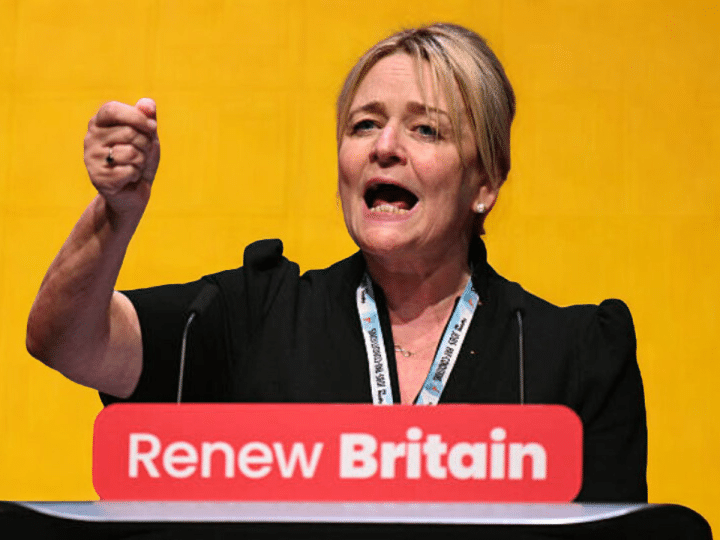

Unite officers have announced strike action against Sharon Graham and her management cronies later this month. They will be protesting what some describe as “Murdoch tactics” — efforts by Graham to block workers from organising.
Unite Officers Branch statement
In a statement, the group said:
For the first time in Unite’s history, its full time officials, who assist unite members up and down the country on a daily basis, will be taking industrial action themselves.
Quoting a spokesperson from the Unite Officers Branch, the statement continues:
Our dispute is over the decision by Unite Management to unilaterally recognise a staff association with no mandate or majority support from within Unite Officers. This is something that not only goes against a democratic decision taken by the majority of Unite Officers, but stands in contrast to the very principles of collective responsibility, lay member-led decision making, and basic trade union values that Unite as both a trade union and our employer stands for.
In any other Unite workplace, an employer who attempted the same course of action would be strongly resisted, and Unite Officers feel they must now lead by example in their own workplace.
On the 20th and 22nd of April our branch took part in talks through ACAS in good faith to try and find a resolution to this dispute. After an agreement was reached between the parties in the room, the leadership of Unite tried to impose changes which ultimately scuppered the deal and now means our strike will go ahead as planned.
The statement ends:
Most Unite Offices and Buildings will have pickets outside of them starting Monday the 27th of April.
Briefing note
In a ‘Community Unite Officers Branch briefing’ note, organisers explained how their mediation attempts had failed.
They said this was because bosses reneged on the agreement reached almost as soon as it had been made.
The note also outlined the tactics Graham’s regime had used to try to thwart their efforts to organise, by setting up a puppet staff association instead:
This dispute is a wholly unnecessary mess created by Unite management by recognising a staff association, with low levels of support, which undermines colleagues who voted by majority to recognise Community as their independent trade union.
A group of Unite officers called the “Unite Officer Group” was set up and was given collective bargaining rights by Unite management without any consultation with the Bargaining Groups and without majority support. Its reps were not elected and have no mandate as a bargaining unit. This group are Unite officers opposed to collective bargaining through our independent union.
This dispute is easily resolved. It is in the hands of Unite’s management to make the principled decision we would expect any trade unionist to instinctively make not to recognise a staff association.
If we don’t oppose this situation then any employer, regardless of our recognition agreement will argue that non members of Unite should have a representative body at all collective negotiations.
The week commencing 20th of April, our branch took part in good faith in talks through ACAS in a final attempt to resolve this dispute. We believed we had found a solution by agreeing to another trade union being able to seek recognition alongside ours if it could demonstrate it had support.
Sadly after everything was agreed, the leadership of Unite tried to impose changes to the ACAS deal which would allow the UOG to crown another trade union of their choice as being recognised with no consultation, checks or balances with our branch or Unite Officers more widely.
Trade Unions function through mandates not coronations and we were appalled at this last minute change. Unless and until the leadership of Unite put the original ACAS deal back on the table, our branch feels it has no alternative but to take industrial action.
Regional Officers
We are taking action in the interests of the bargaining unit and have a strong industrial action mandate. We call on all Regional Officers to take strike action.
Aside from crossing the physical picket line outside offices or visiting workplaces, there’s also a digital picket line that would be crossed by using laptops or phones to make any work related communications. We call on
Regional Officers to withdraw all labour.
Stand Down Officers & ASCs
We understand the precarious position of Stand Down Officers during this dispute and appreciate the support and solidarity already shown by the majority of our SDO colleagues.
Stand Down Officers & ASCs should respect our picket line. They should not cover any work of another officer’s allocation.
Staff and Organisers
We appreciate the support and solidarity from colleagues across the union in our dispute. We are concerned that whilst the strike is ongoing, pressure will be applied to ask staff and organisers to cross picket lines and cover the work of striking colleagues. We ask you to resist these requests.
We appreciate and support sister unions who have asked for assurances that no worker – permanent, temporary, or agency – would be expected or pressured to cross a picket line.
Lay members
The support we have received from the lay members has been overwhelming. We understand that lay members will feel the biggest effects of this dispute and appreciate their understanding. We are doing what we would want any member to do in the event of their employer undermining their union via an imposed staff association.
We invite lay members to support our action by lobbying Unite management to resolve this dispute, asking EC members to do the same and of course supporting picket lines, demonstrations and support the dispute via social media channels.
We are proud to be Unite Officers and are always open to discussing a resolution to avoid a lengthy and damaging dispute.
Anyone who has not been following Sharon Graham’s tenure as Unite general secretary could be excused for feeling shock at the idea of a union boss using anti-union tactics against union workers. But this is not a one-off or a new development.
Unite workers have taken repeated strike actions against Graham—and her husband Jack Clarke—appointed to a top job soon after she took over. This appointment came despite Clarke’s reputation for bullying and misogyny.
Unite’s lawyers, long after Skwawkbox first reported it, admitted that the union had destroyed evidence. This happened once Graham was running the union. Workers in Clarke’s previous department had gathered evidence against him. Moreover, Graham had asked colleagues to destroy this evidence of bullying and misogyny before she became general secretary.
Graham and Clarke vs. workers
Despite this record, Clarke was promoted shortly after Graham took over the union in 2021, overseeing Unite’s newly-created Bargaining and Disputes Unit (BDSU). Union insiders point out that Unite’s approval procedures for the promotion had not been followed. Prior to his promotion, Clarke was on a final warning from Unite over his conduct.
Like workers in his last department, BDSU staff were soon in dispute with the union and Clarke over alleged bullying by Clarke and his cronies. Graham and Unite have also spent large amounts of members’ money on lawyers’ fees on behalf of Clarke.
Anti-union union
Staff have also accused Graham and her management team of employing intimidation, suspension and anti-union tactics against staff in the dispute. This outraged Unite’s National Industrial Sector Committee (NISC) for the print and graphics sector, and the leaders of two unions representing Unite staff and officers.
So bad was this alleged conduct that more than 90% of Unite staff working at the union’s Holborn HQ voted for strike action. Three, some say four, of the five women who worked in Clarke’s department since Graham formed it left. Union sources say they also alleged bullying and abuse.
Unite’s staff branch unanimously condemned the union’s abuse of its staff. The influential Officers National Committee (ONC) accused Graham of using Murdoch-style anti-union tactics against workers and officers unionising and taking collective action.
Now, after fighting Graham’s moves to undermine their attempts to organise since the beginning of 2025 and seeing their Acas deal trashed, Unite’s officer group will begin strike action next week. It is an action that may well impact her attempts to get herself and her hangers-on re-elected this year.
Featured image via the Canary
By Skwawkbox


Once again, Trump is threatening the UK with tariffs, this time claiming that our Digital Services Tax unfairly targets American companies. This comes despite moves by Labour to appease US tech giants by easing competition enforcement.
While talking to reporters at the White House yesterday, Trump said:
We don’t like it when they threaten our American companies, because you are talking about our great American companies.
According to Tax Justice UK, the DST is a 2% levy on revenues from large digital platforms, including search engines, social media, and online marketplaces, and is projected to generate £4.4bn-£5.2bn between 2024 and 2029.
Trump’s threat is the latest push by American tech giants to reduce the UK’s Digital Services Tax collections.
The Computer & Communications Industry Association, whose members are American companies like Amazon, Meta, Google, Airbnb, Uber, Apple, among others, also called the UK’s DST a “distortive regime” and said “countermeasures” were inevitable.
UK digital service tax (DST) receipts hit £944M, up 17% year over year and now the largest globally, deepening concerns over a tax the U.S. deems discriminatory. As others step back from DSTs, the UK is letting the burden grow. Without a clear phaseout plan, renewed Section 301… pic.twitter.com/oWMTcL7iD8
— Computer & Communications Industry Association (@ccianet) April 23, 2026
CCIA also seemingly boasted about US trade bullying. It said that other countries “abandoned” Digital Services Tax because of US pressure.
Such opposition has contributed to enacted and proposed DSTs in Canada, Pakistan, India, and New Zealand being abandoned.
The fact that CCIA is claiming that £944m in tax revenue to the UK is somehow an unreasonable burden on firms with trillions in market cap, and is truly reflective of the US hubris.
Labour’s US push is damaging the UK
Referencing the Trump tariff threat, Diane Abbott said on Friday the US is no longer a reliable ally. She argued Britain needs a major foreign policy reorientation, noting that carrying on is too costly unless they drop the Digital Services Tax.
When a reliable ally turns out to be neither, it is time for a major reorientation of British foreign policy.
Carrying on in the same way is too costly.Trump says he will probably put a big tariff on the UK if it doesn’t drop the digital services taxhttps://t.co/ziY0LHYZ7o
— Diane Abbott (@HackneyAbbott) April 24, 2026
Former CMA chair Marcus Bokkerink wrote in the Times this month that the Labour government prefers US tech giants over homegrown competition, warning that the government appears committed to “entrenching the dominance of a small number of tech giants.”
He wrote:
Under new leadership and government direction, enforcement involving the so-called Big Tech firms has slowed significantly. The Google and Apple investigations concluded without substantive remedies. The planned investigation into Amazon and Microsoft cloud services was cancelled. The result has been to reinforce the status quo rather than inject fresh competitive dynamism.
Sharing Bokkerink’s comments, Cage International called Mandelson, Blair, and Gove traitors.
Atlanticists / Neocons have enabled USA/ Israeli hegemony via Big Business takeover since Reagan era.
Mandelson, Blair & Gove are the leading UK traitors.“This is the domestic side of the Mandelson scandal: Atlanticist elite deal-making that puts US
capital first.” https://t.co/0SjoGnF67m
— CAGE International (@CAGEintl) April 20, 2026
Disgraced Peter Mandelson appeared to be on the US’s side on Digital Services Tax. The FT reported in September 2025 that the former UK ambassador has argued Britain must embrace US-style tech regulation and not let technologies be “stifled with excessive regulation.”
By Nandita Lal

Friendship is fine, love is divine and liquor is quicker, but there is nothing like a feud, especially when it’s between writers, who habitually hurl around words like nunchucks. Gore Vidal wrote that, ‘The three saddest words in the English language are Joyce Carol Oates’ and ‘My first impression – as I wasn’t wearing my glasses – was that it was a colourful ottoman. When I sat down on it, it squealed. It was Truman Capote.’ Truman Capote wrote that Jacqueline Susann looked like ‘a truck driver in drag’. ‘Every word she writes is a lie, including “and” and “the”’, said Mary McCarthy of Lillian Hellman. Flannery O’Connor on Ayn Rand: ‘She makes Mickey Spillane look like Dostoevsky.’ I’ve had some lovely feuds with fellow writers. I called Martin Amis ‘A small man in every way it is possible for a man to be small’, and told Camille Paglia to ‘Fuck off, you crazy old dyke!’.
But the trouble – and the real fun, the sadistic rather than the sporting kind – happens when a bad writer thinks they can ‘take on’ a good writer. It makes it especially entertaining if the first is a man and the latter a woman, due to the element of ‘mansplaining’, which we will see magnificently quashed. Even better if the woman is beautiful and the man unattractive, giving it a feeling of a troll trying to capture a warrior queen.
I’m describing, of course, the current ‘feud’ between JK Rowling – Saint Joanne, protector of tomboys and benefactor of homeless women – and Alastair Campbell, most famous as Tony Blair’s Groom of the Stool. Campbell, I’d wager, wanted to be known as a writer for a very long time, all those years when he was a liar-for-hire; his 2015 publication, Winners and How They Succeed, was swiftly available on Amazon for the poignant sum of 98p. Then, in 2024, after becoming a successful podcaster, he published his 18th book, But What Can I Do? Why Politics Has Gone So Wrong and How You Can Help Fix It, ‘A call to arms to people to get more engaged in politics and to fight back against the wave of populism, polarisation and post-truth’. Campbell is obviously blissfully unaware that he is part of the disease rather than the cure. Populism exists purely because elitists like him believe that they know better than the rest of us, and have been shoving their cock-eyed fantasies down our throats since the turn of the century. Still, the book became a Sunday Times No1 bestseller, which obviously convinced the man who started out his scribbling career as a grubby pornographer that he was up there with the best of them. And now he has picked a quarrel with the most successful writer of our time.
There’s been back and forth on X this week, but it seems increasingly likely at the time of writing that Campbell has retired to lick his wounds. He is humourless, like most dry drunks and all on the ‘progressive’ side (just listen to any Radio 4 ‘comedy’ show), whereas Rowling – who once seemed something of a po-faced swot – has become funnier the more successful she is. An early sign that she was determined to enjoy herself – and hopefully offend haters into the bargain – was when she pictured herself in April last year, drinking a cocktail and smoking a cigar on a yacht with the words, ‘I love it when a plan comes together #SupremeCourt #WomensRights’. She writes a cracking social-media post, too. She responded to the proposed book-burning of her Harry Potter bestsellers with ‘Whenever somebody burns a Potter book the royalties vanish from my bank account – and if the book’s signed, one of my teeth falls out’.
The social-media spat with Campbell is more serious – if one can apply that word to this man. After years of refusing to interact with any of us ‘unkind’ types on the gender-realist team, as is characteristic of people who know that they are doomed to lose any sensible argument, Campbell recently indicated that he and Rory Stewart would be ‘happy’ to welcome JKR to their podcast, The Rest Is Politics, just in case she could use the publicity, one supposes. This was after years of putting misters before sisters in the debate about whether transvestites should be given extra human rights to other men, and of only having transvestite-friendly guests on their show. More in sorrow than in anger (the same way he must have punched that journalist who dared to mock Robert Maxwell, his former employer), he added that ‘previous attempts’ to get her on the pod ‘have been rebuffed’.
A million memes bloomed showing unattractive men pressing their clammy attentions on attractive women who wanted none of it. And then JKR herself landed a sucker-punch: ‘That’s because I wasn’t interested in being used to boost the viewing figures of a pair of exceptionally arrogant men whose understanding of this issue drips with classism and misogyny.’ The three women known as For Women Scotland, who were in London last week marking the anniversary of their legal triumph at the Supreme Court, offered themselves up for a ‘grilling’ on The Rest Is Politics instead. ‘We are still in London’, they said on their X account. ‘He can ask us on the podcast and call us toxic to our faces. If he has the guts.’ Answer came there none. The groom was only interested in non-Transmaids if they brought the spotlight with them.
As an embarrassing addendum to this story, it also came to note this week that Campbell has raised a Groom of the Stool in his own image, when podcast footage emerged of his daughter, Grace, sucking up to a transvestite by calling the FWS gals ‘old’ and ‘ugly’. I say this in a caring way, as Dame Edna would put it, but could it be that poor Grace owns a Magic Mirror? Or is it that she herself looks so much like a bloke in a wig and falsies that she wants a world populated with such men, so she doesn’t feel left out? That she is seriously wanting in judgement is reflected in the way she talks about her ghastly father: ‘I desperately wanted his approval’, she once told the Standard. ‘I was obsessed with him and impressed by him.’
Which brings us back to her dear old dad’s weird would-be spat with JKR. Whatever one thinks of adults reading Harry Potter books (I believe that they should have their voting rights removed, but I understand that I’m an outlier here), there can be no doubt that it’s pointless to take their creator on – she will run rings around you. Which makes me wonder whether some fellows want something… weirder from their interactions with her than to come out on top. (Especially when taking into consideration that she’s also been the subject of weird online stalking this week by another transvestite fan, the lawyer Jolyon Maugham, who claimed a friendship with her which she understandably denied.) It’s a cliché that the kind of men who seek out a damn good thrashing from Miss Whiplash in a Bayswater basement are, in everyday life, arrogant types – judges and the like – but there’s definitely something to it. Do the men who seek to provoke her simply want to be put in their place by her?
I suppose we’ll never know, but one thing is sure: JKR keeps Campbell awake at night, whereas not a minute of her slumber is troubled by him. The words of Diana Vreeland – ‘Elegance is refusal’ – have never been more appropriate than they are when applied to this latest social-media spat between the queen of all she surveys and a man who will – no matter how many times he sells out the Albert Hall ‘faster than the Foo Fighters’ and mouths ‘Rock Star!’ to himself in the mirror of a morning – always have the tell-tale whiff of Groom of the Stool about him.
Julie Burchill is a spiked columnist. Follow her Substack, ‘Notes from the Naughty Step’, here.


From approximately 3am on Friday 24 April, People Against Genocide began occupying the roof of the Leicester factory of UAV Tactical Systems. Elbit Systems, Israel’s biggest weapons maker, owns the company. UAV Tactical Systems produces drones for the Israeli military’s killer drone fleet, of which Elbit supplies over 85%.
Then at approximately 10am, an action taker from the group occupying the roof abseiled into the factory through a hole made with power tools. Whilst abseiling into the weapons factory, the action taker proceeded to damage the ceiling and air supply to the clean room.
The clean room is used to make essential components for Israeli military drones and, once contaminated, it could be out of use for several months.
The action involved four people from direct action group People Against Genocide. They successfully evaded recently-increased security patrols at the plant, and used 10m extension ladders to ascend over razor-wire fencing, gaining access to the factory roof. The team next began to use high-grade power tools to cut their way through the roof, to damage weaponry inside.
UAV Tactical Systems was originally a joint venture between Elbit and French arms giant Thales. But since January 2026, the Israeli weapons firm has owned the company entirely.
In addition to other military drones, UAV Tactical Systems is responsible for developing the Watchkeeper drone, based on Elbit’s Hermes 450 drone which has been central to the ongoing genocide in Gaza, and linked to the killing of seven aid workers from the World Central Kitchen in April 2024.
The UAV Tactical Systems plant has been the scene of numerous protests and actions over the years.
On today’s action, a spokesperson for People Against Genocide said:
Israel continues to slaughter people across West Asia, with weapons manufactured in the UK. We cannot stand idly by while Elbit continues to manufacture death and destruction here in Leicester.
Petitions, protests and lobbying decision makers who are actively involved in the Gaza genocide, has unsurprisingly, failed to create necessary change. Therefore, rather than appeal to politicians or the government, we’re bypassing the complicit decision makers and are taking direct action to shut Elbit down and disrupt the murderous Israeli war machine ourselves.
Elbit Systems markets its drones as “battle-tested” on Palestinians, and uses them to commit genocide in Palestine and to slaughter people across the region. For the people murdered by Elbit’s weaponry and for those whose lives are threatened everyday by Israeli military drones, today, we have shut Elbit down.
Featured image supplied
By The Canary

This surprisingly affordable Sri Lanka wellness retreat helped me completely de-stress

SBA refers $22 billion in suspected pandemic loan fraud to Treasury

Little Pepe gains spot as presale demand surges

Manchester United reach agreement with Casemiro over contract clause amid transfer speculation

US brings back mandatory military draft registration

Steven Gerrard disagrees with Gary Neville over ‘shock’ Chelsea and Arsenal claim | Football


-

 Fashion7 days ago
Weekend Open Thread: Theodora Dress
-

 Business5 days ago
Powerball Result April 18, 2026: No Jackpot Winner in Powerball Draw: $75 Million Rolls Over
-

 Politics7 days ago
Palestine barred from entering Canada for FIFA Congress
-
Entertainment5 days ago
NBA Analyst Charles Barkley Chimes in on Ice Spice McDonald’s Fiasco
-

 Tech6 days ago
Auto Enthusiast Scores Running Tesla Model 3 for Two Grand and Turns It Into Bare-Bones Go-Kart
-

 Politics5 days ago
Zack Polanski demands ‘council homes not luxury flats for foreign investors’
-

 Crypto World7 days ago
Russia Pushes Bill to Criminalize Unregistered Crypto Services
-

 Politics4 days ago
Gary Stevenson delivers timely reminder to register to vote as deadline TODAY
-

 Business2 days ago
Rolls-Royce Voted UK’s Most Iconic Trade Mark as IPO Register Hits 150
-

 Politics2 days ago
Disabled people challenge government SEND proposals over segregation concerns
-

 Politics2 days ago
Making troops accountable for war crimes threatens US alliance, ex-SAS colonel warns
-

 Crypto World7 days ago
Russia Introduces Bill To Criminalize Unregistered Crypto Services
-

 Politics2 days ago
Starmer handler McSweeney to be dragged from shadows by Foreign Affairs Committee
-
Politics2 days ago
Wings Over Scotland | How To Get Away With Crimes
-

 Politics2 days ago
Zack Polanski responds to home secretary’s taser threat
-
 Crypto World6 days ago
Kelp DAO rsETH Bridge Hack Drains $292M as DeFi Losses Top $600M in Two Weeks
-

 Politics2 days ago
‘Iran is still a nuclear threat’
-

 Crypto World3 days ago
New York sues Coinbase, Gemini over prediction market offerings
-

 News Videos7 days ago
AP Politics, Buggana Analyzes Reasons For Financial Instability Due To Amaravati
-

 Business2 days ago
The Job Benefits Most Men Don’t Know to Negotiate
You must be logged in to post a comment Login