
Politics
From the Coalition of the Willing to the Bayeux Tapestry: how France and the UK renewed their vows


Helen Drake and Pauline Schnapper argue that the rebuilding of interpersonal ties has been integral to the recent improvement in Franco-British relations.
The resilience of the Franco-British couple is quite something to behold. In 2026, one long decade on from the UK’s referendum decision to leave the European Union, France and the United Kingdom are drawing ever closer. Already in May 2025, France and the UK had finalised plans to exchange priceless, historical artefacts: the Bayeux Tapestry would come to the British Museum, which would lend its own Sutton Hoo Treasures to museums in Normandy. The British Museum’s exhibition is expected to draw record numbers of visitors, such is the appeal of the tale it has to tell of the centuries of entwined Franco-British history.
Yet Brexit had pulled at the fabric of that relationship, unravelling diplomatic certainties and routines and fraying interpersonal trust. Indeed, during those Brexit years, Franco-British bilateral relations were variously strained, fractured and frozen, and cross-Channel contacts dwindled. No summits were held in the five years between 2018-2023, and not only because of Covid restrictions; diplomats were barred from speaking to each other following the crisis over AUKUS, and the people-to-people and trade links that had for so long characterised the bilateral relationship were now hindered by Brexit constraints on the free movement of goods, services and people. The cordial personal connections typical of diplomatic exchange between heads of state and government gave way to bad-tempered if not downright rude personal exchanges, reaching their nadir during the Covid pandemic when UK Prime Minister Boris Johnson’s puerile humour landed very badly with his French counterpart President Emmanuel Macron, and when vaccine nationalism stoked mutual hostility and derision.
In 2026, the picture could not look more different. Barely a week goes past, it seems, without a decision or development drawing the two countries into a closer and tighter embrace. Already in 2022, Russia’s full-scale invasion of Ukraine triggered a hasty assembly of a ‘coalition of the willing’, where Paris and London jointly led 34 countries to prepare for a possible deployment of troops on the ground in the case of a ceasefire. Following the re-election of Donald Trump in 2024 and the chaos this unleashed, France and the UK have not only initiated new forms of collaboration but have also carefully unpicked some particularly knotty obstacles in the path towards closer bilateral cooperation, including at UK-EU level. This is the context, for example, of the UK’s grudging willingness to rejoin the EU’s Erasmus scheme (previously popular with French students) and, most recently, to expedite legislation allowing for dynamic alignment with certain EU trading standards.
Work to repair and celebrate the fabric of Franco-British ties had in fact started to take shape before the international environment imploded. In 2022, ephemeral UK Prime Minister Liz Truss’s decision to attend the first meeting of the European Political Community (EPC) in October 2022 in Prague, an initiative of French President Macron, was a first step. Following her departure from office, Rishi Sunak cleared the ground for the signature, in 2023, of the Windsor Framework on Northern Ireland by the UK and the European Commission, a development which itself explicitly paved the way for the first Franco-British summit since 2018, held in Paris on 10 March 2023 (at which, amongst many other things, the two sides reached an agreement to revert to pre-Brexit immigration controls on school visits from France).
In September of that same year, France hosted a state visit by King Charles III to France and, in the following April, the two countries ceremoniously celebrated the 120th anniversary of the Entente Cordiale, a set of agreements first concluded in colonial times. Keeping up the pace, in July 2024, the freshly-elected Labour Prime Minister Keir Starmer and his French counterpart President Emmanuel Macron agreed to hold a summit in July 2025 to be preceded by a state visit to the UK by President Macron, hosted in Windsor Castle by King Charles III. In the Joint Declarations of that 37th UK-France Summit, held on 10 July 2025, the French and British leaders committed themselves to the ‘delivery’ of significant initiatives in the fields of ‘defence, energy, industrial cooperation’, including a refresh of the 2010 defence agreements to cover nuclear and conventional fields, especially cyber and hybrid warfare. Challenges inevitably remain, notably in the context of tightening immigration law on both sides of the Channel, but the capacity and willingness to address them is tangible.
What accounted for the speed and depth of repair to the Franco-British relationship? Shared interests were clearly substantial and pressing, but left gaps in the overall picture. With reference to 14 high-level interviews conducted with diplomats and officials close to the relationship between 2020 and 2025, we propose a number of supplementary observations. We saw that both the practice and the culture of the relationship were disrupted, first by the shock result of the Brexit referendum itself; then by the tenor of the negotiations on the Withdrawal Agreement and TCA, which led to a breakdown in trust and diplomatic normality between the two governments; and of course, in time, by the phasing out of the intra-EU diplomacy that had involved routines of regular diplomatic interactions at different levels, alongside agreed procedures and means of communication.
We observed that the restoration of the relationship occurred not only as a result of shared interests (especially security of all kinds) and the continuity of institutions (especially in intelligence and defence) but via the creation of opportunities – these partly due to the passing of time, and also to the changing of personnel at various levels – for interpersonal contact, the refraining from incendiary language, the creation of friendly gestures and the recognition and repairing of the deep historical, sentimental fabric of the relationship. These viewpoints offer a more complex understanding of post-Brexit bilateral relations, and point to the possibility that the Franco-British relationship has every opportunity to thrive along as-yet uncharted lines, with signs of both sides having learned the lessons of the importance, to diplomacy, of the humanity of international society.
By Professor Helen Drake, Institute for Diplomacy and International Affairs, Loughborough University London and Pauline Schnapper, Professor of Contemporary British Civilisation at the University of Paris III Sorbonne Nouvelle.
For a longer discussion of the themes in this blog, see Drake, H. and Schnapper, P. (2026) ‘Franco-British Bilateral Diplomacy After Brexit, 2020–2025: Mending the Ties That Bind’. JCMS: Journal of Common Market Studies. https://doi.org/10.1111/jcms.70113. Selected wording in this blog is duplicated from that article.

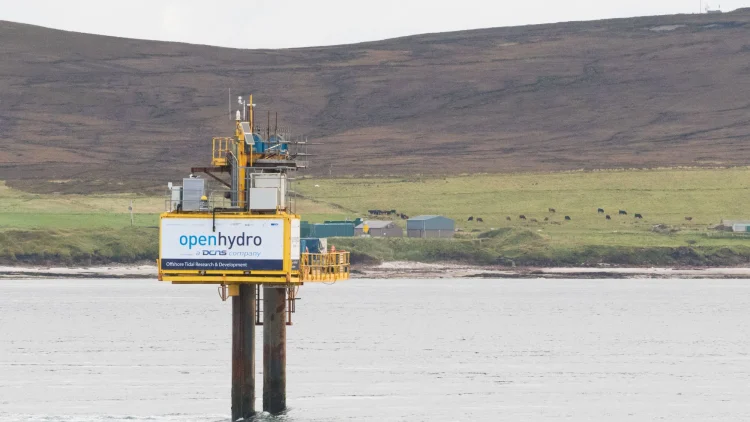

Testing tidal power turbines in real sea conditions, Orkney, Scotland (Alamy)

5 min read
Does this government want to lead the world in green energy innovation? On at least one front, the jury is still out.
The government’s recent renewable energy auctions contracted the lowest amount of tidal stream energy since 2022, adding just one additional turbine to Scottish tidal capacity. At a moment when the UK should be ramping up our deployment of cutting-edge energy technology, we appear instead to be slowing down.
The introduction of a ringfence for tidal stream in Allocation Round 4 (AR4) was a genuine gamechanger for the energy sector. It, and successive auction rounds, took tidal stream from 10MW of deployment to a pipeline of 140MW to be delivered by 2029.
Recent results, however, suggest that the momentum built in those early rounds is beginning to slip. Over the last four auctions, the contracted capacity has been 41MW, 53MW, 28MW, and most recently 21MW. The reason is straightforward: the level of support offered by the government has fallen.
As chair of the All-Party Parliamentary Group for Marine Energy, it is difficult not to be concerned that a technology so clearly aligned with the government’s own clean energy superpower ambitions now appears to be slipping down the list of priorities.
The UK could lead the world in developing, deploying and exporting tidal stream technologies – which offer a predictability that most other renewables cannot match. Tidal stream is a reliable renewable resource that has already provided more than 80GWh of electricity to the UK grid. As we transition to Clean Power 2030, and an energy system dominated by intermittent renewables, this predictability helps reduce system cost. It provides security for the moments when the wind does not blow and the sun does not shine.
Just as importantly, the economic benefits are already being felt here at home. Tidal stream projects are being deployed with more than 80 per cent UK supply-chain content, supporting jobs in coastal communities like my own and far beyond.
Orbital Marine Power’s O2 turbine, deployed in my constituency at the European Marine Energy Centre, is a good illustration of what that looks like in practice. The turbine was designed in Orkney and Edinburgh, and built in Dundee using steel from Motherwell, blades from the Solent, anchors from Anglesey and hydraulics from the Midlands. This is not just an energy story but a British industrial story.
There is also a growing export opportunity. Last year Proteus Marine Renewables deployed the first 1.1MW tidal stream turbine in Japan, designed in and exported from Scotland.
Despite our natural advantages, this is a race that the UK is at risk of losing if the route to market for tidal energy is not combined with the conditions for delivery.
The French government has announced plans to leapfrog the UK by contracting 250MW of tidal stream capacity by 2030, with a further 250MW expected shortly afterwards. Canada is preparing to deploy its first tidal stream array in the Bay of Fundy. In Asia, countries such as Indonesia, Japan and China are expanding their own programmes.
We have seen this story play out before. In the 1980s Denmark invested early in its wind energy industry, supporting domestic deployment with strong local supply chains. That early commitment gave Denmark a first-mover advantage which it still enjoys today. The Danish wind sector now generates more than £7bn annually in export revenue alone. The UK, by contrast, generates far more wind power but exports less than £2.4bn annually, and remains a net importer of wind technology, much of it from Denmark. We must not repeat that mistake.
In recent months several strategies on energy have been published, including from GB Energy and the National Wealth Fund. Disappointingly, tidal stream barely features and there is still little clarity about how these new bodies will support early-stage investment in the sector.
Despite its strong UK supply-chain content, tidal stream currently falls outside initiatives such as the Clean Industries Bonus, the Supply Chain Accelerator and the Industrial Growth Fund. That matters, because the 140MW of tidal capacity already contracted will only be delivered if the right conditions exist to gather in further investment.
There is still time to change course. The government’s decision to establish a Marine Energy Taskforce in June 2025, charged with developing a roadmap for the UK’s tidal stream potential, was a welcome step – but a roadmap on its own will not deliver turbines in the water. What is required now is practical action.
That is why I support the industry’s call for three clear steps: a clear route for funding for CfD-backed tidal stream projects from GB Energy and the National Wealth Fund; increased funding for tidal stream in CfD Allocation Round 8; and a commitment for the UK and devolved governments to implement the recommendations of the Marine Energy Taskforce.
Tidal stream is no longer an experimental technology. It is proven, predictable and ready to scale. If the UK is serious about becoming a clean energy superpower, it cannot afford to turn its back on the power in our tides.
Alistair Carmichael is the Liberal Democrat MP for Orkney and Shetland, and chair of the APPG for Marine Energy


This week we learned that Keir Starmer pressured the Foreign Office to give Matthew Doyle a job, which looks very bad for Starmer because Doyle notoriously maintained a friendship with a convicted sex offender.
As you’d expect, most Labour politicians had the sense to not defend the prime minister. The exception to this was Baroness Margaret Hodge, who said “there’s nothing wrong with friends saying, ‘Are there any jobs around?’”
"There's nothing wrong with friends saying 'are there any jobs around?'"
Labour peer Baroness Hodge responds to reports that Downing Street considered giving a diplomatic role to the prime minister's then-director of communications Matthew Doyle.#Newsnight pic.twitter.com/KEPlgR6nCV — BBC Newsnight (@BBCNewsnight) April 21, 2026
Starmer and Hodge have more in common than we’d like
Hodge’s intervention is unsurprising given she’s linked to a historic paedophile scandal herself.
Here's an old ITV News report about how Margaret Hodge ignored reports of child sexual abuse when she was leader of Islington Council.
But despite this, Tony Blair made her Children's Minister.
It’s always jobs for their mates, no matter how dodgy they are. Nothing changes. pic.twitter.com/UppO8aHPZB
— Wokerati Marty (@WokeratiMarty) April 22, 2026
Labour links
Regarding Doyle, Skwawkbox reported the following for the Canary this week:
Keir Starmer’s pressure on the Foreign Office to ignore Israel-supporting paedophiles’ pals is not limited to Peter Mandelson. He did the same with ‘Labour’ peer Matthew Doyle, who has since been suspended for his support for convicted child sex offender Sean Morton.
Starmer knew about Doyle’s links to Morton when he appointed him. Which means he also knew when he pressured the Foreign Office to give Doyle a job.
Starmer put pressure on the FCDO to give Matthew Doyle a job and not tell the Foreign Secretary. Another person suspended because he was close to a paedophile. — David Maddox (@DavidPBMaddox) April 21, 2026
That is stunning.
Labour’s unseemly links to the worst imaginable criminals don’t end with Doyle and Mandelson either as we’ve reported:
- Starmer’s other paedo problem: silence on links of new Zionist peer
- Yet another Labour figure charged with sexual offence
- Liron Velleman pleads guilty: another Labour Friend of Israel paedophile
- Zionist former Labour MP Conor McGinn charged with sexual offence
- Labour deselects 3 councillors for wanting inquiry into paedophile
- LBC has paedo-sting Labour freak on to discuss Burnham
Anti-corruption champion? Oh please.
Back to Hodge, Victoria Derbyshire asked:
Can I ask you then, Margaret Hodge, as the anti-corruption champion, what you make of this Sir Olly Robbins revelation regarding Matthew Doyle
Oh yeah, we forgot to mention that she’s the anti-corruption champion.
Margaret Hodge is the Prime Minister's Anti-Corruption Champion.
Starmer made her a peer in 2024.
Amazing stuff. https://t.co/Yzb5vZz2LZ
— Owen Jones (@owenjonesjourno) April 22, 2026
As the ‘champion’, you’d expect her to take a hardline stance against any hint of impropriety, right?
Sadly, this is how she actually responded:
Well, let me say, the first thing is Matthew Doyle has said clearly to me, and I hope he has to you, that he didn’t know it was happening, he didn’t want a career in the department.
That’s great, but the scandal is Starmer trying to get him the job, not whether Doyle knew about it. This is what’s known as a ‘strawman argument’, in which someone presents an easier-to-argue point that sounds relevant but isn’t.
Hodge continued:
What I make of it… Matthew Doyle was about to lose his job. If somebody you’re working with is about to lose your job, there’s nothing wrong, I think, in saying, are there any other jobs available?
We’re sorry, Margaret, but we’re pretty sure we wouldn’t do this if our friend got sacked for continuing his dealings with a sex offender. We especially wouldn’t do it if we were the literal prime minister.
Next, Derbyshire noted:
He had no experience in foreign affairs.
Hodge hit back:
Well, it doesn’t matter.
Call us old fashioned but we think people working in government should have some understanding of the matters they’re governing. When that doesn’t happen, you end up with anti-corruption champions who publicly condone corruption.
https://t.co/EspLZhLtYG pic.twitter.com/CE7tyC2kVO
— Zarah Sultana MP (@zarahsultana) April 22, 2026
Cronyism
Derbyshire later asked:
Margaret Hodge, is that not cronyism?
For reference, this is the Cambridge dictionary definition of ‘cronyism’:
The situation in which someone important gives jobs to friends rather than to independent people who have the necessary skills and experience.
So yes, it’s the textbook definition of cronyism.
Hodge’s waffling response went on:
Just think about it in your own life. Think about it here at the BBC. If people lose their jobs in the BBC, you may say, have you thought of looking there for a job? Have you thought of looking there?
In other words, Hodge thinks it’s fine because she’d do the same thing. Good grief.
At this point, it seems corruption is so normalised in Labour Party politics that they don’t comprehend how bad they’ll sound when they open their mouths.
Featured image via BBC
By Willem Moore
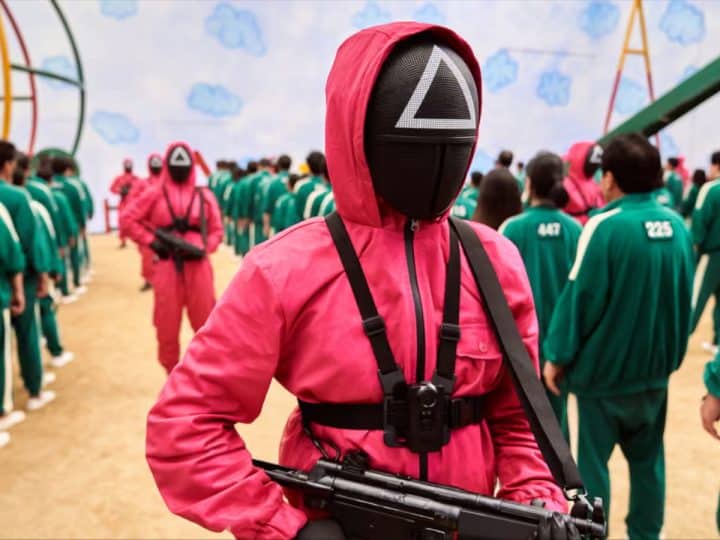

A former British commando and veteran of several wars has told Declassified UK that he’d never seen anything as bad as Gaza. Ex-marine David MacIntosh worked in a militarised aid distribution point for the Gaza Humanitarian Foundation (GHF). He explained how a child was gunned down by Israeli forces in September 2025.
He told Declassified in an interview published on 22 April:
I’ve been to Afghanistan, I’ve been Libya, I’ve been everywhere. I’ve been in active war zones. I’ve never heard as much gunfire and ordinance being dropped as I’ve seen over there. It’s non-stop.
MacIntosh worked for GHF in 2025. He explained how a ‘green light, red light’ system was set-up to hand out aid. The Afghanistan veteran made the comparison with the TV show ‘Squid Games’, where massed contestants/prisoners are shot if they make an error:
There’s no time to wait around. You have that green light and you have the red light. And that’s why people have compared it to the Squid Games, that thing. And it makes sense because literally it’s a living reality of that.
Adding:
It really is sick, how it’s been done.
The first GHF whistleblower, former US soldier Anthony Aguilar, described how GHF sites were also extensions of Israeli military operations. Aguilar said Israel even collected biometric data for military use from the sites.
Israel gunned down a child
Many Palestinians were killed and wounded around the aid points. The sites were officially dismantled in November 2025, Drop Site News reported on 19 November:
For the four and half months that GHF operated in Gaza, more than 2,600 Palestinians seeking food were killed and over 19,000 wounded by Israeli forces or security contractors at or near aid distribution sites.
UG Solutions, the private military firm responsible for recruiting mercenaries for the project, is still active. UG even recruited members of a far-right biker gang to crew the sites.
MacIntosh told Declassified that when aid seekers running for food stepped outside a ‘safe zone’:
They’ll [the Israelis] fire, whether they’ll fire at them… fire over the head, fire at the feet. This is where a lot of the deaths happen.
Gaza is an apocalypse
The former Royal Marine described the scenes in Gaza as apocalyptic:
It’s heavy, heavy activity, heavy bombing from the IDF. And we drive in through all this… You can see it’s like a Terminator 2: Judgment [Day] movie. It’s apocalyptic.
Adding:
The whole of Gaza is flattened. A few stand-up buildings, but those stand-up buildings have still been smashed.
Israeli forces shot dead a child in an incident MacIntosh called “straight-up murder”. The child was on a berm – a raised bank of earth often formed by bulldozers as a fortification:
What happened was… young lad had been on the berm probably 20 meters outside of camp…. I’ll just paint the picture… 12 years old.
MacIntosh described the steps in GHF’s rules of engagement. Personnel in the site started with a warning:
So, they throw a smoke grenade next to him. Obviously, it’s not lethal. Smoke grenade just to say, “Hey, come on. Let’s go.”
Mackintosh said an Israeli sniper then shot the child:
Then moments later they’ve shot him. 762 [7.62mm round/bullet] to his shoulder… You’re not surviving that, especially [a] 12 year old. He drops to the floor.
The child staggered to a nearby bridge and fell again:
It’s insane what was done. It was [a] straight-up war crime. It’s – and you’ll see the report – it’s straight-up murder.
MacIntosh told Declassified he came forward because war crimes and atrocities were still happening in Gaza. You can watch the full interview here.
GHF has now officially ended operations in Gaza. However, UG Solutions has had talks about working with US president Donald Trump’s colonialist Board of Peace.
Featured image via Netflix
By Joe Glenton



4 min read
Last month, I made my first visit to Mongolia as Minister for the Indo-Pacific.
Our UK-Mongolia relationship is based on shared democratic values, with our governments, civil society, Parliamentarians and media working side by side to build a more secure and prosperous future for our nations and our people.
The world we face now is increasingly volatile, with global events shaping our lives – wherever we are. We must continue to build partnerships around the world to face our shared challenges together.
That’s why my visit was about translating partnership into practical results: securing opportunities for British business, strengthening economic security, and backing a partnership that has purpose and ambition for today and for tomorrow.
The UK was the first Western nation to establish diplomatic relations with Mongolia over sixty years ago, and that relationship has become ever more important in recent years. Mongolia’s economy is growing by 5–6 per cent a year, and the country is rich in the critical minerals on which the global economy increasingly depends.
At the heart of my visit was the annual UK–Mongolia Political Dialogue, which I co‑chaired with Mongolia’s Deputy Foreign Minister. In Ulaanbaatar, this partnership is taking shape beneath the city streets. I discussed plans for the city’s first metro system – a transformative project that would cut congestion, reduce pollution and improve daily life for millions. British engineering expertise from projects like London’s Elizabeth Line is supporting those plans, backed by a strong UK Export Finance offer. If this project proceeds, it could generate significant export opportunities for the UK, supporting skilled jobs across our rail, engineering, and professional services sectors.
 The benefits of partnership were also clear during my visit to the Gobi Desert, where I visited the Oyu Tolgoi copper mine, one of the largest in the world and operated by Rio Tinto, a British‑Australian company. With an ore body the size of Manhattan, the copper and other critical minerals extracted here are essential for everything from electric vehicles and renewable energy to data centres and the technologies that underpin modern life. At Oyu Tolgoi, UK linked investment is supporting communities and strengthening secure, sustainable supply chains the world depends on.
But our partnership is not only about minerals and megaprojects. Long‑term prosperity depends on people, skills, and opportunity. Working with UNICEF and Mongolia’s Ministry of Education, the UK is supporting Mongolia’s decision to make English its official second language through the provision of English‑language teaching, including in remote and nomadic communities. This partnership has already reached more than 147,000 young people, opening doors for the next generation of Mongolians. As one student said to me at our event with UNICEF, learning English “didn’t just teach her a language, it opened up a world of opportunity.”
Alongside this, the UK’s Chevening programme continues to support talented Mongolians to study in the UK, many of whom will go on to shape politics, business and civil society back in their own country in the years ahead. These alumni links are a powerful investment in future prosperity – strengthening long‑term ties that benefit both our nations.
On my visit I also saw the importance of women’s leadership and civil society to economic success. I met female parliamentarians, business leaders and journalists, and supported UK‑backed work examining the barriers women face in public life. Inclusive economies are stronger economies. Women own two thirds of small and medium sized businesses in Mongolia and are represented at senior levels across heavy industry sectors too. Our tour of the Oyu Tolgoi mine was led by women engineers, and the driver of the “road train” – the long underground lorry, was a young woman.
Maintaining traditional sectors is important alongside new development. In the South Gobi, I also met with a herder family and saw first-hand Mongolia’s nomadic traditions. The family we met owned 100 camels and hundreds of livestock, while their sons have taken up opportunities as engineers at the mine and continue to support their parents as they can. It was a reminder that sustainable growth must work for communities as well as markets – and that responsible investment is essential to long‑term stability.
Together the UK and Mongolia are investing in the future – in the next generation, in shared opportunity and in a partnership that will deliver in the decades to come.
Politics
Politics Home | Private Sector Offered To Lend Government Experts To Help Design Energy Bill Support


4 min read
The government turned down private sector experts being seconded to Whitehall to help create a new targeted energy bill support scheme.
PoliticsHome understands that departments were in talks with the energy sector about data analysts being seconded to the civil service to help design a scheme in response to the Iran war, but decided against it.
The revelation comes amid questions over whether the government has the data it needs to build a scheme that ensures financial support reaches households who need it most amid the global energy crisis triggered by the Middle East conflict, without spending huge amounts of public money.
Ministers have said that any new support for household energy bills will be targeted and not a repeat of the universal scheme rolled out by the then-Conservative government in 2022, when Russia’s invasion of Ukraine put extreme pressure on global energy supplies.
Earlier this month, Chancellor Rachel Reeves told the BBC: “I want to learn the lessons of the past because when Russia invaded Ukraine, the richest, the best-off third of households got more than a third of the support. That makes no sense at all.”
Speaking to MPs last month, Prime Minister Keir Starmer said he was “acutely aware” of how much that policy cost the taxpayer and “acutely aware of the state of the public finances”. The 2022 energy bill package is estimated to have cost the Treasury around £50bn.
The government has already announced support for households reliant on heating oil, and has said it will set out a wider package of help for energy bills in the months ahead.
The Ofgem price cap, which determines the maximum amount that suppliers can charge people for household energy, is expected to rise significantly in July as a result of the pressure put on global supplies of gas and oil by the ongoing war in Iran. Consultancy Cornwall Insight currently forecasts that it will rise 19 per cent from £1,641 to £1,929.
PoliticsHome understands that in recent weeks, parts of the energy industry have offered to assist officials by providing fully-funded staff on secondment to help develop targeted energy bill support. However, despite initially being open to the proposal, the government turned it down, concluding that the additional support is unnecessary.
As the government comes under pressure to set out details about how further support will work, there is growing doubt about whether the mechanism it needs to effectively deliver targeted support currently exists in Whitehall.
Adam Bell, a former government energy special adviser and director of policy at Stonehaven Consultancy, told PoliticsHome it was “just obscene” that a mechanism to target energy bill support had not already been created following the 2022 energy crisis.
“The crisis was four years ago. We have failed to act in time for the next crisis, which is just obscene,” said Bell. “It’s not like they weren’t told over and over again.”
He also said it was “depressing” that the offer of staff had been rejected, stating that a lot of data work to target energy bill support “has already been done” by the private sector, while the government remains “slow and unable” to do the same.
Simon Francis, co-ordinator at the End Fuel Poverty coalition, said it was “disappointing” that the government had rejected the offer of external support as it “clearly” does need it.
“It’s something certainly ministers have realised, if they hadn’t already realised it in the last couple of months, that there needs to be a lot more work done at speed to get those systems in place,” he told PoliticsHome.
He said that basing support on means-tested benefits is an inadequate approach, as it will result in other people who need protection from rising energy bills being excluded.
“Energy firms themselves understand and know who is struggling. They know their customer base, they know who’s on priority service registers,” Francis said, adding that the government should be looking to “break down those blocks between sharing of information”.
A government spokesperson told PoliticsHome: “We are working at pace to explore options to deliver targeted energy bill support and are in regular contact with the energy sector.
“Internal government resource was found to begin this work quickly, and we will continue to work with both public sector bodies and industry to draw on the right expertise as needed.”


Israel has violated the ceasefire in Lebanon 220 times in less than three days, murdering three people and wounding seven, including four paramedics.
220 Ceasefire Violations by Israel in Lebanon in 3 days
Since the ceasefire went into effect on 17 April until 19 April (noon), Israel has committed 220 violations in Lebanon, according to the Lebanese National Center for Scientific Research and National Center for Natural… pic.twitter.com/rTjdwouoMV
— Legal Agenda (@Legal_Agenda) April 21, 2026
Since the ceasefire came into effect at midnight on 16 April until midday on 19 April, Israel performed 50 illegal mining and bombing operations, 52 artillery shelling operations, seven raids and airstrikes, 30 aerial violations, and four phosphorus or sonic flares. All of these were in direct contravention of the ceasefire.
Israeli occupation forces carry out detonations in several villages in South Lebanon, breaching the ceasefire agreement. pic.twitter.com/0C4MP5xfUp
— PALESTINE ONLINE
(@OnlinePalEng) April 22, 2026
Just two hours after the ceasefire came into effect, Israel bombed Nabatieh, the al-Abbassiya intersection north of Tyre, Haris, and the city of Tyre itself several times.
JUST IN
: Israel Breaks Ceasefire in Lebanon in Less Than 2 Hours
More than 7 violations recorded in under an hour. Airstrikes hit Nabatieh, the al-Abbassiya intersection north of Tyre, Haris, and Tyre itself MULTIPLE times.
Israel also warned the Lebanese military and… https://t.co/L7N5cvJDqT pic.twitter.com/OdVv3vBxvO
— Ryan Rozbiani (@RyanRozbiani) April 16, 2026

The violations have continued with Israel blowing up civilian areas in Deir Siryan and Houla.
Israel Continues Carry Out Massive Detonations & Air Strikes In South Lebanon
One of the latest ceasefire violations occurred in the Deir Siryan area. pic.twitter.com/gWCoLxTe5x
— MintPress News (@MintPressNews) April 20, 2026
Israeli attack on the town of Houla. pic.twitter.com/GwabTmmtD6
— courtneybonneauimages (@cbonneauimages) April 22, 2026
What happened to international law?
Even without the ceasefire, all of these attacks are direct contraventions of international humanitarian law. Lebanon is a sovereign nation and Israel’s illegal attacks are nothing short of ethnic cleansing.
Israel may claim to be ‘defeating terrorists’ and ‘disarming Hezbollah’, but as the Canary has reported multiple times, Hezbollah would not actually exist if Israel had not invaded Lebanon in 1982.
Additionally, armed resistance is not illegal under international law. A United Nations General Assembly resolution states:
The General Assembly,
Reaffirms the legitimacy of the struggle of peoples for independence, territorial integrity, national unity and liberation from colonial domination, apartheid and foreign occupation by all available means, including armed struggle;
In December last year, the Canary’s Mohamad Kleit wrote:
I saw nothing but rubble. Destroyed houses, lost dreams, and graffiti in Hebrew promising an Israeli return to take over the border towns. This statement on the wall was accompanied by other racist, colonial slurs against Lebanon, drawn on what remained of houses and shops, by the Israeli occupation forces during the 2024 war.
What this makes abundantly clear is that the attacks on Lebanon are not some new attempt to disarm Hezbollah. They are part of a prolonged and systematic colonial attempt to invade the land.
Israel has a track record of ignoring ceasefires
Since October 2025 alone, Israel has committed 2,492 violations of the Gaza ceasefire, which equates to an average of 13 violations per day.
Israel has murdered 775 Palestinians, including 207 children, 86 women, and 21 elderly people. It has also wounded 2,171 people, more than half of whom were children, women or elderly.
Additionally, Israel is still holding about 34 square-kilometres beyond the agreed withdrawal lines. It has also blocked repairs to electricity, water and sewage infrastructure.
According to Drop Site News, only 228 aid trucks per day are entering Gaza, compared to the 600 that were agreed. Gaza is then receiving only 38% of the agreed humanitarian aid. Similarly, it is receiving only 14.8% of the required fuel deliveries.
Where’s the media coverage?
Of course, the majority of the Western media are ignoring Israel’s ceasefire violations in both Gaza and Lebanon.
Under the cover of a “ceasefire,” Israel continues daily attacks on Lebanese towns and cities with deadly consequences for civilians. https://t.co/afw9CTqnLW
— Occupation Movie (@OccupationMovie) April 21, 2026
Similarly, and unsurprisingly, the US is also ignoring Israel’s violations.
Israel, like it’s sugar daddy, the United States, basically just ignores the international rule of law. They make a million promises and they break a million promises. They are a criminal rogue state. https://t.co/HwjTa9miSj
— Walter J. Black (@captain_stavros) April 21, 2026
Therefore, Israel will continue to get away with murdering innocent people and destroying civilian infrastructure.
A ceasefire by Israel is not a real ceasefire. Israel still keeps bombing and killing innocents.
The world needs to take actions to demand that Israel stop. This is a violation. This are war crimes. https://t.co/fpbvIs7m7s
— #ProRakyatFreePalestine
(@reviewstuffs) April 22, 2026
When Hezbollah launches rockets towards Israel, Western media parrot IOF lines, calling it a “blatant violation of the ceasefire”. Of course, Hezbollah was aiming at Israeli soldiers while the IOF blows up homes, schools, and hospitals.
Meanwhile, the whole world turns the other way while Israel — a rogue terrorist state — repeatedly violates every ceasefire it has ever signed, murdering innocent innocent people in the process.
Feature image via NBC News/ YouTube
By The Canary


This week the Combat Antisemitism Movement posted about a dark Hangman poster inside tube carriages on the London underground.
We agree that it’s “twisted”, but it’s twisted because it’s true.
— Combat Antisemitism Movement (@CombatASemitism) April 20, 2026
 London Underground, April 18, 2026: “Hangman” advertisements in paid public space on a London Underground train use twisted accusations against Israel. pic.twitter.com/4Ua7ZSejQ8
Zionist Israel passed a law to hang Palestinians
This is the advert in full:

Author and rancid Israel apologist, David Deutsch, responded as follows:
The Advertising Standards Authority requires that all advertisements in the UK be “legal, decent, honest and truthful”. This one is only legal.
We agree it’s not decent but fuck decency. Israel is exterminating human beings for the crime of their birth.
At the same time, we disagree that it’s dishonest as Maddison Wheeldon wrote for the Canary:
Fascist Israel minister Itamar Ben-Gvir has pushed through a law in the Knesset which will authorise the death penalty – by hanging – of Palestinians. Specifically, this law will apply by default to Palestinians who have been tried in military court and found guilty of committing a fatal attack.
She added:
These sentences would be imposed following convictions in Israeli military courts, where authorities often pursue charges that would not constitute crimes under international humanitarian law.
Denied proper access to legal counsel and basic procedural rights, defendants face proceedings that amount to little more than sham trials designed to legitimise killing.
Horrifyingly, there are currently 9,300 Palestinians in Israeli detention, whose fates will now hang in the balance – either left to suffer and languish in prison, or face the noose.
Ben-Gvir and other politicians wore noose pins on their suits to demonstrate their support for this policy of extermination. After passing the law, they celebrated with champagne.
Israel's NS Minister Ben Gvir pops champagne to celebrate Knesset's passage of a death penalty law for Palestinian detainees. He and his party members wore golden noose-shaped pins.
"Soon we will get them one by one."
Netanyahu, who almost never votes, also came in to say… pic.twitter.com/VLXRd1nwcz — Chay Bowes (@BowesChay) March 31, 2026
Others celebrated in fancy dress.
Combating antisemitism ≠ shielding Israel from (very) legitimate criticism.
Here is deputy speaker of the Knesset dressing up as the law referred to in that image: pic.twitter.com/Bxya23Sefj
— Smooch (@Isa_Smooch) April 22, 2026
If you’re unfamiliar with all this, you may not believe what you’re looking at. However, this is how Israel and its defenders have gotten away with it for so long. Their crimes are literally so depraved that people can’t believe they’re true.
Dilly Hussain, deputy editor of the news platform 5 Pillars, had this to say:
Stating facts = “Antisemitism”
Humanity cannot hate Israel and Zionists enough.
— Dilly Hussain (@DillyHussain88) April 20, 2026
The truth hurts
Sometimes, the truth is indecent. But maybe the easily offended should be appalled by Israel’s barbarism and not by the people pointing it out.
In the meantime, we advise that people like Deutsch make a complaint to the Advertising Standards Agency. They may not get anywhere with it, but it will draw more attention to Israel’s ongoing genocide.
Featured image via X/ Combat Antisemitism Movement
By Willem Moore

3 min read
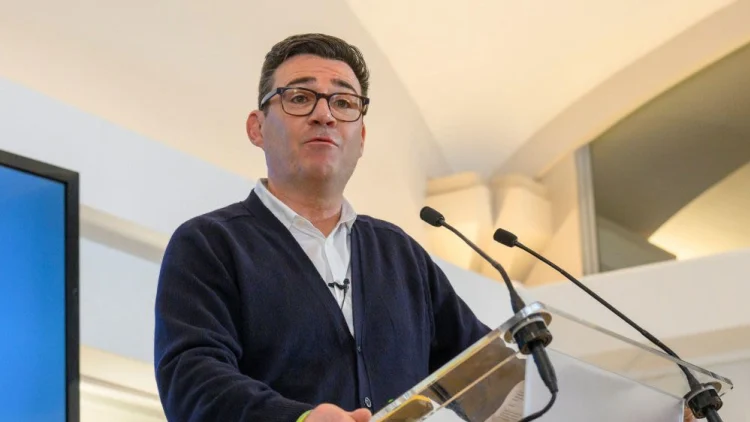
Andy Burnham is set to campaign in London ahead of the local elections as Labour tries to avoid major losses in the capital.
The Mayor of Greater Manchester, widely seen as a leading candidate to succeed Keir Starmer as leader, is planning to knock on doors in Islington in north London this week, according to literature seen by PoliticsHome, and is expected to visit several more boroughs between now and 7 May.
The capital is one of Labour’s biggest headaches heading into those elections next month, with the party under pressure from the Greens to its left and Reform UK to its right.
A YouGov poll published on Wednesday forecast Labour to win 15 borough councils, down six from the last time they held elections in 2022. The biggest beneficiary of Labour’s fall in support is expected to be the Greens, with YouGov projecting Zack Polanski’s party to win in Hackney, Lambeth, Lewisham and Waltham Forest.
In Islington, where Burnham is due to campaign in the coming days, the Greens are expected to eat into Labour’s vote share and finish second (37 to 31 per cent), according to YouGov.
The former cabinet minister is also planning to visit the borough of Lewisham in south London, PoliticsHome understands, where YouGov today gave the Greens a narrow two per cent lead over Labour (35 to 33 per cent). Bar a brief interlude in 2006 when it was under no overcall control, Labour has controlled Lewisham for nearly 60 years.
Burnham wanted to be Labour’s candidate in the Gorton and Denton by-election earlier this year but was blocked by the Prime Minister and other senior Labour officials.
Green candidate Hannah Spencer won the contest in Greater Manchester with 40 per cent of the vote, pushing Labour into third place. Many Labour figures believe the party would have kept hold of the seat had Burnham been the candidate.
The House magazine reported earlier this month that the Burnham operation had started reaching out to Labour MPs, senior party officials and trade unions about a second attempt to return to the House of Commons.
Karl Turner, the Yorkshire MP who recently had the Labour whip removed, predicted on last week’s episode of PoliticsHome podcast The Rundown that Burnham would be Labour leader and prime minister “in the not too distant future”.
The consensus within Labour is that Burnham would be in competition with former deputy prime minister Angela Rayner to secure the support of the left and soft left of the party in any future leadership contest.
Starmer’s position is coming under renewed pressure over further revelations about his decision to appoint Peter Mandelson as UK ambassador to the US.
Olly Robbins, who was sacked by the Prime Minister as the most senior civil servant in the Foreign Office last week over his role in the Mandelson affair, told MPs on Tuesday that No 10 showed a “dismissive attitude” to Labour peer’s security vetting.
Starmer has repeatedly apologised for the original decision to appoint Mandelson, but insists that due process was properly followed throughout the process.
Told to resign by Conservative leader Kemi Badenoch on Wednesday, Starmer said: “I was elected by the British people because they [the Tories] let the country down for 14 long years.
“Whatever she says, whatever noise they make, nothing is to distract me from delivering for our country.”
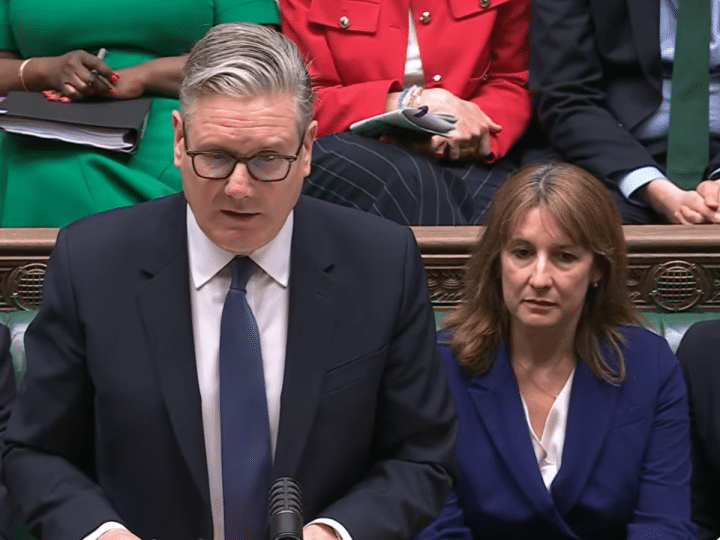

Keir Starmer faced many disgruntled MPs during Prime Minister’s Questions (PMQs) as he continued to deny any responsibility for his decision to appoint Peter Mandelson.
However, despite making jabs at Conservative leader, Kemi Badenoch, for “rushing to judgement” on the government’s processes and of MPs’ knowledge of Mandelson’s murky ties, Starmer once again highlighted his own woeful lack of judgement.
The prime minister keeps trying to shift the blame. Speaking in PMQs on 22 April, he claimed Olly Robbins made a “serious error of judgement” by failing to inform him that the security vetting advised against clearance and red-flagged the appointment as “high concern”.
Nevertheless, most people would be able to make an objective judgement that a man sitting on the board of Kremlin-linked defence company, Systema, is pretty damn dodgy. A position, as Badenoch underscored, Mandelson sat on “long after the first invasion of Ukraine in 2014”.
Badenoch subsequently destroyed Starmer’s measly defences by highlighting how the former ambassador sat on this board as a non-executive director, likely to his own profit, “long after” Russia’s illegal invasion of Ukraine in 2014.
Apparently, Starmer needed that in a paint-by-numbers explanation that this clearly is a conflict of interest to have an appointed official likely drawing profits from war crimes against a supposed ally, Ukraine.
Mandelson is in the inner circle of the Trilateral-Epstein elite who run the global economy like a protection racket. The normal rules don’t apply to him. Funny though watching ‘Mr Rules’ squirming to explain away having being rumbled. https://t.co/iujGiljyss
— Hon. PolProf of Agile Ceremonies (@CeilNoyle) April 17, 2026
PMQs: All allegations put to bed by Robbins’ evidence
True to form, Keir Starmer tried to scapegoat Olly Robbins, stating the allegations were “put to bed” by his sacking. Robbins has been apportioned full blame by the Labour government, for any and all misjudgment surrounding the appointment of Epstein pal, Petie Mandelson.
On the other hand, Starmer has only exposed his own poor judgment as our elected leader. Given his past as former head of the Crown Prosecution Service, this is frankly embarrassing for any elected official, let alone the PM.
After all, most Britons would surely expect their PM to be capable of making objective decisions without needing officials to spell out the blatantly obvious.
Getting his just desserts, Starmer has delivered another own goal for this failing, occupied government.
Israel is also at work in our corridors of power
On top of that, the rest of us can also clearly see the pro-Israel influences at play in the government’s decisions, which only adds to the urgency for the PM to resign his position. Power and privilege should depend on competence — not, as Badenoch outlined, on the current standard being defended.
She said:
He promised them probity, and what he has given them is cronyism and an old boys’ club where Matthew Doyle is being proposed as an ambassador. Ridiculous.
This is referring to yet another example of the power afforded by Starmer to pro-Israel stooges with more paedo-ties. Doyle campaigned for convicted sex offender, Sean Morton.
This week, the Canary wrote about the nefarious influence of Zionists on our elected officials:
…significant donations from Israeli lobby groups to MPs and political parties appear to buy political allegiance and diplomatic cover for Israel. This is only evidenced by the International Criminal Court (ICC) warrants outstanding for senior leaders in Israel for genocide and war crimes.
Warrants which the UK has repeatedly violated, welcoming war criminals to our shores. In fact, David Cameron even threatened ICC prosecutor Karim Khan to block warrants in the first place.
This development provides further evidence that our so-called democratic process faces repeated undermining by a colonialist and violent Zionist project.
People are absolutely sick of dishonesty in British politics as Zarah Sultana has strongly condemned.
As I said yesterday: Keir Starmer is a barefaced liar. https://t.co/FDpQnGCvHy
— Zarah Sultana MP (@zarahsultana) April 21, 2026
The PM’s future is no longer tenable
It is deeply uncomfortable to find resonance and legitimacy in the judgement of the leader of the Conservatives. Nonetheless, this just makes clear how far Labour has sunk into the morally bankrupt abyss. Moreover, it signifies just how far the party has shifted to the far-right.
Most people across the country can see the prime minister repeatedly lying to hold on to power and privilege. Actions like Sultana’s intervention in the Commons the other night — when she refused to back down from calling Keir Starmer a liar — further drive that message home to the electorate.
Badenoch is also managing to annihilate Starmer’s defence, which can only confirm that the PM’s future as leader is just no longer tenable. Frankly, it hasn’t been for quite a few years.
Therefore, MPs must apply sustained pressure now and make it clear that the public is done with excuses.
Instead, unfortunately for Labour, voters actually want to trust their elected officials and the power and influence they wield.
Featured image via the Canary
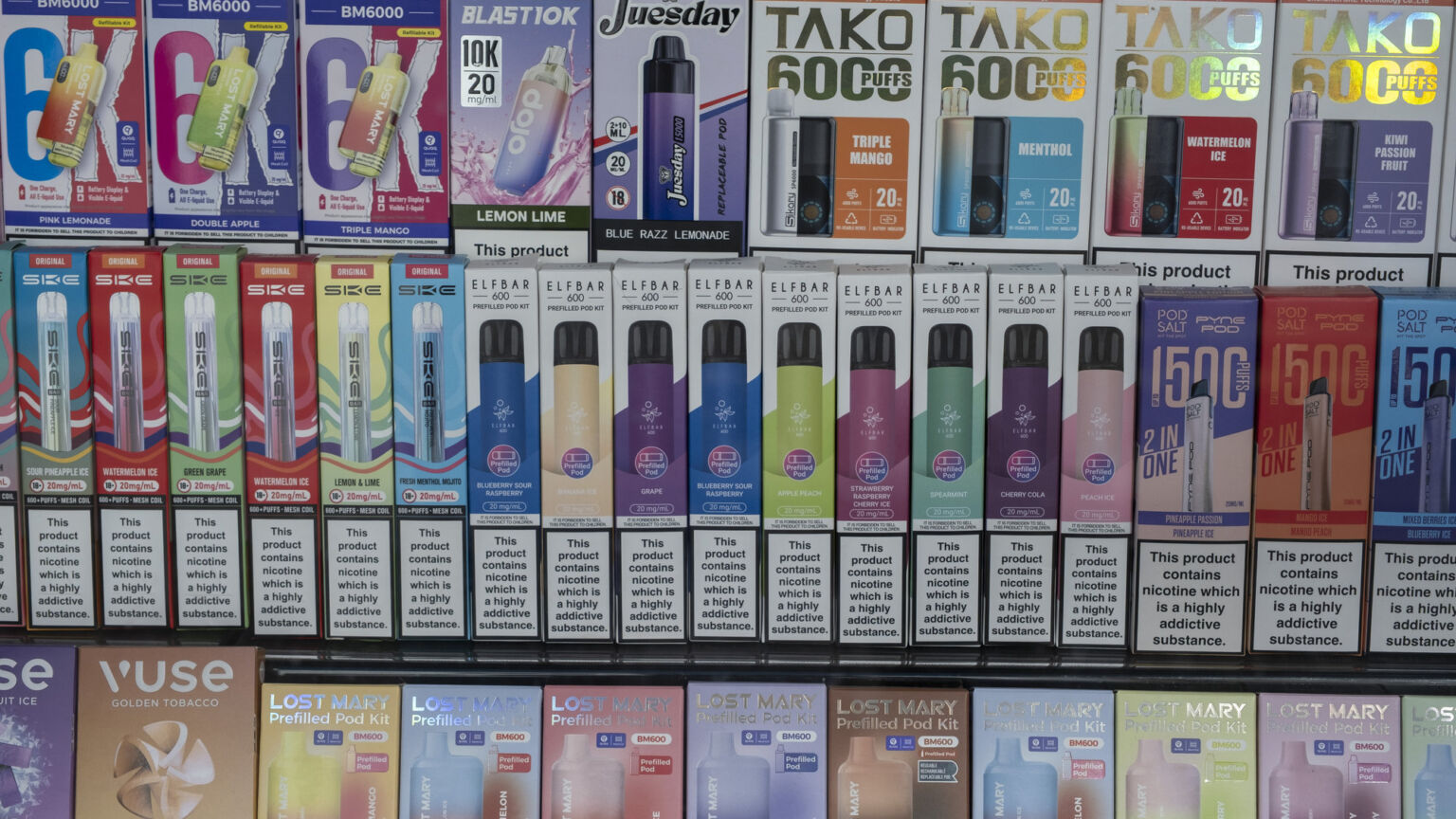
The post Tobacco and Vapes Bill: the stupidest law ever passed in Britain appeared first on spiked.

5 books that will completely change your brain chemistry on money

Could UK interest rates go up?

SUI Crypto DeFi Protocol Volo Exploited as Team Commits to Absorbing User Losses

Manchester United reach agreement with Casemiro over contract clause amid transfer speculation

Steven Gerrard disagrees with Gary Neville over ‘shock’ Chelsea and Arsenal claim | Football

US brings back mandatory military draft registration


-

 Fashion5 days ago
Weekend Open Thread: Theodora Dress
-

 Sports5 days ago
NWFL Suspends Two Players Over Post-Match Clash in Ado-Ekiti
-

 Politics5 days ago
Palestine barred from entering Canada for FIFA Congress
-
Entertainment3 days ago
NBA Analyst Charles Barkley Chimes in on Ice Spice McDonald’s Fiasco
-

 Business3 days ago
Powerball Result April 18, 2026: No Jackpot Winner in Powerball Draw: $75 Million Rolls Over
-

 Crypto World5 days ago
Russia Pushes Bill to Criminalize Unregistered Crypto Services
-

 Tech4 days ago
Auto Enthusiast Scores Running Tesla Model 3 for Two Grand and Turns It Into Bare-Bones Go-Kart
-

 Politics3 days ago
Zack Polanski demands ‘council homes not luxury flats for foreign investors’
-

 Politics2 days ago
Gary Stevenson delivers timely reminder to register to vote as deadline TODAY
-

 Tech7 days ago
‘Avatar: Aang, The Last Airbender’ Leaked Online. Some Fans Say Paramount Deserves the Fallout
-
 Business6 days ago
Creo Medical agree sale of its manufacturing operation
-

 Business6 hours ago
Rolls-Royce Voted UK’s Most Iconic Trade Mark as IPO Register Hits 150
-

 Crypto World5 days ago
Russia Introduces Bill To Criminalize Unregistered Crypto Services
-
 Crypto World4 days ago
Kelp DAO rsETH Bridge Hack Drains $292M as DeFi Losses Top $600M in Two Weeks
-

 Sports6 days ago
British climbers complete new route in Swiss Alps
-
 Tech6 days ago
Ford EV and tech chief leaving automaker
-

 Sports6 days ago
“Felt Much Better Today”: Josh Hazlewood Opens Up On His Recovery Win Over LSG
-

 Entertainment7 days ago
Ruby Rose Accuses Katy Perry Of Sexual Assault, Police React
-

 Business6 days ago
Cheaper Doritos and Lays helps PepsiCo win back struggling snackers
-
 Entertainment6 days ago
Clavicular Says Streaming May Not Work Without Substances
You must be logged in to post a comment Login