
Politics
GOP Rep. Andy Ogles ousted in Tennessee primary

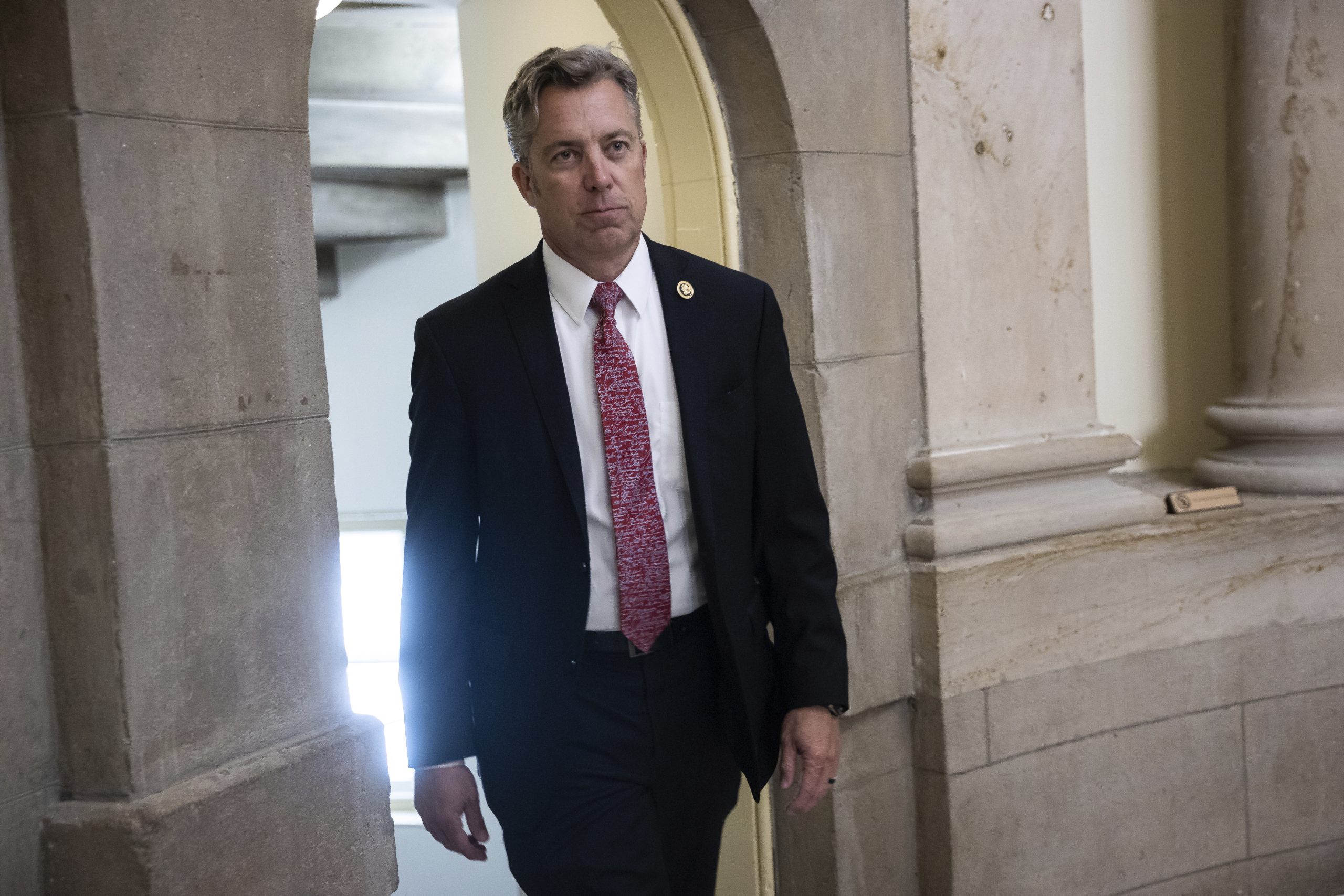

Tennessee GOP Rep. Andy Ogles was ousted by a Republican challenger on Thursday, a blow to President Donald Trump and Speaker Mike Johnson who tried to boost his campaign in the final days.
Former Tennessee Agriculture Commissioner Charlie Hatcher won the GOP primary for the 5th District after outraising Ogles, receiving a late endorsement from GOP Gov. Bill Lee and seeing a flood of outside money on his behalf from a renewable energy super PAC.
Ultimately, that spending, coupled with a newly redrawn district that forced Ogles to reach new voters, helped end his reelection bid. Ogles has also faced a number of controversies since he was first elected in 2022.

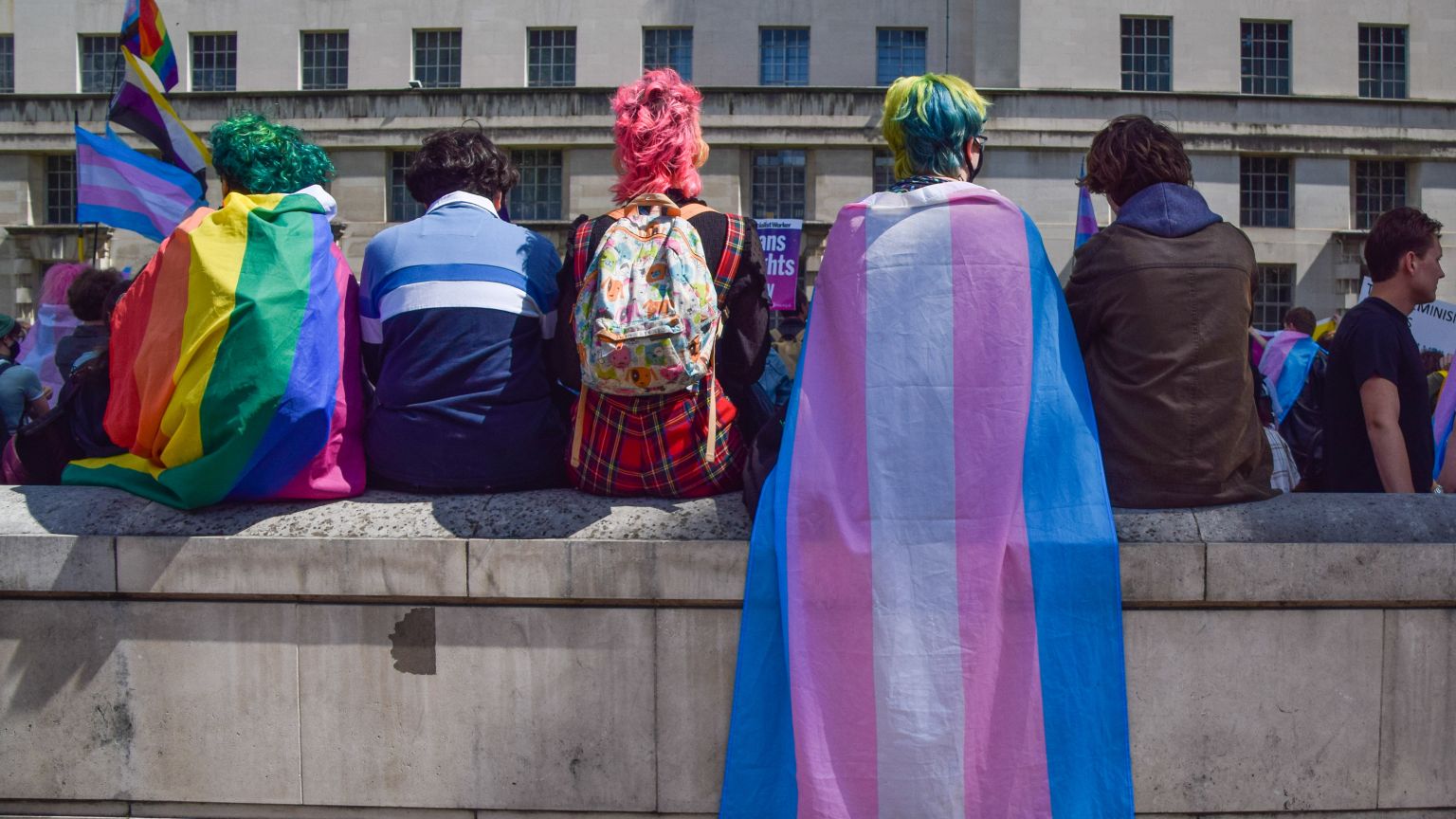
One of the questions I’m asked most often is: ‘Don’t you ever get tired of talking about trans?’ Which is fair enough given my work at Genspect, which advocates for a non-medical approach to gender distress; my book, When Kids Say They’re Trans; and the Channel 4 documentary I presented, Trans Kids: It’s Time to Talk.
But the honest answer is no. Not because of ‘trans’ per se, but because of what the trans issue has uncovered. The subject itself isn’t endlessly fascinating – I’ve always been a generalist and never been a single-issue zealot. However, the trans issue is a prism through which almost every major cultural, political, ethical and psychological question of our age is refracted. The debate around transgender identity exposes problems that extend far beyond medicine or mental health. That’s why I no longer define trans as an ‘unfolding medical scandal’ but an ‘unfolding medical and institutional scandal’. To name just a few areas:
Medicine and healthcare
‘Gender medicine’ has revealed what happens when medicine becomes consumer-driven. Technical advances have made possible a growing number of elective medical interventions – gender medicine, commercial surrogacy, assisted dying, some forms of abortion – which are increasingly presented as ‘healthcare’ simply because they are medically possible. The distinction between treating illness and fulfilling consumer demand has become dangerously blurred.
Then there’s the mess currently being created by the mental-health industry, which is never more prominent than within the trans debate. A culture of over-medicalisation, over-diagnosis and affirmation has transformed healthcare from what was once a process of exploration, uncertainty and psychological growth into little more than emotional validation. Therapy has shifted from helping people understand themselves to helping them feel affirmed and supported. Psychiatrists seem to slip into prescribing a pill for every ill, psychologists increasingly offer a diagnosis for every ill, while psychotherapists like myself slide into empathy and affirmation for every ill.
Academia and education
Like healthcare, universities increasingly resemble consumer-driven businesses, anxious to keep their customers happy. I had always imagined universities as places whose purpose was to move us from darkness into light through the pursuit of truth. The poor quality of much research on gender medicine exposed just how vulnerable academia has become to ideology.
Until you study the literature yourself, it’s difficult to appreciate just how shoddy the majority of trans research is, with tiny qualitative studies featuring self-selected participants reporting satisfaction, extraordinarily high rates of participants lost before they can be followed up, and remarkably little emphasis on objective outcomes such as employment, educational attainment, psychiatric admissions, hospitalisations, physical health or suicide.
The low quality of transgender research also led me to realise that many other disciplines – including vast sections of feminism, queer studies and postmodernism – rest on similarly fragile foundations.
It’s not only universities, though. Until quite recently, many schools across the Western world were shaped, however imperfectly, by Judeo-Christian values. As religion receded from education, the vacuum has been increasingly filled by postmodern ideas about identity, power and truth, often with remarkably little public debate about the consequences. Ironically, the resulting dogmatic culture within schools today reminds me very much of my own Catholic education.
The startling speed with which transgender ideology became embedded in education systems across the Western world exposed just how easily a new orthodoxy can become accepted, taught and defended by entire institutions. The trans issue has also led me to realise how schools today are increasingly viewed by policymakers not as places of learning but as opportunities for social engineering. As education appears to be less about transmitting knowledge and more about shaping young minds, fundamental questions about its direction become unavoidable.
Journalism
Investigative journalism once prided itself on holding power to account without fear or favour, and on comforting the afflicted while afflicting the comfortable.
Today, too much of it is characterised by fear, conformity and self-censorship. Mainstream journalism is either dying or being radically transformed by the digital age. Editors are scrambling to keep publications alive, retain subscribers and survive in an unforgiving online marketplace. The result is a chaotic, nervous and reactionary mainstream that feels a very long way from Bernstein and Woodward. Outlets that pander to trans identities and preferred pronouns tend to also toe the elite line on every other contentious issue.
Politics
The trans debate also crystallises how politicians, just like editors of mainstream media, generally behave like market researchers rather than leaders. Every difficult decision is filtered through polling, electoral calculation and fear of upsetting vocal activist groups. At the same time, more and more policy is shaped by NGOs and quangos that often exercise significant influence without corresponding accountability. Leadership requires the courage to persuade the public that something is right; too often today, politicians simply tell the public what they think it wants to hear.
The new left
The decision of the left to swap class politics for identity politics has been both maddening and fascinating to watch through my splayed fingers. The unanticipated – and, let’s face it, largely unfathomable – swerve of large sections of the contemporary left towards advocating for the lifelong medicalisation of children who will one day become infertile and sexually impaired has yet to be fully analysed. Nobody yet knows why this movement that once championed the downtrodden, the importance of fair economics and equal rights now embraces self-reported identity, subjective truth and moral certainty, but it is important to reflect on it.
Contemporary censorship
My experiences of being cancelled, censored and censured for speaking truthfully about trans issues have shown me that modern censorship isn’t like Soviet Russia or the East German Stasi. There are no jackboots ensuring everyone stays in step. Instead, contemporary censorship more closely resembles the culture I experienced growing up in the Catholic Church, where public shaming made the policing of acceptable thought remarkably effective. Today’s censorship is led by relentless finger-wagging moralism from the new left and reinforced by professional regulators, social media moderation, reputational threats and institutional pressure.
The arts
This has probably been my greatest disappointment (with some honourable exceptions, of course). Where are the protest songs? Where are the novels exposing the madness of contemporary society? Writers, filmmakers, musicians and artists have historically challenged orthodoxies and taken risks. Instead, the trans issue has revealed vomit-inducing pretence, sanctimony and cowardice in the arts. Art should be unsettling and thought-provoking, not sanctimonious and self-serving, yet here we are.
Sport
Few areas depend more obviously on measurable reality than competitive sport. Fair competition based on strength, speed and weight is foundational to athletic competition. Yet even here trans ideology has managed to overwhelm common sense.
Arguably, it was sport that finally brought the trans issue to the attention of the wider public. Watching men punch women in a boxing ring seems to have awakened an atavistic instinct in many men to protect women from male violence. Organisations such as SheWon and HeCheated, documenting the growing tally of lost medals, lost scholarships and lost opportunities, are helping to expose the real-world consequences of the trans issue in these Alice in Wonderland days.
Sex
The trans debate raises much broader questions about sexuality itself. How should society handle issues such as pornography, grooming, censorship and consent? What does it actually mean to be lesbian or gay in an era where biological sex is increasingly treated as optional? It has also reopened questions many assumed had already been settled. What does it mean to be male or female? How much of our identity is rooted in biology? Are sex differences fundamental or merely social?
Also, the trans debate, via autogynephilia, asks how society should respond to sexual deviance. What should we do when a man – and it is almost always a man – performs a sexual fetish in public? How should children be protected from sexual content?
I remember when I was a young adult arguing passionately against censorship and in favour of unrestricted free expression. Then my opponent stopped me in my tracks by saying that he didn’t want his eight-year-old watching Blue Velvet. I suddenly realised that defending absolute freedom for adults also meant accepting that children would be exposed to sexual violence, gimp masks and sadomasochism. The trans debate highlights how freedom and protection sometimes pull in opposite directions, and that every society has to decide where it draws that line.
Parenting
The trans issue has also exposed the consequences of over-parenting and the many issues with the child-led approach. A generation repeatedly told they are uniquely special can come to believe that they really are exceptional. Some children respond by coming to believe that ordinary human limitations are intolerable, and their identity is uniquely special, exceptional and should be celebrated and carefully protected.
The impact of contemporary child-rearing, combined with a culture that glorifies youth and beauty, has produced a generation shaped by social media, cosmetic surgery, filters, relentless comparison, therapeutic language and rampant individualism. Never before have adolescents and young adults had so many tools for self-expression and self-promotion while often appearing so uncertain about who they actually are. In a culture that prizes authenticity above almost everything else, they have become preoccupied with discovering their ‘true self’, while seeming paradoxically more performative, more anxious and more inclined to use products and medical interventions to create their ‘real self’.
While too much responsibility is lumped on parents today, at the same time, the diminishing power and status of parents is notable. Over-policing and nanny-state officials have led to children being removed from home, just because parents have informed their daughter that she was not really a boy. While this may seem far-fetched, it is important to know that the UK government’s new Conversion Practices Bill promises to criminalise parents who insist on speaking the truth to their trans-identified children. Within this new culture, identity has become the new secular religion, and ‘identifying as’ has become one of its central and sacred rituals. In this context, parents are regarded as ‘dangerous’ if they don’t affirm the child’s new identity.
The explosion of special needs
The extraordinary rise in autism, ADHD and other diagnoses raises profound questions. Are we identifying genuine need more effectively, or are we increasingly medicalising ordinary human variation? What kind of society are we creating if ever larger numbers of young people grow up believing they are fundamentally impaired?
With 40 per cent of students at Stanford University receiving disability accommodations, and more than 100,000 adults in the UK receiving benefits with ADHD as their main condition, these questions can no longer be dismissed as marginal. The trans debate brings the tension into sharp focus because so many gender-distressed young people are neurodivergent, receive significant accommodations and, at the same time, are regarded as fully capable of consenting to irreversible medical interventions.
The contradiction was starkly illustrated by the recent case raised by the MP Gregory Stafford in the UK parliament of a 23-year-old who required a key worker to accompany him wherever he went because of his extensive emotional support needs, yet this vulnerable adult was nevertheless approved for NHS genital surgery just last year.
Extreme tolerance
Perhaps the most sobering lesson of the trans debate has been how quickly ordinary people adapt to extraordinary situations. We like to imagine we would have resisted the great moral failures of history. Yet practices that would have been considered plainly unacceptable only a decade ago are already becoming normal. Hilary Cass recently described the case of a two-and-a-half-year-old who had been socially transitioned by well-meaning but profoundly misinformed parents.
The internet has allowed people with the most extreme interests and behaviours to find one another, organise, normalise themselves and increasingly demand recognition as protected identities rather than simply being tolerated as oddballs within the community. At the same time, the ideal of ‘live and let live’ has gradually evolved into a culture of extreme tolerance, where every lifestyle, every identity and every preference is presumed to be acceptable.
Karl Popper’s paradox of tolerance remains as relevant as ever. A civilised society cannot survive if it refuses to defend the very norms that make civilisation possible. The speed with which the boundaries of the acceptable can shift has reminded me just how frighteningly fragile civilisation really is.
Philosophy
The trans issue has highlighted the biggest question of all – what makes you, you? Is there such a thing as an authentic self? Are we born with an inner identity waiting to be discovered, or is identity something gradually formed through our relationships, experiences and responsibilities? What happens when different people’s needs conflict? Can compassion for one group create injustice for another?
The digital revolution
Finally, of course, there is the internet itself. Until Elon Musk’s acquisition of Twitter / X, our limited ability to analyse, criticise or question trans issues online was distinctly alarming. Yet online life has supercharged social contagion. Ideas have always found ways to spread, of course – from dancing crazes to eating disorders, suicide clusters and moral panics. However, digital platforms and social media have amplified and spread transgender ideation at unprecedented speed and scale.
We are living through a technological revolution comparable to the arrival of the printing press, one that is simultaneously reshaping knowledge, authority, identity, relationships and politics. The Twitter Files exposed how a small number of tech bros have the capacity to shape public discourse, suppress information and influence democratic debate on a global scale. The rise of block buttons, deplatforming, algorithmic censorship and now AI-driven content moderation (and social engineering) is already shaping our world in ways we have yet to fully understand.
So no, I don’t get tired of talking about the trans issue. Not because I think transgender identity is the most important question facing society. It’s because the trans debate isn’t really about trans – it’s about the kind of society we are becoming. This issue is the clearest lens through which we can study the disintegration of almost every major institution across the Western world.
Stella O’Malley is the director and founder of Genspect.
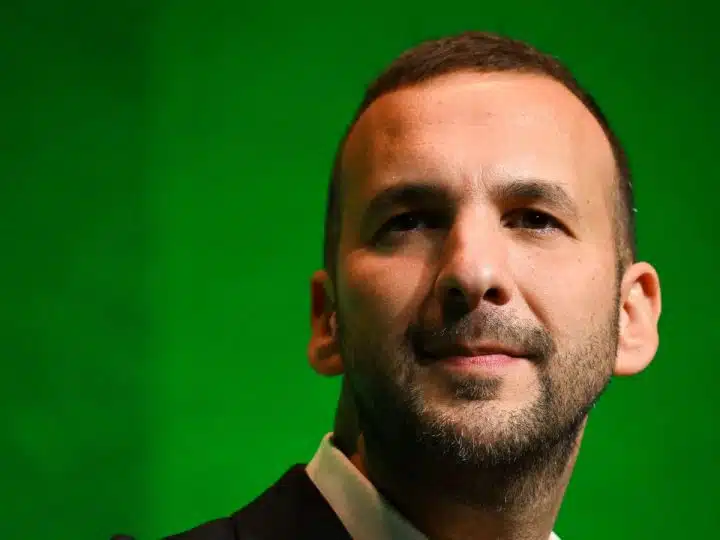

Zack Polanski, “I called this press conference.. Because of the shocking scenes of wildfires”
“3,000 people have died because of the extreme heat”
“I want to draw attention to do everything we can to push the prime minister Andy Burnham to take action on what is such a crucial… pic.twitter.com/pv5QtGfS9X
— Farrukh (@implausibleblog) August 6, 2026
Green Party leader Zack Polanski has delivered a ‘reality check’ to the Prime Minister over Britain’s climate emergencies. He ‘sounded the alarm’ about the horrific impacts of extreme heat and wildfires in the UK.
Speaking at the end of yet another heat health alert, Polanski accused new Prime Minister Andy Burnham of failing to act. He stated that extreme weather poses threats to safety, food and water supply, and our very way of life. Speaking with all necessary urgency, Polanski warned:
What we’re living through right now are likely some of the least extreme summer temperatures we’ll experience in our lifetimes.
The Green leader set out a series of measures he called on Burnham to take to keep people safe from extreme heat, including financial support to keep homes cool and cool spaces in every area. This is needed desperately after an estimated 3,000 people died as a result of dangerous temperatures in recent months.
Warning that the crisis risks food and water shortages, Polanski called on the government to bring water into full public ownership. He says that water companies have failed to secure our water supply, allowing billions of litres to be lost to leaky pipes while failing to build any new reservoirs. No new reservoirs have been built for over three decades. Meanwhile, an estimated 20% of treated water in England and Wales is lost — up to three billion litres per day.
Polanski also cited British farmers warning of the risk of empty shelves, after flooding followed by drought led to the UK facing its worst harvest on record. The Green leader also calls for record-profiteering fossil fuel giants to cover the costs of adapting to increasingly regular extreme weather events and fire risks.
Met Office study attributes 2,700 excess deaths to heatwaves in May and June
Polanski sounds the alarm
Polanski delivered the emergency press conference with all the needed gravity of a Johnson-era Covid announcement. He was joined at the press gathering by an ex-soldier, a GP and a firefighter.
They all described the consequences of extreme weather they’d seen in their work. Broadcaster Chris Packham attended, warning about the many present and future risks of the climate poly-crisis.
Highlighting the dangerous, wilful hyper-normalisation by the British establishment of climate breakdown, Polanski told the nation:
The scenes we have seen play out on our television screens are frankly apocalyptic. And yet the response from our government is to pretend none of this is happening. It’s an astonishing dereliction of duty from those whose first responsibility is to keep us safe.
And from the media — with some brilliant and notable exceptions — we’ve seen more clamouring for North Sea drilling in the last few weeks than raising the alarm on climate breakdown.
While our country has come together — to offer shelter to those who had to leave their homes due to wildfires, to check in with elderly neighbours, to care for those who are sick because of the heat — the government has been far, far too quiet.
Polanski went on to outline what urgent steps need taking:
In the immediate term, we need to keep people safe from extreme temperatures. That means a free, accessible cool space in every local area. And financial support for households to heatproof their home.
Second, we need a robust wildfire prevention strategy. A fire service with the resources it needs to tackle blazes when they come. That must include firefighting helicopters where needed, and not again seeing the shocking sight of requiring a charity to step in to contract a private firm to help fight the fires.
Right-wing press blame anything but human-made climate change for deadly wildfires
‘Complete strategic blindness’
The ‘Green Menace’ took aim at the corporate structures dragging the country to the point of peril. Polanski called out private profiteering at the public’s great expense:
And this should be funded by taxing the fossil fuel giants who are profiting from fuelling these infernos.
Finally, to secure our water supply, prevent droughts and protect our food system we need to bring water back into public hands. Right now, money is flowing out of our hands into the pockets of shareholders – just like water is flowing out of these companies’ leaky pipes in the middle of a drought.
Carl Benfield, a former soldier and engineer, spoke of his experiences alongside Polanski:
As a soldier and an engineer, I was used to conducting threat assessments and defensive plans. It is clear to me that climate change is the single greatest threat to human security we face. Removing climate resilience from our national defence priorities was an act of complete strategic blindness.
You cannot defend a nation if you refuse to acknowledge the very force that makes its infrastructure obsolete, burns its countryside, and threatens its food and water supply.
As Polanski and Benfield make clear, it’s time to acknowledge reality. It’s time to act — now.
Polanski slams climate inaction as heatwaves cost us billions
Featured image via the Canary

Ecuador’s coast has become a crime scene, and Washington’s fingerprints are all over it.
The Canary interviewed two local humanitarians, published under pseudonyms for their protection. They generously offered us first-hand knowledge of the repeat attacks inflicted upon Manabita communities.
On June 14, prosecutor Alexandra Bravo was gunned down outside a café in Manta by a hitman on a motorcycle. Her sister, who threw herself in front of her, died too. Five shell casings. No sign of the police detail supposedly guarding her.
Bravo was, shockingly, the twenty-sixth member of Ecuador’s justice system murdered since 2020. She was the second person investigating US-linked state crimes killed in that same week.
What was she investigating? Three fishing boats — the Fiorella, the Negra Francisca, the Don Maca — hit by drone strikes in the Ecuadorian Pacific this year. Survivors say they were dragged aboard a US-flagged patrol ship, hooded, beaten, and starved for eight days before being dumped in El Salvador as “shipwreck survivors.” Thirty-six came home. Eight are still missing.
Ecuadorian lawyer investigating US drone strikes assassinated
So, why did they sink?
Tommy, a humanitarian worker with decades of experience documenting abuses on Ecuador’s coast, asks:
So, why did they sink? Why were those vessels attacked? There is no explanation.
Not from the Ecuadorian navy, nor from the port captaincy that ignored distress calls. Certainly there’s no clarity coming from Washington. US State Department war footage shared online first claimed the boats were trafficking drugs. Sure enough, the department went silent the moment survivors started talking.
Meanwhile, the receipts keep piling up. Drop Site News obtained tracking data placing the US Coast Guard cutter Bertholf near the Negra Francisca at the exact hour it was bombed. This was before the ship went dark and resurfaced off Costa Rica. Then, on the same day, tortured fishermen were handed over to Salvadoran authorities. (El Salvador’s ruthless president Nayib Bukele has made the country a US prison colony.)
NASA thermal imaging confirms the boat fire. Eyewitnesses even filmed the cutter itself. Yet the Coast Guard’s answer came resoundingly with flat-out denial: it
does not disclose cutter movements during law enforcement missions.
This is Operation Southern Spear — Washington’s extrajudicial bombing campaign. It’s now claimed 221 lives across the region, under the banner of fighting “narco-terrorism.” It involves no courts, no evidence and no accountability. Ecuador, under Miami-born billionaire president Daniel Noboa, has become its testing ground.
Noboa recently tore up a constitutional ban on foreign military bases that 60% of Ecuadorians had voted in late 2025 to keep. He’s let the FBI set up a seemingly permanent shop. He handed US forces the diplomatic immunity that now shields the very personnel accused of torturing his own citizens. All this from a president whose own family shipping company has been caught trafficking cocaine to Europe.
This is not incidental violence. It’s policy for oligarchic and military capture of Ecuador’s state machinery.
Trump’s war in Ecuador is about elite control, not about drugs
Ecuador’s reign of state terror
Describing a wave of forced disappearances carried out by army patrols, Tommy explains:
Between the military or public forces in general and criminal gangs, there is no distance — it’s fused.
There are at least 51 documented cases, including four Black children abducted and murdered in late 2024. When public outrage forced a rare prosecution in that case, the pattern didn’t stop. Tommy says:
It transformed into another type of abuse, because they no longer took them and hid the bodies, but instead they left them… badly beaten at the foot of hospitals or riddled with bullets, extrajudicial executions.
Anyone who investigates any of this swiftly ends up in the ground or in a cell. Environmental defender Mónica Silva was murdered in Montañita. An activist was jailed for 30 days over a tweet. Bravo herself was quietly reassigned off the boat cases days before she was shot, her replacement barred from speaking to press. The Attorney General’s office calls the file sealed — done and dusted.
Behind the prosecutors and the activists, families are left with nothing. Ana, a humanitarian worker with experience coordinating aid for fishing families in San Mateo and Jaramijó, says:
The wives and the mothers… don’t have access to food, they don’t have access to a house.
Some have fled to other areas entirely — internal displacement, driven not by gangs but by the lack of men who vanished off their own boats. Ana describes a legal system in collapse: staff at the judicial system resigning under threat, judges terrified, silence descending over an entire coastline.
Trump’s American empire: US operations are firing up across the continent
‘Probably the US military’
Speaking of whom survivors blame, but who fear keeps from ever filing complaints about, Ana says that survivors and the communities affected believe:
It’s probably the US military. If it was the US military… they have no interest in people knowing that it was the US military that made them responsible for what they did. They just want to let the cases go.
That is the entire strategy, laid bare: bomb first, deny always, and disappear anyone who asks questions. Then, let a client government in Quito do the dirty work of burying the file.
Ecuador’s November elections won’t touch any of it. As Tommy bluntly puts it, whoever wins
will have to subordinate themselves to that criminal and mafia dynamic.
The violence, the corruption, the impunity: they’re already “installed… in coexistence.”
Alexandra Bravo tried to pull one thread. She’s now dead for it. Somewhere off the coast of Manabí, eight fishermen are still missing. The empire that killed them isn’t even bothering to lie convincingly anymore.
View this post on Instagram
Ecuador — ‘Pain stopping time in a woman’s eyes’
Reporting after meeting the ‘Women of the Fiorella’, local journalist Ana Maria Islas wrote online:
It’s been a long time since I felt so much pain gathered in one place. Locked up, suffocating and filling the silence that leaves the disappearance of a family member. Pain stopping time in a woman’s eyes. …Pain that does not know how to name itself, a pain that is a suffocated scream in the throat waiting to come out but that is held back because, again, hope says they will return.
The shroud of state silence chokes the women’s search for their fathers, husbands and sons. It likewise throttles their hopes for something approaching justice. Speaking of the vessels, Islas continues:
The two who returned are the only ones who have been able to give clues of what happened with their eight companions, clues that the State has wanted to silence in many ways.
From [the] Fiorella nothing but spinel was found, … and a column of smoke, an image that for six months has plagued the hearts of these women.
Islas underlines how the desperation surrounding the Fiorella occurs amid a growing US military presence in Caribbean and Latin American waters and airspaces. US military operation ‘Southern Spear’ terrorises Caribbean and Pacific fishermen and boat workers for almost a year, murdering hundreds. Islas calls it:
A presence that has killed and disappeared human beings and sunk boats at will. …
A presence supported by an Ecuadorian state that has handed over with full hands the sovereignty of its people, its sea and its land to the United States in exchange for belonging to a privilege club that promises “peace and security”.
View this post on Instagram
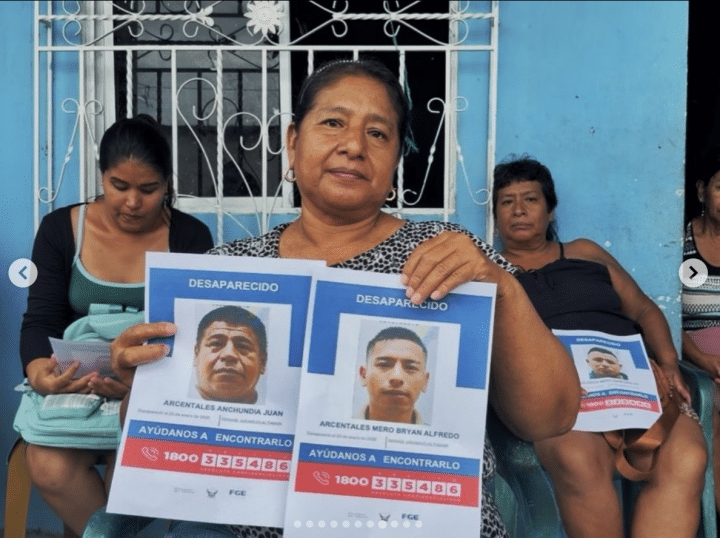
The eight Fiorella fishermen who have not returned are: Gabriel Aladino Mero Delgado, Jefferson Ariel Mero Cueva, Bryan Alfredo Arcentales Mero, Juan Alfredo Arcentales Anchundia, Joel Steven Valencia Mero, José Norberto Mero Quijije, Juan Carlos Valencia Mero and Carlos Adrián Mendoza Macias.
Featured image via Ana Maria Islas
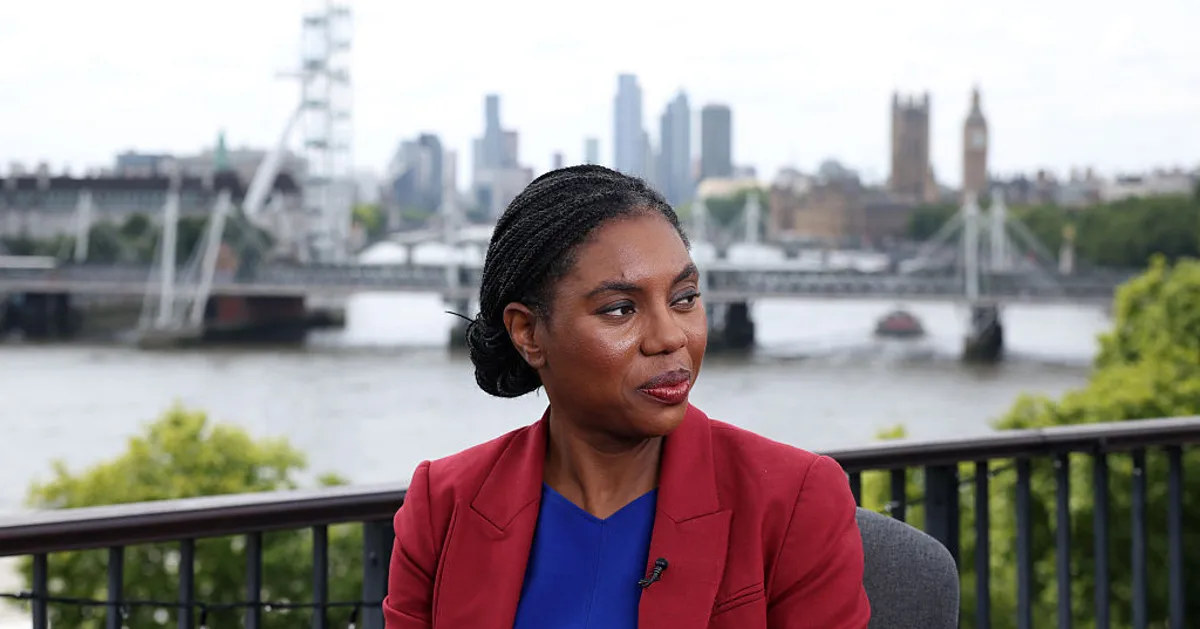
The Tories have been accused of trying to copy Reform UK after announcing they would ban foreigners from living in social housing.
A leading charity warned that the policy would “ruin people’s lives, drive up homelessness and put extreme pressure on councils”.
Labour also dismissed the proposal, which the Conservatives said would save taxpayers millions of pounds, as “unserious and unworkable”.
The Tories said around 230,000 homes would become available to British families instead of foreigners as a result of their plan.
Tenants who do not qualify under the proposed policy would be expected to move out of their homes within six months.
Foreign nationals with settled status, refugee status, or specific humanitarian protections can currently qualify for social housing.
Asylum seekers are not eligible, unless in exceptional circumstances such as domestic abuse cases.
Under the Tories’ plan, any single person currently living in social housing who is not a UK, Irish or EU citizen would lose their home.
For future tenancies, UK nationals and those with EU settled status would be eligible, however any new EU citizens without settled status would not be.
Shadow work and pensions secretary Helen Whately said: “Making Britain your home should be earned by working, paying tax and integrating.
“It should not come with a free ride on the benefits system. Britain cannot be a cash machine for the world.
“Labour has lost control of immigration and lost control of the welfare bill, and it is British families picking up the bill and sitting on waiting lists.”
But Sarah Elliott, chief executive of housing charity Shelter, said: “These divisive plans would brutally kick people out of their homes, including thousands of families and pensioners who have lived in them for decades.
“And let’s not forget that social tenants pay rent, which goes back to the public purse and into society.
“It is completely senseless to ruin people’s lives, drive up homelessness and put extreme pressure on councils.”
A Labour spokesperson said: “This is an unserious, unworkable proposal, copied from Reform, that does nothing to tackle the housing crisis the Tories themselves created.
“It would also leave more families at risk of homelessness, while driving up the use of temporary accommodation at the taxpayers’ expense.
“No amount of headline-chasing, or following Reform to the extremes, can hide the damage the Tories did to our housing system.”
Listen to Commons People, the podcast that makes politics easy. Every week, Kevin Schofield and Kate Nicholson unpack the week’s biggest stories to keep you informed. Join us for straightforward analysis of what’s going on at Westminster.
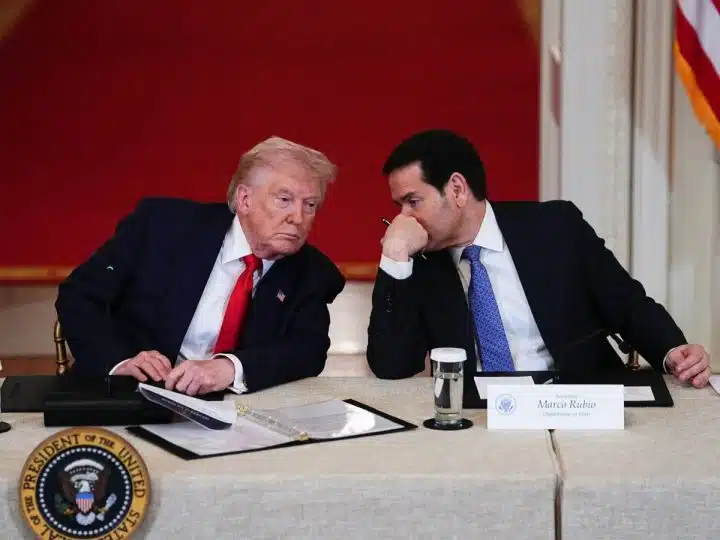

Trump’s Central Intelligence Agency (CIA) has set up a new Cuba task force. Its aim, it seems probable, is the overthrow of the ‘communist’ state just 90 miles of the Florida coast. The New York Times claims to have spoken to unnamed insiders with knowledge of the unit.
First, a caveat: intelligence sources brief the press for their own reasons. The US clearly wants regime change in Cuba, this is clear. We don’t know whether the briefing itself is meant to influence the relevant parties — part of an information war — or is a genuine leak.
The NYT reported on 5 August:
The C.I.A. has secretly established a Cuba task force, setting in motion plans for a more concerted campaign to pressure the Cuban government to make the economic, political and leadership changes demanded by President Trump, according to people briefed on the action.
The creation of the task force will allow the agency to quickly direct more financial, human and technical resources at Cuba, they said.
The force includes all the people you would expect it to:
Case officers who recruit and manage spies, intelligence analysts, officers who conduct cyberoperations and officers who specialize in covert influence operations.
Control of the hemisphere is a core part of US president Donald Trump’s foreign policy. The Canary has written about this plan extensively. There’s a good starting point here. Our readers can catch up on US designs on Cuba here.
Needless to say, the intelligence agency and the island nation have a lot of history. Cuban officials said this kind of thing was typical of the CIA.
Cuban deputy foreign minister Carlos Fernández de Cossío told the NYT:
The intentions here are no surprise, since Cuba has long been the target of the C.I.A.’s efforts at espionage, subversion and destabilization, including terrorism.
And yet the State Department has the audacity to call Cuba a threat for exercising its right to legitimate self-defense.
Let’s take a look at the continental context.
Trump wants a fascist Latin America
Trump is backing leaders who align with his worldview. A new piece published by Canadian socialist author Naomi Klein, but written by regional experts Verónica Gago and William Callison, does a good job of describing this process.
They asked:
What might an increasingly far-right hemisphere look like?
Their answer?
Modeled on Argentine President Javier Milei and Salvadoran President Nayib Bukele, and unfolding in the shadow of Donald Trump and Marco Rubio, it appears violent, chaotic, and yet also coordinated.
As illustrated by Rubio’s recent initiatives around the so-called Resurgence of Political Terrorism and the Shield of the Americas, the far right increasingly operates as a sort of “internationalist” project.
Rubio, a Cuban-American obsessed with the threat of leftism, is seen as a driving force here. The Canary recently reported on his ridiculous ‘left-wing terror’ conference.
As Klein and co point out, the US right is having some success in reversing an earlier trend which saw the continent move politically leftwards:
Around the turn of the century, the “pink tide” ushered in leftist governments and a “green tide” of feminist movements advanced abortion rights.
Recently, however, the tides have shifted: twelve of the last fifteen presidential elections have been won by right-wing candidates. Clearly, the regional canvas is being repainted.
They describe the region as no longer American empire’s ‘back yard’, but the ‘front yard’ for a new program of domination. A program meant to remake the region and driven by:
techno-financial (especially crypto and AI), extractivist (critical minerals and fossil fuels to power them) and militaristic expansionism.
This is just the tip of the iceberg. The full analysis can be read here. The failed war on Iran is still taking up a lot of US attention and military capability for now. But the Americas are still a primary concern. If and when Trump manages to disengage from Iran, we are likely to see a return to intense operations across the continent.
Featured image via the Canary
By Joe Glenton
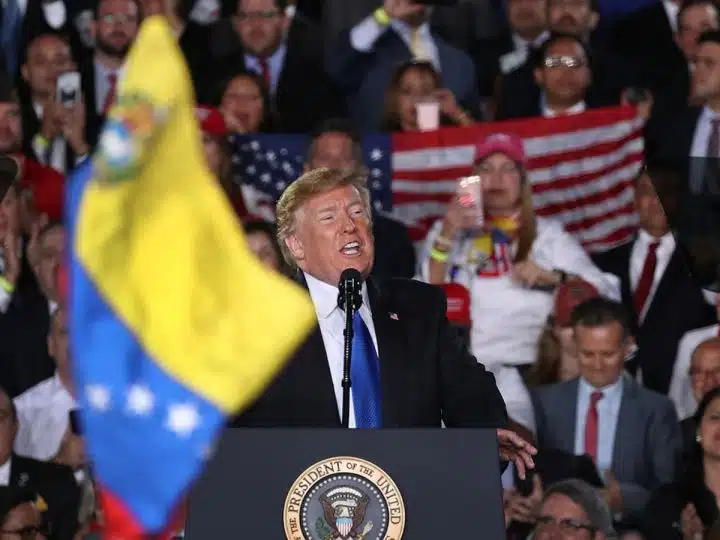

The Donald Trump regime was already getting its way in oil-rich Venezuela after illegally abducting its president in January. But two devastating earthquakes on 24 June gave Trump and his allies a chance to further solidify their colonial stranglehold. And interim Venezuelan president Delcy Rodríguez has seemed all too willing to help.
Rodríguez had already been seeking to please Trump since she took charge at the start of the year. But since June’s horrific natural disaster killed over 6,000 people, her subservience to US interests has been even clearer. For example, she has:
- Withdrawn from the International Criminal Court (ICC) just as Trump has stepped up his attacks on the institution to defend genocidal Israeli war criminal Benjamin Netanyahu. Academic Francisco Rodríguez called this “part of a bargain with Washington” that proves “Venezuela is a protectorate in all but name” and “is not conducting a foreign policy of its own”.
- Signed into law sweeping changes to the energy industry which give Venezuela less control and private corporations more profit.
- Allowed the US to take over Venezuela’s main airport and seaport, with around 2,000 US marines entering the country and US aircraft essentially controlling the skies and coastline. Former government official Elías Jaua called this “another escalation in the military occupation” of Venezuela.
- Been cosying up even further with Benjamin Netanyahu’s settler-colonial apartheid state and its cheerleaders in the US Congress.
- Given the green light for Elon Musk’s Starlink to operate in Venezuela.
Corporate vultures circle Venezuela’s devastation, with Rodríguez’s permission
At a London event on 30 July, an energy investment executive shared his thoughts on how things are looking for corporate interests in Venezuela under Delcy Rodríguez, especially in the wake of the 24 June disasters. He insisted:
The time is now… There is a window opening. There is an opportunity right now, and we can’t afford to miss that.
Many years of murderous US sanctions have helped to lay waste to Venezuela’s oil industry. But with the Trump regime now ‘administering’ Venezuela’s massive oil sales with Rodríguez’s compliance, corporations may be more willing to take the risk and get on board with Trump’s shameless neocolonial plan.
As author Naomi Klein has described, moments of national trauma can make people more vulnerable to political manipulation. Time after time, unscrupulous politicians have used tragic events like earthquakes to push through pro-corporate measures such as privatisation or deregulation. And Venezuela seems to be no different.
Elías Jaua, for example, warned that the area the earthquakes hit the hardest (La Guaira):
is set to undergo a process of gentrification and displacement of the local population, so that the Trump family, their associates, and business partners can secure the best plots of land to develop a real estate enclave linked to port, airport, and tourism services.
He said this following Rodríguez’s decision to allow real estate developers from the US to visit La Guaira after the natural disasters.
Local social activist José Félix Valera, meanwhile, told Truthdig about mainly US contractors clearing land despite ongoing recovery efforts. And this is prime land for development. Because as he added, the demolitions are taking place on:
the largest flat plots [of land] facing the Caribbean Sea in the region, and that has a lot of implications from a geopolitical standpoint but also for tourism.
Israel wants a piece of the action too
As the Canary reported previously, Rodríguez has also allowed Israeli figures into the country despite her predecessors’ longstanding (if sometimes inconsistent) opposition to the apartheid state’s crimes in Palestine. Talking about Israel’s post-disaster involvement, Venezuelanalysis explained that:
Tel Aviv is poised to play an important role alongside Washington in post-earthquake reconstruction planning, while the formal reestablishment of diplomatic relations appears imminent.
It also listed some of the key Israeli individuals and groups that entered Venezuela, which included:
- Occupation enforcers Brigadier General Elad Edri and reservist Brigadier General Yossi Pinto (who has a “documented record of war crimes and human rights violations”).
- Veteran occupation propagandists like Roni Kaplan and Yosef Garmon.
- Incoming Israeli ambassador to Mexico Yoed Magen — “an unapologetic proponent of US-Israeli genocide” who “has endorsed collective punishment” and endorsed both US-Israeli wars against Iran.
- Disinformation vehicle ZAKA, soft power whitewasher IsraAID, and occupation collaborators SmartAID and Magen.
A US takeover that was long in the making
Ever since the US lost its influential position in Venezuela following Hugo Chávez’s 1998 election win, the Western billionaire class has invested much time and energy into regaining control of the country.
In the early 21st century, the US couldn’t be as blatant with its terror campaign in Latin America as it was during the Cold War. So it tried numerous strategies to retake Venezuela. And Donald Trump’s first administration stepped up the hostility with brutal sanctions that hit ordinary people the hardest.
From 2017 to 2018, the Center for Economic and Policy Research (CEPR) estimated that over 40,000 extra people died in Venezuela as a result of Trump’s sanctions regime. Amid this economic warfare, millions of people left the country. But the ultimate US goal of getting rid of the government still failed.
Venezuelanalysis‘s Ricardo Vaz told us in 2024 that, in all the Western news about Venezuela:
the main aspect that is either ignored or whitewashed are sanctions.
Ending the sanctions would help Venezuela recover. But that’s not Trump’s priority.
Following the 2026 earthquakes, sanctions are unlikely to end completely despite them impeding a proper recovery in the country. Because as Venezuelan political scientist William Serafino told Truthdig:
The sanctions are what guarantees U.S. appropriation of Venezuelan resources at a clear disadvantage to Venezuela.
The UN’s Office for Disaster Risk Reduction has said full reconstruction following the disasters would cost $37bn. And this is something that gives the US empire massive leverage. Because sanctions have helped to freeze over $22bn of Venezuelan assets in the international financial system, with London freezing a further $4.2bn in gold.
On top of that, the US has apparently collected over $13bn since January alone as a result of its mafia-style control of Venezuelan oil sales. The Trump regime will keep this money indefinitely (possibly until it’s absolutely clear that Venezuela’s government is under its thumb) despite the country’s urgent need for it.
In short, all of the resources the US and its allies have stolen from Venezuela could immediately cover the full reconstruction costs. But the Trump regime won’t give away its political and economic leverage that easily. So it has promised a pitiful $386m for Venezuela’s recovery, while exploiting the disasters to further its occupation.
Rodríguez, meanwhile, has no excuse
It’s absolutely true that a combination of illegal US military action and the ongoing sanctions regime have put Venezuela in a difficult position. But there is little in Delcy Rodríguez’s response in recent months to suggest she’s someone with any real interest in resisting Donald Trump’s neocolonial assault.
Other countries in the world have shown that even in the toughest positions you can hold your head up high and refuse to surrender.
Rodríguez, however, has chosen another path. By welcoming the US military, representatives of a genocidal apartheid regime, and unscrupulous corporations into Venezuela, she has willingly become yet another puppet for US interests. And there is no excuse for that.
Featured image via the Canary
By Ed Sykes


In India, debates over the use of pellet guns on protesters have opened space for Kashmiris who have endured wounds from them since 2010.
Scroll India wrote that Kashmiri survivors of pellet gun violence are still awaiting compensation from the state even a decade later, and the current debate “gives them a chance to voice their grievances after a prolonged silence.”
Many survivors say the current debate over the use of pellet guns in Delhi protests gives them a chance to voice their grievances after a prolonged silence, @safwatzgr reports https://t.co/iwonZK0YvI
— Rokibuz Zaman (@ZamanRokibuz_) August 6, 2026
Scroll wrote that efforts by pellet gun victims to mobilise themselves and demand compensation died out in 2019, when the Modi government scrapped the special status of Jammu and Kashmir and turned it into a Union territory.
Now that pellet gun use has been in the news, this is a chance for them to make their voices heard again.
India — Pellet guns used in Delhi
On July 20, India’s Rapid Action Force (RAF) used tear gas, lathi charge, and firearms against protesters at Jantar Mantar who were demanding the resignation of Union Education Minister Dharmendra Pradhan over alleged irregularities in the National Eligibility cum Entrance Test (NEET) examination. The Bihar youth movement was even fired at with an AK-47.
No three-year-old kid was killed in Delhi, but that was done in Kashmir. No students sitting in their homes got hit by pellet guns, but in Kashmir that had happened. If a student is detained on Jantar Mantar, they will only face detention and then can get out. But if a Kashmiri student is detained, he will be slapped with the PSA.
Defending the security forces’ response during 2016 summer unrest, Mehbooba had said protesters did not go to security camps to “buy milk and toffee”, a statement that continues to be cited by her political opponents. Her latest comments have also brought renewed focus on the use of pellet shotguns, one of the most contentious aspects of crowd control in Kashmir.
By The Canary
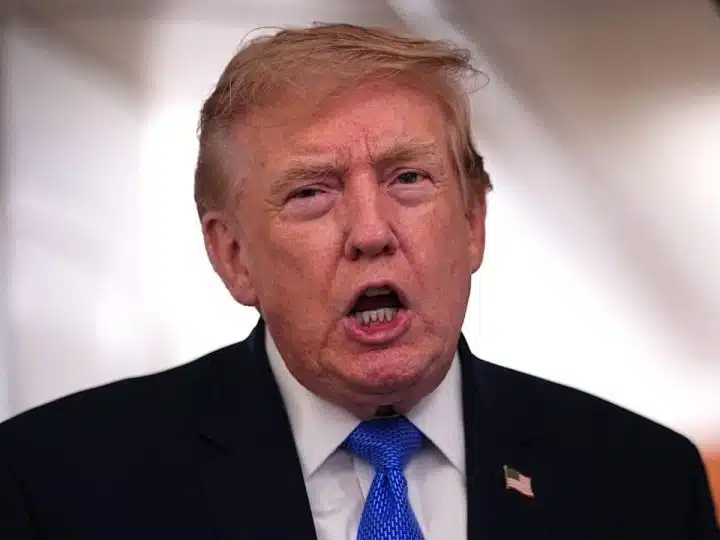

In the latest twist in Trump’s defamation case against the BBC, the president’s legal team has filed an emergency motion to block the BBC from accessing his financial records, arguing the subpoena is a “disproportionate” and a “shockingly broad” fishing expedition.
According to the filing, made in the Southern District of Florida on August 5, 2026, the BBC’s subpoena for tax returns, asset histories, and business records from the Donald J. Trump Revocable Trust, the legal entity that holds the president’s business assets across approximately 400 affiliated entities, should be quashed. Or, at minimum, impose strict limits on what the BBC can access.

According to The Hill:
If the emergency motion is not approved, the BBC would be granted insight on Trump’s crypto and stock profit, as well as business transactions from at least 400 entities and companies tied to his personal assets managed by family.
The BBC also fired back on 5 August 2026. In its own filing in the Southern District of Florida, the broadcaster accused Trump and his trust of a ‘transparent effort to evade’ the court’s order. It pointed out that Trump has produced just 735 pages of documents in response to discovery — ‘consisting mostly of publicly accessible news reports and social media’ — while the BBC has already produced 88,855 pages.
The defamation suit Trump is pursuing against the BBC alleges the BBC “intentionally, maliciously, and deceptively doctored” a speech in a Panorama documentary to make it appear that he encouraged people to storm the US Capitol on January 6, 2021. BBC apologised for the edit.
Irony of “shockingly broad”
The irony is hard to miss. Trump’s legal team is now calling the BBC’s subpoena a “shockingly broad” fishing expedition, complaining that the broadcaster wants to poke through his financial records across 400 entities in the very same defamation case where Trump is demanding $10 billion over a documentary edit.
Apparently, asking for $10 billion is perfectly narrow and reasonable, but asking to see the financial records that would actually prove or disprove that claim is just too much.
The emergency motion filed by Trump’s lawyers specifically calls out the BBC’s “tactic,” arguing that the timing of the subpoena, served just 25 days after similar requests were made to the president and before his responses were even due, suggests that the BBC is not genuinely seeking relevant evidence.
Instead, the filing suggests, the BBC is using the subpoena to pressure and dig through Trump’s entire financial universe for “political” reasons, rather than for legitimate discovery tied to the actual defamation claim.

By The Canary
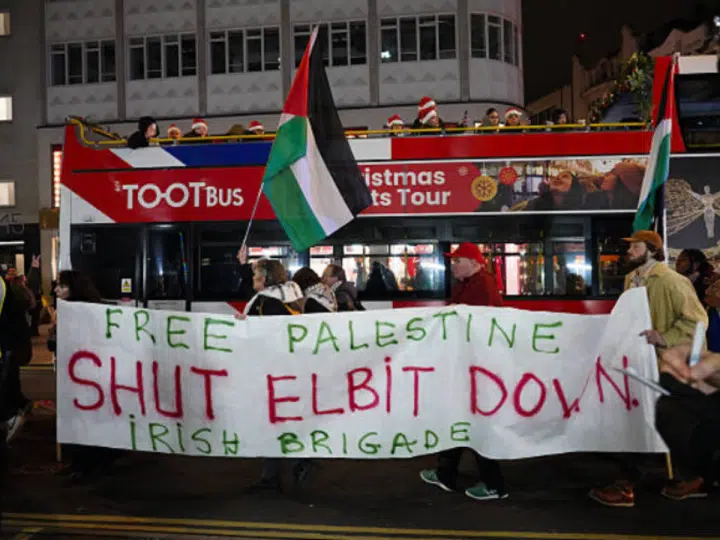

Pro-Palestine activist Paula Akpan has been cleared of criminal damage after a two-year trial. She had been charged with criminal damage after her role in a 2024 protest outside a genocide-linked bank. The financial services company Scotiabank, was one of many which held Israeli investments.
On 6 July, the Good Law Project said the woman had:
attended a protest outside Scotiabank on 17 June 2024, along with nine others. At the time, the bank was the largest foreign shareholder in Elbit Systems – holding a massive $500m stake in Israel’s leading weapons manufacturer, whose military hardware is directly used to target Palestinian civilians.
To highlight the bank’s complicity in the ongoing genocide, some of the protesters sprayed blood-red paint across the entrances, while Paula locked on to a fellow protester outside the building.
The police hit all ten protesters with a group charge for criminal damage. Now, more than two years on, Paula’s name has been cleared, and seven of her co-defendants have also been acquitted.
Paula Akpan said of her acquittal:
I feel like I can breathe again. This process is designed to make you feel like the weight of the state is against you, simply for protesting Israel’s genocide against the Palestinian people and highlighting the complicity of the UK state and financial institutions based right here under our noses.
She said the long wait for a trial was extremely difficult:
The last two years have been mentally gruelling for me and my loved ones
But it’s one of the honours of my life to have played a part in the international pressure on Scotiabank, leading to their full divestment in Elbit Systems last year.
Good Law Project’s lead lawyer on the case was Cat Knight. Knight said:
This is a great result for Paula, but it should never have gotten this far. The police’s response was entirely disproportionate, and it reflects a sinister crackdown on our right to protest.
As the Canadian Boycott, Divestments and Sanctions (BDS) campaigners have pointed out:
This divestment does not exonerate Scotiabank, which maintains investments in arms and extractive capital. Its CEO Scott Thomson has been a loud advocate for the American “Trump doctrine” of foreign military interventions, as well as the “Global Defense Bank,” a proposed hub for military financing.
That said, activists like Paula Akpan have clearly put a big dent in the Israeli war machine, narrowing the space in which it can operate. Her acquittal is a victory for those fighting for universal human rights and justice. Those who fought for it are a credit to themselves and the broader movement.
The fight continues, not least in the UK where state repression of campaigners has escalated rapidly. But we can all take succour from Paula Akpan’s courage.
Featured image via the Canary
By Joe Glenton
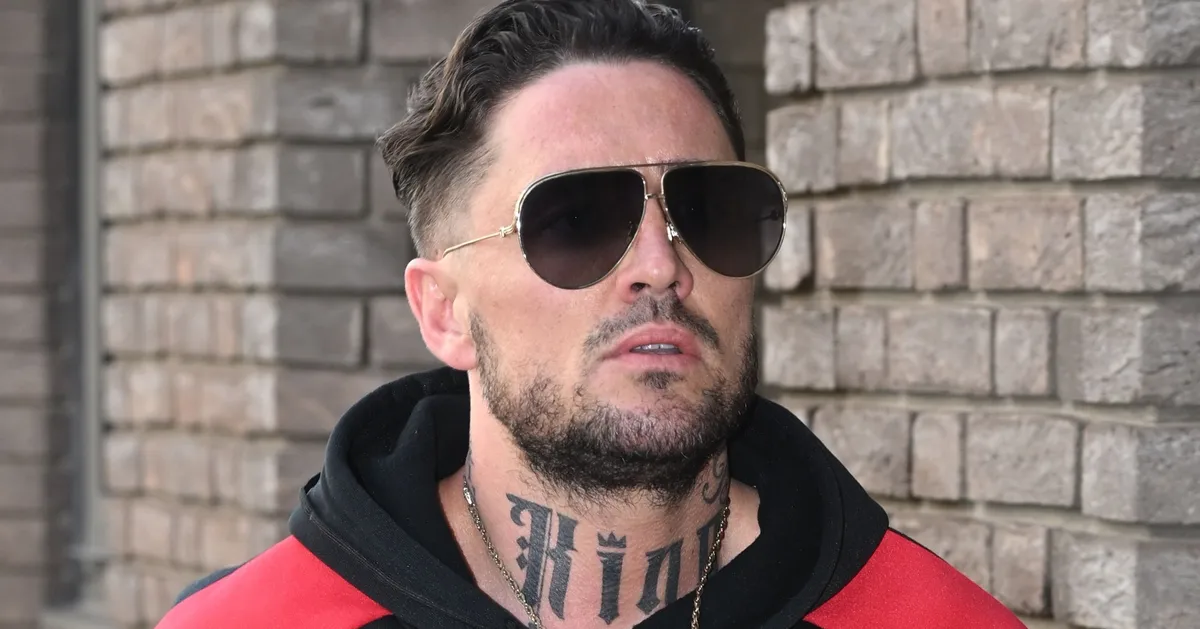
Reality TV personality Stephen Bear has been sentenced to 16 months in prison for breaking the terms of a restraining order.
In 2023, Bear served just over 10 months in jail after being found guilty of distributing footage of himself and his ex, Love Island star Georgia Harrison, having sex. She was not aware that they were being filmed, nor did she give her permission for the footage to be shared.
As part of the terms of his conviction, the Celebrity Big Brother winner had been banned from posting about Harrison or the case on social media.
However, he repeatedly broke this arrangement, leading to him being convicted of harassment by breaching a restraining order, which he previously pleaded guilty to at a hearing in June.
On Thursday, it was confirmed that Bear had subsequently been sentenced to more than a year in prison for breaking these terms, and is now banned from contacting Harrison, her mum and a family friend.
The court heard that Bear had “consistently” posted a slew of messages about both Harrison and the case “of the most abhorrent and harmful type” between March and July of last year.
Judge Christopher Morgan – who also oversaw the previous case involving Bear – said these posts were intended for “maximum harm” towards Harrison, and that he’d left her “at the mercy of any individual who had aligned themselves with your lies”.
Per BBC News, he told reporters upon leaving court: “Wish me luck guys. See you soon, hopefully.”
Bear first rose to prominence in the 2010s when he appeared as a contestant on Channel 4’s Shipwrecked, before being cast on MTV’s Ex On The Beach.
From there, he appeared on Channel 5’s Celebrity Big Brother in 2016, controversially going on to win the series, before appearing on reality shows Celebs Go Dating and The Challenge.

Yankees fan sues team for $10M after stray bat flew into stands and hit her in the head
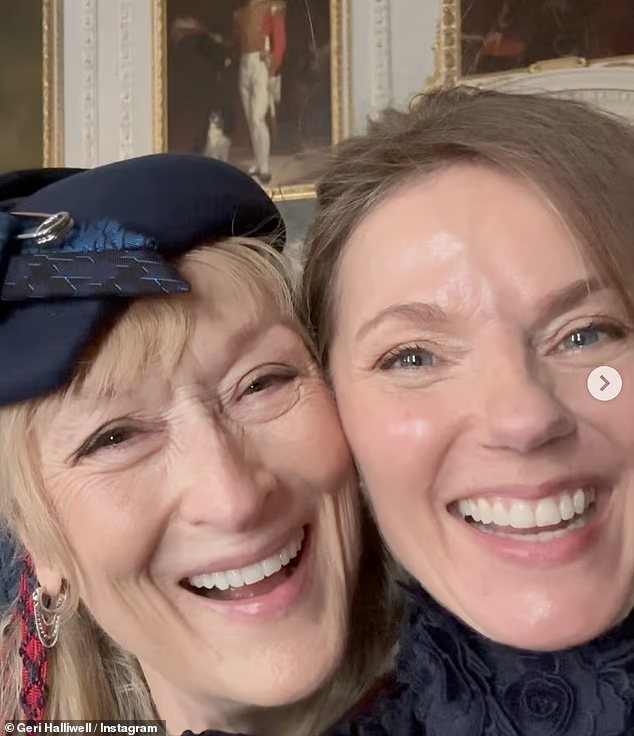
Geri Halliwell reveals unlikely friendship with Meryl Streep, 77, as Hollywood icon plants a kiss on Spice Girls’ cheek for her 54th birthday

MercadoLibre Shares Fall 7% Despite Record $10.2 Billion Revenue as Profit Margins Narrow Again


-

 Fashion6 days ago
Weekend Open Thread: Wit & Wisdom
-

 Politics6 days ago
Meta enters AI-training agreement with far-right ‘propaganda rag’ Newsmax
-

 Politics4 days ago
Zack Polanski: an incitement to murder Nigel Farage?
-

 Crypto World6 days ago
MicroStrategy Post-Earnings CLARITY Act Push Could Add New Catalyst for Its Stock
-

 Crypto World6 days ago
XRP Ledger v3.3.0 brings five institutional features
-

 Crypto World6 days ago
New York sues Kalshi over prediction market gambling
-

 Crypto World5 days ago
Crypto PAC spending tops $2M in Michigan House race
-

 Business4 days ago
DTCR: Deleveraging And A Hedge Fund Collapse Point To A Possible AI Bottom
-

 Business7 days ago
Trump Announces Hamas Disarmament Agreement as Iran Strikes Kuwait Air Base and US Attacks Pause Overnight
-
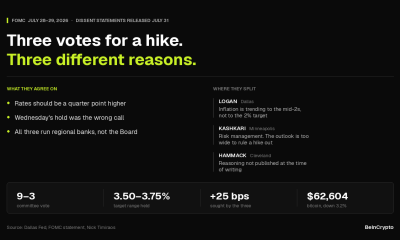
 Crypto World6 days ago
3 Fed Officials Just Explained Their Rate Hike Vote: Is Inflation Winning?
-

 Tech5 days ago
ESET tracks rise in malicious AI skills and adaptable malware
-
Crypto World5 days ago
XRP Ledger urges node upgrade after manifest flood
-

 Tech7 days ago
Gemini Spark can now use Chrome logins and saved passwords to run errands on your behalf
-

 Tech7 days ago
Building A Reproduction PlayStation Motherboard
-

 Sports6 days ago
France Cricket implodes: letters hidden in a drawer and a board at war
-

 Crypto World6 days ago
Moneyflip CEO charged in $40K murder-for-hire plot
-
 Sports6 days ago
Bruno Fernandes decision made as Man United ‘discuss’ striker transfer option
-

 News Videos5 days ago
Financial Crash Expert: The 90-Day Collapse Timeline They Are Desperately Hiding.
-
 Sports6 days ago
Commonwealth Games 2026 Live Updates | Day 9 CWG 2026: Lovlina Borgohain, Sachin Siwach Enter Final After Indian Judokas Script History
-

 Sports1 day ago
Jordan Coyle & Cordiamo take Laya Arena Stakes at RDS
You must be logged in to post a comment Login