

Politics
How Palmer and Foden lost Tuchel’s battle for the England number 10s

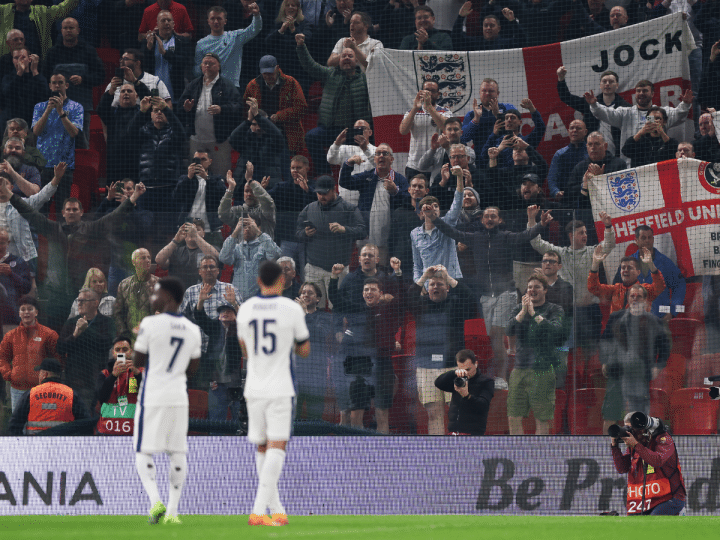

Two years can feel like a lifetime in football, and none more so than for Cole Palmer and Phil Foden who were firmly at the top of the England pecking order after Euro 2024. They were winners of major individual awards, fixtures in Gareth Southgate’s big-game plans, and widely tipped to be central to England’s future. Fast forward to the present and both are conspicuously absent from Thomas Tuchel’s World Cup squad. The shift is stark, and it’s driven by one brutal truth: form matters more than pedigree under Tuchel.
Palmer and Foden’s trajectories were once parallel. Both came through Manchester City’s academy, both collected domestic and individual honours, and both looked like automatic selections for tournament football. But football’s calendar is unforgiving. A dip in output, a few underwhelming displays and one coach’s clear preference for current performance over past glories have reshaped the selection map.
England squad selection: decline in output
Palmer’s first seasons at Chelsea were explosive, 37 Premier League goals across his opening two campaigns set expectations sky-high. This season, though, the edge has dulled. Nine goals in 25 league appearances is respectable, but it lacks the consistent flash that once made him look like the next elite player. The moments that once defined him, sudden, decisive interventions, have been fewer and far between.
Foden’s slide has been longer and more jagged. After a purple patch before Christmas that produced six goals in five games, he has not scored since. That’s a sharp fall from the 2023–24 campaign when he hit 19 league goals and 27 in all competitions. Sporadic moments, a clever backheel assist here, a bright touch there, have not been enough to convince Tuchel that he offers the kind of reliable, match‑shaping influence the manager demands.
The Uruguay test that mattered
If there is a single turning point for Phil Foden, it was the friendly against Uruguay in March. With Harry Kane absent, Tuchel tried Foden in the central number 10 role. The experiment failed. Foden drifted, struggled to impose himself and was substituted early in the second half, replaced by Palmer. That substitution, and the lack of impact that preceded it, felt decisive. Tuchel’s selection philosophy is clear: give players a chance, but don’t let reputation override what you see on the pitch. Foden’s performance in that match looked to have closed the door.
Palmer, meanwhile, had his own opportunities but could not force a reappraisal. Moments of brilliance that once made him a must‑pick were not frequent enough to dislodge Tuchel’s growing conviction that other options offered more immediate value.
Tuchel’s ruthless pragmatism
Tuchel has shown little patience for reputational inertia. He has repeatedly picked players on the basis of current form and tactical fit rather than name recognition. Jude Bellingham’s place was never in doubt; Tuchel has picked Morgan Rogers from Aston Villa and rewarded consistent club performances. That approach leaves little room for players whose recent output is patchy.
Tuchel’s selections have also highlighted a preference for variety and unpredictability in the attacking midfield slots. He wants players who can change the tempo, add pace and create different angles of attack, attributes that have become decisive in his thinking.
The replacements
Eberechi Eze is the clearest beneficiary. His season at Arsenal, seven league goals and two assists in a title-winning campaign may not leap off the stat sheet, but his performances for Tuchel in qualifying have been persuasive. Three goals in six qualifiers and a style that offers pace, unpredictability and directness have made him a compelling alternative to the more familiar names.
Morgan Rogers has also earned trust through consistent displays, while other contenders have shown enough to convince Tuchel that they can slot into the system and deliver. Even Morgan Gibbs‑White, despite a late scoring surge at club level, has not done enough in Tuchel’s eyes to force selection, underlining how selective the coach has been.
Reality check for Palmer and Foden
Once predicted as guaranteed starters, Palmer and Foden now face the humbling reality of being judged on present form. That is a hard lesson for two players who have already achieved so much so young. But it is also a reminder of the merciless nature of elite international selection: past awards and promise count for little when a manager is building a squad for a specific tournament and a specific tactical plan.
For both players the path back is straightforward in theory: rediscover the consistency and cutting edge that made them indispensable. In practice it will require sustained excellence at club level, adaptability to Tuchel’s tactical demands, and the kind of decisive performances that force a manager to rethink his plans.
Tuchel’s message to England players is unambiguous, the plane to the World Cup is for those who are delivering now. For Palmer and Foden, the challenge is to make sure the next selection window tells a different story.
Featured image via Getty/Alex Pantling
By Faz Ali


We hope you love the products we recommend! All of them were independently selected by our editors. Just so you know, HuffPost UK may collect a share of sales or other compensation from the links on this page if you decide to shop from them. Oh, and FYI — prices are accurate and items in stock as of time of publication.
Haven’t you heard, it’s the year of whimsy? Although, admittedly it’s hard to maintain a whimsical attitude when I just left my house for two hours and came back drenched in sweat. Seriously.
If it wasn’t for the fact I’m wearing head to toe cotton, I would have possibly passed out on the bus. And that’s not even me being dramatic.
Ladies and gentlemen, we have officially reached the point in the year when it’s socially acceptable to wear as little as possible.
And while I can’t say I love the aspect that means I get severe boob sweat when I walk even a few paces, I am an avid dress lovers, so I’m pleased to say I’ve mastered the art of choosing what to wear to keep me as cool as humanly possible.
To help you hack even the most intense of heatwaves, I’ve rounded up 13 summer dresses I’ll be wearing to frolic inall season long.


The Greens for Palestine group has issued a strong demand to its party functionaries: stop throwing our candidates under the bus to pander to the Israel lobby.
The message comes after the Greens’ Makerfield by-election candidate stepped down – presumably pressured – for sharing a post about Golders Green. The group of party members wants to know – who is selecting Green candidates, party members or the Israel lobby, the Zionist Labour party and hostile press?
Greens for Palestine call out cowardice dressed as pragmatism
It reads:
Yesterday, we witnessed yet another chilling example of the same press that has spent over a year providing apologia for the Zionist genocide of the Palestinian people, releasing smear pieces against members of Manchester’ Green Party to bend the Makerfield by-election to their will.
We have seen multiple instances of this playbook throughout the recent local elections. Local and national party figures, rather than standing with their own comrades, have believed what is written in the press and thrown fellow party members under the bus at the whim of the Zionist lobby. This is cowardice veiled in pragmatism.
So we ask, plainly and with deep frustration: Who is in control of who the Greens select as candidates? Is it Green members? Is it the press? Is it the Labour Party? Or is it the lobby? It should be Green members themselves. And if that is truly our party’s principle, then we strongly suggest that the party massively, step up its support for anti Zionist candidates. Not silently or reluctantly. But publicly, robustly, and without apology.
Greens For Palestine provided extensive support to candidates smeared in the recent local elections. We will continue to do so whenever and wherever we are needed. We will show up where the party will not.
We need to hit back
The letter goes on to demand the party’s cowardly executives “hit back” to protect members and candidates and stand up against the horrors of Israel’s genocide of the Palestinians:
It is apparent that the party has not provided this support. It is a failure of nerve. And it leaves our members exposed to a coordinated, well-funded campaign gf misinformation and prejudice that the party seems unwilling to confront.
When the Green Party capitulates, we will lose future MPs and councillors who have called out Israel’s genocide, and speak up for Palestinians’ self-determination. This is by design.
More than ever we need bold people in British politics and a government who can end the UK’s complicity in the genocide and illegal occupation of Palestine. As we can so obviously see, the public want this too. They have supported Zack Polanski and the Green Party’s unwavering stance.
We need to hit back. We must be brave and forthright in our defence of our candidates. Silence will not protect them. Steadfast support will.
We have watched a livestreamed Genocide. We are seeing the extermination of the Palestinian people. Dogs used to rape Palestinians, children targeted by snipers, torture, death and mass destruction.. We are letting the people that defend this force our party to turn its back on the democratic decisions of our membership.
Let us be unequivocal:
Anti-Zionism is not antisemitism.
Palestine must be freed.
Zionism is racism.
We are an anti-racist party and will not tolerate anti-Palestinian racism.
Justice, not a racist veto
It ends:
These are not fringe positions, they are core matters of justice, rooted in international law, human rights and the very anti-colonial values this party claims to stand on.
We call on the Executive to issue clear, public solidarity with any Green candidate smeared for their principled support for Palestinian freedom. We call on you to fund and resource that solidarity. And we call on you to stop acting as if the press or the lobby have a veto over our democratic processes.
In solidarity and resolve,
Greens For Palestine
The call is badly needed. Party leader Zack Polanski started strongly against the witch-hunt by a Zionist establishment terrified by the popularity of the Greens and Polanski’s firm statements against Israel’s genocide and colonialism. But that has given way to an increasing tendency of the party to cave to lobby attacks rather than stand their ground.
That has to change. And it needs to start right the hell now.
Featured image via Getty/Leon Neal
By Skwawkbox

We’re still a long way off Peaky Blinders’ return to our screen, but the BBC has thrown fans a morsel to tide them over for the time being.
Last year, creator Steven Knight announced that two more seasons of Peaky Blinders were in the works, focussing on the next generation of the central crew, with Jamie Bell and Stranger Things’ Charlie Heaton later revealed to be joining the cast.
Jamie will play Tommy Shelby’s son Duke, last portrayed by Barry Keoghan in the spin-off movie The Immortal Man, while Charlie is set to portray his half-brother Charles.
On Friday afternoon, Peaky Blinders fans were given a first look at this new character, described in a press release as someone who is “now embracing normality” after fighting “a violent war, much of it behind enemy lines”.
“He hasn’t seen his half-brother Duke – played by Jamie Bell – in years,” the BBC teased.
“Charles severed all ties to the Peaky Blinders gang, and the hedonistic Shelby lifestyle. But can you ever escape your own blood?”
An official synopsis for the BBC and Netflix co-production teased in October 2025: “Britain, 1953. After being heavily bombed in WWII, Birmingham is building a better future out of concrete and steel.
“In a new era of Steven Knight’s Peaky Blinders, the race to own Birmingham’s massive reconstruction project becomes a brutal contest of mythical dimensions.
“This is a city of unprecedented opportunity and danger: with the Shelby family right at its blood-soaked heart.”
As well as series leads Jamie and Charlie, the new iteration of Peaky Blinders will feature appearances from James Bond star Lashana Lynch and Downton Abbey’s Jessica Brown Findlay.
Steven Knight previously claimed: “I’m thrilled to be announcing this new chapter in the Peaky Blinders story.
“Once again it will be rooted in Birmingham and will tell the story of a city rising from the ashes of the Birmingham blitz. The new generation of Shelbys have taken the wheel and it will be a hell of a ride.”
Production on the new season is currently underway in Birmingham.


The Trump regime has filed an emergency appeal to try to overturn a court ruling blocking its punitive sanctions on UN rights and international law expert Francesca Albanese. The US had targeted Albanese, as well as International Criminal Court judges and lawyers, with heavy sanctions because of their pronouncements on Israel’s genocide and other crimes in Gaza.
For now, the US Treasury has been forced to lift the sanctions in response to the court order. However, the Trump administration is trying to overturn the ruling. Justice Department assistant attorney general Brett Shumate said on X that her department is applying for “emergency relief” to restore the sanctions. She also claimed that:
UN Special Rapporteur Francesca Albanese has undermined the national security and foreign policy of the United States.
None of which is a crime for an Italian, of course, but it illustrates the extent of US arrogance and entitlement, especially in connection with the Israeli colony.
The US government’s application claims that the district court’s injunction is “fundamentally flawed” and that “foreign citizens outside US territory do not possess rights under the US Constitution”. Foreign citizens outside the US are also not obliged to defer to US “national security and foreign policy”, of course, but presumably that’s a hair Trump is not willing to split.
Trump war on free speech
US district judge Richard Leon ruled last week that the Trump administration was violating Albanese’s free speech rights by sanctioning her for criticizing Israel’s genocide. The US government has removed the sanctions but claimed that this “does not reflect a change in policy”. A State Department spokesperson said the sanctions will be immediately reimposed if the appeal court overturns the injunction.
Albanese was sanctioned for writing a report that corporations supporting Israel’s occupation of Palestine. Giant companies accused include Palantir, Amazon and Microsoft. The sanctions left Albanese and other victims unable to hold bank accounts or credit cards.
The sanctions prohibited Albanese from entering the US, accessing US banking and payment systems, and engaging in business with anyone based in the country. The US Israel lobby has also tried to block the sale of Albanese’s new book highlighting its crimes in occupied Palestine. She was honoured in early May 2026 by the Spanish government for her service to humanity.
Featured image via Getty/Evan Vucci-Pool
By Skwawkbox
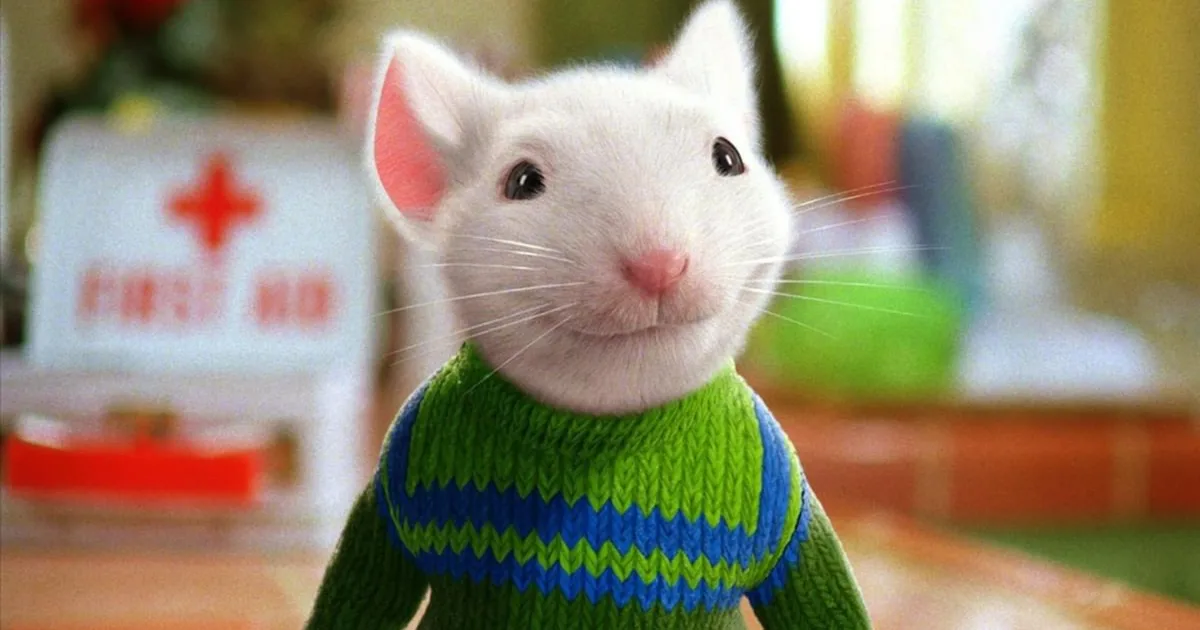
There are some things I thought I could take for granted. I always assumed paprika came from some spicy variety of pepper, but while traditional ones can contain varying degrees of heat, many large manufacturers use a type of sweet bell pepper instead.
I’d believed “wi-fi” stood for something, like “wifeless fidelity,” too. Nope: its name “doesn’t stand for anything. It is not an acronym. There is no meaning”.
But even I, a person who could fairly be described as “professionally bemused,” was uniquely surprised to learn that Stuart Little is not actually a mouse.
And looking at the responses to an X post from film critic and editor of Slash Film, Chris Evangelista, it seems I’m not alone.
In the books, Stuart Little is a human
The film Stuart Little is based on the book Stuart Little by EB White (also the author of Charlotte’s Web).
And I sincerely regret to inform you that the first chapter of that cursed tome novel, “In The Drain,” begins in this haunting manner:
“When Mrs Frederick C. Little’s second son arrived, everybody noticed that he was not much bigger than a mouse. The truth of the matter was, the baby looked very much like a mouse in every way. He was only about two inches high; and he had a mouse’s sharp nose, a mouse’s tail, a mouse’s whiskers, and the pleasant, shy manner of a mouse. Before he was many days old he was not only looking like a mouse but acting like one, too – wearing a grey hat and carrying a small cane. Mr and Mrs Little named him Stuart, and Mr Little made him a tiny bed out of four clothespins and a cigarette box.
So, while publisher Harper Collins markets the children’s book as a “classic novel about a small mouse… born to a family of humans,” the perhaps less invested Britannica is more alive to its body horror realities.
It is, they point out, about a “two-inch-tall boy who resembles a mouse”.
Which begs the question, A24 Stuart Little remake when?
People had… thoughts
In response to the recent X post, one netizen called the news “disturbing”.
Another pointed to the historical myth of sooterkins. These were believed to be the rat-like afterbirth of some Dutch women (great! Normal!).
But it is not the first time innocent internet users have become aware of the fact.
A post shared to Reddit’s r/todayilearned pointed out the “mouse”’s true species in 2018.
“He also tries to get frisky/date a girl who is tiny like him and looks like a human,” wrote u/Atoning_Unifex.
Yup, that’d be Harriet Ames, who does not look like a mouse. Stuart got the hots for her after hearing that she was a little “shorter” than him, and after a shopkeeper “gave [him] a most favourable report of [her] character and appearance”.
They did not work out. But notably, Stuart Little began a letter to her by saying, “I am a young person of modest proportions” (italics mine).
All in all, I’m with u/MattheJ1: “If I were Mr Little, I’d be asking some questions”.


A petition demanding a public inquiry into pro-Israel influence on UK politics and democracy will be debated in Parliament on 22 June 2026, according to an update published on the Petitions Committee’s page on 21 May 2026.
The petition reads:
We feel that the horrific devastation in Gaza, the ongoing suppression of Palestinians in the West Bank, and the UK’s political response underline the urgent need to scrutinise how pro-Israel organisations, networks, and lobbying efforts may shape government decisions, party policy, and public debate.
Petition debates cannot change the law or force a vote, but they can raise awareness and put pressure on the government.
The petition was launched in January and has now passed 115,000 signatures.
A petition is eligible for a debate if it reaches 100,000 signatures, though the committee has discretion over whether to schedule one.
Israel: Starmer government does not support public inquiry
The government responded on 17 April 2026, stating it does not support a public inquiry.
It said it already takes foreign influence seriously and is taking action, including transparency measures and the recent Rycroft review into foreign financial interference.
Notably, the Rycroft review does not mention Israel or the United States at all. It focuses instead on Russia, China, and Iran.
At least half of Keir Starmer’s front bench accepted Israeli or pro-Israel cash. If any cabinet MPs like David Lammy, Rachel Reeves, or Yvette Cooper show up to this debate, colour us surprised.
The Starmer government has shown less than zero interest in holding Israel to account for its crimes. Under Starmer, the UK has operated near-daily spy flights over Gaza from December 2023 onwards.
Just recently, the Foreign Office (FCDO) closed down its unit that tracked Israeli atrocities and breaches of humanitarian law in Gaza and Lebanon.
Don’t hold your breath for any meaningful action on 22 June.
Featured image via Getty/Charles McQuillan
By The Canary


There is a familiar refrain that follows my partner and I as we navigated the UK’s public bathrooms. As a gender-nonconforming couple, we’re painfully aware of the transphobic discourse that overshadows our daily lives. Approaching a set of bathrooms whilst out and about, and not wanting to draw more attention to ourselves, one or both of us will groan, before announcing with resignation:
Time to do ‘gender’…
It will be a situation familiar to many trans people. The so-called ‘bathroom ban’, fought for by anti-trans activists, has become notorious for making the lives of cis and trans people alike more complicated. Not only is it an infringement on the human rights of trans people themselves, but it inevitably leads to the policing of people of all gender expressions. Cis people too find themselves viewed with suspicion and even harassed for not looking a ‘certain’ way.
It is a situation unlikely to change in the near future. A new ‘code of practice’ document released by the Equality and Human Rights Commission (EHRC) has set out new (but no less convoluted) guidance on how public institutions and services are to cater to those with ‘protected characteristics’ and avoid discrimination.
Despite its claims to provide clarity with regards to various “everyday situations”, it’s a total mess of legalese that fails in simplifying the lived experiences of cis and trans people in Britain today.
Responses to the update
In an explainer video posted on their website, EHRC chair Mary Ann Stephenson says:
The code outlines how the Equality Act 2010 works in relation to the provision of services, public functions, and associations and explains the steps that should be taken to ensure people are not discriminated against.
The document itself claims to be:
based on the principle that people with the protected characteristics set out in the [Equality] Act should not be discriminated against, harassed or victimised when using any service provided publicly or privately.
TERF groups have already claimed a tentative victory in response to the new guidance.
Lobby group Sex Matters argues:
Nothing in the code of practice changes the Equality Act 2010. What it does is provide detailed, practical guidance on how to interpret the act.
In particular, the group claims that previous guidance on Equality Act:
was ambiguous about the relationship between the protected characteristics of sex and gender.
For example, the old guidance suggested that:
a service provider … should treat transsexual people according to the gender role in which they present.
This notion of “presentation” was underpinned by the principle of “self-identification”. Regardless of how a service provider visually perceives a person’s gender, they should defer to how that person identifies themselves.
Sex Matters argue that the “new code of practice has removed that error”, leading trans advocacy group TransActual to conclude:
The newly published EHRC Code of Practice leaves trans people in the UK today with less rights than they had prior to last year’s Supreme Court ruling.
But does it really? The new guidance certainly gives TERFs more ammunition in their never-ending lawfare campaigning against people who are just trying to live their lives, but claims that it removes previous errors of interpretation around certain social interactions appear to be overstated.
Summarising analysis from the Good Law Project, which argues that the “updated code of practice rows back on some of the most harmful elements in the previous draft”, trans rights lead Jess O’Thomson explains:
It’s good to see clear guidance that associations can be for multiple protected characteristics – so you can have an organisation for both cis and trans women. And the suggestion of checking people’s birth certificates before they can use the toilet has been axed.
But it still treats trans people as a third sex, suggesting they should be made to use separate spaces – entirely ignoring the harm this causes, and human rights law. We will keep fighting this discriminatory approach.
‘Biology’ as a euphemism
The problems that persist with the new guidance all come down to different interpretations of sex and gender. In short, the guidance seeks to clarify the legal definition of these terms, and how public service providers can navigate the EHRC’s legal framework in a variety of hypothetical scenarios. What the document provides, then, is legal cover for individuals and organisations. But it remains the case that the law does not neatly cohere with (nor determine) the lived experiences of those concerned.
For example, what does it mean when the guidance says it uses “the expression ‘biological sex’ to describe the sex of a person at birth”? To cut through the vague euphemism, it means the bathroom you use should be determined by what genitals you have. As a foundation that is supposed to alleviate the complications of ‘perceived’ gender expression, it doesn’t hold up under scrutiny.
Many intersex people, for example, have testified to invasive and discriminatory medical treatment on the basis that their “sex at birth” is no less determined on a medical professional’s perceptions. It has long been the norm that people born with ambiguous genitalia are subjected to decisions made about their bodies by doctors, who even encourage parents to consent to surgeries that can ‘correct’ their child’s genitals and make them look more ‘normal’.
Outside of medical professionals and intimate partners, however, who else is going to be interacting with our genitals during the day-to-day? Certainly not a random Starbucks employee! It is for this reason that so many of the hypothetical situations lists in the new guidance unavoidably fall back on other people’s perceptions of an individual’s gender expression.
The absence of trans testimonies
Contradictions continue to hamper this most irrational of debates because many of the things that determine our gender cannot be seen.
Speaking personally, as a trans woman, my hormone profile is not that of a biological man. A combination of testosterone blockers and a hormone replacement therapy has fundamentally changed my inner emotional landscape. As far as outward appearances go, I continue to be misgendered often. But many of the women in my family present as more ‘masculine’ than most anyway. In fact, compared side by side, I’m the spitting image of the woman that gave birth to me.
Too much information? Yeah, probably! The EHRC’s new guidance goes to great lengths to try and ‘clarify’ how businesses and public bodies can avoid falling foul of the UK’s discrimination laws, but the fact remains that people’s lived experiences are more diverse than the law could ever truly account for. This is a problem that the EHRC – whenever it does decide to listen to trans people – cannot avoid. As a result, ‘clarification’ paradoxically means even more ‘complication’.
Prioritising the legal definitions of sex and gender over and above the reality of trans lives will always be reductive, further entrenching a ‘hostile environment‘ for trans people. But that is precisely what lawfare-waging TERFs want. The more convoluted the law, the colder the chilling effect on LGBTQ people’s freedoms of movement and expression.
At the end of the day, it’s not the law that needs to be changed, but the general attitudes towards trans people in this country. The law may influence this, but the problems have taken root far deeper than statutes.
Featured image via Getty/Ian Forsyth
By Em Colquhoun

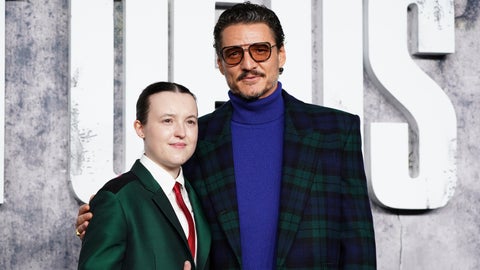
 The man of the hour, Pedro Pascal
Pedro Pascal has become the latest A-lister announced to be taking part in CBeebies’ Bedtime Stories segment.
On Thursday morning, it was revealed that the four-time Emmy nominee will be rounding off the week by reading a story to CBeebies viewers.
“I love storytelling more than anything in the world. I loved stories as a kid, mostly at night, because I would take them into my dreams,” he enthused.
“So, if it was from a book, or from my mum’s imagination, I always asked for a story to help me get to sleep.”
Fittingly, the star of the new Star Wars movie The Mandlorian And Grogu will be reading from Meet The Planets, Caryl Hart’s children’s book introducing young readers to the solar system.
And while the CBeebies segment is obviously aimed at the broadcaster’s under-six demographic, we reckon plenty of more… let’s say mature viewers will be tuning in on BBC iPlayer so Pedro’s dulcet tones can send them off to sleep come their own bedtime.
The Last Of Us actor is following in the footsteps of stars like Danny Dyer, Harry Styles, Billie Eilish, Dolly Parton, Olivia Colman, Anthony Joshua and even the Princess Of Wales herself, Kate Middleton by reading a story for CBeebies viewers.
However, the king of CBeebies bedtime is still Tom Hardy, who currently has 13 of his own Bedtime Stories streaming on iPlayer, after becoming a hit with viewers.
Back in 2024, CBeebies Bedtime Stories’ editor Claire Taylor told GQ that the “element of surprise” is what helps make the celebrity specials such a success.
She also pointed out that the segment plays “to a dual audience” consisting of both “parents and children”, so if you find you’re getting as much out of Pedro’s reading as your little ones, you needn’t worry…
Pedro Pascal will be reading CBeebies’ Bedtime Story at 6.50pm on Friday evening, on both CBeebies and BBC iPlayer.
READ MORE:

Labour lost almost four times as many voters to the Green Party than to Reform UK during the local elections, according to a respected pollster.
Voters brutally punished Keir Starmer’s party when voting for more than 5,000 council seats in England on May 7.
Reform picked up more than 1,450 council seats in the major elections, particularly in former Labour strongholds.
Starmer’s party lost more than 1,460 seats across the country, a catastrophic defeat which triggered calls for the prime minister to step down so Labour can fight Reform under a new leader.
However, YouGov has found 22% of Labour’s 2024 voters switched to the Green Party in the local elections.
In comparison only 6% of 2024 Labour voters supported Reform UK.
Overall, 46% of that voting cohort were loyal to the party, compared to 55% of the 2024 Tory voters who continued backing the Conservatives.
Four in 10 Labour and Lib Dem voters also said wanting to stop another party from winning was one of the top reasons they voted the way they did.
A Green Party spokesperson said: “Labour’s attempt to out-Reform Reform has been a spectacular failure, only playing into Nigel Farage’s hands.
“The public are crying out for the real change the Greens have been campaigning for: rent controls, proper wealth taxes, lower bills, public ownership of water, and an end to support for genocide and illegal wars. People in Gorton and Denton saw that the Greens are a viable alternative and can win.
“It’s no surprise that many voters alienated by Labour are now backing us.”
A Labour spokesperson declined to comment.
After the election results, Starmer said: “I could stand here and say Runcorn was close, we successfully defended three mayoralties, and the opposition parties tend to do well in these sorts of elections.
“But I’m not going to do that. What I am going to do is to respond by saying: I get it.”
He said NHS waiting lists are down, while wages are rising faster than prices and that interest rates are falling.
The prime minister said this suggests that the “tough decisions” Labour has made are starting to pay off.
“But the message I take out of these elections is that we need to go further and we need to go faster on the change people want to see. And that’s what I’m determined to do,” Starmer said.
Labour also lost control over the Welsh Senedd for the first time since devolution began almost 30 years ago on May 7, while the Greens won two seats – their first representation ever in the Welsh parliament.
Labour came a distant second to the SNP in the Holyrood elections, tying with Reform who made an electoral breakthrough north of the border.
The Scottish Greens also won a record 15 seats in Scotland.
Subscribe to Commons People, the podcast that makes politics easy. Every week, Kevin Schofield and Kate Nicholson unpack the week’s biggest stories to keep you informed. Join us for straightforward analysis of what’s going on at Westminster.
We hope you love the products we recommend! All of them were independently selected by our editors. Just so you know, HuffPost UK may collect a share of sales or other compensation from the links on this page if you decide to shop from them. Oh, and FYI — prices are accurate and items in stock as of time of publication.
Festivals are all fun and games until you remember about a small thing called a shower.
I don’t know about you, but it’s always a day or two into a festival or camping before I start to become irrevocably aware of the layer of the layer of filth I must be covered in. After that, it’s game over.
While, yes, there’s often some kind of shower... situation going on at campsites, it’s not always one you want to find yourself in.
That is, if you even have time to shower between running around and drinking copious amounts of alcohol.
But if there is one hack you can’t live without at a festival, it’s always having a pack of wet wipes on hand.

Should you lose track of time and realise you’ve not washed in a considerable number of days, or that you’ve developed an irrational fear of the shared showers, wet wipes will always have your back.
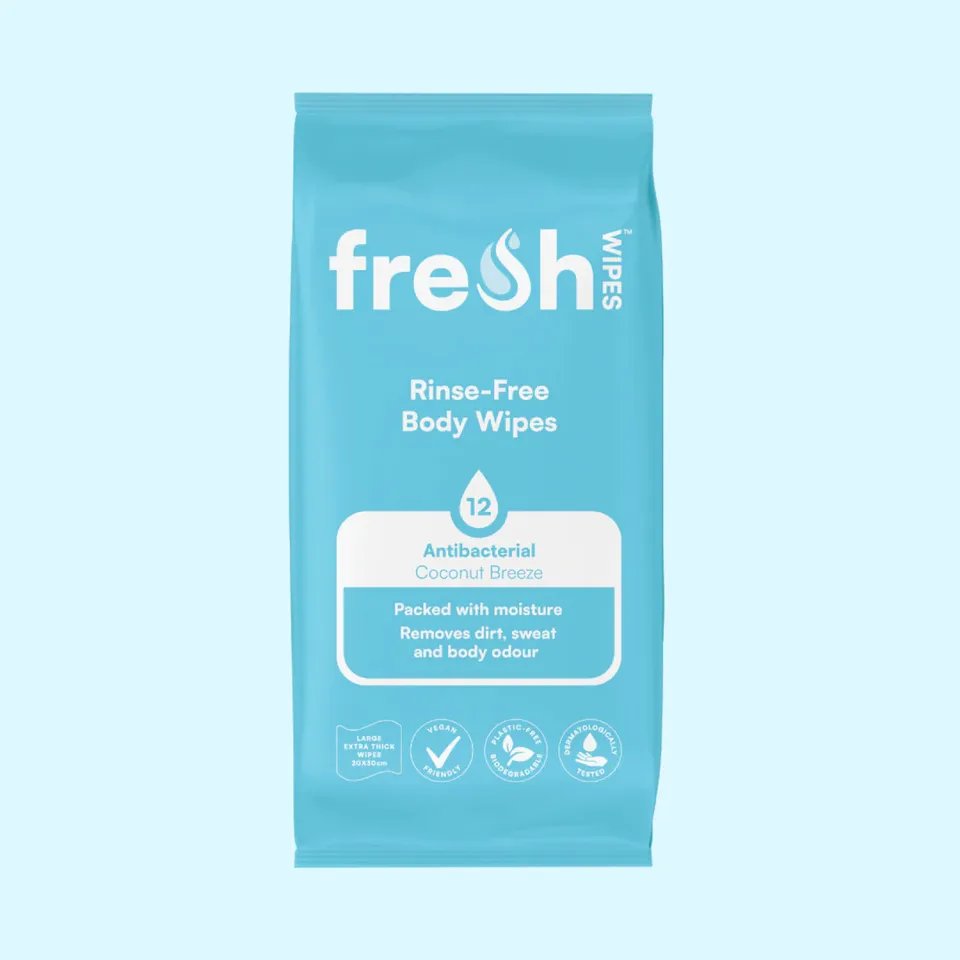
These coconut-scented ones from Freshwipes come in a pack of 12, but if you’re going for a longer stint you can save by buying a multipacks of 5, 10, or 36.
They’re biodegradable, 10x wetter than regular baby wipes, and fold out to A4 size, so one wipe is enough to clean your whole body.
That means you can rest assured you’re not leaving too much harmful rubbish behind.
They’re even skin-safe certified, earning the seal of approval from Dr Hilary Jones MBE as dermatologically sound and antibacterial, thanks to the addition of chlorhexidine.


And, if coconut is not your thing, you can choose between its ocean fresh scent and unscented options.
But best of all, one pack costs just £6, so you can stay odour-free wherever you are this summer for the price of less than two coffees.

Pink Floyd – Money (2023 Remaster)

‘Discovering our daughter’s body will haunt me for the rest of my life’

FrieslandCampina Ingredients opens application center in New Jersey


-

 Crypto World7 days ago
BloFin War of Whales 2026 Grand Prix opens registration for $5M trading championship
-

 Fashion7 days ago
Weekend Open Thread: Theory – Corporette.com
-

 Crypto World7 days ago
E-Estate Announces 1 Year Live: Washington DC Summit as Real Estate Tokenization Enters Its Next Phase
-

 Tech7 days ago
Google reimburses Register sources who were victims of API fraud
-

 Business7 days ago
H&R Real Estate Investment Trust (HR.UN:CA) Q1 2026 Earnings Call Transcript
-

 Sports7 days ago
Napoleonic enters 2026 Doomben 10,000 field via Abounding withdrawal
-
 Crypto World7 days ago
BeInCrypto 100 Institutional Awards Nomination: KAST for Best Digital Assets Neobank and Best Digital Assets Fintech
-
 Crypto World7 days ago
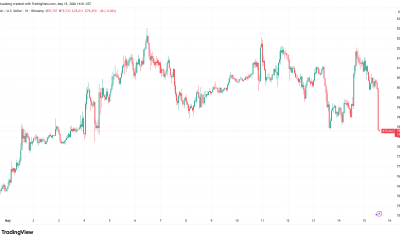
Bitcoin Battles US Bond Nerves With BTC Price Dip Toward New May Lows
-

 Crypto World7 days ago
ICE and CME urge US regulators to curb Hyperliquid energy trading
-

 Fashion6 days ago
On the Scene at Gucci’s Cruise Show in New York City: Mariah Carey, Kim Kardashian, Lindsay Lohan, Iman, and More!
-
 Crypto World7 days ago
Wall Street’s Boldest Gold Prediction Has Russians Rushing to Buy
-

 Crypto World7 days ago
IREN closes $3 billion convertible notes deal amid AI infrastructure expansion
-

 Fashion6 days ago
Trending Western Style Vests Perfect for Summer
-
 Politics6 days ago
Watch: far-right flag-fanatics run over victim, attack locals – Setup By the Left wing for your entertainment
-

 Crypto World21 hours ago
Blockchain.com files with SEC for U.S. IPO
-
 Fashion5 days ago
Amazon Sundays: Memorial Day Hosting
-

 Crypto World7 days ago
Crypto Market Structure Bill Clears Committee; Senate Vote in Focus
-

 Entertainment5 days ago
Off Campus Easter Eggs Explained: Characters, Stories, More
-

 Crypto World7 days ago
BeInCrypto 100 Institutional Awards Nomination: KuCoin for Leader in Digital Asset Adoption and Best Trading Infrastructure
-

 Politics7 days ago
UK’s top intelligence body warns Mandelson files being withheld by government
You must be logged in to post a comment Login