

Politics
How The Odyssey Was Made: Behind-The-Scenes Facts You Never Knew

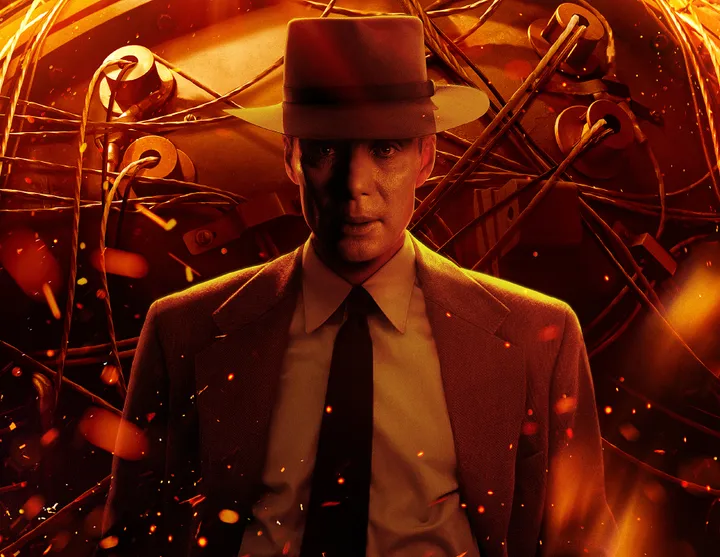
After years of build-up, Christopher Nolan’s follow-up to the record-breaking Oppenheimer is finally here.
With an all-star cast, big budget and epic filming locations, The Odyssey is undoubtedly one of this year’s most anticipated movies.
Based on Homer’s epic Greek poem, the film follows Odysseus, King of Ithaca, on his 10-year journey home after the Trojan War. Along the way, he must battle mythical monsters, gods and extreme conditions to make it home to his loyal son and faithful wife.
So, how did Christopher Nolan go about bringing this classic text to life?
Well, by all accounts it was no easy task, but it sounds like it was all worth it, as The Odyssey is already being hailed as a cinematic triumph.
To celebrate the release, here are 23 behind-the-scenes facts about how The Odyssey was made…
Christopher Nolan has credited Oppenheimer’s success with helping him make his latest film the way he wanted
Oppenheimer was Nolan’s most successful film to date, both critically and commercially. The film grossed more than £70 million in its opening weekend and swept the 96th Academy Awards with seven wins, including Best Picture and Best Director.
As a result, he was able to shoot even higher with his next project.

“Coming out of Oppenheimer, which was a film that had far more success than we’d ever imagined, it leaves you with an opportunity,” he told The Independent.
“You have the chance to do something that you wouldn’t have otherwise. And so the scale of The Odyssey, and what that was gonna require, was suddenly possible.”
The Odyssey is a film Christopher Nolan has been thinking about making for more than 20 years
The story of The Odyssey first entered Christopher Nolan’s creative consciousness two decades ago, when he was attached to direct the 2004 Brad Pitt film, Troy.
Nolan had previously been set to helm the sword-and-sandals epic that adapted Homer’s “prequel” to The Odyssey, The Iliad, after its original director, Wolfgang Petersen, left production to make Batman vs Superman.
However, when that project fell apart, Petersen wanted to jump back on to making Troy, meaning Nolan was dropped as its director.
Ironically, Nolan then went on to make Batman Begins instead, but all along, it seems he’s never stopped thinking about the story of Troy.
“When I was briefly attached to direct Troy, I did a lot of thinking about the Trojan Horse and how I would portray that and make it credible,” he told The Independent. “I’ve had an image of that horse sinking into the sand in my head for 20 years.”

The Odyssey is Christopher Nolan’s movie shot entirely with IMAX cameras
Nolan is renowned for pushing boundaries when it comes to cinema, changing the world of modern filmmaking in the process.
The Odyssey is his first feature film to be shot entirely using IMAX cameras (he has worked with this technology before but has always struggled to use this technology in scenes with dialogue because of how loud the cameras are).
Not only is it his first film in this format, The Odyssey will also be the first commercial movie shot entirely on IMAX 70mm film cameras
“The Dark Knight was the first film where we were able to go to IMAX and say, ‘Lend us your cameras – let’s try this on things like the introduction of the Joker, the truck flip’,” Nolan told The Independent.
“But we couldn’t do the dialogue scenes because the cameras are very, very loud.”
He continued: “So, knowing we were doing The Odyssey, I went to IMAX and said, ‘Look, if ever we’re gonna do a whole film on IMAX, this is the movie to do it with’.”
The director then worked with film presentation pioneer David Keighley to develop lighter, quieter equipment which can handle dialogue-heavy scenes without drowning out the actors’ lines.
“The sharpness and the clarity and the depth of the image is unparalleled,” he enthused. “The headline, for me, is by shooting on IMAX 70 mm film, you’re really letting the screen disappear.
“You’re getting a feeling of 3D without the glasses. You’ve got a huge screen and you’re filling the peripheral vision of the audience. You’re immersing them in the world of the film.”

Quieter though they may have been, these IMAX cameras came with their own problems on set
Nolan has experience using IMAX cameras, but he faced a new challenge during The Odyssey due to the sheer size of the tech, leaving him tasked with placing one of the largest movie cameras available in a way that wouldn’t distract or obstruct the actors during the film’s most emotional moments.
“Of course, [that’s] terrible for an actor that you cannot play against the person you’re supposed to see,” said cinematographer Hoyte van Hoytema to Time.
To counteract this, the team put up mirrors, allowing the actors to make eye contact with one another.
Plenty of care and research went into the way The Odyssey looks on camera (despite what certain critics might have suggested)
While avid fans of the classics would have you believe Nolan has taken a fast and loose approach to historical accuracy with The Odyssey, the director has maintained that a great amount of detail and research went into making it.
Afte the first trailer dropped in December 2025, some fans of mythology and history complained about Agamemnon’s armour being too dark and shiny for the era in which the story is set.
However, Nolan immediately shut down this criticism.
“There are Mycenaean daggers that are blackened bronze. The theory is they probably could have blackened bronze in those days. You take bronze, you add more gold and silver to it and then use sulfur,” he told Time in May.
“With Agamemnon, Ellen [Mirojnick], our costume designer, is trying to communicate how elevated he is relative to everyone else. You do that through materials that would be very expensive.”
He also provided thorough explanations for many other production choices, including the boats and weapons, which draw on inspiration from the Bronze Age.
“The oldest depictions of Homeric characters tend to be depicted in the manner of people living in Homer’s time,” he explained.
“So there’s a pretty strong case there for portraying things that way because that’s the way the first audience received the story.”

Christopher Nolan made the cast of The Odyssey watch three classic films before shooting began
It’s no secret that Christopher Nolan is a real cinephile, who draws inspiration from classic movies in his own filmmaking.
He told The Independent that before he began work on The Odyssey, he looked at certain films for “textures that might inspire us”, which he then screened for his cast to help encourage their own performances.
The first film on his list was Akira Kurosawa’s 1985 feudal epic Ran, which he called “such an incredible film”, praising its use of “landscape and wind, in particular”.
He explained: “We watched the film and thought, ‘Yeah, the banners flapping in the wind and everything – that’s an important part of what we’re doing’.”
Nolan also named Martin Scorsese’s controversial The Last Temptation Of Christ as required viewing for The Odyssey as it offers “a fresh and accessible window into history”.

Universal/Kobal/Shutterstock
The final film he listed was Andrei Tarkovsky’s 1966 historical epic Andrei Rublev.
“We look at a lot of films, really not for the specifics, really for a generalised inspiration of what the texture of a film can be,” the Memento director explained.
Christopher Nolan has a good explanation as to why his actors use modern American dialogue in The Odyssey
Fans of classic historical and fantasy epics are used to hearing a range of upper-class British accents in these types of films. Because of this, many were left a little taken aback when The Odyssey trailer dropped and everyone, including the film’s British cast members, spoke in modern American dialect.
In a July interview with The Los Angeles Times, Nolan explained this deviation from the norm was very much intentional.
He insisted that “language that has emotional, not intellectual meaning to people”, adding that he chose to use modern dialogue over elevated or theatrical language.
“I was maybe being naïve, it might bite me on the ass, but I wanted an earthy narrative,” he explained. “To me it was a no-brainer.”
Nolan later claimed that the debate over the use of language proved people look at the past “in weird ways”.
“There’s a lot of cultural prejudice,” the Oscar winner suggested to Channel 4. “There’s a lot of sort of elevating it, because it’s old, you know, whatever it is.”
He added that in the source material for The Odyssey, “what you find is something that’s really earthy and grounded and accessible”, which he tried to replicate by using modern-day phrasing in the dialogue.

Matt Damon was always Christopher Nolan’s top pick to play the lead in The Odyssey
In the same Los Angeles Times interview, Nolan said it had been a “no-brainer” to cast Matt Damon as Odysseus.
The pair had previously worked together on 2014’s Interstellar, as well as 2023’s Oppenheimer.
“For this very complex character, you need an actor who disappears into parts, who is very open to the audience,” he explained. “You want the audience to go with him through his mistakes – and he makes a lot of mistakes.
“Matt was everyman for The Martian, a kind of superhero for the Jason Bourne films, and Odysseus is part everyman, part superhero.”
Tom Holland was actually the one who broke the news to Zendaya that Christopher Nolan wanted to cast her in The Odyssey

The Odyssey marks the fifth collaboration between Tom Holland and his real-life wife, Zendaya.
While Tom was cast in the movie before Zendaya, the couple had already run through the script together at home, and he later told Access Hollywood that Christopher Nolan had asked him directly if Zendaya would like to appear in his film too.
“At my meeting with Chris he asked me a question. He said, ‘Would you be offended if I asked Zendaya to play Athena?’,” the Spider-Man actor revealed.
Following this, he went home and told his then-fiancée in person that Nolan wanted her for his film, informing her she needed to read the script again – this time to focus on Athena.
“The little corners of her mouth [raised]. It was amazing,” he gushed.
She also told Access Hollywood: “I was incredibly grateful that I even got to be part of it, too. I didn’t see that coming.”
Christopher Nolan was ‘desperate’ to cast Lupita Nyong’o in The Odyssey
Nolan always had Lupita Nyong’o on top of his casting wish list for Helen Of Troy, who is considered the most beautiful woman in Greek mythology.
Apparently, there were two key qualities that made the British filmmaker feel Lupita was the perfect choice to play both Helen and her twin sister, Clytemnestra.
“The strength and the poise were so important to the character of Helen,” Nolan told Elle back in May.
“Lupita makes it look effortless. I’m sure there’s a tremendous amount of discipline and training that goes into projecting that kind of poise and feeling the emotion bubbling beneath the character, the layers of the character right there underneath,” he added before, calling her an “incredible person”.
When her agents informed her that Nolan wanted to see her for a role, the 12 Years A Slave actor admitted to the magazine that she “went in quite blind”, but as soon as she read the script she said yes “even before he told me what role it was”.

Christopher Nolan has a good reason behind rapper Travis Scott’s casting in The Odyssey
Plenty of us were shocked when Travis Scott, rapper and former boyfriend of Kylie Jenner, was first revealed to have been cast in The Odyssey.
In the film, Travis plays a bard who recites verses about the highs and lows of the Trojan War.
While some traditionalists were alarmed at the thought that Nolan might have had a character performing raps in an Ancient Greek setting, those who have seen the movie were have said that Travis’ role is more of an orator.
Nolan previously defended Travis’ casting, explaining that he saw a link between bards in ancient times and modern-day rappers.
“I cast him because I wanted to nod towards the idea that this story has been handed down as oral poetry, which is analogous to rap,” the director told Time.
Speaking to Deadline at the film’s premiere, Travis agreed: “I feel like we felt kind of the same way about what music is and how, as an artist, you can deliver a story.”
It’s not the first collaboration between the rapper and the director, either. They originally paired up back in 2020, when Travis recorded the original track The Plan for Nolan’s movie Tenet.
Robert Pattinson didn’t immediately say yes to The Odyssey

When Robert Pattinson was offered the role of Antinous, one of Penelope’s suitors in The Odyssey, he’s revealed that he had to give it some thought.
“My first thought always with a part is like, ‘I don’t know if I can do anything’, he told Today about his initial reaction, admitting that his “imposter syndrome kicks in very, very hard”.
Once he said yes, Robert threw himself into the role, working closely with the costume department to help create a look that exuded privilege and wealth.
“As soon as I read the script, I’m like, ‘I want to have cheetah underpants’,” he told GQ. “I think Antinous is that kind of guy.
“He has this kind of sensuousness about him; ‘I just like pleasure.’ And so I was kind of thinking you want to have the most luxurious underpants he can.”
In fact, Robert ended up getting so much into his character that Tom Holland was genuinely wound up when they shot together.
“He is such a treat to work with because he’s so good and he really keeps you on your toes as an actor,” Tom told Digital Spy.
Tom added: “You can never coast when you’re working with Rob. Everything is going to challenge you. He’s going to make big choices.
“Acting is listening, you have to be able to react to him. I do remember in that scene when he’s talking to me, having this feeling inside of like, ‘I want to hit him so fucking bad’. But he’s great and I love him, he’s excellent in this film.
“I feel like he’s probably the only person that could have found that version of Antinous. He really has a unique way about him.”
Christopher Nolan was adamant that he would shoot as much of The Odyssey as possible in locations around the world, rather than relying solely on sound stages

According GQ, The Odyssey filmed for 91 days in five countries around the world, before ending things at Universal Studios’ lot in the United States.
“The joke on the crew was we didn’t have a single easy location,” Matt Damon explained.
“Every time we’d go somewhere, we’d be like, ‘Well, Iceland will be easier’. And then it’s raining sideways and it’s fucking freezing. Iceland was like, ‘Yeah, easy? Hey, hold my beer’.”
Nolan and the cast began by filming in the Peloponnese region of Greece in March and April of 2025, according to the Hellenic Film Commission. Destinations cited include Voidokilia Beach, the 13th-century Methoni Castle, the monolithic Acrocorinth overlooking the city of Corinth, Almyrolaka Beach and Nestor’s Cave.
To recreate the ethereal feel of the underworld, Nolan chose to film in Iceland. Reported Icelandic filming locations include the black sands and caves of Hjörleifshöfði mountain, the Snæfellsnes peninsula, the river Markarfljót and the harbour of Landeyjahöfn.
To create the ancient sandy atmosphere of the Greek epic, the crew of The Odyssey travelled to Morocco, filming in Marrakech, Tahanaoute, El Haouz, Essaouira and Ouarzazate.
Controversy subsequently hit the film last summer when Matt and Zendaya filmed a sequence in Dakhla, a city in the Western Sahara that has been under Moroccan occupation for the last 50 years.
Organisers of the Western Sahara international film festival (known as FiSahara) accused the film’s crew – whether knowingly or unknowingly – of “contributing to Morocco’s repression of the Sahrawi people and to the Moroccan regime’s efforts to normalise its occupation of Western Sahara” by filming in the region.
Although Nolan has never directly responded to these comments, The Guardian reported that The Odyssey’s shoot in Dakhla was completed in around four days, and was already over by the time the festival organisers began raising their concerns.
In addition to Greece, Iceland and Morocco, the movie also went to Scotland, filming on the dramatic Moray Firth Coast. During production, people spotted a full-scale, wooden Viking ship docked in Inverness.
Of course, the director could have faked it on a sound stage using post-production effects but told Time that he preferred shooting on location as it gives his films more of a “grounded tone”.

One location required the cast and crew (minus one A-lister) to take a 900-foot hike every day for two weeks
It would have been impossible to tell the story of The Odyssey without landing on the sun-swept Mediterranean landscape.
In March 2025, the crew arrived for shooting on the Italian island of Favignana (also known as Goat Island), just off the Sicilian coastline.
Nolan told GQ that they filmed at a ruined castle, Castello di Santa Caterina, for two weeks.
To access this location, the cast and crew hiked 900 feet every day, with helicopters transporting equipment up and down.
However, when we say the cast and crew had to hike 900 feet every day, there was one exception.
“I got to take a helicopter to work every single day, which was amazing,” Anne Hathaway recalled while talking to the BBC.

She continued: “I think the executive decision was made that, because Penelope was the queen and that she couldn’t arrive looking as rugged as the suitors or some of the other members of the Ithacan royal court, that I should be helicoptered up. So I got to take a helicopter to work every single day, which was amazing.”
Anne was insistent that she didn’t get any special Hollywood treatment, though, claiming she was “shoved” in helicopters already being used to move equipment up the mountain.
The Odyssey was completed ahead of schedule – and ahead of budget
The Odyssey may look like the most expensive, epic film of the year, but impressively, it actually came under its expected price tag.
When Nolan paid a visit to The Daily Show to discuss his new adaptation, host Jon Stewart asked him to confirm whether the film was completed “ahead of schedule” and “under budget”.
“Yes,” Nolan replied, pointing out that this “never happens” in Hollywood.
“The reality is, we [scheduled for] 100 days. And by day 91, we couldn’t have taken another step. So we finished,” he recalled.
“I mean, people were just exhausted,” the director added. “They’d been through it. So, it took the right time to make the film. We had enough time to make it.”
The cast of The Odyssey have backed up Nolan’s claims about the tough shoot.
Robert Pattinson, who only joined midway through filming, could already see how “exhausted” people were on set.

“I started a third of the way through the movie, and they’d already been to [two] countries by that point and people just looked like… I mean, at the end of every day people were broken,” he told GQ.
Matt Damon admitted to Today he was warned before signing up that it would not be an easy film to make.
“He [Christopher Nolan] was like, ‘This movie’s gonna be hard,’,” Matt recalled. “And I looked at him like, ‘I’ve made, I don’t know 80 movies’. And he goes, ‘No… This movie’s gonna be really hard.’ He, to his credit, was not lying.”
As ever, Christopher Nolan swerved the typical director’s chair so he could get more involved
Most directors prefer to sit in their chairs in a nice, safe and warm spot while they’re working – but Christopher Nolan likes to take a more hands-on approach.
In a Time profile, Matt Damon said this brought the cast and the director closer together, especially on the harder filming days.
“When you’re uncomfortable – and you are most of the time, physically, just by nature of what’s required to get these shots – if you turn and look over your shoulder, he’s no more than five feet away and doing the same thing without complaint,” he explained.
“There’s something really nice about being a soldier in the foxhole and looking over and the general is right next to you.”

In fact, Nolan typically has a no-chairs approach for all of his cast and crew on his film sets.
Anne Hathaway told Variety in 2020: “I worked with him twice. He doesn’t allow chairs, and his reasoning is, if you have chairs, people will sit, and if they’re sitting, they’re not working”.
Nolan left the cameras rolling during one particularly gross moment on the set of The Odyssey
Talking of long days, one extra gruelling filming session aboard a ship left the cast and crew seasick.
Nolan told The Telegraph that during a day on set in Scotland, the weather conditions were so bad when filming on the boat, the cast and crew started throwing up.
Instead of shutting down the cameras, the director asked the movie’s cinematographer, Hoyte van Hoytema and the cast if he could keep them rolling.
“And credit to them. They said, ‘Absolutely, bring it on,’” the director recalled. “They were really game for it. And that day ended up being fabulous as well as miserable; it yielded some of my favourite shots in the film.”

Matt told People he received no special A-list treatment while filming the oceanic scenes, either.
“If you’re out on a boat in the middle of the ocean and you get caught in a storm, you get wet with everybody else. Nobody’s getting a hot beverage that you’re not getting,” The Bourne Identity star explained.
“You know what I mean? Everybody’s on equal footing, including Chris, who was just as cold and wet as everybody else throughout the whole thing.”
The cast and crew actually stopped to applaud one particular performance
Although The Odyssey has a huge cast, made up of some of the most celebrated actors currently working in Hollywood, there was one actor whose work moved everyone on set.
“This was a massive film and she is someone who comes in and changes the dynamic,” he said of the Bafta winner. “In some weird way, the film lived or died over that character. She was the fulcrum.
“I’ve always admired Samantha’s work, she brings so much depth of thinking about her role, there are no limitations on her performance.”
Nolan added: “After one of her takes, the crew gave her a great round of applause. I was talking with Emma [Thomas, Nolan’s co-producer and wife] afterwards and she remembered that the last time that had happened was with Heath Ledger on The Dark Knight.”

By contrast, Tom Holland was worried that Christopher Nolan hated his performance
Tom has described his first few days on The Odyssey set as being among “the most daunting experiences” of his career.
He told Fandango that “working with the IMAX cameras” created new challenges for him, as he tried to deliver his emotional scenes in front of a big, noisy camera.
“It is unlike anything I have ever seen before, and I didn’t know that [,the cameras] only ran for three minutes [at a time],” Tom said about the revolutionary technology.
Because the director kept calling “cut”, and having the crew put their cameras down, Tom thought it was because Nolan was unhappy with his performance.
In the end, it was a stunt coordinator who assured Tom that, in fact the cameras only run for three minutes at a time, so Nolan was cutting because of the technology rather than anything he was doing.
In fact, Nolan has praised Tom as “amazing”, “one of the great new young voices in cinema” and someone he would “love to work with again”, during an interview on The Late Show.
The tough conditions on the set of The Odyssey meant Zendaya kept messing up her scenes
Zendaya plays the all-knowing Greek goddess Athena, but she apparently struggled to appear quite as wise as her character on set.
She filmed her scenes in Iceland’s freezing cold weather, which made it difficult to deliver the performance she knew she was capable of.
“It was particularly cold. It was in Iceland,” she told Josh Horowitz on the Happy Sad Confused podcast. “My mouth was just frozen. There is nothing coming out. My mouth would not move. Literally. It came out like, ‘Blah blah blah’. So embarrassing.”
This, along with nerves, led the Emmy winner to mess up her first few takes.
“Here’s the thing. I had my lines and I wanted to have them so down,” she admitted. “I think I kind of psyched myself out a little bit.”

Charlize Theron wasn’t prepared for just how physically intense her scenes would be
Charlize Theron is known for her physically demanding roles, from Mad Max: Fury Road and the Netflix comic book adaptation The Old Guard to the recent survival thriller Apex.
However, despite years of playing on-screen badasses, filming The Odyssey came as a challenge even to her.
Nolan has claimed he cast her as sea nymph Calypso because the role “required somebody of Charlize’s intellect and empathetic ability”.
What she didn’t realise the role would be so physically demanding, too, mainly because the stand-in for Calypso’s island was a windy Moroccan beach famed for its windsurfing and kiteboarding.
“She had to do these scenes that were already challenging with a 30- to 40-mile-an-hour wind ripping sand into her eyes,” Matt Damon told Elle. “She’s just a boss, though.
“The grips were trying to hold screens over, anything that we could do so that we could shoot. But even with all that stuff, she was in massive discomfort, and you wouldn’t know it from seeing the movie. I’ve known her for so long, and she is one of those people who won’t complain, ever.”
Charlize has admitted she wasn’t ready for how tough the conditions would be due.
“That was brutal,” she admitted to the magazine. “But it was also incredible, because you felt like you were in the space where Calypso would have come from.”
Matt Damon has claimed he got into the best shape of his life to help him play Odysseus

Speaking to Travis and Jason Kelce on their New Heights podcast, Matt admitted that before shooting The Odyssey he’d not “been that light since high school”.
“It was a lot of training and a really strict diet,” he noted.
Matt expanded on how he achieved this impressive ripped look during an interview with Amy Poehler on her Good Hang podcast – and admitting that doing so in his 50s was no small task.
“It’s way different to be getting jacked in your 50s,” he said. “It’s really hard. It’s just a complete, complete lifestyle change”.
He claimed that the transformation required him to “just put your foot on the gas and that’s it”, revealing that he also gave up gluten as part of his transformation, a change he has stuck to since filming ended.
“I didn’t realise the level to which it was affecting me,” he said. “It’s completely changed my life these last couple years of not eating it.”
Despite the struggles and hard work, Matt said it was totally worth it.
“It was hard,” he emphasised. “It was hard for everybody though. That’s what made it wonderful.”
Christopher Nolan wanted the score of The Odyssey to defy people’s expectations
For The Odyssey, Nolan teamed up once more with three-time Oscar-winning composer Ludwig Göransson, with whom he previously worked on Oppenheimer and Tenet.
However, the filmmaker was adamant that he didn’t want The Odyssey’s score to be your standard swords and sandals soundtrack.
“It’s not like the orchestra existed back then,” Ludwig joked to Time. “It was a challenge and also an opening to try to make something unique.”
To achieve the sound that runs throughout the film, the man behind the Sinners soundtrack began by renting 35 bronze gongs, mixing their sound with more modern synths.
Even the string instruments used on the score play a surprising role.

“Chris had this idea of the sound of the lyre being the pluck of Odysseus’ bow,” Ludwig explained.
Travis Scott also contributed to the soundtrack, collaborating with Ludwig and songwriter James Blake on the end credit song.
In an interview with GQ, the director heaped praise on the Grammy-winning rapper.
“His voice became the final piece of a yearlong puzzle,” Nolan explained. “His insights into the musical and narrative mechanism [composer] Ludwig Göransson and I were building were immediate, insightful and profound.”
The Odyssey is out now in cinemas.

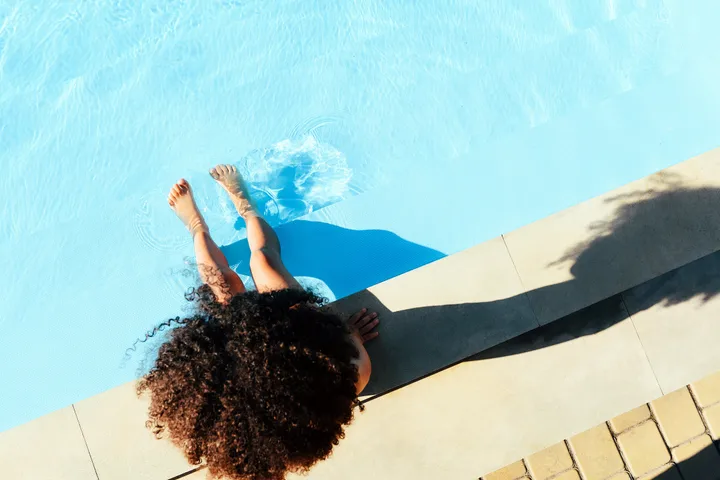
There’s nothing quite like spending time by the pool. Cool water. Time with loved ones. A delicious snack. What could be better?
But before you grab your towel and jump in the water, pay attention to a few common poolside habits that doctors wish more swimmers and parents would think twice about.
We spoke to some clinicians about the behaviours they’d personally avoid in and around the pool this summer. Here’s what they had to say:
1. They’d never skip rinsing off before getting in the pool
It might feel pointless, especially if you’re planning to shower afterwards, but a pre-swim rinse matters more than you may realise.
Sweat, sunscreen, body lotions, hair products and natural skin oils all react with chlorine when they hit the water, which reduces chlorine’s ability to kill germs and creates irritating byproducts that can sting eyes and aggravate skin.
That’s why the Centers for Disease Control and Prevention recommends a quick pre-swim rinse, at least a minute under the shower, to wash off bacteria and other microbes you might unknowingly be carrying in.
This is especially key if “someone is dirty or has sand on them, as to not contaminate the water or clog up filtration systems,” said Dr Chris Bunick, a Yale Medicine dermatologist and associate professor at Yale School of Medicine.
2. They’d never bring glass anywhere near the pool
It’s easy for glass to end up around the pool in the summer, whether from an open bar, poolside cocktails or carrying bottled beverages near the water. However, it can be a risk for both swimmers and people on the deck.
“Broken glass is not a visible hazard. Whether on the pool deck or in the water, it can be nearly invisible,” said Dr Steven Valassis, chair of the emergency department at Hartford HealthCare St. Vincent’s Medical Center.
“When combined with the fact that people are typically barefoot, this can lead to significant lacerations. Nearly 5% of these lacerations are deep enough that they require hospital admission and surgical repair,” he added.
Additionally, glass that ends up in a pool can be especially problematic because even tiny pieces are difficult to detect and remove, sometimes necessitating a full drain as well as professional cleaning, Dr Valassis explained.
The good news is you don’t have to ditch your poolside drink, just the glassware. Try plastic cups or aluminum cans instead.

Maryna Terletska via Getty Images
3. They’d never leave a child unattended, not even for a minute
The biggest misconception parents get about drowning is that they think they’d hear if their child got into trouble in the water. But the reality is far scarier.
“Drowning is fast, often silent, and can happen to any child. A survey found that 48% of parents mistakenly believe they would hear splashing or crying if a child was in trouble. Sadly, this is often not the case,” Valassis said.
Although swim lessons can help improve water safety skills, the American Academy of Pediatrics emphasises that swim lessons alone do not eliminate a child’s risk of drowning.
Drowning can happen in seconds, according to the CDC, so constant, focused supervision is non-negotiable, no matter how well your child swims.
4. They’d never swim while sick
Even if you’ve been looking forward to a day at the pool, it’s best to sit this one out if you’re feeling under the weather – especially if you’re dealing with a stomach bug.
“Swimming in the pool while sick is generally not a good idea, because further swimming and activity may precipitate nausea, vomiting and add risk for dehydration, all which may make a person more ill,” Dr Bunick said.
There’s also the issue of getting others sick through close contact. “Illnesses can be transmitted through pool water because the chlorine or other chemicals do not necessarily work instantly to stop infectious agents, thus allowing a window of time for infectious agents to pass to other people,” Dr Bunick added.

Bob Thomas via Getty Images
5, They’d never swim with an open wound
If you have a fresh scrape, deep cut or surgical incision, it’s best to keep it dry.
“It is best to not swim in the pool with an open wound, especially with a deep scrape or gash,” Dr Bunick said.
“First, the chlorine or other chemicals used to treat the water can further damage tissue in the wound, adding to skin breakdown and inflammation. Second, there is risk of infection of the wound with continued exposure to water, and this risk is increased more if swimming in lake, river or ocean water.”
If you have a minor cut or paper cut, you likely don’t need to skip the pool altogether. Dr Bunick recommended covering the wound with a healing ointment and a waterproof bandage before swimming in chlorinated water.
Just keep an eye on the area afterward, as redness, swelling or drainage could signal an infection that needs further medical attention, he explained.
6. They’d never dive into shallow water
While it may seem unlikely, this scenario is more common than many people realise, especially for children, who can get into trouble without ever reaching the deep end of the water.
“If a child dives into a shallow pool and hits their head on the bottom, the initial impact can cause a head/brain injury. The force is then transmitted from the head to the neck and cervical spine, where the spinal cord can be injured. This can potentially lead to paralysis and, in severe cases, the inability to breathe independently,” Dr Valassis said.
Most of these injuries don’t happen at public pools with lifeguards; they happen at home, Dr Valassis explained. The American Red Cross recommends going feet first into unfamiliar water.
The good news, Dr Valassis emphasised, is that most pool injuries are preventable with basic precautions and awareness. So this summer, swim smart and enjoy the splash.
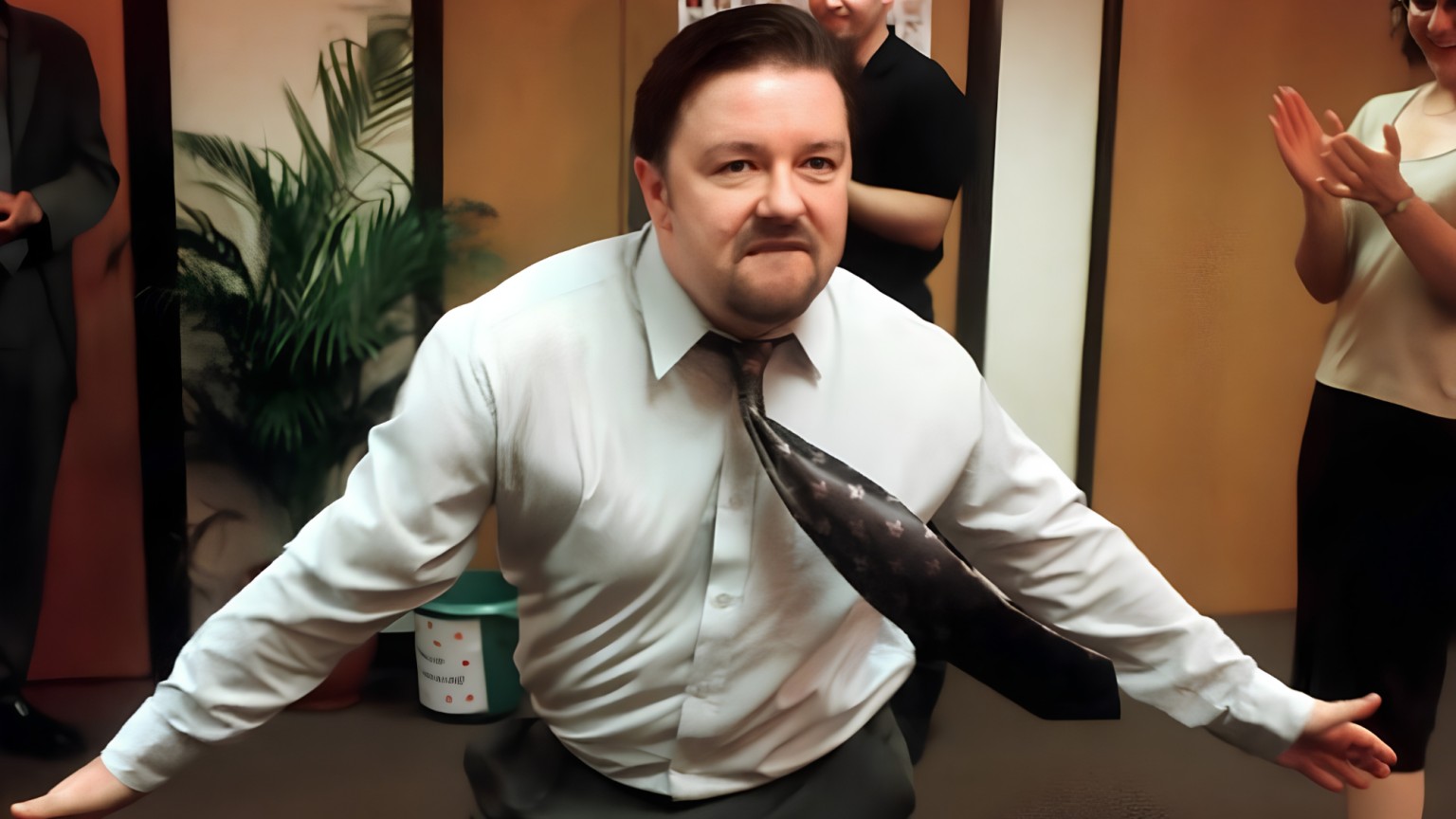
This week marked 25 years since The Office, co-created by Ricky Gervais and Stephen Merchant, was first broadcast. It has been celebrated by the BBC with a charming little interview on iPlayer between MacKenzie Crook (Gareth) and Martin Freeman (Tim), arguably the two actors – both relatively unknown at the time – whose careers were given the greatest boost by the series. This is peppered with short clips from classic scenes to whet viewers’ appetites for the whole 14 episodes – which are also back on iPlayer to be watched in their entirety.
Famously released to muted applause at first, The Office left many nonplussed viewers unsure whether the thing was meant to be a comedy at all. The opening titles featured a mournful, bittersweet piano ballad played over scenes of the drab urban brutalism of a Slough that had unaccountably escaped Betjeman’s friendly bombs. It all seemed to suggest a fly-on-the-wall documentary. This impression was reinforced by the establishing shots of an open-plan office – used by ‘Wernham Hogg Paper Company’ – that looked almost provocatively mundane.
Tim, Gareth and the other regulars all seemed highly plausible if somewhat heart-breaking figures, trapped like Gareth’s stapler in the merciless jelly of British white-collar life. Only gradually did it dawn on viewers that the grotesque, impossibly unself-aware David Brent, the manager of the paper company’s Slough branch, was a creation at all, let alone the creation of genius that he is now widely understood to be. When that clicked, however, everything fell into place.
Word of The Office’s brilliance began to spread. The show quickly became appointment viewing for initiates. I remember clearly the excitement of sharing one’s appreciation of it, as if it was a hipster band or new recreational high. It was for a few breathless weeks almost forbidden knowledge, like Adult Swim or something on the dark web, rather than a BBC2 sitcom.
Audience figures grew, and it was soon repeated, to greater and greater viewing figures and acclaim. It is now often neck and neck with Fawlty Towers in polls for the greatest British sitcom of all time.
Like Fawlty Towers, The Office benefits from a significant degree of rationing. It consists of just two near-perfect, six-episode series, and an extended two-part Christmas Special that emphatically resolved many of the narrative threads and made it clear that That Was It.
David Brent’s masochistic relationship with the boorish, boisterous sales-rep, Chris ‘Finchy’ Finch, who never failed to put David down, was a highlight. His humiliation at Finchy’s hands was terminated in the final episode with the immortal line: ‘Chris, why don’t you fuck off?’ I swear you could hear people cheering up and down the street as if England had scored in time added on. The realisation that we were suddenly rooting for Brent was astounding. This was then topped when the adorable Dawn and the stoic-but-hapless Tim’s long-smothered romantic yearning was finally fulfilled, just as we’d all lost hope.
Their kiss at the end of The Office Christmas Party was the sitcom equivalent of the final ‘Liebestod’ aria in Richard Wagner’s Tristan und Isolde, that resolves a tension that has been simmering since the discordant Tristan chord in the very opening bars of the piece over three hours earlier.
Understandably, the 25th anniversary of this crown jewel in the BBC’s 21st-century comedy output is a chance for it to bathe in some self-congratulation. An opportunity for the Beeb to earn a bit of well-deserved credit for having the nerve to trust in such a relatively unknown team and radical approach to scripted comedy.
But it is hard, too, to avoid the sense that The Office, far from heralding a brave new comedy world, represented something else – the end to the BBC-led era of the sitcom as a viable vehicle for mass entertainment.
The switch to the deadpan acting and the single-camera, ‘mockumentary’-style comedy – already established by shows like The Royle Family and People Like Us, and Christopher Guest movies like This is Spinal Tap – reached its apotheosis with The Office. It was perfectly suited to an audience that was much more comfortable with the cynical, media-savvy shared joke about the ‘format’, than it was with traditional sitcoms like Only Fools and Horses and Porridge.
The comedy that arose from watching David Brent fail to read the room, or Gareth realise that he is being ridiculed for his territorial-army skills, rather than admired, is often described as ‘cringe’. But it remains much less cringe for the double-screen generation than anything that looks as if it is ‘trying’ too hard to make you laugh, with a cast of ‘funny’ characters and their ‘funny’ catchphrases and quips. This was the traditional sitcom mode that Gervais himself explicitly mocked in the fictional show, ‘When the Whistle Blows’, which features in his post-Office show, Extras.
Extras was itself a great sequel to The Office. It accepted the new rules and worked to constantly challenge and undermine expectations of what a sitcom is. As with postmodern literature, the focus is now less on the story and the characters and more on the delivery system. Then there’s Peep Show and, more recently, Fleabag, which were arguably even more radical deconstructions. A few brave campaigners like Not Going Out and Mrs Brown’s Boys have continued to fight for the continuation of the traditional studio format, but even those shows with more traditional sitcom set-ups, like The Inbetweeners and Friday Night Dinner, avoided the laughter track for fear of sounding dated. Meanwhile in the US, the likes of Modern Family were helped to feel, well, modern, by filming and straight-to-camera monologues that were clearly borrowed from the mockumentary approach of The Office. This despite there being no plausible suggestion that a documentary was really being made.
I loved the old sitcoms, and have written on here before about their golden age. They peopled the national imagination with archetypes that fed our souls and our understanding of who we were for decades. But there is no escaping the fact that creative destruction is both desirable and inevitable in any such field. We were at least lucky that when the old sitcom walls were finally razed to the ground, it was at the hands of the utterly brilliant, unanswerable and endlessly repeatable, The Office. Twenty-five years on, we are surely due another.
Simon Evans is a spiked columnist and stand-up comedian. Tickets for his tour, Staring at the Sun, are on sale here.
The post Andy Burnham’s empire of cringe appeared first on spiked.
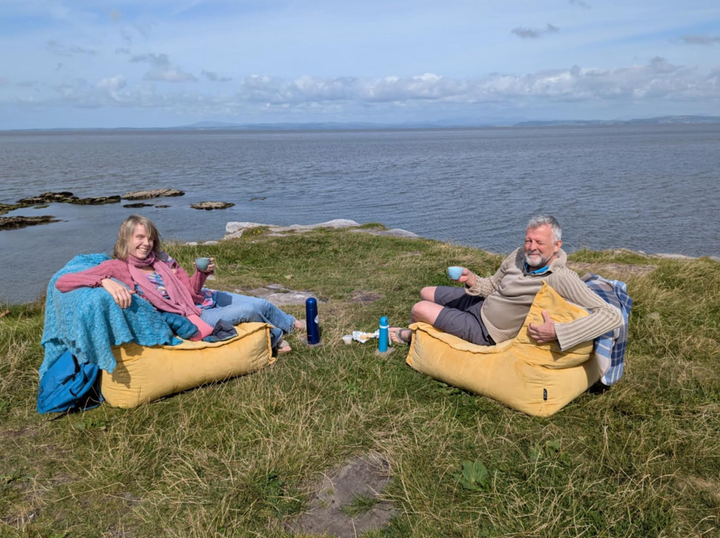
I thought I wouldn’t mind turning 60 one little bit. After all, my 50s had been my best decade ever. Yes, my face was saggier, my memory iffier and my body didn’t bounce back from late nights or lengthy walks like it used to.
However, I felt more confident and content than I’d ever felt in my 20s, 30s or 40s. I was finally happy with who I was and where all the pieces of my life had landed. I had more zest for life than ever! So turning 60 wouldn’t make any difference. It really was just a number.
My 60th birthday landed with an unexpected thud. Almost overnight, I felt older and uglier, stiffer in my movements and foggier in my mind.
It turned out I wasn’t even imagining it. According to an article I stumbled across online, new research showed that there really is a sudden “burst” of ageing at 60 – a fast-forwarding of the disintegration process. But that wasn’t what was bothering me the most.
What really bothered me was that now that I’d tipped over into my 60s, people were starting to respond to me differently. I had to work a lot harder at parties to get people younger than me to engage in conversation – or even notice me in the first place. And teens and 20-somethings often brushed against me in the street now as if I literally wasn’t there.
I was becoming invisible.
My confidence started to shrivel. Before I knew it, I was caught in a negative feedback loop. The less readily people noticed or engaged with me, the less readily I did anything to make them notice or engage with me. I could feel myself turning into a meeker, milder, mediocre version of myself.
Was this the beginning of the end? Was I just meant to let myself shrink into my 60s? I wasn’t ready for that.
An idea started to form. Let’s make 60 count, I thought. Let’s take that number and play with it. Turn it into something positive and meaningful, fun and fulfilling, something that would let me reclaim my confidence and connection with people – whoever they were, whatever their age.
I decided to invite 60 random people to sit down and have a cup of tea with me. Some would be total strangers. Some would be people I’d noticed and was curious about from a distance. Others would be people I knew a tiny bit and wanted to know more. And I’d also include friends and family I knew well – or thought I did!
Because I wasn’t just looking for small talk, there needed to be a bit more to it, though. I decided I’d ask each person the same set of tea-themed questions – yes, tea! – that I hoped would gently springboard us into meaningful conversation and connection.
After all, I was an English person living in England, a country steeped in the tradition of “a nice cup of tea”. The drink is intertwined with our rituals, families, relationships and memories.
My own deep enjoyment of tea, I’m sure, has very little to do with the taste of it, and everything to do with the fact that the only consistent act of love my dad showed me as a child was to bring me a cup of it in bed – with milk, two sugars, and two biscuits – every single morning.
Still, my new, shyer, 60-year-old self wavered. Would people even say yes to my invites, or just think I was a batty old lady? Would I really dare to ask strangers? Would the questions actually work?
Before I could change my mind, Cup of Tea No.1 fell into my hands.
“I hear you’ve had a big birthday!” said a guy I bumped into in the street. He was a friend of a friend of a friend, and before I knew it, I was babbling out my 60-Cups-of-Tea idea, testing how it sounded when I said it out loud. He pounced immediately.
“I’ll be your guinea pig!” he said, and just a few days later, I was sitting in his garden in the sunshine, sharing a pot of fresh mint tea with homemade honey and semolina cake. We chatted for almost two whole hours.
“You know,” he confessed as I got up to leave, “Before you arrived, I told myself I’d hold my cards close to my chest… but I’ve told you everything – and really enjoyed it!”
At that moment, I knew I was on to a winning formula. I walked home feeling uplifted already.
From there, it just got better and better. I bounced from cup of tea to cup of tea, getting braver and braver about who I asked.
A Buddhist nun at a Buddhist temple.
The boss who fired me in my 20s.
A truck driver at a truck stop.
My hairdresser. We’ve only shared the tiniest of talk in the salon up until now.
Two street performers I encountered in the city centre.
By Cup of Tea No. 6, I was getting invites. Word was out.
“Would you have a cup of tea with me on the beach in front of my house?” messaged a woman I barely knew. She lived on a tiny, isolated peninsula cut off by the tide for hours every day. Absolutely, I would!
Part of the fun of this was mixing up where or how I had these cups of tea: I drank it up in a tree, wearing tutus, cruising on a houseboat up the canal, sitting in comfortable velvet armchairs on the edge of a cliff.

Courtesy of Claire Potter
And suddenly I’m exploding with the possibilities of who I could ask.
I wonder who the artist of that painting I love on my living room wall is? Let’s track them down!
How about that man I see out my window every day in his thobe on his way to prayer at the local mosque?
Why not ask my 96-year-old father-in-law? I’ve never had a proper one-to-one chat with him – quite bizarre when you consider that he produced 50% of my husband and I produced 50% of his grandchildren.
Didn’t that man I was introduced to the other day say he worked at the mortuary at the hospital? Let’s stare death in the eye with him. After all, that’s almost certainly where I’m going to end up.
Cup of Tea No.15 was with an ex-boyfriend I hadn’t seen for over 30 years – and he told me that he was coming dressed as a woman. He and I were together for three years at university in the ’80s. His cross-dressing, which had been secret back then (I’d only discovered it when I came home unexpectedly early from a lecture and caught him in my clothes and make-up) was, without doubt, a catalyst in our break-up.
I’m so pleased that he can now openly present as a woman when he wants to, but I find the thought of meeting him as a female mind-boggling and nerve-wracking nonetheless.
This person who sat down opposite me was unrecognisable. Then I caught that familiar, super-cheeky grin, and we relaxed into sharing memories – memories that belong only to us.
I’ve often thought how sad it is that we often never again get the chance to see someone from our past we loved intensely, someone we chose to share a precious chunk of our life with. I’m so happy we’ve had this opportunity to reminisce and reconnect. I think I’ve made a new girlfriend.

Courtesy of Claire Potter
And the cups of tea just kept coming.
An old friend I haven’t seen for years who is now sober.
An anti-female genital mutilation activist.
They were such big characters in my childhood, yet as adults, we’d only really seen each other at funerals. We recaptured the sleepovers we had as kids by having our cup of tea in pyjamas on the bed!
When I went on holiday to Thailand to reunite with my 18-year-old daughter, who had just finished three months of voluntary work there, I had a cup of tea with her at a tea plantation.
Over the best green tea we’d ever tasted, she started to reflect on the experience she’d just had, but was soon opening up to me about her childhood, her romantic relationships and her dreams. I realised how rarely we’d have such an honest conversation, because so rarely do I listen without a part of me wanting to pounce in with parental advice or opinion.
I realised how many times I must have stifled her with that you’ll-understand-when-you’re-older undertone.
“Ask me more questions!” she said at the end. A similar thing happened when I had a cup of tea with my 25-year-old son. The conversation cut through the mother-son dynamic we’d been stuck in since he left home at 18.
And I realised how much I’d “fossilised” him – automatically assuming I knew and understood him just because he was my son. I’m so glad I had that chance to tune into how he’s changed and catch up with who he has become.
Without exception, every single cup of tea was wonderful – and the people I invited seemed to enjoy it as much as me.
“Thank you. That really made me have a good think about things,” said one person.
“That felt like therapy!” said someone else.
“Such small prompts to such big conversations!” another told me.
Indeed, the tea-themed questions unlocked more than I could have imagined. The stories poured out – sometimes heart-warming, sometimes heart-breaking.
Climbing into bed with their mum and dad on a Saturday morning and feeling special because they were allowed tiny sips of their tea.
Always dreaming of treating their mum to a posh afternoon tea in London when they grew up but never getting to. She died before they grew up.
Having to keep their Sunday afternoon cups of tea at a department store with their grandad secret because he always brought along his mistress.
Sitting up a tree with their friends drinking tea and watching the sun rise at the end of university, so full of joy and optimism for the future.
Marrying a woman because the morning after the first night they slept together, they discovered she was the only person to ever make them a cup of tea exactly as they liked it.
Feeling soothed and touched by the flask of tea that a hotel receptionist in China brought to their room when they were anxious and exhausted with their newly adopted baby.
Writing the words of their wife’s obituary after she died by suicide: “I will forever love you. Rest in peace and we’ll meet again. Have a cup of tea waiting for me.”
Tea, it seems, really is tangled up with our lives.

Courtesy of Claire Potter
On a weekend trip to Zagreb, I was excited to sit down and share a cup of tea with the creator of the Museum of Broken Relationships, somewhere I’d wanted to go for a very long time.
As we parted, she told me she’d been thinking about having a slogan printed on the takeaway cups in the museum cafe, something jokey like HOW ABOUT CAKE? However, after our chat, she wondered if an open invitation like WOULD YOU LIKE TO SHARE A CUP OF TEA WITH ME? might be better – something to nudge people to take the risk of reaching out to someone new.
“An unexpected encounter between two humans, sharing something intimate – that’s when magic happens,” she told me.
My 57 cups of tea (only three to go!) have worked their spell on me for sure. I’m full to bursting with the warmth and joy of human-to-human connection, and my confidence has bounced right back.
I’ve learned that it’s never too late to make new friends, reignite old ones and strengthen – or adjust – the relationships you already have. And I now know that even if I can’t stop my age from making me less visible, I don’t need to let that stop me from being brave, curious and playful.
I’m going into my 60s full blast after all.
Claire Potter is an author of parenting books and children’s picture books. Her online program, Tiny Bites, leads parents through a three-step process to turn their child from a picky to an unpicky eater. You can see all the cups of tea she’s done at Sixty Cups of Tea.
Do you have a compelling personal story you’d like to see published on HuffPost? Find out what we’re looking for here and send us a pitch at pitch@huffpost.com.
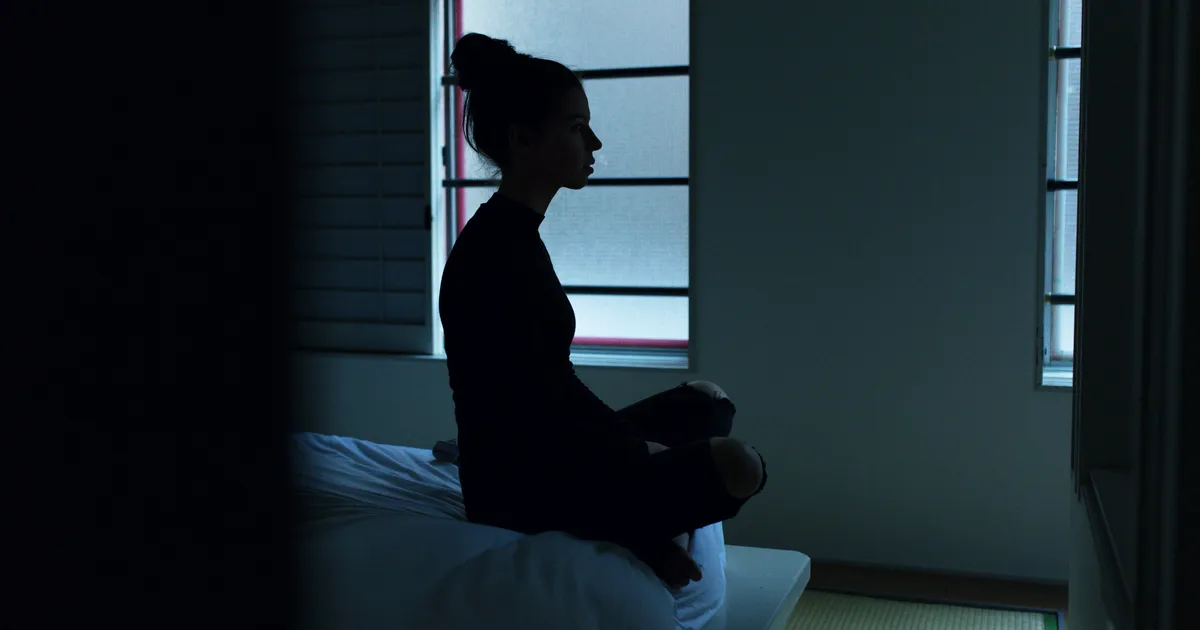
When you think about insomnia, do you imagine someone tossing and turning late at night, unable to fall sleep?
While that can happen, it only describes one iteration of the condition: sleep onset insomnia. Some research suggests that people with sleep onset insomnia are likely to have another sleep issue, like restless leg syndrome.
But there are other types of insomnia too, including one which makes people wake very early in the morning and stay up for hours after the disruption.
This is called terminal insomnia, also known as middle of the night insomnia, late insomnia, postdormitional insomnia, or sleep offset insomnia.
What is terminal insomnia?
Per the University of Pennsylvania (UP), this happens when you wake up too early and aren’t able to fall asleep again.
Those with the condition usually get up hours before their set waking time. It’s common among older adults, who may face 4am wake-ups, a 2012 paper suggested.
What causes terminal insomnia?
UP pointed to some research that suggests this is a heritable trait (one you can get from your parents), though we can’t say for sure whether that’s definitely the case.
Ohio State University’s (OHU) Health & Discovery page added that terminal insomnia might happen due to our natural sleep-wake cycles, too.
“One likely explanation for waking up at the same time each night is that you go to sleep at the same time and then, at the same time each night, you reach a light stage of sleep and wake up,” they wrote.
Ageing may be another factor. The afforementioned 2012 paper reads, “older adults experience insomnia coupled with early morning awakenings due to an interaction between age-related changes in circadian rhythm timing coupled with behaviour changes that contribute to sustained poor sleep”.
Terminal insomnia might also be caused, or worsened, by:
- depression,
- anxiety,
- sleep apnoea,
- menopause,
- thyroid issues,
- acid reflux,
- hormones,
- fluctuating blood sugar levels.
How can I tell if it’s terminal insomnia or normal sleep disruption?
It’s relatively normal to wake up in the middle of the night, OHU said. But it’s also expected that most people will be “able to return to sleep with little effort”.
If you’re waking up and unable to fall back asleep at least three nights a week, for at least three months, and if it negatively affects your daytime functionality, you have chronic insomnia.
Keep a sleep journal if you’re not sure whether this describes you.
What should I do if I have terminal insomnia?
Some lifestyle tweaks might make terminal insomnia less likely. These include keeping a regular sleep schedule, getting enough exercise in the day, avoiding caffeine and alcohol later in the day, and keeping your bedroom cool and dark.
The NHS advised speaking to your GP if your symptoms have been going on for months, if changing your lifestyle habits hasn’t affected your insomnia, and/or if it’s affecting your daily life in a way that makes it hard to cope.
If you suspect you might have another condition that’s causing your sleep issues, see your doctor sooner.
Over the last decade, intimacy co-ordinators have become increasingly commonplace on the sets of TV shows and films, helping actors and directors navigate scenes involving sex or nudity, which might put them in vulnerable situations.
These co-ordinators became more prevalent in the 2010s, in light of the Me Too movement, which saw women calling out the industry-wide harassment, misconduct and abuse that had gone unchecked for decades prior.
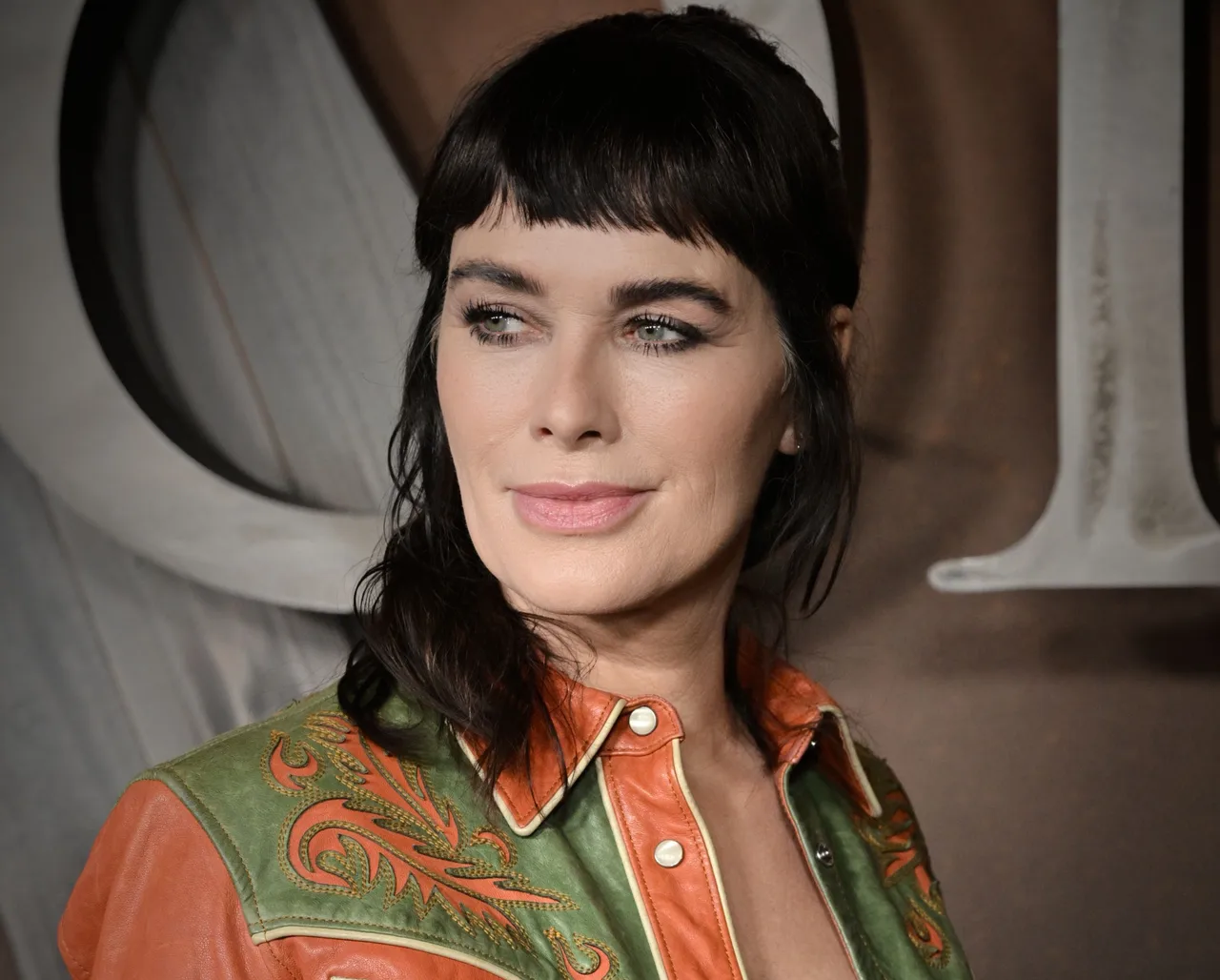
While these are crew members who traditionally stay in the background, in Lena Headey’s new series Intimacy, she’s dragging the subject right to the forefront.
In the eight-part BBC Sounds audio drama – which she also directed and wrote – Lena portrays Liza Simmons, a former actor who has taken a step back from the industry after a troubling experience, to retrain as a therapist and, later, an intimacy co-ordinator.
However, when working on a new project, Liza is unexpectedly reunited with a figure from her past, causing her to spiral over big questions about herself, her beliefs and her own integrity.
Speaking to HuffPost UK ahead of the series’ release, Lena admits that her own experience with intimacy co-ordinators had been rather limited before she began work on the show.
Or, as she puts it: “I’m so ancient that I never experienced one in my sort of heyday, when people wanted to see me naked. So, now they don’t anymore, I’m safe.
“Back in the day, there weren’t any. And there was no talk of any – so you just got on with it.”
“Looking back,” she says, “we’re like, ‘what?!’. I mean, I was thrown to the wolves. But it’s given me a resolve to get through most things at work. Now, I just think, ‘oh fuck off’, and I speak my mind.”
She laments: “But when you’re young and vulnerable and kind of new, you just say ‘yes’ most of the time.”

Perhaps surprisingly, given their work is primarily intended to keep performers safe in their workplace, not all actors have been on board with the presence of intimacy co-ordinators since the role became more widespread in the industry.
Sir Ian McKellen and Lena’s fellow Game Of Thrones alum Sean Bean both raised eyebrows when they questioned whether the use of an intimacy co-ordinator “spoiled” the spontaneity between two actors while shooting love scenes, with Toni Collette, Mikey Madison and Gwyneth Paltrow among those who have turned down the chance to work with one in their recent projects.
Gwyneth controversially claimed last year that she’d told one such co-ordinator on the set of Marty Supreme: “Girl, I’m from the era where you get naked, you get in bed, the camera’s on. I think we’re good. You can step a little bit back.”
“I don’t know how it is for kids who are starting out, but… if someone is like, ’OK, and then he’s going to put his hand here’… I would feel, as an artist, very stifled by that,” she claimed during an interview with Vanity Fair.
On the other hand, Jane Fonda, Kate Winslet and Florence Pugh have all voiced that they wish there’d been intimacy co-ordinators on film sets when they were starting out in their careers.
Dame Emma Thompson has also become a staunch defender of them in the last few years, insisting it was “absolutely essential” that young women starting out in their acting careers should have “someone there to protect them”.
For Lena – who, as she puts it, is “straddling two generations” of actors – she admits the debate is an “interesting one”.
“I appreciate the value of a co-ordinator,” she insists, pointing out that in the early stages of her career, she mostly just went along with whatever she was told when it came to intimate scenes.
“Now, if I have a scene – which, as I say, is rare, because everyone is like ‘keep your clothes on’ – I’m kind of like a big bad wolf,” she quips. “I know what I want, I know what I want to do, I know how to speak to other actors and to get a director to listen to what we need.”

“Like anything, if they’re great at their job, it’s wonderful, and it adds value,” she says of intimacy co-ordinators. “I think you can have terrible ones who just make you feel more awkward.
“If you have two actors who are in their 50s or 60s, who are comfortable, who know each other, and there’s no kind of weirdness, then you can kind of dance it yourself.”
She notes: “It’s even kind of a language thing. If you’ve got a director who just like… doesn’t have a handle on kind of intimate language or emotional language, if a co-ordinator is great at their job, they kind of translate, gently, what somebody is after.”
The main benefit of an intimacy co-ordinator, she believes, is for the “younger” generation of actors, who she admits feeling “very protective towards”.
“Now we have [intimacy co-ordinators], so… unless your director is a hideous knob, then you’re kind of covered,” Lena suggests.
“Most directors will ask for more than they need, in terms of nudity – so, to have someone who’s like, ‘nah, you don’t need that’, is great.”
“Listen,” she continues. “I got my whole back tattooed at one point, because I was like, ‘at least then they’re going to have to ask me to go to makeup [before doing a sex scene]’, and I’ll say, ‘that’s going to be eight hours’.”
“That was quite a drastic measure,” she acknowledges. “But there weren’t any co-ordinators. So I used ink.”
Lena quickly clarifies that she did already want her tattoos, and “enjoys getting them” (“that’s another story,” she claims). “But yes,” she recalls. “I was like, ’at least if I do this, and they go, ‘can we see a full nude back?’, I could say, ‘you can, but I don’t think in the 19th century they would have had these’.”

As part of her research while writing Intimacy, Lena says she interviewed multiple co-ordinators, including one who would eventually become the series’ own go-to for sex scenes.
“We had some kind of sex scenes in the podcast, so we had to have somebody there,” Lena explains. “Even though it was all audio – and no one was touching anybody – we were making noises and kind of thrusting ourselves around a studio. So, you know, we were covered.”
Of course, the role that Lena is most recognisable for is her eight-season stint in Game Of Thrones, the award-winning fantasy series that was infamous for pushing the boundaries when it came to graphic content, whether that was murder or, indeed, sex and nudity.
While intimacy co-ordinators are now part of the team on the Game Of Thrones spin-off House Of The Dragon, the original show concluded at a time when the roles were not yet popular.
Asked whether an intimacy co-ordinator might have changed things behind the scenes of Game Of Thrones, Lena notes: “There were three girls on that and it was their first job. And there was a lot of sex, and a lot of nudity. I don’t know their personal experiences on that, I’m sure some of it was really fucking rough.
“So, I think yes, that would have helped greatly – to just have this kind of interpreter who can walk the line between an actor and a director, and listen, and take things [to a director] that an actor may not be comfortable saying, because you don’t want to lose your job, and you don’t want to be judged, and you want to appear to be willing and able and happy to do the things.
“You know, you’re not necessarily going to want to say that to the person who holds your life in their hands.”

During her stint playing Cersei in Game Of Thrones, Lena was involved in numerous explicit scenes. One in particular, the infamous “walk of shame”, saw her character being paraded through the streets nude while being pelted and verbally assaulted by those she passed.
She recalls the “outrage” that came about when it emerged that she’d used a body double to convey Cersei’s nudity, saying: “It was three days of me walking naked, shooting this emotional scene, with extras who had seen the show, and loved the show. It was just weird. It was like walking through ravenous fans.
“Doing that naked would have just made me so aware of people, rather than being in my performance. Having the two of us [herself and a nude body double] do it was obviously just a smarter, more emotional, and easier way for me to do it as an actor.”
“Maybe having somebody there” might have changed things, she claims, but adds that body double Rebecca Van Cleave was “fully on board”, “committed” and “brilliant”.
“We talked about everything, I was there for her, she was there for me,” she notes. “You’d have to speak to her, I guess, about her experience.”
For the most part, though, she looks back fondly at Game Of Thrones – and, in particular, her time as Cersei.
“I loved playing her,” she beams. “It was such a joy to get to play somebody that deep, I guess. They wrote for her wonderfully. Such juicy dialogue and intention throughout the show.”
“I’m just proud to have been a part of that show,” Lena continues, noting that it now feels like it was “a million years ago”.
“Obviously, it wasn’t perfect, but what is? We just keep learning. But I think it was beautifully written, and we all dug each other, so it worked.”
She adds, knowingly: “I think everyone wants dirt on it, but actually, it was pretty wonderful – for the most part.”
Naturally, any conversation about Game Of Thrones inevitably turns to its infamous finale, which continues to divide opinion to this day, and for which the reaction from fans was particularly out of control when it first aired in 2019.
“I mean, the fans’ reactions were always out of control, which was what was delightful about it, the sort of appetite and loyalty,” Lena says.
“You know, I think we’ve all spoken about the finale a million times, and I think, when you invest nearly 10 years of your life into something, believing that there is a direction and a path that makes sense emotionally, and then suddenly it’s cut short, and you feel underserved, then yeah, it’s a bummer. But it is what it is. It’s in the past.
“It’s an amazing thing to have been a part of, and I don’t just say this as lip service, I am forever grateful for that, to get to play her.”
(She is still in her feelings about how things turned out for Cersei, though, admitting: “That’s still rough.”)

HBO/BSkyB/Kobal/Shutterstock
If anyone needed proof that Game Of Thrones still holds a special place in Lena’s heart, they could look no further than the cast of Intimacy, where two of her former co-stars, Hannah Waddingham and Maisie Williams, play key roles.
Hannah, who voices the main character’s agent in Intimacy, has ascended to bona fide national treasure status since Game Of Thrones’ ending, which Lena says she’s been “thrilled” to witness.
“I loved her from the minute we met,” she enthuses. “We bonded, we’re a similar age, we have similar stories. And she is who she is. That’s why everyone’s in love with her.”
Lena adds that it’s been “brilliant” to watch Hannah’s career go from strength to strength off the back of her Emmy-winning work in Ted Lasso, sharing: “It’s funny, the rare occasion we find to meet up now, everyone asks me to take their photo with her, which gives me great joy. And no one really knows [me]! Everyone’s just like, ‘can you just…?’, and I’m like, ‘sure!’.
“It just shows you in this business everything [changes]. Nothing’s ever guaranteed or steady. It’s funny, people kind of think, ‘oh you’ve made it’, and you’re like, ‘nah, you just float for a minute, and then you go back down – and then you kind of find some air, and then you go back down again’. That’s the cycle of this mad industry.”
Maisie’s character, meanwhile, was written especially for her, with Lena thinking of her co-star to play a young actor in the audio series because “she’s so wonderful and quirky and smart and funny, and her voice just has this thing”.
“That was the challenge of [working with] audio,” she admits. “I’m a super visual writer, so this took a year to write, and it was constant. And I had great notes, and annoying notes, and helpful notes that I didn’t want to believe were helpful because they just irritated me. But, you know, creating something only to be ear pleasure, as opposed to just viewing it, it’s really fucking challenging.
“So, to have these voices that I love, and to be able to work with people that I love, yeah, of course, that’s part of the joy of creating something.”

As she mentions, Intimacy was Lena’s first time creating something specifically to be enjoyed as an audio podcast, admitting that “opportunity” was the main reason it became her medium of choice.
“I’m constantly writing, and it is really brutal out there to get anything made right now,” she admits. “Like, the industry is changing, changing. It’s having this shift. Everything is up in the air. So, to create an IP makes the future of something easier.
“To have an opportunity to write a podcast was sort of daunting for me as a writer, because you’re just in one realm. You can’t go, ‘oh we’re going to cut to this and see this moment’. It’s all just audio.
“It’s kind of gorgeous when you get it right. But the developing of it is like… you want to smash your face against the window.”
Helping matters when it came to making Intimacy was the fact that the actors recorded their dialogue together in person wearing head mics, rather than being “stuck” in a recording booth “reading from a bit of paper’.
“So, you could really move,” she explains. “It was like theatre, but without anyone watching, so that was really lovely. You could look people in the eye.
“And that gives Intimacy this feeling. I think you feel it as a listener. You feel the movement and the kind of interaction between people. It was challenging, and then it became fun and interesting to do.”
“But I still prefer filming something,” she confesses.
Difficult though it might be for anyone to get new projects off the ground in the entertainment industry, it’s even tougher for female creatives, as Lena chose to explicitly acknowledge in Industry’s script: “There’s a moment where I say to Hannah’s character, ‘is it going to be a female director?’, and she laughs and says, ‘no, no, no, the budget’s too high for that’.
“Listen: straight, male voices in our industry are undoubtedly the loudest, and the most heard. That is just a given. And I don’t think that has changed,” she continues.
“Obviously, there are great allies in this world, and in this industry. Great creators, and people that listen, and are really honest, and truthful, and committed to the bigger picture of it all.
“But there are, as in everything, some folks that you’re like, ‘why? why him?’. I’m just really honest about it. I know that, when women get together, we do talk about it, and it’s just like anything that’s rough, you just make it funny. The way through is laughter.”
Her own skills as a writer and director, she says, were honed during her decades as an actor.
“I watch people front and centre, obviously, when I’m in a scene with them, and I study directors, and I look at the crew and I watch how people light something and I’m endlessly fascinated by the whole process,” she explains. “That excites me and flips my brain. Like, it’s just full and happy. So yeah, I think I’ve been at a good university for 35 years.”
When it comes to choosing her projects post-Game Of Thrones, Lena says, she’s “always looking for something – something different or something that I haven’t explored”, which is what has led to her turning to directing and writing, as well as performing.
“It’s a crazy thing, because it’s like, you do that show, you go on to do other things, they don’t work, they’re failures, but that’s just part of what we do,” she says. “You know, not everything is going to have the magic ingredients.
“So, I think that’s what I look for more than anything. You’re like, ‘let’s try this recipe’, and maybe that’s a fuck-up, or it tastes kind of disgusting. And then you go onto the next – you just keep trying, you can’t give up.”
With her latest audio offering, she adds that she just wants “people to really giggle and to feel sort of seen”.
“Everybody forgets… when, in this world, somebody is a little bit mean or a bit shit, everybody is carrying something we don’t see. I know that sounds cheesy and it should be on a t-shirt, but I don’t care, because it’s true,” she says with a laugh.
“With Intimacy, you’re going into this world where a million people are just juggling a million things, and it’s human mess. I just wanted to write something that felt real and touchable and fun to listen to. And champion this character for a few episodes.”
Intimacy is available to listen to on BBC Sounds from Wednesday 22 July. Episodes will also air weekly at 11pm on BBC Radio 4 from Monday 27 July.

If 2023 was the year of “girl dinners” – a selection of picky bits from the cupboard and fridge that you don’t have to cook – 2026 is the year of boy kibble.
TikTok’s latest food obsession is basically a dish made up of mince and rice, with the occasional addition of eggs or veggies to add a bit more flavour (and fibre) to the dish. Someone described it as a meal you’d give your pug, which does go some way to help explain the name.
It’s become the meal of choice for some, particularly younger men, who want to easily (and cheaply) cram carbs and protein into their diet to aid their fitness goals.
But what does routinely eating a dish like this mean for teen development, especially in the age of looksmaxxing? (For those not chronically online, looksmaxxing is all about the improvement of your physical appearance, commonly through a number of practices which range in intensity and severity – from using skincare and hitting the gym to undergoing surgery and even taking a hammer to the face.)
What a nutritionist thinks of the boy kibble trend
“The individual ingredients in ‘boy kibble’ aren’t a problem in themselves,” Charlotte Stirling-Reed, The Baby & Child Nutritionist, told HuffPost UK.
“Beef mince provides protein, iron, zinc and B vitamins, rice gives you starchy carbohydrates, and if eggs and vegetables are added too, it’s actually quite a balanced, nutritious meal.”
However, as with anything, moderation is key – and if teens overdo this dish or start relying on it every day, this could be a cause for concern.
“Balanced eating is about all the variety one can eat across the whole day and even across a few weeks,” said Stirling-Reed.
“If a child is eating beef and rice every day, they may miss out on the nutrients that come from other protein sources, such as fish, beans, lentils, eggs, tofu and poultry.
“Additionally, they’d be missing out on the wide range of nutrients such as polyphenols, fibre and also fluid from a variety of fruits, veggies, beans, legumes and nuts and seeds, too.”
The lack of fibre is a concern for paediatrician Dr Madison Szar, too. She told Parents that a dish of solely mince and rice can put teens at risk of constipation, and doesn’t support a healthy microbiome.
Another key consideration is that beef is a red meat – and current NHS guidance for adults advises that those eating more than 90g of red or processed meat per day should reduce this to an average of no more than 70g per day, due to links with bowel cancer.
“While there are no specific UK red meat limits for children, NHS healthy eating guidance encourages variety, including a range of protein foods such as beans, pulses, fish, eggs and meat,” Stirling-Reed continued.
“A large serving (or a few servings) of beef mince every day could mean they’re getting more red meat overall, and potentially more saturated fat too, depending on the type of mince used.”
There’s also the protein levels to consider. The average service of beef mince contains about 20g protein. The nutritionist pointed to UK data showing children already tend to exceed their protein requirements.
“So the idea that boys need to ‘load up’ on extra protein isn’t necessary or supported by the evidence,” she added.
The verdict?
The nutritionist ended that if kids enjoy a beef and rice dish occasionally, especially with added vegetables and egg, “that’s absolutely fine, and in fact is a nutritious, balanced meal”.
But she wouldn’t recommend it as a daily staple in place of a wide variety of other colourful, nutrient rich and beneficial foods.
Those who’ve already sat down to watch the new Netflix movie Heartstopper Forever might have been surprised to see a new addition to the cast.
Oscar winner Olivia Colman previously received widespread praise for her portrayal of Nick’s mum, Sarah Nelson, in the first two seasons of the popular teen drama.
However, in its third iteration, she was unable to appear, with Hayley Atwell instead appearing as Nick’s aunt, who served a maternal role in his life for these episodes.
In the new film, meanwhile, the role of Sarah has been completely recast, again due to Olivia’s unavailability.
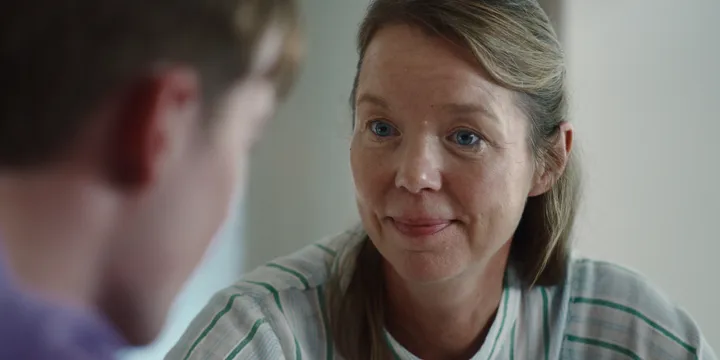
In her absence, the role is now be played by Line Of Duty and Motherland star Anna Maxwell Martin.

Heartstopper creator Alice Oseman told Netflix’s Tudum back in April: “When beginning to work on the Heartstopper Forever screenplay, I knew how important it was that Sarah, Nick’s mum, appeared in the story.
“Since season one, we have seen how close Nick is with his mum; she’s one of the few people he can turn to in moments of crisis. While in season three, we were able to tweak the story to avoid any appearance of Sarah, it felt nonsensical for her to be absent from this final chapter, given some of the emotional struggles Nick faces.”
They continued: “Sadly, Olivia Colman was not able to join us for the film, so we made the very difficult decision to recast the role, rather than exclude the character.
“We are deeply grateful for Olivia’s beautiful performance as Sarah in seasons one and two of Heartstopper, through such iconic moments as Nick coming out as bisexual, and we know that her performance will live on in the hearts of every Heartstopper fan.”

Oseman added: “We are overjoyed to welcome the incredible Anna Maxwell Martin into the role of Sarah for Heartstopper Forever. Anna perfectly embodies Sarah’s gentle, down-to-earth energy, and it was magical to witness her scenes with Kit Connor during the film shoot. I can’t wait for Heartstopper fans to experience her interpretation of Sarah Nelson.”
Heartstopper Forever is now streaming on Netflix, serving as the final outing for Nick and Charlie, played by Kit Connor and Joe Locke. Check out HuffPost UK’s review of the film here.
What we eat could affect how long we live. Some research suggests that UK adults could enjoy 10 extra years of longevity by switching to a diet higher in whole grains, nuts, and fruits, and lower in sugar-sweetened beverages and processed meats, for instance.
And remarkably, one paper found that older adults’ biological age seemed to lower after four weeks by shifting the percentage of fats and carbs in their usual diets.
Biological age refers to how old a person’s tissues and organs are on a cellular level, and is different from how many years they’ve been alive (chronological age).
How can my diet lower my biological age?
This study, which involved 65- to 75-year-olds, randomly assigned them to one of four diets:
- omnivorous high-fat (OHF) – 7% plant protein and 7% animal protein, 37%-41% of energy from fat, and 41%-43% carbohydrates,
- omnivorous high-carbohydrate (OHC) – 7% plant protein and 7% animal protein, 28%-29% fat, and 53% carbohydrates,
- semi-vegetarian high-fat (VHF) – about 10% plant protein and roughly 4% animal protein, 37%-41% of energy from fat, and 41%-43% carbohydrates,
- semi-vegetarian high-carbohydrate (VHC) – 28%-29% fat, and 53% carbohydrates.
The OHF group, a high-fat diet which meant participants ate all foods, reflected most of the older adults’ pre-trial diets. Following this diet didn’t lead to a reduction in biological age after the four-week intervention.
But all three of the other diets did.
The strongest evidence of benefit seemed to come from the OHC diet, in which participants ate all foods but got a lot of their energy from carbohydrates and relied less on fat.
This was close to their “normal” diet, but with less focus on fat and more on carbohydrates.
Specifically, the OHC diet was made up of 14% energy from protein, 28-29% fat, and 53% carbohydrates.
Meanwhile most participants’ usual diet outside of the study had roughly the same amount of protein, but derived 37-41% of energy from fat and 41%-43% from carbohydrates.
More research is needed
Associate Professor Alistair Senior, from the University of Sydney’s School of Life and Environmental Sciences and the Charles Perkins Centre, who supervised the research, said they don’t know for sure how the changes they saw in this study might play out in the long-term.
“Longer-term dietary changes are needed to assess whether dietary changes alter the risk of age-related diseases,” he explained.
Meanwhile, lead author Dr Caitlin Andrews, from the University of Sydney’s Charles Perkins Centre, added that “it’s too soon to say definitively that specific changes to diet will extend your life”.
“But this research offers an early indication of the potential benefits of dietary changes later in life,” she continued.
“Future research should explore whether these findings extend to other cohorts and whether the changes recorded are sustained or predictive of long-term outcomes.”
“You don’t need to manage my food for me all the time anymore,” said my 13-year-old son.
We were on the way home from a ski weekend with three other families. Due to the small mountain village, all the teenagers were able to enjoy an abundance of freedom over the weekend. They managed their schedules, meals and skiing as a group, with minimal parental intervention.
My boys absolutely relished their independence. They thanked me for “backing off” all weekend.
Both of my boys have managed food allergies their entire lives, so this weekend was a pivotal moment for our family. Thanks to treatment, my older son no longer has food restrictions and was able to eat safely at restaurants. My younger son, who still needed to eat the food I’d prepared in advance and brought for him, was fully capable of managing his meals without my guidance.
When they were babies, both of my sons were diagnosed with multiple, potentially life-threatening food allergies. While any single food allergy impacts daily life, my boys were on the extreme end of the scale. My older son had a mild allergic reaction to his first bite of peanut butter. Although bloodwork showed he was also allergic to all tree nuts, the impact of severity had not yet set in.
That all changed a few months later when my younger son nearly died from his first bite of banana. I will never forget the horror of watching my six-month-old baby turn purple and go lifeless from a single bite of food.
I immediately knew we were in urgent danger and took him to medical care quickly. After two rounds of epinephrine and other rescue medications, doctors saved his life.
However, mine would never be the same.

Courtesy of Hillary Tolle Carter
My younger son was diagnosed with more than two dozen food allergies. After years of additional testing, that list has shrunk to eight allergens. Despite constant vigilance, he had another close call when trace amounts of gluten were found in certified gluten-free chicken nuggets that he ate, causing a reaction so severe that he required four doses of epinephrine to save his life.
There is absolutely nothing worse than watching an entire emergency room staff rush to your son’s room once he arrives via ambulance, igniting the dread of your worst nightmare coming true.
Food shouldn’t cause this level of fear in a parent. But when you’ve seen it almost take your child’s life, there is no way to ignore it or even minimise it. Most parents worry about their kids getting hurt on the playground. I felt like mine were playing in the middle of a highway.
For better or for worse, this has in many ways defined my entire parenting journey. I transformed into a food expert, cooking from scratch and reading every food label.
I became a strong presence in our school as class parent and trip chaperone. I met endlessly with doctors, teachers, kitchen staff and school nurses. I developed into a respected voice of the patient, leading a local support group and working with a national nonprofit.
I leaned hard into advocacy to help my boys by creating a world around them that was more educated and empathetic. But also, I needed to feel a sense of control in what was an otherwise uncontrollable situation.
Every meeting, blog post, speech and media interview I did was always, ultimately, a pep talk to myself. My work was my life raft. The food allergy community was my support group.
Then something unexpected happened: the emergency phase… ended.

Courtesy of Hillary Tolle Carter
Treatment changed our lives. The reactions slowed. The fear softened. And a moment of clarity emerged: I realised I had spent more than a decade being more than a parent. I had been a full-time crisis manager.
But if I wasn’t constantly managing food allergies, who was I?
When your child has a chronic health condition, caregiving becomes more than something you do –m it becomes who you are.
Let me be clear upfront – this does not make me a “helicopter parent.” I did not cause or choose this diagnosis, and I would be grateful to not have anything “extra” to manage. But when you are responsible for not only being a parent, but also being your child’s full-time medical support, there is no way it doesn’t seep into every fibre of your being.
My children’s kryptonite was something they also needed to survive. Every meal, every snack, every treat, every holiday. Daily life meant label reading and meal prepping. Every school event, trip and celebration required thinking ahead. My work was not only the physical acts of ensuring safe and healthy food was always available for my boys, but also the psychological work of teaching them caution without creating anxiety.
Their diagnosis brought shock and denial. Endless doctor appointments led to exhaustion. Emergency room visits left behind trauma. And when you are a parent, you do your best to absorb it all so that your child doesn’t have to. Everything piles up, and nothing leaves you.
For my family, intervention with treatment was a slow and gradual shift. Oral immunotherapy requires years of daily dosing to build a tolerance. It is a different kind of vigilance and takes an enormous mental capacity to manage.
But, for my older son, it worked. And for my younger son, a medication called Xolair provides him the safety to participate in “normal” activities like eating at restaurants, spending the night with friends and travelling without worrying about a severe reaction from an accidental small ingestion of his allergen.
Two different paths that led to the same outcome: completely transformed lives.
My boys are thriving. And they have earned every second of their newfound freedom. Over the years, they’ve also learned the skills needed to manage their food allergy responsibilities on their own. They ask questions at restaurants, they read labels, they know how to cook basic meals and they always carry epinephrine.

Courtesy of Hillary Tolle Carter
They are also right on schedule. As teenagers, they are creating boundaries and establishing autonomy. It is age-appropriate for them to need less daily management from me. I am thrilled beyond measure that their treatment allows them to live the kind of normal, independent lives they deserve.
And at the same time, this transition feels disorienting. Food allergy treatment is life-changing, but it is not a cure. The fear is lower but not completely gone. The adrenaline has faded, but the fatigue remains. I feel like the merry-go-round has stopped, but I’ve been too dizzy to get off the ride.
For most of my boys’ lives, I’ve had to live in a constant state of readiness. Now that the urgency has lifted, I’m navigating what to do in the space it left behind. I’m realising my next chapter isn’t about letting go of caregiving. It is about expanding beyond it.
My story is about food allergies. But I believe it’s a universal thread in parenting. Chronic health issue or not, all children grow up. If we are doing our jobs correctly, they need us less and less. We want that autonomy and freedom for them. We want that autonomy and freedom for ourselves.
Despite growing up with a medical threat, neither of my boys feel defined by their food allergies. They’ve lived childhoods filled with school, sports, friends and delicious food. Their struggles have created social awareness and flexible resilience at tender young ages. I am so proud of them.
As a family, we did not let food allergies get in our way. We have gone on travel adventures, celebrated beautiful holidays and purposefully pursued joy. But while our family looked “normal” from the outside, I always felt like a duck that was peaceful above water but furiously paddling just under the surface to move forward.
My boys’ food allergies didn’t define me, but they did define a lot of my physical time and mental space. For so long, my energy went outward – to doctors, labels, schools, safety plans.
But when my son so innocently said that he didn’t need me to manage his food anymore, my brain suddenly snapped to attention. Of course my boys don’t need me to monitor every bite anymore – they’re teenagers.
We have spent their entire lives educating them and preparing them to not only be independent, as all parents do, but also to pay extra attention to their own health needs. I had done my job teaching them to advocate for themselves. And now I needed to advocate for myself.
I’m realising I have more time in my day and more space in my head. I’m choosing to care for myself through this transition just as I would care for a dear friend in need.
While I have always modelled exercise and a healthy lifestyle for my boys, I’m returning to my first true love, dancing. When I go to a studio and dance in a dark room with loud music, I get out of my head and into my body.
I’m saying yes to more date nights with my husband and quality time with my friends. I’m taking an online nutrition course that I find fascinating. I’m taking long walks with my beloved dogs. Honouring my soul feels good.

Courtesy of Hillary Tolle Carter
Professionally, I’ve gained an impactful list of skills during this chapter of my life. Caregiving required me to become fluent in resilience, medical literacy, communication, advocacy, empathy, high-stakes decision-making and crisis navigation.
Over the past 13 years, I’ve utilised my experience to empower other families facing challenges like mine via nonprofit, media and fundraising efforts. I absolutely love my work, and I am truly proud of it. But I’m now recognising, with more time and a deeper perspective, I can spread my wings.
The lessons learned and skills earned can help me empower a broader audience. All parents will feel this shift in one form or another. Life is always evolving after all, and roles change as children grow and launch out of the nest. I feel passionate about focusing on caregiver advocacy – for parents managing food allergies or other chronic medical needs, but also for those navigating major life transitions.
Not only did food allergies alter my children’s lives, but they also transformed mine. Although I still carry some of the trauma, the experience has made me stronger. I am giving myself grace to relinquish control – not only over every bite that my boys eat, but also over what my next chapter looks like.
After years of being a crisis manager, I’m allowing myself time to process my journey, accepting that the mixed feelings of relief, uncertainty and pride are normal.
So, who am I when the crisis is over? I’m still a food allergy mom. I still carry epinephrine and read labels. But I’m also stepping into a new season – one where I can celebrate how far my family has come and look ahead to what’s next with less fear.
Hillary Tolle Carter is a writer and caregiver advocate with over two decades of experience in media, public relations, and advocacy across agency, corporate, and nonprofit sectors. A trusted “voice of the patient,” Hillary has appeared in more than 60 national and local media interviews, articles, educational videos, and events. As a contributing writer for WebMD, she empowers families facing the challenges of managing food allergies. Her work centers on helping caregivers move through and beyond seasons of crisis. You can find her at hillarytollecarter.com and @hillarytollecarter.
Do you have a compelling personal story you’d like to see published on HuffPost? Find out what we’re looking for here and send us a pitch at pitch@huffpost.com.

Magnolia Cup 2024: Littlefield eyes charity race after Flemington assignments

How to watch Australia vs Italy: FREE streams & TV channels

Formby Beach issues summer warning to Bolton visitors


![THIS IS THE BIGGEST NEWS FOR CRYPTO EVER!!!!!!!!! [I'm Buying Now]](https://wordupnews.com/wp-content/uploads/2026/07/1784362702_maxresdefault-80x80.jpg)


-
 NewsBeat2 days ago
London Mayor Sadiq Khan handed a peerage by Keir Starmer alongside 15 other Labour figures… just days before the PM leaves No10
-

 Fashion15 hours ago
Weekend Open Thread – Corporette.com
-

 Politics3 days ago
Young campaigners urge incoming PM to act on outdoor junk food ads
-

 Crypto World2 days ago
CFTC blocks Kalshi from unwinding Michigan trades after court order
-

 Business2 days ago
Nvidia Stock Slips After Big Tuesday Rally as Huang Confirms Vera Rubin Chip Is Now in Production Today
-
 Entertainment3 days ago
Disney’s Most Ambitious Failed Star Wars Attraction Is Coming to SDCC
-

 Crypto World11 hours ago
Ripple wins EU-wide access as ESMA adds it to MiCA register
-

 Crypto World1 day ago
Injective Submits SEC Transfer-Agent Registration to Onchain Ownership Records
-

 News Videos4 days ago
XRP BOMBSHELL… XRP OMBOARDED FOR TRANSACTIONS!!!
-

 Tech4 days ago
Get Your ESP32 Sunny Side Up With This Solar Dev Board
-

 Business2 days ago
Palantir Shares Rise After Expanded Nvidia Partnership and Fresh Analyst Upgrades Ahead of Earnings Day
-

 NewsBeat20 hours ago
Registration is now open for March for Men with Kev 2026
-

 Tech4 days ago
Dark Secrets Emerge When Jailbreaking LLMs
-
 Sports2 days ago
New Cornerback Enters Vikings Trade Rumor Mill
-

 News Videos1 day ago
Money | Class 12 Economics | CBSE Board Exam 2026-27
-

 Business1 day ago
Banco Bilbao Vizcaya Argentaria, S.A. (BBVA) Discusses Global Macro Environment and Economic Outlook for Core Markets Transcript
-

 NewsBeat4 hours ago
Durham County Council to send out electoral registration emails
-
 Tech5 days ago
Cloudflare Precursor Watches Your Mouse and Keyboard To Decide If You Are Human
-

 Crypto World1 day ago
Claude Fable 5 Slips to Second in AI Coding Leaderboard
-

 Business13 hours ago
Airlines warn Sunshine Protection Act could disrupt flight scheduling
You must be logged in to post a comment Login