

Business
China smartphone makers turn to agentic AI as device sales slow



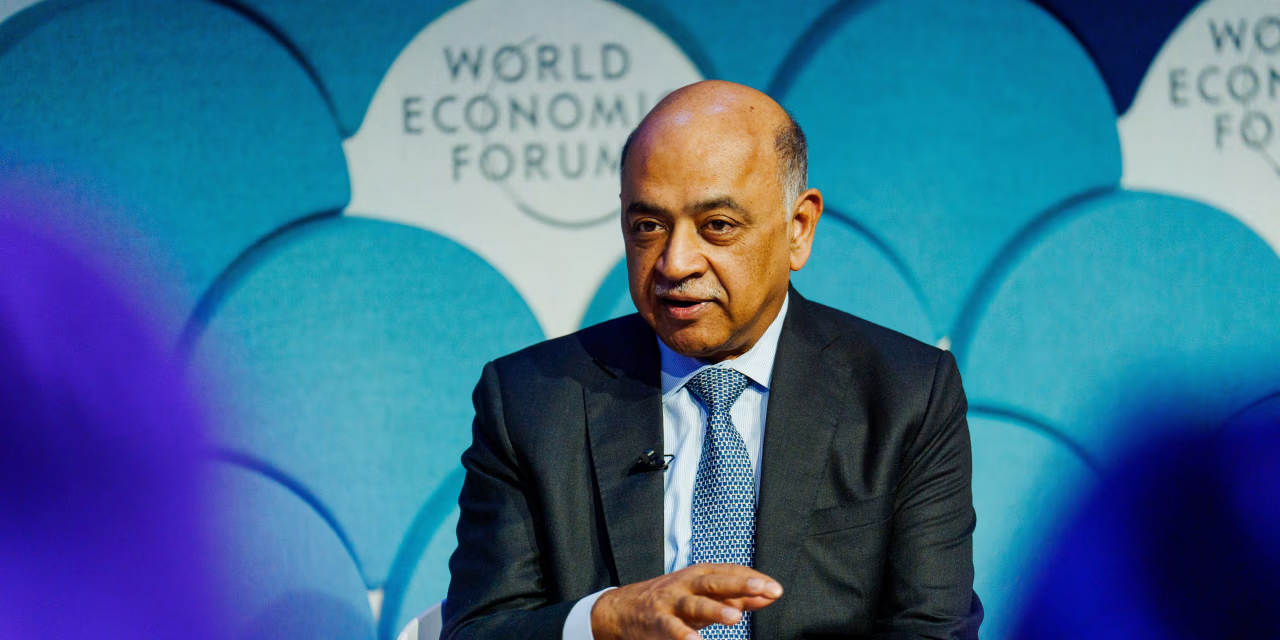

The problem for IBM IBM Chief Executive Arvind Krishna is that things are going too fast and too slow—all at the same time—and he’s stuck in the middle. That’s a bad place to be in the AI revolution.
Krishna bet big on a hybrid-cloud approach in response to the rise of hyperscalers and has long sold investors on IBM’s role in quantum computing—a next-generation technology he says is three to five years away.
Copyright ©2026 Dow Jones & Company, Inc. All Rights Reserved. 87990cbe856818d5eddac44c7b1cdeb8

how InvestingPro’s fair value spotted Prestige Healthcare’s 42% drop
Boxing-American boxer Hannah Rapp dies at 26 after being hit by car while cycling

Simulations Plus: The Potential Little Spread Is Not Worth The Risk For New Money, Hold

Deere Stock Has Done OK. Stick With It.

Ambarella: The New Product Cycle Changes The Narrative

Facebook experienced a significant outage early Tuesday, leaving millions of users unable to access the social media platform and prompting widespread reports of service disruptions across its apps and website.
Downdetector, a website that tracks online service outages, began recording a sharp increase in user reports around 3:55 a.m. Eastern Time. Complaints included problems loading feeds, logging in and viewing content, affecting both the main Facebook platform and related services.
The outage appeared global in scope, with users from various regions reporting similar issues. Many turned to alternative platforms like X to share screenshots and confirm the problem was not isolated to their connections.
Meta Platforms Inc., Facebook’s parent company, has not yet issued a detailed statement on the cause or expected resolution time. Company spokespeople typically investigate such incidents internally before providing public updates.
This latest disruption highlights the growing reliance on social media platforms for communication, news and commerce. Facebook remains one of the world’s largest online networks, with billions of monthly active users who use it for staying connected with family, following news and engaging in communities.
Outages can have ripple effects beyond inconvenience. Businesses that rely on Facebook for advertising, customer service or sales may see temporary impacts. Individuals using the platform for personal updates or marketplace transactions also face interruptions.
Previous Meta outages have sometimes been linked to technical configuration errors, server issues or broader network problems. In 2021, a major incident took Facebook, Instagram and WhatsApp offline for several hours, costing the company millions in lost revenue and drawing regulatory attention.
Tuesday’s event began in the early morning hours in the United States, potentially affecting users during peak activity periods in other time zones. Reports continued to accumulate as the morning progressed, though some users noted intermittent access later in the day.
Downdetector data showed the spike in problems centered on the website and mobile app, with fewer reports for Messenger in initial waves. The tool aggregates user-submitted issues and does not independently verify service status but provides a real-time snapshot of reported problems.
Social media users often react quickly to such events, sharing memes or switching to rival platforms. Tuesday’s outage prompted discussions about digital dependency and the need for more resilient infrastructure.
Meta has invested heavily in data centers and network redundancy to minimize downtime. However, the complexity of its global systems, which handle enormous data volumes daily, means occasional disruptions remain possible even with robust engineering.
For users, the outage served as a reminder of platform vulnerabilities. Many reported difficulty accessing groups, events or marketplace listings, while others noted impacts on work-related communications.
Facebook’s role in information dissemination makes outages particularly notable during times of news events or elections. While no major breaking story coincided with Tuesday’s incident, the timing amplified frustration among daily users.
Meta’s broader ecosystem includes Instagram and WhatsApp, which have experienced separate issues in the past. Coordinated outages across properties have occurred, though Tuesday appeared focused primarily on Facebook.
Company executives have emphasized reliability as a priority in earnings calls and public statements. Investments in artificial intelligence for content moderation and system optimization aim to improve overall stability.
The outage’s duration and root cause will likely be detailed in subsequent updates. Meta typically resolves such incidents within hours, though some have extended longer.
Users experiencing problems were advised to check internet connections, update apps or wait for service restoration. Clearing cache or trying different devices can sometimes resolve localized issues, though widespread outages require company-side fixes.
Downdetector’s real-time tracking has become a go-to resource for monitoring service health. Similar tools exist for other platforms, helping users distinguish between individual problems and systemic failures.
Broader context includes increasing scrutiny of big tech platforms’ reliability and market power. Regulators worldwide monitor incidents that affect large user bases, particularly when they impact communication during critical periods.
For businesses, Facebook outages underscore the importance of multichannel strategies. Relying solely on one platform for customer engagement carries risks, as Tuesday’s events demonstrated.
The incident also highlights ongoing debates about digital infrastructure resilience. As societies become more connected, the cost of downtime rises, prompting calls for greater redundancy and transparency from service providers.
Meta’s stock has faced volatility in response to various operational and regulatory challenges. Outages contribute to perceptions of execution risk, though the company’s overall financial performance has remained strong due to advertising revenue resilience.
Tuesday’s disruption affected users differently based on location and usage patterns. Morning commuters in some regions reported inability to check updates, while others in different time zones faced issues during peak evening hours.
Recovery appeared gradual, with reports of partial restoration for some users later in the morning. Full resolution typically involves rerouting traffic and addressing underlying technical triggers.
Meta has a dedicated team for incident response, drawing on lessons from previous events to minimize future occurrences. Post-incident reviews often lead to infrastructure improvements.
For the average user, such outages serve as temporary inconveniences but reinforce reliance on multiple communication channels. Many maintain presence on competing platforms as backups.
The event provides another data point in discussions about platform dominance and societal dependence on private infrastructure for public discourse. While Meta offers free services, the scale of impact when they falter raises questions about accountability.
As digital services evolve, expectations for uptime increase. Companies like Meta face pressure to deliver near-perfect reliability while innovating rapidly in areas like artificial intelligence and virtual reality.
Tuesday’s outage, though significant, appears less severe than some historical incidents based on initial reports. Monitoring will continue as more details emerge about scope and duration.
Users are encouraged to stay informed through official channels or alternative news sources during such events. Meta typically posts updates on its platforms once service is restored.
The incident underscores the interconnected nature of modern communication. A problem at one major platform can prompt shifts in activity across the digital landscape.
Meta’s response and preventive measures will be watched closely by users, advertisers and regulators. Consistent reliability remains key to maintaining trust in its services.
As the day progressed, normal activity appeared to resume for many, though some lingering issues were reported in certain regions. Full analysis will require company confirmation.
Outages like this remind users of the fragility underlying seamless digital experiences. They also highlight the engineering challenges of maintaining global services at massive scale.
Meta continues to navigate a complex environment of technological innovation, user expectations and regulatory oversight. Tuesday’s events add to the ongoing narrative of its operational resilience.

Generative AI offers significant economic opportunities globally, with substantial potential gains projected by 2030. For countries to harness this, strong institutional, infrastructural, organizational, and ethical foundations are crucial.
Salesforce’s Asia Pacific Readiness Index reveals leading economies like Singapore, Japan, and China are implementing policies to capitalize on generative AI.
However, a growing readiness divide exists across the region. Success hinges on robust infrastructure, quality data, skilled workforces, ethical considerations, and seamless integration of AI technologies. The overall AI readiness in Asia-Pacific is advancing, with AI now a national priority driving economic growth and societal transformation.
- For countries to succeed in the age of generative AI, they need strong institutional, infrastructural, organizational and ethical foundations.
- In Asia-Pacific, economies such as Singapore, China, Japan, South Korea and Australia have put in place policies that should help them capture the opportunities offered by generative AI.
- That’s according to the latest Asia Pacific Readiness Index from Salesforce, which measures the AI readiness of 12 countries across the region.
Artificial Intelligence (AI) has become an everyday reality for consumers, businesses and governments globally. The emergence and evolution of generative AI — technology that takes a set of data and uses it to create something new — accelerated in 2023. Across the world, consumers are using generative AI for daily information needs, and organizations are incorporating it into their operations.
As one of the most transformative technologies to date, generative AI helps users achieve new levels of creativity, productivity and effectiveness, and is changing the way governments and businesses are thinking about AI. A recent study found that two-thirds (67%) of IT leaders are prioritizing generative AI for their business within the next 18 months, with one-third (33%) claiming it as a top priority. Similarly, 72% of companies surveyed say they will significantly increase their investments in AI over the next three years.
Other People are Reading
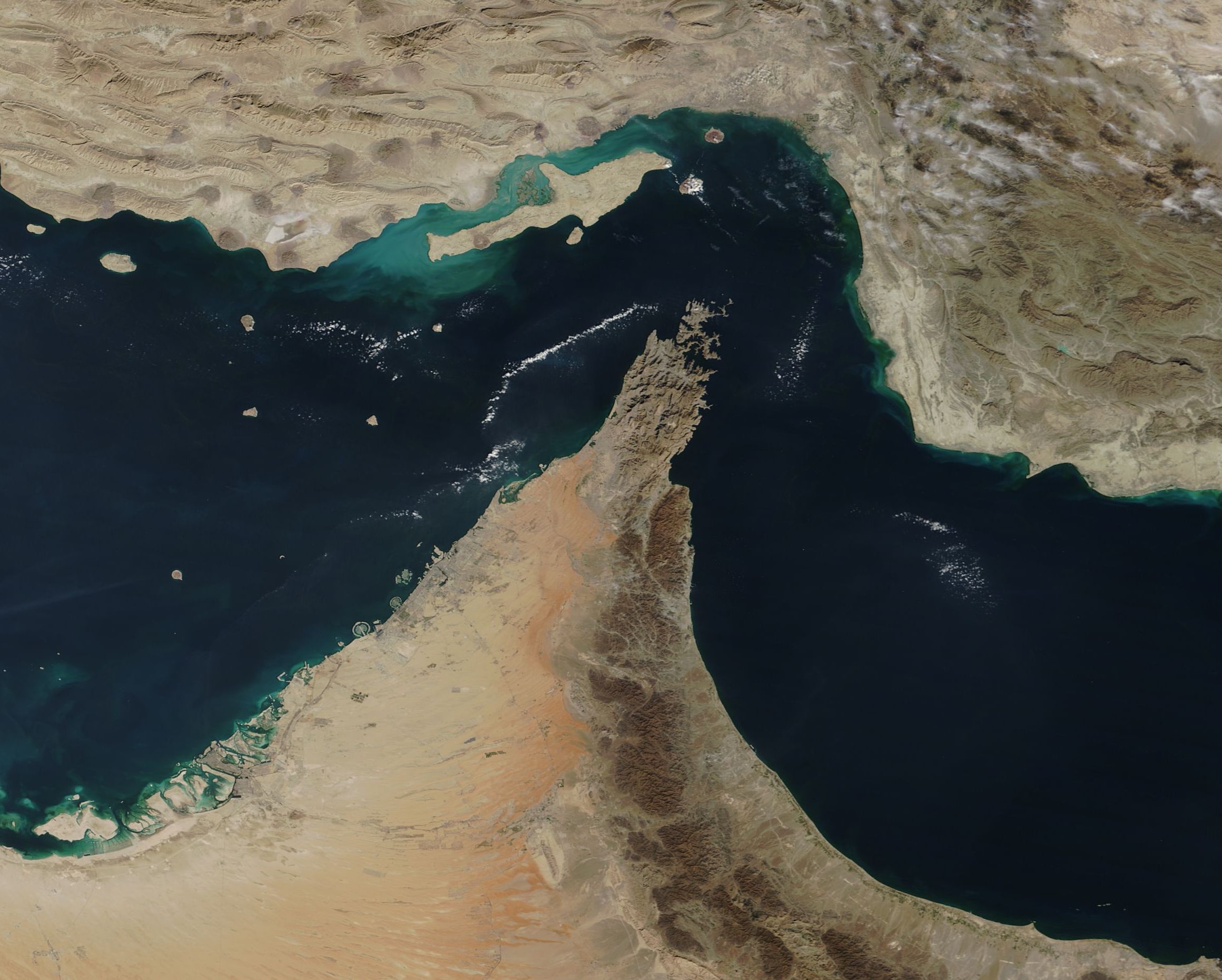
A short-lived ceasefire between the United States and Iran collapsed in mid-July, plunging the Strait of Hormuz back into crisis and sending global oil prices sharply higher as Washington reinstated a naval blockade of Iranian ports and both sides resumed military strikes across the Gulf region.
The renewed escalation began over the weekend of July 12-13, when U.S. forces carried out strikes on more than 80 targets inside Iran, according to reporting on the collapse of the June 17 ceasefire. Iran’s Islamic Revolutionary Guard Corps responded by moving to reassert control over the Strait of Hormuz, one of the world’s most critical maritime chokepoints, through which roughly one-fifth of global oil supplies and about 20% of the world’s liquefied natural gas typically pass.
President Trump announced on Truth Social on July 13 that the United States would reimpose its naval blockade against Iran and initially said the U.S. would charge every vessel using the strait a 20% toll on its cargo, a proposal that drew immediate pushback. The International Maritime Organization rejected the fee idea within hours of Trump’s announcement, with IMO Secretary-General Arsenio Dominguez saying the organization has “always been consistent” in opposing charges for passage through international straits. The U.S. Treasury Department separately warned that anyone paying Iran for safe passage through Hormuz would risk violating U.S. sanctions, describing such payments as “maritime extortion.” Trump ultimately abandoned the cargo fee demand on July 15, even as the broader blockade and military campaign continued.
U.S. Central Command confirmed the blockade formally took effect at 4 p.m. Eastern time on Tuesday, July 14, targeting vessels traveling to and from Iranian ports and coastal areas. That same day, the U.S. military launched additional airstrikes against Iran, with Centcom describing a seven-hour operation involving fighter aircraft, drones and naval vessels that struck missile facilities, drone production sites, naval assets and coastal defense systems along Iran’s coastline. In a social media statement following that operation, Centcom Commander Brad Cooper said Iran had “intentionally” targeted civilians over the preceding week, accusing Tehran’s forces of attacking seven commercial vessels and leaving roughly a dozen crew members dead, missing or injured.
Iran’s Revolutionary Guard has continued targeting commercial shipping in the strait throughout the renewed conflict, including attacks on two supertankers that were transiting Hormuz with their transponders switched off. The United Arab Emirates’ state oil company, ADNOC, reported that two of its own tankers were struck by projectiles while passing through the waterway, an attack that killed one mariner and injured several others. Iran has also demanded that vessels use a northern shipping route through its own territorial waters, asserting a claim of control over the strait that the United States and its allies have rejected, insisting instead on the continued use of a southern corridor through Omani waters that remains protected by the U.S. military.
The renewed hostilities have taken a severe toll on shipping traffic through the strait. According to tracking data cited by TheStreet, only six vessels crossed Hormuz during a 12-hour window on July 11, reflecting how sharply traffic collapsed as the ceasefire broke down. Saul Kavonic, head of energy research at MST Financial, said Iranian efforts to control the strait would likely keep shipping traffic below half of pre-war levels for an extended period. Despite the disruption, the U.S. Energy Department told CNBC that 8.5 million barrels of oil still transited the strait on a single day, Sunday, July 12, even amid the ongoing hostilities, underscoring that the waterway has not been fully closed despite the severe drop in overall traffic.
Oil markets reacted sharply to the renewed conflict. Brent crude futures jumped 9.6% on July 14 to close at $83.30 a barrel, marking the international benchmark’s best single-day performance since May 2020, while U.S. West Texas Intermediate futures rose 9.4% to settle at $78.14. Prices climbed further the following day, with Brent gaining another 1.72% to close at $84.73 and WTI rising 1.5% to $79.34, as the U.S. military launched additional strikes against Iran while simultaneously enforcing the reimposed blockade. Patrick De Haan, an analyst at GasBuddy, said he expected the national average price of gasoline in the U.S. to reach $4 a gallon within seven to ten days, with retailers beginning to pass along the increases within 24 to 48 hours of the initial price spike.
By the weekend of July 18-19, signs emerged that the situation may be stabilizing somewhat, even as the underlying conflict remained unresolved. President Trump said in an interview with NBC News’ “Meet the Press” that aired Sunday that the Strait of Hormuz was open. Maritime intelligence firm Windward tracked nine ships that transited the strait on Saturday, and the Joint Maritime Information Center, a U.S.-led naval coalition based in Bahrain that provides security guidance to civilian shipping in the region, confirmed that the southern route through Omani waters remained open to both inbound and outbound traffic. Even so, the center cautioned in a Sunday notice that the overall security situation in Hormuz “remains severe,” urging mariners to exercise “extreme vigilance” while transiting the waterway.
The current standoff traces back to the broader 2026 Iran war, which began on February 28 following U.S. and Israeli airstrikes on Iranian military targets, including the assassination of Iran’s supreme leader, Ali Khamenei. The conflict has produced a cycle of escalation and de-escalation in the months since, including an earlier U.S. naval blockade of Iran that ran from April 13 to June 18, followed by the brief ceasefire that collapsed in mid-July, triggering the current wave of strikes and renewed blockade enforcement.
With Trump maintaining that the strait remains open and traffic slowly resuming along the protected southern corridor, but with Iran continuing to contest control of the waterway and the underlying military conflict still active, energy analysts and shipping firms said they expect continued volatility in both oil markets and Gulf maritime traffic in the days ahead, with the durability of the current, tenuous stability likely to hinge on whether renewed diplomatic talks between Washington and Tehran can produce another lasting ceasefire.
Business
Nifty weekly outlook: 24,500 holds the key to next leg of gains; focus on stock-specific bets

The Nifty oscillated in a 367.30-point range, moving between 24,000.20 and 24,367.30 before ending the week with gains. India VIX rose 7.35% to 13.15, indicating a modest pickup in implied volatility after remaining subdued for the past several weeks. The headline index concluded the week with a gain of 127.40 points (+0.53%).
 Agencies
The broader technical structure remains positive despite the absence of strong directional momentum. More importantly, the Nifty has once again defended the 23,800–24,000 zone, reinforcing it as a crucial support area and the immediate base for the ongoing recovery. While the index has been stabilising, it has now opened up room for an extension of the rebound towards the 24,500 zone, where it is likely to encounter the 100-week moving average, making it an important hurdle on the upside. Unless the index slips decisively below the 23,800 level, the current recovery structure is likely to remain intact. A sustained move above 24,500 would be required to further improve the medium-term technical outlook and revive stronger upside momentum.
The markets are likely to begin the coming week on a stable note while maintaining a positive undertone. Immediate resistance is expected at 24,500, followed by 24,780. On the downside, 24,000 and 23,800 will act as important support levels, with the latter remaining the key line of defence for the bulls.
The weekly RSI stands at 51.49 and remains neutral, without showing any bullish or bearish divergence against price. The weekly MACD is above its signal line. The latest candle has formed a small-bodied bullish candle, reflecting continued accumulation after recent stabilisation rather than any decisive breakout.

Pattern analysis shows that the index continues to recover after successfully holding the lower boundary of its broader trading structure. The repeated defence of the 23,800–24,000 support zone lends greater technical significance to this area and strengthens the probability of a continued pullback. However, the recovery is now approaching a technically important supply zone near 24,500, where the 100-week moving average is placed. This convergence of resistance is likely to make the 24,500 area a decisive technical hurdle.
For the week ahead, market participants should continue to maintain a balanced approach. The successful defence of the key support area has improved the short-term outlook, but the index is now approaching an important resistance cluster that may trigger intermittent profit-taking.Fresh aggressive buying should ideally be reserved for stocks exhibiting strong relative strength and improving technical setups rather than chasing index moves near resistance. As long as the Nifty remains above 24,000, the recovery bias is likely to persist. However, traders should stay selective and adopt a stock-specific approach while closely monitoring price behaviour around the 24,500 zone, which is likely to dictate the market’s next directional move.
The Relative Rotation Graph (RRG) shows that the Nifty Realty, Pharma, Media, and Midcap 100 indices are inside the leading quadrant. The Nifty Midcap and Media indices are showing a paring of relative momentum; these groups are collectively likely to outperform the broader Nifty 500 Index.
Agencies
AgenciesThe Nifty Energy, Infrastructure, and Metal indices are inside the weakening quadrant. They may show a slowdown in their overall relative performance.
The Nifty PSE Index has rolled inside the lagging quadrant. Along with the Nifty Auto Index, it is set to relatively underperform the broader Nifty 500 Index. The Nifty IT and PSU Bank indices are also inside the lagging quadrant, but they are seen improving their relative momentum against the broader markets.
The Nifty Services and Financial Services Sector indices have rolled into the improving quadrant. The Bank Nifty is also in the improving quadrant.
Note: RRG charts show the relative strength and momentum of a group of stocks. In the above chart, they show relative performance against the NIFTY500 Index (broader markets) and should not be used directly as buy or sell signals.

France’s World Cup MELTDOWN after England humiliation: Furious Adrien Rabiot hits out at teammates’ ‘shameful’ attitude during dismal first half as L’Equipe gives THREE Premier League stars 2/10
IBM CEO Arvind Krishna Has Nowhere to Hide From AI

Zcash sets July 28 hard fork to seal Orchard after critical bug


-
 NewsBeat3 days ago
London Mayor Sadiq Khan handed a peerage by Keir Starmer alongside 15 other Labour figures… just days before the PM leaves No10
-

 Fashion2 days ago
Weekend Open Thread – Corporette.com
-

 Politics1 day ago
The House | The City of London can help the new chancellor deliver growth in every postcode
-

 Politics4 days ago
Young campaigners urge incoming PM to act on outdoor junk food ads
-

 Crypto World3 days ago
CFTC blocks Kalshi from unwinding Michigan trades after court order
-

 Business3 days ago
Nvidia Stock Slips After Big Tuesday Rally as Huang Confirms Vera Rubin Chip Is Now in Production Today
-

 Crypto World1 day ago
Ripple Payments Joins MiCA With 14 Firms, Does It Mean Anything For XRP?
-
 Entertainment4 days ago
Disney’s Most Ambitious Failed Star Wars Attraction Is Coming to SDCC
-

 Crypto World2 days ago
Ripple wins EU-wide access as ESMA adds it to MiCA register
-

 Business3 days ago
Palantir Shares Rise After Expanded Nvidia Partnership and Fresh Analyst Upgrades Ahead of Earnings Day
-

 Crypto World3 days ago
Injective Submits SEC Transfer-Agent Registration to Onchain Ownership Records
-

 Tech5 days ago
Get Your ESP32 Sunny Side Up With This Solar Dev Board
-

 News Videos5 days ago
XRP BOMBSHELL… XRP OMBOARDED FOR TRANSACTIONS!!!
-

 NewsBeat2 days ago
Registration is now open for March for Men with Kev 2026
-

 Tech5 days ago
Dark Secrets Emerge When Jailbreaking LLMs
-
 Sports4 days ago
New Cornerback Enters Vikings Trade Rumor Mill
-

 News Videos2 days ago
Money | Class 12 Economics | CBSE Board Exam 2026-27
-
 Crypto World2 days ago
Two July Windows Left: The CLARITY Act’s Senate Fight and What Failure Means
-

 Business2 days ago
Banco Bilbao Vizcaya Argentaria, S.A. (BBVA) Discusses Global Macro Environment and Economic Outlook for Core Markets Transcript
-

 Crypto World3 days ago
Claude Fable 5 Slips to Second in AI Coding Leaderboard
You must be logged in to post a comment Login