
Politics
How the trans Taliban tried to silence my choir

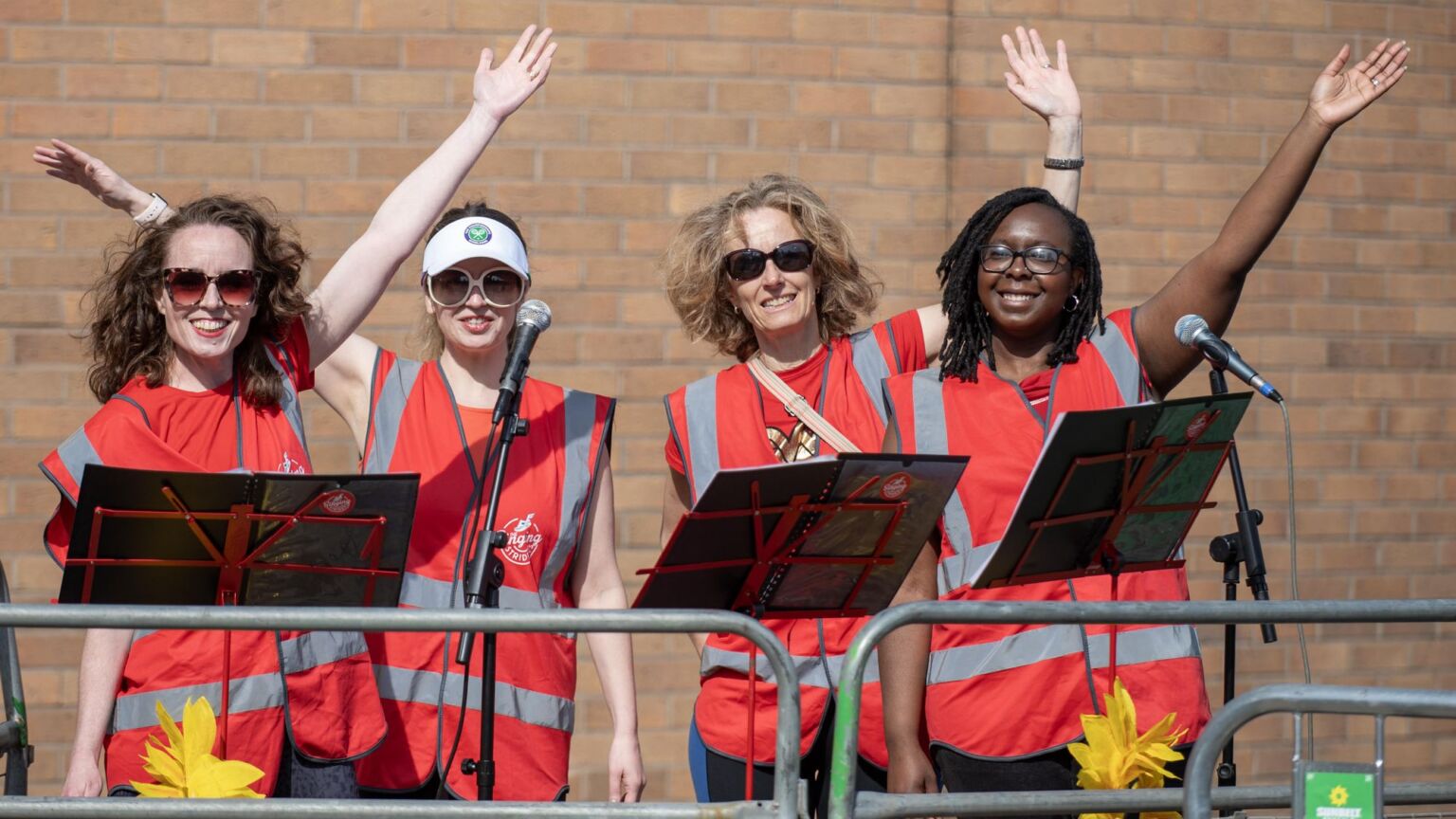
I sang to thousands of runners yesterday at the London Marathon with my choir, which specialises in performing at running events. It’s the third year we’ve performed at the London Marathon, and I was excited to do it again. There’s nothing more joyful than supporting ordinary people to do extraordinary things – like running 26.2 miles to raise money for charity. I should know. I’ve run four London Marathons myself, raising thousands of pounds for charities including the Miscarriage Association, the Ectopic Pregnancy Trust and Bliss, the premature-baby charity.
Yesterday, however, that joy was tinged with sadness. Although we did perform in the end, at Mile 15 in Limehouse, we had been due to perform at Mile 3 in Woolwich as part of disability charity Scope’s ‘cheer team’. But Scope had written to me just days earlier to say it no longer wanted us to take part.
The reason? I don’t believe human beings can change sex and have said so publicly. Apparently, I had communicated this fact – which is, after all, biological reality – in a way that made people feel ‘alienated’.
While Scope reversed the decision the night before the marathon, by then, all but one of our regular singers – who had been excited to take part – had decided not to. They hadn’t done anything wrong. Even Scope’s CEO accepted that in a call on Thursday afternoon, after I had written to him asking for the decision to be reconsidered, acknowledging we had done nothing beyond singing and encouraging runners over the past two years. But he wouldn’t budge.
Bizarrely, he insisted my presence in the choir was a ‘distraction’, without explaining what that meant. Was he expecting me to shout ‘transwomen are men’ mid-song? Drape myself in a Suffragette flag? Bring an anti-trans banner? He couldn’t give a straight answer.
When I told the choir, they were understandably concerned – not just about the decision, but also what it might mean for them. Would they be hauled into their boss’s office on Monday morning? Would their association with me make them ‘problematic’?
They were also worried about potential trouble from trans activists. I had never discussed the harassment I’ve been subjected to over the past 18 months. This was a choir built around music, not politics, and I genuinely had no idea what their views were. In a painful Zoom call on Saturday, I shared – for the first time – how trans activists had destroyed my digital-marketing business, alongside family relationships and friendships, all while I was undergoing breast-cancer treatment. And now, they had come for my choir, too. As one choir member put it: ‘They don’t care about us. They just want to destroy you. We’re just collateral damage.’
I’ve worked hard to make the choir inclusive. No auditions, no sheet music, just well-known pop songs, so people don’t need to commit to endless rehearsals. It’s also free. No one who identifies as trans has volunteered to sing with us – but they would be welcome, as long as they follow the law. A standard I would apply to anyone.
On Saturday evening, I received a personal email from the Scope CEO restoring our invitation to sing at the marathon. Had that come after our earlier conversation, I likely would have accepted – and may never have told the choir. But it didn’t.
By then, Scope had already published a public statement on its decision to reinvite us. In it, the charity acknowledged that my gender-critical beliefs are lawful and separate from the choir, while also describing them as ‘highly polarising’ and potentially ‘deeply upsetting and alienating’.
So on Saturday evening, I put out a call on X, pulled together a new group, and we found our own spot at Mile 15, singing our hearts out. I’m smiling in the photos and videos. There was real joy. But it wasn’t the same. Because most of the people who should have been there weren’t. They weren’t just choir members – they were friends. Friends who may not understand why it mattered so much for me to sing yesterday – or why they’ve been caught up in my troubles.
There’s a reason I mentioned the charities I’ve supported through running the London Marathon. They all support women facing issues that only affect women: miscarriage, ectopic pregnancy and premature birth. Given my own experience of women’s health issues, being excluded from singing at a marathon for stating what a biological woman is isn’t simply wrong – it’s absurd. And these are not just my troubles. They are all of our troubles.
As a friend said when this all began: ‘Oh my God – they’re literally silencing a choir.’ And you can’t get much more authoritarian than stopping women from singing for holding the ‘wrong’ views.
We know where this can lead. Under the Taliban’s strict ‘vice and virtue’ laws enforced since August 2024, Afghan women can now be restricted from singing in public.
Unfortunately for the trans activists – and anyone who thinks like this – they picked the wrong woman to try to silence. Because I intend to keep on singing.
Janet Murray is a journalist writing on women, culture and public policy. Follow her on X: @jan_murray.

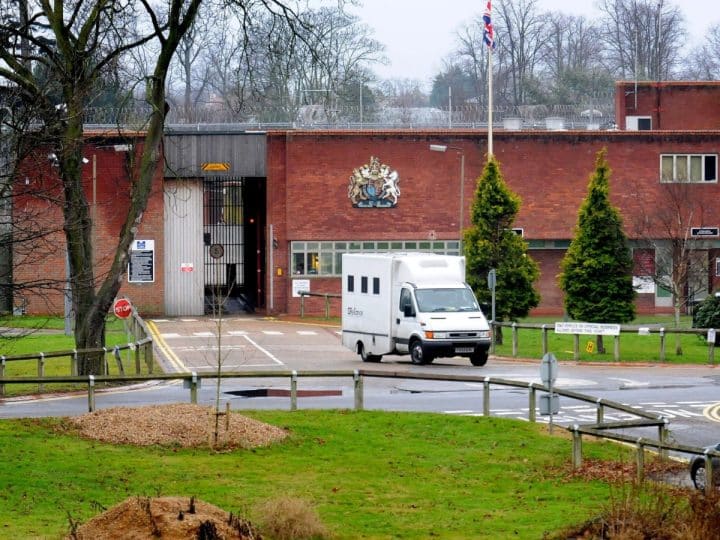

The 16-year-old boy who died in custody in London’s Feltham young offenders’ institute on 20 April has been named. A Prison and Probation Ombudsman’s (PPO) comms officer told the Canary on 27 April:
I can confirm we are investigating the death of Eder Duarte on 20 April 2026 at HMP Feltham. I’m afraid we cannot comment on the details of Mr Duarte’s death as the investigation is live.
As the Canary reported in the aftermath of the death:
His [Duarte’s] girlfriend described to reporters that he was “covered in bruises” after identifying his body. Yet much of the corporate media has since pulled her comments. Feltham is widely described as the most violent jail in the UK’s woefully dysfunctional prison system.
The Ministry of Justice (MOJ) scrambled to tell the Canary that they did not agree with that assessment of Duarte’s condition.
Adrian Usher, the Prisons and Probation Ombudsman, released a further statement on 27 April:
My office is conducting an independent investigation into the death of Eder Duarte on 20 April 2026 at HMP Feltham. I offer my condolences to Mr Duarte’s family and friends. I will make my final investigation report public after the conclusion of the inquest.
The Canary previously spoke to the NGO Inquest which lobbies for those who’ve lost loves ones in deaths related to the British state. Director Deborah Coles said on 23 April:
No child should be dying in the care of the state, let alone a prison. Our thoughts are with his family and friends.
Away from their families and support systems, locked in their cells for most of the day, with high rates of violence and self-harm, and prison guards now allowed to use PAVA spray, it is clear that imprisoning children will always be harmful and never be safe. This death is a urgent reminder of this.
Adding:
The government must divest money away from punishment and prisons and into community based support services to prevent further death and harm.
High levels of violence at Feltham
Prisons magazine The Justice Gap reported in 2025 that Feltham has major problems with violence:
Conditions at Feltham prison remain ‘insufficiently improved’ after an inspection by the prisons watchdog found high levels of violence against staff and one of the highest levels of drug use in any category C prison.
The Howard League for Penal Reform has also condemned the authorities over conditions at the jail. The facility has both a youth and adult jail. Chief Executive Frances Crook slammed both in 2025:
These are two of the worst in a long line of terrible prison inspection reports. It is all the more disturbing that they concern children and young people.
These children are suffering abuse and neglect by the state. Feltham has failed to care for children and help them turn their lives around for decades. It is time to put an end to this abusive failing system and properly help children live law-abiding lives.
In August 2025 the prisons inspectorate found:
levels of violence were still the highest of any prison in the country.
The inspectorate said things had been improved by a policy of:
‘keep-apart’ lists that prevented children from mixing, allowing for a better regime.
Authorities are yet to publicise a cause of death for Eder Duarte. Feltham is just one especially egregious example of a broken UK jail system. In 2019, Inquest said:
Deaths, self-harm, violence, impoverished regimes and conditions are the daily reality of the prison system.
And, as various charities and civil society organisations regularly point out, a system which puts minors in jail needs deeper examination and serious reform.
Featured image via the Canary
By Joe Glenton
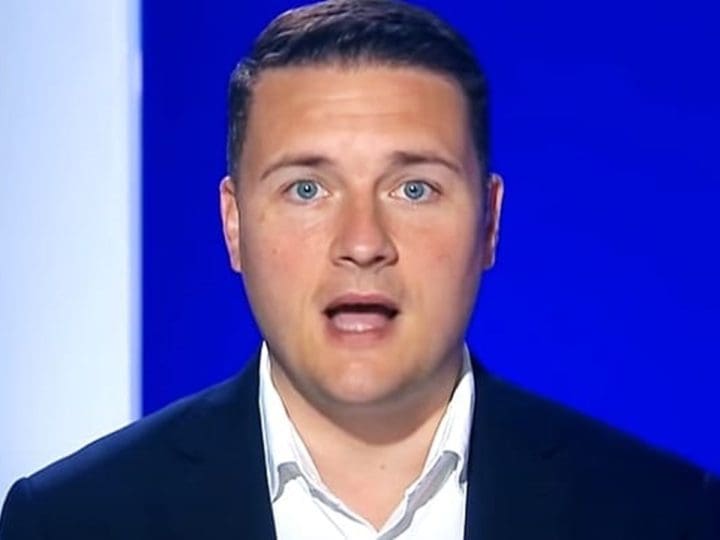

Nearly half of NHS hospital trusts are using non-doctors in their doctor rotas, according to Freedom of Information (FOI) responses to the British Medical Association. The revelation is a continuation of the Starmer government’s scandalous push to ‘downskill’ the NHS and reduce staff costs to allow greater profits for private providers.
An absolute shambles in the NHS
Starmer’s health secretary Wes Streeting is an ardent advocate of the expanded use of ‘medical associates’ (sometimes called ‘physician or anaesthetist assistants’) and ‘advanced practitioners’. Streeting, who has accepted huge amounts of cash from the private health industry, claims this is safe for patients. Labour’s own data show it to be “high risk” to patients, but Streeting has told doctors who protest that it’s none of their business.
Streeting is so committed to this that he has pressured the General Medical Council (GMC) to remove the need for medical training to be GMC-registered. He also says he will let the NHS ‘die’ if it doesn’t submit to such ‘reforms’ as part of his ten-year slash-and-burn plan.
The new FOI responses show that the net effect is that the sick are made to see non-doctors with a fraction of a real doctor’s training. The BMA received responses from 85 of the UK’s 202 NHS hospital trusts. Of them, 48% confirmed they are using ‘advanced practitioner’ roles to fill out doctor rotas.
This number does not even include those using ‘medical associates’, who have just two years’ basic training. ‘Advanced practitioners’ are nurses, paramedics, physiotherapists and pharmacists who complete an “Advanced Clinical Practitioner (ACP) apprenticeship” or similar bolt-on training module. As the BMA notes:
While many are experienced in their base profession, working on medical roles is beyond their scope of practice.
People are dying
However, they are being used well beyond their qualified scope, as is also the case with ‘associates’, meaning many patients are being treated by people they think are doctors but aren’t. As of July 2025, at least six have died as a result.
BMA council chair Tom Dolphin said the findings prove NHS management’s ‘haphazard’ approach to staffing:
Our colleagues in advanced practice roles are valued members of our multidisciplinary teams. Yet our research reveals an NHS management that will risk patient safety to push these professionals out of what they do best and use them as spare capacity to fill up understaffed doctors’ rotas. While other healthcare roles can be enhanced within safe limits, this must never encroach into areas where a doctor’s training and expertise is required.
What is especially concerning is just how slapdash the NHS’s approach is. Many trusts have clearly and sensibly told us they would not put a non-doctor into the role of a doctor. Other trusts have unashamedly responded that they have done. That these responses split almost down the middle is an indictment of an approach by Trusts and the NHS which means that where you live determines whether you will be seen by a doctor or by someone else for the same condition.
This is a potential disaster for everyone involved. Advanced practitioners are being asked to do jobs they shouldn’t have to. Patients are being given no clarity about who is treating them and what level of care they’re meant to be getting. Doctors are being left unclear on where the lines are drawn. The whole thing is a haphazard mess brought on by an absence of workforce planning and rational thinking about who can do what.
Patients deserve a good standard of care whichever hospital they happen to live near. They shouldn’t have to worry about whether the local managers have asked non-doctors to deliver care that only uniquely qualified doctors can safely deliver. ‘An NHS stretched to breaking point is no excuse. Better regulation and clear and uniform scopes of practice to stop this blurring of professional lines are needed, so no patient comes to harm.
The Nursing and Midwifery Council agrees. It told the BMA in March 2026 that “advanced practitioners are not a substitute for medical practitioners”.
Streeting has a lot to answer for
The use of these sub-medical roles as medics is a core part of the government’s ‘integrated care services’ ICS) plans to close hospitals and ration treatment. ICS used to be called ‘Accountable Care Organisations” (ACOs) after the dangerous US cost-cutting system it copies. However, after the US ACO scandal became known in the US, NHS ACOs were renamed to ICS. ICS even rewards NHS trusts and private providers for not treating the sick, putting healthcare further out of reach for those who need it.
To the Starmer government, cost-cutting to enable private health corporations to make fatter profits trumps the needs of patients and the future of the NHS, every time. No matter how it’s dressed up or what terms they invent to disguise it.
Featured image via the Canary
By Skwawkbox
We hope you love the products we recommend! All of them were independently selected by our editors. Just so you know, HuffPost UK may collect a share of sales or other compensation from the links on this page if you decide to shop from them. Oh, and FYI — prices are accurate and items in stock as of time of publication.
Gone are the days of the same old wedding ceremony: traditional white dress for the bride, tuxedo for the groom, and style over comfort.
We might have had centuries of the same, but that’s all about to change now that Gen Z is entering the marriage market.
A new report by Bridebook reveals what to expect the generation to prioritise when it comes to their big day – and you’d get no prizes for guessing it’s not what you grandmother would’ve planned for them.
While previously, the run up to weddings is seen as the most stressful time in the couples’ lives, Gen Z is baking their obsession with wellness into the ceremony itself.
According to Bridebook, wedding parties of the happy couple should prepare themselves for starting the day with a guided breathwork session.
The ceremony itself will feature aura photography, or even energy readings, the report suggests, in a move away from traditional photoshoots with the couple and their families.
You might even have to take a day off work, as more than a third have moved to a weekday wedding to save costs, according to Bridebook.
But, don’t worry, there is still something about Gen Z weddings that would make your elders proud, as they’re 25% more likely to get married in a place of worship than previous generations.
Although, er, just don’t tell them that this could be more to do with their penchant for ‘dark romance’ and gothic cottagecore aesthetics than their devoutness.
Of course, this commitment to drama will also translate to their fashion, accessories, and drink options.
So to prepare you for your next guest experience, we’ve rounded up everything you’ll see at a Gen Z wedding.

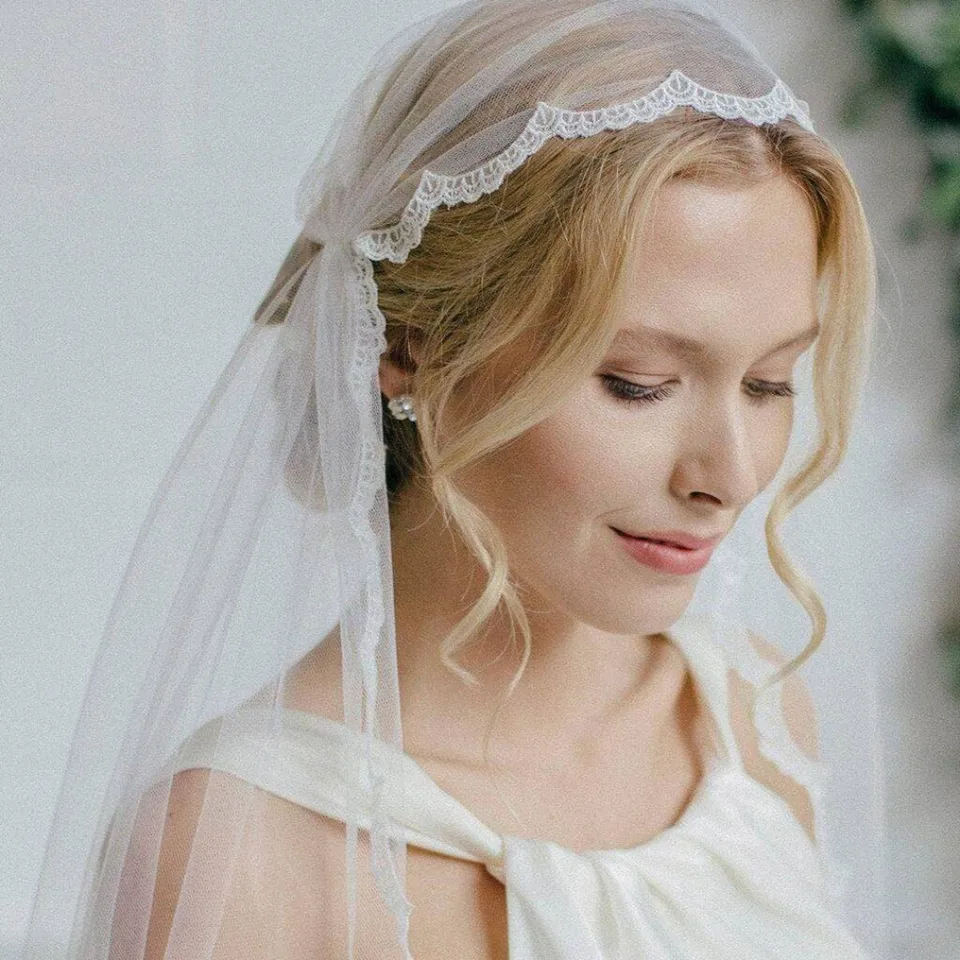
Star-crossed lovers, unite! Gen Z is embracing the Juliet Cap in a big way to live up to the drama.

Gen Z is also leading the return of the chocker, with searches for ‘bridal choker necklaces’ up 344% year-on-year.

There’s no such thing as too much for Gen Z, so expect cascading, oversized veils encrusted with everything from diamonds to pearls.

Pearls don’t stop at the neck – Gen Z wants them over their gloves, too.

I mean, they’re not exactly subtle: Gen Z clasps at anything that gives ‘theatre’, such as these long lace gloves, which FYI, have become 1,319% more popular on search in the last year.

With all those dainty pearl and lace details knocking around, you need some edge in there, too. So of course, Gen Z is pairing their opera gloves with black sunnies on their big day.

You can’t tear us away from our sneakerinas, not even when we’re walking down the aisle. And you know what, fair enough, because it can’t exactly be the best day of your life if you’re not comfortable now, can it?

For those not quite bold enough to embrace the sneakerina, a simple mary jane is shoving heels aside for top wedding shoe spot.

And for the gentleman, a little pastel. White gets pretty boring, we have to admit, so it makes sense there’s a sudden move towards more saccharine shades like this aqua number.

Trying too hard is embarrasing, so baggy suits will be making their way to the altar.

We’ve moved past jewellery being reserved for women, so naturally men are donning brooches during their betrothal. This one will literally help you tie the knot. But if that’s not your style, opt for a rosette-shaped pin to award yourself for getting down the aisle, or this pearly number to match with your beloved.

Forget the champagne towers, Gen Z is all about wellness, so we could see matcha towers become the drink of choice at wedding receptions. Hey, maybe this blueberry one could count as your something blue?

No one can deny the appeal of a spicy margarita, which is tying with the Hugo Spritz for Gen Z’s favourite cocktail. But what about a spicy vodkarita, with this Tabasco-flavoured Absolut?
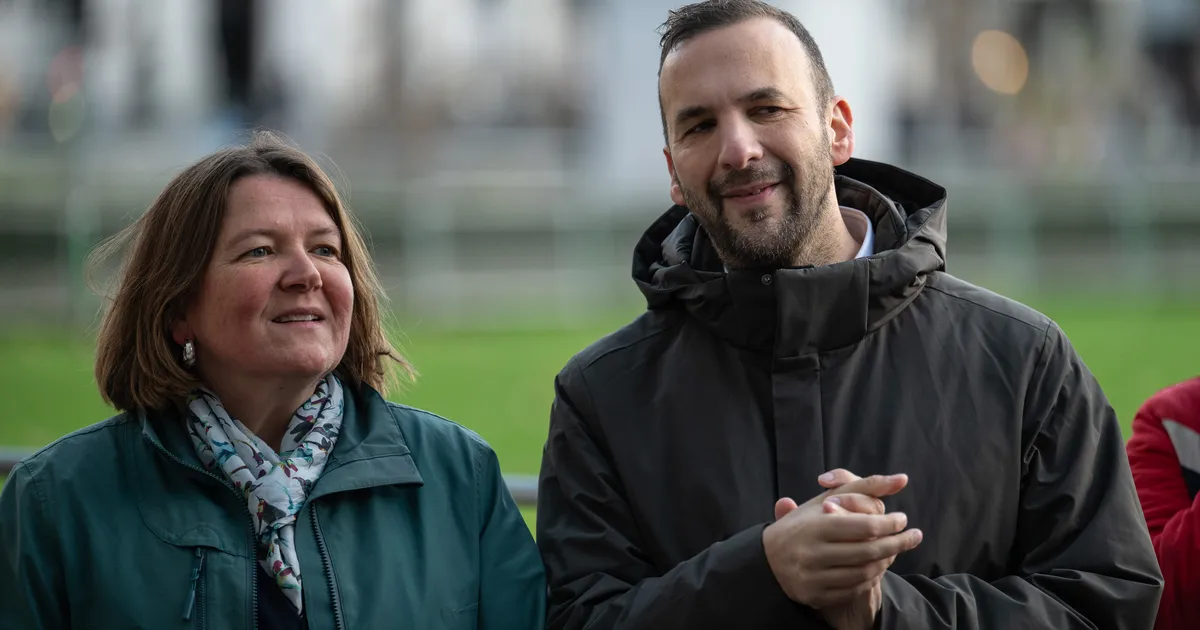
A senior Green MP has distanced herself from her party leader Zack Polanski after he suggested Donald Trump is worse than Vladimir Putin.
The Green Party leader told Italian newspaper Repubblica last week: “As horrendous as Putin is… I’ve never seen him threaten genocide.
“I’ve never seen him threaten to wipe out a civilisation… Starmer’s so-called special relationship is more of a danger than what Putin is doing in Ukraine.”
But speaking to the BBC’s Politics Live show on Monday, the Greens’ leader in Westminster Ellie Chowns said: “That’s not my position, let me be clear.
“I’ve seen Vladimir Putin himself launch an illegal invasion of Ukraine, he’s responsible for tens of thousands of deaths. Absolutely despicable.”
Asked if Polanski – who is not an MP – was suggesting Trump is worse than Putin, Chowns said: “I wouldn’t have said that, that’s not my view. I am however deeply concerned about the actual actions of Donald Trump.”
The MP for North Herefordshire then turned the focus onto Trump’s conflict in Iran, calling it “clearly illegal”.
The Greens have made their opposition to Trump very clear, with the party leader even suggesting the UK should consider expelling US forces from British bases – and leave Nato.
Polanski also faced scrutiny on Monday morning when he clashed with Good Morning Britain presenter Ed Balls, accusing the show of “shock-jock tactics”.
A Labour spokesperson said: “Even Zack Polanski’s own MPs know his comments on Vladimir Putin are appalling. He must retract his comments and stop whitewashing Russia’s barbaric war in Ukraine.”
Defence minister Luke Pollard said: “Even Zack Polanski’s Leader in Parliament doesn’t agree with his disgraceful comments about Vladimir Putin.
“This is a new low for Polanski’s Green Party – and shows why he can’t be trusted with our national security. It’s time Zack Polanski urgently stopped pandering to Putin and made clear that he will stop attempting to whitewash Russia’s barbaric action in Ukraine.
“While Prime Minister Keir Starmer has offered serious, calm-headed leadership at a time of international uncertainty, the Greens can’t even agree on who our allies are. They are just not serious.”
Subscribe to Commons People, the podcast that makes politics easy. Every week, Kevin Schofield and Kate Nicholson unpack the week’s biggest stories to keep you informed. Join us for straightforward analysis of what’s going on at Westminster.
Politics
Politics Home Article | Muslim Voter Group To Endorse Plaid Cymru And Greens In Welsh Election

(Alamy)
3 min read
Exclusive: A pressure group focused on who Muslims should vote for will endorse Plaid Cymru and the Green Party ahead of next month’s Senedd elections.
The Muslim Vote, set up in late 2023, endorsed the four independent candidates who were elected at the 2024 general election on campaigns centred on the war in Gaza. They were Shockat Adam, Adnan Hussain, Ayoub Khan and Iqbal Mohammed.
The organisation has now turned its attention to the 7 May elections, which are taking place in Wales, Scotland and in council areas across England.
It is a highly anticipated set of elections, with both Labour and the Conservatives on course to suffer major losses, and Nigel Farage’s Reform UK and Zack Polanski’s Greens expected to make significant gains.
The Muslim Vote recently told PoliticsHome that its broad strategy was to persuade Muslims to vote against Labour.
Now the organisation has revealed to PoliticsHome that it has decided to endorse Labour’s two left-wing challengers in Wales, Plaid Cymru and the Greens.
Muslim Vote’s Welsh spokesperson, Sumayya Ahmed, said Muslim communities in Wales are most concerned about “rising costs of living, falling living standards, underfunded public services, and the rise in Islamophobia accompanied by emboldened far-right rhetoric”.
She added: “Our endorsements come after extensive analysis of what would be best for our communities as integral components of the fabric of Welsh society. We hope that whoever governs Wales in the coming few years brings prosperity, opportunity, safety, and sanctuary to the people of Wales.”
Wales is expected to produce one of the most bruising results for Keir Starmer’s Labour when voters go to the polls next week.
The party has controlled the Welsh devolved government since the creation of the Senedd nearly 30 years ago. However, opinion polls indicate that Labour’s support has fallen sharply ahead of 7 May. A YouGov survey published last week projected that the party will lose 23 per cent of its vote share, leaving it on 12 seats. There are fears within Labour that First Minister Eluned Morgan could lose her seat.
The same research put Reform UK and Plaid Cymru neck-and-neck, on 37 and 36 seats respectively.
Responding to the Muslim Vote endorsement, a Plaid Cymru spokesperson said the election in Wales was a choice between Plaid’s “fairer, more inclusive” politics and Reform’s “inflammatory rhetoric”.
“We are proud to be a party committed to eradicating all forms of Islamophobia, antisemitism, racism and intolerance. We must ensure that one party has more seats than Reform. That can only be Plaid Cymru,” they said.
Anthony Slaughter, the Green Party leader in Wales, told PoliticsHome: “In the lead up to the election, we have been meeting and working with all the communities across Wales.
“In the current political climate, with Reform stoking up hate and division, it feels more important than ever for us to be supporting and standing in solidarity with all our different communities.”
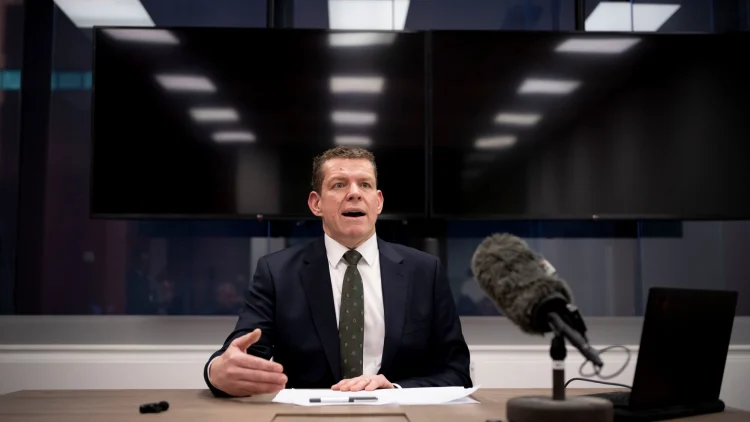
It is possible that Plaid, led by Rhun ap Iorwerth, looks to support from the Greens to form a government in Cardiff if the party falls short of the number of seats it needs for a majority.
Last week, PoliticsHome reported that the Muslim Vote had held hustings in Scotland and Wales, which members of the Conservatives, Greens, Liberal Democrats, Plaid, Scottish National Party and George Galloway’s Workers Party have all attended. Labour and Reform UK have so far not participated, PoliticsHome understands.
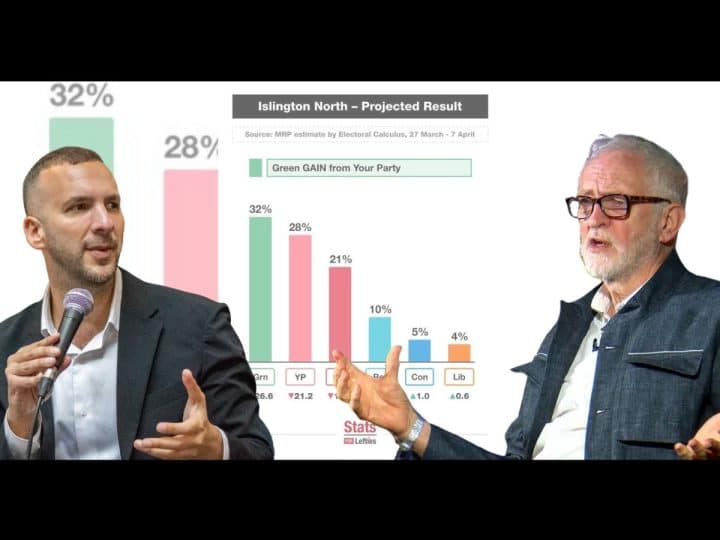

As reported by Stats for Lefties, a polling prediction has Jeremy Corbyn losing his seat to the Green Party:
Via @ElectCalculus / @FindOutNowUK, 7 April — Stats for Lefties
 NEW | MRP projects Corbyn losing to Greens
 Greens: 32% (+27)
 Your Party: 28% (-21)
—
(+/- vs GE2024) pic.twitter.com/WHqnqdU2GN

 (@LeftieStats) April 27, 2026
It’s important to remember that polls aren’t premonitions. At the same time, it’s another sign the Greens have proven more effective at uniting the British left than Your Party.
End of an era for Corbyn?
Looking at the graph in full, you can see how extreme the shift has been since the 2024 election:

However, things aren’t quite as they seem.
One thing to note is that the graph presents it as a shift away from Your Party (YP). This isn’t strictly accurate, however, because YP didn’t exist in 2024 – Corbyn ran as an independent. Technically, then, the graph could actually say the party is set to increase its vote share by 28 percentage points.
There’s something else to consider too. For their voting intention polls, Find Out Now ask which party potential voters favour – not which potential candidates. In the 2024 general election, voters were presented with the independent Jeremy Corbyn as an option; in this poll, they were presented with the option of ‘Your Party’. Electoral Calculus then took this polling and used Census information and other datasets to predict how this national polling might map to Islington North.
All this means the prediction could be way off, because Jeremy Corbyn is a uniquely popular political force, and he’s incredibly well respected in his constituency (hence him winning as an independent in 2024).
Given all this, when Islington voters have the choice of Corbyn or an as-yet-unannounced Green in 2029, we wouldn’t put money on said Green just yet.
Your Party
There is one more thing to mention. Technically, Jeremy Corbyn isn’t a Your Party MP; he’s an independent. We’re not sure why Corbyn hasn’t switched to the party he founded, but unless he does so between now and 2029, he will once again be running as an independent. He certainly could switch, by the way, as Zarah Sultana has already done so.
In other words, Corbyn could potentially end up holding on without YP gaining a seat. It also means YP don’t hold the seat right now.
This is just one of the ways in which YP has proven confusing to potential members, and it’s indicative of why the Green Party has proven more effective at hoovering up left-wing voters.
Musical chairs
In news which is less divisive for the British left, a similar prediction has Starmer losing his seat to the Greens:
Via @ElectCalculus / @FindOutNowUK, 7 April — Stats for Lefties
NEW | MRP projects Starmer losing to Greens
Grn: 34% (+24) Lab: 26% (-23)
 Ind: 14% (-5)
 Ref: 12% (+6)
—
(+/- vs GE2024) pic.twitter.com/yTR8JiSsuJ
(@LeftieStats) April 27, 2026
While we can’t predict the future, the next election will likely be the biggest shakeup in over a century.
Featured image via Barold
By Willem Moore
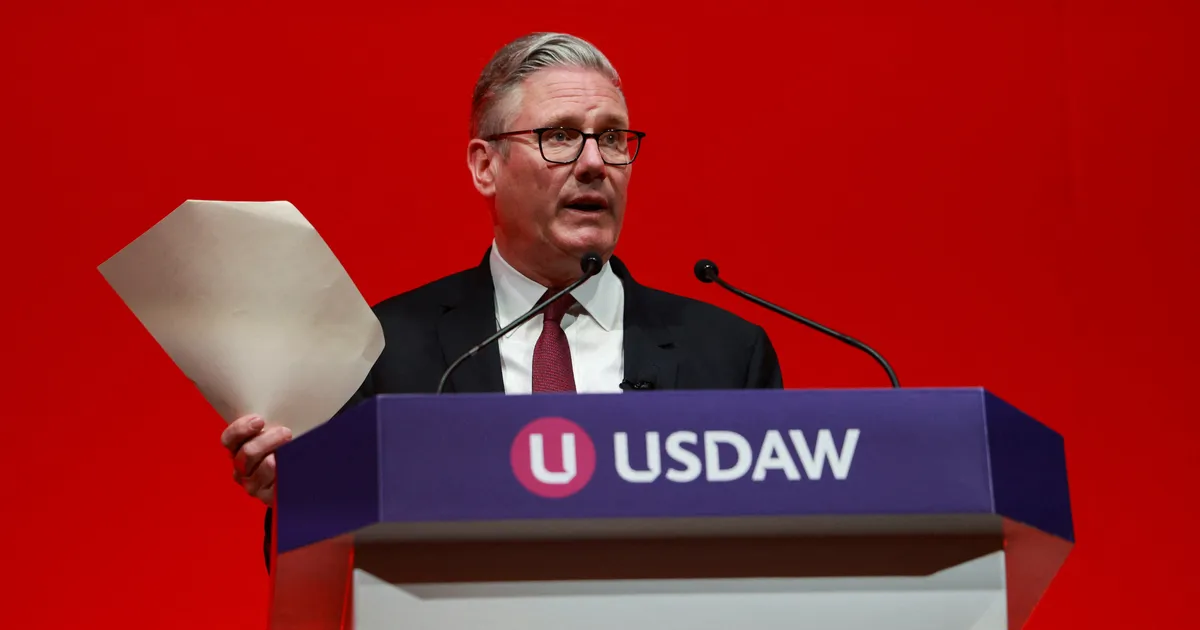
Keir Starmer is to face a crunch vote on whether a sleaze probe should be launched into claims he misled parliament over the Peter Mandelson scandal.
In a major blow for the prime minister, Commons Speaker Lindsay Hoyle said MPs should decide whether or not the Privileges Committee holds an investigation into the prime minister.
Starmer has previously insisted that “due process” was followed in the appointment of Mandelson as the UK’s ambassador to Washington.
He also insisted last week that “no pressure whatsoever” was placed on the Foreign Office to make sure the shamed former Labour peer had the necessary security clearance to take up the post.
But it emerged two weeks ago that UK Security Vetting had recommended that Mandelson not be given clearance.
Sir Olly Robbins – the former top civil servant in the Foreign Office who was sacked by Starmer for not telling him about the UKSV verdict – told MPs last week that there was “constant pressure” from No.10 to get Mandelson in place.
Hoyle confirmed that the House of Commons will be given a vote on Tuesday on whether the Privileges Committee should carry out its own inquiry into the row.
It is understood Labour MPs will be whipped to vote against an inquiry, with party chiefs insisting it is a political stunt ahead of the May 7 elections.
But critics have accused Starmer of running scared of his own MPs by refusing to give them a free vote as he fears many of them will vote against him.
A Labour insider told HuffPost UK: “It shouldn’t be a problem but the PMs political and moral authority slipping away – MPs won’t want to go into bat on something that the think will blow back in their faces.”
Subscribe to Commons People, the podcast that makes politics easy. Every week, Kevin Schofield and Kate Nicholson unpack the week’s biggest stories to keep you informed. Join us for straightforward analysis of what’s going on at Westminster.
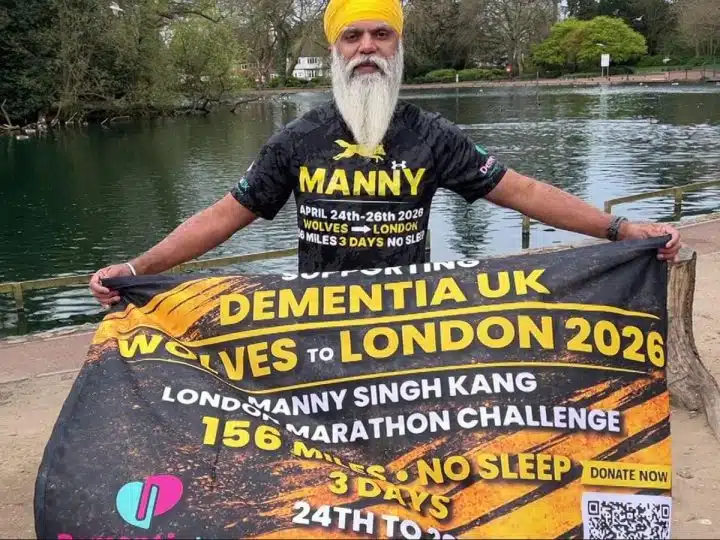

Manny Singh Kang set off before dawn from the Billy Wright statue outside Molineux. He was wearing a faded Wolves scarf knotted at his throat and his trainers were engraved with the names of people affected by dementia.
Kang was walking to London – a planned 135‑mile trek to Greenwich Park followed by the London Marathon. His journey would see him travel a total of 156 miles, all without sleep, to raise money for Dementia UK.
He planned to walk through Birmingham, Warwickshire, Oxfordshire and Buckinghamshire before reaching Milton Keynes and then north London, arriving at Greenwich for his seventh London Marathon. Express
Dubbed Manny’s Marathon Madness
The walk had been a preface, a way to arrive with a story in his bones and a cause on his feet. Every mile he carried forward was a donation, a memory, and a medal.
Kang said:
It will be the toughest, hardest challenge that I’ve ever faced, but I still reflect on the people we’re helping who face tough, hard challenges every day.
He added:
You don’t need to know somebody to help them, go out and do something good to affect your community positively.
Manny’s Struggle
For seven years, Manny has turned personal grit into public good, raising money and awareness for Dementia UK and its Admiral Nurses. He has also served as a Volunteer Ambassador for the charity.
Over that time, his fundraising has helped generate hundreds of thousands of pounds for families affected by dementia.
He told the BBC:
I came up with this quite bonkers super challenge but I think it’s possible. Human capabilities are much stronger than sometimes our thoughts let us experience so it’s about taking those negative thoughts away focusing on the positivity.
Along the route
Manny recorded short messages for his mother on his phone. He also carried a laminated photograph tucked into his pack – a reminder of why he kept moving when the miles blurred. His trainers carried names of dementia patients and family members – a literal imprint of the cause he was walking for.
People who recognised the Wolves scarf stopped to donate, to cheer, to tell him their stories. Local businesses printed event shirts and followers tracked his progress.
It’s important to note that the attention was not what he initially sought, but these are the types of challenges that bring communities together.
During the current rise of the far right in particular, this is what many need – a positive cause to unite for.
Reaching London
When Manny reached London, volunteers wrapped him in foil, offered water, and guided him to the marathon village. His legs were heavy, but the ache was worth the triumph.
He laced up again and stepped to the start line of the London Marathon, not as a man who had missed a train but as a Wolves fan who had walked his team’s colours into the heart of the capital.
Featured image via the BBC
By Faz Ali


Gianluca Prestianni, the Benfica winger, has been handed a six-match ban by UEFA for discriminatory conduct following an incident involving Real Madrid forward Vinicius Junior. The incident took place during their Champions League knockout play-off in Lisbon on February 17.
The decision follows an ethics and disciplinary investigation into comments made during the match that led Vinicius to leave the field in protest.
What UEFA found
UEFA’s investigation concluded that Prestianni’s conduct amounted to homophobic abuse, rather than racist abuse, and imposed a six-match suspension.
The ruling includes the one match Prestianni had already missed while provisionally suspended in February.
Three of the six matches are suspended for two years, meaning they will only be enforced if further misconduct occurs. UEFA has requested that FIFA extend the ban worldwide.
The incident and immediate aftermath
During the Lisbon tie, Vinicius reported alleged abuse to referee François Letexier. He subsequently left the pitch, prompting a stoppage of play that lasted around ten minutes.
Reports at the time indicated a heated exchange in which Prestianni later told UEFA he had used a homophobic slur rather than a racial one.
The episode reignited debate about how on-field confrontations should be handled when players cover their mouths while speaking to opponents.
Wider implications for football rules
The case has fed into a broader conversation about officiating and disciplinary measures.
The International Football Association Board (IFAB) was set to meet to consider whether covering the mouth while speaking to an opponent should carry an automatic red card, if the content is later judged to be discriminatory.
FIFA president Gianni Infantino publicly argued that a player who covers their mouth and says something that has a racist consequence should be sent off, suggesting a presumption that the act of hiding speech implies wrongdoing.
These discussions could lead to changes in how referees and governing bodies interpret and sanction off-the-ball verbal exchanges.
What this means for players and clubs
The ruling underscores that governing bodies are prepared to treat discriminatory language seriously, even when the precise nature of the slur is contested.
For players, the case is a reminder that words and gestures, especially those concealed from cameras, can carry severe professional consequences.
For clubs, it highlights the reputational and competitive risks of incidents that escalate into disciplinary proceedings. It also highlights the importance of internal education and clear codes of conduct to prevent similar episodes.
Looking ahead
Although the suspended portion of Prestianni’s ban reduces the immediate number of matches he will miss, the decision sets a precedent in how UEFA frames and punishes discriminatory conduct.
The request to extend the ban worldwide through FIFA signals an intent to ensure consistency across competitions. Meanwhile, the IFAB and FIFA conversations could produce rule changes that make it easier for referees to act decisively when players attempt to conceal verbal exchanges.
The outcome of those deliberations will be closely watched by players, clubs, and fans who want clearer protections against abuse on the pitch.
Conclusion
The Prestianni case is more than a single disciplinary ruling; it is a flashpoint in football’s ongoing struggle to stamp out discrimination.
UEFA’s sanction, the international reaction, and the potential rule changes under consideration together reflect a sport grappling with how to police language and intent in an era of instant replay and intense scrutiny.
Whatever the next steps, the message from governing bodies is increasingly unambiguous: discriminatory conduct will be investigated and punished, and the mechanisms for doing so may soon become stricter.
By Faz Ali

There’s no denying romantic heartbreak is tough (as anyone who’s been through a situationship will know).
But friendship breakups can sting too, says therapist Erin Pash.
“Romantic breakups come with a script: breakup songs, therapy language, social permission to fall apart. Friendship loss has almost none of that,” she said.
Here, we spoke to Pash about when she sees the most friendship breakups, why they sting so much, how to move on from them, and when self-reflection might be needed.
Most friendship breakups happen in people’s late 20s and midlife, said the therapist
When HuffPost UK asked Pash when she sees the most friendship breakups, she answered: “The late 20s/early 30s and midlife are the biggest hotspots”.
In your 30s, she explained, “life starts diverging fast – different relationship choices, kids or no kids, career paths, values. The friendship that worked at 22 doesn’t always survive who you’re becoming at 32”.
And at midlife, people might start reconsidering huge parts of their lives.
Maybe “someone gets sober, leaves a marriage, stops people-pleasing – and when you finally show up as your real self, some friendships can’t handle it.
“Both stages come down to the same thing: when you get clearer on who you are, relationships that required a smaller version of you start to crack.”
Why do friendship breakups hurt so much?
Part of the reason is that they’re not really as acknowledged as romantic separations, said Pash.
“There’s no ceremony, often no clean ending, and the world doesn’t really acknowledge the grief. But the intimacy in a close friendship can actually run deeper,” she said.
“Your best friend may have known you in ways a partner never did, without the performance of attraction or the weight of shared finances. When that’s gone, you lose both a person and the version of yourself they reflected back to you.”
How can I move on from a friendship breakup?
It’s important not to try to ignore your pain, the therapist advised.
“Give it real grief. Don’t minimise the loss just because it wasn’t romantic.”
Then, consider what it is that’s actually upsetting you about their absence.
“Did that friend make you laugh harder than anyone? Hold your history? Challenge you?
“Naming what you’ve lost helps you heal it with precision instead of just sitting with a vague ache. And resist the urge to immediately fill the void. Rushed replacements rarely fix the real wound.”
When should I begin self-reflecting?
It’s common to wonder what role you played in a friendship breakup. And provided you aren’t spiralling about whether the whole thing was your fault (Pash says that’s “just shame”), self-reflection can actually be healthy.
“Every ending has data in it,” the therapist stated.
“Ask: what patterns am I noticing? If the same dynamic keeps showing up across multiple friendships, that’s a signal worth paying attention to.
“Even simple journaling, like ‘What did I bring to this friendship that helped? What didn’t?’ can open real self-awareness without beating yourself up. The goal is growth, not guilt.”
Remember, she added, that friendship breakups can be healthy.
“Not every relationship is meant to last forever, and outgrowing a friendship isn’t a failure. It’s often a sign you’re evolving. The most honest thing you can do for yourself and someone else is stop maintaining a connection that’s become performative.
“Letting go with intention and care is an act of integrity, not abandonment.”

BBC The Night Manager season 3 update as Tom Hiddleston shares excitement

Bubble Robotics Raises $5M Pre-Seed to Deploy Autonomous Ocean Robots

Tom Lee touts ETH as ‘wartime store of value’ as Bitmine (BMNR) buys more

Manchester United reach agreement with Casemiro over contract clause amid transfer speculation

US brings back mandatory military draft registration

Steven Gerrard disagrees with Gary Neville over ‘shock’ Chelsea and Arsenal claim | Football


-

 Politics7 days ago
Gary Stevenson delivers timely reminder to register to vote as deadline TODAY
-

 Fashion3 days ago
Weekend Open Thread – Corporette.com
-
 Crypto World2 days ago
Hyperliquid $HYPE Rally Builds Momentum as AI Sector Enters Prove-It Phase
-
Crypto World7 days ago
Bank of Hawai’i (BOH) Q1 2026: Net Income Drops to $57.4M as Net Interest Margin Expands
-

 Politics5 days ago
Making troops accountable for war crimes threatens US alliance, ex-SAS colonel warns
-

 Politics5 days ago
Disabled people challenge government SEND proposals over segregation concerns
-

 Business5 days ago
Rolls-Royce Voted UK’s Most Iconic Trade Mark as IPO Register Hits 150
-

 Business4 days ago
Patterson-UTI Energy, Inc. (PTEN) Q1 2026 Earnings Call Transcript
-

 Politics5 days ago
Zack Polanski responds to home secretary’s taser threat
-
 Crypto World6 days ago
Five Value Stocks with Recovery Potential in 2026: PayPal (PYPL), Nike (NKE), and More
-

 Politics5 days ago
Starmer handler McSweeney to be dragged from shadows by Foreign Affairs Committee
-
 Sports1 day ago
IPL 2026: Ruturaj Gaikwad registers slowest fifty of the season, enters all-time unwanted list | Cricket News
-
Politics5 days ago
Wings Over Scotland | How To Get Away With Crimes
-

 Crypto World6 days ago
New York sues Coinbase, Gemini over prediction market offerings
-
 Business5 days ago
HCL Tech share price tank over 9% after weak Q4. JPMorgan, HSBC & 3 others cut target price
-

 Politics5 days ago
‘Iran is still a nuclear threat’
-
Entertainment6 days ago
Sydney Sweeney cameo cut from “The Devil Wears Prada 2”, source explains why (exclusive)
-

 Crypto World6 days ago
Crypto’s great hope in Senate’s Clarity Act still has a path to survive tight calendar
-
 Sports4 days ago
Tim Bradley names the current best in the world: “Better than Inoue and Usyk”
-

 NewsBeat1 day ago
LK Bennett closes all stores after entering administration
You must be logged in to post a comment Login