

Politics
Jeff Bezos’ mixed bag for Mamdani

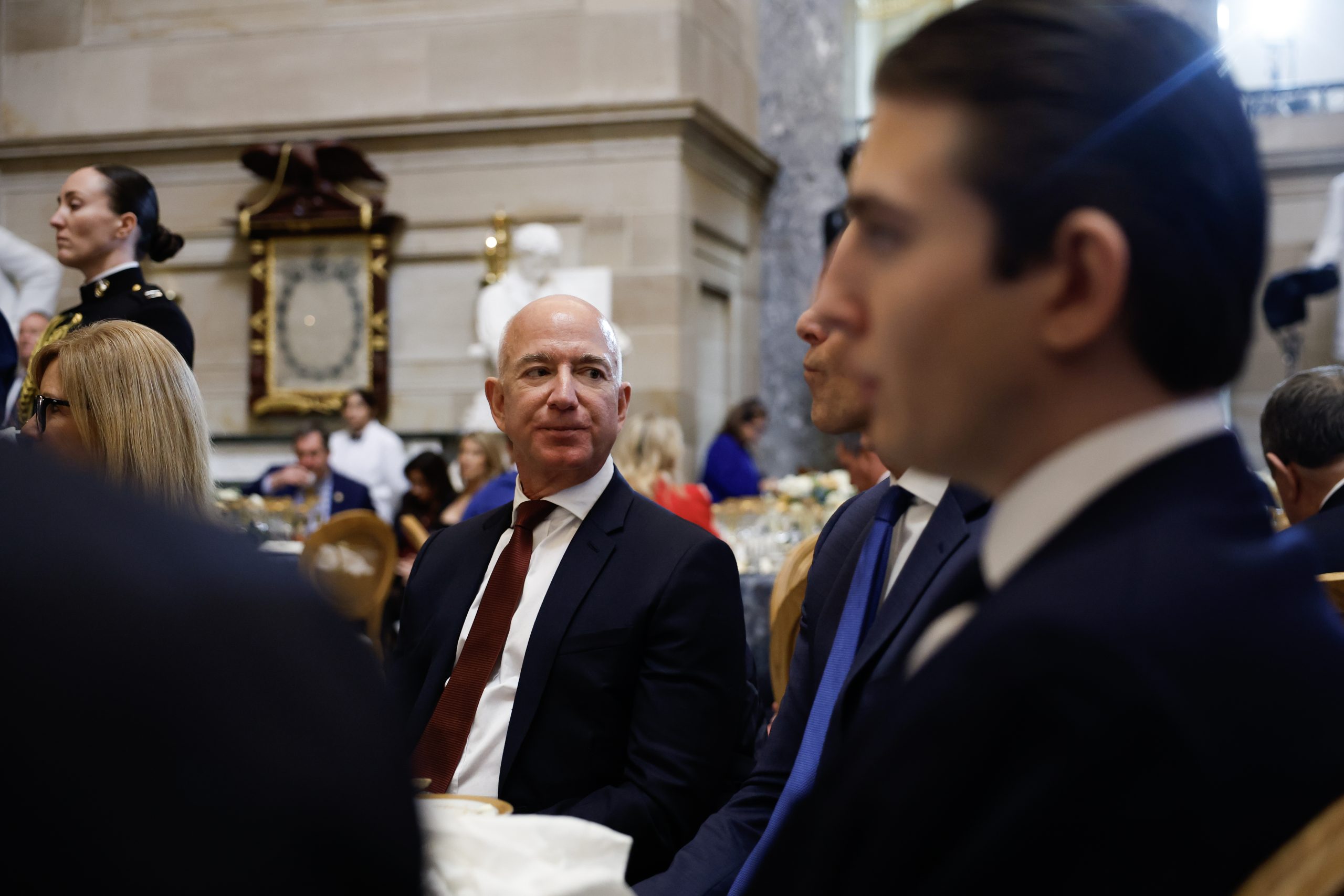

BEZOS’ BLESSING: Mayor Zohran Mamdani found an unlikely supporter today for his push to raise taxes on rich property owners: Jeff Bezos, one of the wealthiest men in the world.
“The pied-à-terre tax is a fine thing for New York to do,” Bezos said in a wide-ranging interview this morning on CNBC.
The billionaire Amazon founder was referring to the new surcharge that the state — after prodding from Mamdani — is expected to levy on individuals who own secondary homes in the city worth more than $5 million. Bezos, who resides mainly in Miami, gave his thumbs up even though he owns multiple homes in the city — reportedly worth well over $5 million each — meaning he’s likely to be impacted by the new tax.
But Bezos, who ranks as the fourth richest man in the world, also had plenty of flack for the mayor and his democratic socialist philosophies.
On pied-à-terre, Bezos blasted Mamdani for releasing a social media video in which he stood outside billionaire hedge fund manager Ken Griffin’s Manhattan penthouse to tout the tax.
“To go stand in front of Ken Griffin’s house and act like he’s some kind of villain — Ken Griffin isn’t a villain,” Bezos said in the interview, which was shot inside his Florida space rocket manufacturing facility. “He hasn’t hurt anybody. He’s not hurting New York. In fact, quite the opposite. And so that piece of it isn’t right, and there was no reason to do that.”
Mamdani’s video stunt has triggered a sustained uproar from business leaders who say the video was in poor taste. They’ve also argued a pied-à-terre tax is flawed because it could drive the rich to sell their properties, depleting the local tax pool.
Griffin himself threatened to pull the plug on a $6 billion office development project in the city in response to Mamdani’s video. The mayor has since taken pains to meet with local business giants, like the chief executives of JPMorgan Chase and Goldman Sachs, though Griffin himself has so far rejected Mamdani’s entreaties for a sit-down.
While Bezos gave Mamdani an unexpected boost on the pied-à-terre front, the Amazon honcho’s gripes with the mayor went well beyond Griffin.
Mamdani has long favored raising income taxes on the rich — on both the state and federal level — arguing such hikes would create more revenue to fund services for the average person.
Bezos contends that’s nonsense and pointed to the fact that the city’s public school system spends about $44,000 on every student annually — a markedly higher sum than other major U.S. cities — with little to show for it in terms of educational outcomes.
“You could double the taxes I pay and it’s not going to help that teacher in Queens, I promise you,” said Bezos.
Instead, he said the focus should be on eliminating taxes altogether for low-income earners. “A nurse in Queens who makes $75,000 a year pays 12 — more than $12,000 a year in taxes. Does that really make sense?” he said. “So, people talk about making the tax system more progressive. How about we start by having the nurse in Queens not pay taxes?”
CNBC anchor Andrew Ross Sorkin pressed Bezos on whether billionaires like himself would need to pay more in income taxes if nurses and teachers are given a pass on their bills, given there might otherwise be a revenue shortfall. Bezos replied that is “certainly a perfectly valid policy debate.”
A spokesperson for Mamdani would not comment on Bezos’ support for the pied-à-terre tax. But responding to a CNBC clip of Bezos criticizing higher taxes on the wealthy, Mamdani wrote on X: “I know a few teachers in Queens who would beg to differ.”
Queens holds a special place in Bezos’ mind. In 2019, Amazon canceled plans to build a massive headquarters in Long Island City after progressives such as Rep. Alexandria Ocasio-Cortez and former Mayor Bill de Blasio fought against awarding the mega-corporation $3 billion in public subsidies for the project.
Indeed, Bezos kept coming back to Queens in his CNBC hit, even while talking about what a great career choice he believes Amazon is for working class Americans.
“Amazon, we have our entry level wage for, in Queens, is $23 an hour,” he said. “That works out to be like $52,000 a year, and this is an entry level job that doesn’t require any educational attainment. It doesn’t require any preexisting skills. We will train you. It’s actually a great first job.” — Chris Sommerfeldt
From the Capitol

ZOMBIE FIGHT: State lawmakers are expected to grant Mamdani the power to dissolve a Charter Revision Commission launched by his predecessor, providing him with a clear path to kill the controversial panel.
The new authority, set to be approved in a budget bill scheduled for a Thursday vote, will give Mamdani until June 1 to either approve or rescind the commission’s creation by former Mayor Eric Adams, two people familiar with the deal said.
The people, who were granted anonymity to discuss details of the yet-to-be released legislation, said Mamdani asked state officials to insert the language into the tax-and-spending plan. They also said Mamdani — who has for months sought a way to kill the Adams commission — is expected to use the authority to disband the panel once and for all.
Kayla Mamelak, Adams’ former press secretary who’s among several aides and political loyalists he appointed to the commission, told POLITICO on Wednesday that no one from the panel received a heads up from state lawmakers or the mayor’s administration about the new legislation.
Read more from POLITICO Pro’s Nick Reisman and Chris Sommerfeldt.
LANDFILL LATTE: A plastic cup tossed into the recycling bin at a Starbucks in Park Slope traveled 463 miles to its final resting place at Apex Landfill in Amsterdam, Ohio.
The cup’s long and winding road from eco-minded, brownstone Brooklyn to a tiny Ohio village underscores how little consumer plastic ends up getting recycled — even through a corporation that touts its sustainability cred.
The journey was tracked by Beyond Plastics, which released a report today documenting how it attached trackers to plastic cups in Starbucks recycling bins to see where they ended up. Not a single cup ended up at a recycling facility.
“When a company tells you something is being recycled and it isn’t, it doesn’t just mislead the customer, it also takes the pressure off for real solutions, which is using less plastic in the first place,” Judith Enck, president of Beyond Plastics, told reporters Wednesday.
The group, a non-profit that advocates for ending plastic pollution, is lobbying for the Packaging Reduction and Recycling Infrastructure Act to pass in Albany this session. The bill is aimed at reducing single-use packaging in New York and is sponsored by Assemblymember Deborah Glick and state Sen. Pete Harckham, both Democrats.
The cups in question are made of polypropylene, or No. 5 plastic. And while they are indeed recyclable, Beyond Plastics could only find a handful of commercial recycling operators in the country that claim to recycle post-consumer polypropylene.
Starbucks is already using fiber to-go cups in hundreds of its outposts across 14 states. The report calls on the coffee chain to use those cups nationwide. Starbucks pushed back on the report.
“Our cups are designed to be recyclable, and the ‘widely accepted for recycling’ designation reflects that,” Emily Albright, a spokesperson for Starbucks, said in a statement. “Obviously, recycling in practice also requires local community infrastructure. That’s why we work closely with others, including the recycling companies, to help expand access and help improve the system.” — Mona Zhang
FROM CITY HALL

EYES ON AI: Council member Julie Won is rolling out legislation that would establish an artificial intelligence oversight office in the Department of Consumer and Worker Protection.
The director of the office would be responsible for investigating “allegations of the use of artificial intelligence in violation of the consumer laws” and for implementing an “outreach and education campaign to raise public awareness regarding the use of artificial intelligence to harm the rights, safety, or interests of consumers.”
The Council has long attempted to regulate AI.
Won is running for Congress in the competitive Democratic primary to succeed retiring Rep. Nydia Velázquez. As part of her campaign, she’s put out a technology policy platform focused heavily on AI and using the technology “responsibly.”
“We have to change the public sentiment from being so afraid of becoming obsolete to making sure there’s protections so that people don’t become obsolete,” Won said in a recent interview.
The debate over the path forward for AI has reshaped elections across the country — especially in the Democratic primary for retiring Rep. Jerry Nadler’s seat, where millions of dollars have poured in from groups on both sides of the regulation conversation.
There’s no indication, though, that those entities are planning to get involved in this race, where Won is up against Brooklyn Borough President Antonio Reynoso and Assemblymember Claire Valdez. — Madison Fernandez
BUFFERING, PLEASE HOLD: City Council Speaker Julie Menin is planning to introduce a revised version of the “buffer zone” protest bill for educational facilities, scaling back the proposal after Mamdani vetoed the original measure in late April.
The new legislation narrows the definition of educational facilities to early childhood sites and most K-12 schools, explicitly excluding libraries, teaching hospitals and — notably — colleges and universities.
The bill, similar to the buffer zone protest bill for religious institutions, would require the NYPD to create and publicize security perimeter plans around those schools during protests. Both measures have undergone significant revisions compared to earlier versions, which initially proposed 100-foot buffer zones between protestors and the sites in question.
The changes mark a significant concession from Menin on the bill’s core scope, as she moves to address member concerns rather than attempt an override — despite saying she had the votes to do so.
“We have the ability to do an override, but to jam through an override on an issue where even members who were going to support the override had real concerns — I don’t think that’s a responsible path forward,” the speaker said. “It’s my job as speaker to build consensus.”
Changes to the school-focused bill also include replacing its original prime sponsor, Council member Eric Dinowitz, with Council member Elsie Encarnacion. Under the new version, Dinowitz will appear as second co-prime sponsor.
Menin pushed back on criticism that the revisions weaken the legislation.
“I don’t view it as a watering down. I actually view it as a strengthening,” Menin said. “It means we’re going to get more members involved in supporting this bill.”
The original proposal — part of the Council’s five-point plan to combat antisemitism — was driven in part by concerns over campus protests tied to Israel’s war in Gaza. Mamdani vetoed it in April, citing constitutional concerns and the bill’s broad definition of educational institutions, which he argued could have applied to libraries, museums and hospitals.
“The Mamdani administration has not seen the specific legislative language, and we look forward to reviewing it,” a spokesperson for the mayor said. “The Mayor believes New York City must remain a place where students can access their schools safely as well as exercise their constitutional right to protest.” — Gelila Negesse
IN OTHER NEWS
— CHECKERS, NOT CHESS: OpenAI is pivoting to a state-by-state lobbying strategy to shape AI regulation, aiming to build momentum as federal efforts stall. (POLITICO)
— CASE NOT CLOSED: Citizens Union, a government watchdog group, is urging the Manhattan district attorney to pursue state charges against Eric Adams despite the Trump administration dropping a federal case against him. (The New York Times)
— NO PLAYING AROUND: New York health officials say they are closely monitoring an Ebola outbreak in the Congo as international travel ramps up ahead of the World Cup. (Gothamist)
Missed this morning’s New York Playbook? We forgive you. Read it here.

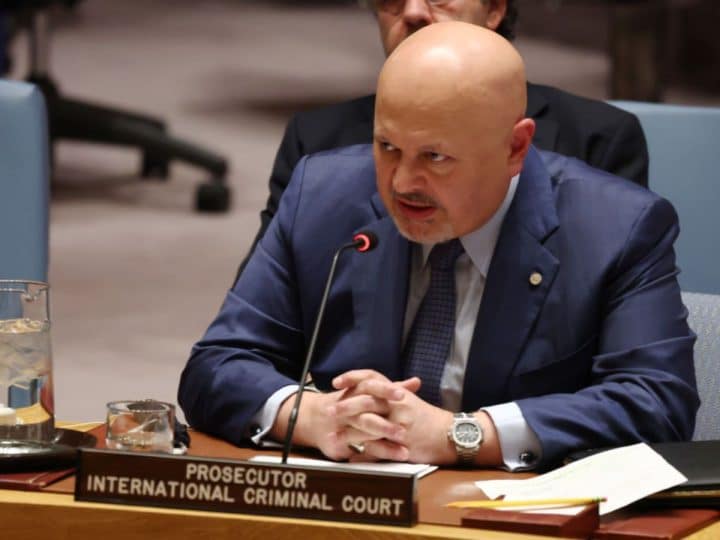
US vassals have banded together in a vote of the International Criminal Court’s 21-state ‘Bureau’ to suspend ICC chief prosecutor Karim Khan. Khan has been driving the ICC’s issuance of arrest warrants for Israeli war criminals, including Benjamin Netanyahu and former ‘defence’ minister Yoav Gallant.
ICC — Shameless political stitch-up
Israel and the US have previously circulated allegations against Khan – a standard Israel lobby tactic – of improper behaviour. Now Khan has been suspended by the Bureau on a supposed ‘no indication of guilt’ basis. But as former UK ambassador Craig Murray points out, the move is a shameless and politically-driven stitch-up:
The rest of the world should impose sanctions against the 21 criminal states. Just as the ANC encouraged sanctions against their own country (apartheid South Africa) we should encourage sanctions against our own imperialist or client countries.
— Mark Howell
(@markhowell7) June 9, 2026

The US, Israel and their allies will now be working overtime to pressure other ICC signatory nations to try to secure the votes required to take down Khan at the coming “special session of the Assembly of States Parties”.
Featured image via Michael M. Santiago/Getty Images
By Skwawkbox
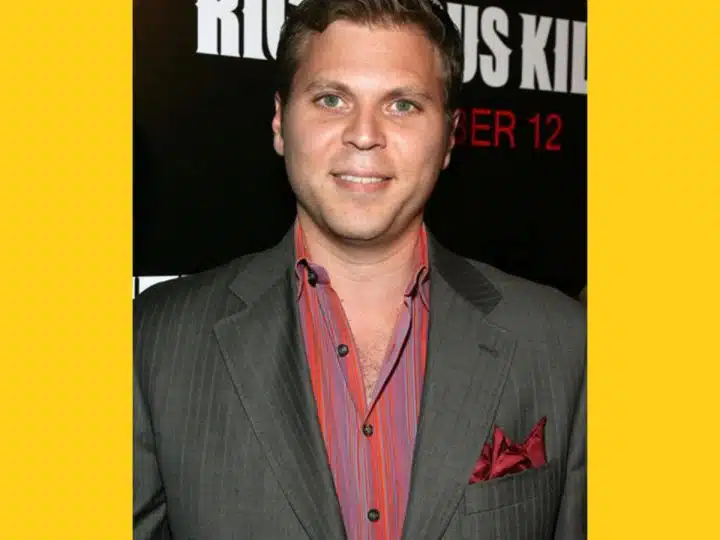
The Israeli occupation regime has hired a Hollywood producer for $900,000 to run its attempts to influence US citizens. Support for Israel has plummeted in the US across the political spectrum, especially among young people including Jewish young people:
New Jewish Voter Resource Center poll finds “nearly half of young American Jews are functionally anti-Zionist”
A recent Washington Post poll found that 61% of Jewish adults said Israel had committed war crimes against Palestinians in Gaza, while 39% said it was guilty of… pic.twitter.com/yQcvQYXbO1
— Max Blumenthal (@MaxBlumenthal) May 28, 2026
Daniel Rosenberg, who produced Spike Lee’s Inside Man, has been appointed to produce pro-Israel content for social media channels. He and his firm will also hire a director and an acting cast. Payments are being routed through German firm Havas, the same company that funnels payments to so-called influencers in return for pro-Israel posts. Unlike most Israel lobbyists in the US, the contract is being registered under ‘FARA‘, the US ‘Foreign Agents Registration Act.
Israel — Murder project
The project is being run by Eran Shayovich, the Israeli foreign ministry’s chief of staff. Israel has massively increased the amount it is spending on propaganda. Its genocide in Gaza, slaughter of children, its assassinations of journalists, peace negotiators and medics, continue to shred its global standing and expose the racist murder-project it really is.
Featured image via MUBI
By Skwawkbox

Israel fanatic Bari Weiss is set to take over the running of CNN’s editorial operations when Paramount Skydance’s planned purchase of Warner Bros Discovery is approved as expected. Weiss was imposed on CBS’s news operation in 2025 by its new, Zionist owners, despite no newsroom experience — with a naked pro-Israel agenda. The move has ruined the reputation of CBS as a serious news organisation, lost it some of its best-known faces and seen them replaced by pro-Israel mouthpieces.
Weiss — spreading the plague
Although the $110bn deal is not yet signed, both Paramount and CNN have said they expect it to go through in late summer to autumn of 2026. While a number of other names are said to be in line to run commercial operations, Weiss is favourite for news and editorial.
When your ideology is murderous racism, buy the media
The move is the latest in a series of acquisitions by Zionist ultras of media and social media platforms that have exposed Israel’s genocide in Gaza. The main figure in these buy-outs – helped ruinously in the case of TikTok by US government manoeuvres to force the sale — is Oracle founder Larry Ellison. Ellison and his family also control Paramount Skydance.
The billions spent on buying information channels to prevent the public hearing about Israel’s crimes are a clear indication that Israel and its lobbyists know their racist ideology has nothing to recommend it. That means that control of what people hear is their only hope of minimising the damage Israel’s mass murder and endless crimes against humanity continues to do to its global standing.
Regardless, the terror state must be made a pariah. Instead, politicians bought up like news stations continue to collude in genocide, racist land-theft and war.
Featured image via Kevin Dietsch/Getty Images
By Skwawkbox
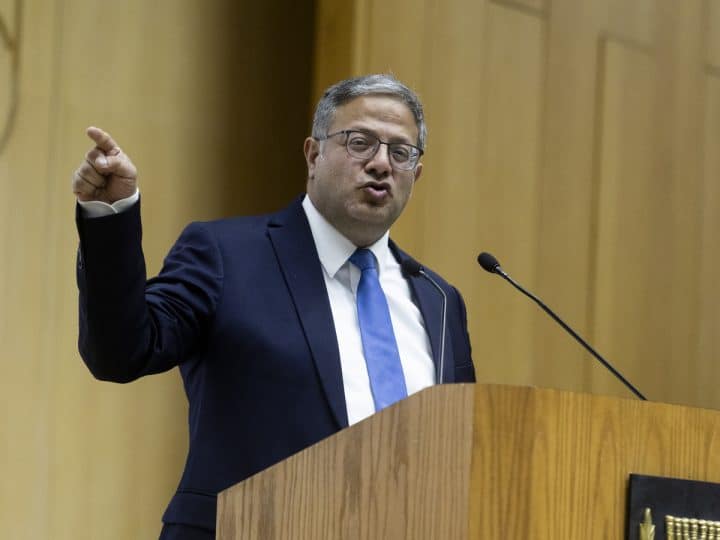
Itamar Ben-Gvir, a genocidal terrorist and Israeli Minister of National Security, has suggested that Israel kidnap Lebanese women and children to “break Hezbollah’s morale”.
That’s right, after he spent two years pleading with the world to help release the Israeli hostages and using it to justify carpet-bombing Gaza, Ben-Gvir now wants Israel to take even more hostages than it already has in its prisons.
By his own standards, that gives Lebanon the right to flatten the whole of Israel.
During a security cabinet meeting, where several officials backed escalating its illegal attacks in Lebanon, Ben-Gvir said:
Let’s start thinking outside the box about Hezbollah.
Conquering territory and killing many terrorists, but also detaining their women and youth and taking them to terrorist prisons.
That’s what hurts them the most.
Of course, there are two problems here.
First of all, Israel is not just targeting Hezbollah, like they keep claiming. The settler-colonial state has been systematically wiping out entire towns in Southern Lebanon for months.
Secondly, even ‘targeting Hezbollah’ is against international law, given that anyone living in occupied territory has the right to armed resistance under international law.
But of course, openly genocidal, convicted criminals such as Ben-Gvir do not give a rat’s arse about international law.
Ben-Gvir himself has been convicted of supporting Israeli terrorist organisations and having a portrait of the Israeli terrorist — Baruch Goldstein — in his office.
Ben-Gvir is also the man behind the new law, which allows the death penalty only on Palestinians.
Only recently, Ben-Gvir joined a group of fellow illegal settlers to raid the Al-Aqsa Mosque in occupied East Jerusalem.
Basically, Ben-Gvir is an all-around top bloke who really deserves a seat in government.
Ben-Gvir — ‘Most moral army’
Netanyahu repeatedly bangs on about Israel having the most moral army in the world.
What sort of ‘morals’ involve kidnapping women or children?
Here’s the most moral army in the world. Wanting to kidnap women and children so they can be tortured and raped in an Israeli death camps https://t.co/roVGJCiWvt
— newoods (@newenglans007) June 9, 2026
We already know that Palestinian prisoners are repeatedly raped and abused in Israeli prisons. Israelis have a strange definition of the word ‘moral’.
You know which other army regularly took hostages, and then raped and abused them? The Nazis.
But if we point that out, it’s aNTiSeMITiSm.
Since Israel and the US’s illegal attacks on Lebanon in 2024, Israeli forces have abducted several Lebanese civilians. The exact number remains unknown.
They are among 1,316 people that Israel is currently holding under the “unlawful combatant” law, including Palestinians from Gaza and Syria. This law essentially legalises incommunicado detention and enables enforced disappearance. Whilst this concept is not technically illegal, that is because international law does not formally recognise it as a distinct legal status. Instead, international humanitarian law states that:
every captured individual in a conflict must be classified strictly as either a prisoner of war (POW) or a civilian.
According to Amnesty International:
While international humanitarian law allows for the detention of individuals on imperative security grounds in situations of occupation, there must be safeguards to prevent indefinite or arbitrary detention and torture and other ill-treatment. This law blatantly fails to provide these safeguards. It enables rampant torture and, in some circumstances, institutionalizes enforced disappearance.
However, it is well recorded that Israel detains people indefinitely. This means that, like most things that Israel does, the whole concept of ‘unlawful combatants’ breaks international law.
It is clear that the only solution to end Israel’s genocidal regime is disarmament, isolation, and sanctions.
Israel is a terrorist organisation and should be sanctioned, isolated and disarmed at once https://t.co/dgEAqnpyYm
— StanleySau (@StanleySau1) June 9, 2026
Because, let’s face it, if any other country, minus the US or Israel, behaved in the same way, the rest of the world would have a serious issue with it.
When Israel does it the US govt and US media doesn’t call it terrorism.
Israel and America are #1 terrorists in the world. But are you too weak to break out of that fairytale they sell you on the daily about this country?
https://t.co/NfCI9wQPyp
— L.A. Raider
Imagine saying ‘kidnap women and children’ in the same sentence as you call someone else a terrorist. It doesn’t really work, does it?
Ben-Gvir belongs in the Hague, along with the rest of his murderous colleagues.
Feature image via Amir Levy/Getty Images
By The Canary

Reform — The trade unions have hit back against Farage’s recent pitiful appeal to try to bring the UK labour movement over to the far-right. Quite unsurprisingly, they’ve seen through his ridiculous claim that:
Reform is now the party of workers.
Farage also invited unions to apply for affiliation, and welcomed union leadership to attend the party conference. However, those same leaders have now told him where to shove it in reply.
‘Let’s be crystal clear’
On 8 June, the Times published an interview with Nigel Farage, trying to lure trade unions into affiliation with Reform UK.
The fascist rag highlighted plummeting support for Starmer’s Labour among union members — hardly surprising in itself. However, that drop was accompanied by growing support among the membership base for Reform UK.
Unfortunately for Farage, the unions themselves haven’t conveniently forgotten all the time his party have spent bashing workers’ rights. Nor, for that matter, are they in the mood to overlook the fact that Reform UK rests firmly in the pocket of big business.
Responding to the Reform leader’s two-faced appeal, Trades Union Congress (TUC) general secretary Paul Nowak said:
Let’s be crystal clear: Reform are no friends of working people.
If they were, they wouldn’t be planning to rip up workers’ rights like day one sick pay and protection from fire and rehire and zero-hours contracts.
And they wouldn’t have a leader who backs privatising the NHS.
Add to that Reform’s repeated calls to scrap the Equality Act — the foundation stone of protections from discrimination in the workplace.
Reform cosplaying as the workers’ friend
Reform can cosplay as champions of workers all they like. But the reality is they’re bankrolled by corporate interests and crypto billionaires who want the rules rigged even further in favour of the rich and powerful, not working people.
And let’s not forget many of their leading voices have shown contempt for trade unions – the very organisations that won the rights and protections they want to strip away.
Reform will say whatever they think it takes to win votes. But their record – and their agenda – tells the real story.
The TUC highlighted that, just last year, Farage boasted that Reform would “go to war” with “leftwing teaching unions”. He even went so far as to accuse union members of:
poisoning the minds of young people, not just against Reform, but against everything this country has ever stood for.
We at the Canary prefer the term ‘history lessons‘.
‘A threat to the working class’
Of course, it wasn’t just the TUC that shut the door in Farage’s smug face. Even those that have — with good cause — cut down on their affiliation with Labour gave short shrift to Reform. Unite general secretary Sharon Graham, for instance, said:
If I had a pound for every politician who said they are the party of workers I’d be a rich woman. Reform have shown absolutely no evidence that they are friends of workers. Not signing up to the Employment Rights Act, inferring privatisation of the NHS and threatening local authority pensions seems the exact opposite.
What needs to happen now is for the Labour party to stop dithering and be the voice of workers. A little less conversation – a little more action.
Likewise, the Fire Brigades Union recognised the Reform leader for the Thatcherite waste of space that he is. The spokesperson added that:
Firefighters and other workers will see this ludicrous stunt for what it is by a party led by multimillionaires that is a threat to the working class.
The same also goes for the Transport Salaried Staffs’ Association. General secretary Maryam Eslamdoust branded Farage’s invite as a “desperate gimmick” that wouldn’t succeed in conning her organisation’s members.
Reform ‘Don’t believe in basic rights’
Of course, Labour’s closer allies in Unison also gave Farage the middle finger. Andrea Egan, the union’s general secretary, said:
It’s a con to think Nigel Farage and his rich cronies are interested in unions for anything but cold, hard cash. They don’t believe in basic rights or fair pay and consistently voted against every measure to improve them.
Gary Smith, GMB’s general secretary, highlighted the fact that Reform is a refuge for Tory turncoats — hardly the workers’ friend. Speaking to the Guardian, he stated that:
Mr Farage and his Reform MPs say one thing to workers and do another.
They voted against sick pay and other essential safeguards. They even want to prevent people organising to make work better at places like Amazon. We see them for what they are – rebadged Tories after union members’ basic rights.
The unions stand together
However, the most damning vote of no-confidence of all was probably that from Community. The union represents numerous different trades, including a significant share of UK steelworkers.
Not to be taken in, Community’s assistant general secretary, Alasdair McDiarmid, simply said:
The Reform party has consistently voted against the interests of working-class people while under his leadership.
It is clear Farage will say whatever it takes to win votes, but workers will see through his misrepresentations.
Reform UK recently made a big song and dance about offering a ‘redress scheme’ for steelworkers’ pensions in an attempted appeal to a tokenised symbol of British industry.
However, what far-right scum like Farage and his cronies don’t understand — what they can’t understand — is the ‘union’ part of trade unions. Reform don’t get to play divide-and-conquer with worker’s rights, trying to woo steelworkers with one hand whilst bashing teachers with the other.
The labour movement stands together — and it stands firmly opposed to Farage, Reform, and the rest of the UK’s fascist wannabes.
Featured image via Ian Forsyth/Getty Images

The Trump family pocketed at least $100 million from India’s richest dynasty, the Ambanis, through a secret stake in an obscure Texas refinery startup.
A pattern also seen with another billionaire, Gautam Adani, reveals a consistent U.S. strategy: first, threaten tariffs, sanctions, or prosecution; then, after money flows from Indian billionaires toward the U.S., make the legal and trade problems disappear.
In exchange for the Indian investment in the Texas refinery startup, the White House delivered a string of major policy wins for the Indian energy conglomerate, including a Venezuelan oil license, according to a ProPublica investigation published Tuesday.
NEW: Earlier this year, an obscure startup in Texas announced that it had received at least $100 mil from one of the richest men in Asia.
We dug into the backstory. We discovered a saga involving Donald Trump Jr., Russian oil, and an Indian billionaire family’s private zoo. pic.twitter.com/wqusoBA0e5
— Josh Kaplan (@js_kaplan) June 9, 2026
According to the article, these policy wins were a trade deal that slashed tariffs on Indian goods from 50% to 18%, a license for Reliance to buy sanctioned Venezuelan oil, and an early waiver for India to buy Russian crude after the Iran war began (a waiver later expanded to all countries).
The ProPublica article implied that hawks like Peter Navarro had to be sidelined or overruled once the Ambani money flowed in.
Before the investment, Navarro publicly attacked “India’s politically connected energy titans” for “funding Putin’s war machine” — a clear jab at the Ambanis, who own refineries in India.
The White House denied any conflicts of interest, and Reliance said there was “no connection” between the investment and these outcomes.
Timeline of events
According to the article, in August 2025, the U.S. doubled tariffs on India to 50% to force India to stop buying Russian oil. The
The US had said India’s imports of Russian oil undermined US efforts to counter Russia’s activities in Ukraine.
Then in November 2025, Donald Trump Jr. visited India, where he toured the Ambanis’ private zoo with Anant Ambani.
Then, in February 2026, the U.S. struck a trade deal with India, slashing tariffs from 50% to 18%. That same month, the U.S. also reportedly gave Reliance a license to buy sanctioned Venezuelan oil.
In March 2026, America First Refining announced it had received at least $100 million from Reliance. Trump Jr. had secretly acquired a stake in the start-up.
After the US attacked Iran, India received an early waiver to buy Russian crude, a waiver later expanded to all countries.
“Bizarre” flow of money
One could ask why a developing country like India is sending money to the United States instead of the other way around.
Last month, the Financial Times posed exactly that question, noting that India has “committed” to purchasing $500 billion worth of American goods over five years during Rubio’s visit to India.
The FT called the arrangement “bizarre,” noting that negative net foreign direct investment, more money leaving India than entering, is already weakening the rupee.
India’s bizarre $500bn ‘commitment’ in trade deal with US https://t.co/Ev0ouYcrAc
— FT World News (@ftworldnews) May 26, 2026
The FT said it would be “foolish” for Modi to accept a trade deal currently being negotiated that is not favourable to India. It said:
The Modi government has been on the defensive about a trade deal with Washington since Trump came into office. The expectation in New Delhi was that India would be among the first to secure one, but things soured, and India ended up among the most heavily tariffed countries. There has been considerable pressure on the commerce ministry to deliver a deal. But the fundamentals have changed. And it would be foolish for India to sign an agreement that appears to take far more than it gives.
A final trade deal still hasn’t been signed.
Talks were supposed to wrap up in March, but then the U.S. Supreme Court ruled many of Trump’s tariffs illegal, throwing everything into chaos. Now, even as negotiators meet, the U.S. is proposing new tariffs on India, including an extra 12.5% on Indian exports over forced labour concerns.
Trump said last week he’s confident a deal will get done soon because he likes Modi.
Trump confident of India trade deal despite new tariff threat https://t.co/BYAHz4z4sZ
— BBC News (World) (@BBCWorld) June 5, 2026
Trump — Identical playbook with Adani
The Justice Department, in November 2024, had charged Adani with paying $265 million in bribes to Indian officials. The Treasury Department was investigating alleged Iran sanctions violations.
Then, in April 2026, Adani’s attorney, who also happens to be a personal attorney for President Trump, said his client wanted to invest $10 billion in the United States but could not do so while the cases proceeded.
The Trump administration on Monday moved to dismiss criminal fraud charges against Indian billionaire Gautam Adani, while also settling alleged Iran sanctions violations involving one of his companies. https://t.co/TVIVTmsKxR
— Reuters Legal (@ReutersLegal) May 18, 2026
Soon, the Trump administration moved to dismiss the criminal fraud charges. The Treasury settled the sanctions case for $275 million, a fraction of the $10 billion investment promise. The SEC also settled its civil case.
In both instances, a confrontation with the Trump administration — over Russian oil, over Iranian oil, over bribery allegations — was resolved after dollars flowed toward the United States from India.
What is clear is the pattern by the US — pressure, payment, pardon, and repeat.
Featured image via Carl Court/Getty Images
By The Canary

Great Yarmouth, a place where families gather all year round, come together and visit the seaside, eat ice cream and play on the arcade machines. But deep down the seafront, hidden in the industrial estate, lies a factory that is responsible for making the parts that, without them, the F-35 jets wouldn’t be able to operate. The company is called Spectrum Control LTD.
You won’t find much advertising for it; in fact, if you go to the factory itself, there are no big signs on the doors or obvious branding. But if you dig deep enough into a combination of the company house, export license data put together by the campaign against arms trade, Spectrum has been making and supplying parts for the F-35 jets that have been used in Israel’s genocide of Gaza.
So who owns the place in Great Yarmouth?
From my findings, Spectrum Control LTD is listed online via Companies House under number 02721281 and, on paper, is typically a British company. But it is actually owned by AEA Investors LP, a private equity firm based in New York.
This firm is worth BILLIONS in assets in aerospace, defence and industrial manufacturing. To be precise, this firm goes all the way back to pure American elite power. It was founded in 1968 by the Rockefellers, the Mellon family and the Harriman family.
AEA manages £15 billion in invested capital. AEA took over spectrum control in 2019 from its parent company, API Technologies, which, to them, just sits there alongside handfuls of other businesses in their portfolio.
The directors
There are two directors listed on the company house website. First, we have Neil Snowdon, a British citizen who was given the role in November 2022. He works as Spectrum Controls’ vice president and managing director in the UK and EMEIA region. So in short, he sees the day-to-day at the Great Yarmouth factory. Snowdon’s LinkedIn shows how he is posting about RAF Typhoon upgrades and UK defence supply chains, but he actually has a boss himself; he reports to the US CEO, who is on the company’s executive leadership team. His name?
Richard Dennis Sorelle, sometimes known as Rich, is an American national listed as the other director of Spectrum Control and has been since 2021.
Rich has over 35 years of experience in defence electronics. Before Spectrum Control, he was the CEO and chairman of Abaco Systems, which is, in short, another military electronics supplier. When he took over spectrum control, he said he was looking forward to bringing his experiences in radar and sonar to the company (gross). He did an interview with Microwave Journal, and he described Spectrum Control and its mission as “protecting human life ” See the irony there, considering he’s making parts that help jets kill innocent children in Gaza.
Neither of these men work in Great Yarmouth, and no one from the local community was consulted or informed about this, and inquiries received no response.
Neither Snowdon or Sorelle have commented on the factory’s participation in its F-35 programme.
The invisible loophole
UK companies that ship and supply anything to do with F-35 jets don’t go through normal arms export licensing. What they go through alternatively is something called an open general export licence. What this means is registered companies have authorisation to export unlimited amounts of F-35 related parts to places like Israel without needing to apply for individual licenses.
Don’t believe me? The government’s own OGEL documents confirm this, and the campaign against arms trade has mapped every single UK company registered for this license.
The scary part is we have no idea how much has left the factory in Great Yarmouth, where it went and what aircrafts in has ended up in.
Funny how the UK government, when announcing a partial suspension on arms export licenses to Israel in 2024, seems to exempt F-35 components, giving factories loopholes to be able to still supply F-35 jet parts to countries using them for genocide.
The secret business
So when we think of spectrum control, we think obviously of the factory that’s making the F-35 components, but what if I told you they also run another business called SSIA.
SSIA (secure systems and information assurance), based in Gloucester, not Great Yarmouth, has been designing and making equipment for one of the most secret areas of military tech for well over 30 years, and its name is Tempest.
To put it short, Tempest is short for a NATO/government programme that handles the fact that every device leaks electromagnetic signals, and those signals can be intercepted by rivals, and they can manipulate what’s on the screens, what’s being typed, and what’s being broadcast.
Tempest Tech has been built to counter that.
This is also the first and only company in UK history to be NCSC accredited under GCHQ. And to work here, you have to have complete tight security clearance.
So, Spectrum Controls SSIA section supplies the military, government, and NATO with TEMPEST certified equipment, which includes secure computers, encrypted coms hardware and all of this is owned by the Rockefellers.
Our question is, why is the UK government allowing a Rockefeller-owned company in New York to handle our sensitive data?
The town that never got a say
We all know Great Yarmouth is not the wealthiest place; in fact, it’s one of the most deprived places in the UK. It sits among the bottom 20% of the most economically deprived areas nationally, and it seems to be the target of these awful industries profiting off the murder of children.
And yes, the company does employ people locally, and I’ve witnessed with my own eyes how some of the staff react to the locals trying to raise awareness, and I’m not sure if it’s silence out of fear of not wanting to lose your job because you feel like you have no other choice or just simply not caring.
I want to highlight the people who are locals and are trying to raise awareness about this issue. There’s a group of amazing activists who have been campaigning to get this factory shut down for a while, and they need your help.
When I first started journalism, I went and joined them at one of the protests outside the factory in August of 2025, and I could really feel the urgency for them to get the message across, but because Yarmouth is very far and secluded, people won’t know about it unless it’s amplified, and that’s what I’m doing right now.
The locals should be informed about what companies want to set up factories in their areas and be given a say on whether they want something like an arms factory to be operating in a town that also serves as a holiday destination for families. These companies make millions, and the community in itself is struggling. How about the government invest money in building community centres for these people instead of building factories that aid Israel’s murder mission?
Put the pressure on in Great Yarmouth
I grew up in Norfolk – in fact its funny, I was born there and lived in Great Yarmouth for a year as an adult. To me, I always associated it with the place people came to for the summer. The seafront is full of shops, arcade stalls, and things for families to do. It has one of the most popular high streets, but the work typically runs off seasonal trade, meaning after the summer, most shops shut, and people are left without work. It makes you wonder if this factory is put there on purpose, as people feel like they have no choice but to take the work that’s available to them.
But we still have questions and have sent off an FOI request to the Great Yarmouth Borough Council and ask them to disclose all communications between them and Spectrum Control, and we are still awaiting a response. Because between the Rockerfellers’ New York firm and Norfolk’s trading estate, accountability has gone missing, and I’m on the hunt for it.
And why did the mayor of Yarmouth stand with Snowdon and celebrate the 80th anniversary in 2023 of the site? Did the mayor know what the factory was making, and if she did, why would she endorse such a thing?
For now, all we can do is show up, put pressure on the spectrum control and listen to what the locals want.
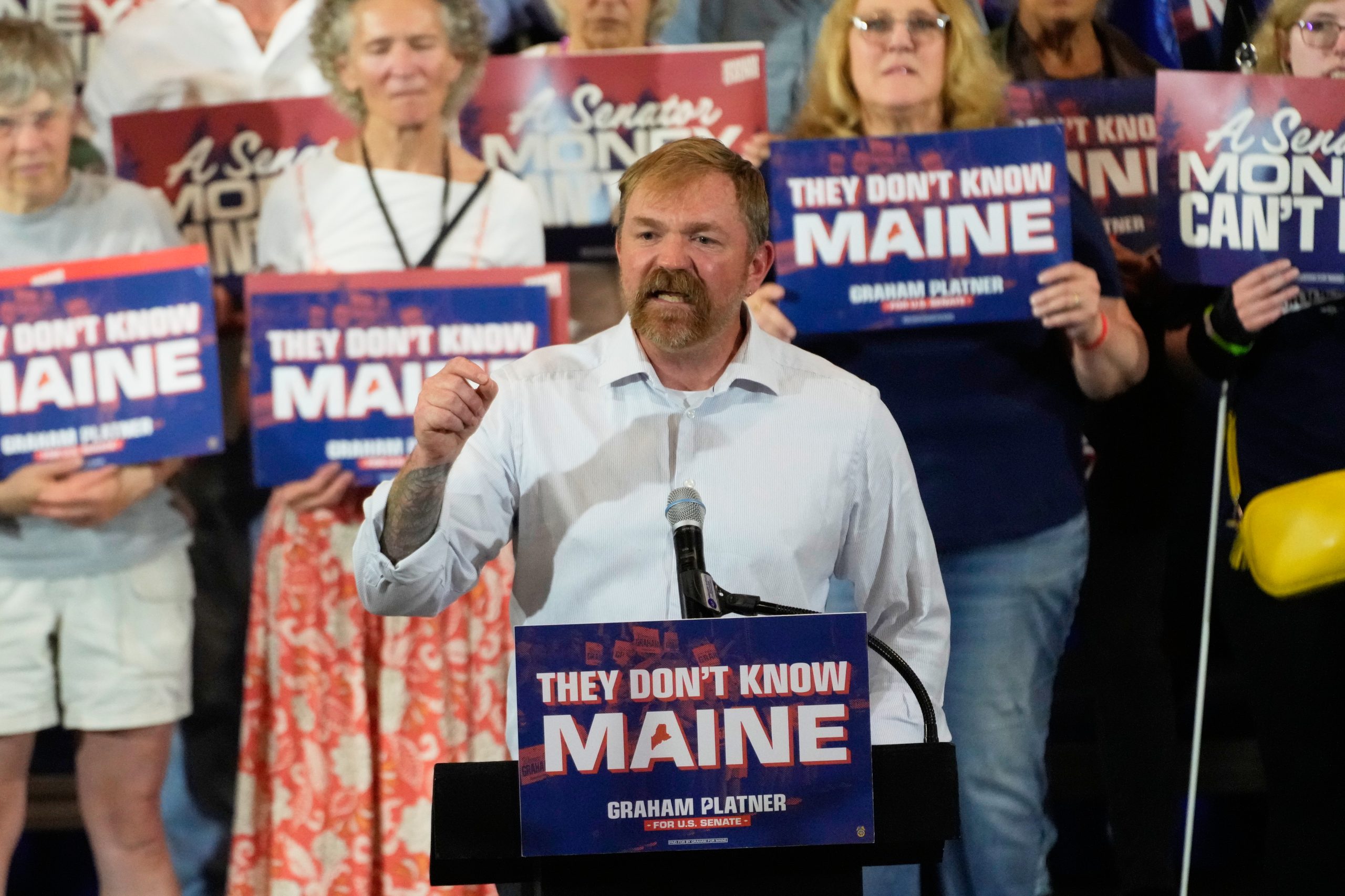
Democrats aren’t done debating Graham Platner.
Platner’s decisive victory in Maine’s Democratic Senate primary quelled for now any serious discussion that he could be replaced as the party’s nominee in the wake of a recent bout of scandals. The party’s campaign arms were quick to indicate support for him after the race was called Tuesday night. Progressives took a victory lap while arguing their colleagues need to coalesce around the Maine nominee.
But a small yet notable faction of Capitol Hill Democrats still has qualms about the oysterman’s tumultuous past that has rattled some Maine voters — and what it could mean for their chances of defeating Sen. Susan Collins and taking back the upper chamber in November.
On Wednesday, several senators stopped short of outright endorsing Platner when asked by POLITICO.
Sen. Mark Kelly (D-Ariz.), a potential 2028 contender who has kept his distance from Platner so far, said he thought Platner can defeat Collins and that “the path for us winning back control of the Senate runs through Maine.” But he still declined to endorse Platner, saying that he’d yet to meet or speak with the nominee. Asked whether Platner had done enough to address his scandals, Kelly said the oysterman has “got things to explain.”
Sen. Catherine Cortez Masto (D-Nev.), who had previously endorsed Gov. Janet Mills in the Maine Senate race, and Sen. Tammy Duckworth (D-Ill.) also declined to endorse Platner on Wednesday. Cortez Masto rattled off other top Democratic targets in Iowa, North Carolina and Alaska, while Duckworth said she’s “focused on the Midwest.”
And Sen. John Fetterman (D-Pa.), a frequent critic of his own party who has repeatedly raised concerns about Platner, said Maine Democrats have made their choice but “I would never [endorse Platner]. I’ll be a Democrat to refuse to carry water for that.”
Even Sen. Peter Welch (D-Vt.), who said Wednesday he would support all Democratic Senate nominees, suggested the oysterman still has “work to do” to address his scandals.
“The challenge that Platner has is the challenge that any candidate has, and it’s to address in a direct way both personal and political issues that are legitimate questions for the voters. He’s got to do that,” said Welch, who had also met with Platner last week to privately urge him to address voters’ questions head on. “Until the election is over, he’s got work to do, every day in every way.”

Not every senator traditionally endorses in every race. But Democrats’ chances of taking back the Senate hinge squarely on being able to defeat Collins, the only Republican senator seeking reelection this year in a state former Vice President Kamala Harris won in 2024. The party has hoped to knock off Collins many times before only to come up short — and it’s now putting its hopes on Platner, whose campaign has electrified Maine and generated unprecedented grassroots support, but also faced a litany of controversies.
Continued Democratic division could be a boon for Republicans who are already launching into general-election attacks on Platner. Collins has repeatedly won reelection with a coalition that includes a substantial share of independents and Democratic voters, especially moderate women.
Platner’s rise came without the backing of the Democratic establishment: Senate Minority Leader Chuck Schumer (D-N.Y.) recruited Mills, who suspended her campaign in April after poor polling and fundraising numbers.
The political newcomer’s ability to challenge the establishment was part of his appeal to Maine voters, as he argued the Democratic Party had lost its way and needed to return to its working-class roots.
Some well-timed endorsements helped Platner in key moments in his primary campaign. Sen. Bernie Sanders’ (I-Vt.) early backing helped put him on the map. Sen. Ruben Gallego (D-Ariz.) gave his campaign a boost earlier this year as he faced renewed questions about a tattoo resembling a Nazi symbol. And Sen. Brian Schatz (D-Hawaii) even helped him fundraise in the aftermath of the most recent allegations.
The New York Times last week reported that several of Platner’s ex-girlfriends alleged toxic patterns of behavior, including one who said he grabbed her in ways that left marks. Before that, his campaign acknowledged he had exchanged sexual messages with other women while married. Last fall, his uncovered Reddit history included numerous offensive comments. And Platner owned up to having a tattoo resembling a Nazi symbol, although he said he was unaware of its meaning.
Platner has denied being violent with women and has argued that his past poor behavior reflects a difficult time in his life, as he struggled with post-traumatic stress disorder after leaving the military.
“I’ve made mistakes in my life, mistakes that I regret, that I lived with, that I continue to learn from,” he said in a Tuesday night victory speech. “I’m still far from perfect, but every day I wake up and I try to be a little bit better and a little bit kinder than I was the day before.”
Following his Tuesday primary victory, Platner’s Senate supporters urged their colleagues to rally behind him.
“They need to coalesce, they need to coalesce around Platner,” Sen. Elizabeth Warren (D-Mass.) told reporters on Wednesday, arguing Platner has “taken responsibility” for his past actions.
Sanders told reporters on Capitol Hill he was confident that Democrats would come around.
“Platner won a landslide victory last night, and I am quite confident that Democrats who want to regain the Senate will be supporting him as the Democratic nominee,” he said.
At least one lawmaker who had not previously endorsed Platner was ready to support him.
“Here’s a man who said ‘I made mistakes, I apologize for them, I am going to earn the trust of my constituents,’” said Sen. Mazie Hirono (D-Hawaii). “That says a lot in contrast to the president, who never admits doing anything that is untoward, and who just blames everybody else, and who prosecutes people. I think Maine voters have expressed themselves and they’re willing to give him a chance.”
Other Democrats who had been skeptical of Platner’s viability in the general election — and had considered pressuring him to drop out — now appear resigned to him staying in the race.
“It was obviously a strong result for him which I think should quiet some of the immediate anxiety, but that will return if more revelations come out,” said one senior Democratic Senate aide, granted anonymity to discuss the race candidly. “Seems like even his supporters are not really defending the conduct, so [it’s] kind of incumbent on him to try to address more fully and move on.”
Another Senate Democratic aide, also granted anonymity to speak candidly about the race, agreed: “He weathered the storm, but is he out of it? Primary night didn’t answer that question. The next several weeks will determine whether this campaign is a referendum on his personal conduct or Susan Collins aligning with an unpopular GOP agenda that is hurting Mainers.”

Republicans have indicated they will try to make Platner’s controversies central to the race, with the National Republican Senatorial Committee and a pro-Collins super PAC launching ads that highlight some of the Democrat’s past Reddit comments. Platner, meanwhile, in his first general election ad on Wednesday, went after the “Epstein class” but did not mention Collins.
Sen. Elissa Slotkin (D-Mich.) said her thinking on the race had not changed from a few weeks ago, saying she plans to “work with whoever the Mainers elect, period.”
“The way that this president has completely railroaded my Republican colleagues in this body, they don’t deserve to run a separate branch of government,” she said. “And if we want any chance of putting a check and balance on him that involves electing Platner.”
Asked whether Platner needs to do more to address his past scandals, Slotkin simply replied: “I just hope I’m not caught again live on TV answering the same questions about bad behavior.”
Jordain Carney contributed to this report.

The US launched revenge-strikes after an Iranian drone knocked out an Apache helicopter on 9 June. The US hit two reservoirs in southern Iran, leaving tens of thousands without drinking water in 40-degree heat. The Geneva Convention insists military forces must distinguish between civilian and military infrastructure.
The attack was reported as a footnote by legacy media. NBC said:
Around 20,000 Iranians have lost access to drinking water after two reservoirs were reportedly struck in U.S. strikes, according to the Iranian judiciary’s official news agency, Mizan.
The news agency reported the development after Abdolhamid Hamzehpour, CEO of Hormozgan Province Water and Wastewater Co., said two concrete water storage reservoirs had been hit in Sirik county.
NBC cited the Mizan news agency saying:
that with high temperatures above 40 degrees Celsius or 104 degrees Fahrenheit, conditions for residents had “become extremely difficult and critical.”
Hamzehpour had earlier told state-run IRIB news agency that teams were working to implement alternative measures to ensure access to drinking water.
US strikes for revenge, pure and simple
The latest wave of strikes were in response to the shooting down of a US Apache helicopter on 9 June. The Canary reported:
The US military had originally claimed that a technical fault caused the crash. The helicopter’s crew survived and was picked up from the sea.
The ‘Longbow’ variant of the apache is set up for surveillance and for support of special forces. Former US special forces officer, Lt Col Antony Aguilar, described it as hard to shoot down and said that similar aircraft had been used a week earlier to attack Iranian civilian vessels.
In a move typical of the US president:
Trump attacked Iran for successfully defending itself and has described the escalated aggression as “defensive”.
US-Israel attacked Iran first on 28 February without provocation. Iran was offering unprecedented concessions in negotiations at the time. The Pentagon has since stated there was no imminent threat from Iran. And the UN’s atomic watchdog, the IAEA, has said there is no evidence Iran was developing a nuclear weapon.
The US has achieved none of its original war aims. Iran predictably closed the Straits of Hormuz, a vital oil channel, once attacked — creating a global energy crisis. Far from being defeated, Iran has said the war will continue until “the enemy’s inevitable and permanent humiliation, disgrace, regret, and surrender”. Trump came to power on an anti-war ‘America First’ ticket. He now faces worldwide humiliation.
As Trump flails, seeking an exit from his war of choice, Iranian civilians continue to suffer. The US reservoir strikes may constitute a war crime. The US and Israel have operated with impunity carrying out hundreds — if not thousands — of other near-daily attacks on civilians. A decaying empire is a dangerous thing, as the people of the region know only too well.
Featured image via U.S. Navy via Getty Images
By Joe Glenton


MAJOR SHIFT: Last week’s conclusion of Albany’s legislative session left Democratic state lawmakers poised for the biggest shakeup in their ranks since they assumed one-party control in 2019.
Assembly Majority Leader Crystal Peoples-Stokes is retiring at the end of the year, opening up the No. 2 job for only the second time since Carl Heastie became speaker 11 years ago.
State Sen. Mike Gianaris is on his way out too. His departure will leave open the role of Democratic Senate Campaign Committee chair, which he’s held since he was a senator-elect in 2010. It will also pave the way for a new floor leader and Majority Leader Andrea Stewart-Cousins’ deputy.
On top of that, Senate Democrats are about to become the first conference in state history to bump up against term limits.
Rules enacted in 2009 imposed eight-year caps on the majority leader and committee chairs. No party has remained in power long enough to be impacted since then, but the rules will soon apply to Stewart-Cousins and up to a dozen of her members.
“I’d probably have to,” state Sen. Liz Krueger said when asked if she’d vote to scrap the term limits. “Because it would mean Andrea couldn’t remain leader. And I do not actually accept the concept where Andrea doesn’t remain leader.”
Krueger is one of seven impacted chairs surveyed in recent months who unanimously said they want Stewart-Cousins to remain. But Democrats haven’t yet settled on what should happen to other top jobs.
“It’s really a question of ‘do you change all the term limits for everybody while you’re changing them for leadership, or do you allow for some new opportunities at the committee level?’” Investigations and Government Operations Committee Chair James Skoufis said. “I don’t know where I land on that.”
“The level of expertise I’ve developed, it’s not because I’m better or smarter than anyone else, I’ve just been in it longer,” state Sen. Gustavo Rivera said of the “deep and dark and mysterious” realm of policy he oversees as Health Committee Chair. “I would be hard pressed to find somebody in the Senate who would be able to do the job on day one.”
Gianaris’ departure might lead to widespread shuffling, regardless. And while Krueger is running again, she missed the conclusion of this year’s session after an April stroke. It remains to be seen whether she’ll return to the grueling job of being the top Democrat on the Finance Committee as she’s been since 2011 — possibly leading to more musical chairs at the top.
Stewart-Cousins said she’s looking for a deputy “who can bring the same types of talents and skills that Sen. Gianaris has brought.” Names that came up in surveys of legislators and lobbyists include state Sens. Jamaal Bailey, Andrew Gounardes and Shelley Mayer. Still, there isn’t a widespread consensus.
There’s more agreement over who might replace Peoples-Stokes. Upstaters have held the job since 1979, providing some balance to speakers from New York City over the years. The pick will need to be somebody who can work well with Heastie, and conventional wisdom holds they should have a good amount of tenure. Over a dozen insiders mentioned the same three names as fitting each of those criteria: Syracuse’s Pamela Hunter, Rochester’s Harry Bronson and Albany’s John McDonald.
Heastie, however, isn’t making a firm commitment to tradition.
“The requirement that the majority leader comes from upstate, that’s more of a y’all thing,” he told reporters. “I inherited a great majority leader who happened to be upstate in Joe Morelle, one of my closest friends. And then Crystal was somebody I knew even before I was elected, and she’s been amazing. But I don’t know if I feel limited to if it’d have to be somebody from upstate. It could be Long Island, it could be the Hudson Valley — I haven’t even really thought about it.” — Bill Mahoney
From the Capitol

MONSERRATE LEADS PACK: The state’s Public Campaign Finance Board issued $1.96 million in matching funds payments Tuesday, marking the final day such outlays will be issued before the June 23 primary.
The scandal-plagued Hiram Monserrate was the state’s top beneficiary of public funds this week.
He’s running to return to the state Senate against the incumbent state Sen. Jessica Ramos and Assemblymember Jessica Gonzalez-Rojas. Monserrate is the only sitting legislator to be removed by his colleagues in the past century, following his 2009 misdemeanor conviction arising from a domestic violence incident. Since then, this is his ninth comeback bid.
Overall, his haul trails the $348,000 in matching funds that Gonzalez-Rojas has received to date. Ramos has taken in $128,000 in recent months.
Read more from POLITICO Pro’s Bill Mahoney here.
FROM CITY HALL

BROKEN PROMISES?: Transit advocates are intensifying their pressure on Mayor Zohran Mamdani to set aside more money to lower bus and subway fares. Groups of straphangers, like Riders Alliance, are now portraying the mayor as a promise breaker if he doesn’t support an expansion of the Fair Fares program, which offers discounts to low-income New Yorkers.
“New Yorkers are hurting, especially low-income commuters whose work we all depend on, and this is the mayor’s last chance to lower costs for transit this year, after emphasizing the importance of affordable public transit for his entire career,” Riders Alliance spokesperson Danny Pearlstein said in a text message.
Free buses was one of Mamdani’s three most prominent campaign pledges — alongside child care for all and a rent freeze — but the one he’s seemed to make the least headway on.
Riders Alliance, along with City Council members Tiffany Caban, Shahana Hanif and others, is holding a rally at noon tomorrow outside City Hall to “demand” the mayor “keep his promise to lower costs” — more pointed language than advocates have used publicly in the past.
While Mamdani’s free bus plan is on hold in large part because Albany isn’t on board, the City Council has backed more money for Fair Fares. The mayor, however, is reluctant to take that path because he generally doesn’t support policies where access is based on how much money people make. — Ry Rivard
WORKING THE REFS: Mamdani has a bone to pick about the officiating at Monday’s NBA finals game, which the Knicks lost to the Spurs.
“Crime is going down in New York City, but what we saw the other night did feel criminal,” Mamdani quipped to reporters today. “You just look at the disparity on fouls that were being called. I think many New Yorkers came away from that game with a very clear reflection of the absence of fair refereeing.”
Despite the mayor’s fandom, Madison Square Garden, the home of the Knicks, released a statement Tuesday calling Mamdani and NYPD Commissioner Jessica Tisch “party poopers” for instituting tighter security for a watch party outside the arena tonight.
Asked about it, Mamdani said the level of security planned is “in line with the measures that the NYPD uses for gatherings of this size, whether it be July 4 or New Year’s Eve.”
“This team has brought an extraordinary amount of energy, pride, excitement to every corner of our city,” the mayor said. “We want this to be a memorable night for all the right reasons.”
A watch party scheduled outside MSG for Game 3 on Monday night was moved to Bryant Park thanks to President Trump attending the game.
Asked whether he holds Trump responsible for the Knicks’ loss, Mamdani laughed — but declined to blame the president.
“I’ve made clear my complaints about the refs,” Mamdani said. “I’m hopeful tonight we’re going to see a different game.” — Janaki Chadha
FROM THE CAMPAIGN TRAIL

WHAT TWEETS?: Darializa Avila Chevalier, Mamdani’s pick to unseat Rep. Adriano Espaillat, has come under plenty of fire for her old social media posts.
Mamdani claims he hasn’t seen them.
The posts in question include tweets where Chevalier wrote “F—k Kamala Harris,” criticized black and Arab men for “fetishizing ugly colonizer women,” and described wiping her hand on the American flag. They’re the subject of an Espaillat ad in which a narrator says, “Meet the real Darializa, the one she tried to delete.”
Asked about her social media imprint, Mamdani told reporters, “No, I have not seen those tweets.”
“What I’ve heard from her, and what I know a lot of others in the district have heard from her, is that her views have evolved, and that the campaign that she’s running on is reflective of what she’s going to be fighting for,” Mamdani said.
The mayor has opted against endorsing in other races, including the one for the Manhattan congressional seat being vacated by retiring Rep. Jerry Nadler.
Gracie Mansion is in that district, and while Mamdani said he plans to vote in the Democratic primary, he has not yet decided on who he’ll back. The candidates include Assemblymembers Micah Lasher and Alex Bores, Kennedy scion Jack Schlossberg and Trump critic George Conway.
“I’m one of those classic yet-to-make-a-decision voters that frustrate campaigns so dearly,” the mayor said. — Janaki Chadha
IN OTHER NEWS
— THERE’S NO ‘I’ IN TEAM: Brad Lander says he is not endorsing fellow congressional challenger Darializa Avila Chevalier, despite putting out a joint “Mamdani’s team” ad with her. (Jewish Insider)
— DIY BALLOT LINE: Shut out of major third party endorsements, candidates for NY-21 Republican Anthony Constantino and Democrat Blake Gendebien are battling in court over the validity of their made up ballot line names. (Times Union)
— NO EASY EXIT: Uber is suing New York City to block a new driver protection law, arguing it would force the company to keep dangerous drivers on the road. (Reuters)
Missed this morning’s New York Playbook? We forgive you. Read it here.

How Anthony Gordon’s late dash answered England’s toughest question for World Cup 2026 opener

'A little goes a long way': New York's candy stores sweeten economic gloom
Shotgun.fun Launches as the First Trading Terminal With 100% Cashback



-

 Fashion5 days ago
Weekend Open Thread: Evereve – Corporette.com
-
 Crypto World5 days ago
Jensen Huang Approves Samsung, SK Hynix, and Micron for NVIDIA (NVDA) HBM4 Memory Supply
-

 Crypto World3 days ago
Anatomy of the June crypto crash: Fed, Iran, Saylor
-
 Entertainment4 days ago
The Best Mystery Series of All Time Is Surging on Streaming 30 Years After It Ended
-

 NewsBeat3 days ago
Alexander Zverev wins the French Open to finally earn a 1st Grand Slam title
-

 Tech5 days ago
Suspicious Polyfill login prompts pop up on Toshiba, Muji websites
-
 Crypto World4 days ago
Senator Cynthia Lummis Calls CLARITY Act the Most Consequential Financial Legislation of This Generation
-

 Tech6 days ago
Microsoft launches MXC, an OS-level sandbox for AI agents, with OpenAI and Nvidia already on board
-

 Tech4 days ago
Microsoft unveils seven homegrown AI models in new bid for ‘long term self-sufficiency’
-

 Business6 days ago
(VIDEO) Justin Bieber Delivers Surprise Happy Birthday Serenade to Diners at Los Angeles Mexican Restaurant
-
 Business4 days ago
The Pain Points Taking a Fragile Tech Rally Down a Notch
-
 Crypto World2 days ago
Eli Lilly (LLY) Stock Surges 4% Following Breakthrough Sleep Apnea Trial Results
-
Crypto World6 days ago
LBank Surpasses 25 Million Users Worldwide as AFA Partnership Continues to Drive Global Growth
-

 Tech5 days ago
Von der Leyen’s AI envoy pick draws conflict-of-interest fire
-

 Crypto World3 days ago
Trump’s AI Ownership Plan Could Benefit Anthropic at OpenAI’s Expense
-

 Tech5 days ago
Meta steals a tactic from Tesla and builds data centers in tents
-
 Sports1 day ago
Bangladesh beat Australia after 20 years in ODIs, register only their second win over six-time world champions | Cricket News
-

 Business3 days ago
High Stakes for Wembanyama as New York Pushes for 3-0 Lead
-

 Tech5 days ago
Hackers now exploit SolarWinds Serv-U flaw to crash servers
-

 Tech3 days ago
Notion restores access to Anthropic after service disruption
You must be logged in to post a comment Login