
Politics
John Cope: Reforming local government candidate selection. Fairer, simpler, and fit for the future

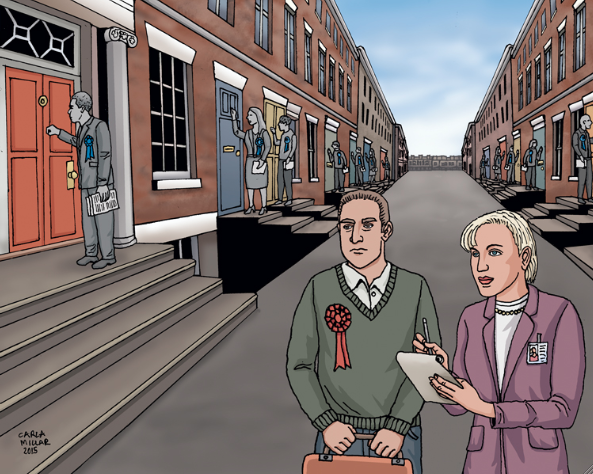
Selecting the right candidates fairly is one of the most important things the Conservative Party does in local government. Councillors are our frontline representatives. They shape local services, set council tax (…much lower than any other party), make difficult decisions under pressure, hold other parties to account and embody Conservative values in their communities every day.
Done wrong, poor selections can cost us winnable wards, or drive good people away.
That is precisely why we are reviewing and consulting on the Party’s local government candidate selection rules. This exercise is not about change for its own sake. It is about ensuring our processes are fit for the realities of modern local government and modern campaigning, and fully involving Associations and councillors, not dreaming up new rules within CCHQ and handing them down without any local input.
Our consultation document is available here, and you can submit your views here.
Over time, well-intentioned rules have accumulated. In some places, that has left us with a system that can feel slow, complex, and overly administrative. Too often, valuable volunteer time is absorbed by process, paperwork, and far too many appeals, rather than campaigning, recruiting members, and winning elections. In some cases, the rules also prevent frank conversations with and about candidates who do not pull their weight.
Our aim is therefore threefold. First, to continue to select high-quality candidates who are committed to Conservative values, their communities, and the Party. Second, to modernise and streamline the process where we can, without weakening fairness or safeguards. Third, to speed up selections in appropriate circumstances, freeing Associations to focus on what really matters: campaigning and winning.
That is the context for the draft rules now out for consultation. They are designed to simplify the architecture, clarify responsibilities, reduce unnecessary duplication, and lower the risk of dispute, while keeping member involvement at the heart of the process.
We have already received a substantial volume of thoughtful and constructive feedback, both in writing and through online consultation discussions. The overall message is encouraging. Many respondents support simplification and clearer governance, but there are also clear pressure points where views differ and where further work is needed.
One of the first questions is scope. Should these rules apply only to principal authorities, such as county, unitary, district, and borough councils, or also to town and parish councils? Some argue strongly that parish and town councils should not be burdened with a heavy process, particularly where recruitment is already difficult. Others make the case for consistency, noting that parish or town councils are really significant bodies in many places, and often a pipeline into higher office. We are keen to explore whether a two-track approach, with mandatory rules for principal authorities and lighter-touch guidance for parish and town councils, could strike the right balance.
Another area of debate is how we handle applicants who are subject to Code of Conduct complaints. Some favour exclusion until matters are resolved. Others point out that complaints can be vexatious, slow-moving, or even weaponised. Feedback suggests there is appetite for a clearer, more transparent decision framework that weighs severity, status, timing, and relevance, rather than relying on ad hoc local judgement.
Conflicts of interest are a recurring theme. There is broad agreement that conflicts must be managed properly, but frustration with vague rules that leave too much to discretion and invite appeals. Several respondents have suggested clearer recusal triggers and a simple conflict register, with an escalation route for borderline cases. We think this is an area where clarity could strengthen trust without adding unnecessary bureaucracy.
We have also heard strong support for consolidating the application and re-approval forms into a single document, with tailored sections for new candidates and incumbents. The message has been clear: reduce duplication, but retain the ability to assess councillor performance and contribution properly.
The most debated issue, unsurprisingly, is the final selection stage. How should we balance member voice with the practical reality that many wards have very small memberships? Feedback shows no single perfect model, but there may be workable compromises. For example, binding member decisions where ward membership is above a clear threshold, and joint member and Executive meetings where it is not. Online ballots could also play a role. What many respondents agree on is the need to avoid systems that feel like the Executive can routinely override members’ views.
There is, however, strong consensus on proportionality. Many welcome simplified and emergency procedures for less winnable seats and late selections, provided there are objective criteria and transparency to prevent abuse. This reflects a wider theme running through the consultation: processes must be rigorous, but also realistic about volunteer capacity and where effort is best focused.
Finally, appeals. Moving approvals to the Area or council level (a strong recommendation in the current rules, but proposed to be mandatory) requires moving appeals from Area to Region. This has attracted broad support as a way to reduce local conflicts of interest, though respondents rightly stress the importance of clear timelines and a focus on genuine procedural breaches, not re-running properly taken decisions. There is also concern about the work this shifts onto Area teams, which will need to be addressed. A final backstop body to resolve procedural disputes will also speed up difficult cases.
We encourage all those involved in local government, whether councillors, officers, activists, or Association chairs, to engage with the consultation and share their views. The final rules will be stronger for it.
This consultation is not about centralising power, nor about defending the status quo. It is about designing a system that is credible, workable, and trusted by members, volunteers, and candidates alike.
And critically, it should help us win.


The government’s latest scandal revolves around Keir Starmer’s ex-chief of staff, Morgan McSweeney, and his allegedly stolen mobile which could have contained messages between him and Peter Mandelson.
The government attempted to put this scandal to bed by accusing doubters of being conspiracy theorists. Now, a poll from the non-profit, More in Common, has revealed there are a hell of a lot of doubters out there — 74% in fact.
New in today’s Playbook. In a sign of how low trust in politics has become, presented with suggestions Morgan McSweeney faked his phone theft 74% of Brits say that is at least probably true. Agreement spans voters of all main parties. pic.twitter.com/L3lz2YlrGW
— Luke Tryl (@LukeTryl) March 31, 2026
The McSweeney conspiracy
The TLDR on the McSweeney scandal is as follows:
- The government sacked ambassador to the US Peter Mandelson because of his ties to Jeffrey Epstein
- People began to ask questions about Mandelson’s protege Morgan McSweeney
- McSweeney’s phone was conveniently ‘stolen’ not long after Mandelson’s firing
- McSweeney gave incorrect details to the police and failed to tell them he was a key member of government
- The government launched an investigation following the revelation that Mandelson was leaking UK government information to Epstein
- We learned that many of the potential messages between Mandelson and McSweeney were missing or not being investigated
Keir Starmer and the education secretary, Bridget Phillipson, have attempted to dismiss anyone who questions the official narrative.
Prime Minister Sir Keir Starmer tells reporters it is a “little bit far-fetched” to suggest that the theft of Morgan McSweeney’s phone was to hide Peter Mandelson’s messages.
Live updates: https://t.co/TSaU225tEe pic.twitter.com/rzhuJZAwMn
— Sky News (@SkyNews) March 26, 2026
Phillipson: the wider coverage around McSweeneys phone is drifting into conspiracy theory
Because the PMs chief of staff ringing the police like any ordinary person, not identifying himself, giving false details, no apparent govt security protocols, thats all perfectly normal! pic.twitter.com/hXlOcoSaUQ
— Saul Staniforth (@SaulStaniforth) March 29, 2026
As the Canary said at the time, if Labour didn’t want conspiracy theories, they shouldn’t have appointed Peter Mandelson — a politician who was best pals with Jeffrey Epstein — the man at the centre of the 21st century’s most far-reaching conspiracy.
The More in Common polling showed it’s not the case that Britons are just conspiracy minded. Its UK director, Luke Tryl, wrote on X:
To benchmark against any tendency to agree when presented with conspiracy theories we also asked about a series of other conspiracies including whether the moon landings were faked or the pandemic was exaggerated. Significantly more people agreed that the phone theft was faked. pic.twitter.com/oYwei4PMx3
— Luke Tryl (@LukeTryl) March 31, 2026
Simultaneously, the polling provided data on how the public feels about disappearing messages.
In what is likely a mismatch between SW1 and the wider public just 15% of Brits have disappearing messages turned on compared to 71% who don’t. Though 22% of 18-24 year olds do have disappearing messages turned on. pic.twitter.com/le6TPbSbLQ
— Luke Tryl (@LukeTryl) March 31, 2026
In a corner
It was always insulting for the government to paint its critics as conspiracy theorists. Now we know it wasn’t just insulting, it was deeply, deeply stupid.
Starmer can slander 74% of the public if he likes, but it won’t do his own polling any good.
Featured image via Stats for Lefties

David Henig looks at the impact of the recently signed EU-Australia deal, as well as the EU’s wider approach to Free Trade Agreements in light of geopolitical uncertainty.
Signing a Free Trade Agreement with Australia is the latest step in the EU’s clear acceleration towards completing a programme started in the mid-1990s to secure improved terms of trade for its exporters across the globe. President Trump’s disregard for trade rules is helping, as the Commission and most member states want to show they will not be following suit. Where this also leads is an emerging question as to what will come next for EU trade policy, not least given these FTAs can be set against measures that point in a more protectionist direction.
Early details suggest this new EU-Australia deal is mostly a traditional one focusing on removing what were already low tariffs for industrial goods, protecting EU geographical indications, and offering limited access to EU agriculture markets. There are some elements that go beyond this, such as cooperation on critical raw materials, but steel is notably excluded given EU desires to restrict imports.
This is not going to be any kind of economic game-changer not least in a world in which EU industrial goods are increasingly struggling to be competitive with those from China. Nor is this new trade deal really the basis of some kind of alternative world trade order to the WTO, even one undermined by the US breaking its commitments by raising tariffs and then coercing countries into deals to reduce them. At best one can see the EU’s hurry to expand its network of trade agreements as a form of insurance against a possible future without a well-functioning WTO.
At this stage even the traditionally free trade-hostile French government appears to be happy with a deal that is far less generous in terms of market access for meat imports than both the EU-Mercosur deal and the deal which the UK negotiated with Australia in 2021. There may even be an element of satisfaction that this shows Brussels doing better in negotiations than London. This Australia deal also means that the EU has matched the post-Brexit trade deals secured by the UK with the exception of accession to the trans-pacific CPTPP bloc, filling an obvious gap in an already extensive set of bilateral FTAs.
Despite overt French opposition, the EU-Mercosur agreement will come into provisional effect from the start of May 2026. This demonstrated some skilful political handling from a Commission responsible for negotiations with a Parliament that has yet to give its approval given that it has become the custom if not the legal reality that this is required. In particular the Chair of the International Trade Committee, German Social Democrat Bernd Lange, professed himself satisfied. His voice is increasingly important as the EU struggles with a turbulent global picture.
Earlier this year the EU completed negotiations with India, which as with an earlier agreement with Indonesia, should come into force before the end of this Commission term in 2029. Experienced Brussels trade hands are also increasingly confident that there will be more deals in the next three years. Talks with Thailand, Malaysia, and the Philippines are advancing, as are more recently launched ones with the UAE. All of this will point towards a highly productive five years for EU trade policy.
Less is expected of discussions between the EU and the twelve members of the CPTPP that include the UK. While these are among the stronger supporters of global trade rules, what is mostly being discussed is some fairly limited cooperation starting by restating approaches on digital rules. Commission sources have previously said that cooperation between two blocs is outside of their comfort zone, and going further such as by providing tariff-free access for goods produced using CPTPP supply chains would run into fears around the impact on EU industry.
This problem in dealing with CPTPP cooperation demonstrates one of the EU’s major trade policy challenges for the future, of how to move beyond traditional FTA issues into working with other countries on some of today’s challenges such as the growing economic security agenda. Existing Free Trade Agreements are in danger of being devalued as measures like the carbon border adjustment mechanism, investment restrictions, abolition of de minimis customs exemptions for low-value imports, and ‘Made in Europe’ content requirements are excluded. However, to incorporate these would be challenging, as debate over the latter (about which countries should count as ‘Made in Europe’) is showing.
Even more difficult an issue is the EU approach to trade with the US and China, the only countries among its top trade partners with which it has no traditional trade agreement. Member state leaders continue to float the possibility of resurrecting a proper US-EU trade agreement, presumably under the next President, ten years after the failure of Transatlantic Trade and Investment Partnership talks. Longstanding differences on food and digital regulations, and public procurement, still look very difficult to overcome however. The Turnberry Agreement, now approved by the European Parliament, is best seen as a temporary response to Trump’s coercion (by reducing tariffs on EU imports) that may not even last his term.
An EU-China trade agreement seems even more improbable due to concerns about EU industry and the political effect that would have on US-EU ties. This, however, also reveals why there is no prospect of resurrecting a stronger WTO, as the three would need to agree on something for it to happen.
Such then has been the approach of this Commission under pressure from President Trump, to accelerate the tried and tested and park the more difficult issues for another time. As a strategy for survival there is considerable logic. It is however not really a basis for tackling the fragmentation of rules currently afflicting the world trade system, still less for addressing the challenges of modern global markets. Thus, as one programme to sign new FTAs comes to an end there is a serious need to think about what will come next, but work that has barely started.
By David Henig, Director of the UK Trade Policy Project at ECIPE.

Buy tickets HERE!
This year’s lineup of guests for my ALL TALK Fringe show is the most high profile so far. I have four current or past political party leaders including Kemi Badenoch and Zack Polanski. I want the Edinburgh public to discover the people behind the politicians. We have guests from the world of comedy, media and I’m especially looking forward to talking to the stars of the Price of Football podcast Kieran Maguire and Kevin Day. Perhaps the highlight of the run will be the event with Nazanin Zaghari-Ratcliffe and her husband Richard. It will the first time they have spoken on a public stage about her imprisonment in Iran and his fight to free her. It promises to be a spellbinding session.
We have an array of Scottish guests in the lineup including comedian Susie McCabe and a third appearance with Nicola Sturgeon. Former MP Joanna Cherry will be talking about her explosive new memoir, and Stephen Flynn, the SNP’s Westminster leader will discuss his decision to move from Westminster politics to the Scottish Parliament. In addition, Brian Taylor and Sir John Curtice will be rounding off the run in their by now unmissable political panel with Michael Crick, which returns for a fourth year.
I couldn’t be more delighted to be back at the Fringe, where I first appeared in 2019. This is without the strongest and most varied lineup of guests I’ve ever had. Informed and entertaining conversation about politics and much more is now a key part of the Fringe, and long may it remain so.
This is the official press announcement
Seabright Live presents
Iain Dale: All Talk
Pleasance at EICC
Edinburgh Festival Fringe 2026
8 – 11 August & 22 August
Award-winning LBC radio presenter, author and podcast host Iain Dale returns for a sixth Fringe season of in-depth interviews featuring audience questions, sharing his acclaimed, incisive insight on current affairs across 14 shows in five days. Guests include Kemi Badenoch, Stephen Flynn, Wes Streeting, Nicola Sturgeon, Zack Polanksi and Nazanin Zaghari-Ratcliffe.
The full list of guests for this sixth season of the show is:
- 08 Aug, 12pm – Nicola Sturgeon, former Scottish First Minister
- 08 Aug, 2pm – Wes Streeting, Secretary of State for Health & Social Care
- 08 Aug, 4pm – Zack Polanski Leader of the Green Party & London Assembly member
- 09 Aug, 12pm – Nazanin Zaghari-Ratcliffe, who was imprisoned in Iran, appearing with husband Richard Ratcliffe
- 09 Aug, 2pm – Baroness Jacqui Smith interviews Iain Dale about his forthcoming autobiography ‘Have I Said Too Much?’
- 09 Aug, 4pm – Impressionist Matt Forde, satirist Rosie Holt, comedian Susie McCabe
- 10 Aug, 12pm – Jess Phillips: Minister for Safeguarding & MP for Birmingham Yardley
- 10 Aug, 2pm – Joanna Cherry: Lawyer and former MP for Edinburgh Southwest
- 10 Aug, 4pm – Sarah Vine & Andrew Pierce: Daily Mail columnists and authors
- 11 Aug, 12pm – Former Cabinet member Baroness Gillian Shephard & former Cabinet Secretary, Lord Robin Butler
- 11 Aug, 2pm “The Price of Football” podcast hosts, Kieran Maguire and Kevin Day
- 11 Aug, 4pm – Broadcaster Michael Crick, pollster John Curtice, writer Brian Taylor
- 22 Aug, 12pm – Kemi Badenoch, Leader of the Opposition and of the Conservative Party
- 22 Aug, 4pm – Stephen Flynn, Leader of the SNP in the House of Commons
Iain Dale commented, “This year’s lineup of guests for my All Talk Fringe show is the most high-profile so far. I have four current or past political party leaders including Kemi Badenoch and Zack Polanski. I want the Edinburgh public to discover the people behind the politicians. We have guests from the world of comedy, media and I’m especially looking forward to talking to the stars of the Price of Football podcast Kieran Maguire and Kevin Day. Perhaps the highlight of the run will be the event with Nazanin Zaghari-Ratcliffe and her husband Richard. It will the first time they have spoken on a public stage about her imprisonment in Iran and his fight to free her. It promises to be a spellbinding session. We have an array of Scottish guests in the lineup including comedian Susie McCabe and a third appearance with Nicola Sturgeon. Former MP Joanna Cherry will be talking about her explosive new memoir, and Stephen Flynn, the SNP’s Westminster leader will discuss his decision to move from Westminster politics to the Scottish Parliament. In addition, Brian Taylor and Sir John Curtice will be rounding off the run in their by now unmissable political panel with Michael Crick, which returns for a fourth year. I couldn’t be more delighted to be back at the Fringe, where I first appeared in 2019. This is without the strongest and most varied lineup of guests I’ve ever had. Informed and entertaining conversation about politics and much more is now a key part of the Fringe, and long may it remain so.”
Listings information:
Iain Dale: All Talk: Pleasance at EICC, 150 Morrison Street, Edinburgh EH3 8EE
8 -11 & 22 August 12.00pm, 2.00pm & 4.00pm (70 mins)
Box office: www.pleasance.co.uk / 0131 556 6550
Book for six or more shows and get a 15% discount via the Pleasance box office only (not available via Edfringe.com)
For further details & images, please contact Kate Farrell

Only one in 10 Brits believe Keir Starmer is handling the cost of living crisis well, according to a new poll.
YouGov found more than four in five (83%) of the general public think the government is managing the economic problems badly.
Even among 2024 Labour voters, only 35% told the pollsters the party is doing a good job with rising bills.
More than half of Brits (53%) say the cost of living is a major problem facing the UK right now – more than any other issue.
But only 15% of respondents said they believe Labour considers it to be a priority, though that is more than other parties.
Just 13% think the Tories believe the cost of living is an important issue and 12% feel the same about the Lib Dems.
The news will come as a blow to the prime minister as he put his ability to handle the rising cost of living at the heart of his local elections campaign.
Speaking from Wolverhampton on Monday, Starmer said his party “understood whatever is going on in the world, whatever is going on in politics, and there’s a lot in both, most people are concerned most of all about the cost of living”.
The PM announced a lower energy price cap and an increase in the minimum wage this week in the hope of winning back some voters.
It comes as Donald Trump’s war in Iran continues to push global energy prices up.
Four in 10 Brits told YouGov they are already struggling to afford food and energy costs – at least occasionally – and half say their household finances have worsened over the past 12 months.
A further 69% think the UK economy has worsened over the last year with 67% expecting it to deteriorate further over the next 12 months.
Labour are expected to face a bloodbath in the May elections.
Voters will elect new representatives in the Welsh parliament of the Senedd, in Scotland’s parliament Holyrood, and for some mayoral authorities and English councils.
Subscribe to the Commons People podcast
The HuffPost UK politics team take a look at the week in Westminster and the repercussions of the motions and personality clashes. Listen on Apple Podcasts, Spotify, Audioboom, Google Podcasts, Deezer and more.
Politics
The House | On the anniversary of Valerie Forde’s death, we must deliver the change Black women need
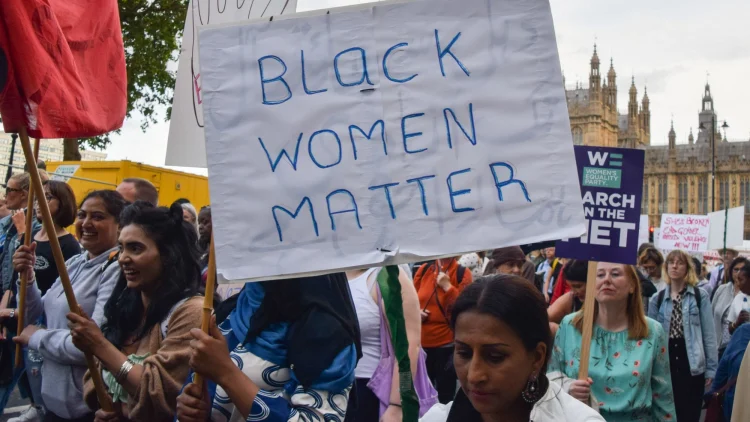

Demonstrators march through London in June 2022 in protest against violence towards women, and to honour Nicole Smallman and Bibaa Henry, who were murdered in 2020 (Credit Image: © Vuk Valcic/ZUMA Press Wire)

3 min read
Twelve years ago, Valerie Forde and her 22-month-old daughter, RJ, were murdered. Six weeks earlier, Valerie had reported a death threat to the police.
When three quarters of Black women who experience domestic abuse want to report it but feel unable to, we should ask a difficult question: what kind of system have we built, if silence feels safer than seeking help?
Valerie did everything we ask of victims. She recognised the danger and sought help. She was failed by the services meant to protect her. Nothing about Valerie and RJ’s deaths was inevitable. If her warnings had been taken seriously, both would still be alive today.
Research by Sistah Space, based on the experiences of more than 2,200 women across England and Wales, shows how serious this problem is. Nearly all of the women surveyed said they did not have confidence that reporting abuse would lead to fair or supportive treatment. Many said they felt misunderstood or dismissed when they did reach out. That matters because what happens when a woman asks for help can determine whether she is protected or put at greater risk.
Violence against women and girls is a national emergency. The government has set out an ambitious approach, with a focus on prevention, accountability and rebuilding trust. That direction is right. But it must be felt in practice across all demographics.
For too many Black women, coming forward is not just difficult, it is risky. There is fear of not being believed, of being stereotyped as aggressive, or of losing their children. Some fear that speaking out will make things worse. When those fears are present, it is not surprising that many women stay silent.
Sistah Space’s report gives clear examples of where things go wrong. Women describe coercive control not being recognised, or harm being minimised because injuries are not obvious. Some speak about bruising on darker skin not being properly recorded. These are basic issues, but they can make the difference between someone being protected or not.
Many professionals work extremely hard to support survivors. But without the right training, risk can be missed.
Culturally competent care is part of getting this right. It means understanding how different experiences shape the way abuse is reported, recognised and responded to. It means building trust, not losing it.
The government has committed to a survivor-centred approach to tackling violence against women and girls. The task now is delivery. For too many Black women, the system still does not feel like it works for them. Valerie’s Law is a practical way to change that. It would make specialist training mandatory for police, social workers and healthcare professionals, so that responses are informed by the lived experience of Black women.
This builds on work already underway, and strengthens it. It would also create a consistent standard, so that support does not depend on where someone lives or who they speak to.
Black women are not asking for special treatment – they are asking for equal treatment. They are asking to be believed and to be treated properly when they ask for help.
If we are serious about ending violence against women and girls, the system has to work for those who currently trust it least. On the 12th anniversary of Valerie and Jahzara’s murders, the case for change is clear. We know what needs to happen. The question is whether we are prepared to act on it.
Abena Oppong-Asare is Labour MP for Erith and Thamesmead

Key Takeaways:
- Small works projects can revitalise commercial spaces efficiently and cost-effectively.
- They offer flexibility for office managers, landlords, and property developers in London.
- Professional planning, compliance, and quality assurance are critical for successful outcomes.
- Choosing experienced contractors ensures compliance, minimal disruption, and long-term value.
- Discover more about small works tailored to commercial needs.
What Are Small Works in Commercial Refurbishment?
Direct Definition and Scope
Small works is any project under £200,000. Small works refer to focused commercial construction, refurbishment, and alteration projects with budgets typically up to £200,000. These works may include office reconfigurations, minor fit-outs, partitioning, lighting upgrades, or compliance-driven modifications. Unlike large-scale refurbishments, small works are designed for rapid turnaround, minimal disruption, and precise delivery in operational office environments.
Key Features of Small Works
- Rapid project timelines, commonly between two days and six weeks
- Strict adherence to health and safety, CDM 2015, and London building regulations
- Minimal impact on day-to-day business operations
- Customisable to suit tenant, landlord, or property manager requirements
Why Small Works Matter for London Businesses
According to the British Council for Offices, 73% of London-based companies undertook minor office upgrades between 2023 and 2024 to improve employee wellbeing and space utilisation. These projects often provide a measurable return on investment, with workspace enhancements shown to boost satisfaction and productivity.
How Can Small Works Transform Your Workspace?
Practical Benefits for Commercial Environments
Small works offer a strategic solution for businesses that require modernisation, compliance upgrades, or reorganisation without the cost and disruption of a full-scale fit-out. The flexibility of these projects allows companies to adapt quickly to changing needs, whether accommodating hybrid work models or addressing new health and safety standards.
Examples of Impactful Small Works Projects
- Partitioning to create private meeting rooms or collaboration zones
- Lighting and power upgrades to meet sustainability standards
- Restroom improvements for accessibility compliance
- Internal redecoration to reinforce brand identity
- Minor mechanical and electrical upgrades, including improved HVAC
Case Study: Office Reconfiguration Success
In 2024, a London financial services firm commissioned a series of small works to create agile zones within their existing office floorplate. By introducing glass partitions and updating communal areas, the project was delivered in under three weeks with zero business interruption. Post-completion surveys found a 24% improvement in team satisfaction and a 15% rise in collaboration, according to internal HR metrics.
Ensuring Quality and Compliance in Small Works Projects
Professional Planning and Execution
Quality and regulatory compliance remain essential regardless of project size. Appointing experienced professionals ensures that small works are delivered to the highest standards, covering risk assessments, method statements, and necessary accreditations. London businesses often require contractors accredited by ISO 9001, ISO 14001, CHAS, and Constructionline to guarantee both safety and quality.
Expert Insights: Minimising Disruption and Delay
“For commercial refurbishments in occupied buildings, it is crucial to maintain clear communication and phased delivery,” says Paul Jeapes, Commercial Director (2025). “This approach reduces operational impact and ensures compliance with workplace safety regulations.”
Managing Budgets and Timelines
Small works projects are typically budgeted with clear, itemised proposals, allowing facilities and office managers to monitor costs closely. According to a 2024 industry survey, 82% of London property managers cited budget certainty as their top priority for selecting refurbishment partners.
Checklist: Selecting a Qualified Small Works Contractor
- Verify industry accreditations and relevant insurance cover
- Request detailed programmes and phased delivery plans
- Review recent case studies and references from similar sectors
- Ensure commitment to health, safety, and environmental standards
- Assess aftercare and warranty provisions for completed works
Who Benefits Most from Small Works?
Small works are ideal for commercial landlords seeking to minimise vacancy, office managers tasked with compliance or layout changes, and developers looking to add value between tenancies. For example, a landlord in the City of London refreshed common areas in three multi-let buildings, achieving a 17% increase in tenant retention over 12 months, as reported in their 2024 annual review.
London Market Trends in Small Works
The demand for flexible and sustainable workspaces continues to grow. Recent trends show an increased focus on biophilic design, energy-efficient lighting, and touchless technologies—elements easily addressed through targeted small works. A 2025 report by the UK Green Building Council found that 64% of commercial tenants now prioritise sustainability upgrades when renewing leases.
Frequently Asked Questions about Small Works
What types of commercial properties are suitable for small works?
Offices, retail units, educational facilities, and healthcare spaces across London benefit from small works programmes. The key factor is the need for focused improvement without a complete overhaul.
How can disruption be minimised during works?
Phased working, out-of-hours scheduling, and detailed communication all help reduce business disruption. Experienced contractors will provide tailored plans to suit each client’s operational needs.
Do small works improve asset value?
Yes. Strategic upgrades such as improved lighting, fresh finishes, and updated amenities can increase both asset value and tenant appeal, according to Savills’ 2024 London Office Market Report.
Taking the Next Step: Making Small Works Work for You
For business owners, facilities managers, and landlords in London, well-planned small works represent an opportunity to adapt, modernise, and futureproof their commercial spaces. The right programme can support business growth, regulatory compliance, and long-term efficiency. By prioritising quality, communication, and expert guidance, organisations can deliver successful outcomes that benefit staff and tenants alike.
To ensure your next project delivers measurable value, explore guidance on small works and review recent success stories from similar commercial environments. Consider consulting with a specialist to discuss your unique requirements and identify the best approach for your property or business.
 President Donald Trump takes the stage at the Future Investment Initiative Institute’s summit, Friday, March 27, 2026, in Miami Beach, Fla.
Donald Trump’s attempts to force Iran to open the Strait of Hormuz will fall flat, according to a former Royal Navy officer.
The US president warned overnight that if a deal is not reached soon and the major oil shipping lane is not immediately “open for business”, he would start “obliterating” Iran’s electricity plants, oil wells and major oil hub, Kharg Island.
The Strait transports a fifth of the world’s oil supply and international markets have been reeling ever since Iran effectively closed the waterway in retaliation to US-Israel strikes.
Trump is increasingly desperate to reopen the strait as the economic shock starts to be felt around the world.
But Tom Sharpe, who served in the Navy for over 25 years, said it would not be possible to open the Strait of Hormuz by force.
“The Houthis proved that over an 18-month period, and that’s a much lower, much more simple threat,” Sharpe told BBC Radio 4′s Today programme, referring the militant attacks on merchant vessels in the Red Sea back in 2024.
“In the end we ended up on an uneasy compromise where we could just about protect ourselves.
“I think what Iran has shown so far in this conflict is that it is much harder [to do that] over the Strait of Hormuz.
“There are more threats to the air surface and sub-surface domain.
“Unless they agree to stop shooting, or are told to stop shooting, those are two other options – then I think the third option, the least good option, is the military one – where we make them stop. That’s unlikely to work.”
He continued: “Iran has control of this situation, I think that much is clear, and I think they will continue to do so going forward.
“Right now, they’re achieving their own stakes – I’m not saying they’re winning, but they’re achieving their own stakes; control of the Strait, control of the economy to an extent and regime survival.
“It’s not in their interests right now to change this.”
Sharpe also questioned Trump’s previous calls for a naval coalition to deploy warships to the strait to force it open.
He said: “Either there’s a threat like now, in which case it’s not safe to go in, or there isn’t a threat, in which case, why do we need a large group of coalition ships to escort those ships through?”
“I think this really comes down to Iran and what they choose to do in the next weeks and months,” the military specialist said.
Listen to HuffPost UK’s Commons People, the podcast which makes politics easy, to understand why the Iran war is such a big deal.
Related…




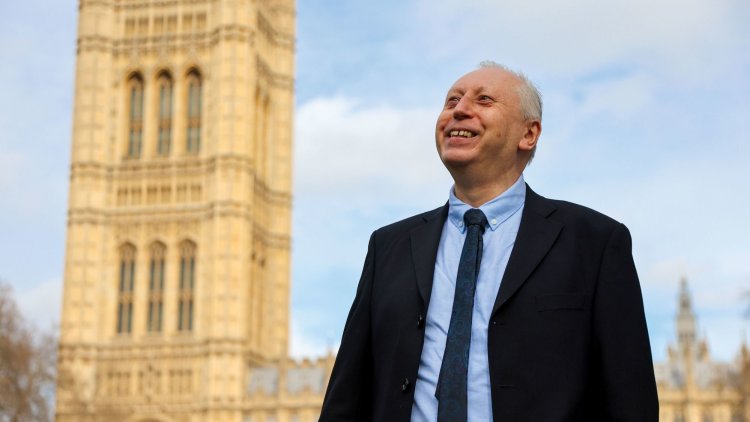
Shaun Connor (Photography by Dinendra Haria)

7 min read
The Printed Paper Office’s Shaun Connor is retiring after an extraordinary 48 years of service to Parliament. He tells Noah Vickers about his varied career and the ‘privilege’ of working in Westminster
Shaun Connor was just 18 when he landed his first job in the Palace of Westminster in January 1978, but his first day started with disappointment.
Born and raised on the Churchill Gardens estate in nearby Pimlico, Connor had never visited Parliament before. He had been hired only a few days previously, having spotted an advert in the labour exchange on Chadwick Street.
“They used to have cards with the vacancies on them,” he says. “I saw this card and all it said on it was ‘Clerical officer required in local SW1 area’.”
What he hadn’t been told was what exactly this work would involve. On his first day, his line manager explained he’d be working in the Records Office, spread across 12 floors in the Victoria Tower.
“I said to him, naively: ‘Records! I love records. I spend all my money buying records.’ He looked at me and said: ‘Not those kinds of records.’”
Far from bursting with all his favourite albums by T.Rex, David Bowie and Roxy Music, the Records Office in fact comprises a vast archive of manuscripts and parliamentary acts stretching back over the last 500 years. But that didn’t stop Connor finding ways to amuse himself.
“I used to run up from the ground floor to the very top to see how long it would take me, every day, and see if I could do a personal best. I couldn’t do one flight of stairs now, never mind all of them.”
That job would mark the start of almost half a century of service to Parliament. Connor, now aged 66, will retire at Easter after 48 years in five different roles.
Parliament, he says, had a different air about it in the 1970s: “In some ways, it was kind of a stuffier atmosphere, but at the same time, strangely enough, it was quite close-knit.
“Back then, the workforce was much smaller than it is now, and virtually everyone knew each other. Remember, there was no Portcullis House, there was no Millbank, it was just the main building.”
Within a couple of years, Connor had moved into a new role in Parliament’s sound archive – a post that seemed more attuned to the career he’d imagined as a boy.
“When I was at school, the thing I wanted to do was get into the music business,” he says. “I wanted to work in a recording studio, to be a sound engineer.”
It was only in 1978 that sound recording began in the Commons and Lords. Cameras in both Chambers were still another 11 years away but, for the first time, MPs’ and peers’ debates reached voters’ ears across the land.
Connor’s job involved retrieving audio excerpts from Parliament for the BBC and other news organisations, but also – for a charge of 50p – creating tapes for parliamentarians who wanted personal copies of their speeches. Among the most regular customers he remembers from that time were Tony Benn, never without his trademark pipe, and Lord Trefgarne, a minister in Margaret Thatcher’s government who is now the longest-serving peer.
This role was followed by jobs in the House of Lords Library and then in the Committee Office, before finally arriving in 2005 at the Printed Paper Office (PPO), where he has worked ever since.

The PPO is responsible for providing peers with documents, reports and copies of legislation, with its front desk serving as an information point about the day’s proceedings.
“I’d never had a front-facing job before, I’d always been behind the scenes,” says Connor. “It was a bit daunting because when you’re at the front desk, people come and ask you things and you’re expected to know the answers to them all.
“Even if you don’t, you’re expected to know things, because you’re representing not just the office, but the House of Lords.”
His nerves were soon settled, however, and he enjoyed getting to know peers – including Lord Sugar. The businessman and former Spurs chairman mentions Connor fondly in one of his books as someone he liked bantering with about football.
“He would never pick up anything, no material,” says Connor, a Chelsea fan. “He would just put his head round the door and say, ‘I see your lot were lucky again on Saturday.’”
If Sugar did come in, it would usually be to ask for a pen – and in return he later gifted Connor a pen of his own. Pressing a button on it played a recording of The Apprentice star saying: “You may be hired, or you may be fired – and you’re probably fired.”
Over his 48 years in Westminster, Connor has seen major changes to how Parliament works, including the arrival of the estate’s first computers in the 1980s. He recalls his older colleagues advising him at the time: “Don’t touch it. It’s a white elephant. It’s one of these here today, gone tomorrow, new toys.”
Connor has also borne witness to political history, from the 1979 vote of no confidence in James Callaghan’s government – which was decided by a single vote – through to the 2017 terror attack, where he was briefly held at gunpoint by a police officer.
“We were in lockdown – you weren’t allowed out of your office, and all of a sudden, there were swarms of armed police around,” he remembers.
Connor’s colleagues called him to say they’d been taken by police to a safe location, and that officers would probably come and take him there too. He decided to attempt a quick trip to the loo first.
“I went downstairs where our toilets are, and as I got out of the lift, I was walking down the corridor, and I heard a voice saying: ‘Identify yourself! Put your hands in the air.’ There was this guy and he was pointing his gun at me.
“I said to him: ‘I work here, I’m going to use the toilet.’ He said: ‘I’d rather you didn’t.’ I replied: ‘I’d rather I did!’” The officer relented and waited outside before escorting him to safety.
I feel proud and privileged to have been a part of this place
As Connor has aged, so has the Palace, with fires, leaks and falling stonemasonry becoming more regular occurrences. Having spent so much time in it, he feels strongly about the need to preserve the building and its heritage: “You’ve got to keep this building, because it’s so iconic. To me, it doesn’t matter how much it’s going to cost – you’ve just got to keep it.”
He is clearly devoted to Parliament and tells The House he expects his last day to be an emotional one.
“Every time I see it on the telly, and they’re talking about the Houses of Parliament… I feel proud and privileged to have been a part of this place,” he says.
“Especially where I am in the PPO, I feel as if I make a difference when I come into work. I’m not just coming into work for work’s sake. I actually feel as if I contribute and as if I’ve played a part in the day-to-day process of how Parliament works.
“That’s the kind of thing I’ll miss – being in day-to-day contact with people and actually feeling part of something.”
In retirement, Connor plans to pursue his interest in photography with his partner Julie, whom he met in Parliament. He also hopes to work the odd shift in his local independent record store, an “Aladdin’s cave” of a place with “loads of old records that need sorting out”.
While the Victoria Tower may not have entirely lived up to his imagination as a music-obsessed 18-year-old, Connor appears now to have found somewhere that will.
Politics
Our Survey: Big support for Badenoch’s position at the start of the Iran war and for increased defence spending
The Prime Minister has consistently characterised Kemi Badenoch’s position that the UK should have allowed the US use of our military bases when requested for their strikes on Iran – especially Akrotiri, in Cyprus, Diego Garcia in the Chagos Islands (still British, just) and Fareford, in the UK – as “wanting a war”.
Phrases such as gung-ho, and warmongering have been levelled at the Conservatives, and indeed Reform. It seems patently obvious that Keir Starmer has decided to tack towards holding on to any Muslim voters he’s not yet shed to the Greens and capitalise on the general unpopularity of President Trump in the UK.
However our most recent survey, taken exactly a month before US and Israeli strikes on Iran shows huge support for Badenoch’s statement that she would have granted use of UK bases to the American when requested from the start of operations.
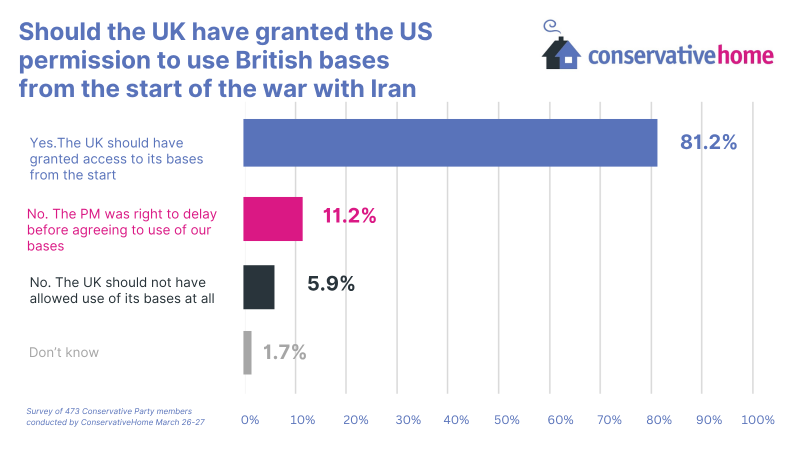 81.2 per cent of responders were clear, the UK should have granted American allies use of the bases. Argument will rage as to whether that counts as ‘participation’ or ‘not involved’ as suits whoever is making it, but the PM’s granting of such bases a day later for ‘defensive operations only’ and his insistence that this is not the UK’s war did not stop the Iranian regime firing on Akrotiri, a base in Iraq or attempted two drone strikes on Diego Garcia. It seems we are considered ‘belligerents’ by the regime whether we like it or not. We should not ignore the 11.2 per cent who agreed with the PM’s position but in context of the support for Badenoch’s it’s small.
Perhaps more tricky for the Conservatives defending the line that all Badenoch was saying was she’d have have granted use of our bases from the ‘get go’ is the significant backing members give to the strikes themselves.
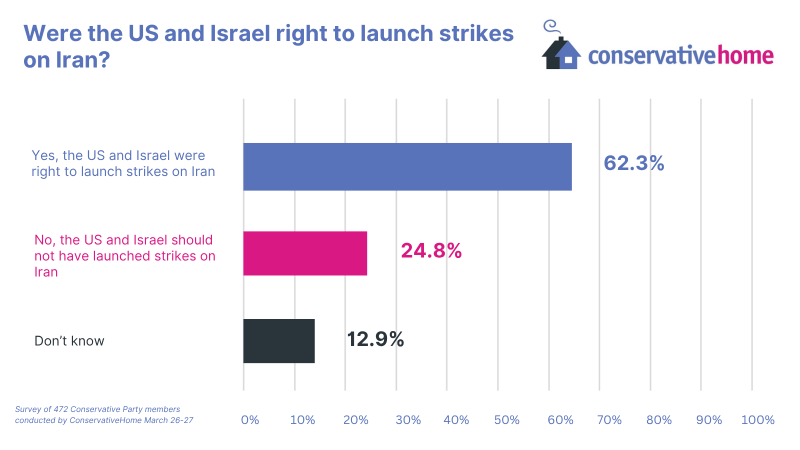
62.3 percent say they back the airstrikes on Iran conducted by the US and Israel even a month after the war started and the ripples financially were already being discussed and felt in fuel prices and the costs of living. There’s still almost a quarter of responders who think the strikes were the wrong choice and that number may grow over time depending on outcomes. We will check this again in the future.
The question only tackles the motivation for the strikes being right, not whether the plan will work or if the war will achieve any stated aim, or continue for far longer than the White House had hoped.
However in terms of the UK’s domestic reaction to the war it has prompted an overwhelming response to the question of whether Britain is spending enough on defence and fast enough, given the questions both the Shadow Defence Secretary, James Cartlidge and ConservativeHome’s Tali Fraser have been asking, on this site, about where the Labour Government are with plans for defence spending.
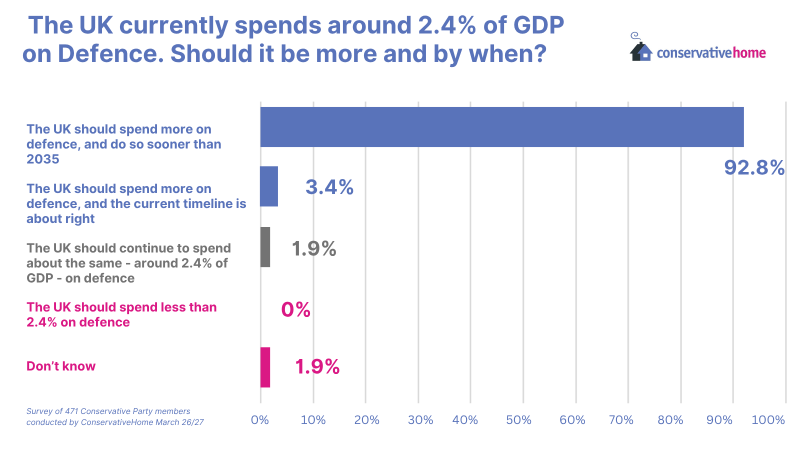
92.8 percent of Conservative members who responded think not only should the Uk spend more on defence but it should do so sooner than the Government’s timeline. Nobody at all thought we should spend less than 2.4 percent of GDP and all other options amounted to just 7.2 per cent of responses.
The news is still focussed on what President Trump does next in Iran, but increasingly also on the effects globally of this conflict. One suspects that those number supporting the initial intent to strike Iran might be porous over time, but the defence spending response will only solidify as the geo-political situation around the world remains febrile, and great powers exercise their might with greater freedom.

Last summer, protests erupted in towns across Britain against the asylum hotels that had recently sprung up in these communities. This was seized on as proof that an incipient ‘far right’ was on the march, and that the public had been whipped into a frenzy against innocent, vulnerable refugees. But the grim case of Ahmad Mulakhil is merely the latest to have vindicated the protesters.
Last week, Mulakhil, a 23-year-old Afghan national, was sentenced to 15 years in prison for raping a 12-year-old girl in Nuneaton. He committed the offence in July, not long after arriving in Britain on a small boat, and while living in taxpayer-funded accommodation in the small Warwickshire town.
Everything that’s wrong with Britain’s immigration system seems to be encapsulated in this case. There is no evidence that Mulakhil had a legitimate case for claiming asylum. Nor was there any good reason why this young man should have been living courtesy of the taxpayer. Perhaps most egregious were the British state’s efforts to cover up the crime and gaslight the public.
Local residents were understandably furious when news of the rape emerged last summer. It sparked protests that mirrored those in Epping, Essex, a few weeks earlier, over reports that a newly arrived illegal migrant had sexually assaulted a teenager. Alarmed by the public’s anger, Warwickshire Police and the local council contrived to bury Mulakhil’s nationality and immigration status. As the Daily Mail reported at the time, police told councillors not to reveal anything about the offender’s background lest this knowledge ‘inflame community tensions’. In other words, it was felt that the public could not be trusted with the facts.
The facts, as we now know, were nothing short of shocking. Mulakhil identified his victim while she was playing on a swing at a local playground. Later that evening, he lured her to the cul-de-sac where he raped her. He also filmed the attack. Police tracked him down with the help of CCTV footage from a nearby corner shop where, immediately after the attack, he bought some drinks using a debit card provided to him by the Home Office. The victim was found alone, mumbling to herself, a short distance from where she was assaulted.
Cases like this are becoming disturbingly common. Hadush Kebatu, an illegal immigrant from Ethiopia, had been in the UK for less than a week before he sexually assaulted a 14-year-old girl and an adult woman in early July last year. Kebatu too had been living in a migrant hotel – Epping’s Bell Hotel – while he carried out the assault. After he was convicted of sexual assault in October, he was paid £500 by the British state to return to Africa, a deportation that was made more difficult after prison officers mistakenly released him. He was eventually found in Finsbury Park in north London. The incompetence of the British state would almost be comical were its consequences not so catastrophic.
Similarly, two Afghan teenagers were recently convicted of raping a 15-year-old girl in a park in Leamington Spa, also in Warwickshire. In January, a Turkish asylum seeker was jailed for raping an 18-year-old teenager in Tamworth, Staffordshire. In all of these cases, children and young women are the main victims of Britain’s failure to protect its borders.
It is common sense that men from countries that disregard women’s rights – or, in the case of Afghanistan, view them as little better than property – will pose an increased threat to the communities where they are sent to live. It is also a perfectly normal human instinct to feel uncomfortable with the fact that a local hotel, or a house on your street, has been repurposed as accommodation for illegal migrants.
This is why protests erupted last summer – not just in Epping and Nuneaton, but across the UK, too. It wasn’t just that people felt threatened – as the evidence shows, they were overwhelmingly right to. It was also that all of this had been done over their heads. There was never any manifesto pledge or vote in parliament giving consent to spending £5.5million per day to house illegal immigrants, possibly in a pub or hotel on your street. Instead, communities have been told to put up and shut up. And when they have refused to stay quiet, they have been smeared with accusations of racism.
Ahmad Mulakhil will rightly spend a long time in prison for his crimes, but he should never have been in a position to commit them in the first place. Instead of being prevented from entering the UK illegally or punished for doing so, he was rewarded with free accommodation and Home Office pocket money. His welfare as a supposedly vulnerable refugee was continually prioritised over the safety and concerns of ordinary British citizens.
It is high time that the public got the immigration system they voted for, before more innocent people are hurt.
Hugo Timms is a staff writer at spiked.
Israel passes controversial death penalty law | World News

My Dividend Stock Portfolio: New February Dividend Record – 100 Holdings With 12 Buys
Dems press CFTC, ethics board on prediction-market insider trades


-
 NewsBeat6 days ago
Manchester United reach agreement with Casemiro over contract clause amid transfer speculation
-

 News Videos5 days ago
Parliament publishes latest register of MPs’ financial interests
-

 NewsBeat4 days ago
The Story hosts event on Durham’s historic registers
-
 Tech5 days ago
Intercom’s new post-trained Fin Apex 1.0 beats GPT-5.4 and Claude Sonnet 4.6 at customer service resolutions
-

 Business5 days ago
Instagram, YouTube Found Responsible for Teen’s Mental Health Struggle in Historic Ruling
-
 NewsBeat6 days ago
Tesco is selling new Cadbury Dairy Milk bar and people can’t wait to try it
-

 Fashion7 days ago
Does It Matter What You Wear When You’re Laid Off and Looking?
-

 NewsBeat7 days ago
Entrepreneurs Forum survey reveals optimism in North East
-

 Sports4 days ago
Sweet Sixteen Game Thread: Tide vs Michigan
-
 Entertainment3 days ago
Lana Del Rey Celebrates Her Husband’s 51st Birthday In New Post
-

 Crypto World7 days ago
BTC gives up $70,000 level as markets mull higher interest rates
-

 Sports6 days ago
Fantasy Baseball Week 1 Preview: Top sleeper hitters for both five- and 12-day period led by Munetaka Murakami
-
Entertainment21 hours ago
Fans slam 'heartbreaking' Barbie Dream Fest convention debacle with 'cardboard cutout' experience
-

 Tech7 days ago
Embedding compliance in AI adoption
-

 Tech6 days ago
US FCC Prohibits Approval Of New Foreign-Made Consumer Routers
-

 Fashion7 days ago
Coffee Break: Korean Skincare Set
-
Sports6 days ago
One Team in Particular Is Monitoring Kirk Cousins
-

 Fashion7 days ago
Althea Mink: Patrice Taylor’s Atlanta Couture Brand Built on Legacy, Resilience, and Architectural Glamour
-
 Fashion6 days ago
How to Style Spring Like WeWoreWhat: Easy Outfit Ideas for 2026
-
 Sports7 days ago
Bhubaneswar gets 2028 World Indoor Athletics Championships hosting rights | Other Sports News
You must be logged in to post a comment Login