
Politics
Labour’s sleazeocracy – spiked

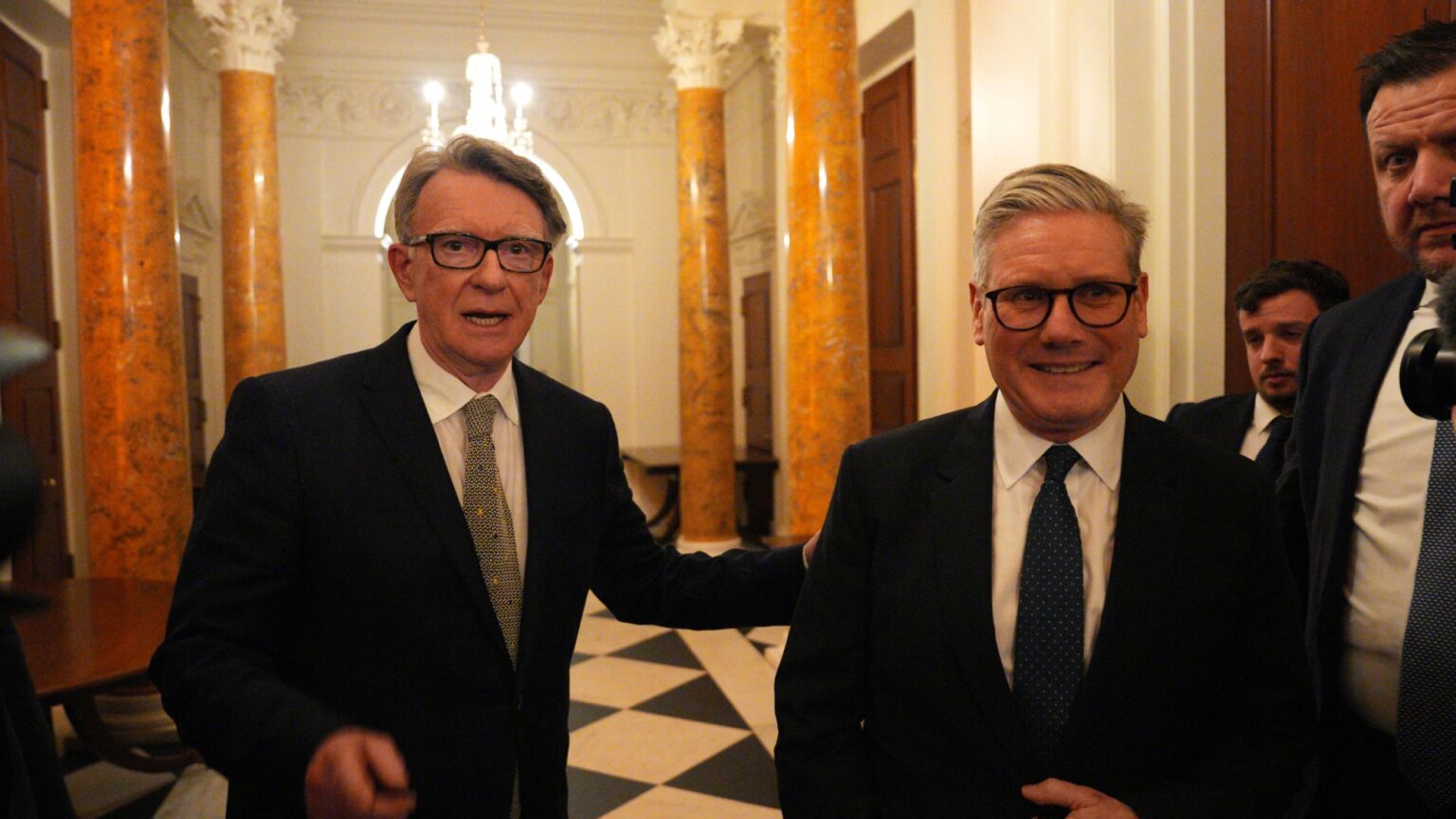
The exhaustion of Keir Starmer’s Labour government has certainly been far quicker than that of the New Labour administrations of the 1990s and 2000s. But the parallels are unmistakable.
Both New Labour and its Starmer-fronted retread pitched themselves to voters as virtue incarnate, making almost identical pledges to restore trust in politics after years of Tory ‘sleaze’ – a catch-all pejorative for a whole range of misbehaviour, from financial impropriety to marital infidelity. And yet almost no sooner had they both entered Downing Street, than they found themselves up to their necks in their own lakes of sleaze.
For the fast-forwarded descent of Starmer’s Labour to so closely mirror the years-long fall of Blair’s New Labour is no quirk of history. Nor is it solely attributable to the central role played in both administrations by New Labour figures, especially the now disgraced Labour bigwig and certified sleaze magnet, Peter Mandelson. It’s more significant than that. It is a testament to modern Labour’s fundamental problem with sleaze.
The Labour Party we know today emerged during the 1990s as a very different beast to its earlier 20th-century versions. Under Tony Blair’s leadership, it had set about ‘modernising’ itself – a process of jettisoning the last remaining vestiges of Labour’s ‘old left’ past in order to bring it bang up to date with the post-Cold War world. This was to be a party free, as Tony Blair put it in 1997, of ‘out-dated ideology or doctrine’. A post-political party committed to managerialism rather than socialism. A party determined to administer businesses and society alike, to regulate and audit through quangos and other unaccountable, expert-stuffed bodies. It was a technocratic ‘Third Way’ project entirely of a piece with the ethos of globalism then emerging, in which decision-making was being shifted away from national electorates and towards those who knew best in transnational institutions, such as the EU and the World Trade Organisation.
But there was another key aspect of New Labour, which is of particular relevance right now. Namely, that at the same time as it was ‘modernising’ and embracing managerialism, it was also constructing itself as the ‘anti-sleaze’ party, the Party of the Virtuous.
Within months of John Major’s Conservative Party winning the 1992 General Election, his government’s popularity plummeted after the collapse of the pound following Britain’s withdrawal from the European exchange-rate mechanism – a process that was meant to pave the way for Britain’s adoption of what would become the Euro. The following year, Major attempted to resurrect his party’s fortunes by calling for a return to a ‘conservatism of a traditional kind’: ‘We must go back to basics and the Conservative Party will lead the country back to those basics right across the board: sound money, free trade, traditional teaching, respect for the family and the law.’
‘Back to basics’, as this vision came to be known, wasn’t meant to be a reference to personal or private morality. But that is how the press eagerly interpreted it. This provided the tabloids with an excuse to reveal all the sordid affairs and sexual shenanigans that had long been gathering dust in journalists’ files. At the time, it seemed barely a week passed without a red-top tale of bed-hopping Tories, from David Mellor to Tim Yeo, failing to live up to their own party’s supposedly puritanical values.
By 1994, the respectable broadsheet press was getting in on the act, focussing less on sex-capades and more on dodgy financial dealings. The most notorious of which was the cash-for-questions affair, in which the Guardian alleged (rightly as it eventually turned out) that Tory MPs Neil Hamilton and Tim Smith had received money from Harrods owner Mohamed Al-Fayed in return for asking questions on his behalf in the Commons.
The respectable media, staffed by many who long harboured a distaste for the Tories, feasted on their myriad personal failings, tarring it all with the broad brush of ‘sleaze’. As a 1994 piece for the high-brow London Review of Books had it, ‘The Tories are of course the party of sleazeocracy’.
It was perhaps not fully grasped at the time, but British political culture was undergoing a profound shift. It was effectively being re-oriented around personal conduct, rather than political ideas. It mattered less what a politician stood for, than how personally virtuous they could appear.
This was captured best by what happened in the Cheshire constituency of Tatton at the 1997 General Election. The incumbent MP Neil Hamilton, the Tory junior minister at the centre of the cash-for-questions affair, refused to stand down. And so both Labour and the Lib Dems agreed to withdraw their own candidates to allow an independent candidate to face off against Hamilton. This independent candidate in question was BBC war correspondent Martin Bell, who had pledged at a press conference to remove the ‘poison in the democratic system’.
Bell wasn’t a traditional politician at all – he had no party and no policies. He was a pompous, moralistic gesture stuffed into a tellingly white suit – the crass symbolism of which he had made famous while reporting on the war in Bosnia, before bringing it to the streets of Tatton. He effectively set up the General Election for Tatton voters not as political choice, but as a moral one. A chance to side with good over evil, the pure over the tainted, the white-suited man from the BBC over the wicked Tory.
While Bell may have become the poster boy of the anti-sleaze crusade, it was Labour that became its party-political wing. As a complement to its post-political managerialism, its leading figures adopted an intensely personal, moralistic style – think of it as ‘high sanctimonious’. Shadow foreign secretary Robin Cook would be condemning the Tories as a ‘government that knows no shame’ one week, before Blair himself would be talking of being ‘tough on sleaze and tough on the causes of sleaze’ the next. As The Economist said of the 1997 General Election, ‘the word [“sleaze”] was on the lips of every Labour candidate’.
New Labourites, immersed in managerialism, no longer bothered promoting a vision of the good life; they pushed themselves forward as good people instead. They were the virtuous ones, the Elliot Nesses of the British political scene – ‘purer than pure’, as Blair once put it. And, in turn, the Tories were cast as perpetual wrongdoers, the vice-ridden ones.
Through the idea of ‘sleaze’ pushed and promoted by the media, Labour was refashioning itself for the post-political, post-class age – and reframing party politics in the process. It was no longer a contest over the economy, a battle between two still relatively distinct visions of the future, grounded on relatively clear social constituencies. It was now a contest between good people and bad people, a battle between clean and the dirty, a fight to restore public standards, integrity etc, etc.
This wasn’t just a moral performance. Labour were also determined to institutionalise this anti-sleaze crusade. ‘We will change the law to make the Tories clean up their act’, Blair pledged in 1996. And that’s what New Labour did when it finally won power in 1997, promising, as the new prime minister did on that sunny day in May nearly three decades ago, ‘to restore trust in politics in this country… [to] clean it up [and give] people hope once again that politics is and always should be about the service of the public’.
To this end, Labour set about installing the ethos of anti-sleaze within the state. Building on the new ‘code of conduct’, introduced in 1996 by the equally new Committee on Standards in Public Life, Labour also strengthened the ministerial code in 1997, even creating the role of ‘independent adviser on ministerial standards’ to advise on said code in 2006. It also enacted various anti-sleaze measures under the Political Parties, Elections and Referendums Act 2000.
This was New Labour. A combination of managerialism and personal moralism. A party that positioned itself beyond politics, as an almost ethical force full of Good People. A government that was determined to create new rules and procedures, overseen by unelected experts, to hold the bad, ‘sleazy’ Tories to account.
And almost from the moment Blair stepped across the threshold of No10 on 2 May 1997, it all backfired. Labour found itself hoist by its own moralistic petard. By the autumn of 1997, Labour was already facing several allegations of sleazy conduct. Mohammed Sarwar, MP for Glasgow Central (and father of current Scottish Labour leader Anas) had been suspended from parliament over bribery allegations. Liverpool West Derby MP Bob Wareing was found guilty of failing to register financial interests. And Robin Cook, a particularly self-righteous New-ish Labourite, was caught having an affair with his personal assistant. More troubling still, it also emerged that Formula One chief Bernie Ecclestone had given Labour a £1million donation and, seemingly in return, Labour exempted Formula One from its ban on tobacco advertising.
As the years passed, New Labour continued to wrack up the sleaze allegations. Alongside countless marital infidelities and the usual sexual shenanigans, there were significant donations from porn baron Richard Desmond and eccentric businessman Richard Abrahams, all seemingly made in an attempt to influence government policy in some unspecified way.
Then there were ‘Tony’s cronies’, the press’s epithet for those supporters and donors Labour attempted to reward for their loyalty and cash with peerages. Indeed, it was Labour’s ultimately thwarted attempt to grant access to the upper house for those willing to cough up that led to the cash-for-honours scandal, complete with a police investigation and a two-time interview under caution for Blair. This, lest one forget, serenaded Blair’s exit from government in 2007. As the Observer’s Andrew Rawnsley put it at the time: ‘[Blair] will be seen with John Major as a prime minister whose time in office was punctuated, despoiled and diminished by scandal.’
On top of all this, there was Peter Mandelson, sacked twice during the New Labour years. First in 1998, for failing to declare a £373,000 loan from his wealthy friend and then paymaster general, Geoffrey Robinson. Then in 2001, after he’d been exposed helping out millionaire Labour donor Srichand Hinduja with a passport application.
The shady financial transactions, the cash for influence and the attempts on the part of the wealthy to curry favour seemed far in excess of anything that happened during the Tory years of so-called sleaze. As John Major pointed out in 2007, the Tory scandals of the mid-1990s were characterised by individual misbehaviour, be it sexual or financial. Labour’s scandals of the 2000s were of an altogether different order, he said. ‘The sleaze has seemed to be systemic since 1997.’
Major wasn’t wrong. The party of the Good People, the political wing of the anti-sleaze crusade, appeared to be just as sleazy, if not more so, than its opponents.
Partly this was because New Labour, supported by the respectable media, had politicised ‘individual misbehaviour’, as Major had it, in ways it never had been before. New Labour had spent the 1990s personalising and moralising politics, foregrounding the putative good character of its own, while demonising the character of its opponents. They were presented not just as people with whom Labourites disagreed, but as bad, immoral people. Then, once in power, it had started creating an anti-sleaze regime within the state itself – a system of rules and procedures, adjudicated on by unelected, unaccountable advisers and bodies. This undermined elected politicians, empowering and authorising non-democratic, quasi-judicial actors at their expense. It effectively institutionalised distrust of elected politicians, by suggesting that they were not capable of acting responsibly without the threat of external sanction. In this way, it created a rod for Labour’s own back.
Perhaps Blair et al might have gotten away with it if their back wasn’t so seemingly crooked. But that was never going to be the case. Firstly, because as James Heartfield insightfully argued at the time, politics and the market are always inextricably intertwined. To do just about anything – from building and maintaining infrastructure to procuring supplies for schools and hospitals – the government needs to work with the market, contracting and outsourcing to private-sector actors. What’s more, this was the New Labour era of private-finance initiatives (PFIs), countless business forums and an ever-expanding quangocracy. The increasingly complex relationship between politics and business meant that there was, and still is, always space for a ‘favour’ or two, or a deal between ‘friends’.
More importantly perhaps, the Labour Party itself needed cash. New Labour was not just a post-political, post-class party in theory, it was also increasingly one in practice. By the late 1990s, Labour, like the Tories, had ceased to be a mass-membership movement. Having numbered some one million members (even excluding affiliated trade-union members) in the mid-20th century, Labour’s membership had shrunk to just 300,000 by 2001. Facing a funding shortfall (modern parties need a lot of capital for campaigning and staff), New Labour was always going to be increasingly reliant on large donations. As the governing party, it was also attractive to those seeking to exert a bit of influence. It’s worth bearing in mind that part of the reason for Peter Mandelson’s unflushability rested with his talent for ‘networking’ – in other words, bringing in the cash.
New Labour may have been a party forged in the crusade against Tory ‘sleaze’. But by the end of its time in government, crowned with the 2009 MPs’ expenses scandal, the stench of its own sleaze became unbearable.
What’s remarkable about Starmer’s Labour is the extent to which that same party, re-purposed during the 1990s for a post-political age, has lived on. It remains managerialist in ideology and globalist in outlook. And if anything, it is more intensely, performatively moralistic than its New Labour predecessor.
During its time in opposition, Starmer’s party was suffused with that same, high-sanctimonious style that typified the early New Labour years. Starmer himself often spoke as if it was still 1995, declaring in 2021 that ‘sleaze is at the heart of this Conservative government’ – this after the entirely forgettable ‘scandal’ involving former prime minister David Cameron’s unsuccessful attempt to get the government to help out finance firm Greensill Capital, before it duly collapsed. Time and again, Starmer struck the same pious, ‘purer than pure’ tone. Ahead of the General Election two years ago, Starmer positioned Labour just as Blair did, as anti-sleaze crusaders. ‘We need to clean up politics’, he declared, adding, ‘I will restore standards in public life’.
He even appointed as his chief of staff Sue Gray, the former head of the Propriety and Ethics team in the Cabinet Office, and the civil servant responsible for investigating prime minister Boris Johnson and the Partygate scandal. Starmer viewed her less as a politico than an incorruptible, sitting above the tawdry affairs of parliament. She was the ideal symbol of Starmer’s government of the self-righteous. As it turned out, she was less ideal for the actual art of governing, and had to quit within months of arriving in No10.
Labour’s supporting cast members have been even more inclined to see themselves as the Good People, morally superior to their opponents. Rachel Reeves, now the chancellor, would talk of ‘rebuilding fragile trust in politics as a force for good’. Angela Rayner, Starmer’s former deputy and arguably the leading contender to replace him, didn’t just regard the Tories as ‘scum’. She also spent much of her time in opposition poring over the tax affairs of her ‘sleazy’ Tory opponents, looking for further signs of their bad, scummy character.
Labour’s 2024 election manifesto declared that ‘Labour will end the chaos of sleaze’. It even promised to build on the existing New Labour-era anti-sleaze regime through the creation of an independent Ethics and Integrity Commission to further hold parliamentarians to account. And on 5 July that year, Starmer entered Downing Street, much as Blair did nearly three decades before, pledging to restore trust in politics.
At points Starmer et al’s rhetoric sounds like a Blair-era rip off. The talk of Labourites’ ‘integrity’, their ‘decency’, their commitment to ‘public service’, could have come from 1997. But it is not 1997 anymore. This version of Labour was forged at the dawn of an era that is now fast drawing to a close. Its managerialism, its technocratic impulses, its globalist tendencies, are no longer fit for the new world now emerging. And the contradictions between its moralism and its money-grubbing reality, between its high-horse-riding and the party’s need for cash, are far more intense now than they were then. So it’s no wonder we’ve seen Starmer’s Labour government consumed by its preening hypocrisy far faster than perhaps anyone expected.
The ‘freebies’ scandal, in which Labour frontbenchers were revealed to have accepted some £200,000 in free gifts, broke almost as soon as the Starmers had moved into Downing Street. It’s been downhill ever since. Labour MPs arrested. A chancellor accused of fibbing on her CV. Cronyism seemingly rife among civil-service appointments. Angela Rayner forced to resign over a seeming tax dodge on a second property. Huge multi-million donations coming into Labour coffers from dubious sources. And of course, the obligatory Peter Mandelson scandal, in which it is alleged the now ex-British ambassador to the US was passing on market-sensitive information to financier and world-famous sex offender Jeffrey Epstein some 17 years ago.
Modern Labour’s ‘sleaze’ problem is not a bug, but a feature. Which is a big problem for a party that, for the past three decades, has grounded its authority, indeed its electoral appeal, on being morally superior to its right-wing opponents. That’s why with every scandal, every misplaced hire, Labour’s authority depletes further.
Washed into power on a wave Tory sleaze nearly three decades ago, Labour is now itself being washed out again on a sleazy wave of its own making.
Tim Black is associate editor of spiked.

Jeremy Corbyn’s Your Party (YP) and Zack Polanski’s Green Party appear to be making moves towards rehabilitating Zionism. Instead of opposing its colonialist ideology, they seem more inclined to support it.
A recent landmark motion which declared Zionism as a form of racism was railroaded by pro-Israel members at the Green Party’s spring conference. The blatant filibustering on display has devastated the huge proportion of the Green’s membership who rightfully demand an anti-Zionist stance.
However, disappointment for progressives does not end there. Corbyn’s YP appear to have taken heed of the subsequent fallout. Furthermore, an elected member of the Central Executive Committee (CEC) for Wales has suggested the new party entirely abandon its anti-Zionist pledge.
Once again, leaders appear to be choosing to give in to pressure rather than stand firm in recognition of Palestinians inherent and inalienable right to their own sovereign territory. After all, no ideology should afford anyone the right to dispossess, disavow, or displace another. Whether peaceful or violent, Zionism is an existential threat to Palestinians and frankly, anyone who stands in their way.
Host of Palestine Declassified Chris Williamson confronted Polanski’s “catastrophic error” on X:
I’ve been very complimentary about @ZackPolanski‘s stance on the economy, and I still believe an electoral agreement necessary for the next election. But he’s making a catastrophic error in trying to appease Zionists. Jeremy Corbyn made that mistake, yet they still destroyed him.… https://t.co/D2oscA3aAS
— Chris Williamson (@DerbyChrisW) April 2, 2026
Destroying Polanski’s suggestion that this is a ‘nuanced debate’, Williamson wrote:
There is nothing “nuanced” about Zionism, Zack and it’s not “complicated” either. Zionism is a Jewish supremacist ideology. This turbocharged racism normalises apartheid and genocide. It must be confronted and defeated. You cannot dodge this question, Zack. The Zionists are coming for you no matter what you do.
So your only realistic option is to fight them. If you don’t, then you’ve already lost.
We’ve been here before
The 2019 antisemitism crisis in Corbyn’s Labour left socialists across the country demoralised and politically homeless, as the party purged Jewish anti-Zionist members over the contentious claim that their anti-Zionist beliefs were antisemitic.
Polanski himself has spoken about lessons he learned from his own poor behaviour at the time, in which he unquestioningly jumped on the antisemitism bandwagon pushed by the right-wing, pro-Israel, billionaire-owned media.
Yet when push comes to shove, both leaders seem unable to stand up against Zionism. Polanski, in particular, goes to great lengths to sanitise the ideology. He portrays it as though pro-Palestinian activists object only to its violent methods rather than its core principles.
As already mentioned, he isn’t alone in his apparent wilful ignorance. Corbyn, despite the destructive impact of Zionists within Labour, is now being asked by another elected official in Wales, Maria Donnellan, to abandon YP’s anti-Zionist pledge. Time will tell if Corbyn will resist but history suggests that concessions are his default response.
In protest at what they see as a move toward capitulation, members are reminding their leaders that they must confront Zionism at its roots.
Matthew Walker shared Donnellan’s messages following a leak from the YP WhatsApp group:
Shocking leaked Whatsapp messages show Your Party CEC member Maria Donnellan (@Maria4CEC4Cymru) arguing that YP shouldn’t adopt an anti-zionist policy.
She describes zionism as “Jewish peoples movement for self-determination in their historic homeland.”
This is liberal zionism pic.twitter.com/C500Jji99g
— Matthew Walker (@matthewjswalker) March 29, 2026
It’s funny how Palestinians never seem to have an inalienable right to their own homeland, as is afforded to Zionists. This comes regardless of the fact that Palestinians have lived on that land—their land—for generations. Ignoring the mass murder, dispossession, terrorism and oppression they have lived under for nearly 80 years, it seems some seek to rehabilitate ‘softer’ versions of this settler-colonialist ideology.
Cambridge YP’s divisive Kika even deplorably sought to argue that CEC members should be ‘exempt from scrutiny’:
More disgusting zionism from the Your Party whatsapp group today in response to the member petition to recall @Maria4CEC4Cymru from the CEC.
In defense of Maria, Kika claims that jewish people have a right to self-determination on stolen Palestinian land because of the holocaust https://t.co/999UJHCr0b pic.twitter.com/eXhSpEM5Qn
— Matthew Walker (@matthewjswalker) March 31, 2026
Doomed to repeat old failures
Of course, no one wants their racist views unearthed. Still, their hurt feelings do not equate to the sustained suffering and murder of Palestinians due to Zionist policy.
On the other hand, YP and Green members are standing firm and refusing to be deterred. They are demanding stronger leadership. In addition, they insist that Palestinians’ suffering under Zionism cannot be ignored — whether it comes from the political left or the right.
Connections co-founder Anwarul Khan did not mince his words as he expressed his disgust at YP’s direction of travel. He posted on X:
Ffs. Did not take long for zionist poison to infiltrate the party. With what happened in Greens yesterday and this. Its really depressing that this racist ideology is allowed to fester anywhere, let alone YP.
Journalist Paul Holden published “The Fraud” last year. He unearthed the scandal that purged so many socialist members and destroyed Labour’s chances in the 2019 general election.
Writing in the Canary, Holden wrote:
Broadly, the ‘antisemitism crisis’ wove a series of discrete allegations of anti-Jewish rhetoric or discrimination, levelled against individual Labour members as well as the party’s leadership and institutional practices, into a comprehensive indictment: that Corbyn’s Labour Party was deeply antisemitic, and that this antisemitism flowed from the left-wing ideology Corbyn espoused.
Polanski’s stewardship of the Greens appears set on a similarly troubling trajectory. An open letter sent to the party just yesterday details how actors are levelling allegations of antisemitism against anti-Zionist members.
We wrote about the open letter, in which Hamza Egal—chair of Global Majority Greens and elected SOC member—said:
A serious dimension of this pattern has been the repeated use of accusations of antisemitism — deployed not only against me but against many members of this party who oppose Zionism and its racist ideology and practice. For a Black Muslim man raising concerns about racism, governance, and Palestine solidarity, these accusations have taken on a particularly targeted character.
Another antisemitism crisis appears to be brewing
It is clear that Zionists are hard at work in the Greens and YP after recognising the huge support amongst members for the liberation of our Palestinian brothers and sisters. It has long been clear, amidst over 30 national demonstrations opposing Israel and its genocide, that the British public believe in international law and the importance of doing what is right; not what is easy.
After all, authorities have not made speaking up for Palestine easy, repeatedly using lawfare to shut down advocacy for Palestinians’ fundamental rights whilst working to restrict freedom of speech in the UK.
Anti-Zionism is not antisemitism. In fact, many argue that Zionism in itself is antisemitic.
Andrew Feinstein, son of a holocaust survivor who lost her family to Hitler’s true antisemitism, refuses to sit back and watch the continual dilution of antisemitism:
People like Heidi Bachram do more to render antisemitism meaningless by regarding criticism of Israel as antisemitic. To suggest that all Jews are of one mind about Israel or anything else is deeply offensive. To many such as Stephen Kapos or my survivor mother, the lesson of… https://t.co/WvkDntMNxj
— Andrew Feinstein (@andrewfeinstein) March 31, 2026
Featured image via the Canary
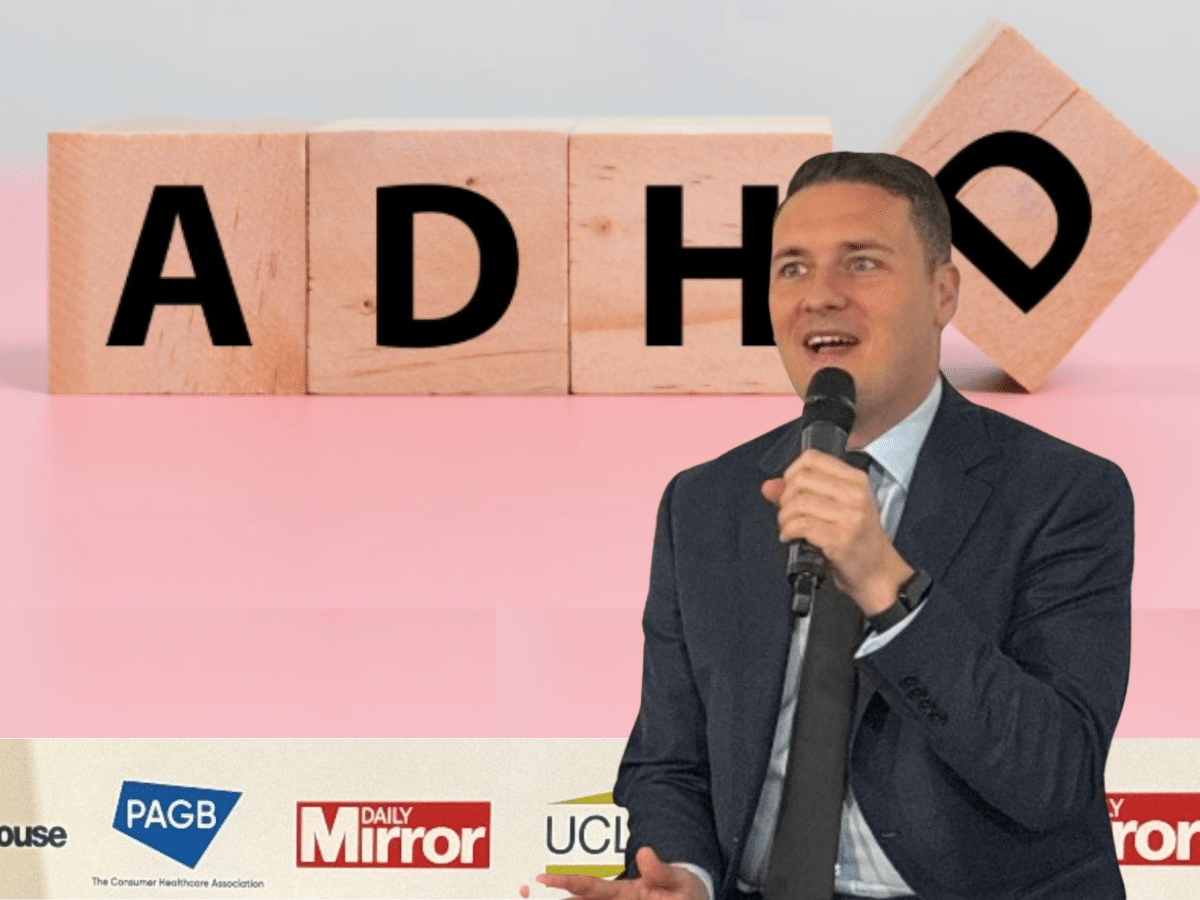
The Telegraph is inciting hatred of disabled kids, again. The right-wing shit rag published a piece suggesting parents are forcing ADHD diagnoses for benefits. Coincidentally, this comes just as the Department of Health and Social Care has published an interim report into their review on whether the condition is overdiagnosed.
Shit rags spreading ADHD hate
The Telegraph ran with the headline:
I’m a GP, and I’m tired of putting children on the ADHD bandwagon
Arguing that:
There are perverse incentives that may be driving some parents towards getting their child a diagnosis
The ‘perverse incentives’ Dr. Katie Musgrave talks about are, of course, SEND support and welfare benefits.
This being the Telegraph, Musgrave thought it was relevant to detail that 276,000 children get Disability Living Allowance for ‘behavioural disorders.’ She then links it to the rising number of people claiming PIP for conditions such as ADHD. This both belittles the condition and vilifies concerned parents.
Instead of highlighting, as a doctor, how dire a state the NHS is in and that this has led to never-ending waiting lists, Musgrave blames this on the number of ADHD referrals. She then accuses parents of going through ‘Right to Choose’ as it’s seen as an easier route to getting a diagnosis.
The good doctor says that, actually, kids just need to get off their iPads and go outside:
Many children in the UK are faced with significant social and developmental challenges, but that does not excuse the current system which classifies an increasing proportion of children as having a disability. Sadly, many of these young people go on to become dependent on state benefits, and face a future of unemployment. The government would be better off investing in sports and social activities for children and young people. All children – but perhaps especially those with additional needs – benefit from getting off screens, becoming more physically active and interacting with others.
She concludes:
Perverse incentives are currently labelling a generation of children as neuro-diverse, while locking many into a dependence on state benefits: which is neither good for the individual, nor the economy. The whole system needs to be made more accessible, pragmatic, and equitable. This is public money we are talking about, after all; and children’s lives.
Just a coincidence, right?
It must be a massive coincidence that the Telegraph has put out this blatant propaganda designed to turn people against disabled people this week. Especially since the Department of Health and Social Care have also released their interim report into the Independent review into mental health conditions, ADHD and autism.
The review will look into the increase in diagnoses and the ‘strain’ that is putting on the NHS. It’s being carried out at the same time as the DWP is changing PIP eligibility. With a spate of hate around the increase in claimants with neurodivergent and mental health conditions, it’s easy to see that this review would give Labour the ammunition to cut benefits.
But as much as the interim report tries to blame things such as TikTok for the increase in the conditions, it has to admit that this is bullshit. Whilst it does try to claim that TikTok is a catalyst, the report then has to contradict itself.
These developments are not solely associated with increased diagnostic demand. Many observers emphasise that online communities, peer networks and advocacy groups have also played an important role in increasing awareness of mental health and neurodevelopmental conditions, reducing stigma and enabling individuals to find explanation and community where their experiences were previously misunderstood or dismissed. For some individuals, such spaces provide validation, a sense of identity, practical advice and a sense of belonging that may not have been available through formal services.
Honestly, the report is just a big example of the review trying to come to its own foregone conclusion, but being headed off at every pass with the facts that ADHD and other conditions aren’t overdiagnosed.
That’s why it’s especially interesting that the press is running with this narrative. Whilst The Telegraph article doesn’t specifically mention the report, the Times reported
Children and young adults are “incentivised” to get diagnosed with ADHD and autism and there has been a “medicalisation of distress”, a government inquiry has concluded.
Firstly, this is untrue because the review hasn’t ‘concluded,’ it’s an interim report. Secondly the report isn’t being run by experts in this particular area. In fact 32 ADHD experts have already disproved that it’s overdiagnosed.
Labour turning the public against disabled people, again
It’s incredible that the press is still running with stories of overdiagnosis for benefits when the report itself struggles to pin the blame on benefits.
Not to suggest that this is a pre-agreed or planted narrative, but the government does have a previous history when it comes to disabled benefits claimants.
While the report might be an 85-page cluster fuck that ties itself in knots trying to blame benefits fakers despite the evidence says otherwise, one thing is clear.
The government will try as much as possible to convince the public that ADHD and other conditions are overdiagnosed, so there won’t be an uproar when they strip vulnerable people of vital benefits.
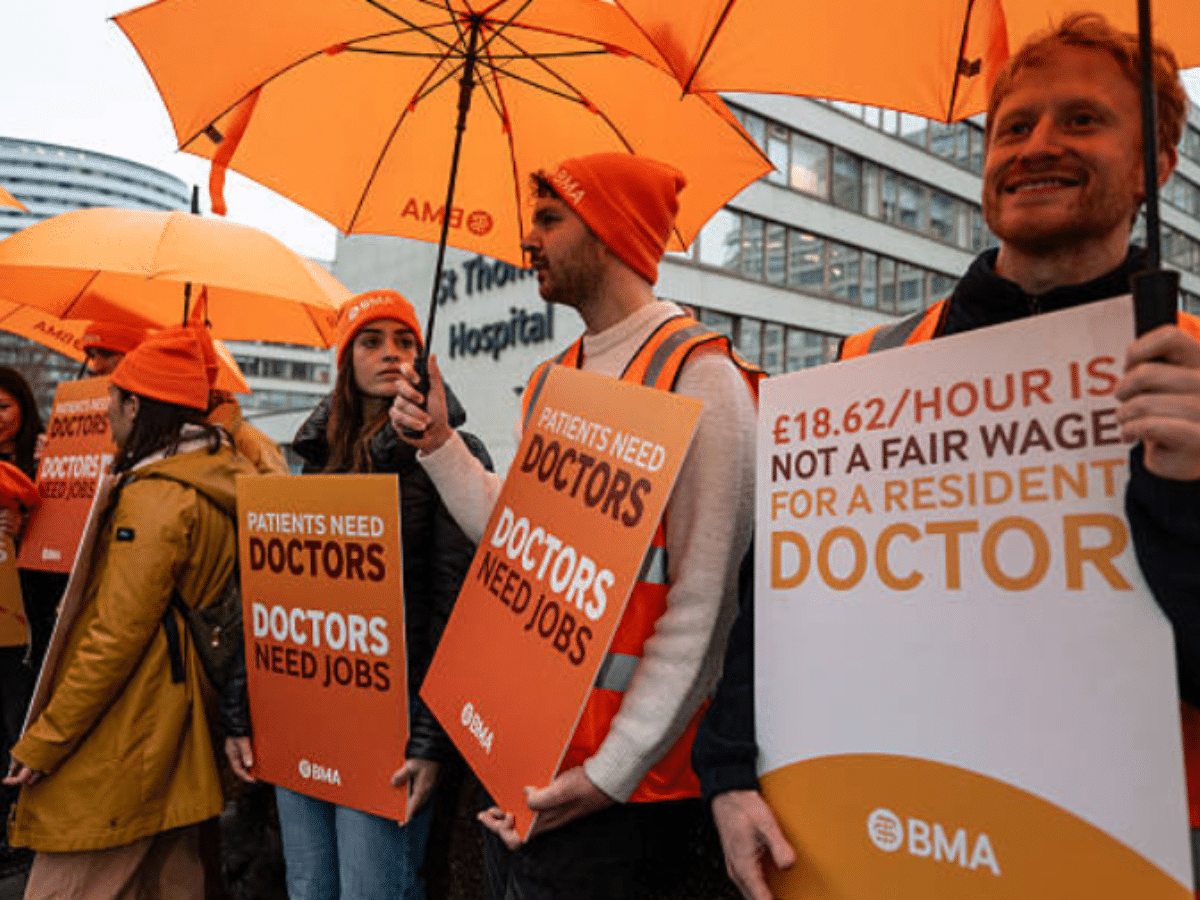
The British Medical Association (BMA) is scheduled to begin six days of industrial action on 7 April 2026. The NHS strike was announced after the government attempted to play resident doctors off against their union. This occurred during a strike of their own.
Now, in response to the further strike action, the government has withdrawn part of its offer to resolve its previous dispute with resident doctors. Meanwhile, the NHS will be directly affected by these ongoing negotiations.
Residents without residency
In 2024, the term ‘resident doctors’ replaced the previous designation of ‘junior doctors’. ‘Junior’ was felt to be demeaning and misleading by members of the BMA. For many, including the general public, the term suggested a lack of training or expertise. On the contrary, resident doctors are fully qualified and are either in postgraduate training toward a particular area of specialised expertise. Alternatively, they may be employed in a non-training post within the NHS.
The idea was to choose a new name that better reflected the skills and responsibilities of resident doctors, but as far as the government is concerned, they may as well have kept their old name. Many are left on low pay, without enrollment in training, or without work all together in the NHS system.
The training undertaken by resident doctors is essential as it enables them to further improve the care they are employed to provide. The Canary‘s Alex/Rose Cocker explained:
To be clear, the BMA wants those training positions, but they’re not a bonus or luxury — it’s training for NHS doctors. Starmer is risking jeopardising the NHS for a fucking bargaining chip.
The government had threatened that it would cancel the 1,000 training posts offered to resident doctors unless the BMA cancelled its strike action. It gave the BMA 48 hours to respond. With the BMA unwilling to back down, the government has now made good on its threat.
‘Genuinely disheartening’
Speaking to the BBC, Dr Jack Fletcher, chair of the resident doctors committee, said:
It is genuinely disheartening to be at this point after what had been constructive talks up until a few weeks ago when the government moved the goalposts.
It is simply wrong that the development of the doctors of the future is being used as a pawn like this.
We have consistently maintained that we are willing to postpone industrial action should a genuinely credible offer be provided.
The announcement from the government follows the resolution with separate disputes with pharmaceutical companies and corporations. These groups already have the NHS and its patients over a barrel. The Canary‘s Jack Wright recently highlighted how there is one rule for capital, and another for workers.
pharmaceutical giants have been demanding that the NHS pay them more, or they will withhold investment. Labour agreed to a 25% increase in payments for essential drugs in December 2025.
Meanwhile, resident doctors are asking for real-terms pay restoration to 2008 levels, at 21%. The government is offering a 7.1% increase … However, it isn’t sufficient for a doctor’s pay.
Strike to go ahead as planned
The doctors’ strike is scheduled to go ahead as planned, beginning at 7:00am on 7 April. Patients have been warned that non-emergency appointments and procedures may be disrupted by the industrial action across the NHS.
Featured image via the Canary
For some people, it’s filtered, airbrushed social media pictures. For others, it’s unrealistic romantic expectations set by movies and TV.
For me, though, my greatest source of insecurity was the r/sourdough forum.
It’s nobody’s fault: if I had created a tall, fluffy masterpiece with a perfect golden crust, I, too, would want to share a shot. If my first-ever loaf looked like it belonged in an ad for artisanal butter, I would indeed want the world to know.
And people share their less successful loaves – a gummy rise, a burnt base – as well.
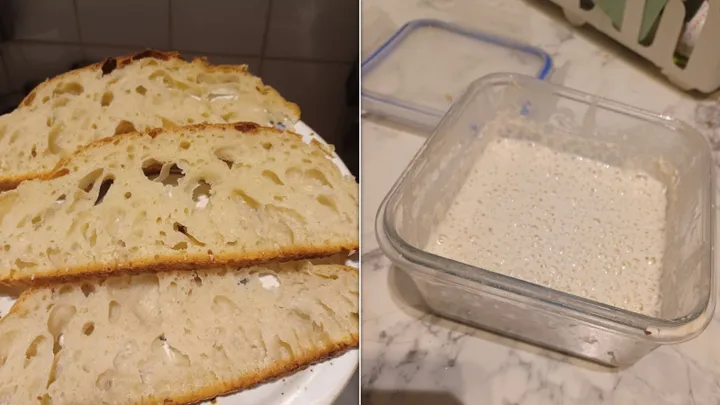
Still, I couldn’t help it. After a while, I began judging my slightly gummy, slightly deflated loaves a little too harshly. Then, the inevitable turn towards The Product That Solves It All: if I just owned one of these twisty little starter whisks, or a proper starter jar, or a bigger banneton, I’d be (grid) worthy!! I thought.
It sounds silly, because it is. But according to a post shared by u/good-things_ in the group, I’m not alone.
“I don’t use any of the equipment everyone talks about for sourdough. I mix my dough in any bowl available that’s big enough, and I eyeball the rise. Sometimes my bowls are solid and plastic, so I can’t see if there are bubbles,” the poster confessed (mine is metal).
Still, they pointed out, loads of the recommended gear and science-backed rules are relatively new (especially compared to sourdough’s thousands of years of history). Which means my great-great-great-grandma probably didn’t give a hoot about whether the ear of her every loaf curled up like a cowlick.
“I love that people get obsessed and get into the nitty-gritty of how to make a beautiful, perfect loaf. But I also want everyone to know ugly, imperfect loaves are still delicious,” the post continued.
Underneath was a swarm of agreement. “I also admit that my loaves are a bit substandard, but that’s okay with me in the long run. By not stressing about it, I can manage to keep making bread regularly for sandwiches, etc., and not lose enthusiasm,” u/bajajoaquin replied.
“I gave up chasing the perfect loaf with huge holes and a perfect ear, etc. I decided I just wanted to make bread for my own enjoyment… It works for me, and that’s what really matters,” u/dearmax added.
I’ve been through a similar process recently.

For a couple of months, I stopped making bread entirely. It wasn’t just because I felt mine was subpar, but that was part of it: I felt I was spending so long on something so far from perfect that I got frustrated.
But recently, I’ve fallen back in love with the craft. My new starter (Gluton Airport, if you want her government name) doesn’t have a super-strict feeding schedule, and probably would bubble more enthusiastically if she did.
I’m 99% sure I’m leaving my overnight sourdough out to prove for about two hours too long (I don’t go to sleep immediately after mixing it, and I sleep too late to bake it on time).

Probably as a result, my loaves are somewhat limp, a little gummy, and nowhere near as photogenic as I’d like.
Nonetheless, they’re still delicious. I haven’t splashed out on a pricier shop-bought loaf – a lot of which isn’t technically sourdough – since.
It’s a bit like half-assing my workouts. I don’t give 100% every single time, and it’s made me enjoy the hobby so much more.
Now, I’m more in love with making sourdough – meh as it may be – than ever. Most of all, I’m having fun again (and isn’t that the point of a hobby?).
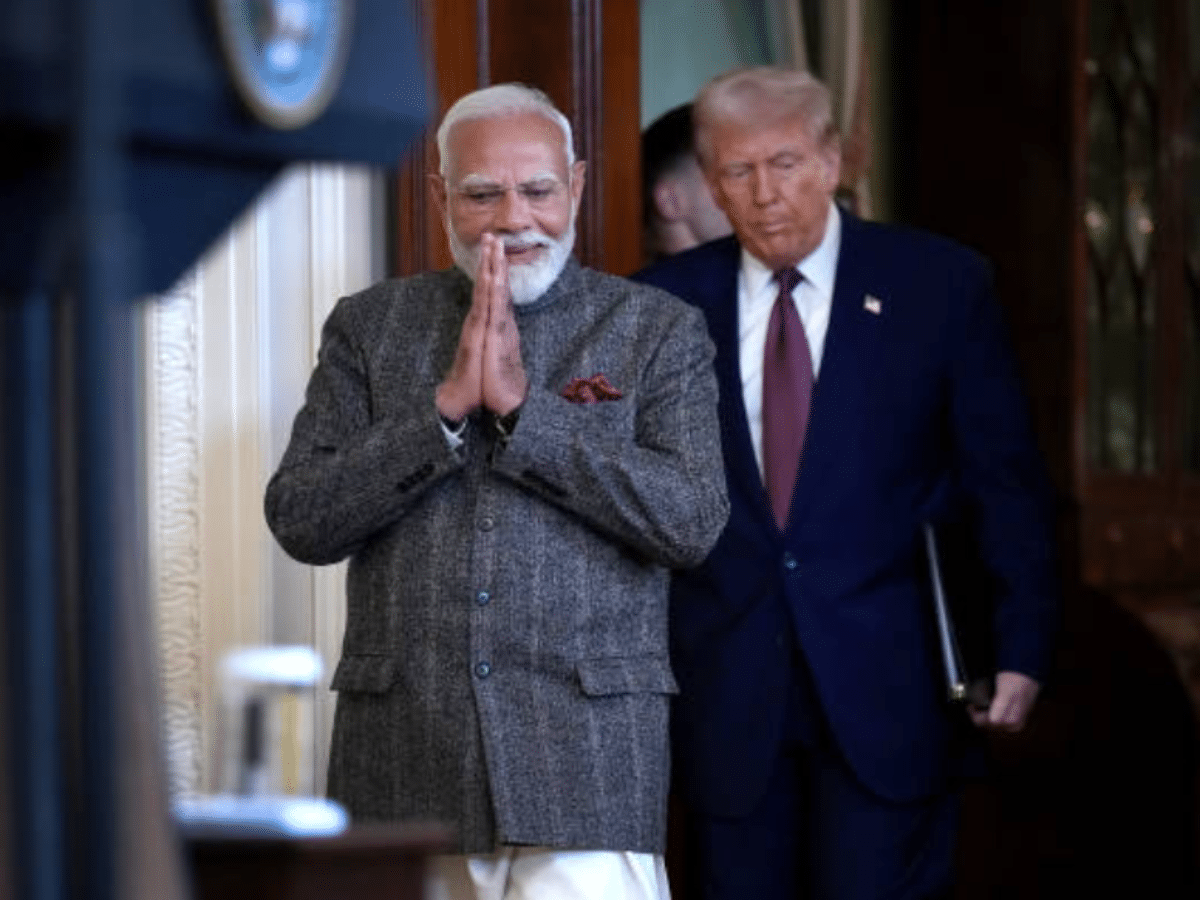
The Defence Minister of India – Bharatiya Janata Party’s (BJP’s) Rajnath Singh – celebrated that Indian defence exports had touched a new all-time high with a record 38,424 crore rupees ($4.4 billion), an 63% annual increase.
The BJP’s defence boast is meant to ease concerns about India’s ballooning current account deficit, particularly as Modi’s western pivot to Trump and Netanyahu faces growing opposition from the public.
Under the inspiring leadership of PM Shri @narendramodi, India is scripting an impressive defence exports success story!
India defence exports have touched a new all time high with a record ₹38,424 crore in FY 2025-26. It marks a robust 62.66% growth over the previous fiscal.… pic.twitter.com/eAAh1PYX7e
— Rajnath Singh (@rajnathsingh) April 2, 2026
According to the BJP, Indian defence exports are now reaching the United States, Israel, the UAE, Australia, and Japan. Indian-made defence electronics are being exported to the US, UK, and France. Bulletproof jackets from India are being supplied to Australia, Japan, Israel, and Brazil. Ammunition is reaching the UAE, Egypt, Indonesia, and Thailand.
A
recent report by KPMG India pushed India to adopt Israel’s approach to defence exports if it wants to sustain the momentum and break into the global top tier. It suggested India should have a similar centralised export agency like Israel’s SIBAT.
Israel, with a much lower annual defence spend compared to India, has emerged as one of the key defence export hubs of the world and as per the SIPRI report of 2019, it ranks 8 in terms of defence exports. A major reason for its emergence as a defence manufacturing and export hub has been the establishment of SIBAT, a dedicated directorate under the Israeli Ministry of Defence (IMoD), that looks after promotion of defence exports and participates in the formulation of Israel’s defence export policy.
India is still mostly importing
India is still the world’s second-largest arms importer, but its imports have dropped slightly by 4 per cent. Russia used to supply 70 per cent of India’s weapons a decade ago. That has now fallen to 40 per cent, according to SIPRI.
Ukraine is the world’s largest arms importer.
India is now buying more from Western countries instead, given Modi’s capitulation to Netanyahu and Trump.
Israel’s Jerusalem Post recently featured a segment on India’s ties with Israel. Dr Lauren Dagan Amos said that “they want to learn lessons from that because what Israel did in Gaza, they want to do in Pakistan. That is the rationale.”
She explained that the relationship started with urgent operational needs and mutual interests. Over time, it moved beyond simple sales into co-development, co-production, and long-term maintenance within India.
She added that the Indian industry is now treated as a full partner, not just a customer.
BJP’s defence boast is to assuage underlying tensions
With oil prices rising due to the Iran war, India’s current account deficit is widening. It could reach 2.5 per cent of GDP in the coming fiscal year, according to Bloomberg.
Despite Modi’s western lurch, there are people in India who are on Iran’s side against “Yankee imperialism and zionist criminality.”
Mani Shankar Aiyar, a former Indian diplomat, said:
I am sure Iran can give a befitting answer to the needless aggression to which they have been subjected by a combination of Yankee imperialism and zionist criminality.
India voices support for Iran amid US-Israeli aggression
Press TV’s @aadilmir21 reports from New Delhi
Follow Press TV on Telegram: https://t.co/LWoNSpkc2J pic.twitter.com/DLwzjcUVJx
— Press TV 🔻 (@PressTV) April 1, 2026
Modi’s Trump connection is being questioned in South Asia, similar to the blowback being experienced by other right-wing leaders like Starmer and Italy’s Meloni.
VIDEO | Assam: Addressing a public gathering in Jorhat, Lok Sabha LoP and Congress MP Rahul Gandhi says, “N.”
(Full video available on PTI Videos – https://t.co/n147TvrpG7) pic.twitter.com/nPAgXTmDpU
— Press Trust of India (@PTI_News) April 2, 2026
As Rahul Gandhi recently noted, Narendra Modi’s future is in Trump’s hands.
Featured image via the Canary
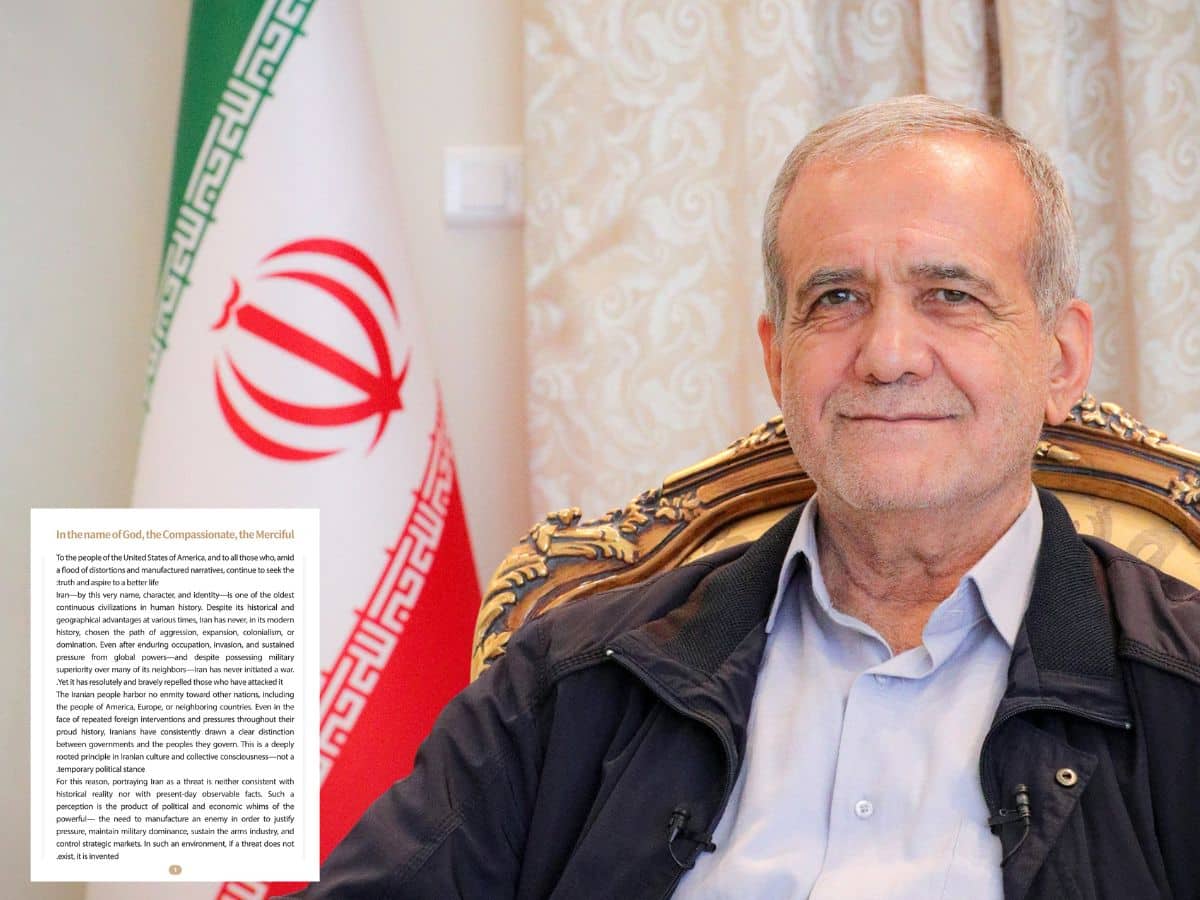
Iran’s president, Masoud Pezeshkian, has officially released a four-page “open letter” to the American people.
To the people of the United States of America pic.twitter.com/3uAL4FZgY7
— Masoud Pezeshkian (@drpezeshkian) April 1, 2026
However, many social media users have pointed out that if the average American were as well educated as the average Iranian, perhaps the US would not have started so many illegal wars.
If Americans could read 4 whole pages of text, we wouldn’t be in this situation in the first place. https://t.co/20RHi4N4JZ
— Siddharth (@DearthOfSid) April 1, 2026
The letter lays out, in a calm and reasoned manner, why the world is currently in the state it’s in.
Unlike most of Trump’s unhinged rants on Truth Social, which may as well have been transcribed from a toddler’s ramble.
Iran responding to aggression
The letter starts by explaining that Iran has never initiated a war in its modern history – it has only responded to “aggression, expansion, colonialism, or domination”. Even after occupation, invasion, and sustained pressure from global superpowers, and despite having a military that is far superior to many of its neighbours.
It then goes on to say that, unlike what the US wants us to believe, Iran harbours no hatred towards other countries, including the US and Europe. It reads:
The Iranian people harbor no enmity toward other nations, including the people of America, Europe, or neighboring countries. Even in the face of repeated foreign interventions and pressures throughout their proud history, Iranians have consistently drawn a clear distinction between governments and the peoples they govern. This is a deeply rooted principle in Iranian culture and collective consciousness—not a temporary political stance
Which is why portraying Iran as a threat is:
neither consistent with historical reality nor with present-day observable facts.
US manufacturing an enemy
It adds that the perception is purely a product of “political and economic whims” of the powerful. The US needs to “manufacture an enemy” to justify its illegal wars and colonialism, whilst sustaining its arms industry.
If a threat does not exist, it’s invented.
He adds:
What Iran has done and continues to do-is a measured response grounded in legitimate self-defense, and by no means an initiation of war or aggression
The letter also guides readers back to 1953, when the US (and the UK) engineered an illegal coup against Mohammad Mosaddegh, Iran’s democratically elected prime minister.
Why? Because Mossadegh decided to nationalise the operations of the Anglo-Iranian Oil Company (later British Petroleum) in 1951.
Of course, nationalisation was a threat to both the US and UK’s strategic and economic interests, i.e., they would lose money.
That coup disrupted Iran’s democratic process, reinstated dictatorship, and sowed deep distrust among Iranians toward U.S. policies. This distrust deepened further with America’s support for the Shah’s regime, its backing of Saddam Hussein during the imposed war of 1980s, the imposition of the longest and most comprehensive sanctions in modern history, and ultimately, unprovoked military aggression-twice, in the midst of negotiations— against Iran.
But these pressures have not weakened Iran. Literacy rates have tripled, higher education has rapidly expanded, and modern technology and healthcare have advanced.
Of course, the impact of the destructive and inhumane sanctions from war and aggression cannot be underestimated:
This reflects a fundamental human truth: when war inflicts irreparable harm on lives, homes, cities, and futures, people will not remain indifferent toward those responsible
The letter asks:
Exactly which of the American people’s interests are truly being served by this war? Was there any objective threat from Iran to justify such behavior? Does the massacre of innocent children, the destruction of cancer-treatment pharmaceutical facilities, or boasting about bombing a country “back to the stone ages” serve any purpose other than further damaging the United States’ global standing?
‘Strategic bewilderment’
Pezeshkian writes:
Iran pursued negotiations, reached an agreement, and fulfilled all its commitments. The decision to withdraw from that agreement, escalate toward confrontation, and launch two acts of aggression in the midst of negotiations were destructive choices made by the U.S. government-choices that served the delusions of a foreign aggressor.
He then talks about the US targeting Iran’s energy infrastructure and industrial facilities. Obviously, this directly targets the Iranian people. He adds:
Beyond constituting a war crime, such actions carry consequences that extend far beyond Iran’s borders. They generate instability, increase human and economic costs, and perpetuate cycles of tension, planting seeds of resentment that will endure for years. This is not a demonstration of strength; it is a sign of strategic bewilderment and an inability to achieve a sustainable solution
Finally, he points out that America has entered this illegal war as a proxy for Israel. The Israeli machine has influenced and manipulated it by manufacturing an Iranian ‘threat’.
Of course, this is purely an effort to divert attention away from Israel’s war crimes against Palestinians.
He ends the letter with:
I invite you to look beyond the machinery of misinformation, an integral part of this aggression, and instead speak with those who have visited Iran. Observe the many accomplished Iranian immigrants educated in Iran-who now teach and conduct research at the world’s most prestigious universities, or contribute to the most advanced technology firms in the West. Do these realities align with the distortions you are being told about Iran and its people?
Featured image via HG
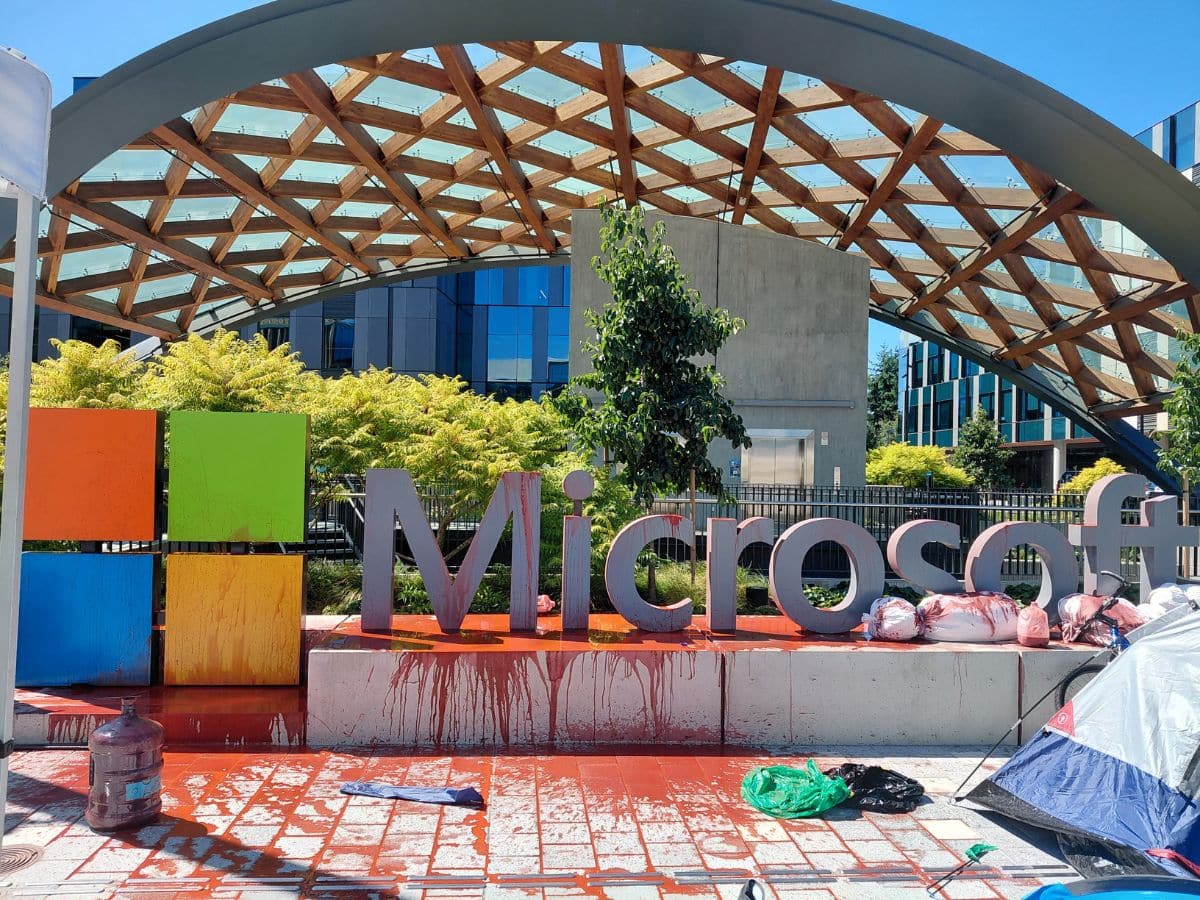
A Microsoft employee has quit over the company’s involvement in Israel’s war crimes and published a video calling on other Microsoft workers to join the movement.
Jenni is part of No Azure for Apartheid, a growing tech movement that is demanding that Microsoft live up to its own purported ethical values – by ending its direct and indirect complicity in Israeli apartheid and genocide.
Their website states:
We will not be cogs in the Israeli genocidal machine: a call for a Worker Intifada
The group has four demands:
- IOF off Azure – End Microsoft’s complicity in Israeli genocide and apartheid by terminating all Azure contracts and partnerships with the Israeli military and government.
- Disclose all ties – Make all ties to the Israeli state, military, and tech industry publicly known, including weapons manufacturers and contractors. Conduct a transparent and independent audit of Microsoft’s technology contracts, services, and investments.
- Call for a ceasefire – Honor the demands of over 1,000 employees who signed a petition calling on Microsoft’s leadership to publicly endorse an immediate and permanent ceasefire.
- Protect employees – Ensure the safety of Palestinian, Arab, Muslim, and allied employees by protecting pro-Palestinian speech, actions, and fundraising initiatives on internal company platforms.
Jenni has been an AI transcription writer at Microsoft for the past three and a half years. She was working on a product for doctors and nurses to take notes.
In an exclusive statement, Jenni told the Canary:
Dual-use technology means that the same Al systems we use to summarize meetings and write emails can be used to surveil the phone calls of Palestinian citizens or flag a children’s school as a military target. This is why as tech workers we have a critical responsibility to reclaim our labor when we see it being repackaged and re-sold as an accessory to crimes against humanity.
I resigned today to make this message clear to Microsoft – that Microsoft workers refuse to be complicit in the company’s war crimes, and that we are not afraid to withhold our labor in order to refuse being exploited to power this Al-assisted genocide.
In the video shared online, Jenni said:
If you work for one of these companies your work could be sold to a hospital one day and then to ICE or detention services the following day or maybe even a foreign government who’s carrying out a genocide. This has already happened.
A year ago, former Microsoft employees Ibtihal Aboussad and Vaniya Agrawal protested Microsoft’s fiftieth anniversary celebration. Ibtihal worked on an AI transcription service for accessibility, which, of course, was very useful and did not involve war crimes. Microsoft fired both of them.
However, it then sold that product to the Israeli military, which used it to spy on and murder innocent Palestinians.
Participating in war crimes
Microsoft has been working with Israel for decades. It insists on continuing their relationship despite international bodies recognising that Israel is committing a genocide in Gaza. Israel has committed a very long list of war crimes, which Microsoft is choosing to ignore.
As the Canary previously reported, leaked documents show that after October 7, Microsoft significantly increased its operations with Israel’s military.
The files showed that Microsoft was supplying the IOF with greater computing and storage services, and:
striking at least $10m in deals to provide thousands of hours of technical support.
Now, the Israeli military continues to bomb, blockade, and starve Gaza whilst claiming to be adhering to the “ceasefire”. Similarly, in Lebanon, Israel is destroying historic buildings and communities, while murdering thousands of civilians.
The Guardian found that the leaked documents:
illustrate how the US tech behemoth supported a range of sensitive activities.
This includes managing the movement of Palestinians in Gaza and the occupied West Bank.
Additionally, Microsoft engineers have been providing support to Israel through their analysis of “visual intelligence”. This is likely to be the innumerable drones used by the Israeli military. Essentially, Microsoft’s support is providing the technological infrastructure for genocide.
Forcing their hand
Last summer, Microsoft staff protesters set up the Liberated Zone on the Martyred Palestinian Children’s Plaza and the Mai Ubeid Building. This was to draw attention to the company’s involvement in Israel’s genocide.
It was only then, coupled with journalists proving how much Israel was relying on Microsoft’s technology to commit war crimes, that Microsoft took action.
However, it only cut a few services to Israel’s Unit 8200 — just one of the IOF’s elite military intelligence units. Obviously, this is nowhere near enough.
Since then, Israel’s war crimes have only intensified, alongside its reliance on big tech, AI, and companies such as Microsoft.
Only last month, the US military double-tapped a girls’ primary school in Minab, Iran. Reports suggest that AI identified the school as a target. Big Tech is aiding and abetting war crimes all over the world.
Jenni ended the video by saying:
This and more is why I am leaving Microsoft. I am very lucky that I am able to do so. I’m very lucky that I get to speak out in this way. If you work at Microsoft, please join No Azure for Apartheid. Sign their pledge
We’ve got thousands of people who are now saying that we don’t want our work to be used for war crimes.
You can stay anonymous. You can stay risk-free. Everyone is welcome. For everyone else – Do what you can. Keep all eyes on Gaza. Free Palestine
Feature image via No Azure for Apartheid
According to the National, someone has called the police on ex-MSP Tommy Sheridan and the reason is because Sheridan called the US and Israel “evil”.
Which they objectively are.
Because of all the evil shit they keep doing.
NEW: Police have received a complaint against former MSP Tommy Sheridan over a speech he gave in which he called Israel and the USA ‘evil’ https://t.co/5Xnluj4C0H
— The National (@ScotNational) April 1, 2026
Israel ARE evil
Sheridan is running in this year’s Holyrood elections for the Alliance to Liberate Scotland. He’s previously been a member of Alba, and was the leader of the Scottish Socialist Party.
In the offending video, Sheridan addressed a hall full of people, saying:
Brothers and sisters, we were on the side of the IRA because they were doing the resistance.
We’re on the side of Hamas in Palestine because they’re doing the resistance.
We’re on the side of Hezbollah in Lebanon because they’re doing the resistance.
And we’re on the side today of the Iranians and Yemen because they’re standing up against the twin pillars of evil in our society today, the United States of America and Israel.
They epitomise evil in our planet.
Increasingly, it isn’t an uncommon opinion to support whoever the Yanks are invading.
During the Invasion of Iraq, there was considerable support in the West despite the obvious criminality of the war. Now, most people recognise that America and its attack dog Israel are the aggressors.
People also recognise their lives keep getting worse because our governments have pissed money up the wall on immoral wars of aggression.
Sheridan also said:
If somebody says to me, Tommy, whose side are you on?
I say I am not on the side of those that murder children, that torture children, that steal their land that belongs to the Palestinians.
I’m on the side of those who resist repression and if that means you don’t vote for me, then tough fucking titty.
And as reported by the National, Sheridan branded:
the USA and Israel “evil” and [said] he is not on the side of “those who murder children”.
Sheridan has since provided the following quote from Trump to backup his argument:
Yet I’m reported to the police for calling out these evil bastards 🤦😡🇮🇱🤮🇺🇸🤮 https://t.co/jLwy7duomP pic.twitter.com/pgQgMr5YPW
— Tommy Sheridan (@citizentommy) April 2, 2026
In terms of Israel, doctors provided evidence that Israeli snipers were “systematically targeting Gaza’s children” – the very definition of evil by anyone’s standards.
Responding to the police report, Sheridan said:
This is obviously someone with a lot of time on their hands.
There is zero criminality in the comments. I was merely expressing the side of the fence I am on in relation to these resistance fighters.
Any suggestion of criminality is mythical. I think the police have more to do than deal with this.
Differences
As you’d expect given his links to Alba, Sheridan has transphobic views:
👏👏👏♀️
Women are born not certificated. That statement of fact is not bigotry or discriminatory it is a biological fact. It is truth no matter how many transactivists shout loud or scream transphobia. Transgender people deserve kindness & consideration but not false recognition https://t.co/B9DAGIFWhr— Tommy Sheridan (@citizentommy) April 24, 2025
In case you don’t follow, Sheridan is saying that he’s willing to be polite to trans people but won’t recognise them by their identified gender.
We certainly don’t agree with this, but we’re not calling the police on Sheridan because he said something we don’t like.
The fact that the US and Israel’s defenders can’t say the same shows what snowflakes they are.
Featured image via Raw Pixel
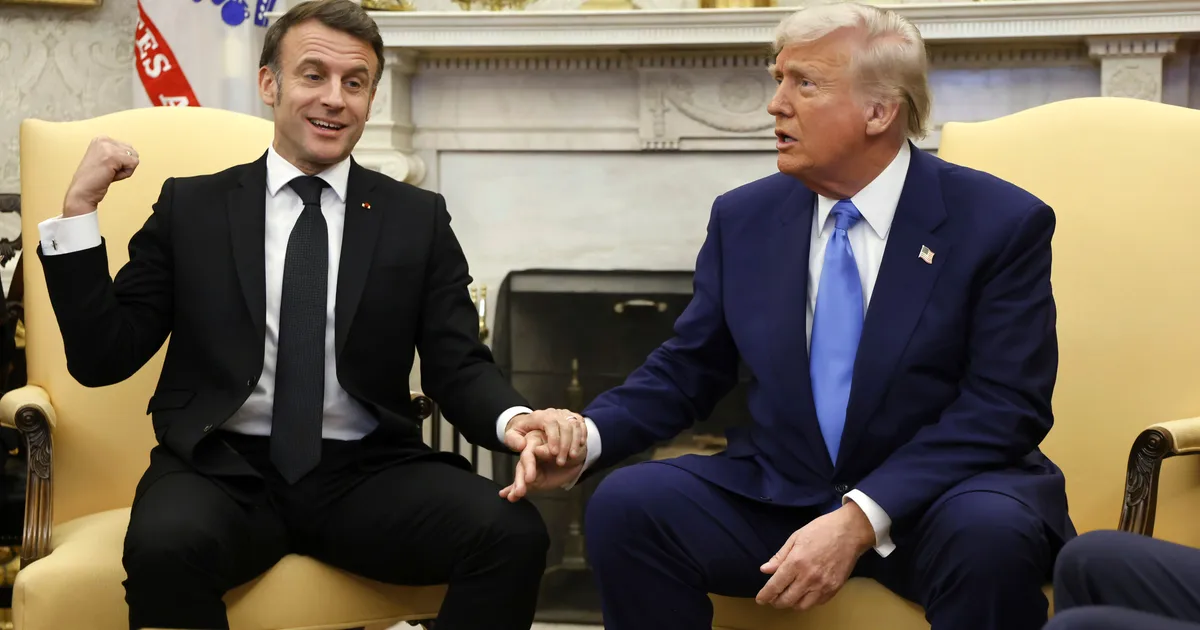
Emmanuel Macron has hit back at Donald Trump after he mocked the French president over an altercation he appeared to have with his wife.
The US president said Macron was “still recovering from the right to the jaw” after the incident last year.
Bridgette Macron was filmed apparently pushing her husband in the face shortly before they disembarked from his presidential plane.
In a speech in Washington on Wednesday, Trump referred to the incident as he criticised the French for not getting involved in the Iran war.
He said: “Macron, whose wife treats him extremely badly. He’s still recovering the right to the jaw.”
Speaking during a state visit to South Korea, Macron said: “The remarks I have heard are neither elegant nor up to standard.
“So I am not going to respond to them. They do not merit a response.”
The French president said Trump’s previous suggestion that the international community use force to re-open the Strait of Hormuz was “unrealistic”.
He also condemned Trump’s criticism of Nato and hints that America could leave the military alliance.
Macron said: “I believe that organisations and alliances like Nato are defined by what is left unsaid – that is, the trust that underpins them, and that has often been the case, incidentally, with military and strategic matters.
“If you cast doubt on your commitment every day, you erode its very substance.”
He added: “We need to be serious, and if you want to be serious, you don’t go around saying the opposite of what you said the day before.
“I think there is too much talk.”
Subscribe to Commons People, the podcast that makes politics easy. Every week, Kevin Schofield and Kate Nicholson unpack the week’s biggest stories to keep you informed. Join us for straightforward analysis of what’s going on at Westminster.
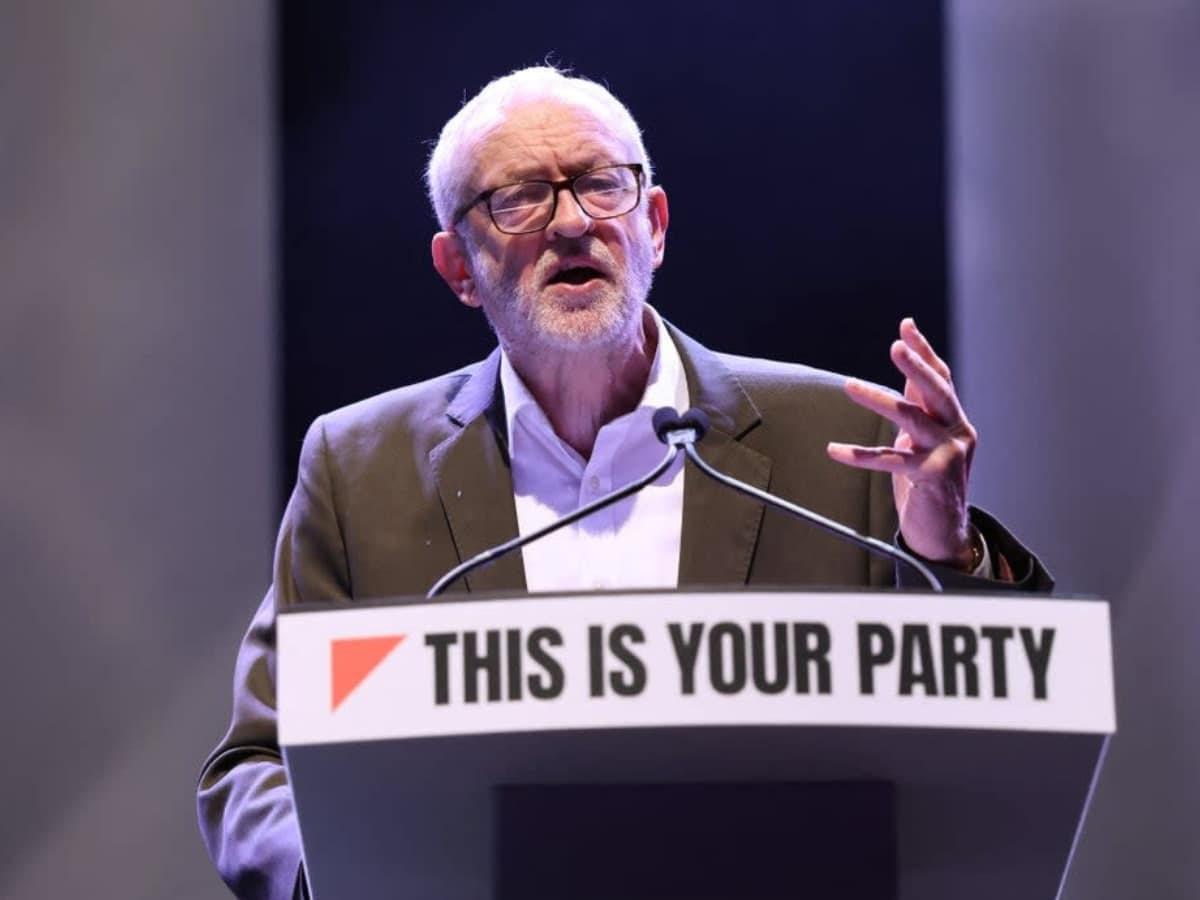
Jeremy Corbyn has unveiled Your Party plans to target Labour’s heartlands in the upcoming English local elections in May. The start-up party is supporting allied community independent groups at the local elections. And it’s hopeful of several groups winning East London councils, with Labour’s core vote set to collapse in major cities.
It’s worth noting that this follows a period of stasis during which local groups have tried to keep things moving.
Your Party’s local elections campaign will focus on the destructive effects of local government austerity. Councils across the country are squeezed to breaking point, social care is in crisis and services are failing residents.
In contrast to the ‘snake-oil’ alternative of Reform, Your Party will stress the need for public investment and the in-sourcing of services. Local council divestment from Israeli apartheid will also be a key focus.
At Your Party’s founding conference in November 2025, members voted to adopt a targeted strategy. This aims to maximise the party’s seats, rather than standing everywhere. As party structures continue to develop, Your Party will support around 250 candidates across England. The vast majority of these will be standing as Independents or for allied local community parties.
Your Party targets
Key targets for allied groups include:
Allied candidates are also likely to make inroads in Birmingham and the West Midlands. Historic Labour bastions are turning away from the party over its complicity in the Gaza genocide and failure to tackle the cost of living.
The Your Party leadership sees Tower Hamlets as a ‘beacon council’. In recent years, under Rahman’s leadership, the council has rolled out free school meals for all primary and secondary school students. It has re-established the Education Maintenance Allowance which the Tory-Lib Dem coalition cut. And it has reinstated the Winter Fuel Payment which Starmer and Reeves cut.
Hopes are also high for the Redbridge Independents, who have won a series of stunning by-elections from Labour, with Your Party spokesperson Noor Jahan Begum elected to replace slum landlord Jas Athwal MP.
Health secretary Wes Streeting bemoaned the loss in later-published messages with Peter Mandelson, declaring that he was “toast” at the next election. Streeting hung onto his seat by just 500 votes at the last election after a strong challenge from young British-Palestinian Leanne Mohamad.
Corbyn was elected as Your Party parliamentary leader earlier this month after his allies were victorious in the party’s leadership elections. He is expected to tour the country in support of the Your Party-backed independents and groups in the coming weeks, following a first event in Redbridge.
Corbyn said:
These elections are the beginning of the fightback against austerity, privatisation and fear.
All across the country, there will be community independent groups offering an alternative to the despair of Labour and the division of Reform. We are proud to support those candidates and groups standing up for redistribution, inclusion and peace.
People in power underestimate the power of people at their peril – and arrogance in office always comes back to bite you in the end.
Rahman, executive mayor of Tower Hamlets, said:
Labour imposed some of the most severe austerity in the country when they ran Tower Hamlets council, further impoverishing one of Britain’s most deprived areas.
We’ve reversed these cruel cuts and made history as the first council to introduce universal free school meals for all primary and secondary pupils, re-establish the Education Maintenance Allowance scrapped by the Tories, and bring back the Winter Fuel Payments, cut by Starmer.
These are just some of our pioneering policies to provide more cost of living support to our residents than any other local authority, alongside unprecedented investment in frontline services and in affordable and social housing.
The alliance being brought together by Jeremy Corbyn, with Your Party, Aspire, and progressive independent and Green candidates, presents a real opportunity to replace more Labour-led councils with administrations rooted in and accountable to their communities.
In Tower Hamlets, we’ve shown how socialist, redistributive policies can transform lives and provide the hopeful, ambitious alternative needed to take on the far right — something Labour has utterly failed to do.
Noor Jahan Begum, Your Party spokesperson and Redbridge Independent councillor, said:
We are taking the fight to Labour in their heartlands. In Redbridge and across the country, people are telling us that they feel let down and abandoned by Labour, outraged by their complicity in genocide and fed up of the status quo.
We are offering something different: a politics rooted in and accountable to our communities, a politics that campaigns for the social transformation people are crying out for.
Featured image via the Canary

BTC climbs off of worst levels on Strait of Hormuz hopes

Zionism is Racism motion failed but will Polanski capitulate?

Italy 2026 World Cup: Gabriele Gravina resigns as head of the Italian Football Federation


-

 Business7 days ago
Instagram, YouTube Found Responsible for Teen’s Mental Health Struggle in Historic Ruling
-

 NewsBeat6 days ago
The Story hosts event on Durham’s historic registers
-
 Tech7 days ago
Intercom’s new post-trained Fin Apex 1.0 beats GPT-5.4 and Claude Sonnet 4.6 at customer service resolutions
-

 Sports6 days ago
Sweet Sixteen Game Thread: Tide vs Michigan
-
Entertainment3 days ago
Fans slam 'heartbreaking' Barbie Dream Fest convention debacle with 'cardboard cutout' experience
-
 Entertainment5 days ago
Lana Del Rey Celebrates Her Husband’s 51st Birthday In New Post
-
Crypto World2 days ago
Dems press CFTC, ethics board on prediction-market insider trades
-

 Crypto World19 hours ago
Gold Price Prediction: Worst Month in 17 Years fo Save Haven Rock
-

 Tech4 days ago
The Pixel 10a doesn’t have a camera bump, and it’s great
-

 Sports2 days ago
Tallest college basketball player ever, standing at 7-foot-9, entering transfer portal
-

 Tech2 days ago
EE TV is using AI to help you find something to watch
-

 Fashion4 days ago
Amazon Sundays: Soft Spring Layers
-

 Tech3 days ago
Apple will hide your email address from apps and websites, but not cops
-

 Tech3 days ago
Flipsnack and the shift toward motion-first business content with living visuals
-

 Tech2 days ago
How to back up your iPhone & iPad to your Mac before something goes wrong
-

 Politics3 days ago
Should Trump Be Scared Strait?
-

 Crypto World3 days ago
U.S. rule change may open trillions in 401(k) funds to crypto
-

 Fashion7 days ago
What Are Your Favorite T-Shirts for the Weekend?
-

 Business6 days ago
Chinese universities with military links bought Super Micro servers with restricted AI chips
-

 Fashion6 days ago
Weekly News Update, 3.27.26 – Corporette.com
You must be logged in to post a comment Login