
Politics
Life Lessons From A Parent Who Moved Abroad


When we landed in Spain, I thought I knew what the hard part would be: the paperwork, the language, finding a decent school for my kids. It turned out to be none of those.
One afternoon, not long after we arrived, I took my son to the beach. He spotted a group of dolphins close to shore and started shouting before I could even take it in. His excitement was pure: loud, physical, alive. I just stood there, half smiling, half stunned by the thought that somewhere along the line I had started believing that moments of pure wonder and awe weren’t really meant for me anymore.
That’s the thing no one says out loud about motherhood. You don’t stop wanting adventure; you just learn it’s no longer encouraged. You’re meant to provide stability now – the constant background hum that keeps everything running smoothly.
Before having children, I lived abroad and travelled widely. I had explored more than 50 countries and always thought of myself as someone who was comfortable with change.
But when I became a mother, something shifted. I started receiving the message, subtle but persistent, that the responsible thing to do now was to stay put. I didn’t stop wanting to explore; I just started to question whether I was allowed to.
For the first few years, we lived a fairly conventional city life in London – one of routines, work schedules, nursery runs and the unspoken expectation that fun and novelty had given way to stability. But my restlessness never fully disappeared.

Photo Courtesy Of Doris Dario
When we made the decision to move to Spain, it was something of an experiment – a chance to see what life might look like somewhere different, while the children were still small enough to adapt easily.
That first move became a pattern. Over the years, we relocated eight times as a family: to Spain, Italy, Switzerland, Northern Ireland. Some moves were prompted by a desire for language learning, others just because we wanted to try out a different rhythm of life.
The children learned how to say quick hellos and long goodbyes. They picked up fragments of different languages, mixed up spellings, and made friends they still message in other time zones.
Underneath it all was a desire to teach our children that the world was larger than just one place, and to have them grow up feeling at home in more than one culture. But I still felt a quiet strain – the guilt that maybe we were uprooting too often, chasing something children were meant to be shielded from.
Relocation looks glamorous from a distance, but in reality, it is a series of small practical puzzles: finding a house with decent heating, translating school emails, explaining to the kids why lunch suddenly starts at 3pm and no one seems bothered by it.
And underneath the logistics lies the emotional work of starting over.

Photo Courtesy Of Doris Dario
When one of my children started acting out after a move, I brushed it off as normal settling-in stress. I kept telling myself it was temporary. But what I now recognise is that it was grief: the low-level kind that hides behind bad moods and exhaustion.
After that, we changed our approach. We’d been good at talking about the excitement of what was next, but not about what we were leaving behind. Before each move, we started talking about what would be lost as well as what might be found. The friends, the familiar streets, our local corner shop. It didn’t make goodbyes easier, but it made them more honest.
Watching my children adapt forced me to reconsider what stability actually means. For our family, that anchor became simple rituals: dinners where everyone could say what they missed and what they were excited about, sometimes in the same breath.
Children, it turns out, are often better at transition than adults. They throw themselves into new places; they make connections quickly. It’s the parents who cling to the structure of what’s familiar, who mistake routine for safety. Watching my kids adjust forced me to reconsider what stability actually means.
Stability isn’t about one postcode forever. Maybe it’s about feeling emotionally anchored, wherever you end up.
“Raising children is not about protecting them from change; my role is to show them how to move through it.”
I also began to see what my children were gaining. They became comfortable entering unfamiliar spaces. They learned early that people live differently in different parts of the world. They ask questions about culture and language, and they developed perspectives they might not have if their world had stayed smaller.
They understand that identity can stretch across places, languages and communities. That belonging does not have to be tied to one passport or geography. Those are not small lessons.
Slowly, I also began to understand what all these moves were teaching me about motherhood: raising children is not about protecting them from change, my role is to show them how to move through it.
For a long time, I thought motherhood narrowed my world. In reality, it rewired it. Adventure does not have to mean throwing yourself off cliffs. For us, it means moving towards a life that feels truer, even when it doesn’t match the script people expect you to follow.
That afternoon on the beach, watching my son shouting with delight at the dolphins, reminded me of what I’d forgotten: that adventure and awe aren’t owned by the young or the brave. They’re available to anyone willing to look up and pay attention.
And maybe that is the lesson I want my children to carry with them most – that their world is allowed to be big, changeable and full of beginnings.
Do you have a compelling personal story you’d like to see published on HuffPost? Find out what we’re looking for here and send us a pitch at pitch@huffpost.com.

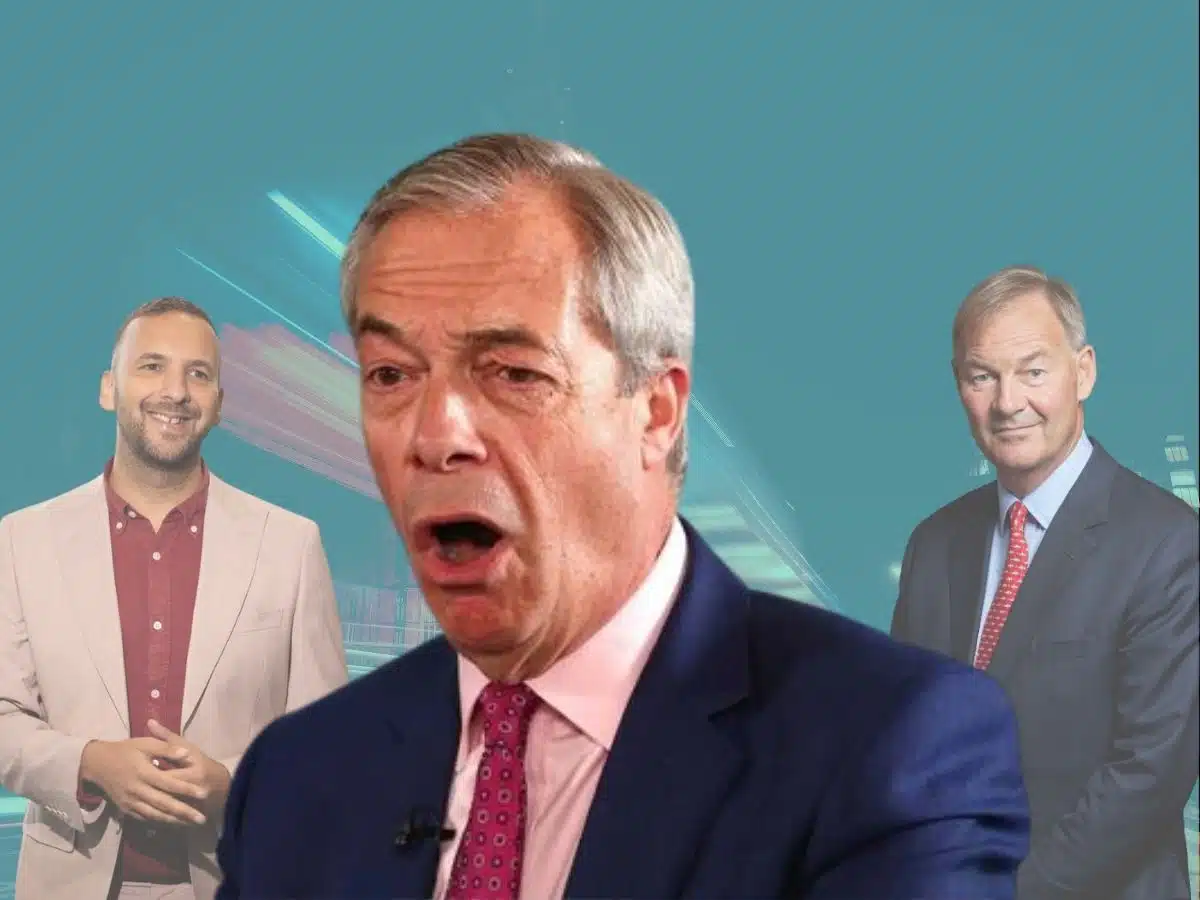
Farage’s his Reform have started their own podcast — you know — like that Zack Polanski did.
On the one hand, this is understandable, because a good idea is a good idea. On the other hand, Reform — as ever — have decided to push the truth to breaking point:
“do things differently” = “copy the Green Party” pic.twitter.com/RVaNO1zrYA
— Adam Smith (@adamndsmith) April 4, 2026
Farage — bold Politics VS bold-faced lies
As noted above, Zack Polanski runs his own podcast called Bold Politics. The most recent episode features Canary contributor Cody Dahler:
To be clear, Polanski did not invent podcasting. He’s also not the first politician to have his own podcast. He is, however, the only one who isn’t infinitely repellant (we’re looking at you, Alastair Campbell and Rory Stewart).
Bold Politics is absolutely a Green Party podcast, anyway; it’s not like Polanski is on there discussing true crime or recapping The Traitors. Farage can pretend otherwise, but it just makes him look like a liar and a copycat at the same time. Pick a lane, Nigel!
Perhaps what Farage means is ‘Reform is the only party with a podcast named after itself’? The problem is that this still wouldn’t be true:
Oh look @Nigel_Farage is lying AGAIN pic.twitter.com/LJtVylapWt
— Capman #FBPE (@Euro_toff) April 4, 2026
As we’ve reported, Restore Britain is a Reform UK breakaway party that is to Farage’s lot what Reform are to the Tories (i.e. a more right-wing version). Founded by ex-Reform MP Rupert Lowe, Restore is basically just the Conservative Party 3.0. Although, to be fair, they do have far fewer Tories than Reform does:
‘We do things differently at Reform’ pic.twitter.com/U3PcNKsYFf
— shatners (@shatners144143) April 4, 2026
The fact that we have three right-wing parties means these people are all struggling to differentiate themselves. In this instance, Reform have attempted to show that they’re different from the Tories by literally copying Restore.
People had other criticisms of Farage’s post too:
The entire fucking media is a Reform podcast. Everything you say is repeated to death.
— Oliver (@OWS1892) April 4, 2026
Preaching to the converted won’t arrest your decline in the polls. pic.twitter.com/JQI3VwScTI
— Zokko (@Zokko18) April 4, 2026
Pobcasting
We’ll be honest, we do think Reform are missing a trick. After all, they could have had Matt Goodwin host the show so they could refer to it as the Reform UK Pob-cast:
Just realised Matt Goodwin reminds me of ‘Pob’ and now I can’t unsee it 🤦🏼♀️😂😂 https://t.co/bPO2E8GxWE pic.twitter.com/Sac7lgD5qM
— Susan Cowell (@SusanCowell) February 17, 2026
If they follow our advice, they could truthfully say they’re the only party to have a podcast which is hosted by a failed MP who was recently accused of using AI to write an error-riddled book.
Featured image via Parliament
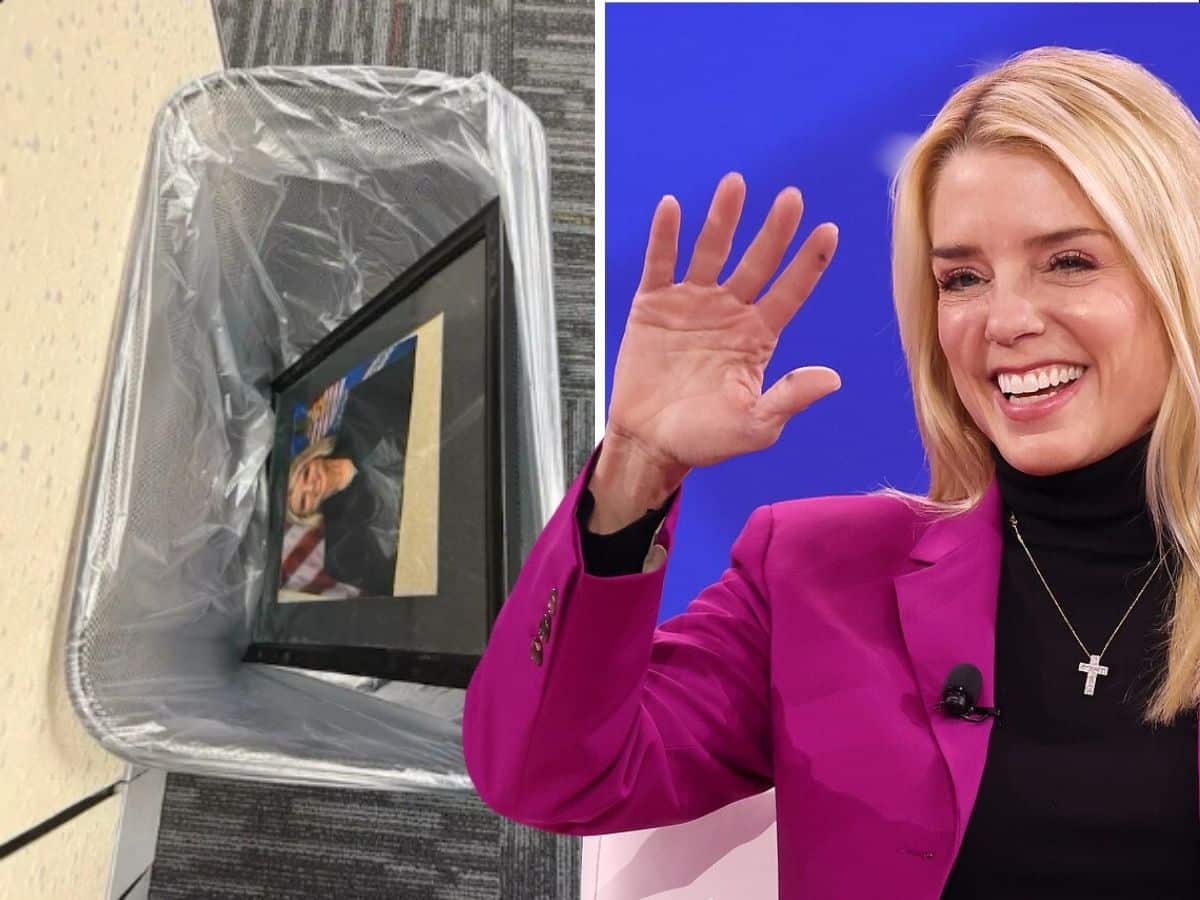
On 2 April, Donald Trump sacked attorney general Pam Bondi. Her sacking came as a great shock. Not because she was competent or deserving of her position, but because it meant Trump has found someone else who’s willing to make themselves legally culpable for improperly handling the Epstein Files.
Now, we’re once again seeing how Trump repays those who tarnish their reputation to protect him:
— evan loves worf (@esjesjesj) April 3, 2026
Pam Bondi binned
This is how the BBC reported on Bondi going:
The president’s frustration had been growing with her leadership at the justice department – particularly over her handling of the Epstein files which have become a reputational liability for the administration.
This is a bit rich from Trump, to be honest. His big issue wasn’t Bondi; it’s the fact that he’s personally named thousands of times in the Epstein Files.
While we’re sure there are people who could have pulled off a more competent cover-up than Bondi, the question is who would want to expose themselves like that? Because the task at hand is risking jail time to protect a senile creep of a president who’s accused of the worst crimes imaginable.
You could argue that Bondi did a lot to prevent the files coming out, but there was only so much she could achieve (this isn’t praise):
“She did it because we threatened contempt, we threatened impeachment, we passed a law!”
After Trump removes US Attorney General Pam Bondi, Democrat Ro Khanna on whether she deserves credit for having released 3.5 million pages of the Epstein Files.
— Simon Gosden. Esq. #fbpe 3.5% 🇪🇺🐟🇬🇧🏴☠️🦠💙 (@g_gosden) April 4, 2026
Bondi didn’t only provide cover on Epstein either, as More Perfect Union reported:
Under Bondi the Justice Department:
– Dropped 23,000 criminal investigations including white collar and corporate crime
– Halted 159 corporate enforcement actions
– Settled the lawsuit to break up LiveNation/Ticketmaster
– Let 18 companies avoid $3.1 billion in penalties
Trump has often demanded unrestricted control of the justice department to pursue investigations into targets of his choosing, even when he was warned there was no evidence to do so.
He addressed that directly in a post directed at Bondi – saying the delays in those cases were “killing our reputation and credibility”.
The guy replacing Bondi is Todd Blanche who has suggested that Jeffrey Epstein’s alleged co-conspirators are safe:
Q: Is the public going to learn the identities of the men who abused the girls in the Epstein files?
Acting AG Todd Blanche: Like, what does that mean? I don’t understand what that means. pic.twitter.com/CkKLHaWcDU
— FactPost (@factpostnews) April 2, 2026
Acting AG Todd Blanche declares mission accomplished on the Epstein files: “The DOJ has now released all of the files with respect to the Epstein saga” pic.twitter.com/1Yugz7ItEA
— Aaron Rupar (@atrupar) April 3, 2026
The above is not true, by the way, and Blanche is already facing scrutiny:
Congratulations AG Blanche. Now you have 30 days to release the rest of the files before becoming criminally liable for failure to comply with the Epstein Files Transparency Act. https://t.co/LOcytrTXJV
— Thomas Massie (@RepThomasMassie) April 3, 2026
Oh, and just because Bondi is gone, that doesn’t mean she won’t still be legally responsible for her handling of the Epstein Files or other matters
Pam Bondi, “There is no evidence that Donald Trump has committed a crime”
Ted Lieu, “You just lied under oath. There is ample evidence in the Epstein files”
Pam Bondi, “Don’t you ever accuse me of a crime”
Ted Lieu, “You just lied under oath, and this is on video tape”
Ted… pic.twitter.com/v2Feci6P4u
— Farrukh (@implausibleblog) February 11, 2026
Whether this translates into actual accountability is anyone’s guess.
As many have said, crime is essentially legal in the US now if you’re one of the elites.
Good riddance
The following image is from the same hearing as the above. The women with their hands up are victims of Jeffrey Epstein. And the reason they have their hands up is because they’re answering affirmatively that Bondi’s justice department ignored them:
This photo and the Epstein file cover up will be Pam Bondi’s legacy. pic.twitter.com/FOX5wgnNAy
— Harry Sisson (@harryjsisson) April 2, 2026
So yes, this disgraced politician does belong in the bin.
And by ‘the bin’, we of course mean ‘prison’.
Featured image via Gage Skidmore (Wikimedia)
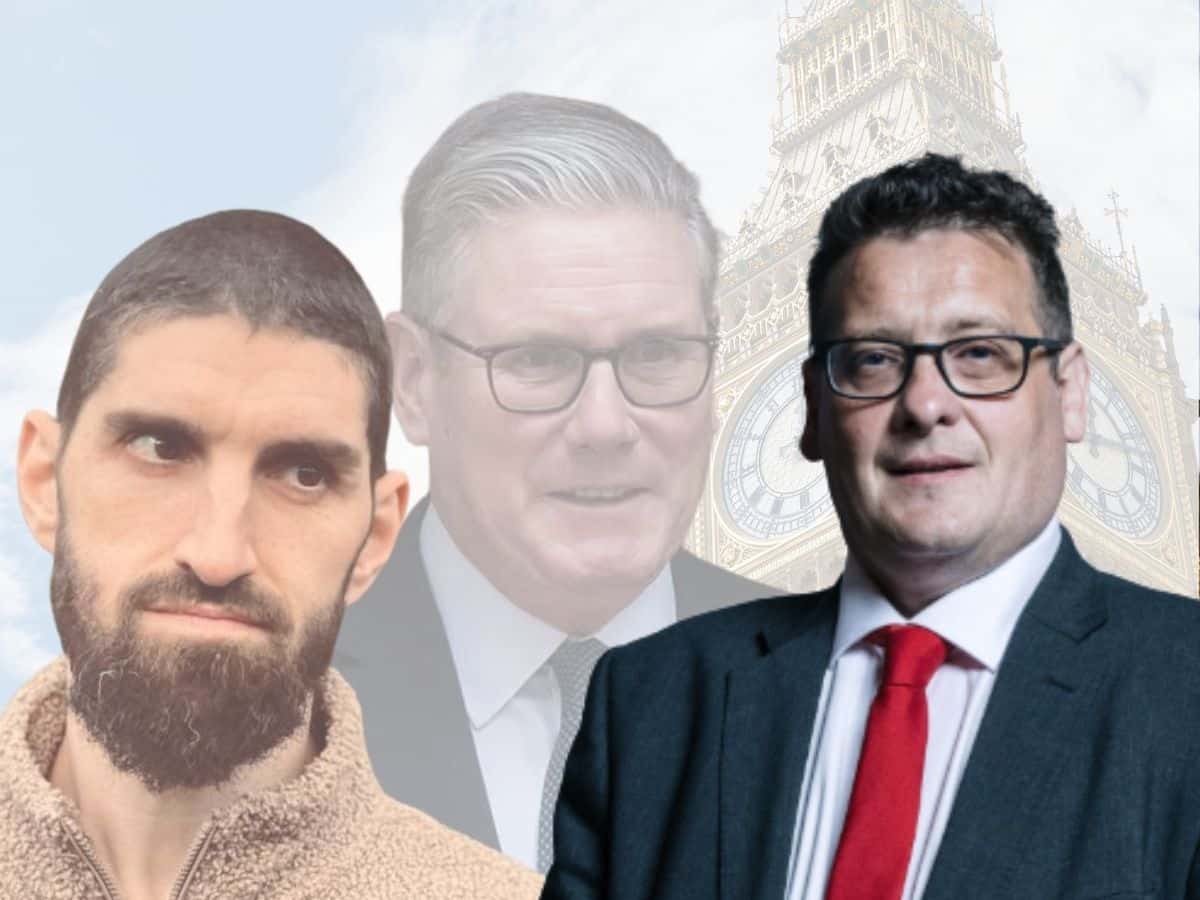
On 31 March, we reported that Labour had suspended Karl Turner. Turner had criticised Labour’s plan to abolish jury trials as a universal right; he’d also given an interview to independent journalist and Canary contributor Jody McIntyre.
Following his suspension, Turner tried to distance himself from McIntyre. Now, McIntyre has set the record straight:
Last week, I interviewed Karl Turner, the MP for East Hull. Within days, the Labour Party suspended him.
Turner has since claimed that some of his comments were “misrepresented”. This is untrue.
In the interest of openness, here is the FULL interview:🧵 pic.twitter.com/HGQiDWLcmM
— Jody McIntyre (@jodymcintyre_) April 3, 2026
‘Lying bastard’ McSweeney still running Labour
As we reported at the time, much of Turner’s interview with McIntyre focussed on Morgan McSweeney:
This morning on Sky News, Keir Starmer said that it is “a little bit far-fetched” to think that McSweeney could have known that “sometime in the future there would be a request for the phone”.
Labour MP Karl Turner told me this morning that the statement is “absolute bollocks”. pic.twitter.com/ANxfikYWai
— Jody McIntyre (@jodymcintyre_) March 26, 2026
The summary of the McSweeney scandal is as follows:
In full
Now, McIntyre has provided details on his full interview with Turner:
Karl Turner told me that he has been “good friends” with Keir Starmer for many years + texts the PM “things that are very f***ing private…that I don’t want everyone knowing”.
This didn’t stop Labour officials briefing against Turner’s mental health, calling him “mad” + “nuts”.
Karl Turner said to me that he believes Morgan McSweeney was worried that messages “slagging off the Prime Minister” would be uncovered on his “stolen” phone.
He also claimed that the appointment of Peter Mandelson was the result of “weeks and weeks” of McSweeney’s lobbying.
On McSweeney, now ex-Labour MP Karl Turner told me: “I was texting Keir, ‘Sack this silly bastard immediately, you are making us all look like fools.’”
He also said that “McSwindle is a man with a history of being a lying bastard” who “needs checking out”.
McSweeney is indeed a man with a history of dishonesty, as we reported in 2024:
In a bizarre turn of events, the Guardian/Observer has revealed that Labour Party PM Keir Starmer’s top Downing Street aide Morgan McSweeney plotted to ‘destroy the Canary‘ – before ‘we destroyed the Labour right’. It shows not only how him and his closest cronies tried to kill us – but also how they brought about Jeremy Corbyn’s downfall. The intention all along? To install Starmer as Labour leader, and eventually PM.
‘the world’s biggest f***ing paedophile!’
Back to McIntyre, he added:
Karl Turner, the MP for East Hull, also complained that “McSweeney and [Matthew] Doyle, protégés of Mandelson, were asked to question a friend of the world’s biggest f***ing paedophile!”
Doyle had campaigned for a Scottish Labour councillor later convicted of child sex offences.
Labour’s recent and ongoing paedophile-related scandals include:
McIntyre continued:
A former MP I spoke to who served on Labour’s frontbench for five years identified Doyle as one of Morgan McSweeney’s “inner circle”.
The whistleblower told me: “The inner circle were tight. WhatsApp tight. They talked openly of…getting rid of every existing MP eventually.”
The former Labour frontbencher also told me that McSweeney installed his relatives “in the Whips’ office…to spy on people.”
McSweeney’s wife, Imogen Walker, was appointed assistant government whip last September.
Did Walker and/or McSweeney have a say in Turner’s suspension?
When Karl Turner, the MP for East Hull, was suspended by Labour on Tuesday, he stated that the Whips’ Office had not bothered to call him, choosing to brief journalists instead.
Turner had been a consistent and blistering critic of McSweeney, telling me he “still runs the job”.
Karl Turner told me that he believed McSweeney’s stolen phone could reveal “vicious messages…calling the Prime Minister a f***ing idiot and listing the reasons why”.
Turner said this might include McSweeney and Mandelson expressing dismay at Starmer’s “crap” Chagos deal.
When I asked now-independent MP Karl Turner directly if he thought Keir Starmer really believes Morgan McSweeney’s “stolen phone” story, he said it comes down to “psychology”:
“If you WANT to believe a person, then you will believe them rather than questioning every detail.”
At the end of the interview, Karl Turner told me that he “had to be careful” because Labour had been threatening him with suspension.
Within days, those threats came to fruition.
Were his friendship with Starmer + years of service to Labour overcome by McSweeney’s influence?
Help him take on Labour
To be fair to Turner, he is apparently struggling with mental health issues; he’s also a member of one of the world’s most toxic political organisations. At the same time, though, he needs to clarify what points he thinks were “misinterpreted”, because we’re not seeing it.
You can support Jody McIntyre and the excellent work he does via the links below:
The TRUTH about my interview with Karl Turner MP: https://t.co/iPREtRoIyF
My investigations take many hours of meticulous work. Subscribe to support what I do: https://t.co/4lb1GxXPQx
And follow @jodymcintyre_ for more Labour Party exposés.
— Jody McIntyre (@jodymcintyre_) April 3, 2026
Featured image via Parliament

Police Service of Northern Ireland (PSNI) chief constable Jon Boutcher has admitted that his officers make use of phone hacking software made by Israeli company Cellebrite. Amnesty International have previously reported how Serbian authorities have used the technology to undermine journalists and broader civil society within Serbia.
Boutcher made the confession during the PSNI’s monthly public policing board meeting. It was in response to Sinn Féin MLA and police spokesperson Gerry Kelly asking about the potential use of Cellebrite and other spyware made by the Zionist entity, such as NoviSpy and Cosain.
The PSNI chief attempted to downplay the use of the privacy-destroying tech, saying it was used as “software under license” rather than a “direct contract with Cellebrite”.
Software companies sometimes offer their products at different price points. A direct contract may include an agreement for the company to make bespoke alterations to the software to suit the client’s needs. A license may mean the tech is supplied ‘as-is’ in a more generic form. Boutcher did not elaborate on these sort of details, however.
PSNI’s previous illegal spying on journalists and solicitors
It’s somewhat of a moot point, given it is an obscenity to pump any money into a genocidal settler-colony’s coffers, regardless of the contract’s exact nature. The use of such software from the PSNI is also concerning given the force’s proven illegal surveillance of journalists and solicitors, not unlike the Serbian case above.
The McCullough Review from September 2025 outlined how the PSNI engaged in 21 unlawful uses of covert powers to acquire the sources of eight journalists. Journalists Trevor Birney and Barry McCaffrey were among those spied on. The pair were investigating the Loughinisland massacre in which loyalist paramilitaries killed six people in an attack on a pub in 1994.
We are concerned that there has been an attempt to normalise state surveillance in Northern Ireland.
Solicitors Darragh Mackin and Peter Corrigan were also unlawfully surveilled by the North of Ireland police. UN officials said the PSNI’s spying on the two men:
…may amount to a violation of international standards protecting the right of lawyers to perform all of their professional functions without intimidation, hindrance, harassment or improper interference.
The Law Society of Northern Ireland said McCullough’s report had:
…highlighted instances of unauthorised surveillance directed at solicitors in Northern Ireland, including a failure on the part of the PSNI to respect legal professional privilege.
Adding further disgrace to the PSNI, Boutcher also revealed that the force have a £5.5 million contract with Source Tactical Gear Limited, another Israeli firm. It was already known that this sum was going to a company based in the apartheid land theft project, but the PSNI had refused to reveal any further information. Their response to a Freedom of Information request cited “security concerns” as the reason for refusal to reveal more.
Kelly exemplifies Sinn Féin failure on Palestine
Sinn Féin’s Kelly seemed entirely unmoved by either the revelation on the body armour contract or the use of Cellebrite. After Boutcher’s response, Kelly said:
Okay, thank you, chief constable. Actually, one of the answers that I did get back [to a previous question] was around the body armour. I don’t think I have an issue [with that]. It’s for protection of people.
That is indeed the purpose of body armour. However, it could be bought from any number of sources. There is no need to fund a settler-colony’s atrocities by purchasing it from them.
Concluding rambling and barely coherent remarks, Kelly then went on to mistakenly describe Mackin and Corrigan as journalists rather than solicitors. His behaviour underscores the hypocrisy of Sinn Féin on Palestine matters. Kelly was happy to go through the motions of asking the question, but do absolutely nothing to meaningfully hold the police to account for use of Zionist firms in contracts.
The party have similarly had fine words in support of those being slaughtered in Gaza, but have been happy to obfuscate as Stormont invest in making the planes used in the mass murder. They have also been willing to meet with one of the key men behind the slaughter, Genocide Joe Biden. Once in Washington party reps met with companies on the Boycott, Divestment and Sanctions (BDS) list. The party has shown no initiative when it comes to ending tax breaks for the likes of Caterpillar, who make bulldozers used to wreck Palestinian homes.
Given this sort of ‘opposition’, it’s little wonder the PSNI feel free to sign contracts that pump millions into funding genocide, apartheid and ethnic cleansing.
Featured image via the Detail
On Thursday 2 April, a leaflet emerged featuring three ex-Tory councillors who claimed to be “endorsed” by Jeremy Corbyn. Since then, Your Party and Corbyn have denied endorsing these men. Instead, the situation seems to be that they recently joined the Walsall Community Independents group which Corbyn has voiced support for.
Corbyn’s supporters are furious that anyone believed the endorsement in the first place. Others are saying the situation exposes the broader problem with supporting independent groups who aren’t beholden to Your Party (YP) values.
“Endorsed” by Corbyn?
As we reported on 2 April, the ‘endorsement’ was first reported by the Green Party’s Mish Rahman:
the candidates in my area are 3 deselected Tory cllrs, all cabinet portfolio holders part of the local Tory administration lol
They have moved wards as indys and are standing against me in the same ward. pic.twitter.com/b4Em7up7Ur— Mish Rahman (@mish_rahman) April 2, 2026
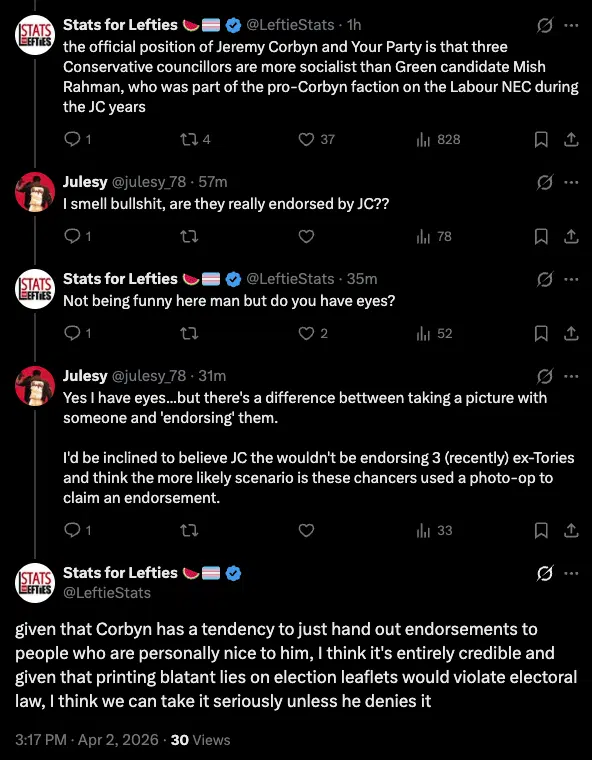
The Stats for Lefties account also highlighted the leaflet. They noted in a subsequent discussion that if the endorsement wasn’t real, the councillors were violating electoral law:

Later that same day, New Statesman’s Ava-Santina reported that Your Party would indeed be supporting independent candidates in Walsall:
NEW: Your Party unveil their “get Labour out” local election strategy.
Full list of YP candidates coming later today
– Walsall
– Bradford
– Southport
– Oldham
– RedbridgeCorbyn: “These elections are the beginning of the fightback against austerity, privatisation and fear.
— Ava-Santina (@AvaSantina) April 2, 2026
As we reported:
This could be ex-Tories highlighted above, or it could be the ex-Labour independents who joined Your Party last year.
We did ask Your Party to confirm if the endorsement was real, but hadn’t heard back at the point of publication, and we noted this in the piece. Your Party would later tell us:
Neither Jeremy nor Your Party has endorsed these candidates in Walsall. Any suggestion otherwise should be immediately corrected.
No permission has been given for Jeremy’s name to be used on any individual candidate’s leaflet.
And Rahman has now said:
2/2
It is appalling that any election candidates would seek to mislead voters on their endorsements and distribute a leaflet to thousands of residents spreading this misinformation.
I shall be referring this to the Election commission for further investigation
— Mish Rahman (@mish_rahman) April 3, 2026
As Rahman highlights, it is indeed wrong to print misleading information on an election leaflet (albeit par for the course with Tories / ex-Tories).
The discussion hasn’t ended there, though.
Walsall Community Independents
On 14 February, Corbyn spent his Valentines Day with the Walsall Community Independents:
Walsall Community Independents Launch Event
It was an exciting, inspiring, and great evening at Palfrey Centre.
Shyekh Omar Ali, Councillor Pete Smith, Councillor Aftab Nawaz, and Chief guest Jeremy Corbyn MP spoke of unity, supporting each other and putting the people before… pic.twitter.com/b6LELenCgs
— Walsall Community Independents (@IndWalsall) February 14, 2026
The above tweet also said (emphasis added):
Jeremy Corbyn MP endorsed Walsall Community Independents and asked everyone to support Walsall Community Independents in the May 2026 Local Council Elections.
This was posted nearly two months ago and remains up. Presumably, this means no one in Your Party took issue with it. Presumably that means Corbyn did voice his support for the group in the upcoming local elections.
The argument coming from Your Party now is that Corbyn did not give blanket support to individuals within the group, as Nicola James said:
Appearing on a stage with a community group is not a personal endorsement of every candidate in that group. Support for the creation of an independent community group does not equal blanket endorsement. Jeremy has made it clear that he does not endorse those candidates.
The Walsall Community Independents group have said that Corbyn supports them in the local election; Your Party are saying his support does not represent endorsement of individuals within the group.
Okay, so what does his support constitute?
Hang on, Corbyn
James would later claim that the three ex-Tories only joined the Walsall Community Independents after Corbyn gave his support:
Those candidates weren’t even in the group when Jeremy was there. Your Party has been crystal clear that neither Jeremy nor the party has endorsed those specific candidates.
However, the three ex-Tories were in the front row of the event that Corbyn spoke at:

The photo these candidates used on the controversial flyer was clearly taken on the same night – as they are all wearing the same clothes. Plus, on 8 February – six days before the event Corbyn spoke at – the three ex-Tories had a meeting with Your Party MP Ayoub Khan:
Independent alliances are free to work with whoever they like. Once Your Party has thrown its support behind them, though, Your Party is no longer free to say it has nothing to do with them. If YP objects to the group containing ex-Tories, then it should publicly withdraw the support for the group in the local elections – support which the group is publicly claiming they have received.
As several people highlighted, the situation has exposed the issue with Your Party’s support for independents:
Regardless of which individual candidates Corbyn did, or didn’t give an endorsement to… this whole situation is indicative of the political level of the YP leadership – willing to endorse any old independent group regardless of their selection process and actual politics. https://t.co/lcXgN1sCdr
— Oisín (@OisinMul_) April 3, 2026
At the danger of being that guy who sincerely comments on the absolute farce that is the YP leadership, perhaps the fact this independent group is happy to let in councillors who were deselected by the Tories should have factored into the considerations for endorsing them? https://t.co/nPh3ivRaRa
— S (@henrycowmunist) April 2, 2026
Interjecting my own opinion here (this is an Opinion piece, so I’m allowed), I don’t believe Corbyn knowingly endorsed three ex-Tories. At the same time, I do think the cadre of Chuckle Brothers surrounding him have created a situation which plausibly allowed them to claim they have his backing.
I’d be interested to see how all this holds up in court, anyway, should the trio face criminal consequences. This won’t happen, obviously, because UK ‘electoral law’ is a joke.
The independent push
On the topic of Your Party supporting / endorsing independent groups, we published the following on 2 April based on a YP press release:
Jeremy Corbyn has unveiled Your Party plans to target Labour’s heartlands in the upcoming English local elections in May. The start-up party is supporting allied community independent groups at the local elections.
Additionally:
At Your Party’s founding conference in November 2025, members voted to adopt a targeted strategy. This aims to maximise the party’s seats, rather than standing everywhere. As party structures continue to develop, Your Party will support around 250 candidates across England. The vast majority of these will be standing as Independents or for allied local community parties.
Also:
Corbyn was elected as Your Party parliamentary leader earlier this month after his allies were victorious in the party’s leadership elections. He is expected to tour the country in support of the Your Party-backed independents and groups in the coming weeks, following a first event in Redbridge.
Your Party is saying it will support “250 candidates” and also that Corbyn will “tour the country in support of the Your Party-backed independents and groups”. Again, this is going to create a high degree of ambiguity – especially if these groups contain members who are at odds with the broader YP movement.
Corbyn himself said:
These elections are the beginning of the fightback against austerity, privatisation and fear.
All across the country, there will be community independent groups offering an alternative to the despair of Labour and the division of Reform. We are proud to support those candidates and groups standing up for redistribution, inclusion and peace.
People in power underestimate the power of people at their peril – and arrogance in office always comes back to bite you in the end.
Presumably, YP will now have to rethink if it ‘supports’ entire groups, or whether it only supports individuals that closely align with YP values. It should also make clear what sort of vetting is conducted before a group or individual receives the party’s support. The very fact that three ex-Tories were already in talks with a Your Party MP, and the attended an event Corbyn endorse the group at, shows a clear lack of any kind of due diligence around this.
The independent drive isn’t happening because there were no YP members willing to stand, by the way, as we reported. Supporting independent groups has certainly saved YP the effort of vetting, fielding, and supporting its own candidates, but it’s unarguably created issues of its own.
And this isn’t the first time that working with independents has created a problem for Your Party.
The trouble with independents and Corbyn
When Your Party got going, it included Jeremy Corbyn and his Independent Alliance. Corbyn and the other independent MPs did good work opposing the government’s support of Israel’s genocide. At the same time, there were some pretty big gaps between the politics of some of these men and the YP membership.
The two big issues that came up were:
Transphobia and landlordism were big reasons why left-leaning voters abandoned Labour. As such, the presence of these issues in Your Party served to turn away potential members.
Following the backlash, people who criticised the independent MPs were accused of being intolerant or racist. This was because the independent MPs were Muslims, and some argued that we needed to respect their “socially conservative” values. As Maryam Jameela wrote for the Canary, independent MP Adnan Hussain:
is wrong that Muslims tend to be socially conservative. Perhaps because he has chosen to be a landlord and real estate mogul, his circle of Muslims is correspondingly socially conservative. The notion that Muslims tend to be socially conservative is a lie that is hauntingly in-step with Western stereotypes of Muslims as regressive and backwards.
Whilst certain schools of thought within Islam are of course socially conservative, it’s a joke to think of the majority of two billion Muslims worldwide as such. Muslims come with all manner of political positions – socialist, liberal, conservative, and so on. And, perhaps to Adnan’s surprise – some of us are even trans!
The months of fighting around this issue should have clarified something; namely that supporting independent MPs who aren’t beholden to the party’s broader project is a massive hurdle to having a broader project in the first place.
Clearly, however, the people at the top of YP have learned nothing.
FAQs
I wrote the original Canary article on Corbyn ‘endorsing’ the ex-Tories, so I’m well placed to answer some of the criticisms. The first is this:
I hate, hate, hate that this has happened to the Canary,
“Suggests” “implies;”
This is the language red top rags use before implying gossip is fact.This used to be my go-to publication. I hope they find their way back. https://t.co/HC2VBpmuOI
— Cassi_Bellingham@banburyUK (@BanburyUK) April 3, 2026
I wrote “Leaflet suggests” to be clear there was a degree of doubt around whether Corbyn had endorsed the men. I highlighted this doubt in the piece, and also noted that we’d approached Your Party for comment.
In terms of ‘finding our way back’, many of us have been at the Canary for years; some since 2015.
The following is another critique we received:
Have the actual journalists vacated the Canary? Did you approach Your Party for comment or do you exist to boost shit posters like Eleanora?
— oli (@OL1UR) April 3, 2026
As noted, it was made clear in the piece that we approached Your Party. They got back to us 23 hours later for what should have been a yes / no question.
To be completely fair, it was late in the day when we approached them, but we did say we were publishing that day and gave them four hours to respond. That is standard when dealing with political parties. They should be ready to deal with media at any time of the day.
No skin in the game
Clarifying my stance on all this, I’m not unhappy with Your Party because I’m a member of the socialist faction which lost out to Corbyn’s group in the recent elections. It’s also not the case that I have no skin in the game. I returned to full time reporting because I was enthused by the announcement that Your Party was happening, and I’ve taken no joy in watching what happened next.
Personally, I think Corbyn should have established a party from the top down which was in line with his own politics – i.e. progressive Labour-style social democracy. After getting the ball rolling, Corbyn should have stepped down as leader, and opened the position up to elections. I don’t think Corbyn himself should have run, because he will be 80 in 2029, and come on – that’s clearly too old – what are we doing here?
For clarity’s sake, I don’t think Corbyn should have done the above because I share his politics; I think he should have done it because that was where the energy was, and that’s where his instincts are. Instead, he oversaw a half-arsed project of endless meetings which gave the impression that people could collectively shape the party. When that shape took on a form that Corbyn’s allies didn’t like, though, they freaked out, and months of confusion and infighting ensued.
I have the upmost respect for the YP members who tried to make the party fully socialist, by the way; I just think their project was hamstrung by Corbyn’s involvement. Corbyn has never been a full socialist, and most of the 800,000 people who showed that initial interest clearly did so because they wanted more Corbyn-style politics.
With hindsight, then, it would have been better for the socialists to start from scratch and build their own thing. That or run as independents, anyway. If they’d done that, presumably they would have received unconditional support from Corbyn and his team – the sort of support they never enjoyed as paying members.
The state of things
The benefit of being an independent politician is that you’re free to pursue your politics as freely as you like; the downside is that you lack the support of a wider party.
The benefit of being a political party is that you have strength in numbers; the downside is that individuals may have to forgo individual beliefs for the benefit of the movement.
Your Party keep experimenting with a system in which they’re a mass-movement party with a special class of non-movement politicians – specifically the independents who regular members are encouraged not to criticise even when said independents stray from the party’s politics.
In 2025, this meant asking members to hold their tongues on ‘social conservatism’ ; in 2026 it means asking members to support independents who are comfortable standing shoulder-to-shoulder with ex-Tories.
This is the tagline that Your Party have in their bio, by the way:
We’re building a new kind of political party. One that belongs to you – join us!
Your Party is telling members that the party ‘belongs to them’ but it’s backing politicians who don’t even belong to the party.
Adding to the weirdness, Jeremy Corbyn himself remains an independent MP despite being the YP parliamentary leader. This isn’t out of necessity, because YP is a registered party, and Zarah Sultana is a YP MP.
If the party wasn’t ready to field its own candidates, that’s a shame, but it is what it is. At the same time, that unreadiness should have demonstrated that YP needed to spend more time building up its own people. And clearly, launching a national pro-independents campaign has only added to the confusion about what Your Party is and what it aims to become.
In summary
So all in all, it’s a mess whichever way you look at it. It may not be the dumpster fire that people initially suspected, but it’s still a flaming skip of disappointment.
On the plus side, Corbyn isn’t endorsing ex-Tories on purpose; he’s simply doing so by accident, as a result of a Thick of It-style comical mishap by the people around him.
If Your Party want their own Malcolm Tucker, by the way, I’d be happy to swear at Corbyn’s underlings.
Featured image via Sophie Brown (Wikimedia)

Energy secretary Ed Miliband is facing renewed pressure to enable new privatised oil drilling in the North Sea. But the right-wing press appears to have jumped the gun in reporting that he is poised to license such climate-destroying activity. And prime minister Keir Starmer has said the decision lies with Miliband.
North Sea — The war on Iran, just an excuse for Big Oil
The noise around more North Sea licenses is similar to the ‘greedflation’ companies engage in when they can use volatile international markets as cover for more profit.
This time, the war on Iran is an excuse for more drilling rather than just when companies put up energy bills by more than increased costs.
New oil and gas drilling in the North Sea will be owned by private companies and sold on international markets to the highest bidder. There is no reason it will reduce UK energy bills or shield the country from the outcomes of the war on Iran.
On top of that, fossil fuel giants have already extracted over 90% of oil and gas in the North Sea.
The UK Energy Research Centre has said:
Squeezing additional oil and gas production from the UK may be technically possible, but it will have negligible impact on the UK cost of living.
Green energy: the way forward
It’s clear that speeding up the transition to renewable energy would have much more than a “negligible” impact on UK bills. In fact, a publicly owned Green New Deal would be the fastest and most equitable way to bring in green energy.
In Keir Starmer’s campaign to become Labour leader, he pledged to “put the Green New Deal at the heart of everything we do”. But it turned out this was merely a con to get the party’s membership on side.
With that in mind, the least Labour can do is stand against new North Sea drilling.
Featured image via OurFutureEnergy
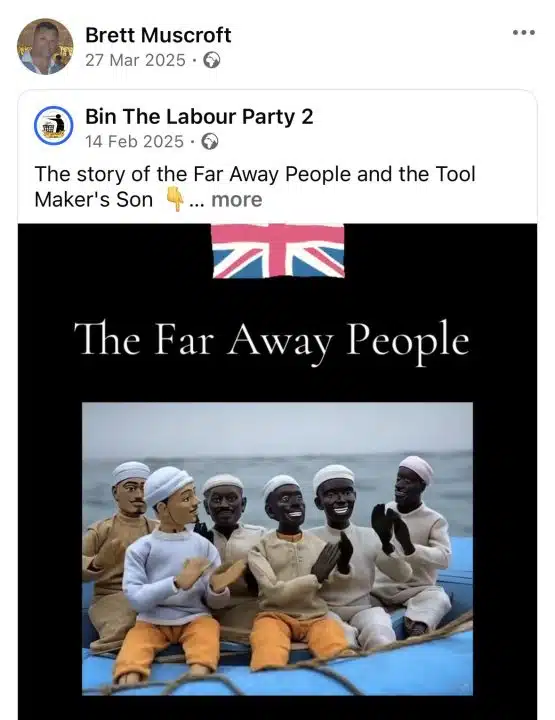
Yet another Reform UK candidate has been exposed for their racist social media posts:
Brett Muscroft is Reform UK’s candidate in Castleford Central & Glasshoughton, Wakefield.
He shows clearly that Reform UK’s vetting is nil for this coming local elections.
His posts on Islam, his support of Tommy Robinson, Enoch Powell and posting far-right and racist content… pic.twitter.com/2kDm9P5DSI
— Reform Party UK Exposed 🇬🇧 (@reformexposed) April 3, 2026
At this point, Reform candidates are being exposed so regularly that you can use a Google alert for ‘Reform candidate exposed‘ as your alarm clock.
Reform UK in Wakefield
This is how Reform announced candidate Brett Muscroft:
The above is on Facebook, which is ironic, as it’s his Facebook account which caused his problems.
Reform Party UK Exposed highlighted the following posts from Muscroft:


Reform Exposed suggested that Reform just aren’t vetting their candidates, and you can see why they’d say this. The above posts are from Muscroft’s personal Facebook. Possibly he didn’t tell them about the account, but that shouldn’t matter, because the account comes up with a simple search:

At the time of writing, HIS ACCOUNT IS STILL PUBLIC.
So yes; we think it’s fair to suggest Reform aren’t vetting candidates.
That or they’re just completely incompetent.
Either way; is this who you want running your council?
Muscroft isn’t the only candidate being exposed either. As Reform Exposed reported:
Reform UK’s candidate Holly Drafahl standing in Hoxne & Eye, Suffolk thinks it’s ok to stir up resentment against ‘Turkish looking people’.
In a series of Facebook posts she described how she had seen someone flying a drone near a school, and that this could have been to potentially plan a terrorist attack on the school. The description of the person moved between ‘Turkish looking’ and ‘Turkish’ throughout her posts and replies. The person stated they were doing drone photography, and she herself admitted he wasn’t filming children at a school (there were none there). So she moved on to saying he could have been filming to plan a terrorist attack.
She even then created a vague petition to further hype the situation.
(She changed her name on FB to Holly Smith recently but you can see her name still connected in her petition).
Her true colours however were shown in the screenshot here where she liked the reply “Turkish, alarm bells. Muslim pedos, common sense to worry.”.
And now she’s standing to be councillor.
Reform UK’s candidate Holly Drafahl standing in Hoxne & Eye, Suffolk thinks it’s ok to stir up resentment against ‘Turkish looking people’.
In a series of Facebook posts she described how she had seen someone flying a drone near a school, and that this could have been to… pic.twitter.com/KpCVSHZFoN
— Reform Party UK Exposed 🇬🇧 (@reformexposed) April 4, 2026
It keeps happening
Articles we’ve put out on Reform’s local election chaos include the following:
Potential candidates have clearly clocked that it’s easy to get a Reform endorsement; so easy that you seemingly don’t even need to go private on Facebook.
That or they’re just too stupid to delete their Facebook accounts before signing up.
Featured image via Gage Skidmore (Flickr)
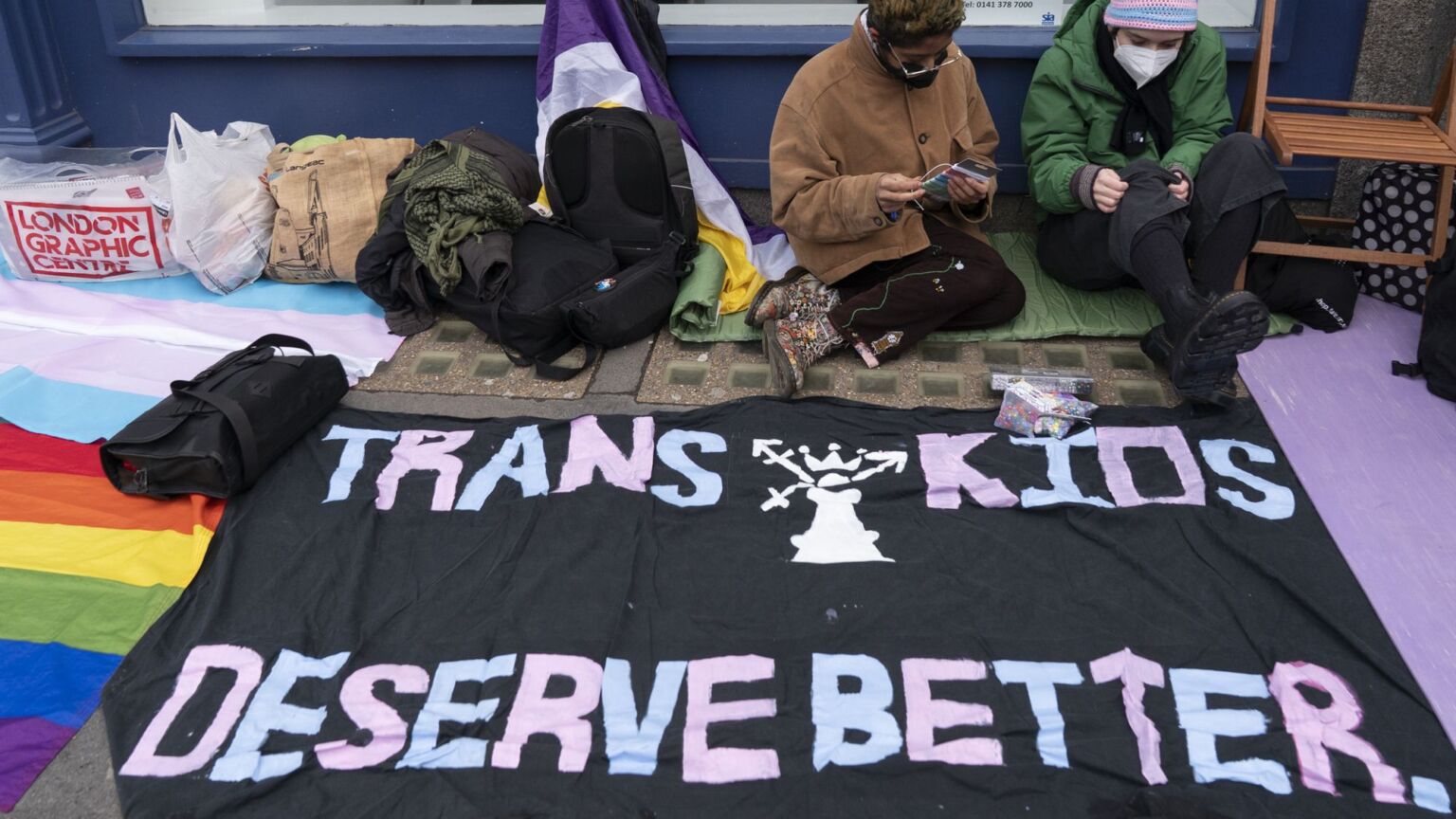
What would you think if you were told that a six-year-old boy had tried to cut off his penis because he could no longer join Girlguiding? Would you blame the new admissions policy – which no longer allows boys to join, even if they identify as girls – or would you think this was a child in serious distress?
This is not a hypothetical question. It was, in effect, the framing of a recent Observer article, which presented this deeply troubling account as evidence of the harms caused by the girls-only admissions policy. It also used the phrase ‘her penis’ and she / her pronouns throughout to describe a six-year-old boy.
I was already aware of this case through my Sunday Telegraph reporting on the troubles within Girlguiding, and made a conscious decision not to include it, because it involved a very young child and raised serious ethical questions about how such situations should be reported. Four days ago, I raised concerns about the piece – both publicly and with the Observer directly – but it remains online, unchanged.
Of course, this isn’t an isolated case. Inaccurate reporting on sex and gender is a persistent problem in journalism, with fresh examples appearing weekly. In recent weeks, the Manchester Evening News reported a violent murder committed by a male as having been carried out by a woman. STV reported a 23-year-old man found guilty of possessing indecent images as a woman. Shortly after the Observer article, Metro published a feature about a ‘devastated’ 10-year-old boy who can no longer be in Girlguiding – built almost entirely around this single emotive account.
Part of the problem, I think, is that the line between reporting and opinion has become blurred. Journalists can – and should – write opinion. I’m doing it here. But when reporting on a contested issue, the basic rules still apply.
This isn’t just about individual journalists or articles, however. It raises serious questions about what is being taught on journalism courses – and what standards are being upheld in newsrooms.
I trained in journalism in the early 2000s at the London College of Printing (now the London College of Communication). My tutors – both experienced hacks – didn’t pull any punches, and they didn’t worry about hurting your feelings either. If your copy wasn’t good enough, or something was missing, you were told to fix it.
I wrote mainly for the Guardian for many years, and my regular editor was uncompromising. While it drove me mad at times, it made me a much better journalist. If I had filed a piece like the Observer or Metro articles, I would have been told to go back and find at least one more person to interview – to establish whether this was part of a wider pattern – and to include at least one counterview to ensure the piece was fair and balanced.
When I later became an editor, those were the same standards I expected of others. Because good journalism is not about reinforcing a narrative. It is about testing it – with accuracy, balance and a willingness to ask difficult questions.
Balance doesn’t mean giving both sides equal space. But it does mean acknowledging that another side exists. Otherwise, readers aren’t being informed – they’re being led.
And that’s activism, not journalism. Nowhere is this clearer than in the language increasingly used in reporting on sex and gender. As Brendan O’Neill put it in a 2024 spiked article, the phrase ‘her penis’ is ‘the most Orwellian phrase of our age’. It asks both journalists and readers to accept something that is plainly untrue – not for the sake of clarity, but in the service of a particular ideology.
And once you start noticing it, you see it everywhere. Recent Metro headlines are a case in point: ‘I’m a trans non-binary Pakistani Muslim woman – all my identities co-exist’ and ‘I want to see more hairy, brown, gender non-conforming bodies like mine’. These may be opinion pieces, but the language – and the assumptions that underpin it – are increasingly treated as ‘neutral’ across journalism more broadly, when they clearly are not.
I don’t place all the blame on individual reporters. They should be able to rely on their university lecturers to teach them journalism, not activism – God knows they’re paying enough – and on more experienced journalists to model what good practice looks like.
If I sound invested in what education can do, that’s because I am. Education was my beat for many years, and I’ve also taught journalism at a number of UK universities. I loved it – and I’d love to do so again. With 25 years’ experience and a formal teaching qualification, I should be in demand. But I’m not naive enough to think I’d be hired now. As a woman with openly gender-critical views, why would a university take that risk – knowing students might find my views ‘problematic’, or even try to bully me out?
This is not hyperbole. I used to teach at Goldsmiths, which has a notoriously political student body and ran a #ThisGirlCan campaign in 2024 celebrating women’s sport – featuring a man who identified as a woman. One look at my X feed and I suspect I’d have a target on my back for the ‘Kathleen Stock’ treatment.
For the uninitiated, Stock was forced to quit her role at Sussex University in 2021 after sustained pressure from students over her gender-critical views. That alone should give us pause. Because if people with certain views are effectively excluded from journalism education, it raises a very obvious question: what exactly are students being taught – and what are they not being encouraged to question? Particularly in universities, which have traditionally championed free speech.
Journalism does not just reflect reality – it helps shape how we understand it. If basic facts are blurred, or language is used in a way that obscures rather than clarifies, the consequences go far beyond a single article. They affect how we understand issues such as crime, safeguarding and public policy – and whether people trust what they are being told.
None of this is complicated. Journalists are not required to take a particular view on contested issues. But they are required to report them clearly, accurately and with enough balance, so that audiences can make up their own minds.
If journalism is to retain public trust, it needs to get back to basics: accuracy, clarity and a willingness to test claims rather than reinforce them.
Janet Murray is a journalist writing on women, culture and public policy. Follow her on X: @jan_murray.
5 min read
The issue of student loans has recently exploded into life, with the government’s decision to freeze the repayment threshold prompting outrage and a debate about major reform. Now that more than 15 years have passed since their highly-damaging tuition fees U-turn, are the Lib Dems ready to talk about student loans again?
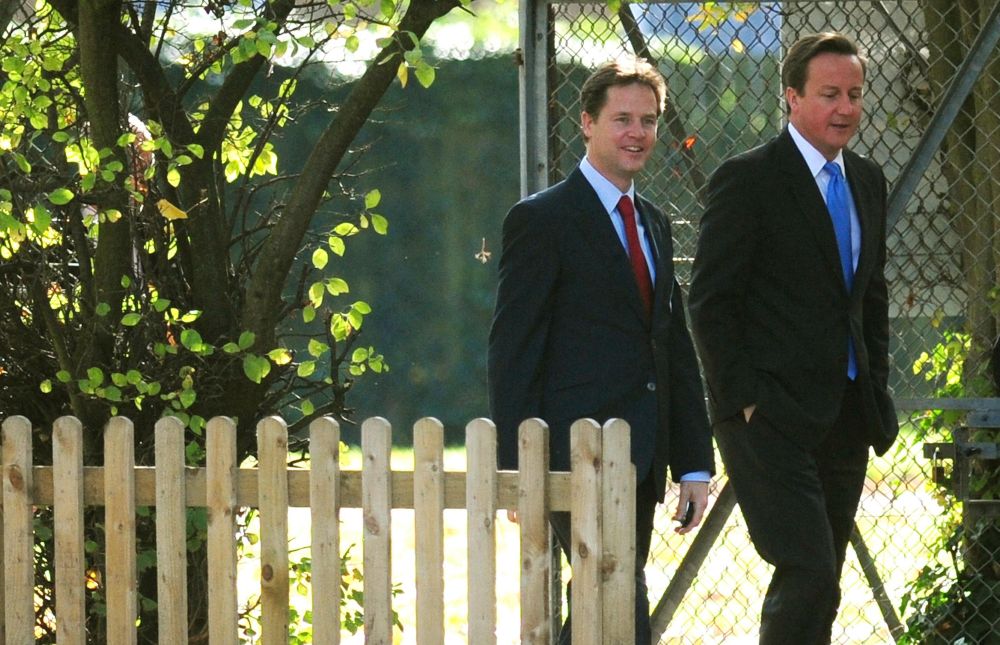
Ahead of the 2010 general election, the Liberal Democrats, under then-leader Nick Clegg, made a bold and memorable promise: a Lib Dem government would scrap university tuition fees.
But just seven months after Clegg’s party entered government as part of a coalition with David Cameron’s Conservatives, a motion to increase tuition fees in England to £9,000 was narrowly passed in the Commons.
The move split the parliamentary party, with more than half of Clegg’s MPs voting against the policy or choosing to abstain. Clegg, then the deputy prime minister, was moved to film an apology video in 2012, telling the camera through a downcast expression: “We made a pledge, we didn’t stick to it, and for that I am sorry.”
The U-turn was later seen as a key, if not the main, reason for the party’s subsequent collapse. At the 2015 general election, the Liberal Democrats won 8 per cent of the national vote share, down from the 23 per cent it won five years before.
The pain didn’t end there, though. The broken promise haunted the party long after it left office. Tim Farron, the Lib Dem MP for Westmorland and Lonsdale since 2005, admitted to PoliticsHome that he was “nervous” about the issue when he became party leader in 2015.
Fast forward to 2026, and the Lib Dems have seemingly taken a major step forward in exorcising the ghost of the tuition fees U-turn by announcing their boldest universities policy since falling out of office.
The party has announced that it would reverse the decision by the Labour government to freeze the threshold at which graduates repay their student loans, as well as write off student debt for public service workers, and reverse the National Insurance increase and international student levy to help improve university finances.
PoliticsHome reported at the time of the announcement that there was some nervousness among party figures about making the topic a major policy focus, even 15 years on from the U-turn.
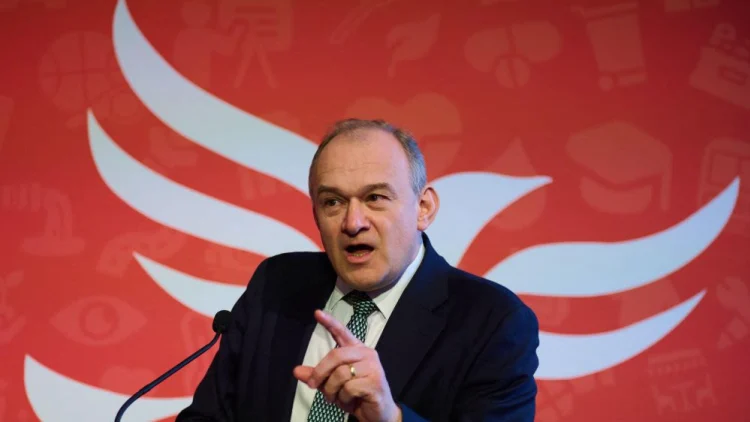
The Lib Dem MP for St Neots and Mid Cambridgeshire, Ian Sollom, who is leading on the policy for leader Ed Davey, acknowledged that student finance is an area “where we are still building trust”.
“We know that there will be a trust issue for many graduates around this particular issue,” he told PoliticsHome.
However, Sollom said that part of the way to build that trust is to “not go out and oversell what we have got”. He described the plans announced earlier this year as “pragmatic” and wants the policy to speak for itself.
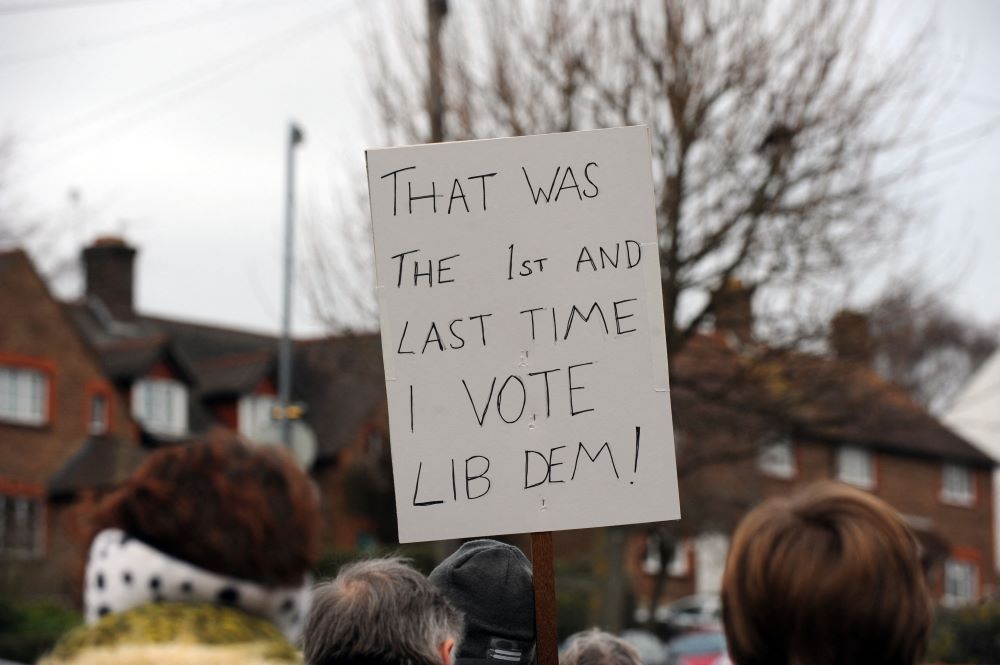
He added that “a lot of graduates have been prepared to put their misgivings about the Liberal Democrats behind them and actually have forgiven us or moved past those issues”.
“On this particular issue, it is important that we are mindful that we let this cohort down before and we…absolutely don’t want to do that again to the very same people,” he told PoliticsHome.
Why exactly does Sollom think the memory of the Lib Dems’ coalition U-turn lingered for so long?
“If I knew the answer, we might be able to make more progress,” he said.
“Like it or not, as a party, it was the defining thing that people associated the Lib Dems with in the period of coalition.”
Farron, who voted against the move in 2010, believes that the issue is no longer a problem for the Lib Dems.
“Even though I voted against the tuition fee rise, it was a thing that I was nervous of when I was leader, but that’s nearly 10 years ago,” he told PoliticsHome. “It’s right that we moved on. It doesn’t mean that it doesn’t matter, but it doesn’t constrain us now.”
Farron added: “That nervousness is a thing that those of us who spend a lot of time talking about politics might care about, but not 99 per cent, and so there’s a real liberation.”
Lib Dem MP Bobby Dean, who was at university himself when the rise in tuition fees was announced, told PoliticsHome that now is “absolutely the right time” for the party to take up the mantle on this issue, adding “a lot of time has passed since [the] coalition government”.
“If we’re going to be a serious national party with a serious national offer, then we can’t stand here and worry about the impression of a policy area from 15 years ago.”
Chris Annous, senior associate at More in Common, told PoliticsHome that people in Westminster can overplay the extent to which the rest of the country cares about decisions made by the coalition government.
“I don’t think many students now attribute their tuition fees to Liberal Democrats, because it’s been 15 years since that decision was made. They [fees] have increased further. The party’s not been in government for a long time.”
He added: “The impact of the coalition is not as extreme or perverse as many people in politics or Westminster like to assume.”
More in Common polling conducted in April last year found that the tuition fee increase was neither the most well-known nor most disliked coalition policy among respondents who were considering voting Lib Dem. Asked what coalition government decisions Lib Dems should be most proud of, respondents saw the bedroom tax and privatisation of Royal Mail in a more negative light than the tuition fees rise.
Amira Campbell, President of the National Union of Students, said it is not “impossible” for Davey’s party to rebuild trust with students.
“But it is certainly not an easy task. Students need tangible proof that they have a plan for real change and will actually deliver for them if given another chance.”
Campbell said that politicians from other parties “simply dismissing” the Lib Dems on the subject of student finance because of decisions taken fifteen years ago is “not only frustrating, but disrespectful to students”.
“Every party that has been in government over the last 28 years, since tuition fees were introduced, is at fault for the mess we are in,” she told PoliticsHome.
spiked is funded by readers like you. Only 0.1% of regular readers currently support us. If just 1% did, we could grow our team and step up the fight for free speech and democracy.
Become a spiked supporter and enjoy unlimited, ad-free access, bonus content and exclusive events – while helping to keep independent journalism alive.

Lambo Buyer or Just Pretending? #motivation #money #entrepreneur

Watch as Co Down 10-year-old smashes her 100th Parkrun

Huntington Bancshares: M&A Will Strengthen Preferred Dividend Coverage (NASDAQ:HBANP)


-

 NewsBeat2 days ago
Steven Gerrard disagrees with Gary Neville over ‘shock’ Chelsea and Arsenal claim | Football
-

 Business2 days ago
No Jackpot Winner and $194 Million Prize Rolls Over
-

 Fashion21 hours ago
Weekend Open Thread: Spanx – Corporette.com
-
Entertainment5 days ago
Fans slam 'heartbreaking' Barbie Dream Fest convention debacle with 'cardboard cutout' experience
-

 Crypto World3 days ago
Gold Price Prediction: Worst Month in 17 Years fo Save Haven Rock
-

 Tech6 days ago
The Pixel 10a doesn’t have a camera bump, and it’s great
-
Crypto World4 days ago
Dems press CFTC, ethics board on prediction-market insider trades
-
 Entertainment7 days ago
Lana Del Rey Celebrates Her Husband’s 51st Birthday In New Post
-

 Tech5 days ago
Avatar Legends: The Fighting Game comes out in July and it looks pretty slick
-

 Sports4 days ago
Tallest college basketball player ever, standing at 7-foot-9, entering transfer portal
-

 Tech4 days ago
EE TV is using AI to help you find something to watch
-

 Business3 days ago
Login and Checkout Issues Spark Merchant Frustration
-

 Fashion6 days ago
Amazon Sundays: Soft Spring Layers
-

 Tech6 days ago
Elon Musk’s last co-founder reportedly leaves xAI
-

 Fashion5 days ago
The Best Spring Trends of 2026
-

 Tech4 days ago
How to back up your iPhone & iPad to your Mac before something goes wrong
-

 Politics5 days ago
Should Trump Be Scared Strait?
-

 Tech5 days ago
Apple will hide your email address from apps and websites, but not cops
-

 Crypto World5 days ago
U.S. rule change may open trillions in 401(k) funds to crypto
-

 Tech5 days ago
Flipsnack and the shift toward motion-first business content with living visuals
You must be logged in to post a comment Login