
Politics
Our Survey: Badenoch backed on candidates and the party not running in Clacton

Kemi Badenoch has been criticised over this summer for four things that opponents, and some fellow Conservatives or Conservative supporters have raised.
The decision to back Joshua Bonehill-Paine as a council candidate, despite him having been jailed some years ago for a neo-nazi anti-semitic and misogynist hate campaign waged towards some former MPs including Luciana Berger, has prompted questions about her judgement, some on the pages of this site.
I repeat my own concern which was a the risk of looking like she’d made a special exception for a person who has been a vocal and passionate supporter of the lady herself for well over a year, whilst imposing a discipline on all her new candidates and seeing people such as Sir Grant Shapps rejected as a candidate.
The reassuring news for Badenoch is that our survey response, whilst it doesn’t tackle the case of Joshua Bonehill-Paine is clear on the decision to have all candidates sign up to the Party position on Net-Zero (which is not by the way to scrap it, just how you achieve it without hobbling bill payers) and to leaving the ECHR.

80 percent of responders back this candidate policy and only 16.8 percent disgree. Though of course to take part in our survery that 16.8 percent are still Conservatives members, or were at the time the survey took place. They may disagree but it hasn’t pushed them out.
Of course one by-election where no Conservative candidate is standing is the slightly bizarre Clacton vote this Thursday 13th August. Where the former MP Nigel Farage, leader of Reform UK, resigned the seat inorder to win it again. He is highly likely to do so, but even if he got every vote there was, and he won’t, the investigation into his funds, especially whether he should have declared a £5m ‘gift’ from a Thai based crypto billionaire, will simply resume, whatever the result.
Labour, the Liberal Democrats, Greens and Conservative party all decided not to field a candidate in what Badenoch branded a ‘fake’ by-election. Reform, predicatably, claimed everyone was scared of standing against Farage. Count Binface is currently his closest rival in the contest. Reform wasted no time on criticising the Tories for not standing.
But did Conservative members agree with the decision not to stand?

Well 73.4 percent said the Conservatives were right not to put up a candidate. They have already indicated they will field a candidate if a second by-election is held, if it comes as a result of a recall petition, should Parliamentary Standards Committee’s investigation lead to a suspension for breaching the rules (rules that apply to all MPs whatever their party) Again those members who disagree are not invisible, 22.3 per cent thought a candidate should have been chosen to contest Clacton, but there’s still almost three quarters of responders backing the party’s stance.
It’s led also to a much more mixed response to the question I suggested would find it’s definitive answer this year, about ‘uniting the right’ – a scenario that still tends to mean some form of accommodation between the Conservatives and Reform and/or possibly Restore.
There are still Conservatives who think Badenoch is wrong not to talk to Farage, and despair that Farage continues to claim the Tories are ‘dead’ or ‘finished’.

From these figures we can see 65.8 percent still think some form of ‘uniting’ will occur but are closely split on when that might be – slightly more thinking it will come after a general election. But that 27.3 figure who don’t believe it will happen at all is new, and larger than we’ve seen in the last two years.
What we don’t know is what proportion of that 27.3 per cent is unhappy about it but still believes it won’t happen (Badenoch has been absolutely clear she doesn’t want any deal) or whether they are all saying that because they like her believe it would be a mistake.
We’ve consistently argued that electoral maths would force the question, rather than individuals or party members but it seems further away as a prospect than it has for two years and I know a large number of Tories who put this down to what they see as a relentless campaign by Reform spokespeople to rubbish the Tories or declare they want to ‘destroy’ the party.
It’s a predictably human response to want to bite the hand that is constantly seeking to smack you in the face. My own view is it has been a motivator for committed Conservatives to get back to campaigning, after the impact of the 2024 election defeat.
The post Our Survey: Badenoch backed on candidates and the party not running in Clacton appeared first on Conservative Home.


President Donald Trump on Sunday once again blamed vandalism for the botched renovation of the Lincoln Memorial Reflecting Pool – but also made a startling confession about the evidence.
Or, rather, the lack of evidence.
“There was substantial other damage to the Reflecting Pool, also but, unfortunately, there is no video or proof, other than the damage, itself,” Trump wrote on Truth Social on Sunday.
Trump has not only blamed vandals for supposedly damaging the Reflecting Pool, but repeatedly insisted that he had proof.
“We have photographs, or tapes, like moving cameras, right?” he said just days ago.
Trump made similar claims multiple other times, including in June.
“We also have pictures,” he told reporters.
When pressed to show those images, he said they would come out in time.
“At the right time you’ll see it,” Trump said, per CBS News. “You’ll see it in court.”

Ken Cedeno / AFP via Getty Images
Trump was livid last week when Jeanine Pirro, the former Fox News host who is now US attorney for the District of Columbia, dropped criminal charges against former Olympic athlete David Hearn, who had been accused of damaging the Reflecting Pool.
Hearn had insisted all along that he was innocent, and last week, Pirro released a statement admitting that the damage was caused by a botched installation and not vandalism.
In his post on Sunday, however, Trump insisted that “a highly credible witness” who works for the National Park Service saw Hearn “violently” rip the “somewhat delicate coating.”
That also flies in the face of other Trump claims.
In May, for example, Trump said the lining was “so strong, so powerful” that it couldn’t be cut with a knife. He even drove his motorcade across it while it was being installed to inspect the work.

Alex Brandon – Pool/Getty Images
Trump admitted that “there was also some contractor error done,” but insisted it “was relatively inconsequential.”
Trump had the Reflecting Pool renovated in the spring in an attempt to restore it before the Independence Day celebrations over the summer. However, the project was almost immediately plagued by problems. In addition to the lining coming loose and peeling off, the pool turned green with algae only days after reopening.
Trump blamed vandals for the algae as well.
On Sunday, he said the Reflecting Pool would reopen “shortly.”
Listen to Commons People, the podcast that makes politics easy. Every week, Kevin Schofield and Kate Nicholson unpack the week’s biggest stories to keep you informed. Join us for straightforward analysis of what’s going on at Westminster.
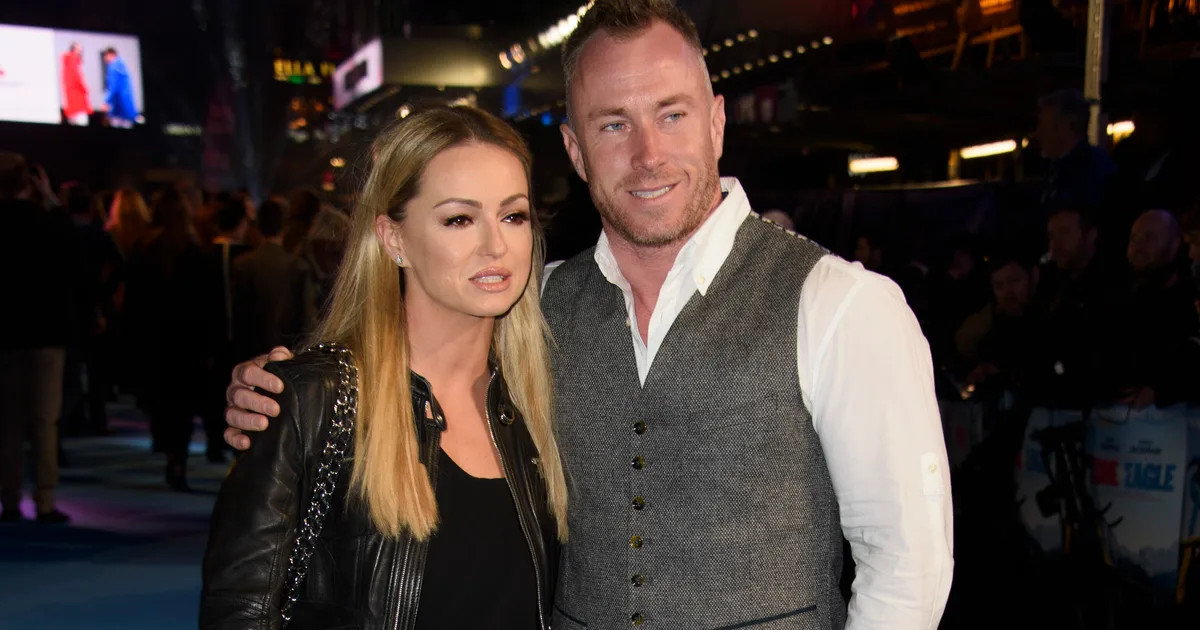
Former Strictly Come Dancing stars James and Ola Jordan have announced that they have split up after more than 25 years together.
In a statement, their representatives confirmed (as reported by The Independent): “It is with great sadness that I can confirm that James and Ola began a trial separation some time ago.
“Their shared priority remains co-parenting their daughter, Ella, and they are committed to putting her wellbeing first. They would greatly appreciate your understanding as they navigate this difficult time.”
James and Ola were already both competitive dancers when they met at an industry contest in 1999, before marrying four years later.
They were both then cast as Strictly professionals in 2006, with James remaining part of the BBC dance show until he left under something of a cloud in 2013, following numerous controversies during his stint.
Ola – who won the show in 2009, when she was paired with sports presenter Chris Hollins – lasted slightly longer, parting ways with Strictly after the 2015 season.
In 2020, the couple welcomed a baby, a daughter named Ella.
Following their respective departures from Strictly, the pair continued to make appearances on reality TV, both as a pair and as individuals.
James twice competed on Celebrity Big Brother, making it to the final during his first stint.
He later finished in second place on the 2019 season of ITV’s now-defunct celebrity skating show Dancing On Ice.
Ola, meanwhile, had been booked to compete on the infamous winter sports contest The Jump in 2014, but was one of several stars who had to withdraw due to injury.
Following her Strictly exit, she was cast on I’m A Celebrity, Get Me Out Of Here!, and served as a judge for two seasons of the Polish version of Strictly Come Dancing.
As a couple, James and Ola were judges on the BBC dance series Dancing On Wheels in 2010 (which was won by the Caroline Flack and her partner) and also appeared on Celebrity Coach Trip, Celebrity Through The Keyhole and Let’s Sing And Dance For Comic Relief.

Senator Chris Murphy (D-Conn.) argued on Sunday that US President Donald Trump hasd already lost the war on Iran.
Last week, the Trump administration said it was approaching an Iran deal to reopen the Strait of Hormuz, a key shipping chokepoint for global oil, but negotiations have remained stymied. Iranian leadership declared on Saturday that they won’t reopen the waterway unless the US meets its sweeping demands, including war reparations.
“Donald Trump has lost this war,” Murphy said. “America is weaker. Iran is stronger. The price to reopen the strait increases by the day. The supposed deal that’s on the table right now would pay Iran $100 million, excuse me, $100 billion a year, in order to reopen the Strait. That is one-third of Iran’s entire economy.”
Murphy described the latest deal as a “victory for Iran” because at the end of the war, they will “get paid to reopen the Strait” and receive funding to rebuild their military.
NBC’s Meet the Press moderator Kristen Welker asked Murphy if there was any deal that could be negotiated between the U.S. and Iran that he would support in order to “declare victory and move on.”
“Yes, I will support a deal to end this war and reopen the strait. I am prepared to support a bad deal to end this war and reopen the strait because the only deal that is available at this point in time is a terrible bad deal.”
Murphy then discussed the stress that Americans were experiencing as the prices of gas and food continued to rise.
“But the war needs to end because every day that the war continues, America gets weaker, Iran gets stronger, and people here in the United States get screwed, as prices go up and up and up,” he said.
Watch Murphy’s appearance on “Meet the Press” below. Skip to the 5:53 mark to hear his comments about the war in Iran:
Listen to Commons People, the podcast that makes politics easy. Every week, Kevin Schofield and Kate Nicholson unpack the week’s biggest stories to keep you informed. Join us for straightforward analysis of what’s going on at Westminster.
This article contains discussions of self-harm.
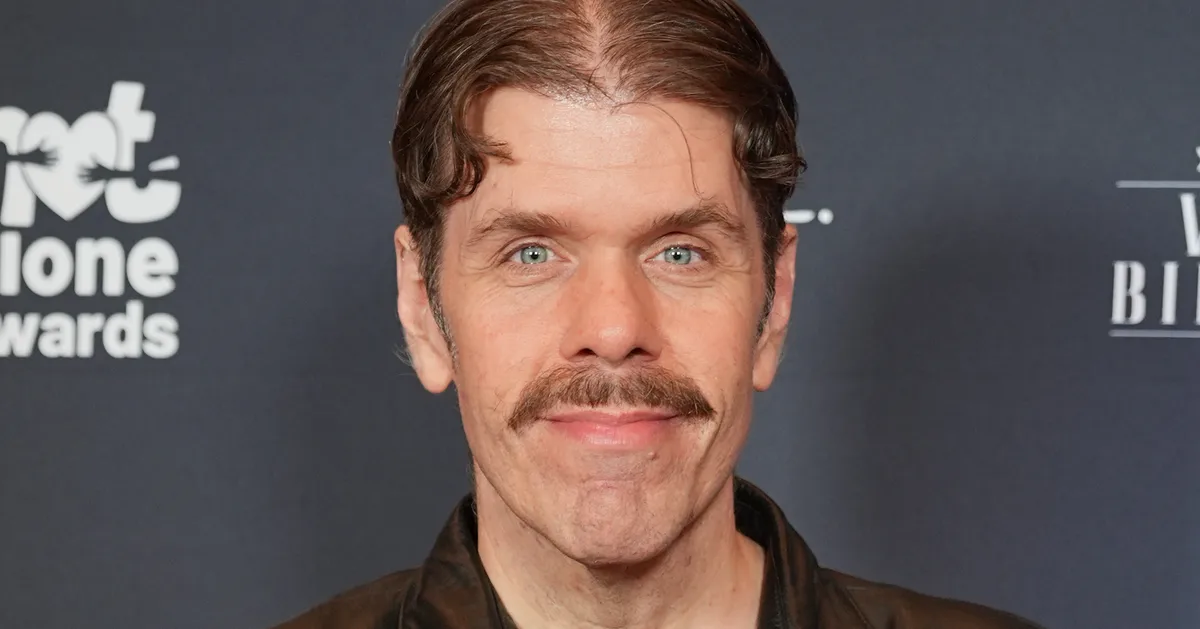
Perez Hilton’s family has given an update on the celebrity blogger following his recent hospitalisation.
Last week, police officers were called to Perez’s home in Miami in the wake of a TikTok livestream in which he appeared to be self-harming.
The former Celebrity Big Brother housemate – whose legal name is Mario Lavandeira – was then taken to a nearby hospital for medical treatment where he has remained since.
In a statement posted on his blog over the weekend, his loved ones said that his condition remains “serious but stable”, noting that he has a long recovery ahead as a result of the injuries he sustained during what they previously described as a “severe mental health crisis” that resulted in him “harming himself”.
“Perez’s condition remains serious but stable,” they wrote. “He experienced significant blood loss and sustained additional injuries that will require surgery in the coming days.
“His treatment and recovery will be a long process. We are grateful that Perez was able to spend time with his mother and sister yesterday.
“As our family remains focused on Perez’s treatment and recovery, we also need the space and privacy to care for everyone affected by this situation.”
The family noted that Perez’s “communication has been extremely limited and confined to immediate family, medical providers, and others directly involved in his care” insisting he “has not communicated with the media or issued any public statements”.
At the end of their statement, they reiterated that there is “absolutely no reason for members of the media or the public to remain outside the family’s home” requesting “members of the media to leave the home and surrounding area, stop following family members, and cease photographing Perez’s children”.
It was also pointed out that Perez’s own blog has “maintained a ‘no kids policy’” for the last decade, requesting privacy for his own three children, who are aged 13, 12 and eight.
Before that, the family’s most recent statement had said that their “highest priority right now is helping the children begin to heal from what they experienced” following what was referred to as the “livestream incident”.
They noted that his children, niece and sister had been at his home before the livestream got underway, but “immediately fled to protect the children from witnessing any further trauma” when it “became clear that Perez was experiencing a severe mental health crisis and harming himself”.
Perez first rose to notoriety in the mid-2000s thanks to his celebrity news blog, where he frequently generated controversy due to his blunt, and often disparaging, commentary on the public figures he covered.
In the 2010s, he insisted that he’d be changing the tone of his reporting, telling Ellen Degeneres on her daytime show that he wanted to “be part of the solution and not part of the problem”, after being called out by numerous celebrities for “bullying”.
He later claimed to the New York Times: “What’s important for me is not being liked, but it is that people think I am no longer toxic to the world.”
Since the beginning of this year, Perez has experienced a number of health struggles, having been hospitalised with severe sepsis back in March.
In the months that followed, he shared that he’d been hospitalised for a second time due to deep vein thrombosis.
Help and support:
- Mind, open Monday to Friday, 9am-6pm on 0300 123 3393.
- Samaritans offers a listening service which is open 24 hours a day, on 116 123 (UK and ROI – this number is FREE to call and will not appear on your phone bill).
- CALM (the Campaign Against Living Miserably) offer a helpline open 5pm-midnight, 365 days a year, on 0800 58 58 58, and a webchat service.
- The Mix is a free support service for people under 25. Call 0808 808 4994 or email help@themix.org.uk
- Rethink Mental Illness offers practical help through its advice line which can be reached on 0808 801 0525 (Monday to Friday 10am-4pm). More info can be found on rethink.org.
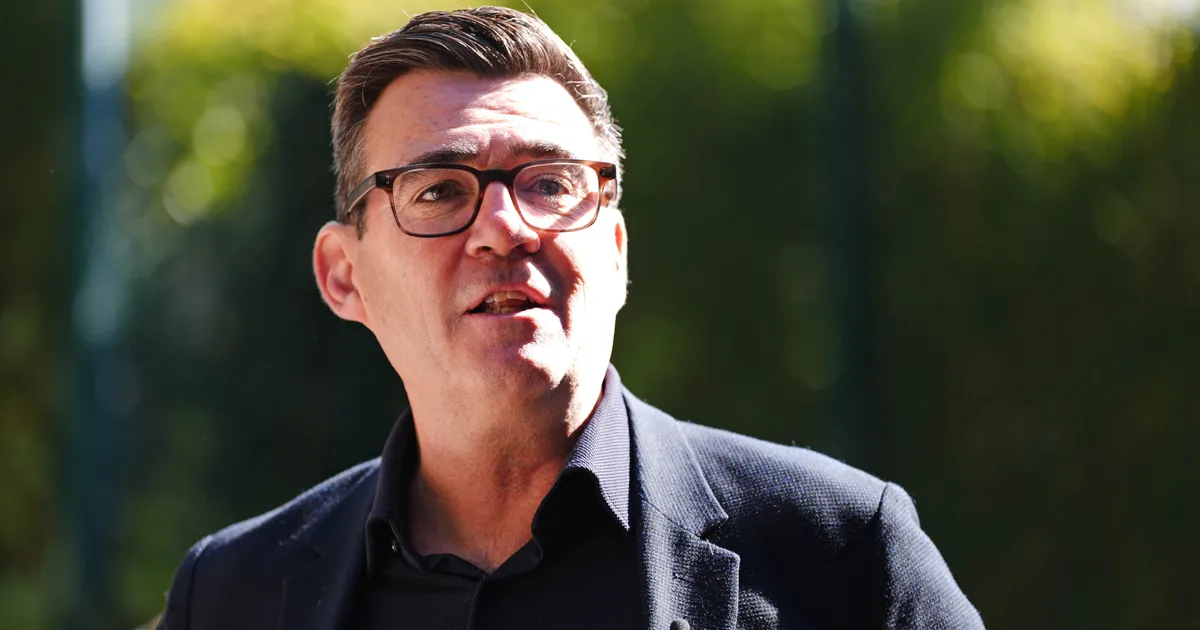
Andy Burnham is to announce a crackdown on “rip off discounts and subscription traps” to help hard-pressed Brits deal with the cost of living crisis.
The prime minister will unveil a raft of “everyday fixes” to save people money as he tours the country throughout the rest of August.
Burnham said people are “sick and tired” of shops claiming to have slashed their prices when in reality they haven’t.
New measures to make it easier for people to cancel online subscriptions will also be introduced, potentially saving customers across the UK a staggering £1.6 billion.
The PM said: “I know people are sick and tired of rip-off discounts and subscription traps.
“Westminster has got used to telling people that everyday hassles like this are just part of life. I don’t think that’s right, especially when the cost of living continues to weigh heavily on so many people’s lives.
“I’m determined to pull every single lever we can to provide people with some room to breathe on the cost of living.”
Under the plans, retailers will be banned from claiming prices in their shops have been discounted when they have not been in an attempt to trick customers into thinking they are getting a bargain.
New rules will also come into force in January 2027 forcing companies to provide clearer information on the cost of subscriptions, and making it much easier to exit contracts.
A new 14-day cooling-off period will also let consumers cancel when a trial subscription ends, or long-term contract renews.
Burnham said: “We’re putting an end to phoney bargains. If something is advertised as half price, it should actually be half price. We’re also making it as easy to leave a subscription as it is to join.
“These are just two of the everyday fixes we’re going to be rolling out – today is just the start. We want to put more money in people’s pockets and give people hope that politics really can work for them and their everyday lives.”
Sue Davies, head of consumer rights policy at Which?, said: “It’s great news that the government intends to tighten up the law and explicitly ban misleading pricing practices, while putting an end to subscription traps.
“The government must implement these rules swiftly to give consumers much-needed protection against sneaky pricing tactics and hold businesses to account with tough enforcement, including fines, if they fall short.”
Dame Clare Moriarty, chief executive of Citizens Advice, said: “For too long consumers have been tricked into paying for products or services they don’t use – or didn’t even want to begin with – costing millions of pounds each year.
“So we really welcome the government’s move to speed up action on subscription traps and look at banning other tactics firms use to catch consumers out.”
Burnham’s government has already removed VAT from electricity bills, capped bus fares at £2 outside London and slashed business rates on hospitality businesses by 20%.
Listen to Commons People, the podcast that makes politics easy. Every week, Kevin Schofield and Kate Nicholson unpack the week’s biggest stories to keep you informed. Join us for straightforward analysis of what’s going on at Westminster.


Saudi Arabia has used 86% of its Patriot interceptor missiles, meaning it is now vulnerable to attacks from Yemen.
It used these stockpiles in the first 38 days of the US and Israel’s illegal attacks on Iran, when Iran defended itself against Gulf nations propping up the US and Israeli regimes. This means that out of a stockpile of 2,800 PAC-3 interceptors, Saudi Arabia only has 400 remaining.
Similarly, the US used 65% of its stockpiles, leaving the violent coloniser with only 850 out of 2,330 missiles.
Saudi Arabia and the Patriot missile system
The Patriot system (Phased Array Tracking Radar for Intercept on Target) is a mobile surface-to-air missile that works in all weathers and at long range. US-based RTX Corporation builds it.
It can detect, track, and engage unmanned aerial vehicles (UAVs), cruise missiles, and short-range or tactical ballistic missiles.
Usually, militaries use them to protect a specific asset or location.
A single new Patriot battery costs over $1bn. This includes $400m for the system and $690m for the missiles.
Of course, Saudi Arabia’s dwindling supplies mean that the Gulf nation is now far more vulnerable to attacks from Yemen.
Only yesterday, the Houthis struck a gas plant in Al Jubail.
BREAKING: Yemen’s Houthis have just struck the Saudi Aramco Berri Gas Plant in Al Jubail, Saudi Arabia, one of the largest gas processing facilities in the country. NASA FIRMS Satellite imagery also shows a massive fire burning at the site.
This is the first attack on Saudi… pic.twitter.com/58vGdp0Ohs
— The Hormuz Letter (@HormuzLetter) August 9, 2026
This came only two days after the Kingdom signed a defence pact with Turkey and Pakistan in response to regional instability caused by the US and Israel’s illegal attacks on Iran.
According to the Guardian:
The attack early on Sunday came after Iran issued tough new demands to reopen the strait of Hormuz, and the United Arab Emirates said one of its ships had been targeted by an Iranian missile, as a deal to open the strategic waterway remained out of reach.
Yemeni forces also struck a “sensitive target” at Najran airport in southern Saudi Arabia on Thursday.
Yemeni forces struck a “sensitive target” in a drone attack at Najran airport in southern Saudi Arabia on Thursday, near the Yemeni border, according to a Tasnim News report.
The attack comes as tensions widen across Yemen. Tasnim reports the UAE is simultaneously seeking to… pic.twitter.com/xyBoDVBdXQ
— Drop Site (@DropSiteNews) August 8, 2026
Of course, Saudi Arabia has continued to bomb Yemen. Only today, a Saudi drone dropped two shells on the Ghor al-Mashawat area in the Gamr directorate.
عاجل
مراسلنا في صعدة: طائرة مسيّرة تابعة للعدو السعودي تلقي بقذيفتين على منطقة غور المشوات بمديرية غمر pic.twitter.com/pHKytjcbkC— قناة المسيرة (@TvAlmasirah) August 9, 2026
As is standard when innocent people are being bombed, both the US and UK governments have been supplying arms to Saudi Arabia. At the same time, it has committed atrocity after atrocity in Yemen.
For almost 12 years, Saudi has bombed civilian infrastructure including homes, hospitals, schools and mosques. It has murdered over 12,000 civilians.
But I guess killing civilians is fine when it’s green-lighted by white Western colonialists who can make a few quid selling weapons.
Replenishing supplies
The US government recently approved the sale of 5,250 more missiles to Bahrain, Kuwait, Qatar, and the United Arab Emirates.
Additionally, the US Army signed a $58.6bn contract with Lockheed Martin to produce Patriot interceptors. This is the largest order of its kind in the program’s history.
The homing heads for the missiles are manufactured at Boeing facilities at a rate of 500–650 units per year, but Lockheed Martin is the prime contractor for the missiles themselves. This means that this contract will span over seven years, so stockpiles will not be replenished immediately.
But until stocks can be replenished, Saudi Arabia might just get a taste of its own medicine.
Saudi Arabia has propped up the US and Israel’s illegal attacks on Palestine, Lebanon, and Iran — siding with the Zionists, whilst also committing its own war crimes in Yemen.
Now it’s nearly out of interceptor missiles, and I highly doubt the likes of Israel will rush to protect it.
Feature image via National Guard/YouTube
By HG
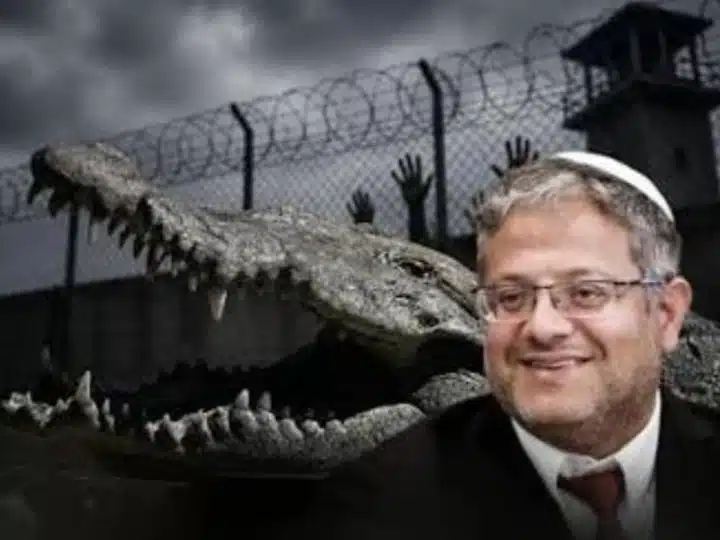

An Israeli occupation court has temporarily stopped the transfer of Nile crocodiles to Ketziot Prison in the Southern Negev, a facility used to hold Palestinian detainees from Gaza and the occupied West Bank, including freedom fighters.
Planned use of crocodiles at prison was to further humiliate and dehumanise Palestinians
The project, which was promoted by so-called national security minister Itamar Ben-Gvir, involved digging a moat around a high-security section of the prison, and filling it with crocodiles. It would have added a deliberately intimidating, humiliating and dehumanising spectacle to an already brutal detention environment for Palestinian prisoners, if given the go-ahead.

It was first documented in December 2025. “Israeli” Channel 13 reported that Ben-Gvir had proposed creating a “detention facility surrounded by crocodiles,” and the Israel Prison Service (IPS) was examining the proposal. B’Tselem Chair, Orly Noy, described the plan as:
another grotesque example of the cannibal stage in which Israel is at right now.
Millions of Shekels allocated for the project
On 22 July, Ynet reported that excavation work had started on trenches at Ketziot, intended to hold the crocodiles. The government allocated 21 million shekels — more than £5 million — for this pilot project.
But the project faced objections from the Nature and Parks Authority, which said it could not continue under existing regulations. Nile crocodiles are protected wild animals, and can only be kept for approved purposes, such as education or research. So environmental protection minister, Idit Silman, reclassified the animal as a “cultivated wild animal.” This reclassification created a route for state bodies, in this case the IPS, to keep crocodiles at the prison. But animal-welfare and holding conditions had to be met.
Let the Animals Live, an Israeli animal-rights organisation, then filed a petition against the plan. The group argued that Silman had ignored the advice of legal officials and the Nature and Parks Authority. And it also said the authorities had not properly examined the possible harm to the animals.
On 2 August, a temporary order was issued, preventing the government from carrying out the crocodile transfer to Ketziot. It also barred authorities from locating or preparing crocodiles for the transfer. The state was ordered to respond to the petition before the court decides whether the restrictions should continue.
Ban may only be temporary
The order is expected to remain in effect until the response, expected by 16 August.
Ben-Gvir claimed the court was taking the side of “terrorists.” He said:
Once again, in a time of war, the legal system sides with the terrorists, thwarting important steps for Israeli deterrence….We know that the terrorists are worried about the arrival of the crocodiles, but today the court came to their aid.
Unsurprisingly, the court did not rule the entire project unlawful. The treatment of the Palestinian prisoners held inside Ketziot Prison is irrelevant to its decision. It is only concerned with the government’s authority to proceed and the welfare of the crocodiles.
Ketziot, also known as Naqab Prison, or Ansar 3, is used to hold Palestinian “security” detainees. It has become a central site in allegations concerning the Israeli occupation’s treatment of Palestinians.
A multitude of reports detail these injustices, especially since the beginning of “Israel’s” genocide in Gaza. According to the UN Special Rapporteur on Torture, Ketziot prisoners have been beaten and sexually assaulted. Windows have intentionally been removed, and prisoners forced to sleep on bare iron beds without mattresses.
A July 2024 UN Human Rights Office report is titled Detention in the context of the escalation of hostilities in Gaza. It details how Keter riot-control guards at Ketziot repeatedly beat detainees during daily head counts. It also describes a Palestinian detainee being beaten in front of his son and being given pure alcohol instead of water for medication.
Ketziot Prison — site of a multitude of human rights abuses
B’Tselem published a report, in August 2024, titled Welcome to Hell: The Israeli Prison System as a Network of Torture Camps. It is based on testimonies from 55 Palestinians detainees, in prisons including Ketziot. Violence, sexual abuse and humiliation, deliberate starvation, denial of water and medical care, sleep deprivation and unhygienic conditions were all documented.
“Israel’s” Public Defense Office have also described conditions faced by Palestinian prisoners at Ketziot Prison as “unfit for human beings.” They visited three times, reporting detainees’ accounts of severe and systematic violence by guards. Detainees said they were beaten whenever they left prison wings to attend medical appointments, meet lawyers or participate in legal proceedings. Prisoners showed inspectors red welts, swelling and scabs on their wrists. The reports said violence was also used during cell searches and while prisoners were lying face down.
The detainees described being forced into painful and humiliating stress positions during roll calls and while being taken to clinics, lawyers’ meetings and legal hearings. Some said restraints were tightened so severely they caused wounds and forced them to walk unnaturally to reduce the pain.
Prisoners also suffered from severe hunger, weakness, dizziness and fainting linked to inadequate nutrition. Denial of drinking water, extreme overcrowding, poor sanitation and scabies outbreaks were also the norm.
Plans for crocodiles but still no plans to investigate severe abuse against Palestinian prisoners in Ketziot prison
In a BBC report, one former detainee said he witnessed sexual assault at Ketziot. And he described being beaten with batons, suffering injuries that left him unable to move normally for almost two months. Others said electric shocks, threats involving dogs and denial of medical treatment were also used.
Although the IPS have denied allegations of systematic abuse at Ketziot Prison, the accounts of human rights violations in the prison are consistent, and require an independent investigation.
The Israeli occupation’s government was prepared to change wildlife regulations to make this project possible. It excavated parts of the proposed moat and promoted the idea as a deterrent. But, at the same time, official inspectors were recording complaints of starvation, beatings, painful restraints, disease and the denial of basic hygiene at the same prison.
“Israel” has presented Palestinian prisoners as people who must be controlled through fear, while failing to answer allegations that its own prison system has subjected them to conditions unfit for human beings.
The injunction does not resolve what is happening inside Ketziot, it only pauses one grotesque proposal. The wider system that placed Palestinian detainees in the prison, very often without charge or trial, remains intact.
Until those responsible are investigated, and Palestinian detainees are granted the protections required by law, Ketziot will remain another monument to the Israeli occupation’s system of crimes and impunity.
Featured image via Twitter
By Charlie Jaay
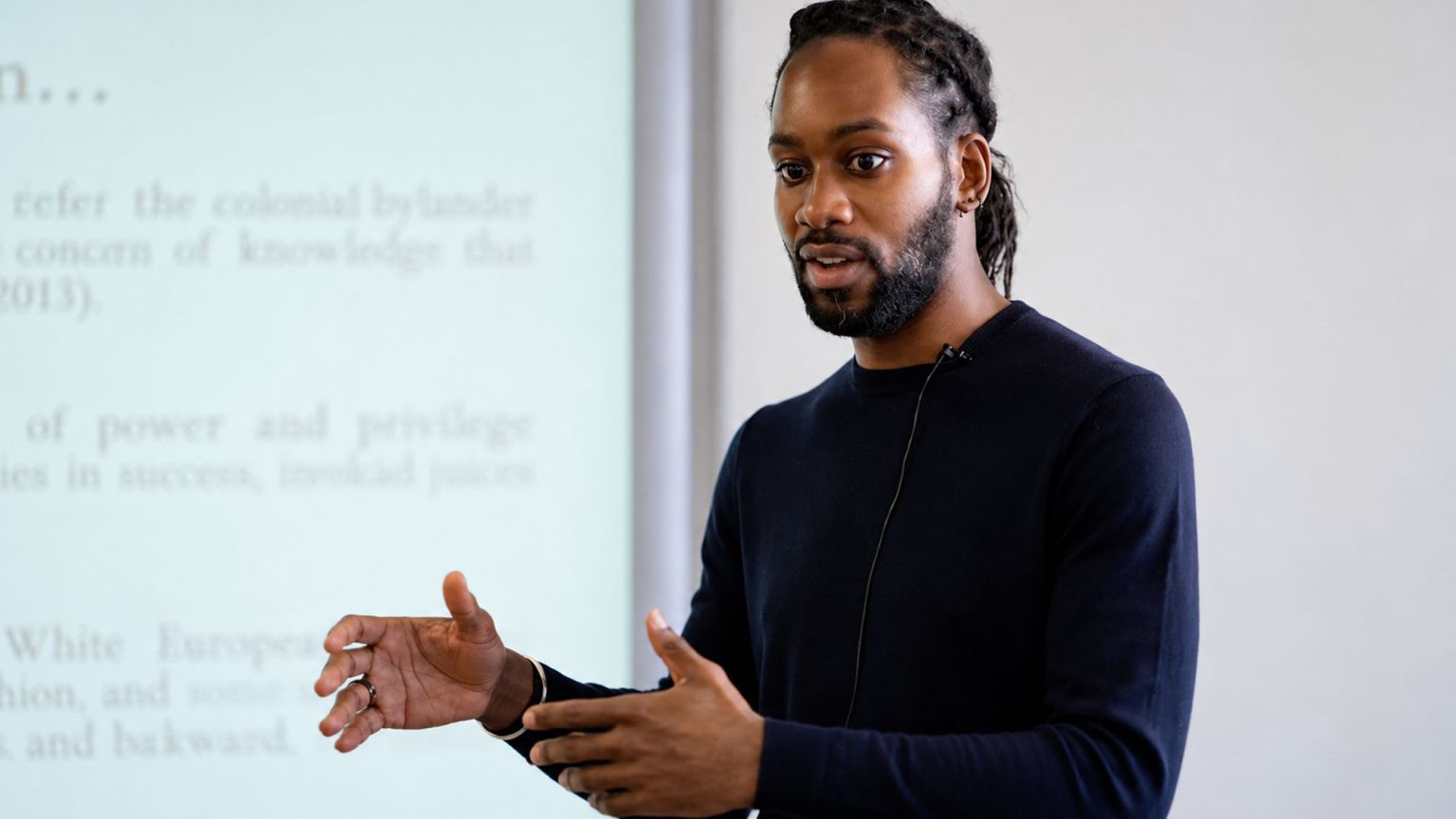
Sociology, as both a discipline and a subject, has long been questioned and ridiculed by sections of academia and the media. ‘It isn’t a real science’ is the common response when I tell people I am a sociologist.
So during what are already horrendous times for those working in higher education, the last thing sociologists needed – a month before term starts and, more importantly, before clearing – was a scandal that undermines higher education and helps delegitimise the whole subject of sociology. Unfortunately, that is precisely what has happened in the shape of the Jason Arday affair.
The now ex-sociology professor has been the star of Britain’s so-called silly season, when parliament closes and news reporters look elsewhere for stories. As many will now know, Arday has been accused of plagiarism, fabricating data and creating a seemingly Walter Mitty-esque backstory – one featuring incredible feats and jaw-dropping triumphs over adversity. And up until this week, he was the professor of sociology of education at the University of Cambridge – a prestigious position at one of the most prestigious universities in the world.
The Arday fiasco has unfortunately fuelled the widespread mockery of the discipline in which he found it all too easy to ‘excel’. So, as a sociologist with an undergraduate degree, a master’s in social-science research methods and a PhD in sociology, I feel the need to defend the subject I love and reclaim respect for the sociologist.
I want to reassure students currently preparing to start, or re-start, their studies in September that sociology is far from a ‘Mickey Mouse’ subject – this despite the damage done by university HR departments forcing through dense, complicated yet inane statements about equality, diversity and inclusion, and by some social scientists themselves.
Sociology matters because it reveals how power works and moves through society. It questions what appears to be ‘normal’, especially when the practices, views and activities ‘normalised’ cause harm. Social scientists have changed and challenged the worldviews of millions of people – their work has done a tremendous amount of good.
If we go back to British sociology in the 1950s and 1960s, we find Family and Kinship in East London, a research project by Peter Willmott and Michael Young, the father of Toby Young of the Free Speech Union. Fondly called ‘FAKINEL’ by the working-class East Enders whose lives it examined, the study followed families from bombed-out post-war Bethnal Green as they embarked on their new lives on council estates in Essex.
The research was groundbreaking because it showed that family ties and networks were crucial to working-class people. It argued powerfully that a sense of community needed to be built into the modern council estates appearing across the country during the mass council-house-building programmes of the mid 20th century. It is a message and a sentiment we still need to remember today.
Another important contribution came in the form of the Affluent Worker studies, carried out in Luton in the 1960s and undertaken by academics concerned with class in Britain. Their research in Luton’s car-manufacturing plants showed that some working-class people held relatively well-paid and skilled jobs. This made them ‘affluent’, insofar as they could buy homes, cars and consumer goods, a marked difference from other sections of the working class and from earlier generations.
Why was this important? Because it told the story of how work can offer working-class people dignity and a real chance to escape poverty. Although the study is almost 60 years old, I believe its message about the importance of work remains vital.
Then there is Paul Willis’s 1977 study, Learning to Labour. It used ethnography, another research method now being lambasted because of the ridiculous rise of Arday, some of whose papers are based on something called ‘auto-ethnography’ – which boils down to writing from one’s own experience.
Nevertheless, Willis’s research still resonates today. He found that working-class lads in schools in working-class areas were being taught and trained specifically for manual work. The academic side of education was denied to them because it was (wrongly) assumed that it would be wasted on them. This work seems particularly resonant right now given our new Labour prime minister and education secretary recently floated the idea that it would be better for working-class sections of society to focus on a more practical, less academic education leading to apprenticeships. Willis’s work shows how easily we can step back into the old class tropes – that some of us are not suited to academia, and that education is therefore wasted on us.
I know this to be untrue from first-hand experience. I am a working-class woman. I worked for many years in factories, grew up and lived on council estates, and I can also read and critique high academic theory.
So, in light of the Jason Arday affair, I ask the public to look beyond the stupidity and Marie Antoinette-like practices of elite universities, and remember what the discipline of sociology can achieve when practised properly.
I also make a plea to my fellow academics: stop allowing this to happen. Stop allowing academic institutions to make appointments and pursue policies that denigrate everything we do. We need to go back to first principles. We need to forget the identity politics, the DEI quotas and the tick-boxes, and support and fund what we do best – deepening knowledge of what is really happening in society and arguing why that matters.
Lisa McKenzie is a working-class academic.
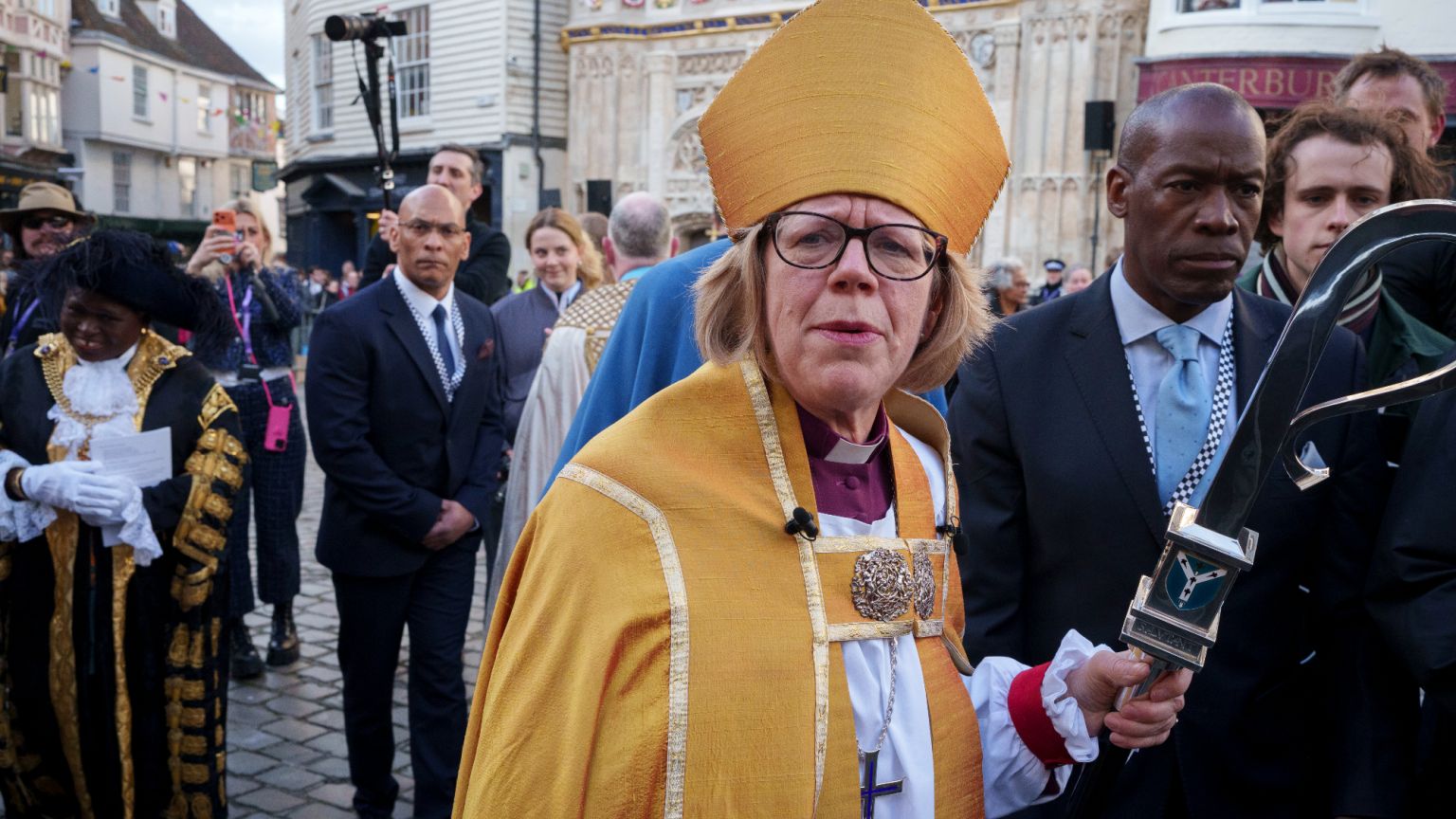
You can see why the Church of England thought ‘Project Spire’ would be a good name for its multi-million-pound ‘reparations’ scheme. Yet if Archbishop of Canterbury Sarah Mullally or her predecessor Justin Welby had read William Golding’s The Spire, this might have given them reason to reconsider.
Golding’s story of Dean Jocelin, a man consumed with an obsessive determination to build an enormous cathedral spire despite the building lacking adequate foundations, makes for an unfortunate analogy. Ignoring all warnings, Jocelin’s mad vanity project consumes vast resources and ultimately brings ruin and suffering to himself and others.
Had the current or past Archbishop of Canterbury paused to reflect on this precautionary tale of grand moral vision detached from reality, they might not have embarked on their foolhardy ‘Project Spire’, which will result in the Church of England giving up £100million for its role in the transatlantic slave trade.
I am not a member of the Church of England, and yet as someone who spends ever more time in church and is probably on a slow and steady path to Christian worship, I have an interest in this scheme.
Nothing in Project Spire appeals to me or what I want from church. It is not only intellectually lazy and ethically dubious, it is also – on a practical level – ruinous. Quite literally. We have parish churches, in desperate need of roof and other repairs, that will lose out on funding support because random Ghanaians or Cameroonians who never experienced the harms of slavery are somehow judged to be deserving of a windfall. And while the church insists Project Spire will not reduce parish funding because it comes from a separate endowment, the reality is that the £100million used for reparations cannot be used to support ministry or preserve church buildings.
Indeed, there is a cruel irony in the name given to this project when it will have the effect of reducing central church support for the repair of spires. Like that of St Mary the Virgin in Bottesford in Leicestershire – its celebrated 212-foot medieval spire is one of the finest in England and is suffering from structural issues and deteriorating stonework.
What I find interesting is what motivates all this. Who is Project Spire for? Are there millions of Nigerian Christians putting pressure on the church over this stuff, or is it driven by Mullally herself? What good does it do? We all know the slave trade was wrong – we also know Christians like William Wilberforce and the Clapham Sect were at the forefront of ending it, often at great expense to themselves. It was the Royal Navy’s West Africa Squadron that patrolled the seas to supress the slave trade after Britain had led the way in abolishing it in 1807. Indeed, parish churches up and down the country sent petitions to parliament calling for abolition long before the legislation was passed.
Who does it benefit to go on about the historic slave trade? If it is being done with an eye to the congregations of the future, it is a remarkably short-sighted ploy. Having spent considerable time in West Africa, where Mullally made a trip this week, I am convinced that obsessions over the distant past preoccupy the minds of ordinary people in Africa far less than they do self-flagellating white liberals in the developed world.
I suspect the motivations are not even as pragmatic as filling the pews. Instead, as so often with the woke shibboleths of our age, I suspect the call for reparations comes from a mix of guilt, partial historical knowledge and weakness in the face of shouty activist groups.
This despite the powerful moral case made by Nigel Biggar, regius professor emeritus of moral theology at Oxford University, who has pointed out that we can accept the grave evil that slavery represented, without concluding that this imposes on us a duty to pay reparations. After all, so much time has now passed and Britain has already expended significant resources abolishing slavery. It would also be extraordinarily difficult to identify the victims or beneficiaries today, and, most important of all, Brits today should not bear moral guilt simply because of the possible actions of some of their ancestors.
Or what of the arguments of distinguished historians like Robert Tombs? He has persuasively shown that the reparations argument is flawed on historical grounds, pointing that Queen Anne’s Bounty investments in the South Sea Company are not obviously linked to the slave trade.
Speaking of keeping true to history, in meeting the King of the Ashanti in Ghana last Wednesday, one would have hoped Mullally would have been reminded of the role the Ashanti Kingdom played in the transatlantic slave trade during the 18th and early 19th centuries, and which became an important source of the Kingdom’s wealth and military power. Most historians reject the idea that the trade was simply imposed by Europeans, instead recognising that it was a commercial system in which African states and merchants exercised agency as did European slave buyers.
But the argument against reparations need not rely only on the fact that the historical case is disputed, or on Christian morality’s position against assigning inherited guilt. Nor even on the question of what the law allows, when the Church Commissioners’ endowment is held for statutory purposes, such as supporting the ministry of the church and parish life, rather than for international money transfers. There is also the simple fact that this crusade risks politicising and disunifying the church. Instead of uniting worshippers around the Christian faith, a church that allows itself to become a vehicle for contemporary political causes undermines its moral authority and alienates ordinary churchgoers.
Mullally may be more interested in reparations than repairs. But she should ditch the progressive crusades, and focus on fixing some church roofs.
Ameer Kotecha is CEO of the Centre for Government Reform. He was formerly a senior diplomat, serving as the head of the British consulate in Russia from 2023 to 2025.
spiked is funded by readers like you. Only 0.1% of regular readers currently support us. If just 1% did, we could grow our team and step up the fight for free speech and democracy.
Become a spiked supporter and enjoy unlimited, ad-free access, bonus content and exclusive events – while helping to keep independent journalism alive.

Could your tattoo stop you from getting a job?

BTC above $65,000 even as the Senate punts the CLARITY Act to the fall

I’ve used the Pixel 10 Pro a year. I hope Google fixes these nagging issues on the Pixel 11 Pro


-

 Fashion3 days ago
Frugal Friday’s Workwear Report: Cap-Sleeve Pointelle Crewneck Sweater
-

 Fashion3 days ago
Weekend Open Thread: Mattifying Sunscreen
-

 Sports4 days ago
Jordan Coyle & Cordiamo take Laya Arena Stakes at RDS
-
 Business4 days ago
US stocks: Dow closes at record on Mideast optimism; SpaceX, AMD drag Nasdaq
-

 News Videos2 days ago
Can Astrology Help Find Gold and Silver Trends? A Financial Astrology Guide
-

 Crypto World6 days ago
US Tech Stocks See Largest 5-Week Inflow in History: Can Nasdaq Break Its Downtrend?
-

 Politics4 days ago
Reform UK And Greens Sink To Lowest Favourability Ratings To Date
-

 Business5 days ago
Nvidia Stock Climbs 2.5% as Chip Sector Rally Builds Ahead of AMD Earnings, Nvidia’s Own Report Looms
-

 Crypto World6 days ago
Polymarket targets $20 billion valuation as competition heats up in prediction market sector
-

 Tech5 days ago
OpenAI, Anthropic AI agents targeted real people and systems in cyber tests
-

 Business4 days ago
Supply chain issues impact Ingredion
-
 Crypto World6 days ago
CLARITY Act Senate Vote Locked In, But 60-Vote Hurdle Looms Large
-

 Tech2 days ago
Rinn Pharma & Biopharma to join NordicPharmaTrain network
-

 Crypto World6 days ago
The Senate has one week: CLARITY’s last August window
-

 Crypto World5 days ago
Dow and S&P 500 Hit Records on AI Earnings: When Will the Bubble Burst?
-
 Crypto World7 days ago
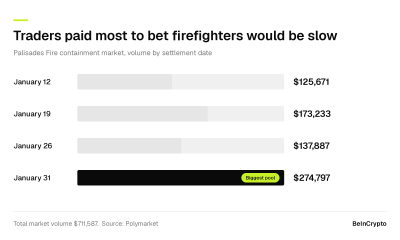
California Wildfire Bets Expose Polymarket’s Dark Side
-

 Business21 hours ago
Datadog: Best Of Breed For Multiple Reasons
-

 Business1 day ago
How to Start a Cleaning Business: A Step-by-Step Guide
-

 Business6 days ago
CNH Industrial Shares Jump Over 15% After Beating Estimates and Raising Full-Year Earnings Guidance
-

 Business5 days ago
McDonald’s (MCD) Q2 2026 earnings
You must be logged in to post a comment Login