
Politics
Palantir’s “manifesto” trends on X, showcasing its evil



Over the weekend, Palantir posted a summary of Alex Karp’s book “The Technological Republic: Hard Power, Soft Belief, and the Future of the West” – which was slammed as being “evil.”
Palantir: technofascists are technofascisting again
The post makes explicit what Palantir wants: the supremacy of the US military industrial complex to infiltrate every aspect of everyone’s life. It is also an ode to the PayPal Mafia, like Peter Thiel and Elon Musk.
Unsurprisingly, the two South African-born white men who grew up under apartheid are the poster boys! Though the post is calling for American conscription, bet Thiel and Musk will be dodgers, just like their mate Trump!
The book, which serves as the manifesto of the AI giant, is twenty-two rambling points: –
1. Silicon Valley owes a moral debt to the country that made its rise possible. The engineering elite of Silicon Valley has an affirmative obligation to participate in the defense of the nation.
2. We must rebel against the tyranny of the apps. Is the iPhone our greatest creative if not crowning achievement as a civilization? The object has changed our lives, but it may also now be limiting and constraining our sense of the possible.
3. Free email is not enough. The decadence of a culture or civilization, and indeed its ruling class, will be forgiven only if that culture is capable of delivering economic growth and security for the public.
4. The limits of soft power, of soaring rhetoric alone, have been exposed. The ability of free and democratic societies to prevail requires something more than moral appeal. It requires hard power, and hard power in this century will be built on software.
5. The question is not whether A.I. weapons will be built; it is who will build them and for what purpose. Our adversaries will not pause to indulge in theatrical debates about the merits of developing technologies with critical military and national security applications. They will proceed.
6. National service should be a universal duty. We should, as a society, seriously consider moving away from an all-volunteer force and only fight the next war if everyone shares in the risk and the cost.
7. If a U.S. Marine asks for a better rifle, we should build it; and the same goes for software. We should as a country be capable of continuing a debate about the appropriateness of military action abroad while remaining unflinching in our commitment to those we have asked to step into harm’s way.
8. Public servants need not be our priests. Any business that compensated its employees in the way that the federal government compensates public servants would struggle to survive.
9. We should show far more grace towards those who have subjected themselves to public life. The eradication of any space for forgiveness—a jettisoning of any tolerance for the complexities and contradictions of the human psyche—may leave us with a cast of characters at the helm we will grow to regret.
10. The psychologization of modern politics is leading us astray. Those who look to the political arena to nourish their soul and sense of self, who rely too heavily on their internal life finding expression in people they may never meet, will be left disappointed.
11. Our society has grown too eager to hasten, and is often gleeful at, the demise of its enemies. The vanquishing of an opponent is a moment to pause, not rejoice.
12. The atomic age is ending. One age of deterrence, the atomic age, is ending, and a new era of deterrence built on A.I. is set to begin.
13. No other country in the history of the world has advanced progressive values more than this one. The United States is far from perfect. But it is easy to forget how much more opportunity exists in this country for those who are not hereditary elites than in any other nation on the planet.
14. American power has made possible an extraordinarily long peace. Too many have forgotten or perhaps take for granted that nearly a century of some version of peace has prevailed in the world without a great power military conflict. At least three generations — billions of people and their children and now grandchildren — have never known a world war.
15. The postwar neutering of Germany and Japan must be undone. The defanging of Germany was an overcorrection for which Europe is now paying a heavy price. A similar and highly theatrical commitment to Japanese pacifism will, if maintained, also threaten to shift the balance of power in Asia.
16. We should applaud those who attempt to build where the market has failed to act. The culture almost snickers at Musk’s interest in grand narrative, as if billionaires ought to simply stay in their lane of enriching themselves . . . . Any curiosity or genuine interest in the value of what he has created is essentially dismissed, or perhaps lurks from beneath a thinly veiled scorn.
17. Silicon Valley must play a role in addressing violent crime. Many politicians across the United States have essentially shrugged when it comes to violent crime, abandoning any serious efforts to address the problem or take on any risk with their constituencies or donors in coming up with solutions and experiments in what should be a desperate bid to save lives.
18. The ruthless exposure of the private lives of public figures drives far too much talent away from government service. The public arena—and the shallow and petty assaults against those who dare to do something other than enrich themselves—has become so unforgiving that the republic is left with a significant roster of ineffectual, empty vessels whose ambition one would forgive if there were any genuine belief structure lurking within.
19. The caution in public life that we unwittingly encourage is corrosive. Those who say nothing wrong often say nothing much at all.
20. The pervasive intolerance of religious belief in certain circles must be resisted. The elite’s intolerance of religious belief is perhaps one of the most telling signs that its political project constitutes a less open intellectual movement than many within it would claim.
21. Some cultures have produced vital advances; others remain dysfunctional and regressive. All cultures are now equal. Criticism and value judgments are forbidden. Yet this new dogma glosses over the fact that certain cultures and indeed subcultures . . . have produced wonders. Others have proven middling, and worse, regressive and harmful.
22. We must resist the shallow temptation of a vacant and hollow pluralism. We, in America and more broadly the West, have for the past half century resisted defining national cultures in the name of inclusivity. But inclusion into what?
The response to the post has been widespread alarm and disdain.
The post is indeed alarming with its glorification of past German and Japanese fascism, the glorification of Musk, the glorification of Western ‘culture’, and the glorification of Western totalitarianism.
Palantir’s call for western culture – read violence – has been in a lot of its marketing material. In its Q4 2024 results, the company referenced Samuel Huntington’s book ‘Clash of Civilisations.’
As Samuel Huntington has written, the rise of the West was not made possible “by the superiority of its ideas or values or religion . . . but rather by its superiority in applying organized violence.”
He continued: “Westerners often forget this fact; non-Westerners never do.”
Huntington’s thesis, which argued that the main “clash” would be between the West and Islam, is called by Ruby Hamad a “self-fulfilling prophecy; a foreign policy directive in (thin) disguise.”
Feinstein commented on Palantir’s post, saying that Thiel’s apartheid South African upbringing shaped his racist, pro-genetic, pro-Israel, psychopathic worldview, and Palantir is now being handed the British state by Labour’s Starmer, Streeting, and Mandelson, among others.
Peter Thiel’s upbringing in apartheid South Africa & what is today Namibia clearly had enormous influence on his thinking: racist white supremacy, geneticism, glorification of South Africa’s closest ally the ethno-nationalist Israeli state, an almost psychopathic indifference to… https://t.co/SPWlUt1QUT
— Andrew Feinstein (@andrewfeinstein) April 19, 2026
We think Lammy’s recent handshake with Palantir sponsored Thiel should also be highlighted.
Lammy calls Palantir-sponsored JD Vance a ‘friend’ on latest Washington trip
Who is going to vote for David Lammy’s party in the local elections? With friends like Vance and Mandelson, it’s anyone’s guess. ‘Debasement’, as @ZackPolanski saidhttps://t.co/03b0PrMmwK…
— Canary (@TheCanaryUK) April 15, 2026
Yanis Varoufakis summarized Palantir’s post, the main point of which can be, as Varoufakis put it, ‘Ethics is for suckers. The West needs more of Palantir’s murderous software.’ He also said, “If Evil could tweet, this is what it would!”
Old advertisement for Israel trends
The bizarre post also led to people posting the whole-page advertisement that Palantir bought in October 2023, in support of Israel.
Palantir stands with genocide. https://t.co/6zYAqNGqzZ
— Zachary Foster (@_ZachFoster) April 19, 2026
People like Mai El-Sadany also emphasised Palantir’s connections to ICE and Israel.
Today, a lot of people will be talking about the manifesto that Palantir released. In addition to pouring over what those words mean, I invite you to ground the conversation in what Palantir has already done.
Its work with Israel and ICE show us exactly what it stands for.
— Mai El-Sadany (@maitelsadany) April 19, 2026
From a £1 NHS COVID contract to long-term roles in health and defence, Palantir is now part of the UK’s data infrastructure. This company, which is boasting about being evil, should be nowhere near civilian infrastructure.
Featured image via the Canary
By The Canary


The EU’s new Entry/Exit System (EES) has fully kicked into place for UK passengers after its October rollout.
It’s a biometric system (including a photo and/or fingerprints) that registers non-EU nationals every time they make a short stay in Schengen countries.
The EU’s site says it’s designed to eventually replace passport stamps and offer a more “efficient” version of EU check-ins. But so far, there have been early hiccups: EES has been blamed for border delays that left passengers behind and “hours-long queues”.
In response, airlines like TUI, Jet2, and easyJet have shared advice.
Which countries are affected by the EES system?
The Schengen countries involved are:
- Austria,
- Belgium,
- Bulgaria,
- Croatia,
- Czechia,
- Denmark,
- Estonia,
- Finland,
- France,
- Germany,
- Greece,
- Hungary,
- Iceland,
- Italy,
- Latvia,
- Liechtenstein,
- Lithuania,
- Luxembourg,
- Malta,
- Netherlands,
- Norway,
- Poland,
- Portugal,
- Romania,
- Slovakia,
- Slovenia,
- Spain,
- Sweden, and
- Switzerland.
The Republic of Ireland and Cyprus are excluded from EES systems as they’re not Schengen countries.
What advice have airlines given to UK travellers for EES checkins?
The advice so far includes:
British Airways
Their site reads, “You should allow extra time to register your biometric details, such as fingerprints and a photo, the first time you enter the EU. There is no cost for EES registration, and your digital record will last three years before you need to register again.”
And responding to an X post by a passenger, the company added: “We ask customers travelling on our European short-haul flights to be there two hours prior to departure. It would be three hours if you’re travelling on a long-haul flight and one if you’re travelling on a domestic flight within the UK.”
TUI
In a travel alert, they said: “At some airports, you might still find longer queues, particularly at busy travel periods.”
They added, “To help your journey run as smoothly as possible, please allow a little extra time when passing through border control. Keep any essential medication in your hand luggage in case of delays, and when departing the EU, head straight to passport control after dropping your bags to avoid hold‑ups. Bringing some extra water for comfort is also a good idea.”
Jet 2
The company shared, “There may be longer wait times at Border Control at some EU Airports, especially at busy times. Once you start your EES registration, it should take around 1-2 minutes per person to complete.
“There may be longer wait times than usual when you arrive in destination and before your flight back to the UK. Unfortunately, this is outside of our control. But remember, there’s nothing you can prep before you travel.”
The airline added, “You’ll also need to pass through EES when leaving the EU in the same way you do on arrival. Depending on how busy the airport is, this may result in longer wait times at passport control before boarding your flight to the UK. After checking in for your flight, please head straight to security and passport control in order to arrive at your gate in plenty of time.”
easyJet
The airline pointed out that while kids under 12 are exempt from fingerprinting, passengers “may experience longer waiting times on arrival, so allow extra time and factor this in when planning onward travel, including trains, taxis, or flight transfers”.
Plan your journey, arrive early, use Bag Drop as soon as possible if you’re availing of the service, get through security as fast as possible, and “be aware that there may be further checks at passport control after security and before reaching your gate,” they said.
Ryanair
They warned that queues might be longer as airports adjust to the system.
“Have your passport ready and follow EES signs,” they wrote.
“We recommend arriving at the airport with extra time to allow for these additional checks, especially during busy travel periods.”

We hope you love the products we recommend! All of them were independently selected by our editors. Just so you know, HuffPost UK may collect a share of sales or other compensation from the links on this page if you decide to shop from them. Oh, and FYI — prices are accurate and items in stock as of time of publication.
Other than at the gym and when I have a UTI (which is, unfortunately, pretty often) my pelvic floor isn’t something I’ve ever given much thought to.
Admittedly, I pee probably 20 times a day (for real) but I’d always attributed that to the fact I drink a shit ton of water, tea, and coffee.
Whenever I see those ‘do your kegels with me’ videos on TikTok or Instagram reels, I’ll follow along (I’m fickle, after all). And by my judgement, it does seem like I know how to do a kegel.
But otherwise, I go about my life pretty much entirely ignorant of my pelvic floor health.

When I heard that Smile Makers Collection – the creators of some of my favourite sex toys like the Ballerina and Poet – was venturing into the wellness category with the launch of Pelvic Partner, I wasn’t exactly excited.
I mean, vibrators are one thing, but pelvic floor trainers are another thing – perhaps necessary, but they’re not going to give you any thrills. Or, so I thought.
When I received the Pelvic Partner, though, that changed everything I thought I knew about the pelvic floor.
What is the pelvic floor and how do you engage it?
If, like me, you’re wondering why the pelvic floor really matters, it might surprise you to learn that strengthening this group of hidden muscles can help prevent unwanted symptoms as you age.
The muscles surround the bladder, bowels, and reproductive organs, which means they can weaken as you age, during menopause, or during and after childbirth.
Weak pelvic floor muscles can result in incontinence, instability, lower back pain, and needing the toilet often, while having a pelvic floor that is too tight can also result in constipation, pain during sex, and erectile dysfunction.
To prevent your pelvic floor weakening as you age, the NHS recommends doing daily pelvic floor exercises. This involves squeezing your muscles to engage them for two seconds and releasing, and repeating 10 times.
Not sure how to tell you’re doing it right? The NHS describes the sensation as the same as when you’re stopping yourself from peeing and farting. So it’s about to get hot and sexy up in here.
How to use the Pelvic Partner
Thankfully, Pelvic Partner easy as to use (you’re not going to get me to do exercise any other way).
After charging it using the USB cable, you simply slather the surface in lube, pop it inside your vagina up until the ‘comfort line’ and bend the tail towards your belly button.
You then turn it on, using the button at the end of the tail, and switch between the eight ‘training programmes’ the toy is equipped with.
Just like you’d train at the gym, Smile Makers Collection recommends using the Partner three times a week for two to three sets, at 10-15 reps per session.
To start with, the brand suggests choosing a setting you can complete all your exercises with. Settings one and two are ‘gentle’ to teach you how to engage your pelvic floor; three and four are ‘building’; five and six are ‘strong’; and seven and eight are ‘advanced’.
Once you feel like it’s easy to complete your session, you can move up to the next setting. This would be easy, I thought.
My review of the Pelvic Partner
How I tested
About me: I’m a 26-year-old woman who doesn’t have children. I’ve been testing sex toys and sexual wellness products for around five years, both in this role and my previous role at Cosmopolitan, Women’s Health, and Men’s Health, as well as while running my podcast/magazine, Sextras.
I’ve been using Smile Makers Collection’s Pelvic Partner for three weeks, making sure to not testing any other pelvic floor products at the same time.
As someone who has never done pelvic floor exercises consistently, I made sure to stick to a regime of three times a week. I also followed the brand’s instructions of how to use the trainer to make sure I was getting the most out of it.
First impressions
First up, this little orange device has two bulbous spheres that are supposed to sit inside your vagina – and just from giving it a squeeze with my hands, it felt fantastic.
Covered in smooth silicone, the toy has a cushiony feel to it, which is unlike other internal sex toys and pelvic floor trainers I’ve tried. This also makes it slick enough for washing it to take seconds.
Upon turning it on, I could tell exactly how the toy would work. It’s loaded with 360 degrees of haptic squeeze sensors, which means it vibrates when you’re engaging your pelvic floor.
To make sure you know what setting you’re on, the trainer will buzz the same amount of times, making it extremely intuitive.
Even better, it doesn’t require an app, so I knew I wouldn’t have to worry about it storing any of my sensitive data.
Final verdict
As someone who has done mat Pilates at least once a week for the last few years, I have always believed myself to know where my pelvic floor muscles are, and how to engage them. I’ve also never had any serious health conditions linked to my pelvic floor, so I didn’t think I had any issues with strength down there.
The first time I tried this trainer, it became clear just how wrong I was. While its first two settings felt like light work – it immediately vibrated at even the slightest contraction on the first one – the move up to the third setting was significant.
While I could easily do 10 reps, it felt tricky (to say the least) to keep going after just one set. I just about managed two, and thought I’d move up to the fourth programme just to see if I could hack it. But no ball. No matter how hard I tried, I simply could not make the damn thing buzz.
Now, I’m not exactly a competitive person, which is why I’ve always been a begrudging exerciser. With this trainer, though, I started to feel myself become competitive the more I used it.
Determined to move up through the strengths, I committed to using it three times a week.
And in the span of a mere seven days, I was able to move up to the fourth setting with no problem at all.
I even think the trainer has helped with my posture and my workouts. At my weekly Pilates class, I have found myself engaging my core in a way I didn’t know I needed to previously.
Another welcome side effect is that my orgasms feel slightly stronger, or at least I’m more aware of my pelvic floor during penetration – and I’m excited to see how this builds as I work up through the programmes.
Overall, I’d rate the trainer five stars – both for design, ease of use, and results I didn’t know I needed.

Keir Starmer has said it “beggars belief” that he was not told the full story about Peter Mandelson’s vetting by Foreign Office officials.
The prime minister acknowledged that many MPs would find his remarks about the latest Mandelson revelations “to be incredible”.
The comments came as Starmer delivered a statement to the House of Commons updating MPs on the appointment of Mandelson as British ambassador to the United States.
Read the full statement below:

MDU warns Chancellor clinical negligence system ‘not fit for purpose’

Northern Ireland RE curriculum is ‘indoctrination’ – Supreme Court
Thank you Mr Speaker, with permission…
I would like to provide the House with information I now have…
About the appointment of Peter Mandelson…
As our ambassador to the United States.
But Mr. Speaker, before I go into the details…
I want to be very clear with this House…
That, while this statement will focus…
On the process surrounding Peter Mandelson’s vetting and appointment…
At the heart of this, there is also a judgement I made that was wrong.
I should not have appointed Peter Mandelson.
I take responsibility for that decision.
And I apologise, again…
To the victims of the paedophile, Jeffrey Esptein…
Who were clearly failed by my decision.
Mr. Speaker, last Tuesday evening, the 14th of April…
I found out, for the first time…
That on the 29th January 2025…
Before Peter Mandelson took up his position as Ambassador…
The Foreign Office officials granted him developed vetting clearance…
Against the specific recommendation of United Kingdom Security Vetting…
That developed vetting clearance should be denied.
Not only that…
The Foreign Office officials who made that decision…
Did not pass this information…
To me…
To the Foreign Secretary…
To her predecessor, the Deputy Prime Minister…
To any other Minister…
Or even to the former Cabinet Secretary, Sir Chris Wormald.
I found this staggering.
And therefore, last Tuesday…
I immediately instructed officials in Downing Street and the Cabinet Office…
To urgently establish the facts on my authority.
I wanted to know who made the decision…
On what basis…
Who knew…
And Mr Speaker I wanted that information…
For the precise and explicit purpose of updating this House.
Because this is information I should have had a long time ago…
And it is information this House should have had a long time ago.
Information that I and the House had a right to know.
I will now set out a full timeline of the events in the Peter Mandelson process…
Including from the fact-finding exercise I instructed last Tuesday.
Before doing so – I want to remind and reassure the House…
That the Government will comply fully…
With the Humble Address motion of the 4th February.
Mr Speaker, in December 2024
I was in the process of appointing a new Ambassador for Washington.
A due diligence exercise was conducted by the Cabinet Office…
Into Peter Mandelson’s suitability…
Including questions put to him by my staff in Number 10.
Peter Mandelson answered those questions on the 10th December…
And I received final advice on the due diligence process on the 11th.
I made the decision to appoint him on the 18th December…
The appointment was announced on the 20th…
And the security vetting process began on the 23rd December 2024.
Mr Speaker, I want to make clear to the House…
That for a Direct Ministerial Appointment…
It was usual for security vetting to happen after the appointment…
But before starting in post.
That was the process in place at the time…
Mr Speaker, this was confirmed by the former Cabinet Secretary, Sir Chris Wormald…
At the Foreign Affairs Select Committee on the 3rd of November 2025 when he gave evidence…
Sir Chris made clear, and I’m quoting him now:
“When we are making appointments from outside the civil service…
The normal thing is for the security clearance to happen after appointment…
But before the person signs a contract and takes up post…”
At the same hearing of the same Select Committee…
The former Permanent Secretary to the Foreign Office, Sir Olly Robbins said, and I quote again…
Peter Mandelson “did not hold national security vetting when he was appointed…
But as is normally the case with external appointments to my Department and the wider civil service…
The appointment was made subject to obtaining security clearance”.
Mr Speaker, after I sacked Peter Mandelson…
I changed that process…
So that now an appointment cannot be announced…
Until after security vetting is passed.
Mr Speaker, the security vetting was carried out by UK Security Vetting (UKSV)…
Between the 23rd of December 2024 and the 28th of January 2025.
UKSV conducted vetting, in the normal way…
Collecting relevant information…
As well as interviewing the applicant – in this case, on two occasions.
Then, on the 28th of January 2025…
UKSV recommended to the Foreign Office…
That developed vetting clearance should be denied to Peter Mandelson.
The following day, on the 29th of January 2025…
Notwithstanding the UKSV recommendation that developed vetting clearance should be denied…
Foreign Office officials made the decision…
To grant developed vetting clearance for Peter Mandelson.
To be clear…
For many Departments, a decision from UKSV is binding.
But for the Foreign Office, the final decision on developed vetting clearance…
Is made by Foreign Office officials…
Not UKSV.
However, once the decision in this case came to light…
The Foreign Office’s power to make the final decision on developed vetting clearance…
Was immediately suspended by my Chief Secretary last week.
Mr Speaker, I accept that the sensitive personal information provided by an individual being vetted… Must be protected from disclosure.
If that were not the case, the integrity of the whole process would be compromised.
What I do not accept…
Is that the appointing minister cannot be told of the recommendation by UKSV.
Indeed, given the seriousness of these issues…
And the significance of the appointment…
I simply do not accept that Foreign Office officials could not have informed me…
Of UKSV’s recommendations…
Whilst also maintaining the necessary confidentiality that vetting requires.
There is no law that stops Civil Servants sensibly flagging UKSV recommendations
While protecting detailed sensitive vetting information…
To allow Ministers to make judgements on appointments or on explaining matters to Parliament.
So let me be very clear, the recommendation in the Peter Mandelson case could and should have been shared with me…
Before he took up his post.
Mr Speaker
Let me make a second point.
If I had known, before he took up his post…
That UKSV recommendation was that developed vetting should be denied…
I would not have gone ahead with the appointment.
Mr. Speaker, let me now move to September 2025…
Because events then – and subsequently…
Show with even starker clarity…
The opportunities missed by Foreign Office officials…
To make the position clear.
On September 10th, Bloomberg reported fresh details of Mandelson’s history with Epstein…
And it was then clear to me…
That Peter Mandelson’s answers to my staff in the due diligence exercise were not truthful…
And I sacked him.
I also changed the Direct Ministerial Appointments process…
So full due diligence is now required as standard…
Where risks are identified – an interview must be taken, pre-appointment…
To discuss any risks and conflicts of interest…
And a summary of this should be provided to the appointing Minister…
I also made clear that public announcements should not now be made until security vetting has been completed.
Mr Speaker, in light of the revelations in September of last year, I also agreed with the then Cabinet Secretary, Sir Chris Wormald…
That he would carry out a review of the appointment process in the Peter Mandelson case, including the vetting.
He set out his findings and conclusions in a letter to me on the 16th of September.
He advised me, in that letter, and again I quote…
“The evidence I have reviewed leads me to conclude that appropriate processes were followed…
In both the appointment and withdrawal of the former HMA Washington”.
When he was asked about this, Mr Speaker, last week…
The then Cabinet Secretary was clear…
That when he carried out his review, the Foreign Office…
Did not tell him about the UKSV recommendation…
That developed vetting clearance should be denied to Peter Mandelson.
I find that astonishing.
As I set out…
I do not accept that I could not have been told about the recommendation…
Before Peter Mandelson took up his post.
I absolutely do not accept that the then Cabinet Secretary – an official not a politician –
when carrying out his review, could not have been told…
That UKSV recommended that Peter Mandelson should be denied developed vetting clearance…
It was a vital part of the process that I had asked him to review…
Clearly, he could have been told and he should have been told.
Mr Speaker, on the same day as the then Cabinet Secretary wrote to me – so that’s the 16th of September 2025…
The Foreign Secretary and the then Permanent Secretary of the Foreign Office, Sir Olly Robbins…
Provided a signed statement to the Foreign Affairs Select Committee.
The statement says, and again I quote…
“The vetting process was undertaken by UK Security Vetting on behalf of the FCDO…
And concluded with DV clearance being granted by the FCDO…
In advance of Lord Mandelson taking up post in February.
It went on to say, and again I quote:
“Peter Mandelson’s security vetting was conducted to the usual standard set for Developed Vetting in line with established Cabinet Office policy”.
Mr. Speaker, let me be very clear to the House…
This was in response to questions which included…
Whether concerns were raised…
What the Foreign Office’s response was…
And whether they were dismissed.
Mr. Speaker, that the Foreign Secretary was advised on…
And allowed to sign this statement by Foreign Office officials…
Without being told that UKSV had recommended Peter Mandelson be denied developed vetting clearance…
Is absolutely unforgivable.
This is a Senior Cabinet Member…
Giving evidence to Parliament…
On the very issue in question.
Mr Speaker, in light of further revelations about Peter Mandelson in February of this year…
I was very concerned about the fact that developed vetting clearance had been granted to him.
Not knowing that, in fact, UKSV had recommended denial of developed vetting clearance…
I instructed my officials to carry out a review of the national security vetting process.
As I set out…
I do not accept that I could not have been told about UKSV’s denial of security vetting before Peter Mandelson took up his post in January 2025.
I do not accept that the then Cabinet Secretary could not have been told in September 2025…
When he carried out his review into the process.
I do not accept that the Foreign Secretary…
Could not have been told when making statements to the Select Committee, again in 2025.
But, Mr Speaker, on top of that, the fact that I was not told even when I ordered a review of the UKSV process…
Is frankly staggering.
And I can tell the House,
That I have now updated the Terms of Reference for the review into Security Vetting…
To make sure it covers the means by which all decisions are made in relation to National Security Vetting
I have appointed Sir Adrian Fulford to lead the review.
Separately…
I have asked the Government Security Group in the Cabinet Office…
To look at any security concerns raised during Peter Mandelson’s tenure.
Mr. Speaker…
I know many members across the House…
Will find these facts to be incredible.
To that I can only say – they are right.
It beggars belief…
That throughout the whole timeline of events…
Officials in the Foreign Office…
Saw fit to withhold this information…
From the most senior Ministers in our system in Government.
That is not how the vast majority of people in this country…
Expect politics, government, or accountability to work.
And I do not think it is how most public servants think it should work, either.
I work with hundreds of civil servants…
Thousands even…
All of whom act with the utmost integrity, dedication and pride to serve this country…
Including officials from the Foreign Office…
Who as we speak…
Are doing a phenomenal job…
Representing our national interest in a dangerous world…
In Ukraine…
In the Middle East…
And all around the world.
This is not about them.
But yet it is surely beyond doubt…
That the recommendation from UKSV…
That Peter Mandelson should be denied developed vetting clearance…
Was information…
That could and should have been shared with me on repeated occasions…
And therefore, should have been available to this House…
And ultimately to the British people…
And I commend this statement to the House.
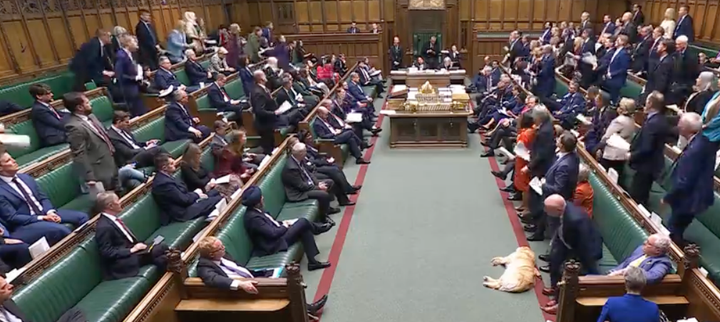
Support for Keir Starmer among Labour MPs appears to be draining away as he fights for his political life amid the latest Peter Mandelson scandal.
The prime minister eventually told MPs – nearly two hours into his appearance in the Commons – that he did not mislead them when he said due process had been followed when the shamed former peer was vetted for the role of US ambassador.
But by then, the benches behind him were sparse as his own MPs decided to leave the chamber rather than stay to give the prime minister their backing.
“Labour MPs are voting with their feet,” one senior party insider told HuffPost UK.
The prime minister had told parliament it was “staggering” that neither he nor any of his ministers had been told that Mandelson had failed to pass security vetting.
Starmer only found out last Tuesday, and two days later sacked Olly Robins, the most senior civil servant in the Foreign Office, whose decision it was to give Mandelson the all-clear to take up his role in Washington.
“This is information I should have had a long time ago, and it is information that the house should have had a long time ago,” the PM said. “It is information that I and the house had the right to know.”
But his pleas were not met with a wave of support from Labour MPs, many of whom are furious with him for appointing Mandelson to the plumb diplomatic role in the first place.
Emily Thornberry, who is chair of the Foreign Affairs Committee that will take evidence from Olly Robbins on Tuesday, was among those who attacked the Downing Street operation.
She said: “I am afraid to say, doesn’t this look like, for certain members of the prime minister’s team, getting Peter Mandelson the job was a priority that overrode everything else and that security considerations were very much second order.”
Labour MP Neil Duncan-Jordan said: “The real question is why, when Peter Mandelson’s reputation was already known, was he ever considered for such an important role.”

Veteran backbencher John McDonnell said: “Many of us will remain bewildered still why that appointment took place, despite the warnings that many of us gave.
“Isn’t the reality this: that when he sought to realise his ambition to become leader of the Labour Party, with very little base within the party, he became dependent on [former NO,10 chief of staff Morgan] McSweeney and Mandelson and Labour Together to organise, fund his election.
“When he became prime minister the reward for McSweeney was control of No.10, and for Mandelson the highest diplomatic office. The unspoken message to civil servants was what Mandelson wants, Mandelson gets.”
As Labour MPs headed for the exits, one senior party figure said: “Starmer is fighting for his political life and look how his benches have thinned out. It feels like its sinking fast.
“I suspect post may Labour MPs will start saying he has to set out a timetable to go.”
Labour whips were even forced to text MPs begging them to return to the chamber to back the PM.
The message, seen by HuffPost UK, said: “If any [parliamentary private secretaries] are able to head back to the chamber, benches are looking quite empty. Your assistance as always is greatly appreciated.”
Few, if any, heeded the call – leaving the prime minister both literally and politically increasingly alone.
Subscribe to Commons People, the podcast that makes politics easy. Every week, Kevin Schofield and Kate Nicholson unpack the week’s biggest stories to keep you informed. Join us for straightforward analysis of what’s going on at Westminster.
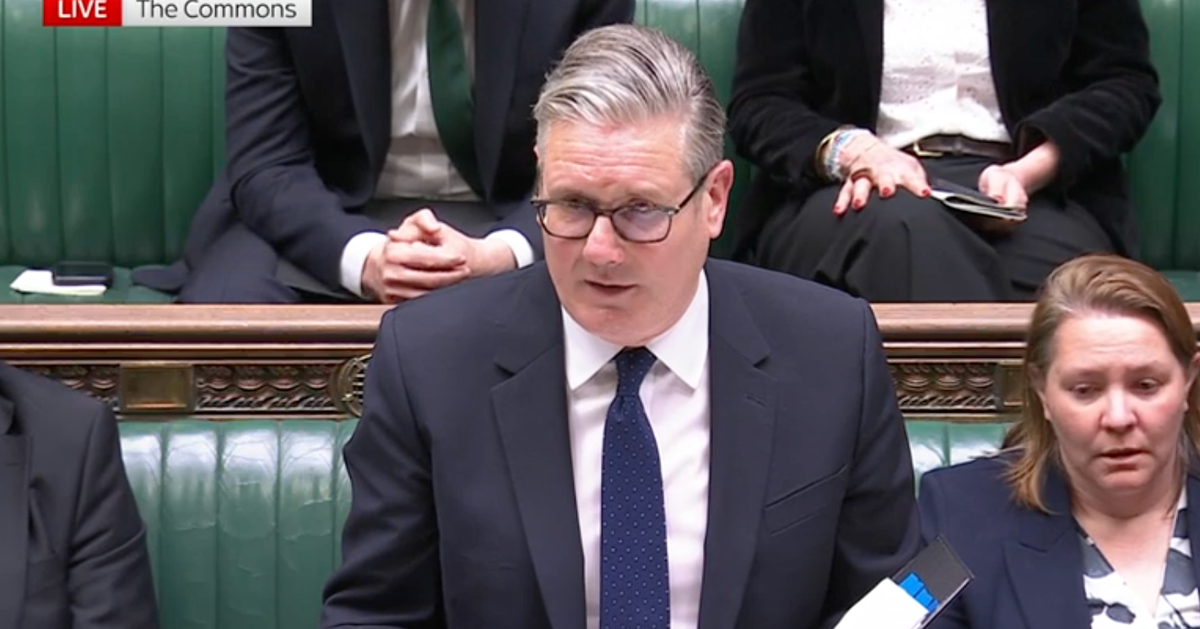
Keir Starmer was met with ridicule and disbelief from MPs while fielding their questions over why he ever decided to appoint Peter Mandelson to be an ambassador for the US.
It emerged last week that the ex-Labour peer failed security vetting without the prime minister’s knowledge, and was still given the top job in Washington days later.
Starmer sacked Olly Robbins, the top civil servant in the Foreign Office, granting Mandelson clearance without informing them.
Though Mandelson was sacked in September when the depth of his friendship with convicted paedophile Jeffrey Epstein was revealed, the saga continues to cast a shadow of Downing Street.
Questions swirl over the prime minister’s judgement and apparent lack of authority within his own government.
Here’s how the prime minister’s attempt to address the scrutiny head on went down with MPs…
1. Laughter During Starmer’s Opening Statement
The prime minister tried to preempt the frustration from MPs over Mandelson – and his vetting – by admitting that “many members across the House will find these facts to be incredible”.
Starmer was instantly interrupted with a wave of laughter from the opposition benches which seemed to even take the prime minister by surprise.
“To that, I can only say they are right,” the PM ploughed on, despite the noise. “It beggars belief that throughout the whole timeline of events, officials in the Foreign Office saw fit to withhold this information from the most senior ministers in our system in government.”
2. Mother Of The House Asks The Most Basic Question
Diane Abbott tore into the PM for not doing the obvious: asking if Mandelson passed security vetting.
The MP for Hackney North and Stoke Newington pointed out that Mandelson had already been fired from government twice, both occasions long before he was considered for the ambassador role.
“It’s one thing to say, as he [Starmer] insists on saying, ‘Nobody told me, nobody told me anything, nobody told me’,” Abbott said.
“The question is, why didn’t the prime minister ask?”
The PM said he did ask the cabinet secretary to review the “process” around hiring Mandelson once the “further revelations” came to light.
Abbott, Starmer’s former shadow cabinet colleague turned vocal critic, lost the party whip last year and now sits as an independent.
As the longest-serving female MP in the Commons, she is known as the “Mother of the House” as a marker of respect.
3. Labour Backbencher Slams Starmer’s Ambitions
Another one of Starmer’s former shadow cabinet colleagues, John McDonnell, also scorched the prime minister – this time over his wider political career.
“Isn’t the reality this: when he sought to realise his ambition to become leader of the Labour Party, with very little base within the party, he became dependent on [Morgan] McSweeney and Mandelson, and Labour Together to organise and fund his election.”
The Labour MP for Hayes and Harlington claimed Mandelson was then rewarded with the “highest diplomatic office” as a result.
“The unspoken message to civil servants was: what Mandelson wants, Mandelson gets. This has damaged the party that I’ve been a member of for 50 years,” McDonnell said.
Starmer refuted McDonnell’s message about Whitehall, insisting it’s “simply not good enough” for any civil servants to withhold such information.
4. Comparisons To Boris Johnson’s Partygate
“It’s 2022 all over again,” Lib Dem leader Ed Davey told the Commons, referring to the fury Boris Johnson was faced with as prime minister after it emerged he had broken his own government’s social distancing rules during the Covid lockdowns.
Johnson was later accused of misleading the House – including by Starmer himself – and blaming Downing Street officials for the error.
Davey pointed out that, as leader of the opposition, Starmer promised to implement change if he were to get into office.
“I’m afraid the fact that he even had to make the statement today shows how badly he has failed,” Davey said, as he called on the PM to resign.
5. Labour Backbenchers Abandon The PM
Even as Starmer was fighting to keep his job, it seems Labour MPs were not minded to stay in support.
The benches behind the prime minister thinned out substantially during his time in the chamber.
A Labour source told HuffPost UK: “Starmer is fighting for his political life and look how his benches have thinned out. Feels like it’s sinking fast.
“I suspect post-May Labour MPs will start saying he has to set out a timetable to go.”
Subscribe to Commons People, the podcast that makes politics easy. Every week, Kevin Schofield and Kate Nicholson unpack the week’s biggest stories to keep you informed. Join us for straightforward analysis of what’s going on at Westminster.


Newcastle Green Party are on course to trounce Labour in their heartlands. The JL Partners poll for the Telegraph puts the Greens far out in front on 30%, with Labour and Reform neck and neck on 21% and 19%. The LibDems are on 7%.
Vote Green
The message is simple: vote Green if you don’t want to split the progressive vote. Labour aren’t progressive, of course. But some voters still think historical traces of Labour’s working-class soul linger on. Today’s neo-Labour oppose even the simplest progressive policies like bringing water into public ownership.
It’s quite sad, really. Labour has lost all trust. The lies defending Peter Mandelson’s association with paedophile Jeffrey Epstein are just the latest insult. If Starmer had kept to his ten pledges, we’d be living in a much better country.
Refuse Reform
The public are turning away from Reform, too. By recruiting a load of ex-Tory MPs, it’s quite obvious they are the exact opposite of anti-establishment. Add in their general air of chaos and inability to get anything done in the councils they control, and it’s hardly surprising the Greens are taking seats off them in flagship Reform councils like Kent.
Last week’s council by-election was triggered when ex-Reform councillor Daniel Taylor was jailed for 12 months after admitting controlling and coercive behaviour towards his wife. The prosecution said Taylor had told his wife he would hunt her like prey and kill her, and that he would “put you in the boot and set fire to the car“. So much for protecting women and children.
The Greens took the seat from Reform with a huge surge from 12% to 39% while Reform fell from 40% to 33%.
The only poll that matters is the election
I should point out that JL Partners poll uses MRP. This means they didn’t go and talk to people in Newcastle. They sliced and diced existing data sets in intricate ways based on demographics. For a statistically robust poll, you need to speak to about 1000 people. Given that there are 6,584 voters in Monument where I’m standing, that would require an answer from 15% of the electorate. It’s often said: the only poll that matters is the election.
Still, polls are not just idle curiosity. They are used to influence the outcome. People do switch to who they think can win. Or to stop someone they really dislike. But what is the choice for Newcastle’s voters?
Labour are failing Newcastle
Despite having a Labour government, Newcastle’s Labour council still plans to cut a further £62.8 million before 2028. This means more overflowing bins. More cafes closed in parks. More homeless people sleeping in doorways.
They made a huge mess of the parks. Their plan to take them out of council ownership and into a profit-making trust was hugely controversial. The outsourcing venture went bust, leaving council tax payers with a bill of around £6.7 million. Now Labour are closing the cafes in the parks. Grandparents wanting to take kids to play on the swings can’t get a cup of tea or go inside if it rains. They were warned this was a bad idea. I saw Labour politicians dismiss the concerns of community groups like Friends of the Parks.
Under Labour, Newcastle built 124 council homes in the ten years to March 2022, the latest figures I could find. Over the same period 1,819 social homes were sold and 1,257 were demolished. That’s a net loss of 2,952 social homes in ten years. In one city.
Greens commit to community wealth building
Newcastle Greens are committed to community wealth building. Until central government changes the destructive “right to buy at a huge discount” policy, we have to work around it. We should be taking empty but structurally sound buildings and turning them into good quality apartments. Then, we should be selling them to community asset trusts. These are collectively owned by the tenants, but in a legal framework that keeps rents fair and prevents sales to landlords. It builds a stock of social housing that’s protected from privatisation.
We should establish local finance institutions for business lending that recycle money in the local economy. Cambridge County Council did this in 2012. Now it’s owned by the council pension fund and one of the Cambridge colleges. In addition to boosting small businesses, it makes over £40 million a year for the pension fund. Imagine if we created assets like that to reinvest locally.
Arts institutions like Newcastle’s Live Theatre run fantastic courses so local kids can get a break in the arts. The Theatre owns nearby buildings that are run as pubs and restaurants. Those rents now serve as public good for the people of Newcastle rather than disappearing off into private equity funds in tax havens. It’s a model we should replicate.
If you want your city run in the interests of local people, we’ll need a majority Green council. Otherwise, you’ll get more of the same old same old. So yes, vote Green to stop Reform. Vote Green to stop Labour. But mostly, vote Green for a better city.
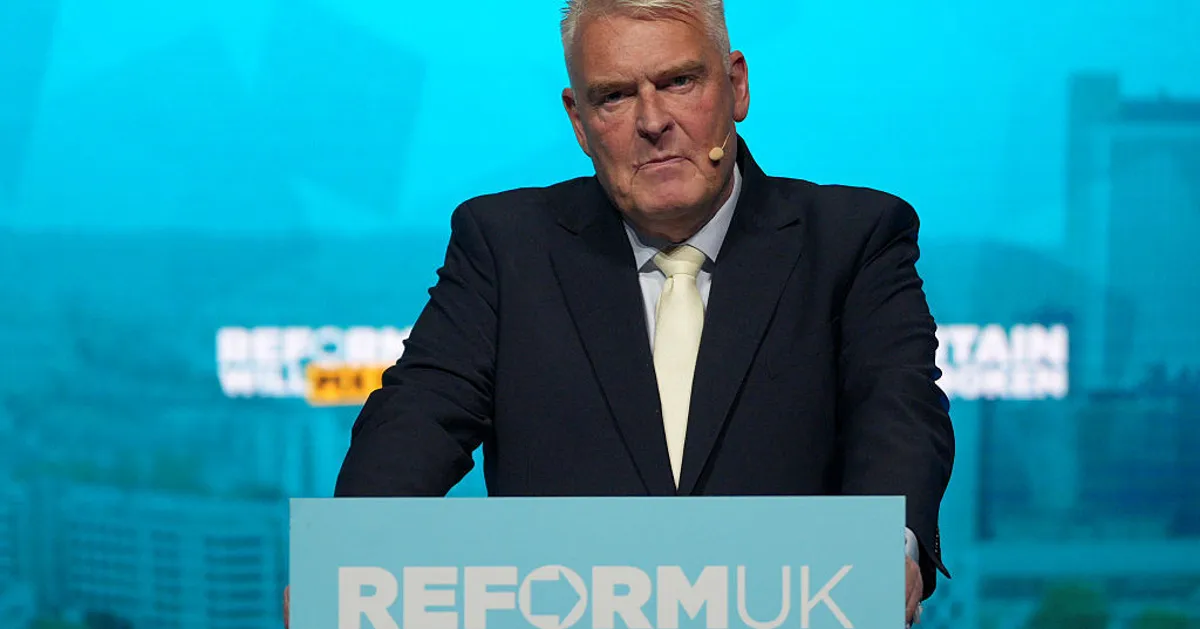
Lee Anderson was thrown out of the House of Commons after accusing Keir Starmer of “lying”.
The Reform MP hit out at the prime minister as he came under pressure over the latest Peter Mandelson revelations.
Starmer insisted he was not told by Foreign Office civil servants that the shamed former Labour peer had failed security vetting before he made him the UK’s ambassador to Washington.
The PM said it was “staggering” that he and his ministers were kept in the dark.
But Anderson said: “The problem the prime minister’s got is no one believes him. The public don’t believe him, the MPs on this side of the house don’t believe him, his own gullible backbenchers don’t believe him.
“So does the prime minister agree with me he’s been lying?”
Accusing another MP of lying is banned in the Commons.
Speaker Lindsay Hoyle told Anderson: “Sorry, we don’t use those words, and I’m sure the member’s withdrawn it.”
Anderson replied: “Mr Speaker, I have the greatest respect for you and your office, but I will not withdraw. That man couldn’t lie straight in bed.”
Hoyle said: “Mr Anderson, you’ll have to leave.”
In a post on X, Reform UK said Anderson had been “kicked out of parliament for telling the truth” about the prime minister.
Subscribe to Commons People, the podcast that makes politics easy. Every week, Kevin Schofield and Kate Nicholson unpack the week’s biggest stories to keep you informed. Join us for straightforward analysis of what’s going on at Westminster.


Six Just Stop Oil supporters were acquitted at Southwark Crown Court on 17 April. This comes two and a half years after they took part in a slow march on Waterloo Bridge to demand an end to new oil and gas licensing.
On 8 November 2023, Sheila Shatford, Julia Mercer, David Kilroy, Geraldine James, Rosalind Bird and Gregory Sculthorpe were among approximately 50 supporters who joined a slow march around the IMAX roundabout before heading north over Waterloo Bridge.
Police arrested them and charged them under Section 7 of the Public Order Act 2023: interference with key national infrastructure. Police had only used this offence for the first time two days beforehand. It carries a maximum penalty of 12 months imprisonment, an unlimited fine, or both.
The six appeared before Judge Hiddleston at Southwark Crown Court in a trial which had to restart after one of the original jury fell ill. The jury delivered its not guilty verdict after approximately six hours of deliberation.
Following the verdict, Geraldine James, 62, a retired child psychotherapist from Plymouth, said:
This is a great verdict and sends a message that the police overreached their powers by charging us with Section 7. We did not cause a significant delay. It serves our democracy ill to invent anti protest laws to be used against a nonviolent and purposeful movement.
I have no regrets. I took action on behalf of children everywhere; the house that they live in is on fire and my generation is responsible.
Despite ending new oil or gas licences our government is now solely focussed on silencing dissent while the climate catastrophe continues. These laws must be repealed.
Dave Kilroy, 66, a retired cabinetmaker from Plymouth, said:
We are pleased that the jury sided with our cause – however just like all other Just Stop Oil supporters we took action in an open and accountable way and would have accepted it if the decision had gone the other way.
And just to repeat why we took action – we oppose the use of fossil fuels and call on the government to rapidly decarbonise the economy – for all our sakes!
The trial
During the five day trial, the Judge denied the defendants all legal defences, including reasonable excuse and necessity, and ruled that agreed facts on climate were “irrelevant”. The defendants were, however, given around 20 minutes each to talk about their motivations for taking action.
The jury was asked to consider whether the defendants had caused a significant delay to other road users and if so whether that was their intention or they were reckless as to whether that would have been the result.
The police produced a compilation of video evidence showing the march and demonstrating some traffic build-up. But they offered no evidence of what normal traffic flow looks like at that location. Laura Stockdale, acting for Greg Sculthorpe, questioned whether the jury could be sure that this congestion was more than would normally occur on a weekday in central London.
She also suggested there would have been less delay if police had let the march continue to the other end of the bridge. And if police themselves hadn’t closed the southbound carriageway. DI Kevin Pender for the Metropolitan police responded that they couldn’t be sure what the marchers were planning to do.
Just Stop Oil supporters’ motivation
The defendants each emphasised their desire to draw attention to the climate crisis. They also spoke of the care and careful planning that went into undertaking a march. All denied that there was any intention to cause anything more than minor slowing of traffic.
In her defence evidence, Sheila Shatford spoke movingly of what inspired her to take action. This included remembering a childhood teacher whose family had been affected by the Aberfan disaster in which 116 children were killed. She said:
Only later did I understand that the slag heap belonged to the National Coal Board, and that warnings were given before the disaster, but no one listened.
She went on to recount how she had learned about the climate emergency and said:
I realised that it’s always the poorest and most vulnerable that are most affected and have the smallest voice. I read and found out the climate emergency was real – there is overwhelming evidence that it’s happening now, and very soon we won’t be able to stop it.
Then home secretary Suella Braverman introduced the 2023 Public Order Act specifically to target climate protest. It named groups such as Extinction Rebellion, Just Stop Oil, and Insulate Britain as the reason for its introduction. Hundreds of Just Stop Oil supporters have had charges under Section 7 and are awaiting trial. But, because of the justice system backlog, this was only the second case before the courts since May 2024.
The first person convicted of the offence was Stephen Gingell. He got six months in jail after pleading guilty in December 2023.
In 2024, Just Stop Oil successfully won its original demand of ‘no new oil and gas’. And on 27 March 2025, it announced an end to the campaign of action. However, it promises that supporters will continue to tell the truth in court. They’ll also speak out for political prisoners and help build what comes next.
Featured image via Just Stop Oil
By The Canary


Arsenal’s meeting with Manchester City was framed as a season-defining test. Instead, it became a hard lesson in fine margins, a defeat that dulled Arsenal’s momentum and left supporters wrestling with the feeling of a chance slipping away.
Speaking after the match, Mikel Arteta told press:
Today was a big opportunity but we still have five to go and there are a lot of positives to take from the game.
There’s an element of luck. The ball gets deflected to [Erling] Haaland. There’s that moment to be so cool, precise and ruthless, and you have to be that…
Today was a big opportunity, but we still have five to go and there are a lot of positives to take from the game.
City’s control, Arsenal’s missed rewards
From the opening minutes, Manchester City imposed their familiar rhythm, possession with purpose, pressure applied in waves, and the quiet threat that one error would be enough. Arsenal did not shrink. They pressed in spells and fashioned openings that could have rewritten the story, but football offers no credit for promise without finish.
The result also sharpened the enduring comparison between Mikel Arteta and Pep Guardiola. It was not simply a tactical defeat; it read, to some, as another moment where Arteta’s project met the ceiling of its greatest reference point.
With a draw carrying real value in the context of the run-in, Arsenal’s approach felt bold, (perhaps too bold), when the table demanded restraint.
The Arsenal boss said:
We absolutely did that. Especially the way we ended the game. We could’ve been a bit more composed in certain moments. We took the game to certain areas we wanted.
Space, transitions, and the price of chasing
As Arsenal committed men forward, the game began to tilt into the terrain City relish: managed transitions, runners finding pockets, and opponents forced into rushed choices near the box. The bitter twist was that Arsenal still had enough moments to earn a different ending — one late pass, one cleaner strike, one earlier decision. Against City, waste rarely goes unpunished.
One hundred percent, we generated situations we believe we could generate. There’s even one where Kai [Havertz] is onside on the halfway…
We are on the level we are because this team has taken us there…When you have big chances, you need to put them away to come away with three points.
For supporters, the sting was not only the points; it was the doubt the night can plant. Title races are built on nerve as much as numbers. Losses like this can tighten a team in front of goal, turning instinct into hesitation. The stands feel that shift too, hope hardening into frustration unless the response is immediate.
Arsenal must refuse to become a pattern
Arsenal captain, Martin Odegaard, delivered a rallying call after the match, affirming that the title race remains ”all to play for” despite rivals Manchester City seizing control in the title race.
“We have to keep going,” Odegaard stated, reflecting on the intense battle.
It was always going to go all the way to the end so we have to keep going, keep working hard and sticking together. We just look forward to the next game now and bounce back.
There is still time to salvage the season, but this match will linger because it offered so much and delivered so little. Opportunities were there, the margins were thin, and the consequence felt heavy: a reminder that the biggest games do not forgive uncertainty.
Featured image via AP Photo/ Dave Thompson
By Faz Ali
Politics
Politics Home | Keir Starmer Says It “Beggars Belief” Officials Withheld Information Over Peter Mandelson

(Alamy)
2 min read
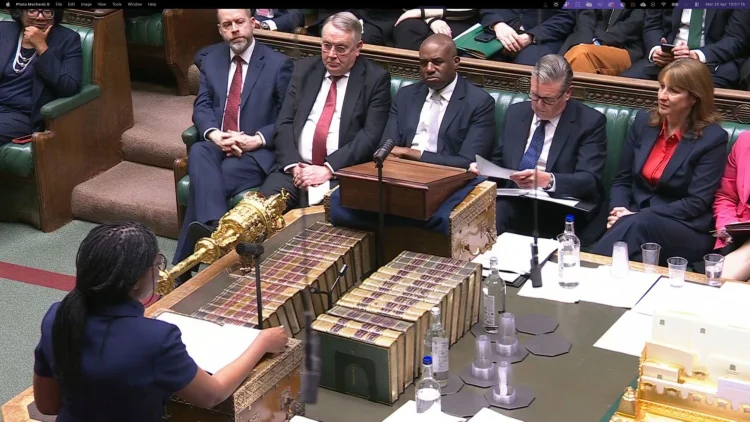
Keir Starmer has said it “beggars belief” the Foreign Office withheld information over Peter Mandelson’s vetting failure.
The Prime Minister addressed MPs in the House of Commons on Monday after it came to light that Mandelson was appointed as US ambassador despite serious security concerns and failing vetting checks.
It has also emerged that the single biggest client of Mandelson’s ex-lobbying firm Global Counsel was linked to the Chinese army. Downing Street has said security concerns and vetting failures were not raised with them after Mandelson was appointed.
Starmer told MPs it was “astonishing” neither he nor his cabinet were informed about Mandelson prior to securing the job.
Starmer told the Commons: “I know many members across the House will find these facts to be incredible.”
“To that, I can only say they are right. It beggars belief that throughout the whole timeline of events, officials in the Foreign Office saw fit to withhold this information from the most senior ministers in our system in government.
“That is not how the vast majority of people in this country expect politics, government or accountability to work.”
Conservative leader Kemi Badenoch accused the prime minister of throwing “his officials and his staff under the bus” to save his job. Badenoch claimed she was holding the Prime Minister to the same standards Starmer had held Boris Johnson when he was the opposition leader during the Partygate scandal.
Badenoch also said Starmer’s “reputation” was “at stake”.
Starmer reiterated the claims that the Mandelson case “could and should have been shared with me before he took up his post.”
He added: “If I had known before he took up his post that UKSV recommendation was that developed vetting clearance should be denied, I would not have gone ahead with the appointment.”
Foreign affairs committee chair Emily Thornberry asked whether ensuring Mandelson’s appointment as US ambassador was a priority which overrode anything else, including security implications.
Starmer said the committee asked the relevant questions during evidence sessions, but said he would not have appointed him if concerns were raised with him.
Starmer responded: “If I had been told Peter Mandelson or anybody else had failed security, not given clearance on security vetting, I would not have appointed them.
“A deliberate decision was taken to withhold that material. This was not a lack of asking, this wasn’t an oversight. It was a decision taken not to share that information on repeated occasions.”
Reform UK MP Lee Anderson was removed from the chamber after using unparliamentary language, claiming the Prime Minister could not “lie straight in bed”.

Coffee Break: The 6 Peptide Skin Booster

Rep. Ro Khanna says US should halt oil exports to lower gas prices at home

Bitcoin Bulls Fight on as BTC Rebounds Despite US-Iran Tensions



-

 Crypto World7 days ago
The SEC Conditionalises DeFi Platforms to Be Avoided for Broker Registration
-

 NewsBeat6 days ago
Trump and Pope Leo: Behind their disagreement over Iran war
-

 Fashion3 days ago
Weekend Open Thread: Theodora Dress
-

 Crypto World7 days ago
SEC Signals Exemption for Crypto Interfaces From Broker Registration
-

 News Videos5 days ago
Secure crypto trading starts with an FIU-registered
-

 Sports3 days ago
NWFL Suspends Two Players Over Post-Match Clash in Ado-Ekiti
-

 Crypto World7 days ago
SEC Proposes Certain Crypto Interfaces Don’t Need to Register as Brokers
-

 Business1 day ago
Powerball Result April 18, 2026: No Jackpot Winner in Powerball Draw: $75 Million Rolls Over
-

 Crypto World3 days ago
Russia Pushes Bill to Criminalize Unregistered Crypto Services
-

 Politics3 days ago
Palestine barred from entering Canada for FIFA Congress
-
 Business4 days ago
Creo Medical agree sale of its manufacturing operation
-

 Politics1 day ago
Zack Polanski demands ‘council homes not luxury flats for foreign investors’
-
 Entertainment7 days ago
Brand New Day’ Footage Reveals the Devastating Impact of ‘Now Way Home’
-

 Crypto World3 days ago
Russia Introduces Bill To Criminalize Unregistered Crypto Services
-

 Tech6 days ago
Microsoft adds Windows protections for malicious Remote Desktop files
-
 Entertainment7 days ago
Karol G’s ‘Ultra Raunchy’ Coachella Set Gave ‘Satanic Vibes’
-

 Entertainment7 days ago
How Babylon 5 Turned Brief Side Story Into Emotional Masterpiece
-

 Tech5 days ago
‘Avatar: Aang, The Last Airbender’ Leaked Online. Some Fans Say Paramount Deserves the Fallout
-
 Crypto World7 days ago
Senate Bill Faces Delay Over Stablecoin Yield Debate
-

 Tech7 days ago
What was the first ransomware attack to demand payment in Bitcoin?
You must be logged in to post a comment Login