
Politics
Palestine Action: C4 doc reveals truth

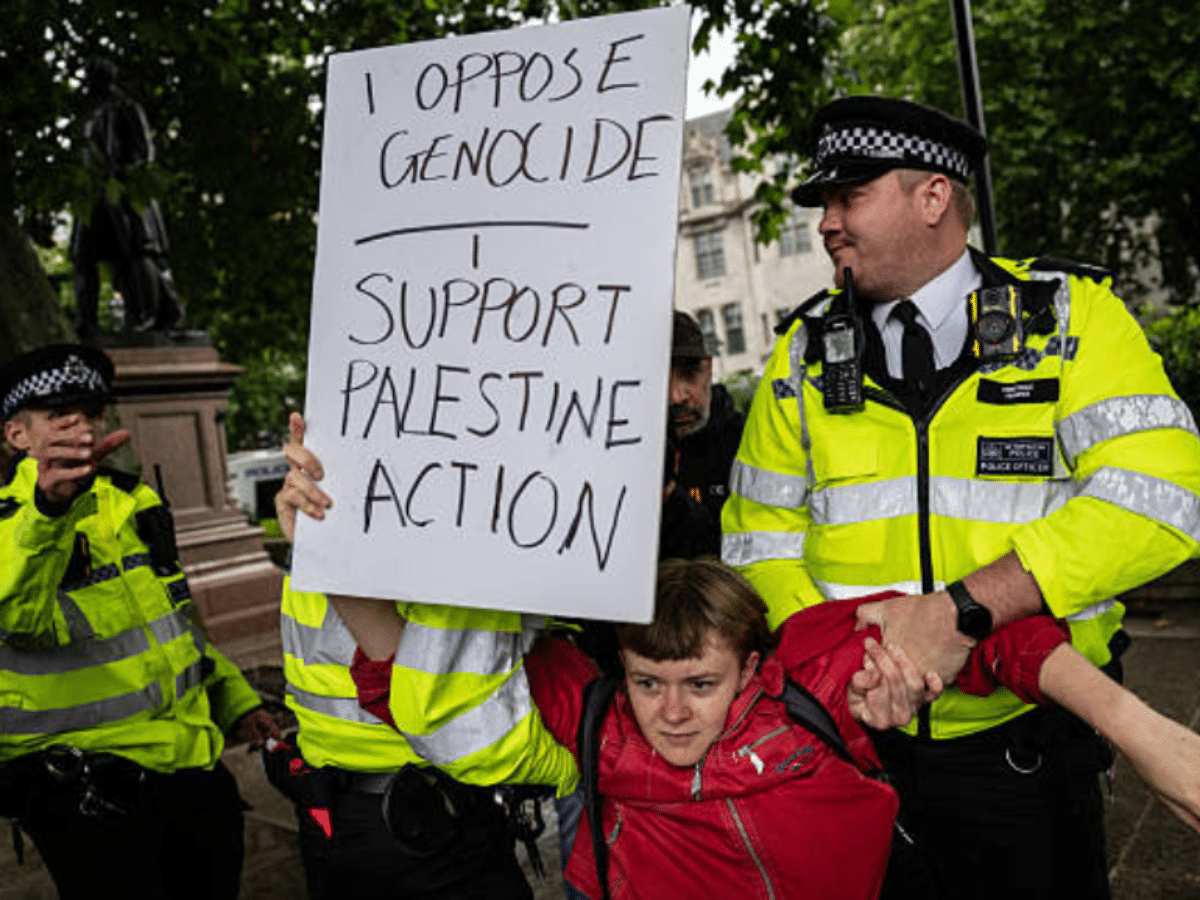
Channel 4‘s Dispatches programme has looked at the UK government’s highly controversial ban of non-violent direct-action group Palestine Action. And through basic journalistic scrutiny that the rest of mainstream media have largely avoided, it laid out how central ‘corporate capture’ of our politicians was to the politically repressive decision.
Palestine Action and the corporate capture of UK government
Journalist Jonathan Cook summed up the Dispatches episode by saying:
What the programme made clear was that Starmer’s government made the unprecedented decision to declare Palestine Action a terrorist organisation not because the group is a terrorist organisation but because large corporations – arms firms like Elbit – have captured the UK government.
One parliamentary stooge Dispatches interviewed was John Woodcock (‘Lord Walney’) – who’s among the clearest examples of corporate capture in UK politics. He has long lobbied on behalf of dodgy industries and repressive foreign states. And he has a particularly close connection to the Israeli apartheid state.
As Cook explained, Woodcock clearly “struggled through his interview”:
It was only too clear that his views on the subject had nothing to do with the public good but were shaped by his ties to the arms industries and his role as an Israel lobbyist.
Having long fought to repress freedom of speech and protest on behalf of Israeli settler-colonialism, Woodcock gave a particularly revealing response when interviewer Matt Shea questioned if public outrage over Israel’s genocide in Gaza justified regular protests:
In C4’s ‘Palestine Action, The Truth behind the ban’ Israel friend & arms lobbyists Lord Walney attacks regular pro Palestine marches
The reporter points out the organisers may say opposing the slaughter of civilians on this scale demands regular protests. Watch his reaction pic.twitter.com/WUqm2YbHvv
— Saul Staniforth (@SaulStaniforth) February 10, 2026
The UK’s political establishment, with its deep links to the pro-Israel lobby, has long sought to repress dissent on Israel’s war crimes. From the Conservatives to Labour and Reform, protection of Israeli interests is non-negotiable.
As Cook outlined, the ban on Palestine Action was:
done at the behest of Elbit Systems – the Israeli arms firm making killer drones used in Gaza targeted by Palestine Action.
Alongside regular government meetings with Elbit before the proscription, the government had also been considering how to:
Reassure Elbit Systems UK and the wider sector affected by Palestine Action that the government cares about the harm the group is causing the private sector [arms industries].
The Palestine Action ban was “wrong”
Apart from the corporate capture of government that led to the ban, Dispatches also noted the:
widespread belief among Home Office staff that the government was “wrong” to proscribe Palestine Action, and there was “disquiet” that the government was using Palestine Action as a way to curtail rights to protest and speech more generally.
The Labour government of Keir Starmer has been consistently intensifying the efforts of his Conservative predecessors to crack down on dissent.
The government’s own adviser, meanwhile, revealed how nonsensical the cynical attempt to link Palestine Action with Iran had been:
GOVERNMENT LIES
A clip from last night’s C4 Despatches shows that the government’s own advisor saw no evidence on claims used by Labour to proscribe Palestine Action.
Jonathan Hall KC slams the phoney accusations of an ‘Iran link’ as “nudge nudge, wink wink”.
Lift The Ban NOW pic.twitter.com/rXv5j5SScB
— Defend Our Juries (@DefendOurJuries) February 10, 2026
Dispatches also looked at why the Palestine Action ban was so dangerous:
Lord Hain was there when the Terrorism Act was introduced, he has publicly condemned the use of this act against Palestine Action.
He fears it could be used on “all sorts of protestors” and the likes of the Suffragettes and Anti-Apartheid protesters.
“That cannot be justified”. pic.twitter.com/ZSllZPQRKV
— Defend Our Juries (@DefendOurJuries) February 10, 2026
Even good mainstream journalism has holes, though
Perhaps Dispatches felt it had to tread very carefully around this issue, but it seemed at points to be way too deferential to government talking points, possibly to show ‘impartiality’. It also overused ominous music when interviewing people from Palestine Action, and asked them questions it didn’t ask of pro-Israel voices:
Nearly two and a half years into Israels genocide and people are still being asked, do you condemn Hamas?
The journalist asking the question is Matt Shea and the the clip is from Channel 4’s Dispatches program ‘Palestine Action, The Truth behind the ban’ pic.twitter.com/yDDJ2ylcsE
— Saul Staniforth (@SaulStaniforth) February 10, 2026
‘The reason I did this was because I oppose killing innocent lives.’ @Matt_A_Shea speaks to Palestine Action activist Ellie Kamio immediately after she was granted bail and found not guilty of aggravated burglary. The jury failed to reach a verdict on her other charges. pic.twitter.com/ifBclgCcEZ
— Channel 4 Dispatches (@C4Dispatches) February 9, 2026
Asks a Palestinian “Is Hamas guilty of killing innocent civilians on oc7 & should we condemn that?”
*doesn’t get the right answer*
“it should be simple to condemn the killing of innocent Israelis.”Never asks Falter, Hall or Walney to condemn Israel.
— Özen (@Iridescent1985) February 10, 2026
And if Dispatches was going to look at the claim of foreign links to Palestine Action, it would have seemed completely appropriate to look at the prominent role of the Israel lobby in parliament too.
Pretty good but surprisingly never mentioned the Israeli lobbying in UK which was the main reason for Palestine Action being proscribed in the first place
— Mike (@mwally_mike) February 10, 2026
Dispatches will surely have made some people think more carefully about the reasons behind the Palestine Action ban, though. And if it helped even slightly to mainstream the debate over the corporate capture of our political system, that’s something we should all be thankful for.
Featured image via the Canary

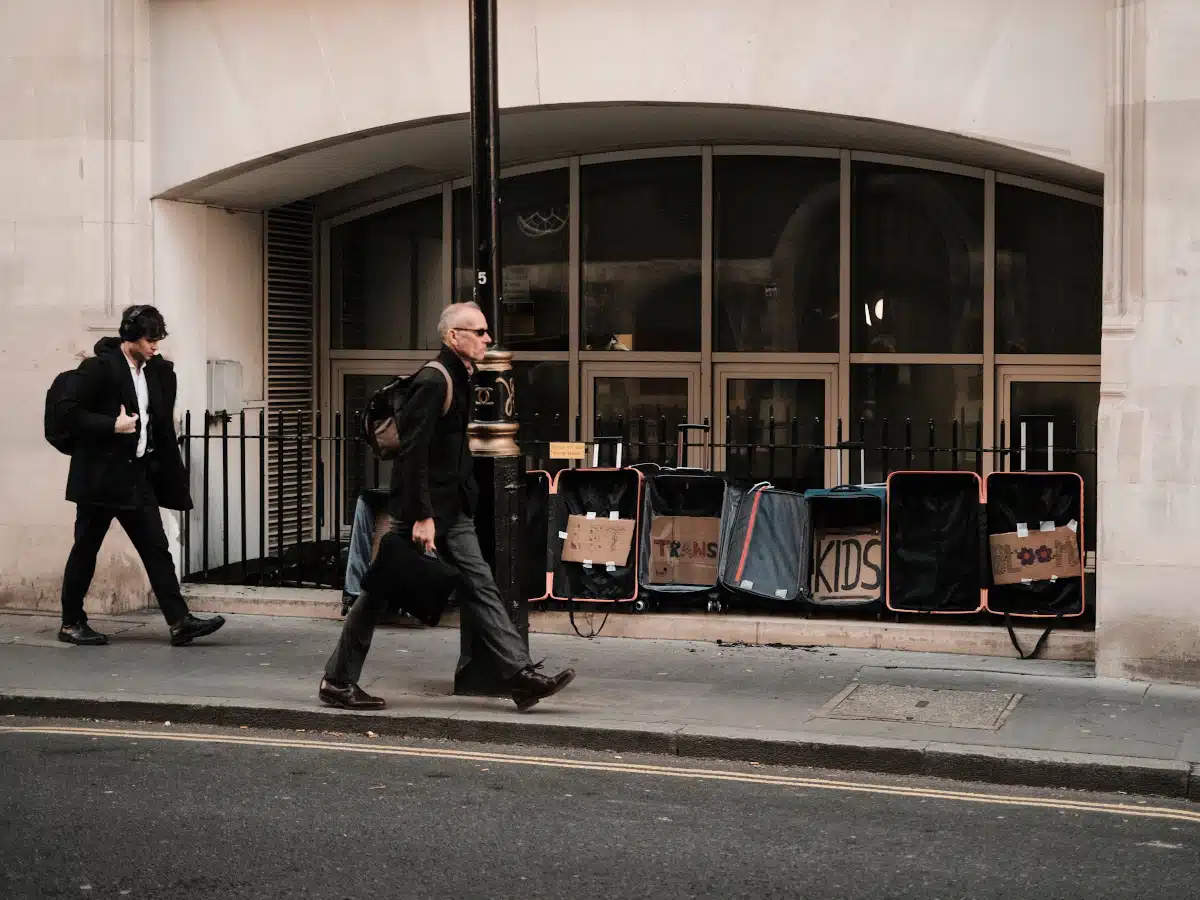
A group of young trans activists have used guerrilla gardening to protest transphobic revisions drafted in the Department for Education’s new ‘Keeping children safe in education (KCSIE) 2026‘ document.
The activists planted an array of blue, pink and white flowers, carrying soil-filled suitcases to the site, which were displayed to reveal the message:
Let trans kids bloom.
New guidance
This floral protest followed the publication of new guidance from the Department of Education (DfE), which aims to limit social transition in school, prioritising the opinion of parents and teachers over the wellbeing of trans kids.
It is a document that makes little fanfare about children who identity as lesbian, gay or bisexual, but insists that children who question their gender are likely going through a phase, noting:
It is common for children to engage in activities that are less typically associated with their sex… Sometimes young children also go through a period of questioning their gender but for the majority this will not continue into adulthood, while a small proportion may continue to question their gender and this feeling may intensify into puberty.
Although the document recommends that schools and colleges should “maintain flexibility and avoid rigid rules based on gender stereotypes”, it is advised that some forms of flexibility be encased in medicalised bureaucracies.
On this basis, the guidance emphasises that schools “should not adopt any changes relating to social transition unless a decision has been made by a school or college in consultation with parents or carers.” Instead, schools “should ensure that [a child’s] decision-making process is documented and records are kept.”
The document also defers to the widely criticised Cass Review, published in 2024.
Trans kids speak out
One of the suitcases displayed by the activists contained testimonies from trans kids about the life-changing benefits of being able to socially transition in school:
Social transition, especially at school, has heavily impacted my life. Before I socially transitioned, my school attendance was awful, and when I was in, I avoided all interaction as much as possible.
I hated school, and I hated feeling forced to be reminded of my dysphoria at every second.
I socially transitioned at school multiple years ago now, and I am doing so much better. I feel more able to express myself, and going to school feels significantly less terrifying. Now that I’m not worried about being misgendered and deadnamed, I can actually think about my future with comfort.
It is such a simple improvement to the quality of my life, and I’m so grateful that I could have a school experience where I got the respect and support that I deserved.
There were also quotes from trans adults on how being unable to socially transition negatively impacted both their childhoods and later life:
Social transition as a kid would’ve let me be a kid – figuring out what kind of person I was and how I related to the world around me.
Instead, I only knew that I was different and weird, isolated and stunted. It took me a full decade of self-loathing in adulthood to begin unpacking everything and growing into myself in the way I should’ve been allowed to so much earlier.
Setting hoops for trans kids to jump through
Commenting on the document, a spokesperson from Trans Kids Deserve Better said:
This guidance would restrict trans kids’ autonomy to socially transition in school by questioning our knowledge of ourselves. The guidance would set hoops for trans kids to jump through in order to socially transition, taking a default stance of doubt (especially when a child is neurodivergent) and forcing meetings with parents, teachers, and potentially clinicians, to decide for a child whether or not they are able to socially transition.
This does not centre the wellbeing of trans kids, rather this puts us through scrutiny and invasive questioning when we need support. The guidance of course neglects to mention the negative mental health effects for being denied a social transition…
This guidance has been in the works for quite some time now – first proposed under the Tories in 2024. But this iteration is even more harmful… Coming alongside the recent ban on HRT for trans kids, this is an alarming escalation of policy, designed to prevent trans kids accessing even the most basic forms of gender-affirming care.
If this guidance were to pass, it would amount to state-mandated conversion therapy.
Trans kids want to be able to live carefree. Access to a social transition gives us space to develop and grow, rather than feeling trapped and isolated. To the Department for Education: show us that you hear our voices, axe the guidance, and LET TRANS KIDS BLOOM!
Consultation period
The revisions implemented in the new document are currently under consultation, with the DfE seeking feedback to be reviewed in April.
The consultation period began when DfE first posted the document online in February 2026. At that time, the Canary‘s Alex/Rose Cocker described how it “treats vulnerable kids as a threat”.
Featured image via Trans Kids Deserve Better
This article was updated at 8pm on Wednesday 1 April to reflect a response from the Green Party.
Hamza Egal, chair of Global Majority Greens and convenor of the Greens’ racism policy working group, has sent a searing open letter to the leadership of the Green Party, calling on them to address “racialised harm,” governance failures, and what he describes as the weaponisation of party processes. Egal also serves as an elected member of the Standing Orders Committee (SOC), demonstrating a wealth of experience with the party’s internal governance structures and procedures.
Addressing the letter to Harriet Lamb and Zack Polanski, internal governance branches, and the Green’s Parliamentary group, Egal states:
The Green Party of England and Wales has a racism problem. Not a perception problem. Not a communication problem. A racism problem — structural, documented, and sustained.
Egal goes on to say that he has exhausted attempts to address this “racism problem” in private and in clear frustration, he has brought this serious issue to the public’s attention.
Discussing actions already taken, he writes:
I have raised concerns through the party’s own channels, used its rules and structures, submitted evidence, and waited for responses that have not come. What I have received instead is exclusion, misrepresentation, and the weaponisation of process against me.
Egal repeatedly raises concerns throughout the damning letter about inaction and ignorance from leadership. This suggests that, whilst the party portrays itself to be anti-racist, it hasn’t been behaving as such towards its minoritised members and elected officials.
A pretty damning accusation for a party that portrays itself as acting in solidarity and that apparently celebrates its diversity.
Green party racism furore
Speaking to the recent Spring Conference which saw repeated filibustering and delay tactics to block the vote on landmark motion “Zionism is Racism”, Egal said he chose not to attend due to fear of suffering harassment for being a “racialised member”. A concern which was seemingly proven well-founded by members actively working against the anti-Zionist motion.
For instance, Egal informed that a timely complaint had been sent by an ally of Polanski, Andrée Frieze. Conveniently, it came immediately prior to conference taking place. This complaint targeted him for a “conflict of interest” regarding an email sent out requesting members support the motion when it came to a vote. This apparent attack came despite Egal having no involvement in said email, reinforcing the suggestion that tactics are afoot in the Greens which are hostile to anti-Zionist members.
Addressing the “repeated use of accusations of antisemitism” within the Green Party, Egal wrote:
A serious dimension of this pattern has been the repeated use of accusations of antisemitism — deployed not only against me but against many members of this party who oppose Zionism and its racist ideology and practice. For a Black Muslim man raising concerns about racism, governance, and Palestine solidarity, these accusations have taken on a particularly targeted character.
Adding:
Attaching accusations of antisemitism to a Black Muslim member raising concerns about racism and Palestine is not incidental. It is a racialised tactic — one that conflates political opposition to Zionism with hatred of Jewish people, deployed repeatedly to delegitimise my voice and my roles in this party.
Consequently, this situation draws strong similarities to the period under Jeremy Corbyn’s Labour leadership. Corbyn’s Labour saw anti-Zionist socialist members expelled or sidelined due to a politically motivated antisemitism witch-hunt.
This heightens concerns that some within the Greens may be using unfounded allegations of antisemitism to discriminate against Muslim members.
Islamophobia concerns
Furthermore, Muslim members are increasingly facing toxic identity politics in the UK. Labour and right-wing parties have used Muslim communities as a political football, attempting to divide growing grassroots solidarity by portraying them as opposed to LGBTQIA+ people.
According to this open letter, it appears the Greens are not immune to hateful political game-playing either.
Critics have levelled allegations of transphobia against Egal, seemingly because he is a Muslim man:
I am also aware that SOC members who defended the constitution at Spring Conference are being publicly described as transphobes. That characterisation is false. It is another example of identity-based smearing deployed to silence those who challenge power inside this party.
The pattern is consistent: when process and procedure fail to silence dissent, identity-based attacks are deployed instead.
The letter further strengthens the suggestion that he is being targeted for being Muslim, detailing how transphobia allegations were directed at Egal after Joe Hudson-Small, co-chair of the Green Party Council (GPC), told approximately 900 members at the Spring Conference that Egal is “gender critical”:
That is not a neutral description. It is a politically loaded mischaracterisation by a senior party figure that causes direct harm to those named. By the party’s own legal standard, that should have triggered immediate accountability.
Instead there is silence. There is too often silence.
The Green Party says…
The Canary asked the Green Party about the letter. A spokesperson stated that firstly, they were checking to see if the leadership had received Egal’s correspondence. The spokesperson also noted that they were ‘looking into’ a request from deputy leader Mothin Ali for an investigation over the serious issues at play, here.
We also specifically asked the Green Party the following:
Egal highlights that whilst the messaging in statements from the party is antiracist, but institutional will to reinforce that antiracism within the party is lacking. How do you intend to confront this apparent racism with the Greens?
The spokesperson told the Canary:
We agree that we need to be confident that that we are matching our anti racist principles with fit for purpose internal processes. We know these can be improved.
This includes the collection of diversity data and this matter was discussed just yesterday by the Green Party’s Executive team. Data will be collected and analysed on staff members, councillors and candidates. When new members join the party, we will encourage them to register ethnic background. For candidate selection, when the latest round for the May elections are completed, we will analyse this data.
There are also plans in place to improve training on antisemitism, Islamophobia and anti racism.
A new Equity, Equality, Diversity and Inclusion manager has been appointed.
Repair before it is too late, or explain why you won’t
This damning letter drew attention to how these behaviours are increasingly pushing out Black and Brown members, who “no longer believe this party means what it says”. Pointing out that the membership of the Global Majority Greens has reduced, Egal pleaded with the Greens to act:
Trust is not rebuilt with statements. It is rebuilt with action, accountability, and the willingness to confront power internally rather than only performing that confrontation in public.
Opposing the party’s exclusion practices, Egal issued a list of proposed actions, insisting:
The Green Party must now choose what it is. It cannot speak the language of justice while practising exclusion. It cannot claim anti-racism while ignoring the people building anti-racist policy inside its own structures. It cannot call itself a democratic party while treating the decisions of its own membership as advisory.
Egal powerfully finished with a pleading call to action that Green Party leadership must now heed:
Choose justice. Or explain, publicly and in detail, why you will not.
The Green Party had not responded to a request for comment at the time of publication.
Featured image via the Canary
Complaints to the Department for Work and Pensions (DWP) about Universal Credit have increased by 43% in the last year. This is despite there only being a 12% increase in claimants.
The DWP publishes their official complaint statistics quarterly, so they’ve just released the figures up til the end of December 2025.
Overall, the department received 7,730 complaints, which is a 19% increase from December 2024. However
Universal Credit got over half of those complaints at 3,930. That’s a 43% increase from the previous year.
DWP blaming increase in Universal Credit again
They try to explain this away, of course, with the increase in Universal Credit claimants:
There are a range of different factors that may lead to a change in the number of complaints received. This can include increases in the caseload of a benefit, though you do not need to be in receipt of a DWP benefit to complain. In December 2025 there were 8.3 million people on Universal Credit, up from 7.4 million people on Universal Credit in December 2024.
However, the number of claimants only increased by 12%, so to blame that for a 43% leap is absurd.
There was also a sharp increase in complaints about disability services, which provide specialist support and advice to claimants. Whilst it hasn’t increased in number, statistically it has shot up by 62%. The type of complaint also matters. The DWP mentioned in the release that many complaints were ‘you’ve got it wrong’, but they conveniently missed out that many complained about staff not respecting them.
Just 4 out 10 complaints were upheld by the DWP, meaning many were probably once again treated poorly.
Universal Credit is currently experiencing a big increase in claimants as many are being forced to move onto it from legacy benefits. The DWP claims they are supporting everyone to move over, but the number who have failed to move over says otherwise.
Many disabled people have said they find the process too complex to navigate. So the process is probably not made any better by rude staff who don’t treat claimants with basic respect.
UC is generally a shit show
Along with migration issues, the Universal Credit system is, in general, an absolute shit show. Universal Credit sanctions are at a record high under Labour. The amount of compensation the DWP has had to issue due to their own incompetence has also shot up.
The Public Accounts Committee found that benefit claimants were overpaid by £1 billion in 2024-25 due to the DWP’s own errors. However, this was cancelled out by the fact that claimants were underpaid by £1.2 billion for the same reason 2024-25.
Instead of holding their hands up, the DWP once again blamed claimants.
The PAC report said:
The DWP has carried out some work to tackle the root causes of fraud and error – but this has focused on those committed by claimants, rather than errors by officials.
It’s clear from repeated inquiries, reports, and the DWP’s own stats that the department needs to spend less time demonising claimants and focus on teaching their staff how to be fucking compassionate.
But it’s clear from how much they’re pushing the workshy narrative that they care far more about forcing people off benefits than actually supporting people. But more people supported into benefits wouldn’t fit their narrative.
Featured image via the Canary

The Democratic Republic of Congo national team has returned to the world’s biggest football tournament after a 52-year absence. Their only prior appearance was at the 1974 World Cup as Zaire.
A dramatic extra-time victory over Jamaica secured the Leopards’ qualification for the 2026 World Cup, writing a new chapter in Congolese football history.
Half a Century of Waiting
The Congolese team started the match strongly, applying constant pressure on the Jamaican goal from the opening whistle. Despite numerous attempts, the game ended in a goalless draw, forcing extra time.
In the 100th minute, the historic moment arrived when Axel Tuanzebe headed in a corner kick. The goal was confirmed by VAR, giving the Leopards the victory and qualification, and bringing Congolese football back onto the world stage after half a century of absence.
A National and Symbolic Achievement
This qualification is not just a victory in a single match, but a symbol of organized effort. It represents a source of national pride for the Congolese people and reflects years of dedicated effort in developing players and sporting infrastructure.
It also demonstrates the rise of unconventional African teams and their ability to compete on the world stage.
The Challenges of the Upcoming World Cup
The Congolese national team will participate in Group K of the 2026 World Cup, alongside Portugal, Colombia, and Uzbekistan, facing a tough test against diverse footballing styles.
Finally, after 52 years, the Congolese Leopards have returned to the world’s biggest stage. They are carrying the hopes and aspirations of an entire nation, proving that organized work and unwavering determination can rewrite footballing history and establish themselves on the international stage.
Featured image via the Canary
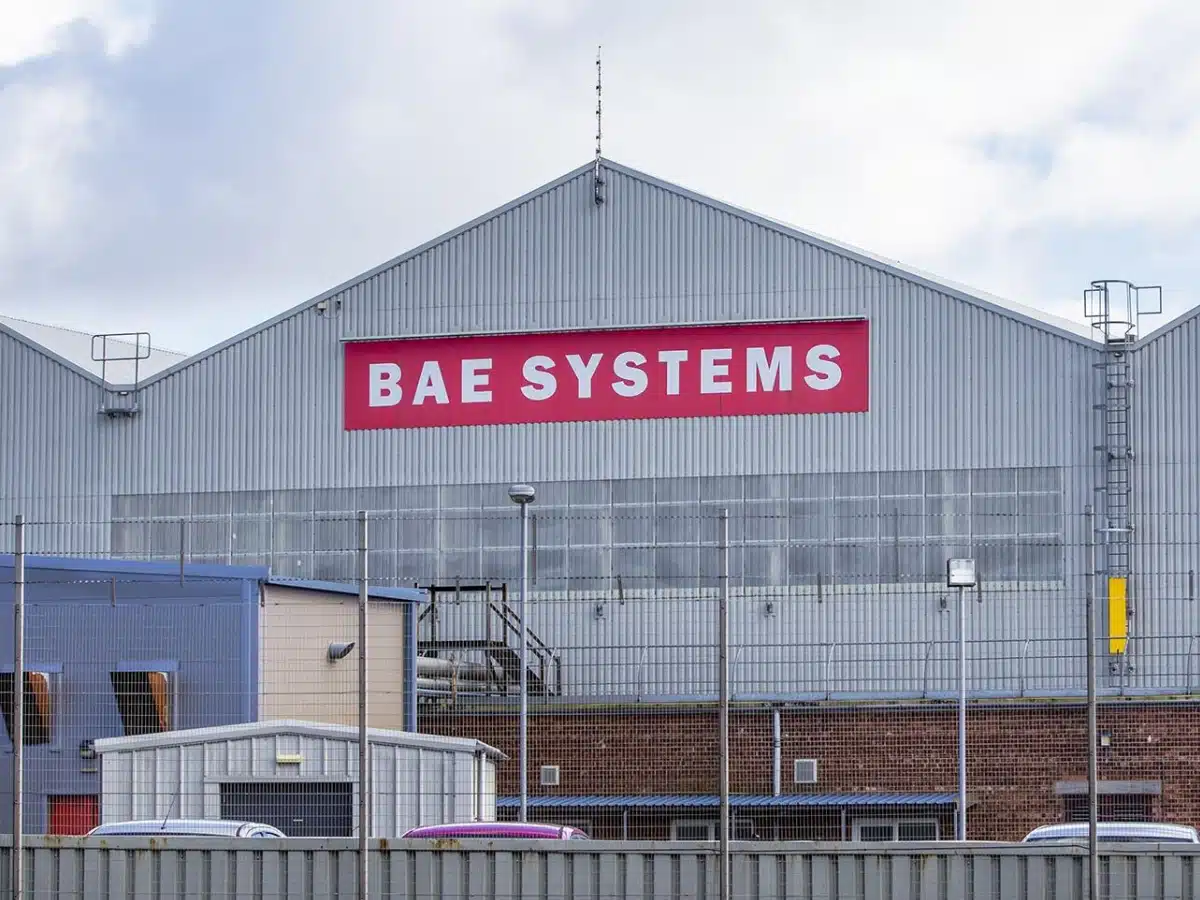
Earlier today, activists across Britain participated in a coordinated day of action to apply mass pressure across the arms industry. Activists targeted arms factories in Sheffield, Brighton, Newcastle and Lancashire. They aimed to disrupt the supply chain of arms headed for the US and Israel.
Factories activists targeted during the action included:
- BAE Systems (Lancashire).
- Radius Aerospace (Sheffield).
- Pearson Engineering (Newcastle).
- L3Harris (Brighton).
Activists gathered in the early hours of the morning to stop workers from entering the sites and continuing the production of various components and equipment used by Israel and the US.
The actions saw hundreds of activists across the country completely halt production in these sites for hours before disproportionate policing moved them away after resistance.
Arms factories increasingly targets
The day of action comes after months of similar protests occurring more increasingly. The most recent took place at an Elbit systems site in Bristol. More and more activists are focusing on the arms factories in their locality.
This has come in part from the exposure of these companies through organisations such as Campaign Against Arms Trade providing maps and intel on their ties to Israel and the genocide unfolding.
The target arms factories and their activities are:
- BAE systems in Samlesbury, Lancashire, produces the rear fuselage for the F-35 fighter jet which is known to be produced in the US and provided to Israel as part of their military contractual obligations.
- Pearson engineering is an Israeli state-owned defence company supplying parts for armoured vehicles and specialising in combat robotics.
- L3Harris provides power systems for strategic missiles, missile defence and aircraft.
- Radius Aerospace while primarily a manufacturer of aerospace components, has been identified as part of the UK supply chain linked to military aircraft, including the F-35 program
A spokesperson from the BAE Out Campaign explained:
We organise these pickets because we know they are effective. Workers have told us that each time we block the site, they are offered overtime to make up for the time lost. This proves that our protests are costing them money and time.
This form of disruption is essential as these corporations only speak in monetary language. As long as BAE remain in the F-35 fighter jet programme, they can expect delays, disruption and discomfort in the face of supporting and aiding a genocide.
Featured image via the Canary
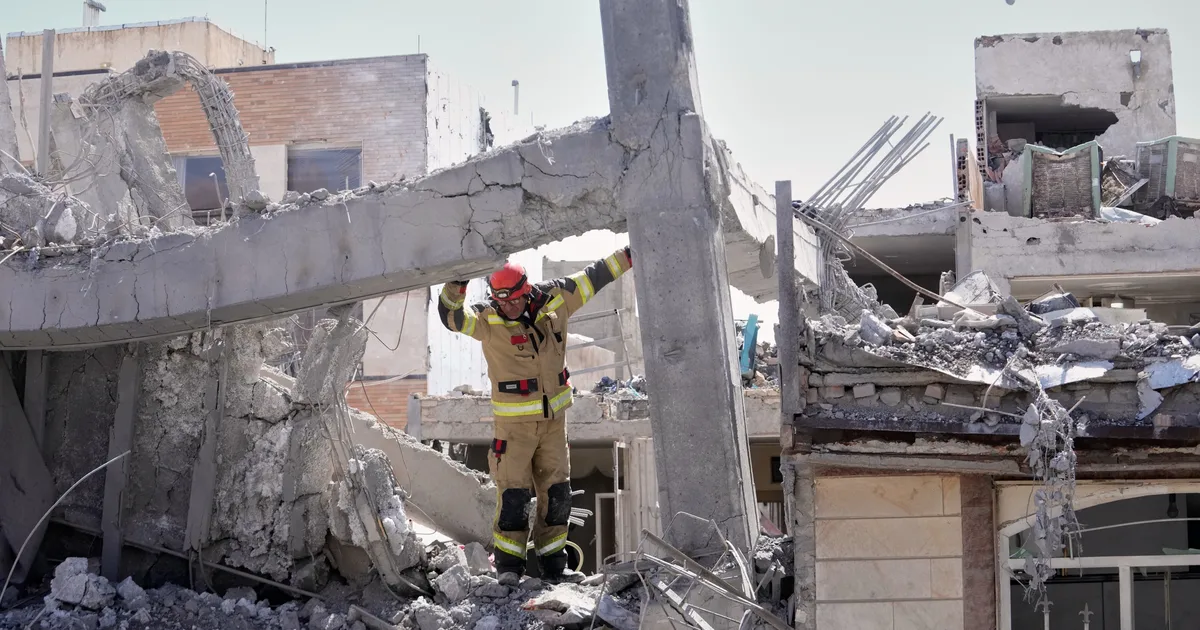
WASHINGTON — President Donald Trump on Monday continued to threaten Iran with war crimes if it does not comply with his demands, even as he also insisted a ceasefire deal with the country’s new, “more reasonable” rulers was soon at hand.
“If for any reason a deal is not shortly reached, which it probably will be, and if the Hormuz Strait is not immediately ‘Open for Business,’ we will conclude our lovely ‘stay’ in Iran by blowing up and completely obliterating all of their Electric Generating Plants, Oil Wells and Kharg Island (and possibly all desalinization plants!), which we have purposefully not yet ‘touched,’” Trump posted on social media. “This will be in retribution for our many soldiers, and others, that Iran has butchered and killed over the old Regime’s 47 year ‘Reign of Terror.’”
Destroying a country’s electrical and drinking water infrastructure, unless it is done for a specific military objective, violates international law governing armed conflicts, experts said, as does Trump’s additional threat to “take” Iran’s oil.
“Trump is in Putin territory,” said Fiona Hill, who served on the National Security Council in Trump’s first term, comparing Trump’s threat to Russian dictator Vladimir Putin’s repeated attacks on civilian infrastructure in Ukraine. “It’s a mafia boss play.”
Trump originally threatened to attack Iran’s electrical generation system on March 21, giving Iran 48 hours to reopen the Strait of Hormuz to international shipping. Just before the stock markets were to open on the deadline day, Trump announced he was moving zero hour back five days because Iran was making good progress. He extended it another 10 days on Thursday. It is unclear how Monday morning’s “immediately” wording affects the 10-day time frame, which runs through April 6.
Oona Hathaway, an international law professor at Yale University, said while all of Trump’s threatened actions are war crimes, the most egregious is targeting Iran’s water supply. “In particular, the attack on the desalinization water systems would be the deprivation of objects indispensable to survival of the civilian population. Such objects are specially protected,” she said.
White House press secretary Karoline Leavitt did not respond to a HuffPost query about Trump’s threats. During a briefing on Monday, she said, “Of course, this administration and the United States armed forces will always act within the confines of the law” — but then refused to take a follow-up question about Trump’s specific threat.
Brian Finucane, a lawyer who spent a decade at the State Department, said whether such an attack is illegal depends on the circumstances and whether it is being carried out for a specific military purpose. That Trump wrote in his post that it was being done as “retribution” clearly suggests, though, that the purpose is not military.
“The president of the United States should not be threatening war crimes,” he said, adding that in this case, the argument against hitting Iran in this manner goes beyond the moral one because Iran is likely to retaliate in like fashion against Gulf state allies of the United States.
“There is very much a tit-for-tat dynamic going on here,” he said. “Why should the United States care about that? Because it has global ramifications, including the US economy.”
That Trump would openly threaten war crimes now comes after years of advocating a lawless use of the military. Two decades ago, Trump repeatedly argued that the United States should confiscate Iraq’s oil — “Take the oil!” — following then-President George W. Bush’s invasion of that country. Stealing a nation’s natural resources is considered “pillaging” and is specifically outlawed by the 1949 Geneva Conventions.
As he ran for president in 2016, Trump said he would target the families of terrorists for killing. When it was pointed out that doing so would constitute a war crime and that US soldiers would refuse to carry out such an order, Trump insisted they would. “If I say do it, they’re going to do it. That’s what leadership is all about,” he said.
During his first term, Trump granted clemency to retired Navy SEAL Eddie Gallagher following his court-martial for posing with the body of an ISIS fighter who died in US captivity. Trump was urged to do so by Pete Hegseth, who at the time was a Fox News personality and is now Trump’s defense secretary, against the counsel of his own military commanders.
And starting last summer, Trump began ordering the extrajudicial killing of suspected drug smugglers on open boats in the Caribbean and Eastern Pacific by the US military, essentially executing them without even a formal accusation, let alone a trial.
Hill said the US Navy’s sinking of an Iranian frigate after it left a cultural exchange in India, more than a thousand miles from the Persian Gulf, falls into the same category. “Is that not a war crime?” she wondered.
Trump, meanwhile, continues making contradictory claims about the state of things, possibly to calm the global oil market and the domestic stock market. His war, which he originally said would take no more than four or five weeks, is now into its fifth week — yet he continues to say it is well ahead of schedule.
He claims he doesn’t know who in Iran he should be negotiating with because he and Israeli Prime Minister Benjamin Netanyahu have killed so many of Iran’s leaders while simultaneously asserting that peace negotiations are proceeding well.
As he returned to Washington on Sunday evening after another Florida golf weekend, Trump told reporters that he is actually killing those he is negotiating with. “We’re doing extremely well in that negotiation, but you never know with Iran because we negotiate with them and then we always have to blow them up,” he said.
On Monday, Secretary of State Marco Rubio laid out the objectives for the war: destroying Iran’s air force, navy, missile stockpile and the factories it could use to make more. Notably unmentioned was either its nuclear program or reopening the Strait of Hormuz to unfettered navigation.
That Trump’s own statements are often at odds with those from his top aides or even with self-evident reality is par for the course, said Hill. “He’s negotiating in real time, as he has always done,” she said, adding that his approach to Iran reminds her of the bullying way he has treated Ukraine. “He’s treating the Iranians like the Ukrainians. Unlike the Ukrainians, the Iranians have a hell of a chokehold on the rest of the world.”
Subscribe to Commons People, the podcast that makes politics easy. Every week, Kevin Schofield and Kate Nicholson unpack the week’s biggest stories to keep you informed. Join us for straightforward analysis of what’s going on at Westminster.
The UK could be on the cusp of an energy crisis comparable to the chaos seen in the 1970s, according to a former deputy governor of the Bank of England.
Iran continues to restrict the number of oil tankers which can travel through the major shipping lane, the Strait of Hormuz, in retaliation against the US-Israel strikes from last month.
As the conflict continues, the global economy is facing a period of uncertainty – and energy bills are expected to rise, pushing up the cost of living.
The government is considering supporting some energy bills for targeted households once the current energy price cap lifts in July.
As fears grow over what lies ahead, former deputy governor of the Bank of England, Sir Howard Davies, suggested it was “probably right” to compare the current era to the crises we saw in the 1970s.
World oil prices soared at the time, triggered by the 1973 Arab-Israeli war. The price of an oil barrel then quadrupled in a matter of months.
Arab oil-producing countries only ended their oil embargo against western nations after intense negotiations, though another crisis emerged in 1979 in the wake of the Iranian Revolution.
Davies compared that worldwide energy crisis to the current situation.
“In this case it could well be that supplies from the Middle East are constrained for some time and therefore we may have to live with a higher oil price – perhaps not $150, but certainly higher than $60 it was when we started,” Davies told BBC Radio 4′s Today.
“That requires a plan to increase alternatives and also to reduce consumption because it also looks like we may have a long term reduction in supply.”
Brent crude oil hit $116 per barrel on Monday morning.
Keir Starmer tried to prevent any panic buying from the public when speaking to the media on Monday.
The PM said the advice from the energy sector chiefs is “normal use, no need to do anything other than what’s normal”.
He added: “Obviously, we are bearing down on energy costs. The single most important thing we could do is de-escalate to get the Strait of Hormuz open.
“That’s why I’m putting so much effort into that aspect.”
A Downing Street spokesperson also said: “It’s obviously a serious conflict as the prime minister and the chancellor have said and they’ve been very clear that the impact of disruption to shipping and to the Strait of Hormuz is having an impact here in the UK, and households up and down the UK.”
He said the government’s focus is on working with international partners to de-escalate the situation and reopen the Strait.
Subscribe to Commons People, the podcast that makes politics easy. Every week, Kevin Schofield and Kate Nicholson unpack the week’s biggest stories to keep you informed. Join us for straightforward analysis of what’s going on at Westminster.
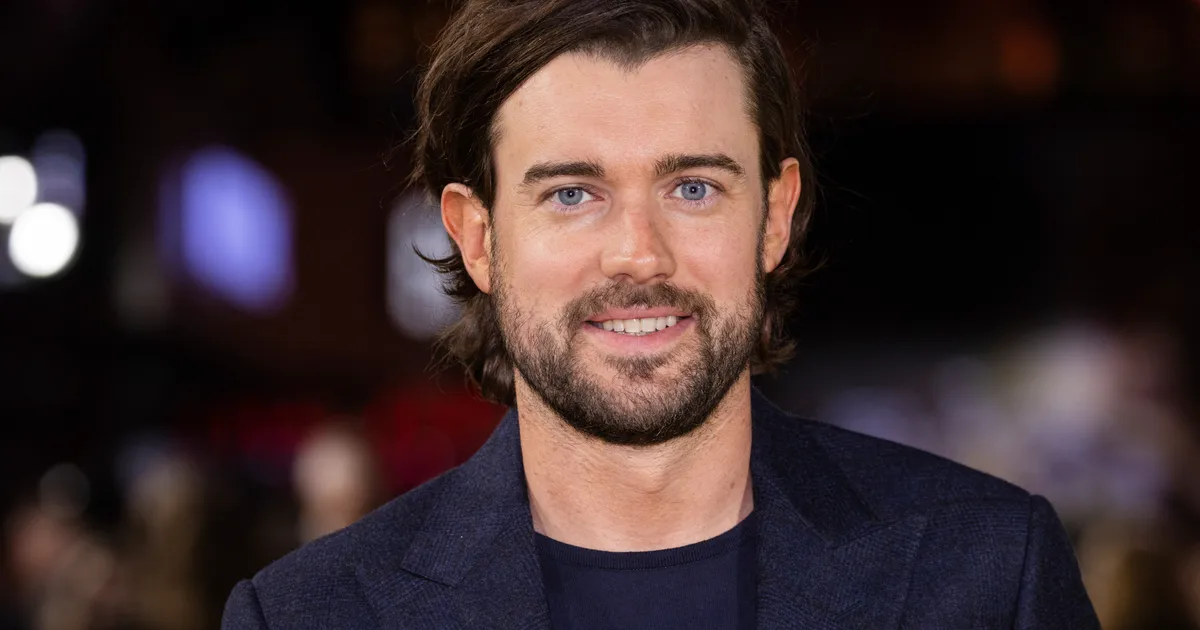
Following the success of the first two episodes, fronted by Tina Fey and Jamie Dornan, the stand-up comic will present the fourth instalment of the live comedy variety show next month.
The Brit Awards host will be joined by Jorja Smith as his musical guest, who’ll be performing two songs over the course of the live broadcast.
Before that, though, Bait actor Riz Ahmed will be presenting episode three this coming weekend, with music from Kasabian.
Once Riz and Jack’s episodes are out of the way, SNL UK will be taking a one-week hiatus, after which it will return for the second half of the season, having recently had its runtime boosted from six instalments to eight.
Lorne Michaels, who created SNL in 1975, is also the UK show’s executive producer, working alongside a team of 20 writers and a resident troupe of 11 comedians, including Taskmaster alum Emma Sidi and Ania Magliano, Black Ops star Hammed Animashaun and TikTok fave Jack Shep.

Defence secretary John Healey has announced a major increase in troops and anti-aircraft weaponry to Saudi Arabia. The deployment entangles the UK even more deeply into the Donald Trump/US and Israel-led war. And it presents new targets for Iran.
Trump’s war
The US under Trump and Israel attacked Iran first on 28 February without provocation. Iran was offering unprecedented concessions in negotiations at the time. The Pentagon has since stated there was no imminent threat from Iran. And the UN’s atomic watchdog, the IAEA, has said there is no evidence Iran was developing a nuclear weapon.
The main achievement of the war so far has been to cause a global energy crisis after Iran predictably closed the straits of Hormuz, a vital oil channel.
Healey was visiting Saudi Arabia on 31 March when the announcement was made:
The deployment follows a successful recce by a UK team, and the equipment and teams will deploy this week including radars, control node, and missile launchers and a Royal Artillery battery and battle space managers to operate the system. The system will be integrated into wider Saudi and regional air defences.
The new uplift includes the Sky Sabre air defence system. The press release also confirmed that:
Rapid Sentry – a ground-based air defence missile system – has arrived in Kuwait and the RAF’s ORCUS system is operating in the country, allowing personnel to detect drones early and take action.
Adding:
The system will be integrated into wider Saudi and regional air defences.
The UK’s multirole missile launcher is already in Bahrain.
UK pushes same dubious denials
Healey said:
Iran’s aggressive attacks continue to threaten our allies and interests in the Middle East. That’s why the UK has been flying defensive missions since day one of this conflict to protect British interests and allies – and today we’re delivering further support by extending our UK jets in Qatar and deploying extra air defence teams and systems to the Kingdom of Saudi Arabia, Bahrain and Kuwait.
I am proud of the courage and professionalism our Armed Forces have shown since the start of the war and my message to Gulf partners is: Britain’s best will help you defend your skies. I pay tribute to the heroic efforts of our partners across the Gulf in protecting their nations. We will stand by our long-term partners in the Middle East and continue to push for a swift resolution to this conflict.
The press release repeated the same inaccurate government talking point about the degree of UK involvement which has been pushed since the war began:
The Prime Minister has been clear that the UK will not be drawn into the wider war.
Contrary to Keir Starmer’s claims that the UK role is only defensive, the government has allowed US bombers to use its airbases at home and on the colonised Indian Ocean territory of Diego Garcia. The UK, whatever the government claims, is becoming more deeply entangled in this runaway war.
And regardless of what Keir Starmer and John Healey say, Iran will view new British military assets in the Gulf the same way that it views current ones: as legitimate targets in an existential war for survival.
Featured image via the Canary
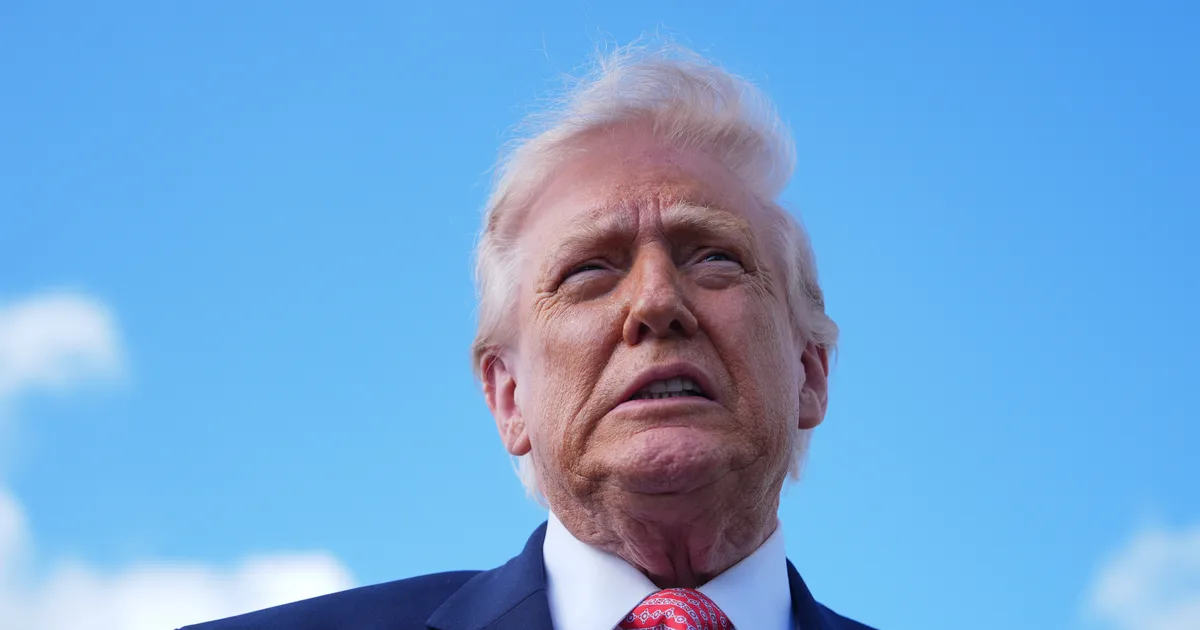
Donald Trump has called on the UK to “go get your own oil” from the Strait of Hormuz in a new social media post.
The US president has tried and failed to get western allies including the UK to support him in his offensive against Iran.
After the US-Israeli strikes last month, Iran’s forces effectively closed the Strait of Hormuz, which transports a fifth of the world’s oil supply.
The subsequent squeeze on fuel has caused a significant economic shock – and Trump has been trying to force Iran to negotiate as the global cost of living rises.
Writing on TruthSocial, he said the UK should either buy jet fuel from the US or “build up some delayed courage, go to the Strait and just TAKE IT”.
He said: “You’ve have to start learning how to fight for yourself, the USA won’t be there to help you anymore, just like you weren’t there for us.”
The UK government has insisted it is not concerned about oil shortages right now though there are worries about an energy crisis later in the year.
Trump’s attack on Britain comes after Keir Starmer refused US requests to use British military bases for premptive strikes on Iran last month, before allowing American troops to use UK sites for “limited and defensive” strikes.
The president also claimed: “Iran has been, essentially, decimated. The hard part is done. Go get your own oil!”
Read Trump’s full TruthSocial post below:
All of those countries that can’t get jet fuel because of the Strait of Hormuz, like the United Kingdom, which refused to get involved in the decapitation of Iran, I have a suggestion for you: Number 1, buy from the U.S., we have plenty, and Number 2, build up some delayed courage, go to the Strait, and just TAKE IT. You’ll have to start learning how to fight for yourself, the U.S.A. won’t be there to help you anymore, just like you weren’t there for us. Iran has been, essentially, decimated. The hard part is done. Go get your own oil! President DJT
The US president also lashed out at France, claiming it will not allow planes headed to Israel, “loaded with military supplies” fly over French land.
“France has been VERY UNHELPFUL with respect to the ‘Butcher of Iran’ who has been successfully eliminated! The USA will REMEMBER!” Trump wrote.
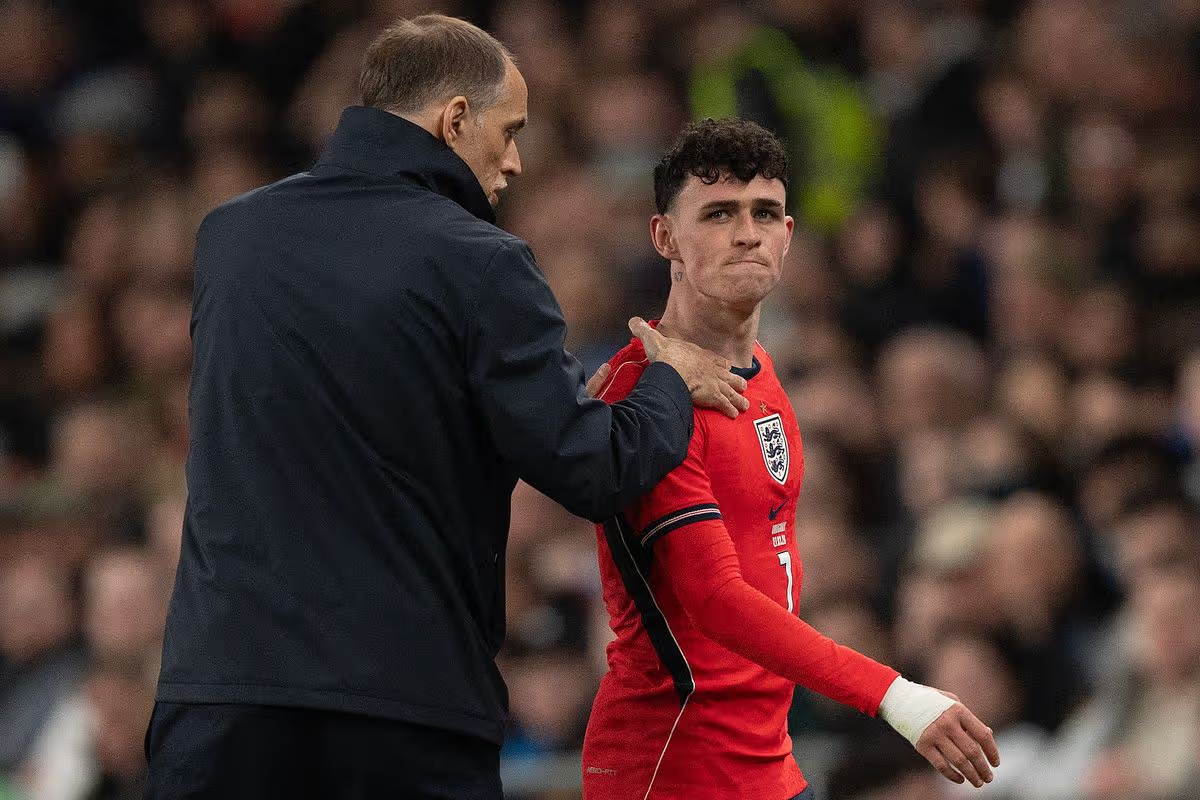
Phil Foden handed brutal World Cup 2026 warning after Thomas Tuchel admission

This Prototype Engine Is Designed To Power The Next Generation Of US Air Force Drones

The Biggest Mistakes People Make With Bitcoin Wallets


-

 Business6 days ago
Instagram, YouTube Found Responsible for Teen’s Mental Health Struggle in Historic Ruling
-
 Tech6 days ago
Intercom’s new post-trained Fin Apex 1.0 beats GPT-5.4 and Claude Sonnet 4.6 at customer service resolutions
-

 NewsBeat5 days ago
The Story hosts event on Durham’s historic registers
-

 Sports5 days ago
Sweet Sixteen Game Thread: Tide vs Michigan
-
Entertainment2 days ago
Fans slam 'heartbreaking' Barbie Dream Fest convention debacle with 'cardboard cutout' experience
-
 Entertainment4 days ago
Lana Del Rey Celebrates Her Husband’s 51st Birthday In New Post
-
Crypto World2 days ago
Dems press CFTC, ethics board on prediction-market insider trades
-

 Tech3 days ago
The Pixel 10a doesn’t have a camera bump, and it’s great
-

 Crypto World5 hours ago
Gold Price Prediction: Worst Month in 17 Years fo Save Haven Rock
-

 Sports1 day ago
Tallest college basketball player ever, standing at 7-foot-9, entering transfer portal
-

 Tech2 days ago
EE TV is using AI to help you find something to watch
-

 Tech2 days ago
Apple will hide your email address from apps and websites, but not cops
-

 Entertainment7 days ago
HBO’s Harry Potter Series Will Definitely Fail For One Big Reason, And It’s Not J.K. Rowling Or Snape
-

 Tech2 days ago
How to back up your iPhone & iPad to your Mac before something goes wrong
-

 Tech2 days ago
Flipsnack and the shift toward motion-first business content with living visuals
-

 Fashion6 days ago
En Vogue in Brown Leather and Tailored Neutrals by Atelier Savoir, Styled by J Bolin
-

 Politics2 days ago
Should Trump Be Scared Strait?
-

 Crypto World2 days ago
U.S. rule change may open trillions in 401(k) funds to crypto
-

 Fashion6 days ago
What Are Your Favorite T-Shirts for the Weekend?
-

 Fashion5 days ago
Weekly News Update, 3.27.26 – Corporette.com
You must be logged in to post a comment Login