

Politics
Green Party call new immigration propaganda ‘made up nonsense’



Far-right propaganda outlets are salivating over a new immigration report from an investment bank – that’s mainly because it fearmongers about the Green Party, which has been surging in recent months and presenting a real challenge to Reform UK.
Because the actual report isn’t public, it can’t face proper outside scrutiny. But as a Green spokesperson insisted:
These figures are made up nonsense and we’ve been given no idea how they are calculated.
Green Party: ‘we won’t scapegoat migrants’
The report comes from Simon French, the “chief economist at Panmure Liberum”, which calls itself “the UK’s largest Independent Investment Bank”. And it claims that a Green election win in 2029 would push the country’s population from around 71.5 million to 75.9 million by 2034 (via net migration of about 900,000 a year).
French is a Times columnist who previously worked in government and “had a central role” in pushing through cuts. And he once wrote about “taking a chainsaw to red tape”. But right-wing rags hope we’ll just accept his estimates on immigration numbers without any scrutiny (as they did themselves).
The Green Party has refused to do so, though. Because a spokesperson told the Telegraph that, while it’s “not at all clear” how French got his figures, it looks like he based them:
apparently, on an ‘open borders’ approach, which is not our current policy
They stressed that:
The Greens support a fair and managed migration system – successive governments have presided over a broken and unjust system.
Responding to the Mail, meanwhile, a Green spokesperson placed the focus firmly on economic injustice, saying:
People are concerned about the impacts of immigration because of a massive affordability crisis, but unlike other parties we won’t scapegoat migrants for the unfairness created by our rigged economic system.
An investment bank wouldn’t want you railing against the economic system, would it?
Despite not knowing where French got his numbers from, we do know that even the Tories brought net migration up to 944,000 in 2023. So even if we believed French’s prediction, it wouldn’t be the kind of number the UK has never seen before.
It’s important to remember, of course, that people from other countries contribute strongly to our economy (something the Green Party has openly insisted). It’s also important to remember why immigration happens at all. Because as the Canary has previously explained, the UK has:
- An ageing population.
- Low birth rates.
- Skills shortages.
- A massive underinvestment problem.
- A longstanding addiction to destructive interference abroad which has played a big part in pushing people out of their homes in the first place.
As Green Party leader Zack Polanski has made completely clear, the focus of our rage should not be on ordinary people seeking a new life in the UK. It should be on the putrid economic system that, for at least five decades, has been decimating communities across the country via public spending cuts, with devastating consequences.
In December 2025, Polanski insisted:
We shouldn’t have a race to the bottom on migration. We should have a race to the top on public services!
He’s absolutely right. But investment banks and elitist propaganda outlets are happy with the way the current economic system works, so it shouldn’t surprise us in the slightest that they prefer to spread hate and fear rather than compassion and hope.
Featured image via the Canary
By Ed Sykes



5 min read
After chancing upon an old parliamentary board game, Daniel Brittain persuaded two hereditary peers to join battle
There was something about it that wasn’t quite like the other chess boards piled in a corner as if hiding. It was the day after Boxing Day and I was idling in a favourite shop in the town of Corbridge, between Newcastle and Hexham. With little else to do, I investigated and so stumbled on an artefact at once trivial and timely. For instead of the regulation black and white squares, this board carried slogans such as One Man One Vote, Home Rule and Abolition of the Lords.
What was this? The front of the board proclaimed it to be House of Commons – The New Parliamentary Game. New it might once have been: the packaging suggested that it had not been new for at least a century.
Delight at unearthing this piece of parliamentary ephemera was tempered by the fact that were no playing pieces – and no rules. Further investigation was needed. I handed over my £3 and embarked on the quest.
The first point of inquiry after the Christmas recess was Patrick Vollmer, chief librarian of the Lords. Did this game exist in the parliamentary archives, a virgin copy kept in one of its vaults?
No, but he did pass on some leads to chase. A website for board game geeks gave the rules (extraordinarily complicated), and more surprisingly a link to the Bodleian Library, surely the repository of historic and valuable manuscripts? True, but also it turns out the home of 1,600 games and pastimes gifted this century. And there it was, on the Bodleian website, a photo of five of the eight required playing pieces, featuring pictures of prominent Liberal and Conservative MPs and peers from the game’s 1896 creation.
Jo Maddocks, the Bodleian’s curator of ephemera invited us (my wife Clare had by now joined the quest) up to Oxford to take a look, where we discovered that although the library has some of the playing pieces it doesn’t possess the rules or the board. We reunited them all for photos. Asquith, Campbell-Bannerman, Rosebery, Devonshire and Chamberlain re-emerged into the limelight. Turned out we were the first people to have requested a view.

Back in Parliament, a plan was hatched to play the game, possibly for the first time in 100 years. Given that ‘Abolition of the Lords’ (in its all hereditary form) is one of the squares on the board, two hereditaries were my obvious target.
While Clare brilliantly copied the Bodleian pieces and made the required additional three, I went on the trail of game hereditary peers. Fortuitously, the Earl of Clancarty was enthusiastic, and he was about to meet up with the Earl of Lytton. A brace of earls, result!
A week later we gathered in one of the splendid rooms formerly part of the Lord Chancellor’s flat. For Lord Lytton, Parliament’s foremost expert on Planning and Building law, it was a special day (his last in the Lords), having decided a year ago to retire at 75. The minister, Baroness Taylor of Stevenage, had paid tribute to him. Opposite: Lord Clancarty a prominent champion of the arts and the creative industries. He’s just discovered that he is to be one of the few outgoing hereditaries to receive a life peerage. Both crossbenchers, Lord Clancarty gamely took the governing Tories’ side, Lord Lytton the opposition Liberals. Shaking hands, the game commenced.
Poor old backbench pawns move just one square at a time
Of course, the object of the game is for the government to pass acts on the subjects depicted on the board by landing a player on each of the two similarly named squares. The opposition’s job is to prevent that. According to the rules, the PM and what the board refers to as the Chief Opposition Spokesman can move in all directions across the board, while his cabinet and their shadows (a term formalised in the 1920s) rather fewer. Poor old backbench pawns move just one square at a time.
Let battle commence. First bill? Abolition of the Lords of course. Lord Lytton scored an early victory in saving the House; on the rematch Lord Clancarty got it abolished. Soon a whole radical manifesto was laid before them: licensing laws, payment of MPs, Home Rule, disestablishment and voting rights. It’s a fun game, perhaps the parliamentary shops should bring out a new edition?
Having reached an honourable draw, the two earls went their way. Lord Clancarty to a meeting, Lord Lytton heading off for a last stint in the Chamber, say his goodbyes and clear his desk after some 30 years. As the politician playing pieces were packed away, I noticed that all the measures on the board have been tackled since the game’s creation. All except one: Disestablishment of the Church of England. That thorny question has even managed to outlive the hereditaries in the House of Lords.
Politics
The House | Fit For Service? Royal Navy Fitness Test Pass Rates Fall Sharply Over Last Decade

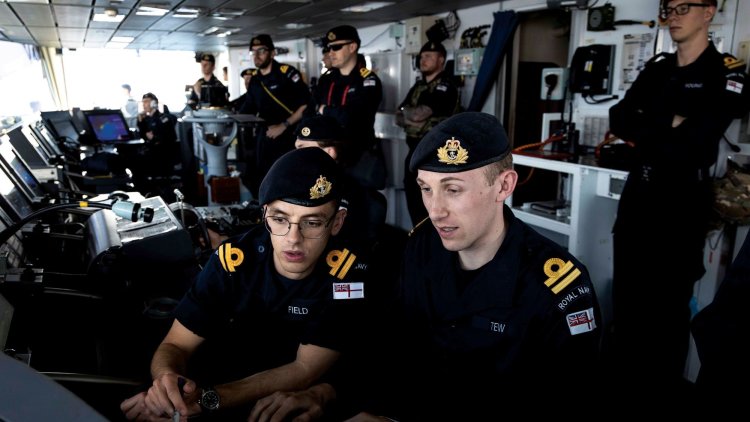
Officers at work on the bridge of HMS Dragon as it sails into Limassol, Cyprus, 27 April 2026 (Photography, LPhot Helayna Birkett. UK MOD © Crown copyright 2026)
6 min read
The Iran conflict has drawn attention to gaps in Royal Navy capability but, as Tom Scotson finds, it’s not just its ships that need to get into better shape
In the early days of the Iran conflict, as UK allies in the Gulf – and even Cyprus – were being hit by drones and missiles, Keir Starmer pledged to send a warship to help defend them.
The only problem was the only available vessel, HMS Dragon, was undergoing a refit in Portsmouth. The effort to get the ship ready was extraordinary but there was no escaping the embarrassment.
The Royal Navy has been the object of ridicule from US secretary of war Pete Hegseth and, repeatedly, Donald Trump himself. It is widely acknowledged that the UK has an inadequate number of warships currently available, with new frigates only coming into service at the end of the decade.
But a navy is about more than its vessels – and data uncovered by The House suggests that not all is well with its personnel.
On the face of it, the health of the Royal Navy is improving after decades of cuts. By January 2026, it was reported that there had been a 14.5 per cent uptick in the numbers of people joining the navy, with the fleet boasting a strength of around 32,160 personnel.
But according to a Freedom of Information request made by The House, the number of personnel who passed their fitness tests between 2014 and 2024 fell dramatically.
Between 2014 and 2015, 96.6 per cent of both men and women in the fleet passed their fitness tests on first attempt. However, 10 years later only 77 per cent of people passed the exams initially – a drop of almost 20 percentage points.
The number of Royal Navy personnel who failed their fitness tests at the first time of asking but passed within a year increased from 21 people to 1,219, 10 years later. Meanwhile, the same data found that Royal Navy personnel who failed their fitness tests on their first attempt then passed more than a year later rose from six people in 2014 to 86 a decade later.
As the navy grapples with falling standards and recruitment shortfalls, how can it restore and improve standards within its ranks?
Fred Thomas, Labour MP for Plymouth Moor View and a former Royal Marines officer, tells The House why he believes the numbers have declined.
“The overall offer was eroded year by year under the Conservative Party when they heavily cut funding,” he says. “The combined total of: how enjoyable is the job, what does it pay, what perks do you get including housing and medical benefits, how much status does it confer in society? How proud are you of your work for the navy and what sacrifices are you willing to make for the job?
“This will sound political but they hollowed out the military and it’s in a bad place now. It’ll take many years to turn it around. And at the same time we desperately need to modernise our capabilities.”
Many of the navy’s problems do not emanate from just cash flow problems either. Experts argue that in an increasingly competitive job market there are more careers out there which attract people’s interest – whether they be easier or more glamorous.
Commodore (Ret’d) Steve Prest, Rusi associate fellow, says people join the navy for one reason and that is it is better than the alternatives.
He adds: “Now it is different because young people, especially, often don’t want to be away and disconnected. A recent patrol had submariners away for 205 days under water, where they don’t have the ability to send information off the submarine. In the modern era, people expect to remain connected; when they see a blue tick, they expect a response instantaneously.
“It’s not to say a career in the Royal Navy is not rewarding. I know of people who were recently on that trip and thought it was one of the best things they ever did. It’s just harder to persuade people to go into the navy when everywhere else is so connected.”
Prest admits numbers have gone up a little, as recruitment has improved – despite the trained strength in the fleet having dropped. This means that the overall experience in the navy has reduced, with experienced staff leaving faster than the experience which can be grown in newcomers.
This will sound political but they hollowed out the military and it’s in a bad place now. It’ll take many years to turn it around
“With limited opportunities for people to gain sea experience, owing to the paucity of seagoing vessels, this is a real concern,” Prest tells The House.
“It means the ships’ companies bringing the new-build frigates into service will be vastly less experienced than their predecessors.
“We need a more balanced pipeline. The new recruits all need time at sea and interesting places to visit. There are no shortcuts to learning under those who know the ropes.”
The navy has also been affected by falling wages, which have cut across the public sector.
From day one, new officer recruits earn £34,676 per year. This will increase to £41,456 after their first promotion, followed by £52,815 as a lieutenant. The highest captain within the fleet will earn £122,849.
With a healthy pension and access to subsidised accommodation, the offer on the face of it looks good. Yet the problem is two-fold: talented people can earn far more in the private sector, in blossoming careers such as software engineering and coding; secondly, experts say demand is still depressed from cuts inflicted during austerity.
Admiral Lord West, former first sea lord and chief of the Naval Staff from 2002 to 2006, says: “Part of the problem is there was no pressure to recruit more people, the manpower was cut. When you depress something it’s difficult to try and bring it up to the same level again.”
He tells The House that the bottom line is that there is not enough money for the MoD – like most government departments.
And without greater investment, existing naval talent is going to waste, warns Prest: “If we don’t have enough ships to get them out on missions, then we can lose some of the best recruits as they idle ashore – that’s not what they joined to do.”


Keir Starmer has said he is going to Makerfield to campaign for Andy Burnham in the manufactured by-election there. And he says he wants everyone else to do the same, no matter what “other discussions are going on”. In doing so, he has become the first PM in history to campaign for his own removal:
NEW: Keir Starmer says he’ll be travelling to Makerfield to campaign for Andy Burnham
“I want everybody to be involved in the campaign, whatever other discussions are going on”
— Politics UK (@PolitlcsUK) May 21, 2026
Backfire
The messaging is most likely an attempt by Starmer to project strength, while secretly banking on Burnham to lose and save Starmer’s skin. In fact, given Starmer’s massive public unpopularity and his record of driving voters away in by-elections, his appearance in Makerfield is probably a direct sabotage attempt.
Definitely wants Andy Burnham to lose then.
#MoreChaosWithKeir
— Andrea K Heywood#VoteGreen
(@andreaheywood11) May 21, 2026
But given the weakness and awfulness of any MPs currently hoping to ‘challenge’ Starmer, it may backfire. Voters seeing Starmer will be acutely reminded that voting in Burnham is their only realistic hope of getting rid of the Brylcreemed blancmange before 2029.
Featured image via the Canary
By Skwawkbox
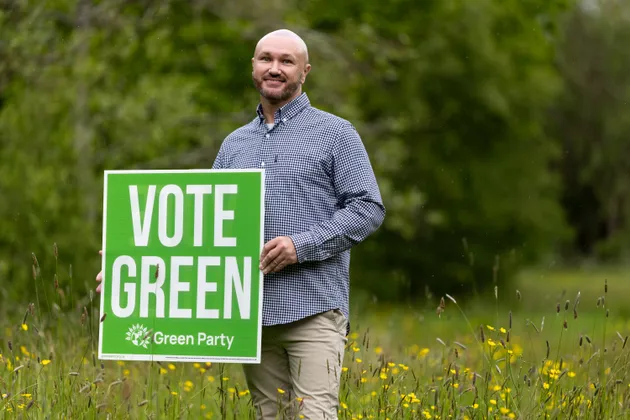
 Former Green Party Candidate Chris Kennedy poses for a portrait at Low Hall Nature Reserve on May 21, 2026 in Wigan, England.
The Greens’ candidate for the Makerfield by-election has quit after less than 12 hours in the role.
The party said Chris Kennedy, a nurse and children’s safeguarding specialist, stood down for “personal and family reasons”.
The Greens are now looking for nominations for new candidates before the by-election on June 18.
Shortly after the news broke, The Times reported Kennedy had shared social media posts describing an attack on Jewish ambulances in north London as a “false flag” operation.
An Instagram video described the attack as “total bullshit to keep the false flag flying” and included an image where parts of the word “Jewish” had been blacked out.
Kennedy also shared a post from Hugh Anthony, who describes himself as a “proud ethno-nationalist”, which claimed the Golders Green terror attack made “no sense”.
A Green Party spokesperson told The Times that Kennedy “apologises for the offence caused” and had deleted the posts.
A party representative told the BBC the posts “don’t reflect the views of The Green Party”.
When announcing Kennedy’s decision to stand down, a Green spokesperson said: “We wish Chris the best and understand that family has to come first.
“As a party, we are re-opening nominations now because we believe people in Makerfield deserve a real choice at this by-election, and the Green Party will be standing to offer exactly that.
“Across the country, more and more voters are turning away from the old parties and looking for politicians who will genuinely stand up for their communities.
“We will also be redoubling our efforts on campaigning to expose the risk of Reform, a party who seeks to divide our communities.
“This election has to be about how to make the super-rich pay their fair share, how we tackle the cost-of-living crisis with lower bills and affordable housing, and how we protect our public services and our green spaces.
“It has to be about offering Makerfield hope over hate.”
Subscribe to Commons People, the podcast that makes politics easy. Every week, Kevin Schofield and Kate Nicholson unpack the week’s biggest stories to keep you informed. Join us for straightforward analysis of what’s going on at Westminster.
Related…

Politics
Quentin Tarantino Confronted Brad Pitt On Set Of ‘Once Upon A Time In Hollywood’, Co-Star Says
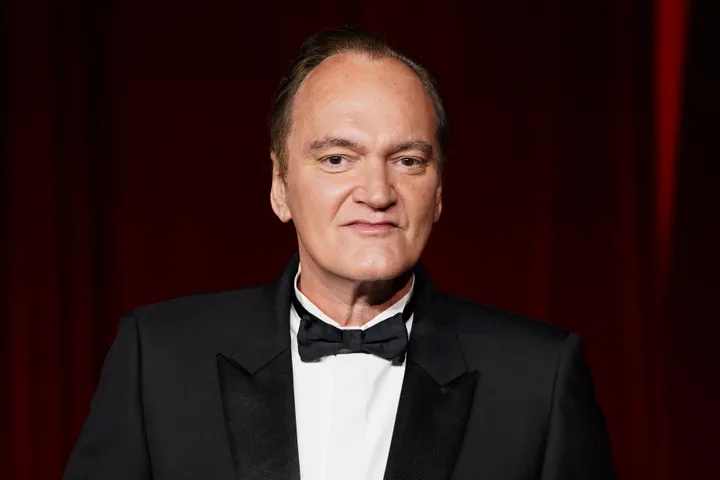
In an interview with People magazine published on Thursday, the longtime actor – who shared the screen with Pitt in Tarantino’s 2019 film – detailed a heated exchange the pair had while filming.
During the scene where Dern, who plays blind ranch owner George Spahn, is awoken by Pitt’s Cliff Booth, Dern said that Pitt made a move that sparked the spat between him and Tarantino.
“When Brad Pitt wakes me up in Once Upon A Time In Hollywood’, I’m in the bed and I get up and I’m a little groggy and stuff and I just say, ‘I’m not really sure what’s going on’,” Dern recalled.
“I’m looking at him. [Pitt] cut the camera, [and told the crew to stop recording].”
Dern said Tarantino looked “insanely grave” before asking Pitt, “what did you just do?”.
He continyed: “[Pitt] said, ‘Well, I cut the camera.’ [Tarantino] said, ‘Never again in your life will you ever cut a camera or you’ll be dead in this business. That’s my domain. Don’t stop behaviour’.
“So then, we went on and did the scene, and all Brad did was say to him, ‘Well, that wasn’t in the script what he said’.”

After the crew continued filming, Dern improvised a new line: “I don’t know who you are, but you touched me today. You came to visit me, now I gotta go back to sleep.”
Both Pitt and Dern have both worked with Tarantino before.
Pitt won an Oscar for his performance in Once Upon A Time In Hollywood, having also starred in Tarantino’s Inglourious Basterds in 2009 and appeared briefly in Tony Scott’s 1993 True Romance, which Tarantino wrote.
Dern previously appeared in Tarantino’s Django Unchained in 2012, as well as The Hateful Eight in 2015.
Reps for Pitt and Tarantino didn’t immediately respond to HuffPost’s requests for comment.
Coming up, Pitt is set to reprise his Cliff Booth character in a Netflix spin-off to Once Upon A Time In Hollywood, written by Tarantino and directed by David Fincher.
The Adventures Of Cliff Booth will premiere on Netflix on 23 December. Watch a trailer for the movie below:
Politics
Politics Home | Creating the right conditions to unlock UK infrastructure investment and growth



Chris Ball, President (UK & Ireland)
| AtkinsRéalis
Unlocking private investment will be critical to delivering the UK’s infrastructure ambitions and driving regional growth. From de-risking projects to reforming funding models, the challenge now is turning political intent into investor confidence.
The UK stands at an important moment in its pursuit of economic renewal. Plans and policies agreed in the next few months will determine the pace and progress of infrastructure development over the next decade.
Against that backdrop, the King’s Speech yet again reinforced the role of infrastructure in supporting economic growth across the UK. In the days following UKREiiF, as the public sector, industry, and investors reflect on discussions, the task now is to turn intent into confidence.
That confidence is essential if private investment is to be attracted at the scale and pace required.
Recent research among over 100 institutional investors shows clear appetite: 90 per cent rank the UK as an attractive destination for infrastructure investment in the next three years, and 71 per cent see UK projects as low-to-medium risk. These are encouraging signals, reflecting the shift in the government’s approach to planning and regulation, reinforced by new mechanisms such as the National Wealth Fund and pension fund reforms.
Beneath this optimism, however, the window of opportunity is narrowing. Only 19 per cent of investors firmly prioritise the UK over other regions, and nearly two-thirds have walked away from UK projects in the past where business cases failed to stack up. If we do not address the barriers – uncertain returns, planning delays, and delivery risk – we will lose momentum and capital to more competitive markets.
De-risking: building confidence through early integration
Investors are not averse to risk, but they demand clarity, predictability, and robust governance.
Early integration of public bodies, investors, and delivery organisations ensures that projects are both well-conceived and deliverable from the outset. This integrated approach must extend across the asset lifecycle, embedding risk management at every stage.
Collaborative contracting models have proven to reduce cost and schedule overruns through this approach, with the Construction Leadership Council estimating it can achieve savings of up to 20 per cent.
The East West Rail Alliance demonstrates this in practice: Phase 2 planning was completed 30 per cent faster than Phase 1 despite being twice the size. This is the kind of outcome that builds investor confidence – and it is replicable.
Incentivising: funding models that work
The government’s commitment to mobilise £3 of private capital for every £1 of public funding and the £50bn Mansion House Accord are a step in the right direction, but these must be underpinned by credible delivery plans and viable business cases.
To mobilise private finance, we need funding models that provide investors with the clarity and returns they require. Public-private partnerships remain central, with 37 per cent of investors citing their importance. However, 30 per cent are willing to pilot new funding models and participate in blended finance initiatives – provided the rewards outweigh the risks.
Thames Tideway illustrates what that looks like in practice. Its financing structure ensured returns during construction and provided the government as the insurer of last resort, giving investors the predictability they need.
Success depends on clear risk-sharing – reflected in models such as the Regulated Asset Base – well-defined governance, and policy stability that transcends electoral cycles.
Delivering: place-based partnerships
Regional and place-based investment programmes are pivotal to delivering impact at pace. Nearly 80 per cent of investors are interested in regional growth programmes, and a third are actively exploring options. This appetite now has a more enabling policy framework behind it, laying the foundation for regional delivery with place-based business cases.
Long-term, bundled regional programmes can open new funding pathways and turn complex, fragmented projects into stable propositions for institutional investors. These are the delivery mechanisms for the government’s growth mission: regional rail links, industrial clusters, science and manufacturing corridors.
However, such programmes could reveal capability gaps in public bodies and stretch them further, previously highlighted as a key lesson in the National Audit Office report, Lessons learned: private finance for infrastructure. In our research, investors acknowledged their experience of local bureaucracy as a barrier to invest, from perceptions of slow planning and difficulty securing approvals to the pace of local government.
Deploying digital tools such as AI and spatial data can accelerate delivery and reduce uncertainty. Additionally, integrators can fill local government capability gaps.
AtkinsRéalis is already working with a number of Mayoral Combined Authorities to plan and structure their regional growth programmes, including supporting national Green Book pilots that are demonstrating how place-based appraisal can unlock infrastructure value at scale. Scaling these pilots has the potential to get more cranes in the sky.
A window of opportunity
Policy conditions are better aligned than they have been for years. Place-based business cases, new funding models, and National Wealth Fund pilots together provide a credible platform for the ten-year infrastructure pipeline to attract the private investment it needs. The next step will be to move from strategy to delivery.
Programmes that succeed share common characteristics: early integration of the right stakeholders, clear risk allocation, and a commitment to collaborative delivery. Financial clarity, policy stability, and coordinated public-private effort are the conditions for unlocking investment and driving growth across every region.

Trump Jr. is set to marry model-socialite Bettina Anderson this weekend in the Bahamas, but it doesn’t look like his dad will be in attendance based on what he told reporters on Thursday.
Spoiler alert: If you’re looking for enthusiasm, you’ve come to the wrong place.
“He’d like me to go, but it’s gonna be just a small, little, private affair, and I’m gonna try and make it,” Trump said. “I said, you know, this is not good timing for me. I have a thing called Iran and other things.”
He added that if he does attend, “I get killed. If I don’t attend, I get killed. By the fake news, of course.”
The president’s waffling over whether he’ll attend his son’s wedding inspired a tizzy on social media among people who couldn’t believe he’d miss an important family event.
Donald Trump Jr. had not commented on his Dad’s inability to commit to attending his wedding as of Thursday evening.
Subscribe to Commons People, the podcast that makes politics easy. Every week, Kevin Schofield and Kate Nicholson unpack the week’s biggest stories to keep you informed. Join us for straightforward analysis of what’s going on at Westminster.

Half of my OnlyFans inbox is men asking me if they can watch me orgasm (answer: not yet, but keep spending and we’ll see). The other half is men asking me why governments are so inept when it comes to acting on imminent climate threats.
Replying to all of these messages is time consuming. But it’s what I signed up for when I decided to join a platform known for porn to talk about the existential threats being faced by humanity; specifically, the climate crisis.
My decision to join OnlyFans feels, in some perverse way, like a hunger strike. If my body is the only thing extractive capitalism hasn’t yet taken from me, I will use it as a form of protest, for attention in a way I never anticipated when I first started working in climate communications.
My job as a narrative strategist involves understanding the stories people believe about climate change, and unfortunately many of those stories are incorrect. Even the stories about the stories are incorrect.
For example, people think that there are a huge number of people who don’t believe climate change is real, but that’s not true. Most people – 89% across 125 countries – want stronger climate action.
Climate change is a very particular comms challenge. It is something that most people in the world believe is an issue that we must prioritise solving, but that governments refuse to act on with the immediacy required.
It is a problem that impacts all of us regardless of our political belief, and a slow-moving existential threat that, psychological research shows, our brains cannot fathom, so we tend to switch off when we should be leaning in.
Even if we do get people engaged, the only solution is an immediate transition away from fossil fuels and to renewable energy – something that is achievable but presented as impossible by Big Oil corporations and the governments who are not holding them to account.
For normal people, the lack of agency leads to a general feeling of despair.

If nobody is listening, how do we make them?
I felt like giving up on my work, until I saw Adam McKay’s Don’t Look Up on Netflix back in 2021. It’s a dark satire about scientists who have infallible evidence that a meteor is coming to Earth, but are faced with a world who simply will not listen.
Watching that film was my life’s work reflected at me. If nobody is listening, how do we make them?
I did a deep dive into recent examples of effective communication to reach the masses and found myself fixated on how Trump’s voter base had been activated on a platform of fear and dissatisfaction.
I saw how the primary messages, which present more as ‘feelings’, were shared and cultivated through entertainment built upon parasocial relationships – the ones developed through long, conversational podcasts, and a presence alongside daily life on social media.
It was a new form of trust and intimacy that was incredibly effective at narrative shift.
That word – ‘intimately’ – sparked a solution. I am lucky to have genius OnlyFans friends Meg Prescott and Bree Essrig, and they have shared their experiences building sincere relationships with followers who are there for comfort and connection as much as masturbation.
It seemed absurd to think that a platform known for selling nudes could be home to climate messages, but it also seemed absurd to not try absolutely everything when our window for meaningful action is closing.
It was through another work project that I met Staci Roberts-Steele from Yellow Dot Studios, the nonprofit set up by Adam McKay. Together, we created Headline Newds, a comedy porn series made for OnlyFans.
The videos would reach people who would typically scroll past anything with “climate” or “science” in the title, through entertainment and intimate parasocial relationships.
The production – working with eight brilliant OnlyFans creators – showed me that women who know their value are the perfect people to advocate for our planet, and for everything natural and human we are trying to protect in a world being mined to make machines.
As climate narrative strategy goes, this was something completely new, and I realised that waking up the comms industry to the fact that we need new ideas was as important to me as the public response to the videos.
I set up my own OnlyFans account – and was inundated with DMs
That’s when I decided to start my own OnlyFans account. I may not have the body or the beguiling nature of the creators we worked with, but I’d learned that OnlyFans was about so much more than boobs.
When we launched Headline Newds, I opened my OnlyFans DMs to men who wanted to talk about climate change. And I have been inundated.
Many people said the videos had taught them something new, but many more said that they were worried for the future of the planet, frustrated with their governments, but didn’t know what to do with those feelings.
No one told me to shut up and get my tits out.
Though not true for many women I know, sex work has a reputation as being the “last resort” for women who have exhausted every other option and simply must pay their rent.
There is a stigma attached to it, although in any sane world the stigma should be on the systems creating the conditions in which vast numbers of people cannot afford to live.
But this is not a sane world, which is why I joined OnlyFans as a signifier that we must try every possible “last resort” when it comes to communicating about the climate.
What this experience has shown me is not just that people are willing to engage with climate content in unexpected places, but that the problem was never a lack of care. It was a lack of connection.
For years, we’ve tried to communicate urgency through facts, fear, and authority – but attention today is built through intimacy, trust, and presence.
If the climate crisis demands that we rethink everything about how we live, it should also demand that we rethink how we speak.
Jessica Riches is a climate-focused filmmaker and narrative strategist, and co-creator of Headline Newds, a short-form series produced with Adam McKay’s Yellow Dot Studios. She explores how attention, intimacy and unconventional storytelling can be used to engage new audiences with the climate crisis.

After six seasons and séjours in two major European cities (so far!), Emily In Paris will be saying au revoir for good at the end of its next run.
On Thursday, Lily Collins shared that her upcoming return as social media exec Emily Cooper will be her last, with production on the new episodes already underway.
In a video shared on Netflix’s socials, the Golden Globe nominee explained: “After six unforgettable years of playing Emily Cooper, I’m here to share that this upcoming sixth season will be our final.”
She continued: “Season six will bring you everything you love about the show, and serve as the final chapter in Emily’s adventure of a lifetime. Our entire cast and crew are pouring our hearts into making this a fantastic farewell season, which we’re now filming.
“I can’t wait for all of the magic ahead, and to celebrate our final season with you in the most chic way yet. We’re so incredibly grateful and we love you.”
Following her previous trip from Paris to Rome, Netflix has teased that Emily’s next trips will take her to Greece and Monaco.
Creator Darren Star said: “Making Emily In Paris with this extraordinary cast and crew has been the trip of a lifetime. As we embark on the final season, I am so grateful to Netflix, Paramount, and, most importantly, the fans who have taken this incredible journey with us.
“We can’t wait to share this last chapter with you. Thank you for letting us be a part of your lives, inspiring your dreams of travel and your love of Paris. We will always have Emily In Paris!”

Although Emily In Paris has never exactly gone down well with critics, its low-stakes drama has made it a consistent hit with Netflix users since it launched in October 2020.
Emily In Paris’ first five seasons are now streaming on Netflix.



Our recent launch of a unique in-person GLP-1 support service emphasises the essential need for compassionate, evidence-based support to sit alongside weight loss medication for sustainable results.
We recently announced the launch of a new suite of dedicated GLP-1 support, designed to help people using weight loss medication build the healthy habits they need to achieve and, crucially, sustain their weight loss long-term.
We steadfastly believe our methods can help anyone to lose weight, and for more than 55 years, our mission has been to support anyone and everyone who wants help to do that, with no judgement. The dawn of weight loss medication has not changed this.
We understand the hurt and desperation that overweight can bring. No matter which route people take to lose weight and improve their health – especially through surgery and injections – the decision is unlikely to have been made lightly.
Evidence shows that these medications don’t work long-term on their own, and from speaking to members who have joined us since starting medication, regaining weight when they stop taking it is a worry. The emotional impact alongside the physical toll of regaining weight is why weight loss medication must be partnered with evidence-based wraparound support delivered with empathy and compassion.
Over the past five decades, through our healthy, balanced eating plan, active lifestyle programme and behaviour change support, we’ve helped millions of people reduce their risk of long-term health conditions, improve their weight, fitness and overall metabolic health, and develop healthier habits that last. Our body of evidence doesn’t just show effective – and cost-effective – weight loss, though; it also demonstrates improvements in our members’ self-esteem, confidence and mental wellbeing.
Slimming World’s newly launched GLP-1 support reflects our clear and consistent belief: while medication can play a role in weight loss, lasting success comes from getting the support to make changes around food, drink and exercise, develop strategies and resilience, and build positive lasting habits for life – not medication alone. The GLP-1 support offers an additional layer to our existing programme of tailored guidance specifically for people who are using weight loss medications. It provides practical, evidence-based guidance on nutrition, muscle strengthening activity and appetite management, alongside the emotional and behavioural support people need – areas increasingly recognised as critical for long-term GLP-1 outcomes.
We’ve made a conscious decision not to follow others in the weight management sector in offering a weight loss medication prescription service, and we believe our in-person model sets us apart from those offering digital-only or short-term, medication-led solutions.
Our 12,000 groups are located in the heart of communities across the UK and run by expertly trained consultants who have all been members themselves. They’ve walked in their members’ shoes, they’ve made the decision to lose weight, and they know what it feels like to regain weight. I became a Slimming World member myself in my 20s after putting on weight while at university, and I truly believe the personal understanding and empathy that our consultants have makes all the difference.
Whether members lose weight with Slimming World alone or alongside medication, our commitment is clear: to help people not just lose weight, but stay healthy, confident and at the size and weight they want to be for life.
We share the same ambition as policymakers: a healthier population, reduced pressure on the NHS and lives transformed for the better for the long term. We wholeheartedly believe Slimming World is more relevant than ever in our ability to support the government and the NHS in achieving these goals.
We would welcome the opportunity to meet with the government to discuss our commitment to supporting its efforts to help people whose lives are adversely impacted by obesity and introduce them to our members, some of whom are using weight loss medication, who have lost weight and created lasting healthy habits.
For more information on our latest research and outcomes or our programme, please visit slimmingworld.co.uk.

Cork’s Republic of Work to launch Celtic Link via Codebase partnership

Bitcoin GOLD About To Breakout? What Charts Reveal Right Now | 21 May | Bitcoin Live Trading
JPMorgan Asset Management cuts stake in Wickes Group below 5%

US brings back mandatory military draft registration

Steven Gerrard disagrees with Gary Neville over ‘shock’ Chelsea and Arsenal claim | Football

Register Renaming | Hackaday
Bitcoin GOLD About To Breakout? What Charts Reveal Right Now | 21 May | Bitcoin Live Trading

ICPAK and bankers oppose new Finance Bill taxes, warn of job losses in service sector

What is Cryptocurrency? Difference in Digital Currency and Cryptocurrency explained | Economy UPSC
-

 Crypto World6 days ago
BloFin War of Whales 2026 Grand Prix opens registration for $5M trading championship
-

 Fashion7 days ago
Weekend Open Thread: Theory – Corporette.com
-

 Crypto World7 days ago
E-Estate Announces 1 Year Live: Washington DC Summit as Real Estate Tokenization Enters Its Next Phase
-

 Tech6 days ago
Google reimburses Register sources who were victims of API fraud
-

 Business7 days ago
H&R Real Estate Investment Trust (HR.UN:CA) Q1 2026 Earnings Call Transcript
-

 Entertainment7 days ago
David Letterman Returns to Late Show, Blasts Cancellation
-

 Sports6 days ago
Napoleonic enters 2026 Doomben 10,000 field via Abounding withdrawal
-
 Crypto World6 days ago
BeInCrypto 100 Institutional Awards Nomination: KAST for Best Digital Assets Neobank and Best Digital Assets Fintech
-
 Crypto World6 days ago
Bitcoin Battles US Bond Nerves With BTC Price Dip Toward New May Lows
-

 Crypto World6 days ago
ICE and CME urge US regulators to curb Hyperliquid energy trading
-

 Fashion5 days ago
On the Scene at Gucci’s Cruise Show in New York City: Mariah Carey, Kim Kardashian, Lindsay Lohan, Iman, and More!
-
 Crypto World6 days ago
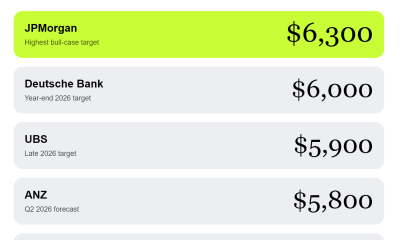
Wall Street’s Boldest Gold Prediction Has Russians Rushing to Buy
-

 Crypto World6 days ago
IREN closes $3 billion convertible notes deal amid AI infrastructure expansion
-

 Fashion6 days ago
Trending Western Style Vests Perfect for Summer
-

 Politics6 days ago
Watch: far-right flag-fanatics run over victim, attack locals – Setup By the Left wing for your entertainment
-

 Fashion7 days ago
Creative Ideas for Custom T-Shirts
-

 Fashion5 days ago
Amazon Sundays: Memorial Day Hosting
-

 Crypto World15 hours ago
Blockchain.com files with SEC for U.S. IPO
-
 Fashion7 days ago
Philip Jones Wedding Jewellery For Women
-

 Crypto World6 days ago
Crypto Market Structure Bill Clears Committee; Senate Vote in Focus
You must be logged in to post a comment Login