

Politics
Penelope Keith was a class apart

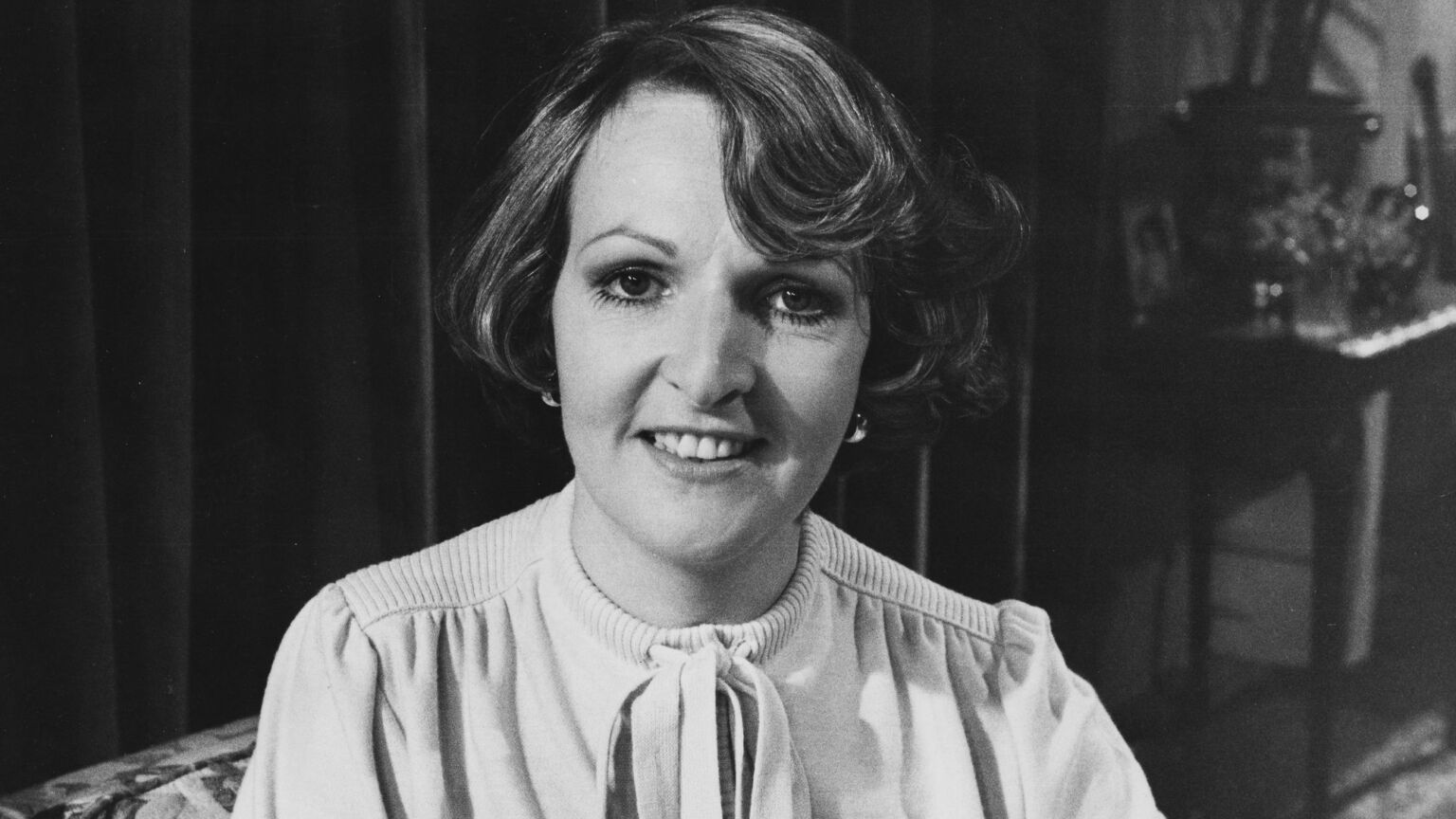
Penelope Keith, who has died at the age of 86, was no mere actress. She was an embodiment, an avatar, an archetype – a particular kind of woman, once instantly recognisable to British audiences, now as quaint as Ladybird books and private first-class railway compartments.
The two roles for which she was best known – Margo Leadbetter in The Good Life and Audrey fforbes-Hamilton in To the Manor Born – made her as recognisable and even adored as any character in sitcom. To the Manor Born regularly pulled audiences of over 20million, impressive figures even allowing for the fact the media landscape had not yet been fractured like a mirror ball. The series one finale pulled nearly 24million – the largest ratings of the decade for any non-live event.
The shows are still highly enjoyable, at least for those of us who saw them the first time around, the writing and performances still first class. But watching them now is closer to watching period drama than the topical and incisive satire they were 50 years ago. And Penelope Keith’s characters seem as fixed in a particular time and place as Jane Austen’s Mrs Bennet and William Thackeray’s Becky Sharp.
Perhaps this is unsurprising – perhaps what I find alarming is the fact that 50 years have run under my own bridge since they first aired. After all, the events depicted in the hugely popular Upstairs Downstairs, which ran between 1971 and 1975, were themselves set in a period roughly 50 years earlier. No one was surprised to see different etiquette observed therein. But somehow it is always a shock to realise that evolution, even at the social scale, is still going on.
If Margos and Audreys are hard to find now, so are Penelope Keiths. One reason for her extraordinarily convincing portrayals of women conscious to an exquisitely painful degree of their own social status appears to have been the bespoke nature of the roles, seemingly cut to fit her own persona. Watching her being interviewed on Parkinson or Wogan, one is struck by the realisation that, if anything, she had been dialling it down a bit to play Margo.
Not that she seems remotely cold, lacking a sense of humour or incapable of a basilisk stare toward an errant husband. But her poise, her manners and especially her accent and vocal tone seem all but implausible now, as vanished as the dialects of the Cherokee, Navaho or Sioux. It is like hearing a trained concert cellist in a room full of kazoos.
Somebody on X shared a snatch of dialogue from To the Manor Born, as follows:
Audrey: We were discussing your not going to church.
De Vere: Well, I’m not religious.
Audrey: Religion doesn’t come into it.
Play that in your head and it is as distinctive a voice as Coltrane’s sax, Brian May’s guitar or Oliver Hardy’s exasperated straight-to-camera silence.
This is not to suggest she was incapable of acting, of course – though I don’t think it would be too unkind to say that she had a limited range. It would have been as ridiculous to see her cast as a plucky housing-estate mum in a Willy Russell play, or an English Erin Brockovich, say, as it would be to cast Ray Winstone as a nebbish computer programmer or Kathy Burke as the Queen. To cast her as anything other than what she was, along the class axis at least, would be like trying to make a knight move diagonally. But doing what Pelelope did – I’m sorry, I don’t mean to be over-familiar, but I cannot simply refer to her as ‘Keith’ – and being who she was, she reigned supreme. And it is telling that it would be almost impossible to do so today.
The reason is, of course, the extinction – to all intents and purposes – of class. No doubt this was what the makers of Upstairs Downstairs thought had been largely achieved by the mid-Seventies, and what they thought they were allowing us to see through their distant mirror in Edwardian Belgravia: how such invisible strata, signals and shibboleths had once limited human horizons and exposed upstarts and parvenus for the charlatans they were. No doubt they flattered themselves, as I do now in 2026, that we have escaped such cruelty and scorn. No doubt there will be those who remain sceptical and think society still riddled with it.
But class, quite separate from the charmless ‘socio-economic status’, was for many years the main fault line and the mainspring of almost all British comedy. Not just the sitcom, but also comic novels, Carry On movies, stand-up and even kids’ comics. Some still attempt it – Amandaland plays with a modern equivalent of the ghastly social climber – but it is deluded, and painfully so, to pretend that this remains the great axis along which England is and will always be divided.
The genius of Penelope’s two roles was, of course, that while they were superficially similar and technically pitched at very similar altitudes, she had reached that pitch from two very different starting positions.
Margo was a social climber as excruciating in her way as Basil Fawlty, if less prone to escalating insanity. She was a woman who had been training all her life for a role as society hostess and was determined that Jerry should continue not only to fund that project but also play his own part with conviction and aplomb. She was on the up.
Audrey, on the other hand, had experienced reversals. Genuinely of what Julian Fellowes refers to as the ‘gratin’, she was as good as in the doghouse (technically the coach house), forced to endure the humiliation of seeing her own family seat in the hands of exactly the sort of parvenu that Mr Hudson and Mrs Bridges of Upstairs Downstairs knew all too well.
Both had poise and elegance but crucially – so crucially – a palpable vulnerability. This did not seem so strange at the time, that a woman should be so frosty and judgemental, and yet still tender and warm. Did we ourselves have a warmer and more flexible attitude to human foibles then, less inclined to enter them into the Excel spreadsheet of problematic human behaviour? Or was she simply a gifted communicator of the inner life between the lines?
Taken together, then, these two roles gave us both sides of the class coin in a single pressing. Or rather, something like a queen in a deck of cards, mirror images but one looking up and the other down.
Anyway, two near-as-dammit immortal roles, though for me, Margo shaded it. In a sitcom that was about as close to perfect as half an hour of muted suburban moss can be, with a perfect Jungian quartet of personality types, Margo basically stole every scene she was in. I don’t think this view is particularly controversial now. In scenes with three of the acknowledged masters of stage and screen, Margo Leadbetter was undefeated. Even when the others got the best lines, it was Margo’s reaction shot that landed the fish. Sure, The Good Life was ‘about’ Tom Good, the absurd garden-Ahab, and his long-suffering Barbara. But if it had been an American sitcom where the audience applauded their favourite actors when they made their first appearance? Well, it would have been interesting to see who was their second favourite.
Penelope Keith was magnificently out of sync, as if Nancy Mitford or some character from Upstairs Downstairs had somehow been cryogenically preserved and reawakened in the ghastliness of modern Britain – a possibility that all too many of us of a certain age feel would be the only explanation for our persistent state of bewilderment today.
Simon Evans is a spiked columnist and stand-up comedian. Tickets for his tour, Staring at the Sun, are on sale here.

Politics
The House | “The Consensus Is Being Challenged”: Inside Reform’s Plans To Scrap The Equality Act
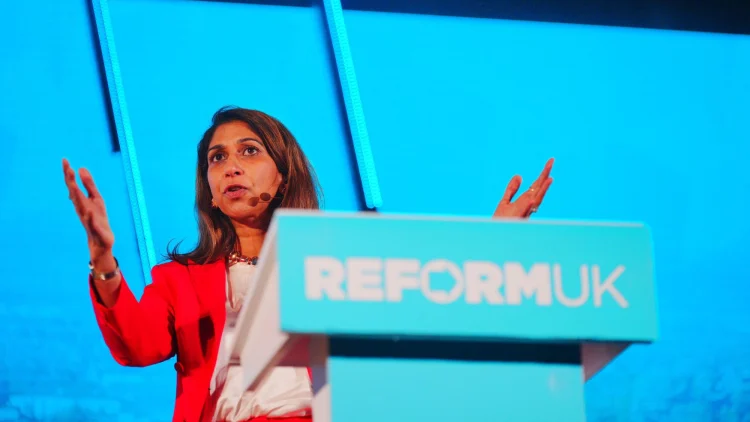

Suella Braverman (PA Images/Alamy)

10 min read
Reform UK’s promise to scrap the Equality Act has raised questions about what will replace it. At the same time, Labour is under pressure from its own side to go further in implementing it. Noah Vickers reports
In February 2018, a junior minister in Theresa May’s government stood up in Parliament to make one thing very clear: post-Brexit Britain would not be a place in which rights and equality laws are rowed back on.
Citing the UK’s “proud record, history and tradition” of “supporting workers, protecting civil liberties and championing human rights”, then-Brexit minister Suella Braverman proudly declared: “Our gender pay gap reporting requirements and our public sector equality duty are world-leading initiatives that go beyond EU law in many ways”.
Braverman was referring to measures enshrined in the 2010 Equality Act – a statute that, eight years later and in a new party, she is now determined to abolish.
Until relatively recently, the Equality Act was not a controversial piece of legislation, and no major political party was proposing changes to it.
“Originally, the Tories resisted it, but then the consensus grew – with [David] Cameron and with Theresa May… about the role of the state in promoting equality,” says Baroness Harman, the architect of the legislation. “There were arguments about how that should be done, but there was a consensus that it should be done.”
When Braverman, now Reform UK’s equalities spokesperson, announced in February that Reform would scrap the Equality Act if it won the next general election, she was re-committing the party to a policy that had already featured in its 2024 manifesto. Removing the legislation, she said, would allow Reform to “build a country defined by meritocracy, not tokenism” and “personal responsibility, not victimhood”.
In June, the Conservatives then set out their own stall on the issue by promising to ditch the Equality Act’s public sector equality duty. The duty requires public bodies to have “due regard” to the legislation’s overarching aims of eliminating unlawful discrimination, advancing equality of opportunity and “fostering good relations” between groups of people with or without different protected characteristics.
Braverman said this “half-baked and half-hearted attempt to copy Reform” was “embarrassing”, but shadow equalities minister Claire Coutinho counters that Reform’s plan would backfire.
“White men have successfully fought discrimination claims under the Equality Act because it protects everyone on the basis of race and sex, not just ethnic minorities and women,” she tells The House. “They would lose this protection under the plans Reform has announced, as would disabled people.”
Coutinho continues: “Reform’s plan would also make positive discrimination and race quotas in the workplace legal. We want to maintain protections against genuine discrimination whilst getting rid of the grievance culture which says minority groups are worthy of special treatment.”
But she confirms that other parts of the Equality Act would also be amended by the Conservatives, as party leader Kemi Badenoch has said removing the duty would only be the start of a wider “overhaul”.
“People should be judged on merit, protected from discrimination and abuse, and free to live their lives with everyone equal under the law,” Coutinho says. “There are other elements of the Equality Act, such as positive action and ‘work of equal value’ pay claims, which are social engineering in a way that undermines those principles.
“We will be rooting out anything that is incompatible with our values, but that doesn’t mean just binning the entire act without properly understanding what’s in it. Just to get a political headline, Reform was willing not just to throw out the baby with the bathwater but pregnant women, new mums and disabled people as well.”
It is a line of attack that Reform is clearly conscious of the need to counter. To replace the Equality Act, the party has pledged to introduce a Workplace Fairness Act that will treat people “as individuals”.
The Equality Act consolidated more than 116 pieces of pre-existing equalities legislation into one statute and Braverman has said that “much of what was valuable” in it stems from those earlier laws.
The Workplace Fairness Act, therefore, would re-consolidate the pre-2010 legislation into a new statute – including, Reform says, protections which apply “both inside and outside the workplace”, despite the proposed legislation’s name. But it will not carry over provisions like positive action or the public sector equality duty.
Braverman has pledged to repeal the Equality Act on “day one” of a Reform government and the party says its Workplace Fairness Act would be implemented on the same day. “The repealing and replacement legislation will be in the same act,” a Reform spokesperson tells The House.
One source familiar with Reform’s political operation says the policy is not so much about broadening the party’s appeal with new voters as it is about firing up its base and the commentariat. It also stems from a concern within the party that the Equality Act could prove an obstacle to parts of its agenda in government.
“The second-order issue is, of course, that the Equality Act can be used to frustrate a whole lot of legislation Reform would want to bring in,” the source says, pointing to the party’s plans to ban foreigners from accessing social housing as an example of a policy that could be challenged under the current equalities framework.
“The big issue for Reform is making it clear – particularly to female voters, where they’re aware they have a weakness – that getting rid of the Equality Act doesn’t therefore mean they want women to go back to the kitchen, or that they’re going to dump maternity rights.” The insider believes Reform has “not successfully communicated that”.
“The genius of the Equality Act is that the branding’s very good. Most people in the modern world are in favour of equality. But, on the other hand, what it creates by [introducing] special categories [of people] is a whole lot of inequality,” they add.
Earlier this month, Reform announced plans for a Women and Motherhood Protection Act, which will consolidate the pre-2010 legislation pertaining to women’s rights, while also building on them, they say – such as by increasing the time limit for pregnancy and maternity discrimination claims from three months to 12 months.
The Trades Union Congress criticised the proposals as “shameless and deceptive”, as Reform’s press release appeared to cast doubt on the Equality Act’s principle of equal pay for work of equal value. Reform said its changes would ensure that “genuine cases of pay discrimination” would be tackled but avoid “allowing courts and tribunals to determine the relative value of fundamentally different occupations”.
“Just to get a political headline, Reform was willing not just to throw out the baby with the bathwater but pregnant women, new mums and disabled people as well”
The Women and Motherhood Protection Act would confer “explicit breastfeeding rights” for mothers. Reform’s spokesperson clarifies for The House that, in practice, this will not necessarily mean women gaining any new rights to breastfeed. Rather, breastfeeding rights that currently exist “across employment legislation and the Equality Act will be brought together and, where necessary, made explicit or further codified”.
In the case of older people, meanwhile, regulations introduced in 2006 were limited to employment. It was only under the Equality Act that older people gained additional rights in other areas like the provision of services.
Caroline Abrahams, charity director at Age UK, tells The House that scrapping the Equality Act “would be a disaster for older people”.
“We would strongly oppose any repealing of this act, because it would legitimise age discrimination, in a way. It’s bad enough with the act – it would be a lot worse without it,” she says. “It’s totemic and it gives a signal to society that we think it’s important to respect different people’s rights.”
The 2010 legislation, she argues, has played an important role in governing how NHS treatment decisions are made, for example.
“Certainly, digital exclusion is another issue that arises here – your ability to physically access or in other ways access a service,” Abrahams adds.
“Older people already have to pay more for things like travel and motor insurance, but without the Equality Act they would have total freedom to be very discriminatory in who they sold their products to.”
Asked whether Reform intends to carry over rights that were introduced for the first time in 2010, a party spokesman replies: “We are considering what additional protections would be needed for genuinely vulnerable groups in society.”
When Disability Rights UK raised similar concerns about protections specific to the 2010 legislation being lost, in an article published by Disability News Service, Reform was adamant that no protections would be removed.
“Of course these protections won’t be scrapped and all provisions for disabled people will be kept,” a spokesperson said. “A Reform UK government will always support protections against discrimination based on disability, including in services. Neither Suella nor the party have ever made any suggestion that we will water down provisions for disabled people.”
At the same time as the Equality Act is under fire, Labour is under pressure to fulfil its manifesto pledge to expand the legislation’s reach.
Section One of the Equality Act – the socio-economic duty – has never been implemented, as Theresa May cancelled its planned enactment within months of taking office as women and equalities minister in 2010.
The duty, which requires public bodies to consider how their decisions might help reduce inequalities associated with socio-economic disadvantage, has since been implemented in Scotland and Wales – but not in England.
In 2024, Labour promised to enact it, but Keir Starmer’s government never confirmed when this would happen.
“It was good that it was in the manifesto, but we should have done it straight away,” Harman, who was appointed as Starmer’s adviser on women and girls in May, tells The House.
“I’m a bit frustrated that two years in, we haven’t set a time for implementing it,” Harman says – not least, she adds, because when she was in government in 2010, working on the Equality Act with the then-chair of the Equality and Human Rights Commission Trevor Phillips, they drew up draft guidance for implementing the duty. “We were ready to go but we lost power. So, that guidance is still there and still ready.”
With the Equality Act’s principles being more politically contested than ever before, she urges: “It’s important for the government to recognise that that consensus is being challenged, and they need to remind everybody why it’s the right thing for this country to be done – and get on with the socio-economic duty.”
Labour says it remains “proud” of the Equality Act and will “robustly” defend it in government.
“It’s fair to say we will be talking more about the importance of it and defending the core principles of it,” says one party source, speaking prior to Starmer’s resignation announcement, “but where it’s challenged, we’ve pushed back pretty firmly.”
When it comes to implementing the socio-economic duty, they admit that the legislative timing is ultimately “a decision of the centre”, though they insist it will be delivered.
In answer to a written question in April, equalities minister Baroness Smith said: “We are currently working toward commencement of the duty, which includes drafting statutory guidance that will clarify how the duty can be applied effectively. As part of this process, we are working with listed public bodies to ensure the guidance supports them effectively.”


Credit: Adobe Stock

3 min read
Proposed reforms to the criminal justice system promise to tackle mounting court backlogs and improve the efficiency of the justice system. Lord Anderson, Member of the Lords Justice and Home Affairs Committee, writes on these reforms put forward, including the controversial changes to trial by jury
This article was commissioned by the Total Politics Impact team.
The Courts and Tribunals Bill was carried over into the new session, having completed 12 Commons Committee sittings in April 2026. Its central objective is to reduce delays in the criminal justice system, currently standing at some 80,000 cases – twice the pre-pandemic level – in the Crown Court alone. It seeks to do this by rebalancing the respective functions of the Crown Court and magistrates’ courts.
The most radical provisions are in clauses 1-7 of the bill. These allow Ministers to expand magistrates’ sentencing powers by regulation to as much as 24 months, to replace automatic appeals from magistrates by a permission-based system limited to appeals on points of law, and to remove defendants’ right to elect jury trial for “either-way” offences in cases where the anticipated sentence is less than three years. Such intermediate level cases, together with complex financial cases, will in future be eligible for trial by judge alone.
These proposals take their lead from Sir Brian Leveson’s Independent Review of the Criminal Courts but go significantly further in a number of respects. In particular, Leveson advised retaining magistrates’ sentencing powers at 12 months, and would have allocated intermediate cases not to a judge alone but to a judge sitting with two magistrates.
The bill also revises the tests for the admissibility of evidence relating to a complainant’s sexual history and previous bad character and changes the rules around the use of special measures (such as screens and video links) to support vulnerable witnesses. It contains provisions on tribunal leadership and judicial deployment and includes family justice reforms such as removing the statutory presumption of parental involvement in children’s cases.
These proposals take their lead from Sir Brian Leveson’s Independent Review of the Criminal Courts but go significantly further in a number of respects
In its report on the 10 June 2026, the Commons Justice Committee regretted the absence of time for pre-legislative scrutiny, particularly given that the bill will not be implemented before March 2028. It pointed to weaknesses in the evidential basis for the anticipated savings of court time and voiced doubts as to whether the magistrature would be able to expand at the rate necessary to cope with the likely increase in their caseload. The report also drew attention to the lack of diversity of the judges who would sit alone in intermediate cases and referred to the conclusion of the Lammy Report in 2017 that juries are one of the few areas of the criminal justice system where Black and minority ethnic defendants do not face disproportionate outcomes.
With some criminal trials now listed as far ahead as 2030, there can be no doubt that decisive action is needed to reduce delays. But the proposed expansion of magistrates’ powers and roll-back of jury trial are controversial with practitioners and judges: there is no consensus that any time-saving benefit will justify their possible negative effects on the quality of justice and public perceptions of fairness. The House of Lords is not short of relevant expertise: Baroness Levitt, the Justice Minister, was a serving Crown Court Judge until she became a peer in 2024. A vigorous work-out may be expected there.
Politics
Politics Home Article | One million young people are NEET: what are we going to do about it?
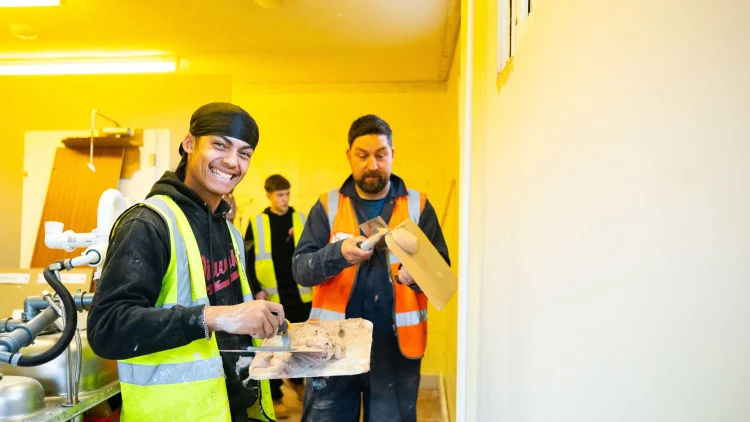

(Credit: Volunteer It Yourself)

Ayesha Baloch, Head of Youth Employment Policy
| Impetus
The Milburn Review has laid bare the causes of the NEET crisis, but turning diagnosis into action will require bold reforms that identify, support and create opportunities for young people facing the highest barriers
In May, the number of young people not in education, employment or training (NEET) passed one million for the first time in over a decade. Despite the flurry of media attention, this crisis has not come out of nowhere. It is a chronic issue caused by long term structural trends that have left swathes of our young people disengaged and left behind.
Since committing to a Youth Guarantee, the Labour government has thrown £2.5bn worth of reforms at tackling the problem. Alongside this, Alan Milburn1 is conducting an independent review into why so many young people are falling through the cracks, and what can be done about it.
In his interim report, Milburn was unflinching in his diagnosis. Alongside wider problems with young peoples’ health, welfare and the structure of the system that takes them from education into work, too many are leaving education unprepared. Low GCSE attainment, persistent absence, suspension and exclusion, and a weakening sense of belonging at school all set young people on the path to becoming NEET long before they leave the classroom.
Between the ages of 16 and 18, many of these young people reach a cliff-edge, when the support that surrounded them in school abruptly stops. Once a young person becomes NEET, the system struggles even to find them, let alone help them: according to the Youth Futures Foundation, around 500,000 young people are ‘hidden NEETs’, known to no service at all. But behind all of this, Milburn identifies a deeper systemic failure. No one – at central or local level – is accountable for these young people, and there is no national data infrastructure to track who they are, where they are, and whether support is reaching them. Without that, we, and they, are lost.
A crisis of inequality
The NEET crisis is among other things a crisis of inequality; the costs of being NEET are profound, life-long and fall disproportionately on young people from disadvantaged backgrounds.
Impetus’ research into the Youth Jobs Gap,2 using the government’s Longitudinal Educational Outcomes data, is referenced multiple times in Milburn’s interim report. It shows that young people from disadvantaged backgrounds are twice as likely to be NEET as their better-off peers. This should come as no surprise; low attainment and lost learning through school suspension and absence affect pupils from poorer backgrounds far more than their better off peers. And early disadvantage follows them from there, through the abrupt loss of pupil premium funding at age 16, ever-reducing access to apprenticeships and vocational training, and health barriers that compound with time.
The costs of being NEET are profound, life-long and fall disproportionately on young people from disadvantaged backgrounds
Reaching the furthest behind
In the next phase of his review, the challenge for Milburn is to propose a comprehensive and ambitious response to the NEET crisis that can also break the cycle of inequality that links disadvantage in childhood to worse lifelong outcomes.
The Milburn Review’s final report is expected in the autumn, and with it comes a moment of real opportunity, not just to bring down the NEET numbers but to do so in a way that promotes equity and ensures that young people from socio-economically disadvantaged backgrounds get the extra support they need. Get the response right, and the Youth Guarantee could become the most significant youth employment intervention in a generation. Get it wrong, and a million becomes the new normal.
Delivering on that ambition will require more than new funding announcements. The solutions Milburn proposes need to be capable of reaching those furthest away from the job market, and the young people who face the highest barriers.
At Impetus, we have spent decades building the evidence base for doing just that. As a leading impact funder, we support the most promising youth organisations working to improve education and employment outcomes for young people from disadvantaged backgrounds. Our unique position means that not only do we know what works, but we can harness on-the-ground insight, ensuring policy considers the realities of delivery.
This summer, we will publish the final report in our Youth Jobs Gap series, setting out what we think the government needs to do to deliver the Youth Guarantee in full, and in particular to deliver it for young people from disadvantaged backgrounds.
It will seek to answer the vital questions that the Milburn Review has posed, focussing on the practical reforms needed to address the crisis: How to find hidden NEET young people, what to do about the data gap and the cliff edge young people face when they leave formal education.
We will publish new tools and analysis to help policymakers understand who is becoming NEET, where disadvantage is most concentrated, and what is at stake if action falls short.
Above all, we will make clear that the cost of inaction is not neutral, and the return on investment is huge. The Milburn Review has provided a clear diagnosis. The next task is finding solutions equal to the scale of the problem.
Click here to find out more about Impetus’ Youth Jobs Gap research.
References
- Young People and Work Interim Report 28 May 2026; https://www.gov.uk/government/publications/young-people-and-work-interim-report
- Impetus Youth Jobs Gap series; https://www.impetus.org.uk/policy/youth-jobs-gap

 lead image


4 min read
If the next prime minister is serious about cutting energy bills, the first step is simple: stop loading policy costs onto households and fund them fairly through progressive taxation instead.
This week’s Ofgem price cap rise will add £221 on average to people’s annual energy bills. While communities are struggling and parliament is distracted, fossil fuel giants and privatised energy companies are cashing in. This is rip-off Britain.
I know this will be another huge blow in what has been a bruising year for anyone trying to keep up with constant price rises. For the three out of ten adults in the UK already either in debt to their energy company or worried about falling behind, and for the one in three households in my constituency, Gorton and Denton, that are living in fuel poverty.
Behind these statistics are people. Elderly people worrying about the cost of running a fan in the heatwave; families that spent the winter trying to make a game out of huddling together against the cold; and people with disabilities trying to run life-saving equipment all year round.
Before I became an MP, I was a plumber. I spent my days going into people’s homes, and so many times I saw the problem right in front of me. I remember walking into a house where the air was so thick with damp that you could almost slice through it. This was not an issue of ventilation, as some might suggest: it was a working family trying to provide for their kids and being unable to afford the basics—a warm home that is not full of damp.
Burnham must break the link between the international gas market and domestic bill
I recently celebrated my first 100 days as an MP, and this is the one issue that has come up pretty much every single day I’ve done the job. In Westminster, however, the main topic of conversation seems to be when and how the Labour Party is going to replace its leader.
In the first month after the US and Israel’s initial strikes on Iran, the share value of just five North Sea oil and gas companies was boosted by £73bn in one month. As I said when I was elected, working hard used to get people a decent life; now it is more likely to line the pockets of billionaires and energy giants.
This cannot continue. That is why the Green Party is calling on Andy Burnham, if he becomes the next prime minister, to take immediate steps to cut bills before the winter.
First, he could take £150 off everyone’s bills by removing policy costs and the cost of servicing energy debt from energy bills and funding them via general taxation. Funding policy commitments like the Warm Homes Discount should be done progressively, and that’s exactly what adding them to taxation would do. A wealth tax could ensure this was placed even more firmly on those with the broadest shoulders.
If Burnham is really serious about changing course, then more must be done. He must break the link between the international gas market and domestic bills and go further to stamp out the profiteering in the energy market that allowed UK energy companies to make £30bn in pre-tax profits in 2024 alone.
He should also be looking to set out a fully funded and properly regulated local authority-led, national home insulation scheme, because, as I am painfully aware, our homes leak more heat than most places in Western Europe, and making people who are struggling pay for energy lost in seconds is appalling.
He also needs to move further and faster on renewables. New fossil fuel extraction will not bring down bills or improve the UK’s energy security, but renewables can. Since the start of the war in Iran, wind and solar have saved the UK £1.7bn in gas imports.
The public is clear that the affordability crisis is the issue that they want tackled. The next prime minister needs to act, and this time not in the interests of fossil fuel giants, but in the interests of the very people who trusted the government to make their lives more liveable.
Hannah Spencer MP is the Green Party MP for Gorton and Denton


75 MPs from a variety of parties have called on the government to sanction Israeli Prime Minister Benjamin Netanyahu. (Alamy)

3 min read
A cross-party group of 75 MPs has called on Prime Minister Keir Starmer to sanction Israel’s Prime Minister Benjamin Netanyahu and Minister of Justice Yariv Levin over the alleged torture of Palestinian civilians.
The letter to Foreign Secretary Yvette Cooper, organised by Labour MP Neil Duncan-Jordan and shared with PoliticsHome, expresses “deep concern that the government has yet to sanction members of the Israeli government for the systematic torture and ill-treatment of Palestinian detainees”.
Citing a report by UN Special Rapporteur on the Occupied Palestinian Territories, Francesca Albanese, MPs say responsibility for “well-documented torture of Palestinian civilians lies with the government of Israel, including Prime Minister Netanyahu”.
The letter also references the decision by Israel in March to drop charges against soldiers for the alleged rape of a Palestinian detainee, a decision praised by Netanyahu, and the interception of the Global Sumud Flotilla and Freedom Flotilla Coalition vessels in international waters by the Israeli Defence Forces (IDF).
The Israeli government and IDF have repeatedly denied allegations of torture and rape, and have defended the interception of multiple flotillas in international waters, accusing them of being sympathetic to terrorist organisation Hamas.
In the letter, cross-party MPs say that while they welcome sanctions against far-right ministers like Ben-Gvir and finance minister Bezalel Smotrich, more needs to be done.
“We write to express our deep concern that the government has yet to sanction members of the Israeli government for the systematic torture and ill-treatment of Palestinian detainees, including children, in Israeli detention,” the letter reads.
“Responsibility for the systematic and well-documented torture of Palestinian civilians lies with the government of Israel, including Prime Minister Netanyahu.
“While the sanctions announced in June 2025 against ministers Itamar Ben-Gvir and Bezalel Smotrich remain welcome, they have done little to change the government of Israel’s approach to Palestinian detainees. Since the sanctions were announced, the systematic torture of Palestinians, including children, has escalated, with near total impunity.”
The UK government sanctioned Ben-Gvir and Smotrich in 2025 in response to the pair’s “repeated incitements of violence against Palestinian communities”, with then foreign secretary David Lammy in a statement accusing them of inciting “extremist violence and serious abuses of Palestinian human rights”.
The letter from MPs also calls on the UK government to sanction both Netanyahu and Levin, arguing the government must end the “impunity” for Israel’s actions.
“We urge you to take further steps to help end this impunity by sanctioning the government of Israel’s Minister of Justice, Yariv Levin and Prime Minister Benjamin Netanyahu,” the letter reads.
MPs who have signed the letter include Labour MP Paula Barker, Your Party MP and former Labour leader Jeremy Corbyn, Liberal Democrat MP Manuela Perteghella, and Conservative MP Desmond Swayne.
The Foreign, Development and Commonwealth Office was approached for comment.


Matt Mahan suffered a disappointing finish in California’s gubernatorial primary last month, but the World Cup has offered the mayor of Silicon Valley’s largest city the chance of an immediate remontada.
His home San Jose, riding a sports tourism surge, stands to gain more economically today as the U.S. national team opens knockout play in Santa Clara. Mahan told POLITICO on Friday that he had not yet attended a match in the bordering city, but had been soaking in the action at watch parties in San Jose, where attendees have been so numerous they’ve begun watching from the tops of nearby parking garages to get a better view.
A FIFA official watch party in downtown San Jose’s San Pedro Square is streaming all 104 games and has hosted more than 300,000 fans, by the city’s count.
“It’s been just an incredible experience,” Mahan said. “We’re on track to double, if not triple, the amount of attendance we expected.”
A shooting a block from the venue Sunday evening was a reminder of the security challenges posed by such large gatherings, but city officials said the deadly incident wasn’t connected to the event and didn’t occur while matches were being streamed. Watch parties resumed on Monday and are set to carry on through the tournament — with an additional screen to spread out the crowds.
The U.S. match against Bosnia and Herzegovina today will be the last of six tournament games played in the South Bay, capping a banner sports year in which the region hosted the Super Bowl and NCAA March Madness games. San Jose officials tweaked their plans for the lineup’s longest and only international competition based on how the other events went, adding TVs to watch parties and looking for ways to limit congestion, Mahan said.
“One of the things we learned during the NFL Super Bowl experience was that it got fairly congested in the middle of the action, and we want to spread people out a little bit more, and so we’ve, we’ve got multiple screens up there, very large screens, so there’s no reason to crowd up front,” Mahan said.
Local governments coordinated to plan for the string of high-profile events, and San Jose hired dedicated staff to prepare for them. The planning, overseen by former Olympic short track speed skater Tommy O’Hare, took two years, while the city became involved in seeking the U.S., Mexico and Canada’s joint bid to host the World Cup over a decade ago.
The city embarked on a marketing campaign to attract visitors to San Jose Mineta International Airport — a lesser-known hub than SFO but one just minutes driving from Levi’s Stadium. Mahan opted not to name names over security concerns, but he said “a ton” of foreign dignitaries have landed at SJC during the tournament.
Representatives from China, South Korea and a half-dozen other countries were set to attend an overlapping summit in San Jose on international innovation and investment this week, mingling with expected attendees from Bay Area tech giants including NVIDIA and Apple.
But the mayor — a Democrat who finished sixth in the state’s jungle primary for governor in June — said the focus during the tournament has been less on fostering international relationships than on the fan experience.
“Our North Star has been, you know, whether you can afford a ticket to the big game, we want you to be able to have a fun, accessible, and memorable World Cup experience in downtown San Jose,” Mahan said. “I think we’ve proven that we’re offering that.”


Our White House correspondent Sophia Cai, a member of the Axel Springer Global Reporters Network, has been covering World Cup politics in regular video dispatches for our sister publication “Bild.”
Here’s her latest report explaining why President Donald Trump has yet to attend a World Cup match, and how he keeps up from the White House.
The Association of Former Members of Parliament has published the latest edition of its official journal Order! Order!
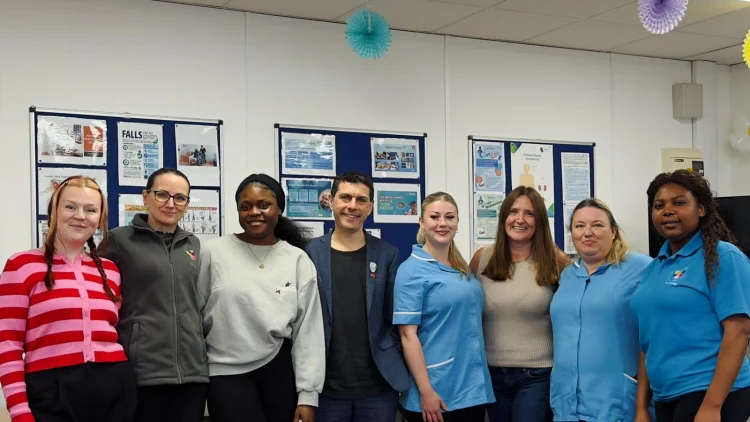

Alex Sobel, Labour Co-op MP for Leeds Central and Headingley, at employee-owned social care provider Be Caring in Leeds

4 min read
When we arrive at Be Caring in Leeds, the young women who work there are shy about speaking to the camera.
The Co-op Party team is there to film as part of a video series shining a light on communities, businesses and public services doing things differently across the country. We’ve been brought to Be Caring by local MP Alex Sobel, who is clearly incredibly proud of the company and wants to highlight what they do. When we ask founder Sharon and her staff, many of them still in carer’s uniform having just come back from their morning rounds, to talk about their work, they completely come to life.
Be Caring is the UK’s largest employee-owned social care provider. Employee ownership means it is structured in a fundamentally different way to the vast majority of social care companies. Its employees are also owners, so they have a stake in the company’s success and a formal voice in how it is run. Any profit made is either reinvested into the service, often paying for things like regular uniform upgrades, or paid back to staff in bonus payments. This is the classic co-operative model – ownership, decision-making and profit shared.
It’s a model which stands in stark opposition to the rest of the social care sector, one increasingly defined by crisis and scandal. Adult social care faces persistent staffing problems, rooted in poor pay and working conditions, local authority funding crises, regional inequalities in accessing high-quality care and an ageing population steadily raising demand. The staff at Be Caring understand this, many of them having previously worked in privately-owned care companies. The difference, they say, is a service run in the interests of the people who rely on it most – staff and care recipients – rather than distant shareholders.
The Co-operative Party has today released a report on co-operative care, making the case for this model and its transformative potential in helping to fix an increasingly broken system. Most fundamentally, the report calls for the removal of private profit from adult social care and an end to the pervasive domination of private equity in the system.
We believe that the fight to fix adult social care can’t just be about finding more money, but must also be about the kind of social care system we want to build. Since responsibility for funding and commissioning of social care shifted from national to local government in the early 1980s, private provision has become the norm, and today 80 per cent of the largest care home providers in the UK are owned or backed by private equity firms. With private equity domination comes profit extraction. An estimated £1.5bn is now extracted as profit from the social care system every year. This degree of profit leakage inevitably leads to lower wages, less reinvestment in care quality and worse outcomes for care recipients.
We have the opportunity to change this. Last year, the Welsh government legislated to remove private profit from children’s homes, fostering and secure accommodation. It means that all providers must now operate not-for-profit, ensuring that every penny spent on care goes directly towards supporting vulnerable children. This approach can be replicated for adult social care. Co-operatives and other not-for-private-profit models already exist and thrive within the care sector, but they do so in spite of government policy, not because of it. Government could set a clear intention to incentivise this kind of care and phase out the private equity firms that have had such a poisonous impact.
Andy Burnham will soon be the first ever Labour and Co-operative Prime Minister. We believe that with this milestone comes the most significant opportunity our movement has ever had to fundamentally rewire our economy, our public services and our politics as a whole. We can transform the state from one of hoarding power to sharing it, but it’s a principle that we will need to apply everywhere, a lens through which we analyse all of the major problems our country faces. It’s why Burnham was right, in his first major intervention this week, to point to the Rochdale Pioneers, the founders of the modern co-operative movement who looked at a broken economic system and decided to do something to change it. We have done these things before and we can do them again.
Caitlin Prowle is Co-operative Party assistant general secretary

Man United transfer news LIVE – Felix Nmecha chase, Sandro Tonali latest, Marcus Rashford update

Walmart Promo Codes: Up to 65% Off for July 2026

Assets Put Money In Your Pocket | Robert Kiyosaki Tamil Motivation | Financial Freedom | #Shorts

No Jackpot Winner as $257 Million Prize Rolls Over to $269 Million Monday Draw

Renter of Home in Anne Heche Crash Denies Settlement With Son

Weekend Open Thread: Staud – Corporette.com
Assets Put Money In Your Pocket | Robert Kiyosaki Tamil Motivation | Financial Freedom | #Shorts

GOLD LIVE TRADING by FOREX MONEY Session# 522 | AHMAD by FOREX MONEY #gold #xauusd #rsi

How Long Will XRP Stay at High Prices?
-
 Fashion6 days ago
Weekend Open Thread: Staud – Corporette.com
-

 Politics6 days ago
The House | Manchesterism won’t survive the painful trade-offs unless it gets citizens on board
-

 Crypto World2 days ago
Strategy authorizes up to $1.25B in Bitcoin sales under new capital plan
-

 Politics6 days ago
Potential 2028er World Cup attendee leaderboard
-

 Business6 days ago
Asia stock markets slide as tech shares slump
-

 News Videos4 days ago
MAJOR BITCOIN & MARKET UPDATE!!!! (MUST WATCH ASAP!!!)
-

 Tech7 days ago
A Look At A Gaggle Of Transputer Boards
-
 Crypto World7 days ago
Dell (DELL) Shares Tumble Over 5% Following Analyst Downgrade to Hold
-

 Crypto World5 days ago
Coinbase, Circle Deepen Crypto Stock Losses Despite Resilient S&P 500
-

 Business2 days ago
Australia treasurer says alleged access of prime minister’s bank data ’incredibly concerning’
-

 Crypto World5 days ago
Kraken's xStocks Opens Bending Spoons IPO Registration to EEA Retail
-

 Sports6 days ago
FIH Pro League: India defeat Pakistan 7-1, register biggest win of campaign | Other Sports News
-

 Crypto World6 days ago
Bitcoin Sparks $600M Hourly Liquidations With $65,000 Set To Become Resistance
-

 Tech2 days ago
Anonymous researcher drops 0-day ‘exploitarium’ repo
-

 Tech4 days ago
Bluekit phishing kit adopts browser-in-the-middle for login theft
-

 Tech5 days ago
Russian hackers now target Signal backup recovery keys
-
 Crypto World6 days ago
Hyperliquid Named on Singapore MAS Investor Alert Register
-

 Crypto World6 days ago
RTX holders must register wallets before token distribution begins
-

 Sports20 hours ago
Broncos roster: OL Ben Powers (No. 74) entering final year of contract
-
 Business3 days ago
The AI boom won’t burst all at once. It will pop in ‘rolling bubbles’: Macquarie
You must be logged in to post a comment Login