Connect with us
DAPA Banner
DAPA Coin
DAPA
COIN PAYMENT ASSET
PRIVACY · BLOCKDAG · HOMOMORPHIC ENCRYPTION · RUST
ElGamal Encrypted MINE DAPA
🚫 GENESIS SOLD OUT
DAPAPAY COMING

Politics

Polanski calls Elon Musk a ‘threat to democracy’

Published

on

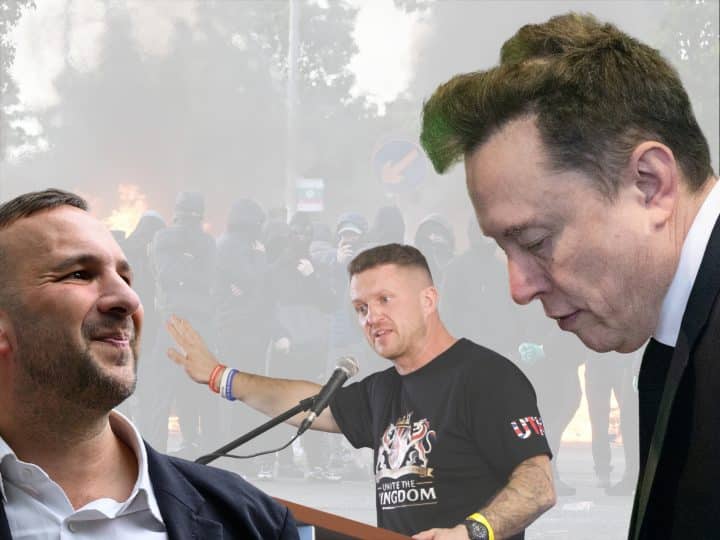
Zack Polanski, Tommy Robinson, and Elon Musk

Zack Polanski, Tommy Robinson, and Elon Musk

Elon Musk has once again been encouraging far-right agitators running rampant on the streets of Britain and Ireland. And in response, Green Party leader Zack Polanski has called him out:

‘Threat to democracy’

Since Elon Musk bought X/Twitter, far-right accounts have made the site their home. As NBC News found in 2024:

NBC News found that at least 150 paid “Premium” subscriber X accounts and thousands of unpaid accounts have posted or amplified pro-Nazi content on X in recent months, often in apparent violation of X’s rules. The paid accounts posting the content all consistently posted antisemitic or pro-Nazi material. Examples included praise of Nazi soldiers, sharing of Nazi symbols and denials of the Holocaust.

These accounts aren’t simply lurking on the fringes either:

Advertisement

During one seven-day period in March, seven of the most widely shared pro-Nazi posts on X accrued 4.5 million views in total. One post with 1.9 million views promoted a false and long-debunked conspiracy theory that 6 million Jews did not die in the Holocaust. More than 5,300 verified and unverified accounts reshared that post, and other popular posts were reshared hundreds of times apiece.

Some of these accounts are doing well specifically because Elon Musk retweets them:

Advertisement

As Mother Jones reported:

Musk is amplifying users who will incorporate cherry-picked data and misleading graphs into their argument as to why people of European descent are biologically superior, showing how fringe accounts, like user @eyeslasho, experience a drastic jump in followers after Musk shares their tweets. The @eyeslasho account has even thanked Musk for raising “awareness” in a thread last year.

Notoriously, Musk once did a Nazi salute in front of a roaring crowd. Because he’s a coward, however, he and his supporters have denied it was a Nazi salute ever since:

Israel critic Hasan Piker — who was banned from entering the UK — said the following about Musk:

Standards

What happened in Belfast is obviously a dark and disturbing crime. The problem is the crime of an individual is being used to justify attacks on all people of colour:

It’s also clear that these people don’t care about the crime itself… they care about its usefulness in terms of propaganda:

Advertisement

Given that Musk owns X, he has the ability to push propaganda like no one else. His posts show him drumming up support for racist white riots in belfast before they happened:

Advertisement

Oh, and this is something he’s doing with the backing of the Murdoch press, by the way. This man is the editor-at-large of the Sun:

Advertisement

If you’re wondering — yes — that is the same Harry Cole who said this (as immortalised by the WayBack Machine):

Harry Cole tweet which reads 'Starbucks is full of jailbait. Suddenly feel quite old. Giggity'

Growing resentment

To be fair to Keir Starmer, he has also been criticising Musk:

Advertisement

The problem is criticism is all he’s offering. And we’re at a point at which we can no longer pretend this man hasn’t weaponised his propaganda site to stir up violence and racial tensions in the UK.

Advertisement

Featured image via Benjamin Fanjoy / Leon Neal / Mario Tama (Getty Images)

By Willem Moore

Source link

Advertisement
Continue Reading
Click to comment

You must be logged in to post a comment Login

Leave a Reply

Politics

The Most Common But Unexpected Ways People Get Skin Cancer

Published

on

"We commonly see more sun damage and skin cancers on the left hand and forearm from years of incidental exposure through the car window," said Dr. Aubriana McEvoy, a Mohs surgeon.

“I only had one bad sunburn there once.”

Dr. Aubriana McEvoy, a Mohs surgeon at Siteman Cancer Center and a dermatology professor at WashU Medicine, hears versions of that line all the time. “And that’s exactly where we end up treating a skin cancer,” she said.

When she examines those same patients, the rest of their skin tells a different story. “We commonly see more sun damage and skin cancers on the left hand and forearm from years of incidental exposure through the car window,” McEvoy said.

The sunburn the patient remembers is the one they blame. The years of “normal” exposure that actually built the skin cancer are the years no one thinks about.

Advertisement

That asymmetry, with the left side worse than the right, is one Dr. James Chao sees constantly. Dr Chao is a board-certified facial plastic surgeon in San Diego, and one-sided damage from driving is common enough to have its own name.

“Unilateral dermatoheliosis is something we see as facial plastic surgeons,” Chao said.

Standard side car windows block only 55 to 75% of UVA rays.

“Your left cheek, temple and ear can take in years of sun damage while driving to and from work every day. What happens down the road is patients come in with uneven sun damage or photoaging. The left side of the face may have more sun spots and nasolabial folds that are just deeper.”

Advertisement

In Australia or the United Kingdom, it’s the right side. The asymmetry is the giveaway.

"We commonly see more sun damage and skin cancers on the left hand and forearm from years of incidental exposure through the car window," said Dr. Aubriana McEvoy, a Mohs surgeon.

Maria Korneeva via Getty Images

“We commonly see more sun damage and skin cancers on the left hand and forearm from years of incidental exposure through the car window,” said Dr. Aubriana McEvoy, a Mohs surgeon.

Dr. Amy Bandy, a board-certified plastic and reconstructive surgeon, said the bigger misunderstanding is what counts as sun exposure in the first place.

“It’s easy to be exposed to a peak window of ultraviolet radiation from 10 a.m. to 12 p.m. while watching your child play soccer on Saturday,” Bandy said.

“It doesn’t matter how cool it may feel or what the wind speed is. You’re still getting some of your highest levels of UV radiation. The same goes when you run errands between 11 a.m. and 2 p.m., walk your dog down the street every day or stand outside waiting for your kids to get off the bus without any protective covering from the sun.”

Advertisement

She tells patients to do the math. Fifteen unprotected minutes a day adds up to roughly 90 hours a year. “Multiply that by 10 or 20 years, and you’ve accumulated thousands of hours of unprotected UV radiation exposure.”

Cloudy days don’t reset the count, either. “UVA light is prevalent year-round and penetrates through glass surfaces,” said Dr. Rosanne Paul, an assistant professor of dermatology at Case Western Reserve University. “Even in the spring and summer when there is cloud cover, UV light still penetrates and you should still wear sunscreen.”

Some of the most exposed skin is the skin nobody thinks to protect. The top of the head is one.

“Skin cancers are very common in the part lines of people,” said Dr. Purvisha Patel, a board-certified dermatologist and Mohs surgeon in Memphis, Tennessee. Parting your hair in the same place year after year leaves the same strip of scalp exposed to cumulative damage most people never notice, she said. Patel tells patients to rotate the part and wear a hat outdoors. Creams can’t get through hair, she said, making the scalp the one place where spray sunscreen earns its keep.

Advertisement

The skin around the eyes is another blind spot, and the source of the damage is one almost no patient suspects.

“We spend a lot of time with our heads tilted downward so our phones sit just below our line of sight,” said Dr. Gregg Feinerman, a board-certified ophthalmologist in Newport Beach, California. “This position perfectly angles our upper eyelids, eyebrows and temples directly at UV rays shining down from the sun. Most sunglasses don’t cover this area, which means you could have two to three unprotected square inches of the most delicate skin on your entire body exposed to UV rays every time you’re outside between 10 a.m. and 4 p.m.”

Years later, Feinerman said, those patients arrive with thickened upper-eyelid skin and basal cell carcinomas in places they “can’t quite remember getting”.

Bandy can map the damage by decade. “After 10 years of exposure, I have begun to notice small amounts of uneven pigmentation starting to appear, along with freckles lasting longer, new sun spots forming, and my patients’ overall skin colour is slightly duller due to slower cell turnover,” she said.

Advertisement

By 20 years, Bandy said, established sun spots set in, along with permanent wrinkles that don’t smooth out when the face relaxes. After 30 years, the changes are no longer cosmetic. Collagen and elastin break down, and precancerous lesions appear.

Much of that damage is preventable. The trouble is, many patients have been doing the prevention wrong.

Watching a soccer game for a couple of hours, weekend after weekend, can add up to more sun exposure than your full-day trips to the beach.

Patel said the most common mistake is incorrect sunscreen application. “Sunscreen is meant to be applied on clean, dry skin to be effective,” she said. “We cannot control for the efficacy and longevity of a product when it is put on top of or under makeup or moisturisers.”

Most adults under-apply, she added, recommending a nickel-sized amount for the face. Bandy adds that even correctly applied sunscreen needs reapplying after two hours outside.

For anyone weighing the cost of doing more, Chao has advice. Fixing a 1-centimeter defect on the nasal tip or eyelid can take up to three hours of surgery and leave permanent changes to the face. “We simply cannot recreate some of these structures,” he said. Prevention, by his reckoning, runs around $30 a month in sunscreen, plus $5 to $20 per window for UV-blocking film. “It could prevent you from ever needing Mohs surgery.”

Advertisement

McEvoy’s advice is shorter than the list of exposures. “Make sun protection part of your routine, not something you only think about at the beach,” she said. That means sunscreen on ordinary days, and covering the scalp part, ears, hands and eyelids. It also means knowing your own skin, because most skin cancers are first spotted by patients themselves. “Look for the ugly duckling, a spot that stands out, or anything that’s changing, bleeding, or not healing,” she said.

The line she repeats most often is the one she wishes patients heard first.

“There’s no such thing as a healthy tan. A tan is a visible sign of DNA damage in the skin.”

Advertisement

Source link

Continue Reading

Politics

Helen Mirren Addresses ‘Zionist B***h’ Viral Video

Published

on

Dame Helen Mirren and her husband Taylor Hackford were both featured in the video

Dame Helen Mirren has spoken for the first time about a viral video depicting her being met with verbal abuse in the street due to her past support of Israel.

Last month, footage was widely shared online depicting the Oscar winner being branded an “an evil Zionist bitch” by an unseen man.

In the clip, he also told her husband, the Oscar-winning filmmaker Taylor Hackford: “You as well, fuck you and all.”

Earlier this week, the British performer accepted the Lifetime Achievement Award at the Taormina Film Festival, where she said of the video in question that she had been “attacked by mistake by a man who was maybe a little over passionate or maybe mentally not quite stable”.

Advertisement

The Metropolitan Police previously said of the viral clip: “We are aware of a video circulating online, showing a man and a woman being subjected to antisemitic verbal abuse in Tower Hill. It is believed that the incident took place at the end of last year.”

Clarifying her stance on Israel at the event, Dame Helen said (via Variety): “Evil forces are rising everywhere, even in a country like Israel. How could you possibly repeat the actions of what was done to you as people to other people?”

She continued: “I was born at the end of the Second World War, I grew up in Europe post Second World War and the realisation in my parents’ generation of what had happened in the Holocaust was so profound, so important.

“Therefore, the creation of Israel was a very important moment, although maybe it was done in completely the wrong way, in the wrong place, I don’t know. But something had to happen after the horror.””

Advertisement
Dame Helen Mirren and her husband Taylor Hackford were both featured in the video

Dame Helen said in 2023: “I believe in Israel, in the existence of Israel, and I believe Israel has to go forward into the future, for the rest of eternity. I believe in Israel because of the Holocaust.”

At the Taormina Film Festival, Dame Helen observed: “When you play Catherine the Great, why was Catherine called the Great? Because she took land. Why was Alexander the Great? Because he took land. He invaded, he killed people, he destroyed cities and he took land. Why is he remembered in history? Because with incredible brutality and unbelievable cruelty, he took land.

“So it devastates me. That’s what I mean. The evil is always lurking, waiting to take over, even in a place like Israel.

Advertisement

“I played Golda Meir and worked in a country that was the idealistic Israel, and I always thought it was a country that would never do wrong, but of course they were doing wrong, even then.”

Source link

Advertisement
Continue Reading

Politics

After Dublin: What the EU’s new asylum pact means for Britain?

Published

on

After Dublin: What the EU’s new asylum pact means for Britain?

Ali Ahmadi, Catherine Barnard and Fiona Costello look at the impact of changes to the EU’s Pact on Migration and Asylum that enters into force on 12 June.

The European Union’s (EU) Pact on Migration and Asylum (consisting of ten legislative measures) will apply from 12 June 2026. What changes will the Pact make and what impact (if any) will the changes have on UK asylum claims and irregular arrivals?

We shall focus on the replacement of the most well-known rule, the Dublin Regulation (in its most recent form, Dublin III), that has governed asylum responsibility in EU since 1990. The general rule under the Dublin Regulation was that the EU country where an asylum seeker first arrived was responsible for processing their asylum claim (although family reunion was given priority over the first country of entry principle). The Dublin system relied on Eurodac, a biometric database that stored fingerprints of asylum seekers and irregular arrivals across Europe, allowing EU states to identify whether someone had previously entered the EU irregularly or had claimed asylum elsewhere. They could then be transferred back to the responsible state.

While Dublin appeared to place disproportionate pressure on frontline states like Greece and Italy, transfers were slow and sometimes didn’t happen. For instance, between 2013 and 2022 only 11% of transfer requests (35,000 out of 310,000) were received back by Italy. As a result, some countries (e.g. Germany and France) received far more asylum claims via secondary movements (when asylum seekers move from the country in which they first arrive, to seek protection elsewhere).

Advertisement

To address this, the new Pact keeps the first-country-of-entry principle but introduces broader reforms including:

  • Mandatory solidarity mechanism: Each year, at least 30,000 asylum seekers will be placed in a shared EU ‘Solidarity Pool’ and redistributed from countries under greater pressure to those receiving fewer asylum applications. Member states can either accept their allocated share of asylum seekers, pay €20,000 for each person they decline to relocate, or provide equivalent operational support.
  • Mandatory border screening: All irregular arrivals at EU external borders must undergo identity, health, security, and vulnerability checks within seven days.
  • Asylum border procedure: Some asylum seekers will have their claims processed through a fast-track border procedure under a ‘legal fiction of non-entry’ (i.e. they are treated as though they have not formally entered the EU, even while physically present). This allows authorities to restrict certain rights and detain individuals for up to 12 weeks while their claims are assessed. The procedure may be applied to any unauthorised arrival, but is mandatory for those unlikely to qualify for protection and/or pose a security risk.
  • Border return procedure: Those who have been refused protection at the border procedure will be detained for an additional 12 weeks pending return.
  • Expanded Eurodac: Eurodac will be expanded to include more people such as children aged 6 to 14, unauthorised migrants, those on temporary protection (except Ukrainians), and resettled refugees. It will also collect more data points such as facial images, IDs, and personal data, allowing it to track individual applicants rather than just applications.

Researchers argue that the Pact prioritises deterrence and border control over protection rights, particularly the asylum border procedure that involves detention (including families and children). Accelerated procedures in asylum are often associated with inaccurate decision making with consequences for asylum seekers, and potential knock-on effects on the appeal process. Crucially, the border procedure operates under a ‘legal fiction of non-entry’ that further limits asylum seekers’ rights. They may also struggle to access legal advice or gather evidence within short timeframes.

The impact of the Pact on irregular arrivals in EU remains contested. The new measures may discourage some irregular migrants and reduce secondary movement across Europe. However, deterrence-based asylum policies have historically produced mixed results. Research consistently suggests that the push of escaping conflict and persecution, and the pull of social networks, and historical/colonial ties are far stronger drivers of migration.

How might the Pact affect the UK?

Following Brexit, the UK ceased to be a party to the Dublin system and lost access to Eurodac, meaning that it can no longer check whether an asylum seeker has previously applied for asylum (or been refused) in another EU country. Under Dublin, the UK was able to transfer some asylum seekers back to EU states responsible for their claims while also receiving some asylum seekers from EU. Some asylum seekers have cited the UK’s non-participation in Dublin as a reason for attempting the Channel crossing in small boats.

Advertisement

Home Office officials want to have access back to Eurodac, describing it as a potential ‘gamechanger’. In 2020 (the final year that UK had access to the database), half of the 8,466 people who arrived by small boats had been flagged on Eurodac for irregular entry into the EU.

There is uncertainty as to how the new Pact may indirectly affect the UK. If asylum claims are rejected more quickly in Europe, some rejected applicants may attempt onward movement toward the UK. Conversely, stronger registration systems and increased border enforcement may reduce movement towards the north. The impact is likely to be uneven and shaped by external factors. At present, there is little evidence that the Pact will significantly reduce migratory pressures across Europe or at Calais.

The UK has signed some bilateral deals with France to reduce and return irregular arrivals. The ‘one in, one out’ (2025) pilot allows the return of some small boat arrivals to France in exchange for the UK accepting a similar number of pre-vetted individuals from France via a legal route. As of February 2026, 305 people were returned to France and 367 people arrived in the UK under the scheme.

A new agreement (2026) focuses on enhanced patrols, intelligence, and resources to prevent crossings. According to the Home Office, the UK-France joint cooperation has prevented 42,000 crossing attempts and facilitated some returns since 2024. However, these agreements are limited in scope and scale, and unable to manage rising irregular arrivals. In 2025, a total of 52,452 people arrived irregularly.

Advertisement

So, the new Pact is unlikely to significantly reduce irregular arrivals in Europe and the UK. Access to Eurodac would reduce the UK’s attractiveness for those seeking to avoid the EU’s asylum system. This, combined with safe legal routes, and enforcement against smugglers, would offer a better path to managing irregular migration while upholding international obligations.

By Ali Ahmadi, Research Associate, University of Cambridge and PhD student at Anglia Ruskin University, Catherine Barnard, Senior Fellow, UK in a Changing Europe & Professor of EU Law and Employment Law, University of Cambridge and Fiona Costello, Assistant Professor, University of Birmingham.

Source link

Advertisement
Continue Reading

Politics

Dan Jarvis Appointed Defence Secretary

Published

on

Dan Jarvis Appointed Defence Secretary

Dan Jarvis has been appointed the new defence secretary following John Healey’s resignation.

The former Parachute Regiment officer has been security minister since the general election in 2024.

Healey dramatically quit on Thursday morning in protest at the amount of money being provided by No.10 and the Treasury in the Defence Investment Plan (DIP).

In a blistering letter to the prime minister, he said he had been left with “no other option” after learning that defence spending will go up from 2.6% of gross domestic product (GDP) next year to just 2.68% in 2030.

Advertisement

It is understood that amounted to an extra £13.5 billion, less than half of the £28bn army chiefs said they needed.

Healey said the funding settlement would force him “to make decisions that would reduce the readiness of our Forces and increase the risk to personnel on operations, and could make the country less safe”.

But in his reply, Starmer said he was “proud of our record on funding”.

The PM insisted the DIP “will provide the resources our military needs to keep us safe and the clarity the British defence industry needs to plan”.

Advertisement

“It will make the big strategic investments we need for the long term and give the certainty which private finance needs to invest,” he added.

“It will allow our armed forces to transform and modernise and back them with the tools they need to change the way we fight – and to deter our enemies.”

Jarvis served in Northern Ireland, Kosovo, Iraq and Afghanistan during his time in the Army.

He was elected MP for Barnsley Central in 2011, and has represented Barnsley North since 2024 following changes to constituency boundaries.

Advertisement

He was promoted to the cabinet less than an hour after junior defence minister Al Carns also quit in protest at the Defence Investment Plan.

In a coruscating resignation letter to the PM, he said he could not defend “a level of investment I know to be inadequate to the task”.

Carns said: “I have sat in the rooms, seen the assessments, and spoken to the commanders who will be asked to do more with less, and I cannot in good conscience stand at the dispatch box and defend a level of investment I know to be inadequate to the task.

“A serious country funds its defence to meet the threat it actually faces, not the threat it wishes it faced.”

Advertisement

Earlier, Labour MP Pamela Nash, who was John Healey’s parliamentary aide, also resigned.

She said: “The defence of our nation is the most important responsibility for any government. The delays and difficulties with securing the necessary funding to progress the defence investment plan has been the latest issue that is damaging to the trust of the public in us.

“We saw this laid bare in last month’s election results. Our Government’s successes are consistently drowned out by mistakes and the failure to be bold when it matters most.

“Our country is more divided now than it has ever been in my lifetime, and our political opponents are both the provokers and the beneficiaries.

Advertisement

“If we cannot provide a strong vision for the UK’s future, and enact a clear, progressive route to get there, then we are allowing the unthinkable: for those opponents to take power. We must do better.”

Subscribe to Commons People, the podcast that makes politics easy. Every week, Kevin Schofield and Kate Nicholson unpack the week’s biggest stories to keep you informed. Join us for straightforward analysis of what’s going on at Westminster.

Source link

Advertisement
Continue Reading

Politics

Gozney Dome XL Review: Bigger Capacity, Better Pizza

Published

on

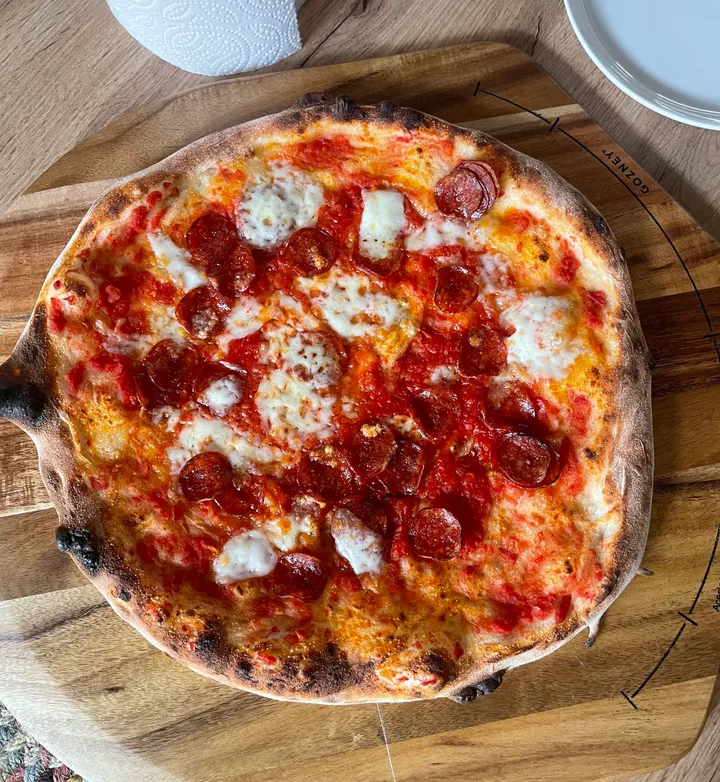
Pepperoni pizza, straight out of the Dome XL

We hope you love the products we recommend! All of them were independently selected by our editors. Just so you know, HuffPost UK may collect a share of sales or other compensation from the links on this page if you decide to shop from them. Oh, and FYI — prices are accurate and items in stock as of time of publication.

If there’s one thing I’ve learned about most modern-day pizza ovens, it’s that they’re never quite big enough to cook multiple pizzas in one go – and that’s a travesty.

Often, it means the chef of the household – usually my partner – is left prepping one pizza at a time, then cooking it, then prepping another and cooking that, while everyone else tucks in to his efforts.

By the time he’s bringing the third or fourth pizza to the table, the rest of us are stick-a-fork-in-me stuffed, while he’s just about managed to shovel a single slice into his mouth.

Advertisement

Thankfully, he loves cooking for our family (especially pizza), so he doesn’t really mind. But when the opportunity came knocking to try Gozney’s Dome XL (Gen 2) – a bigger version of the Arc, which we’ve been using for the past few years – I was curious to see whether this would mean he’d finally be able to sit down and eat with us as a family.

Dear reader: he did! And as for the pizza… it was the best yet.

Pepperoni pizza, straight out of the Dome XL

How big is the Gozney Dome XL?

It’s large enough to cook two 12″ (14″ at a push) pizzas – so, certainly living up to its moniker.

The pizza oven is 946mm wide, 997mm high and 697mm deep. If space is at a premium in your back garden, you might want to give this one a miss, and I’d instead recommend the slightly smaller Arc or even the OG Roccbox (great for camping/very small gardens) – we’ve bought and used both on repeat over the years.

Advertisement

How easy is the Gozney Dome XL to set up?

The Dome XL turned up on a pallet and required four of us to carry it through our house to the back garden, where we screwed it to the stand (sold separately), attached the chimney, adjusted the stones (there are two which sit next to each other), got it hooked up to the gas bottle and turned it on in about 10 minutes.

You need to cure the stone for about 30 minutes before first use. The oven’s digital display comes charged, so you can use it straight away.

How well does the Gozney Dome XL cook?

Advertisement

My first impression of the oven, even before we’ve started cooking, is that it’s really well-made. This is a professional bit of kit – and it looks the part, too. Considering it’s pretty large, it’s certainly not overbearing.

But while it’s clearly made by the pros who know what they’re doing, it’s not pretentious or complex. The Dome XL – just like Gozney’s other pizza ovens we’ve used over the years – is extremely user-friendly.

Beginners would have no issues getting this set up and cooking pizza or any other dishes they’d fancy giving a try. (Gozney’s YouTube has long been a firm favourite of ours to find recipe inspo).

The oven heats up quickly – it takes about 30 minutes to get to 300-degree+ temperatures, and then you can start cooking pizzas or sizzling steaks. The digital screen on the front of the oven gives you insights into the temperature of the oven, the temperature of the stone and even allows you to set a timer for cooking.

Advertisement

It also comes with two meat probes you can use for precision cooking – we cooked steaks on it in a cast iron pan, as well as chips (yes, you can even cook fries in a pizza oven!).

Yes, we cooked steak and chips in the pizza oven.

Once you’ve prepped your pizza and shuffled it onto the stone, it could be cooked in as little as 90 seconds – or longer if you prefer a low-and-slow cook.

Nowadays, we tend to opt for the latter so we can prep more to fill the table with pizza, pizza and more pizza.

We’ve cooked lots of different types of pizza on it, from crispier American styles to Neopolitan versions. Toppings have ranged from garlic prawns, Margherita, ’Nduja and honey, to tuna and red onion, pepperoni, chicken tikka and mango chutney, mushrooms and truffle oil and marinara.

The flame licks up the side and across the top of the oven for even heat distribution – cheese melts instantly, while the dough crust expands like a fluffed up pillow protecting the sizzling toppings. The end product is always restaurant-quality food.

Advertisement

Because it’s so big, you can create two large pizzas with half-and-half toppings so you’re essentially getting four pizzas made in one sitting – ideal for feeding hungry kids or having mates over for a pizza party (the new and improved BBQ gathering, if you ask me).

Prawn and 'Nduja pizza – because why not?!
Prawn and ‘Nduja pizza – because why not?!

What about the accessories?

One thing it doesn’t come with, as standard, is a cover or a stand. And in my opinion, you need both (unless you’ve got an outdoor kitchen area or sturdy worktop).

The stand is metal and takes a bit of time to build, however it comes with everything you need to build it – and once it’s up, you’re good to go. It also comes with wheels, which is pretty handy if you want to be moving the oven around your patio.

If you buy the stand, I’d 100% recommend getting the cover that fits over the oven and stand to keep it protected from the elements. You can also get a cover that just sits over the oven.

Advertisement

The cover is one of the best garden furniture covers I’ve seen (we’ve had quite a few varieties over the years) – it’s stormproof and fits over the oven, chimney and stand easily. The toggles at the bottom help to keep it from blowing away, which has been very useful given the blustery storms we’ve been having of late.

We’re also keen to buy the Wood-Fire Control Kit in the coming months to see how cooking with wood (you can also use charcoal in it) alters the taste.

Any downsides?

We really had to mull this one over. I think the biggest downside is the cost at £2,499.99. It’s a premium pick, but if you’re serious about outdoor cooking, it’s worth the investment.

Advertisement

Who would love the Gozney Dome XL?

Pizza-lovers, of course! It’s definitely a great shout for those who love hosting, throwing parties in their back yard, or have more mouths to feed (ie. families).

The Dome XL doesn’t come cheap, but if you spend a lot of time outdoors, love to experiment with your cooking and/or have kids who are just as pizza-obsessed as you are, it’s certainly worth splashing the cash.

And if you’re after something smaller and a little more budget-friendly, you really can’t go wrong with the Arc XL (£799.99).

Advertisement

Source link

Continue Reading

Politics

The Best Elevated Picnic Essentials So You Can Heatwave Dine In Style

Published

on

The Best Elevated Picnic Essentials So You Can Heatwave Dine In Style

We hope you love the products we recommend! All of them were independently selected by our editors. Just so you know, HuffPost UK may collect a share of sales or other compensation from the links on this page if you decide to shop from them. Oh, and FYI — prices are accurate and items in stock as of time of publication.

During a heatwave, the last thing I want to do is dine inside my sweaty apartment. While having a fan might help cool things down a bit, all I want to do is lounge around outside and pick on little bites at a time, rather than stomach a whole meal.

Although my hay fever might be raging this year, I’ll do anything I can to be able to sit in the sun in comfort as long as humanly possible.

Advertisement

Just like camping, you can either picnic, or picnic (if you catch my drift). I’m going to do something radical and propose we all start taking picnicking a little more seriously in the year of whimsy.

That’s why, ahead of yet another heatwave, I’ve rounded up a list of picnic essentials to help you dine outdoors in style. Just don’t forget the M&S picky bits.

The elevated picnic blankets, plates, and glasses to picnic in style

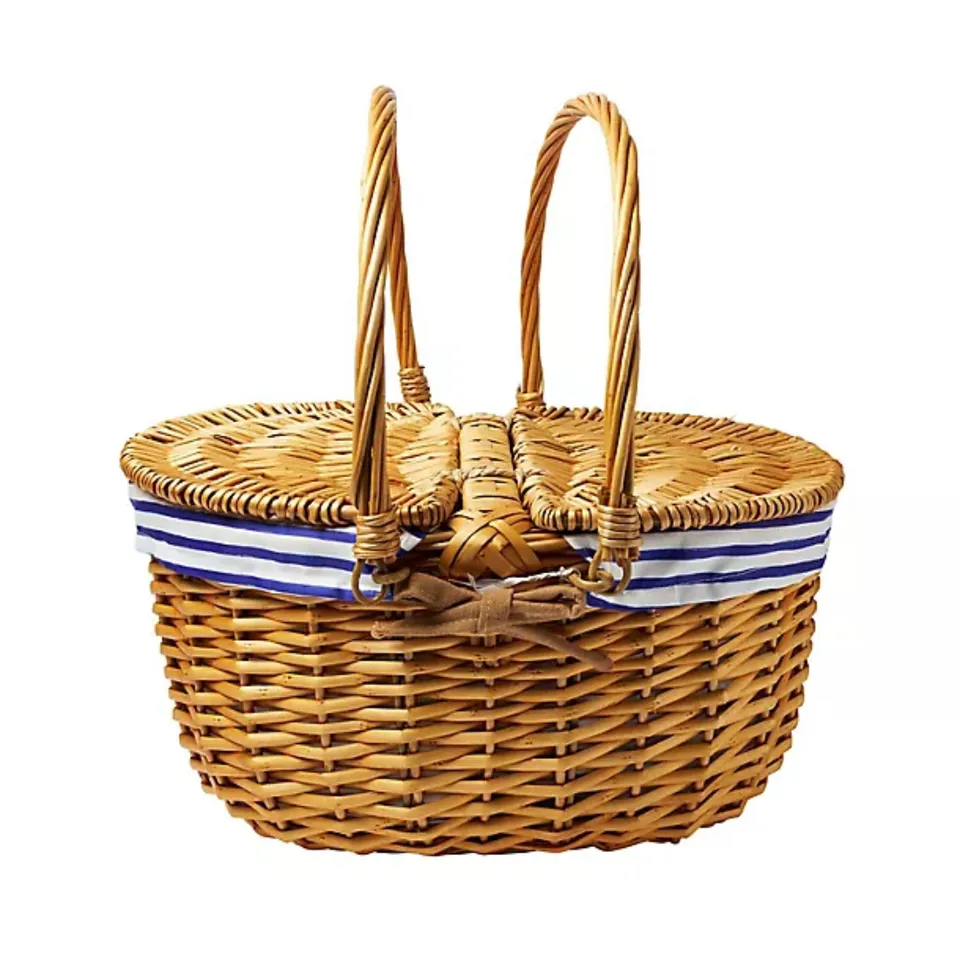
Look, this isn’t the Wizard Of Oz, but it could be if you started taking transporting yourself into another world through the medium of picnic more seriously. With plenty of room for a picnic for two, this basket has all the whimsy you could hope for on a sunny day outside.

Tbco

If you’ve ever tried to quickly stuff a picnic blanket in a bag on your way out the door, you’ll know that it rarely leaves space for the things you want to actually eat on your picnic. This strap solves that as it wraps around your picnic blanket so you can swing it from your shoulder as you skip on your merry way to the park. It also comes in a ton of colours so you can match it to your blanket.

Advertisement

I’m on a mission to make it socially acceptable for adults to carry lunch boxes again, because this tote is about to take your picnicking to the next level. If you’re the kind of person who likes to prepare salads, quiches, and whatnot ahead of time (good for you) they deserve the respect of being kept in a handy dandy cool bag like this one. I’m a huge fan of this turquoise colour, too.

Another pesky item to fit in your bag – a bottle of wine. But, as Damson Madder proves with this pretty patterned bottle carrier, there’s no reason you can’t carry it in style.

Because, unless you make a hole in the ground, there’s never anywhere to put your half-drunk bottle is there? This coaster will keep it upright, and remind you to keep topping yourself up as the day progresses. Day drinking is what picnics are all about, anyway.

I’m not exaggerating when I say I would truly trust M&S with my life, so I didn’t even have to question the fact they’d have all bases covered with this picnic hamper that has a holder specifically for your vino or whatever summer beverage you’ve opted for. Chiiiiic.

You know the drill: trying to get comfy at a picnic can result in some strange lying/sitting positions, and there’s always the risk everything is going to be on display if you’re wearing a skirt. Treat your tush to a comfy little seat in the form of this cushioned folding mat, which can sit atop or next to your picnic blanket to maximise space.

Whoever named these acrylic glasses was absolutely right: I will be gossiping as I sip, thank you very much. Made completely from acrylic, they won’t break in your bag, and they’ll match your picnic blanket, too.

If there’s one time I forget to drink enough water, it’s when I’m day-drinking at a picnic. My life hack is always having a water and a wine glass on hand, so you remember to stay hydrated in the heat – and so you can keep sipping, of course.

It’s giving grandma’s house in the best way. Who needs paper plates?

Enamel is your best friend for picnic implements – it won’t break en route, and it’s also pretty lightweight and cool, so you won’t have any problems carrying it in your dinky basket.

Using a plastic straw is sooo 20 years ago, but the paper ones are pretty shit, let’s be honest. So you’ll taste your drink through rose coloured glass (literally) with these straws, which can be reused to your heart’s content and won’t disintegrate into your drink after a mere few sips. Just be careful not to break them.

Source link

Continue Reading

Politics

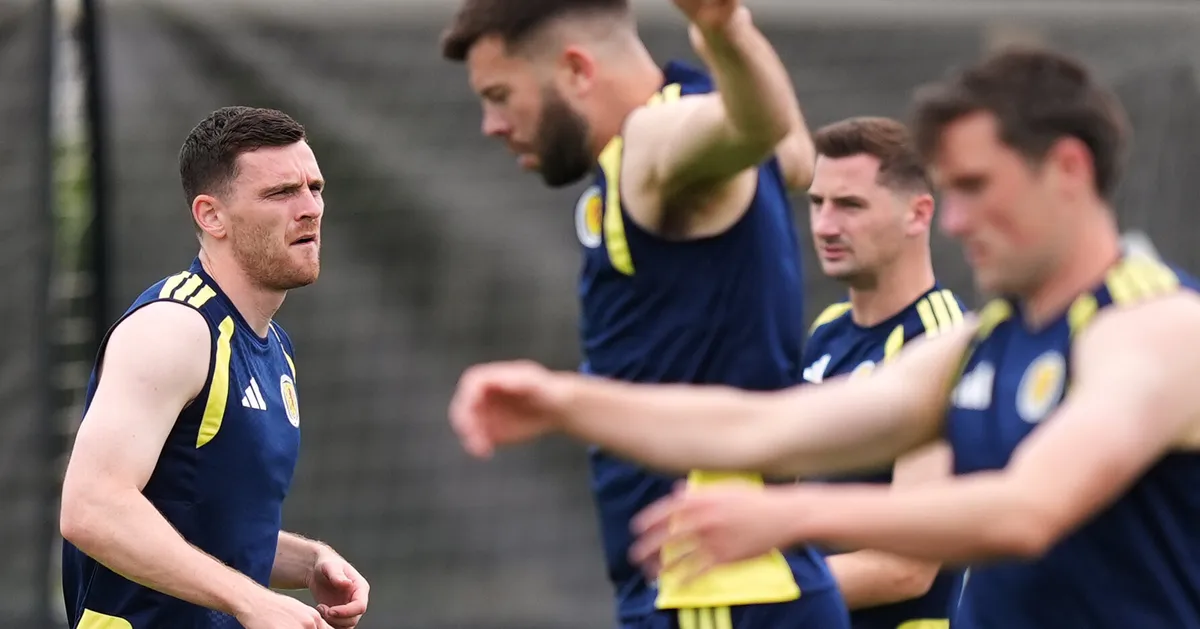
Belarussian Visa Row Threatened Scotlands World Cup Hopes

Published

on

Belarussian Visa Row Threatened Scotlands World Cup Hopes

Ministers and government officials had to solve a last-minute visa row to keep alive Scotland’s hopes of reaching their first World Cup in 28 years, HuffPost UK can reveal.

Steve Clarke’s team could have been forced to forfeit a crucial qualifying match against Belarus if a solution had not been found.

That would have seen the result being registered as a 3-0 defeat for Scotland, depriving them of three crucial points.

In the end, the game went ahead at Hampden Park in Glasgow last October, Scotland beat Belarus 2-1 and ended up winning their qualifying group by two points.

Advertisement

They will play their first match of this year’s World Cup against Haiti in Boston in the early hours of Sunday morning.

But it can now be revealed that Scotland came close to not qualifying at all because of government sanctions imposed on Belarus because of the country’s support for Russia’s invasion of Ukraine.

They included a curb on issuing travel visas to Belarussian nationals inside Belarus itself.

When the eastern European minnows played a Nations League tie in Northern Ireland in November 2024, they agreed to travel to neighbouring countries to be issued with their UK visas.

Advertisement

But as the visit to Scotland in October 2025 loomed, their position changed.

The country’s football association told UEFA, the sport’s European governing body, that unless the UK government issued visas for their players and officials inside Belarus, they would not fly to Glasgow for the game.

Under UEFA’s rules, that would have seen Scotland forfeit the game on the grounds that the UK had prevented them from travelling.

No.10, the Scotland Office, Foreign Office, Home Office and the Department of Culture, Media and Sport had to find a way to make sure the Belarus travelling party were awarded visas.

Advertisement

A source said: “It was made very clear that this Labour government cannot be responsible for Scotland failing to qualify for the World Cup.”

In the first round of qualifying matches, Belarus travelled to Athens, where they were thrashed 5-1 by Greece on September 5.

In a last-ditch bid to solve the visa problem, the then immigration minister Seema Malhotra asked the British visa centre in the Greek capital if they could process the Belarus team’s applications while they were in the country.

They agreed to open their offices specially on Saturday, September 6, so their staff could give them their visas, thereby allowing them to travel to Scotland the following month.

Advertisement

A government source said: “It all succeeded, Scotland won the game, and not one of the 49,346 crowd at Hampden ever knew the role that the government in London had played in making sure that game went ahead, and that Scotland stayed on track for the World Cup.”

Ian Murray, who was Scottish Secretary at the time, was one of those involved in making sure the Belarus players got their UK visas and the game went ahead.

He told HuffPost UK: “Like millions of my fellow Scots, I’m absolutely thrilled and so excited that the Tartan Army made it across the Atlantic for our first World Cup in 28 years.

“The serious Belarus visa issue could have derailed Scotland’s qualifying campaign and with it our World Cup dream, so I’m glad it was sorted.

Advertisement

“When you go into government you know you could take the blame for a lot of things going wrong, but this problem was not of our making and solvable.

“The sheer national joy of Scotland going to the World Cup show how important it was to get the Belarus game on. Now hopefully Steve Clarke’s men can go on to have a brilliant tournament, and do us all proud.”

Subscribe to Commons People, the podcast that makes politics easy. Every week, Kevin Schofield and Kate Nicholson unpack the week’s biggest stories to keep you informed. Join us for straightforward analysis of what’s going on at Westminster.

Advertisement

Source link

Continue Reading

Politics

Ariana Grande Slams White House For ‘Barbaric’ Video Using Her Song

Published

on

Donald Trump

Ariana Grande has taken aim at Donald Trump and his administration over a new video depicting border patrol agents making arrests which included a snippet of her song.

Earlier this week, the Thank U, Next singer spoke out about a video posted on the White House’s TikTok account with the caption: “Bye-bye. President Trump has delivered the most secure border in history.”

Multiple outlets have reported that the video initially featured Ariana’s 2024 song Bye to soundtrack the video, with the Grammy winner writing in the comments: “Please do not use my music in relation to this barbaric, inhumane, heinous nonsense.”

White House spokesperson Abigail Jackson later responded (via BBC News): “What’s actually barbaric, inhumane, and heinous are the criminal illegal aliens who have injured and murdered innocent American citizens.”

Advertisement

Interestingly, both Ariana’s comment and the use of her song in the White House’s video now appear to have been erased.

Donald Trump

The Wicked star isn’t the only musician to have spoken out about the Trump administration using their songs on social media without permission, though.

Just last week, Olivia Rodrigo said she’d found it “deeply disturbing” to see her song being used in a similar White House video to Ariana’s.

“The fact it was my song in there made me feel even more enraged,” she told Dazed. “What they’re doing is so awful and barbaric and cruel. I am really sad to be in a country that thinks that’s OK.”

Last year, Sabrina Carpenter branded another such video featuring an unauthorised use of her hit Manchild “evil and disgusting”, telling the White House not to “ever involve me or my music to benefit your inhumane agenda”.

Advertisement

Meanwhile, in response to controversy over a similar clip featuring a Taylor Swift song, a White House official said: “We made this video because we knew fake news media brands […] would breathlessly amplify them. Congrats, you got played.”

Source link

Advertisement
Continue Reading

Politics

Lee Zeldin on rising gas prices, energy dominance and AI data centers

Published

on

Lee Zeldin on rising gas prices, energy dominance and AI data centers

Lee Zeldin on rising gas prices, energy dominance and AI data centers

lead image

Source link

Continue Reading

Politics

The small-town voters deciding the UK’s future are demanding change, our focus group found

Published

on

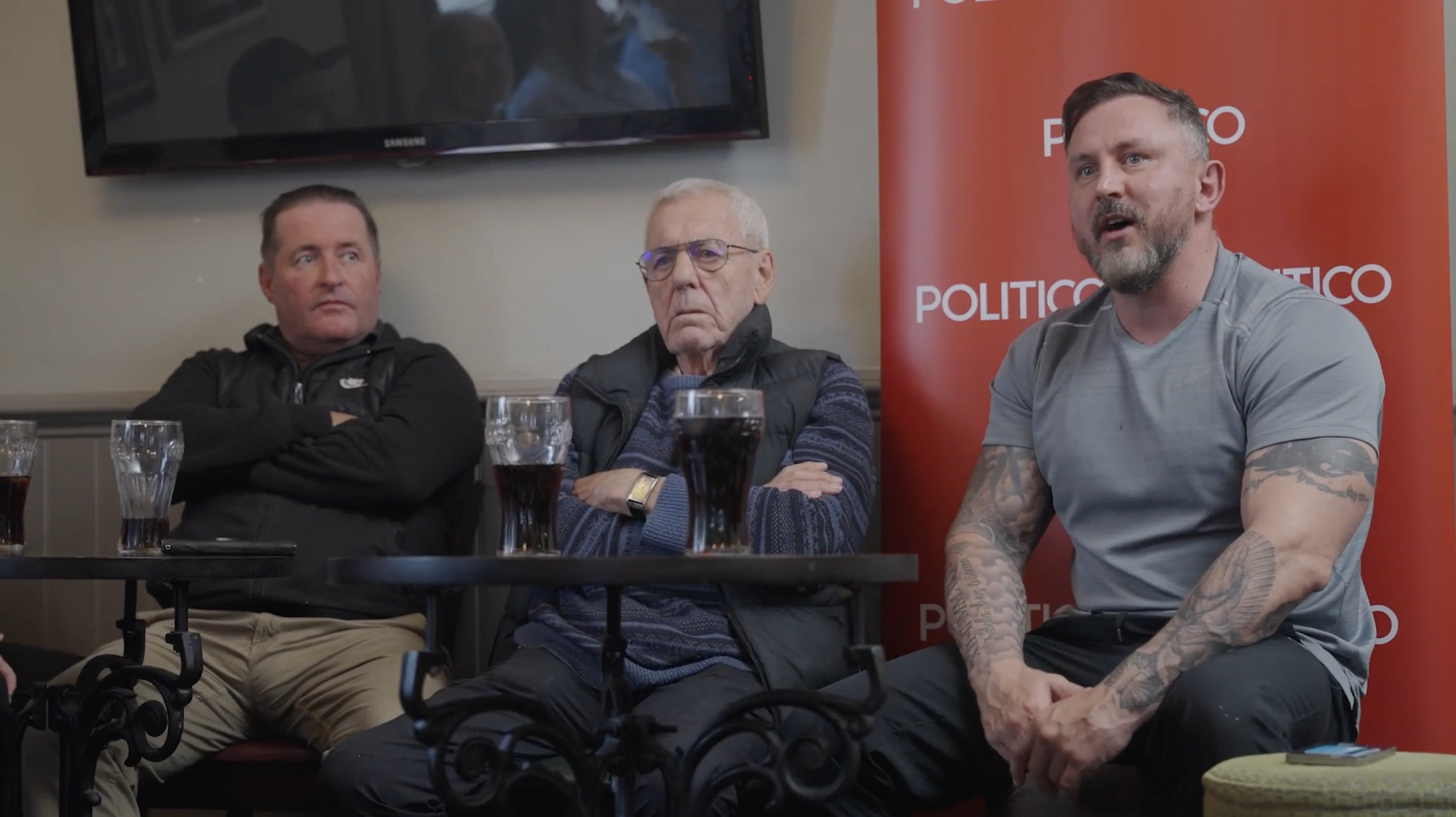
Paul (right) said he works three jobs and feels let down.

ASHTON-IN-MAKERFIELD, England — Voters in perhaps the most consequential special election ever held in Britain are angry, and they really want someone to feel their pain.

That’s the clear verdict from a special focus group by Public First for POLITICO of voters in Makerfield, the former mining area in northwest England whose June 18 vote could determine the next prime minister.

Some in the group said Andy Burnham, the Labour candidate who is hot favorite to succeed party leader Keir Starmer as PM if he can get himself back into Parliament, might make a difference. But the overwhelming mood during the 90-minute conversation in the Golden Lion pub was one of deep cynicism and bitterness: Life in 2026 is unfair, miserably expensive, and only getting worse, they said.

The goal of Wednesday’s focus group was to get a deep understanding of life in Makerfield — and how voters there are thinking about next week’s by-election. The voters had a mix of political histories and leanings, with longtime Labour voters sitting with supporters of right-wing parties and people who were undecided. But all expressed remarkably similar concerns about the cost of living, immigration, public safety and frustration about an increasingly unequal society.

Advertisement

“These were not a group of people that were thrilled about anything that was going on in Westminster,” said Seb Wride, head of polling at Public First, who moderated the discussion.

Can Burnham overcome that deep disillusionment with the political system? Or will Nigel Farage’s hard right Reform UK party tap into the anger at “two tier” Britain and eject center-left Labour from a seat it has held for decades?

Here are the key takeaways from POLITICO’s Makerfield focus group:

Starmer’s Labour Party has let them down

There was no love for Starmer — and some even felt there was no real difference between his two-year old government and the center-right Conservatives who held power for the previous 14 years. Not one of the nine people in the group said they thought he’d done a good job as prime minister.

Advertisement

And Labour’s party brand has been damaged as a result.

Tom, a father who is planning to vote Reform, said Labour had always claimed to stand for working-class people — but with the cost of daily essentials now punishingly high for everyone in the room and no relief in sight, “How are they for the working class anymore?”

Daily life is too expensive

The participants easily rattled off the exact prices they‘ve watched increase: The cost of living — from a fast-food meal to rent, to a family trip to the cinema — has risen rapidly and become unsustainable for many people in Makerfield, they said. Family holidays they could afford in the past, even for people working full time, are “just a dream” now, one person added.

Advertisement

Jenny, who is retired, said the cost of living has become “terrible.”

Paul, a father who works three jobs, often from 7:30 a.m. until 4 a.m. the next morning, is struggling, and feels let down. “No one should work 60 hours a week and not be able to have a nice life,” he said. “It’s a joke.”

Paul (right) said he works three jobs and feels let down.

They’re gloomy about politics

Few in the group could point to a political leader of the last 10 years who they felt had made a positive impact on their lives.

Peter, who usually votes Conservative, praised David Cameron’s decision to call a referendum on Brexit 10 years ago. A couple of participants went further back — almost 20 years — to name Tony Blair, who ushered in a Labour government in 1997 after almost two decades of Conservative control, as the last PM who delivered for them.

Advertisement

But most had little confidence that any of today’s politicians would make a difference.

“No government is going to change it,” said Paul. “They’re all crooks, mate. Biggest gangsters in the world.”

Bob, who is in his 90s, added: “I’ve not met a bloody good one yet to be honest.”

They’re very upset about immigration

Farage’s Reform UK is surging ahead in national polls and local elections across the country and is in with a chance of taking Makerfield from Labour. Tackling immigration is his signature policy, and it is clearly a huge concern to participants in the POLITICO group.

Advertisement

The three-letter acronym they kept coming back to was “HMOs.” It stands for Houses in Multiple Occupation — and that means by migrants, in the perception of the focus group.

The concern, the Makerfield voters said, is that landlords and developers are turning homes into residences not for existing local families to live in but for newly arrived immigrants — who are not related to each other — to share. They fear that pushes up rent prices for people who have been living in the area for many years and changes the nature of their community, which is 95 percent made up of people from a “White British” background.

Participants also said they believed many illegal migrants were overwhelming the local health service, making it harder for taxpaying residents to get medical care.

Farage is winning converts who want change

With their anger at the status quo — and demand for a change in their lives and the country’s direction — several focus group participants said they’re increasingly looking to Reform UK.

Advertisement

“I’ve always voted Labour. This is the first time I’m not voting Labour, I’m voting Reform,” said Tom, who is married with two children and works full-time. “They are pushing big on immigration, which is one of our biggest factors.” Reform is not perfect, he said, “it’s more how bad the country’s got over the years with Labour in charge. There needs to be change.”

Dan, another local father who works but struggles to make his money last, said he’d also be switching from Labour to Reform: “I think the country just needs a bit of a shakeup, even if it’s just for one term.”

Reform UK Leader Nigel Farage speaks at a press conference for the Reform candidate Robert Kenyon ahead of the Makerfield by-election.

Crime is a big worry

Crime and disorder seems to be rising up their agenda. A knife attack in the street in Belfast this week, which sparked protests and violent disorder, was at the top of many participants’ minds. They raised fears about crime locally, too, including “feral kids” who harass people in the streets and lead some residents to feel unsafe while out with their families.

There are now fewer police on the streets and they don’t tend to care much about incidents in the constituency’s biggest town, Ashton-in-Makerfield, participants said.

Advertisement

Life isn’t fair in “two-tier” Britain

For the right in British politics, it is now an article of faith that the country is suffering from a “two tier” system in which ordinary Brits miss out, often thanks to politically correct decisions that police and others take to satisfy equality laws.

Farage and Conservative Leader Kemi Badenoch have both seized on high-profile cases in recent days to make this point, and in POLITICO’s focus group, it had clearly landed — even among some who are going to vote Labour.

The participants in the focus group represented a mix of backgrounds and political identities.

“We need to come up with a better system that makes it fair for everybody. It is a two-tier system here,” said Peter, the local butcher, who is switching this time from the Conservatives to vote for Labour’s Burnham.

Many in the group agreed that the problem was not just policing, but also a wider sense of unfairness — that places like London and even Manchester get all the money and attention, leaving towns like Ashton to struggle.

Advertisement

“A lot of the politics, like Andy has said, has been Londonised. We need somebody from up north,” Peter said.

Traffic jams and warehouses

Alongside immigration from overseas, the changing nature of the area and its “close-knit” local community was a worry for many in the group. In particular, they raised concerns that plans to build hundreds of new homes and five “super unit” warehouses would lead to a huge increase in traffic that the already clogged road network would be unable to handle.

The green landscape around Ashton is highly prized, and several people in the group said they did not want fields to be built on, turning their area into another endless suburb like Liverpool or Manchester.

Andy Burnham stands in front of supporters during the launch of his campaign as Labour’s candidate for the Makerfield by-election.

‘Andy cares’

Burnham’s record as Mayor of Greater Manchester, the broader area, was seen as a big plus, even by people who were not likely to vote for him.

Advertisement

Participants in the group readily named his achievements at improving local transport infrastructure and hiring more police. Two even said they had in the past gone directly to Burnham with problems they or their families were facing and he had fixed them.

Most of all, there was a sense that Burnham, who grew up nearby and previously represented people in the area in parliament, understands their lives. Bob, Peter, Emma and Mandy all said they were planning to vote for Burnham next week.

“He just comes over as if he cares and as if he wants to sort the country out,” said Mandy, who works part-time as a cleaner and merchandizer. “I just think he seems to be a more down-to-earth person who is looking out for people. He seems more genuine.”

Having someone from the North as prime minister would also help their area, several participants said. “We need better leadership,” added Peter. “We need somebody who cares and I do feel like Andy cares.”

Advertisement

Source link

Continue Reading

Trending

Copyright © 2025