
Politics
Policy versus reality: The ‘DIP’ in British defence credibility

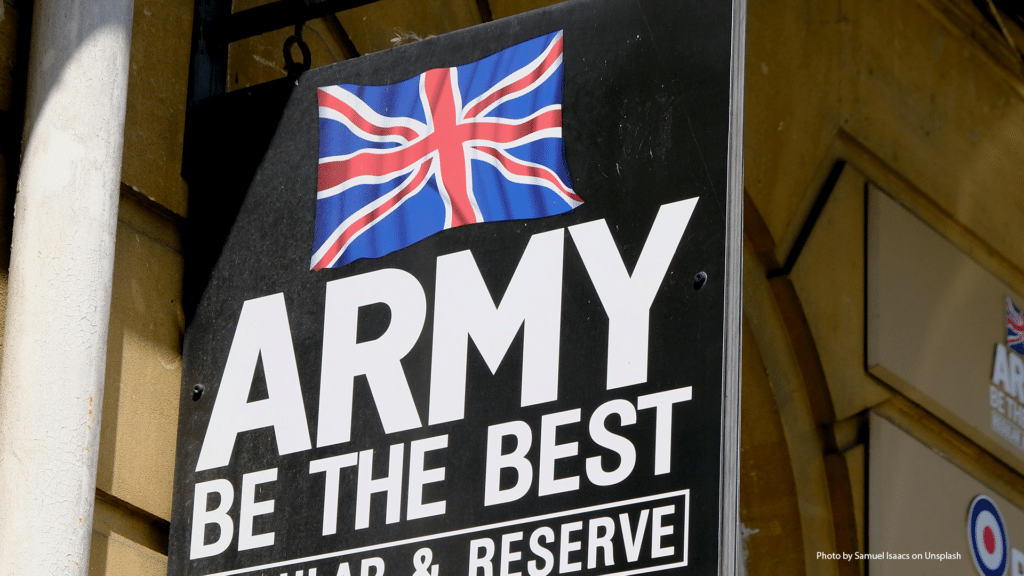
William Reynolds looks at the UK’s Defence Investment Plan and argues that the resources outlined match neither the commitments of the Strategic Defence Review nor the urgency of the challenges we face.
In February 2026, the UK Prime Minister Sir Keir Starmer warned the Munich Security Conference that past leaders had “looked the other way, only re-arming when disaster is upon them”, and called for a rebuilding of “hard power…the currency of the age.” Fast forward four months, his Defence Secretary, John Healey, tendered his resignation, claiming the Prime Minister was “unable, and the Treasury unwilling, to commit the resources that the nation needs to defend the country”. The Defence Investment Plan (DIP), the Ministry of Defence’s response to the 2025 Strategic Defence Review (SDR) was not resourced to meet the agreed upon recommendations of the latter document. With the NATO conference in Ankara fast approaching, Britain risks having lectured for increased spending without producing the goods.
Drawing upon new research conducted with Prof Jamie Gaskarth and Dr Maeve Ryan, it becomes clear that this gap between rhetoric and reality undermines the UK’s credibility as a committed, ‘leading’ power to the NATO alliance.
The SDR itself suffered from a vague defence process, which led to a lack of clarity and prioritisation. The Review provided three general ‘Roles’ which defence was required to do– Role 1: defence of the UK and overseas territories; Role 2: successfully deterring and/or winning any fight which would occur in the Euro-Atlantic area; and Role 3: being able to shape the global security environment. Under the umbrella of ‘NATO First’, ensuring the UK “plans”, “thinks” and “acts” with NATO being the core priority in mind, these Roles are laid out for each military domain’s capabilities (Land, Sea, Air, Space and Cyberspace/Electromagnetic Spectrum) and focusses on the idea of ‘warfighting’ (fighting a peer enemy) and being able to deter a war from occurring in the first place. Examples are also provided for each, such as the Navy’s plan for ATLANTIC BASTION, a hybrid-fleet of crewed and uncrewed vessels protecting the Greenland-Iceland-UK maritime gap from Russian submarines; the British Army’s move towards a ‘Recce-Strike’ model for its land forces; and the Royal Air Force’s balance between crewed and uncrewed aircraft in its future.
The problem lies in a lack of clarity about what achieving these ‘Roles’ would mean in practice as a whole package. Role 2, defence of the Euro-Atlantic area, could range from a maritime-focussed defence of the ‘High North’ area to a doubling down on the British land-centric focus around the Baltic area. Both examples would fall under a ‘NATO first’ umbrella, but their geographical and political differences require significantly different capabilities and signal different priorities to different European states. The examples that were given are examples only, with no sufficient explanation as to how they fit into the wider armed forces’ force structure and priorities. Even with the late publication of the DIP, European allies remain unsure of British focus and current commitments, which stretch from Estonia to Iceland. Outside of some notable examples, no explanation of force structure, or specific numbers on formations and equipment have been provided. Contrast this with the Cold War, where the Defence Review of 1975 clearly defined British commitments around the ‘Four Pillars’ of defence, with a clear framework, outline of what the armed forces would look like going forward, and equipment numbers, from which allies could measure British efforts and focus.
This lack of clarity is compounded by the gap between government commitments and the resources allocated to achieve them. The 2025 SDR promised 2.6% of Gross Domestic Product (GDP) on defence by 2027, with an “ambition” to reach 3% in the next Parliament. No expert looking at the recommendations and the resource envelope concluded this was possible. Providing a fully-kitted Carrier Strike Group, funding for the Global Combat Air Program with Italy and Japan, the AUKUS nuclear attack submarine replacement programme and two Divisions with a Headquarters to NATO’s Strategic Reserve Corps, alongside many other recommendations, was never going to be achievable at 2.6%.
To meet these requirements, the Ministry of Defence calculated that an additional £28 billion over four years, on top of the 2.6%, would be needed, with £18bn being the absolute floor for defence without requiring a reduction in the size and capability of the armed forces. For this reason, both John Healey and Al Cairns resigned, as the offered £10-13.5bn was far below even this threadbare requirement. The final increase was £15bn, still £3bn below the minimum threshold. How then the UK is expected to reach the agreed NATO target of 3.5% of GDP by 2035, which is predicted to require an extra £30bn a year, seems unclear. Indeed, the British Chief of Defence Staff noted recently that even more (3.5%) was necessary to “deliver the vision” set out in the SDR and agreed upon by the Prime Minister.
In 2021, the SDR’s predecessor, the Integrated Review, called for the UK to use its “convening power” to bring together partners to meet shared challenges. Britain has long played on its role as the leader of defence within Europe, but this is no longer the case. Germany, Poland, Norway and many others have significantly pushed their defence spending above and beyond 3% of GDP.
There is growing “frustration” with the UK’s rhetoric on defence. Despite regularly referring to itself as a leading European nation of NATO, the atrophy of the armed forces no longer reflects this. European defence firms and allies have noted the slowness of Britain’s translation of promises to reality. Whilst both NATO and the European Union have called for its members to be ready to deter or fight Russia by 2030, reportedly the UK currently sits at 31 of 32 on a NATO league table of rearmament. The spending gap will only deepen the issue.
Yet , despite the significant overstretch, successive governments has continued to reach for the armed forces as a preferred response to crises, setting commitments like de-mining in the Middle East, a possible Coalition of the Willing in Ukraine, alongside the vagueness of the SDR, without the commensurate resources to facilitate it. Indeed, the Prime Minister “disagrees” that said resources are required. The consequences are a stretched to breaking-point armed forces, unfulfilled promises and resulting loss of confidence from European partners in British defence capability. It is time political rhetoric matched reality. Either the UK accepts a reduced defence role in Europe, or it puts its money where its mouth is.
By Dr William Reynolds, Advanced Education Pathway (AEP) Lecturer in Defence Studies, Defence Studies Department, King’s College London.

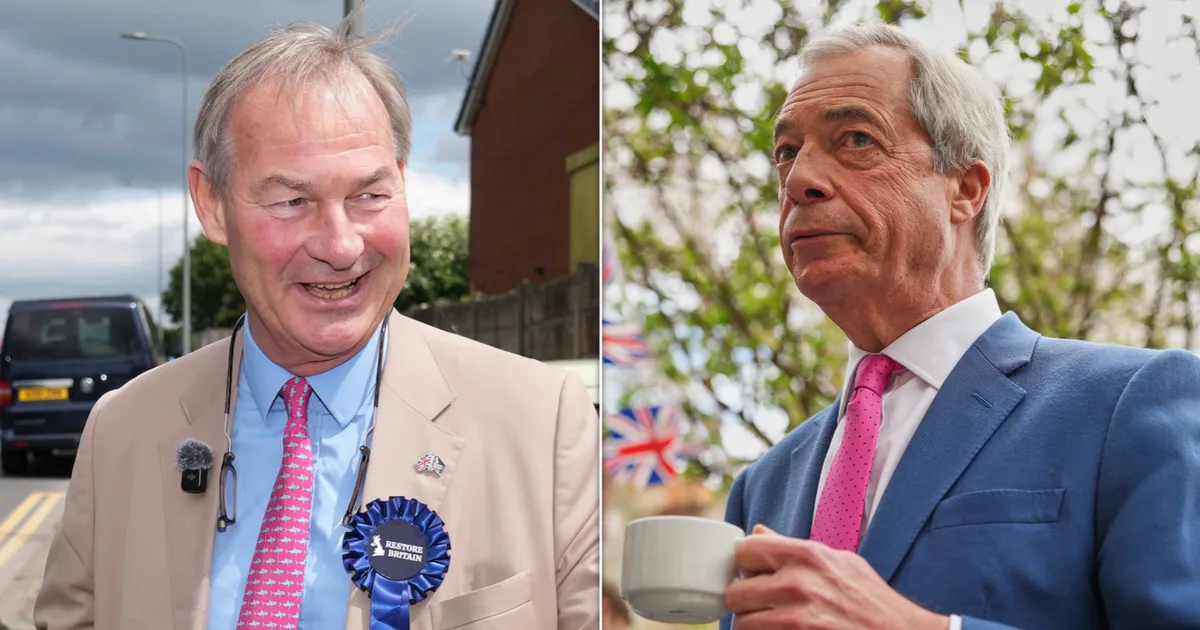
Rupert Lowe has offered his former colleague Nigel Farage an alliance to unite the right.
The leader of Restore Britain, a far-right splinter group which formed after Lowe was kicked out of Reform UK, suggested it was time for the two rivals to “put our differences aside” in a public address.
It comes after the right-wing vote was split in the Greater Manchester mayoral contest, leading to Labour candidate Bev Craig’s victory.
Reform’s Sian Astley finished second with 111,928 votes while Restore’s Marlon West finished fourth with 46,289 votes in the first round.
In a video statement on X, Lowe said this result “showed what Restore Britain can deliver”, and suggested they work together to defeat the left-wing.
He said: “Nigel, my message is simple. If you are prepared to work together around serious policies, serious reform, and serious government, then so are we.
“Millions of British people deserve a patriotic government to put our national interest before any personal differences that you and I may have…
“Now is the time to put our differences aside and cooperate for the good of the country that we all love.”
However, he said any deal relied on several key conditions Reform must agree to.
That included a call for mass deportations to “reverse” mass immigration, restoring the “demographic security” for so-called native Brits and tackling the rise of Islamism by banning the burka.
He also called for a referendum on the death penalty and urged Reform to restore a “self-sufficient Britain” by cutting welfare.
His olive branch comes after Reform started to slump in the polls against Labour, amid growing scrutiny over Farage’s finances and Andy Burnham’s takeover of the government.
The Reform UK leader is currently fighting a by-election in Clacton which he triggered last month.
He decided to start a “people versus the establishment” contest following a sleaze probe into a £5 million donation which he failed to register with parliament.
Farage later issued a lengthy statement on X which appeared to respond to Lowe on Sunday.
He said: “Only one party truly has the possibility of delivering change.
“To deliver that change, I understand Reform UK will need the support of people from other parties, as well as millions who have never voted before.
“That is the broad coalition I am building.”
He added that Reform “will always be open to anyone who shares our commitment to restoring Britain’s borders, rebuilding our economy, renewing our democracy and putting the British people first.”
He promised to “put country before party but insisted “I will never turn my back on my team”.
He said: “There will always be a home in Reform UK for those who believe that 14 years of Conservative government, followed by the last 2 years of Labour, have failed the British people… and that our country now needs a fundamentally different direction.
“I will continue to do whatever is necessary to defeat the left and provide Britain with the strong, serious leadership it deserves.
“This is the last chance for our country, and we cannot afford to waste it.”
Listen to Commons People, the podcast that makes politics easy. Every week, Kevin Schofield and Kate Nicholson unpack the week’s biggest stories to keep you informed. Join us for straightforward analysis of what’s going on at Westminster.
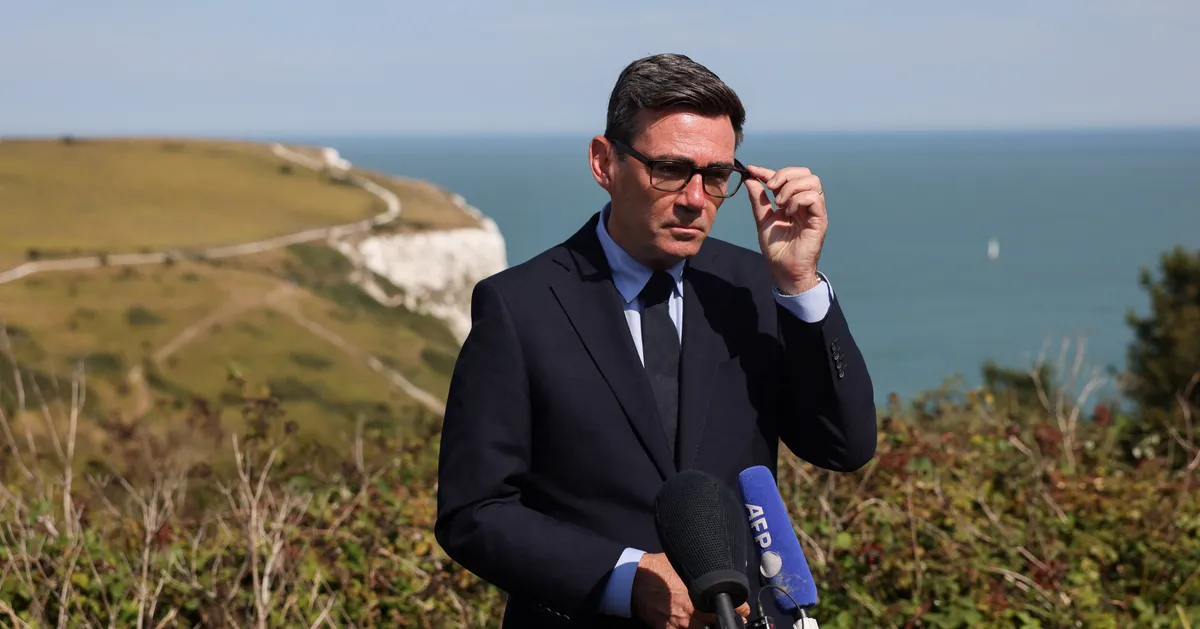
Andy Burnham has promised his government will be “relentless” in curbing how many people arrive in the UK on small boats.
Speaking from Dover, the prime minister said the number of English Channel crossings are down by 50% this year compared to the same period in 2025.
“The month we’ve just had in July has been the lowest number for six years,” he said. “So clearly progress has been made.
“But we’re not complacent, that’s why I’m here, it’s why I’ve come down on Sunday to see the team, to listen to what they think needs to be done, what further can be done.
“We’re just going to be relentless.”
He promised the government was “changing the whole approach” by putting enforcement officers on either side of the Channel to tackle people-smuggling gangs.
He made it clear that Labour would also look to build more safe routes for asylum seekers to come to the UK.
“That also takes away the selling points of the gangs. So on every level we’ve got to come at this, but crucially increasing the enforcement activity,” he said.
“So there’s been a doubling of officers through the National Crime Agency on the UK side of the Channel and French officers are now similarly doubled in number working on the beaches over there.”
The Home Office announced the number of NCA officers tackling smuggling gangs had risen to almost 800 from 376 at the start of 2025.
Concerns over illegal migration have grown after tens of thousands of migrants swam into the Spanish exclave of Ceuta last week.
The prime minister acknowledged that 98% of those people have already been returned to Morocco.
But he added: “There’s a broader issue about the Schengen area and our relationship with it, and of course, I would want to be in regular dialogue with the EU on those issues.”
Burnham has been criticised by his right-wing opponents for not focusing on the matter during his first fortnight in power.
More than 2,000 migrants have arrived on small boats since he got the keys to No.10 on July 20.
But the PM said he wants to “deal with the issue rather than play politics with the issue”.
He added: “The public don’t like the idea that the border looks like it’s not controlled. We need to bring back that control. But also we need to offer support for people who genuinely need it.”
Listen to Commons People, the podcast that makes politics easy. Every week, Kevin Schofield and Kate Nicholson unpack the week’s biggest stories to keep you informed. Join us for straightforward analysis of what’s going on at Westminster.
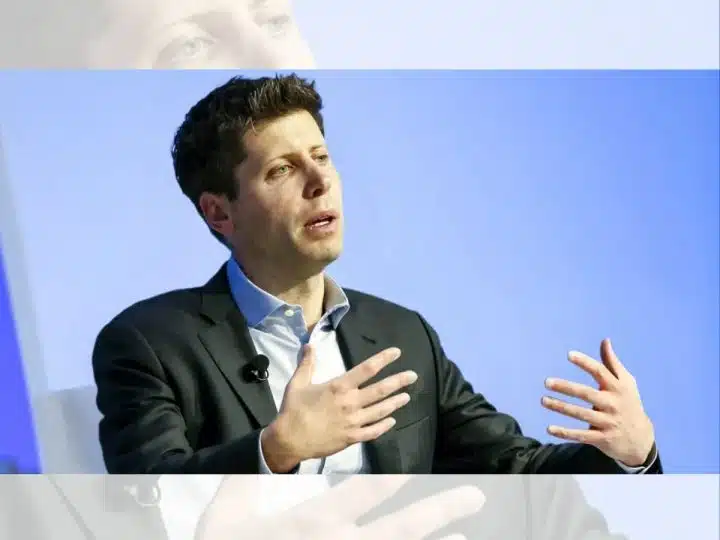

People have criticised generative AI for the many ways in which it’s corrupting what it means to be human. The latest example of this comes from OpenAI CEO, Sam Altman.
What if you just talked to your children
— Alex Hirsch (@_AlexHirsch) July 31, 2026
OpenAI…
Young people today are growing up at a time when they can use generative AI to do their assignments for them. Workers can use AI to write their emails. Half of what you read online could be written by AI. In other words, we live in a world in which human communication is increasingly devoid of the human element.
As such, it’s unsurprising people have reacted to Altman with messages like the following from BuccoCapital Bloke:
Over the next few years you are going to have to fight with everything you’ve got to retain your humanity. They will try to convince you to give up connecting with each other, to give up truly being alive. It will be the most important fight of your whole life
Helen Lewis wrote:
I’m in awe of how sociopathic this comes off. What if I… actually enjoy talking to my family about their lives and interests?
Dylan Dittrich commented:
“Cool use case of chatgpt” and it’s just the worst, most dehumanizing idea you’ve ever heard.
Some responded sarcastically, including the Wild Geerters account:
Seems like a lot of hassle. A cool idea would be to replace the kids with AI chatbot kids and then have chatgpt talk to the chatbot kids on the drive, and maybe let AI drive the car while you chill at home watching an AI generated movie about a guy driving his kids to school
Jathan Sadowski remarked:
Telling my child to stop talking because I’m listening to the AI podcast about their soccer game and upcoming birthday.
Let’s stay human everyone
Despite claims to the contrary, generative AI is not an intelligent technology, and it seems unlikely it ever will be. That doesn’t mean it can’t act as a substitute for human interaction, though, and the threat to what that could mean for society is grave.
Be sure to speak to your children and loved ones and be grateful for the opportunity to do so.
Featured image via EPA/ BBC
By Willem Moore


The US has dropped a 2,000-pound bomb on the home of an Iranian family on Qeshm Island, murdering a two-year-old and his parents. Two other children were pulled from the rubble alive.
The U.S. dropped a 2,000-pound bomb on an Iranian family’s home this week on Qeshm Island, killing a 2-year-old and his parents.
Barbaric savagery by soulless ghouls. pic.twitter.com/n4EfzZsxIG
— Rania Khalek (@RaniaKhalek) August 1, 2026
The US attacked the residedential area of Iran overnight on Thursday 30 July.
According to the New York Times, the size of the crater and weapon fragments suggest that the bomb was a 2,000-pound Mark-84. This is one of the US military’s largest conventional bombs.
Additionally, the location and time of the strikes are consistent with where the US military was operating at the time.
US has created a pattern of destruction
Of course, this is part of a pattern.
For years, Israel, funded by the US, has dropped 2,000-pound American bombs on Gaza, in an attempt to systematically wipe out Palestinians, including refugees in tents.
2,000-pound Mark 84 bomb was what Biden-Harris sent to lsrael on a regular basis to kill and flatten Gaza in their genocidal campaign. https://t.co/aTIoTr2A5k
— CanCanGirl&TobyBear
(@ApricotForever) August 1, 2026


Both the Trump and Biden regimes green-lighted it.
Now, the US is doing the same to Iran.
For years, Israel was using 2,000lb American bombs to kill Gazan refugees in tents. Both the Biden and Trump administrations permitted it.
A precedent was set.
Now it appears the US is doing the same in Iran.
A 2000lb bomb was dropped on a family house in Qeshm, killing a taxi…
— Trita Parsi (@tparsi) August 1, 2026
During the first month of Israel’s genocide in Gaza, Israel dropped hundreds of these bombs. Many of them are capable of killing or wounding people more than 1,000 feet away.
At the time, satellite images revealed more than 500 impact craters over 12 metres in diameter. This is consistent with those left behind by 2,000-pound bombs.
The U.S. should be held accountable for these war crimes https://t.co/hsrFKxcWCY
— Ray Jackson (@RayJackson123) August 2, 2026
International humanitarian law dictates that militaries should take “all feasible precautions” to minimise civilian harm. Of course, that means not attacking innocent civilians.
“The choice to use that type of munition in such a densely populated area is “very difficult to reconcile with” https://t.co/2zu3d2utPE
— Reem Rifai (@ReemRifai_) August 1, 2026
But the US and Israel have never cared about the lives of Palestinian, Lebanese, or Iranian families. They are rogue terrorist states, and as long as the world continues to whitewash their crimes, they will continue destroying, bombing and murdering the people of West Asia.
On Thursday, an airstrike killed 3 a mom, a dad, and their 2-year-old son on Qeshm Island in southern Iran.
Our visual investigation (drawing on photos/videos from the site, satellite imagery, weapon fragments, and a crater size estimate, analyzed by weapons experts… pic.twitter.com/54xGryP0CI
— Christiaan Triebert (@trbrtc) August 1, 2026
Feature image via New York Times
By HG

Of all the self-help videos that sneak into my algorithm, the ‘Sunday Reset’ is my favourite. In a kind of tribute to Marie Kondo, a Japanese ‘organising consultant’, glamorous influencers manage to make loading the dishwasher and meal prep look aspirational. My Sunday follows a similar, if slightly less aesthetic, formula: three loads of washing, the weekly shop and off to Mass. My Catholic identity is a significant part of my life and so Sunday Mass is an important part of my routine – it gives me time to reflect and think. It tethers my week to something constant and reassuring.
As Christians, we’re taught to ‘keep holy the sabbath’. Although I’m sure theologians will have more to say on this, I have never felt guilty going straight from morning Mass to Lidl. Growing up in Scotland, it’s not something I’d ever thought about. There we can’t buy alcohol until after 10pm, sure, but the shops open whenever they want for everything else.
When I moved down south, I thought it was odd, and annoying, that the big Lidl near me had very different opening hours from the wee Tesco. When I learned the real reason – that the law demands shops over 280 square metres can only open for six consecutive hours between 10am and 6pm – I was baffled. Even more so when I discovered that, in 2016, there were many Scottish MPs who voted against the easing of England and Wales’ Sunday restrictions.
There is no coherent reason for the rules to remain as they are. When you consider that the rules only apply to shops over a certain (arbitrary) size and that even those larger shops are allowed to open for some of the day, the idea that they are doing anything to keep Sunday special is ludicrous. There are no similar restrictions on any other kind of Sunday activity. Making the Sunday shopping experience inconvenient is doing nothing to protect our immortal souls.
Most people in the UK have the same two days off: Saturday and Sunday. How they spend their time over the weekend depends on their priorities. The state should not be infringing on the British people’s rights to enjoy their Sunday. In any case, for people who do prefer a slow Sunday, there would be nothing compelling them to change.
For retail staff, the truth is that even when these larger retail shops are closed, they don’t automatically get the evening off. There are hundreds of tasks to be done when the doors of the shop are locked. Restocking shelves, tidying the storeroom, refolding knitwear, marking down prices – the law doesn’t prohibit the shop from scheduling shifts for staff, only from serving customers.
That aside, why should retail workers be compelled to have Sunday evenings off? Hospitality endures no such restriction. Taxi drivers, hairdressers, public-transport staff, pilots, nail technicians – none of these professions has special rules. They are allowed to make decisions about their schedules that suit them. There are plenty of reasons people are happy to work on Sundays: teenagers and students looking for weekend jobs, or people who prefer shift work to match their spouse’s schedule.
The government’s own figures show that the repeal of these laws could generate up to £1.4 billion annually for the UK economy. It would open up thousands of work hours for people who would be happy to work weekend shifts. Given the rate of unemployment among young people, the government should consider this a gift.
Retail workers and shoppers are adults. They should be allowed to make decisions that are best for them. An absence of Sunday restrictions in Scotland has not ushered in a new golden age of retail. But it has opened more jobs, created flexibility in rotas and relieved some packed-lunch-related stress.
If keeping holy the sabbath isn’t possible from inside a Tesco larger than 280 square metres before 11am, then that’s a conversation for me and my maker, not for the government.
Lucy Rogers is the head of community at Looking for Growth, the political movement to end decline and save Britain.
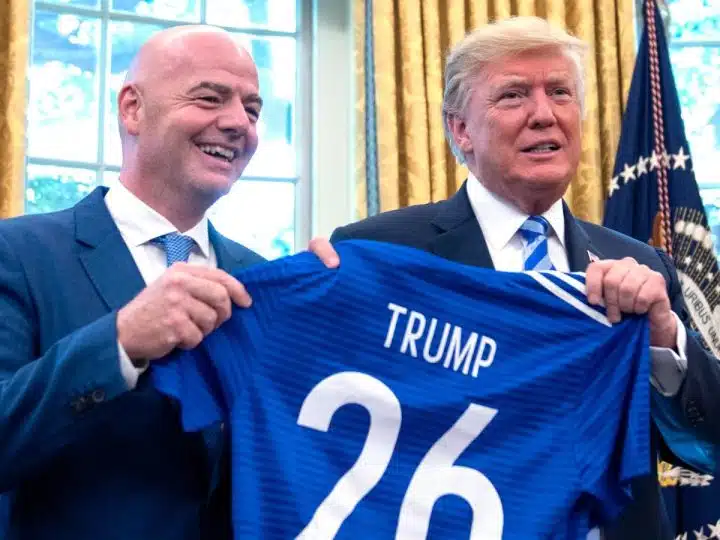

Calls have grown for FIFA President Gianni Infantino to resign or face a vote of no confidence.
According to the Telegraph, UEFA’s stance is no longer limited to objecting to the proposed sale of a share of the World Cup’s commercial rights; it has evolved into questioning Infantino’s ability to continue leading FIFA.
UEFA officials believe that the recent crisis over the now-dropped FIFA Forward Enterprise (FFE) project has exposed a flaw in the body’s decisionmaking mechanisms.
The project being pursued without sufficient consultation with the continental confederations and member associations, is a breach of the principles of governance and transparency, officials argue.
Infantino U-turning hasn’t been enough
Opposition is no longer confined to Europe as the Asian Football Confederation and Confederation of North, Central American and Caribbean Association Football (CONCACAF) have joined the ranks of those rejecting the way Infantino has managed the project.
Reports suggest that this alignment gives the opposition considerable political clout within the international federation.
There’s a belief in European circles that it may be possible to rally the necessary support to call for an extraordinary FIFA Congress, which could see a vote of no confidence in Infantino if the crisis persists. Infantino has led FIFA for the past 10 years.
Nevertheless, no official announcement has yet been made confirming that the opposition camp has the legally required number of votes to impose such a move. Given that Infantino continues to enjoy the support of influential confederations, most notably the Confederation of African Football (CAF) and the South American Football Confederation (CONMEBOL), the balance of power within FIFA remains open to all possibilities.
FIFA’s backtracking hasn’t ended the crisis
The Guardian noted that the current battle represents the greatest political challenge Infantino has faced since taking office as FIFA president. He has never before faced a coalition of this scale, bringing together continental confederations that wield significant electoral clout within the General Assembly.
The fate of any formal motion of no confidence remains dependent on the opposition’s ability to secure the required majority. However, the current crisis reveals a widening rift in trust between Infantino and a number of his key football partners, which opens the door to a significant struggle for leadership.
Featured image via the Canary
By Alaa Shamali
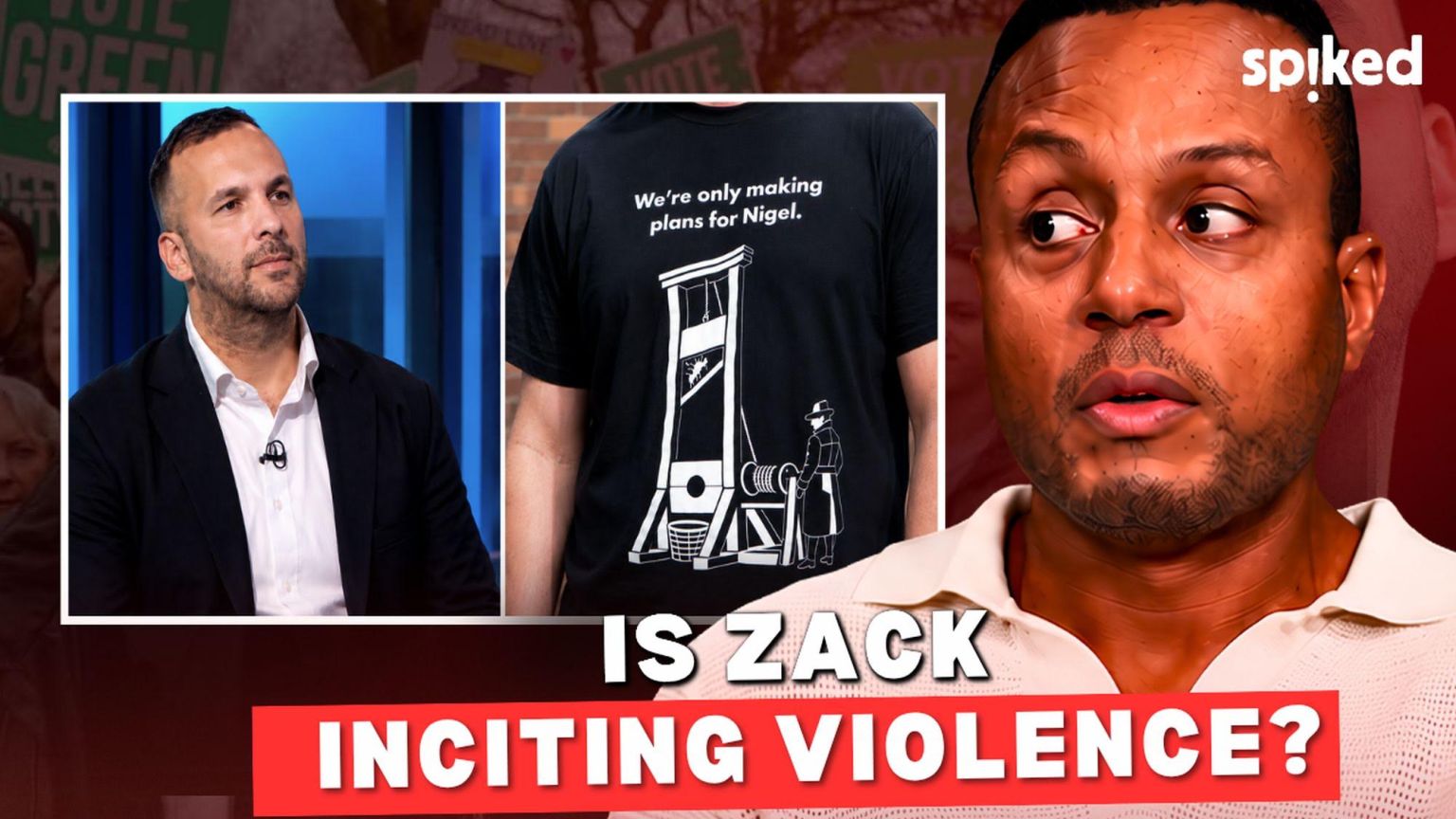
The post Zack Polanski: an incitement to murder Nigel Farage? appeared first on spiked.


Just a few days ago, Faten Ben Omar El Azizi, a young Moroccan woman footballer, was chasing her dream on the pitch. She believed her best years were still ahead of her and that football might lead her to a brighter future.
Sadly, her final journey did not end on a football pitch, but rather in the waves of the sea separating Fnideq, in northern Morocco on the Mediterranean coast, and the Spanish city of Ceuta.
Faten Ben Omar El Azizi, who played for both Moghreb Atlético Tetuán and Morocco Athlétic Tangier, died while attempting to swim to Spanish enclave Ceuta.
Ceuta crossing death toll at 72, media reports
Tributes have flooded in for the sportswoman who was making her mark in Moroccan women’s football.
Faten’s death comes at a time when the northern coast of Morocco is witnessing a rise in attempts at irregular migration towards the city of Ceuta, on the North African coast.
These perilous journeys often result in death due to strong sea currents and the difficult conditions surrounding them.
Meanwhile, the Women’s Africa Cup of Nations (WAFCON) is taking place in Morocco for the third consecutive year.
Featured image via the Canary
By Alaa Shamali
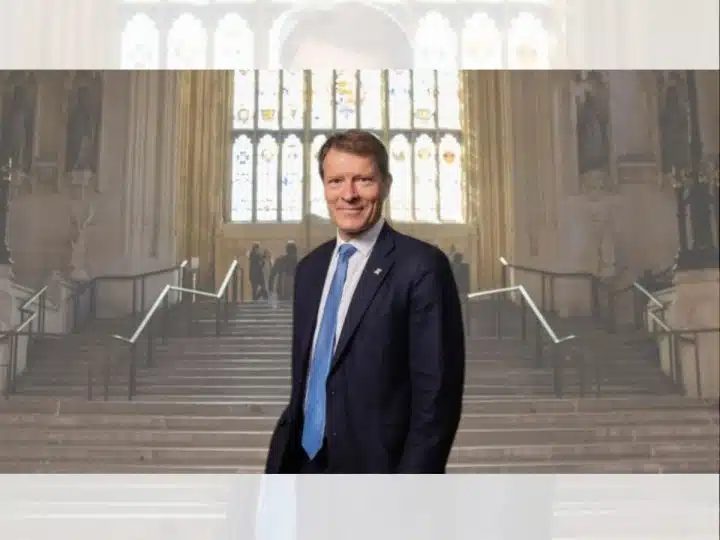

Richard Tice is the deputy of Reform UK, and do you know what really winds him up? The idea that people of faith might want to acknowledge and learn from the horrors of the past.
We’d like to say this is unexpected, but Tice was promoting an alleged human trafficker a few weeks ago, so it really isn’t.
Did you thank Jesus for giving great courage and vision to the British for abolishing the slave trade, spending vast amounts of money and sacrificing brave Royal Naval sailors in the process?
As a Christian, you don’t speak for me, nor millions of other Christians in the UK… https://t.co/21mO5eW5jf — Richard Tice MP
 (@TiceRichard) August 1, 2026
Richard Tice. Nickname: Mr Offended
In full, this is what Sarah Mullally, the Archbishop of Canterbury, said in her post:
Today I visited Cape Coast Castle. Seeing the horrific conditions that thousands of people were kept in, it is impossible not to feel the weight of the immense evil that drove the transatlantic slave trade.
I pray not only in lament for the Church’s involvement in the slave trade, but also for hope – hope that the God of healing can bring justice and reconciliation to all who are still impacted by its legacy.
In the name of Jesus Christ, who came to set people free, I pray that we have the courage to continue our journey of repentance, and to strive for a world in which all of God’s children are treated with dignity.
And this is how Tice responded:
Did you thank Jesus for giving great courage and vision to the British for abolishing the slave trade, spending vast amounts of money and sacrificing brave Royal Naval sailors in the process?
As a Christian, you don’t speak for me, nor millions of other Christians in the UK
Why should we donate to the Church of England for you to waste it on woke virtue signalling?
If you’re confused as to what Tice is so upset about, it’s presumably the idea that anyone should feel repentant about the past.
Guilt can be an unproductive emotion in that it encourages defensiveness, but Mullally clearly isn’t urging her followers to be overwhelmed by the feeling. In her message, she acknowledges the evils of the past, and argues that there’s hope to be taken from the journey society has taken, even though there is more yet to be done.
To some, this is the essence of Jesus’s teachings, in that it encompasses redemption, loving your neighbours, etc. For people like Tice, however, the essence of Christianity is moaning about literally everything, and mistrusting everyone outside your immediate family.
There’s so much hypocrisy in his reply
There’s a couple of other things to note about Tice’s response, starting with this:
Did you thank Jesus for giving great courage and vision to the British for abolishing the slave trade, spending vast amounts of money…
Speaking on how Britain ‘abolished’ the slave trade, Maddison Wheeldon wrote for the Canary:
Conveniently, Braverman makes no mention of what happened when the “abhorrent” slave trade and, later, slavery itself were abolished. It wasn’t the enslaved who were compensated – it was the slave owners. They received such vast sums to cover their supposed financial “losses” that the British government borrowed heavily to fund the payouts.
The debt from that borrowing was paid off by taxpayers for generations, with the final payments only being completed in 2015. Thus, ordinary people effectively spent almost two centuries paying to compensate slave owners, while enslaved people received nothing.
If nothing else, we should be aware of our past to prevent it happening again. Whether you feel guilt about the past is up to you, but if we don’t learn from our mistakes, we will have plenty to regret in the present.
As noted, Tice recently promoted a post from Andrew Tate, who has been charged with three counts of arranging or facilitating trafficking for sexual exploitation, alongside several other charges for unforgivable offences.
To align himself with someone like that suggests that Tice’s objections to the Archbishop stem from a lax attitude towards human rights and not her framing of the matter.
Reform’s downfall
As we’ve reported elsewhere, we’re not particularly optimistic Andy Burnham will change this country’s fortunes. At the same time, it is nice to see Reform sliding down the opinion polls.
Yet another opinion poll this week that puts Reform several points behind https://t.co/YIvAaUjJEg
— dave lawrence

 (@dave43law) August 1, 2026
Partially, this is down to the ‘Burnham bounce’. At the same time, it seems the more people see of Reform, they less they trust the party. And with posts like the above from Tice, it’s not hard to see why.
Featured image via Louise Haywood-Schiefer
By Willem Moore


Nigel Farage and Reform UK are facing multiple police and parliamentary investigations into various donations and benefits they’ve received. When it comes to the notorious £5 million ‘gift’, Farage’s defence has included the claim that he wasn’t involved in politics at the time. Now, a new scoop from the Times has blown Farage’s claim out of the water.
EXCLUSIVE
Nigel Farage struck secret deal for return as Reform leader months before election — challenging claim he wasn't involved in politics so didn't need to report gifts.
In May 24 he showed deal to treasurer, who tonight acknowledged its existence https://t.co/HkD5bKIw5d — Gabriel Pogrund (@Gabriel_Pogrund) August 1, 2026
Farage claimed crypto bro gave him funds
We previously reported the following on his £5m problem:
Farage accepted the £5m gift from Harborne – a crypto billionaire – in 2024. At the time, he’d said he wouldn’t run in the general election, but this changed after he received the £5m. The problem is that after he became an MP, he was supposed to declare any ‘registrable benefits’ from the previous 12 months. Farage did not declare the £5m, and now it looks like he was purposefully trying to hide it.
Since taking the £5 million, Farage has gone on to publicly support crypto, and as Reform Party UK Exposed noted:
Out of nowhere, Farage who previously was stating cash is king and despite claiming he was in to crypto in 2020 had not advocated publicly for it.
His only tweet with an opinion on it was in 2022 where he criticised Biden for taking donations from… a tech entrepreneur (Sam Bankman-Fried, jailed for wire fraud).
Then magically Reform UK produce a Cryptoassets and Digital Finance Bill, with no prior advocacy in May 2025. Reform UK then accepts donations in crypto.
This chain of events demonstrates why MPs are expected to declare money or donations they receive in the run-up to entering Parliament. Farage’s conversion to becoming a crypto-booster looks a lot different when you know about the gift. And now, the meager defence Farage had is being torn to shreds.
Reform leader shifts his stories
Farage previously excused not declaring the gift on the following basis:
At that period of my life, from 2021 to the third of June 2024, I was a broadcaster, I was someone that appeared on celebrity TV programmes, I was somebody that promoted some financial market products, but I was an influencer, I wasn’t in politics.
Now, new revelations published by the Times suggest he had agreed to return to politics by June 2024.
Nigel Farage struck a secret deal to return as leader of Reform UK months before the general election.
Farage negotiated the pact with Richard Tice, then the leader, in March and April 2024. George Cottrell, the convicted fraudster who had been secretly bankrolling Farage, supervised the discussions.
Reform has attempted to excuse the deal by saying it was “drafted for if, not when, Farage became leader”. As the Times has noted, however, Farage signed the agreement, which seems like an odd thing to do if he was undecided. Reform claims doing so “kept his options open”, which again, doesn’t seem to make sense.
The Times also revealed that this agreement saw Reform paying back Richard Tice several hundred thousand pounds. In the process of returning this money, however, the party accidentally sent a lump sum to Tice’s personal account instead of the relevant business account. This means the party gave false information to the Electoral Commission, which could be treated as a criminal offence.
He said he sought to address the erroneous £200k payment to Tice's account, but was blocked.
Reform sources say Tice transferred the money from his account to his company, effectively remedying the matter.
— Gabriel Pogrund (@Gabriel_Pogrund) August 1, 2026
Shot in the foot
While Farage is running the Clacton by-election, the parliamentary investigation into him is paused. This could end up working against him because the longer the pause is, the more investigators may uncover.
Featured image via Andrew Crowley
By Willem Moore

Phil Collins, 75, reveals his kids were summoned to say final goodbyes after alcohol battle left him near death – yet says he ‘didn’t know he had a problem’ despite ‘drinking wine for breakfast’
Japan confirms joint FX intervention with U.S., says won’t hesitate for more

XRP ETFs Keep Drawing Cash, So Why Is the Price Down 40%?


-

 Business4 days ago
Why Trees Belong on the Risk Register
-

 Fashion2 days ago
Weekend Open Thread: Wit & Wisdom
-

 Tech7 days ago
Intel is reversing course and bringing hyper-threading back to its server chips
-

 Politics2 days ago
Meta enters AI-training agreement with far-right ‘propaganda rag’ Newsmax
-

 Politics7 days ago
Luke Littler dismantles Gerwyn Price to retain title in Blackpool
-

 Crypto World1 day ago
MicroStrategy Post-Earnings CLARITY Act Push Could Add New Catalyst for Its Stock
-

 Politics6 days ago
The Part of the Electric Transition Nobody Wants to Discuss
-
 Entertainment5 days ago
‘Stargate’ Creator’s New Sci-Fi Series Returns for Season 3 Tomorrow
-

 Business5 days ago
Major shareholder moves on Canyon
-

 News Videos3 days ago
Bitcoin Enters the 3rd Stage of the Bear Market
-

 Crypto World2 days ago
XRP Ledger v3.3.0 brings five institutional features
-

 Crypto World5 days ago
Kraken Enables Retail Access to Jersey Mike’s IPO via Tokenized Shares
-

 Tech6 days ago
New macOS Sequoia & Sonoma security updates for older Macs
-

 News Videos5 days ago
Claude: Build Financial Dashboards in Minutes (2026)
-

 Politics3 days ago
Luke Littler’s dominance sparks GOAT debate
-

 Business5 days ago
Johnson & Johnson agrees to $5.5B settlement over talc cancer claims
-

 Sports3 days ago
Seema Kaliramna Wins Discus Throw Bronze, Takes India’s CWG Medals Tally To 17
-

 Crypto World14 hours ago
Crypto PAC spending tops $2M in Michigan House race
-

 Tech4 days ago
Gemini can now summarize the messiest comment threads in Google Docs
-

 Business2 days ago
Trump Announces Hamas Disarmament Agreement as Iran Strikes Kuwait Air Base and US Attacks Pause Overnight
You must be logged in to post a comment Login