
Politics
Politics Home Article | 2.64 million animal tests in Great Britain in 2024



Meagre decrease highlights urgent need for the government’s phase-out strategy
Cruelty Free International acknowledges the slight decrease in animal testing in Great Britain, as reported by the Home Office today,1 but warns that the pace of change remains so painfully slow that cruel animal testing looks set to continue for decades to come.
There were 2,637,578 uses of animals in laboratories in Great Britain in 2024. This incremental progress, a meagre 2% decrease from 2023, is not enough to meet public expectations or scientific potential, and leaves the government at risk of falling short in its manifesto commitment to work to phase out animal testing.
Cruelty Free International reiterates its call for the government to publish a bold, ambitious and deliverable strategy to phase out animal testing, ensuring it is:
- Bold and ambitious, with a clear vision for ending tests on animals in this country;
- Concrete, with specific targets and timelines;
- Action-oriented, delivering tangible policy measures and regulatory reform;
- Led from the top, with ministerial accountability and departmental coordination through a cross-government taskforce;
- Collaborative, engaging civil society, NGOs, academia, and industry to boost innovation and reduce the number of tests on animals;
- Forward-looking, defending existing protections and building on initiatives already underway both inside and outside of government;
- Well-funded, providing long-term funding for education and training, replacement-focused research to meet evolving regulatory needs, and investment in the further development of centres of excellence.
The number of animals used in experimental procedures fell by 3% in 2024, to 1.43 million. There was virtually no change in the creation and breeding of genetically altered animals – those whose genes have been modified but have not then been used in further tests. This accounted for 54% of all uses (1,430,020).
Animals used in regulatory testing, including the standardised tests designed to assess the safety or effectiveness of chemicals, medicines and other products and routine production, using animals to produce things like antibodies, accounted for 22% of the total (315,290), a 3% increase on 2023.
Basic research, curiosity-driven research that attempts to shed light on biological processes, accounted for 52% of the total number of animals used in experiments (741,555), a 4% decrease on last year; translational research, research that attempts to develop treatments or cures for diseases, 24% (339,673, an 8% decrease); and other areas of animal use, including higher education, species preservation and protection of the environment , 2% (33,502, an increase of 36% on 2023).
Of the 2.64 million uses of animals in 2024, 18.5% were considered by researchers to have caused moderate or severe pain and suffering to the animals involved, including long-term disease and even death. These two categories involved a total of 488,255 animals.
The total number of experiments on dogs fell by 30%, to 2,646. There was an 11% decrease in experiments on monkeys, to 1,936, a 31% decrease in the use of rabbits, to 6,195, and a 28% decrease in the use of guinea pigs, to 2,698. However, there was a 30% increase in experiments on cats, to 82, and a 1% rise in the use of horses, to 11,483.
Mice and rats continued to be the most frequently used animals in scientific procedures, with 1,869,064 mice and 150,221 rats used in 2024.
The statistics also show that, despite progress in some areas, the full elimination of increasingly outdated tests is yet to be achieved and, in fact, an increase for some tests has been observed for 2024. Cruelty Free International’s Replace Animal Tests (RAT) List2 describes animal tests that are conducted in Britain despite having approved non-animal replacements and whose abolition could save over 80,000 animals every year. This list includes the batch potency testing of Botox on mice, which rose by 5% to 52,213 in 2024. The number of eye irritation and corrosion tests fell to three, from seven in 2023; skin sensitisation tests on mice decreased by 50% to 148; and skin irritation and corrosion fell to zero from three in 2023.
The number of uses of animals in the testing of chemicals, including ingredients used in everyday consumer products, rose by 33% in 2024, to 59,814. Other sectors which used animals included the testing of human medicines (148,694), veterinary medicines (84,046), plant protection products, such as pesticides (11,756) and tests for food production (9,971). There were no animals used in the testing of ingredients exclusively used in cosmetics products in 2024.
Dr Emma Grange, Cruelty Free International’s Director of Science and Regulatory Affairs, said: “With 2.64 million uses of animals in British laboratories in 2024, the rate of decline remains painfully slow. We hope that the government’s commitment on a strategy for the phase-out of animal testing in Great Britain means that this is one of the last years where the use of animals is anywhere near this level. The general public are ready for animal testing to end, and science is ready to make the transition – now there must be action to ensure that animal testing does not continue for decades to come.
“We need bold, forward-thinking policies which can begin to free us from the use of outdated experiments on animals, to the benefit of all, including the animals used in tests. The focus must now be on plans to end animal testing and the transition to exclusive use of non-animal approaches, some of which have already been shown to perform at least as well, or better, than tests on animals. The government must make good on its promise to partner with scientists, industry, and civil society to proactively contribute to the progression away from animal testing. Any cruel animal test is one too many and we will continue to fight for zero animal experiments in Great Britain.”
-
The full report can be viewed at https://www.gov.uk/government/statistics/scientific-procedures-on-living-animals-great-britain-2024

The elections on 7th May could turn out to be seismic in their political consequences. They’re a mix of parliamentary elections in both Scotland and Wales, as well as in local councils and mayoralties all over England. In Scotland the conventional wisdom is that the SNP will win with Reform UK pipping Labour into second place. In Wales, Labour is expected to lose power for the first time ever, with Reform UK pipping Labour into second place and Plaid Cymru topping the polls. In England the main speculation is how badly Labour will lose, and will there be a subsequent leadership crisis. Both Reform UK and the Greens are expected to make spectacular gains, the with Conservatives not only failing to make many gains, but losing yet more seats. The polls show the LibDems languishing, but they always outperform the polls in local elections, so they will make gains in both councillors and councils that they control.
Tomorrow night at 7pm, I have the LibDem leader Sir Ed Davey on the show for an hour long-phone-in. There could also be consequences for his leadership, if things don’t go to plan. Some of his MPs don’t see a strategy and complain that there is no strategy coming from the centre. He will point to the fact that they were all elected under his leadership. MPs never look back, though. They always look forward and their thoughts are dominated by the prospects of re-election. And the fact is, many of those who won their seats in the south and south-west know that many of them only won because Reform took so many votes away from the Conservatives, rather than because of any massive increase in the LibDem vote. Now in theory, history may repeat itself, but with our politics so fluid at the moment, LibDem MPs would rather have a positive offering to the electorate rather than repeat the stuntfest of 2024. Tune in tomorrow at 7!
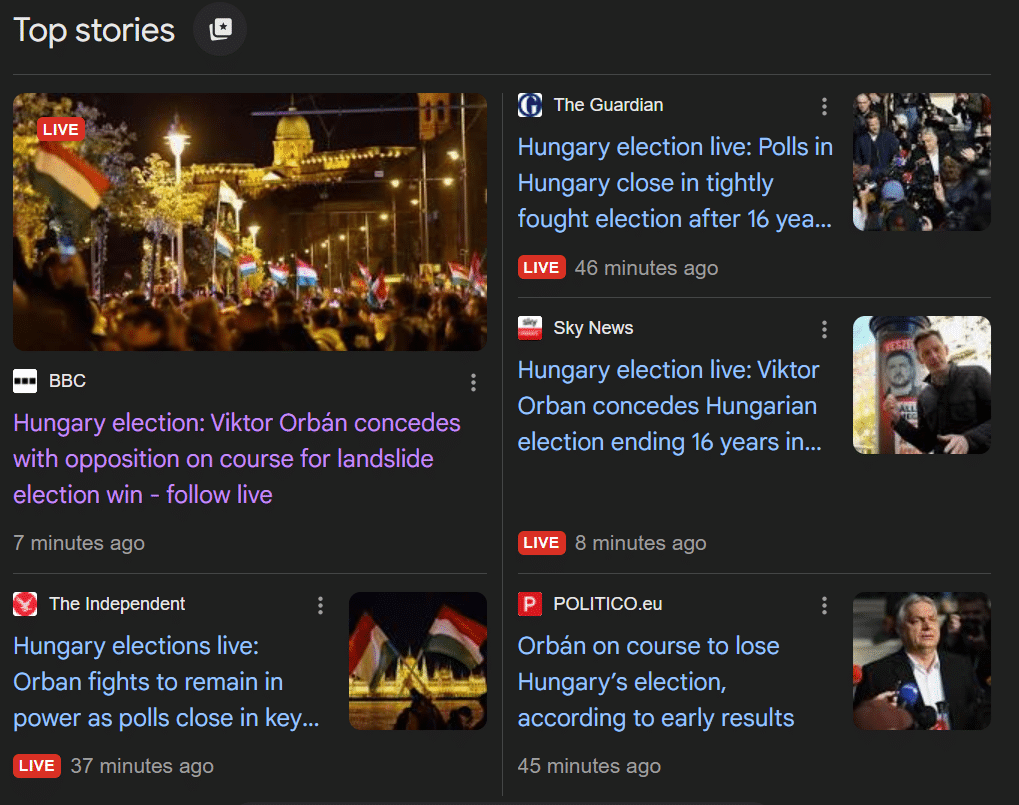
Right-wing extremist – and antisemitic friend of Israel – Viktor Orbán has conceded the Hungarian general election. With two-thirds of the vote counted, his right-wing rival Péter Magyar is on course for what the BBC describes as a “landslide” victory.
Hungarian elections: two cheeks… etc etc
The sudden concession has thrown UK state-corporate media into a spin, with some announcing it and the landslide while others, at the time of writing, say it’s still being fought and is close:

As the careful reader will have noted, both men are right-wingers. Quite hard right-wingers. But while Orbán is EU-phobic, Magyar has promised closer ties with the union. However, Magyar is not expected to change Hungary’s defence of Israel against any stray EU anti-genocide measures in any significant way.
Great. Another rigged ‘two cheeks of the same arse’ result while Israel continues to slaughter and destabilise.
Featured image via the Canary


9 min read
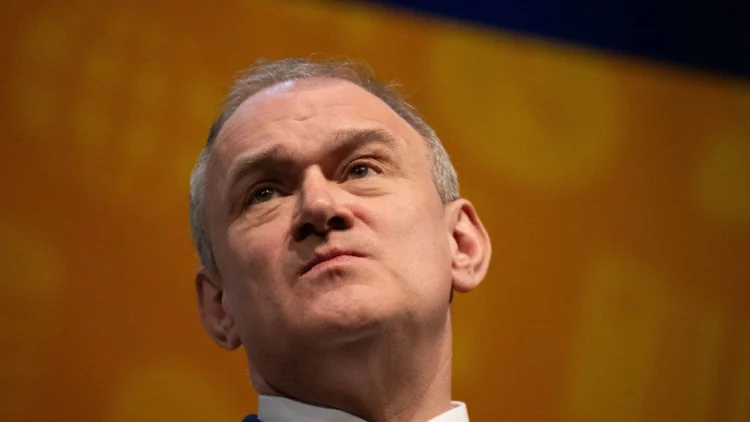
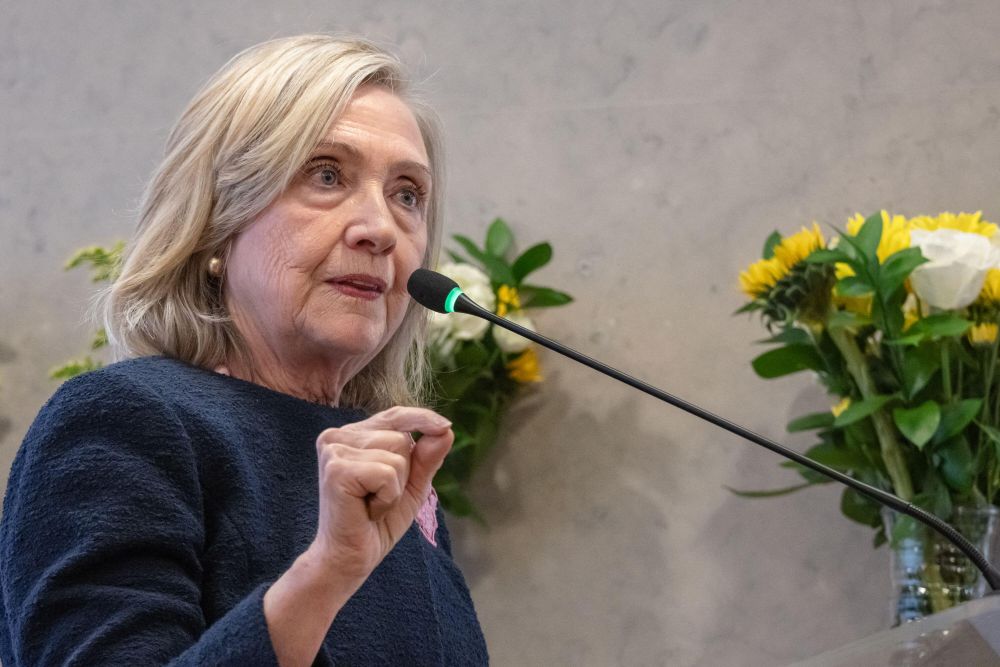
Former US presidential candidate Hillary Clinton privately urged Liberal Democrat leader Ed Davey to “stand up to bullies” like Reform UK during a recent visit to London.
In an interview with PoliticsHome ahead of the 7 May local elections, Davey revealed that he had a “long chat” with the former US secretary of state when she spoke at a business reception in the capital late last year.
“We talked about how we need to fight Reform in the way they need to fight Donald Trump, and she gave me some choice advice, which I’m not going to repeat because that would be unfair on her,” he said.
When pressed, he added: “She said you have to be very strong and stand up to bullies and don’t cave in and cosy up to them. She didn’t say she was criticising Keir Starmer, but I think the approach we [the Lib Dems] have taken, and the approach that someone like the Liberal Prime Minister of Canada, Mark Carney, has taken, is the sort of approach she will endorse.”
He described Clinton as “very friendly and very warm”: “You could tell that she realised that we had shared values.”
Davey sat down with PoliticsHome a month out from voters going to the polls for highly-anticipated elections in Scotland, Wales and council areas across England.
Ahead of those elections, the Lib Dems have sought to frame themselves as part of the broader pushback against the rise of the populist right, taking strong positions against Trump and his actions in Iran, and calling on King Charles and Queen Camilla’s planned visit to the US to be cancelled over the US president’s treatment of the UK.
Speaking at the party’s local election campaign launch in Birmingham on Friday, Davey accused Nigel Farage’s Reform of “importing the divisive, nasty politics of Donald Trump into the UK”, adding: “This does not sit well with British values.”
The Lib Dem leader said he hopes that the Democratic Party defeats the Republicans in the US midterm elections in November, and while he joked that his party was “pretty busy in the UK at the moment”, he said they do have a “good relationship with a lot of Democrats”.
“We’ve helped Democrat politicians in the past,” he said.
“They have a good relationship with our party. We had a good relationship with a few Republicans, but I’m afraid lots of Republicans from that great party have now backed the MAGA movement and now support Donald Trump and some of his nasty, divisive, damaging policies.”
As well as Canadian Prime Minister Carney, Davey praised the “strong leadership” of Spanish Prime Minister Pedro Sánchez, who on Wednesday issued a thinly veiled swipe at the Trump administration by saying Spain “will not applaud those who set the world on fire just because they show up with a bucket”.
With Trump continuing to be a deeply unpopular figure in the UK, Davey hopes that his party’s opposition to the US president will boost Lib Dem prospects on 7 May.
Last month, The Spectator obtained internal plans revealing a belief among Lib Dem strategists that their position on the Iran war will pay dividends at those elections, with a memo reading: “For the first time since the Iraq war… we have a chance to turn a distinctive and principled Liberal Democrat position on foreign affairs into significant election gains.”
However, despite leading the Liberal Democrats to their best general election result two years ago, Davey is heading next month’s locals under pressure from restless Lib Dem MPs who complain that the party is drifting and failing to capitalise on the 2024 success.
The polls are the polls, but the elections are the elections
Most opinion polls show that the Lib Dems have hovered around 12 per cent of the national vote since the 2024 general election, with no significant increase.
Last month, PoliticsHome reported concern within the party that a handful of Lib Dem MPs could be tempted to join Zack Polanski’s surging Greens.
“I’m restless like they are… I share their restlessness,” Davey told PoliticsHome, while stressing that his MPs and the party “work really well together”.
However, in a bid to face down his critics, the Lib Dem leader pointed to his electoral record.
“The polls are the polls, but the elections are the elections,” he told PoliticsHome.
“Winning elections is what we’ve done under my leadership. If we make net gains in May, it will be the eighth year in a row we’ve made net gains, the sixth under my leadership. It’s never happened before. That’s a continual increase, year on year.
“This year we could well beat Labour and the Tories for the number of councillors we elect for the second year in a row, and it’s never happened previously.”
He insisted that the Lib Dems are “still the most united parliamentary party” despite recent negative briefings.
“Labour could have a leadership election after May, the Tories could. They’re certainly losing MPs to Reform, and then Reform is losing those MPs on the other side. We haven’t, we won’t, and we will work really well together. I am determined to lead us into the next election and show that we have the ideas for our country,” he said.
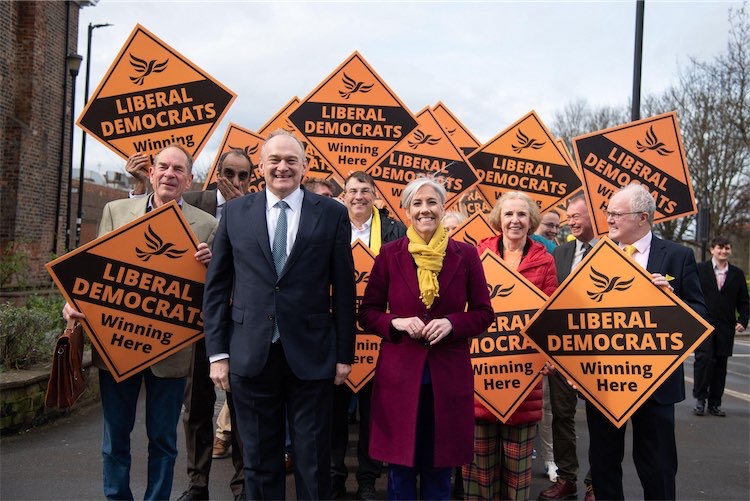
One complaint among uneasy Lib Dems is that the party currently lacks a clear identity and target audience, having spent recent years focusing its electoral strategy on former Conservative voters in the south of England.
According to Davey, the party now has an opportunity to pick up former Green supporters who care deeply about the environment but are not as left-wing as the party’s self-described eco-populist leader, Zack Polanski.
“You’re going to see a fracturing of the Green Party in the sense that there’s a lot of the former Greens before this Corbynista push, who were much more middle of the road,” he said.
“Their focus was on the environment… The stuff that they [the Greens] are now talking about, they don’t really buy… they don’t like what they’re seeing.”
The discussion heading into 7 May has been dominated by the rise of the Greens and Reform, and their threat to the historic two-party dominance of Labour and the Conservatives.
However, the Lib Dems are hopeful of making gains across the country next month, including in East and West Surrey, Hampshire, Portsmouth, and some areas in the north of England, such as Stockport and Newcastle.
Asked what distinct message the Lib Dems are offering to voters, Davey told PoliticsHome they were positioning themselves as “local champions” who will fix church roofs – a deliberate echo of Conservative leader Kemi Badenoch, who mockingly described a Lib Dem “somebody who is good at fixing their church roof” last year.
At the campaign launch on Friday, PoliticsHome spoke to Lib Dem councillors and candidates who felt that while it was unlikely they – or any party – would win outright control of Birmingham Council, the Lib Dems could be left in a good position to play a “leading role” in the administration after the elections.
The question of who Davey would be prepared to work with could be one he faces increasingly in the future, as the fragmentation of UK politics into a multi-party system shows no signs of going away.
Davey was clear that his party has ruled out working with Reform, and the leader of the Scottish Liberal Democrats, Alex Cole-Hamilton, has ruled out entering a coalition with the Scottish National Party (SNP).
However, the party has not ruled out a coalition with Labour, the Green Party, independent candidates, or Plaid Cymru in Wales. Jane Dodds, the leader of the Welsh Liberal Democrats and the only Lib Dem member of the Senedd, said this week that the Lib Dems would only work with Plaid Cymru if they “confirm that they will not spend a penny of government money on independence”.
Asked whether his party might enter an agreement with the Welsh nationalist party, Davey said he had not spoken to Dodds about it yet.
“I’d be really surprised, given our opposition to independence,” he said.
“You would have to speak to Alex Cole-Hamilton and Jane Dodds, because they will run those negotiations. They’re devolved administrations.”
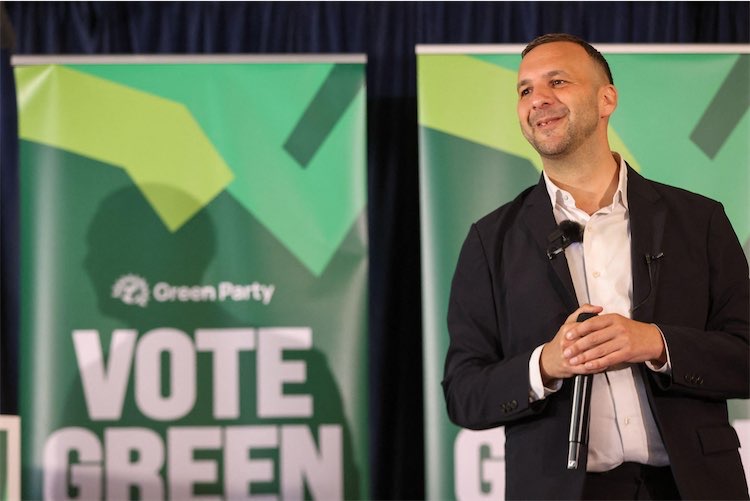
Liberal Democrat MP Roz Savage told The House magazine in March that the party “needs a plan” for a coalition scenario after the next general election, having been “badly burned” by their experience sharing power with David Cameron’s Conservatives.
Asked whether any resulting coalitions from the May elections could provide test cases for where Lib Dems could work with other parties after a general election, Davey said: “Good question, but I am very focused on the local elections and the next general election, maximising Liberal Democrat victories.”
The challenge for Davey and his party, however, is that the 7 May elections are so unpredictable that they are struggling to predict where they might make the strongest gains.
“It’s complicated, because you’ve got the two old parties’ votes collapsing,” the former cabinet minister said.
“Where we’re strong, we’re big beneficiaries of that, but then there’s Reform coming in… And so we’re finding it quite difficult to read the canvassing, because the Reform vote is a little bit shy.”
Davey suggested the Lib Dems could cause “a bit of a surprise” in Birmingham, pointing to the fact that his party are fielding an expanded list of 101 candidates in the city and describing local campaigners as having “really gone for it”.
In the bid for attention in an increasingly fragmented political landscape, Davey intends to continue carrying out publicity stunts for the cameras. Most recently, he was pictured playing chess with Hull City Council leader Mike Ross at the Hull campaign launch last week.
Davey – similarly to Chancellor Rachel Reeves – played chess competitively until he was about 12 years old, though he said he would “not put myself up as a great chess player” anymore.
“Playing the long game, that’s the key thing in chess,” he said.
“You play all your moves, you don’t get worried if you make a sacrifice here, you work out where you’re going to go.”

The post Why Bonnie Blue is good for feminism, with Zoe Strimpel appeared first on spiked.
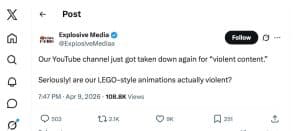
The YouTube platform has (again) removed the account of Explosive Media, the makers of Iran’s ‘Lego’-style and intensely viral propaganda videos mocking Donald Trump, Benjamin Netanyahu and their failures.
Explosive Media announced the ban on X:

The group’s accounts on X, UpScrolled, Instagram and other platforms are so far unaffected. Explosive Media marked the occasion by releasing a new video, Loser 2 — described as a ‘banger’ — mocking Trump’s endless lies, his loss to Iran in his and Israel’s illegal war and his guilt in the crimes of serial child-rapist and Israeli spy Jeffrey Epstein. It also directly refers to Trump being behind the ban:
Iranians just published the new very banger LEGO AI movie that Trump almost wants to put onto agreement list to stop them.
Do whatever you need to do but don’t let Trump watch this 😭🤣😂 pic.twitter.com/y66Mr7Yadk
— Furkan Gözükara (@FurkanGozukara) April 11, 2026
Featured image via the Canary
Reform — There’s a genre of horny older men who don’t seem to understand that the internet is a place others inhabit — a place where people can see what they’re up to. These men often use their actual faces as their profile pictures; probably because they lack the wherewithal to realise they could not do that.
Despite their real names and faces being visible, these men will pepper sex workers with messages like ‘very big boobs‘ and ‘Yes I would love to have some fun‘.
When you see these wretched individuals online, you think to yourself ‘what on Earth do these people do in the real world‘? In the case of Stephen Hammond, the answer is ‘run to be a Reform UK councillor‘:
Married man too, tut tut.
— Reform Party UK Exposed 🇬🇧 (@reformexposed) April 11, 2026
Reform — Aroused ignoramus
If you can’t open the images above, know that Hammond was replying to a woman in her underwear who was asking:
Does this help you love me more
Hammond responded:
Yes I would love to have some fun
He’s not having fun now, clearly, as he’s deleted his Threads account.
From that same account, Hammond recently posted:
Hi all friends and family, just a quick note to inform you that I am now running for Councillor with the Reform UK party at the Holmewood and Brierly ward in Bradford district, we will be out and about in the ward very soon, and looking to get Labour out of the Bradford Council so we can start putting the good, if you are in the Ward please look out for us we will be only to [sic] glad to listen to any problems and try to solve them the best we can.
Good god, Stephen, are they rationing full stops in Bradford? No wonder you want to get rid of Labour if they are!
Punctuation aside, the above post reveals that Hammond uses his “friends and family” account for horny posting.
This is not good.
As reprehensible as many UK politicians are, they do at least have the self-preservation instincts needed to indulge themselves behind closed doors.
We’re not sure we want to live in a country in which public services are run by people with zero common sense and minus zero impulse control.
It gets worse
The good people at Reform Party UK Exposed posted some of Hammond’s other posts:

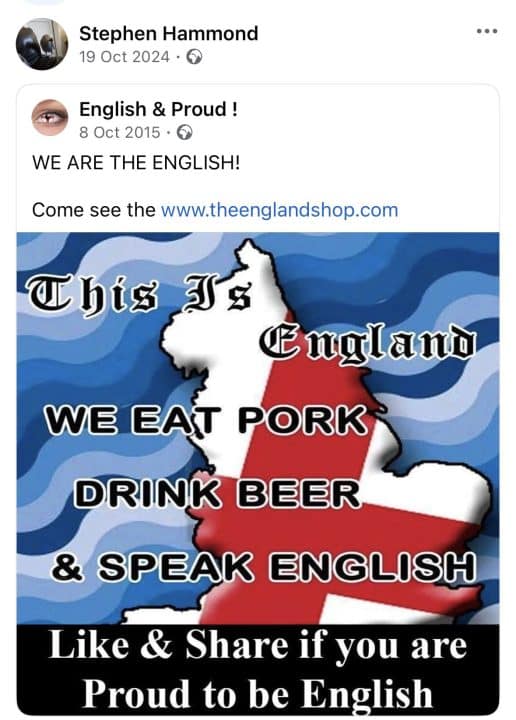
You know a culture is thriving when your list of things to be proud of includes ‘speak our own language‘.
Not to tell these dipshits how to make their rancid memes, but they should probably replace ‘pork’ with ‘bacon’. English people have never made a big deal out of eating pork; they’re just saying this because they think it will upset Muslims.
Your culture isn’t doing well when you do things to upset others rather than to enrich your own spirit!
Hammond also believed this eyesore of a meme “keeps getting deleted from the internet”:

According to Hammond, “genocide” is when someone moves into your area and opens a shop.
Also, remember in the last meme when Hammond was proud to “speak English”? Well now he’s worrying about “FOREIGN HOARDS”.
You mean “FOREIGN HORDES”, dipshit.
Aren’t you a ‘learn the language or get out‘ guy?
Further proving Hammond can’t speak the language he’s proud to speak:
 We’d stick to the pork and beer if we were you, Stephen.
Local erections
Hammond is far from the only unseemly candidate that Reform have lined up for the local elections:
We keep thinking Reform can’t top themselves, and yet every day the candidates just get worse and worse.
Featured image via Stephen Hammond
Jolyon Maugham’s Good Law Project has lodged a complaint with the Information Commissioner about the gender-critical organisation, Protect and Teach, accusing it of failing to disclose ‘who they are or how they’re handling people’s data’. ‘If a group won’t say who they are’, the Good Law Project asserts, ‘it raises a vital question: what are they trying to hide? If your views are so toxic you won’t put your name to them, then maybe you shouldn’t be saying them at all.’
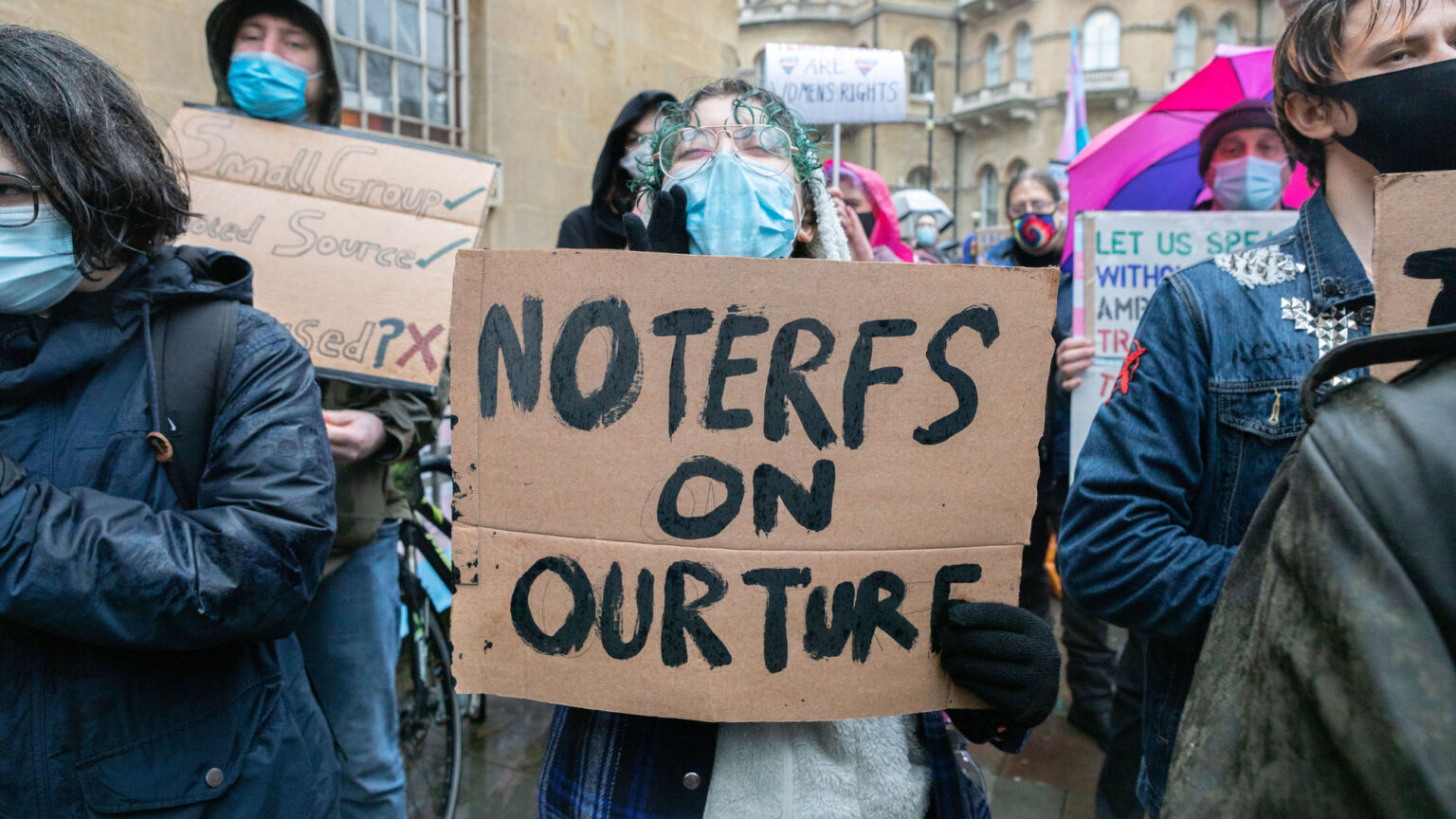
True or not, these pettifogging legal gripes entirely miss the point. The fact is that campaigners are concealing their identities not because of the supposed ‘toxicity’ of their beliefs, but because they are concerned about their safety and that of their families. For gender-critical feminists, speaking in public has become a very dangerous business.
The first hints of the current wave of violence began last year. Following the landmark judgment in For Women Scotland Ltd vs The Scottish Ministers, in which the Supreme Court confirmed that ‘sex’ in the Equality Act refers to biological sex, the women behind the campaign reported being inundated with death threats and misogynistic abuse. They also described the damage their views had caused to their employment and business interests.
Trans activists soon turned their attention to officials. The then chairwoman of the Equality and Human Rights Commission (EHRC), Baroness Falkner, told parliament’s Women and Equalities Committee that she had been forced to cancel a meeting after police warned of a ‘serious risk’ of violence. Trans activists had made it harder for her staff to come to work in safety, she told MPs, adding: ‘The level of agitation that they can cause in terms of personal attacks, libellous attacks, defamation, where our family members are affected – our intimate family members have to think about how they’re going about to their place of work – has got to stop.’
You don’t even have to be a gender-critical feminist to risk the wrath of activists. Sally Dunsmore, the director of the Oxford Literary Festival, last year dared to programme a discussion between gender-critical writers Julie Bindel and Helen Joyce. Several guests, including an Oxford lecturer in English, pulled out, while other activists threatened Dunsmore directly, telling her she would be ‘put in a box and burnt’.
Now, those threats are taking on a more explicitly criminal and violent form. A militant trans-activist group known as Bash Back has issued a ‘direct action’ guide urging members to identify ‘transphobic’ targets – including MPs – and ensure they are ‘hit repeatedly until they desist’ from their ‘transphobic’ activities. The guide admits Bash Back’s campaigning would be ‘rarely legal’, and warns participants that they could face charges including criminal damage, possession of an offensive weapon and aggravated trespass. An equipment section lists items such as a hammer and advises activists to clean tools with alcohol or dispose of them after use in ‘unsurveilled residential bins’.
They’re not mucking around. Bash Back has already claimed responsibility for attacks on the constituency office of health secretary Wes Streeting, and for hacking the website of the Free Speech Union. It also targeted the offices of the EHRC last year, smashing windows and spraying the building with pink paint.
Despite Maugham’s supposed opposition to ‘toxic’ attitudes, his own response to Bash Back’s activities was favourable. He described this campaign of violence and intimidation as ‘the inevitable, and I would say legitimate’ response to a society whose ‘politics and media systematically dehumanise trans people’.
Maugham’s hypocrisy highlights what has become a familiar defence of trans activism. Allowing a gender-critical feminist to speak is cast as an act of both real and symbolic violence, where every dissenting utterance becomes an attack on vulnerable gender-confused children. Like Maugham, they claim that the clock’s already struck midnight, and there’s no time for the weary conventions of civility, tolerance or open debate.
On campus, where the sort of people Bash Back is now urging activists to target are very often to be found, the implications of this rhetoric have already been severe. At the Committee for Academic Freedom, we regularly deal with cases involving gender-critical academics who are reluctant to take their concerns public for fear of reprisals.
This is reinforced by the government-commissioned review of data, statistics and research on sex and gender, led by Professor Alice Sullivan and published in 2024. It recorded not merely isolated complaints, but also a broader chilling effect: gender-critical academics describe moderating how they frame arguments, avoiding open discussion, narrowing what they were prepared to teach or research, and hesitating to pursue work touching on biological sex for fear of complaints, ostracism, managerial disapproval or damage to their careers.
If direct threats of violence are now being added to this already hostile climate, the reluctance to attach one’s name to advocacy concerning the importance of biological sex – or to pursue research on that topic, organise conferences, supervise PhDs or teach on it at all – begins to look less like evasion and more like self-defence.
The Good Law Project is free to campaign as it wishes, but it should at least be honest about where the ‘toxic’ climate it bemoans is actually coming from.
Freddie Attenborough is director of research for the Committee for Academic Freedom.
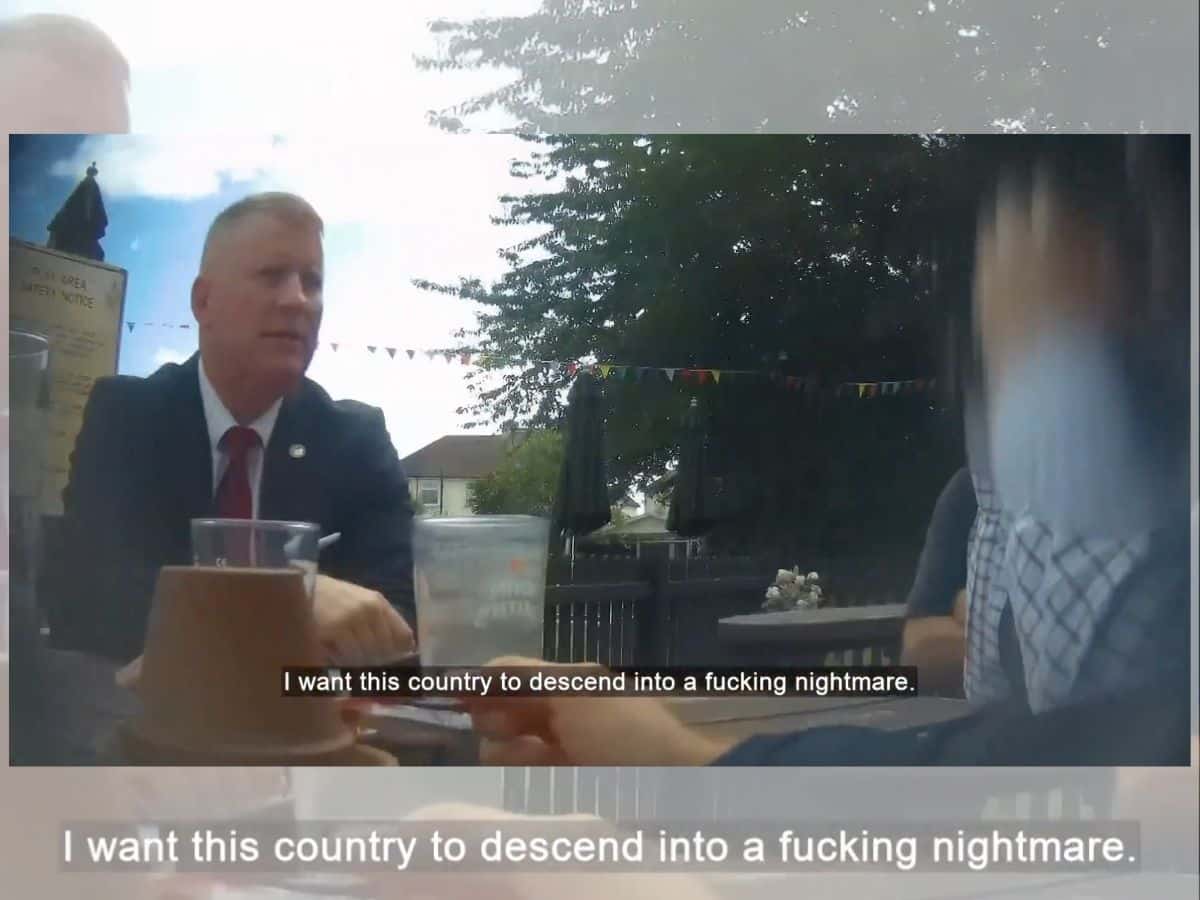
Britain First — The British far-right try to present themselves as the antidote to what they would have you believe is the sickness of multiculturalism. In reality, they’re a bunch of sad and angry people who desperately want the world to reflect their own self-loathing.
Never has this been more obvious than in the following clip:
🇬🇧 Far right extremist Paul Golding exposed in a secret recording:
“I want this country to become a shithole. I want this country to descend into a fucking nightmare”
They don’t care about the country. They thrive off discord. pic.twitter.com/N0Sb9yvq33
— smile2jannah (@smile2jannah) April 12, 2026
Nightmare
The man in the video about is Paul Golding, the leader of Britain First. As Hope not Hate documented:
Golding first emerged into prominence in 1999 as a teenage member of the fascist British National Party (BNP), and was quickly appointed editor of the youth publication Excalibur. Given the title of Director of Publicity, Golding also briefly took the reins of the BNP’s flagship magazine, Identity, having established a close relationship with then-leader Nick Griffin.
Additionally:
In Belfast, Golding helped [Jim Dowson – far-right fundraiser] launch Britain First, returning to England in 2013 in the hopes of building links with the English Defence League and various splinters. Now at the helm of a confrontational new vehicle, Golding quickly gained notoriety for his extreme worldview, relentless fear-mongering and inflammatory actions, leading Britain First’s “patrols” and attempts to intimidate opponents. Examples include threatening to bury a pig at the site of a planned mosque in Dudley in order to “contaminate” the land and prevent its construction.
For some reason, Western fascists think Muslims are vulnerable to pigs in the same way that vampires are sensitive to garlic.
Well, we say ‘for some reason’ — we know what the reason is — it’s because they’re thick.
Hope not Hate added:
Branded a “narcissist” by a prominent former member, Golding’s temperament and tactics have been at the centre of many rifts within the group, including with Dowson, who quit the group in 2014, describing Golding’s “mosque invasions” as “provocative and counterproductive”, as well as “unacceptable and unchristian”.
To be fair, Jesus did cause a ruckus in a temple; it’s just he was going after money lenders — not everyday worshippers.
The British nightmare
In the undercover recording of Golding, he’s caught saying:
In ten years, society is going to be violent and horrific – a horrific place.
I’m not interested in appealing to the masses right now.
The moment that we’re waiting for is fast approaching.
I want this country to become a shithole.
I want this country to descend into a fucking nightmare.
Because that’s the only thing that’s going to get people off their backsides.
As is obvious from his other activities, Golding recognises that Britain isn’t a nightmare now, so he’s trying to turn it into one.
Basically, he’s like every other fascist in history.
No doubt because he knows he can’t function in a normal, caring society — only one in which cruelty is the default.
Britain First — ‘The fear’
Showing what kind of a man Golding is, Hope not Hate also reported the following about Golding:
Golding, who for a time was in a relationship with the now-former Deputy Leader Jayda Fransen, was recorded in December 2015 admitting to having violently attacked her, as well as another woman. Fransen told the BBC in 2019 that the abuse went on for five years, and “didn’t take long to start” after she joined Britain First in 2014. She said: “There were incidents that could have gone so badly wrong. I could have ended up really hurt or worse. I guess that is where the fear came in because I thought I am going to end up dead”.
Clearly, it’s Golding himself who’s the “fucking nightmare”.
Featured image via undercover recording

Several South Korean government officials have called out Israel on social media, urging it to break free from the “chain of hatred” and the “memory of victimhood”. Basically, South Korea found a professional way to tell Israel to stop playing the victim.
The first statement came from Lee Jae Myung, the President of the Republic of Korea. It was in response to a video in which an Israeli soldier threw a Palestinian man off a roof. He stated:
I need to look into whether this is true, and if so, what measures have been taken.
The forced comfort women issue that we are raising is no different from the Jewish massacre or wartime killings.
In response, the Israeli Foreign Ministry issued a statement.
The remarks by the President of Korea, Lee Jae Myung, including the trivialization of the massacre of Jews on the eve of Holocaust Remembrance Day in Israel, are unacceptable and warrant strong condemnation.
President Lee Jae Myung, for some strange reason, chose to dig up a… https://t.co/sQzisQGxa5
— Israel Foreign Ministry (@IsraelMFA) April 10, 2026
It stated:
including the trivialization of the massacre of Jews on the eve of Holocaust Remembrance Day in Israel, are unacceptable and warrant strong condemnation.
Israel wants to keep bringing up the Holocaust while committing another one. At what point does the world realise it’s just an excuse?
And why are Palestinian lives, or Korean lives, worth less than the lives of Israelis?
The President of South Korea said a video of the IOF tossing a Palestinian child off of a roof reminded him of Japanese crimes against Koreans during colonialism and the Holocaust
israel says this “trivializes” the Holocaust. As if Koreans and Palestinians are inherently cheaper https://t.co/IcEX2cTBWD
— 박주현 (@hermit_hwarang) April 10, 2026
Israel is like the abusive man who refuses to go to therapy for his own childhood abuse. Your pain is not an excuse to cause more pain.
The account also claimed the video was fake. It wasn’t. Israel should know that tactic doesn’t work anymore.
The incident happened in 2024 in the West Bank. At least two other soldiers stood and watched.
Unsurprisingly, the statement also brings up Hezbollah and Hamas, and labels them ‘terrorists’. But from where I’m standing, the only terrorists are the US and Israel.
South Korea condemns indiscriminate killings
In response, Choo Mi-ae, the first female leader of South Korea’s Democratic Party, also put out a statement.
She pointed out the forced enslavement and sexual abuse by the Imperial Japanese Army during World War Two, along with the imprisonment, massacres, live burials in mines and military bases, chemical and biological experiments, and the Kantō earthquake massacre.
Essentially, she listed all the reasons that South Korea could be using to justify playing the victim and committing genocide. The difference, though? It isn’t.
She ended with:
No matter how much it is Israel, I strongly support President Lee Jae-myung for sending the message that indiscriminately killing civilians is wrong from a human rights perspective.
Are world leaders finally growing a backbone?
Of course, killing civilians is wrong from pretty much every perspective — unless you’re a genocidal war criminal.
Victimhood
Finally, Park Hong-geun, Minister of Planning and Budget, called on Israel to:
break free as soon as possible from the chain of hatred where the memory of victimhood leads to further perpetration
He then took a dig at Israel’s lack of universal human rights:
The Ministry of Economy and Finance will, in designing the future of the Republic of Korea, prioritize the people’s livelihood and national interests as core values, while never losing sight of universal human rights as the foundation of human civilization.
Of course, it’s rare for a US ally to stand up to Israel.
Wow, that’s extremely rare for a U.S. treaty ally.
South Korea’s president, addressing Israel: “It’s disappointing that you don’t even once reflect on the criticisms from people around the world who are suffering and struggling due to your relentless anti-human rights and… https://t.co/g16kNSNdC0
— Arnaud Bertrand (@RnaudBertrand) April 11, 2026
But really, far more world leaders should be saying the same thing.
More European leaders including UK – should be saying this. https://t.co/p9v3VBrq6M
— Paul Gosling (@PaulGosling1) April 11, 2026
Who’d have thought we would have all this crying and victimhood because the president of South Korea said that it’s wrong to throw people off a rooftop?
Israel thinks the Holocaust is a universal get-out-of-jail-free card. But it isn’t. At some point, you have to decide not to perpetrate the exact same crimes your own people are trying to heal from, or the cycle never ends.
Many world leaders are staying silent and refusing to call Israel’s actions what they are — war crimes. But silence only benefits the oppressor. Which is why the rare occasions that they do speak out are so important.
Feature image via 이재명 / YouTube

With the local elections looming, the serious parties are mobilising their supporters to hit the streets and engage with the public. Labour, meanwhile, are panicking, because Starmer encouraged the party’s grassroots to “leave”:
So hardly any volunteers left in Labour, they’re having to press gang MPs to save their council seats in London. This has been a long time coming. https://t.co/mfF8POIjec
— Cllr Alastair Binnie-Lubbock 💚🌍 🍉 (he/they) (@alastairis) April 10, 2026
Labour — Shaking off the fleas
In the post above, HuffPost’s Kevin Schofield wrote:
NEW: With the elections on May 7 less than a month away, Labour chair Anna Turley has written to 2024 intake MPs urging them to campaign in London when they return to Westminster next week.
She says: “Every London council seat is up for election in May. I know you’re all doing great work across the country but let’s use our time in the big smoke to help our Labour family there.”
An MP says: “Things must be bad.”
So, Labour are asking MPs to ignore their constituency work for a month so they can prop up the party’s failing London operation. Fair enough, it’s when they’re in Westminster, but it’s still time they could spend responding to constituents or making plans.
If you’re wondering what happened to all the Labour activists and door knockers – well – a lot of them left after Starmer said this:
“If you don’t like the changes we have made, I say, the door is open and you can leave”
and then we did.
en masse.
For the people would rather support someone like Zack Polanski that stands for something instead of someone like Keir Starmer who stands for nothing. https://t.co/njJ6e7daAv pic.twitter.com/aQ4iXJ2Fvw
— thelefttake (@thelefttake) April 3, 2026
As the BBC reported on 7 April:
Six million voters, more than 1,800 councillors across 32 boroughs. The simple numbers behind what could be one of London’s most complicated elections.
On 7 May every council in the capital will go to the polls to decide who will run their authorities over the next four years.
And no longer, it seems, can Labour, the Conservatives and the Liberal Democrats be confident that they alone will be running town halls.
The rise of Reform UK on the right and the Green Party on the left are presenting real and new challenges.
In other words, Starmer has fucked up so badly that he’s ended the political norms which have persisted for a century.
To be fair, he did have a lot of help from the Labour and Tory MPs who worked tirelessly to convince the public that the two-party system just doesn’t work.
The BBC continued:
After 7 May it’s possible five or even six parties will be in charge of various councils in London.
The previous red blanket, with Labour currently running 21 boroughs, becoming more of a patchwork quilt.
It will go lower
Beyond the local elections, Labour are also at risk of losing most of their MPs in the capital:
🗳️ Current #GE2029 seat estimate for London:
🔴 Lab: 22 (-37)
🟢 Grn: 17 (+17)
➡️ Ref: 15 (+15)
🔵 Con: 10 (+1)
🟠 Lib: 6 (=)
⚪️ Oth: 5 (+4)+/- vs GE2024 pic.twitter.com/9s2pzrh4Tq
— Stats for Lefties 🍉🏳️⚧️ (@LeftieStats) March 29, 2026
The way things are going, the above map could prove optimistic.
After all, if Starmer has proven one thing, it’s that he can always become more unpopular.
Featured image via The Canary
Gary Neville tells Arsenal FC how to get Premier League title bid back on track as Man City close in

Gold Overtakes US Treasuries as Top Central Bank Reserve Asset Since the 1990s

Mark Walberg Breaks Down ‘Temptation Island’ Couples


-

 Business7 days ago
Three Gulf funds agree to back Paramount’s $81 billion takeover of Warner, WSJ reports
-

 Politics2 days ago
US brings back mandatory military draft registration
-

 Fashion2 days ago
Weekend Open Thread: Veronica Beard
-

 Tech5 days ago
How Long Can You Drive With Expired Registration? What Florida Law Says
-

 Politics6 hours ago
World Cup exit makes Italy enter crisis mode
-
 Sports2 days ago
Man United discover Nico Schlotterbeck transfer fee as defender reaches Dortmund agreement
-

 Fashion6 days ago
Massimo Dutti Offers Inspiration for Your Summer Mood Board
-

 Crypto World3 days ago
Canary Capital Files SEC Registration for PEPE ETF
-

 Fashion5 days ago
Let’s Discuss: DEI in 2026
-

 Business2 days ago
Tesla Model Y Tops China Auto Sales in March 2026 With 39,827 Registrations, Beating Cheaper EVs and Gas Cars
-

 Crypto World4 days ago
Bitcoin recovers as US and Iran Agree a Ceasefire Deal
-

 Politics3 days ago
Malcolm In The Middle OG Turned Down ‘Buckets Of Money’ To Appear In Reboot
-

 Business2 days ago
OpenAI Halts Stargate UK Data Centre Project Over Energy Costs and Copyright Row
-

 Business1 day ago
Ireland Fuel Protests Enter Day 5 as Blockades Spark Shortages and Government Prepares Support Package
-

 Tech7 days ago
Italian court says Netflix must refund customers up to $576 over price hikes
-

 Tech7 days ago
Haier is betting big that your next TV purchase will be one of these
-

 Tech6 days ago
Gamer Restores the Original PlayStation Portal From Two Decades Ago
-

 Tech7 days ago
The Xiaomi 17 Ultra has some impressive add-ons that make snapping photos really fun
-

 Tech7 days ago
Samsung just gave up on its own Messages app
-

 Politics3 days ago
LBC Presenter Mocks Trump Over Iran War Failures
You must be logged in to post a comment Login