
Politics
Politics Home Article | Farage Says He Is “Open-Minded” About Deal With Restore Britain



3 min read
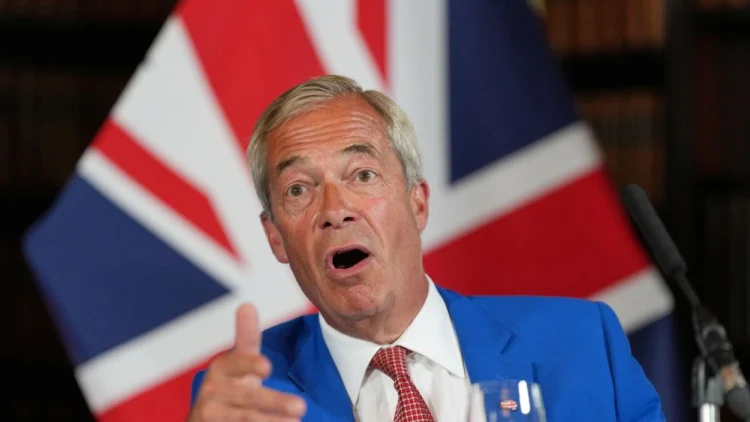
Nigel Farage has said he is open-minded about working together with Restore Britain and has reached out privately to Rupert Lowe to discuss a possible agreement to unite the political right.
Speaking at a press conference on Monday, the Reform UK leader said he would be willing to “negotiate” with Lowe if the Restore Britain leader if he “genuinely wants to have talks”.
However, Farage stressed that he would not be “ditching” his Reform allies.
On Sunday, Lowe offered to work with Farage to bring about a “patriotic government” at the next general election, but subject to several conditions.
The Great Yarmouth MP said any deal would be conditional on Reform agreeing to five policies, including mass deportations, a ban on the burka, a referendum on the death penalty, and no former Conservative ministers being given a role in a Reform-Restore Cabinet.
Reform MPs Robert Jenrick and Suella Braverman are former Conservative ministers, and the party’s senior ranks include former Tory office holders like Nadhim Zahawi and Jake Berry.
Speaking this morning, Farage questioned the sincerity of Lowe’s offer.
“If it was the offer of a deal, it came in a very unusual way. I have responded to it, potentially, with an open mind, as I would, but I’m certainly not going to be ditching people who I view as allies and a great asset,” Farage said.
“We will find out whether he genuinely wants to have talks. If he does, then we’ll start to negotiate.”
He added: “If anything like this were to happen, it would not happen overnight. It would go through a whole series of stages. Whatever’s been said in the past, I’m prepared to put that in the past and have a conversation.
“But I’m not going to commit myself to anything like that right now, and he seems to have given us a shopping list, some of which I have no desire to meet.
“Interestingly, on policy terms, most of the things he talks about are things that I’ve championed for over a quarter of a century. We’ll see.”
Shortly after the press conference, Lowe accused Farage of lying over the offer of a call.
The Restore Britain leader posted on X: “Yesterday’s offer was not one I wanted to make, trust me. I don’t particularly enjoy trying to work with people who attempted to put me in prison on false allegations. My house was raided by armed police because of them. I was willing, and still am, to put that aside to cooperate in order to save the country we all love.”
He went on to say: “The offer remains open to Nigel and Reform. Although outright lying about our private conversations does not help that.”
On Sunday, Farage posted on X that he recognised he needed the support of people from other parties to defeat the left at the next election, but said he would “never turn my back on my team”.
Lowe was elected as a Reform MP at the 2024 general election but left the party 18 months ago after a public falling out with Farage and set up his own party, Restore Britain.
Farage said today it was a “myth” that he personally fell out with Lowe, saying “everyone fell out with Rupert Lowe”.
In more recent months, Restore Britain, seen as further to the right than Reform on issues like immigration, has shown signs of being an electoral headache for Farage by taking votes from Reform.
Lowe’s party came fourth at last week’s Greater Manchester mayoral contest, ahead of the Conservatives.
At the same time, Reform’s ratings and those of Farage have dipped in recent days, with Labour benefiting from an Andy Burnham bounce and Farage continuing to face questions over his financial arrangements.


There are a lot of problems with this summer. The World Cup is over, the climate is a nightmare and I can’t seem to escape ‘hot honey’ everywhere I go. The most irritating thing, though, is the FLIES that are living in my home rent-free.
I am so tired of it and I have tried what I thought was everything to get rid of them. The current nightmare wave of flies in the UK is ridiculously resilient. They don’t care about washing up liquid, about the handy little vinegar traps, the sticky traps, the CLOSED WINDOWS?!
I know that I’m not alone. In fact, back in May, we spoke to entomologist Professor Richard Wall from the University of Bristol who shared that the weather is very likely to blame as flies do breed faster when it’s hotter.
I have found a solution for flies in the home, though
This isn’t a pleasant solution and as a big sensitive gal, it did take some getting used to. However, it is very effective and I can now get through my home without seeing flies or ducking from my cats as they (poorly) attempt to chase flies.
It’s an electric fly swatter. Sitting in the corner of my living room, it attracts and instantly kills the flies as they come into our home. It can be picked up and used like a manual swatter but works just as well staying in the spot it’s in.
EnviroBug explains: “Electric fly swatters have fantastic benefits. For instance, they offer instant results, which other products cannot. Sprays, traps and repellents can take several hours or days, but a swatter is effective as soon as you hit the insect.
“They are also chemical-free, ideal for use around food such as in the kitchen, around the BBQ or on a picnic. And because they are portable, you can use them at home, on the move and holiday. You can also use the same device in the kitchen and outside in the garden or park.”
However, if you have a real infestation, you do need to do a little more.
What to do with a house fly infestation
First of all, you have my deepest sympathies.
Secondly, it may be time to reach out to pest control. British Pest Control Association (BPCA) is a not-for-profit organisation representing, supporting and assuring 700+ member companies and the pest management sector.
Visit their website to find your local pest control and truly, good luck.

The Mineral Products Association’s new Chief Executive has written an open letter to the new Chancellor of the Exchequer, highlighting new sales data published today
Dear Mr Healey,
Many congratulations on your appointment as Chancellor of the Exchequer. I wish you every success in tackling the serious challenges facing our country.
No growth, low confidence
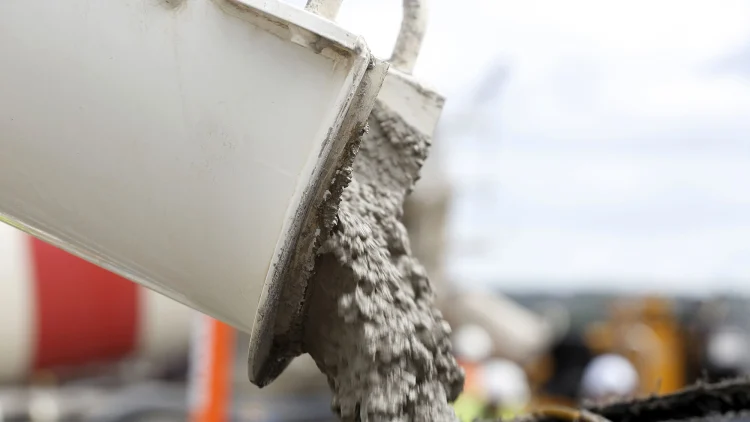
First and foremost of these is the lack of growth in the economy, especially in construction. Our UK industry, which supplies essential construction and industrial minerals and materials, has suffered four years’ decline in sales. This matters. The most recent data, published today, shows that the decline is not only continuing but that the material supply chain for housing is entering a real crisis point. Domestic cement production is at 1950s levels, and ready-mixed concrete sales from our members at levels last seen in the 1960s.
Given the scale of this continuing decline, industrial capacity is now being lost. Plants are being mothballed, drivers being taken off the road as trucks idle and people are being made redundant. There is currently no confidence to invest in people, sites or equipment for the future. This has to change.
In the first half of 2026 an already depressed situation deteriorated further. Ready-mixed concrete sales fell by 9.3 per cent, sand and gravel was down 8.1 per cent, and mortar 5.1 per cent lower compared to the same period in the previous year. Mortar is a particularly reliable measure for the current health of the housing supply chain as a wholly domestic supply of a product that cannot be stockpiled.
New towns, roads, hospitals, advanced manufacturing sites, and defence, energy and water infrastructure all rely on millions of tonnes of concrete, aggregates, cement, asphalt and mortar supplied by our industry. Without Mineral Products Association members, nothing promised to be built in your manifesto or in the Infrastructure Pipeline can be delivered. This is why this long-term decline is so concerning; we fear we will lose the capacity that will be needed when the demand comes back. If this does come to pass, aspirations of delivering housing or infrastructure in the future will become even harder to deliver.
As you look towards your first Budget, it is essential that our industry can have confidence that capital budgets will be protected and that the work they have planned as businesses will actually happen, especially after recent road project cancellations.
Rising tax burden and sluggish regulation
This four-year decline in demand has been accompanied by four years of increased taxes, from Chancellors of both major parties. The tax burden on our members has risen by around 26 per cent in that period, including the removal of red diesel, employer NICs, aggregates levy re-indexation, and two rounds of business rates increases.
The last round of business rate increases included the new higher rate multiplier, which, contrary to the political presentation, did not only apply to online retail warehouses but also hit cement and asphalt plants and quarries. I urge you to ensure that the cost of supporting selected sectors, as announced last week, does not fall on productive businesses that are already facing a rising tax burden.
This surging tax burden is exacerbated by a slow, unresponsive regulatory system. We note that the efforts to get the Building Safety Regulator performing are beginning to show some improvement after a very poor start. However, the performance of longer-established regulators such as the Environment Agency is, in combination with a slow and unpredictable mineral planning system, a serious bar to investment. Your predecessor was on the right lines when she challenged major regulators to show how they contribute to growth; there is far more that can be done here to make the UK an attractive and competitive investment proposition.
Our essential domestic industry is struggling. Falling sales, high tax, sluggish regulation and low confidence is a combination for stagnation and decline. Sites are being closed and once closed, they will not be reopened. The people losing their jobs – good, productive and high-skilled jobs often in rural areas – may not be able to stay in the industry if it shrinks permanently. We would also struggle to serve the country to the full, making it harder to deliver infrastructure, homes and workplaces with domestic mineral resources when demand eventually returns. The scale of this is such that it cannot be readily replaced by imports, even ignoring the grave impact on jobs and communities such an approach would lead to.
A way forward: reindustrialisation
“Re-industrialising Britain, using public procurement to back British industry.”
– Prime Minister Andy Burnham’s speech on taking office
Hearing the new Prime Minister talk of ‘reindustrialisation’ is very welcome. However, we are currently experiencing the very opposite: ‘deindustrialisation’ as demand falls and operational sites close. Reversing this and securing the sovereign capacity to supply the foundational materials of the economy must be a priority.
This means tackling specific things holding us back such as the UK’s uncompetitively high industrial energy costs and the sclerotic planning and regulatory environment. But it also needs government to drive the market forward and restore confidence. Measures to do this could include financial support to get housebuilding going, improved delivery on infrastructure, as well as incentives for private investment.
As we look ahead to your first Budget, I would like to urge you to focus on inspiring confidence to invest. To help sustain the essential domestic mineral products industry we need support for housebuilding now, as well as greater confidence in the delivery of infrastructure going forward. With this we can look to the reindustrialisation of our sector and truly deliver for the UK.
Yours sincerely,
Paul Adeleke
Chief Executive,
Mineral Products Association


Despite the German state’s slavish support for Israel and its brutal repression of anti-genocide protest, the pro-Palestine movement has scored a major legal victory.
The Zweibrücken Higher Regional Court has ruled that comparing Israel with the Nazis is legal.
German law bans the display of swastikas and other Nazi-linked symbols. However, the court ruled that they can legally be used:
If someone uses the signs for sharp criticism of the methods of the State of Israel and is thus accompanied by a clear distancing or condemnation of Nazi injustice.
German rulemakers overturn activist’s fine
The court was hearing an appeal brought by an anti-genocide activist who had been fined for publishing a table comparing the actions of Israel in Gaza with those of Nazi Germany. The header of the table showed a half Israeli flag and half swastika. Another post showed a combined Israeli and Nazi flag with hashtags #FreePalestine and #GazaUnderAttack.
The appeal court overturned the fine and warned judges not to apply the symbol law in a way that suppresses freedom of speech.
Germany describes support for Israel as its ‘Staatsräson‘, the reason for the existence of the German state. It requires citizenship applicants to formally declare support for the apartheid colony.
Featured image via Katerina Bolovtsova/ Pexels
By Skwawkbox
If you spend a substantial amount of time online, you might’ve already come across the terms “manlet” and “hiplet”. But for those who haven’t, “manlet” is a derogatory term that’s been used online for years as a way to height-shame shorter men and boys.
And now “hiplet”, which seems to be newer, is about body-shaming women and girls for having ‘hip dips’ (inward curves located below the hips and just above the thighs) as a retaliation to ‘manlet’ abuse.
Some claim the “the hiplet movement is an allegory to heightism” – basically, men are using the term “hiplet” to make a bigger point about prejudice against shorter men.
But these body-shaming terms ultimately aren’t helping anyone. Men have shared online how the term “manlet” has made them feel “depressed and insecure”, while women are saying “hiplet” is just another insecurity to add to the list.
Commenting on the trend, Fiona Yassin, family psychotherapist, and founder and clinical director of The Wave Clinic, told HuffPost UK: “Social media has a way of taking a perfectly normal human characteristic and turning it into a ‘flaw’ overnight.
“Terms like ‘manlet’ or ‘hiplet’ are designed to shame people by making them feel as though their body is somehow outside the norm, when in reality height, hip shape and body proportions vary enormously and are entirely unique.”
How to talk to young people about body-shaming comments
While adults might be able to brush off comments made online, for young people it can be a lot harder to just “ignore” them.
Yassin suggests that if a child reveals they’ve been targeted with one of these terms, parents should “resist the urge to dismiss it”.
“Instead, acknowledge what they are saying, validate their feelings, and remind them that these insults say far more about the culture of online comparison than they do about the person being targeted,” she added.
You could ask them open questions such as, “how did that make you feel in the moment?” or “what do you think those comments were trying to achieve?” – this, the therapist added, can help them process the experience rather than internalise it.
Of course, half the time these comments are probably coming from other young people who might not fully understand what they mean – or how they can seriously cause hurt.
“Children engaging in viral trends often don’t fully understand the potential impact on others,” continued Yassin.
“The goal for parents is to reintroduce mentalising – the ability to reflect on the thoughts, feelings, and intentions of both themselves and other people. When mentalising is ‘off-track’, children may act or speak without considering how it lands.”
If your child has called other people these terms, saying it was “just meant to be funny”, it can be helpful to remind them that a joke is only a joke when everyone is laughing.
The therapist continued that “if it’s damaging, toxic, makes others uncomfortable or is at someone else’s expense, it’s not a joke”.
“Ultimately, it’s important for children to understand that our actions always affect others.”
Supporting teens to build body confidence
At home, it can also help to:
1. Avoid commenting on body shape or size
“Avoid comments about your teenager’s appearance – especially if they’re negative, or could be interpreted that way,” said Yassin.
It’s important children don’t hear the adults in their lives criticising their own bodies – or the bodies of other people.
“When parents criticise body shape, or suggest someone could improve their appearance, be ‘thinner’ or make their body different in some way, the underlying message is: you are not okay as you are,” warned the therapist.
2. Build body confidence by focusing on function, not appearance
“Building body confidence starts with helping teenagers see themselves as more than their appearance,” she continued.
You can do this by encouraging conversations about what their body allows them to do, rather than how it looks, and help them develop a critical eye towards social media trends that profit from insecurity and outrage.
“The goal isn’t to convince teenagers that cruel comments don’t matter, but to help them build a strong enough sense of self that someone else’s attempt to define them carries far less weight,” Yassin added.
3. Validate personal qualities – not appearance
Therapists and body image experts generally advise to steer clear of praising kids on their appearance or physical attributes, instead opting to praise kindness, creativity, resilience, humour, effort and values.
4. Seek professional support early
Unfortunately kids can’t escape bullying, as it can follow them home online.
Heightism, especially among boys, should be taken seriously – it’s a form of bullying and can have negative mental health implications for those on the receiving end.
Yassin advised that if body-shaming continues at school or begins to affect a young person’s mood, confidence or willingness to socialise, it’s important to involve the school and seek additional support if needed.
“If a young person shows signs of body image distress, restrictive eating, bingeing, purging, or obsessive exercise, early intervention is critical,” she added.
“Eating disorders are complex and often require the assistance of a psychiatric and mental health team. The earlier we intervene, the better the outcome.”
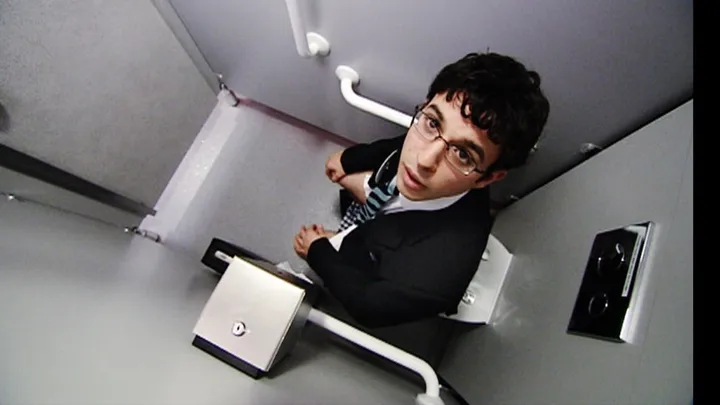
Last year, fans of The Inbetweeners got some promising news: it seemed set for a revival after a 10-plus-year hiatus, as production company Banijay UK and the show’s creators came to an agreement that “pave[d] the way” for its return.
And now, Variety has confirmed that the original cast is working on a reunion flick with streaming giant Netflix.
It follows two hit movies based on the teen sitcom, which chronicles the misadventures of friend group Will MacKenzie (Simon Bird), Simon Cooper (Joe Thomas), Neil Sutherland (Blake Harrison) and Jay Cartwright (James Buckley). The comedy blockbusters were released in 2011 and 2014, respectively.
The first installment, The Inbetweeners Movie, raked in about £66 million globally against an estimated £3.5 million budget. And its sequel, The Inbetweeners 2, made about £47.5 million worldwide.
These were based on the 2008-2010 UK series, which acted as a kind of grimly relatable alternative to sex-and-drug-fuelled teen hit Skins, which also aired on E4.

Simon Bird said, “Skins is great because it’s this fantasy of what you want your teenage years to be whereas The Inbetweeners is what your teenage years actually were”.
We don’t yet know anything about what Netflix’s The Inbetweeners flick might look like, though it’s hard to imagine the original cast, who appear to be attached to the title, will be playing their former adolescent selves.
The cast’s real-life ages range from their late 30s to early 40s.
Blake Harrison, who plays Neil, told the BBC in 2014 when he was aged 29: “The humour comes from their naivety and ignorance towards the world and as soon as you start placing that naivety and ignorance into people in their 20s and 30s, it becomes a bit more offensive and less funny”.


The response by the UK Labour Government to the failure of a United Nations (UN) nuclear non-proliferation conference to reach a consensus has been criticised by a wide range of UK and international experts and campaigners.
The government had sent a minister to speak at the UN in New York at the start of the 11th Review Conference of the Nuclear Non-Proliferation Treaty (NPT), which took place from 27 April to 22 May 2026.
Initially, the government chose not to comment when the Canary reported on the failure of the review conference to reach consensus on an outcome document. They have now provided a response to Baroness Miller of Chilthorne Domer, a Liberal Democrat peer, who asked an oral question about the conference in the House of Lords on 9 July 2026.
Miller’s question
Miller is one of five co-presidents of the international non-governmental organisation called Parliamentarians for Nuclear Non-Proliferation and Disarmament (PNND).
She asked the government “what diplomatic steps” it intended to take “following the absence of consensus at the Review Conference of the Nuclear Non-Proliferation Treaty”.
Foreign, Commonwealth and Development Office (FCDO) minister of state Baroness Chapman of Darlington responded, saying:
The nuclear non-proliferation treaty is the cornerstone of the international nuclear order and the UK remains fully committed to it. It is a treaty that has kept us safe for over half a century, underpinning international security by constraining the spread of nuclear weapons.
Although it is disappointing that consensus could not be reached in New York, the review conference covered a thorough examination of global progress to implement NPT obligations over the past four years so as to identify positive progress and those areas that remain challenging.
Speaking after the debate to the Canary, Miller said she asked the question because she has:
been concerned about the threat nuclear weapons pose for decades.
She added:
That threat is increasing, not decreasing. The lack of progress of the NPT agreements toward disarmament and the P5 modernising and upgrading nuclear weapons means we face a terrifying threat.
The P5 are the five nuclear weapons states (NWS) who are also the five permanent members of the United Nations Security Council (UNSC) – the US, Russia, China, the UK and France.
She also highlighted the fact that the Doomsday Clock has been set at its all time worst position – just 85 seconds to midnight.
“Genuinely disappointed”
Miller also said she hoped that the NPT review conference would agree on:
risk reductions, new treaty discussions to cover the gap left by [New] START’s demise.
She also said she thought the government was “genuinely disappointed” by the failure of the conference to agree on an outcome document.
In February, the UK Labour government was accused of “sitting on the sidelines” of international nuclear weapons risk reduction diplomacy following the expiration of New START (New Strategic Arms Reductions Treaty). The treaty limited the number of nuclear weapons the US and Russia could hold.
Reflecting on the government’s response to her question, Miller said she thought it was:
adequate, but not very energetic compared to the threat posed.
She added that she hoped the government would step up to:
be a leader amongst the P5 to ensure new treaties are put in place and to ensure diplomatic channels are open so as to avoid nuclear accidental misunderstandings.
First review of the TPNW
Towards the end of 2026, the UN will host the first review conference of the Treaty on the Prohibition of Nuclear Weapons (TPNW), which goes further than the NPT in pushing for the abolition of all nuclear weapons.
It is supported by half of the world’s nations, but no nuclear weapons states have joined it.
Miller told the Canary that she wished the P5 would engage with the TPNW. She said:
After all, the final goal of the NPT is disarmament. However, successive UK Governments have been clear that, for them, the NPT is the only Treaty they will engage with.
UK Government breaching the NPT and uninterested in disarmament – anti-nuclear campaigners
Responding to the debate, Nuclear Information Service co-director Okopi Ajonye told the Canary:
This session is yet another example of how the government’s support for disarmament is more rhetorical than real, as the UK Government seems far more interested in preventing the spread of nuclear weapons and promoting the peaceful uses of nuclear energy than in furthering nuclear disarmament.
Campaign for Nuclear Disarmament (CND) general secretary Sophie Bolt told the Canary:
Simply expressing disappointment at the failure of the review conference rings hollow when the government is replacing Trident, developing a new nuclear warhead and expanding Britain’s nuclear capabilities by purchasing F-35A’s. Those actions undermine the very trust the Government claims it wants to rebuild. In fact, it is total nuclear hypocrisy.
Bolt also argued that the UK should bring confidence back to the NPT by reversing its “disastrous nuclear expansionism”.
Government deflections
International Campaign Against Nuclear Weapons (ICAN) advocacy coordinator Florian Eblenkamp gave his reaction to the debate to the Canary. He said:
What stands out is how much of it was deflection. Chapman didn’t know a new Commons committee scrutinising nuclear spending even exists. She had ‘nothing new’ to say on New START, the last bilateral arms control treaty between the US and Russia, having lapsed in February.
During the debate in the House of Lords, Conservative peer Lord Bellingham asked:
Can the Minister say something about New START, the treaty which was the last remaining bilateral arms control agreement between the US and Russia, which has expired? What is the future of that treaty? I know that is a slightly separate issue, but it is related.
Responding, Chapman said:
That might be a question better addressed to my colleague at the Ministry of Defence. My understanding of these issues is that our position remains consistent with that of previous Administrations. I do not have anything new that would be particularly illuminating in response to the noble Lord’s question.
Eblenkamp criticised the UK’s and other nuclear weapons states’ “performance” of compliance, rather than real compliance, with the NPT.
He also demanded that the UK Government sends officials to attend:
meetings of the UN Treaty on the Prohibition of Nuclear Weapons as an observer, rather than treating the treaty that bans nuclear weapons and has support of a global majority as something to be ignored.
He added:
None of that requires the UK to disarm unilaterally tomorrow. It requires the government to stop answering with ‘nothing new’ when asked about arms control efforts in parliament.
Eblenkamp concluded by saying:
The UK has surpassed Russia as the world’s third-largest spender on nuclear weapons. In 2025, the UK alone spent $12.6bn (£9.34bn) on modernising its nuclear arsenal; that’s a 17% increase from the year before. Nuclear weapons will make up close to 25% of the UKs national defence budget going forward.
And yet, there is no genuine sense of security from perceived threats. At what point do we call out nuclear deterrence as an expensive dogma rather than a defence strategy?
UK Government must find its voice and call for disarmament – nuclear policy expert
The European Leadership Network (ELN) describes itself as:
an independent, non-partisan, pan-European network of over 450 past, present and future European leaders working to provide practical real-world solutions to political and security challenges.
ELN head of programme on nuclear and multilateral disarmament Oliver Meier told the Canary:
Disarmament only comes up in the debate once, the focus is squarely on nonproliferation. This neglect of disarmament in the debate is indicative of the nuclear weapon states’ approach to the NPT.
As the majority of states have emphasized again and again in New York, progress on disarmament and nonproliferation are interdependent and intrinsically linked. So the UK also needs to ask itself how its own actions are affecting that broader issue of the salience of nuclear weapons.
Meier called on the UK Government to find its voice on disarmament and to call out the US – alongside Russia and China – for its actions on nuclear escalation.
He said:
UK (and France) as European nuclear weapon states have to find their own voice on disarmament and nonproliferation. They will continue to speak out against irresponsible actions and rhetoric by Russia and China’s nuclear build-up.
But they also need to speak clearly on irresponsible US nuclear threats and actions and violations of international law, including the attacks on Iran. Otherwise, their credibility towards the majority of the international community will suffer.
UK should be more transparent about its nuclear weapons policy – UN expert
The United Nations Association – UK (UNA-UK) says it works:
to strengthen the UK’s commitment to the UN and for foreign policy rooted in international law, human rights, peace and international cooperation.
Reflecting on the debate in the House of Lords, UNA-UK campaign manager Lauren Muir told the Canary:
Given the UK’s position as both a Nuclear Weapon State under the NPT and a recognised leader in nuclear verification research, there is scope for it to exercise greater diplomatic leadership in addressing this widening credibility gap.
Muir called on the UK Government to do more to further the cause of nuclear disarmament, saying:
UNA-UK would like to see the Government focus more on practical measures that demonstrate progress on its nuclear disarmament commitments.
This means being more transparent about UK policy, providing clearer reporting on progress under the NPT, continuing to support international nuclear verification work, and taking a more active role in developing measures that reduce the risk of nuclear conflict and build trust between states.
The Defence Investment Plan (DIP) includes significant funding for the UK’s nuclear weapons programme, so it appears unlikely that the UK Government will work towards the type of nuclear deescalation called for by experts.
Featured image via the Canary
By Tom Pashby

If your child’s starting Year 7 in September, there’s a strong chance you’ve already thought about their first day more than they have.
Every summer I meet parents worrying about whether their child will make friends, find their way around a much bigger building, or cope with going from top of the school to the very bottom overnight.
Those are all fair worries, and starting secondary school really is one of the biggest changes a child goes through.
But after watching hundreds of pupils make this exact move, I’ve come to think we tend to pin our nerves on the wrong day, because the transition is really made over the summer, weeks before the first bell.
The reassuring bit is that most children are far more ready than we give them credit for. By the time they leave primary, they’ve already learnt how to make friends, fall out and make up again; cope when a plan goes sideways; and ask an adult for help – and all of that will carry them through Year 7 just as well as knowing where the science block is.
None of which means every child sails through, because they won’t. But most of those worries do settle, and there’s solid research to show it. When University College London (UCL) followed around 2,000 children through the move for its STARS study, it found most had some worries beforehand that eased once they actually started secondary.
So, a bumpy first few weeks is usually just part of settling in, and a calm face at home is one of the best things a child has going for them while it passes.
Ahead of that nerve-wracking first day, here are some ways you can help prepare your child while they’re off for summer.
1. Keep the chat upbeat
Kids clock our tone of voice long before they take in the actual words, so keep talk of secondary school on the sunny side. A few nerves are normal, so say so, then steer the conversation around to the good stuff, like new friends, new subjects and all the clubs they never got to do at primary school.
2. Talk, and then talk some more
Ask Year 6s across the country what’s scaring them most and the answer is nearly always ‘getting lost’, which makes total sense when they’ve spent years in one building where they know every corner.
When your child asks “but what if I get lost?”, they usually want reassurance more than a plan, because underneath it they’re really asking whether it’s normal to feel nervous. It always is. Let them say the worry out loud, tell them how you felt on your own first day, and remind them that staff spend all of September helping Year 7s find their way.
3. Get the boring stuff bought early
Buy the bag, uniform and kit well before the last week of the holidays, because nobody wants to be tearing around town for the last pair of black school shoes or a scientific calculator the night before term.
Once it’s bought, hand it all over and let them unpack it, label it and sort it themselves, so it feels like old news by the time September comes.

4. Sneak some independence into the summer
Secondary runs on a hundred small jobs your child does without you, so treat the holidays as a low-stakes practice run. Let them nip to the shop, meet mates in town and get themselves ready for a day out. Once term starts, get them making their own packed lunch and laying their uniform out the night before.
5. Practise the journey together
For a lot of kids, getting to school is the first proper thing they’ll do on their own, so do a couple of trial runs. Walk, cycle or bus it together first, then let them try it with a friend, and time it while you’re at it. Talk through what to do if the bus doesn’t turn up or they take a wrong turn, because a plan they’ve already talked over does wonders for their confidence.
6. Hang on to old friends and routines
Those first few weeks are exhausting, with everything new at once, which is exactly why familiar faces and old routines are worth holding on to. An afternoon with primary school mates, or the usual Saturday footie, is a proper breather in the middle of the whirlwind, so give them room to find their feet and go easy on the questions at the school gate.
7. Get ahead of the new phone rules
This year’s intake has something new to think about, because most will start secondary with much stricter rules around phones during the school day. Rather than letting it become another worry, look at your school’s policy together before September, so your child knows exactly what to expect.
8. Keep the school in the loop
If something’s worrying you, the school really does want to hear about it, so drop a line to your child’s tutor or head of year, get along to the information evenings, and keep half an eye on the emails coming home. It’s the quickest way to know what’s going on.
Every September I watch new Year 7s turn up looking tiny in oversized uniform, and within a few weeks the same children are finding their classrooms without a second thought, joining clubs and coming home name-dropping teachers you’re still struggling to keep track of yourself.
That happens because we give them room to work things out, with support around them when they need it.
So, talk up what’s coming, hand over a bit more responsibility than you did last month, and trust that seven years of primary school have got them more ready than either of you quite believes right now.
It’s a big milestone, but in the end it’s only one morning, and the real work is the bit you get to do together this summer.
Andrew Wilson is the chief executive of OAK Multi Academy Trust.

We hope you love the products we recommend! All of them were independently selected by our editors. Just so you know, HuffPost UK may collect a share of sales or other compensation from the links on this page if you decide to shop from them. Oh, and FYI — prices are accurate and items in stock as of time of publication.
If there’s one thing we take good care of in summer, it’s our skin. Or the skin on our face, at least.
While we spend the sunny months and beyond prepping our faces with acids, primers, and sunscreens, other areas get ignored.
But it’s time we get real about the spots that get the most sweaty during the heatwave – our genitals.
Yep, I’m going there. You might be wearing breathable cotton and linens on the rest of your body, but most of us forget to protect our bits during the heat, and they need just as much attention.
I’m sure I don’t need to tell you this, but sweating down there gets uncomfortable pretty quickly.
You don’t need to suffer in silence, though, because I’ve found the solution to better comfort between your legs in the heatwave: bamboo underwear.
Although lots of underwear brands use polyester and synthetic materials in their underwear, that could contribute to excess sweat, and won’t let your genitals breathe properly. Talk about a one way ticket to thrush town.
To combat discomfort during the warmer months, Step One has created an underwear line crafted entirely from bamboo.
As well as being sustainable (thanks to how quickly it grows) bamboo also makes breathable, antibacterial, and moisture-wicking underwear.
Not only does this make them comfy enough to wear all day, but also means they’re great for sweating during training or long runs.
And whether you’re a briefs gal or a trunks guy, Step One has crafted a shape for every occasion – it even has period pants (which just so happen to be this shopping writer’s favourite).
If you’re looking for a sure-fire way to transform your comfort during the heatwave, I’ve rounded up the best pieces of Step One underwear to shop now.
And if you’re in pursuit of a bargain, good news: when you buy a multi-pack you’ll get a discount of up to 15% off. Yippee!
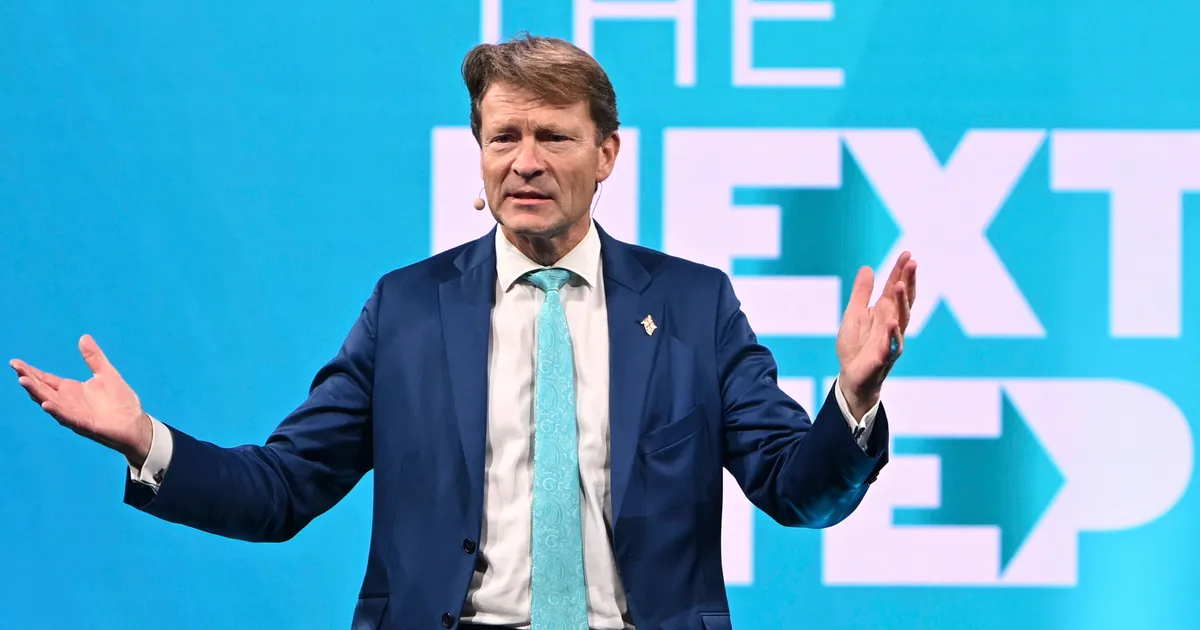
Westminster’s sleaze watchdog has launched an investigation into Reform UK deputy leader Richard Tice.
The parliamentary commissioner for standards said he had begun investigating claims Tice had failed to declare an interest.
A separate probe into Nigel Farage’s failure to declare a £5 million gift from a Thailand-based crypto billionaire has been suspended while he fights the Clacton by-election.
Labour said: “The Reform sleaze scandals continue to pile up.”
In a post on X, Tice claimed the complaint against him had been made by an “anti semitic anti Israel lobby group over whether I should have referenced my register of interests at start of a debate on UK democracy and Israeli influence”.
A Labour spokesperson said: “Reform’s leader and deputy leader now have standards investigations hanging over them.
“With police probes, Nigel Farage’s secret £5 million gift, and reports of funding from a convicted fraudster – it’s clear Reform think the rules just don’t apply to them.”
Listen to Commons People, the podcast that makes politics easy. Every week, Kevin Schofield and Kate Nicholson unpack the week’s biggest stories to keep you informed. Join us for straightforward analysis of what’s going on at Westminster.

“I had everything that could go wrong with me… go wrong with me,” he said at the time, adding that “drinking too much” left his kidneys “messed up”.
Phil has also explained he’s been dealing with a spinal injury as well as type 2 diabetes.
And speaking to The Times recently, the Genesis star shared that he almost died in 2024.
He said he was admitted to a Swiss hospital in late 2023 due to alcohol addiction before being discharged and brought back a second time. He added he was placed in intensive care on his return and was mostly unconscious during this second stay.
“My kidneys were packing up, my organs were just seizing up,” he told The Times.
“People were coming to say goodbye. But I don’t remember them coming. I didn’t have no idea this was going on. They were all worried that they wouldn’t see me again. It could all have gone so terribly wrong.”
His five children reportedly visited during this time.
Phil continued: “There were some decisions to be made about ‘Do we keep Phil on life support?’ kind of thing. I was very lucky to have come out of that… Needless to say, I haven’t had a drink since.”
Back in 2021, Phil said he could no longer play the drums. “I’d love to but I mean, I can barely hold a stick with this hand,” he told BBC Breakfast.
“There are certain physical things which get in the way.”
The singer told Mojo magazine in 2025 that he’d considered making new music: “I keep thinking I should go downstairs to the studio and see what happens. But I’m not hungry for it anymore.
“The thing is, I’ve been sick. I mean very sick.”
You can read The Times’ interview in full here.

JIO FINANCIAL SERVICE NEWS | JIO FINANCIALS LATEST NEWS | Market support

Iran denies Trump’s claim that new talks will begin on Monday

Hershey planning ‘action-packed’ second half of 2026


-

 Business5 days ago
Why Trees Belong on the Risk Register
-

 Fashion3 days ago
Weekend Open Thread: Wit & Wisdom
-

 Politics3 days ago
Meta enters AI-training agreement with far-right ‘propaganda rag’ Newsmax
-
 Entertainment6 days ago
‘Stargate’ Creator’s New Sci-Fi Series Returns for Season 3 Tomorrow
-

 Crypto World2 days ago
MicroStrategy Post-Earnings CLARITY Act Push Could Add New Catalyst for Its Stock
-

 Politics6 days ago
The Part of the Electric Transition Nobody Wants to Discuss
-

 Business5 days ago
Major shareholder moves on Canyon
-

 Crypto World2 days ago
XRP Ledger v3.3.0 brings five institutional features
-

 News Videos4 days ago
Bitcoin Enters the 3rd Stage of the Bear Market
-

 Crypto World6 days ago
Kraken Enables Retail Access to Jersey Mike’s IPO via Tokenized Shares
-

 Tech6 days ago
New macOS Sequoia & Sonoma security updates for older Macs
-

 Politics4 days ago
Luke Littler’s dominance sparks GOAT debate
-

 News Videos6 days ago
Claude: Build Financial Dashboards in Minutes (2026)
-

 Business6 days ago
Johnson & Johnson agrees to $5.5B settlement over talc cancer claims
-

 Sports4 days ago
Seema Kaliramna Wins Discus Throw Bronze, Takes India’s CWG Medals Tally To 17
-

 Crypto World1 day ago
Crypto PAC spending tops $2M in Michigan House race
-

 Business3 days ago
Trump Announces Hamas Disarmament Agreement as Iran Strikes Kuwait Air Base and US Attacks Pause Overnight
-

 Tech5 days ago
Gemini can now summarize the messiest comment threads in Google Docs
-

 Tech1 day ago
ESET tracks rise in malicious AI skills and adaptable malware
-

 NewsBeat4 days ago
Four people die trying to cross Channel in small boats
You must be logged in to post a comment Login