
Politics
Politics Home | Experiments in Parliament


6 min read
When the original Palace of Westminster burned down in 1834, contemporaries found it hard to resist a symbolic interpretation. Just two years after the Reform Act had widened the franchise, the old political landscape lay in ruins.
Sir Charles Barry, the architect selected to rebuild the Palace, faced a technically challenging site next to an open sewer and intense political scrutiny of a project that was to define the new political order. Even apparently mundane decisions – for example, the size of the press gallery or the number of committee rooms – could become politically contested.
Practical solutions and new purpose-built facilities were seen by some as an attempt to replace the sovereign deliberation of Parliament with the ‘unthinking’ methods of the modern factory.
Intriguingly, the political impasse would be broken by effectively turning the rebuilt Palace of Westminster into a cutting-edge scientific laboratory. In theory, a new consensus would form around ‘what worked’ while Parliament was partly decanted.
“There is a real flourishing of scientific culture after the Napoleonic Wars; science became fashionable and the redevelopment of Westminster gets caught up in that,” says Dr Ed Gillin, an academic based at UCL Bartlett School of Sustainable Construction and author of The Victorian Palace of Science.
“At places like the Royal Institution and the Royal Society, you get this huge overlap between the political class and the scientific elites, as well as a hope that the application of science can alleviate some of the rising social unrest and bring about national unity.”
For a brief period, nothing was off-limits. To give one example, in order to measure the foulness of the atmosphere in the House of Commons, lumps of meat were hung from the ceiling.
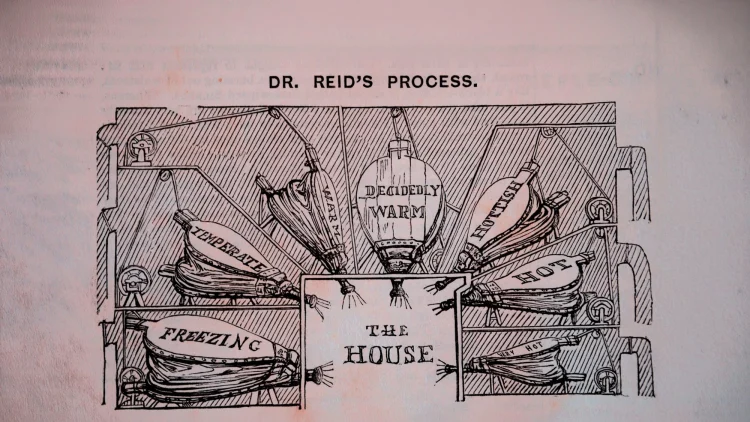
The experiment was devised by Dr David Boswell Reid, now dubbed ‘the grandfather of aircon’, a Scottish chemist brought to Westminster on account of his pioneering work in developing ventilation systems.
To win MPs over to the value of circulating fresh air, Reid hoped to demonstrate that while meat hung from 10 to 20 feet in the Chamber would go off within 24 hours, when suspended from 30 to 40 feet it could still be eaten safely several days later.
Reid was just one of a number of pioneering figures brought into Barry’s rebuilding project, as hundreds of innovations in everything from electric timekeeping to novel methods of drainage, as well as innovations in lighting and masonry, were explored.
It was a period when the status of architecture was also undergoing a rapid transformation. The first chair in architecture was created at UCL in 1841, a move that followed the creation in 1834 of the Institute of British Architects (which received its Royal Charter two years later). Part of this process entailed architects finding a balance between ‘art’ and ‘science’, which proved every bit as fractious as the political debates excited by Barry’s building.
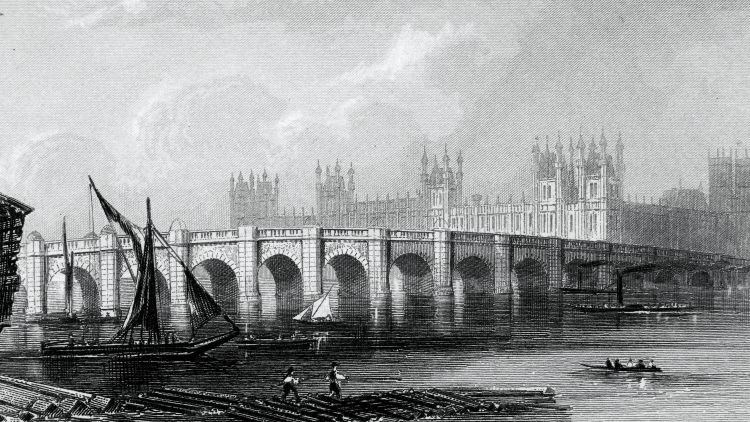
While employing scientists might have helped to break the political impasse about the redevelopment of the Palace of Westminster, it will perhaps not be a huge surprise to learn that it did not end all argument.
Frustrated by the lack of enthusiasm for his theories, Reid began to devise ever more extreme demonstrations. To illustrate the effectiveness of his methods in dispersing ‘bad air’, he drafted a platoon of soldiers into the Chamber of the Commons and filled it with acrid smoke as well as a variety of scents from lavender to cinnamon. Despite the rapidity with which his smoke bombs cleared, MPs remained unconvinced.
“Reid begins his experiments at Westminster in 1835, is appointed to a permanent position in 1838, and is still experimenting in 1850,” explains Gillin.
“There’s just the sense that the experimenting has got a bit out of hand and Barry is driven absolutely mad by the stream of constant alterations.”
The contestability, and potential lack of durability of the scientists’ findings, made their recommendations risky and difficult to implement. Barry and his political backers slowly became impatient with visionary and experimental prototypes. Reliable methods that could be safely systemised were needed.
Disagreements over how far to incorporate new methods also played out along religious and class lines.
Barry had designed the Whiggish Reform Club building and was friends with Edward Cust, the politician overseeing the competition to rebuild the Houses of Parliament. By contrast, for illustrative example, Reid’s interest in ventilation was bound up with his evangelism; he saw the task of cleansing the atmosphere as inextricably bound up with the process of moral purification. It was a particular strand of religious thinking that marked Reid out as a Scot, and an outsider, whose ‘science’ could be more easily dismissed as crankery, whatever its practical effectiveness.
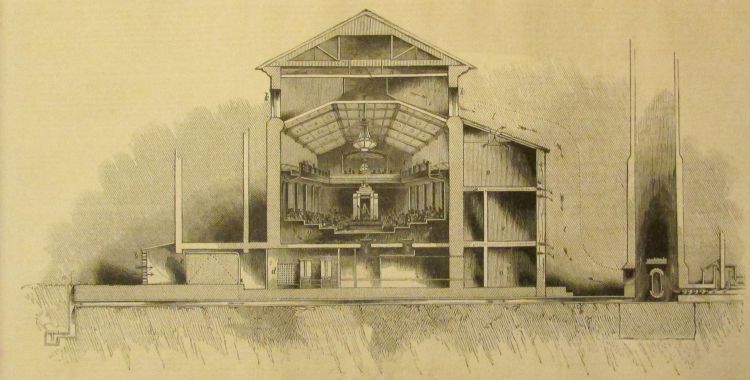
“The majority of MPs were Anglican, were educated at Oxbridge, and had a leaning towards ‘small c’ conservative sciences like geometry,” says Gillin, “whereas north of the border, science was associated with industry, practical uses of knowledge, and utilitarianism.”
While a handful of radicals wanted the new Houses of Parliament reconfigured into a centre of rational governance, most MPs wanted the new building to embody the continuing authority of Parliament and to forestall the kinds of instability that had led to the French Revolution.
Whiggish reformers had favoured rebuilding Parliament in a neo-classical style, while conservatives preferred a more regal gothic mode. By the time Barry had completed both Chambers in 1852, the end result was described as a gothic shell encasing a neo-classical interior.
Without losing its sense of grandeur, Westminster had been rebuilt as a state-of-the-art building. It was a design able to contain the wildly differing preferences of those who fantasised about a pre-Reformation (Catholic) Britain as well as those politically and aesthetically centred in post-Reformation (Protestant) Britain.
For all that that enthusiasm for the renovation to exploit the benefits of rapid scientific advances helped unite competing factions, ultimately the visionary ambitions had to be tempered by a certain degree of nostalgia.
“A fashion for ‘the olden time’ – the period of the Tudors and early Stuarts romanticised as nationalist, mercantile, imperialist, even populist – spread rapidly in the 1830s and 40s,” explains professor Peter Mandler, a Cambridge historian, “and the Palace of Westminster could be seen as an early form of that fashion.”
In the 19th century as now, popular debates about the restoration of Parliament had shifted rapidly from material issues on to far more symbolic and intractable questions about the proper form of British government.


Attracting wildlife to your garden is one of the best ways you can help out the planet, control pests, and support struggling species.
Speaking to HuffPost UK previously, Helen Bostock, a senior wildlife specialist at the Royal Horticultural Society, said: “Environments are more resilient and function better when there is both species and genetic diversity, helping combat challenges such as climate change, carbon capture and pollution.”
There are many ways to do this, from making a little pond out of an old washing-up bowl to putting out water for hedgehogs. But wildflowers can help too, says Elise Harlock, a floral expert at Prestige Flowers.
“Small changes can really help to create a thriving natural environment… By adding the right flowers to your garden, you can support biodiversity and make it look extra beautiful,” she said.
Here are the best ones to get in the ground for a more buzzing backyard this summer:
1) Lavender
Beloved by bees, butterflies, and hoverflies, those “single-layered, long petal flowers are easiest for insects to feed and pollinate from,” Harlock said.
And because it’s such a favourite of so many insects, “you’ll see the flowers full of creatures all summer long”.
Safety: Mildly toxic to dogs if ingested and can be toxic to cats.
2) Foxglove
Lavender loves sunny spots, but if your garden is a little short on those, try foxglove instead.
“Foxgloves thrive in shade, so you can grow them in almost any garden type,” Harlock told us. “Their colourful flowers and height are great for adding depth to a garden, but also act as safe, tubular and nectar-rich environments for insects.”
Flowers in: June to September
Safety: Very toxic to adults, children, and pets if ingested. Don’t plant in places where either kids or pets play.
3) Echinacea
“These daisy-like flowers are excellent for butterflies and bees. The open and flat structure of the flower head makes them perfect pollen-heavy landing spots, whilst adding loads of bright colour to your flower beds,” the expert said.
Even better: their seedheads make amazing food for birds once the flowers have died out.
Flowers in: July to late August
Safety: Generally considered safe for pets and children, though some adults and children may have an extreme allergic reaction to the plant.
4) Sunflowers
“Everyone knows sunflowers are great for bees, but few know why,” Harlock told us.
“Their centres are bursting with nectar, which makes them a rich source for pollinators, so planting even one or two in your garden is guaranteed to attract plenty of bees.”
However, they need a lot of sun (shocker), so make sure your garden has enough light before planting them.
Flowers in: July to September
Safety: Non-toxic to cats, dogs, horses, and children.
5) Peonies
“Bees and butterflies love the sweet scent of peonies, and they’re a really beautiful addition to any summer garden,” the flower expert said.
Flowers in: April to July

A Telegraph investigation has revealed the role Richard Hermer KC, the UK attorney general, played in the Al-Sweady scandal, which led to British servicemen facing false accusations of murder and torture for over a decade. As a result, senior MPs have reported Hermer to the Bar Standards Board for misconduct.
The Al-Sweady scandal centred on claims brought by Iraqis who alleged that British soldiers had tortured and executed civilians after the Battle of Danny Boy in southern Iraq in 2004. These claims originated with the now disgraced solicitor Phil Shiner, who broadcast them to the world in a widely publicised press conference in 2008.
The subsequent Al-Sweady Inquiry (2009-2014) into these allegations concluded that they were ‘wholly without foundation and entirely the product of deliberate lies, reckless speculation and ingrained hostility’. It turned out that Shiner’s clients were not innocent farmers and labourers murdered by malevolent British soldiers. They were in fact members of the Mahdi Army – an Islamist militia backed by Iran’s Islamic Revolutionary Guard Corps.
It later emerged that Shiner had advanced the claims using dubious intermediaries to gather witness evidence. He used cold-calling to invite people to give testimony, with the promise of remuneration. He also made fraudulent claims to the Legal Aid service, receiving money from the public purse to fund his discredited litigation. He was struck off. Shiner later pleaded guilty to three counts of fraud and was sentenced on 10 December 2024 to two years’ imprisonment, suspended for two years.
Hermer played a significant role in the litigation. In the words of the Telegraph, he ‘acted as lead counsel in civil claims against the Ministry of Defence and pressed for lucrative compensation despite mounting evidence that his eight Iraqi clients were “on the make”’.
These are very damaging claims for Hermer. Barristers often say they have a professional obligation to act in cases irrespective of their personal views. They cite the ‘cab-rank rule’, which requires them to accept instructions in cases they may not personally support.
But the cab-rank rule did not apply in this case. Hermer worked instead under a conditional-fee agreement at double his normal fees. This is what most people would call a ‘no win, no fee’ agreement. That meant he would not be paid unless the claims succeeded. It also meant he could have withdrawn from the case without breaching the cab-rank rule. Indeed, if he had doubts about the credibility of the claims, he would have been under a professional obligation to withdraw.
That is why Hermer has now been reported to the Bar Standards Board. It appears that he had concerns about the claims but remained involved. In one internal email advising Shiner on how to ‘get the big story out there’, Hermer admitted that there needed to be ‘wriggle room if the killings did not in fact happen’. Other emails also appear to show that Hermer was enthusiastic about litigating against British soldiers, saying in one message, that ‘these Iraqi cases are a good reminder of why I wanted to be a lawyer’.
Hermer denies any wrongdoing. He has distanced himself from Shiner and maintains that his work on the case was entirely proper. This may all be true. But Hermer cannot expect to be politically immune from the professional decisions he took as a lawyer. He could have withdrawn from the case if and when he had concerns about the credibility of the allegations. Yet he failed to do so. He was plainly committed to what he was doing. He will now need to explain that to the Bar Standards Board.
Regardless of what the regulator decides, this ought to be politically catastrophic for Hermer. He was involved in one of the most shameful scandals to hit the legal profession in living memory. One can only imagine what those young men went through. They survived a firefight with Islamist insurgents, only to return home and face false allegations of the gravest crimes imaginable.
Hermer must be held to account for his role in all this. His position as the most senior law officer of the Crown is no longer tenable. He should either step down, or be forced out. Either way, Hermer must go.
Luke Gittos is a spiked columnist and author. His most recent book is Human Rights – Illusory Freedom: Why We Should Repeal the Human Rights Act, which is published by Zero Books. Order it here.

!function(n){if(!window.cnx){window.cnx={},window.cnx.cmd=[];var t=n.createElement(‘iframe’);t.display=’none’,t.onload=function(){var n=t.contentWindow.document,c=n.createElement(‘script’);c.src=”//cd.connatix.com/connatix.player.js”,c.setAttribute(‘async’,’1′),c.setAttribute(‘type’,’text/javascript’),n.body.appendChild(c)},n.head.appendChild(t)}}(document);(new Image()).src=”https://capi.connatix.com/tr/si?token=19654b65-409c-4b38-90db-80cbdea02cf4″;cnx.cmd.push(function(){cnx({“playerId”:”19654b65-409c-4b38-90db-80cbdea02cf4″,”mediaId”:”b449e0fc-2694-41f2-bf62-d196e512aada”}).render(“69eb7afee4b0d1d8ce936269”);});
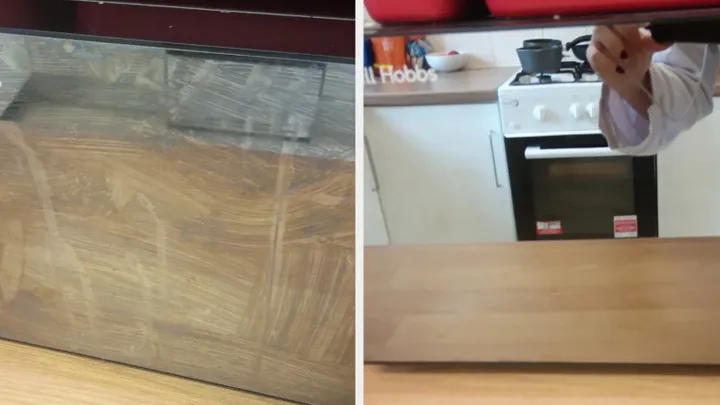
During my time as a cleaner, I learned a lot about which products were worth saving and splurging on. A good mop? Splash the cash! Glass and metal cleaners? Not so much.
That’s because in my experience, specially-designed glass sprays leave streaks and a thin film behind. As window cleaning services Window Hero write, “Many store-bought cleaners leave behind… soap or chemicals.
“If this residue isn’t thoroughly rinsed, it dries on the glass and causes streaks.”
Instead, I use what I’ve since seen other cleaners swear by: good ol’ washing up liquid, and/or white vinegar.
How can I make a DIY glass cleaner?
In an Instagram Reel, cleaning influencer Jessica May showed a video of her using a Dishmatic full of washing-up liquid and white vinegar on her windows.
“Mix equal part[s] dish soap and white vinegar… lightly scrub this over your windows, use a squeegee and voila. I also used a microfibre cloth to remove any excess water from the bottom of the window,” she wrote.
Personally, I’d ditch the Dishmatic: I’d worry that it’d leave far too much product on the surface itself, which could put you at the same streak risk as using a window spray. “If too much cleaning agent is used in the solution, a greasy film can form on the window,” said cleaning product company Karcher.
But as for the ingredients themselves, cleaning company Wecasa said that around a half-teaspoon of washing-up liquid per 500ml of water is ideal for greasy marks.
Meanwhile, a 1:1 ratio of white vinegar to water sprayed on a glass surface is great for everyday dirt.
Karcher agreed with both approaches, though they warned you’ll want to cover any marble sills or nearby surfaces if you’re using vinegar, as it can damage the surface.
And Tradesman Saver wrote that “While there are many commercial glass cleaners available, professional cleaners often prefer simple, homemade solutions,” including one made with one part water, one part white vinegar, and a few “optional” drops of washing-up liquid.

How else can I clean my glass surfaces?
Other ways to achieve a streak-free clean include thoroughly rinsing windows with clean water after applying soaps and wiping them clean with a lint-free microfibre cloth.
Whether you’re using a spray, vinegar, or washing-up liquid, don’t use too much: this is what can leave a film behind.
And try to avoid cleaning windows on sunny days. That can make liquids dry far too fast, leaving residue behind.

!function(n){if(!window.cnx){window.cnx={},window.cnx.cmd=[];var t=n.createElement(‘iframe’);t.display=’none’,t.onload=function(){var n=t.contentWindow.document,c=n.createElement(‘script’);c.src=”//cd.connatix.com/connatix.player.js”,c.setAttribute(‘async’,’1′),c.setAttribute(‘type’,’text/javascript’),n.body.appendChild(c)},n.head.appendChild(t)}}(document);(new Image()).src=”https://capi.connatix.com/tr/si?token=ff7fdddc-5441-4253-abc4-f12a33fad58b”;cnx.cmd.push(function(){cnx({“playerId”:”ff7fdddc-5441-4253-abc4-f12a33fad58b”,”mediaId”:”285f6daf-e766-4c59-97f4-506cd638efbf”}).render(“69eb56aee4b0f3a433ca12f7”);});
Kids may say the darndest things, but parentspost about them in the funniest ways.
Every week, we round up the most hilarious quips from parents across social media platforms like X, Threads and Bluesky to spread the joy. Scroll down to read the latest batch.
Related…




It’s been announced that Helena Bonham Carter will no longer be appearing in the upcoming fourth season of The White Lotus.
However, just over a week after production got underway, US broadcaster HBO announced that Helena would no longer be taking part in the new episodes.
“With filming just underway on Season 4 of The White Lotus, it had become apparent that the character which Mike White created for Helena Bonham Carter did not align once on set,” a spokesperson said.
“The role has subsequently been rethought, is being rewritten and will be recast in the coming weeks.”
“HBO, the producers and Mike White are saddened that they won’t get to work with her, but remain ardent fans and very much hope to work with the legendary actress on another project soon,” the statement concluded.
In their reporting on the matter, Deadline cited undisclosed “sources” who claimed that Helena had already filmed several scenes when The White Lotus creator Mike White – who also writes and directs the show – “felt that her character as originally conceived was not what it should be”.
This isn’t the first time a White Lotus has been recast once production is already up and running.
Early on in the process of making season three, Charlotte Le Bon was brought in to replace Francesca Corney in the role of Chloe.
Francesca had already been flown out to Thailand and had spent time with the rest of the cast, when it was announced that her role was being recast, reportedly due to the fact that producers wanted Chloe to come across as slightly older.
Woody Harrelson was also supposed to play a pivotal role in season three, with reports claiming he pulled out due to a pay dispute.
The three-time Oscar nominee later clarified that he’d actually withdrawn as filming would have clashed with a pre-planned family holiday, which is how he came to be replaced in the project by Sam Rockwell.
Other stars confirmed to be appearing in the fourth season of The White Lotus include Kumail Nanjiani and Black Swan’s Vincent Cassel, Max Greenfield, Heather Graham and Sandra Bernhard.
Mike White previously teased that the new season would be centred around questions about fame, and will be set during the Cannes Film Festival.
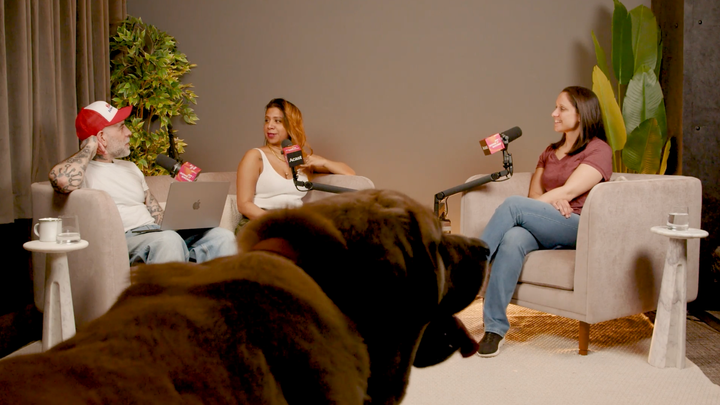
You’ve finally saved up a little money. You have a stable living situation. It’s been a long time coming, but you’re finally ready to do the most grown-up thing possible: Take care of someone other than yourself.
The next step is crystal clear. Time to start looking for your dream dog. For many of us, that means heading to the local shelter to rescue a scrappy little companion whose life you can enrich with treats, long evening walks and the most vigorous of belly rubs.
First of all, cheers to you for choosing a shelter over a breeder or pet store. So many experienced pet parents — including us, Raj Punjabi-Johnson and Noah Michelson, co-hosts of HuffPost’s Am I Doing it Wrong? podcast — can attest to the joy of giving a rescue a great home.
And if you have a preference for a certain breed, you’re in luck. Contrary to popular belief, shelters house every kind of dog. “We recently posted a gray poodle named Izzy on our social media, and she has this frou-frou gray hairdo,” said Rachel Ziering, founding executive director of Muddy Paws rescue and pet adoption expert, on this week’s episode. “We get poodles, we get Shih-Tzus, we get maltipoos — and we get puppies. So it might take a little longer [to get] whatever you’re looking for, but we do get all kinds of dogs.”

So dream big (literally, if you want a huge dog, please check out Zeiring’s unbearably sweet 162-lb. foster pup Earl, who also made an appearance on this episode). And when you think you’ve found your new bestie, remember to ask these questions to ascertain whether the dog will be a good fit — because the goal, after all, is to gallop off into the sunset together and live slobberly ever after.
Straight out of the gate, Ziering suggested, you should ask about the pup’s temperament. Are they very outgoing or a bit of an introvert? Are they anxious or generally unbothered? These are important personality traits of a pet that will help you decide if they will be able to comfortably acclimate to your lifestyle.
“And then in terms of medical, you’re going to want to make sure the dog has all of its basic vaccines and testing and all of that stuff,” Ziering added, “which any reputable shelter is going to be doing.”
You also want to ask about the dog’s social behaviour around other animals — especially if you live in a city. In this case, she says, you’re really going to need a dog who can kind of tolerate and get around in busy, heavily populated streets. “Have you seen the dog with other dogs? Have you seen the dog with cats?” Ziering prompted. “And usually the answer is no there. But in a foster-based rescue, sometimes the answer is yes.”
In terms of what you should ask yourself before signing those adoption papers, Ziering advises taking into consideration your own social and travel habits to making sure you’re able to really give your new pet the attention and care they require. “If you don’t feel like you’re in a good place to give a dog or cat a forever home, foster,” she added. “It’s beautiful. We need fosters more than anything. We can’t take dogs from shelters unless we know that we have a foster home for them.”
On this episode, we also talk to Ziering about why certain pets end up at shelters to begin with, and all the ways we can help a new pet feel comfortable and safe, so click here to hear the full episode or listen wherever you get your podcasts.
Make sure to subscribe to “Am I Doing It Wrong?” on whatever podcast platform you prefer.
For more info about Muddy Paws, head here.
Have a question or need some help with something you’ve been doing wrong? Email us at AmIDoingItWrong@HuffPost.com, and we might investigate the topic in an upcoming episode.
Politics
Simba Hybrid Pillow & Duvet Review 2026: Is The Temperature-Regulating Technology Worth The Price?
We hope you love the products we recommend! All of them were independently selected by our editors. Just so you know, HuffPost UK may collect a share of sales or other compensation from the links on this page if you decide to shop from them. Oh, and FYI — prices are accurate and items in stock as of time of publication.
If you’re anything like us, you’re completely obsessed with sleep RN. And we don’t blame you – life is busy, our brains are constantly wired, and all we want is a good night’s sleep to get us through the week.
Things get even more complicated when we reach the warmer months: waking up with the light, sweating through the night, and having to wash our sheets every few days to make up for it.
If there’s anything that can stop us from running hot at night, we’re all over it.
So when we heard that Simba – the company renowned for its unbeaten mattresses, pillows, and duvets – had launched a fresh bedding collection, we were the first to jump into bed. Yep, Simba didn’t even have to take us out for dinner first!
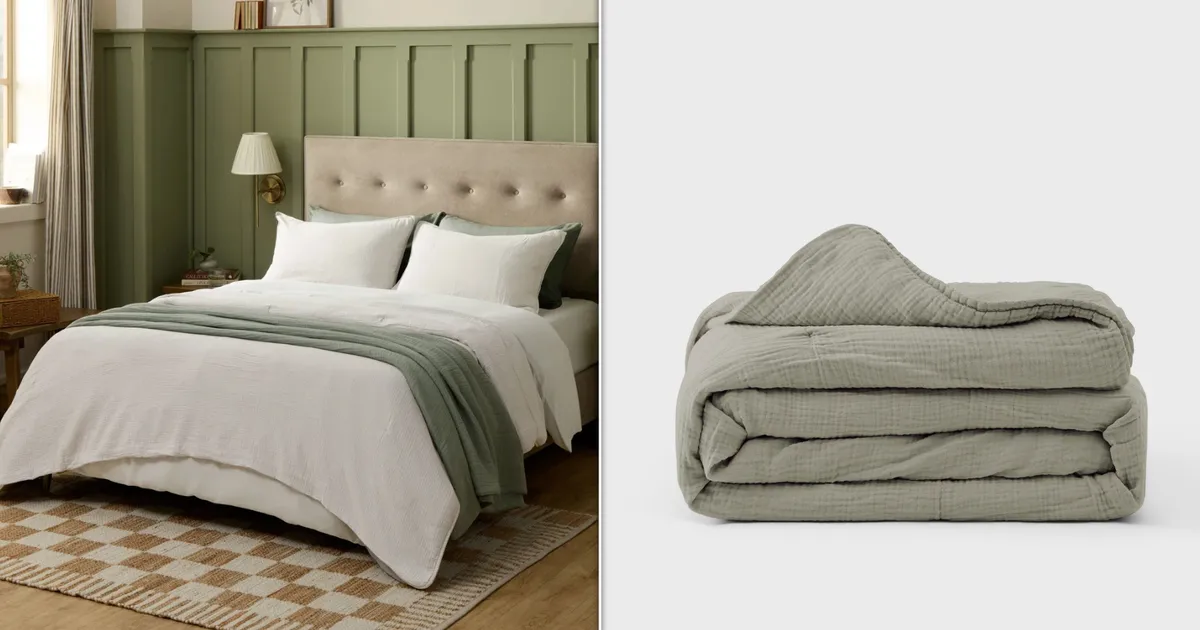
Intended to ‘redefine the sleep environment’ the launch is made up of six temperature-regulating fabrics, including Tencel, linen, muslin, and cotton (percale, waffle, and Egyptian, don’t you know!).
No matter what kind of texture you’re into, there’s something for everyone – you could even mix and match!
While it might be on the pricier side, each fabric is intended to adapt to different temperatures so you don’t have to keep switching up your bedding with each season (so really you’re saving money).
You can also choose from seven new colours – our faves are the dusty rose and oat cappuccino – to layer for the ultimate cosy cocoon.
Whether you’re looking for fresh pillowcases, sheets, or a new set entirely, this is our pick of Simba’s latest bedding release.

We hope you love the products we recommend! All of them were independently selected by our editors. Just so you know, HuffPost UK may collect a share of sales or other compensation from the links on this page if you decide to shop from them. Oh, and FYI — prices are accurate and items in stock as of time of publication.
Warm weather is here and, while we can’t promise it’s to stay, the sun has landed just in time for the May Bank Holiday weekend.
You know what that means: three days of figuring out what to do with your little ones, and luckily there’s ample opportunity to be outdoors.
Instead of succumbing to calls to go to the playground, or get ice cream, getting them in the water is, aside from everything else, a surefire way to tire them out.
Whether you’re embarking on a day the sea, making a quick trip to your local pool, or managing to squeeze in a few days a holiday home in the South of France, we’re green with envy.
To live vicariously through you, and to save you hours on last-minute shopping, we’ve rounded up the best swimming costumes, tankinis, wet suits, and towels for kids to shop now.

For Labour, the elections on May 7 have been looming on the horizon like a giant, immovable iceberg for months.
Every opinion poll tells the same story: voters in England, Scotland and Wales are preparing to deliver an unforgiving verdict on Keir Starmer’s first 22 months in power.
Up to 2,000 council seats are set to be lost, while the SNP will romp to another victory at Holyrood and Labour will lose a Welsh election for the first time in the party’s history.
After another hellish week for the prime minister dominated by the latest developments in the Peter Mandelson scandal, many at Westminster now think that the sheer scale of Labour’s humiliation will finally trigger moves to remove Starmer from Downing Street.
“I suspect the people round Keir know it’s coming to an end,” said one senior Labour figure. “He only has a few supporters left – they can surely see the writing on the wall?”
An idea gaining traction in some quarters is that, to end the speculation about his future, Starmer should announce when he plans to stand down.
“Post-May, MPs will start saying Keir has to set out a timetable for going,” said one proponent.
“Labour can’t make the mistakes the Democrats made in America. Joe Biden left it too late to go and helped usher in Trump. Keir is helping to usher in Nigel Farage.
“He should announce he’s going in the next 12 months to allow an orderly transition to a new Labour prime minister.
“He can then focus on legacy issues he cares about for final year. That would allow a new leader to be in place by summer 2027.”
Of course, Starmer would need to be amenable to such a scenario, and there is little sign that a man who came to Westminster relatively late in life has any desire to call it quits less than two years after becoming PM.
HuffPost UK has also learned that Downing Street officials plan to mount an “Operation Save Starmer” in the aftermath of May 7 to try and keep their boss in his job.
Another significant flaw in the plan to oust the PM is that any new leader would be under intense pressure to call an early general election, possibly as soon as next year.
“You couldn’t have a new leader coming in with an entirely different policy prospectus and not go to the country,” said one Labour insider. “The public simply wouldn’t wear it.”
For those Labour MPs who are all-but guaranteed to lose their seats, a general election in 2027 is not an attractive prospect.
Others are less certain of Starmer’s imminent demise, however, pointing to the fact that the PM’s critics cannot agree on his replacement.
“Nothing’s going to happen until the cabinet can agree on who should take over,” said a Labour veteran.
Defence secretary John Healey has his supporters, while foreign secretary Yvette Cooper – who stood for the leadership in 2015 – is said to be taking soundings from Labour MPs.
“Yvette is definitely sniffing around it,” said an insider. “There’s some talk of her doing a deal with Wes [Streeting], which could see him become her chancellor.”
Of course, Streeting has not given up his leadership ambitions, although one party grandee said the health secretary’s own links to Mandelson mean his hopes of becoming PM are now “done”.
Angela Rayner’s ongoing entanglements with His Majesty’s Revenue and Customs over her tax affairs would appear to rule out any leadership challenge in the short-term.
Andy Burnham’s enduring popularity with the public – a rarity for a senior Labour politician these days – means he is favoured by many MPs.
“The Burnham train has left the station and everybody will be clambering to get on it,” an MP told HuffPost UK.
But until he can find a way back to Westminster – he is believed to have his eye on Peter Dowd’s Bootle seat – his leadership hopes remain on hold.

“I think the best way to describe the current situation is ‘stuck’,” said one source. “But the election results are going to be disastrous and that could trigger a response – that could be the thing that unsticks it.”
One MP who remains supportive of Starmer said his removal was “not going to happen”.
“There could be a reshuffle, but nothing more,” the MP said. “None of the contenders is able to move right now.”
A cabinet minister conceded “it’s been a bad week” for Starmer, but insisted the speculation about his future was “overdone”.
“It was aways going to be difficult local elections period, but I really don’t think there’s a huge desire for change or a settled view on what any change would be.
“The point of changing is that the person with whom you replace the prime minister is definitely better than him. Who is that person?”
“Biden left it too late to go and helped usher in Trump. Keir is helping usher in Farage”
A government source said the growing campaign to oust the PM could provoke its own backlash.
He said: “I think a lot of MPs will take a dim view of what is a concerted campaign to push out a Labour prime minister, and that could lead to a ‘rally round the flag’ moment.
“If the question is who can best lead this country through a geopolitical crisis and has the gravitas to manage all these conflicts, I think Keir is pretty much the best answer to that question.
“John and Yvette are undoubtedly very capable people, but I think Keir is a better answer that Streeting, Rayner and Burnham.
“Of course it’s been a really difficult week, but I don’t think it’s going to change anything fundamentally.
“I don’t think any of the other candidates can answer the question of would they be better, or how can they manage a transition process to a new PM that doesn’t knock us out of government for a generation.”
Another insider said there was a far more pragmatic reason for the other leadership contenders not to move against Starmer just yet.
“If I was Angie or Wes looking at the economic fallout of the Iran war, I’d think that getting into power this summer looks much less appetising than it did six months ago when we were looking at a growing economy, falling NHS waiting lists and falling inflation,” they said.
“If it were me I’d be thinking ‘do I want to be in charge now’.”
The PM’s spokesman stretched credulity on Friday when he told reporters that his boss will be in charge until the next election and beyond.
“He’s very focused on the job,” the spokesman said. “He will continue to lead the government throughout this parliament and beyond.
“He’s got a huge amount of work to do, the governments got a huge amount of work to do.
“We’ve set out a significant programme of domestic reform, including bringing down NHS waiting lists, tackling the cost of living and investing in security and defence. That’s where the prime minister is fully focused.”
Few truly believe that Starmer will still be prime minister by the time of the next election.
But it is by no means certain that May 7 will trigger an unstoppable chain of events which will see him depart No.10 within weeks.
Subscribe to Commons People, the podcast that makes politics easy. Every week, Kevin Schofield and Kate Nicholson unpack the week’s biggest stories to keep you informed. Join us for straightforward analysis of what’s going on at Westminster.

Berkshire Hathaway Stock: Selling At A 20% Discount To Asset Value (NYSE:BRK.B)

5 Pollinator-Friendly Flowers To Bring Wildlife To Your Garden

World champion says Conor Benn pulled out of fight after the ‘whole deal was set up’

Manchester United reach agreement with Casemiro over contract clause amid transfer speculation

US brings back mandatory military draft registration

Steven Gerrard disagrees with Gary Neville over ‘shock’ Chelsea and Arsenal claim | Football

What is CryptoCurrency? | Everything About Bitcoin & Cryptocurrencies Explained for Beginners

These Illegal Immigrants Are F*cked | Financial Audit

L&T Finance Share q4 result 2026 i L&T Finance share dividend I L&T Finance SHARE LATEST NEWS I LTF
-

 Business6 days ago
Powerball Result April 18, 2026: No Jackpot Winner in Powerball Draw: $75 Million Rolls Over
-

 Politics6 days ago
Zack Polanski demands ‘council homes not luxury flats for foreign investors’
-

 Fashion16 hours ago
Weekend Open Thread – Corporette.com
-
Entertainment5 days ago
NBA Analyst Charles Barkley Chimes in on Ice Spice McDonald’s Fiasco
-

 Tech6 days ago
Auto Enthusiast Scores Running Tesla Model 3 for Two Grand and Turns It Into Bare-Bones Go-Kart
-

 Politics5 days ago
Gary Stevenson delivers timely reminder to register to vote as deadline TODAY
-

 Politics3 days ago
Making troops accountable for war crimes threatens US alliance, ex-SAS colonel warns
-

 Business3 days ago
Rolls-Royce Voted UK’s Most Iconic Trade Mark as IPO Register Hits 150
-

 Politics3 days ago
Disabled people challenge government SEND proposals over segregation concerns
-
 Crypto World5 days ago
Bank of Hawai’i (BOH) Q1 2026: Net Income Drops to $57.4M as Net Interest Margin Expands
-

 Politics3 days ago
Zack Polanski responds to home secretary’s taser threat
-
Politics3 days ago
Wings Over Scotland | How To Get Away With Crimes
-

 Politics3 days ago
Starmer handler McSweeney to be dragged from shadows by Foreign Affairs Committee
-
Crypto World6 days ago
Kelp DAO rsETH Bridge Hack Drains $292M as DeFi Losses Top $600M in Two Weeks
-

 Politics3 days ago
‘Iran is still a nuclear threat’
-
 Crypto World4 days ago
Five Value Stocks with Recovery Potential in 2026: PayPal (PYPL), Nike (NKE), and More
-

 Crypto World3 days ago
New York sues Coinbase, Gemini over prediction market offerings
-

 Business3 days ago
The Job Benefits Most Men Don’t Know to Negotiate
-

 Crypto World24 hours ago
Michael Saylor says BTC winter is over. Market analyst disagrees, says bitcoin was in a pullback
-

 Politics6 days ago
Reform investigating candidate who ‘hates’ the NHS
You must be logged in to post a comment Login