
Politics
Politics Home | Expert-backed arthritis lifestyle tracking app launched to help patients better manage symptoms and wellbeing


Arthritis UK and Ampersand Health launch arthritis management app
Today, Arthritis UK and Ampersand Health launch the improved My Arthritis app, designed to help people living with arthritis better manage their condition and wellbeing.
With around 10 million people in the UK living with a form of arthritis, My Arthritis is a free, expert-led self-management app designed to allow people with arthritis to track symptoms including specific pain points, monitor lifestyle factors, and build long-term plans for better health.
Developed with the expertise of leading rheumatologists and focused on whole-person health, it offers digital support content, medication reminders, and personalised insights to help manage flares, improve mobility, and enhance quality of life.
The app also follows a ‘clinician in the loop’ model and is available on license to NHS Trusts, keeping doctors informed so they can spot changes early, adjust treatment if needed, and stay connected without extra appointments.
My Arthritis has been developed in partnership with clinical experts and people with lived experience of arthritis to deliver evidence-based, targeted interventions to help guide patients towards living well. It supports individuals from symptom onset and diagnosis through to long-term wellness, providing the tools to understand and manage their arthritis more effectively.
Without these courses, I don’t know how I would have managed. They remain a vital resource I turn to for reinforcement and guidance.
My Arthritis app user, Willy, who is living with rheumatoid arthritis
Arthritis UK is the leading arthritis charity providing information, education and support services, as well as funding world-class research and campaigning on the issues which matter most to people living with arthritis.
Zoe Chivers, Director of Services at Arthritis UK, says:
“Managing arthritis isn’t just about medication: it’s about understanding the condition and making daily choices that support wellbeing. That’s why we are proud to announce My Arthritis; a free, expert-led self-management app for tracking your symptoms, monitoring lifestyle factors, and building long-term plans for better health.
“We know that providing the right information, education and support in the right format and at the right time, can make an enormous difference to people’s ability to manage their condition and improve their quality of life.
“We are delighted to partner with Ampersand Health on this life-changing clinical tool which we hope will help many more people with arthritis live happier and healthier lives.”
Nader Alaghband, CEO of Ampersand Health, says:
“We are delighted to partner with Arthritis UK to offer more meaningful, patient-centred solutions for people living with arthritis.
“This partnership exemplifies how collaboration between digital health innovators and patient charities can drive real change in the way long-term conditions are managed.”
My Arthritis is available to download for free via the App Store or Google Play Store, or via the website


Amidst what can sometimes feel like a barrage of exercise advice, the NHS says that the benefits of a simple walk often go “overlooked”.
The movement, after all, is linked to better heart, brain, and mental health.
And, some posit, “Nordic walking” may be even better for you than the “regular” kind.
It’s been associated with higher calorie expenditure and less joint pain than going for a normal stroll, while some research suggests it may even ease chronic fatigue.
Here, we spoke to Dr Giuseppe Aragona, GP and medical adviser for Prescription Doctor, about why “Nordic walking” seems to be so good for us – and how it stacks up against the oft-repeated 10,000 steps rule.
What is “Nordic walking” and is it better than 10,000 steps?
Nordic walking involves using two poles to propel yourself as you walk. It was first popularised in the ’90s by skiers, hoping to build their strength off-season.
Because it involves the use of your torso and arms, it engages more of your muscles (up to 90% vs regular walking’s 50-ish %, Harvard Health said).
“In many ways,” Dr Aragona told HuffPost UK, “it offers advantages over simply aiming for 10,000 steps a day”, provided you move enough to meet fitness recommendations.
After all, she explained, the figure “was never based on robust medical evidence; rather, it emerged as a marketing concept in the 1960s.
“What we now know is that meaningful health benefits can be achieved with far fewer steps, and that the quality and intensity of movement matter just as much as the number of steps taken.”
Nordic walking may be a more vigorous activity, the GP continued, because it gets more of your body moving.
“Studies suggest it can increase energy expenditure by around 20% compared with ordinary walking at the same speed, so people often achieve a moderate-intensity workout more quickly,” she stated.
“For most adults, around 150 minutes of moderate-intensity activity per week is the recommended target, and Nordic walking is an excellent way to meet that… Nordic walking can make each step ‘count’ a little more towards cardiovascular fitness.”
Who might benefit most from “Nordic walking”?
Dr Aragona explained that the technique is an excellent choice for those suffering from joint pain, “including those with mild-to-moderate osteoarthritis”.
That’s because “The poles act almost like a support system, distributing some of the body weight through the arms and reducing the load going through the hips, knees, and ankles. This can make walking more comfortable and allow people to walk further or more confidently than they might otherwise manage.”
Additionally, Nordic walking encourages better posture and a longer stride – both of which the GP says can reduce stiffness.
And the added stability and balance the poles offer “can reduce the fear of falling and allow [people] to remain active, important for joint health in the long run”.
The sport, which is often associated with older people, can “be an excellent full-body workout for any age group,” as “It strengthens the core, improves coordination, and provides a cardiovascular boost without the higher impact of running,” Dr Aragona shared.
“Younger adults who find walking ‘too easy’ often enjoy the increased challenge and pace they can achieve with poles,” she ended.
“It can also be ideal for people recovering from injury, those who want a low-impact form of cross-training, or anyone looking for an outdoor activity that improves fitness and strength simultaneously.”
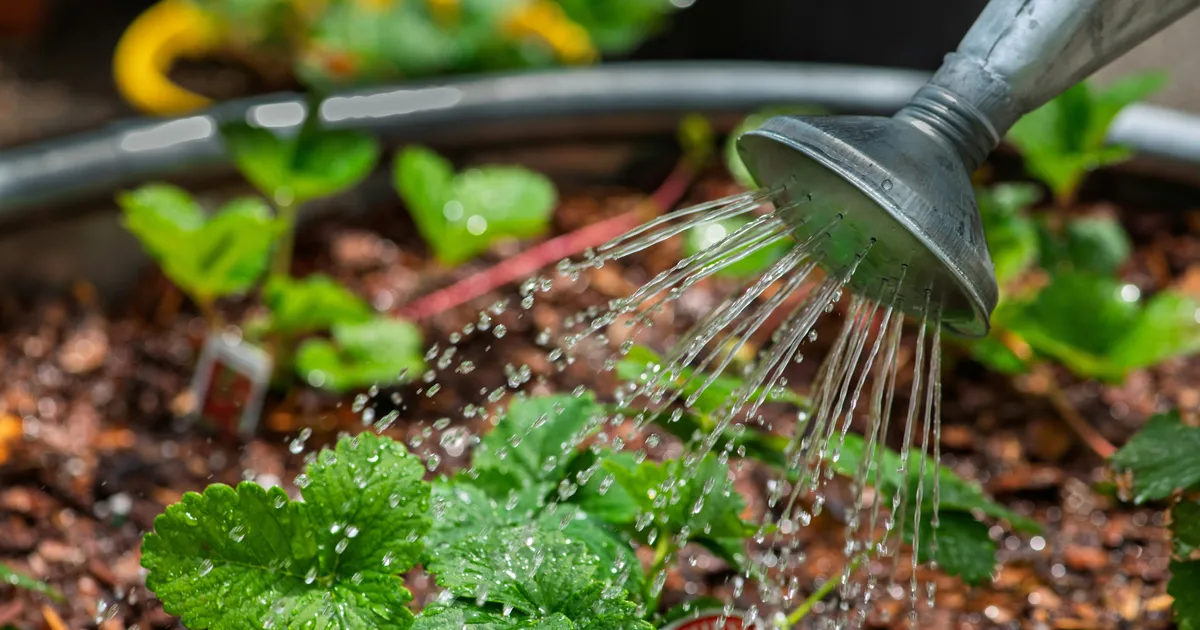
Watering should be so simple; pour water on thirsty plants, which gratefully sup up exactly what they need to flourish.
Unfortunately, Mother Nature is a bit more complicated than that.
There are wrong and right times to water your plants. You can over-water and under-water them. And plants lose some water through transpiration that can be hard to measure.
So, we thought we’d collect the best watering tips we’ve seen so far.
1) Pick up plant pots
Dehydrated potted plants will feel lighter than usual as the moisture content has left the dirt. If it’s less heavy than it should be, water it.
2) Generally speaking, you should water in the morning
Not only does this help to stop slugs from eating your leaves, but it is also when plants are most able to absorb water. It comes just before their most active and water-heavy part of the day, too.
3) Use the “knuckle test” to check soil moisture
It might seem like your flourishing flowers prove they’re getting enough H2O. But actually, you can’t tell if the soil beneath is properly hydrated without touching it.
Place your fingers into the soil until at least knuckle depth to see if it’s truly wet enough.
4) Water containers with 10% of their volume
Plants in containers tend to need more water than those in the ground, because their soil isn’t as deep. When watering them, try adding 10% of the container’s volume (so 1L for a 10L pot), the Royal Horticultural Society (RHS) said.
5) Choose rainwater when possible
Rainwater has a pH and mineral content that plants really, really love. Try to use a water butt throughout the year, keep the rainwater in your plants by mulching them, and/or place saucers under your containers.
6) Aim water right at the base of your plants
When watering garden plants, place the nozzle of a watering can right at their base, below the foliage, so that the roots have a chance to access it.
Some potted plants, meanwhile, will benefit from having their entire base submerged in water from time to time instead of the odd sprinkling.
7) Know the signs of dehydration
Plants all need a different watering schedule. But most of them share similar signs of dehydration, including dull leaves, decreased flower and fruit production, downward-facing or curling leaves, and lighter potted plant weight.
8) And learn the signs of overwatering, too
Wilting, which can also be a sign of underwatering, happens when you’ve overwatered them too; lift the plant up to see if water’s gathered at its base to see what you’re dealing with.
Other signs include yellowing leaves, mouldy patches, stem rot, and dark roots.
9) Don’t let leaves stay wet for too long
This can cause disease and even scald the leaves, especially “hairy” ones, in heatwaves.
10) Use water smartly
I can’t remember the last summer we didn’t have a hosepipe ban (and it turns out hoses aren’t usually the most efficient watering method anyway). Embrace “grey water” from your bath, sink, and shower; soil is usually more than capable of filtering out detergents.
Having a rain butt, keeping grass clippings on your lawn after mowing, and mulching with everything from stones to coffee grounds can help too.
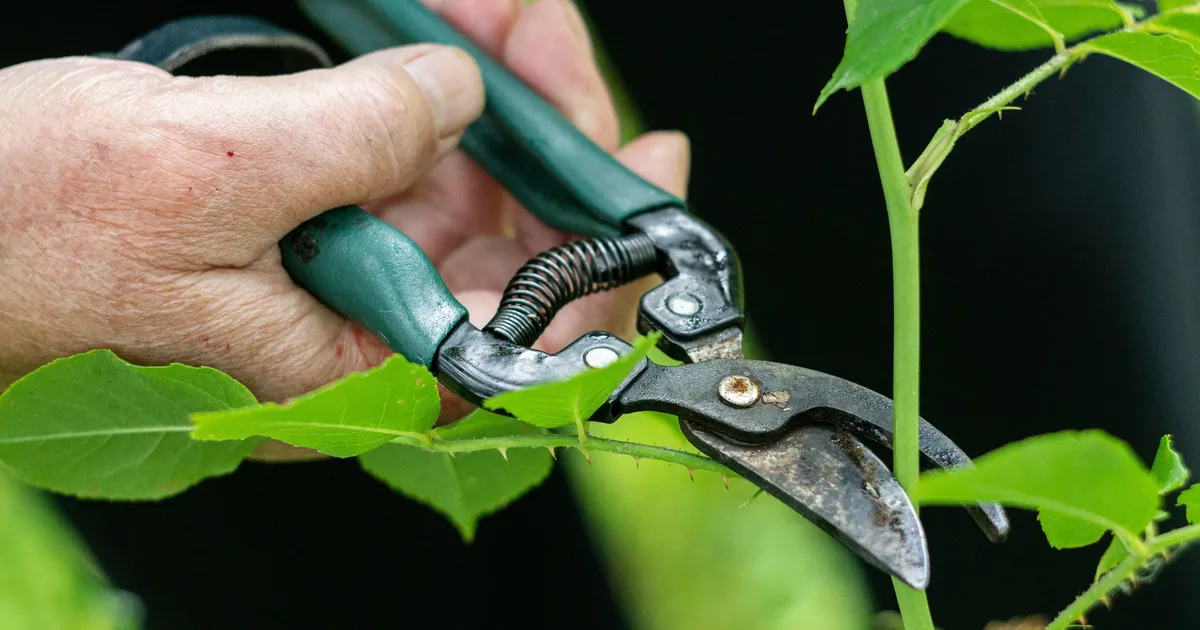
Expert comment provided by horticultural expert Jack Stooks, former Head Gardener to King Charles at Highgrove House Garden, who’s currently working with Savoo.
It can feel pretty counterintuitive to spend months – even years – perfecting your rosebush, only to lop its branches off.
Even Monty Don admits that pruning can cause “some anxiety”. It can be hard to feel sure you’re cutting at the right time, in the right place, on the right plant, to prevent unwanted dieback.
Thankfully Jack Stooks, former gardener to King Charles, has shared his ultimate pruning tips with us.
“By cutting things down, you’re always trying to encourage growth to come from the very base of the plant,” he explained.
“Doing that keeps the plant healthy because you’re using plant material that’s new year after year, rather than holding on to old dead wood that’s hard and doesn’t properly flower.”
What should I prune?
“With pruning, we always go with diseased, damaged and dying,” Stooks told us.
“If you’re going to prune a rose, for instance, you’ll inspect the rose and see what’s dead. If there are any branches that are dead within it, cut those out.”
And if any parts are diseased, you can cut them off. Once that’s gone, you can see what needs more work.
“Generally speaking, most plants you would take off about one quarter maximum, but you could probably take off a third of the growth. With roses, you can take away more.”
You might also want to remove crossover or weaker branches. “You want to have really sharp secateurs or a really nice sharp saw to use for the bigger branches,” Stooks said.
Once the pruning’s done, fertilise and feed the plants.
“You can dig the manure in, or use some blood, fish and bone for the plant, or get fertilisers. It’s good practice to prune everything, then feed the plants afterwards to maintain good growth.”
What time of year should I prune?
Generally, Stooks said, you want to do the job before spring and after winter.
“You can start pruning things from December into the early months of the year… you don’t want to be pruning when things are trying to grow.”
For example, pruning forsythia in summer will mean it simply won’t flower, he explained.
It’s also illegal to deliberately harm a bird’s nest in the UK, which is why some experts advise against cutting back hedges from March to September.
“There are some plants that are good for a late winter prune, like wisteria. You can also do a late summer prune, like with an apple tree,” Stooks added.
“Once the apples have finished on the branches, you can pick them and do a prune of the plant, which can be done in the late summer, but in the later winter, I’d give them a better prune.”
Ornamental pruning can also “be done during the growing season”.
What should I avoid when pruning?
Stooks said he always prunes plants at different levels (e.g. not to one solid length).
“Some people will get a trimmer and they’ll go into their garden and shape their shrubs. They can shape it into a ball shape and leave it at that. You very often see gardens where the shrubs look like they’re trying to grow but aren’t given the opportunity.
“I don’t necessarily agree with this method, as I do think a natural look always looks better,” he said.
Instead, he recommends a more freehand approach, with “secateurs or a little saw, or loppers if you need, and try and open the shrub up a little bit… That’s the best way of pruning because you’re getting air and light into the plant”.
How can I tell if a plant needs pruning?
“You can usually tell by the growth that a plant has put on, so it is worth inspecting it,” Stooks told us.
“With roses, you can sometimes tell by the height of the plant. You might buy some roses, then they end up growing to around five feet… That’s the same for any shrub.
“You might have had a beautiful view of a field from your garden, but then three shrubs have taken over and are way too big for that space, so taking control of that would be the way forward.”

Presenter and journalist Anna Whitehouse has opened up about a little-known phenomenon that helped offer some comfort after experiencing multiple miscarriages.
During an appearance on the CBeebies Parenting Helpline podcast, Anna (known as Mother Pukka on social media) said she was “woefully” unprepared for losing a baby, as it’s not something touched upon in school or spoken about in society.
Sadly, she ended up experiencing five miscarriages. In the UK, when a person has three or more miscarriages, it’s known as “recurrent miscarriage”, which affects around one in every 100 couples trying for a baby.
Candidly sharing her experience, Anna described how learning about microchimerism “changed everything” for her after experiencing such devastating loss.
What is microchimerism?
When a baby is in the womb, cells travel into the parent’s body through the placenta, according to Vox. While lots of cells get targeted and destroyed by the parent’s immune system, others will travel around the body – making a beeline for various organs: the heart, lungs, brain.
There, they’ll enmesh themselves in the tissue and become one with the body. This exchange is known as microchimerism.
Some studies have found these cells have been present years after conception – in 1996, a geneticist discovered male foetal cells in a mother’s blood 27 years after giving birth, according to Scientific American. In some cases, the cells can even pass on and live within future siblings.
The exchange of cells can start as early as the first few weeks of pregnancy, according to biotechnology company Ariel Precision Medicine – and it’s been shown to happen in other mammals too.
It’s not entirely clear what these cells are doing in the body, however some studies suggest they could have healing properties – the cells have even been found in healed C-section scars.
Some studies suggest the presence of such cells could explain why women who’ve been pregnant have a lowered breast cancer risk. Others, however, note the cells could play a role in autoimmune diseases – however the jury’s out for now.
Anna, who has three daughters, acknowledged that those “little lives that have been lost” are “not away, abandoned; they’re there, they’re a part of you”.
She added that “knowing that my babies are a part of me on a cellular level” has “healed something in me”.
She’s not alone in finding comfort in this knowledge. In 2023, former Hear’Say singer Myleene Klass – who has previously spoken about experiencing four miscarriages – shared a video explaining the process of microchimerism and why it’s so important for mothers who’ve lost babies.
“Whilst there’s no little one to physically hold, knowing they’re quite literally in your heart and mind changes everything,” she wrote in a touching Instagram post.
“It’s hard sometimes, believing your body let them down, but there’s comfort in knowing it’s your body where they now reside.”
CBeebies Parenting Helpline is available on BBC Sounds and all other platforms.
Help and support:
- Sands works to support anyone affected by the death of a baby.
- Tommy’s fund research into miscarriage, stillbirth and premature birth, and provide pregnancy health information to parents.
- Saying Goodbye offers support for anyone who has suffered the loss of a baby during pregnancy, at birth or in infancy.
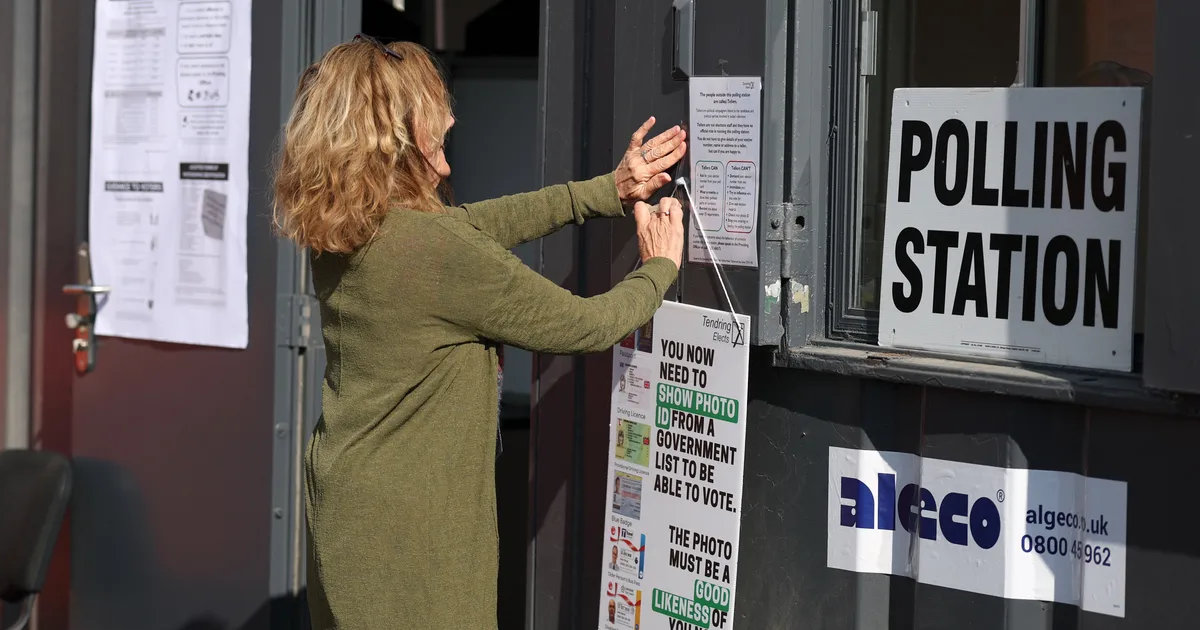
Today, Thursday 07 May 2026, will see voters across the country flock to the ballot box.
In England, voters will have their say in close to 5,000 seats across 136 councils.
Parliamentary elections are also taking place in Scotland and Wales, though there will be no elections in Northern Ireland until May 2027.
Here’s some crucial facts you need to know about the polls today – including some dos and don’ts.
When do the UK polls open and close on 7 May 2026?
The polls have been open since 7am and will close at 10pm tonight, Thursday 7 May.
You will be able to cast your vote after 10pm if you were in the queue to vote before that point.
What if I can’t make it to the polling station?
You can get an emergency proxy vote if you are unable to make it to the polls today due to urgent circumstances you couldn’t have foreseen by the regular proxy vote deadline (usually six days before the polls open).
Emergency proxy applications close at 5pm on 7 May.
That means you can get another person you trust to vote for you in person.
Some reasons to get an emergency proxy vote include:
- A medical emergency,
- Being away for work,
- Lost, stolen, or damaged ID that became missing or got damaged after the deadline to get a Voter Authority Certificate passed. This applies to polls that require ID,
- Acting as a medical companion to someone receiving medical care (Scottish Parliament elections only),
- Needing to change your existing proxy (Scottish Parliament and council elections only),
- Being detained in a mental health institution in relation to criminal proceedings (Scottish Parliament and local council elections only).
If you think you may qualify for an emergency proxy vote, the Electoral Commission said you should contact your local electoral registration office in Scotland or the electoral services team at your local council in England or Wales.
They offer PDFs for various circumstances on their site.
What are some voting dos and don’ts?
How do I know if I can vote?
Firstly, you do have to be registered to vote. The deadline to sign up for these elections has passed, but if you’re not sure whether you can vote or not, you can check here.
If you are registered to vote, you should have been sent a polling card. You don’t have to bring this with you, though the BBC said this can speed things up.
Can I vote anywhere?
You can only vote in your local polling station, which you can find here. However, voters in four parts of England – Cambridge, North Hertfordshire, Milton Keynes, and Tunbridge Wells – will be able to vote in other places as part of a pilot which hopes to make voting easier.
Do I need to bring ID?
You don’t have to use a photo ID when voting in person for the Scottish Parliament or Senedd, but you do when voting in person in the English local elections.
Acceptable forms of photo ID include:
- A passport,
- A driver’s licence,
- A Blue Badge,
- An identity card bearing the Proof of Age Standards Scheme hologram,
- Older or Disabled Person’s bus passes,
- A 60+ Oyster card,
- Armed Forces Veteran Cards.
“You only need to show one form of photo ID. It needs to be the original version, not a photocopy,” The Electoral Commission said. They added that you can still use your photo ID if it’s out of date, so long as it looks like you. The address on your ID does not have to match your current address.
Can I take photos?
You’re encouraged not to take a picture inside the polling station. This could risk the secrecy of your vote and that of other people.
In fact, if you reveal how someone else voted, even by accident, you risk a £5,000 fine and up to six months in jail.
You can usually take a picture outside the polling station, though.
You also cannot discuss politics inside a voting station.
Subscribe to Commons People, the podcast that makes politics easy. Every week, Kevin Schofield and Kate Nicholson unpack the week’s biggest stories to keep you informed. Join us for straightforward analysis of what’s going on at Westminster.

Do you feel secure about your pension?
A 2025 survey by the Financial Conduct Authority found that a third of people have less than £10,000 saved in their plans, which has been described as “worrying”.
And in a recent pension special of the Martin Lewis Money Show, the expert said he has a “rule of thumb” that “scares the pants off everybody.”
What’s Martin Lewis’ formula for pensions?
A viewer asked, “Whilst I want to put more into my pension, I don’t want it to affect my quality of life in the here and now. Is doing 15% contributions as someone in [their] mid-30s enough?”
Lewis replied that the viewer was doing “really well” with that percentage.
Then, he added, “Let me give you the rule of thumb that scares the pants off everybody.
“Take the age when you start putting into your pension, so in your case, we’ll say 30.
“Halve it, that’s 15 [percent contribution]. That’s how much of your income you want going in for the rest of your life for a decent retirement. Very few people ever get there.”
The “real reason” for the advice, he continued, is to illustrate that “the earlier you start, the better… retirement… you’re going to have”.
Of course, he explained, this is in tandem with your State Pension.
How can I tell if I have enough saved in my pension?
The Government has a State Pension Forecast, which will tell you how much you may be entitled to from the government when you reach retirement age.
You can also check what your private pension may be worth when you retire.
These combined figures should tell you roughly what you can expect to bring in a year once you get your pension.
Legal & General said, “The happiest retirees have an average total monthly income of £1,700”.

Following the huge success of its inaugural run, Saturday Night Live UK is getting a second season.
With two weeks still to go on the first outing of SNL UK, Sky announced on Thursday morning that the sketch comedy series will be returning to our screens later this year.
Season two will run from September 2026 until early 2027, for an extended run of 12 episodes, compared to the current iteration’s eight.
Lorne Michaels – the creator of SNL, who is also an executive producer of its UK run – enthused: “I’m incredibly proud of our team and the show. It keeps getting better every week.
“I’m grateful to [Sky CEO] Dana Strong and Sky for believing in and supporting SNL UK. I’m excited for the season ahead.”

SNL UK premiered in March, having had its planned length boosted from six to eight episodes before the first instalment aired.
Despite some initial scepticism in the British media when the project was first announced, SNL UK was met with glowing reviews and promising viewing figures upon its debut.
Ratings have dipped somewhat over the course of SNL UK’s run so far, although its original sketches have continued to perform well on social media, with two of last week’s offerings already among the show’s most-viewed on YouTube.
This coming weekend, Hannah Waddingham is set to serve as SNL UK’s guest presenter for the penultimate instalment of season one.
A week later, Doctor Who’s Ncuti Gatwa will take on hosting duties at the finale, with Myles Smith and Holly Humberstone as their respective musical guests.
SNL favourite Tina Fey fronted the launch episode of the UK edition, and in the weeks since, it’s been presented by Jamie Dornan, Riz Ahmed, Jack Whitehall, Nicola Coughlan and Aimee Lou Wood.
SNL UK continues on Saturday night at 10pm on Sky and Now

Sleep is surprisingly consequential for your heart health. One study found that 11 minutes more sleep each night is linked to a lower risk of heart attack, while other research suggested that a 10-11pm bedtime is linked to a lower risk of heart issues.
And now a new paper has said that how you sleep in your 40s may be especially important, too.
The researchers noticed “an association between the variability in bedtime and sleep midpoint and cardiovascular risk”, meaning that a person’s sleeping pattern might influence their heart health.
Chaotic sleep patterns were linked to poor heart health
The study looked at 3,231 individuals born in Northern Finland in 1966. A week of their sleep was recorded when they were aged 46 using activity monitors.
Then, their healthcare outcomes were followed for over a decade.
Researchers found that inconsistent bedtimes and a greater variability in sleep timing were linked to a higher risk of heart health events like a heart attack, especially among people who got less than eight hours of sleep.
In fact, among those who both didn’t get eight hours’ sleep and had chaotic sleeping patterns, heart attack risk almost doubled.
But there was one caveat: irregular wake-up times weren’t linked to a greater risk of major cardiovascular events, like heart attacks, myocardial infarction or cerebral infarction.
Study author Laura Nauha said: “Previous research has linked irregular sleep patterns to heart health risks, but this is the first time we’ve looked separately at variability in bedtime, wake-up time and the midpoint of the sleep period – and their independent associations with major cardiac events.
“Our findings suggest that the regularity of bedtime, in particular, may be important for heart health. It reflects the rhythms of everyday life.”
How can I develop a better sleep schedule?
Thankfully, maintaining a regular sleep schedule “is one factor that most of us can influence,” said Nauha.
Though this study only showed a link and not a cause, there are some simple ways to help improve your sleep-wake schedule.
Falling asleep at the same time every night helps, as does getting some morning sunlight.
Avoiding caffeine after 2pm, sticking to a consistent wind-down routine, and exercising in the day can help too.

We hope you love the products we recommend! All of them were independently selected by our editors. Just so you know, HuffPost UK may collect a share of sales or other compensation from the links on this page if you decide to shop from them. Oh, and FYI — prices are accurate and items in stock as of time of publication.
If you’re anything like us, you’re completely obsessed with sleep RN. And we don’t blame you – life is busy, our brains are constantly wired, and all we want is a good night’s sleep to get us through the week.
When we heard that Simba – the company renowned for its unbeaten mattresses, pillows, and duvets – had launched a fresh bedding collection, we were the first to jump into bed.
‘It’s changed the way I sleep’
Our audience editor, Hannah Ballantyne, got her hands on some hybrid pillows and cool linen bedding bundle, calling it a total ‘game-changer’ for her sleeping.
“Simba’s hybrid pillows and cool linen bedding are an absolute game-changer for the sleeping. It’s completely changed the way I sleep,” Hannah says.

“I’ll be the first to admit, my sleeping has consistently been all over the place for years. I’ve tried a lot to try and make it better but these products have changed everything for me.
“I’m actually sleeping through the night, in comfort. I also run very warm and the pillows and bedding have kept me cool all night long, which I was quite shocked about, I thought I would still wake up roasting regardless.
“I couldn’t believe the products actually did this. It feels like I’ve found the answer to how to have a great night’s sleep. I would recommend these sheets and pillows highly to anyone. Run, don’t walk.”
There’s something for everyone
Intended to ‘redefine the sleep environment’ the launch is made up of six temperature-regulating fabrics, including Tencel, linen, muslin, and cotton (percale, waffle, and Egyptian, don’t you know!).
No matter what kind of texture you’re into, there’s something for everyone – you could even mix and match!
While it might be on the pricier side, each fabric is intended to adapt to different temperatures so you don’t have to keep switching up your bedding with each season (so really you’re saving money).
You can also choose from seven new colours – our faves are the dusty rose and oat cappuccino – to layer for the ultimate cosy cocoon.
Whether you’re looking for fresh pillowcases, sheets, or a new set entirely, this is our pick of Simba’s latest release.

More than half of Britons think there should be a general election if Keir Starmer is kicked out of office, according to a new poll.
YouGov found 53% of 4,871 respondents want to go to the ballot box again if the prime minister is ousted from 10 Downing Street, compared to just 27% who do not want there to be another election.
The pollsters found 35% of voters who backed Labour in 2024 agreed that there should be an election, though a larger proportion (49%) said there should not be a return to the polls.
The findings come amid growing speculation that the prime minister will face a leadership challenge if Labour does as poorly as expected in the May elections.
With almost 5,000 council seats in England up for grabs, along with the devolved parliaments in Wales and Scotland, pollsters are expecting voters to punish the government for its turbulent 22 months in power.
The PM’s inner circle fear that angry Labour MPs could sign a letter to Starmer demanding he set out a timetable for his departure from office after a torrid set of results over the weekend.
Allies of senior Labour figures such as health secretary Wes Streeting, former deputy prime minister Angela Rayner and Greater Manchester mayor Andy Burnham have all suggested they would be ready to replace Starmer, too.
However, HuffPost UK previously reported that the PM is determined to hang onto his job.
A senior government source said: “A team of spads [special advisers] are going in to No.10 on Friday to basically help protect the prime minister from any potential leadership challenges.
“The original plan was for them to be based in Labour HQ, rather than their departments, but the feeling now is it’s better to have them in Downing Street working for the PM.”
Subscribe to Commons People, the podcast that makes politics easy. Every week, Kevin Schofield and Kate Nicholson unpack the week’s biggest stories to keep you informed. Join us for straightforward analysis of what’s going on at Westminster.

Bunker House is What Darth Vader’s Beach House Might Look Like

Asake – Oba (Official Visualizer)
Bitcoin Analysts Say This Must Happen for a ‘Durable’ BTC Price Recovery

Manchester United reach agreement with Casemiro over contract clause amid transfer speculation

US brings back mandatory military draft registration

Steven Gerrard disagrees with Gary Neville over ‘shock’ Chelsea and Arsenal claim | Football


-

 NewsBeat4 days ago
Channel 5 – All Creatures Great and Small series 7 new post
-

 Crypto World5 hours ago
Upbit adds B3 Korean won pair as Base token gains Korea access
-
 Tech6 days ago
Trump’s 25% EU auto tariff breaches Turnberry Agreement that also covers semiconductors and digital trade
-
 NewsBeat6 hours ago
NCP car park operator enters administration putting 340 UK sites at risk of closure
-
 Sports6 days ago
Paul Scholes issues Marcus Rashford reality check as agreement emerges over Man United star
-

 Entertainment6 days ago
Met Gala 2026 Rumored Guest List Is Turning Heads
-

 Business6 days ago
Strait of Hormuz Blockade Persists Amid US-Iran Standoff, Sending Oil Prices Soaring
-
Entertainment6 days ago
New on Prime Video in May 2026 — Full List of Movies and Shows
-

 Sports6 days ago
Cavaliers vs. Raptors Game 6 live score, updates, highlights from 2026 NBA playoffs first-round series
-

 Tech6 days ago
Meta ends Sama contract after Kenyan workers report seeing intimate footage from Ray-Ban smart glasses users
-
 Sports6 days ago
David Benavidez responds to team Canelo saying the fight will never happen
-

 Entertainment6 days ago
Kylie Jenner Hit With Second Lawsuit From Ex-Housekeeper
-

 Entertainment6 days ago
Young and the Restless Next Week: Cane Arrested & Matt’s Deadly New Scheme!
-
Entertainment5 days ago
New Netflix Movies in May 2026 — My Top 3 Picks to Stream
-

 Business4 days ago
Luka Doncic Injury Update: Doncic’s Hamstring Recovery Slows Lakers’ Hopes Against Thunder: Can He Run Yet?
-
 Sports6 days ago
IPL 2026: ‘Love you darling’- Hardik Pandya’s reaction to MS Dhoni steals the show |Watch | Cricket News
-
 Crypto World5 days ago
Pi Network Mandates Protocol 23 Upgrade for All Mainnet Nodes Before May 15 Deadline
-

 Entertainment4 days ago
Melissa Joan Hart and More Stars Attend 2026 Kentucky Derby
-

 Sports6 days ago
Bayern won’t hand bottom side Heidenheim ‘gifts’ despite PSG game
-
 Sports6 days ago
Jasprit Bumrah: What’s gone wrong? Jasprit Bumrah’s disastrous IPL 2026 – 132 Avg, 2 wickets in 8 games | Cricket News
You must be logged in to post a comment Login