

Politics
Poll: MAHA wants more. They may turn to Democrats to get it.

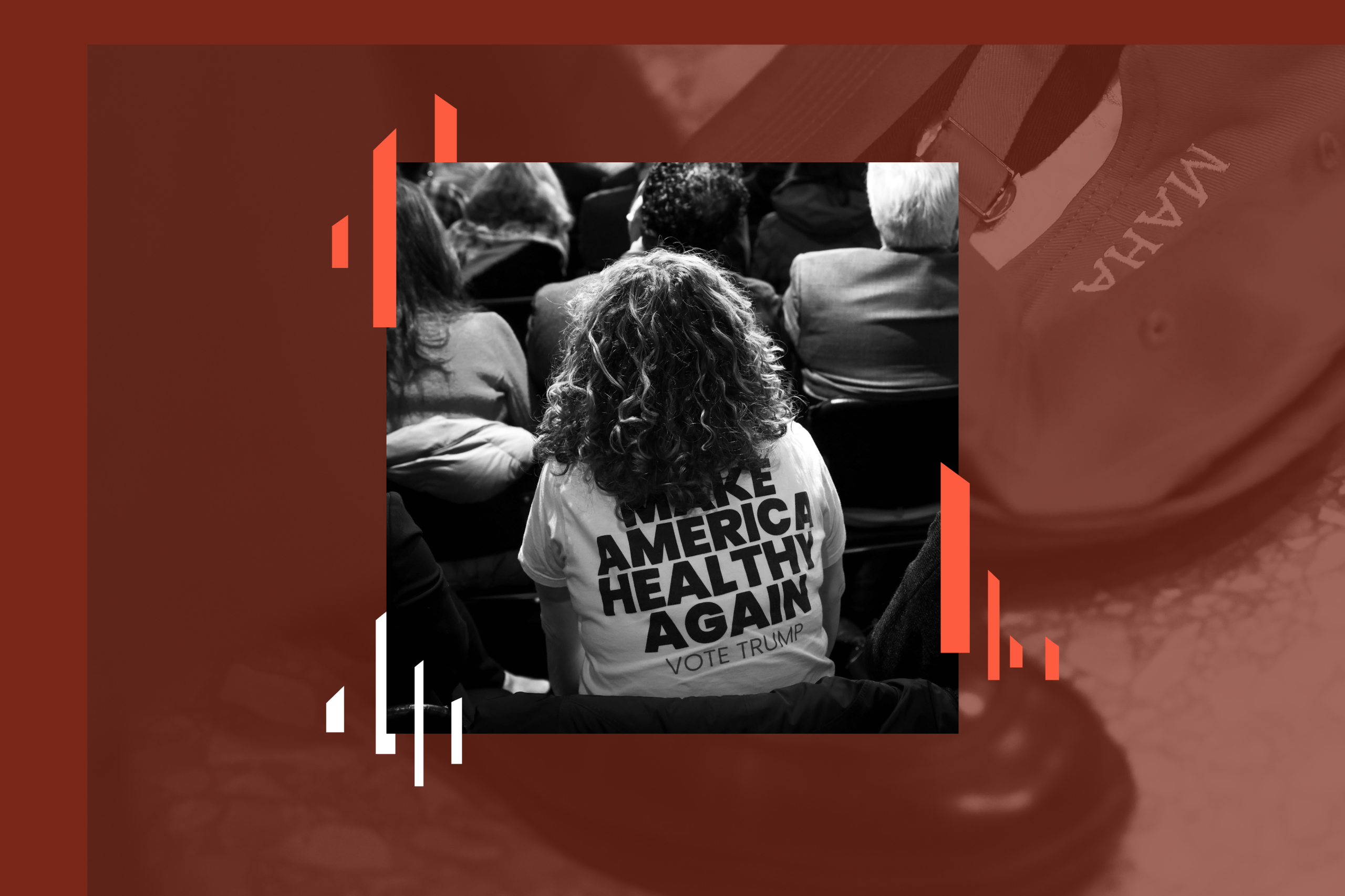

Republicans hope the Make America Healthy Again movement becomes a permanent fixture of a big GOP tent. But the party can’t count on its support heading into midterm elections this November.
New results from The POLITICO Poll show both broad frustration and dissatisfaction with the Trump administration on health priorities and opportunities for Democrats to make inroads with Health Secretary Robert F. Kennedy Jr.’s MAHA supporters.
A majority of Americans associate MAHA with the Republican Party, but not overwhelmingly, and most believe the Trump administration has not done enough to “Make America Healthy Again” — including a 41 percent plurality of Trump’s own 2024 voters.
The burgeoning political movement that officials in both parties credit with helping President Donald Trump win in 2024 has already begun to reshape how the GOP approaches health policy — driving everything from a redesign of the food pyramid to a rollback in vaccine recommendations.
At the same time, however, many poll respondents view Democrats as better positioned on the movement’s key health priorities. They were more likely, for example, to say the Democratic Party can be trusted to make the country healthier and are more eager to improve health in America, while fewer said the same of Republicans. The GOP, on the other hand, is seen as more likely to be influenced than Democrats by lobbyists for the food and pesticide industries, who rank among the MAHA movement’s top enemies.
These views could have real consequences in a midterm election year when razor-thin differences in turnout could determine control of Congress. And Democrats are bullish about channeling voters’ frustration with the Trump administration’s policies into a blue wave this cycle.
“The MAHA movement in the [2024] campaign cycle started with a lot of energy, and did create more energy for these types of issues that previously wouldn’t have been associated with the GOP,” said Abby McCloskey, a GOP policy adviser who has warned that Republicans are “squandering their MAHA moment.”
“Since then, I think the energy has trickled off from the perspective of, what is the federal government going to do about this?” she said.
Overall, 47 percent of poll respondents say they support the MAHA movement, including roughly a third of voters who backed former Vice President Kamala Harris in 2024 and about a third of Americans who plan to vote for Democrats this November. By comparison, 70 percent of Trump 2024 voters say they support the MAHA movement.
However, Americans don’t consider the nation’s health a top issue; It saw the same level of prioritization as “wokeism” and opioid abuse. When asked to choose between priorities for the U.S. government, a majority placed improving Americans’ health above stopping illegal immigration or cutting down on crime — but below affordability and concerns with cost of living.
And there are still widespread misconceptions about what MAHA is and what it does — even among people who self-identify with the movement. Just a third of Americans say they have heard of the MAHA movement and could explain what it is. Another third say they have heard of MAHA but could not explain it, including 31 percent of people who identify as part of the movement. One in four Americans had not heard of the movement at all.
The poll points to an opening for Democrats if they can effectively speak to the movement’s most popular issues and highlights that Republicans’ advantage with MAHA is far from guaranteed.
“People that we would call a ‘MAHA’ voter, they’re not partisans. They really are up for grabs,” Rep. Lauren Underwood (D-Ill.) told reporters on a recent call organized by the progressive advocacy group 314 Action, which is working to elect people with a health and science background to public office. “[Republicans] have really taken actions to alienate those folks, to break the promises that they made. They are no longer focusing on the core tenets of that Make America Healthy Again platform in order to continue to please Donald Trump, and also to advance their policy agenda.”
The Trump administration has largely pushed a deregulatory agenda, despite pressure from its MAHA supporters to crack down on pesticide companies, food manufacturers and drugmakers. Its recent choice to make it easier for Bayer to increase production of its weed killer Roundup has especially enraged MAHA supporters, who have said the move made it harder for them to continue supporting GOP candidates in the November midterms.
Kennedy’s own allies have warned Republicans that they cannot take MAHA voters for granted heading into November. Tony Lyons, the president of the MAHA Action, a political advocacy group that supports Kennedy’s agenda, said last month in a memo obtained by POLITICO that the GOP is merely “renting MAHA voters” but hasn’t been able to “purchase” them.
The POLITICO Poll also finds that the issues self-identified MAHA supporters rank as most important are ones Democrats have championed more often than Republicans, such as halting the spread of infectious diseases, stricter regulation of “forever chemicals,” and expanding access to reproductive health care.
This is not necessarily surprising, since many voters who support MAHA’s goals have typically been Democrats, said Rodney Whitlock, a longtime GOP congressional aide turned health care strategist.
Some of the policies less popular among MAHA respondents, meanwhile, are ones the GOP has embraced: restricting abortion access and reducing the number of vaccines Americans receive.
Yet the movement still lines up with, and supports, some Republican food policies and initiatives. For example, 80 percent of MAHA respondents support removing artificial dyes from food and 72 percent support restricting junk food purchases in federal nutrition programs, both priorities the Trump administration has tackled.
Lyons has urged Republicans to talk more about Kennedy’s policy goals, including discouraging Americans from eating ultraprocessed food, on the campaign trail. If they fail to do so and disgruntled MAHA voters peel off or stay home in November, he has warned, Democrats could take control of Congress, subject Kennedy to oversight hearings, and block his policy and regulatory efforts from going forward.
Lyons did not respond to a request for comment for this story.
The POLITICO Poll results — along with other recent polling showing declining trust in the Trump administration’s health recommendations — reveal a potential vulnerability for Republicans.
House Majority Forward, a nonprofit allied with House Democratic leadership, surveyed voters in February and March across several battleground districts the party is hoping to flip this fall. The group’s polls, shared first with POLITICO, found that more voters in Colorado, Iowa, New Jersey and Pennsylvania disapprove of Kennedy and his performance as health secretary than view him favorably.
“There’s this opportunity for Democrats to just start talking about making foods healthier and reducing the chemicals in the food that we’re giving them, … you know, limiting pesticide use, getting physical activity, removing artificial dyes,” said Carly Cooperman, a Democratic pollster and CEO of Schoen Cooperman Research.
A growing number of House and Senate Democrats — challengers and incumbents — are taking this advice to heart.
They’re beginning by focusing on pesticide use, which has become a political tension point for Trump’s GOP coalition, pitting the MAHA movement against powerful farm industry interests that have long been loyal to Republicans and hold significant sway with the administration.
Democratic lawmakers have railed against the Trump administration in social media posts, floor speeches and hearings for signing an executive order boosting domestic production of the pesticide glyphosate and siding with Bayer in a case pending before the Supreme Court that could shield the company from liability for the health impacts of its products. Democratic lawmakers, joined by a handful of Republicans, are also introducing bills and amendments that would undo or overturn these actions.
The POLITICO Poll found that limiting pesticide use is broadly popular, with more than two-thirds of respondents in support of doing so. And MAHA’s dissatisfaction with the Trump administration’s stance has led to some leaders within the movement threatening to primary farm-state Republicans as early as August of last year — yet another opportunity Democrats can exploit.
“We’re not even sure that we even have a path forward in this administration when it comes to pesticides, because it’s very clear that they are entirely owned by Bayer and the chemical companies,” said Kelly Ryerson, a MAHA influencer who goes by the moniker Glyphosate Girl online and has publicly backed Kennedy.
Progressive advocates also say Democrats would be wise to seize on MAHA voters’ simmering frustration.
“There is a genuine concern that there is unhealthy food in our food supply, and this administration is making it worse,” said 314 Action President Shaughnessy Naughton, whose group is backing Democratic challengers around the country.
Yet even as a segment of MAHA appears to sour on the GOP — and Kennedy — some of his agenda garnered widespread support among poll respondents, from removing artificial food dyes to offering whole milk in schools. Though MAHA respondents didn’t rank Kennedy’s stances on vaccines high on their list of importance, a notable chunk of Americans are highly skeptical of existing requirements.
The POLITICO Poll found that 41 percent of respondents across party lines support reducing how many vaccines Americans receive, with Republicans significantly more likely to hold that view. Fifty-eight percent of Trump 2024 voters support reducing how many vaccines Americans receive, compared to 29 percent of Harris 2024 voters.
Broad support for some of the key positions of MAHA — especially among Trump 2024 voters — and approval of some of the administration’s actions on health, suggest that Republicans may still be able to leverage the popular elements of the platform to win over voters in November.
Because health ranks so far down the list of Americans’ concerns, it’s unlikely to be a decisive factor in how they vote this midterm. Still, that doesn’t mean Republicans should be complacent and assume MAHA priorities won’t matter at all, Republican strategist Whitlock warned.
“Republicans have to be working from the perspective of ‘everything matters,’” he said. “To do differently is political suicide.”

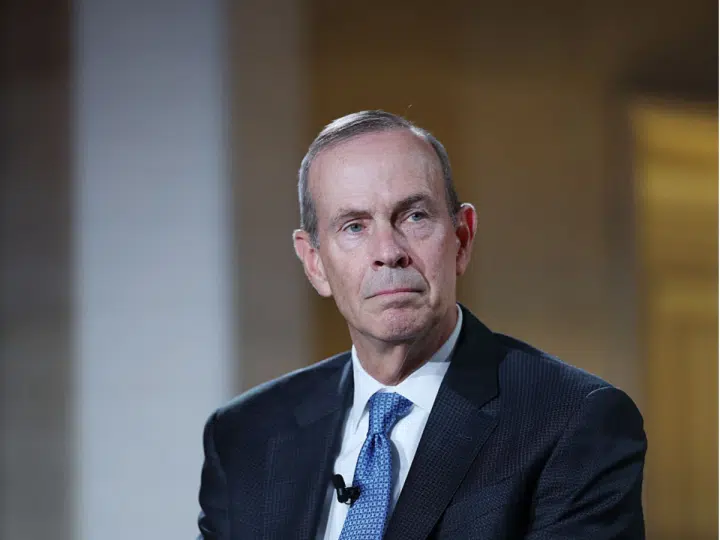

Chevron CEO, Mike Wirth, who is the money behind Donald Trump, said his company would not pay a toll to enter the Strait of Hormuz, claiming it is “international waters”.
Trump recently threatened to blow up Oman if it, along with Iran, were to charge a toll on the ships passing through the Strait of Hormuz.
Alongside Wirth, Trump also alleged the strait is international waters.
The question is: do these Americans really have a choice?
Chevron has six vessels under charter in the strait
Iran has said:
The process of ships passing through the Strait of Hormuz by Iran is NOT a temporary process and Iran will not back down from it.
Fox News called Oman “a country that has spent decades quietly serving as America’s backchannel to Iran”.
The news agency, which rarely criticises Trump, also quoted an expert saying that though the president had an unconventional style, his comment was still shocking. It shows Iran has cornered the US.
Trump and his cronies are still looking at how to spin a victory narrative, however impossible such a narrative may seem.
US magazine Foreign Affairs noted:
Hegseth’s bluster could not hide the fact that the core objectives of Operation Epic Fury—notably, effecting regime change and eradicating Iran’s nuclear program—had not been achieved. And with Iran’s closure of the Strait of Hormuz, the overall situation was worse than it had been before the start of the operation.
Ships attacked, CEO claims
Wirth himself, in the interview where he says he won’t pay a toll, admitted that Iranian authorities “have been successful” in collecting fees.
He also boasted about US sanctions, noting that the Treasury had recently “sanctioned the new authority that has been put in place to oversee transit through the strait”. When asked if he knows how people are paying the toll, he replied:
I’ve heard reports of people using cryptocurrency in various countries.
Meanwhile, he confirmed that Chevron has “six ships inside the strait right now with our cargoes”, all chartered and all stuck. The decision to risk transiting, he said, ultimately belongs to the ship owners, not Chevron.
He added:
There still has been kinetic activity this week, some of which has been reported in the media, some of which has not. We see risks very real still in that environment.
There have been vessels that have been in transit that have suffered attacks. They’re maybe not every day, but there have been multiple incidents that have occurred.
Trump backers’ disdain for Iran
Wirth is not the only Trump backer squirming at the capitulation to Iran.
After calling Iran “evil”, Jamie Dimon, the CEO of JPMorgan Chase, said that NATO allies should have gotten together 25 years ago and gathered 500,000 troops together to attack Iran.
Of course, the billionaire or his friends would not have been in troops.
He chastised those criticising the war on Iran, saying that a threat doesn’t need to be imminent for it to be a threat.
Dimon also warned that Iran getting a nuclear weapon “may be the biggest threat facing mankind” because allied nations like Saudi Arabia, Egypt, and Japan would then seek their own. His argument is that military and economic dominance are both needed for the US dollar to remain the world’s reserve currency.
Wirth and Dimon both accrue massive rents from the dollar being the reserve currency.
Wirth through owning oil and selling it in dollars. Dimon, through financing the American empire and, with his new security and resiliency initiative, which is massively investing in rearming the United States.
But Iran is not capitulating. It holds the chokepoint, it has US ships stuck, and it has proven that sanctions, bluster and fantasies of a half-million troops cannot break its resolve. You can see exactly why Wirth and Dimon are squirming.
Featured image via Anna Moneymaker/ Getty Images
By Nandita Lal
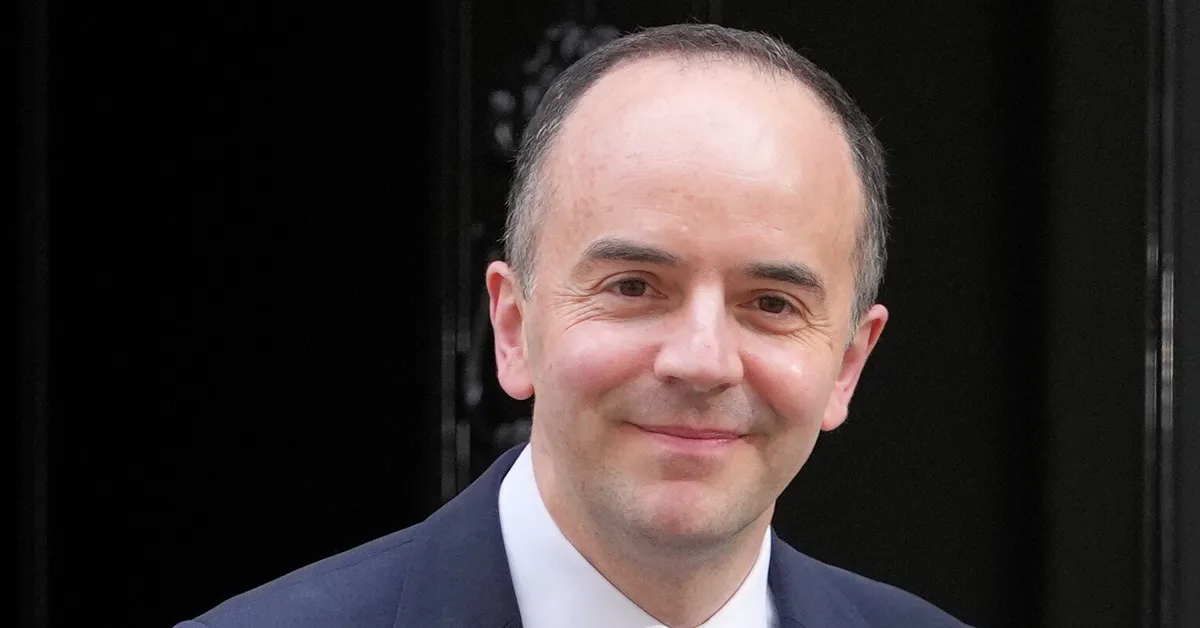
The health secretary has been accused of being “weak” after he U-turned on his previous claim that “trans women are women”.
Speaking on BBC Radio 4′s Today programme, James Murray admitted he would no longer agree with that sentiment after the 2025 Supreme Court ruling that a “woman” can only be defined by biology.
“I have changed what I would say,” he said.
“I wouldn’t say that phrase anymore. Over the last few years, a lot of us, myself included, have thought about this question in some detail.
“The Supreme Court has obviously ruled very clearly that biological sex is what matters is what matters when it comes to the equality act and determining the importance of single sex spaces.
“I believe that single sex spaces should be protected on the basis of sex, on the basis of biological sex, whilst at the same time believing in dignity for trans people.
“Recognising the sex agenda of different things, but being absolutely clear that single sex spaces within the NHS need to protected on the basis of sex.”
That is a complete pivot to Murray’s remarks from 2022, when he told TalkTV: “I believe trans women are women.”
Campaign group, TransActual slammed Murray, who replaced Wes Streeting as health secretary last month, over his change of heart.
A spokesperson told HuffPost UK: “The UK does not need another health secretary who is too weak to stand up to political pressure on healthcare.
“Rather than stick with his principles, Murray seems set on following the same flawed and unscientific path as his predecessor Wes Streeting, U-turns and all.
“After his appointment, TransActual wrote to Murray outlining the many issues facing trans people in the NHS, and asked to meet. He did not respond.
“The DHSC [Department of Health and Social Care] is meant to protect our health, not damage it.
“We need a health secretary who will listen to the evidence when it comes to trans healthcare – not abandon it when politically convenient.”
The spat comes after the Equality and Human Rights Commission released new guidance on single-sex spaces last month.
The equalities watchdog ruled that single-sex spaces, like changing rooms and toilets, can only be used on the basis of biological sex, while trans people have to use a third or gender-neutral space.
Trans+ Solidarity Alliance director Alexandra Parmar-Yee said: “The law here is a mess, and clearly many businesses will just go gender neutral to avoid the headache, but the government risks pushing trans people yet further out of public life.
“This guidance is going to be a Section 28 moment for this Labour government, defining their legacy on LGBTQ+ rights.”
Subscribe to Commons People, the podcast that makes politics easy. Every week, Kevin Schofield and Kate Nicholson unpack the week’s biggest stories to keep you informed. Join us for straightforward analysis of what’s going on at Westminster.

Charli XCX has spoken out about the mixed reaction to her latest musical releases.
Last year, the Grammy winner’s go-to co-producers A.G. Cook and Finn Keane made it clear that the British performer would be taking a “complete opposite” approach when it came to the follow-up to her hugely-successful 2024 album Brat.
The latter went as far as saying that Charli’s new music would have an “anti-Brat” ethos, which she’s lived up to so far, first releasing a soundtrack album to accompany Emerald Fennells’ adaptation of Wuthering Heights earlier in 2026, and later unveiling new music with more organic instrumentation that she claimed had taken inspiration from rock.
So far, singles Rock Music and SS26 have had quite the polarised reaction from Charli fans, which the 360 singer addressed in a new TikTok video.
“I made an album and it’s really different from the last one,” she told her followers on Sunday night. “That is a fact. And I love it! And you might not, and that’s cool.”
Charli added: “If you do [love the new album] that’s cute, but if you don’t, that’s totally OK because that’s just what it is to have personal preferences. Yeah!”
So far, Rock Music peaked at number 36 in the UK singles chart, while SS26 has reached 43.
In April, Charli told British Vogue: “If I’d made another album that felt more dance-leaning, it would have felt really hard, really sad. But what is interesting to me is to bend the possibilities of what my perspective on that could be.”
Anticipating that her new music might not be a crowd-pleaser among fans of the dance-pop she’s already known for, she added: “For me, it’s fun to flip the form. We know there’s gonna be people who are bothered by it, but that’s fine.”
Following the release of Rock Music, Charli wrote on Instagram that she’d found it “really interesting” to see “all the different reactions to my song”.
“It’s all kind of fascinating,” she said. “I love talking about music and art with my friends, so I’m happy people are throwing out thoughts. I’m not gonna explain where I was coming from with Rock Music, but all I know is that things can be funny, earnest, sincere, and joyful all at the same time and that’s what I feel about a lot of the things I make.”
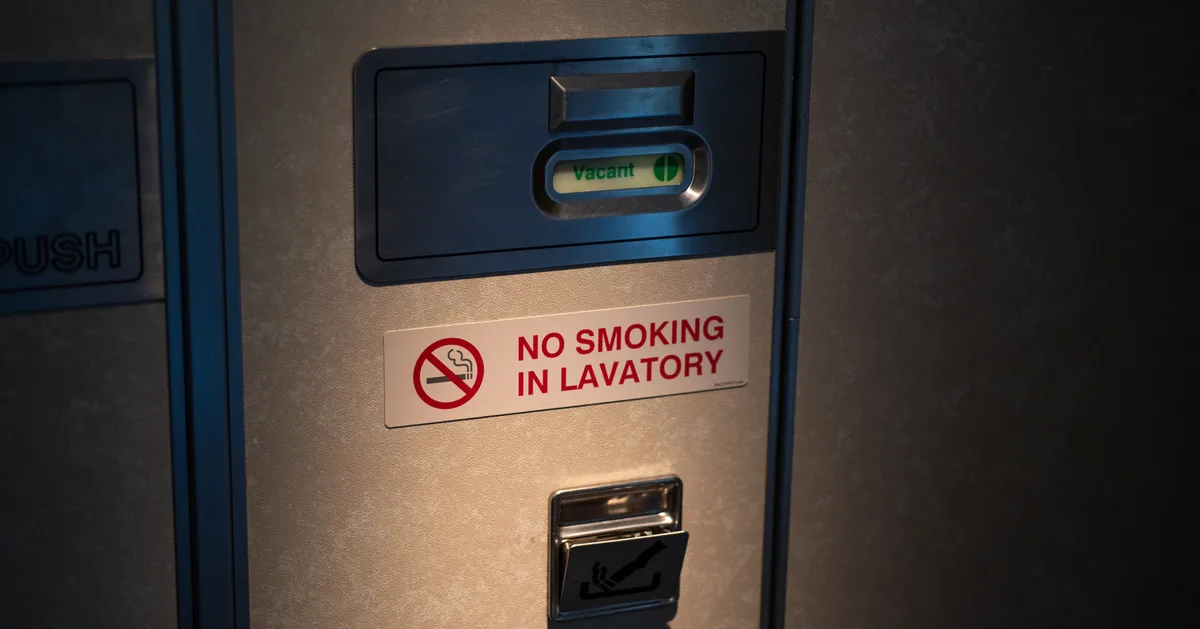
But recently, I’ve been wondering about what I always saw as a baffling on-board artefact: aeroplane ashtrays.
Even though the UK has banned smoking on flights since 1997, it’s not uncommon to find a metal ashtray in the loo of your plane.
In fact, regulators like the Federal Aviation Administration (FAA) require an ashtray on board. And in 2009, a British Airways flight was reportedly delayed because staff couldn’t replace a missing ashtray ― years after the smoking ban.
Why do planes have ashtrays?
I reckon teachers, nurses, retail workers, and anyone who deals with the public at large will already know the answer: people love to break rules.
Robert Joslin, an associate professor at Embry-Riddle Aeronautical University’s College of Aviation, told The Washington Post that “Smoking’s not allowed, but we know it’s happening” on board.
In Japan, the publication added, there were 429 reports of in-flight smoking in 2025.
After the 2009 delay, a British Airways spokesperson said: “It is a legal requirement, under air navigation orders, to have ashtrays because while smoking is not permitted on flights, if someone were to light a cigarette on board there must be somewhere to safely extinguish it”.
This is still the rule with some regulatory bodies. But even those who have changed policy might not have changed the layout of many planes.
But they added that “most large aircrafts flying today were certified under earlier rules which still require an ashtray”.
Getting rid of it would count as a design change, they continued, which would need formal approval.
So while some new planes don’t have to have ashtrays, those which already do (and most do) can’t get rid of them without some hassle.
Lit cigarettes have led to tragedy before
A fire on a 1973 flight tragically led to the deaths of 123 passengers; later investigations found the source was likely a discarded cigarette butt.
And in 1983, 23 passengers died due to a fire in the toilet of another plane. Investigations didn’t prove for sure what caused the disaster, but one of the possible reasons cited was a cigarette in the bathroom.
After that, Simple Flying shared, rules regarding things like flame-proof bins, smoke alarms, and ashtrays changed.
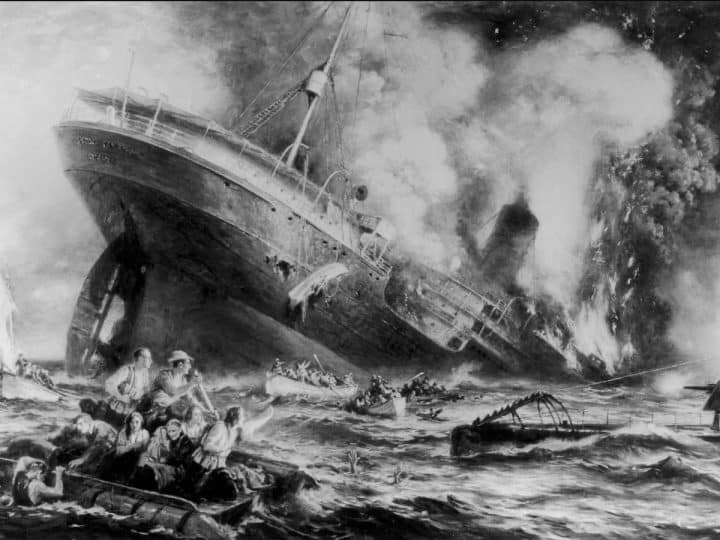

On 7 May 1915, the pristine waters off the old head of Kinsale became a graveyard. Within just eighteen minutes of being struck by a single German torpedo, the RMS Lusitania – the world’s most celebrated luxury liner – vanished beneath the Atlantic, taking 1,198 lives with her. Historically, this tragedy is framed as a shocking turning point; a brutal act of piracy that shattered American isolationism and catalysed a moral crusade against imperial tyranny.
Yet, when we peel back the layers of standard textbook narratives, the fate of the Lusitania emerges as something far more calculated. Beneath the murky depths of this disaster lies a masterclass in crisis engineering – an intricate nexus of resource warfare, strategic maritime blockades, and the brutal leverage of financial markets.
It was an event transformed behind the scenes by architects of power, including the First Lord of the Admiralty, Winston Churchill, into a mass intelligence test. By deconstructing the chasm between the overt humanitarian narrative and covert geopolitical determinants, we can decode the hidden mechanics of more contemporary conflicts.<
War as an Engineered Industry
In classical political philosophy, war is often defined as an extension of politics by other means. However, a critical reading of political economy suggests a more chilling reality: modern total wars do not break out spontaneously; they are deliberately designed.
For any state to transition from peacetime into total war, it must first break the instinctive social contract of its citizenry. Democratic societies do not willingly sacrifice their youth, wealth, and liberties without an acute, existential provocation. This necessitates a “shock event” – or what strategic literature brands a “false flag” operation. By executing an attack or deliberately manufacturing a vulnerability, ruling elites can fabricate evidence to frame an adversary, thereby legitimising military aggression in the eyes of an outraged public.
The First World War (1914–1918) served as the premier laboratory for this brand of total mobilisation. It was not merely an escalation of armies, but a systemic restructuring. Entire civil institutions and societies were weaponised under totalitarian state control, all masked by the collective war effort. In this grand theatre, the entry of the United States in 1917 represented the ultimate geopolitical pivot.
The war dismantled three great empires – the Russian, German, and Ottoman – leaving millions dead and mutilated in its wake. Crucially, the Russian and German empires stood defiantly outside the orbit of western ‘Money Powers’ – non-elected, transnational network of central banks, Wall Street cartels, and mega asset management firms that controls the global reserve currency and uses sovereign debt to dictate international policies and conflicts to preserve its financial hegemony – whilst the Ottoman Empire occupied a Levant targeted for oil colonization and strategic British realignment.
Yet, this monumental American intervention would never have materialised without the psychological and political groundwork engineered through the wreckage of the Lusitania two years prior.
Geopolitical Background and the Ethnic Context
Prior to the disaster, President Woodrow Wilson’s administration faced a complex domestic quandary. London was desperate for American intervention; the British economy was utterly exhausted, and the Western Front was consuming human lives at an unsustainable rate. For decision-makers in Whitehall, dragging Washington into the trenches was a matter of sheer survival.
However, American public opinion leaned overwhelmingly towards isolationism, viewing the European conflagration as a distant imperialist squabble. Furthermore, Wilson faced a profound demographic dilemma: a relative majority of the American populace was of German descent, with the German language deeply embedded in local schools, press, and communities.
To shatter this domestic deadlock, British political planners recognized that they needed something louder than diplomacy. They required a direct assault on American sovereignty or dignity – an event so emotionally devastating that it would rewrite the collective consciousness and morph into an undeniable moral justification for total war.
Deconstructing the Incident: Myth versus Reality
When the German U-20 boat targeted the Lusitania, claiming 1,198 lives – including 128 American citizens – the Allied media machine instantly weaponised the tragedy. It was branded a savage German war crime against defenceless civilians. However, a century of maritime exploration and declassified documentation has exposed a truth entirely at odds with the official narrative.
1. The Auxiliary Cruiser
The Lusitania was never a purely civilian vessel. She was officially registered on the British Admiralty’s auxiliary warship rosters, designed from her very inception to specifications that allowed immediate conversion into an armed cruiser during wartime. In fact, her construction had been heavily subsidised by military loans from the British Government on the explicit condition that the Navy could claim her when required.
2. The Cargo
Despite vehement denials from British political circles, subsequent investigations and physical expeditions to the wreck proved that the ship’s holds were packed with massive shipments of military supplies destined for the British Army, including millions of rifle rounds, shrapnel shells, and fuses shipped out of New York.
Paradoxically, this lethal ammunition was loaded quite openly. This explains the mysterious, massive secondary explosion that ripped through the vessel immediately after the single German torpedo strike, causing her to sink in a mere 18 minutes. Under international maritime law at the time, the Lusitania was an entirely legitimate military target.
3. The Suppressed Warnings
Operating within strict maritime protocols, the German Chancellery saw through the British plot to use civilians as human shields for weapons transport. In an extraordinary move, the German Embassy in Washington purchased advertising space in major American newspapers – including prominent New York broadsheets – explicitly warning passengers that boarding the Lusitania was a high-risk venture, as she would pass through a designated war zone carrying military material.
Tragically, pro-British interest groups within the United States successfully suppressed the publication of these warning advertisements in several pivotal cities, leaving the civilian passengers entirely in the dark – disposable pawns in a high-stakes geopolitical chess game.
Winston Churchill and Engineered Risk Management
At the very centre of this web sits Winston Churchill, the First Lord of the Admiralty.
Declassified records reveal that Britain’s legendary naval intelligence hub, Room 40, had successfully cracked the German military wireless codes. Consequently, the Admiralty possessed precise, real-time tracking of German U-boats patrolling the Irish coast.
The profound suspicion surrounding the incident lies not just in the sudden withdrawal of a military escort for the Lusitania, but in a sequence of direct, highly irregular directives emanating from Churchill’s personal office:
Step 1: A secret, direct order is issued from the personal office of the First Lord of the Admiralty, Winston Churchill.
Step 2: The order is relayed past standard naval command straight to the Captain of the Lusitania as she approaches British waters.
Step 3: The luxury liner is commanded to reduce her speed off the Irish coast, placing her precisely within the active U-boat nexus.
This final directive flew in the face of all established naval protocols, which dictated that fast vessels must maintain maximum speed and zigzag to evade torpedoes. Internal Admiralty testimonies indicate that Churchill’s own aides confronted him, warning that slowing the ship would drastically increase the probability of an attack. His stern, unyielding reply was:
The order is mine; pass it on.
By confirming the military cargo, suppressing public warnings, intercepting the intelligence codes, and actively slowing the ship into the path of a known submarine, the incident shifts from the realm of tragic military negligence into the territory of deliberate facilitation – the engineering of a catastrophic trap.
Propaganda Mechanisms and the Dehumanisation of the Adversary
The moment the ship sank, the Allied media apparatus executed a meticulously prepared crisis management plan. Empirical military facts were instantly replaced with highly emotional, weaponised vocabulary. Overnight, headlines coalesced into a unified, thunderous battle cry: “The Barbarians Dare Again” and “The Hun Butchers Murder Mothers and Children”.
This wartime propaganda went far beyond mere reporting; it sought the total dehumanisation of the adversary – a psychological prerequisite required to prepare ordinary citizens to kill without guilt. The campaign succeeded brilliantly in shattering American isolationism. While Washington delayed its official declaration of war until 1917, the ghost of the Lusitania served as the emotional fuel and political legitimacy that President Wilson required to successfully market total war to Congress and an outraged American public.
From the Lusitania to the Twenty-First Century: Continuity of the Model
Deconstructing this history is not an exercise in mourning the ruins of the past, but an effort to extract the immutable structural rules of crisis engineering. It reveals that central planners and ruling elites treat mass casualties as mere cost variables in equations of global hegemony. This exact political blueprint has repeated itself across subsequent, well-documented historical milestones:
The Gulf of Tonkin Incident(1964): Washington claimed that an American destroyer fell victim to an unprovoked North Vietnamese assault. Declassified documents later exposed the attack as entirely fabricated and illusory, yet it served as the official pretext granted by Congress to launch full-scale military intervention in the Vietnam War.
The 9/11 Attacks (2001): Irrespective of the details heavily classified under absolute state secrecy, these attacks represented the ultimate modern “shock event.” It cleared the path for totalitarian domestic legislation like the Patriot Act and launched two decades of pre-emptive wars that redrew global energy maps and geopolitical borders at the cost of millions of lives.
The Economic Reality of Systematic Warfare
The ultimate umbilical cord linking engineered conflicts to the global order is forged in finance and credit. During the First World War, Great Britain funded its astronomical war effort by borrowing heavily from Wall Street, specifically the J.P. Morgan banking group. By 1916, British military debts to American banks had ballooned to exceed 10% of the entire United States Gross Domestic Product (GDP).
This massive financial exposure created an unyielding economic chain of events. The accumulation of military debts to the point of exceeding the 10% threshold automatically rendered an Allied victory an absolute matter of domestic national security for the United States. This was essential to protect the banking and financial system from total systemic collapse.
Consequently, America’s entry into the trenches was not a spontaneous, idealistic crusade to protect global democracy. It was an intervention emotionally brokered by the tragedy of the Lusitania to safeguard the investments of the financial elite on Wall Street and secure the ultimate repayment of British sovereign bonds.
Wars as Mass Intelligence Tests
Parroting official political narratives without subjecting them to rigorous geopolitical and critical analysis constitutes a failure of a collective intelligence test. The global financial and monetary elites who steer the international order do not view the world through the lens of sentimentality, national borders, or human cost; they view it through the prism of centralised control and the restructuring of financial systems via the controlled shocks of total war.
Reading the Lusitania incident provides the necessary lens to decipher our current global landscape. The very same archetypes that deployed print propaganda in 1915 are utilizing digital simulation models, viral pandemic narratives, climate emergency rhetoric, and modern energy blockades today to usher in a highly centralized financial and social order. As history repeatedly warns us, the capitulation of the masses to emotional propaganda is a blank cheque signed by the victims for their executioners, ensuring the repetition of the catastrophe in every age.
Featured image via Three Lions/Getty Images

She constantly wants “tuddles” (cuddles); will come and find me whenever I’m on the toilet (and will stand there, not breaking eye contact, until I’ve finished); and even if I manage to sit her down in front of CBeebies for five minutes, I’ll turn around 10 seconds later and there she’ll be.
I can’t cook dinner without having to pick her up (I have one muscly arm as a result), I’m the only one she wants when she wakes in the night, and if anyone else is enjoying my attention…? Well, that makes them enemy number one.
Her dad can’t get a look-in. Neither can her sister. She wants me – and only me – and while it’s absolutely wonderful (who doesn’t want to feel so loved and needed?), I’d be a complete liar if I didn’t admit it can be a tad exhausting.
It seems I’m not alone with my “velcro” child – an unofficial term for the kids, especially babies, who are “clingy” to one parent (usually mum). A quick scroll on TikTok and you’ll see a whole host of videos from parents, and also parenting pros, about the phenomenon.
But why are they like this?
For starters, let’s be clear: it’s nothing you’ve done wrong. It’s just their temperament.
Sarah Wheatley, BACP member and perinatal psychotherapist, told HuffPost UK: “Just like adults, all babies experience sensations and feelings differently.
“Some children will be temperamentally more in need of soothing and comfort to help support them through some of the experiences of being a baby.”
Signs of a velcro kid
As babies, they might not want to be put down. Cot naps might seem like the stuff of mythical stories. Your baby will sleep on you – and you only. If you put them in their play gym, they’ll likely scream until you pick them back up again.
A strong tell that you have a velcro baby is that any hot drink ends up not drunk and stone-cold. They won’t go to other people, and if you do need five minutes to get showered, they’ll likely scream the house down until you’re reunited.
Francyne Zeltser, a psychologist and senior clinical director at Manhattan Psychology Group, told BabyCenter that if “you’re not able to put your baby down for at least one-third” of the day, you might have a velcro baby.
As they grow older and begin to move about, you might notice they start to strongly resemble your shadow – albeit a smaller, cuter version. They probably want to sit on you, or near you, or with a leg touching you, at every possibility (that includes when you’re on the loo).
They want constant cuddles and attention. Childcare drop-offs can become the stuff of nightmares. Solo play? What’s that?!
It’s understandable, really. If you’ve been their primary caregiver since the beginning, that’s all they’ve ever known. They’ve been dependent on you for every little thing – but as they grow older and become more independent, theoretically they should start to gradually shift away. Though it may take time. (Some parents reported having velcro kids up until the ages of three and four).
And if you’re reading this smugly thinking “mine was never a velcro baby”, some parents do indeed find their kids became “velcro” children over time – this can be initiated by major life changes, like going to school or moving house.
When might a ‘velcro child’ need more support to do things independently?
According to Wheatley, there isn’t going to be a “right or wrong” time on this.
“It will depend on what level of support the caregivers have. It will depend on what is coming up for the family (i.e. are they having another child?). Sometimes there is no perfect solution, but just a bit of a ‘to-and-fro’ as the caregivers and the child navigate the difficulties of becoming more independent,” she said.
“It often involves a series of nudges from the caregivers, accompanied by some internal motivation for the child.”
You could gently start spending more time away from them (build this up over time), or encouraging them to spend short bursts of time with other people.
As they enter toddlerhood, you can set them up with solo play (sensory bins, Lego Duplo, and magnetic tiles can keep young kids occupied for short periods) or encourage them to spend some time doing creative activities, like colouring or drawing – and offer praise when they do.
According to Parents, it can also help to establish predictable routines and model calm separations by making “goodbyes” short when you do need to leave them in another person’s care.
It might also be helpful to let your child know – if they’re a bit older and can understand that – how long you plan to be away for, and when you’ll be back.
Support for parents of ‘velcro’ kids
If you do have a velcro baby, toddler or child, Wheatley stresses “try not to shame yourself”.
“There can be a strong rhetoric that parents ‘create’ clingy children,” she said. “However, this is just not the case. If you have a child who needs more emotional and physical support at this stage, then you need support too because it’s hard work!”
She noted when parents feel shame, it might make them resist asking, or paying, for help – “but it’s really necessary,” she added.
To have a bit of respite, try to get some space to regulate yourself. “Whether that’s going to a community group where a volunteer might hold your baby so you can at least get a cup of tea, or putting your baby in nursery for a day so you can decompress, or using deep breathing/safe space exercises to help your body release the stress,” she said.
It is hard and you are not finite, she added. “You need ways to resource yourself again.”
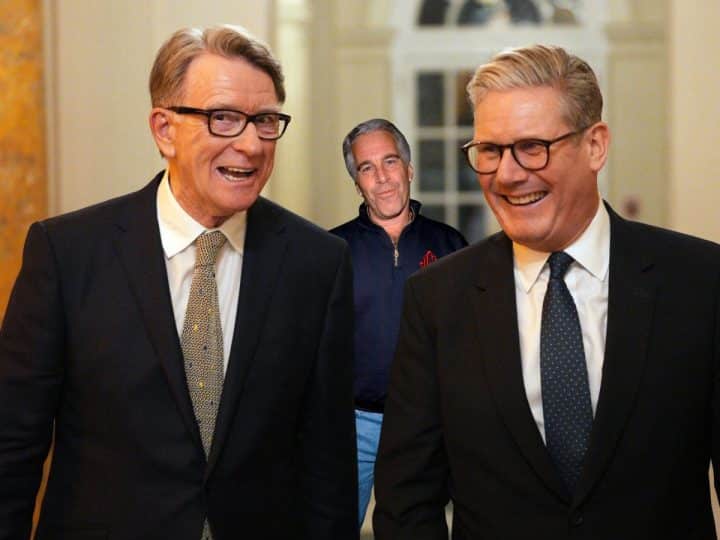

The Labour front bench will not be looking forward to the return of Parliament. On 1 June 2026, after the parliamentary recess, the second set of the Mandelson Files will be released, set to expose the disgraced Epstein-informant’s cosy relationship with senior Labour Party officials.
Mandelson and the Policy Network
Last week, it was revealed that United Kingdom Security Vetting (UKSV) had flagged Mandelson’s bimonthly conversations with Tamir Hayman, a former Israeli military intelligence chief. Earlier this year, we learnt that UKSV’s recommendation that Mandelson not be granted security clearance was overruled by Foreign Office officials.
However, less attention has been paid to Policy Network, the Mandelson-led think tank whose list of former directors reads like a Who’s Who of Labour Party grandees.
The organisation has previously been criticised for obscuring how much it was receiving from specific funders, although David Sainsbury was confirmed as a core donor. Sainsbury has also financed Labour Together, giving £125,000 in March alone.
In 2021, Peter Mandelson’s Policy Network merged with Progress, another Labour Party-linked operation which had received tens of thousands in donations from Mandelson and Tony Blair, amongst others. Progressive Britain is now led by Adam Langleben, a former national secretary of the Jewish Labour Movement.
Patrick Diamond
One of Policy Network’s co-chairs was Patrick Diamond, a former Special Advisor to Mandelson.
In the early 1990s, according to Diamond’s Wikipedia page, he spent time living and working at an Israeli colony called Lahav. Strangely, no other reference to his time at Lahav can be found online.
Like the IDF stint of Labour peer Jonathan Kestenbaum, unreported in the British media until my investigation last month, and the list of Labour Friends of Israel parliamentary supporters, scrubbed from the internet during the 2024 general election, it seems that links to the settler state have become less of a boasting point for senior Labour politicians.
Kibbutz Lahav, situated just 5km from the illegal Eshkolot settlement, was originally set up in 1952 by the Nahal, an IDF program that combined military service with the establishment of settlements. During the Gaza genocide, the IDF’s Nahal Brigade was being led by Nochi Mandel, a religious nationalist Israeli settler who called for Gaza to be deprived of aid. Mandel was only sacked, however, after an air strike on a World Central Kitchen convoy killed seven aid workers, including three British citizens.
Roger Liddle
Policy Network’s second co-chair was Roger Liddle, a Labour peer and former Special Adviser to Tony Blair.
In 2010, Liddle’s entrance to the House of Lords was officially “supported” by Mandelson. Later, during Keir Starmer’s first years in power, his “supper parties” would regularly host the Epstein-associate’s network, with Mandelson, Wes Streeting, and Morgan McSweeney amongst attendees. McSweeney’s inner circle would also be present: Matthew Doyle, Matt Faulding, and Matt Pound.
A former Labour frontbencher who served under Ed Miliband told me in February that McSweeney’s inner circle “ruled with a rod of iron” and “talked openly of taking over the Party”. Wes Streeting now wants Starmer’s job. His partner, Joe Dancey, is an ex-aide to Peter Mandelson.
Jonathan Mendelsohn
Jonathan Mendelsohn, an ex-chair of Labour Friends of Israel, was another director of Peter Mandelson’s Policy Network.
Mendelsohn has donated to a string of Labour Party MPs (sometimes through his Red Capital Ltd. operation), which includes ex-Health Minister Wes Streeting and current Foreign Minister Yvette Cooper. He also funded former Prime Minister Gordon Brown.
In 2007, the Jewish Chronicle lauded the lobbyist’s influence, saying:
At ease in the corridors of power, Mendelsohn has the contacts and know-how to advance Israel’s case in his [Labour Friends of Israel] role.
When Gordon Brown appointed Mendelsohn as Labour’s director of general election resources, he was criticised for promoting an individual who had previously lobbied on behalf of the Ladbrokes betting firm.
In July 2008, Brown, a long-standing supporter of Labour Friends of Israel, became the first British Prime Minister to address the Israeli Knesset, declaring proudly:
My father … had a deep and life-long affection for Israel.
Stephen Hockman and Liam Byrne
Other Policy Network alumni include Stephen Hockman, one of the three UK Lawyers for Israel patrons accused of “using their professional seniority” to intimidate others in a legal complaint issued last week.
There is also Liam Byrne, a parliamentary supporter of Labour Friends of Israel who has previously accepted transportation paid for directly by the Israeli Ministry of Foreign Affairs.
The Labour Party hierarchy are now desperate to distance themselves from the Prince of Darkness, but the true extent of his influence is a story still waiting to be told.
Featured image via the Canary

Lots of toddlers seem to go through a phase where they reject one of their parents – and oh boy can it hurt.
Taking to Reddit, one mum going through it said her two-year-old only wanted her dad. “I know this is ‘normal toddler behaviour’ and that kids go through stages like this, but it’s been going on for a few months now and it’s starting to really get to me,” said the parent.
“Today I was outside with her and she got hurt. She was fine, but then she acted mad at me and wouldn’t let me comfort her – just wanted dad. It crushed me. I try so hard to be present and loving, but right now it feels like I’m not the parent she wants.”
As children try to exert as much independence as possible – moving about unaided, eating their own dinner and playing alone – they might start to lean towards one parent (and away from the other).
If you’re ‘the shunned one’, you might find your toddler doesn’t want you to hug or touch them, or even read to or play with them anymore. Bedtime can also be a major point of contention.
While it can be pretty soul-destroying, Rachel Melville-Thomas, a child and adolescent psychotherapist, said it won’t last forever. And you’re certainly not alone.
“It is quite common,” she told HuffPost UK. “It’s the task of toddlers to try to make sense of the family world, and who they are attached to. Sometimes they make very fixed decisions!”
Why do some toddlers favour one parent over the other?
People seem to have differing theories on this. A New York Times article suggested it’s a way of toddlers showing their independence, as they have few outlets for autonomy.
Children are exploring decision-making at this age, and parental preference is one way to test it out, Dr Nia Heard-Garris, a physician at a children’s hospital in Chicago, told the publication.
Melville-Thomas suggested young children are trying to understand how the family works and their role within it. “Some toddlers will be very sensitive to how much attention they receive from each parent – so may react really strongly to a loss of closeness to a particular parent,” she said.
This loss of closeness could be as a result of a new baby, new working situation or other changes. “The reaction then is to save all their focus for the one they see most,” she continued.
The therapist added that this is indeed a phase and “it tends not to last long, as the child develops and begins to accommodate the patterns of family life”.
By the time your child is three or four years old, they learn to trust that both parents are equally caring and connected.
Gender also seems to play a part in who children choose to side with as they develop, the therapist has noticed.
“Toddlers, at about two years, notice they share the same gender as one of the parents and just want to be with them and do the same things in a passionate process of ‘being the same’,” she said.
“Then the opposite gender parent can be seen as different, and ‘not like me’ and can be pushed away. In same gender couples, the toddler might identify with the parent most like them – for example, the lively physical parent, or the quiet cuddly one – and then pull away from the other.”
But when children reach about three years old, the reverse can happen, she added – so the opposite gender or different personality parent might become very exciting all of a sudden.

StefaNikolic via Getty Images
How to cope if you’re the rejected parent
While it’s nice to know it’s nothing personal, it can still suck if your child won’t even let you cuddle them.
“Try not to take it personally and see the big picture of a toddler’s view of the world – it will change,” said Rachel Melville-Thomas.
So what can you do in the meantime? Dunya Poltorak, a paediatric medical psychologist in Michigan, told the NY Times we should listen to our child’s preferences, so if they refuse to hug you, just accept it. It’s really important to not take it personally or to show it bothers you.
You can also see the plus side. A child showing they’re comfortable rejecting a parent means they’re securely attached – so your child knows the love you have for them is unconditional, according to Dr Heard-Garris.
If you’re the parent who’s currently flavour of the month, there are things you can be doing to support your partner.
Accept the situation for the time being, advised Melville-Thomas, while speaking warmly of the other parent, and gently encouraging the toddler to enjoy some time – whether that’s storytime, singing or play – with the other parent.
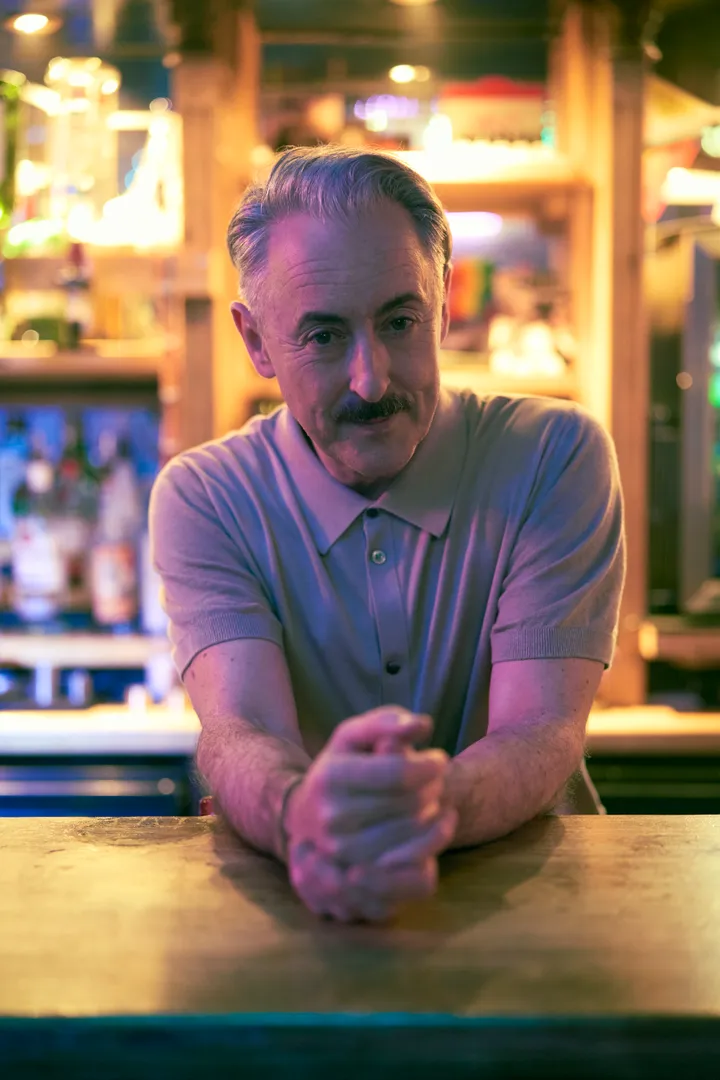
Bafta-winning screenwriter Russell T Davies has another critical hit on his hands thanks to his new show Tip Toe.
The unflinching new drama stars Alan Cumming and David Morrissey as two neighbours who find themselves in a feud that quickly spirals out of control with disastrous results, while diving into thorny issues like online radicalisation, prejudice against the LGBTQ+ community, misinformation in the digital age and generational conflict.
During a recent interview with HuffPost UK, Russell called Tip Toe an “urgent” and “necessary” reflection of a world that is “out of control” and “at war with ourselves”, which critics have certainly agreed with so far.
Ahead of episode one’s premiere on Sunday, reviews have near-unanimously praised the series – the latest TV offering from the creator of shows like Queer As Folk, Years And Years and It’s A Sin – which they’ve hailed as “chilling”, “devastating”, “terrifying” and “unforgettable”.
Here’s a snippet of what the critics are saying about Tip Toe…
“This is urgent, state-of-the-nation stuff from one of our shrewdest screenwriters […] Tip Toe isn’t just sobering; it’s visceral and chilling viewing for all queer people and everyone who loves and supports us.”
“At times it feels as subtle as a brick in the face. But when Davies steps down from his pulpit and lets his characters breathe, his storytelling is visionary, devastating, passionate and humane. And we should listen.”

“Alan Cumming is extraordinary in this terrifying, landmark queer drama […] While this series is a fiction, and one that makes its arguments with sledgehammer grace, it is sadly not absurd, or abstract.”
“Tip Toe, the latest gut-punching drama from Russell T. Davies – his first since the life-altering It’s A Sin – is an alarming, though not inaccurate, portrayal of what it’s really like to be unapologetically gay in a Britain that hates us […] Tip Toe is Davies at his most impassioned; a wake-up call that this is not a time to be complacent.”
“Television writers will tell you that they never want to come across as preachy, and that good drama should ask teasing questions and then step away. The sense in Tip Toe is that Davies is done with this kind of pussyfooting around, and is up for a scrap.
“It makes for a drama that takes wrong turns but is never less than bold and, in the round, deeply stirring. TV polemic is back, loud and proud.”

“Tip Toe may be an extreme example of how frenzied that intolerance can become. Its dialogue, with long, culturally-charged monologues, can also be a little tiring. But it should be all of these things […] A word of warning, though, from someone who literally watches TV for a living: by the end, this is the most distressing series I’ve ever seen. It’s not rewatchable, but it’s unforgettable.”
“[Tip Toe] lacks the discipline that made his other state of the historical/future nation pieces, Years and Years or It’s a Sin, so powerful and moving, but the strands begin to interweave, momentum builds and if the extremity of the conclusion still doesn’t quite ring true, everyone has worked hard to get it as close to authentic and emotionally credible as possible.”
The first two episodes of Tip Toe are now streaming on Channel 4, with the final three following on Sunday 7 June.


After the Atlas Lions stole the show at the 2022 Qatar World Cup, becoming the first Arab and African team to reach the semi-finals, Morocco enters the 2026 edition with aspirations that extend far beyond repeating their historic achievement.
Having transformed from the tournament’s surprise package to one of the world’s leading teams, Morocco now faces a new test: was their Qatar triumph a one-off, exceptional moment, or the beginning of a new era for Moroccan football?
Morocco face Brazil in first World Cup game
Since the end of the Qatar World Cup, Morocco has continued its path of development and technical stability. The team has maintained its core structure while integrating promising young players who have strengthened the squad’s depth. As a result, the team has become one of the best in the world in the FIFA rankings, confirming that its success in 2022 was no fluke.
Morocco still relies on a group of key players who made the achievement in Qatar, led by captain Achraf Hakimi, alongside Nayef Aguerd, Noussair Mazraoui, Sofyan Amrabat and Azzedine Ounahi.
Brahim Diaz is one of the most prominent attacking weapons thanks to his ability to make a difference and add individual solutions in the final third.
But the most significant difference between the 2022 and 2026 World Cups lies in the emergence of a new generation of young talents, giving the national team wider options and more diverse solutions.
A mix of experience and youth
Among these names are Ayyoub Bouaddi, one of the most promising young talents in European football. There is also Bilal El Khannous, who has established himself as one of the team’s key midfielders, as well as Chamseddine Talbi and Ismail Sibaari, who add considerable dynamism and speed to the forward line.
In contrast, the squad is missing some names that were present in Qatar’s achievement, most notably Youssef En-Nesyri, Hakim Ziyech and Sofiane Boufal, who represent the end of one phase and the beginning of another that relies more on young players seeking to write their own history.
Realism and ambition
The new format of the World Cup, featuring 48 teams, gives stronger teams a better chance of advancing from the group stage, but the competition will become much tougher in the knockout rounds. Therefore, reaching the quarter-finals seems a realistic goal for Morocco, given the quality of the squad and the experience players have gained in recent years.
Repeating or even surpassing the semi-final achievement will require a combination of consistent performance, mental fortitude, and a bit of luck against top teams. While Morocco may not possess a single ‘superstar’ who can consistently decide matches, they compensate with a cohesive team structure and tactical flexibility that make them a formidable opponent for any national team in the world.
A project that goes beyond results
Morocco is no longer merely a representative of Arab and African football at the World Cup; it has transformed into a comprehensive sporting model based on planning, stability and investment in talent. The Moroccan experience has proven that competing with the world’s best is no longer a distant dream, but an achievable goal when vision and sound management are in place.
Whether the Atlas Lions succeed in repeating or surpassing the achievement of 2022, their participation in the 2026 World Cup will remain an important milestone in the rise of Moroccan and Arab football. It is also a new opportunity to prove that what happened in Qatar was not a passing exception but rather the beginning of a new chapter in history.
Featured image via Alex Livesey/ Getty Images
By Alaa Shamali

Chevron CEO shrugs off Hormuz toll, but can he really?

Rangers finally on a roll, next dealing with Cards

DLSS 4.5 Ray Reconstruction arrives this August to make ray tracing look cleaner and more stable


-

 NewsBeat5 days ago
Israel says it has killed new Hamas military leader in Gaza City airstrikes
-

 Tech5 days ago
NASA taps Blue Origin to deliver lunar rovers for Moon Base initiative
-

 Politics7 days ago
Bridgerton Season 5: Cast, Release Date And Everything We Know So Far
-
 Sports6 days ago
2026 NBA Finals schedule, odds: Knicks await Thunder or Spurs after winning East
-

 News Videos5 days ago
XRP *JUST* SUCCEEDED!!!! CLARITY ACT EXPOSED!!! (SHE EXPOSED IT)
-

 News Videos3 days ago
This is BROKEN! INSANE 5x MONEY CAR WASH WEEK! The NEW GTA Online UPDATE Today! (GTA5 New Update)
-
 Crypto World6 days ago
Micron Crosses $1 Trillion Market Cap as AI Demand Reshapes Memory Sector
-
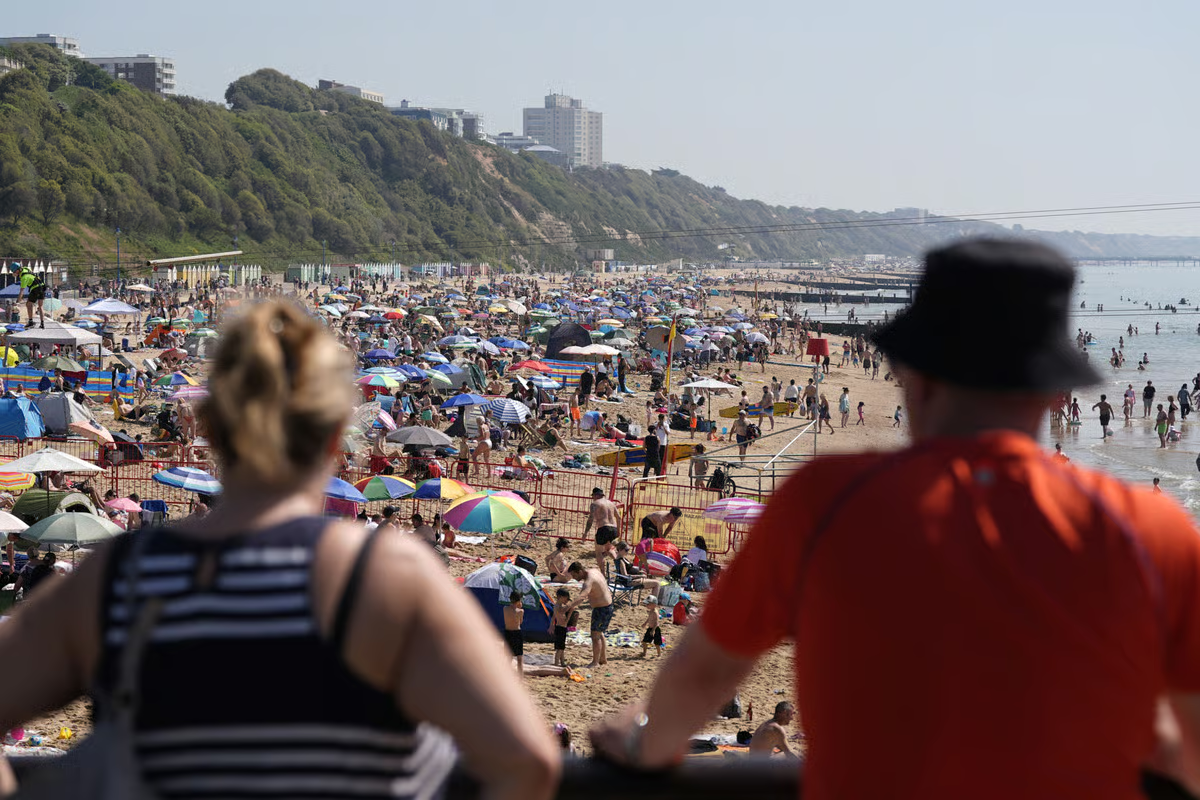 NewsBeat7 days ago
Hottest May day ever as London hits 34.8C in 2C leap from previous records
-

 Business5 days ago
Selena Gomez Reportedly Upset Over Benny Blanco’s Comments on Her ‘Terrible’ Diet
-
 Tech6 days ago
China assigns ID codes to 28,000+ humanoid robots
-

 Business7 days ago
Nikkei 225 Surges Past 65,000 for First Time as Iran Peace Hopes Fuel Record Rally
-

 Tech7 days ago
Microsoft’s quiet Claude Code retreat and the real cost of enterprise AI
-

 Tech3 days ago
Waymo dominates autonomous vehicle registrations as Tesla trails behind
-
 Entertainment6 days ago
‘Breaking Bad’ Star’s Easy-to-Binge 6-Part Crime Series Spin-Off Is Finally Heading to Free Streaming
-

 NewsBeat7 days ago
Crowds find riverside shade in York as temperatures soar
-
Tech5 days ago
The Samsung pay deal is the moment Korean unions changed register
-
 Tech2 days ago
SpaceX just won a second Golden Dome contract. This one is $4.16 billion.
-

 Entertainment6 days ago
Days of our Lives 2-Week Spoilers May 25-June 5: Gwen Rages, Abe Confesses & 2 Tragic Anniversaries!
-

 Tech7 days ago
Westone Audio and Etymotic Acquired by Fidelity Collective in Major IEM Market Move
-
 Entertainment6 days ago
Taylor Swift Fans Label Travis Kelce’s Beer-Chugging A ‘Red Flag
You must be logged in to post a comment Login