

Politics
Reform councillor pictured in Blackface and Rasta hat

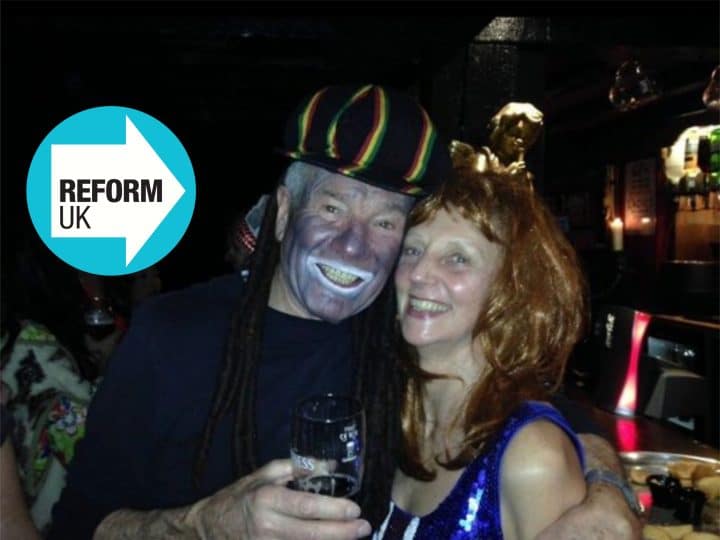

Geoff Shaw is one of the new crop of Reform UK councillors who were elected to office in May 2026. And like many of his new colleagues, Shaw is already attracting all the wrong sort of attention:
Reform UK’s Councillor Geoff Shaw, black face with ‘rasta wig’.
Theydon Bois, Epping Forest District Council.
Any comment @EFReform or @McIvorJaymey? pic.twitter.com/WpepSiD7Ky — Reform Party UK Exposed
 (@reformexposed) June 2, 2026
Disgraceful
Shaw is one of 11 Reform politicians who won a seat on the Epping Forest District Council. This gave Reform a majority of the 18 seats available. Given the rate at which Reform loses councillors, however, the party may struggle to hold on to that majority — especially with politicians like Reform’s Shaw in the mix.
In the offending picture, Shaw appears to have Black and White Minstrel-style face paint on:
From 1958 to 1978 the BBC here in the U.K. broadcast the Black and White Minstrel show
pic.twitter.com/YjBYqh80AU
— MAGA deserves everything they voted for
(@nogg_the) May 24, 2026
Reporting on the history of the show, David Hendy wrote for the BBC website:
What’s harder to fathom is why, in an era in which tens of thousands of black people had long been settled in Britain or were trying to make it their home, a BBC which had already managed to reflect something of the reality of black British life… took so little account of the offence caused by white performers blacking-up their faces on a peak-time TV show.
Hendy added:
For the best part of the next twenty years it didn’t seem to occur to anyone in a position of authority at the BBC that the series really was offensive to more than just a few “killjoys”. This failure to even see any racism was a measure of the BBC’s real problem: the archival record of its behind-the-scenes thinking during this period is far from flattering.
On that record, one BBC executive wrote at the time of the show’s airing:
The best advice that could be given to coloured people by their friends would be: “on this issue, we can see your point, by [SIC] in your own best interests, for Heaven’s sake shut up. You are wasting valuable ammunition on a comparatively insignificant target”.”
While it’s obvious to most why it’s offensive to portray Black people as cartoonish caricatures, people like Shaw still aren’t getting it. To make it completely clear, then, we need to go back to the start.
The history of minstrelry
The tradition of Black minstrelry began in the US, and it emerged at a time when Black people lacked the rights of white American citizens. As the National Museum of African American History & Culture reported:
The first minstrel shows were performed in 1830s New York by white performers with blackened faces (most used burnt cork or shoe polish) and tattered clothing who imitated and mimicked enslaved Africans on Southern plantations. These performances characterized blacks as lazy, ignorant, superstitious, hypersexual, and prone to thievery and cowardice. Thomas Dartmouth Rice, known as the “Father of Minstrelsy,” developed the first popularly known blackface character, “Jim Crow” in 1830. By 1845, the popularity of the minstrel had spawned an entertainment subindustry, manufacturing songs and sheet music, makeup, costumes, as well as a ready-set of stereotypes upon which to build new performances.
In other words, the practice emerged as a means for white Americans to ridicule and denigrate their Black countryfolk. And it persisted because enterprising racists figured out how to turn a profit from it.
You can’t separate the act of Blackface from the history of Blackface. And while you can utter phrases like ‘it’s just face paint‘ or ‘I don’t mean any offence‘, in doing so you sound like a fucking idiot.
Getting away with it
We’re not sure what Shaw’s excuse will be yet, but we’d be very surprised if it contains the word ‘sorry.’ After all, he’s a member of the party which happily tolerated the following:
- Reform activist worries growth of Jewish population could ruin UK culture.
- Media silent as antisemitic Reform activist spotted campaigning.
- Another Reform candidate praises Oswald Moseley — A rite of party initiation?
- Reform has put a suspended racist in charge of campaign finances.
- Reform candidate wants to ‘tear down’ the NHS.
- Video emerges of Reform’s ‘Nazi salute’ candidate drink driving.
Featured image via the Canary
By Willem Moore


THE EMPIRE STATE STRIKES BACK: New York Democrats are moving full bore ahead with their plans to join the nationwide redistricting war.
And their efforts are more expansive than their constitutional amendment to allow mid-decade changes to congressional maps: Democrats are also moving a measure that would permanently give the Legislature the authority to decide the wording of ballot questions like the expected 2027 redistricting referendum.
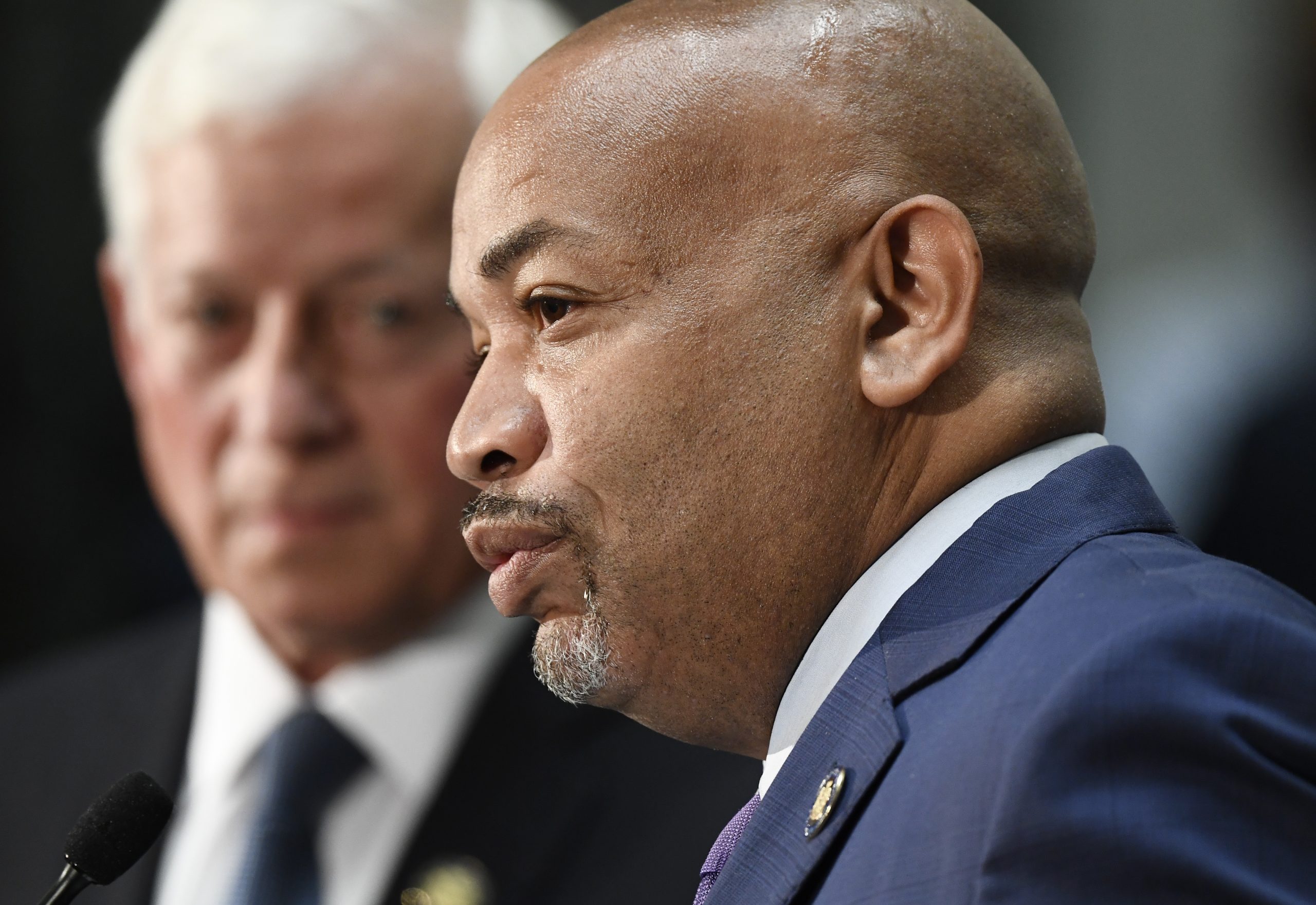
Assembly Speaker Carl Heastie said today the decision to take such an aggressive approach — the amendment would eliminate a ban on lines drawn to favor political parties — was based on the Supreme Court decision, which made redistricting “more of a wide-open process.”
“For us here in New York, we want to be able to have as much flexibility in drawing districts as other states,” Heastie said. “Asking New York to play fair while everybody else is playing ruthless, it’s not right to ask us to do that.”
Does that mean the speaker will be “ruthless” when picking up the mapmaking pen in 2028?
“I’m going to play fair based on how other people play,” he said.
Before the Empire State gets to the point where new maps are drawn, voters would need to approve the amendment next November. And the parallel ballot language effort from Democrats stands to increase the chances of that happening.
That bill would strip the bipartisan Board of Elections of its power to decide how constitutional amendments appear on the ballot and let the Legislature determine the wording seen by voters.
The move raised the specter that next year’s referendum won’t highlight its potential to legalize gerrymandering, and instead include platitudes like asking voters if they want to “protect democracy.”
“Clearly, they’re doing this with a purpose,” said state Sen. Jack Martins, a Nassau County Republican. “The last thing we should do is play politics with our state constitution.”
As it now stands, the attorney general’s office makes recommendations on ballot wording to the two Democratic and two Republican commissioners on the Board of Elections. Those commissioners have the final say over what ballot questions look like.
“Having both sides is a strength,” said Peter Kosinski, the board’s Republican co-chair. “Making sure voters see fair language — not just partisan language on the ballot — should be our goal. And I think the Board of Elections achieves that.”
Democrats counter that they’re best suited for determining this language.
“The will of the Legislature is extrapolated from what the people want, as opposed to the evenly-divided Board of Elections,” Senate Deputy Leader Mike Gianaris said. “The voters of this state have elected Democrats to overwhelming majorities in both houses. Why should the Republican party have 50 percent of the say in what legislative proposals look like on the ballot?”
“We just think it’s better to be in our hands,” Heastie said. — Bill Mahoney
From the Capitol
NON-DISCLOSURE PUSH: The advocacy group Lift Our Voices is making a last-minute push for a bill that would place new restrictions on the use of non-disclosure agreements.
The group, co-founded by Gretchen Carlson and Julie Roginsky, is pushing to change “toxic workplace cultures.”
“New York should not be in the business of silencing workers,” Carlson and Roginsky said in a joint statement. “California, Washington, and New Jersey have already banned NDAs that keep survivors of workplace abuse from speaking out, and it’s time for New York to do the same.”
The bill, which would prohibit the use of nondisclosure agreements in workplace discrimination cases, is among the hundreds of proposals being considered in the final week of the legislative session. — Nick Reisman
REDISTRICTING RODEO: New York Democrats’ pending redistricting amendment — first reported Monday night by POLITICO — is getting a thumbs up from House Minority Leader Hakeem Jeffries.
“This is just the beginning of our decisive response to the Jim Crow-like tactics unleashed by the Supreme Court when it gutted voting rights in America,” Jeffries said in a statement. “We will ensure that there are free and fair elections moving forward. The Empire State will strike back.”
The proposed changes would enable Democrats to take an aggressive approach redrawing New York’s House lines by 2028.
Jeffries has taken a keen interest in his home state’s efforts to change the redistricting process. He previously appointed Rochester Rep. Joe Morelle, a Democrat who previously served in the state Assembly, to coordinate the effort with Albany lawmakers. — Nick Reisman
PACKAGING FLOPS, DATA CENTER MORATORIUM MOVES: Democratic lawmakers plan to send Gov. Kathy Hochul an omnibus measure on data centers for artificial intelligence, including a one-year moratorium on new projects.
The governor has been hesitant about the prospect of a statewide moratorium, which would be the first in the nation if she signs it.
The measure, sponsored by state Sen. Kristen Gonzalez and Assemblymember Didi Barrett, rolls in several proposals from lawmakers aimed at ensuring data centers don’t lead to higher energy bills for residents. It also includes requirements for a new rate class for data centers and labor standards.
Environmental advocates and Democratic lawmakers had initially proposed a three-year moratorium.
“Regulating hyperscale centers and also figuring out how to properly regulate artificial intelligence is an existential question,” Gonzalez said. “We’re taking a first step here as a state, but it also doesn’t mean that we are getting in the way of innovation.”
Meanwhile, in a blow to environmental advocates, Heastie told reporters today that he does not plan to bring the plastics bill up for a vote — saying it doesn’t have the support to pass.
It’s the same line he offered last session, though advocates contend the votes are there and that it’s special interest lobbyists standing in the way.
The extended producer responsibility bill aims to shift the cost of waste management and recycling away from local governments to companies that sell packaged goods. It was one of the most lobbied on pieces of legislation outside of the budget last session.
Supporters of the bill were hoping it gave the state a chance to make up for a budget that rolled back New York’s landmark climate legislation. Opponents, meanwhile, have pointed to cost concerns ahead of an election focused on affordability.
Heastie cited cost as the main reason Democrats in the Assembly are hesitant about the bill. However, the bill has 77 co-sponsors, more than the 76 votes needed to pass. Heastie himself said he was a “yes” on the bill. — Marie J. French and Mona Zhang
FROM CITY HALL

HER VIEWS THEY ARE A-CHANGIN’: Democratic socialist congressional hopeful Darializa Avila Chevalier is under fire for a spray of inflammatory social media posts about former President Joe Biden, police officers and various other individuals and issues.
But Mamdani — who endorsed Avila Chevalier’s insurgent campaign against Rep. Adriano Espaillat last week — waved off concerns about her online outbursts today.
“She said herself that a lot of these [posts] don’t reflect her views today, and I’m incredibly excited to be supporting her today and her vision for not only a New York City but frankly a United States of America that working people can afford,” Mamdani told reporters this morning at a press conference in Queens.
Most of Avila Chevalier’s eyebrow-raising social media missives that have emerged in recent days were posted in 2020, when she was 26. As first reported by Playbook, her expletive-riddled messaging included posts calling Biden “a rapist” and “a war criminal” and one in which she wrote former Mayor Bill de Blasio, a Mamdani ally, “hates Black people.”
More recent tweets have also emerged. CNN reported yesterday that Avila Chevalier posted in 2021 that the “only moral way forward” is to “literally” abolish all police, prisons and borders. She also reposted messages calling for the seizure of “all properties from landlords” and the nationalization of all utilities, hospitals and pharmaceutical companies.
Avila Chevalier said in a statement that she has “grown considerably” since she thumbed out the tweets. — Chris Sommerfeldt
FROM THE CAMPAIGN TRAIL

CHERRY PICKING: It’s been nearly a day since the debate between Rep. Dan Goldman and former city Comptroller Brad Lander — and they’re taking the fight online.
Last night, Lander’s campaign posted a debate clip on social media of Goldman saying, “I do take corporate PAC money” and “I have no problem taking money from anyone who wants to give it to me” — a collage taken from a longer Goldman remark in which he explained that he only accepts corporate PAC money in his leadership PAC in response to a question from Lander about it.
“You are right, I do not take any corporate PAC money in my own campaign account to use on my own campaign, and you also are correct that I do take corporate PAC money in my leadership PAC,” Goldman said at the debate. “That leadership PAC cannot be used for me. It cannot be used for my campaign. It is only used to help my colleagues win back the majority, and I have no problem taking money from anyone who wants to give it to me to help the Democrats take back the majority.”
Goldman responded to Lander on X, writing: “Are you seriously arguing that we shouldn’t do literally everything in our power to win back the majority?” In another post, he charged: “You cannot believe anything he says. If he will edit out the most important part to mislead voters, what else is he lying about?”
Since the beginning of last year, Goldman’s leadership PAC has taken tens of thousands of dollars from corporate PACs and disbursed more than $100,000 to Democratic candidates and organizations, according to filings with the Federal Election Commission.
Lander doubled down Tuesday. “Wow, what Dan Goldman said is he’s perfectly fine taking money from anyone,” he said in a video using the clipped portion of the debate. “This is how we got here, is by a Democratic Party that is backed by billionaires and wealthy special interests … That’s why we need better Democrats, folks who don’t take all that corporate PAC money, who fight for working people.” — Madison Fernandez
IN OTHER NEWS
— PAC MENTALITY: American Priorities, a super PAC formed to counter pro-Israel groups like AIPAC, has pledged to spend $2 million for Democratic primary candidates Brad Lander, Darializa Avila Chevalier and Claire Valdez. (The New York Times)
— TAKE IT FROM ME: Former Mayor Eric Adams met with Republican gubernatorial hopeful Bruce Blakeman to offer advice on campaigning in New York City and signaled he may be open to endorsing him. (New York Post)
— CAPITOL LOSS: New data reveals population shifts across upstate New York, with Albany losing residents while Saratoga and Warren gained them based on quality of life, housing and employment considerations. (Times Union)
Missed this morning’s New York Playbook? We forgive you. Read it here.


The AUKUS war pact between the US, UK and Australia is expensive, secretive, and the “worst defence decision” since WWII. That’s according to a respected Australian expert, who says a proper inquiry is long overdue. Ian Lowe, an emeritus professor at Griffith University, Queensland, published a recent critique of the deal, saying it was:
Negotiated rapidly and in secret [and that] the AUKUS pact to produce new nuclear-powered submarines is among the most expensive, consequential and opaque deals in British and Australian military history.
Australia probes shadowy defence deal
Australians are holding a public inquiry, a move that Lowe welcomes. The scholar pulled no punches, saying:
The trilateral security partnership between Australia, the UK and the USA was negotiated in secret in 2021 by the leaders of those three countries. Not one of those leaders is still in office […] given that this is by far the most costly defence project in Australian history, there has been no parliamentary scrutiny of the deal in Australia. It continues to be shrouded in secrecy, despite the high stakes and eye-watering projected cost.
He also cited a former Australian general, Michael Smith, who called the arrangement:
The worst defence decision since we relied on Britain to defend us in World War II.
AUKUS has been in the news for two days running. On 1 June, the Canary reported a joint announcement between US, UK and Australian defence chiefs unveiling an underwater drone programme. Underwater AI war drones appear at the heart of the new deal.
Lowe pointed out the public is very much out of the loop about the scale and scope of AUKUS. So much so that concerned citizens are investigating the pact themselves:
Now a group of former MPs, retired military and naval officers, leading strategists and academics, human rights lawyers and union leaders have joined together to hold a public inquiry. It is being funded by donations from unions, community organisations, faith groups and concerned citizens.
The inquiry “formally launched” on 2 June, explaining that it is:
coordinated by the Australian Peace and Security Forum (APSF) to ensure it is grounded in expertise, independence and evidence-based examination of the issues. The fundamental question being considered is: will AUKUS keep Australia safe – at what cost?
AUKUS risks, costs, and Britain’s bill
Budgets will be a major concern.
The Australian government has budgeted for spending some A$368 billion – close to £200 billion – for eight submarines.
The boats will supposedly be delivered in the early 2030s:
Given those timescales and the fact that the submarines have not yet even been designed, there is understandable scepticism about the budgeted final costs.
And it isn’t clear that the submarines would make Australia more secure. Lowe said he’d held a workshop with submariners. The sailors were split:
While they could operate away from base for longer periods and at greater depth than conventional submarines, their size would prevent them operating in the comparatively shallow waters around Australia’s northern coastline, making them less useful for defending our territory.
And there are worries over Australia’s nuclear non-proliferation obligations and the issue of toxic waste: the subs are nuclear powered:
The AUKUS agreement makes Australia responsible for waste management. That poses a huge problem.
Previous Australian attempts to store much lower-level toxic waste than the boats would produce have failed. And Aussie First Nations people have opposed the schemes energetically.
Lowe said Brits should pay attention to the pact. Because they are picking up the UK end of the bill. The boats are being built at Barrow-in-Furness in England’s north-west:
As a former member of our parliament said, “So many questions, so few answers. The Australian public deserve more than Cold War rhetoric to justify the mind-boggling expenditure”.
He added:
British taxpayers, who will be picking up the tab for the Barrow-in-Furness part of the operation, should be watching the inquiry with interest.
Lowe is right. The UK’s role in AUKUS does need to be made public. PM Keir Starmer may not have started that particular project. But he has certainly lashed the country’s fortunes to the fantasy of military spending bringing growth. The whole militarist edifice need to be examined. And where necessary pulled down.
Featured image via Kin Cheung / Getty Images
By Joe Glenton


A brash Trump- and Israel-aligned millionaire — Abelardo De la Espriella — has come out ahead in the first round of Colombia’s presidential election. Colombia’s left-wing government has strongly criticised Israel’s genocide and resisted Trump’s attempts to reassert US influence in Latin America. Meanwhile, De la Espriella has vowed to reverse these results and restore ties with Israel.
Far-right candidate sides with Israel
As Latin America’s fourth–largest economy, this could be a pivotal. Colombia has stood for decades as a key US ally in Latin America. It’s also been one of Israel’s staunchest partners in the region. But its first left-wing president Gustavo Petro has severed ties with Israel over its genocidal crimes in Gaza, and criticised intensifying US crimes against Latin American governments under Donald Trump.
Far-right presidential candidate De la Espriella has pledged to:
- Renew an “alliance” with the apartheid state of Israel, putting an embassy in Jerusalem and building “a direct, firm and strategic relationship with Israel“.
- Align with Trump and his aggressive expansionism in Latin America.
- End peaceful attempts to consign Colombia’s dark history of military conflict to the past. Instead, escalate confrontation and boost military funding through a hardline ‘iron fist’ approach. He would buy military equipment from the US and Israel.
- Set up ten mega-prisons as part of an intensifying drug war — the kind that has failed consistently both in Colombia and elsewhere.
- Give police permission to shoot protesters if they deem it appropriate.
- Expand the exploitation of natural resources.
- Embrace the capitalist extremism of neoliberalism again, slashing private-sector taxes and gutting public spending.
De la Espriella lived in Miami before the election campaign, and will probably leave again if he loses. And for years, he had served as a lawyer to prominent criminals. His supporters have been flying the Israeli flag alongside campaign banners. Propagandists at United with Israel! have expressed excitement about:
the possibility of reversing one of the most dramatic diplomatic ruptures in Latin America.
Israeli foreign minister Gideon Sa’ar, meanwhile, has celebrated the momentum behind his “friend“:
Congratulations to my friend El Tigre @ABDELAESPRIELLA on his victory in the first round of Colombia’s Presidential elections. — Gideon Sa'ar | גדעון סער (@gidonsaar) May 31, 2026
Good luck in the next round.
Firme por la patria! 
 pic.twitter.com/u9mTAZEDCc
Another rich misogynist for the far-right
De la Espriella has modelled himself after Trump, learning how leaders can successfully exploit algorithms and public anger to amass power. While pushing ‘conservative family values,’ he has been openly misogynistic, unapologetically sadistic. And he’s come from outside politics to lead the presidential race relying on:
aggressive use of social media, support from charismatic Evangelical pastors, and backing from key conservative figures across Latin America.
The mining industry has been pushing people to back him. US politicians have been doing the same, while Ecuador’s far-right president tried to bolster his campaign with a dodgy promise to cancel tariffs.
Despite all the personal disagreements on the Colombian right, they share a common hatred of the left in the end. So it’s unsurprising that they’ve been uniting behind de la Espriella. Fellow far-right candidate Paloma Valencia, for example, wasted no time in backing him to ‘oppose communism’.
Recently, meanwhile, Colombia’s left paid particular attention to a scandal showing the Trump regime, drug traffickers, Israel, and the Latin American far right collaborating to undermine progressives in the region. So the prospect of underhand tactics is absolutely on the cards too.
The peace-building, left-wing alternative
De la Espriella got 43% of the vote in the first round. But main left-wing candidate Iván Cepeda was close behind with 40%. So the left is still very much in the race.
Cepeda and Petro’s Pacto Histórico coalition faced consistent congressional opposition to its programme. But it still managed to reduce poverty, inflation and unemployment. And its gains in congress in March’s elections suggested it remained popular.
Drug-related violence has long been a pervasive problem in Colombia, and there has been a slight increase coinciding with Trump’s second term in the US. But Cepeda believes in continuing the push for peace rather than escalation, as does his Indigenous running mate, human rights activist Aida Quilcué.
Cepeda has also been critical of Israel’s genocide and apologism for it on Colombia’s right.
In the first round of the presidential vote, de la Espriella predictably (as a colonial cheerleader) did well in largely white and conservative areas. Cepeda, meanwhile, won in majority Black and Indigenous communities.
Around 24 million Colombians voted, but there are 41 million people who are eligible to vote. And turnout is usually a lot higher in the second round, which in this case will take place on 21 June.
The Latin American election is far from over. Voters on the fence will now need to decide between the brash and divisive de la Espriella and the calmer, more pragmatic Cepeda. The Colombian left, meanwhile, will need to unite and make a strong case for peace in order to stop the far right and its sadistic colonial friends.
Featured image via XX / Getty Images
By Ed Sykes
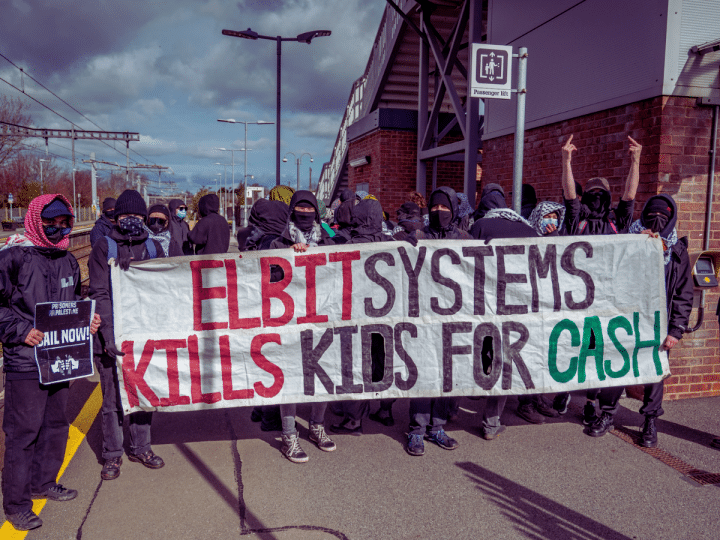

Labour’s Liverpool Riverside MP Kim Johnson spoke out against the Starmer regime’s determination to convict the ‘Filton 24’ activists. The group had been imprisoned for up to two years awaiting trial.
Starmer and his front-bench drones forced a retrial of the ‘Filton 24’ anti-genocide activists who damaged an Israeli weapons factory. The jury at the first trial had refused to convict them on any charges, despite false evidence from their accusers. The security service-linked judge at the retrial:
• Banned lawyers from telling jurors about their right to “jury equity.”
• Banned lawyers and press from noting government pressure for terrorism sentencing despite no terror charges.
• Banned lawyers and defendants from discussing anti-genocide motives for targeting the drone factory.
This trial has seen the spotlight focus on the actions of members of the Filton 24.
Filton 24 retrails and political interference
Now Johnson has told the Canary of her fears for justice and her concerns over political interference in legal process. She said:
The Filton 24 re-trial raises serious questions about transparency and fairness.
We have seen a series of highly unusual developments throughout this case – including restrictions being placed on what can be said in court.
If convicted, these individuals could face terrorism-related sentencing consequences that jurors will not have been told about.
At the same time, senior politicians have continually made public comments about this trial, committing contempt of court, and raising further concerns about the integrity of the process.
Justice must always be open and transparent. The public has a right to know how these proceedings are being conducted, what juries are being told and what they are not.
These are not fringe concerns. They go to the heart of fair trials, civil liberties and confidence in our justice system.
Of the six re-tried activists, two were acquitted of all charges. Juries rejected all charges alleging any violent intent. However, the four activists convicted of criminal damage will be sentenced on 12 June 2026 at Woolwich Crown Court.
If sentenced under terrorism legislation, the activists face long sentences, tougher barriers to early release, and decades of travel restrictions and having to report to the authorities, even post-release. This is the possible fate for the remaining Filton 24 defendants.
Their supporters have urged all well-wishers who are able to attend to do so, in order to increase pressure on the intelligence-linked judge to act with restraint. Public mobilisation in support of Filton 24 continues.
Featured image via Barold / the Canary
By Skwawkbox
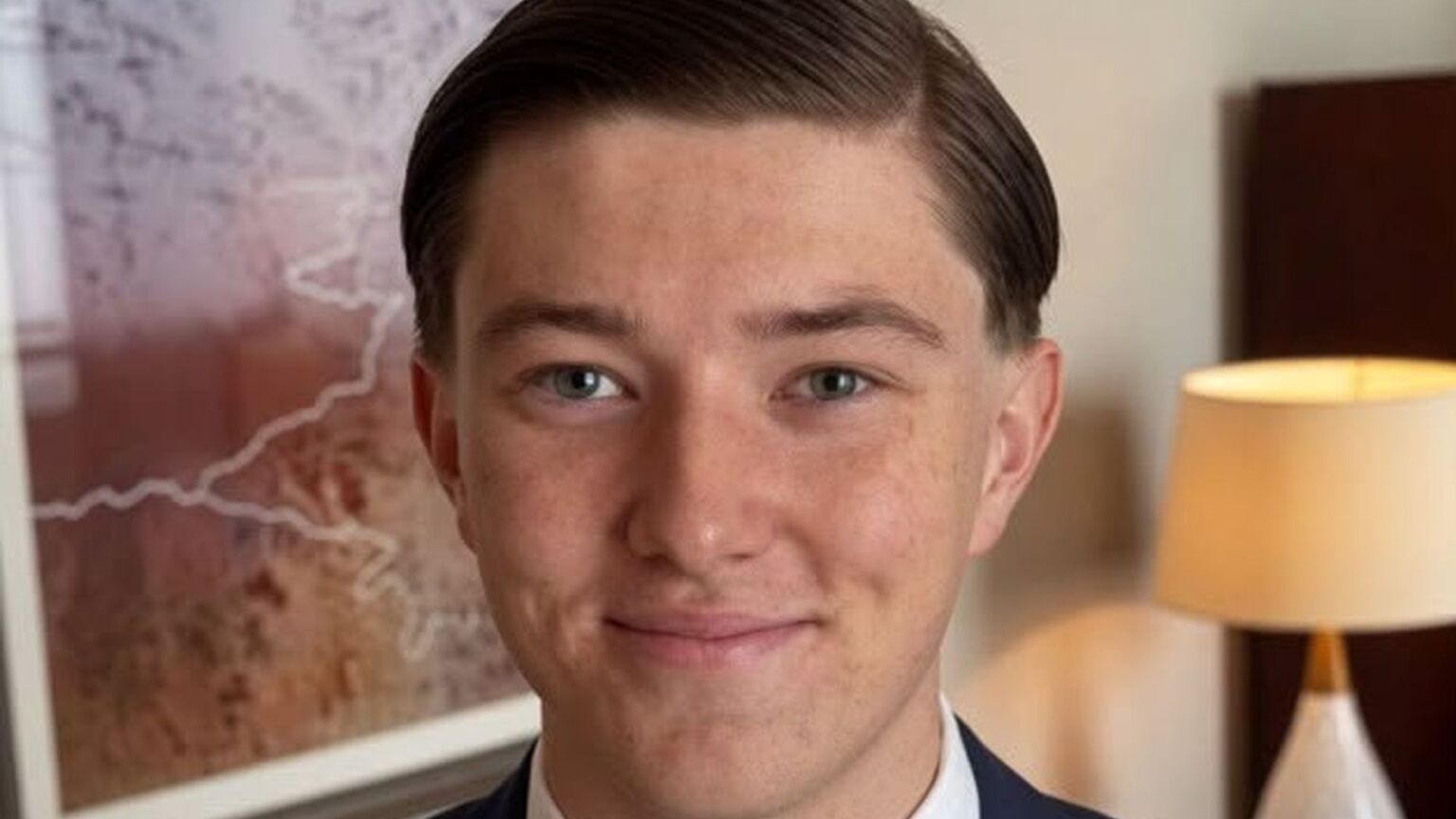
I served for 24 years as a police officer in emergency response, public order, intelligence and counter-terrorism. I saw the best of policing, worked with devoted colleagues and took pride in work that indisputably mattered. I joined the police to make a difference. Duty, camaraderie and justice were not abstract ideals – and I believed that the force made the country safer. But, in the end, disillusionment drove me out.
Over time, I watched the mission of the police being hollowed out by ideological capture. Concern for public trust mutated into a top-down obsession with political correctness and policies that increasingly served political fashions, rather than the enforcement of the law. My personal breaking point came when I understood that the institution itself was eroding the principles I had sworn to defend.
The inevitable, tragic denouement of this ideological transformation came with the murder, in December 2025, of 18-year-old Henry Nowak. Nowak was stabbed four times by a Sikh man named Vickrum Digwa. But, when police arrived at the scene, it was Nowak who was placed in handcuffs. This callous decision was made because Digwa told officers that Nowak was a ‘racist’. Nowak told officers that he’d been stabbed. His last words were reported as, ‘Please, brother, I can’t breathe’. ‘I don’t think you have, mate’, an officer responded. Nowak died at the scene.
For a long time, British policing stood for impartiality, restraint and equal enforcement of the law. Nobody thinks that now. There has been a litany of cases, some high profile and others not so, where fear of that most career-ending of accusations – ie, of racism – has led to gross injustices.
The most infamous outrage is that of grooming gangs, which have been disproportionately comprised of Pakistani Muslim men. This was not merely a tragedy – it was a disgraceful collapse of policing and child protection. In town after town across the country – in particular areas with large Muslim populations such as Rotherham and Telford – mainly white working-class girls were subjected to appalling sexual exploitation. Police stood by, failed to act or looked the other way. Last year, a report by Baroness Louise Casey found that fear of being labelled racist was one of the primary motivators of police inaction.
We witnessed a similarly perverse obsession with race in 2021. A teacher at Batley Grammar – an independent state school in West Yorkshire – showed his pupils the same cartoons of Muhammad that were published by the French satirical magazine, Charlie Hebdo, in 2015. The teacher was subject to a terrifying campaign of abuse and intimidation from Muslim parents and organisations, until he was eventually forced into hiding and police protection. Yet again, police caved to the demands of these sectarian bigots in the name of ‘cohesion’. Not one of the teacher’s persecutors was charged.
These events did not emerge out of thin air. For years, police forces have prioritised identity politics above public safety. The death of George Floyd in America in 2020, and the resulting mania of the Black Lives Matter protests, sent this process into overdrive.
This is a corruption of purpose. Policing is now viewed through social-justice conventions about competing identity groups, producing the notorious ‘two-tier’ mindset. Senior leaders have reinforced that impression with their own bombast. They now routinely describe policing as a vehicle for inclusion and broader social reform. When police leaders sound more like activists than law enforcers, the public is more than entitled to conclude that priorities have been badly warped.
The Independent Office for Police Conduct is now investigating the behaviour of the officers in the Henry Nowak case. But one thing is obvious: responsibility cannot be dumped on frontline officers alone. Culture is set by senior leadership, and senior leadership must answer for the culture that saw its officers handcuff a teenager who was in the process of bleeding to death.
I know full well that policing is hard and that difficult judgements are unavoidable. But difficulty is not an alibi for weakness. The police are not there to placate pressure groups or manage sensitivities – they are there to uphold the law and protect people from intimidation, violence and coercion. When that mission is subordinated to ideological fashion or activist pressure, trust rots. Senior ranks deserve a disproportionate share of the blame, and they must not be spared over the death of Henry Nowak.
Britain’s policing institutions face a stark choice: continue down a path where social-justice activism eclipses law enforcement, or return to the foundational principles of equal protection under the law. Without that change, public confidence, already at its lowest ebb in memory, will not be recovered.
Paul Birch is a former police officer and counter-terrorism specialist. You can read his Substack here.

The post ‘As an ex-officer, this is one of the worst things I’ve ever seen’ appeared first on spiked.


UK ministers and generals are using Palantir software to decide which Palantir products to buy. By modelling battles through the far-right tech firm’s Foundry software, officials hope to outsource thinking … then again, thinking has rarely been our governments’ strong suit.
Anyway, the Murdoch-owned Times reported on 1 June:
The US tech firm Palantir is helping ministers and military chiefs decide what weapons to invest in so they can win a war against the likes of Russia, it is understood.
A senior military source told the paper:
The CIA-backed firm evaluates force mixes — such as the balance of drones versus manned vehicles — and capabilities against a range of scenarios to help determine investment choices.
Palantir founders Alex Karp and Peter Thiel openly espouse far-right ideology.
The UK military, police, NHS and, allegedly, the Telegraph newspaper have started to use Palantir technology. The firm is also involved in Israel’s genocide in Gaza, and maintains a permanent desk in southern Israel. Trump’s paramilitary immigration operations also use the firm’s gear.
Foundry has been described as:
one of the company’s flagship data integration and analytics systems that is marketed more towards civilian pursuits – specifically towards large businesses and public services.
Foundry also transforms:
an organisation’s data, actions, decision rules and security controls into a single structured system that humans and AI can use together to run complex operations. It can model how an organisation works, managing assets, people, processes, and supply chains.
It can support planning, logistics, inventory and forecasting.
The Times said:
The data-driven outcomes have helped inform the long-awaited defence investment plan (DIP), which will not be published before the second week of June. It will set out how billions of pounds of taxpayers’ money will be spent in the department.
Officials in the Ministry of Defence are also using Palantir’s Foundry software as a financial planning tool by “swapping in and out different spending decisions”, a second source familiar with the technology added.
Palantir will be hard to untangle
The process seems to involve officials asking the Palantir software questions. Foundry answers based on whatever has been been loaded into the large language model — presumably by Palantir:
For example, the MoD can ask: if it is to buy a ship, what will the associated costs be over its lifetime?
They said Palantir was being used to integrate data from all the war games the UK has held and “run queries across those to give a sense of future scenarios”.
The Times added:
Palantir’s tech is now so intertwined with all aspects of the British military that it will be hard to untangle in future years, should that ever be deemed necessary.
Not at all weird or chilling. As the Canary reported on 20 April, Palantir’s ‘manifesto’ is a collection of far-right tropes more suited to a Joe Rogan podcast than a multinational arms firm:
Point 21 reads:
Some cultures have produced vital advances; others remain dysfunctional and regressive. All cultures are now equal. Criticism and value judgments are forbidden. Yet this new dogma glosses over the fact that certain cultures and indeed subcultures . . . have produced wonders. Others have proven middling, and worse, regressive and harmful.
While Point 22 is a fascist-accented lament for Western imperialism:
We must resist the shallow temptation of a vacant and hollow pluralism. We, in America and more broadly the West, have for the past half century resisted defining national cultures in the name of inclusivity. But inclusion into what?
Oh no, inclusion. Boo hoo!
The Times warned the tech giant is so intertwined with UK governance and militarism that it will “be hard to untangle.” Yet it must be. This isn’t just a software firm. Palantir’s founders aren’t simply Incel computer nerds. The company is a Trojan Horse. And the UK is handing greater and greater power to the company’s far-right Trump-aligned CEOs by the day.
Featured image via Carl Court / Getty Images
By Joe Glenton


Rail union RMT is demanding all Govia Thameslink Railway staff be brought into direct employment after the train company became the latest to be brought under public control.
The union has been campaigning for all elements of the railway to come into public ownership. And it has welcomed the commitment by the government to launch Great British Railways with track and train all nationalised.
However, private contractors will continue to employ thousands of workers. These include:
- Cleaners.
- Gate line staff.
- Security staff.
- Infrastructure maintenance, renewal and engineering workers.
This is despite the Labour government’s commitment to undertake the biggest wave of insourcing in a generation.
RMT general secretary Eddie Dempsey said:
We want to see all our members on the railway receive the same benefits of public ownership and this includes outsourced workers.
The Labour government needs to follow through on its commitment to undertake a mass wave of insourcing.
Railway workers in outsourced companies work just as hard and contribute just as much to public transport as those directly employed.
Across our union, thousands of outsourced workers are growing increasingly frustrated at having poorer wages, no sick pay and being treated as if they are a second-class workforce.
RMT will industrially and politically maintain pressure on the government until it fulfils its obligations to our members.
Featured image via Getty Images
By The Canary


Less than a quarter of the UK’s largest commercial fishing vessels may have clear ownership transparency. And this is creating a systemic blind spot in UK fisheries governance.
Environmental law organisation ClientEarth has laid out these findings in a new analysis: Whose Boat Is This?
The current regulatory gap on commercial fishing vessel ownership risks enabling vessel owners to operate through complex corporate structures and hide behind shell companies. This can mask the Ultimate Beneficial Ownership (UBO) of these vessels.
ClientEarth’s Kyle Lischak said:
The core problem is simple: the government does not publicly identify who really owns many of the vessels commercially fishing UK waters to a clear and satisfactory extent.
This lack of transparency around vessel ownership, which limits accountability, allows for unlawful fishing practices to potentially occur.
The UK is a leading maritime nation and a global ocean governance actor. It has consistently supported international efforts to tackle illegal fishing and improve fisheries transparency through initiatives such as the Illegal, Unreported, and Unregulated Fishing Action Alliance and its wider engagement in multilateral ocean governance forums.
However, it falls short of implementing the highest standards domestically because the UK current regulation does not require disclosure of ultimate beneficial owners for all commercial fishing vessels operating under its jurisdiction.
In particular, key systems such as vessel registration and fishing licences do not effectively capture who ultimately owns or controls vessels.
When ownership cannot be identified, the UK cannot rule out links to organised crime, sanctioned entities, or hostile actors. In cases where ownership is untraceable, the trail leads to opaque offshore jurisdictions.
Illegal fishing practices
The lack of regulation weakens national oversight in UK waters, making this a matter of economic control and national security, as well as public safety.
Without clear ownership and accountability, the UK public cannot be completely confident that the seafood harvested by UK vessels, and other commercial vessels that fish in UK waters, is legally and sustainably sourced. Lischak said:
At a time of focus on domestic security, the UK cannot fully account for who is exploiting its marine resources.
The UK, and the devolved governments, now have clear evidence of a major transparency gap in their fisheries governance. This regulatory gap exposes the country to risks linked to organised crime, illicit financial flows, sanctions evasion and other illegal activities associated with global fishing networks.
Most UK fishers make real and concerted efforts to follow the rules but they may be left competing with opaque commercial operators whose ownership can remain hidden behind complex structures.
When ownership is unclear, enforcement is weaker and any bad actors are not held accountable, this can create unfair competition for honest UK fishers and lead to market distortions. Lischak commented:
Law-abiding UK fishers may be left competing with operators who do not play by the same rules.
This opacity also has direct environmental consequences. Illegal and unaccountable fishing accelerates overexploitation, damages marine ecosystems, and undermines efforts to manage ocean resources sustainably and ensure food security. Lischak continued:
The ocean is one of the UK’s greatest allies on future food and job security, and in the fight against climate change. Weakening its health through poor oversight puts us all at risk.
Calls for reform
The UK already has established frameworks that could improve fisheries transparency, including company ownership rules and new verification powers.
To live up to its reputation as a global ocean governance leader, the UK must close the gaps by requiring UBO disclosure at commercial fishing vessel registration and licensing stages, lowering ownership thresholds to make it harder to hide, and publishing UBO data in a publicly accessible register.
It needs to strengthen the enforcement of company disclosure requirements and restrict access to UK waters for commercial vessels with opaque ownership, closing loopholes that currently allow anonymity to persist.
Countries around the world are endorsing the Global Charter for Fisheries Transparency and implementing its 10 principles, including UBO disclosure. The UK also supports the Charter, but now it needs to act on it or risk undermining its leadership on this issue more broadly.
Lischak added:
These reforms would strengthen enforcement, protect UK fishers, and build public trust. The solution is practical and achievable with existing tools. It is now up to the UK to act.
You can read the full report here.
Featured image via Getty Images
By The Canary


Donald Trump has claimed that Israel and Hezbollah have “agreed to halt attacks” after indirect talks through intermediaries.
Trump wrote:
I had a very good call with Hezbollah, and they agreed that all shooting will stop – that Israel will not attack them, and they will not attack Israel.
Bearing in mind that no US president has ever spoken with Hezbollah, and the US designated the group a terrorist organisation, we have to ask if the intermediary was a carrier pigeon or a pet fish?
According to statements from Lebanon’s embassy in Washington, the plans mean Hezbollah would stop ‘attacking’ Israel. This would be in exchange for Israel stopping its illegal strikes on Beirut and its southern suburbs.
Of course, Hezbollah and Lebanon have the right to self-defence under international law. Whereas Israel has zero authority to be attacking, bombing, or illegally occupying another country’s sovereign territory.
Lies
Trump has been caught lying more times than we can count since the US and Israel launched their illegal attacks on Iran.
To start with, Trump claimed that Iran was aiming to rebuild its nuclear programme. He also said Israel and the US “obliterated” these sites in strikes last year. However, there was no evidence of any nuclear programme, this year or last.
The director general of the International Atomic Energy Agency told NBC News the organisation did not believe Iran has nuclear weapons and:
had not seen elements of a systematic and structured program to manufacture nuclear weapons there.
Trump also claimed that Iran was seeking to develop a long-range missile to attack the US, for which there was no evidence.
A 2025 federal government assessment contradicted this. It stated that Iran was still years away from the ability to produce long-range missiles.
Then, in April, Trump claimed that the Iran-Israel ceasefire did not include Lebanon, despite Pakistan making it clear in advance that it was always included.
Around the same time, Trump delivered a 19-minute address to the nation. In it, he slurred his words and stumbled over basic sentences. He denied that he aimed to bring about regime change in Iran. This was despite his earlier demand for “unconditional surrender” from Iran.
Additionally, after Trump’s regime, alongside the Israeli regime, murdered Iran’s supreme leader, Ayatollah Ali Khamenei, Trump insisted that he should have a say in Iran’s new leader. Because, of course, when you murder the leader of a sovereign nation, you get first pick over its new one.
But Trump got his regime change. Khamenei was replaced by erm, Khamenei – his very own son.
More lies
Even before the US and Israel launched their unprovoked attacks, Trump was already lying about the number of Iranians the ‘regime had killed’ in its ‘brutal crackdown’ of mass protests in January.
Trump also likes to set a deadline of ‘two weeks’. This never actually comes to fruition. He has used the same time frame for Iran, Ukraine, and Russia, as well as his own tariffs. It’s been a long two weeks…
It’s unclear whether the angry orange man doesn’t know the difference between truth and lies or if he just doesn’t care.
What is clear, though, is that the things that come out of his mouth have very few links to reality. There is also no way of knowing what he might, or might not, do next.
He is in charge of one of the world’s most powerful countries. Yet his credibility is directly endangering the lives of millions of people in West Asia.
Feature image via Nathan Howard/Getty Images
By HG

Jenny Mollen Faces Backlash Over Photos With 12-Year-Old Son

SAYLOR IS SELLING BITCOIN!!! *huge warning*

Celtic: Club could face choice of Martin O’Neill or Robbie Keane



-

 NewsBeat6 days ago
Israel says it has killed new Hamas military leader in Gaza City airstrikes
-

 Tech7 days ago
NASA taps Blue Origin to deliver lunar rovers for Moon Base initiative
-

 News Videos4 days ago
This is BROKEN! INSANE 5x MONEY CAR WASH WEEK! The NEW GTA Online UPDATE Today! (GTA5 New Update)
-

 News Videos7 days ago
XRP *JUST* SUCCEEDED!!!! CLARITY ACT EXPOSED!!! (SHE EXPOSED IT)
-
 Tech3 days ago
SpaceX just won a second Golden Dome contract. This one is $4.16 billion.
-

 Business7 days ago
Selena Gomez Reportedly Upset Over Benny Blanco’s Comments on Her ‘Terrible’ Diet
-

 Tech5 days ago
Waymo dominates autonomous vehicle registrations as Tesla trails behind
-

 News Videos4 days ago
SHE IS KILLING XRP!!! WATCH URGENT AND ACT FAST
-
 NewsBeat4 days ago
FIRST NIGHT REVIEW: Take That bring the Circus back to life in spectacular sun-soaked style
-

 Business1 day ago
Jade Biosciences, Inc. (JBIO) Discusses Positive Interim Results From JADE101 Phase I Healthy Volunteer Study and Development Plans Transcript
-

 Tech6 days ago
The Samsung pay deal is the moment Korean unions changed register
-

 Tech7 days ago
Millions of AI agents imperiled by critical vulnerability in open source package
-
 Crypto World4 days ago
CFTC Has Approved the First Regulated Bitcoin Perpetual Contract in the U.S.
-
Crypto World6 days ago
SpaceX’s $2 Trillion IPO: Why Tech Giants Nvidia (NVDA), Apple (AAPL), and Microsoft (MSFT) May Face Pressure
-
 Entertainment6 days ago
The Most Misunderstood Sci-Fi Horror Movie of the Last 10 Years Just Took Over Netflix
-
 Crypto World4 days ago
Snowflake (SNOW) Stock Rallies on Strong Q1 Results and AI Product Growth
-
 NewsBeat4 days ago
Novak Djokovic v Joao Fonseca LIVE: French Open latest scores and results after Jannik Sinner’s shocking collapse
-
 Entertainment4 days ago
Weak ‘Supergirl’ Box Office Tracking Amid Milly Alcock Backlash
-

 Business3 days ago
Is the Spurs Phenom Already Better Than Prime Diesel?
-

 Business4 days ago
Demand Conditions Improve In Chemicals Sector In April 2026
You must be logged in to post a comment Login