

Politics
Reform UK pledges to control the presentation of historical narratives in Welsh museums



Reform UK’s manifesto for Wales vows that the far-right party will dictate how museums present history, should it win control of the Senedd.
This includes threatening to “review funding” to ensure “political neutrality”, along with ordering museums not to present “narrow and exclusionary narratives”.
Whilst the manifesto uses vague language, Reform politicians themselves have pointed to decolonisation efforts and portrayals of the UK’s controlling role in the Atlantic slave trade as examples of what they’re railing against.
The Museums Association, the professional membership organisation representing heritage professionals, said:
We are concerned that Reform UK’s Manifesto for Wales appears to suggest that, if elected, they would seek to control how museums interpret history.
It is vital that curatorial decisions are independent from government influence.
Instead, museums should encourage active public participation in decision-making, including through co-producing exhibitions with communities.
‘Clarity about cause and consequence’
Three pledges in Reform’s 2026 Welsh manifesto relate directly to museums. The first is a vow to “Restore evidence-led history”:
Publicly funded museums, heritage bodies and interpretation sites will present history chronologically and in context, with clarity about cause and consequence.
What on earth is “clarity about cause and consequence” meant to mean? Plenty of major museums have been guilty of obscuring the legacy of Britain’s colonialism, but somehow I doubt that Reform will be pushing for an unblinking look at the transatlantic slave trade.
Beyond that, the demand to “present history chronologically” is just… ridiculous. It’s a child’s idea of what a museum looks like. ‘History starts at cavemen and then ends at WW2’. ‘It goes through the Crusades, the Tudors and the Victorians in the middle’.
Why does Reform feel justified in telling trained professionals how to present history?
That was rhetorical; I know why… You know what – I’m going to go there. This is a Nazi policy; it is a propaganda tool used by Nazis.
Speaking to the National, leading historian Professor Tom Devine drew a direct parallel between Reform’s proposals and Hitler’s control over the presentation of German history in museums:
By coincidence, over the last few days, I have been reading about the state’s attempts to control art and museum displays in Germany during the 1930s in order to project Nazi propaganda. Some might argue that, superficially at least, there is some similarity between those dark days and the reported pledge of the Reform Party in Wales to interfere with the independence of museums in the highly sensitive matter of how history, and especially national history, is represented in them.
‘Narrow or exclusionary narratives’
Reform’s second pledge is to ensure that museums and other cultural institutions are “fit for the future”:
Wales’ museums and cultural institutions must preserve the past while engaging new audiences. Reform will support modernisation, wider access, and financial sustainability, ensuring that publicly funded institutions reflect the full breadth of Welsh history and culture rather than narrow or exclusionary narratives.
God, they almost had me there. Wider access and financial sustainability? They’re getting dangerously close to ‘inclusion’. Then we get to “rather than narrow or exclusionary narratives”. Gee, I wonder what they might mean by that.
Fortunately, a Reform spokesperson couldn’t help but say the quiet part out loud:
Too often some public spaces are presenting divisive views of history that are designed to make people feel guilty.
For example, the former Museums Wales chief’s ‘decolonisation strategy’ was one of the organisation’s top priorities.
We think there is much in British and Welsh history to be proud of – those things should be celebrated.
For context, Museums Wales’ decolonisation charter holds that:
decolonising the collection means giving clear and explicit information to audiences on the history of objects and how they were collected.
The museum also acknowledged that its collections are “rooted in colonialism”. This is a fact. That it makes people feel guilty about being from Britain is a logical consequence of the fact that we committed countless atrocities across a globe-spanning empire.
‘Review funding’
The final relevant pledge is a proposal to review the funding of government culture arms to make them “equitable to all parties”:
Reform will review funding for government-supported cultural bodies to ensure it is fair, transparent, and politically neutral. It’s common sense that taxpayer-funded organisations must serve the whole public and command confidence across communities and political traditions.
Given that Reform’s Lee Anderson has repeatedly called GB News the “only truly impartial” media outlet in the country, I dread to think what the party’s idea of “politically neutral” looks like.
BBC Wales asked Welsh Reform leader Dan Thomas if his party would stop funding museums over their presentation of history. Thomas replied that:
I don’t think we’ll get to that stage.
We’ll have a chat with them and see.
The manifesto clearly states that Reform plans to review funding for government culture arms to ensure political neutrality. If that this isn’t a threat to remove funding to punish non-compliance, it’s difficult to see what else it could be.
The ‘whole picture’ isn’t pretty
Thomas also ranted to BBC Wales that some museums take a “very niche view” of Britain’s role in the slave trade. However, he said that the “whole picture” includes the point that the:
British empire was the first to abolish slavery, and that other countries have done it for, you know, millennia.
The first point is false. In a late-modern context, the First Republic of France (unsuccessfully) abolished slavery in 1794, and Haiti successfully banned slavery in 1804. Britain, by comparison, made the slave trade illegal in 1807.
However, slave-owning only became illegal across the full British Empire in around 1936, with Nigeria and Bahrain being the last territories to join in abolition.
These are facts. They don’t care about Thomas’ feelings, to borrow a phrase from the far right.
History is not a statement of a series of events. It is a narrative, and narratives are subject to bias, subversion, and interpretation. Reform will never be able to eliminate this, but I doubt severely that they want to – rather, the far right does as the far right does, and seeks to bend historical narratives to its own end.
The Nazis tried to do the same thing. It sounds lazy and clichéd to point that out, but it too is a fact.

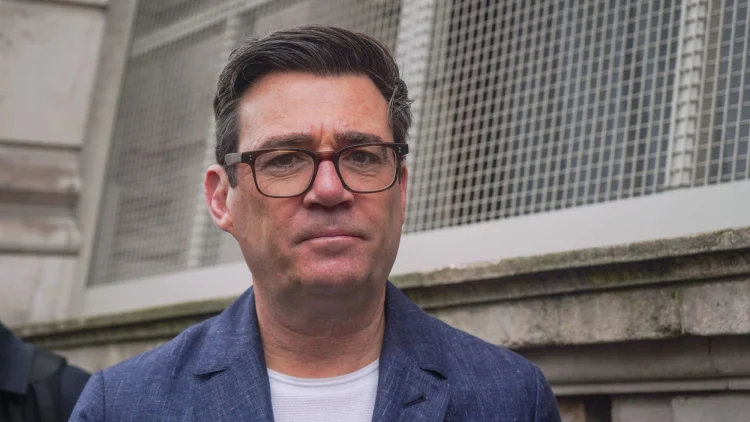
31 March 2026 Andy Burnham, Mayor of Greater Manchester outside Downing Street, London (Alamy)
4 min read
Senior members of the influential Tribune group of MPs will push Labour’s ruling body to allow for Andy Burnham’s inclusion in a leadership race if one is triggered imminently, PoliticsHome understands.
Health Secretary Wes Streeting has reportedly told allies that he is preparing to resign from government and announce his leadership challenge on Thursday.
As a mayor and not an MP, Burnham would not be eligible to participate in a leadership race held so quickly. But PoliticsHome understands that senior soft left figures would nonetheless stick with their priority of allowing Burnham to run, instead of turning to Angela Rayner as their candidate.
For it to unfold in this way, a sitting Labour MP would have to stand down, triggering a by-election, then Labour’s national executive committee (NEC) would have to allow Burnham to seek selection as the parliamentary candidate, and he would have to win the seat – all before MP nominations opened.
“The NEC decides the timetable so Wes triggering doesn’t stop Andy contesting. It would be outrageous for them to try and block the most popular politician in the country from standing,” a senior Burnham-backing Labour MP said.
Rayner was forced to resign as deputy prime minister last year over a tax scandal, and the HMRC investigation into her unpaid stamp duty has still not concluded, to the knowledge of reporters. Her favourability as a leadership contender has declined dramatically over recent months.
“I don’t think there are many Ange fans around now,” one Labour MP concluded.
With all 11 of Labour’s affiliated trade unions signing a joint statement that agreed Keir Starmer would “not lead Labour into the next election” and that backed a leadership election “at some stage”, some Burnham supporters hope the NEC would be more likely to allow Burnham to stand for Parliament.
The mayor was blocked in January from running as the Labour candidate in the Gorton and Denton by-election, after a core group NEC officers refused to give him permission to stand.
A government source told PoliticsHome: “There has been a noticeable shift in the attitudes of the officers of the NEC towards Andy. There is no complacency – the work has been done – but the current political situation has fundamentally changed since January.”
A well-placed source has told PoliticsHome that Ellie Reeves, the solicitor general and an NEC officer, was in favour last time of the decision going to a meeting of the full NEC – a body of almost 40 members, rather than the smaller officers group of 10.
Burnham supporters hope the full NEC would be more supportive of accommodating his inclusion in any Labour leadership contest.
“The pressure to take this out of officers and to full NEC would be quite significant now, and that’s where I could see it going the other way,” said one NEC member, who does not plan to back Burnham.
Allies of Burnham have also been floating the acronym ABC – “Andy By Conference” – as a potential timetable. This would be too slow for many Labour MPs who want a race concluded as quickly as possible, however.
Burnham supporters have claimed repeatedly that he has found a winnable seat and is preparing to run for Parliament.
MPs in the North West who have denied they are willing to step aside for Burnham include Afzal Khan in Manchester Rusholme; Peter Dowd in Bootle; Marie Rimmer in St Helens; Dan Carden in Liverpool Walton; and Paula Barker in Liverpool Wavertree.
One soft left MP told PoliticsHome: “Regardless of whether Keir stays or goes right now, I think the case for Andy to be allowed to return is now undeniable.”
Another MP from the Tribune group said: “It would be a very odd scenario holding a by-election in these circumstances but I feel momentum is with him.”
Almost 100 Labour MPs have now called on the Prime Minister to set out a timetable for his departure after last week’s local election results, with four ministers resigning.


Rupert Lowe is the MP who left Reform UK following several run-ins with Nigel Farage. Lowe has since formed his own party, and because he doesn’t have much in the way of imagination, his party is called ‘Restore Britain’. The party sells itself as a further-right alternative to the already-far-right Reform. In aid of this, Lowe has come out to defend the foreign hate speakers that Britain has now banned from attending Tommy Robinson’s racism festival:
Rupert Lowe suddenly likes ‘foreigners’ https://t.co/FQ7QZNdqmx
— Curtis Daly (@CurtisDaly_) May 12, 2026
How Lowe can he go?
The “foreign commentators” in question are those who were set to attend Tommy Robinson’s ‘Unite the Kingdom’ rally, which takes place on 16 May.
Lowe’s message reads in full:
This Government is entirely wrong to ban foreign commentators from speaking at Robinson’s rally on Saturday
I will be formally challenging the Home Office, again, on the decision to prevent these individuals from entering.
I won’t be there myself, but many patriots will be and they deserve to hear lawful views in order to decide for themselves if they agree or not.
That is free speech.
Islamist extremists are personally welcomed by the Prime Minister, yet this group is banned.
It stinks.
Barrister Jane Heybroek responded to Lowe’s post with the following:
“lawful views” being the operative term.
Is incitement to racial hatred lawful?— CrémantCommunarde
(@0Calamity) May 12, 2026


So, are these people inciting racial hatred?
In our opinion, there’s an incredibly straightforward argument that: yes, they are.
Hate mongers
On 12 May, Rose Cocker reported the following for the Canary:
During a speech on 11 May, Keir Starmer (PM-for-now) boasted about blocking “far right agitators” from entering the country. Labour has in fact blocked the visas of seven individuals who were planning to attend ‘Unite the Kingdom,’ a far-right rally happening on 16 May. Among them are two prominent MAGA figures.
Cocker suggested that Starmer only made this move because his party lost so many voters to the left-wing Green Party in the local elections. Regardless, it was the right move given the actions of these people.
Speaking on the banned Joey Mannarino, Cocker wrote:
At a Britain First ‘March for Remigration’ in 2025, Mannario gave a rambling speech in front of a backdrop image of himself and Donald Trump. When he later tweeted a recording, he urged viewers to:
“deport the parasites who are raping their way through America, Europe and the United Kingdom.”
For those who don’t know, ‘remigration‘ is the plan to deport non-white people from European countries, regardless of whether or not they were born here.
Starmer also banned Valentina Gomez, who is one of the most virulent Islamophobes in American politics:
The Home Office and Shabana Mahmood need to be consistent.
They revoked Kanye West’s visa. Why not revoke Valentina Gomez’s for her bigotry? pic.twitter.com/SKe5mAtIwE
— Mukhtar (@I_amMukhtar) April 9, 2026
Gomez spoke at last year’s rally, as can be seen here:
England, see you SOON May 16th.
England will be ENGLISH again. pic.twitter.com/JvCgXQilr0 — Valentina Gomez (@ValentinaForUSA) April 17, 2026

These people want a civil war
One of the speakers at the last Unite the Kingdom rally was the Dutch racist Eva Vlaardingerbroek. Vlaardingerbroek was blocked from entering the UK earlier this year, as we reported on 15 January:
Vlaardingerbroek is part of Generation Remigration, which is a group that advocates for – you guessed it – ‘remigration’.
Additionally:
Remigration is built on the idea that people of different ethnicities cannot live peacefully together. This is quite obviously what you would describe as ‘racist’. In years gone by, people on the far right would try to provide some sort of cover to claim ‘we’re not racist‘. Clearly, there is no such cover here.
The fact that people are happy to openly support remigration shows that racists are once more back out in the open. People with more than two brain cells, however, understand what remigration would look like in practice.
According to the last Census, the number of people who aren’t ‘white’ is over 10 million – many of whom were born here. Indeed, many may be second, third, or fourth generation. How many of those people would oppose being deported? How many white people do you think would join them? Going off the global George Floyd protests, we can assume ‘a shit tonne’.
What do you call a situation in which one section of the country goes to war with the other?
Public good
The government has blocked all these speakers because their presence isn’t “conducive to the public good”. Once you understand what remigration is, it’s hard to deny that fact.
Remember we said that Joey Mannarino spoke at a Britain First remigration rally? Well, this is Britain First’s leader:
"I want this country to become a shithole. I want this country to descend into a fucking nightmare"
They don't care about the country. They thrive off discord. pic.twitter.com/N0Sb9yvq33 — smile2jannah (@smile2jannah) April 12, 2026
 Far right extremist Paul Golding exposed in a secret recording:
Rupert Lowe is a hair’s width away from this guy, and that’s concerning, because he’s an actual MP.
Featured image via The Canary
By Willem Moore


In a letter leaked to the Guardian, the General Secretaries of 11 Labour-affiliated unions are putting their case to PM Keir Starmer today, saying:
It’s clear that the prime minister will not lead Labour into the next election, and at some stage a plan will have to be put in place for the election of a new Leader.
Adding that the Labour Party:
cannot continue on its current path.
Long-Labour allies GMB, Unite and Unison are among the rebelling unions. This damning letter follows resounding calls from over 80 Labour MPs, and the British public generally, for Starmer to step down
Increasing that pressure, union leaders and a number of socialist Labour MPs have also reportedly formed a new pressure group called Socialism26. As a result, despite the right-wing Wes Streeting eyeing up the leadership, it appears that Labour MPs and affiliates increasingly recognise that abandoning progressive, socialist policies has driven many of the Labour Party’s problems since the election of the UK prime minister.
Well, it took them long enough – but at least they’re standing up now.
EXCL: Keir Starmer will not lead his party into the next general election, Labour-supporting unions have predicted, in an intervention that threatens to further destabilise PM after damaging few days.
The 11 Labour-affiliated unions – including Unite, Unison and GMB – are…
— Pippa Crerar (@PippaCrerar) May 13, 2026
Unions: “Govern in the interests of workers”
The statement penned by the unions is said to be announced later today, but the Guardian were able to obtain a leaked copy in advance.
In the letter, the general secretaries write:
Labour’s affiliated unions have been clear that Labour cannot continue on its current path.
Whilst we recognise progress has been made, such as aspects of the Employment Rights Act and the increase in the minimum wage, the results at the election last week were devastating.
Labour is not doing enough to deliver the change that working people voted for at the general election. Our focus is on the fundamental change of direction on economic policy and political strategy that unions have been clear is needed, and not on the personalities and unfolding political drama in Westminster.
It’s clear that the prime minister will not lead Labour into the next election, and at some stage a plan will have to be put in place for the election of a new Leader.
This is a point where the future of the party we founded will be debated and determined – and we are working closely as unions to shape a shared vision on policy, political strategy and economic policy that will reorient Labour back to working people, so Labour do what it was elected to do: govern in the interests of workers.
Keir Starmer is facing an increasingly destabilised leadership as a rebellion grows among long-quiet Labour MPs, many of whom now fear for their own positions after the abysmal – though hardly unexpected – performance at the recent local elections. In a desperate attempt to save face with the electorate, MPs are increasingly distancing themselves from Starmer, leaving the prime minister’s days in power looking clearly numbered.
Moreover, some specific demands are making their way through from the newly formed Socialism26 initiative group, making clear the areas in which they insist the Labour Party must do better:
NEW: A group of Labour MPs and general secretaries of Labour-affiliated trade unions are launching a new political initiative called Socialism26
They have the following immediate demands: — Sienna Rodgers (@siennamarla) May 12, 2026
– New Deal for Working People in full
– Recognise the genocide in Gaza, support rebuilding…
Socialism26: “Recognise the genocide in Gaza… Introduce sanctions”
The ‘immediate demands’ of this mix of socialists who still believe the Labour Party have a chance of regaining trust with the public are:
– New Deal for Working People in full
– Recognise the genocide in Gaza, support rebuilding efforts, introduce sanctions
– WASPI compensation
– Drop jury trials policy, lift restrictions on the right to protest, stop changes to indefinite leave to remain
– Measures to cut energy bills
It must be said – these demands do indeed expose exactly why Labour drove away its traditional voter base and destroyed the trust and respect the British public once had for the party. Nevertheless, it’s been decades since we’ve had a Labour administration that wasn’t moving towards the right, suggesting it will be a lot harder to get this (former) party of the working class to actually remember where its priorities, and loyalties, should actually lie.
The Guardian have reported that the group has been founded, and backed, by the following:
The founders are:
Unison’s Andrea Egan
FBU’s Steve Wright
CWU’s Dave Ward
TSSA’s Maryam Eslamdoust
+
Neil Duncan-Jordan
Chris Hinchliff
Cat Eccles
Terry Jermy
Peter Lamb
Brian Leishman
Simon Opher
Richard Quigley
Lee Barron
Lorraine Beavers
Chris Bloore
Steve WitherdenAlso backed by lots of Socialist Campaign Group MPs
Will right-wing Labour listen?
The Labour right have their claws deep into the party infrastructure. Thanks to persistent purges of socialist anti-Zionists, the party is beholden to the Zionist state of Israel. Conducting a genocide hasn’t swayed their allegiances, so it is hard to see them suddenly take heed of the repeated demands from the left of Labour.
After all, they’ve taken a huge sum in donations from pro-Israel groups and, whilst forgetting it is the British public who pay their lofty and privileged salaries, they have chosen to guide their policies to suit right-wing, hostile interests.
Moreover, we have already written about the more than 100 MPs in the Tribune Group who are likewise pressuring Labour to shift leftward with their own set of demands. However, the emergence of two separate socialist groups issuing their own demands reinforces the perception that socialists remain disorganised, as they scramble to retain influence within a party machine that continues to favour right-wing politics.
Therefore, whilst this letter is a welcome sight and a refreshing reminder that socialism is not completely extinct in Labour, it is hard to imagine it would lead to any real, genuine socialist change.
When people widely accept and recognise that socialist policy offers the only real way to heal the harms of neo-liberal capitalism, we cannot afford to waste time on a hoodwinking political elite.
Featured image via the Canary


Since the local elections, the key political question in the UK has been, ‘When will the Labour leader go?’. Notably, that’s when, not if, because let’s face it, the writing has been on the wall for Keir Starmer for some time now.
While Labour has obsessed over itself, the Green Party has been working to get things done. In aid of this, the Green’s new mayors and MP Carla Denyer have put the following to the government:
Our mayoral, council and Senedd campaigns were rooted in fighting to end the housing affordability crisis, and voters have spoken. We need action to end rip-off rents now.
So newly elected Green Mayors @ZoeGarbett and @LiamShrivastava alongside Carla Denyer MP have written to… pic.twitter.com/B7l9WF7YVu — The Green Party (@TheGreenParty) May 12, 2026
Labour, ‘This scandal has to end’
The above letter is addressed to Steve Reed. Although Reed is the housing minister, you may be more familiar with his campaign to smear Green Party activists and politicians.
In their letter, they ask Reed to actually get on with his job and deliver for ordinary renters. It reads (emphasis added):
We are writing to you as newly elected Green Mayors, alongside Carla Denyer MP and on behalf of every newly elected and sitting Green Councillor, to request that you take urgent action to end rip-off rents, and include a Rent Controls Bill in the King’s Speech this week.
Spiralling rents are ripping the heart out of our communities. People are being forced to cut back on essentials just to afford a roof over their heads. Young people are being priced out of the areas they grew up in, with schools in London closing as families are pushed out of the city. Teachers, nurses and careworkers cannot afford to live in the boroughs they work in. Renters across the UK now pay on average a third of their wages on rent, the highest level on record.
But whilst renters get poorer, wealth is being funnelled straight into landlords’ pockets. As you will be aware, the government is set to transfer £70 billion to private landlords through housing support between 2024-28. That is six times the amount of money that was spent on affordable homes over the past five years. Housing has become a way to make money, rather than a universal right.
This scandal has to end. If we had frozen rents four years ago, households in Britain would now be saving over £3,300 per year on average.
It’s time to get serious
The letter continues:
The Green Party’s success last week shows that the country is desperate for an urgent and transformative programme to end rip-off Britain, and are angry that your government has failed to deliver. Our mayoral, council and Senedd campaigns were rooted in fighting to end the housing affordability crisis, and voters have spoken.
Keir Starmer has said that a break with the status quo is needed. The King’s Speech is your opportunity to do this by getting behind the Green Party’s longstanding demands for crucial measures to make life affordable for all, starting with rent controls. With food and energy costs set to sky-rocket as a result of the illegal war on Iran, it has never been more critical.
If your government is in any way serious about improving the lives of the 11 million private renters in England, you must commit to introducing rent controls now.
Keir Starmer himself said the status quo cannot stand in his make-or-break speech on Monday, but at this point, we’ve heard it all before.
Starmer in 2020: "We cannot go back to business as usual after this"
Starmer now: ".. every single time in the past we've simply tried to get back to a status quo that didn't work, we can't do the same again"
The same line, 6 years apart. He wants to fool us twice. https://t.co/aieAKqyj4B pic.twitter.com/MsRDJfakyS
— Saul Staniforth (@SaulStaniforth) May 11, 2026
Is change on the horizon?
In the lead up to the local elections, Labour made it clear that the party wouldn’t introduce rent controls. The question is whether the local elections have taught Starmer’s government anything, or whether status quo policies remain the politics of choice.
Featured image via the Canary
By Willem Moore

!function(n){if(!window.cnx){window.cnx={},window.cnx.cmd=[];var t=n.createElement(‘iframe’);t.display=’none’,t.onload=function(){var n=t.contentWindow.document,c=n.createElement(‘script’);c.src=”//cd.connatix.com/connatix.player.js”,c.setAttribute(‘async’,’1′),c.setAttribute(‘type’,’text/javascript’),n.body.appendChild(c)},n.head.appendChild(t)}}(document);(new Image()).src=”https://capi.connatix.com/tr/si?token=8b034f64-513c-4987-b16f-42d6008f7feb”;cnx.cmd.push(function(){cnx({“playerId”:”8b034f64-513c-4987-b16f-42d6008f7feb”,”mediaId”:”1675d0f4-2c7a-4a08-acb8-10a79be2d3a6″}).render(“6a0455aee4b0cdaf88dc5d5a”);});
Budget airline Ryanair, like other airlines, is notoriously strict about the size of bags you can bring with you on holiday.
And speaking to The Times recently, boss Michael O’Leary seems to have given his staff a reason to hit passengers harder with fees.
He told the publication he’s planning to increase bonuses for staff members who identify and fine people carrying oversized luggage.
At the moment, he said, the number of passengers found to be bringing too much baggage to the airport has fallen significantly, leading to a drop in corresponding fines.
How much do Ryanair staff get paid for fining oversized bags?
At the moment, O’Leary said, his staff get paid €2.50 (about £2.16 as of the time of writing) for every oversized bag they fine. He wants to raise that by a euro (about 87p) for successful spotters.
“The number of outsized bags is falling from, I don’t know, 0.0001[%] to 0.00001[%],” the controversial businessman said.
“As the numbers fall, I think we will up the rate of commission, from €2.50 to €3.50 or so. Everybody must know, do not show up with a bag that doesn’t fit in the sizer because you will be charged.”
At the moment, Ryanair’s site reads, passengers who “bring an oversize [check-in] bag (over 55x40x20cm) to the boarding gate will either have their bag refused or, where available, placed in the hold of the aircraft for a fee of £/€ 70.00 [or] £/€ 75.00”.
That means staff currently receive just over 3% of the highest total fine in commission. The proposed change would raise their commission to over 4.5%.
How can I beat Ryanair baggage fines?
Speaking to HuffPost UK previously, Hannah Mayfield, a money expert with travel insurance company PayingTooMuch, said, “Even if your bag looks like it fits, you could still get fined due to technicalities. Some airlines count weight as well as dimensions, while others impose last-minute gate checks – especially on full flights.
“I’ve even seen recent cases where passengers have been charged because the wheels or handles of their suitcase are slightly over the size restrictions.”
To lower your odds of getting caught out, she advised: “the best way to avoid unforeseen fines is to stay informed about your airline’s baggage rules and measure your luggage before you travel”.
Ryanair’s rules for 20kg check-in bags are:
- Dimensions should be no greater than 55x40x20cm,
- Weight should be no more than 20kg.
Their rules for 23kg check-in bags are:
- Dimensions should be no greater than 80x120x120cm,
- Weight should be no more than 23kg.
Their rules for 10kg check-in bags are:
- That these need to be purchased separately at checkout if you haven’t bought a Priority ticket: otherwise, you can pay €/£35.99-€/£40 in the airport for them,
- Weight should be no more than 10kg,
- Dimensions should be no greater than 55x40x20cm.
Their rules for personal bags are:
- Dimensions should be no bigger than 40x30x20cm,
- The bag should fit under the seat in front of you on the plane.
Related…





The Pentagon has publicised the location of a secretive nuclear submarine in a move that can be read as an act of strategic signalling to Iran.
The Ohio-class vessel turned up in Gibraltar, a British colonial possession in the Mediterranean.
US Fleet Forces Command published an image of the unnamed vessel in port on 12 May with the caption:
The port visit demonstrates U.S. capability, flexibility, and continuing commitment to its NATO allies. Ohio-class ballistic missile submarines are undetectable launch platforms for submarine-launched ballistic missiles, providing the U.S. with its most survivable leg of the nuclear triad.
And Navy Lookout posted images of the submarine being towed by tugboats.
Via @dparody / Ryan Ocana pic.twitter.com/C9nhKEtKBB
— Navy Lookout (@NavyLookout) May 11, 2026
 US Ohio-class submarine arrived in Gibraltar yesterday, escorted by @RNGibSqn HMS Dagger.
UK outlet, Defence Journal, wrote:
The visit is notable for the fact that it was publicly announced at all as the locations of U.S. nuclear-armed submarines are among the most closely guarded secrets in the American military, and public disclosure of a ballistic missile submarine’s whereabouts is exceptionally rare.
Political website, the Hill, pointed out that the reveal came at a crunch point in the Pakistan-brokered US-Iranian peace deal — “a day after President Trump rejected the latest peace proposal from Iran”.
Its reporter added:
The Pentagon did not disclose the name of the submarine, one of the U.S. military’s most secretive weapons. In general, the locations of U.S. nuclear-armed submarines are highly classified.
Pentagon’s disclosure comes amid crunch talks
The unnamed boat is part of a fleet of Ohio-class vessels with a range of capability, the Hill reported.
The Ohio class is made up of 14 ballistic missiles and four guided missile submarines. The submarines are able to carry Trident II ballistic missiles and can conduct extended deterrence patrols. The guided missile submarines can have more than 150 Tomahawk missiles on board.
Keir Starmer has said he has only involved the UK in defensive measures in the Iran war. Iran has derided that claim and Starmer’s own defence minister has contradicted it too.
The UK announced destroyer HMS Dragon was deployed to help open up the Strait of Hormuz on 11 May. Afterwards, the UK military also announced that a new drone system would be deployed.
A press release said the military package would include:
Advanced autonomous mine hunting equipment, including capabilities to detect and defeat mines.
Additionally:
The Royal Navy’s modular ‘Beehive’ system which can deliver high-speed, autonomous Kraken drone boats allowing the multinational force to sense, track, and identify potential threats and defeat them.
The UK will also send Typhoon fighter jets and mine clearance personnel. The military again claimed the multinational plan was “strictly defensive in nature” and “is designed to restore confidence for commercial shipping” along the strait.
The US and Israel attacked Iran first on 28 February without provocation. Iran was offering unprecedented concessions in negotiations at the time.
The Pentagon has since stated there was no imminent threat from Iran. The UN’s atomic watchdog, the International Atomic Energy Agency (IAEA), has also said there is no evidence Iran was developing a nuclear weapon.
The US has achieved none of its original war aims. Once attacked, Iran predictably closed the Straits of Hormuz, a vital oil channel, triggering a global energy crisis.
Iran has explicitly said the war will continue until “the enemy’s inevitable and permanent humiliation, disgrace, regret, and surrender”.
Trump came to power on an anti-war ‘America First’ ticket. He now faces worldwide humiliation.
The US’ decision to signal a submarine’s location is very unusual. The fact that the Trump administration has failed in its war objectives, and badly needs an off-ramp, makes the disclosure look desperate. US posturing won’t change the reality of the Iran stalemate.
Featured image via US Navy
By Joe Glenton


In the NURMI study of European endurance runners, 43% of marathon participants reported regular vitamin supplement use, 34% reported mineral supplement use, and 19% reported carbohydrate or protein supplement use. Most of those products did not change finish times. A small subset did. The aim here is to identify which categories sit on solid evidence for a runner training across a 12 to 20 week block.
Carbohydrates as the Primary Fuel
Carbohydrate availability is the rate-limiting factor in marathon performance after the 90-minute mark. Liver and muscle glycogen stores hold roughly 1,800 to 2,200 calories in a trained runner. Most runners deplete those stores between mile 18 and 22 if they take in nothing during the race. Recommendations for runs longer than 90 minutes call for 40 to 80 grams of carbohydrate per hour, typically as a mixture of glucose and fructose, since the small intestine has separate transporters for the two sugars and a 2:1 glucose-to-fructose ratio raises maximum oxidation rate above the glucose-only ceiling.
Training day carbohydrate intake follows a different logic. Most coaches recommend 6 to 10 grams per kilogram of body weight on heavier mileage days, with intake clustered around the long run. Carbohydrate-only products are useful as race-day fuel and for very long training runs. Outside of those windows, food typically does the work better. Trained athletes who target 90 grams per hour during peak race blocks usually train the gut by progressively raising intake during long runs across the build, since untrained guts often reject high-carbohydrate loads with cramping and nausea.
Electrolytes During Long Sessions
Sweat loss runs 500 to 1,500 milligrams of sodium per hour during sustained running, with substantial person-to-person variation. Salty sweaters, defined as athletes with sweat sodium concentrations above 60 millimoles per liter, can lose more than 2 grams of sodium per hour in heat. Replacing some fraction of that loss matters during runs over 90 minutes and during racing in warm conditions. Female runners on average produce sweat with lower sodium concentration than male runners, though variation within each group is wider than the gap between groups.
A trained runner using electrolyte powders during a long workout typically targets 300 to 700 milligrams of sodium per hour, alongside fluid intake of 400 to 800 milliliters per hour. Potassium, magnesium, and calcium losses through sweat are smaller, and most products include them at fixed ratios. Plain water without sodium replacement during multi-hour sessions raises the risk of dilutional hyponatremia, which is the condition the next section addresses.
Hyponatremia Risk in Endurance Events
A 2002 study of Boston Marathon finishers found that 13% had post-race blood sodium below 135 millimoles per liter, the threshold for hyponatremia. The strongest predictor was body weight gain across the race, which correlates with overdrinking. Hyponatremia symptoms range from nausea and headache to confusion and seizures in the most severe cases. Salt tablets, electrolyte powders, and many sports drinks reduce the risk by replacing sodium during the race instead of relying on water alone. Slower runners face higher risk because they spend more total hours on the course and more total time drinking water at aid stations.
Iron for Endurance Runners
Iron supports hemoglobin synthesis and oxygen transport. Endurance runners lose iron through sweat, gastrointestinal microbleeding, foot strike hemolysis, and menstrual losses in female runners. Studies of endurance running cohorts have documented iron deficiency in runners at rates above 50% in some samples, with female runners affected at higher rates than male runners.
Serum ferritin below 25 nanograms per milliliter is the threshold most sports medicine clinics use as a flag for low stores. Iron supplementation is appropriate only after a blood test confirms low levels. Casual iron use in non-deficient adults can produce gastrointestinal side effects and, in rare cases, iron overload. The dose used in clinical correction is 100 to 200 milligrams of elemental iron daily, taken with vitamin C and away from coffee, tea, and dairy, which limit absorption. Most clinicians retest after eight to twelve weeks to confirm the dose is restoring stores.
Vitamin D and Bone Stress
Bone stress injuries account for roughly 20% of running injuries seen in sports medicine clinics. Calcium and vitamin D are required for bone mineralization. Trials in collegiate athletes have reported reduced stress fracture rates among groups receiving vitamin D supplementation when baseline levels were low. Vitamin D deficiency is common in winter months at higher latitudes, and runners who train mostly indoors or in heavy clothing may not produce enough through sun exposure.
A typical maintenance dose is 1,000 to 2,000 IU of vitamin D3 daily, with higher doses used for correction in deficient athletes. Routine testing once or twice a year is enough for most runners and removes the guesswork. Calcium intake from dairy, fortified plant milks, leafy greens, and tofu supports the same pathway, with most adults needing 1,000 to 1,200 milligrams daily.
Caffeine as a Dose-Dependent Aid
Across meta-analyses of endurance time-trial studies, caffeine in the 3 to 6 milligram per kilogram range produces a 2 to 3% improvement in finishing time compared with placebo, taken roughly 60 minutes before the start. The mechanism is a reduction in perceived effort plus a small effect on fat oxidation. The effect sits at the high end for runners who normally drink little coffee and at the low end for daily heavy users. Side effects include disrupted sleep when caffeine is taken later in the afternoon and gastrointestinal distress when stacked with other stimulants. Studies of coffee before workout timing report similar dose-response patterns, with minimal benefit below 2 milligrams per kilogram.
Race-day topping up with smaller doses every 30 to 45 minutes during the second half of a marathon helps maintain plasma caffeine and may extend the perceived-effort benefit. Total intake on race day usually peaks around 6 milligrams per kilogram, since higher doses produce diminishing returns and a higher rate of side effects without further improvement in finishing time.
Protein for Training-Day Recovery
Endurance athletes need 1.2 to 1.7 grams of protein per kilogram of body weight per day, higher than the sedentary baseline of 0.8 grams per kilogram. Most runners hit this through normal meals if they eat protein at every meal and a snack after the long run. A scoop of whey or plant protein after hard sessions can help elite athletes who struggle to eat solid food in the immediate post-run window. Beyond that, the marginal value of protein products drops fast, and additional intake does not produce additional adaptation. Older runners, runners on calorie-restricted diets, and runners returning from injury can sit at the upper end of the range to support muscle preservation.
Categories With Strong Evidence
Across the published literature, four nutrient categories are well-supported for marathon training. Carbohydrates during runs over 90 minutes. Sodium and other electrolytes during long, hot, or salty-sweat sessions. Iron when blood tests show low ferritin. Vitamin D when serum levels run low and during winter at higher latitudes. Caffeine sits as an optional ergogenic aid with consistent but modest effect sizes. Protein products are a convenience choice rather than a performance lever. Anything outside these categories belongs to a much smaller evidence base, and most of it does not change marathon finish times. A simple test: if a category is not on this list, the runner should expect no measurable benefit from spending money on it.

The Princess of Wales is on a fact-finding mission in Italy this week, with a view to learn more about the globally-recognised Reggio Emilia approach to early years education.
It is her first official foreign trip since being diagnosed with cancer two years ago. Back in January this year, Princess Catherine shared the news she was “cancer-free” after undergoing chemotherapy.
Her Italy visit forms part of her work with The Royal Foundation Centre for Early Childhood, which she founded in 2021.
So, what is the Reggio Emilia approach? And why is it of interest to the Princess? Here’s a quick breakdown…
What is the Reggio Emilia approach?
This is a child-centred approach to early years education where kids are put in the driver’s seat, and given the autonomy to construct their own learning.
Rather than following a strict, set curriculum, much of what is learned happens through experience and hands-on exploration of their interests, which is guided by an adult.
The approach was developed after the Second World War in the Italian town of the same name. It was founded by the late Loris Malaguzzi, a teacher who emphasised the importance of child-directed learning, creativity and social interaction.
Per The Voice Of Early Childhood, Malaguzzi “advocated for a learning environment that respects and nurtures [children’s] natural curiosity and interests”.
There’s a real focus on collaboration and learning by experience, as well as exploring the arts, music and movement.
Malaguzzi believed that a child has 100 languages to express themselves. His 100 languages poem – which the Princess will learn about as part of her trip – centres around children possessing infinite ways to express, explore, and connect their thoughts, feelings and creativity.
This might be through reading and writing, or it could be through sculpting, painting, drawing, dancing, singing, cooking, gardening, etc.
One study suggested that people who were taught this approach in the early years had “significantly” improved outcomes related to employment, socio-emotional skills, high school graduation, election participation, and obesity, compared to those who didn’t receive formal early years care.
However, comparisons with people who attended alternative forms of childcare didn’t show any “strong patterns of positive and significant effects”.
Why is Princess Catherine interested in this approach?
She’s speaking to educators and practitioners about the key concepts of the Reggio Emilia approach, and how it supports children’s social and emotional development. She’ll also be seeing the early years philosophy in action.
In 2023, she launched an awareness raising campaign, called Shaping Us, to increase public understanding of the importance of the first five years of a child’s life. Its aim is to make early childhood development “one of the most strategically important topics of our time”.
The campaign is spearheaded by The Royal Foundation Centre for Early Childhood, which found one in three (36%) adults report knowing just a little or nothing about how children develop in their early childhood. Yet almost three-quarters (70%) of people believe early childhood should be a greater priority for society.
A spokesperson for The Princess told CNN she is “keen to explore further how globally we can identify positive, hopeful solutions to address some of today’s toughest social challenges, by investing in the extraordinary impact of early childhood and prioritising the early years with the same urgency as climate change”.


On Wednesday 13 May, the front page of the Telegraph declared the following:
— 𝙵𝚛𝚘𝚗𝚝 𝙿𝚊𝚐𝚎𝚜 𝚃𝚘𝚍𝚊𝚢
 Streeting to confront Starmer
Health Secretary will confront PM over plan ‘to get us out of this mess’ as four ministers resign and list of rebel MPs grows@Tony_Diverhttps://t.co/FluHOSiL2j@Telegraph #frontpagestoday #UK pic.twitter.com/N1SbQV6rlS
Streeting to confront Starmer
Health Secretary will confront PM over plan ‘to get us out of this mess’ as four ministers resign and list of rebel MPs grows@Tony_Diverhttps://t.co/FluHOSiL2j@Telegraph #frontpagestoday #UK pic.twitter.com/N1SbQV6rlS
 (@ukpapers) May 13, 2026
Streeting has now arrived at Downing Street to confront Starmer.
Streeting has also left Downing Street.
In total, he was there for just sixteen minutes.
16-minute showdown
The following is a video of Streeting arriving at Downing Street:
— Politics UK (@PolitlcsUK) May 13, 2026
 WATCH: Wes Streeting arrives in No 10 for his meeting with Keir Starmer on the PM’s future pic.twitter.com/0RUv5OagHQ
And this is him leaving:
NEW: Wes Streeting leaves Downing Street after just *16 minutes* with PM. — Pippa Crerar (@PippaCrerar) May 13, 2026
pic.twitter.com/JqgMp5L0ZJ
As reported by the Telegraph:
Mr Streeting will ask Sir Keir how he plans to resolve the “turbulence” around his leadership and get Labour out of a “mess”, after the party lost more than 1,000 seats and the control of several English councils to Reform UK.
The fact that Streeting was only there for 16 minutes suggests one of two possible outcomes:
- Starmer has devised a plan so cunningly simple it took mere minutes to assure Streeting all is well.
- Starmer refused to say much of anything.
There’s good reason to think it’s the latter. As Politics UK reported on 12 May:
UPDATE: It's understood Starmer told Cabinet Ministers to raise any concerns with him privately rather than during the meeting
However, it's claimed he then refused to meet them individually
Wes Streeting was among the last to leave No 10 well after other Cabinet members
— Politics UK (@PolitlcsUK) May 12, 2026
Following the Streeting showdown, the Times’ Steven Swinford wrote:
The briefings about the Streeting and Starmer meeting being ‘just two blokes having a coffee’ this morning are bizarre
He added:
We know the meeting lasted just *16* minutes. That is barely enough time for a proper cup of coffee
All of this points in one direction. It certainly doesn’t point to a convivial cup of coffee
We’ll see how things pan out – Team Streeting is going to ground today – but the whole thing is a tinderbox
Streeting is supposedly not going to mount a challenge to Starmer today because the King’s Speech is happening, as Dan Hodges reported:
Where we are:
* Wes Streeting will make no move today because of King’s Speech * I’m told at least 3 cabinet ministers attempted to speak to Keir Starmer after cabinet, but were rebuffed
* MPs amazed at the bullish messages coming from No.10. “They’re goading the PLP” one says
— (((Dan Hodges))) (@DPJHodges) May 13, 2026
The questions is whether he’ll ever launch a challenge, with his support allegedly having evaporated:
BREAKING: An ally of Wes Streeting – who came out publicly to call for Starmer to go – says Streeting has “blown it.” They say he has lost support today from MPs who might have backed him and that they now don’t think he has the numbers to get on the ballot. https://t.co/PSx2ent1AQ
— Alex Wickham (@alexwickham) May 12, 2026
Given that Streeting is a much-hated privatisation fetishist with ties to Peter Mandelson, it’s unclear why he thinks anyone should see him as an alternative to Starmer.
Dwindling support
Starmer does have some supporters left. As Skwawkbox reported on 12 May, however, he has fewer than he claims. Specifically, three of the MPs who supposedly signed a letter of support for the PM claim not to have signed it:
Surprised to see my name on this list when I haven’t either signed any letter supporting the PM or called for the PM to go??
Not very courteous of colleagues to put names down without their approval https://t.co/2TofoVdfKb — Rupa Huq MP (@RupaHuq) May 12, 2026
In terms of those opposing the PM, James Wright wrote on 12 May:
The Tribune Group of more than 100 Labour MPs have called for the prime minister to steer the party back to the left. Meanwhile, 81 MPs have demanded he stand down after Labour came third in the local elections when it comes to national vote share.
The number of MPs calling for Starmer to go has grown since then too:
"Something has got to give."
With over 90 MPs calling for Keir Starmer to resign, the prime minister is "still dug in", says Times Radio presenter John Pienaar. pic.twitter.com/oEdWYOqOXz
— Times Radio (@TimesRadio) May 12, 2026
What happens next?
Starmer is stubbornly ignoring the fact that he’s lost the faith of the British public and his own party. Quite how long he can get away with this for we don’t know, but it’s longer than 16 minutes.
Featured image via The Canary
By Willem Moore

King Charles has laid out the government’s plans for the next parliamentary session in a significant moment within the Westminster’s calendar.
The occasion is laden with pomp and pageantry but it has political weight, too, especially as Keir Starmer’s government is facing a moment of jeopardy.
Here’s what you need to know.
What Is The King’s Speech?
The King’s Speech marks the State Opening of the second session of parliament after Labour’s victory in 2024.
Parliamentary sessions divide up each parliament and the government tends to announce a new one roughly every two years.
It’s a formal occasion which gives the government a chance to reset its priorities.
As the head of state, the monarch reads out the government’s agenda in the House of Lords.
He has no say in its contents but his role is symbolic of the sovereign’s position in the constitution.
No substantive parliamentary business can take place in the House of Commons or Lords until after the speech.
MPs will then start a debate the speech’s contents following comments from the leader of the opposition, Tory leader Kemi Badenoch.
The Lords also hold a general, short conversation about the contents of the King’s Speech though they usually do not vote on the contents.
The debate tends to last over several sitting days and each day focuses on a theme before the MPs vote on its contents.
It is possible for the speech to be amended, though that is quite unusual.
It would be deeply embarrassing if MPs were to vote it down, implying the Commons no longer has confidence in the government,
The last time that happened was in 1924, when Stanley Baldwin’s minority government was defeated and he had to resign as prime minister.
What Was In The Speech?
The King said the government would tackle antisemitism, raise living standards and improve trade relations in the next parliamentary session.
Improving trade relations is “vital”, the King said, and ministers will introduce legislation to take advantage of new opportunities – including a bill to strengthen ties with the EU.
The government will also protect “the energy, defence and economic security” of the UK for “the long-term” amid the ongoing conflict in Middle East and Ukraine war.
Bills to back British businesses – including help to tackle late payments and reduce the “burden of unnecessary regulation” – are also scheduled for this parliamentary session.
Ministers will “defend the British values of decency, tolerance and respect for difference under our common flag”, too.
The government will encourage airport expansion, hasten road building, and deliver a “fair deal” for the north of England through the Northern Powerhouse Rail, while also safeguarding domestic production of steel.
The government vowed to continue investing in apprenticeships as well and will push ahead with its controversial plans to launch digital ID plans.
After the scandal around ex-Labour peer Peter Mandelson and his friendship with convicted paedophile Jeffrey Epstein, the government plans to bring forward a “duty of candour” for public servants – and make it possible to strip Lords of their peerages.
Remediation for people living with unsafe cladding will also be sped up.
On the international stage, foreign policy will be based on “calm assessment of national interest” and offering “unflinching support for Ukraine”.
The government also promised to uphold its “unbreakable commitment” to Nato.
Ministers will invest in social housing and reform leaseholds, along with laws to tackle state threats, extreme violence and cyber attacks.
Charles said clean energy will be scaled up amid a “new era of British nuclear energy generation” in a bid to shore up UK’s energy security.
The King said the UK will be a “leading advocate” on social justice issues, too, including climate change and the rights of women and girls.

Why Is This A Particularly Tense Moment For The Government?
Starmer’s premiership is hanging by a thread following Labour’s catastrophic losses in last week’s elections in England, Wales and Scotland.
Buckingham Palace allegedly double-checked with Downing Street officials that the speech is still going ahead this week as the government looked like it was about to fall on Tuesday.
More than 80 Labour MPs called for the PM to resign amid mounting fury over the government’s direction.
Four ministers and four ministerial aides have also quit and urged Starmer to set out a timetable for his departure from No.10.
But the prime minister is holding firm, insisting he will not walk away from government.
None of his cabinet ministers have yet resigned meaning the government can limp on, despite the mass discontent.
All eyes are on health secretary Wes Streeting, who has aspirations to be the next PM but is yet to directly challenge the PM.
Subscribe to Commons People, the podcast that makes politics easy. Every week, Kevin Schofield and Kate Nicholson unpack the week’s biggest stories to keep you informed. Join us for straightforward analysis of what’s going on at Westminster.

Tragic John Virgo’s true feelings on Big Break co-host Jim Davidson as BBC reboot confirmed

Coinbase Launches x402 Batch Settlement to Advance AI Payments

Wednesday’s Workwear Report: Silk Crepe de Chine Top

Manchester United reach agreement with Casemiro over contract clause amid transfer speculation

US brings back mandatory military draft registration

Steven Gerrard disagrees with Gary Neville over ‘shock’ Chelsea and Arsenal claim | Football


-
 Crypto World5 days ago
HarrisX Poll Found 52% of Registered Voters Support the CLARITY Act
-

 Fashion5 days ago
Weekend Open Thread: Marianne Dress
-

 Crypto World6 days ago
Upbit adds B3 Korean won pair as Base token gains Korea access
-
 NewsBeat6 days ago
NCP car park operator enters administration putting 340 UK sites at risk of closure
-

 Fashion2 days ago
Coffee Break: Travel Steam Iron
-

 Fashion2 days ago
What to Know Before Buying a Curling Wand or Curling Iron
-

 Tech3 days ago
Auto Enthusiast Carves Functional Two-Stroke Engine from Solid Metal
-

 Politics2 days ago
What to expect when you’re expecting a budget
-
 Business4 days ago
Ignore market noise, India’s long-term story intact, say D-Street bulls Ramesh Damani and Sunil Singhania
-

 Politics4 days ago
Politics Home Article | Starmer Enters The Danger Zone
-

 Crypto World7 days ago
BlackRock CEO Larry Fink Discusses a New Asset Class
-

 Tech2 days ago
GM Agrees To Pay $12.75 Million To Settle California Lawsuit Over Misuse Of Customers’ Driving Data
-

 Entertainment6 days ago
Sarah Paulson Called Out For Met Gala ‘Hypocrisy’
-

 Politics6 days ago
Simon Cowell Says He Was ‘Horrible’ To Susan Boyle During BGT Audition
-

 Entertainment6 days ago
General Hospital: Ric & Ava Bombshell – Ric’s Massive Secret Exposed!
-

 Crypto World6 days ago
Robinhood says Wall Street is building onchain
-

 Sports6 days ago
UEFA Champions League final schedule, teams, venue, live time and streaming | Football News
-

 Entertainment7 days ago
Bold and Beautiful Early Spoilers May 11-15: Steffy Revolted & Liam Overjoyed!
-

 Entertainment6 days ago
Why David Letterman Called CBS ‘Lying Weasels’
-

 Entertainment7 days ago
Sister Wives: Tony Flings Shade at Robyn in New Post
You must be logged in to post a comment Login