

Politics
Sam Neill, Jurassic Park And Peaky Blinders Star, Dies Aged 78

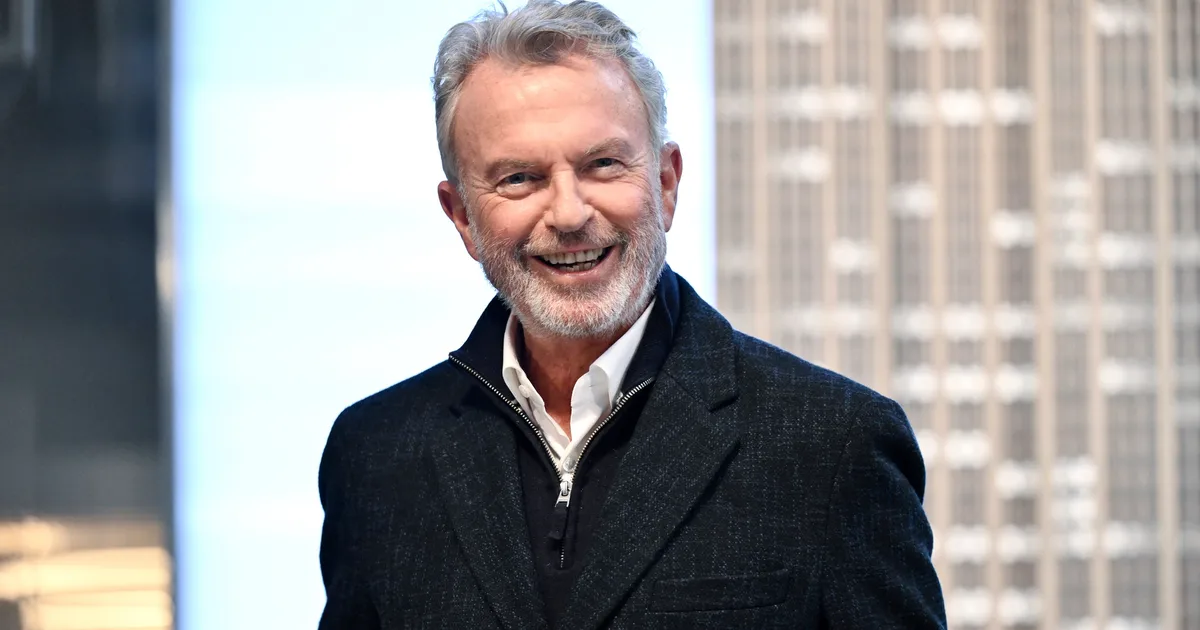
Screen legend Sam Neill has died at the age of 78.
The New Zealand-born actor was known for his work as Dr Alan Grant in the blockbuster Jurassic Park, more recently reprising the role in a 2022 sequel and numerous video games.
He also received acclaim for his performances in films like The Piano and The Hunt For Red October, The Piano and Event Horizon.
On the small screen, he played the title role in the 90s series Merlin, Major Chester Campbell in Peaky Blinders, Cardinal Thomas Wolsey in The Tudors and Victor Komarovsky in Doctor Zhivago.
He was also nominated for an Emmy for his narration on the series New Zealand: Earth’s Mythical Islands in the 2010s.
Sam’s death was confirmed by his family on Monday morning in a post on his official Instagram page.
“It is with immense sadness that the whānau of Sam Neill share the news of his passing on Monday 13 July, in Sydney Australia,” the post read.
“Sam was surrounded by family and passed with the dignity that has characterised his whole life.”
The actor’s death was described as “sudden and unexpected but blessed by the fact that Sam remained cancer-free”.
Back in 2023, Sam disclosed that he had been undergoing chemotherapy, after being diagnosed with blood cancer a year earlier.
After sharing that his cancer was in remission, he said that he would require monthly treatment to ensure that the disease didn’t return.
In April of this year, he confirmed that he was still cancer-free, and was part of a clinical trial for a new type of treatment for the disease in Australia.
Sam’s recent acting work included the Australian series The Twelve, and the miniseries Apples Never Fall and Untamed, as well as the Marvel movie Thor: Love And Thunder.
He’s also lent his voice to the upcoming dark comedy The Fox, and will make posthumous appearances in the romantic comedy The Last Resort and the monster movie Godzilla x Kong: Supernova.
The Guardian has reported that Sam is survived by his four children and six grandchildren.

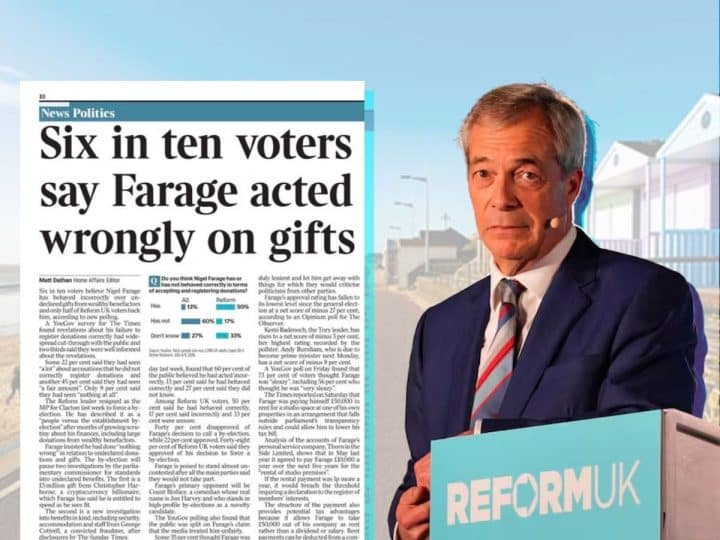
As we’ve extensively reported, Nigel Farage is facing criticism over the various gifts and donations he’s failed to declare. He’s also facing multiple investigations into the same cases.
Unsuprisingly, the public is largely unimpressed with this state of affairs.
Farage spent years complaining the establishment ignored “the will of the people”.
Funny how quickly “the people” become “the establishment” when they stop believing Nigel… pic.twitter.com/3AVuhYD0dd — Liz Webster (@LizWebsterSBF) July 13, 2026
 Now 60% of voters – AND half of Reform voters – think he behaved incorrectly over gifts and donations.
Nigel Farage vs the public
Farage has multiple ongoing scandals right now, including:
- Multiple investigations into a £5m ‘gift’ he received from a crypto billionaire
- Accusations he’s shilling for crypto on behalf of his donors
- Questions over three houses he seemingly failed to declare
- Failure to declare financial support from convicted fraudster Posh George in the runup to the 2024 election
Now, the Times has commissioned YouGov to poll the public on what they think about the matter. They asked 2,000 people, which is about twice as many as you need for a poll to be considered credible.
The key takeaway is this:
Six in 10 voters believe Nigel Farage has behaved incorrectly over undeclared gifts from wealthy benefactors and only half of Reform UK voters back him
The issue isn’t that voters are simply uniformed because:
Some 22 per cent said they had seen “a lot” about accusations that he did not correctly register donations and another 45 per cent said they had seen “a fair amount”. Only 9 per cent said they had seen “nothing at all”.
Other findings include:
- 40% of voters “disapprove of Farage’s decision to call a by-election” (22% approve)
- 35% “think Farage is treated in the same way as politicians from other parties” (24% think the press is more hostile towards him)
- 26% actually think the press is “unduly lenient” towards Farage
Farage ‘very sleazy’
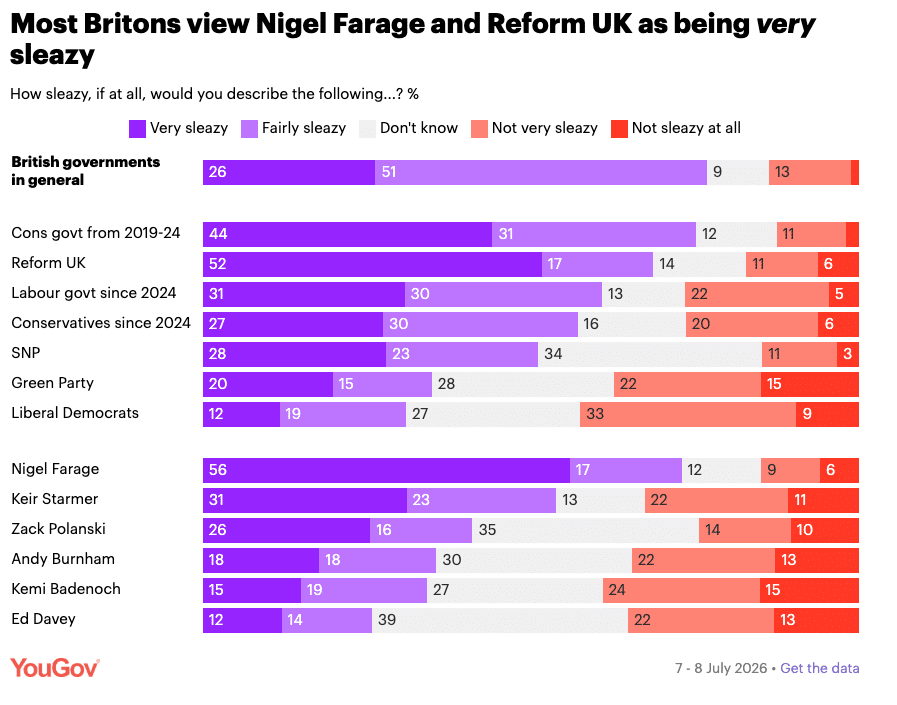
The above isn’t the only polling YouGov has done on Farage recently. Data released on 10 July found:
Most Britons say Nigel Farage is ‘very sleazy’
Results included:
- 73% of Britons describe Nigel Farage as sleazy, including 56% thinking he is *very* sleazy
- This includes 40% of Reform UK voters seeing Farage as sleazy
- Belief Reform UK as a party is sleazy has increased by 18 points over the last two years, with the public now more likely to consider them to be dodgy than Labour
- 77% of the public feel British governments are generally sleazy
- Keir Starmer is seen as sleazy by 51% of Britons, with 42% saying the same of Zack Polanski and 34-36% of Kemi Badenoch or Andy Burnham
That 77% figure is key to understanding why people will support Farage regardless. Once you think all politicians are corrupt, your options are:
- Don’t vote
- Ignore corruption as a factor
Still, Reform and Farage do top the charts when it comes to the perception of sleaziness.
Fading fortunes
It seems that the more the public sees of Farage, the more they dislike him. However, this doesn’t necessarily mean Reform couldn’t win in a general election. What we’ve seen in recent years is that politicians don’t need to enjoy broad support from the public; they just need to be less hated than the alternative.
Still, Farage’s various financial scandals could sink his career regardless of what’s happening with his popularity. We’re sure that Farage won’t be happy about that. We’re equally sure the public will broadly think he had it coming.
Featured image via the Canary
By Willem Moore
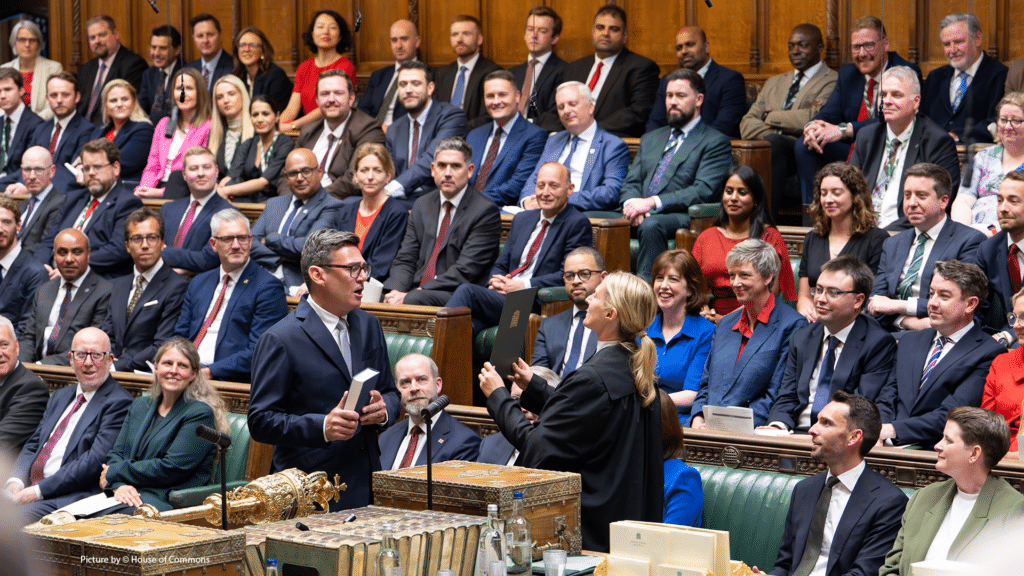
Based on what we know so far, Joël Reland considers how an incoming Andy Burnham government might approach its relationship to the European Union.
For all the ink which has been spilled previewing Andy Burnham’s government, precious little has discussed his approach to EU relations. This is largely because his narrative has been relentlessly domestic, but his op-ed in the Times last week provided some hints as to what his foreign policy might look like.
With the heavy caveat that Burnham has not yet taken power – or announced who his Foreign Secretary or EU Minister will be – it was possible to detect some important shifts in approach. The paradox is that Burnham sounds less pro-European than Starmer, but is formulating an economic and security agenda which could in fact bring London into closer line with Brussels.
Clearly, EU relations are less central to Burnham’s growth agenda than to Starmer’s. Both Starmer and Rachel Reeves have been stressing with increasing urgency the economic damage caused by Brexit and the need to get closer to the EU single market, calling it the “biggest prize” on offer to the UK economy. Burnham, on the other hand, has centred his growth agenda on devolution within the UK – not building ties beyond it – meaning EU relations are likely to drop down the list of priorities.
It is telling that, in his Times piece, Burnham says he wants to ‘consolidate the progress made on the existing UK-EU negotiations’ – an ambiguous construction which does not commit to finalising agreements by a specific date. In contrast, Starmer’s administration clearly wanted a package of agreements sorted by this summer’s UK-EU summit (which has been postponed since Starmer’s resignation).
Negotiations which are already stuttering could stall altogether if Burnham deems that a youth mobility scheme, where EU students pay UK tuition fee rates and add to net migration figures, does not pass his ‘Makerfield test’. And even if agreements are finalised, the implementation of the necessary ‘dynamic alignment’, which is a significant bureaucratic task, may be slow given how much of Whitehall’s capacity will presumably be focused on delivering a radical devolution agenda.
Yet a Burnham administration could still bring fresh impetus to discussions on the future relationship. After all, Burnham says he wants to ‘make further progress quickly’, with his areas of focus being ‘strengthening our co-operation on illegal migration, economic security and the broader resilience of our societies to external threats’. Notably lacking is any talk of further economic agreements.
This may go down well in Brussels. The EU has more interest in the UK as a security partner than as an economic one. And, as is now well established, the Labour government is boxed in by its ‘red lines’ (no customs union, single market or free movement), which mean the Commission is unwilling to countenance deeper economic integration in many, if any, more areas.
The UK’s springtime proposal to join the EU single market for goods was rapidly dismissed – and it was not clear what else the Starmer administration could hope to achieve on the trade front. A UK which stops trying to ‘cherry pick’ its access to the single market would come as a welcome relief to the EU.
Moreover, there is plenty of unfinished business when it comes to closer security cooperation. A non-binding Security and Defence Partnership was signed before last year’s UK-EU summit but is yet to yield much fruit. Talks could be reanimated on UK participation in SAFE (an EU instrument for common defence borrowing) as well as other EU-led missions and projects, while Stamer is set this week to formalise UK participation in the Ukraine loan scheme.
There is also one important way in which Burnham does appear more European than Starmer. His ambition for greater ‘sovereign capabilities in areas… from shipbuilding and energetics to AI and quantum’ is strikingly similar to EU plans for greater ‘strategic autonomy’, i.e. reducing reliance on foreign suppliers in critical sectors.
A recent story about the Burnham team’s plan to make UK AI policy less ‘US-centric’ and ensure that “100 per cent of data centres aren’t owned by foreign companies” sounds like it could have been briefed by an Elysée official.
Yet 100% national ownership of critical tech infrastructure is an evidently unrealistic objective – meaning a less US-centric agenda will rely on greater ‘friendshoring’ of supply chains. This might quickly lead the Burnham government to look to the EU as a partner in, for instance, procuring critical minerals or developing pan-European sovereign capabilities in areas like cloud storage and payment systems – or to see what it can learn from the EU’s experience with its new Tech Sovereignty package.
This is the kind of economic and regulatory cooperation which is not necessarily precluded by Labour’s red lines. UK participation in a ‘Made in Europe’ scheme (subsidising European production of electric vehicles) and ‘Scaleup Europe’ fund for breakthrough technologies are both plausible; as are strategic dialogues on economic security and digital infrastructure.
Moreover, the Starmer administration’s overt attempts to court US tech and AI investment through lighter-touch regulation has been noticed in EU capitals, creating doubts about inviting the UK into new projects like ‘Made in Europe’ – out of fear it might operate as a US trojan horse. Burnham’s more Gaullist agenda may calm some of those nerves.
For all EU relations have improved under Starmer, certain Atlanticist instincts and a lack of realism about his red lines remained two marks against him. If Burnham can address those issues, he could prove a popular man in Brussels.
By Joël Reland, Senior Researcher, UK in a Changing Europe.
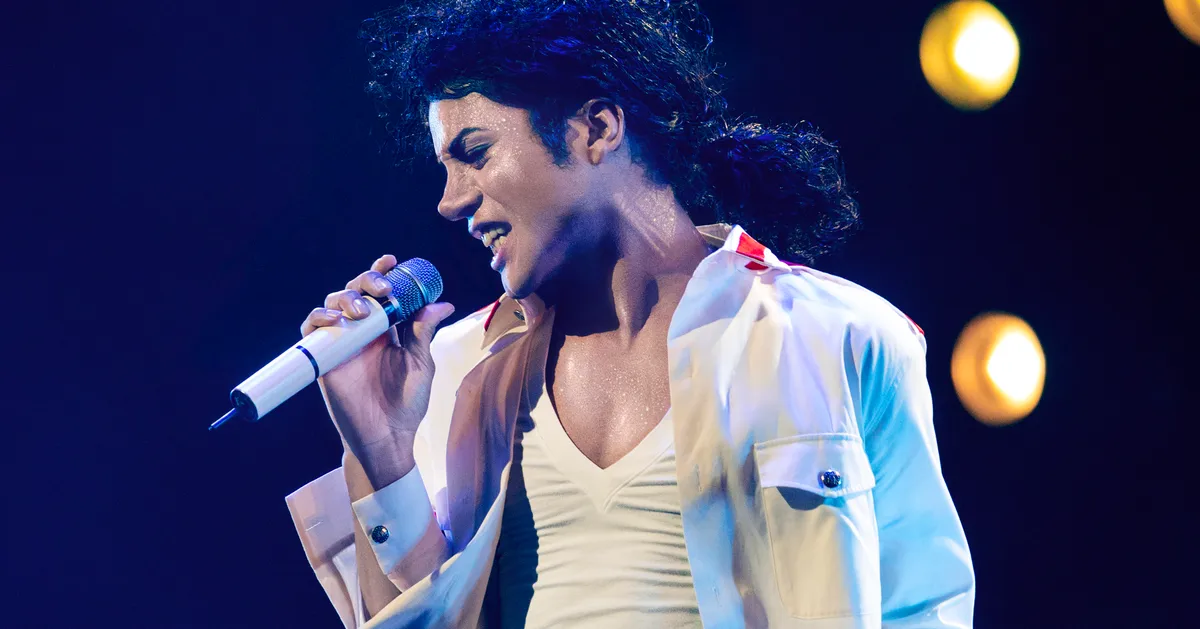
All of the controversy surrounding Antoine Fuqua’s Michael Jackson biopic has clearly not stood in the way of the film succeeding at the box office.
Earlier this year, Michael hit cinemas, leaving critics divided, not least because of the fact the film ends in 1988, meaning the allegations of child sexual abuse levelled against the Billie Jean singer in his lifetime were not included in the film.
Since its release in April, Michael has proved to be a smash at the global box office, eventually overtaking Oppenheimer to become the highest-grossing biopic of all time.
Over the weekend, it was revealed officially that the movie had made $1 billion (around £746 million), becoming the first biopic in history to do so.
“Reaching this extraordinary $1 billion milestone with Michael is a deeply humbling moment that celebrates the tireless dedication of our incredible producers, cast, crew and partners,” the film’s director said in a statement.
“This achievement belongs to everyone who came together with a shared vision to honour one of the greatest artists the world has ever known.”
Antoine continued: “I am profoundly grateful to the audiences around the globe who embraced this film, showed up in theatres, and connected with this story across generations and cultures.
“This historic milestone is a testament to the enduring power of cinema to bring us together, and it is a chapter in movie history I will never forget.”
Jafaar Jackson, the late performer’s nephew, takes the lead as Michael Jackson in the film, which also features performances from Nia Long, Miles Teller and Oscar nominee Colman Domingo.
It’s no secret that Michael was originally supposed to include details of the allegations made against the Grammy winner, with some scenes even being filmed.
However, these were scrapped when production learned of a clause in the settlement between Jackson and one of his accusers which meant that his likeness and name could not ever be used in a film.
As a result, costly reshoots took place, with the decision being made to re-shift the film’s plot to be more about Jackson’s relationship with his father, ending the story in the late 80s.
It had previously been suggested that a sequel to Michael could focus on the chart-topping performer’s later years, and the controversies he faced around that time, which looks increasingly likely given part one’s box office success.
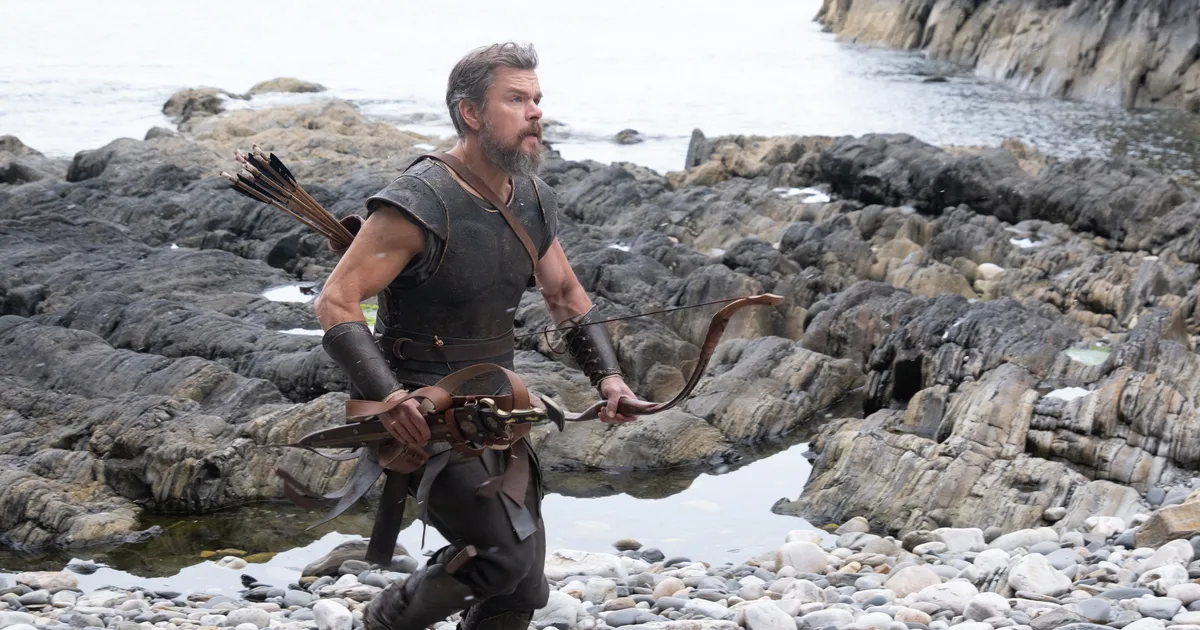
Matt Damon has admitted that the more physical aspects of his role in the new Christopher Nolan epic The Odyssey were no small feat.
Over the years, the Oscar winner has appeared in a number of physically-demanding projects, including the action-packed Bourne films and the war epic Saving Private Ryan.
However, during a recent interview with Amy Poehler on her podcast Good Hang, Matt spoke candidly about how “getting jacked in your 50s” for The Odyssey was “way different” to what had been required of him earlier on in his career.
“It’s really hard,” he revealed. “It’s just a complete, complete lifestyle change.”
His approach, he went on to share, was to “put your feet on the gas and that’s it”, overhauling his diet, including giving up gluten, something he’s stuck to since filming ended.
“I didn’t realise the level to which [gluten] was affecting me and affecting my life,” he shared. “It’s completely changed my life these last couple of years of not eating it.”
Matt then conceded: “It’s a bummer. I’m a big fan of bread and beer and… you know… pasta and pizza, and all that stuff. But how I feel is just so much better.”
The Oscar winner plays Odysseus in Nolan’s new take on the Ancient Greek tome, leading a star-studded cast that includes everyone from Anne Hathaway, Charlize Theron and Lupita Nyong’o to Zendaya, Robert Pattinson and Tom Holland, who portrays Matt’s on-screen son.
Last month, Matt claimed the film is the “biggest movie I’ve ever done in my career, in terms of its scale” and “ambition”.
He’s also shared just how gruelling the on-location shooting could be, telling GQ: “The joke on the crew was we didn’t have a single easy location. Every time we’d go somewhere, we’d be like, ‘Well, Iceland will be easier’. And then it’s raining sideways and it’s fucking freezing. Iceland was like, ‘Yeah, easy? Hey, hold my beer.’”
The shoot ended up wrapping on a lot in Los Angeles, with Matt recalling that even this came with its problems.
“Sure enough, we showed up [to the set in LA] and Chris has two jet engines blowing so much water at us,” he said. “So it was kind of a fitting end. Even the controlled environment was cold, wet, and a little bit miserable.”
Co-star Robert Pattinson agreed that he’s “never seen people look so exhausted” as he did on the set of The Odyssey.
The Odyssey hits cinemas on Friday 17 July.
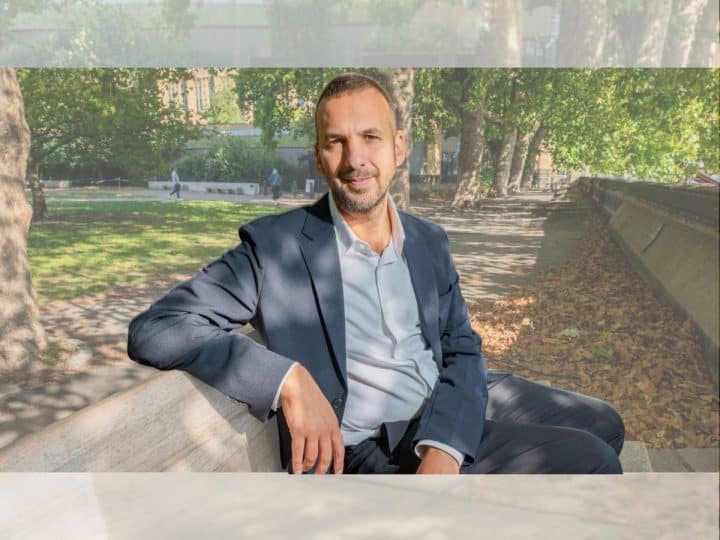
Zack Polanski and Green Party members are among the nominees for Nature 2030’s Political Purpose Awards 2026.
The awards celebrate individuals who use “their platform to put nature, wildlife and the environment at the heart of public life”.
I’m proud to be shortlisted for a 2026 Political Purpose Award!
The Political Purpose Awards are run by Nature 2030. Wonderful to be nominated in the Animal Welfare category.
Congratulations to my fellow nominees! pic.twitter.com/1T6kFLuqO6
— Zack Polanski (@ZackPolanski) July 12, 2026
Who in the Green Party is up for an award?
Polanski is nominated for the Animal Welfare Award, receiving the following write up:
Since becoming Leader of the Green Party, Zack Polanski has put animal welfare at the centre of the party’s political programme, helping to drive a near-fourfold increase in membership from 60,000 to 225,000.
He has campaigned for plant-based meals by default in schools and hospitals, pressed Mayor Sadiq Khan to remove GLA funding from London Fashion Week events using exotic skins and feathers, and used his London Assembly platform to challenge ministers on wild animal exploitation in fashion supply chains.
Other Green Party members being nominated include Adrian Ramsay, also for animal welfare.
Adrian Ramsay has consistently spoken out in support of animal welfare, particularly on factory farming.
He organised the cross-party MPs ‘ letter on cages and farrowing crates that fed directly into the December 2025 Animal Welfare Strategy’s commitments to consult on phasing out colony cages and farrowing crates by 2030.
He has pressed the government on greyhound racing, fur, trophy-hunting imports, electric shock collars and farm animal cages, and was the most prominent parliamentary voice arguing that the Strategy must ‘have real teeth’.
Siân Berry, for a Pollution, Waste & Air Award.
Siân Berry reintroduced the Clean Air (Human Rights) Bill (Ella’s Law) to the Commons on 1 July 2025 with cross-party backing.
The Bill would enshrine the right to breathe clean air, require WHO-aligned air quality standards by 2030, and create a Citizens ‘ Commission for Clean Air. It received its second reading in November 2025 and was back in the Commons on 27 March 2026 — a sustained legislative push on the UK’ s biggest environmental health crisis.
Hannah Spencer for a Companion Animal Care Award.
Elected at the February 2026 Gorton and Denton by- election, Hannah Spencer is the only sitting MP to own four rescue ex-racing greyhounds and got into politics through her campaign to close the Belle Vue track in Manchester.
In March 2026 she publicly backed Mark Ruskell MSP’s Greyhound Racing (Offences) (Scotland) Bill ahead of its successful Holyrood vote, and in April 2026 challenged Culture Secretary Lisa Nandy over Labour ‘ s refusal to consider an England-wide ban on greyhound racing.
Featured image via the Canary
By Willem Moore
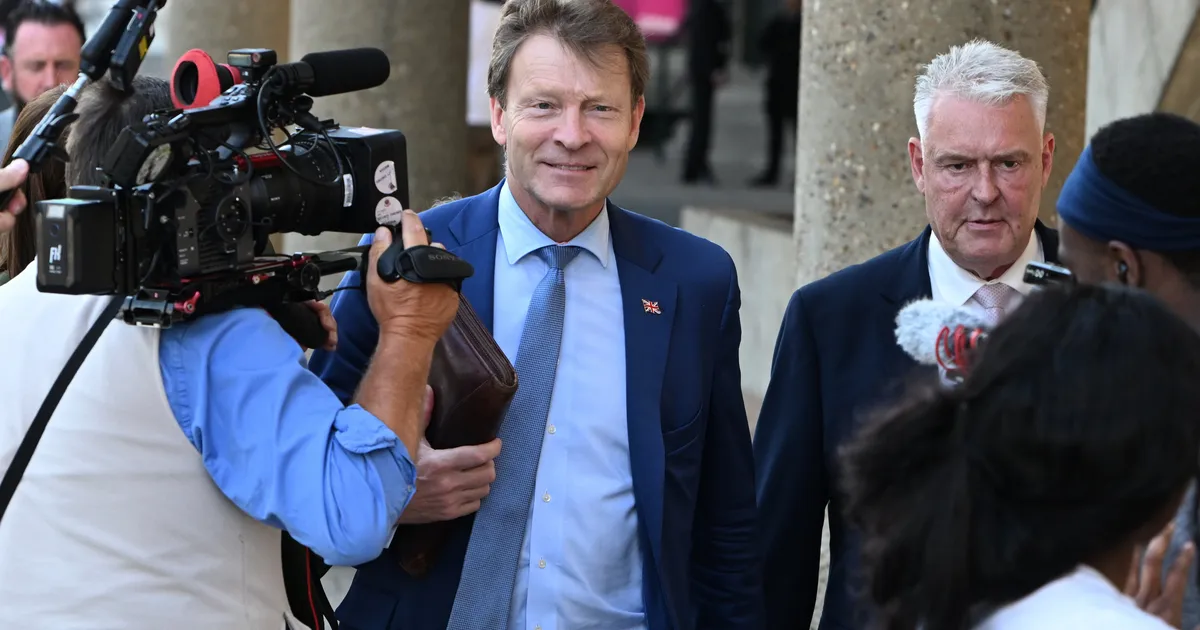
Richard Tice has accused journalists on The Times newspaper of wanting another Reform UK politician “dead”.
The party’s deputy leader made his extraordinary comments as police continue their murder investigation following the death of Ann Widdecombe.
The former Tory minister, who was a Reform spokeswoman, was found dead at her home in Devon on Thursday. A 28-year-old man has been arrested on suspicion of murder.
Police have urged the public not to speculate about the possible motive for her killing.
That came after Reform leader Nigel Farage said on Saturday that he believed “this was premeditated murder”.
Speaking after he laid a wreath near Widdecombe’s home, he said: “Whether it was politically-motivated, whether it was someone with a grudge, I don’t think it pays at this time to speculate.”
Detectives have insisted that there is no evidence at the moment to suggest it was politically-motivated.
Former Tory MP Harvey Proctor told The Times: “Ann Widdecombe was far too dear to her family, friends and former colleagues for her murder to be exploited as political propaganda.
“The police have expressly asked the public not to speculate about the motive. It is therefore deeply disappointing that Nigel Farage has chosen to do precisely that.”
Reacting to the Times story on X, Tice said: “The Times Group: You are sick. Your contempt bordering on hatred of Nigel, myself & Reform means you stoop to any low to smear & discredit us.
“You lie, libel and make things up. How many more Reform politicians do you want dead? Shame on you.”
Meanwhile, Commons officials have hit back after Reform home affairs spokesman Zia Yusuf accused the government, the police and parliament of not caring about the safety of the party’s MPs.
Reform is now paying for round-the-clock security for its senior politicians.
But a House of Commons spokesperson hit back at Yusuf by insisting “all MPs are offered appropriate security measures”.
He said: “The ability of members and their staff to perform their parliamentary duties safely, both on and off the estate, is fundamental to our democracy.
“Any assessment of an individual MPs’ security arrangements or advice is subject to a rigorous risk-based assessment, conducted by security professionals and with input from the police and a range of professional authorities. These are naturally kept under continuous review.
“All MPs are offered appropriate security measures but we do not comment on specific cases or details of those measures so as not to compromise the safety of MPs, parliamentary staff or members of the public.”
Listen to Commons People, the podcast that makes politics easy. Every week, Kevin Schofield and Kate Nicholson unpack the week’s biggest stories to keep you informed. Join us for straightforward analysis of what’s going on at Westminster.

Content note: this article contains discussion of domestic abuse.
If you grew up in the UK, you might have heard women referred to as “birds” once in a while (stats suggest many of us would like to ditch the term, however).
That usage refers to women in general, or a female partner, but on social media, calling a woman a “bird” has come to mean something entirely different.
What does calling a woman a “bird” mean on social media?
People on apps like TikTok have taken to referring to women as “birds” for enduring bad treatment from the men they’re romantically involved with, or for being overly male-centred (prioritising male perspectives and approval).
“A bird is essentially a woman who will give up her self-dignity for the purpose of supporting a man or being with a man,” one TikTok creator said, though the poster stressed that didn’t extend to physical abuse.
An example may be “if he cheats on you 35 times and you get with him a 36th time”, they added, and “you are willing to lie for a man … [and] are willing to put a woman down for a man”.
Per Urban Dictionary, it can also mean someone, especially a girl or young woman, who’s naive, easily fooled, and/or lacking in common sense.
It may also refer to internalised misogyny – so-called “bird brain behaviour” can involve laughing at a man’s joke deriding another woman’s looks, for instance.
Some have called the new use of the phrase “misogynistic”.
“Anyone notice how calling a woman a bird has quickly shifted from holding women accountable for enabling men, to blaming women for being mistreated by men?” asked one TikTok creator.
“Calling women birds for something a man did is rooted in misogyny,” another claimed.
Is it victim-blaming?
Not every use of the term “bird” has to do with men (one creator suggested hanging out and trusting a girl “who talks negative about everyone in their life” is “bird brain behaviour”), and some male-related videos about “birds” say the term shouldn’t extend to abuse and only applies to general bad dating behaviour.
But other posts on social media suggest the demarcation isn’t always clear.
“A piece of shit man can also be an abuser… just because it’s not straight-up domestic abuse… there’s different ways to be abused,” one TikToker said.
They added that factors like financial inequality, a patriarchal society, and negative childhood experiences can make staying through poor treatment and abuse more likely, which the charity Women’s Aid and research papers agree with.
“I’ve been thinking that calling women ‘birds’ is… basically telling her to shut up and that whatever situation she’s in is her fault,” a commenter assented, while another wrote: “I totally agree as a [sexual assault] survivor”.
A spokesperson for the European Institute for Gender Equality (EIGE) told HuffPost UK that if the term is used to describe abuse, it’s important to remember that “violence against women is fundamentally both a cause and a consequence of gender inequality”.
“It is rooted in unequal power dynamics and is often used to maintain power and control over women, whether in intimate relationships, workplaces, online spaces or public life,” they said.
“In this context, we also need to look at the responsibility online platforms have in moderating conversations about violence against women – especially when the language and tone risk reinforcing victim-blaming attitudes.”
But they added that safeguards should be instituted from the top down on social media, rather than focusing on a specific trend or post.
If you, or someone you know, is in immediate danger, call 999 and ask for the police. If you are not in immediate danger, you can contact:
- The Freephone 24 hour National Domestic Abuse Helpline, run by Refuge: 0808 2000 247
- In Scotland, contact Scotland’s 24 hour Domestic Abuse and Forced Marriage Helpline: 0800 027 1234
- In Northern Ireland, contact the 24 hour Domestic & Sexual Violence Helpline: 0808 802 1414
- In Wales, contact the 24 hour Life Fear Free Helpline on 0808 80 10 800.
- National LGBT+ Domestic Abuse Helpline: 0800 999 5428
- Men’s Advice Line: 0808 801 0327
- Respect helpline (for anyone worried about their own behaviour): 0808 802 4040

Artificial intelligence (AI) isn’t new, but it’s quietly shaping our kids’ lives.
It might feel like it’s ‘just a bit of fun’, but in conversations with over 1,000 boys in schools, I heard first-hand how AI chatbots are starting to replace other forms of communication.
One boy told me: “It’s just there in my pocket, it remembers everything I tell it, there is nothing that I can’t ask it, and it doesn’t judge me. That’s why I use it.”
This was a common theme: being able to have judgement-free conversations removes the awkwardness from needing to ask a parent or even a friend.
But not all AI is good AI; the reality is that some creators gamify and target youngsters to get them hooked on their bots because it’s good for business. As one teen told me: “At first, it was fun and felt like a game, but it started to suggest I do things that didn’t feel right, so I stopped using it.” Scary, right?
Here’s how parents can get smart quickly in the age of AI with some key rules and conversation starters.
1. AI is not your friend
The most important conversation that we can have with young people is to explain that whilst AI can sound clever and caring, it is not a person – and it is certainly not a friend.
It can help to set new non-negotiables at home. For example, AI companions shouldn’t be used for emotional support or secret conversations. These tools can give unsafe advice, encourage secrecy, send inappropriate messages, and replace real conversations with people.
Have conversations about this openly, ask whether they have ever used AI for advice about something personal, and use this as a way in to explain that these bots are not their friends and should not be a replacement for real conversations.
2. We do not create or share images
Nudification is on the rise, with content being manipulated and shared at school. AI can now create very realistic fake pictures, videos and voice clips, including nude photos and videos. These can be used for bullying, harassment, blackmail and scams.
This is a good opportunity to chat to your children about permission and how important it is not to cross this line. Even though it can seem like harmless fun, the content and the consequences can live on.
Teach them that it’s not OK to edit someone’s picture without their permission, to pause before they believe what they see, and not to repost or engage with it.
Also, make it clear that if someone manipulates a picture of them, they can come to you and they won’t be in trouble for telling you.
3. AI shouldn’t replace learning
Having access to AI with homework feels like having a calculator in a maths exam, and many children are already using it for homework revision and writing support.
The problem with using AI for homework is that it can end up doing the thinking for young people. It can also give answers that sound right, but are wrong.
The key is to teach children to use AI with learning, not instead of learning. Use it for brainstorming, explaining things they don’t understand and for feedback, but not to do the initial thinking. You can’t take it with you into an exam hall, and that’s important to remember.
4. AI in games is designed to keep them there for longer
It’s important for children to understand that AI is working hard in the games that they are playing to keep them engaged so they stick around for longer.
AI tends to reward based on shock and outrage, and it shows more extreme content over time. There can also be a push to spend money.
Where possible, they should keep device use visible and shared rather than in private or isolation. Explain to them that their feed is designed around their behaviour – it’s showing what it thinks they will engage with.
You can also turn off autoplay to reduce endless scrolling, lock in-app purchases, and review chat settings together.
Be aware of red flags
Screens can be tricky to navigate – on the one hand, they are a natural part of the world today and will influence our children into adulthood and their future careers.
But there are also some warning signs to look out for that could flag something might be off: late-night scrolling, increased secrecy around phone use, hiding the screen when others are near, a change in their mood or behaviour after they have been online and an increased interest in their appearance or showing extreme views.
If they are starting to withdraw from real-life friendships and turning to AI in a crisis, then it’s really important to open up the line of communication. Ask questions about AI, their views on it and what sort of things they are seeing. Listen before lecturing, and keep the chats short and regular.
Make it a normal conversation to have so that if they are in trouble, they feel able to tell you. Help them to understand how the increased time they are spending online impacts them – and how their apps are typically encouraging this.
Parenting in the time of AI isn’t easy, so much is changing and evolving all of the time. The key is to stay interested, keep chatting to your kids about AI, help them to understand how the tech is working, and, most importantly, that it is not their friend.
Lee Chambers is the founder of Male Allies UK.
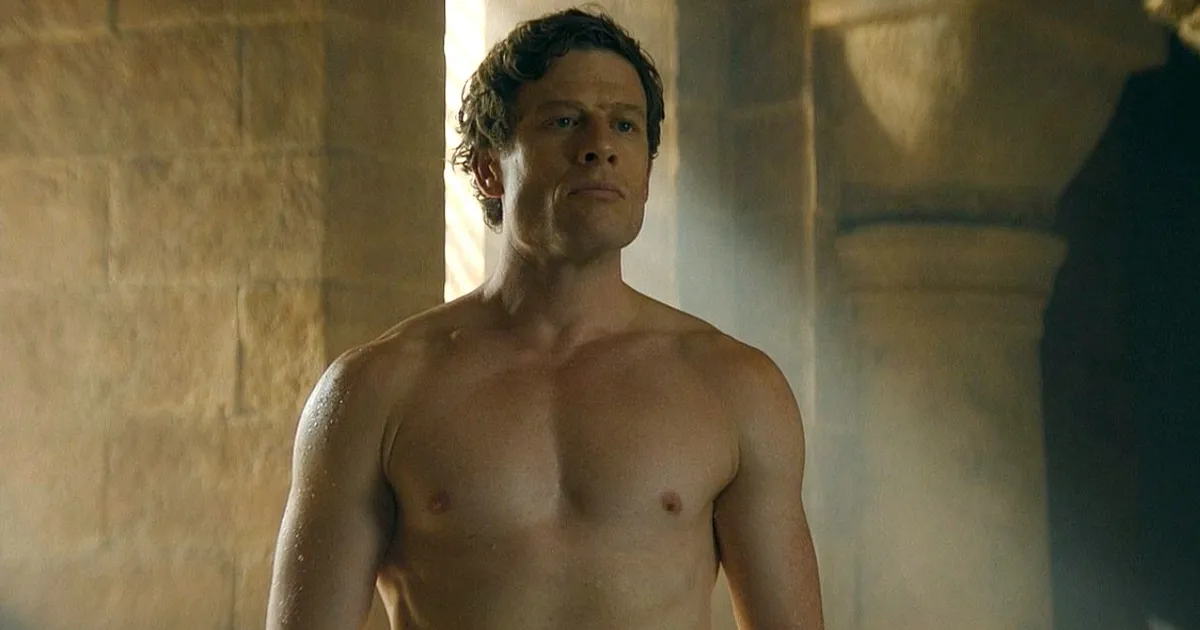
James Norton has definitely been inducted into House Of The Dragon, following his first nude scene in the hit fantasy series.
Monday’s instalment of the Game Of Thrones prequel sees James’ character Ormund Hightower stepping out of a bath while slating Queen Rhaenyra, played by Emma D’Arcy, to those around him.
During a recent Q&A session with GQ, this scene was brought up in the conversation, with the interviewer pointing out that it showed off a “very camp” side to James’ character’s personality.
The former Happy Valley star then explained that this was a deliberate choice on his part, as he wanted to give the directing team a wide range of line deliveries to choose from.
“If you don’t trust the director, you give them a very small parameter of options, because you think, in the edit, you could take the really extreme ones and manipulate your performance into something you didn’t intend,” he claimed.
“With this, I was like, ‘do you know what? Fuck it, I’m just going to give them a big range’. I have this line where I’m like, ‘is she a queen or is she a bitch with a dragon?’, and I kind of cock my hip. I thought, ‘I’ll just go for it a couple of times’. And the amazing thing is that they used the really camp one!”
“Your whole arse fills the screen,” GQ’s moderator then claimed, to which James quipped: “I can’t work out if that is a compliment or not.”
James also shared this anecdote during a new interview with New York magazine, recalling: “I cocked my hip in that take and thought, ‘They’re never gonna use this’. And then I was in [post-production] and they used it and I thought, ‘Fuck, good for you’.”
The outlet pointed out that his character’s nudity is an act of “sexual intimidation”, particularly as he’s parading himself naked in front of a noblewoman from the town that he’s taken over.
Elsewhere in the interview, he observed: “They could have easily made Ormund a competent, proud, honorable man. Instead, we’ve got this fucked-up, sort of S&M, masochistic guy.”
A regular face on British screens for more than a decade, James has been especially busy in the last two years thanks to his work in Netflix’s House Of Guinness, ITV’s Fair Play and the BBC’s King & Conqueror.
Interestingly, in the latter, James also had a nude scene set in a bath, which he opened up about during an interview with HuffPost UK last year.
House Of The Dragon continues on Mondays on HBO Max, Now and Sky in the UK.
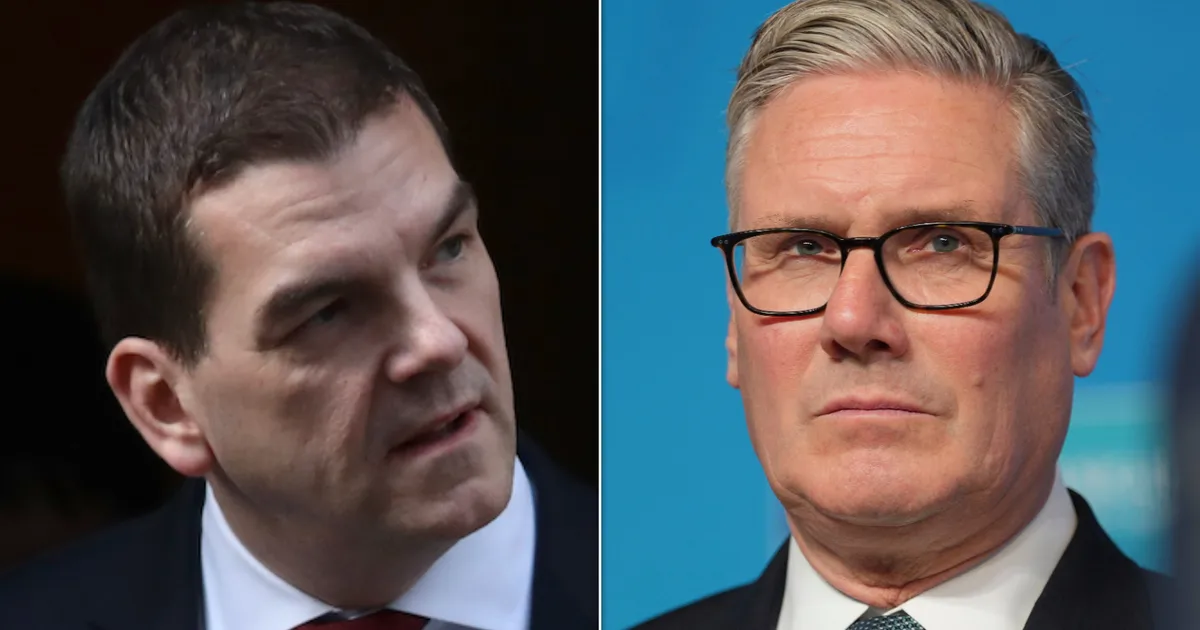
The former top civil servant Olly Robbins has launched a legal challenge over his sacking by Keir Starmer.
The former permanent secretary at the Foreign Office was fired during the scandal surrounding Peter Mandelson’s appointment as the UK’s ambassador to the US.
It emerged in April this year that Robbins had not told ministers of vetting officials’ concerns about giving Mandelson the top job back in early 2025.
As the top civil servant in the Foreign Office at the time, Robbins still gave the then-Labour peer top security clearance, paving the way for him to become the Washington attache.
Amid heightened scrutiny around the vetting process, Starmer was quick to lay the blame at Robbins’ feet.
The prime minister told the Commons it “beggars belief” he was not told that Mandelson had not been cleared by UK Security Vetting before being appointed the UK’s ambassador to Washington.
He claimed there was nothing which would have stopped Robbins from telling ministers about security worries around Mandelson.
The PM said Robbins had therefore lost his confidence and was to be sacked.
The former civil servant has since claimed he was legally prevented from offering further details about the vetting.
According to the FDA union, which represents senior civil servants, Robbins is now requesting a judicial review of Starmer’s decision, claiming it was “unlawful” and “unreasonable”.
The FDA said Robbins’ sacking was “based on a grievous misunderstanding of how the National Security Vetting system worked and a rash response to a media story”.
He also argued that Starmer “has no statutory authority to dismiss the Head of the Diplomatic Service” and there was “no fair procedure involved in his dismissal”.
Robbins claims he was under an “obligation” not to reveal the results of the vetting process with ministers.
He wrote in a statement: “I bring this action reluctantly. It would have been unnecessary if the prime minister had simply apologised for his mistake and made amends for the distress and cost it has caused me and my family.
“Instead, I now have to ask the courts to determine that the prime minister’s decisions were unlawful, unreasonable and to quash them.”
Listen to Commons People, the podcast that makes politics easy. Every week, Kevin Schofield and Kate Nicholson unpack the week’s biggest stories to keep you informed. Join us for straightforward analysis of what’s going on at Westminster.

Russian soldier loses control of mounted machine gun nearly killing several of his fellow troops
Alto Neuroscience prices $100M stock offering at $26.48

Robinhood Chain’s Gas Subsidy Is Closing the Gap With Base: Future of Ethereum On Horizon?


-

 Fashion7 days ago
Open Thread: What Great Books Have You Read Recently?
-

 News Videos6 days ago
Whats Hidden Inside This Cash Register? #treasure #reselling #money
-

 Fashion4 days ago
Loro Piana Fall 2026 Enters Houston’s Art Scene
-

 Fashion2 days ago
Weekend Open Thread: Nutriplenish Leave-In Conditioner
-

 Crypto World7 days ago
$1,000 Credit Alert! BlockDAG X Exchange Pre-Registration Now Officially Open, Polkadot Dips & Zcash Rebounds
-
 Tech6 days ago
Anthropic’s new “J-lens” reveals a silent workspace inside Claude that mirrors a leading theory of consciousness
-

 News Videos7 days ago
Best Time to Enter Small Caps Right Now? Another Bull Run? | Financially Free
-

 Business7 days ago
AXT Shares Jump Nearly 14% as Semiconductor Materials Maker Rebounds on AI-Linked Indium Phosphide Demand
-

 Sports6 days ago
Joshua Pacio ‘more complete’ ahead of ONE rematch vs Malachiev
-
 Sports4 days ago
2026 Genesis Scottish Open Thursday TV coverage: Round 1
-

 Tech5 days ago
Anthropic brings Claude Cowork to mobile and web as usage data shows most users aren’t coding
-
 Crypto World7 days ago
SK hynix (000660.KS) Stock Dips as $28B Nasdaq ADR Offering Drives AI Memory Expansion
-

 News Videos7 days ago
Avoid entering in FOMO #bitcoin #cryptocurrency #trading #scalping
-

 Sports3 days ago
Super Eagles star Moses Simon opens up on Liverpool transfer regret
-
Sports6 days ago
We have punished the disrespect
-

 Crypto World6 days ago
Binance lists Strategy’s STRC stock as company expands Bitcoin funding
-

 Tech4 days ago
Character.AI enters the microdrama arena with its own productions, but there’s a twist
-

 Tech6 days ago
9 Best Keyboards (2025), Tested and Reviewed
-
 Crypto World6 days ago
Claude AI Created Something Anthropic Never Designed
-
 Business6 days ago
Enbridge: AI Tailwind Priced In (Rating Downgrade)
You must be logged in to post a comment Login