

Politics
Southampton booted from playoffs over spying

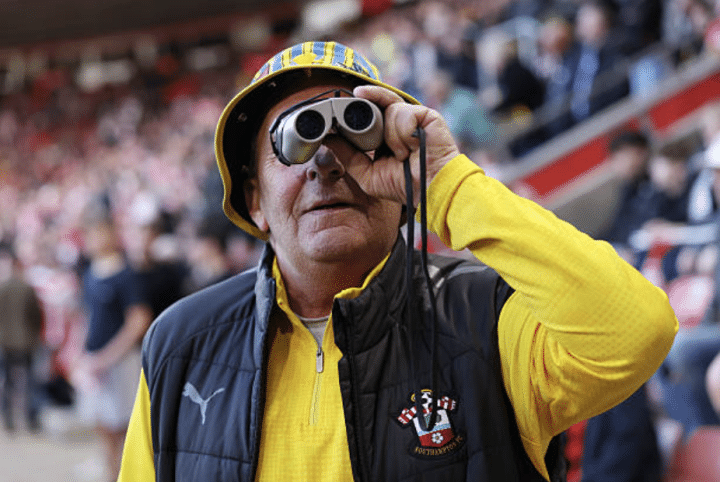

This is finally the end of spygate. An independent League Arbitration Panel has upheld Southampton’s expulsion from the Championship play-off final, and dismissing the team’s appeal.
As a result, Hull City will face Middlesbrough at Wembley on 23 May for the Championship play-off final. The decision upholds the earlier disciplinary commission’s sanctions. It brings a swift, uncompromising end to the saga.
Spygate saga
The saga — dubbed as Spygate — has had a relatively short-lived timeline. Middlesbrough lodged a formal complaint after a photo emerged showing a man allegedly observing their training ground. Subsequently, the English Football League (EFL) charged Southampton with multiple breaches for unauthorised filming of training sessions involving Oxford, Ipswich and Middlesbrough.
The panel upheld the ruling was proportionate while Southampton was of the view it was “manifestly disproportionate” — despite admitting to spying. Suffices to say that the arbitration panel wasn’t in agreement. In fact, two separate panels arrived at the same conclusion in quick succession.
Fallout and next steps
Southampton have apologised and pledged to “respond with humility,” acknowledging the damage to supporters, staff and the club’s reputation. The EFL’s remit covers club-level sanctions; the FA may now examine whether individual staff should face separate charges. These could include bans or further disciplinary measures. The written reasons for both the disciplinary commission and the arbitration panel will be published. This will offer the full evidence trail for public scrutiny.
Beyond the immediate embarrassment, the consequences are stark. Promotion to the Premier League carries huge financial rewards. These rewards are estimated in the hundreds of millions. So, to be missing out because of a regulatory breach is a heavy price. The four-point deduction next season is also a hefty sporting penalty. It could affect Southampton’s campaign long after this controversy fades from headlines.
Final word
However, questions about governance, oversight and how clubs police staff behaviour remain unanswered. The EFL process has run its course and now the FA and the wider football community will watch how the club rebuilds trust. For supporters and neutrals alike, the episode is a reminder that off-field conduct can be as decisive as what happens on it.
Featured image via Warren Little/Getty Images
By Faz Ali


The Met Office has issued a red warning as temperatures as high as 38°C have been predicted in parts of the UK.
Hot weather is expected to “rise quickly” on Monday, 22 June, and stay high throughout the week.
That means some parts of the UK have been affected by an amber heat health alert.
This is currently in place from Monday 22 and Tuesday 23 June in parts of the UK, including sections of England and Wales. It continues into Wednesday and Thursday for some of Britain.
But now, a rare red weather warning for extreme heat has been issued for later in the week in the south-east of England and sections of Wales, too.
What is a red weather warning?
Per the Met Office, a red weather warning means “It is very likely that there will be a risk to life, with substantial disruption to travel, energy supplies and possibly widespread damage to property and infrastructure.
“You should avoid travelling, where possible, and follow the advice of the emergency services and local authorities.”
Yellow is the mildest weather warning level, then amber. Red is the most extreme weather warning.
All weather warnings from the Met Office are calculated using a matrix. These balance the likelihood an event will happen with how much it could affect people.
This heatwave warning has both a high likelihood of happening and a high potential impact.
When will the Met Office’s June 2026 red weather warning come into place?
As of the time of writing, it’ll begin on Wednesday, 24 June at 9am.
It will end on Thursday, 25 June at 9pm.
Where will the red weather warning come into place?
Per the Met Office, at the moment, it affects areas in England and Wales, including:
East of England
- Bedford
- Cambridgeshire
- Central Bedfordshire
- Essex
- Hertfordshire
- Luton
- Thurrock
London and South East England
- Bracknell Forest
- Buckinghamshire
- East Sussex
- Greater London
- Hampshire
- Kent
- Milton Keynes
- Oxfordshire
- Reading
- Slough
- Surrey
- West Berkshire
- West Sussex
- Windsor and Maidenhead
- Wokingham
South West England
- Bath and North East Somerset
- Bristol
- Dorset
- Gloucestershire
- North Somerset
- Somerset
- South Gloucestershire
- Swindon
- Wiltshire
Wales
- Blaenau Gwent
- Bridgend
- Caerphilly
- Cardiff
- Carmarthenshire
- Merthyr Tydfil
- Monmouthshire
- Neath Port Talbot
- Newport
- Powys
- Rhondda Cynon Taf
- Swansea
- Torfaen
- Vale of Glamorgan
West Midlands
- Herefordshire
- Warwickshire
- West Midlands Conurbation
- Worcestershire.
Stay up-to-date with weather forecasts in your area as this may change.
Humidity will make the heatwave extra-brutal
Met Office Deputy Chief Forecaster Tom Crabtree said: “The forecast heatwave is developing into an impactful severe weather event, with record breaking June temperatures and very high humidity. The combination of heat and humidity will be oppressive and bring impacts across society from public health and infrastructure, to power and water supplies.
“As well as very high daytime temperatures, there will be consecutive nights where temperatures do not drop below 20°C, which is called a Tropical Night. This will make it very hard for people to recover from the daytime heat, exacerbating the heat stress impacts.”
Authorities are urging people to stay safe around bodies of water at this time.
How can I stay safe in the heatwave?
The Met Office suggested the following steps:
- Drink lots of water,
- Keep out of the sun and avoid any exercise between 11am-3pm,
- Close curtains in sin-facing rooms throuhgout the day,
- Take water with you if you’re going out, stay in the shade, and wear sunscreen and a wide brimmed hat.
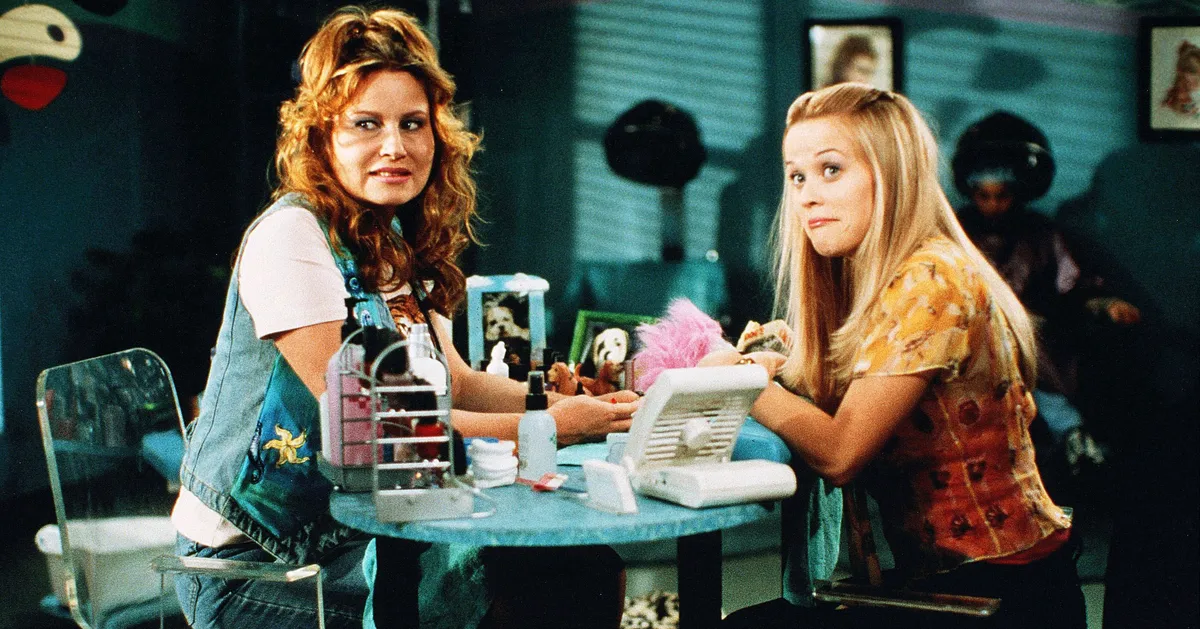
For many of us, Legally Blonde was the first time we were ever introduced to Jennifer Coolidge, who has gone on to become an award-winning screen icon.
In the 2001 rom-com, the future Emmy winner played manicurist Paulette, who becomes a confidante and close friend of the film’s heroine, Elle Woods, portrayed by Reese Witherspoon.
Over the weekend, Jennifer and Reese were among the cast members who took part in a fan event dubbed Elle World, to commemorate the film’s 25th anniversary.
While reflecting on her time in the film as part of a Q&A, the White Lotus star quipped: “I thought this was the funniest thing. I was so lucky to get cast in this movie, and it is one of my favourite jobs of all time.
“But I stupidly thought that when I was auditioning, I thought I was gonna be Elle.”
Following the success of Legally Blonde, Jennifer reprised her role in the 2003 sequel, subtitled Red, White And Blonde.
She also played a similar character in Ariana Grande’s 2018 music video for her single Thank U, Next, which paid homage to Legally Blonde, and which Jennifer later credited with reviving her career.
Next month, a new TV spin-off, titled simply Elle, is set to premiere on Prime Video.
Starring Lexi Minetree as the title character, the teen comedy reintroduces Elle in her high school years, after she is uprooted from her privileged life in Beverly Hills to move with her parents to Seattle at the height of the grunge era.
An official synopsis for Elle teases: “In season one, Elle follows Elle Woods in high school as we learn about the life experiences that shaped her into the iconic young woman we came to know and love in the first Legally Blonde film.”
In addition to Lexi as Elle, the cast includes Gabrielle Policano, Jacob Moskovitz, Chandler Kinney and Zac Looker, while June Diane Raphael and Tom Everett Scott will play the iconic character’s parents, Eva and Wyatt Woods.
Andy Burnham’s sensational victory in the Makerfield by-election rendered untenable the continuation of Keir Starmer’s premiership. The prime minister, to his credit, left his Downing Street bunker on Monday morning and bowed to the inevitable.
Starmer’s strained insistence that he would, in the words of another outgoing prime minister, “fight on” and “fight to win” melted on contact with political reality. The power of Burnham’s victory sent an uncomplicated signal to the parliamentary Labour Party. The man previously confined to the Greater Manchester mayoralty would thwart Reform and save Labour seats.
There was no misinterpreting the message made in Makerfield. It demanded a response.
Starmer’s statement today will spare Labour from the brutal spectacle of a parliamentary stampede. But in the words of a third outgoing prime minister, the herd had already moved.
MDU warns Chancellor clinical negligence system ‘not fit for purpose’

Northern Ireland RE curriculum is ‘indoctrination’ – Supreme Court
After all, the protection Labour’s leadership strictures afforded Starmer was no match for the raw political meaning of the Makerfield result.
To attribute Starmer’s fall solely to a single by-election would, of course, misunderstand the longer arc of his premiership. The winter fuel payment cut; the ructions caused by the government’s stance on the two-child benefit cap; the botched handling of the welfare bill rebellion; the inevitable but always belated U-turns; the appointment of Peter Mandelson as Britain’s ambassador to the United States; the unpopularity; the rise of populisms on the left and right – every development, every debacle diminished Starmer in the eyes of Labour MPs.
In his statement this morning, Starmer exercised his right to rehearse a different story. He referred to the “morally” bankrupt state of the Labour Party in 2020 and the immense odds he faced as leader of the opposition in the wake of Corbynism.
In defiant tones, Starmer declared that he had proved “those people wrong. Because we changed our party, ripping out the poison of antisemitism, restoring trust on the economy, defence and national security and becoming a party that once again stood proudly with, not against, our national flag.”
The 2024 general election did indeed deliver that rare thing: a Labour government. But the defining story of Starmer’s premiership was its inability to realise the potential that this historic political achievement promised.
Starmer’s resignation sets in train the process that will now deliver Britain’s seventh prime minister in 10 years. He told the nation that nominations would open for the election of his successor on 9 July. If a leadership election is triggered, Starmer’s successor will be in place by the time parliament returns from its summer recess in September.
The parliamentary Labour Party (PLP) will now enstool, by contest or coronation, Andy Burnham as Starmer’s successor. The immediate intrigue lies in whether any credible challenger will emerge. Starmer’s remaining allies may yet attempt to rally around a candidate, but Wes Streeting’s decision to endorse Burnham all but clears his path to Downing Street.
There has been some meditation on the meaning of Makerfield in recent days. But the developments since Burnham’s victory was declared in the early hours of Friday morning surely confirm it as the most consequential by-election in British history.
By-elections and poor electoral performance generally are part of the formula that leads to a prime ministerial resignation. The circumstances of Burnham’s accession, however, are entirely unprecedented. He stood for parliament with the aim of defenestrating the prime minister, and succeeded.
For this reason, it is indefensibly banal to suggest that Starmer is leaving Downing Street “on his own terms”. The extent to which Starmer’s exit was coordinated with or communicated to camp Burnham will be revealed over the coming days and weeks. But Starmer has fallen victim to a political coup – engineered by Burnham and endorsed by the electorate of Makerfield.
In the end, there was some grace but little dignity to be found in the circumstances surrounding Starmer’s departure.
Perhaps the real power of the Makerfield by-election is that it allowed Labour to oust Starmer on its own terms. The Makerfield outcome obscures Nigel Farage’s claim that Starmer is his third prime ministerial scalp (after David Cameron and Theresa May). Reform candidates stood at the local elections in May on a platform of “get Starmer out”. On the face of it, regicidal action by Labour MPs risked lending credence to Reform and Farage. But in Makerfield, Burnham stole Farage’s thunder to ensure a succession could be conducted almost entirely according to his design.
The reasons for Starmer’s resignation are manifold. They can be found in the missteps and muddied messaging that characterised his premiership. But the immediate cause of his resignation is simple: Andy Burnham and Makerfield.
It was Burnham, then, who definitively disproved Michael Heseltine’s maxim that those who wield the knife cannot inherit the crown.
Josh Self is editor of Politics.co.uk, follow him on Bluesky here and X here.
Politics.co.uk is the UK’s leading digital-only political website. Subscribe to our daily newsletter for all the latest news and analysis.

With the UK in the grips of yet another heatwave, it’s fair to say there will be a few more cases of sun burn reported as the week comes to a close.
But your risk of melanoma – a potentially deadly form of skin cancer – doubles with a history of five or more sunburns, according to the Skin Cancer Foundation.
Not only that, but sun burn is the leading cause in most cases of basal cell carcinoma, squamous cell carcinoma and melanoma (all types of skin cancer).
Dr Tim Woodman, medical director at Bupa UK Insurance who worked as a GP for 17 years in the NHS, told HuffPost UK that “if detected early enough skin cancer is easily treated and survival rates are high”.
“However, diagnosis and treatment of skin cancers are often delayed because people aren’t confident identifying the symptoms or are concerned about wasting the doctor’s time,” he added, before sharing a checklist that’s as simple as A, B, C…
What’s the system?
“We suggest employing the ABCDE checklist when you check your moles, which should flag up the key signs that your mole could be a melanoma,” experts at Bupa shared.
A stands for asymmetry. Your mole may be melanoma if “one half of the mole looks different to the other,” Bupa experts revealed.
B stands for border irregularity. Watch out for moles that have “uneven or jagged” edges.
C is for colour variability. A melanoma is more likely than a mole to contain a range of different colours.
D is for diameter. A mole that’s bigger than 6mm across, the experts at Bupa say, is worth mentioning to your GP.
E stands for evolution. Watch out for moles that change in size, shape, or colour.
What if I suspect skin cancer?
“If you notice that something isn’t quite right, such as a new, painful or changing mole or freckle, it’s always a good idea to speak to a medical professional,” Woodman shared.
“When it comes to conditions such as cancer, early diagnosis can have a positive impact on the long-term prognosis, and ultimately survival rates. It may be nothing, but it’s always important to check, if only to give yourself peace of mind.“
Bupa also offers a Cancer Direct Access service for those seeking to self-refer.
Those with pale skin, those who use tanning beds or spend a lot of time in the sun without protection, and those with a family history of the condition are more likely to develop skin cancer.
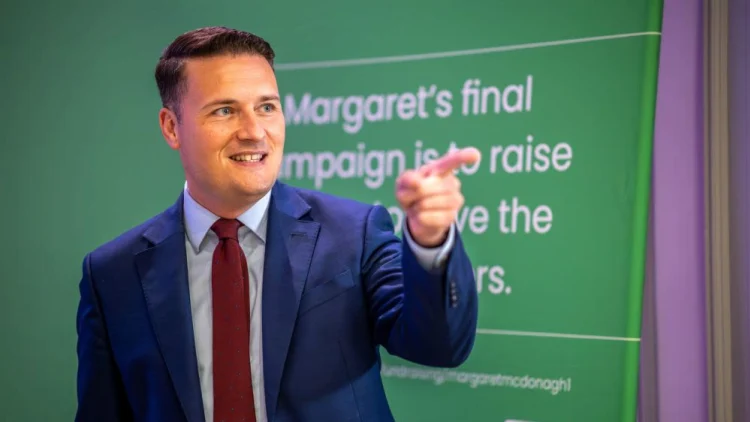

Wes Streeting stood down as health secretary last month (Alamy)

3 min read
Former health secretary Wes Streeting has announced he is backing Andy Burnham to take over from Keir Starmer as Labour leader and prime minister.
Starmer announced on Monday morning that he would stand down as PM this summer, triggering the process to replace him as leader.
Having comfortably won the Makerfield by-election last week, Burnham is returning to Parliament as an MP and has confirmed his intention to stand as leader to replace Starmer.
Streeting, who resigned as health secretary last month, was widely viewed as one of the main potential contenders to run for the leadership, but has now backed Burnham.
“Having spoken at length with Andy in recent days, I’m convinced that there is a place for those ideas under his leadership; that he is committed to building an inclusive party that draws on the best of our political traditions; and that he can win the fight of our lives against the forces of nationalism,” Streeting said.
“We could spend the summer exaggerating small differences, or we can roll up our sleeves and help him to deliver the change our Party and our country needs. That is the choice that I am making and I hope that everyone else will back Andy, too.”
He said the Makerfield by-election was a “victory for unity and hope over division and hatred” and also a victory for Burnham.
In his resignation letter to Starmer in May, Streeting said there were “good reasons” for him to remain as health secretary, but added: “As you know from our conversation earlier this week, having lost confidence in your leadership, I have concluded that it would be dishonourable and unprincipled to do so.”
He said last month’s local election results “were unprecedented – both in terms of the scale of the defeat and the consequences of that failure”.
Burnham confirmed his intention to run for the Labour leadership shortly following Starmer’s speech, praising his “huge service to our country” during a “challenging period”.
“His decision marks the beginning of a transition and it is important that this process is conducted in an orderly and responsible way,” he said.
“I will put myself forward as part of this process. The country expects stability, seriousness and a continued focus on the issues that matter most and that is what it will get.
“As we move forward, our priority must be to work together to get the country back to where we all want it to be. People want to see progress on economic growth, cost of living, public services, housing and opportunities for the next generation.”
Speaking outside No 10 on Monday morning, Starmer said he had accepted the wishes of Labour MPs with “good grace” and that he would help facilitate an “orderly transition” for his successor.
He informed the King this morning that he had resigned as Labour Party leader, triggering a process to replace him that will begin in early July, with a new prime minister in place by September.
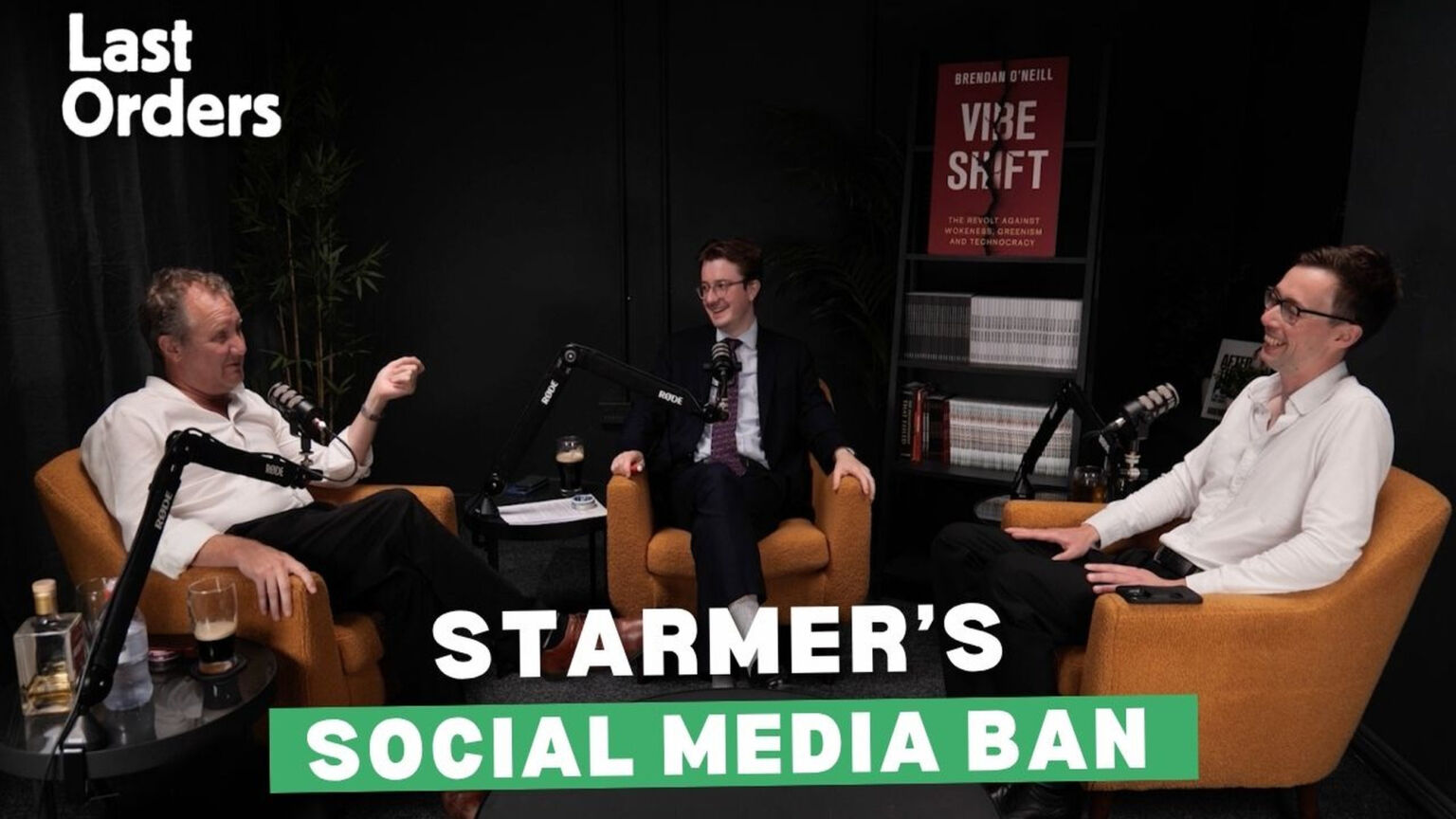
The post The social-media ban will be a disaster appeared first on spiked.
Politics
Politics Home Article | Aid spending is not only our responsibility but in our best interests
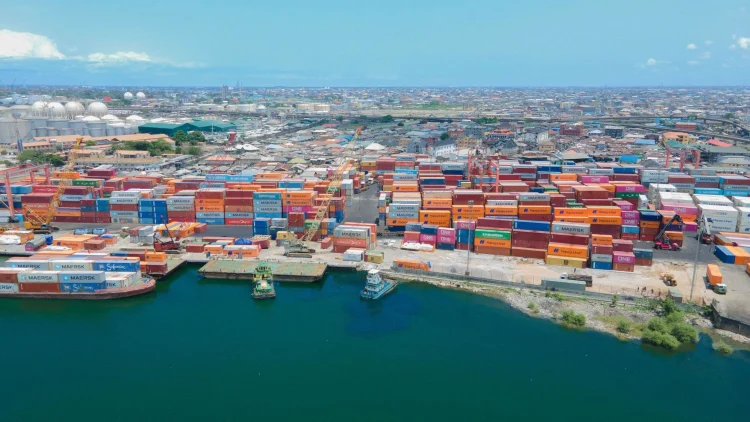
The Apapa Container Port on the Lagos Waterfront in Nigeria (Malik Buraimoh/Alamy)
5 min read
Aid spending has its critics. It always has, not helped by a decade or more of politicians being unclear on the case for it. Some say it doesn’t work, and nothing gets any better.
I have always believed the argument for international development is simple. There is a moral mission and responsibility to reduce poverty around the world. But this is indivisible from the UK’s interests, especially in a world as contested and fractured as we see today.
There is a simple strapline: tackling global challenges in the national interest. Supporting stronger economies, safer countries, better health systems, and a more viable planet – all of these things affect us at home. If we spend it well, aid is an investment in the world’s future and our own. If we fail, risks for the UK rise.
The current Ebola outbreak, migration driven by conflict, and fertiliser shortages leading to food insecurity, make this clearer than ever. This requires a new approach, working in partnership with developing countries rather than dictating to them. Spending the money we have in a smarter and more effective way.
In a politically and economically complex context like Nigeria, which I visited earlier this month, the benefits of the money we spend are obvious.
Trade between the UK and Nigeria was £7.6bn last year, supporting thousands of jobs in the UK. Nigeria is our largest export market in Africa. When President Tinubu visited the UK earlier this year, we secured big economic gains.
A record-breaking order for British Steel, supported by UK Export Finance, will help rehabilitate the Lagos ports and fund jobs for a critical industry in the UK. We announced the expansion of leading Nigerian banks, fintech firms and creative business into the UK.
All of this is enabled by smart, strategic spending of our development budget. Not delivering services or doing what other governments can or should do, but providing technical exchanges.
Nigeria is buzzing with energy and ideas. With UK support acting as an early catalyst, we are backing firms, like financial platform Moniepoint, as they scale up and create new financial services and hundreds of jobs in the UK. We’ve agreed a new UK-Nigeria Growth Programme to bring in more investment, remove barriers to trade, and help businesses grow.
Partnerships are also about sharing our expertise, making the most of British know-how and experience. Experts from the Bank of England are working closely with Nigerian counterparts to strengthen monetary policy, and improve conditions for investment, providing opportunities for British businesses.
That might sound dry, but what it results in is more investment, more jobs, more growth, more money in people’s pockets.
That shift is exactly what our partners have told us they want to see. Development is no longer about one country stepping in to fix another’s problems. It is about working together, as equal partners, to tackle shared challenges.
It is good for Nigeria. And it is good for the UK, too.
If we spend it well, aid is an investment in the world’s future and our own. If we fail, risks for the UK rise
It’s not just our economies that benefit. In an interconnected world, instability radiates across borders. Nigeria and its region are under threat from Islamist terror groups, as we see in the central Sahel, with the expansion of armed groups who operate across the borders of Mali, Burkina Faso and Niger. We know that working together to tackle these issues stands us in far better stead than if we faced them alone. With such strong links between our people, we all have a stake in Nigeria’s stability. Our defence and development experts work in close partnership with the Nigerian authorities to go after these groups, as well as support local communities and economies.
In parts of northern Nigeria affected by conflict and insecurity, UK programmes are tackling the root causes of conflict, violence and extremism, while reducing emerging threats and humanitarian pressures. That is not just about local security. It helps prevent the spread of terrorism, making people safer there and protecting us at home.
In Kaduna, northern Nigeria, UK support to strengthen the country’s health systems is increasingly visible on the frontline, where a primary healthcare centre serving around 20,000 people is delivering improved local health services and care. Our work over the past two decades has enabled Nigeria to reduce deaths from preventable disease and childbirth and build resilience. Globally, investment into partnerships like Gavi, the vaccine alliance, have helped vaccinate over a billion children and save around 18 million lives.
Working together to build strong health systems is vital. We need resilience not just to save lives abroad, but to protect people at home.
Nigeria is just one example of many. In Ghana, UK tax experts are helping the government raise domestic revenue, improving their economic stability. In Chad, our humanitarian funding helps refugees fleeing the appalling conflict in Sudan to stay safe and rebuild their livelihoods without making dangerous and costly journeys.
So, the moral mission has always been at the core of international development. But it is the pragmatic, smart choice too, as an investment in all our futures to make the world and the UK a better place.
Baroness Chapman is a Labour peer and minister for International Development
Wes Streeting has rallied behind Andy Burnham and abandoned his leadership bid in a sensational statement.
Streeting previously vowed to run in a contest to replace Starmer, having resigned as health secretary at the peak of Labour’s leadership crisis in May 2026.
In a statement, Streeting said Burnham had shown “what Labour can be when we are inclusive”.
Read Streeting’s statement in full below:
MDU warns Chancellor clinical negligence system ‘not fit for purpose’
Northern Ireland RE curriculum is ‘indoctrination’ – Supreme Court
Keir Starmer led us to a general election victory that no one thought possible. He kept us out of the war in Iran and has delivered real progress as Prime Minister at home. He has made the right decision to stand down as the Leader of the Labour Party that he saved.
After a devastating set of election results in May, the Makerfield by-election has proven that Labour can still win if we have the courage to change. It was a victory for unity and hope over division and hatred.
It was also Andy Burnham’s victory. Andy has shown what Labour can be when we are inclusive, united, and in touch with the lives of the people this Party was founded to represent.
I left the Government because we were losing the fight to nationalists in every corner of the country. I have spent the weeks since speaking to our former councillors, activists and voters in place we lost – to listen and learn from them.
I’ve also been setting out ideas to change our country: a plan for Britain to grow again and grow together, with a progressive capitalism focused on wealth creation as much as wealth distribution; to lead the world in the Fourth Industrial Revolution and protect people from its risks; to modernise our public services; to give Britain energy security; to build stronger alliances with democracies around the world and a new Special Relationship with Europe; and to change the culture of our Party so that it is more inclusive and open to ideas.
Having spoken at length with Andy in recent days, I’m convinced that there is a place for those ideas under his leadership; that he is committed to building an inclusive party that draws on the best of our political traditions; and that he can win the fight of our lives against the forces of nationalism.
We could spend the summer exaggerating small differences, or we can roll up our sleeves and help him to deliver the change our Party and our country needs. That is the choice that I am making and I hope that everyone else will back Andy, too.
We were elected change our country, to show that politics can be a force for good, and to spread opportunity for everyone. With Andy, we still can.
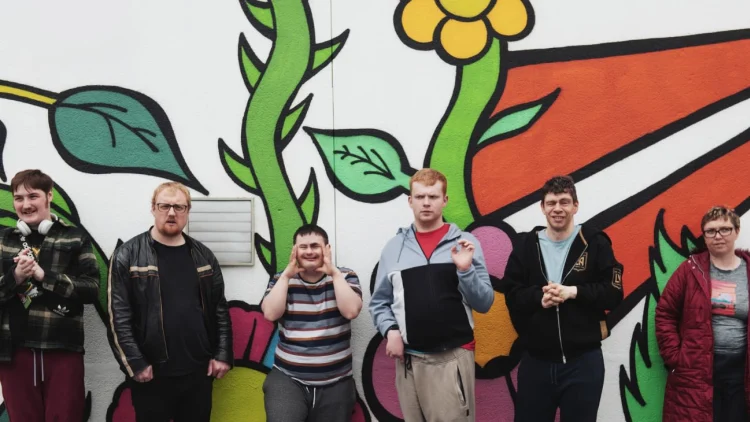

Nottingham Mencap have seen energy bills decrease 82 per cent since installing solar panels

Charity electricity bills have risen by 12 per cent since the start of the Iran war, and decisions on the £3.3bn Warm Homes Fund could make or break struggling community spaces
Analysis by Cornwall Insight reveals that electricity costs for charities have surged 12 per cent in just four months and will not return to pre-war levels for the rest of the decade1.
Jacob Briggs, Energy Users Lead at Cornwall Insight, says: “The burden is falling on some of the most resource constrained organisations in the country and, without intervention, charities and community groups could face years of sustained high electricity costs”.
The findings come as Ministers weigh how to spend £3.3bn of unallocated funding in the Warm Homes Plan. Charity funder Social Investment Business (SIB) is calling for a portion to be ring-fenced for community buildings at the heart of the most deprived areas.
These spaces underpin Labour’s missions for national renewal, delivering youth work, neighbourhood health, nurseries, hospice care and food banks. Yet a chronic lack of investment has left them in a poor state and over-exposed to volatile energy markets: over the past five years community buildings have improved energy efficiency at half the rate of other non-domestic buildings such as shops and offices1.
Genevieve Maitland Hudson, Deputy Chief Executive at SIB, said the Warm Homes Fund presented a “unique opportunity” to cut bills in the buildings at the heart of communities, but warned it “must be grasped with urgency” and would only work with targeted support.
The Warm Welcome Campaign, a network of nearly 6,000 community spaces, reinforce the need to act quickly. More than one in five (23 per cent) of their warm spaces are already struggling to pay energy bills while more than half (53 per cent) are worried about the future impact of further bill increases1.
David Barclay, Campaign Director at Warm Welcome Campaign, added: “As energy bills continue to rise, the window for intervention is narrowing. Without action, we risk losing the services and spaces communities depend on, and which cannot easily be rebuilt.”
Change is possible
SIB, the non-profit funder and social investor, is already investing £15m to strengthen the energy resilience of charities, demonstrating what targeted support from the Warm Homes Fund could achieve at scale.
Higher Folds Community Centre and Nursery in Leigh, Greater Manchester, provides childcare, work-related training, and an in-house grocery shop to help residents access affordable food. It remains a trusted hub for local families, supporting both day-to-day needs and longer-term wellbeing. Before securing SIB’s support, manager David Rainford recalls “We were in big trouble. If costs stayed that high, we were going to be out of business”. Following the installation of rooftop solar, he adds “we’re now looking at saving just over £1,000 per month”.
Nottingham Mencap have supported people with learning disabilities in their community for over 70 years. Following SIB’s investment for solar panels and a battery system, CEO Danny Hewis said, “Since the work has been completed, we’ve seen an 82% decrease in our energy bills”.
Charities and community organisations operate on marginal budgets in some of the least energy efficient buildings in England. Without intervention, sustained high energy costs pose a direct threat to frontline services.
A dedicated allocation from the Warm Homes Fund – designed as repayable investment, not grant funding – could unlock a radical overhaul to the buildings that anchor communities, safeguard the future of their services, and strengthen the foundations for national and local renewal.
References
Keir Starmer has announced that he will resign as prime minister and leader of the Labour Party.
In a speech delivered on Downing Street this morning, Starmer said that he accepted the verdict of his party with “good grace”.
The outgoing prime minister’s voice cracked with emotion as he paid tribute to his wife, Victoria, and his sons.
Starmer said: “When I leave the biggest job in the country, I shall spend more time on the most important job, being the best husband I can to my fantastic wife, Vic, who has been a rock by my side through good times and bad, and being the best dad I can to my beautiful children, who are my pride and my joy.”
MDU warns Chancellor clinical negligence system ‘not fit for purpose’
Northern Ireland RE curriculum is ‘indoctrination’ – Supreme Court
The statement came after Starmer spent the weekend at Chequers, the prime minister’s country retreat, to mull his political future.
Starmer said that he came into politics to “change the lives of millions of people for the better” and he inherited the Labour Party in 2020 in a “morally” bankrupt state.
Starmer maintained that he had changed his party and achieved a majority at the 2024 general election that many considered to be “impossible”.
He stated: “But we proved those people wrong. Because we changed our party. Ripping out the poison of antisemitism, restoring trust on the economy, defence and national security and becoming a party that once again stood proudly with not against our national flag.”
Starmer went on to list a series of his achievements during his time in power.
He declared: “An economy that is stronger, going faster than our peers, wages rising faster, an end to austerity, NHS waiting lists falling faster than at any time in 17 years…
“And half a million people being lifted out of poverty because of the choices that I made. And our reputation on the world stage restored.”
He added: “I know the question being asked of us now is not who was best-placed to change the Labour Party to take us into power and to begin the vital work of improving lives for millions of people.
“Those questions have been answered. The question my party is asking now is whether I am best placed to lead us into the next general election.
“I have heard the answer of my parliamentary party loud and clear and I accept that answer with good grace.”
Starmer said that nominations would open for the election of his successor on 9 July.
He said: “In the case of a contest, this will ensure a new leader is in place before parliament returns in September. I will remain in post as prime minister until the contest is complete and I will do everything I can to ensure an orderly handover of power.”
Politics.co.uk is the UK’s leading digital-only political website. Subscribe to our daily newsletter for all the latest news and analysis.

Met Office Red Heat Warning: All Dates And UK Areas Affected

Brewers look for boost from RHP Brandon Woodruff; Reds same from Brady Singer

Canadian health board sorry after ‘tasteless’ phishing test


-

 Tech6 days ago
The Adder At The Heart Of Intel’s 8087 FPU
-

 Fashion3 days ago
Weekend Open Thread: Miami – Corporette.com
-

 Entertainment2 days ago
Renter of Home in Anne Heche Crash Denies Settlement With Son
-

 Business2 days ago
Soccer-U.S. defends Iran World Cup travel restrictions, says discussions ongoing
-
 Business2 days ago
Wall Street Week Ahead: Investors see Micron earnings as pulse check of AI rally momentum
-

 Politics4 days ago
BBC Reporter Discusses Cross Party Criticism Of Trumps Iran Deal
-

 Crypto World2 days ago
HIVE shares jump as $220M AI deal speeds Bitcoin mining pivot
-

 Sports3 days ago
FIFA World Cup 2026: Canada beat 9-men Qatar 6-0 to register first ever win | FIFA World Cup 2026
-

 Crypto World2 days ago
Jake Chervinsky accuses CME of protecting derivatives monopoly
-
 Crypto World2 days ago
Can Charles Hoskinson Really Rescue Cardano?
-

 Business2 days ago
MHP SE 2026 Q1 – Results – Earnings Call Presentation (OTCMKTS:MHPSY) 2026-06-20
-

 Crypto World4 days ago
Anthropic’s Dario Amodei Urged AI Unity at G7, Even as US Banned His Models
-

 Business3 days ago
Brexit cost 6% of UK economy, Bank of England company data suggests
-

 Crypto World6 days ago
Robinhood opens AI-powered trading to all users, sending HOOD stock past $100
-

 Tech5 days ago
Weeks Of In-The-Field Testing And A Verdict
-

 Politics2 days ago
Andy Burnham and the meaning of Makerfield
-

 Tech4 days ago
Adobe adds its AI assistant to Premiere, Illustrator and InDesign
-
 Crypto World4 days ago
Iren (IREN) Stock Surges on Jefferies Buy Rating: AI Infrastructure Play Gains Momentum
-

 Tech3 days ago
Instagram Now Lets You Add A Unique Caption To Each Carousel Slide
-
 Crypto World5 days ago
Coinbase Stakes Out Brokerage Territory With SEC-Registered AI Advisor and Stock Options Push
You must be logged in to post a comment Login