

Politics
SpaceX Rocket Section Due To Hit The Moon On August 2026


A big section of the SpaceX rocket Falcon 9 is predicted to crash into the moon on August 5, astronomer Bill Gray said on his site, Project Pluto.
Gray is the creator of various software, some of which tracks “near-Earth” objects, asteroids, comets, and items in orbit.
His calculations found that the “upper stage” part of the rocket – or the bit which carries the “payload” of the vessel, where the important part, be it people or tracking equipment, lies – should hit the Einstein crater of the moon next month.
There are no people on board. Per ScienceAlert, the Falcon 9 is a partially reusable rocket, which means “its first, larger stage returns to Earth and alights on a barge so it can be refilled and re-flown, while the second stage remains in orbit”. That second part is the bit that’s set to hit the moon.
When exactly will the collision happen?
The astronomer’s best estimation so far is August 5, 7:44am UK time.
Will we be able to see the crash from Earth?
Not without special equipment, BBC Sky At Night suggests.
Why is the rocket section loose?
It’s normal to leave this part of a rocket in orbit. They’re often designed to detach.
Hundreds of Falcon 9 rockets have been launched, Gray added, with many of their upper stages orbiting or falling back down to Earth. Some are orbiting the sun.
The one projected to hit the moon in August has been orbiting the Earth for about a year. It was the 10th rocket launched by the company, whose CEO is Elon Musk, in 2025.
Gray called loose bits of spacecraft and other manmade debris in orbit “space junk” and said the issue is increasing “steeply”.
How big is the upper stage of the rocket?
It’s about the size of a five-storey building, the astronomer said.
Why do we think it’s going to crash into the moon?
Gray used his own software to identify the predicted trajectory. “Space junk”, he explained, usually behaves quite predictably: it’s guided by the gravity of celestial bodies around it, like the Earth and moon. That should make tracking and predicting their movements easy.
But these objects are also “pushed around by sunlight,” he added. This is a very slight force, but it adds up over time, and as the object moves around, it’s hard to say exactly how much sun will hit it.
As a result, the astronomer explained, “I can be sure it will impact near the time and place I’ve predicted, but those varying forces mean that the actual impact will be at least a little off from that time and place”.
How fast will the rocket be?
It’s predicted to zip along at 8,700km an hour.
Which part of the moon will the rocket hit?
It’s set to hit the “Einstein crater,” which BBC Sky At Night said sits at a “10 o’clock” position from the perspective of the Earth.
Will this be dangerous?
Almost certainly not, the expert said. We’ve even sent items to crash into the moon on purpose before.
But the broader issue of “space junk” might be something we should worry about more, Gray stated.
It can ruin stargazers’ view, might pollute our upper atmosphere on re-entering Earth, and crash into other bodies and other bits of “junk” too.
“The worst-case scenario would be the Kessler effect: we have enough junk in orbit so that a few collisions generate shrapnel that causes more collisions, generating still more shrapnel until just about everything is colliding,” Gray said.


Come what may, we’re here to stay: The story of South Asian resistance in Britain is the debut book from historian and journalist Taj Ali.
As British South Asians reel from the riots of summer 2024, this book tells the inspirational story of how the community organised against racism in the past and how it continues to fight in the present.
A long history of British South Asian activism
British South Asians have a long tradition of radical political activism. The 1970s and 1980s saw the community grappling with prejudice in the workplace and violence in the streets.
But this history is deeper than you might think. It runs from students agitating for independence at the heart of the British Empire to seafarers organising global strikes on the eve of the Second World War.
In Come what may, we’re here to stay, Taj Ali reveals how successive generations fought for rights, dignity and a sense of belonging while actively shaping the country they now call home.
He shows that British South Asian political life has often been defined less by religious difference than by shared commitments to anti-imperialism and anti-racism. In pursuit of these goals, alliances have been forged with other movements, from Irish republicanism to Black Power.
As racism rears its ugly head again, Come what may, we’re here to stay asks: are we are doomed to repeat the past or will we learn from our mistakes and build a better world together?
About the author
Taj Ali is a journalist and historian. He is the former editor of Tribune and regularly appears as a commentator on the BBC. He also contributes to the Guardian, Al Jazeera English and others.
In 2025 he set up Anti-Racist RADAR, an organisation that monitors and reports on racist attacks in the UK. This is his first book. He has won an RSL Giles St Aubyn Award and is a finalist for The Orwell Foundation 2026 Exposing Britain’s Social Evils Prize.
Featured image via the Canary
By The Canary
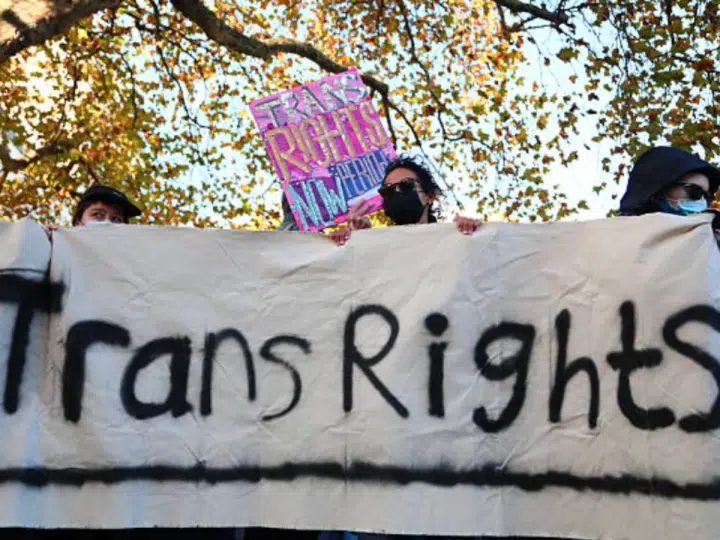
On Monday 1 June, the first day of Pride, the UK government held a debate on the Equality and Human Rights Commission’s (EHRC) latest attempt at a draft code of conduct to further exclude trans people from daily life.
Over recent years, Labour party stalwarts including PM Kier Starmer, leadership hopeful Andy Burnham, and newly minted health secretary James Murray have abandoned trans people at their earliest political convenience.
However, the queer community across the country may be pleased to find that not of their political representatives have turned their backs.
At Monday’s debate, several Labour backbenchers, Lib Dems, Scottish National Party (SNP), and Plaid Cymru MPs stood up and made their voices heard as allies of the trans and queer community.
‘Trans-exclusionary at its core’
Sarah Owen, Labour MP for Luton North, highlighted the dire timing of the debate:
I really wish that there was a better beginning to Pride Month than what we are discussing. Although the code is marginally different from its draft, it is still a trans-exclusionary one at its core, and unfortunately not inclusive. Moves like this from the EHRC and the Government have seen the UK slip from third in 2019 to 22nd in the European rankings for LGBT+ people to live and feel safe.
The SNP’s Peter Wishart later built on the same point, adding that:
Not only have we fallen to No. 22 in the rainbow index, but we are now 45th out of 49 European nations for the service of transgender people across Europe.
This is completely true. It remains true for all that equalities minister Seema Malhotra insists the government are “treating trans people with dignity”.
We can look to the International Lesbian, Gay, Bisexual, Trans and Intersex Association’s (ILGA) Rainbow Map as an example. The UK now ranks 22nd among all European countries for LGBT+ rights. That’s the lowest among all Western European countries.
How far they have fallen
Tom Gordon, Lib Dem MP for Harrogate and Knaresborough, also got in a jab at the two-faced politicians who’ve orchestrated that fall. He highlighted that:
Just a few Prime Ministers ago, Theresa May said: “Indeed when it comes to rights and protections for trans people, there is still a long way to go.” Well, how far the Tory party has fallen from those words. As a member of the Joint Committee on Human Rights, I attended the evidence session when we interviewed the new chair of the EHRC, and for the Minister to say that that was an independent process when the Government rammed it through despite cross-party consensus that the new chair was not fit for the role is, quite frankly, surprising.
That EHRC chair would be Mary-Ann Stephenson. Both the Women and Equalities Committee and the Joint Committee on Human Rights refused to endorse her due to a lack of experience in advocacy work beyond a narrow, and distinctly transphobic, focus on women’s rights.
However, she didn’t exactly have a high bar to clear. Stephenson took over from Kishwer Falkner, who instituted an “anti-LGBT” culture to the extent that current and former staff members branded her an “enemy of human rights”.
‘Ill-defined and highly subjective’
Labour’s Rupa Huq voiced her constituents’ dismay that:
under this guidance, the vague, ill-defined and highly subjective term “discomfort of service users” becomes the litmus test for excluding people from essential services.
As the Canary previously highlighted, that vague “discomfort” is a very low bar. There’s no way to verify whether or not someone is trans by official documentation. As such, a service provider is expected to question anybody’s sex — cis or trans — according to how they and other service-users feel.
Likewise, the fact that the draft trans code is an unworkable mess came up frequently. Plaid Cymru’s Liz Saville Roberts, for example, offered solidarity to trans people, but said her party would “uphold the rule of law”. However, how to actually uphold the law is another matter entirely:
as we have heard on numerous occasions today, in this guidance it appears that there is a lack of clear, workable guidance for services supporting transgender people, which is causing huge concerns.
‘Legitimising exclusion’
On that note, several MPs stressed that it’s not just trans people that this code impacts. Labour Co-op MP Stella Creasy asked:
Does the Minister accept that, to prevent being people’s gender being judged by their appearance—which we know will harm many more people than, I suspect, even those people who wish to see harm through this guidance would like—the safest option for most businesses will be getting rid of women’s toilets altogether? Will that not be an inevitable consequence of this guidance?
Likewise, Labour’s Nadia Whittome stated that the draft code opens up all women to “gender policing based on stereotypes”. Cat Eccles, Labour MP for Stourbridge, said:
A number of LGBTQ+ charities and equality organisations have warned that the guidance risks legitimising exclusion and increasing harassment of both trans people and gender non-conforming cis people.
In fact, the government’s own impact assessment shares the position that . The Lib Dems’ Josh Babarinde pointed out:
The Government’s own equality impact assessment has said of the draft code that “Women who are considered masculine may face greater scrutiny about their sex as a result of the changes. This will likely have a negative impact on this group”. In what way does this enhance the privacy, dignity and safety of women?
Gender policing
This gender-policing problem is not a hypothetical. Gender non-conforming women have already reported increased hostility following the Supreme Court’s anti-trans ruling. As the Lib Dems’ Marie Goldman stated:
There have already been stories of women with mastectomies being challenged when accessing women-only spaces because they do not look like women.
Mary-Ann Stephenson insisted that there would be no “toilet police” due to the draft code. The Canary, instead, highlighted that we would see (were already seeing) a toilet militia.
Both the government and the transphobic movement at large know this. At best, they view gender-non-conforming individuals as acceptable sacrifices. At worst, attacks against butches and queer presentation in general only sweeten the deal.
Goldman also went on to add that:
For trans, non-binary and intersex people, the code operates from a position of exclusion. It risks driving those small minorities away from public life, as leading mental health charities have since warned. The guidance conflicts with our core British values of tolerance, decency, respect for individual liberty and the rule of law. That is why I urge the Minister to withdraw it and to accept that this issue needs to be resolved by Parliament as law makers.
Here, we get to the crux of the matter. The EHRC’s draft code remains a draft for a 40-day period of parliamentary scrutiny. Crucially, if either house disapproves, the government doesn’t have to pass it.
‘Why not instead withdraw the guidance’?
Nadia Whittome stated same the issue clearly:
The EHRC code of practice fails everyone. It effectively pushes trans people out of public life, it subjects all women to gender policing based on stereotypes, and it does not provide clarity to organisations that want to be trans-inclusive. […] Why are the Government pushing ahead with this? Why not instead withdraw the guidance, and legislate to clarify that the Equality Act 2010 was always intended to be trans inclusive? For goodness’ sake, it was passed after the last Labour Government passed the Gender Recognition Act in 2004.
The Supreme Court ruled that the 2010 Equality Act treats the category ‘women’ as excluding trans women. However, it was ruling on the letter of the law, not its spirit or intent. The Gender Recognition Act, by the way, reads:
Where a full gender recognition certificate is issued to a person, the person’s gender becomes for all purposes the acquired gender (so that, if the acquired gender is the male gender, the person’s sex becomes that of a man and, if it is the female gender, the person’s sex becomes that of a woman).
That act hasn’t gone anywhere. It’s still in effect, for all that the government may try to ignore it.
The draft code has already gone back to the drawing board once over its sheer unworkability. As multiple MPs across several parties highlighted, the new attempt remains a discriminatory, opaque, unrealistic mess. It remains entirely within Parliament’s power to reject it on those grounds.
Nevertheless, it seems likely to pass. Remember this: the government’s current, visciously hostile attitude to trans people is a choice. The damage they are doing to intersex people, gender non-conforming people, and all women is entirely optional.
As queer and women’s rights continue to erode in the UK, day by day, we must remember precisely who did this to us.
Happy Pride to those MPs who stood up for trans and intersex people, for the queer community, non-conformists, and all women.
Featured image via Alishia Abodunde / Getty Images
For the past few years, billionaires and their media lackeys have told us that the AI revolution is inevitable. Opposing this narrative, some are warning that the ‘generative AI’ technology in question lacks the competence or cost-effectiveness for such a transition. And the emerging signs are proving those naysayers correct:
NEW: Uber is reportedly capping employee use of AI vibe-coding tools at $1,500 per month after blowing through its AI budget.
— Polymarket (@Polymarket) June 2, 2026
Why now?
Over the past few weeks, anyone who follows the AI industry will have noticed a big increase in stories like this:
Microsoft Bans Claude Code After AI Costs More Than The Humans It Replaced
— NewsWire (@NewsWire_US) June 1, 2026
Uber handed its 5,000 engineers an AI coding assistant in December. By April, the company had blown through its entire AI budget for all of 2026, with two thirds of the year still to go.
Cheap, basic AI has gotten almost free over the past few years. But almost no company builds… https://t.co/rTlWgZECa7
— Anish Moonka (@anishmoonka) May 24, 2026
Why is it happening now? It’s because AI companies have switched from a subscription-based offering to a pay-per-token model. The ‘tokens’ in question are what AI models use whenever they process a request, with more tokens used depending on the complexity of what’s asked.
As it turns out, many of these companies were burning through an unfathomable quantity of tokens:
NEW: AI consultant reveals a client accidentally spent $500,000,000.00 in a single month after failing to set employee limits on Claude usage.
— Polymarket (@Polymarket) May 28, 2026
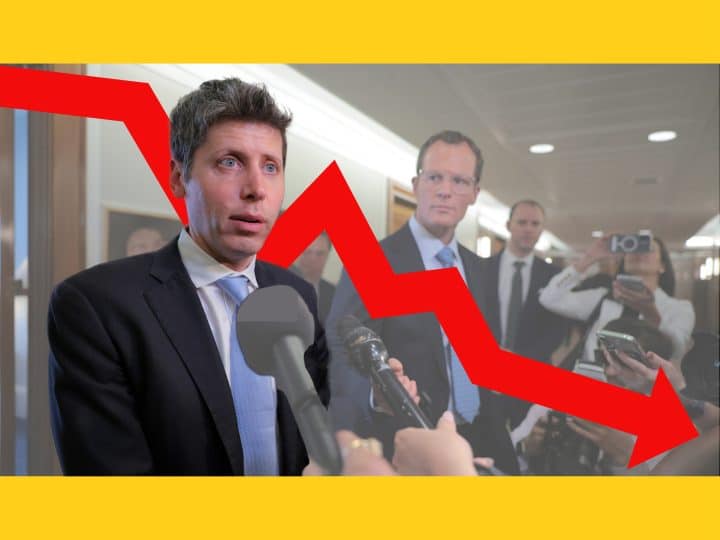
As the sky falls in, OpenAI CEO Sam Altman is pretending to not understand what’s happening:
Sam Altman said AI budgeting has recently become a "huge issue" for some companies, something that "never came up" earlier this year. https://t.co/P2zODBNmDp
— Business Insider (@BusinessInsider) June 3, 2026
Altman does have to say something to reassure investors, but we’re not sure this is it.
OpenAI is absolutely cooked. This is loser language. You can’t be four years into the bubble saying “yeah our customers have a huge issue with how expensive our business is.” You just raised $122 billion! You can’t say shit like this!https://t.co/1uKEEpSS03 pic.twitter.com/HWMuy3TQX8
— Ed Zitron (@edzitron) June 4, 2026
Ed Zitron is one of generative AI’s most vocal critics. Responding to the latest developments, he highlighted a case in which one AI user used 50% of their token credits with just one prompt. This is a problem, because some users like coders had grown accustomed to making hundreds or thousands of prompts a day.
If you want to see what happens when people have to pay the actual costs of AI, the day is finally here. It’s obvious that every customer sees the deep, meaningful value and isn’t angry at all pic.twitter.com/Z8xzyYOFH7
— Ed Zitron (@edzitron) June 1, 2026
As Zitron highlights, companies are now paying the “actual price” of AI.
Up until now, AI companies used multi-billion pounds cash injections from wealthy investors to subsidise their technology. They hoped AI would prove to be so useful that when they switched to a more realistic pricing point, companies would have no option but to carry on paying.
Yeah, so about that …
Expensive? Yes. Useful? No.
To make things worse, companies already weren’t making money:
First it was MIT and McKinsey. Now Bain finds that returns to corporate AI investments are disappointing. pic.twitter.com/sXqXQVSMH0
— John Cassidy (@JohnCassidy) June 3, 2026
The artificial intelligence industry has a big problem: 95% of companies that try AI aren’t making any money from it, according to a report from the Massachusetts Institute of Technology last month.
The same article carried multiple quotes from supposed experts who promised AI would be very profitable as soon as these businesses pulled their fingers out and implemented it correctly. A year later, the technology is no more useful yet considerably more expensive.
Many companies laid off employees hoping they could replace them with AI. Many companies have since realised the error of their ways:
Friend works for REDACTED tech company. They fired 30 people because the CEO insisted AI could do their jobs. Now they’ve spent 6 months making unusable code and have had to hire more people. How the turns table
— Madelaine Hanson (@MadelaineLucyH) June 3, 2026
Not yet, not this
While it does seem likely the world will one day be run by smart, automated systems, the generative AI that’s being sold to us isn’t ‘smart’. Functionally, it’s little more than a juiced-up auto-type, but the tech chancers claimed it was a digital god that would perform our menial tasks for us.
The problem now is that the global economy is propped up by the over-inflated AI bubble. And when that bubble pops, it won’t be the billionaire tech bros who suffer.
Featured image via Chip Somodevilla (Getty Images)
By Willem Moore
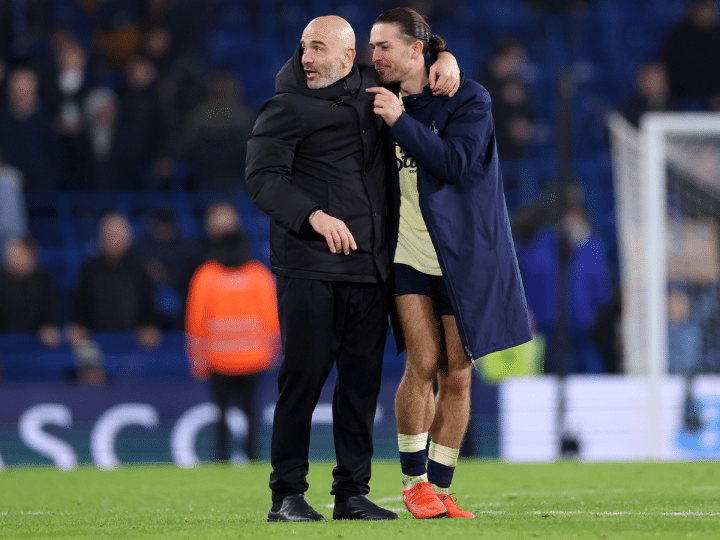
Manchester City and Chelsea remain locked in talks over compensation for Enzo Maresca as City move to appoint the Italian as head coach. The discussions have moved from club executives into legal territory after Maresca left Chelsea in January still under contract. Both sides must now agree a settlement ahead of any formal announcement.
City are hopeful of a quick resolution. The focus includes not only compensation but also on the timing of the appointment, the structure of Maresca’s backroom staff, and the fine print defining his role at the Etihad. A proposed three‑year deal is reportedly on the table and yet to be signed.
Maresca leads the race
Maresca’s name has risen to the top of City’s shortlist for a simple reason — familiarity. He was Pep Guardiola’s assistant during the 2022/23 season when City secured the treble. That shared history gives him credibility with players and staff who have been part of Guardiola’s era. Moreover, that continuity is attractive to a club seeking a smooth transition rather than a radical reset.
Chelsea were reportedly aware of City’s interest in Maresca last autumn, when he informed them that he had been approached about the possibility of eventually succeeding Guardiola. That prior knowledge has not prevented a contractual dispute, however, because Maresca left Stamford Bridge with several years still remaining on his deal. Now the legal wrangling centres on how to compensate Chelsea for that early exit.
The key issues
The ongoing talks are said to centre on three areas: (1) timing, (2) staffing, and (3) compensation.
First is timing — when will Maresca officially take charge and how will City manage the handover from Guardiola’s final days?
Second is staffing — which members of Maresca’s Chelsea backroom team, if any, will follow him to Manchester?
Third is compensation — how much will City pay Chelsea to settle the remaining term of Maresca’s contract. The lawyers are now working through these details.
City want a quick resolution, as the club needs clarity to plan pre-season, recruitment, and the operational handover that follows a managerial change. For Chelsea, the priority is protecting contractual rights and securing fair compensation for a coach they parted with mid-term. Both clubs are incentivised to reach a deal, but legal precision is slowing the process.
What Maresca brings
Tactically and culturally, Maresca blends Guardiola’s influence with his own approach. His Premier League experience and relationship with City players from his time as assistant coach, make him an appealing internal-style successor rather than an outsider eager to reshape the squad.
City’s recruitment needs will still be a factor. Even with a manager who understands the club’s DNA, squad refreshment is likely. Maresca will inherit the same competitive landscape as his predecessor, with rivals strengthening, a congested transfer market, and the expectation of immediate success. Ultimately, the incoming coach will be judged on his ability to maintain standards while imprinting his own approach.
Pep Guardiola’s decision to step down triggered a rare managerial transition at one of the most successful football clubs. Guardiola has spoken publicly about taking time to rest and reflect. He leaves City to find a successor who can sustain the club’s momentum. The search has been pragmatic rather than headline‑grabbing. Consequently, Maresca is emerging as a candidate who offers continuity.
Transition at City
For City, the ideal outcome is a swift, clean handover that preserves the tactical identity Guardiola built while allowing the new coach to evolve the team. For Chelsea, the priority is to secure fair compensation and to move on with their own managerial plans. Both clubs have reasons to settle. Still, the legal details will determine how quickly that happens.
Expect lawyers to be the busiest people in the story for the next few days. Key signals to look for are a finalised contract being circulated, confirmation of the appointment date, and clarity on which backroom staff will move with Maresca. If those boxes are ticked, a formal announcement could follow swiftly. Until then, the narrative remains one of negotiation rather than inevitability.
Manchester City want Enzo Maresca and are working through the legal and financial hurdles with Chelsea. The appointment looks likely, but the final steps are procedural and hinge on compensation, timing and staffing. The small print that will determine how quickly the next chapter at the Etihad begins.
Featured image courtesy of Justin Setterfield / Getty Images
By Faz Ali

Aryna Sabalenka’s French Open run ended in a shock quarter-final defeat as Diana Shnaider produced one of the tournament’s biggest upsets, after recovering from a set and double-break deficit to win 3-6, 7-5, 6-0.
Sabalenka, the overwhelming favourite after the early exits of Coco Gauff, Iga Swiatek and Elena Rybakina, appeared in control at 6-3, 4-1 on Court Philippe-Chatrier and later served for the match at 5-4 in the second set. From there, Shnaider broke three times to take the set, and raced through the third without reply.
Echoes of past struggles
The turnaround carried echoes of Sabalenka’s defeat in last year’s final. She lost 10 straight games and 12 of the last 13, unable to halt the slide as Shnaider took over.
The wind, a recurring issue for Sabalenka in Paris, played its part. Blustery conditions disrupted her rhythm, just as they had in previous years. Shnaider, by contrast, stayed composed, extending rallies and forcing Sabalenka to hit one more ball. The world No 1 game unravelled as the Russian’s belief grew.
For Shnaider, this marked a breakthrough win. Seeded 25th and playing in her first Grand Slam quarter-final, she adjusted quickly after a shaky opening set. Her baseline hitting grew heavier, her court coverage sharper, and her consistency in longer rallies paid off as Sabalenka’s performance dipped.
By the third set, Shnaider was in control. She raced to a double-break lead, held firm under pressure, and ended the match with authority. The 22-year-old will now move into her first major semi-final, where she faces Polish qualifier Maja Chwalińska. This represents a remarkable opportunity for both players.
Sabalenka left with questions
Sabalenka’s wait for a maiden French Open title continues. Despite her power and early dominance, she could not steady herself once the match became tight. Her serve faltered, her shot selection wavered, and the composure from earlier rounds faded.
This defeat marks one of her most painful exits, given the draw had opened up favourably. It is only the second time in her last 14 Slams that she has failed to reach at least the semi-finals.
With Sabalenka gone, the women’s draw is guaranteed a first-time Grand Slam champion. Shnaider’s semi-final against Chwalińska adds another twist to a tournament already defined by upsets and breakthroughs.
For Sabalenka, the challenge now is to regroup. For Shnaider, the opportunity is enormous and after this comeback, she arrives in the last four with momentum, belief, and nothing to lose.
Featured image courtesy of Matthew Stockman / Getty Images
By Faz Ali


4 min read
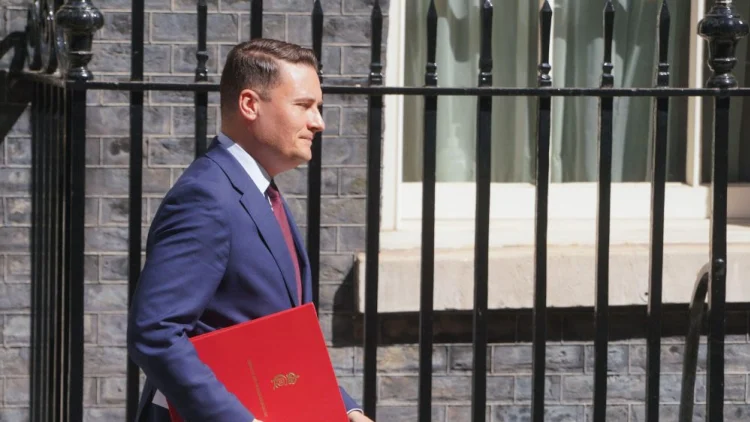
Former health secretary Wes Streeting has said Reform UK’s response to the murder of Henry Nowak “has echoes of the 1930s”.
Speaking on Wednesday night, Streeting accused Nigel Farage’s party of “weaponising” the murder of 18-year-old Nowak to “stoke rage”.
Nowak was fatally stabbed by 23-year-old Vickrum Digwa in Southampton in December.
Digwa, who falsely claimed he had been racially abused and attacked by Nowak, was sentenced to life in prison with a minimum term of 21 years on Monday.
The Independent Office for Police Conduct is investigating the conduct of police officers who handcuffed Nowak after he had been stabbed and repeatedly told police he could not breathe as he lay dying.
Farage has urged the public to respond to the case with “pure, cold rage”.
Riots took place in Southampton on Tuesday night in response to the case, which Prime Minister Keir Starmer condemned at Prime Minister’s Questions (PMQs) on Wednesday.
At PMQs, Farage said it was “now clear to growing millions in this country that we are living under two-tier policing”, and claimed that police guidance effectively instructed officers to “treat different ethnic groups in different ways”.
Streeting gave a speech at the LabourList parliamentary reception last night, alongside Labour deputy leader Lucy Powell, Education Secretary Bridget Philipson, and backbench Labour MP Jeevun Sandher.
“We have seen it in the last 24 hours, the way in which [Reform] have sought to weaponise an absolutely heinous crime and situation,” Streeting said.
“To weaponise it against their political opponents, and to stoke rage, and to incite rage is really dangerous, and it’s not too dramatic to say this has echoes of the 1930s.
“We have to take this seriously when you have political propaganda that weaponises the words of the Leader of the Opposition, bends and twists them out of context to suggest that a Black woman leading the Conservative Party doesn’t think that white lives matter, that is a moment for all of us, especially those who are not Conservative, to speak up and challenge and call this out.”
Reform has been heavily criticised after publishing an attack ad about Kemi Badenoch that displayed only part of a comment she made in response to Nowak’s murder.
Badenoch told ITV’s Good Morning Britain: “I don’t want to hear about Black Lives Matter. I don’t want to hear about White Lives Matter. Everyone matters.”
However, the Reform ad only included: “I want to hear about White Lives Matter.”
Streeting told the reception that the Labour Party had a responsibility to “follow Henry Novak’s father’s leadership” and show “what moral courage and clarity looks like”.
Streeting also said that following the local elections in England and devolved administration elections in Scotland and Wales, for the first time in history, “nationalists are in power in every corner of the United Kingdom”.
“While some of those nationalists would consider themselves progressives, I take the view that there has never been anything progressive about nationalism as separatism, where even if it’s the nationalism of the SNP and Plaid Cymru,” he said.
He added that in England, “we have something altogether more dangerous” – referring to Farage’s party.
A formal leadership challenge has not yet been launched to replace Prime Minister Keir Starmer, following a set of disastrous local and national election results for Labour in England, Scotland and Wales last month.
However, either a contest or a coronation is widely seen as likely soon, after Streeting stepped down as health secretary in May and announced his intention to stand when a contest is underway, and Greater Manchester mayor Andy Burnham announced that he will stand in the Makerfield parliamentary by-election to re-enter Parliament.
Streeting also addressed the latest release of files containing messages between cabinet ministers and former US ambassador Peter Mandelson, saying it gave a troubling insight into decision-making in government, which excluded women.
“There were exchanges about tech policy, about trade policy, and what those conversations had in common was the total absence of any women,” he said.
“The most prominent reference to a woman was the reference to the most powerful woman in the country, the Chancellor of the Exchequer, and how she would need to be managed on the issue.”
He said it exposed “unconscious bias, the everyday sexism, even among people, particularly men in politics who would consider ourselves progressives and committed to equality across the board, including gender equality”.
“That is a culture that we all of us, but particularly men in politics, have a responsibility to help change.”
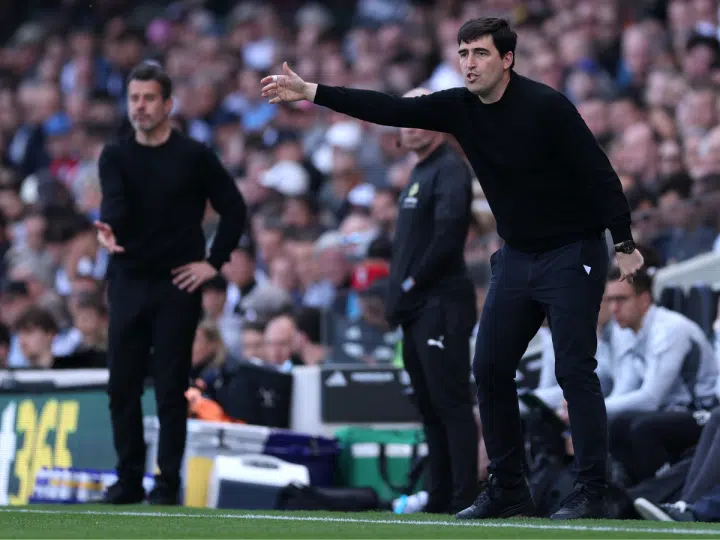

Liverpool’s search for Arne Slot’s successor is over, with the club moving quickly. Andoni Iraola is expected on Merseyside to sign his contract. This completes a process driven by sporting director Richard Hughes, accelerated by urgency following Slot’s departure.
Hughes leads appointment
Liverpool reached a verbal agreement with Iraola on Tuesday, clearing the final hurdle in that process which Slot’s dismissal set in motion.
Iraola will arrive to complete formalities, with a club announcement expected shortly after. The 43‑year‑old Spaniard has been the leading candidate throughout. Hughes identified early as a strong fit for Liverpool’s preferred tactical style and vision.
The appointment has Hughes’ fingerprints all over it. The sporting director previously hired Iraola at Bournemouth in 2023. That move was transformative for the Cherries. When Hughes moved to Anfield the following year, Iraola remained a name to watch. Once Slot was removed, he quickly became the frontrunner.
Liverpool followed a structured process helped by the alignment between Hughes and Iraola. The talks which began earlier this week have progressed quickly.
Style and identity
Iraola is expected to bring several key figures with him. He wants Pablo de la Torre, Tommy Elphick, Shaun Cooper and Tom Webber to join his staff at Anfield. This group helped underpin Bournemouth’s rise under his leadership.
Liverpool have not yet approached individuals directly, with the club working to finalise negotiations before formalising staff decisions.
Liverpool’s priority throughout this process has been clear — find a coach whose football aligns with the club’s identity.
Iraola’s Bournemouth side delivered exactly that; a high‑energy, front‑foot, aggressive style, producing one of the Premier League’s stronger runs last season.
The Cherries went 18 games unbeaten in the second half of the 2025/26 campaign. They finished sixth and secured Europa League football. They also ended the season just three points behind Liverpool.
That form was no fluke, but the product of a clear tactical blueprint Liverpool believes will translate to a bigger stage.
From Bournemouth to Anfield
The challenge awaiting Iraola is enormous. The shift from Bournemouth to Liverpool is a different scale of scrutiny. The expectations will be of another level entirely. The reality is he will be expected to make an immediate impact and hit the ground running.
At Bournemouth, a Friday press conference might draw four or five journalists. At Liverpool, he will face dozens, and that is before Champions League nights, global media cycles, and the relentless pressure of competing for titles.
This is not just a managerial appointment, it is a strategic alignment. Hughes and Iraola share a footballing philosophy built on structure and adaptability. Their past success at Bournemouth gives Liverpool confidence in a smooth transition.
The club’s goal has been to recruit the individual who best suits their preferred playing style. Iraola is seen as that fit.
Liverpool turns the page
With the contract signing imminent, Liverpool will move quickly into phase two. This includes finalising coaching staff, ensuring alignment on summer transfers, preparing for pre‑season, and communicating the club’s direction to supporters hungry for clarity.
Liverpool’s decision to move decisively for Iraola signals a commitment to continuity of style, modern coaching principles and long‑term planning. The club believes his energy, tactical intelligence and proven ability to elevate players will translate to success at Anfield.
The expectations are bigger, but Liverpool are convinced they’ve found the right man, and today the next chapter begins.
Featured image via Justin Setterfield / Getty Images
By Faz Ali
Politics
The House | “Packed with glorious detail”: Baroness Andrews reviews ‘The Edge of Revolution’


10 May 1926: Troops in armoured cars on the streets of London | Image by: World Image Archive / Alamy

4 min read
Meticulously researched, David Torrance’s study of the 1926 General Strike is both erudite and engaging
In this erudite and engaging study of the nine-day General Strike, in May 1926, David Torrance reveals a much more nuanced political history in place of the usual comic-strip class war between the toffs and the trade unionists.
But while it certainly shook the nation, did it bring it to the ‘edge of revolution’? It certainly raised constitutional questions, but was it a constitutional crisis?
As Torrance’s meticulous research reveals, at its heart was the vexed history of the coal industry compounded by decades of deadlock over miners’ wages in a country where coal was still king but coal owners had the power. Miners had the nation’s sympathy but it still took raw courage for other trade unionists to put their own jobs at risk. The ‘Triple Alliance’ they formed in 1926 – comprising miners, railwaymen and transport workers – had already failed miserably in an earlier attempt at a general strike in 1921.
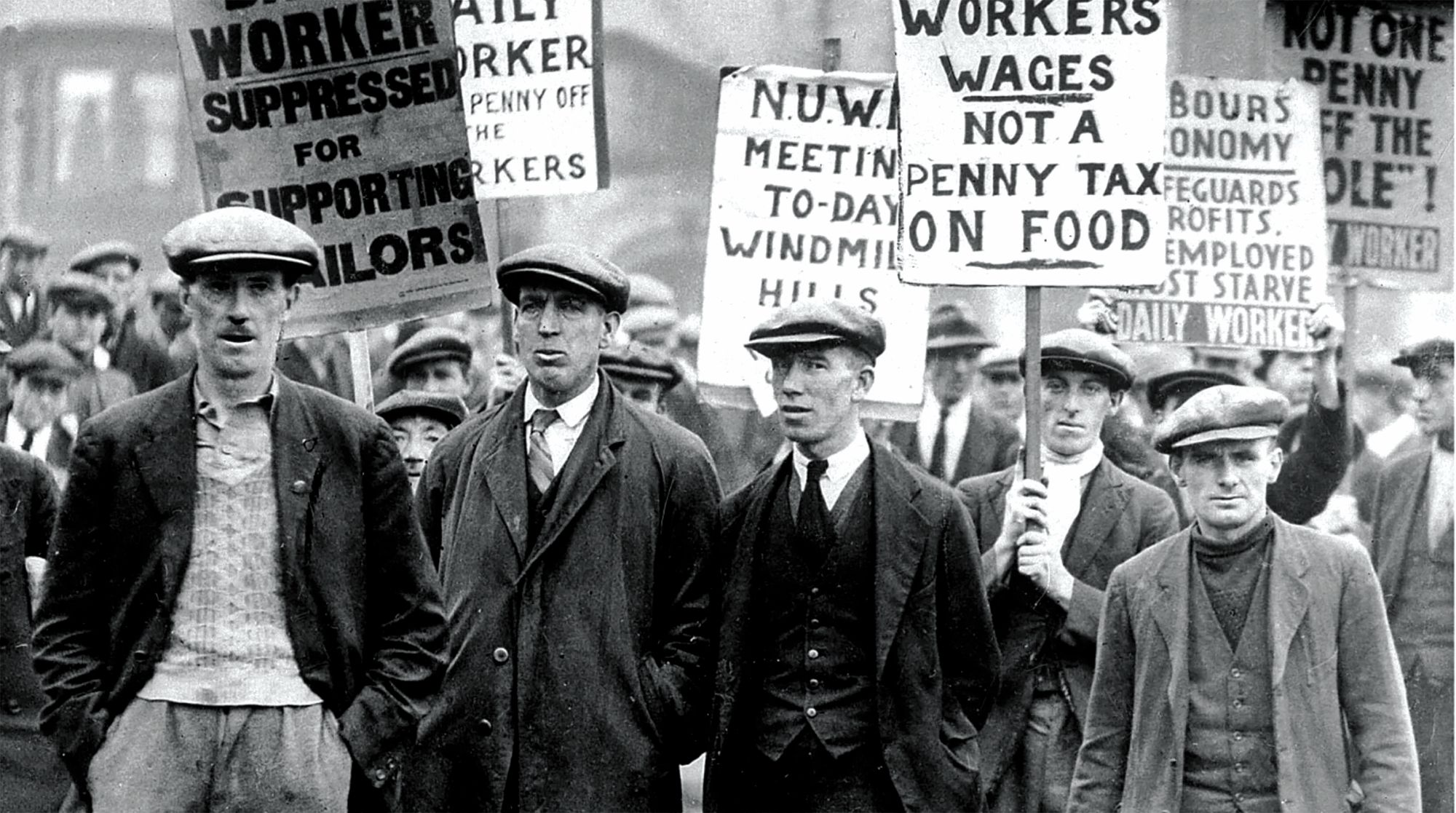
In the end, not even that remarkable generation of trade union leaders – Ernest Bevin (Transport and General Workers Union), Jimmy Thomas (National Union of Rail) and Arthur Cook (Miners Federation of Great Britain) – could maintain the necessary solidarity.
These were, therefore, hardly revolutionary men or conditions. Yet, in those febrile post-war days haunted by the bloody memory of the 1917 Russian Revolution, they felt like revolutionary times to many, fed by political paranoia about the power of trade unions. In 1920, these fears were recognised in the Emergency Powers Act, passed by the coalition government led by David Lloyd George.
In this context, although the trade unions in 1926 acknowledged that they were hopelessly unprepared, they were incapable of halting the drift into a general strike. On 16 April, after protracted negotiations over miners’ wages had broken down, the mine owners (“the stupidest men in Britain” according to the Conservative politician Lord Birkenhead) posted lockout notices.
On 11 May, the strike ended in total surrender and confusion. The miners got nothing
The drift might have continued had it not been for the printers at the Daily Mail refusing to run a leading article declaring a general strike a revolutionary moment rather than an industrial dispute. This was the justification the Cabinet needed to invoke the Emergency Powers Act and the General Strike started at one minute to midnight on 3 May 1926.
Many people volunteered to step into vacant roles and what followed for some, who had once only dreamed of driving trains, was the prospect (if voluntary) of “new and exciting jobs”. Some things went on as normal – namely cricket at Lords – proving to some that the nation still stood firm if divided.
While Hugh Gaitskell distributed the British Worker (the TUC’s antidote to the government’s British Gazette, edited by Winston Churchill, the chancellor of the exchequer), Chips Channon signed up “for England” as a special constable.

Image by: Carlo Bollo / Alamy
In a chapter packed with glorious detail, many people found inventive ways to get to work – by penny farthing or roller skates. For others however, there were no larks – only riots, arrests, hunger and even railway fatalities.
The political establishment also weighed in. King George V and church leaders urged reconciliation. Parliament sat day and night. The legality of the strike was a moot issue. Not surprisingly, Conservative prime minister Stanley Baldwin seized on Liberal MP Sir John Simon’s singular interpretation that the strike was utterly illegal because it involved more than one trade union.
 The end to the strike was even more muddled than the beginning, with Jimmy Thomas in particular desperate for resolution. Independent of the Miners’ Federation, judged to be too intransigent, separate negotiations for an end to the strike were informally brokered with the general council of the TUC by Liberal MP, Sir Herbert Samuel. On 11 May, the strike ended in total surrender and confusion. The miners got nothing.
What did it all add up to? Had the leader of the opposition been allowed, like Conservative leaders, to broadcast to the nation, Labour’s Ramsay Macdonald would have been emphatic: “It never entered into the mind of the Trades Union Council to challenge the government… It is not a political strike nor has it in any sense a revolutionary significance.” Yet, as Torrance rightly concludes, ‘Who governs Britain?’ was to be a question which would challenge successive generations.
Baroness Andrews is a Labour peer
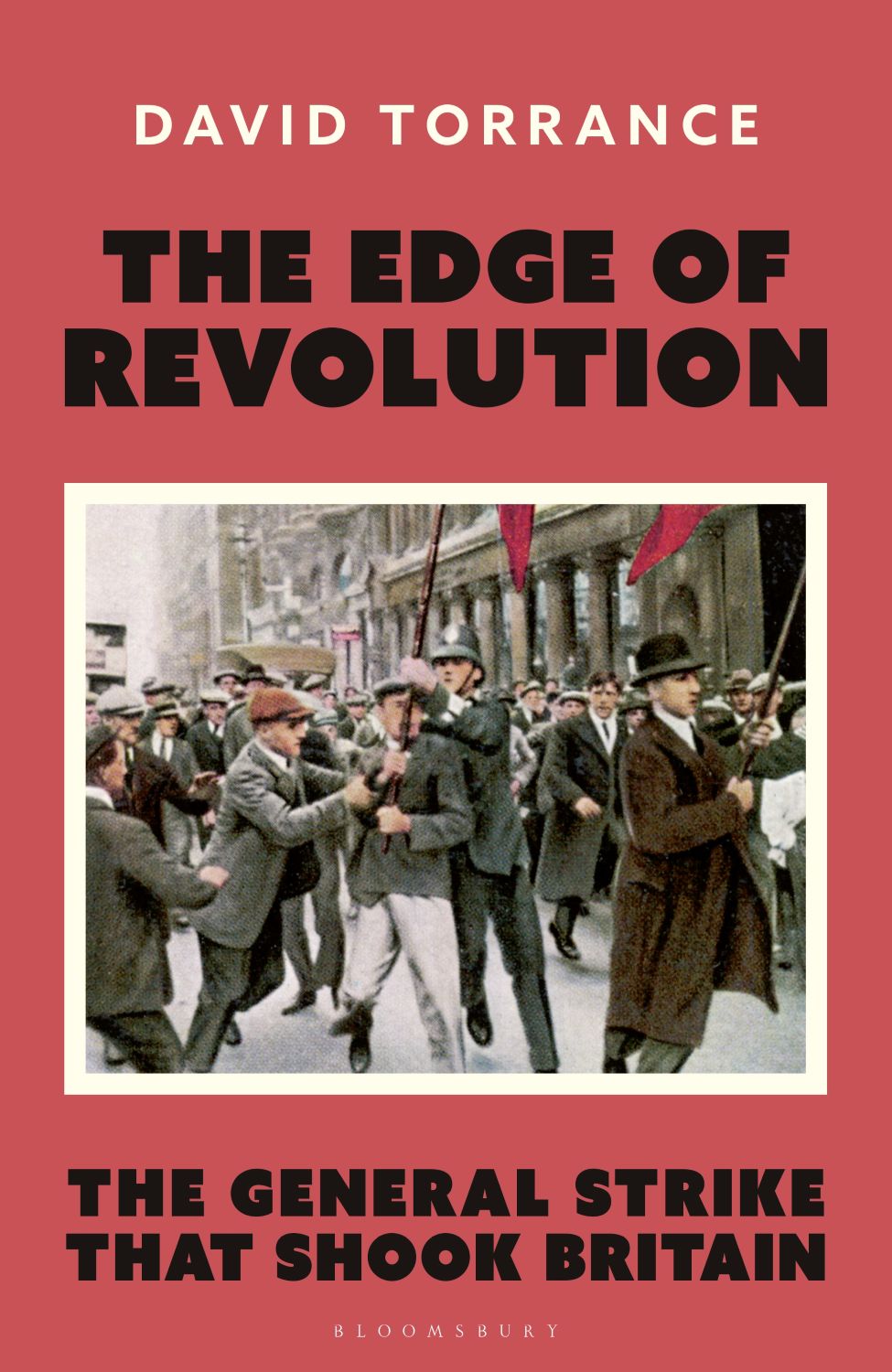
The Edge of Revolution: The General Strike that Shook Britain
By: David Torrance
Publisher: Bloomsbury Continuum

Reform’s Nigel Farage, Restore’s Rupert Lowe, and Tory leader Kemi Badenoch are all busy squabbling over the weaponisation of the tragic death of Henry Nowak.
Farage and Reform took Badenoch’s words out of context to make it seem as though she’d said white lives do not matter. And, of all people, racist Rupert popped up to defend Kemi via attacking Nige:
Reform putting out an attack ad on Kemi Badenoch misquoting her over Henry Nowak’s tragic death is a deeply misguided, ugly and offensive move.
A young British man was murdered. He died cuffed and begging for his life, alone in the street. To weaponise his death, so…
— Rupert Lowe MP (@RupertLowe10) June 2, 2026
Lowe: Farage put out ‘a viciously deceitful graphic’
Ordinarily, agreeing with Rupert Lowe would be unthinkable given his consistently hard-right politics and willingness to push beyond Reform UK on many issues. Yet in this instance, Nigel Farage has descended so deeply into blatant misinformation and divisive rhetoric that even Lowe has been unable to outflank him from the right.
This has led to the reality that his latest post leaves little that could be disagreed with – and further underscores how opportunistic and vindictive the millionaire ‘politician’ actually is.
We put hyphens as it mustn’t be forgotten how little the self-interested Reform leader has actually showed up to work or taken part in important, impactful votes in the House of Commons. He hasn’t exactly behaved like a politician, well not the traditional sense that is – modern politicians appear to be all out for themselves.
Instead, it seems he only wants to show up when he can further incite the ‘cold rage’ he has been feeding across British public, leading to a white riot in Southampton.
Farage at #PMQs today, the first time he’s shown his face in Parliament for months. I suspect he may regret it. He was absolutely slated for failing to condemn the violence in Southampton, for ignoring the appeal made by Henry Nowak’s father, and for using his son’s death to stir… pic.twitter.com/kllcElTyGh
— The Rev. Anton Mittens


 (@MittensOff) June 3, 2026
The latest cynical ploy used by Farage’s Reform is to take Badenoch’s comments made yesterday on Good Morning Britain completely out of context. In the segment and subsequently on an X post, Badenoch stated:
I don’t want to hear about Black Lives Matter.
I don’t want to hear about White Lives Matter.
Everyone matters.
Henry Nowak matters
Misinformation opportunity – quid’s in for Nige
Reform then saw an opportunity – and clearly assumes his followers won’t check receipts, which very well may be the case.
Kemi Badenoch, just like Starmer, doesn’t care.
Only Reform UK will openly say that white lives matter too. pic.twitter.com/dAUd7FRUvR — Reform UK (@reformparty_uk) June 2, 2026
Nevertheless, Farage’s opposition have done their research and have thus called out the cynically game the Reform leader is playing to further whip up anger amongst the white supremacists living in the UK.
Since the misinformed social media post, Lowe has pretty powerfully shut it down – don’t worry, we feel nauseous too even writing that.
On X, he wrote:
Reform putting out an attack ad on Kemi Badenoch misquoting her over Henry Nowak’s tragic death is a deeply misguided, ugly and offensive move.
A young British man was murdered. He died cuffed and begging for his life, alone in the street.
To weaponise his death, so vindictively, in order to make a viciously deceitful graphic attacking a political opponent is low.
I am not in the same party as Kemi Badenoch. In fact, we are competing for votes in Makerfield. I disagree with her on a great many number of policies.
I would never manipulate the death of an innocent young man to score petty party political points, especially using such blatant lies.
It’s just not how we conduct ourselves in Britain.
Principles still matter, or at least they should.
However, even pointing out this reality and the actual context of the comments seems to be ineffective for devout white supremacist Reform followers. Of course, none of this means that Lowe actually cares about Henry Nowak, police violence, or how Badenoch interpreted. Anything to get one over on Nigel is the only thing that matters to Lowe.
Even so, Reform supporters were less than impressed:
Anyone who still doesn’t believe Lowe is a Tory plant never will by now https://t.co/XR3maH893d
— Anglo

 (@Nawjryw) June 2, 2026
Restorers and Tory loyalists teaming up with the left and the establishment to attack Farage is so typically useless Dork Wet Right https://t.co/uH6ZhGvTCV
— Gammon Worshipper (@itaintwhiteboy) June 2, 2026
Mate, are we simping for Nigerians now? https://t.co/lT8e1rOefG — UNN (@UnityNewsNet) June 2, 2026
Stirring up racism does not end well for anyone
The tragic death of Henry Nowak is horrifying – no one can possibly deny that. But the very fact that we have divisive elite figures like Farage stirring up and inciting racism across UK society is arguably what makes these fatal misunderstandings more possible in the first place.
After all, far-right politicians contribute to an atmosphere of suspicion and racial division by repeatedly framing immigration, multiculturalism, and minority communities as threats. Over time, this rhetoric can shape public perceptions and encourage people to jump to conclusions before the facts emerge.
In the case of Henry Nowak’s death Farage chose to plummet down into the racist abyss – which has resulted in white riots, injuries, and bloodshed in Southhampton – with more unrest feeling inevitable.
All the while, Nowak’s own grieving family have requested that their son’s death not be used to stir up more division and hate.
Farage, clearly, intends to do quite the opposite.
Featured image via the Canary
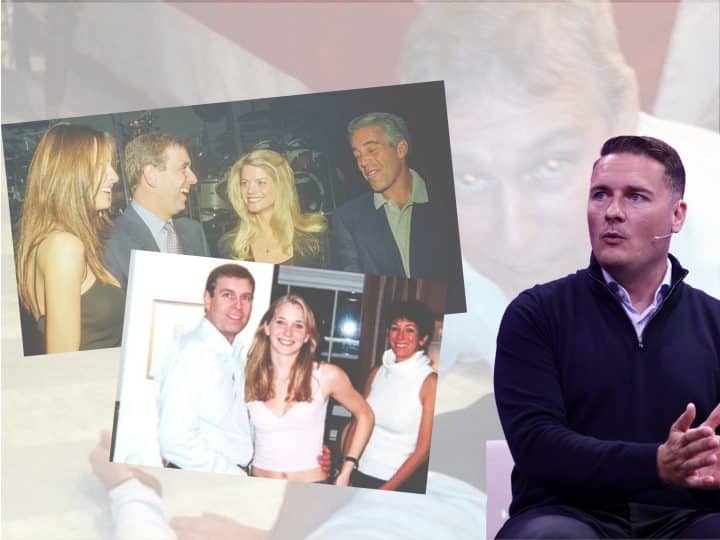
Wes Streeting has announced he will challenge Andy Burnham for the Labour leadership, should the latter win the Makerfield by-election. Strangely, he announced in the same breath that he remains a “monarchist”. We say ‘strangely’ because this has been a rough year for monarchism, given the newly exposed links between the toyals and the Jeffrey Epstein scandal.
Exclusive: Wes Streeting tells Bloomberg’s @flacqua he will not allow an Andy Burnham coronation
“I’m a monarchist, but this is one coronation that I’m not enthusiastic about”
He blasts Starmer’s “lack of vision, direction and drive” By @LucyGJWhite > https://t.co/qOeaVx4Qiy
— Alex Wickham (@alexwickham) June 3, 2026
Oh, and as if this wasn’t bad enough, Streeting was scabbing when he said it.
Streeting, apparently: God save the nonce
As we’ve covered extensively, the former-prince Andrew Windsor was good pals with dead paedophile Jeffrey Epstein. This first came to the public’s attention several years ago when accuser Virginia Giuffre went public with allegations against Windsor. In her own words:
Back at the house, [Ghislaine] Maxwell and Epstein said goodnight and headed upstairs, signalling it was time that I take care of the prince. In the years since, I’ve thought a lot about how he behaved. He was friendly enough, but still entitled – as if he believed having sex with me was his birthright. I drew him a hot bath. We disrobed and got in the tub, but didn’t stay there long because the prince was eager to get to the bed. He was particularly attentive to my feet, caressing my toes and licking my arches. That was a first for me, and it tickled. I was nervous he would want me to do the same to him. But I needn’t have worried. He seemed in a rush to have intercourse. Afterward, he said thank you in his clipped British accent. In my memory, the whole thing lasted less than half an hour.
The next morning, Maxwell told me: “You did well. The prince had fun.” Epstein would give me $15,000 for servicing the man the tabloids called “Randy Andy”.
My second encounter with Prince Andrew took place about a month later, at Epstein’s townhouse in New York. Epstein greeted Andrew and brought him to the living room, where Maxwell and I were sitting. Another one of their victims, Johanna Sjoberg, arrived soon afterward. Maxwell then announced to the prince that she’d purchased him a joke gift, a puppet that looked just like him. She suggested we pose for a photo with it. The prince and I sat down next to each other on the couch, and Maxwell put the puppet in my lap, positioning one of its hands on one of my breasts. Then she put Sjoberg on the prince’s lap, and the prince put his hand on Sjoberg’s breast. The symbolism was impossible to ignore. Johanna and I were Maxwell and Epstein’s puppets, and they were pulling the strings.
By the time the above was published, Giuffre had died by suicide.
Handouts for Andy
Epstein and Maxwell pulled many young women and girls into their orbit, and they trafficked them to wealthy men like Windsor. While some may think Windsor is simply a bad apple, other revelations demonstrate complicity from our current king and former queen.
In 2022, Andrew faced a sex abuse lawsuit from Giuffre. That same year, it emerged that the queen would fund her pervert son’s defence. When that case came to a resolution, she contributed towards the $16m settlement. Our current king chipped in too.
The late Liz didn’t just fund his legal defence; in 2021, she also fought to retain his prestige. According to an unnamed military source in the Sunday Times:
The Queen has let it be known to the regiment that she wants the Duke of York to remain as colonel, and the feeling is that nobody wants to do anything that could cause upset to the colonel-in-chief.
It is a very difficult, unsatisfactory situation.
After more Epstein revelations came out in 2025, the royals eventually stripped Windsor of his titles. This clearly happened because the firm felt a need to save face. And for sycophants like Streeting, the ploy seems to have worked.
It doesn’t end with the handouts, either. As Skwawkbox reported for the Canary on 31 May:
Buckingham Palace had emails six years ago showing the queen’s second son, Andrew, was abusing his position as UK trade envoy. It was a position the late queen had pressured the government into giving the Epstein pal formerly known as Prince Andrew.
So Windsor was running around – seemingly breaking the law and betraying the country – and his family knew.
Yet Streeting remains a “monarchist”.
Wes Scabbing
Streeting was speaking at SXSW London. As we reported, several speakers pulled out of the event after it refused to condemn the UK barring two of its speakers from entering the country (Hasan Piker and Cenk Uygur). Streeting clearly doesn’t care about his government’s latest crackdown on civil liberties, it seems, despite arguing at the same event that Starmer has a:
lack of vision, direction and drive.
If there’s a difference between the “vision” or “direction” of Streeting and Starmer, we haven’t found it yet. We’ll admit he’s more “driven”, but the things he’s driving towards are more of what nobody wants – whether it’s privatisation in the NHS, or funding a family of nonce-tolerating secret leakers.
Featured image via Jack Taylor (Getty Images)
By Willem Moore

Bitcoin News: BTC USD Just Hit Its Lowest Level Since February

The story of South Asian resistance in the UK by Taj Ali

Scott Pelley Gets CBS Evening News Tribute After Firing

HarrisX Poll Found 52% of Registered Voters Support the CLARITY Act

BloFin War of Whales 2026 Grand Prix opens registration for $5M trading championship

Blockchain.com files with SEC for U.S. IPO

Financial Literacy in 50 Minutes – What School Never Taught You About Money!

The SEVEN Things You NEED To Learn for Your Financial FREEDOM – Robert Kiyosaki

monkey shot reels YouTube#shorts #youtubeshorts #money #reels #fuuny #trending #tiktok #viral
-

 Tech6 days ago
Waymo dominates autonomous vehicle registrations as Tesla trails behind
-

 News Videos6 days ago
This is BROKEN! INSANE 5x MONEY CAR WASH WEEK! The NEW GTA Online UPDATE Today! (GTA5 New Update)
-
 Tech5 days ago
SpaceX just won a second Golden Dome contract. This one is $4.16 billion.
-

 Business3 days ago
Jade Biosciences, Inc. (JBIO) Discusses Positive Interim Results From JADE101 Phase I Healthy Volunteer Study and Development Plans Transcript
-

 News Videos6 days ago
SHE IS KILLING XRP!!! WATCH URGENT AND ACT FAST
-
 NewsBeat5 days ago
FIRST NIGHT REVIEW: Take That bring the Circus back to life in spectacular sun-soaked style
-

 Business5 days ago
Is the Spurs Phenom Already Better Than Prime Diesel?
-
 Crypto World6 days ago
CFTC Has Approved the First Regulated Bitcoin Perpetual Contract in the U.S.
-
 Politics5 days ago
The House | Inside Andy Burnham’s Makerfield Campaign: “Nobody Thinks This Is In The Bag”
-

 Sports2 days ago
French Open 2026 results: Alexander Zverev beats Rafael Jodar and will play Jakub Mensik in semi-finals
-
 NewsBeat6 days ago
Novak Djokovic v Joao Fonseca LIVE: French Open latest scores and results after Jannik Sinner’s shocking collapse
-
 Entertainment5 days ago
Weak ‘Supergirl’ Box Office Tracking Amid Milly Alcock Backlash
-
 Crypto World6 days ago
Snowflake (SNOW) Stock Rallies on Strong Q1 Results and AI Product Growth
-

 Tech2 days ago
CryZENx Releases Fresh Playable Content Deep Inside Jabu-Jabu for His Ocarina of Time Remake
-

 Entertainment6 days ago
Maddox Jolie-Pitt Legally Requests to Drop Brad’s Surname
-

 Business5 days ago
Demand Conditions Improve In Chemicals Sector In April 2026
-
 Entertainment5 days ago
One of the Greatest Sitcoms of All Time Shoots Up Apple TV’s Charts 11 Years Later
-

 Tech6 days ago
This Week In Security: Ubiquiti Fixes, And FreeBSD Joins The Club You Don’t Want To Join
-
 Crypto World6 days ago
MicroStrategy Moves $30 Million in BTC to Coinbase Prime: Is the Bitcoin Sell-Off Already Here?
-
 Entertainment6 days ago
Bruce Willis’ Generosity Resurfaces Amid His Dementia
You must be logged in to post a comment Login