

Politics
Boost Your Mental Health With These 15 Sex Toys For Masturbating


We hope you love the products we recommend! All of them were independently selected by our editors. Just so you know, HuffPost UK may collect a share of sales or other compensation from the links on this page if you decide to shop from them. Oh, and FYI — prices are accurate and items in stock as of time of publication.
Whether we admit it or not, we’ve all had ups and downs with our mental health. It’s completely normal: we live in a stressful world (we lived through a pandemic for crying out loud!).
Thankfully, we have made huge strides towards normalising conversations about our mental wellbeing over the last decade.
And while there’s no shortage of advice about how to manage stress (ever heard of meditation and exercising regularly, honey?) there is one habit we’re yet to openly admit to turning to for some relief.
If you haven’t guessed it already, I’m talking about masturbating. That’s right – flicking the bean, rubbing one out, jerking off. Whatever you want to call it.
Although most of us (85% to be precise) masturbate at least weekly, a survey by sex toy company So Divine and erotic platform Ersties finds, less than half (42.5%) of us talks about it. What’s more, 28% of people feel that masturbation is openly discussed.
Look, I know what you’re thinking: that’s private! Why would I talk about it? Well, because it has huge benefits for our mental and physical health.
As well as a smorgasbord of research proving that having an orgasm can boost our mental and physical wellbeing, lots of us are masturbating precisely for that reason!
Six in 10 (60%) people say masturbation was important to their overall mental and physical wellbeing, So Divine’s research shows. Meanwhile, 38% says masturbating helps them with stress relief, and a further 32% say it helps. them sleep.
So to mark Mental Health Awareness Week 2026, I asked the experts just why masturbation is so important for our mental wellbeing, and found 15 of the best sex toys for masturbation.
What are the mental health benefits of masturbating?
Not to state the obvious here, but we all know masturbating feels pretty darn good. But it’s not just about that.
“Masturbation can have a range of mental health benefits because it creates an opportunity for emotional regulation and body connection,” explains Cat, head of creative, community, and education at porn platform Ersties.
“It may help people sleep better, improve relaxation, reduce stress and can even be used as a form of meditation when approached mindfully.”
Research shows that having more orgasms is linked to higher self-esteem, lower stress, and more effective life coping skills.
But mindful masturbation, or shifting the ‘goal’ away from having an orgasm to touching yourself without pressure, can also be particularly beneficial for mental health, Cat highlights.
“By paying closer attention to how the body and mind respond during masturbation, people may uncover unmet needs, tension, emotional triggers or areas where they want to grow in confidence and communication,” she says.
Best sex toys for masturbating
Whether you’re a regular wanker (in the best way), or we’ve convinced you of its many perks, I’ve found 15 sex toys to help you on your solo play voyage.
While most of the toys on this list are for people with vulvas (the orgasm gap still exists, after all), I’ve included a couple for penises, too.
I’ve also included options suitable for beginners, to more experienced players.
How I tested the best sex toys for masturbating
Having written about sex for the last six years, I’ve tested many a pleasure product in my time.
To find the best ones for using solo, I, well, used them solo – all in the name of work, you understand. For each toy, I considered whether it was best used with a partner or by myself, as well as how easy it would be to test out different kinds of stimulation.
As always, I also took into account their material, power, waterproof rating, sound levels, and ergonomics.

My first vibrator was a fuck off huge rabbit from Lovehoney. Admittedly, it was a little intimidating. If you’re after something that won’t get in the way quite so much, this teeny teal option sits atop your fingers, so you can figure out how to get yourself off without having to wield a giant wand. It’s also pretty quiet, so you can switch off the part of your brain wondering if your neighbours can hear.
Level: beginner-friendly.

Not sure how you’ll feel about vibrations? For a delicate landing on your clitoris, this lipstick-shaped vibrator has a super squishy tip. It’s powered by a humble five vibration settings, which range from a gentle tickle to a definite buzz – ideal if you’re just starting on your self love journey.
Level: beginner-friendly.

Ann Summers is its name, and dual stimulation is its game. Seriously – the brand is the reason we have the rampant rabbit in the UK. This one looks slightly different to other models on the market thanks to being curved, which means the shaft is much bendier, and can reach those internal hot spots, while the ‘bunny’ ears tuck neatly against your C-spot. Sweet.
Level: intermediate.

If the word ‘chic’ was a vibrator, this would be it. This stone-seeming object is in fact a pleasure device, but you wouldn’t assume so if you saw it left out on a dressing table. Switch it on using the simple one-button control to power up through five vibration speeds, and experiment with the sensations emitted through the rounded tip or the long sides. Do yourself a favour: while you’re there, bag yourself some of its amber and tonka bean scented-body wash, it’s pH friendly and, just trust me, you’ll love it.
Level: beginner-friendly.

Although we all have a ways to go to feel more normal talking about masturbation, there’s another (surprising) barrier to overcome: men not talking about sex toys. While sex toys have been framed as a means of empowerment for women, men are criminally quiet about their love of wanking widgets. But (ahem) we know you’re buying them. This one from Bellesa is a fan favourite because it mimics a real life blowjob by blending vibration and suction stimulation all inside a snug silicone sleeve.
Level: beginner-friendly.

Suction vibrators are the new (or newer, at least) vibe on the block, beloved because they stimulate the sensation of oral sex. Honestly, I was sceptical at first, but you have to try it to believe it. If this is your very first stopover in suction town, going for a cheaper, battery-powered option like this one from ROMP could be a good start. It uses the same technology as more advanced suction models, but with just six modes to choose from. It’s also reasonably priced, as sex toys go, so you can test the waters before you commit to something more spenny.
Level: begginer to intermediate.

If you’re in a position to splash out over £100 on a pleasure product, good for you (cries in journalist). Should you be so fortunate, LELO is simply the best of the best. This SILA vibe might look like a fancy version of any old suction vibrator, but it in fact sends sonic waves to your C-spot via that wide mouth. Look, it’s rated 4.6 stars for a reason.
Level: intermediate to advanced.

All of Smile Makers Collection‘s toys are beginner-friendly. But this flame-shaped one is designed specifically to engulf the entire perimeter of your labia. The bulbous center rests on the external portion of your clitoris (the protruding nub around an inch above your vagina, FYI) while the sides cover your labia, to send its six vibration modes across your entire genitals. You decide whether you want to leave it there for hands-free fun, or experiment with moving it around. Either way, things are about to get hot!
Level: beginner-friendly.

If you’re more confident in the kind of stimulation you like (namely: dual clitoral and penetrative) you might want to consider levelling up to a more advanced toy. This one from Biird is still pretty beginner-friendly because it’s completely hands-free, but it has the choice to blend your choice of seven suction settings and six vibration modes. And when you have a blended orgasm, you’ll never go back…
Level: intermediate to advanced.

Rabbits have double (or sometimes triple) motors, which, unfortunately for your peace of mind, means they’re noisier than most. Good news: this one from Bellesa is not only almost completely silent (seriously, I turned it on next to my partner and they didn’t notice) but has a thick C-spot stimulator to cover more surface area.
Level: beginner to intermediate.

It’s not just outer beauty that counts, but did you know that masturbating can help boost blood flow to your face and improve your skin? Not to mention the numerous physical benefits… This unassuming beauty blender shape isn’t made of foam, but instead by squishy silicone that buzzes to the tune of three speeds and six patterns.
Level: beginner-friendly.

Everyone and their mum has heard of Fleshlights, and that’s on them being the pioneers of this kind of penis toy. If vibrations aren’t your thing, this masturbator is lined with the brand’s signature Superskin, which is covered in bumps and nubs to give the sensation of real penetration.

If 2020 was defined by the Rose suction toy, then 2026 is about to be the year of the Lem. As well as being discreet enough to not have to stuff beneath layers of socks and underwear in your room, this toy has 12 suction intensities and patterns, which is perfect for figuring out just how much pressure you like without compromise.
Level: beginner to intermediate.

Not convinced by toys with a fancy shape? This pebble-shaped toy is as simple as you can get. It’s still as discreet as, say, a lemon, but doesn’t skimp on power. Loading with three vibration speeds and seven patterns, it has plenty of potential for playing. Add to that the fact that you can use the sides, flat side, or round tip to rub whatever areas you please, and you have yourself a perfect toy for beginners.
Level: beginner-friendly.

As the OG sex toy (throwback to the Hitachi ‘massager’) magic wands are really the bread and butter of the industry. But the full-sized options are, admittedly, a little intimidating, which is why we’re fans of this much more accessible silicone-coated option from So Divine. Use it to warm yourself up by dragging it over your nipples, between your thighs, and over your shoulders before heading south.
Level: beginner-friendly.
How to integrate masturbation into your wellness regime
We might do a face mask, yoga, or meditate to unwind. But if you’re curious about integrating masturbation into your wellness routine, Cat has offered her top tips.
No goal
“For people wanting to integrate it into a wellness routine, the biggest advice is to remove the goal oriented mindset,” she says.
“Don’t focus on whether you orgasm or whether you’re doing it ‘right’.”
Get curious
“Focus instead on curiosity, touch and noticing how your body feels,” Cat adds. “Some people find it helpful to create a calming environment with music, low lighting or by putting their phone away to reduce distractions.”
Reflect
“It can also help to reflect afterwards,” Cat explains. “Mindful masturbation is ultimately about learning what your body likes, dislikes and needs without shame.
“Treat it as an act of self-awareness and self-kindness rather than performance. This can help people build a healthier and more accepting relationship with both their body and their sexuality.”



Bristol Labour MP Darren Jones is a Starmer clone, heavily funded by discredited sabotage group ‘Labour Together.’ Jones, currently Keir Starmer’s ‘chief secretary,’ reportedly hopes to replace his boss. But he has now been exposed as no better than his current party leader on the disgraced Peter Mandelson.
Mandelson was finally sacked as UK ambassador to the US in late 2025 over his closeness to Israeli spy and serial child rapist Jeffrey Epstein. He has since been shown to have repeatedly sent lucrative confidential ‘insider trading’ information to Epstein. Mandelson’s disgrace has brought Starmer to the brink of downfall.
Jones had claimed he had nothing to disclose because he no longer had the phone containing the messages. However, the government has held some of these. The Starmer government initially withheld them from the public alongside similar messages from Starmer. However, it has now released some of Jones’s messages as part of a partial release in response to a parliamentary motion.
Jones had claimed he had nothing to disclose because he no longer had the phone containing the messages. However, the government has held some of these. The Starmer governmentinitially withheld them from the public alongside similar messages from Starmer. However, it has now released some of Jones’s messages as part of a partial release in response to a parliamentary motion.
Gushing and hiding
Jones’s messages reveal a fanboyish effusiveness to Mandelson. This is reminiscent of Mandelson’s own ardour for the US paedophile that triggered his downfall. When Mandelson was appointed, Jones gushed:
You’ll be brilliant in challenging circumstances. And after many years of discussions, we get to work side by side. I really look forward to that.
And after Mandelson’s removal, “You’ve been doing such a great job,” he oozed, “and you worked wonders with Trump. I’m so sorry about today.” Jones also insulted other government figures and listed an array of top government jobs he was eyeing for himself in Starmer’s reshuffle – including business and defence.
But on Wednesday 3 June 2026, Jones opted to hide behind Mandelson’s refusal to disclose his own messages, telling MPs:
The only person who could release those messages, if they had them, would be Peter Mandelson, who has refused to disclose his phone to the process.
The dire Jones has a long record of weasel-like behaviour on top of his closeness to the now-rebranded Labour Together. He made plans in 2018 to stand against Labour rather than face deselection by disgusted party members. He told Wales to be more grateful for the pittance it receives from Westminster. And, of course, despite his supposed loyalty to Starmer he was caught canvassing support for his own leadership bid.
MPs have complained that many other Mandelson-linked messages are still being unnecessarily withheld. In keeping with his evasion tactics, Jones blamed an ongoing police investigation for the secrecy. But he admitted that he had cosied up to Mandelson “at best” because Mandelson was “influential”. But he still couldn’t talk straight, constantly trying to qualify and dilute his involvement:
Did I at best treat Peter Mandelson differently because I perceived him to have influence and power in the Labour party? I think the answer to that is yes, I did. Have I benefited from that relationship? I think in part the answer to that is yes. And for that I would like to apologise to the house, the [Epstein] victims … and commit to doing something about it.
Featured image via the Canary
By Skwawkbox
Huh.

Well, that’s nice, isn’t it?
The SNP are hoping to make out like bandits from Peter Murrell’s conviction.

Despite Swinney’s admission yesterday that the party stole £700,000 from donors to two “ring-fenced” fundraisers, it stands to pocket a surprise bonus of £400,000 from recovering his criminal proceeds (on top of Swinney’s boasted “significant increase” in donations from gullible idiot members since Murrell’s conviction).
It is not currently known whether that will include the retrieval from Nicola Sturgeon of the gifts Murrell bought her with embezzled money – a suggestion Sturgeon was mortified by in her Laura Kuenssberg interview on Sunday.
But keeping goods you know were bought with stolen money is a crime in Scotland, whether or not you knew at the time you received them.


It seems clear from the above clip that Sturgeon has not “immediately take[n] steps to hand the property over to the police”, and has no apparent intention of doing so.
Murrell’s lawyer told the court this week that his client “had enough funds to repay the sum he embezzled from the party”.

That’s an extremely interesting revelation in itself, in several ways. For one, we don’t know whether it means only the £400,000 he was convicted for, or also the extra £60,000 that the Crown dropped from the charge sheet in his plea deal.


The former case would create an extraordinary situation where the SNP was being paid back for stuff Murrell stole for himself, but not for stuff he stole for Sturgeon.
The second startling thing is that since no recovery process has yet begun and nothing has been sold, the lawyer’s statement means that Murrell must CURRENTLY have at least £400,000 in liquid funds, despite having a take-home pay of only around £57,000 during his time as CEO and having lent £107,000 to the SNP. That’s quite a feat of squirrelling. (And also means he’ll still be quite wealthy when he comes out of prison.)
So the SNP plans to keep everything that rightfully belongs to it and its members, but also to keep everything that doesn’t, including donations that were solicited and obtained from members of other parties EXPRESSLY because they were NOT to be used for everyday SNP operations.


And seemingly means to let Nicola Sturgeon enjoy the fruits of Murrell’s theft to boot.
We can therefore forgive anyone who treats John Swinney’s assertions in his email to members today – that the party is a new, reformed moral entity that conducts itself with the greatest moral probity and is now above all suspicion – with extreme scepticism.
Under “Honest John” Swinney the SNP appears to be the same unprincipled, grasping, crooked, cynical and greedy bunch of shysters and snakes that it’s been since 2015, and the slow-learning cretins still throwing their money at it thoroughly deserve to – and doubtless will – be robbed again.


Israeli occupation forces (IOF) have destroyed part of the central fruit and vegetable market in the West Bank town of Beita, South of Nablus. The market holds significant economical importance, with Palestinians from all over the West Bank coming to Beita to buy and sell produce.
West Bank – Israel carries out destruction
The demolition, carried out by a military bulldozer, took place on 1 June at around 2am.
Bassem Al Jaghoub is a member of Beita Village Council. He told the Canary:
Maybe 35 percent of the market has been destroyed this time. Six big shops were demolished, and they warn they will demolish another 15 percent in the next days. This is just a vicious action against the Palestinians and our economy. They do everything to make our lives miserable.
Al Hisba, as the market is known, is the main market for Palestinians in the West Bank. It provides employment for hundreds of Palestinians. And it also plays a key role in supporting the agricultural sector and enhancing food security of the West Bank.
Al Jaghoub says more than 50 families have now lost their livelihoods. It was not only the six commercial structures which were destroyed. Also demolished were the municipality’s office within the market, an office belonging to the Palestinian Ministry of Agriculture, sanitary facilities, and a cafe. Significant portions of the market’s infrastructure and public services have also been destroyed.
A bridge has been built on the road West of Beita market. Its purpose is to allow settlers to travel freely, without entering Palestinian villages. According to al Jaghoub this is the reason the Israeli occupation demolished the market.
He said:
The bridge was built two years ago, while the market has been here for more than 20 years. They say the market is near the bridge, and threatens the settlers, but this is not true. The market is more than 50 metres away, and is lower than the bridge. Cars using the bridge belong to both Arabs and settlers, the bridge is for everyone. It’s like a big punishment for Beita. The Israelis are masters of collective punishment.
Constant destruction
This is not the first time the Israeli occupation has demolished the market. The same thing happened in September 2025, less than a year ago. The Israeli occupation ordered shop owners to remove their produce and leave the market. Clashes resulted, and the IOF then used tear gas and stun grenades against Palestinians. They then proceeded to block ambulance access to the injured. The municipality of Beita again rebuilt the market.
The market is rented to the farmers and traders by Beita municipality, and the money it earns is then used for the people of Beita. But, according to al Jaghoub, the municipality has now lost five or six million shekels due to the most recent demolitions. On top of this figure, there is then the cost to loss of earnings and livelihoods.
The timing of the demolition could not have come at a worse time. The economic crisis is affecting everyone in the West Bank and, says al Jaghoub, “all people are suffering.”
Beita not only has to cope with violent IOF raids. It is also constantly targeted by what al Jaghoub describes as “some of the most vicious settlers in the West Bank”. They are “armed to the teeth” and totally protected by the army.
He says:
All the West is talking about Hamas attacking Israel but no one talks about the daily attacks here on farmers and homes. Everyday these settlers attack, but go unpunished and feel they are totally protected. We have lost 25 guys in the last five years to violence, and the attacks continue.
Freelance journalist and cameraman Abed Khabeisa lives in Beita. He tells us things have become much worse since the genocide in Gaza. He agrees that the occupation is inflicting collective punishment on the population.
Settlers have gained confidence and protection since October 2023
Residents of Beita are renowned for their persistent, organised civil resistance against illegal colonial settlers. But Khabeisa says since October 2023, these armed settlers have become extremely violent. Now dozens of settlers are living at Evyatar outpost, on Mount Sabih, in North Beita.
Khabeisa explains:
During the first intifada, for a few years, Evyatar used to be an Israeli security point. When it was evacuated, they didn’t allow the Palestinians to access their land. Every time someone went there, the military told them it’s a military area. So in 2018, settlers started trying to control the area.
But when they put up some tents, people in Beita held demonstrations. Two days later the IOF arrived and evacuated the settlers. They returned again in 2019 and were again evacuated.
When the Gaza genocide started, settlers again turned up on the land. This time there were 10 mobile homes and tents. Beita residents and people from all over the West Bank demonstrated there day and night. Eventually the settlers from the mobile homes were again evacuated.
It is now for the high court to decide if the land belongs to Palestinians, or the “state of Israel”, although the decision is continually being postponed. The settlers have returned anyway, and are expanding the settlement by erecting tents on the mountains behind Evyatar.
Homes in this area are constantly attacked, property is damaged and cars burnt. Every night the settlers cause problems, with the full protection of the Israeli occupation army. The violence also affected the olive harvest last year. Most people didn’t manage to harvest anything, because they were repeatedly attacked. I know a 72 year old woman who had her legs broken by these settlers. She was one of 20 people who got wounded from the settlers during the last harvest.
76 seriously injured Palestinians in Beita in 2025
76 people in Beita were attacked and had broken bones last year, according to al Jaghoub. And during the month of May, 12 were viciously attacked and hospitalised. Two are still in hospital with bullets in their legs.
People in the West Bank have no idea what awaits them each day, as the army and settlers are free to terrorise whenever and wherever they please. Khabeisa says people in Beita often cannot sleep at night, as one of the family stays awake incase settlers attack the area. And he is not alone when he tells us he worries constantly about the safety of his grown-up children, whenever they leave the house.
But despite immense hardship and violence, most Palestinians feel the same way. They refuse to leave the land their ancestors have been on for thousands of years.
Khabeisa says:
The people of Palestine have decided not to leave their homes, even if they are killed. The Israelis want us to leave our homes and land, and go to Jordan. But now we are aware of what happened in 1948 and 1967 and they will not do the same thing again.
And even though the rubble is piled high at al Hisba, part of the market is still there. So people will return to their work.
Al Jaghoub sums up:
We are optimists. We hope always for peace. Always we seek freedom, peace and good times for our generations to come. However long this takes, we will stay on this land. We will raise our kids to stay here, and will never let them forget.
Featured image via the Canary
By Charlie Jaay
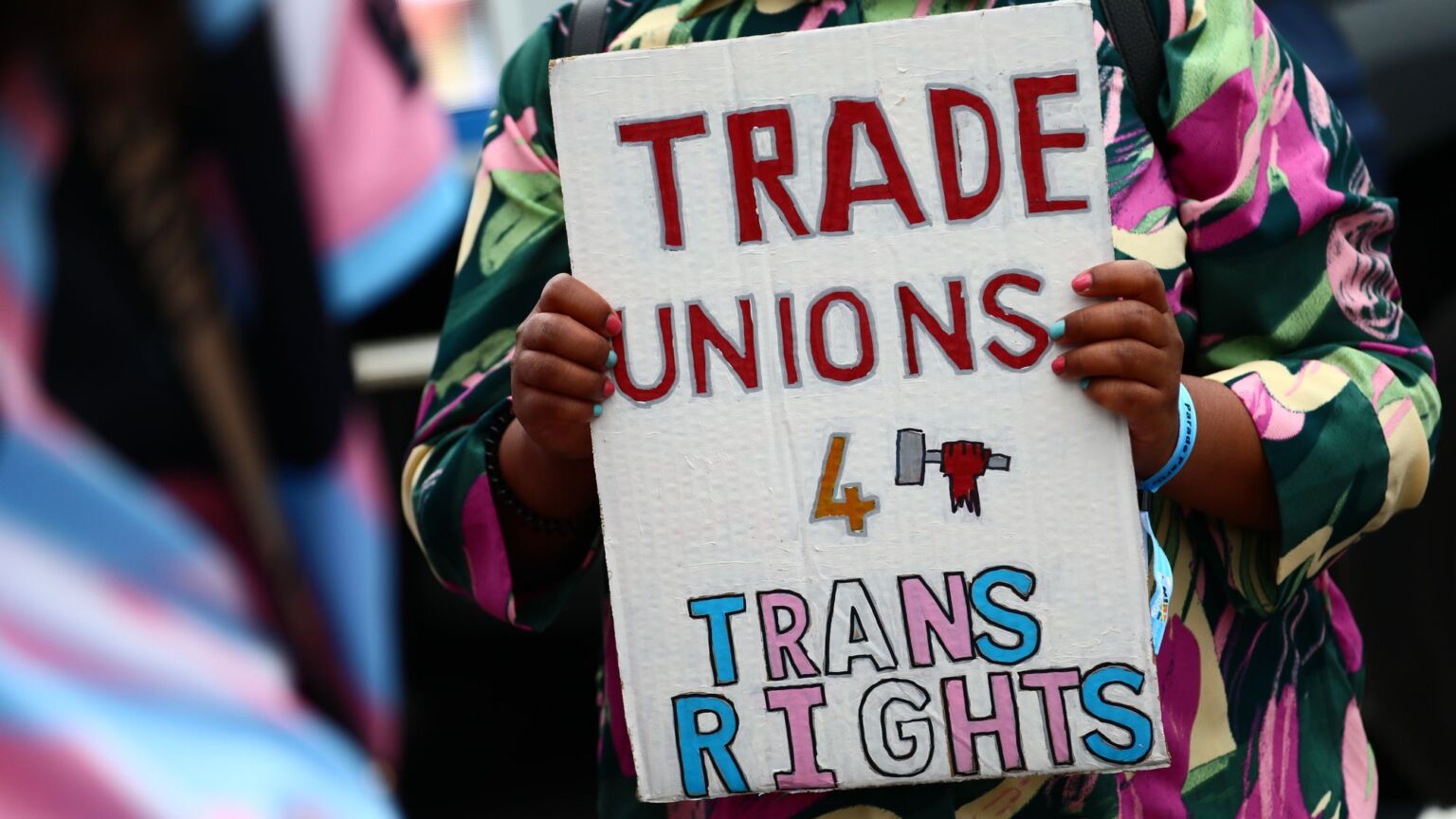
Since women first joined the fire service in the 1970s, they’ve fought an ongoing battle for single-sex facilities – including showers – in stations built for all-male crews.
So it’s hardly surprising that the Fire Brigades Union’s (FBU) response to the updated guidance from the Equality and Human Rights Commission (EHRC) on single-sex facilities has attracted backlash. In a statement published on social media, the FBU said it stands ‘firmly in solidarity with trans, nonbinary and gender-diverse members’ and spoke of their right to access facilities ‘without fear’ and with ‘respect and dignity’ at work. There was no mention of female firefighters, and the FBU was not alone.
Unison – the UK’s largest trade union – announced its intention to oppose the EHRC guidance. The Universities and Colleges Union (UCU) published a statement that said it would continue to ‘fight for the rights of trans and nonbinary people’. So that’s three trade union statements on a landmark ruling about women’s rights to privacy, dignity and single-sex spaces – and women are not mentioned in any of them.
Perhaps the most extraordinary thing is how under the radar this seems to be. So why aren’t union members protesting publicly against this? Why aren’t they leaving in droves? I suspect they simply don’t know that this is happening.
After all, most trade-union members are not political activists. They are customers who think they’re buying an employment-protection policy – a bit like breakdown cover for their car. They join a trade union because they want protection if something goes wrong at work. And someone to represent them if they’re disciplined, treated unfairly or facing redundancy. Yet, unlike car insurance, there are no comparison websites helping people weigh up the relative merits of the National Association of Schoolmasters Union of Women Teachers vs the National Education Union – or Unison vs the GMB.
Most don’t spend hours researching competing unions and comparing policy positions. They join a particular union because a colleague recommends it. Or because it offers a good deal to newly qualified staff. Or simply because it’s the union that’s already established in their workplace.
In other words, it’s a consumer choice rather than a political one. Which means many members are completely unaware they’re supporting one of the most powerful political campaigning movements in Britain. And that their subscriptions don’t just fund workplace representation – they also fund lobbying, political campaigns, conference motions, public statements and interventions on some of the most contentious social issues of our time.
When challenged on controversial positions – like ‘trans rights’ – trade unions will often say that this is what members have voted for. Technically, that’s true. Policies are passed through democratic structures. Leaders are elected. Conferences vote on motions.
But this defence assumes a level of member engagement that simply doesn’t exist. The reality is that most union members never attend conferences. They don’t submit motions. They don’t stand for election. Many don’t vote in internal ballots. Most couldn’t even tell you what policies their union adopted last year.
Take Unison, which has around 1.3million members, the majority of them women. Its current general secretary, Andrea Egan, was elected with just 58,579 votes – around 4.2 per cent of eligible voters. Which means many women will be unaware that their current union leader is actively campaigning against their sex-based rights.
That doesn’t mean the election was illegitimate. All members were invited to participate. But only a small number did. It’s not that the other members don’t care, but they have other priorities. Which makes it a pretty good business model for unions, allowing a relatively small number of highly engaged activists to shape policy – using funds from a much larger membership.
This is a bit embarrassing to admit, but despite being a National Union of Journalists (NUJ) member for around 25 years, until I sat down to write this article, I had no idea whether it had issued a statement on the EHRC guidance. It hadn’t.
What I did find, however, was a report from last year’s Trades Union Congress LGBT+ Conference celebrating motions on ‘trans solidarity’ and highlighting speeches condemning the Supreme Court ruling, and expressing support for trans and non-binary people.
The report also highlighted contributions from NUJ delegates, who described trans and nonbinary people as having been ‘stripped of their rights’, ‘vilified and marginalised’, and called for solidarity with ‘trans and nonbinary comrades’ – much of which I disagree with, but since I had been so busy getting on with my job, I hadn’t even known that this had been said in my name.
How many women will never discover that the trade union they’ve paid thousands of pounds into – thinking they were buying employment protection – was also funding campaigns to remove their hard-won rights? Including their right not to be forced to share changing rooms or showers with men at work? These campaigns focus, almost exclusively, on the interests and rights of men.
The real question isn’t whether trade unions should be allowed to campaign. It’s whether members understand what they are actually paying for.
Janet Murray is a freelance journalist and director of SEEN in Journalism.

Come what may, we’re here to stay: The story of South Asian resistance in Britain is the debut book from historian and journalist Taj Ali.
As British South Asians reel from the riots of summer 2024, this book tells the inspirational story of how the community organised against racism in the past and how it continues to fight in the present.
A long history of British South Asian activism
British South Asians have a long tradition of radical political activism. The 1970s and 1980s saw the community grappling with prejudice in the workplace and violence in the streets.
But this history is deeper than you might think. It runs from students agitating for independence at the heart of the British Empire to seafarers organising global strikes on the eve of the Second World War.
In Come what may, we’re here to stay, Taj Ali reveals how successive generations fought for rights, dignity and a sense of belonging while actively shaping the country they now call home.
He shows that British South Asian political life has often been defined less by religious difference than by shared commitments to anti-imperialism and anti-racism. In pursuit of these goals, alliances have been forged with other movements, from Irish republicanism to Black Power.
As racism rears its ugly head again, Come what may, we’re here to stay asks: are we are doomed to repeat the past or will we learn from our mistakes and build a better world together?
About the author
Taj Ali is a journalist and historian. He is the former editor of Tribune and regularly appears as a commentator on the BBC. He also contributes to the Guardian, Al Jazeera English and others.
In 2025 he set up Anti-Racist RADAR, an organisation that monitors and reports on racist attacks in the UK. This is his first book. He has won an RSL Giles St Aubyn Award and is a finalist for The Orwell Foundation 2026 Exposing Britain’s Social Evils Prize.
Featured image via the Canary
By The Canary
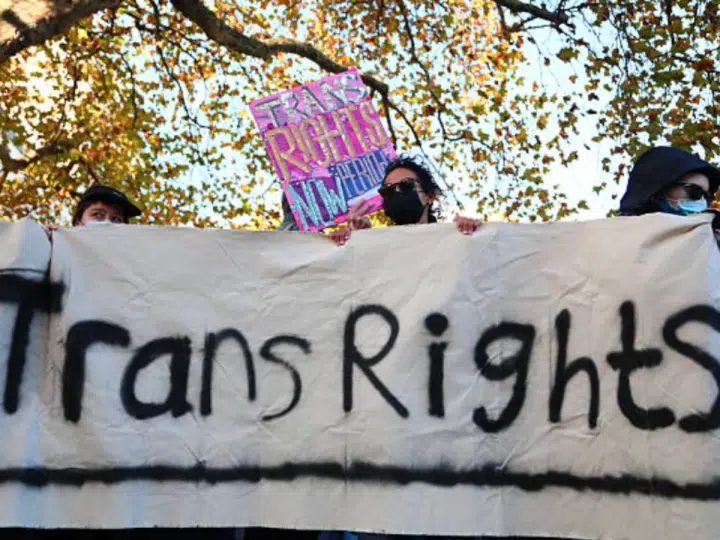
On Monday 1 June, the first day of Pride, the UK government held a debate on the Equality and Human Rights Commission’s (EHRC) latest attempt at a draft code of conduct to further exclude trans people from daily life.
Over recent years, Labour party stalwarts including PM Kier Starmer, leadership hopeful Andy Burnham, and newly minted health secretary James Murray have abandoned trans people at their earliest political convenience.
However, the queer community across the country may be pleased to find that not of their political representatives have turned their backs.
At Monday’s debate, several Labour backbenchers, Lib Dems, Scottish National Party (SNP), and Plaid Cymru MPs stood up and made their voices heard as allies of the trans and queer community.
‘Trans-exclusionary at its core’
Sarah Owen, Labour MP for Luton North, highlighted the dire timing of the debate:
I really wish that there was a better beginning to Pride Month than what we are discussing. Although the code is marginally different from its draft, it is still a trans-exclusionary one at its core, and unfortunately not inclusive. Moves like this from the EHRC and the Government have seen the UK slip from third in 2019 to 22nd in the European rankings for LGBT+ people to live and feel safe.
The SNP’s Peter Wishart later built on the same point, adding that:
Not only have we fallen to No. 22 in the rainbow index, but we are now 45th out of 49 European nations for the service of transgender people across Europe.
This is completely true. It remains true for all that equalities minister Seema Malhotra insists the government are “treating trans people with dignity”.
We can look to the International Lesbian, Gay, Bisexual, Trans and Intersex Association’s (ILGA) Rainbow Map as an example. The UK now ranks 22nd among all European countries for LGBT+ rights. That’s the lowest among all Western European countries.
How far they have fallen
Tom Gordon, Lib Dem MP for Harrogate and Knaresborough, also got in a jab at the two-faced politicians who’ve orchestrated that fall. He highlighted that:
Just a few Prime Ministers ago, Theresa May said: “Indeed when it comes to rights and protections for trans people, there is still a long way to go.” Well, how far the Tory party has fallen from those words. As a member of the Joint Committee on Human Rights, I attended the evidence session when we interviewed the new chair of the EHRC, and for the Minister to say that that was an independent process when the Government rammed it through despite cross-party consensus that the new chair was not fit for the role is, quite frankly, surprising.
That EHRC chair would be Mary-Ann Stephenson. Both the Women and Equalities Committee and the Joint Committee on Human Rights refused to endorse her due to a lack of experience in advocacy work beyond a narrow, and distinctly transphobic, focus on women’s rights.
However, she didn’t exactly have a high bar to clear. Stephenson took over from Kishwer Falkner, who instituted an “anti-LGBT” culture to the extent that current and former staff members branded her an “enemy of human rights”.
‘Ill-defined and highly subjective’
Labour’s Rupa Huq voiced her constituents’ dismay that:
under this guidance, the vague, ill-defined and highly subjective term “discomfort of service users” becomes the litmus test for excluding people from essential services.
As the Canary previously highlighted, that vague “discomfort” is a very low bar. There’s no way to verify whether or not someone is trans by official documentation. As such, a service provider is expected to question anybody’s sex — cis or trans — according to how they and other service-users feel.
Likewise, the fact that the draft trans code is an unworkable mess came up frequently. Plaid Cymru’s Liz Saville Roberts, for example, offered solidarity to trans people, but said her party would “uphold the rule of law”. However, how to actually uphold the law is another matter entirely:
as we have heard on numerous occasions today, in this guidance it appears that there is a lack of clear, workable guidance for services supporting transgender people, which is causing huge concerns.
‘Legitimising exclusion’
On that note, several MPs stressed that it’s not just trans people that this code impacts. Labour Co-op MP Stella Creasy asked:
Does the Minister accept that, to prevent being people’s gender being judged by their appearance—which we know will harm many more people than, I suspect, even those people who wish to see harm through this guidance would like—the safest option for most businesses will be getting rid of women’s toilets altogether? Will that not be an inevitable consequence of this guidance?
Likewise, Labour’s Nadia Whittome stated that the draft code opens up all women to “gender policing based on stereotypes”. Cat Eccles, Labour MP for Stourbridge, said:
A number of LGBTQ+ charities and equality organisations have warned that the guidance risks legitimising exclusion and increasing harassment of both trans people and gender non-conforming cis people.
In fact, the government’s own impact assessment shares the position that . The Lib Dems’ Josh Babarinde pointed out:
The Government’s own equality impact assessment has said of the draft code that “Women who are considered masculine may face greater scrutiny about their sex as a result of the changes. This will likely have a negative impact on this group”. In what way does this enhance the privacy, dignity and safety of women?
Gender policing
This gender-policing problem is not a hypothetical. Gender non-conforming women have already reported increased hostility following the Supreme Court’s anti-trans ruling. As the Lib Dems’ Marie Goldman stated:
There have already been stories of women with mastectomies being challenged when accessing women-only spaces because they do not look like women.
Mary-Ann Stephenson insisted that there would be no “toilet police” due to the draft code. The Canary, instead, highlighted that we would see (were already seeing) a toilet militia.
Both the government and the transphobic movement at large know this. At best, they view gender-non-conforming individuals as acceptable sacrifices. At worst, attacks against butches and queer presentation in general only sweeten the deal.
Goldman also went on to add that:
For trans, non-binary and intersex people, the code operates from a position of exclusion. It risks driving those small minorities away from public life, as leading mental health charities have since warned. The guidance conflicts with our core British values of tolerance, decency, respect for individual liberty and the rule of law. That is why I urge the Minister to withdraw it and to accept that this issue needs to be resolved by Parliament as law makers.
Here, we get to the crux of the matter. The EHRC’s draft code remains a draft for a 40-day period of parliamentary scrutiny. Crucially, if either house disapproves, the government doesn’t have to pass it.
‘Why not instead withdraw the guidance’?
Nadia Whittome stated same the issue clearly:
The EHRC code of practice fails everyone. It effectively pushes trans people out of public life, it subjects all women to gender policing based on stereotypes, and it does not provide clarity to organisations that want to be trans-inclusive. […] Why are the Government pushing ahead with this? Why not instead withdraw the guidance, and legislate to clarify that the Equality Act 2010 was always intended to be trans inclusive? For goodness’ sake, it was passed after the last Labour Government passed the Gender Recognition Act in 2004.
The Supreme Court ruled that the 2010 Equality Act treats the category ‘women’ as excluding trans women. However, it was ruling on the letter of the law, not its spirit or intent. The Gender Recognition Act, by the way, reads:
Where a full gender recognition certificate is issued to a person, the person’s gender becomes for all purposes the acquired gender (so that, if the acquired gender is the male gender, the person’s sex becomes that of a man and, if it is the female gender, the person’s sex becomes that of a woman).
That act hasn’t gone anywhere. It’s still in effect, for all that the government may try to ignore it.
The draft code has already gone back to the drawing board once over its sheer unworkability. As multiple MPs across several parties highlighted, the new attempt remains a discriminatory, opaque, unrealistic mess. It remains entirely within Parliament’s power to reject it on those grounds.
Nevertheless, it seems likely to pass. Remember this: the government’s current, visciously hostile attitude to trans people is a choice. The damage they are doing to intersex people, gender non-conforming people, and all women is entirely optional.
As queer and women’s rights continue to erode in the UK, day by day, we must remember precisely who did this to us.
Happy Pride to those MPs who stood up for trans and intersex people, for the queer community, non-conformists, and all women.
Featured image via Alishia Abodunde / Getty Images
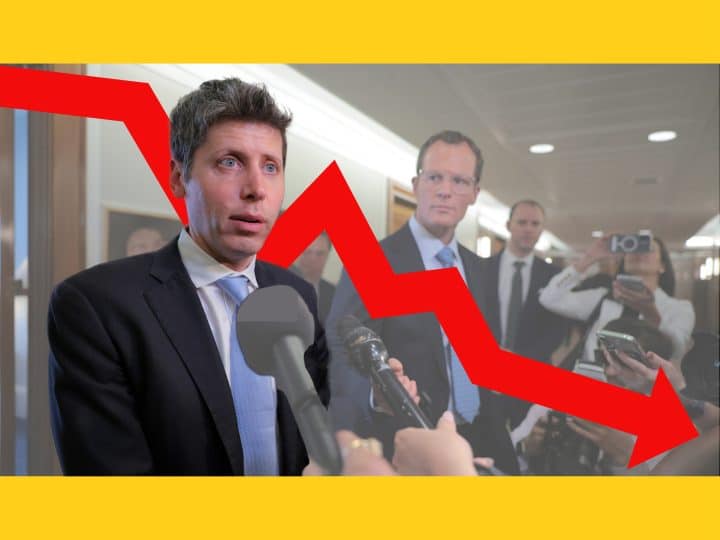
For the past few years, billionaires and their media lackeys have told us that the AI revolution is inevitable. Opposing this narrative, some are warning that the ‘generative AI’ technology in question lacks the competence or cost-effectiveness for such a transition. And the emerging signs are proving those naysayers correct:
NEW: Uber is reportedly capping employee use of AI vibe-coding tools at $1,500 per month after blowing through its AI budget.
— Polymarket (@Polymarket) June 2, 2026
Why now?
Over the past few weeks, anyone who follows the AI industry will have noticed a big increase in stories like this:
Microsoft Bans Claude Code After AI Costs More Than The Humans It Replaced
— NewsWire (@NewsWire_US) June 1, 2026
Uber handed its 5,000 engineers an AI coding assistant in December. By April, the company had blown through its entire AI budget for all of 2026, with two thirds of the year still to go.
Cheap, basic AI has gotten almost free over the past few years. But almost no company builds… https://t.co/rTlWgZECa7
— Anish Moonka (@anishmoonka) May 24, 2026
Why is it happening now? It’s because AI companies have switched from a subscription-based offering to a pay-per-token model. The ‘tokens’ in question are what AI models use whenever they process a request, with more tokens used depending on the complexity of what’s asked.
As it turns out, many of these companies were burning through an unfathomable quantity of tokens:
NEW: AI consultant reveals a client accidentally spent $500,000,000.00 in a single month after failing to set employee limits on Claude usage.
— Polymarket (@Polymarket) May 28, 2026
As the sky falls in, OpenAI CEO Sam Altman is pretending to not understand what’s happening:
Sam Altman said AI budgeting has recently become a "huge issue" for some companies, something that "never came up" earlier this year. https://t.co/P2zODBNmDp
— Business Insider (@BusinessInsider) June 3, 2026
Altman does have to say something to reassure investors, but we’re not sure this is it.
OpenAI is absolutely cooked. This is loser language. You can’t be four years into the bubble saying “yeah our customers have a huge issue with how expensive our business is.” You just raised $122 billion! You can’t say shit like this!https://t.co/1uKEEpSS03 pic.twitter.com/HWMuy3TQX8
— Ed Zitron (@edzitron) June 4, 2026
Ed Zitron is one of generative AI’s most vocal critics. Responding to the latest developments, he highlighted a case in which one AI user used 50% of their token credits with just one prompt. This is a problem, because some users like coders had grown accustomed to making hundreds or thousands of prompts a day.
If you want to see what happens when people have to pay the actual costs of AI, the day is finally here. It’s obvious that every customer sees the deep, meaningful value and isn’t angry at all pic.twitter.com/Z8xzyYOFH7
— Ed Zitron (@edzitron) June 1, 2026
As Zitron highlights, companies are now paying the “actual price” of AI.
Up until now, AI companies used multi-billion pounds cash injections from wealthy investors to subsidise their technology. They hoped AI would prove to be so useful that when they switched to a more realistic pricing point, companies would have no option but to carry on paying.
Yeah, so about that …
Expensive? Yes. Useful? No.
To make things worse, companies already weren’t making money:
First it was MIT and McKinsey. Now Bain finds that returns to corporate AI investments are disappointing. pic.twitter.com/sXqXQVSMH0
— John Cassidy (@JohnCassidy) June 3, 2026
The artificial intelligence industry has a big problem: 95% of companies that try AI aren’t making any money from it, according to a report from the Massachusetts Institute of Technology last month.
The same article carried multiple quotes from supposed experts who promised AI would be very profitable as soon as these businesses pulled their fingers out and implemented it correctly. A year later, the technology is no more useful yet considerably more expensive.
Many companies laid off employees hoping they could replace them with AI. Many companies have since realised the error of their ways:
Friend works for REDACTED tech company. They fired 30 people because the CEO insisted AI could do their jobs. Now they’ve spent 6 months making unusable code and have had to hire more people. How the turns table
— Madelaine Hanson (@MadelaineLucyH) June 3, 2026
Not yet, not this
While it does seem likely the world will one day be run by smart, automated systems, the generative AI that’s being sold to us isn’t ‘smart’. Functionally, it’s little more than a juiced-up auto-type, but the tech chancers claimed it was a digital god that would perform our menial tasks for us.
The problem now is that the global economy is propped up by the over-inflated AI bubble. And when that bubble pops, it won’t be the billionaire tech bros who suffer.
Featured image via Chip Somodevilla (Getty Images)
By Willem Moore

Manchester City and Chelsea remain locked in talks over compensation for Enzo Maresca as City move to appoint the Italian as head coach. The discussions have moved from club executives into legal territory after Maresca left Chelsea in January still under contract. Both sides must now agree a settlement ahead of any formal announcement.
City are hopeful of a quick resolution. The focus includes not only compensation but also on the timing of the appointment, the structure of Maresca’s backroom staff, and the fine print defining his role at the Etihad. A proposed three‑year deal is reportedly on the table and yet to be signed.
Maresca leads the race
Maresca’s name has risen to the top of City’s shortlist for a simple reason — familiarity. He was Pep Guardiola’s assistant during the 2022/23 season when City secured the treble. That shared history gives him credibility with players and staff who have been part of Guardiola’s era. Moreover, that continuity is attractive to a club seeking a smooth transition rather than a radical reset.
Chelsea were reportedly aware of City’s interest in Maresca last autumn, when he informed them that he had been approached about the possibility of eventually succeeding Guardiola. That prior knowledge has not prevented a contractual dispute, however, because Maresca left Stamford Bridge with several years still remaining on his deal. Now the legal wrangling centres on how to compensate Chelsea for that early exit.
The key issues
The ongoing talks are said to centre on three areas: (1) timing, (2) staffing, and (3) compensation.
First is timing — when will Maresca officially take charge and how will City manage the handover from Guardiola’s final days?
Second is staffing — which members of Maresca’s Chelsea backroom team, if any, will follow him to Manchester?
Third is compensation — how much will City pay Chelsea to settle the remaining term of Maresca’s contract. The lawyers are now working through these details.
City want a quick resolution, as the club needs clarity to plan pre-season, recruitment, and the operational handover that follows a managerial change. For Chelsea, the priority is protecting contractual rights and securing fair compensation for a coach they parted with mid-term. Both clubs are incentivised to reach a deal, but legal precision is slowing the process.
What Maresca brings
Tactically and culturally, Maresca blends Guardiola’s influence with his own approach. His Premier League experience and relationship with City players from his time as assistant coach, make him an appealing internal-style successor rather than an outsider eager to reshape the squad.
City’s recruitment needs will still be a factor. Even with a manager who understands the club’s DNA, squad refreshment is likely. Maresca will inherit the same competitive landscape as his predecessor, with rivals strengthening, a congested transfer market, and the expectation of immediate success. Ultimately, the incoming coach will be judged on his ability to maintain standards while imprinting his own approach.
Pep Guardiola’s decision to step down triggered a rare managerial transition at one of the most successful football clubs. Guardiola has spoken publicly about taking time to rest and reflect. He leaves City to find a successor who can sustain the club’s momentum. The search has been pragmatic rather than headline‑grabbing. Consequently, Maresca is emerging as a candidate who offers continuity.
Transition at City
For City, the ideal outcome is a swift, clean handover that preserves the tactical identity Guardiola built while allowing the new coach to evolve the team. For Chelsea, the priority is to secure fair compensation and to move on with their own managerial plans. Both clubs have reasons to settle. Still, the legal details will determine how quickly that happens.
Expect lawyers to be the busiest people in the story for the next few days. Key signals to look for are a finalised contract being circulated, confirmation of the appointment date, and clarity on which backroom staff will move with Maresca. If those boxes are ticked, a formal announcement could follow swiftly. Until then, the narrative remains one of negotiation rather than inevitability.
Manchester City want Enzo Maresca and are working through the legal and financial hurdles with Chelsea. The appointment looks likely, but the final steps are procedural and hinge on compensation, timing and staffing. The small print that will determine how quickly the next chapter at the Etihad begins.
Featured image courtesy of Justin Setterfield / Getty Images
By Faz Ali

Aryna Sabalenka’s French Open run ended in a shock quarter-final defeat as Diana Shnaider produced one of the tournament’s biggest upsets, after recovering from a set and double-break deficit to win 3-6, 7-5, 6-0.
Sabalenka, the overwhelming favourite after the early exits of Coco Gauff, Iga Swiatek and Elena Rybakina, appeared in control at 6-3, 4-1 on Court Philippe-Chatrier and later served for the match at 5-4 in the second set. From there, Shnaider broke three times to take the set, and raced through the third without reply.
Echoes of past struggles
The turnaround carried echoes of Sabalenka’s defeat in last year’s final. She lost 10 straight games and 12 of the last 13, unable to halt the slide as Shnaider took over.
The wind, a recurring issue for Sabalenka in Paris, played its part. Blustery conditions disrupted her rhythm, just as they had in previous years. Shnaider, by contrast, stayed composed, extending rallies and forcing Sabalenka to hit one more ball. The world No 1 game unravelled as the Russian’s belief grew.
For Shnaider, this marked a breakthrough win. Seeded 25th and playing in her first Grand Slam quarter-final, she adjusted quickly after a shaky opening set. Her baseline hitting grew heavier, her court coverage sharper, and her consistency in longer rallies paid off as Sabalenka’s performance dipped.
By the third set, Shnaider was in control. She raced to a double-break lead, held firm under pressure, and ended the match with authority. The 22-year-old will now move into her first major semi-final, where she faces Polish qualifier Maja Chwalińska. This represents a remarkable opportunity for both players.
Sabalenka left with questions
Sabalenka’s wait for a maiden French Open title continues. Despite her power and early dominance, she could not steady herself once the match became tight. Her serve faltered, her shot selection wavered, and the composure from earlier rounds faded.
This defeat marks one of her most painful exits, given the draw had opened up favourably. It is only the second time in her last 14 Slams that she has failed to reach at least the semi-finals.
With Sabalenka gone, the women’s draw is guaranteed a first-time Grand Slam champion. Shnaider’s semi-final against Chwalińska adds another twist to a tournament already defined by upsets and breakthroughs.
For Sabalenka, the challenge now is to regroup. For Shnaider, the opportunity is enormous and after this comeback, she arrives in the last four with momentum, belief, and nothing to lose.
Featured image courtesy of Matthew Stockman / Getty Images
By Faz Ali



4 min read
Former health secretary Wes Streeting has said Reform UK’s response to the murder of Henry Nowak “has echoes of the 1930s”.
Speaking on Wednesday night, Streeting accused Nigel Farage’s party of “weaponising” the murder of 18-year-old Nowak to “stoke rage”.
Nowak was fatally stabbed by 23-year-old Vickrum Digwa in Southampton in December.
Digwa, who falsely claimed he had been racially abused and attacked by Nowak, was sentenced to life in prison with a minimum term of 21 years on Monday.
The Independent Office for Police Conduct is investigating the conduct of police officers who handcuffed Nowak after he had been stabbed and repeatedly told police he could not breathe as he lay dying.
Farage has urged the public to respond to the case with “pure, cold rage”.
Riots took place in Southampton on Tuesday night in response to the case, which Prime Minister Keir Starmer condemned at Prime Minister’s Questions (PMQs) on Wednesday.
At PMQs, Farage said it was “now clear to growing millions in this country that we are living under two-tier policing”, and claimed that police guidance effectively instructed officers to “treat different ethnic groups in different ways”.
Streeting gave a speech at the LabourList parliamentary reception last night, alongside Labour deputy leader Lucy Powell, Education Secretary Bridget Philipson, and backbench Labour MP Jeevun Sandher.
“We have seen it in the last 24 hours, the way in which [Reform] have sought to weaponise an absolutely heinous crime and situation,” Streeting said.
“To weaponise it against their political opponents, and to stoke rage, and to incite rage is really dangerous, and it’s not too dramatic to say this has echoes of the 1930s.
“We have to take this seriously when you have political propaganda that weaponises the words of the Leader of the Opposition, bends and twists them out of context to suggest that a Black woman leading the Conservative Party doesn’t think that white lives matter, that is a moment for all of us, especially those who are not Conservative, to speak up and challenge and call this out.”
Reform has been heavily criticised after publishing an attack ad about Kemi Badenoch that displayed only part of a comment she made in response to Nowak’s murder.
Badenoch told ITV’s Good Morning Britain: “I don’t want to hear about Black Lives Matter. I don’t want to hear about White Lives Matter. Everyone matters.”
However, the Reform ad only included: “I want to hear about White Lives Matter.”
Streeting told the reception that the Labour Party had a responsibility to “follow Henry Novak’s father’s leadership” and show “what moral courage and clarity looks like”.
Streeting also said that following the local elections in England and devolved administration elections in Scotland and Wales, for the first time in history, “nationalists are in power in every corner of the United Kingdom”.
“While some of those nationalists would consider themselves progressives, I take the view that there has never been anything progressive about nationalism as separatism, where even if it’s the nationalism of the SNP and Plaid Cymru,” he said.
He added that in England, “we have something altogether more dangerous” – referring to Farage’s party.
A formal leadership challenge has not yet been launched to replace Prime Minister Keir Starmer, following a set of disastrous local and national election results for Labour in England, Scotland and Wales last month.
However, either a contest or a coronation is widely seen as likely soon, after Streeting stepped down as health secretary in May and announced his intention to stand when a contest is underway, and Greater Manchester mayor Andy Burnham announced that he will stand in the Makerfield parliamentary by-election to re-enter Parliament.
Streeting also addressed the latest release of files containing messages between cabinet ministers and former US ambassador Peter Mandelson, saying it gave a troubling insight into decision-making in government, which excluded women.
“There were exchanges about tech policy, about trade policy, and what those conversations had in common was the total absence of any women,” he said.
“The most prominent reference to a woman was the reference to the most powerful woman in the country, the Chancellor of the Exchequer, and how she would need to be managed on the issue.”
He said it exposed “unconscious bias, the everyday sexism, even among people, particularly men in politics who would consider ourselves progressives and committed to equality across the board, including gender equality”.
“That is a culture that we all of us, but particularly men in politics, have a responsibility to help change.”

Bitget Expands Unified Trading Account with Tokenized Stocks as Margin Assets

Phillies vs. Padres odds, prediction, line, time: 2026 MLB picks for June 4 from proven model

Microsoft Office 2019 for Mac will no longer edit documents after July 13



-

 Tech6 days ago
Waymo dominates autonomous vehicle registrations as Tesla trails behind
-

 News Videos6 days ago
This is BROKEN! INSANE 5x MONEY CAR WASH WEEK! The NEW GTA Online UPDATE Today! (GTA5 New Update)
-
 Tech5 days ago
SpaceX just won a second Golden Dome contract. This one is $4.16 billion.
-

 Business3 days ago
Jade Biosciences, Inc. (JBIO) Discusses Positive Interim Results From JADE101 Phase I Healthy Volunteer Study and Development Plans Transcript
-

 News Videos6 days ago
SHE IS KILLING XRP!!! WATCH URGENT AND ACT FAST
-
 NewsBeat5 days ago
FIRST NIGHT REVIEW: Take That bring the Circus back to life in spectacular sun-soaked style
-

 Business5 days ago
Is the Spurs Phenom Already Better Than Prime Diesel?
-
 Crypto World6 days ago
CFTC Has Approved the First Regulated Bitcoin Perpetual Contract in the U.S.
-

 Politics5 days ago
The House | Inside Andy Burnham’s Makerfield Campaign: “Nobody Thinks This Is In The Bag”
-

 Sports2 days ago
French Open 2026 results: Alexander Zverev beats Rafael Jodar and will play Jakub Mensik in semi-finals
-
 NewsBeat6 days ago
Novak Djokovic v Joao Fonseca LIVE: French Open latest scores and results after Jannik Sinner’s shocking collapse
-
 Entertainment5 days ago
Weak ‘Supergirl’ Box Office Tracking Amid Milly Alcock Backlash
-
 Crypto World6 days ago
Snowflake (SNOW) Stock Rallies on Strong Q1 Results and AI Product Growth
-

 Tech2 days ago
CryZENx Releases Fresh Playable Content Deep Inside Jabu-Jabu for His Ocarina of Time Remake
-

 Entertainment6 days ago
Maddox Jolie-Pitt Legally Requests to Drop Brad’s Surname
-

 Business5 days ago
Demand Conditions Improve In Chemicals Sector In April 2026
-
 Entertainment5 days ago
One of the Greatest Sitcoms of All Time Shoots Up Apple TV’s Charts 11 Years Later
-

 Tech6 days ago
This Week In Security: Ubiquiti Fixes, And FreeBSD Joins The Club You Don’t Want To Join
-
 Crypto World6 days ago
MicroStrategy Moves $30 Million in BTC to Coinbase Prime: Is the Bitcoin Sell-Off Already Here?
-
 Entertainment6 days ago
Bruce Willis’ Generosity Resurfaces Amid His Dementia
You must be logged in to post a comment Login