

Politics
Starmer ally calls for prime minister to resign


A Labour MP once considered to be close ally of Keir Starmer has called for him to resign as prime minister.
Josh Simons, the Labour MP for Makerfield, has written an article for the Times newspaper expressing his view that Starmer should oversee an “orderly transition to a new prime minister”.
Simons was director of the Labour Together think tank before entering parliament. The group, associated with former Downing Street chief of staff Morgan McSweeney, was prominent in supporting Starmer’s rise to power.
Simons was one of the first MPs that entered parliament at the 2024 general election appointed to a ministerial post. However, he resigned as a junior minister serving jointly in the Cabinet Office and Department for Science, Innovation and Technology in February 2026. He stepped after facing claims that Labour Together commissioned a report that looked into journalists’ backgrounds.

MDU warns Chancellor clinical negligence system ‘not fit for purpose’

Northern Ireland RE curriculum is ‘indoctrination’ – Supreme Court
In his Times article, Simons wrote: “When a party fears the people it was created to represent, it is marching towards extinction…
“These elections were not a normal mid-term drubbing, they were an unequivocal judgment that our actions do not meet the moment. We constantly talk big, then act small.”
He added: “Putting the people I represent and the country I love first, I do not believe the prime minister can rise to this moment. He has lost the country. He should take control of the situation by overseeing an orderly transition to a new prime minister.”
Simons shared the article in a post to Twitter (formerly X) alongside additional comments.
He stated: “This was not an easy piece to write. But because of my history in the Labour Party I felt a duty to be honest.
“We Labour MPs must square up to the truth. These elections were not a normal mid-term drubbing, they were an unequivocal judgement that our actions do not meet the moment.
“To put the country first, the PM should lead an orderly transition. Senior figures across the party should urgently come together to agree a path forward.”
Simons’ intervention comes after a fellow former Labour minister, Catherine West, threatened to launch a “stalking horse” challenge to the prime minister.
On Saturday afternoon, West called on the cabinet to “reorganise themselves” and put forward their “best communicator” to replace Starmer. Speaking to BBC News in the wake of this week’s elections, the Labour MP and former Foreign Office said she was putting senior ministers “on notice”.
West said: “My preferred option is for the cabinet to do a reshuffle within itself, where there’s plenty of talent, and for Keir to be given a different role, which he might enjoy, perhaps an international role.”
West sought to justify her proposal across as Sunday morning media round.
West told the BBC’s Sunday With Laura Kuenssberg programme: “I will hear what the prime minister’s got to say tomorrow and, then if I’m still dissatisfied, I will put out my email to the parliamentary Labour Party, asking for names. And the reason I’m doing that is not for me. It’s for working people, because Labour is the only party that can beat Reform.”
West was asked if she believes that she will get the requisite number of MPs – 81 – to mount a leadership challenge.
She responded: “We will find out when I put out my email to the Parliamentary Labour Party, but what we need is that timetable from the chair of the party, and she and I are very good friends, she knows, I’ve asked her for an orderly transition into a leadership election, which will allow us to make the case to the country, as well as to our colleagues, so that we can go forward.”

Today I am volunteering at an outpatient addiction treatment clinic in Baltimore, in what my Uber driver warns me is “a very dangerous neighbourhood”.
It’s a cold Saturday morning in February, and I’ve travelled about an hour from Washington, D.C., where I live. I’m here to share some business management methods and operational tools with the team, based on a class I teach at Georgetown and my job as a management consultant.
The driver drops me off in the parking lot, and as I walk toward the entrance, I see an armed guard at the door. I walk past him into a large open waiting room, which is bright and clean. The right wall is lined with staff sitting behind glass partitions like bank tellers, but big, heavy-looking curtains hang from the ceiling at each window.
I check in and have a seat against the back wall. I try not to stare, but I’m curious about the curtains. I look around at patients coming and going.
A young woman enters the clinic and has the skinniest legs I’ve ever seen, like two drawing pencils in colourful, patterned leggings. She rushes down a hallway like she’s late for something, and I wonder where she’s going.
Most are men in dark, battered jackets that don’t look very warm, with their hoods up and heads down. No one makes eye contact with me. I am suddenly aware of my warm, beige cashmere coat and Stella McCartney bag, and I feel ashamed and ridiculous that I wore these things (that I even have these things). Still, my unconscious bias makes me feel my family’s story is somehow different from those in this waiting room.
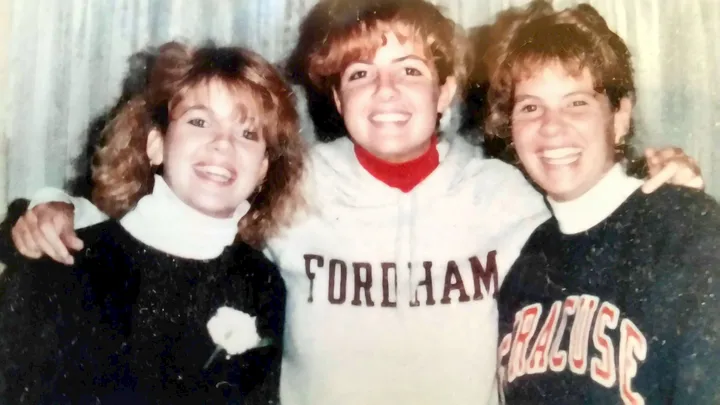
As I’m waiting for my friend, the doctor who runs the clinic, I think about why I’m here: In 2017, my youngest sister, Jenny, died from liver failure due to prolonged use of prescription opioids and alcohol; she was a 44-year-old suburban mother.
Since she died, I’ve tried to learn as much as I can about the opioid crisis and be part of the solution – or, more selfishly, maybe I’m just here to do penance for my role in her death.
I experienced the entirety of my sister’s struggle and death in just six gruesome days at Kenmore Mercy Hospital in Buffalo, New York. That week, my sister Colleen and I stayed in Jenny’s hospital room every night. All day and night, Jenny moaned for Dilaudid, a synthetic opioid she’d previously been prescribed.
For the first three days, I held Jenny’s hand a lot and touched her hair. I don’t think I’d ever touched my sister’s hair before, but now I feel it all the time on my right hand. I put drops in her eyes, rubbed her swollen feet and fed her Ensure. She was in and out of consciousness but never lucid enough to talk with us coherently.
I couldn’t remember the last time I’d had a conversation with her. When was the last time I’d told her I loved her?
When I think about that week, I only remember a series of degrading and horrific incidents, one worse than the next: the first time I saw my sister’s severely jaundiced skin and light green eyes that were covered with bubbles, as a result of liver failure; shuffling Jenny to the bathroom all night long; my mother signing “Do Not Resuscitate” forms; full bags of bloody fluid hanging from Jenny’s bed; and, finally, her death.
I watched my sister die with my parents on either side of her hospital bed, a picture I’ll never be able to unsee. No wake. No funeral. Her estranged husband stole her body from the hospital, without our consent, and left her ashes in a funeral home a few days later, unwilling to pay the bill.
I was on a plane back to Washington, D.C., the day after she died, shocked that I was no longer the oldest of three sisters – just the older of two.

Photo Courtesy Of Kelly O’Connor
The bone-crunching grief of this experience was compounded by the stigma that gets unfairly associated with certain types of death: suicide, drug abuse, alcoholism, mental illness. You see it in euphemistic obituaries with vague explanations like “passed away unexpectedly” or “died after a long struggle,” descriptions that do a disservice to both the living and the dead.
My coping mechanism has always been reading, and there are tons of materials about grieving the death of a parent, spouse, child – even pets! But I found only one book, Surviving the Death of a Sibling, by T.J. Wray, who lost her 43-year-old brother, that captured exactly how I felt on that flight back to D.C.
Wray wrote: “The year my brother died I stopped breathing, but no one noticed.”
Our siblings are with us at the beginning of our lives, and most of us take for granted they will be there as we approach the end. Yet surviving adult siblings are often forgotten mourners; the focus of grief is usually on parents, spouses and children. As a surviving adult sibling, I am the lowest member in the hierarchy of sorrow – well below my parents and Jenny’s two children.
I’ve only recently learned about the psychology of this type of bereavement, called “disenfranchised grief”. It is not openly acknowledged, socially mourned or publicly supported. Immediately following her death, when people asked if I had siblings, I wanted to answer, “I have two sisters. Colleen is great. Her youngest just graduated from college. And … well … Jenny’s dead.” But I never did.
Volunteering and trying to be an advocate have become my version of grieving. I’ve shared our family’s story (at least the parts I know about) as honestly as I can. I’ve written opinion pieces and talked about my mistakes on national television.
I’ve tried to learn about addiction, more accurately referred to as “substance use disorder (SUD),” to understand how our family never realised Jenny had this issue, never had an honest conversation about what was happening to her.
Instead, we rationalised away the warning signs and accepted her increasingly threadbare explanations for them, ultimately enabling her. Jenny didn’t do a single stint in rehab or have any interventions. I’m not ashamed of my sister for struggling with drugs and alcohol, but I’m so ashamed of myself for not being educated about it sooner.

Photo Courtesy Of Kelly O’Connor
In the years since my sister’s death, my swells of grief are usually triggered by childhood memories. For many summers while my two sisters and I were in grammar school, my parents would take us camping in Chautauqua County, New York. Colleen, Jenny and I would build forts, catch fireflies, try to catch sunfish and collect kindling for campfires. But our favourite activity was putting on shows at “the spider,” a metal jungle gym that looked like a gigantic tarantula.
We spent hours planning routines and practicing. Even though Jenny was the youngest and only about four or five years old, she was fearless, doing all the difficult flips with me on the high bars. On “show nights,” my parents would walk down to the spider after dinner, my mom in a Buffalo Bills sweatshirt and my dad in his 82nd Airborne hat. It’s one of my most vivid childhood memories. I can still feel the warm metal behind my knees, hear the crickets and smell the grass.
Another recurring memory is when we girls were ages four, six and eight, and my dad would take us tobogganing during the long Buffalo winters. The four of us scooched to fit on the long sled going down the chute (so fast!) over and over. But only Jenny got the free ride back up the hill with my dad pulling her on the toboggan while Colleen and I waddled back up in our puffy jackets from K-mart.
Since her death, I’ve tried to remember my sister, not in her hospital bed, but flipping fearlessly on the spider or laughing on the toboggan, with her red cheeks and light green eyes, getting pulled up the snowy hill by my dad.
Back in Baltimore, I’m waiting for another Uber at the end of the day, and I’m so glad I came. It’s an amazing operation, and I feel lucky to have been a small part of this dedicated team for a few hours. (I eventually even learned that the long curtains at the glass windows are for privacy as patients take their medications.)
On my way out, I notice a sign on the wall that I didn’t see on my way in. It’s written in multicoloured markers with big artsy letters, advertising a program called, “Women Who Want to Change Their Lives,” meeting on Saturday mornings. I bet that’s where the skinny-legged girl was going! I hope she made it on time.
The sign is so positive and inviting, I want to go with her. But more than anything in the entire world, my heart aches to be able to attend that program with my sister. I feel the tears coming as I get into my Uber, and I realise that nothing about our family’s story is different at all.
Kelly O’Connor is a management consultant and lives in Washington, D.C.; she has been a patient advocate in the opioid crisis since 2017, including a TEDx Talk, “My Introduction to Narcan.”
Help and support:

5 min read
The SNP has decisively won the Scottish Parliament election, securing another five years in office.
The party won 58 seats in total – down from the 64 it won in 2021 and seven seats from a majority, but well ahead of rivals.
Labour and Reform are in joint second place, winning 17 MSPs apiece.
It was a poor set of results for Anas Sarwar, who had been aiming to gain enough MSPs to form the next Scottish Government.
And it’s a significant breakthrough from Malcolm Offord’s party, though not as high as he had hoped after it failed to win any constituencies.
Meanwhile it was a record result for the Scottish Greens, who won their first-ever constituency seats in Glasgow and Edinburgh. Their final tally was 15, putting them in fourth place.
The Conservatives had a dismal day, dropping to just 12 MSPs (a record low) and from second biggest party to second smallest.
The Lib Dems managed to increase its numbers to 10, up by six from 2021.
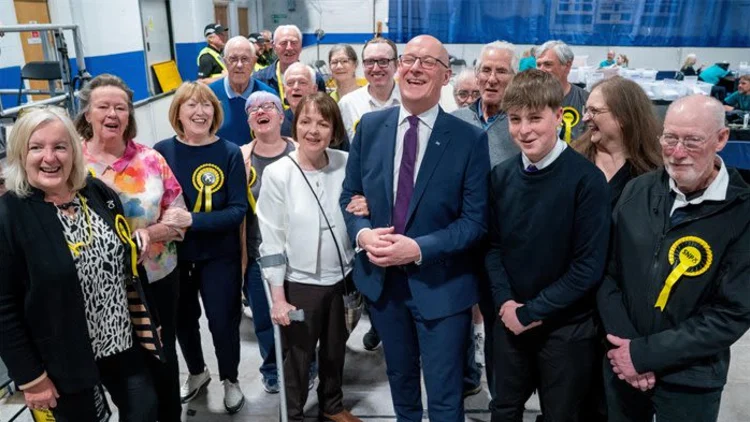
SNP leader John Swinney described the results as an “emphatic” win for his party. He said: “Once again the people of Scotland have put their trust in us. However you voted today, I promise that I will be a first minister for all of Scotland.
“All of us care about our country’s future. I give you my commitment that I will work every day to improve your life and make Scotland the nation we know it can be.”
He had been aiming to win an outright majority, arguing throughout the campaign this was the only way to pursue a second referendum on Scottish independence.
While denied the seats to make that argument, this parliament has the biggest pro-independence majority – 73 MSPs belong to parties who favour independence.
Scottish Greens co-leader Gillian Mackay said the “seismic result” for her party would help to “change Scotland”.
She said: “People have seen our record, from free bus travel for everyone under 22 to scrapping peak rail fares to ending school meal debt. We did all that with seven MSPs. Now we have doubled that number we can do even more.
“With a failed Labour government on its last legs in Westminster, and with the cost-of-living crisis biting, Green policies are more vital than ever. Throughout this election we urged Scotland to demand better, and that is exactly what we will deliver.”
In an unusual move, Anas Sarwar effectively conceded defeat after fewer than 10 seats were declared.
The party did manage to take Na h-Eileanan an Iar from the SNP, but that was the only bright spot after it failed to take any of its target seats in the central belt.
Sarwar was re-elected on the Glasgow regional list, while his deputy Jackie Baillie held onto her Dumbarton constituency.
But before those results were even announced, he told journalists at the count in Glasgow: “Throughout this election campaign, I have tried to make this election about Scotland. I’m not going to change that today. Is there a national wave though, that we’ve tried to overcome but failed to do so? Yes, but right now, my focus is on what this election means.”
It was a poor set of results for Labour across the UK, with the party ejected from power in Wales and down thousands of council seats across England. Former Welsh first minister Eluned Morgan failed to get re-elected and resigned as leader.
Sarwar has so far not resigned, adding: “My party is hurting today and it’s my job to hold it together.”
Malcolm Offord admitted his party had not done as well as he had hoped, but it had built a “very solid based”. Before the election is only had one MSP – a defection from the Conservatives, Graham Simpson.
On how his new band of MSPs would approach Holyrood, Offord said: “We will be very focused on trying to get Holyrood focused on the day job, on devolved matters and really highlighting the issues that matter to people on the doorsteps: the schools, the roads the day-to-day matters that Holyrood needs to be focused on.”
The Scottish Conservatives were quick to blame Reform for their poor result and for letting the SNP win. Acknowledging the election was “always going to be tough”, Russell Findlay added: “We warned repeatedly during the campaign that Reform were a gift to the SNP – and so it’s proved.
“Despite not winning a single constituency seat, Reform have let the SNP sneak home in several constituencies they would otherwise have lost. I’m sure that’s not the outcome most Reform voters would have wanted but Lord Offord has been John Swinney’s little helper.”
The Liberal Democrats, while remaining the smallest party at Holyrood, had a positive set of results – taking three constituencies from the SNP and bolstering the number with some list seats. It did, however, lose Shetland to the Nationalists.
Alex Cole-Hamilton said: “I am really excited about the new parliamentary group that I will be welcoming to parliament next week.”
He also said he would be willing to work with the SNP government on an issue-by-issue basis.
President Donald Trump has offered his congratulations to Swinney for the victory. Posting on his social media platform Truth Social, Trump said: “Congratulations to John Swinney on winning his re-election for First Minister of Scotland. He is a good man, who worked very hard, along with the King and the Queen of the United Kingdom, with respect to tariff relief for Great Scottish Whiskey [sic] – and deserves this big electoral victory.”
This article originally appeared on Holyrood
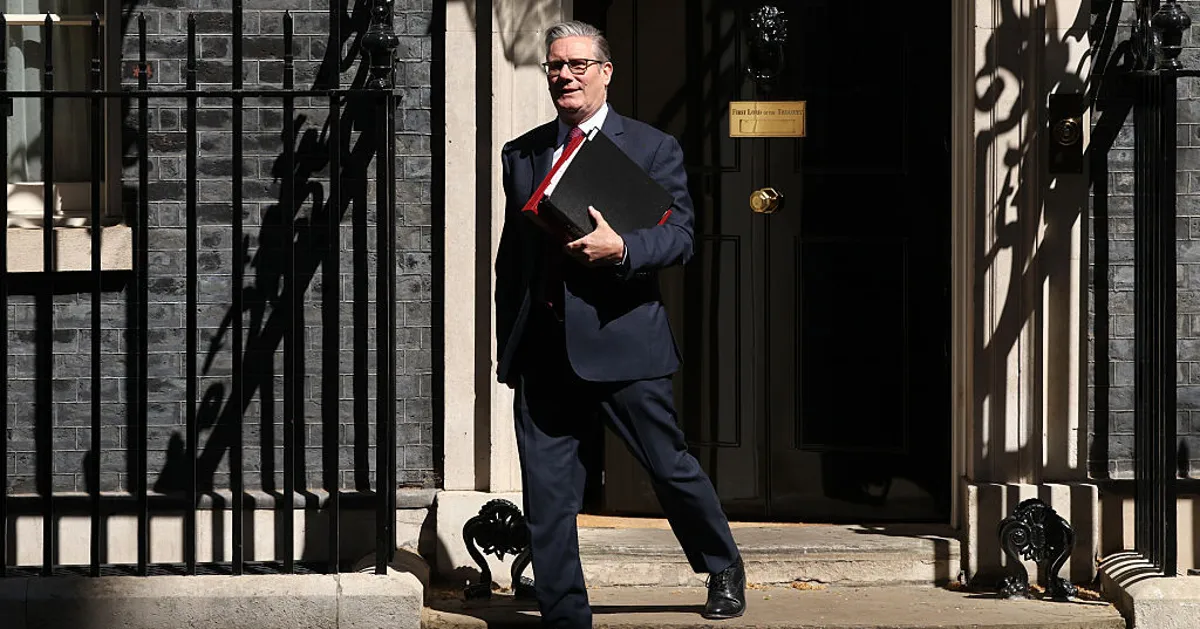
A full-blown civil war has erupted in the Labour Party after another former minister called on Keir Starmer to quit as prime minister.
Josh Simons triggered an angry backlash by urging the PM to set out a timetable for his departure to allow “an orderly transition” to a new leader.
His intervention is hugely significant because he used to run Labour Together, the moderate think-tank which helped Starmer become party leader in 2020.
One minister told HuffPost UK: “This sort of behaviour is why Josh is widely disliked and mistrusted by every part of the Labour Party, which is some achievement from somebody who has been an MP for 20 months.”
Simons, who was forced to resign as a Cabinet Office minister in February over his part in a Labour Together smear operation against journalists, said Starmer had “lost the country” and needed to go.
Writing in The Times, he said: “He should take control of the situation by overseeing an orderly transition to a new prime minister.
“What happens next is not a horse race, it’s about the future of our party and our country. Over the coming months, how the Labour Party conducts itself matters.
“To avoid leadership chaos, senior figures across factions should come together to decide the best way forward. The public expects nothing less.”
Simons added: “The alternative risks handing Farage the keys to Downing Street and giving up on working class people. I could not look my children in the eye without doing my bit to stop that.”
A government source said: “This is a desperate attempt at an epilogue by Josh for a political career that has already ended in disgrace, less than two years in. This is more likely to push Labour MPs away from the edge.”
But a Labour MP hit back: “Josh is right. The No.10 briefing operation against him is a pretty ham-fisted attempt at intimidating other colleagues.”
Simons is one of around 40 Labour MPs who have broken cover since Thursday’s elections to call on Starmer to stand down.
His intervention came after former Foreign Office minister Catherine West said she would trigger a leadership election unless the cabinet agrees a candidate to replace the PM.
West this morning she would wait until the PM delivers a make-or-break speech on Monday before trying to get the 81 nominations she would need to kick-start a contest.
She told the BBC: “What we need is … an orderly transition into a leadership election, which will allow us to make the case to the country, as well as to our colleagues, so that we can go forward.”
Former deputy prime minister Angela Rayner and health secretary Wes Streeting are expected to throw their hats into the ring should a contest be announced, and would also need to get the backing of 81 MPs each.
Starmer has insisted he “won’t walk away” from Downing Street, and under Labour Party rules his name would automatically go on the ballot paper.
However, left-wing supporters of Andy Burnham have hit out at West as he is not currently an MP and therefore would be unable to take part in a leadership election which takes place imminently.
They fear that would play into the hands of Streeting, who is on the right of the Labour Party.
Leeds East MP Richard Burgon said: “Catherine says that if there isn’t a cabinet deal, she will trigger an immediate leadership election.
“I fear there’s a real danger that, whatever her good intentions, her move will be exploited by people on the right of the party who want a coronation and not a proper democratic contest in the party.
“It may even be that those people help secure the 81 nominations needed to kickstart any leadership race.
“What we need instead is for Keir to set a date for his departure, followed by a full and proper democratic contest that can look at what went wrong and how we change course to win back trust and support, with a broad range of candidates and viewpoints represented.”
Education secretary Bridget Phillipson rejected the calls for Starmer to quit, and insisted he will lead Labour into the next election.
She said: “The prime minister will set out a fresh direction for our country and for our party that will rise to the scale of what we face.
“But we have to be honest about the scale of what we face. I share the impatience that people feel about how, nearly two years on, people want to see more. I get that, I’m not going to step back from that.
“But I also have to level with people about the enormity of the decades-long challenges that some of this comes back to, the status quo won’t cut it.”
Subscribe to Commons People, the podcast that makes politics easy. Every week, Kevin Schofield and Kate Nicholson unpack the week’s biggest stories to keep you informed. Join us for straightforward analysis of what’s going on at Westminster.
Politics
Politics Home Article | “Keir Needs To Go”: Labour MPs Brace For Dramatic Week In Westminster
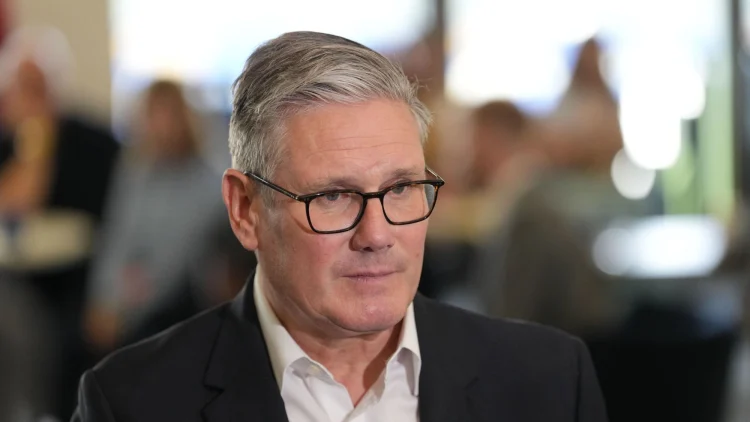
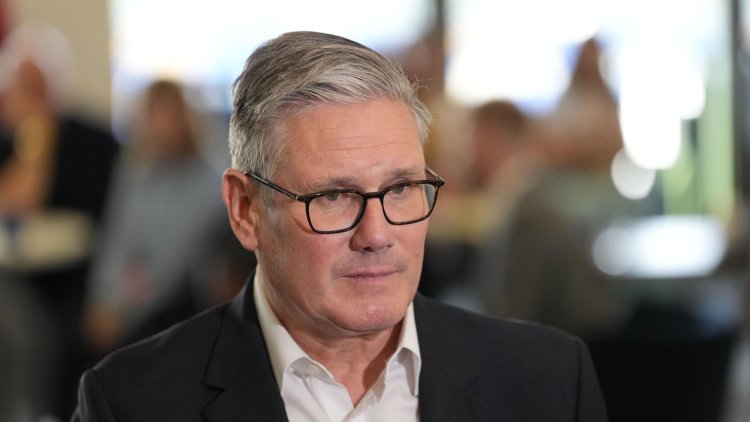
Labour MPs are bracing themselves for a dramatic week in Westminster as calls grow for Prime Minister Keir Starmer to resign. (Alamy)
5 min read
Pressure is mounting on Prime Minister Keir Starmer to step down following disastrous election results for Labour in Thursday’s local elections, but there are concerns among the party’s MPs around who would run in a leadership contest that is called too soon.
By Sunday afternoon Labour had lost almost 1,500 council seats in Thursday’s local elections, suffering heavy losses across the UK with Nigel Farage’s Reform UK party and Zack Polanski’s Green Party making significant gains in traditionally Labour areas.
Labour lost control of the Senedd in Wales for the first time since it was established in 1999 – with Welsh Labour First Minister Eluned Morgan losing her seat, and the party also took heavy losses at the Scottish Parliament in Holyrood.
Prime Minister Keir Starmer in the aftermath of the results said he would not “sugarcoat” what had happened – but said he was “not going to walk away” and vowed to stay.
However, on Saturday backbench Labour MP for Hornsey and Friern Barnet Catherine West threatened to trigger a leadership contest herself on Monday if a cabinet minister does not put themselves forward to challenge the Prime Minister – claiming she had 10 MPs who would back her.
“My preferred option is for the cabinet to do a reshuffle within itself, where there’s plenty of talent, and for Keir to be given a different role, which he might enjoy, perhaps an international role,” she told BBC Radio 4.
And fewer than 24 hours later on Sunday, influential backbencher, former Labour Together boss and former Treasury minister Labour MP Josh Simons also called for Starmer to step down – writing in The Times that Starmer had “lost the country” and that he did not believe “the prime minister can rise to this moment”.
“Keir changed Labour, won a historic election, and restored this country as a world leader,” said Simons.
“He is right that we must not descend into Tory leadership drama. But we must also stop doubling down on a status quo that voters are crying out to change.
“He should lead an orderly transition for senior figures to agree a path forward.”
PoliticsHome spoke to a number of Labour MPs following Labour’s losses and the subsequent interventions calling for the Prime Minister to step down, with many sharing the view of West that it was time for Starmer’s departure.
“I think it’s watchful waiting as we’re all in our constituencies. But next week when we’re all back…” one MP, who had not called for Starmer to step down publicly yet, told PoliticsHome.
“The Whips Office don’t seem to have been making any effort to contact people over the weekend, which I feel is very telling.”
They added: “Keir needs to go. I’ve thought it for a year or so now, but there is no more road, no more ‘well it’s a time of international uncertainty, maybe with a bit more time he can turn things around’.”
However, when asked who should replace Starmer, they responded: “I don’t even care at this point; anyone that isn’t Keir”.
The lack of an obvious successor for a critical mass of Labour MPs to coalesce around in the aftermath of Thursday is apparent. Many on the left are concerned that Andy Burnham would be unable to run in a contest that was called too swiftly, since he would need a Parliamentary seat. “This isn’t a game” and “no one remotely serious should be anywhere near this Catherine plan”, one ally told PoliticsHome.
Ipsos polling of Britons when asked who should lead Labour if Starmer resigned saw 17 per cent choose Burnham – more than triple his nearest rival, Angela Rayner (5 per cent). Rayner herself is understood to prefer to wait for an HMRC investigation into her tax affairs to be completed prior to running, although some reports suggest she could run while under investigation.
Another Labour MP, who has also not yet called for Starmer to publicly, said they wanted a leadership contest but “later” and said it’s hard to tell if the calls for Starmer to leave “have momentum” currently.
“A stalking horse brings out real candidates only once the contest is triggered,” they said.
One Labour MP – who said they conceded they wanted “a clear timeline set out by Keir to step aside” – was critical of Catherine West’s ultimatium, saying “her intervention is unhelpful”, warning it could open the door to Health Secretary Wes Streeting to make a bid.
“Any moves by Catherine to kick off the challenge risks giving the keys of Number 10 to Wes,” they said, also not yet calling for Starmer to go publicly.
“Wes would be every bit as disastrous for the country as Keir. He is inextricably linked to Labour Together, Mandelson and the likes of Palantir.
“We need real change not more of the same.”
Elsewhere, a Labour MP from the 2024 intake told PoliticsHome said “it’s over” for the Prime Minister – adding “it’s not just usual suspects” who are calling for Starmer to step down.
“And the number of people remaining silent is high,” they said. “The WhatsApp groups are dangerously quiet.”
And another 2024 Labour MP told PoliticsHome “the PM should f*** off in time”, but added that Simons intervention in The Times swayed them “more the other way”.
“[He’s] desperate to be relevant,” they added.
Starmer’s cabinet, however, have rallied around the Prime Minister – with deputy prime minister David Lammy warning “you don’t change the pilot during a flight” and Housing Secretary Steve Reed warning against “doomscrolling” through new party leaders.
And outside of cabinet, there are also Labour MPs who are not supportive of Starmer’s departure.
Edgbaston Labour MP Preet Kaur Gill, who serves as a parliamentary private secretary to cabinet minister Liz Kendall, told PoliticsHome people “expect us to govern” and that she had been told on the doorstep “Keir Starmer should keep going” and voters are seeing “through the attacks”.
“Honestly, with all due respect to people like Catherine West and Josh Simons, many of us who have been in politics for a long time and seen what opposition is like – bringing down the Labour government, none of us accept any of that,” she said.
“We have got a mandate until 2029 – right now, we’ve got to be humble with the electorate on the protest vote that they made, at the change that they want to see, focusing on the things that they voted for.”
A prime minister under not inconsiderable political pressure faces a leadership challenge from an obscure backbench MP posing as a proxy for more prominent pretenders.
These words accurately describe the political landscape Keir Starmer, Britain’s incumbent embattled premier, faces after Catherine West announced her plan to launch a leadership bid. West’s plan, hastily organised in the wake of this week’s local elections, is designed to smoke out prospective challengers better placed to take on Starmer in a full contest. More specifically, West’s scheme is aimed at engineering a contest among those candidates who currently serve as members of parliament – thereby excluding Andy Burnham, the mayor of greater Manchester.
In any case, Starmer is not the first prime minister to face such a manoeuvre from a self-styled “stalking horse” candidate.
On 22 November 1989, Sir Anthony Meyer, a backbench critic of Margaret Thatcher’s premiership, launched a bid to oust the prime minister.
MDU warns Chancellor clinical negligence system ‘not fit for purpose’
Northern Ireland RE curriculum is ‘indoctrination’ – Supreme Court
Meyer was also a reluctant candidate, standing in the place of far more senior Thatcher-critics such as Michael Heseltine. He acknowledged that he had no chance of winning, but believed a contest – initiated by a stalking horse candidate – was necessary to test the party’s confidence in its leader.
Conservative discontent with Thatcher’s leadership had been simmering since at least the Westland affair (1986), which featured the resignation of Heseltine as defence secretary. By late 1989, the government was suffering from the intense unpopularity of the community charge, known universally as the “poll tax”, and internal spits over its policy on European integration.
The Conservatives lost 13 seats in the July 1989 European Parliament election – the party’s first national election defeat since October 1974. The campaign was conducted in the shadow of Thatcher’s famous Bruges speech (September 1988) – a trenchant, and divisive, statement of her euroscepticism.
The European Exchange Rate Mechanism (ERM), an economic stability measure, emerged as a flashpoint in 1989.
Geoffrey Howe and Nigel Lawson reportedly threatened to resign as foreign secretary and chancellor respectively if Thatcher failed to oversee Britain’s entry into the ERM. Thatcher responded with a reshuffle in July 1989, replacing Howe as foreign secretary with John Major. Howe was made leader of the commons, a post embellished with the title of deputy prime minister. Lawson then resigned in October 1989 following a dispute over the influence of Thatcher’s economic adviser, Sir Alan Walters. Walters opposed Britain’s entry into the ERM.
Under the Conservative Party’s leadership procedures at the time, Thatcher was subject to annual re-elections. But she had been returned to her post unopposed since 1975.
1989 was different.
Meyer, a 69-year-old europhile backbencher, put himself forward as a candidate, triggering the first Tory leadership election since Thatcher toppled Edward Heath in 1975.
Meyer was a long-standing critic of Thatcher’s leadership.
In November 1981, Meyer was among the Conservative “gang of 25” who signed a letter threatening to vote against the government’s latest round of monetarist measures delivered at the autumn statement. In the wake of the Westland affair, he argued that the time had come “when we should be thinking in terms of choosing another leader”.
The short 1989 Conservative leadership election featured an intervention from Heath, Thatcher’s predecessor as Conservative leader. The europhile former prime minister described Thatcher as a “narrow little nationalist… unable to move with the movement of history in creating the greater Europe”.
Meyer, meanwhile, was derided by the tabloid press as “Sir Anthony Whats’isname” and a “stalking donkey”. In an open letter to Conservative MPs, he wrote: “On Europe above all, the prime minister stands apart not only from many of her own cabinet.”
One opinion poll, published shortly before voting began in the contest, found two-thirds of voters were unsatisfied with Thatcher’s leadership.
On the day of the election, 5 December, Thatcher attended the commons for prime minister’s questions.
Labour MP Alice Mahon asked: “Since this might be the last time that the prime minister answers questions at the dispatch box… will she tell us her proudest achievement?
“Is it the number of homeless? Is it the deeply unpopular poll tax or is it the image of a government who resort to seedy bribes to get their privatisation programme through?”
Thatcher responded: “My proudest achievements have been bringing Britain from the decline of socialism to the prosperity of Conservatism.”
The prime minister survived Meyer’s challenge, of course. She secured a seemingly decisive victory with 314 votes to Meyer’s 33. But the result exposed significant discontent within her party. A total of 60 MPs – one in six – failed to support her, either by voting for Meyer, spoiling their ballots (24), or abstaining (3).
Thatcher, however, hailed her victory as “splendid” in a statement outside No 10.
She said: “I would like to say how very pleased I am with this result and how very pleased I am to have had the overwhelming support of my colleagues in the House and the people from the party in the country.
Kenneth Baker, the Conservative chairman, said: “What the Conservative Party has decided today is that they want to be led into the 1990s and the next election by Margaret Thatcher.”
He added: “The leadership question is now settled.”
George Younger, Thatcher’s campaign manager, stated: “It is a marvellous result; 85% of MPs voted for her. It will strengthen her authority for some time to come.”
Norman Tebbitt, the former Conservative chairman, said the result was “very close to an absolute triumph”.
Privately, however, Thatcher’s team was alarmed.
Younger warned that many MPs had voted for her with “varying degrees of reluctance”. He classified 50 MPs as “reluctant supporters”, who could in time make Thatcher’s position vulnerable.
In a memo, Younger said: “The result is not as good as the figures. Many voted with varying degrees of reluctance for the prime minister. They cannot all be relied upon another time.”
He predicted future danger, noting: “As there are likely to be economic and polls difficulties in a year’s time, another challenge is not improbable.”
He continued: “It is felt that there are personality tensions within cabinet and that these must be resolved if confidence is to be restored. In particular, Geoffrey Howe must be seen and treated as the PM’s right-hand man.”
One of Thatcher’s whips, Tristan Garel-Jones, put it more bluntly when he said: “We are talking about the beginning of the end of the Thatcher era.
He added: “We have to try and ensure that that is managed in a way that enables her to go to the end of her prime ministership with dignity and honour. The most we can achieve is that she wins the next election.
“I think that is possible, but not certain.”
The 1989 campaign therefore shattered any lingering sense of Thatcher’s political invulnerability. Heseltine was reported to be one of the three MPs who abstained. Heath hinted that he had voted for Meyer.
Meyer was pleased with his showing, saying he received “more votes than I expected to get.”
He added: “I think what I have done is think the unthinkable as it were, raise the very question of the leadership at a time when others weren’t willing to discuss it.
Meyer maintained that the contest was “worth it because it’s raised the whole question of whether Mrs Thatcher’s policies and Mrs Thatcher’s style of leadership are the ones which are most likely to win the next election for the Conservative Party and the ones most suited to British needs at this critical junction in the history of Europe.”
In January 1990, Meyer was deselected by his constituency party in Clwyd North West.
In the year that followed Meyer’s challenge, the issues that inspired his candidacy intensified.
On 1 November 1990, Geoffrey Howe – the last remaining member of Thatcher’s 1979 cabinet – stood down as deputy prime minister. He cited fundamental disagreements with Thatcher’s stance on European integration. It came after Thatcher issued her most strident denunciation of European integration to date with her famous “No. No. No.” declaration on 30 October 1990.
Howe’s famous resignation speech spurred Heseltine to launch a formal leadership challenge the following day, 14 November. He won just enough of the vote on the first ballot to force Thatcher’s resignation.
Meyer went on to join the Pro-Euro Conservative Party (1998-2001) and then the Liberal Democrats from 2001.
Meyer died on 24 December 2004, aged 84.
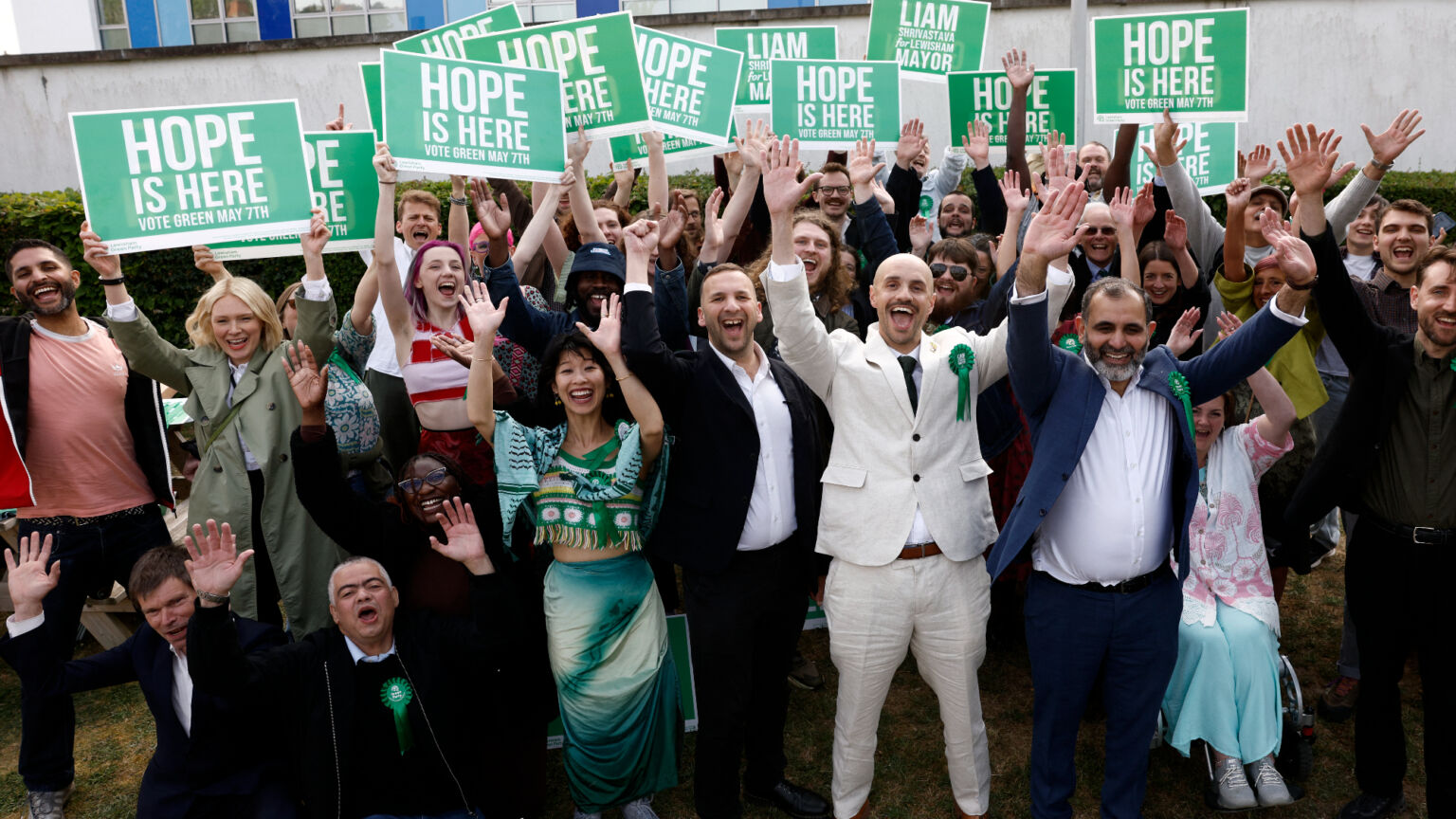
Thursday’s local elections have exploded one myth. The Green Party of England and Wales is definitely not riding a wave of popular support to power. It turns out that an obsessive loathing of Israel, combined with a vicious identitarianism and sixth-form ‘tax the rich’ slogans, is not quite the electoral elixir the Greens’ media cheerleaders would have had us believe.
Not that you would have known this in the lead-up to the ballot. For weeks and weeks, there had been breathless talk of a Green wave about to break across the nation. This had been accompanied by heady seat projections, with the Greens expected to pick up over 700 councillors in a one-on-one battle with Reform UK.
Amid the Green fluffing, the leader of the Green Party of England and Wales, the Walter Mitty-ish Zack Polanski, was everywhere, garnering ear-bleeding amounts of airtime and eye-watering puff profiles in The Times, the New Statesman and even, across the Atlantic, in the New York Times. The Greens, we were told, were always ‘rising’, ‘surging’, the right-thinking populist counterweight to Reform UK.
After the hype, the reality. The Greens have done relatively well in these elections, but achieved nowhere near what had been expected. They have recorded the second-most gains behind Reform, leaving them with 587 councillors. But that has still consigned them to fourth place overall, behind Reform (1,453), Labour (1,068), Lib Dems (844) and the Conservatives (801). Extrapolating from Thursday’s vote, Sky News gave the Greens a General Election vote share of just 13 per cent. Under the first-past-the-post system, this would translate into a meagre 13 seats out of 650 in the House of Commons. That’s not a wave, that’s a leaky soil pipe.
Even in London, which many had anticipated turning Green, Polanski’s crew underperformed. The Greens did win mayoral races in Hackney and Lewisham, but they have struggled in large swathes of London, from Ealing to Westminster. In both Hammersmith and Richmond upon Thames, the Greens actually lost all their councillors.
Their cheerleaders are no doubt blaming the Greens’ failure to live up to the pre-election hype on every leftist’s favourite bogeyman, the right-wing meeja – and, by association, their supposedly duped audience. They see all the negative coverage as little more than an orchestrated smear campaign. In their paranoid style, they cast the reports of the rampant anti-Semitism among election candidates, the criticism of Polanski’s police-bashing response to the Golders Green attack, and the revelations about Polanski’s CV embellishments (he was never, as he once claimed, a Red Cross spokesman), as all part of one big billionaires’ plot to discredit the self-styled radical left.
It’s true the Greens have received a rough ride in the media recently (and not just in the Telegraph or the Daily Mail). But journalists haven’t been victimising Polanski; they’ve been scrutinising him. They haven’t been smearing the Greens with accusations of anti-Semitism; they’ve simply been reporting evidence of anti-Semitism. That’s not a conspiracy – it’s called accountability.
The Greens’ problems – Polanski’s personal popularity ratings have plummeted in the past week – are of their own making. Over the past few years and especially since Polanski took the helm, they have turned themselves into a vehicle for identitarianism and ‘anti-Zionist’ Islamic sectarianism, leavened with Occupy-era slop about taking on the ‘one per cent’ and the ‘billionaires’.
As the local elections show, this paradoxical admixture has gone down well among certain constituencies – from the middle-class left, comprising students, under-employed graduates and affluent ‘progressives’, to large, concentrated Muslim communities. Hence the Greens have broken through in areas where those constituencies predominate. They’ve picked up councillors in the wealthy, university-dominated urban areas of Exeter, Reading, Manchester, Oxford and parts of London. And, thanks to their sectarian, anti-Israel posturing, they’ve done well in areas with large Muslim populations, such as Waltham Forest in North East London. In one telling moment in Burngreave, Sheffield, the victorious Green councillor, Mustafa Ahmed, interrupted the count to raise the Palestine flag and chant ‘free Palestine’. Quite how he will use his mandate in Sheffield City Council to affect Middle Eastern politics is unclear.
As Tony Travers, professor of political science at the London School of Economics, told the Financial Times on Friday, the Greens’ success is ‘very concentrated in a small number of cities and city centres’. But beyond those areas, beyond those constituencies, it seems Polanski’s Palestine and progressivism platform is about as appealing as a couple of hours in one of his nipple-focused hypnotherapy sessions. Especially since the mask-off moments of the past few weeks, with more than 30 candidates being investigated over anti-Semitism in an internal party probe, two London candidates arrested for ‘stirring up racial hatred online’, and Polanski himself seeming more concerned with the police’s treatment of the alleged Golders Green attacker than with his Jewish victims.
Indeed, the Green Party’s mutation into a tribune for decadent identity politics and Islamic sectarianism is even worrying some long-standing, senior Greens. Siân Berry, the Green MP for Brighton Pavilion, admitted on Friday morning that there had been ‘questions on the doorstep’ about the party’s response to anti-Semitism. And Caroline Lucas, the former leader and doyenne of the pre-Polanski Greens, called last week for ‘immediate action’ to be taken against the Greens’ anti-Semitic candidates.
This will be easier said than done – and not just because current deputy leader Mothin Ali has been threatening his own party with legal action if it tries to kick out those accused of anti-Semitism. The Green Party also owes its relative success over the past couple of years precisely to its embrace of ‘anti-Zionism’ and identity politics. This has pulled in hardline Muslims and middle-class Corbynistas, and with them, an inevitable undertow of anti-Semitism. Polanski can no more root out the Jew hatred in his party than he can turn away the party’s new support base. The source of their rise in the polls is also the source of their animus towards Jewish people.
Polanski and his party have made their bed, complete no doubt with a keffiyeh-pattern duvet and pillow set, and will have to lie in it for the foreseeable future. They will no doubt enjoy a significant measure of support from sectarian bigots and their middle-class, ‘progressive’ enablers for a fair while yet. The local elections have shown it works in some specific urban areas. But the Greens are alienating a great many Brits in the process – especially the working-class majority currently lending their vote to Reform.
If the elections have revealed one thing about the Greens, it’s that this now very nasty party is neither populist nor popular.
Tim Black is associate editor of spiked.

Osteoporosis is a health condition that can really sneak up on you. Its early stages typically don’t cause any symptoms; it isn’t until a bone is broken or fractured that many people are diagnosed, and that can hurt.
“Osteoporosis is a disorder of bone quality and strength that increases the susceptibility for fractures,” explained Dr. Rozalina McCoy, an endocrinologist and associate professor at the University of Maryland School of Medicine.
McCoy explained that osteoporosis is diagnosed through a DEXA scan, which is an X-ray that measures bone density. “A DEXA scan can tell us what someone’s fracture risk is, which is the main concern. Low bone density is the biggest indicator, but there’s an additional component of bone quality, too,” McCoy said.
According to scientific research, the risk of osteoporosis rises significantly with age, especially for women 50 and older, and men 70 and older. According to research published in the journal Clinical Medicine, 50% of women and 20% of men 50 and older will experience an osteoporosis-related fracture.
“As we age, we become less efficient at rebuilding bone, tend to be less physically active and absorb nutrients like calcium less effectively from food,” said Dr. Yesika Garcia, an endocrinologist with the Medical Offices of Manhattan and a contributor to LabFinder.
Garcia explained the reason women 50 and older are at an increased risk for osteoporosis is because of the drop in oestrogen after menopause. This matters because oestrogen helps regulate the balance between bone formation and breakdown, which is important for maintaining bone density. But after menopause, the protective effect from oestrogen is lost.
Fortunately, there are ways to lower your risk of osteoporosis, including eating more of one food that’s especially good for your bones yet often overlooked.

FG Trade Latin via Getty Images
Before we talk about diet, there’s another way to reduce your risk of osteoporosis.
When it comes to reducing your risk of osteoporosis, Dr. Deborah E. Sellmeyer, an internationally recognised expert in metabolic bone disease and a clinical professor at Stanford Medicine, told HuffPost that good nutrition and weight-bearing activity are what’s most important.
“For physical activity, it’s encouraged to do 30 minutes a day of impact activity such as brisk walking, progressive weight and resistance training at least twice a week, and balance training,” Sellmeyer said. Balance training can include tai chi, yoga or standing on one leg.
McCoy and Sellmeyer both emphasised that avoiding fractures, particularly when you’re older, is important for managing osteoporosis because it can lead to more severe bone breaks in the future.
With this in mind, Sellmeyer told HuffPost that it’s important to lower your risk of falling at home by using good lighting, keeping the floor and outside area clear of any trip hazards, and staying up to date with your eye doctor appointments to support your vision care.
There are two key components of your diet that can maintain bone density
When it comes to lowering your risk of osteoporosis through diet, all four of the endocrinologists we talked to said that while what’s most important is maintaining a well-rounded, nutrient-rich diet, the two nutrients that matter most for bone health are calcium and vitamin D.
“Calcium and vitamin D are the only nutrients that have been shown to reduce the risk of fractures,” Sellmeyer said, adding that clinical trials of these nutrients were all done with supplements, not with food, because of the need for a placebo control, which is very difficult to do with a food item and much easier with a pill.
Dr. Jad Sfeir, an endocrinologist and an associate professor of medicine at the Mayo Clinic College of Medicine and Science, also emphasised the importance of getting enough calcium and vitamin D.
“The daily recommended goal of calcium for postmenopausal women and older men is 1,000 to 1,200 milligrams per day, preferably from dietary sources. The daily recommended goal of vitamin D for postmenopausal women and older men is 800 to 1,000 international units,” he said.
Besides calcium and vitamin D, Sfeir added that getting enough protein is also important for lowering the risk of osteoporosis (or managing it properly if you already have it).
“Protein provides the structural framework for bone tissue. The body uses protein to build the collagen matrix that gives bones their strength and flexibility, working together with calcium and other minerals to maintain bone structure,” he said.

The food to eat more of if you’re over 50 and want to lower your risk of osteoporosis.
It bears repeating that when it comes to using diet to lower the risk of osteoporosis, what’s most important is having a balanced, nutrient-rich diet; avoiding osteoporosis doesn’t come down to eating one singular food.
That said, Garcia told HuffPost that there is one food she wishes people 50 and older would eat more because it contains both of the only two nutrients (calcium and vitamin D) shown to reduce fracture risk: sardines.
“Sardines deliver calcium directly in an absorbable form, especially when eating the edible little bones. They are rich in vitamin D and a great source of protein,” she said. To this point, one 3-ounce serving of sardines contains 325 milligrams of calcium, which is roughly 30% the recommended daily amount for older adults. The same serving has 46 microunits of vitamin D, which is about 17% of the recommended daily amount for older adults. (That means you’re still going to have to rely on other foods or supplements – and sunshine in the case of vitamin D – to get enough.) To get the maximum bone benefits out of sardines, Garcia recommends eating them two to three times a week.
Can’t stomach sardines? Sfeir’s top food recommendation is dairy foods, as long as you don’t have a sensitivity. “Building new bone requires a consistent supply of calcium, which is why daily calcium intake is essential for maintaining healthy bones,” he said. Milk, yogurt and cheese are all high in calcium.
If you are lactose intolerant or are vegan, it’s extra important to make sure you’re getting enough calcium and vitamin D since you are not consuming dairy – or sardines, if you’re vegan. Be sure to get your blood work done during your appointments with your healthcare provider to check your vitamin D and calcium levels. If you’re not hitting the mark, talk with your doctor or a registered dietitian about how you can meet your nutrient goals.
While it’s important to know what foods support bone health, all of the endocrinologists say it’s just as important to know what foods and drinks can damage bones. The top offender, according to all four experts: alcohol. “Alcohol suppresses the bone-building cells called osteoblasts and interferes with vitamin D metabolism,” Garcia explained.
Garcia and McCoy both told HuffPost that soda is the second-worst offender when it comes to bone health. McCoy explained that this is because of an ingredient in soda called phosphoric acid, which pulls calcium from bones to maintain the body’s calcium balance. While phosphoric acid is found in soda, it isn’t typically in sparkling water.
Garcia and Sellmeyer both told HuffPost that consuming too much sodium can cause the body to excrete calcium through urine, so be sure to go easy on the salty foods.
“Osteoporosis is common but not fully inevitable as we age. It is largely preventable,” Garcia said. The sooner you start supporting your bones through your diet and exercise habits, the better. According to McCoy, even if you already have osteoporosis, you can improve your bone density. It’s never too late to become your strongest self.
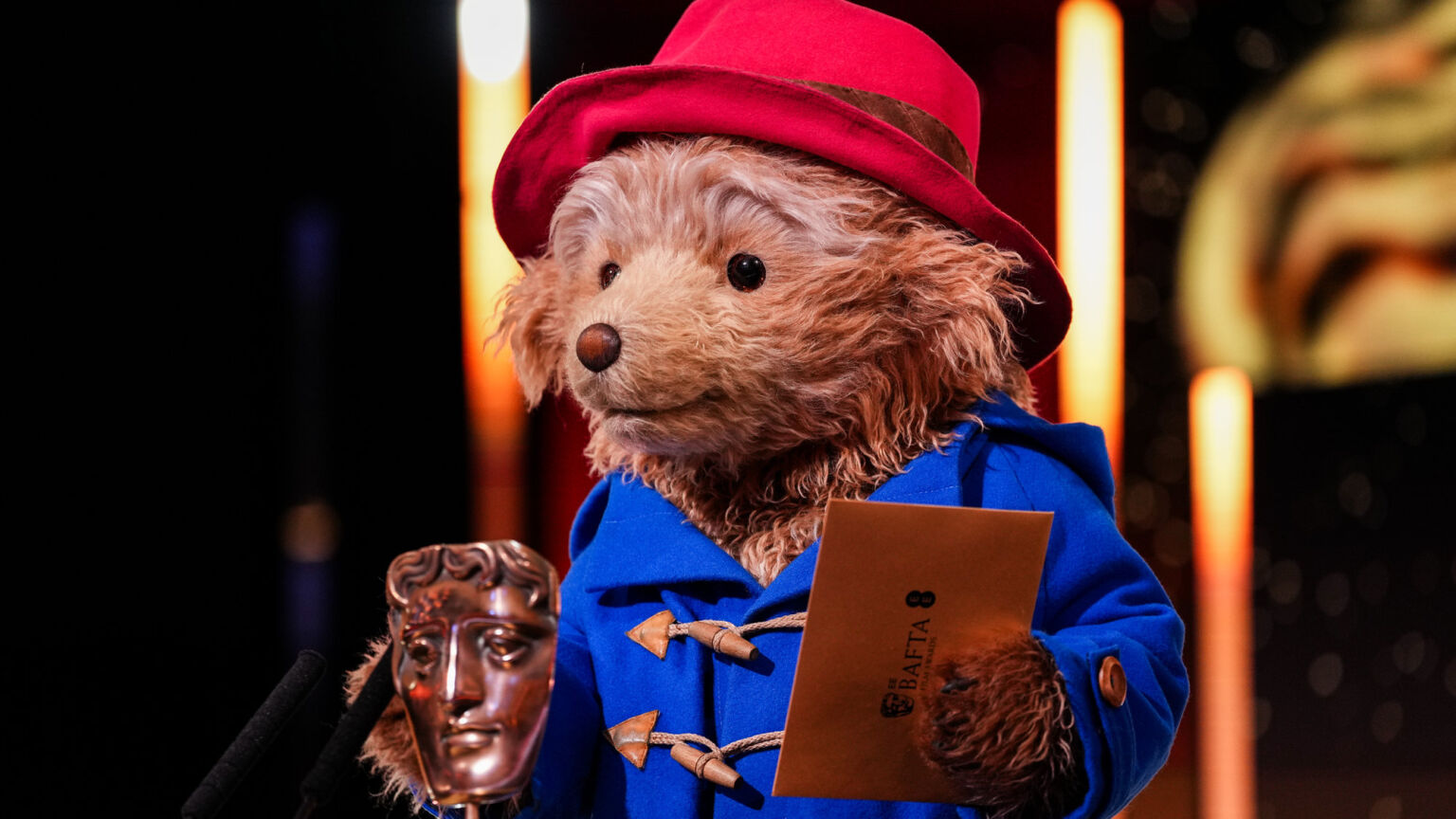
In the words of Quint aboard the Orca: ‘He’s got lifeless eyes, black eyes, like a doll’s eyes. When he comes at ya, he doesn’t seem to be livin’. Until he bites ya…’
When a similarly soulless creature lurched onstage at this year’s BAFTAs, the reaction of the audience was not to run screaming. Instead there were a few whoops, and then a slide into what felt and looked like… embarrassment. Paddington Bear gave his speech, and his jokes got barely a laugh. Not even his earnest quotes from his opinionated mother figure, ‘Mrs Brown’, got a cheer. Prince William, the future king no less, looked as if he regretted not bringing his hunting rifle. It all made the breathless media headlines – ‘Adorable!’ ‘Paddington stole the spotlight and hearts!’ ‘Stunning debut!’ – look somewhat out of step. Maybe they were quoting the pre-show press release.
I was a fan of Paddington growing up. Quite a big fan. I loved the books. But here’s the thing: I was seven. Don’t get me wrong, I would probably still enjoy them today (I mean, I recently spent a few happy hours reading old Calvin and Hobbes compendiums). I loved the 2014 Paddington movie. It’s just that I don’t remember the Paddington of my day giving quite so many moral lectures – and I think that even at the age of seven I’d have resented his newfound priggishness. Nobody likes a lecture, least of all children. It’s a big part of why the modern publishing industry can’t get kids to read.
But with the bear from computer-generated hell, it’s not the kids I’m worried about – it’s the grown-ups. Paddington Syndrome is rife these days. It hit what I can only hope was its nadir last year, when district judge Sam Goozee, an actual member of the judiciary at an actual magistrates’ court, told two sheepish defendants, ‘Your actions were the antithesis of everything Paddington stands for’.
The defendants in question had vandalised a Paddington statue in the home town of his author, Michael Bond. Vandalism is bad, even when it’s (whisper it) quite funny. The two young men deserved their punishment and they deserved the financial penalty of restoring the statue. What they didn’t deserve, because none of us does, is a vicarious moral lecture from a fictional bear. As the defence counsel said, likely while trying to stop his eyeballs from rolling back in their sockets:
‘I accept there are a lot of people who know who Paddington Bear is, but there are a number of people who would not say it is a national treasure. It is a literary character. I am not too sure it has that level of status.’
Sometimes pronouns do matter. I am full of admiration for that lawyer for his use of ‘it’.
The bear is not to blame for this phenomenon. Paddington is a cutesy, dead-eyed symptom of mass infantilisation – a process that has long infected public-information leaflets, advertising and our television screens in the UK. You know the style: two-dimensional figures who look as if they were dressed by Hannah Spencer, long-legged and occasionally eyeless, big white semicircles on their faces in lieu of human smiles. They’re supposed to make information accessible. Relatable. Though what kind of grown-up human being ‘relates’ to these artless monstrosities is anyone’s guess.
The BBC is at it, too; everyone’s a kids’ TV presenter these days. Watching a BBC News TikTok video about violence towards Trading Standards officials, I had to ignore the presenter’s earnest CBeebies enunciation. Here was a truly dark story voiced like a Newsround item. The One Show comes across as a reiteration of Blue Peter. Programmes on gardening, properties and makeovers feature the stars speaking to their guests as if they’re nine years old. Even on Question Time, host Fiona Bruce acts like an overwrought Year 12 teacher fielding rude interjections from the class. You can almost imagine the scene in the staffroom – sorry, the green room – afterwards. ‘I’m so sorry about Connor. I’ll be writing to his parents. I do hope you’ll be kind enough to visit again?’
Perhaps the most curious thing about this infantilisation of adults is the concurrent determination to treat actual children as if they’re undersized grown-ups. Children sometimes need guidance from actual adults. However, as is particularly stark in the gender debate, adults are increasingly prone to taking political dictation from their kids. Alastair Campbell, who learned everything he knows about women and woman-impersonators from his infantile daughter, Grace, is one such example of this. Back in the day, it was understood that children rebel against their parents from time to time. That it’s all part of the process. But the poor offspring now have nothing to rebel against. Their parents merely roll over at the first threat of a breakfast-table tantrum. Kids, we are encouraged to believe, are omniscient little gods.
This age-inversion has real-world safeguarding consequences. There are way too many videos of mothers applauding their children as they dance ‘provocatively’ at events, all the while being leered at by grown men throwing money. The idea that ‘young people know who they are and what they want’ has quickly devolved into ‘Thomas is a girl and wants puberty blockers’. Of course, Thomas has no concept of what it means to lose future fertility and sexual function and to put a screeching chemical brake on his brain development.
Adulthood and childhood have been transposed, and it’s not just insulting – it’s dangerous. Let children be children, not political gurus, hyper-sexualised drag queens or medical experiments. And for the love of all that’s holy, cut the cartoons and the stuffed bears, treat adults like adults, and expect a bit more of them.
Gillian Philip is a writer and a driver in the haulage industry.
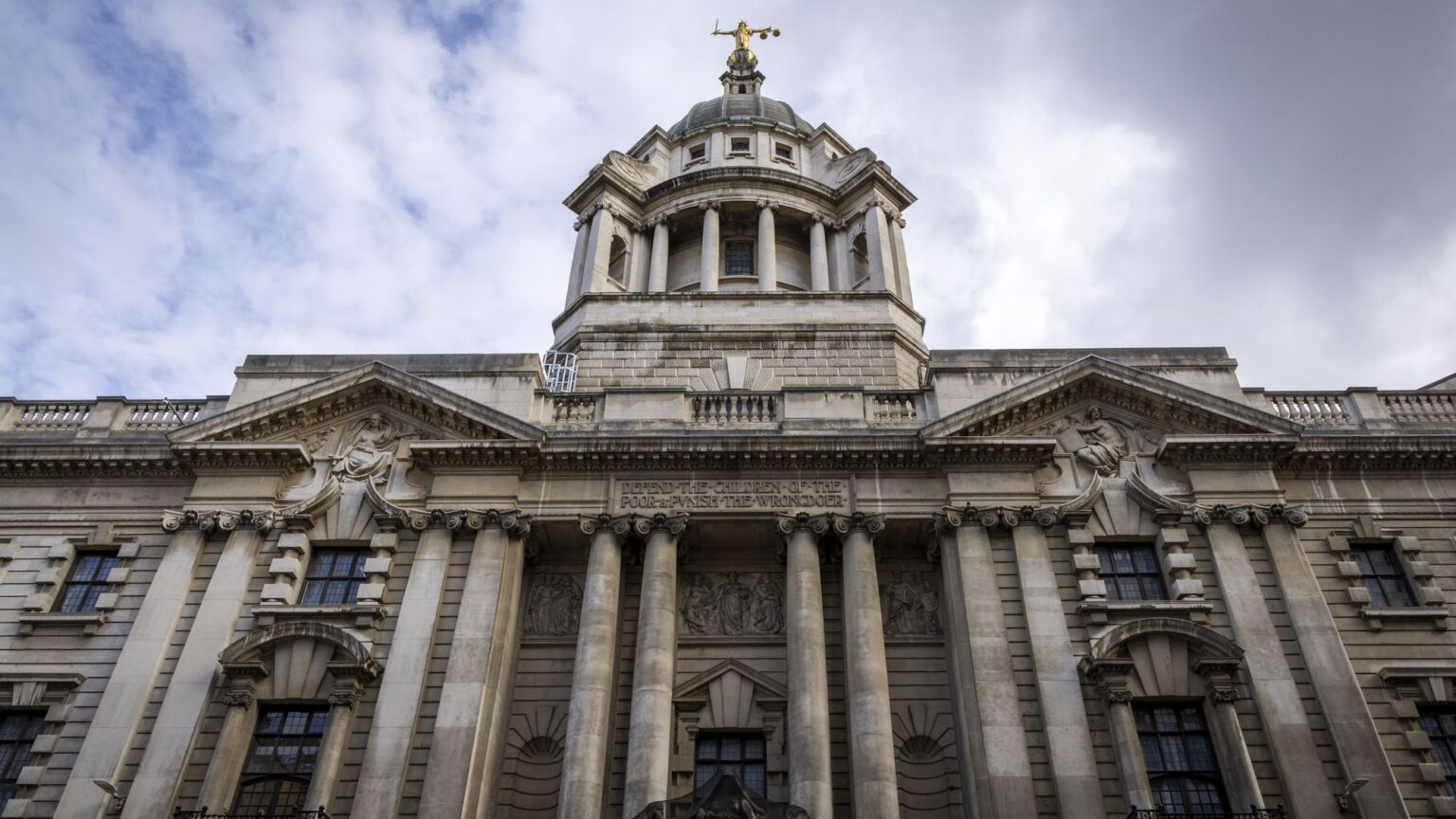
A defence barrister is facing contempt-of-court proceedings after allegedly inviting a jury to act according to their consciences. Rajiv Menon KC was acting for Palestine Action activists, who had been charged with aggravated burglary for damaging the property of Elbit Systems, an Israeli arms manufacturer, near Bristol in August 2024. During their first trial at Woolwich Crown Court in January, at which they were acquitted (although, in a re-trial this week, four people were convicted on lesser charges of criminal damage), the trial judge had ruled that the barristers could not invite the jury to disregard his legal rulings. He also directed them not to invite the jury to acquit ‘on the basis of their conscience’.
In his closing address in January, Menon allegedly told the jurors that they could acquit according to their conscience, relying on Bushell’s Case from 1670, which is ordinarily recognised as having established the independence of the jury. He quoted a plaque at the Old Bailey stating that Bushell’s Case ‘established the right of juries to give their verdict according to their convictions’.
There is, of course, nothing in our constitution that expressly protects the right of a jury to completely abandon the evidence. But juries can, and sometimes do, return verdicts that appear to cut against the evidence or the strict application of the law. This is possible because of a combination of legal rules and constitutional traditions that protect juries’ independence.
Bushell’s Case arose after a judge imprisoned a jury for refusing to return the verdict he wanted. There is plenty of argument about the applicability of that case to modern trials, but it at least established that jurors cannot be punished for their verdicts. It is also unlawful, because of separate rules, to enquire into the reasons for a jury’s decision. This means that even if we suspect that a jury has acted contrary to the evidence, there is no proper way to prove it. That combination of rules and traditions shows how hallowed the jury’s verdict is in our system.
That is a good thing. The whole point of a jury is to allow the wider community to participate in the justice system, free from the pressure of the institutions conducting the proceedings.
That is why these contempt proceedings are chilling. Without commenting on the individual case, lawyers should be able to draw a jury’s attention to its independence, the importance of its judgment and the fact that its verdict is ultimately its own. A jury should never be reduced to a rubber-stamping exercise. We should not be afraid of juries bringing the morals of wider society into the courtroom, including by refusing to convict where they cannot, in conscience, do so.
Juries have always brought morality into proceedings. In the United States, jurors famously refused to convict people accused of helping enslaved people escape – a practice widely thought to have contributed to the end of slavery. In England, during the 18th and 19th centuries, the criminal law made many offences punishable by death, including minor property crimes. This became known as the ‘Bloody Code’. Jurors frequently refused to convict defendants, thereby sparing them from the gallows.
More recently, juries have returned what look like perverse verdicts in cases involving political protest, free speech and the limits of criminal liability. These cases allow the black-letter law to be tested against public morality. That is not a defect in the jury system. It is one of its essential democratic functions.
So, solidarity with Rajiv Menon KC. The proceedings against him should concern anyone who believes that the justice system should remain democratically accountable through our juries.
Luke Gittos is a spiked columnist and author. His most recent book is Human Rights – Illusory Freedom: Why We Should Repeal the Human Rights Act, which is published by Zero Books. Order it here.
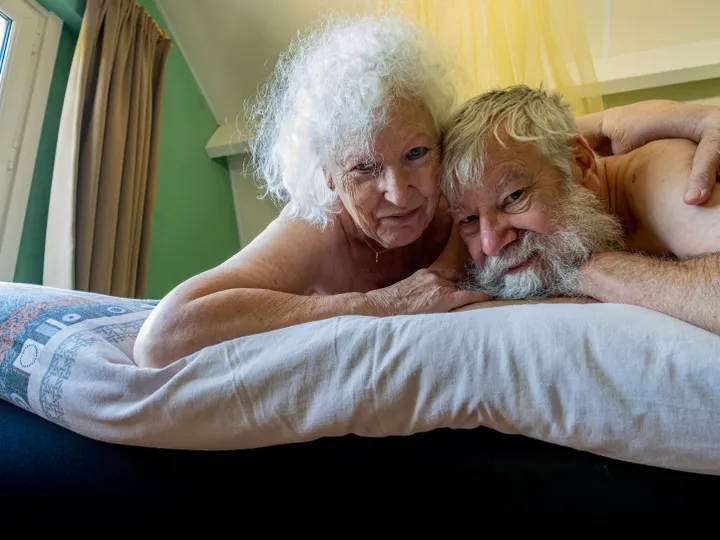
As you age, your go-to sex positions might not age as gracefully alongside you. After decades of showing off your flexibility in bed, you may notice as you enter your 70s that your joints ache, your back hurts and you maybe can’t bend as easily as before.
Arthritis and other age-related conditions may also come into play – issues that likely didn’t affect you when you were younger. Not to mention there’s the age-old (no pun intended) myth that your sex life somehow “ends” after a certain age.
“Body image shifts, loss of a long-term partner and deeply internalised ageism are among the biggest barriers to intimacy after 70,” Alicia Sinclair, sex educator, founder and CEO of Le Wand, told HuffPost.
“Sexual desire doesn’t have an expiration date, and neither does the need for connection and pleasure. Open communication with a partner – being explicit about what feels good and what doesn’t – often leads to greater intimacy than couples experienced in earlier years.”

Which means sex isn’t off the table after 70. Instead, it simply requires more adaptability and a better understanding of what works and what doesn’t.
Below is a list of sex positions that can become risky or uncomfortable after 70, – and expert-backed advice for what to try instead.
Traditional missionary (particularly for the bottom partner)
“This one catches people off guard,” according to Annette Benedetti, sex and intimacy coach and host of the podcast Talk Sex With Annette.
“Seventy-five percent of hip fractures happen in women, and bone density takes a nosedive after menopause. [The top partner’s] weight pressing down on [the bottom partner’s] hips and pelvis during missionary is exactly the kind of sustained force that can snap a fragile femur. Add vaginal atrophy and deep thrusting from above, and you’re also looking at vaginal tears and bleeding.”
Adds Sinclair: “Lying flat with a partner’s weight on top can compress the spine and make it difficult to breathe, especially for anyone with osteoporosis, spinal stenosis or limited hip mobility.”
Instead, Sinclair recommends using a wedge or positioning pillow under the hips to reduce lumbar strain or shifting to a side-lying position that keeps the spine in a neutral position.
Benedetti suggests flipping the dynamic with a modified cowgirl position, with the receiving partner on top, sitting upright on their partner’s lap or kneeling. “[The kneeling position] is what orthopaedic specialists recommend for women with osteoporosis. She controls the depth, the pace, and the pressure goes through his body, not hers.”
Doggy style (kneeling)
“Sustained kneeling puts significant pressure on the knees and wrists, and the position can destabilise the lower back,” Sinclair said. “For anyone with knee replacements, arthritis or balance issues, it’s a real injury risk.”
Benedetti adds that rear-entry positions with deep thrusting may also become uncomfortable over time. “With age – especially after menopause or other hormonal changes – internal tissues can become shorter, thinner and more sensitive. What once felt pleasurable can start to feel uncomfortable or even painful, with a higher risk of irritation or small tears.”
As an alternative, Sinclair recommends a supported standing variation, where one partner leans over a bed or cushioned surface, keeping weight off the knees entirely.
Another option is spooning. “You get a similar rear-entry angle and sense of closeness, but the receiving partner can control depth by adjusting their leg position,” Benedetti said. “It also removes pressure from the knees, wrists and shoulders, making it a much more comfortable choice overall.”

Halfpoint Images via Getty Images
Legs up over shoulders positions
“This position demands hip flexion that older joints often can’t handle safely, especially for people with hip replacements or conditions like arthritis,” Benedetti said. “It can also create very deep penetration at a time when tissues may be more sensitive. That’s a challenging combination.”
The better option? Reclining with a pillow wedge under the hips. Keep the knees bent and slightly apart, with the hips gently elevated to achieve a similar angle — without putting excess strain on the joints. This allows for better alignment and comfort while reducing orthopaedic risk.
Cowgirl / reverse cowgirl (on top)
“This requires quad strength, hip flexibility and balance – all of which decline with age,” Sinclair said. “A fall or sudden movement can cause hip fractures or knee injuries, which are among the most serious fall-related injuries in older adults.”
If you’re keen on doing the position, Sinclair recommends using a supported seated straddle – sitting face-to-face in a sturdy chair or using a dedicated intimate machine like The Cowgirl with a low, stable platform, which distributes weight differently and reduces fall risk dramatically.
Standing sex
“Balance and bone density both decline after 70, and the one-year mortality rate after a hip fracture sits around 25%,” Benedetti said. “A fall during sex isn’t a punchline; it’s a serious event.”
What can you do instead? Benedetti suggests using a sturdy armchair. One partner sits while the other straddles. Face-to-face, full-body contact – all the closeness without the risk of a fall.
Sex might look and feel different in your 70s than it did in previous decades, but it doesn’t mean it has to feel less pleasurable. With a better understanding of the body’s changing needs, couples can adapt their sex life rather than give up on it.

Is KeyBank Down Today? Online Banking and App Hit by Widespread Outage on Busy Weekend

XRPL targets DeFi expansion with lending and programmable escrow tools
2026’s Biggest Original Sci-Fi Movie Just Passed One of the Best Alien Invasion Sequels Ever

Manchester United reach agreement with Casemiro over contract clause amid transfer speculation

US brings back mandatory military draft registration

Steven Gerrard disagrees with Gary Neville over ‘shock’ Chelsea and Arsenal claim | Football


-
 Crypto World2 days ago
HarrisX Poll Found 52% of Registered Voters Support the CLARITY Act
-

 NewsBeat7 days ago
Channel 5 – All Creatures Great and Small series 7 new post
-

 Crypto World3 days ago
Upbit adds B3 Korean won pair as Base token gains Korea access
-

 Fashion2 days ago
Weekend Open Thread: Marianne Dress
-

 Tech6 days ago
Image AI models now drive app growth, beating chatbot upgrades
-
 NewsBeat3 days ago
NCP car park operator enters administration putting 340 UK sites at risk of closure
-
 Business1 day ago
Ignore market noise, India’s long-term story intact, say D-Street bulls Ramesh Damani and Sunil Singhania
-

 Politics1 day ago
Politics Home Article | Starmer Enters The Danger Zone
-

 Entertainment6 days ago
Olivia Wilde Reacts To Viral ‘Corpse’ Comparison
-

 Crypto World7 days ago
BlackRock Buys $284M In Bitcoin On May 1 As The Best Crypto To Invest In For 2026 Sits Below A Pending Binance Listing
-
 Sports7 days ago
IPL 2026: Gujarat Titans opt to bowl vs Punjab Kings; Nishant Sindhu handed debut | Cricket News
-

 Sports7 days ago
Kofi Kingston and Xavier Woods reportedly released by WWE along with others
-

 Sports6 days ago
Inter Milan Win Serie A Title After Victory Over Parma
-
 Business7 days ago
Can LeBron James Lead LA Past OKC Without Injured Luka Doncic?
-

 Crypto World5 days ago
UAE Free Zone Deploys Blockchain IDs to Verify Registered Firms
-

 Entertainment7 days ago
Other Bennet Sister Love Triangle Cast: Ella Bruccoleri, Donal Finn
-
 Sports6 days ago
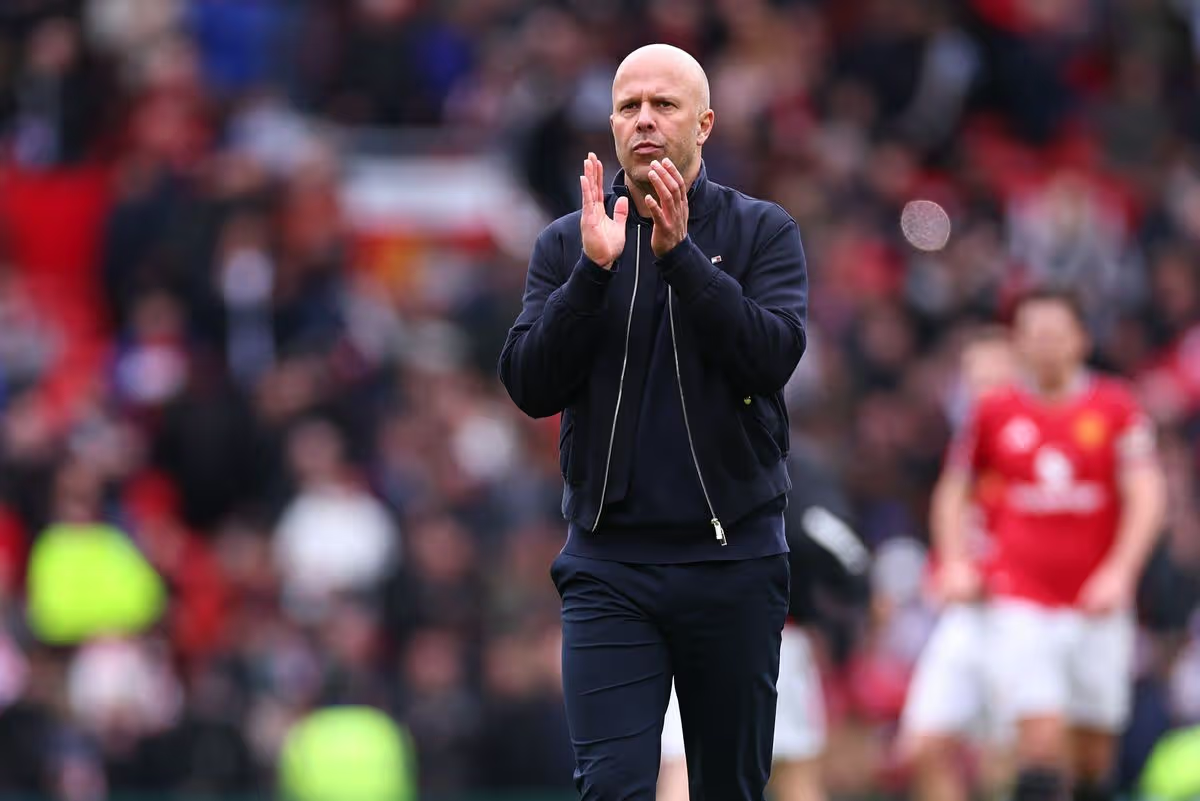
Every word of Arne Slot’s heated rant after Manchester United win vs Liverpool
-

 Sports7 days ago
Joel Embiid urges Sixers fans not to sell playoff tickets to Knicks fans
-

 Sports6 days ago
La Liga: Vinicius Jr scores twice as Real Madrid win to keep Barcelona waiting for title
-
Entertainment7 days ago
Jennifer Lawrence’s Mary Jane Sneakers Are Spring’s It-Girl Shoe
You must be logged in to post a comment Login