Connect with us
DAPA Banner

Politics

Supermarkets consider ‘dynamic pricing’ to rip you off even more

Published

on

Supermarkets consider 'dynamic pricing' to rip you off even more

The Bank of England has warned that supermarkets across the UK could bring in surge pricing to extract more profit from people’s need to eat.

Supermarkets may be planning to increase the amount shoppers pay for food when demand is high, which is already the situation for people using corporations like Amazon and Uber.

Computerised displays could pave the way for price hikes in supermarkets like Morrisons, which will soon have these price labels in all 497 of its stores.

Speaking of the possibility of ‘surge pricing’, Clive Black, of investment bank Shore Capital, told the Times:

Advertisement

Whether that is in the interest of shoppers or shareholders is a moot point.

The thing is, people buying food aren’t really shoppers. That’s like saying people buying electricity or water are ‘shopping’, when these are essentials.

Supermarkets prioritise excessive profit

‘Greedflation’ has already defined the cost of living crisis with companies using energy inflation and tax rises as cover for huge profits.

Lidl’s operating profit rose by nearly 300% — from £79 million in 2021 to £314 million in 2025.

Similarly, Aldi’s operating profit rose from £289 million in 2020 to £435 million in 2025, representing a 51% increase over five years (including the Covid years).

Advertisement

This isn’t down to people switching to cheaper options. Tesco’s operating profit leapt 72% — from £1.8 billion in 2020/21 to £3.1 billion in 2024/25. Sainsbury’s operating profit has risen slightly over the same period.

It’s greedflation, and now supermarkets want more through increased prices during high demand despite most people working during the same time periods, meaning they will be buying food at similar times.

What’s the solution?

There is a solution to the wealth extraction. Supermarkets should be not-for-profit because they are only middle-manning between the agriculture sector and humans who need food. One option is for non-profit food distribution centres (but with a fun name) to offer food largely delivered via automated vans.

That’s a major way an administration could tackle the cost of living crisis.

Advertisement

Featured image via Unsplash

Source link

Advertisement
Continue Reading
Click to comment

You must be logged in to post a comment Login

Leave a Reply

Politics

TUSC to field sixth largest number of local election candidates

Published

on

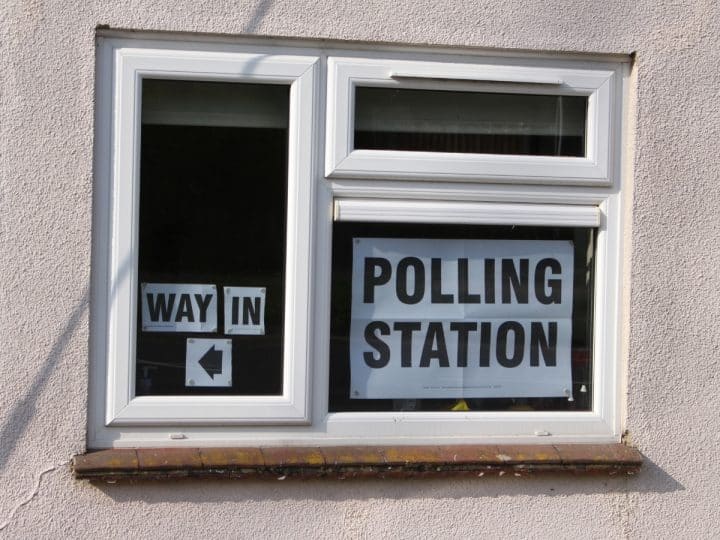
Polling Station sign in church Hall window TUSC candidates

Polling Station sign in church Hall window TUSC candidates

Nominations have closed for the local elections taking place on 7 May. And the sixth-biggest bloc of candidates – behind Labour, the Tories, Reform, the Lib Dems and the Greens – consists of those using one of the Trade Unionist and Socialist Coalition (TUSC) descriptions on their ballot paper.

TUSC has been in touch with details of its preparations for the elections:

There are 136 local authorities with scheduled contests this May. Councillors are up for election in around 3,000 wards or county council divisions. In total there are 289 candidates using a TUSC-registered description in the local elections across 64 councils.

They’re standing in one-in-five of the wards in those councils and just under one-in ten overall. And this includes candidates for the directly-elected mayors of Croydon, Lewisham and Tower Hamlets.

Advertisement

At the same time, there will be six constituency candidates using a TUSC description in the Scottish parliament elections, agreed by the autonomous Scottish Trade Unionist and Socialist Coalition.

And two constituencies in the Welsh senedd elections (out of 16) will see five candidates using a TUSC description. Each constituency sends six members to the senedd on a proportional system.

TUSC candidates

The full list is available here, with the English council candidates presented in a regional breakdown.

Most of the candidates appear on the ballot paper with the description Trade Unionist and Socialist Coalition next to their name. But some are using the Independent Trade Union and Socialist Candidate or Socialist and Trade Union Candidate descriptors.

Advertisement

Whatever the description, however, every candidate is committed to stand up to the establishment parties, who have all shown themselves to be indistinguishable when it comes to representing the interests of working class people.

The TUSC core policy platform for the May council elections features the minimum ‘six guarantees’. Local election candidates must commit to these before they can use one of the TUSC descriptions.

For those with a TUSC candidate in their area the opportunity is there not just to protest on 7 May but to vote positively for socialist change.

There are other candidates contesting the establishment parties on 7 May who, while not appearing on the ballot paper with a trade unionist and socialist description, will have support from the coalition.

Advertisement

These include the 20 candidates standing under the Your Party name and others appearing on the ballot paper as ‘Independent’ who could be properly described as anti-cuts and anti-war candidates. TUSC is currently collating information on these and will publish as comprehensive a list as possible of alternative candidates before polling day.

Featured image via the Canary

By The Canary

Source link

Advertisement
Continue Reading

Politics

Plague of bees swarming Israel described as ‘Biblical’

Published

on

Image of swarms of bees in Israel and the depiction of God from Monty Python

Image of swarms of bees in Israel and the depiction of God from Monty Python

On 15 April, social media was host to a great revelation – namely that swarms of bees had beset the tiny nation of Israel. Given Israel’s warmongering activities over the past few years, many have interpreted the great plague as God asking the Israelis to put a lid on it:

Israel and the Old Testament

According to y-net Global, the swarm of bees is located in the southern Israeli city of Netivot. The swarm was localised to a shopping complex at the time, but footage has shown them settling on residents’ vehicles and balconies too.

GB News reported:

Advertisement

Residents were advised not to approach the bees – under any circumstances. The guidance came as the swarm occupied streets and public spaces across the commercial area.

We should note that the above doesn’t apply if you’re part of the Israeli Occupation Forces (IOF). If you’re a soldier, please feel free to approach the bees as you like. These insects are here to support you, and they like it when you dance about and make as much noise as possible.

GB News also reported:

One social media user quoted a passage from the Bible, from Isaiah 7:18.

“And it shall come to pass in that day, that the Lord shall hiss for the fly that is in the uttermost part of the rivers of Egypt, and for the bee that is in the land of Assyria,” they quote.

The passage refers to God calling on foreign armies to invade Israel and judge Judah, one of Jacob’s sons.

Advertisement

It’s worth bearing in mind that Israel’s neighbours have shown no interest in invading the Zionist nation – something which cannot be said in reverse. Additionally, as Pope Leo recently said:

God does not bless any conflict. Anyone who is a disciple of Christ, the Prince of Peace, is never on the side of those who once wielded the sword and today drop bombs. Military action will not create space for freedom or times of #Peace, which comes only from the patient promotion of coexistence and dialogue among peoples.

The Isaiah passage above is from the Old Testament, whereas the Pope is talking that modern New Testament stuff.

It’s certainly the case that Israeli PM Benjamin Netanyahu is heavily inspired by the Old Testament. This is particularly notable when he brands his opponents “Amalek” – the Biblical enemies of the Israelites:

Advertisement

As Mother Jones reported:

Advertisement

Prime Minister Benjamin Netanyahu said that Israelis were united in their fight against Hamas, whom he described as an enemy of incomparable cruelty. “They are committed to completely eliminating this evil from the world,” Netanyahu said in Hebrew. He then added: “You must remember what Amalek has done to you, says our Holy Bible. And we do remember.”

There are more than 23,000 verses in the Old Testament. The ones Netanyahu turned to, as Israeli forces launched their ground invasion in Gaza, are among its most violent—and have a long history of being used by Jews on the far right to justify killing Palestinians.

As others quickly pointed out, God commands King Saul in the first Book of Samuel to kill every person in Amalek, a rival nation to ancient Israel. “This is what the Lord Almighty says,” the prophet Samuel tells Saul. “‘I will punish the Amalekites for what they did to Israel when they waylaid them as they came up from Egypt. Now go, attack the Amalekites and totally destroy all that belongs to them. Do not spare them; put to death men and women, children and infants, cattle and sheep, camels and donkeys.’”

You can see how this passage would justify genocide in the eyes of certain true-believers.

Unfortunately, some people use faith as cover for their own worst urges.

Advertisement

Buzzed

Footage online supposedly shows that the bees have swarmed a fighter plane:

Advertisement

We can’t confirm that ‘many fighter planes are unable to fly’ or that the swarm is the ‘largest in recorded history’, but the Daily Express US is reporting the following:

The horde of winged insects, the largest ever recorded in the nation’s history, prevented a military plane from taking off when it overtook the engine.

A massive swarm was also seen hanging from the aircraft’s wing. Relevant teams are anticipated to respond to the situation.

One death machine out of action is still a result, so well done the bees.

As the Proud Socialist account said on X/Twitter:

Advertisement

The bees are doing more to stop Israel than the entire Democratic party.

The Rational National YouTube is among those who have collated videos of the bees:

Bee-lief

Of course, the swarms are almost certainly just a seasonal thing. It is interesting, though, that a nation which acts with Old Testament intent has now experienced something like an Old Testament plague.

Advertisement

If we believed in old school Biblical retribution, we’d possibly be worried right now.

Featured image via X/Twitter

By Willem Moore

Advertisement

Source link

Continue Reading

Politics

Wings Over Scotland | Happy Anniversary

Published

on

It was exactly one year ago today that the Supreme Court delivered its judgment in the case of For Women Scotland Vs The Scottish Ministers, a judgment which has still not been implemented by the Scottish or UK governments, so it was quite bold of the SNP to choose it as the launch date for their manifesto.

The judgment is not referenced in the document and the phrases “women’s rights” and “single-sex” do not appear anywhere in it, although it does say “We are committed to upholding and protecting the human rights of trans people as far as possible within our powers and we will do all we can to ensure that trans people’s identities are recognised and respected”.

So, y’know, more of the same to come for the next five years.

Advertisement

Source link

Continue Reading

Politics

Animation highlights threat to children as casualties from explosive weapons in Sudan double

Published

on

Still from Walk Twice, an animation showing the effect of explosive weapons on children in Sudan

Still from Walk Twice, an animation showing the effect of explosive weapons on children in Sudan

A new animated film from Save the Children highlights how children’s lives are being torn apart by war, with life-long consequences, as the laws designed to keep them safe are repeatedly broken. British-Sudanese comedian Ola Labib narrates the 2-minute animation. It takes inspiration from the story of a family in Sudan living with the long-term effects of explosive weapons.

It follows two brothers, Ali, 13 and Nour, 10 [names changed to protect identities]. They were playing football outside their home in Khartoum when a bomb exploded nearby, changing their lives forever. Ali lost his leg instantly, while Nour suffered severe injuries that left him paralysed.

Launching on the third anniversary of the conflict in Sudan, Walk Twice exposes the rising impact of explosive weapons on children’s lives as bombs and drones increasingly strike schools, homes, and hospitals – places that should be protected under international humanitarian law.

The toll of explosive weapons

Analysis by Action on Armed Violence reveals that the number of casualties from explosive weapons in Sudan doubled in 2025 compared to 2023, the year the war began. They found evidence for 2,627 people killed and injured by blasts in 2023, rising to 4,478 in 2024 and 5,440 in 2025.

Advertisement

The number of civilians harmed per attack rose from around 19 in 2023 to 26 in 2025 – a 37% increase. This reflects the growing use of wide-area explosive weapons in populated areas, where civilians gather. Most casualties occur in residential districts, markets and other dense urban spaces.

Labib said:

Stories like Ali’s are devastating - and as world leaders continue to flout international law, we risk seeing more children injured and suffering in this way.

Ali’s story really hit home for me. I lost my second cousin during the war in Sudan - he was around the same age as the brothers. Not everyone has that personal connection, but empathy shouldn’t depend on personal experience.

Any child lost or injured to war is one too many. This must never be something we just accept. It must never become normal. That’s why I’m joining Save the Children’s campaign that urges the UK government to fight for the right to childhood in Sudan.

Advertisement

A moving portrayal of displacement and loss, the film follows the desperate journey taken by Ali, Nour and their mother across large swathes of Sudan, seeking treatment amid collapsing health systems and ongoing insecurity.

Eventually they reach a displacement camp in Gedarif. And the film also captures the hope and quiet resilience of children affected by blast injuries. Following their upheaval, Save the Children provided the family with essential supplies, psychosocial support and mobility aids including an electric wheelchair for Ali.

Speaking about the difference Save the Children’s support has made, Ali said:

When Save the Children came and gave me this wheelchair, my self-confidence grew. It motivated me not to give up, and it made me think that the future is worth pursuing and that nothing is impossible.

A worldwide threat

While prompted by the anniversary of the conflict in Sudan, the film also highlights the growing threat to children in wars around the world, including Gaza and Ukraine.

Advertisement

A report by Save the Children reveals that explosive weapons are now killing children on a scale never seen before. More than 60% of child casualties in war zones now come from explosive weapons. Between 2020 and 2024, nearly 50,000 children became casualties of war.

Save the Children is urging the public to write to their MP and urge the UK government to do everything it can to protect children in Sudan. This should include urgently pressuring all warring parties and their international backers to end the violence, prioritise children’s safety and hold those who harm children accountable.

Alison Griffin of Save the Children said:

Every day we are watching the laws that were designed to protect children in conflict be openly ignored – not only by armed groups, but by governments that have a duty to protect them. No child should have to learn to walk twice. We cannot let this become the new normal.

Without urgent action from global leaders, including the UK government, we are on a dangerous path towards a world where conflict is a lawless free-for-all, and nothing is off limits.

Advertisement

Standing up for international law isn’t a choice. It’s an obligation.

Save the Children works in war zones around the world, providing life-saving care for injured children through pop-up hospitals. The charity also supports children’s long-term recovery, from safe spaces to play and learn to an innovative partnership with Imperial College London developing prosthetic limbs that can be remoulded as children grow.

Find out more about Save the Children’s work supporting children injured in war here.

Featured image via Save the Children

Advertisement

By The Canary

Source link

Continue Reading

Politics

Moneybags Farage & Sunak top ‘outside income’ scrounger chart in MP declarations

Published

on

Rishi Sunak, Nigel Farage, and a handful of cash

Rishi Sunak, Nigel Farage, and a handful of cash

In a surprise to exactly no one, Nigel Farage is topping a chart of scrounger MPs. Searching the Accountability Tracker on UKGovScan reveals some interesting things. Among them, the MPs with the highest ‘outside incomes’ are ex-PM Rishi Sunak and wannabe-next-PM Nigel Farage:

Farage is not a man of the people

First things first, it’s alarming that MPs have any outside income.

Being a Member of Parliament should be hard, gruelling work that takes a person’s full attention; it should also be considered an honour. If a politician feels like they have time to spend on side hustles, they’re not taking the job seriously.

Outside income also opens politicians up to outside influence.

Advertisement

Clicking on Nigel Farage, we can see that his money comes from sources including the following:

Do we really want a politician who has two hundred thousand reasons to put the interests of the bullion boys over our own?

Farage is also raking it in from GB News – a blatant propaganda outfit.

We imagine that the wants of GB News and Farage are mostly in alignment, making them perfect partners. But what happens when they’re not?

Advertisement

Does Farage speak his own mind, or does he speak the mind of his benefactors?

We probably don’t need to explain why it’s an issue to have politicians in the pockets of billionaire-backed media organisations, and yet here we are.

Gifts

The Top 10 gifts list also presents some interesting data:

God damn, dame McDonagh – what did you do to deserve that £1.2m?

Advertisement

Looking into it, we can see she declared the following:

Lord Waheed Alli is the same guy who was bankrolling a bunch of Labour bigwigs, leading to Starmer’s first big scandal in office.

We see that Starmer is in the Top 10 gifts list himself, despite his previous scandal. The value of his gifts is significantly below that of dame McDonagh, but how has he not learned his lesson yet?

Starmer’s ‘Gifts & Hospitality’ list contains 129 entries, and you’ll notice the value jumps to £356.7k with hospitality added:

Advertisement

We all like getting free gifts and hospitality; it’s just not the best look when you’re on the British public’s naughty list:

Out for themselves

When it comes to Farage, we can see he’s more than happy to take money from whoever’s offering it. We also know he’s a big fan of Donald Trump, whose regime has taken governmental corruption to whole new levels of dodgy:

The signs are there that “scrounger” Farage wants power to enrich himself first and foremost.

Let’s hope he doesn’t have the opportunity to prove what we all suspect.

Advertisement

Featured image via Pexels 

By Willem Moore

Source link

Advertisement
Continue Reading

Politics

New website launches to help public flag animal welfare concerns

Published

on

Chained tiger Animal welfare concerns

Chained tiger Animal welfare concerns

Every year, global tourists and social media users share accounts of witnessing captive wild animals suffering in distressing conditions. Whether it’s seeing a barren concrete pen at a dilapidated roadside zoo or a video from a tiger cub cuddling experience on social media, it’s often difficult to know who to raise a concern with.

Global animal charity Wild Welfare has just launched its newly updated online Animal Welfare Concern Reporting Tool. This unique digital service allows anyone to take action when they witness potential animal welfare issues in-person or online.

The newly upgraded “Concern Navigator” provides a seamless central gateway for tourists or visitors to report uneasy or troubling experiences seen at zoos, aquariums, sanctuaries, or other animal related tourist attractions around the world.

These concerns may include physical issues, such as chained animals or maltreatment, as well as environmental failings like cramped, unsuitable enclosures.

Advertisement

It also helps to raise a red flag on ‘hidden’ suffering such as the over-handling of small mammals or reptiles, wild animals being used as photo props, or the psychological toll evidenced by stereotypic behaviours like pacing and repetitive head rolling.

Mainstream headlines are increasingly reflecting a shift in public perception and awareness of captive wildlife welfare, highlighted by recent high-profile stories such as the viral concerns for ‘Baby Punch’ the macaque at a Japanese zoo and the public campaigns about penguin welfare at a London aquarium.

Growing public concern for animal welfare

However, many people still feel powerless or unsure where to turn when they witness potential welfare issues or captive wild animals in distressing situations. Wild Welfare’s Animal Welfare Concern Reporting Tool acts as a free and easy triage service accessible to all online around the globe.

Wild Welfare’s online concern reporting service initially launched in 2018. Since then it has received over five hundred reports from concerned members of the public sharing experiences of potential captive wild animal abuse, inappropriate living conditions or poorly looked after wildlife.

Advertisement

Upon receiving a report, the newly re-launched tool can provide immediate feedback, advising and signposting users to relevant legislative bodies, local authorities, or associations best positioned to address the particular issue most effectively.

The website’s re-launch is the result of collaborative input from global leaders in animal science and zoo management including experts at Zoos Victoria in Australia. Data collected through the tool continues to help fuel ongoing research initiatives at Nottingham Trent University in the UK, allowing Wild Welfare to identify global trends in animal welfare concerns.

The project hopes to aid the further development of evidence-based welfare solutions, while raising public awareness of identifying what sub-standard animal welfare might look like.

Wild Welfare director Simon Marsh explained:

Advertisement

Wild Welfare’s philosophy is to work in collaboration with zoos, aquariums, and sanctuaries. Our initial concern reporting tool helped us to identify potential welfare issues and start addressing them by working with individual facilities, zoological associations, and governing authorities.

By reimagining and re-launching this free online tool, we are helping to provide a voice for the voiceless animals around the world suffering as a result of inappropriate tourist activities and living in unsuitable conditions.

We provide practical training and resources to address immediate welfare concerns and create institutional change, delivering long-term positive welfare outcomes for animals under human care.

Wild Welfare is encouraging anyone who witnesses poor animal welfare to use the tool and flag their concern. Each report contributes to a global database that is helping Wild Welfare and their partners to advocate for stronger welfare legislation and better global husbandry practices.

The Animal Welfare Concern Reporting website is now live and you can find it via the Wild Welfare website.

Advertisement

Featured image via the Canary

By The Canary

Source link

Advertisement
Continue Reading

Politics

Royal Fleet Auxiliary RMT members are on strike again

Published

on

Royal Fleet Auxiliary ship Argus RFA seafarers to strike

Royal Fleet Auxiliary ship Argus RFA seafarers to strike

Maritime union RMT is taking further strike action at the Royal Fleet Auxiliary on Thursday 16 April. This is after the employer failed to table a new offer.

It’s the latest step in an ongoing dispute. The sticking point remains how seafarers’ shift patterns stack up against minimum wage legislation.

Despite repeated attempts by the union to reach a negotiated settlement, no improved offer has been made by Royal Fleet Auxiliary management.

During the 24 hour strike action, members will continue to maintain the safety of vessels at all times. This includes the management of moorings and gangways.

Advertisement

Seafarers can routinely work up to 12 hours a day. But there remains no clear or transparent formula setting out how to calculate pay against those hours.

RMT general secretary Eddie Dempsey said:

Our members in the Royal Fleet Auxiliary have shown patience and professionalism throughout this dispute, but they are being left with no other option than to take further strike action.

Despite repeated efforts by our union to secure a fair deal, the employer has failed to return with any improved offer.

The frustration amongst our members due to the inaction of the employer is high and will only fuel their determination to carry on their industrial campaign.

Advertisement

RFA seafarers play a vital role in supporting the Royal Navy, often in demanding and dangerous conditions and they should be rewarded properly.

The Ministry of Defence and the employer must now come forward with a serious proposal on pay and conditions, including ensuring full compliance with National Minimum Wage legislation.

Featured image via the Canary

By The Canary

Advertisement

Source link

Continue Reading

Politics

Why Zack Polanski hates horse racing

Published

on

Why Zack Polanski hates horse racing

The post Why Zack Polanski hates horse racing appeared first on spiked.

Source link

Continue Reading

Politics

Politics Home | What the closure of a local betting shop tells us about the pressures on our high streets

Published

on

What the closure of a local betting shop tells us about the pressures on our high streets

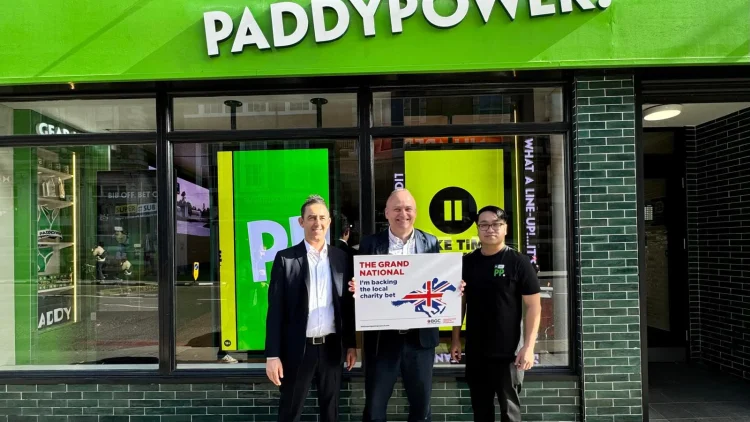
Neil Coyle, taking part in the Betting and Gaming Council’s ‘Grand National Charity Bet’ campaign

Reflecting on the closure of a local betting shop, Neil Coyle, Labour MP for Bermondsey and Old Southwark, explores what it reveals about national policy decisions, and warns that rising costs risk undermining high streets, local jobs, and community contributions across constituencies like his own.

Advertisement

In Westminster, colleagues often talk about “backing the high street”. Southwark Park Road is a high street under pressure in my constituency and provides just one example of how national decisions play out in real communities.

People’s changing shopping habits and the shift toward online services are hitting high streets. When national policy changes affect an industry, the impact can also be felt quickly on the high street too.

One business that previously seemed resilient is the betting shop. While other retailers have struggled with the shift online, some believed that betting shops would weather all storms.

Sadly that’s not the case on Southwark Park Road which has recently seen a Paddy Power close its doors for the last time. Some colleagues will cheer, ignoring the local jobs lost, the genuine community it served and the loss of rent and rates. Another gaping hole on the high street is nothing to celebrate.

Advertisement

At the Budget, the Chancellor set out the aim of raising revenue while protecting high streets. That balance is never easy to strike and sometimes national decisions land unevenly locally.

Too often, people discuss online betting and high street betting shops as if they’re separate worlds, as if you can squeeze one without touching the other. In my experience that simply isn’t how business works. Many of the same companies operate both online and on our high streets. They work from the same balance sheet, the same costs, the same tax bill.

So when online gambling taxes rise, that pressure travels to the high street. And when a shop closes, the impact is immediate and local. Jobs are lost. Footfall drops. The high street becomes that bit quieter, that bit emptier, that bit more neglected.

Advertisement

The Paddy Power shop on Southwark Park Road was a long-standing local business employing local people and contributing to the rhythm of the high street. Its loss will be felt by the staff first, but it won’t stop there. I’ve visited betting shops locally over the years, including this one. Not just to understand how they operate but to meet the people who keep them running day in, day out. I met the staff who take pride in their jobs and care about their customers.

Some of my visits have also been part of something positive for the local area through the Betting and Gaming Council’s ‘Grand National Charity Bet’ campaign. Through these charity bets, money has gone directly to good causes in Southwark, supporting local organisations that do vital work in my community including a children’s summer activity group and an asylum charity.

In other words, these shops haven’t just provided regulated leisure and local jobs; they’ve also helped channel support back into the community through fundraising linked to one of Britain’s biggest sporting events. An event that also brings people out to watch in our pubs, boosting the hospitality sector too. One regional pub group manager told me recently that Cheltenham sees a £400,000 rise in takings across her network of bars.

In Bermondsey and Old Southwark, betting shops employ about 80 people and contribute roughly £2m a year in tax. Those are real jobs, in a real local economy. When a shop like this goes, that money doesn’t reappear somewhere else on the same street.

Advertisement

Sadly, this isn’t an isolated incident. More than 2,300 betting shops have closed across the country in five years, with over 10,000 jobs lost. That’s a quiet hollowing out of regulated high street businesses, happening in towns and cities nationwide.

People have strong feelings about gambling. We should take harm seriously, and we should keep improving protections, especially for the minority of punters at risk. But we also need to be grown-up about what betting shops actually are. They are regulated, licensed leisure businesses, used by millions, employing local people, paying tax, and operating under very strict rules – I once had to leave a bookies as children are strictly forbidden from entering and I’d wandered in on Grand National day carrying my (then) two-year-old daughter!

The snobbery in parts of Westminster, and the commentariat, about betting shops appals me. You hear it in the way some people speak, as if these are shameful places that shouldn’t exist, or as if the people who use them are a problem to be managed rather than citizens to be respected. That’s a world away from the lived reality in communities like mine.

My colleague Mary Glindon MP made the point clearly: “Fairness on the high street must include betting shops.” They’re part of the everyday fabric of town centres. They employ local people. They sit alongside other leisure businesses, and they’re regulated tightly.

Advertisement

The wider contribution matters too. Betting shops support around 42,000 jobs, while the industry as a whole supports more than 100,000 jobs nationwide. The sector contributes around £4bn a year in tax, alongside tens of millions in business rates to local councils. It also provides vital funding for sport, from horseracing to football, darts and rugby league, as well as boosting hospitality in particular.

None of this is theoretical.

When taxes rise, cuts have to come from somewhere. Physical shops are often the first to feel it, because they have rent, staffing, and business rates. It’s also easier to shut a shop than to quietly unwind a digital operation.

If we are serious about backing our high streets, policy needs to reflect how businesses actually operate, and it needs to assess where the pain will land.

Advertisement

The closure on Southwark Park Road should be a warning. If we increase costs across a sector without thinking through the impact, we don’t just hurt one part of an industry. We weaken the very high streets we say we want to protect, and we risk losing the local jobs, community presence, and even the charitable support that has, in recent years, helped good causes right here in Southwark.

Neil Coyle

Labour MP for Bermondsey and Old Southwark

Source link

Continue Reading

Politics

The House | Without relentless focus, the Women’s Health Strategy will fall short of its promise

Published

on

Without relentless focus, the Women's Health Strategy will fall short of its promise


4 min read

The government’s fresh attention on women’s health is great, but the reality is it’s unlikely women will ever be prioritised.

Advertisement

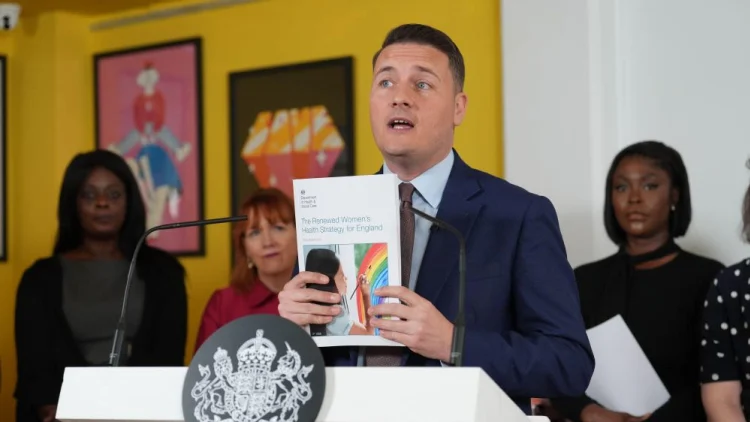
Health Secretary Wes Streeting has launched a renewed women’s health strategy, promising to “tackle the issues women face every day and ensure no woman is left fighting to be heard”. Accompanied by campaigner Vicky Pattison sharing her personal story, it was clear the Health Secretary meant business.

This took me back nearly 7 years to my interview to become a previous health secretary’s lead policy advisor. Our 30-minute slot was squeezed into 10 minutes. He cut straight to the chase: “Why do you want this job?”

“I want to transform women’s health,” I said.

“Out of everything, why that?” he asked.

Advertisement

That question itself is part of the problem.

I was conscious of stories from friends and loved ones demonstrating how women were being underserved. From the friend who almost died giving birth because her concerns weren’t listened to, despite being a medical professional herself.

To another dealing with crippling endometriosis pain and fertility problems that went undiagnosed. To a family member who spent 5 years fighting to get a chronic autoimmune disease diagnosed. It was clear women were not being heard, and their pain wasn’t being taken seriously.

Advertisement

Something needed to be done.

I got the job, and we made plans. But then came a general election, and then the response to Covid became the focus. Still, I knew we needed to keep women’s health policy alive. This was spurred by a conversation in the department about waiting lists, when one health official suggested ignoring gynaecological condition numbers altogether as they weren’t “life-threatening”. The health secretary thankfully refused.

In early 2021, still amid the Covid response, we launched a public call for evidence. I was determined that it would reach as many people as possible. Because whatever any politician of any political party says, the women’s health agenda is and will never be prioritised. That’s the reality, whether we like it or not.

I knew that, therefore, we needed a mandate from as many people as possible to keep our plans going, regardless of what else demanded the government’s attention.

Advertisement

Women had plenty to say. We received 100,000 responses, which shaped the first-ever Women’s Health Strategy for England, published in July 2022, just before summer recess and the end of the Boris Johnson government.

Was the strategy perfect? No. There was much more that campaigners, colleagues, and I wanted to include. Some internal battles were lost, and less funding was secured than desired. Some hard-earned political capital was expended, which did, however, mean that some big battles were won, too.

From baby loss certificates to equality of IVF for female same-sex couples, to women’s health hubs across the country. More importantly, we engineered a systematic shift. We put the life cycle approach front and centre, rather than looking at issues in isolation. There was a section on ‘women’s voices’ acknowledging that women weren’t being listened to. A section on ‘education and training for health and care professionals,’ recognising this is where change must start. Vitally, there was a section on ‘research and evidence’ — a woefully underserved area in women’s health.

I left government a few months after publication, extremely conscious of leaving the strategy in others’ hands.

Advertisement

Campaigners kept up pressure, and former colleagues kept the momentum going. But government priorities fell elsewhere, and progress has been more limited than it should have been.

It’s truly encouraging that this Labour government has published its own women’s health plan, continuing with the direction we set in 2022 in many areas. The focus on tackling medical misogyny and putting women’s experiences at the heart of NHS assessments is welcome. There has also been a pledge to protect and prioritise funding for women’s health specialist services.

The renewed strategy fairly suggests that while the first one had “the right problem statement, it had nothing like the means to deliver real and lasting change,” and, listening to Streeting, I genuinely believe he wants to see full systemic change.

But it will need relentless focus and drive to keep this agenda moving. It requires passion and political authority to drive it forward, and no fear about burning bridges or political capital —someone who, despite everything else happening, will keep this going in the background.

Advertisement

Without that, despite goodwill and intentions, this publication will sit on a shelf. And that, for women, will be yet another disappointment.


Emma Dean is a Senior Partner at Portland. She was previously a Special Adviser in the Department of Health and Social Care, and led on the first Women’s Health Strategy for England.

Source link

Advertisement
Continue Reading

Trending

Copyright © 2025